


site search
online catalog
Relics
Showing 41 to 60 out of 317

RELIC MODEL 1816 SPRINGFIELD LOCKPLATE
Excavated iron lockplate from a m-1816 Springfield musket that was converted to percussion. Surface pitting from being in the ground but has been cleaned by electrolysis. “US” is visible amid… (1000-2128). Learn More »
$20.00
Originally $25.00
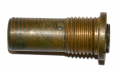
U.S. 3-INCH SCHENKL PERCUSSION FUSE
This is a “dug” brass fuse in such clean condition that it appears non-excavated. Beautiful brass fuse perfect for fuse collection or to screw into a Schenkl shell that needs a fuse. Patent… (844-242). Learn More »
$100.00
ON HOLD

RELIC MODEL 1841 MISSISSIPPI BARREL
Barrel meas. approx. 30.00 inches from muzzle to the tip of the breech tang. Item is rusted throughout. Most of the front sight remains. There is no rear sight and nipple is broken off. No markings… (1000-2589). Learn More »
$200.00
Originally $250.00

GETTYSBURG RELIC SHELL FRAGMENT: MILLER POST 551, YORK SPRINGS, ADAMS COUNTY, PA
Members of the Miller G.A.R. Post 551, Department of PA, were well positioned to acquire Gettysburg relics: the post was located in York Springs, here in Adams County. This is an iron fragment from… (1202-1995). Learn More »

DUG CONFEDERATE SPUR
This is a nice, excavated Confederate spur. It is cast brass and retains a good green patina. Possibly a copy of a civilian style. Has curved neck with no iron rowel remaining. Slight bend at… (1000-1520). Learn More »
$235.00
Originally $295.00

DUG CONFEDERATE SPUR
This is a nice, excavated Confederate spur. Similar in style to federal spurs. It is cast brass and retains a good green patina. Has squared-off neck with no iron rowel remaining. Slight bend in… (1000-1515). Learn More »
$240.00
Originally $300.00

CONFEDERATE .69 SOCKET BAYONET MADE INTO POT/BODY HOOK
Bayonet has a blade section that is made of one solid piece of triangular shaped iron. All three surfaces of the blade are smooth and minus any fullers. Blade section has a broken tip and has been… (1000-742). Learn More »
$600.00
Originally $750.00

RELIC, PATTERN 1860 ENFIELD SERGEANT’S COMBINATION GUN TOOL
Sometimes nicknamed the T-tool, these British combination gun tools for the Enfield rifle musket do not seem to have been imported in bulk, but are excavated “with some frequency” and were likely… (844-230). Learn More »

SHADOW BOX WITH RELICS FROM GETTYSBURG AND FLAGSHIP NIAGARA
This is a wood shadow box with glass front measuring 8” x 11” x 3”. Mounted inside are various relics, photos, and old typed labels. At the top is a chunk of wood wired to a typed label stating… (2025-600). Learn More »

W.H. SMITH MARKED EAGLE CARTRIDGE BOX SHOULDER BELT PLATE FOUND AT MANASSAS JULY 1959 BY SYD KERKSIS
This regulation round eagle belt plate for the infantry cartridge box sling comes with its original collection envelope annotated by Syd Kerkis, the well-known and respected early relic hunter,… (2026-2026). Learn More »
$550.00
ON HOLD

ROUND EAGLE CARTRIDGE BOX SHOULDER BELT PLATE FROM THE HARRIS FARM, SPOTTSYLVANIA, EX-KERKSIS
This regulation belt plate for the infantry cartridge box sling was in the collection of Syd Kerksis, well-known and respected early collector and author. It comes with his annotated envelope… (2026-2023). Learn More »
$495.00
ON HOLD

RARE CONFEDERATE “THREE SQUARE” SOCKET BAYONET
This is an excavated example of a Confederate-made musket socket bayonet, probably for a M-1816 musket. Measuring 20” overall with a 2 5/8” socket. This was made for an early .69 caliber… (1000-1385). Learn More »
$715.00
Originally $895.00

MODEL 1816 BAYONET ALTERED INTO A HOE OR DIGGING TOOL
This item consists of a 3.00 inch long socket with a generally “T”-shaped lug mortise. Knuckle was straightened and only 5.50 inches of the blade remains. When the blade was cut down the end was… (1000-1369). Learn More »
$360.00
Originally $450.00

VERY RARE EARLY PRE- CONTRACT FREEMAN REVOLVER WITH A GETTYSBURG CONNECTION
The Freeman Army is a scarce .44 caliber, 6-shot, single-action percussion revolver. Approximately 2,000 were produced by Hoard's Armory in Watertown, New York from 1863. These were earmarked for the… (2026-887). Learn More »

RELIC, SMALL US PATTERN 1839 WAIST BELT PLATE FROM CHANCELLORSVILLE
This “dug” Federal cartridge box plate is the small size of the regulation 1839. Constructed in the die-struck and rolled brass method, the brass accoutrement’s face shows a clear “US” with… (1032-248). Learn More »

BULLET-STRUCK CANTEEN EX-MILLER G.A.R. POST #551, YORK SPRINGS, PA
This US Civil War canteen is the corrugated pattern, rather fittingly in this case nicknamed the “bulls-eye” pattern since it was clearly used for target practice. The corrugated rings… (1202-1033). Learn More »

CONFEDERATE TENT STAKE RECOVERED FROM ABANDONED REBEL CAMP AT CENTREVILLE, VIRGINIA, MARCH 1862 - WITH PERIOD MANUSCRIPT AND TYPED PROVENANCE LABELS
A hand-hewn hardwood tent stake, approximately 12 1/2 inches in length, of the type used to secure shelter and wall tents in the field. Split and shaped from a single piece of close-grained hardwood… (1273-143). Learn More »
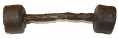
REVOLUTIONARY WAR IRON BAR SHOT, CYLINDRICAL-HEAD ("HAMMER") TYPE, RECOVERED IN THE CHAMPLAIN VALLEY, CIRCA LATE 18TH CENTURY
A solid wrought- and cast-iron bar shot of the cylindrical-head form, comprising two drum-shaped heads united by a single rigid bar. Bar shot — "dismantling shot" — was anti-rigging ordnance fired… (1298-21). Learn More »
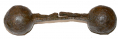
REVOLUTIONARY WAR / WAR OF 1812 IRON BAR SHOT (c. 1775-1815)
Iron bar shot of the classic two-headed ("dumbbell") form: a pair of solid cast-iron spheres joined by a heavy central bar. USE: Bar shot was first and foremost an anti-rigging round. In a naval… (1298-20). Learn More »

U.S. CONTRACT FLINTLOCK MUSKET, MODEL 1808 PATTERN, PERIOD-ALTERED TO CARBINE LENGTH – RECOVERED NEAR LAKE GEORGE, NY
A U.S. Contract flintlock of the Model 1808 pattern, period-altered to carbine length, with a recovery history in the Lake George region of New York. The arm retains its iron side plate, trigger… (1273-121). Learn More »
Showing 41 to 60 out of 317
Most Popular
Historical Firearms Stolen From The National Civil War Museum In Harrisburg, Pa »
Theft From Gravesite Of Gen. John Reynolds »
Selection Of Unframed Prints By Don Troiani »
Fine Condition Brass Infantry Bugle Insignia »
Rare Identified 65Th Ny Sergeant’s Jacket, With Manscript Material: 1St U.s. Chasseurs »
featured item
THEFT REPORTED AT AUTUMN GETTYSBURG SHOW
A vendor at the Autumn Gettysburg Civil War show held at the Allstar Events Complex on Oct. 28-29 reported that a Maryland sword belt plate valued at $3500 was stolen from a display case on Sunday afternoon. The Gettysburg Times published a… . Learn More »
site search