


site search
online catalog
Relics
Showing 101 to 120 out of 323

SECTION OF CIVIL WAR-ERA “PEAR RAIL” RAILROAD STOCK
The first railroad track widely laid in the United States was made of wooden stringers, running in the direction of travel, with a flat iron bar fastened to the top, called strap iron. This served… (84-97). Learn More »

IMPORT SAXON FIREARM LIEGE MANUFACTURE MODEL 1851 FROM GEORGE ROSENSTEEL’S CIVIL WAR NATIONAL MUSEUM IN GETTYSBURG
This Civil War P.J. Malherbe & Company “Saxon” Percussion Rifle was once part of George Rosensteel’s Civil War National Museum located in Gettysburg, PA on the Taneytown Road. Later the… (2025-3338). Learn More »

US MODEL 1842 HARPER’S FERRY MUSKET FROM GEORGE ROSENSTEEL’S CIVIL WAR NATIONAL MUSEUM IN GETTYSBURG
This US Model 1842 Harper’s Ferry Musket dated 1850 was once part of George Rosensteel’s Civil War National Museum located in Gettysburg, PA on the Taneytown Road. Later the museum incorporated… (2025-3337). Learn More »

EIGHT PANEL UMBRELLA INKWELL WITH OPEN PONTIL
This excavated, Civil War-era, eight-sided ink bottle is in very good condition and has a very pleasing cloudy aqua color. There are no cracks, breaks, or repairs. It measures approximately… (84-105). Learn More »

COMPLETE LEAD SABOT FROM 3” HOTCHKISS SHELL – WILDERNESS, VA
Offered here is the middle portion from a fired 3” Hotchkiss artillery shell. This is the lead sabot or driving band from the shell. Hotchkiss artillery shells were composed of three sections: the… (84-103). Learn More »
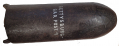
EXCAVATED U.S. 3” PARROTT SHELL FROM GETTYSBURG GAR POST #9
Here is a Gettysburg excavated Civil War Federal 3” field artillery projectile often referred to as a Parrott Type III shell excavated from an unknown location area on the Gettysburg battlefield… (2024-2135). Learn More »

MAKER MARKED US PATTERN 1826 EAGLE BREAST PLATE RECOVERED AT PETERSBURG, VA
The P1826 breast plate was still in widespread use during the Civil War as a commonly issued item to be affixed to the sling of the rifleman’s cartridge box. The plate is not overly tarnished on the… (595-2367). Learn More »
$295.00
ON HOLD
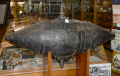
EXTRAORDINARILY RARE AND IMPORTANT CONFEDERATE RAINS BARREL TORPEDO - 1 OF 2 KNOWN - FROM THE TEXAS MUSEUM
This is a Rains barrel torpedo that was recovered during the Civil War in Mobile Bay, AL. It was developed by Gabriel James Rains, Chief of the Confederate Torpedo Service. Gabriel Rains was born in… (1268-690). Learn More »

GETTYSBURG RELIC DISPLAY OIL LAMP: MILLER POST 551, YORK SPRINGS, ADAMS COUNTY, PA
We highly recommend this item be picked up rather than shipped due to the glass involved, and it also appears to still contain some oil. This oil lamp is 22-inches tall would be a great focal point… (1202-868). Learn More »

US MODEL 1861 CONTRACT RIFLE MUSKET - DATED 1863 - BY E. ROBINSON OF NEW YORK, FROM THE YORK SPRINGS, PA GAR POST
Edward Robinson had US contracts for a total of 47,000 rifled muskets. The first contract was dated June 10th 1863, with subsequent contracts up to October 4th 1864. A total of 30,000 were… (1202-276). Learn More »
$2,250.00
SOLD
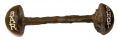
REVOLUTIONARY WAR 6-POUNDER BAR SHOT
Much of the American Revolution took place on the seas between a budding Continental Navy and the powerful British Royal Navy. Naval gunners on both sides fired a range of specialized projectiles from… (1202-950). Learn More »
$2,250.00
SOLD

LEAD SABOT FROM 3” HOTCHKISS ARTILLERY SHELL, FROM LOUISIANA – GREG COCO COLLECTION
This is the complete lead sabot from a fired 3” Hotchkiss artillery shell. The Hotchkiss pattern projectile was composed of three separate pieces. The lead sabot was fitted in the middle between the… (1300-56). Learn More »

REVOLUTIONARY WAR RELIC – “ICE CREEPER” FROM NORTH REDOUBT, NY
Offered here is a single “ice creeper” in very fine, relic condition. Made of iron, these devices were tied to soldier’s shoes to allow easier travel when facing snowy and icy… (2025-2003). Learn More »

RELIC CONDITION REVENUE CUTTER BUTTON
One piece Revenue Cutter button, 22mm. Backmark: “U STATES / REVENUE SERVICE” rm depressed channel, two inner and one outer solid ring. Albert FD1, Tice RM200A2 or B2. Some gilt remaining; shank… (2025-2102). Learn More »
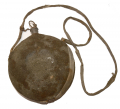
M1858 CANTEEN WITH COVER, SLING, & STOPPER FROM G.A.R. POST 551, YORK SPRINGS
This is a terrific old battlefield “pick-up” or “barn find” Civil War canteen. It is the M1858 “smooth side” canteen with pewter spout and three shoulder strap brackets. It is completely… (1202-866). Learn More »

U.S. MODEL 1863 MUSKET TOOL FROM LEE’S HEADQUARTERS MUSEUM COLLECTION
This Combination Tool was used for the standard M1861 / M1863 muskets. It was a widely used tool during the Civil War. It has an open cone wrench and two screwdrivers. Unmarked. It is approximately… (224-805). Learn More »

IRON US/CS HORSE BIT (BROKEN) FROM LEE’S HEADQUARTERS MUSEUM COLLECTION
Iron non-regulation bit used by Northern and Southern cavalry of the Civil War period. Side “cheek” pieces are approximately 6.5” long. These have two loops (at top and bottom) for tack.… (224-822). Learn More »

U.S. MODEL 1863 MUSKET TOOL FROM LEE’S HEADQUARTERS MUSEUM COLLECTION
This Combination Tool was used for the standard M1861 / M1863 muskets. It was a widely used tool during the Civil War. It has an open cone wrench and two screwdrivers. Unmarked. It is approximately… (224-804). Learn More »

U.S. MODEL 1863 MUSKET TOOL FROM LEE’S HEADQUARTERS MUSEUM COLLECTION
Here is an iron mold for .31 caliber pocket revolvers. Double cavity type; one round ball, one elongated ball. Hinge-type mold with sprue cutter mounted on top. It is approximately 5” long. Heavy… (224-807). Learn More »
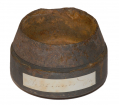
3.8” HOTCHKISS BASE CUP WITH “RICHMOND, VA” LABEL FROM YORK SPRINGS, PA G.A.R. POST #37 COLLECTION
Offered here is an early “battlefield pick-up” relic that was part of the collections on display at the York, PA, #37 “General Sedgwick” Grand Army of the Republic Post. The item is the iron… (1202-878). Learn More »
Showing 101 to 120 out of 323
Most Popular
Historical Firearms Stolen From The National Civil War Museum In Harrisburg, Pa »
Theft From Gravesite Of Gen. John Reynolds »
Selection Of Unframed Prints By Don Troiani »
Fine Condition Brass Infantry Bugle Insignia »
Rare Identified 65Th Ny Sergeant’s Jacket, With Manscript Material: 1St U.s. Chasseurs »
featured item
BEAUTIFUL OFFICER’S SHELL JACKET OF COLONEL, LATER BREVET BRIG. GEN. WINSOR B. FRENCH 77th NEW YORK
This officer’s shell jacket was worn by Winsor B. French while Colonel of the 77th New York and carries his name in old brown ink on interior of the hanging loop inside the collar. Short jackets like this were non-regulation, but popular with both… (1314-06). Learn More »
site search