

site search
online catalog
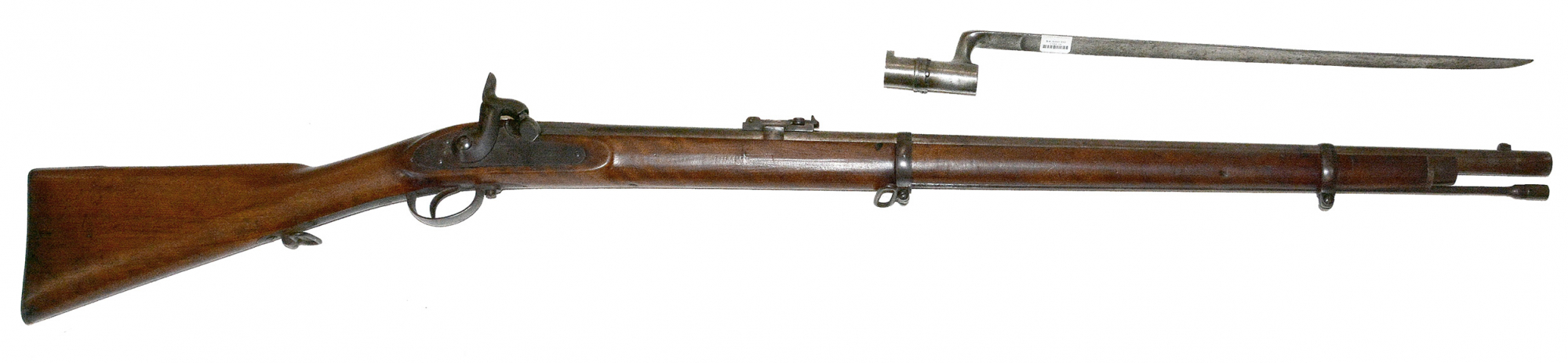
RARE CONFEDERATE SPANISH ENFIELD - THE MODEL 1857/59, #372, ORPHAN BRIGADE!
Hover to zoom





$4,500.00 SOLD
Quantity Available: None
Item Code: 1164-19
These rifles are rare, but there is good evidence for their import here, for their use by Confederates, and in particular for the use of 1861-dated examples serial numbered under 500, like this one, by members of the C.S. Kentucky “Orphan” Brigade: the 2nd through 6th and the 9th Kentucky Infantry (“orphaned” by the state’s inability to secede.)
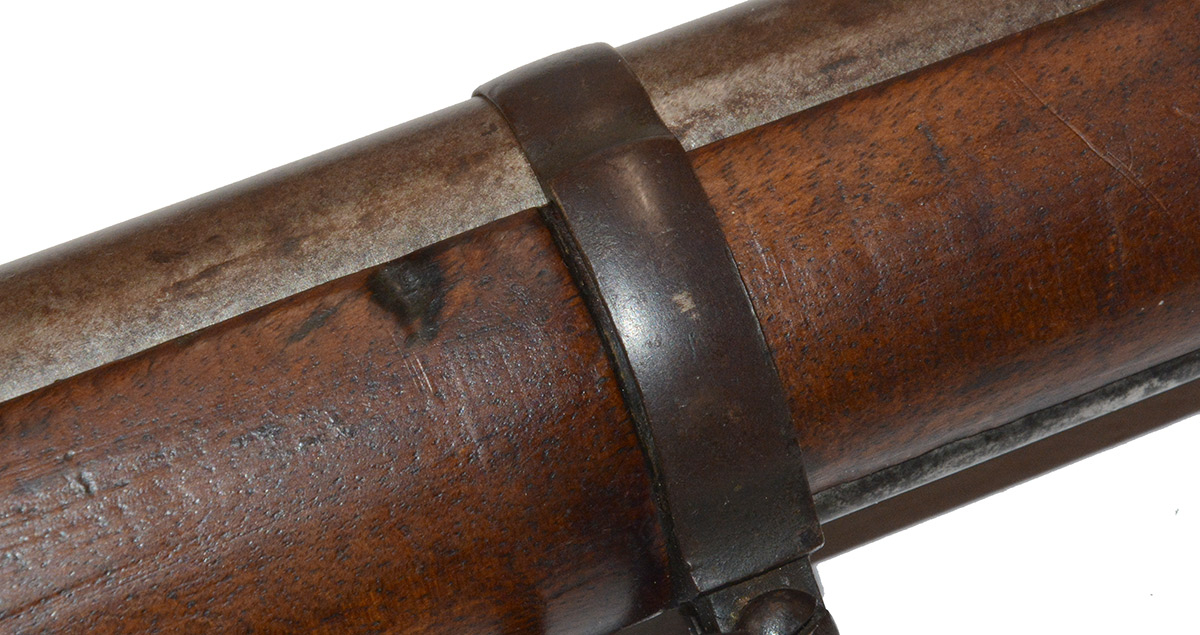
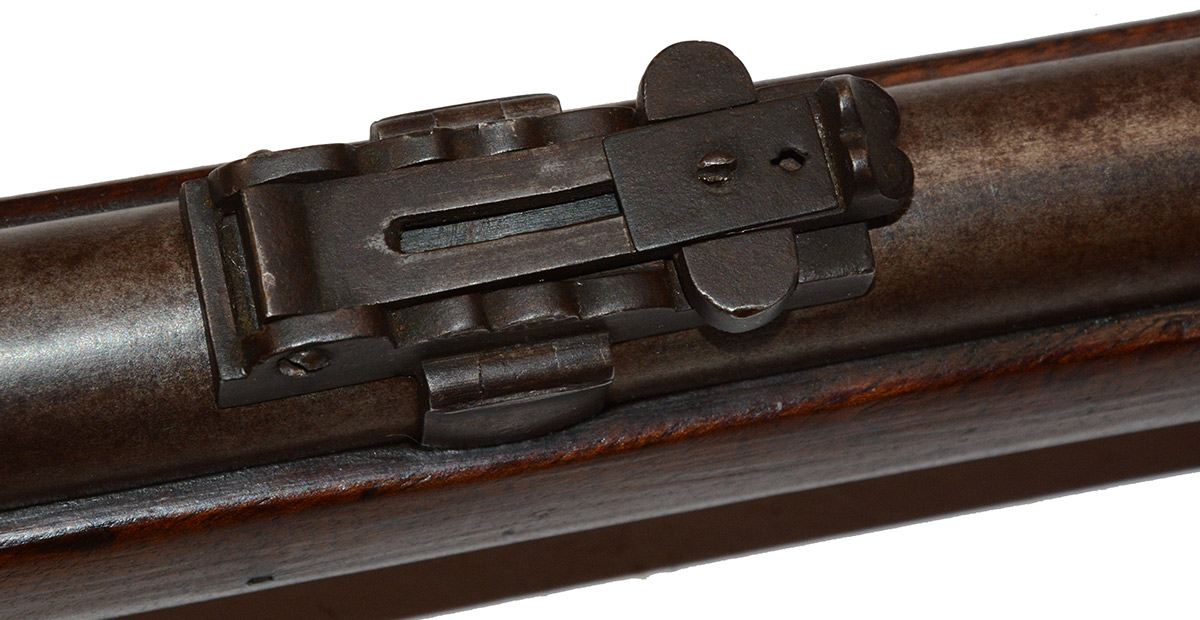
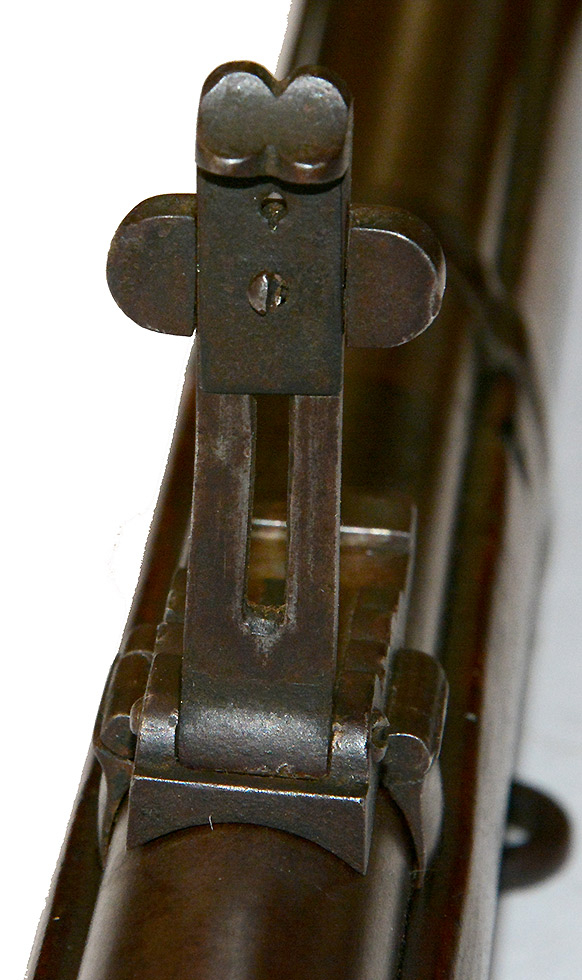
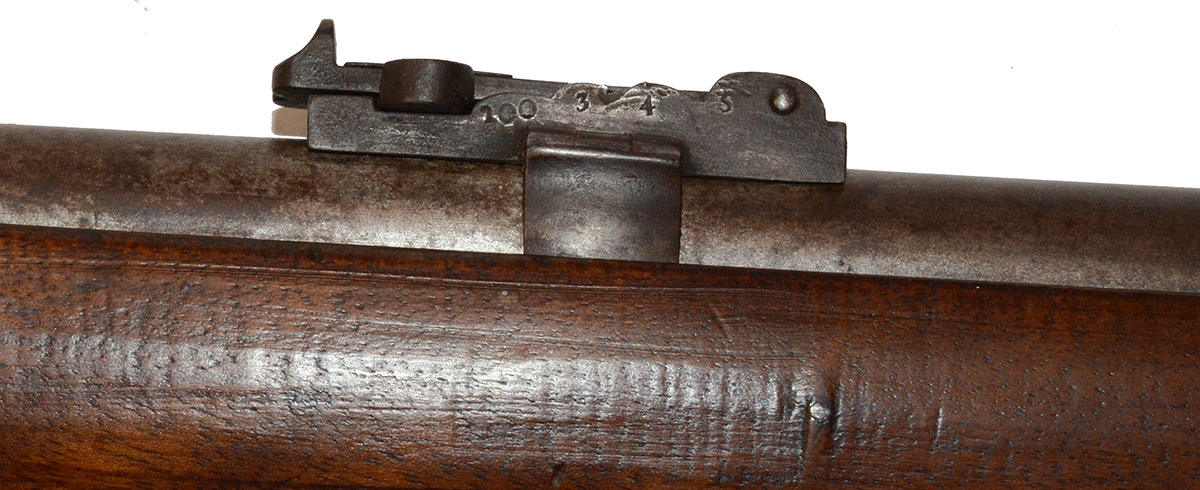
Adopted in 1857 with modifications in 1859, these rifle muskets are patterned on British M1853 Enfield, showing especially in the lock, the use of screw-tightened clamping barrel bands, though two instead of three, and British style rear sight, though attached by a broad band rather than solder. They were also made in .577 caliber, or something close enough to it (Schwalm and Hoffman say 14.6 mm, which works out to about .574.) The ramrod differs having a plain, two-stage cylinder tip without finger ridges, and the sling swivels are attached to the lower band and the buttstock. The front sight is like the British pattern with base for a socket bayonet. The Spanish ordered quantities from Birmingham and Liege makers and also from four domestic makers, including Riera, Zamora and Company in Madrid, who had an order for 8,000 in 1860, but seem to have turned out only about 1,000, using barrels and sights acquired elsewhere.
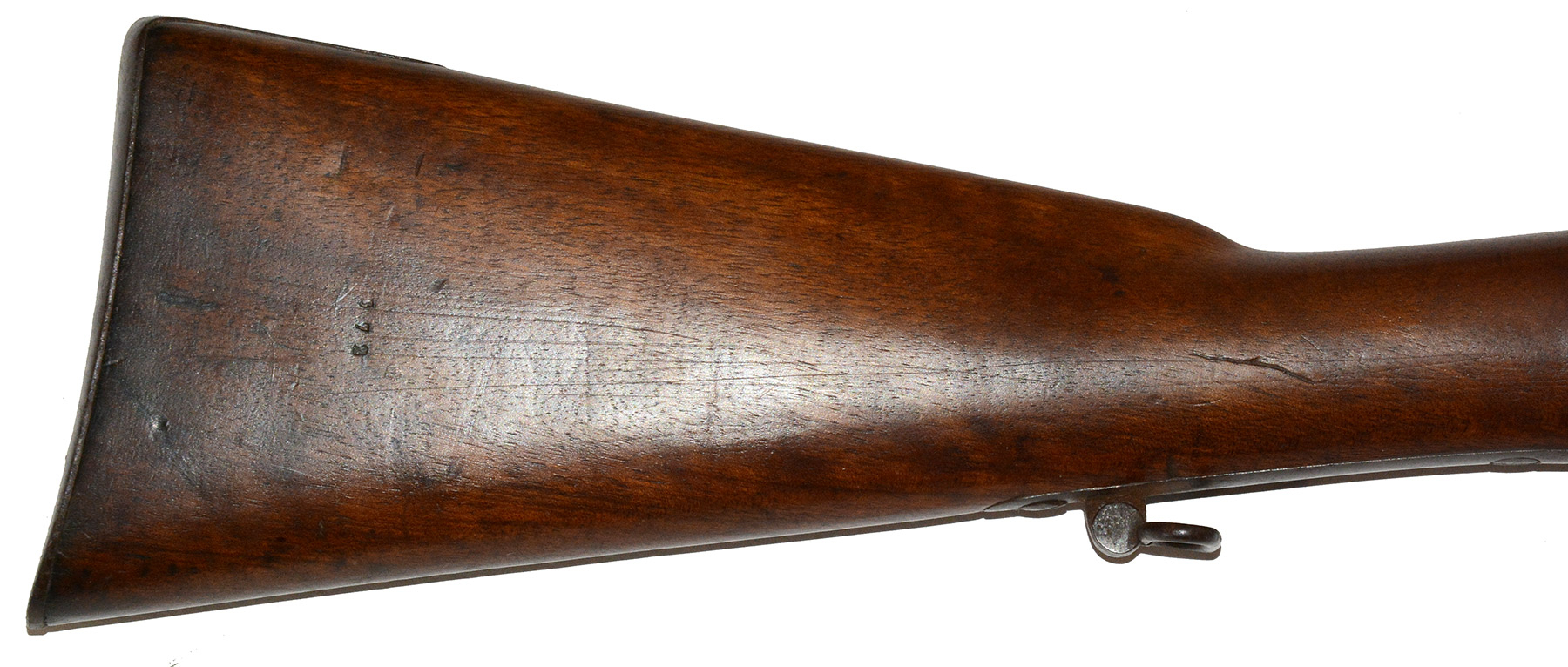
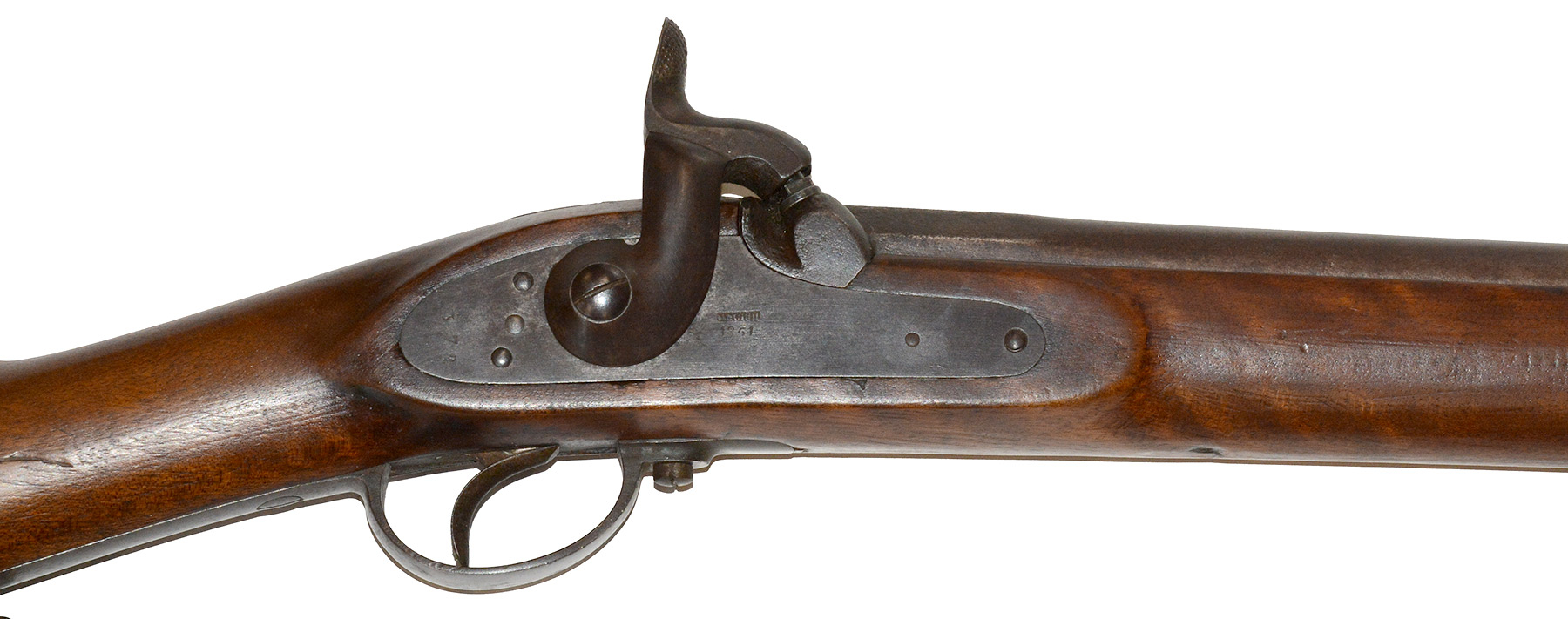
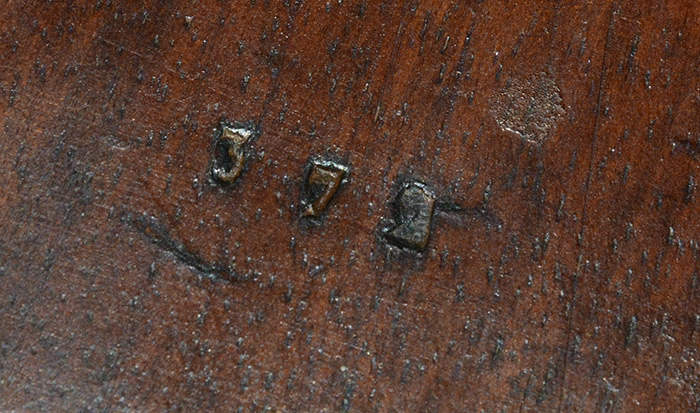
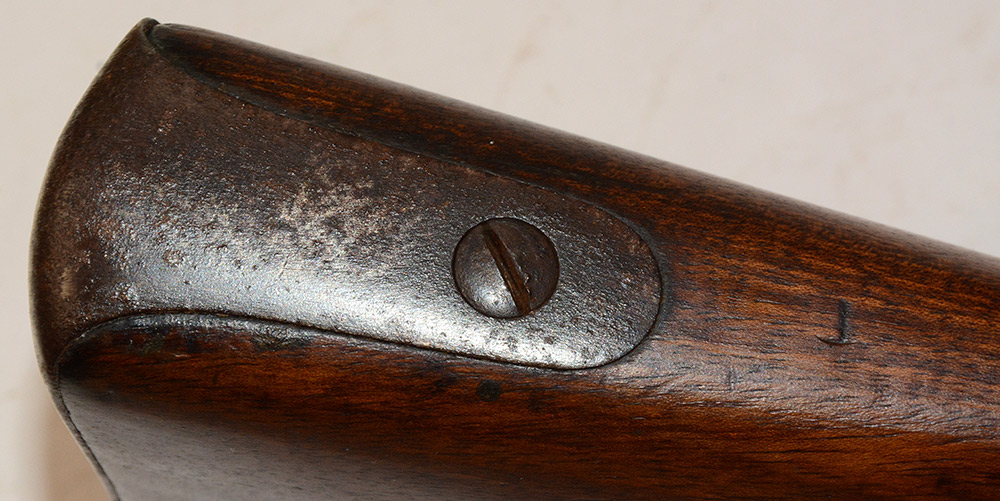
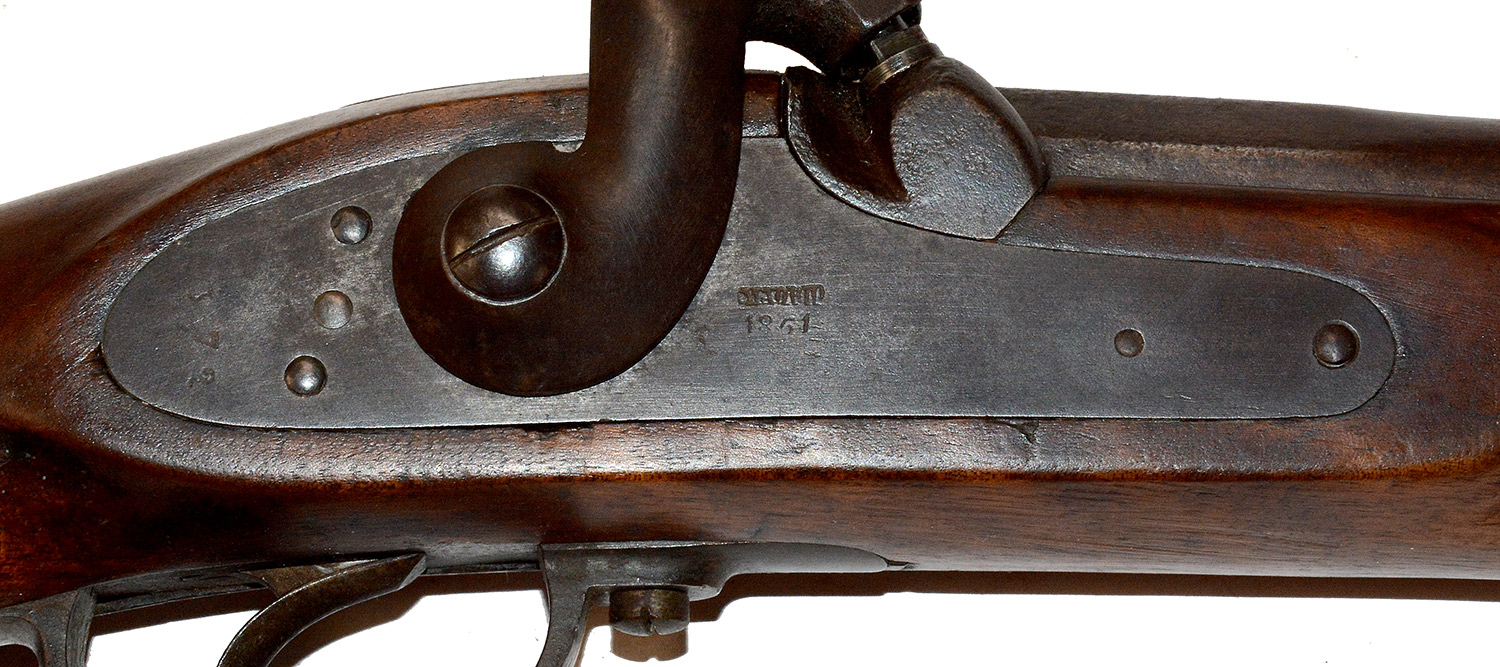
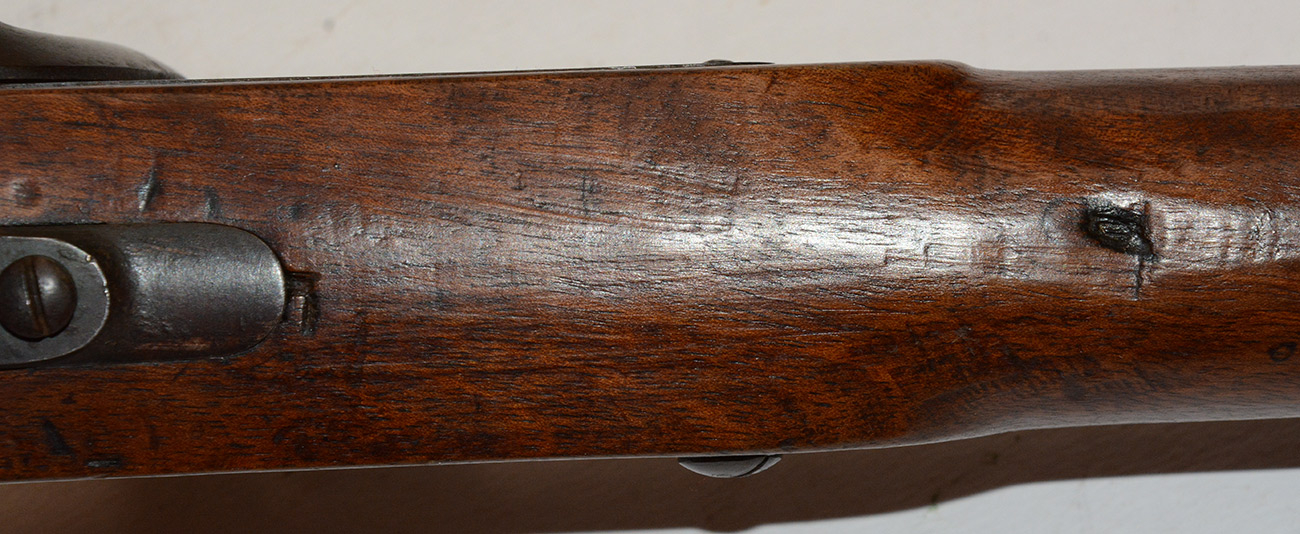
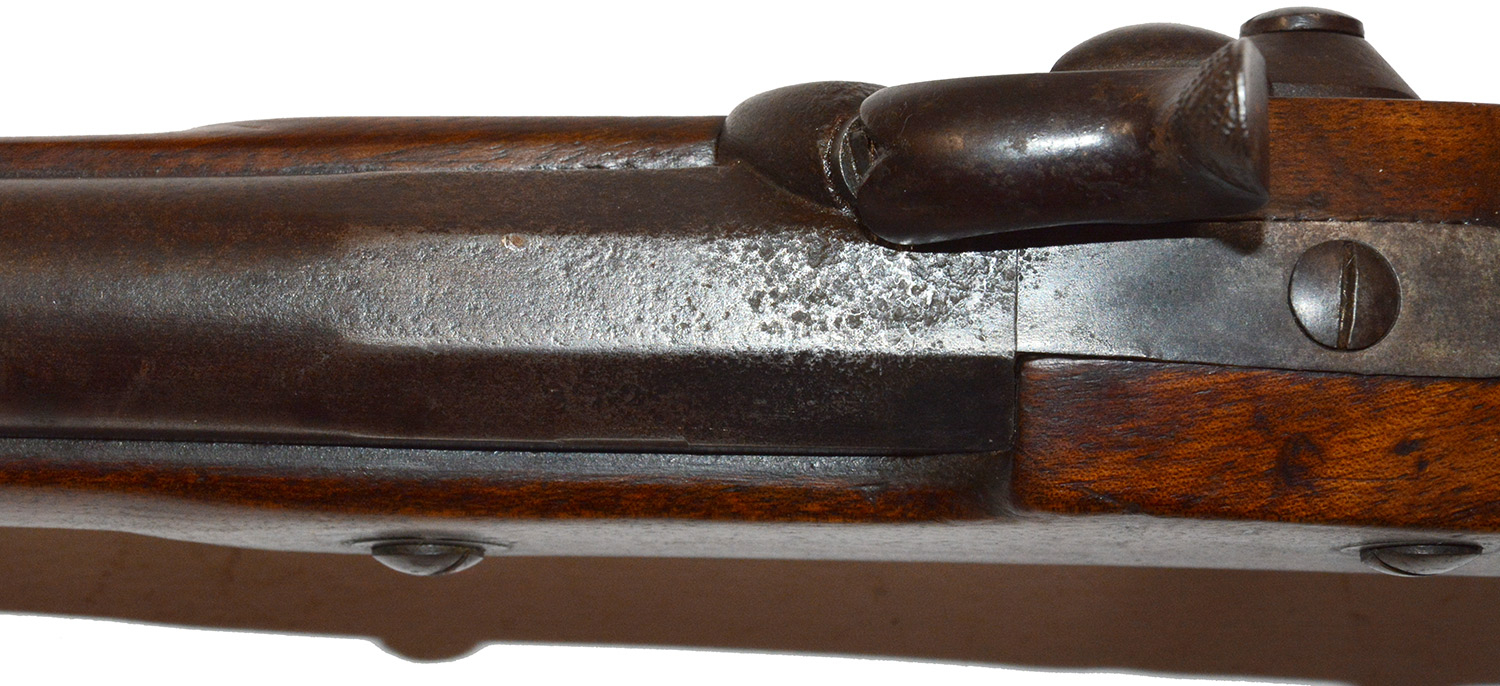
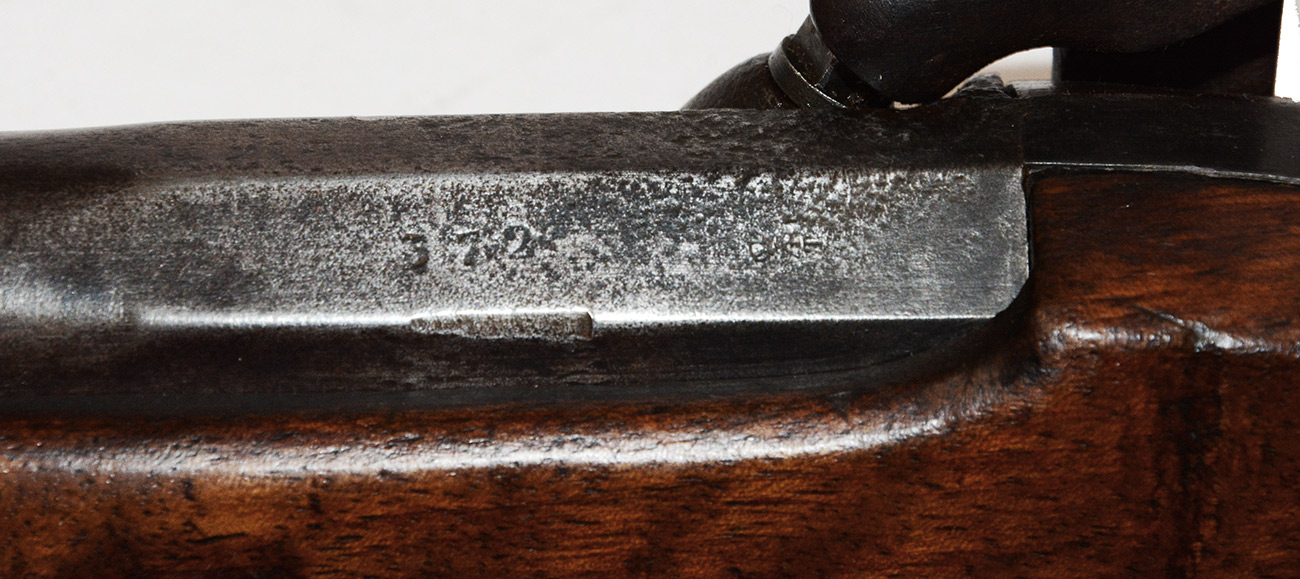
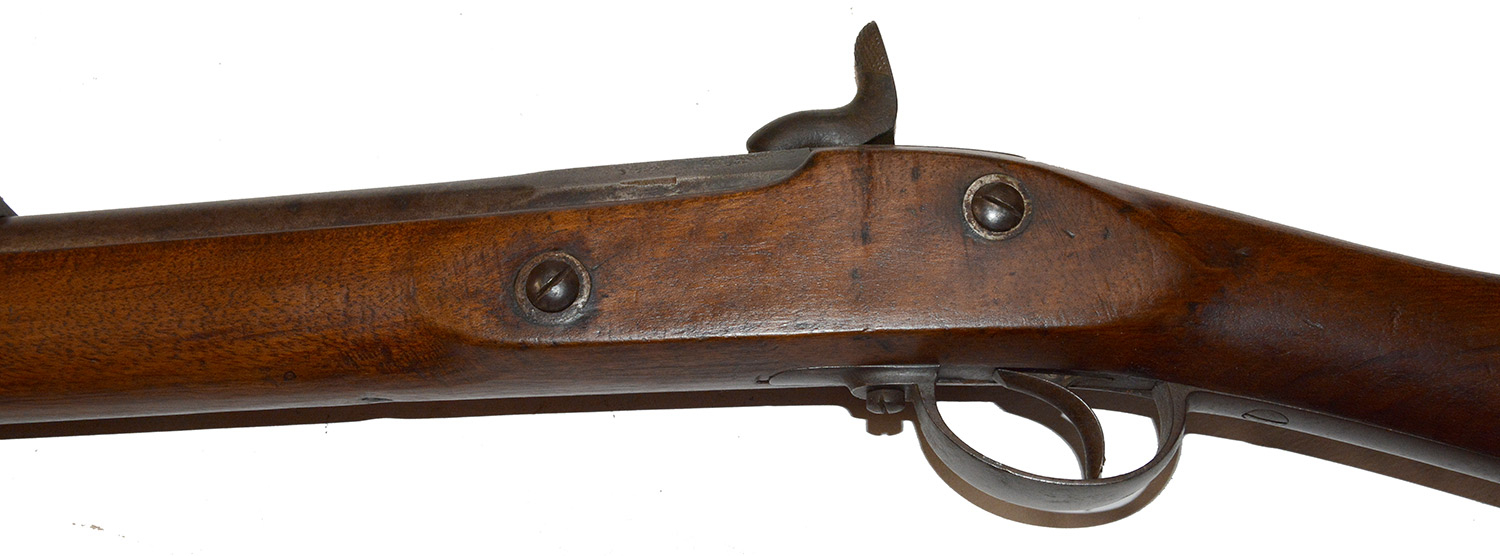
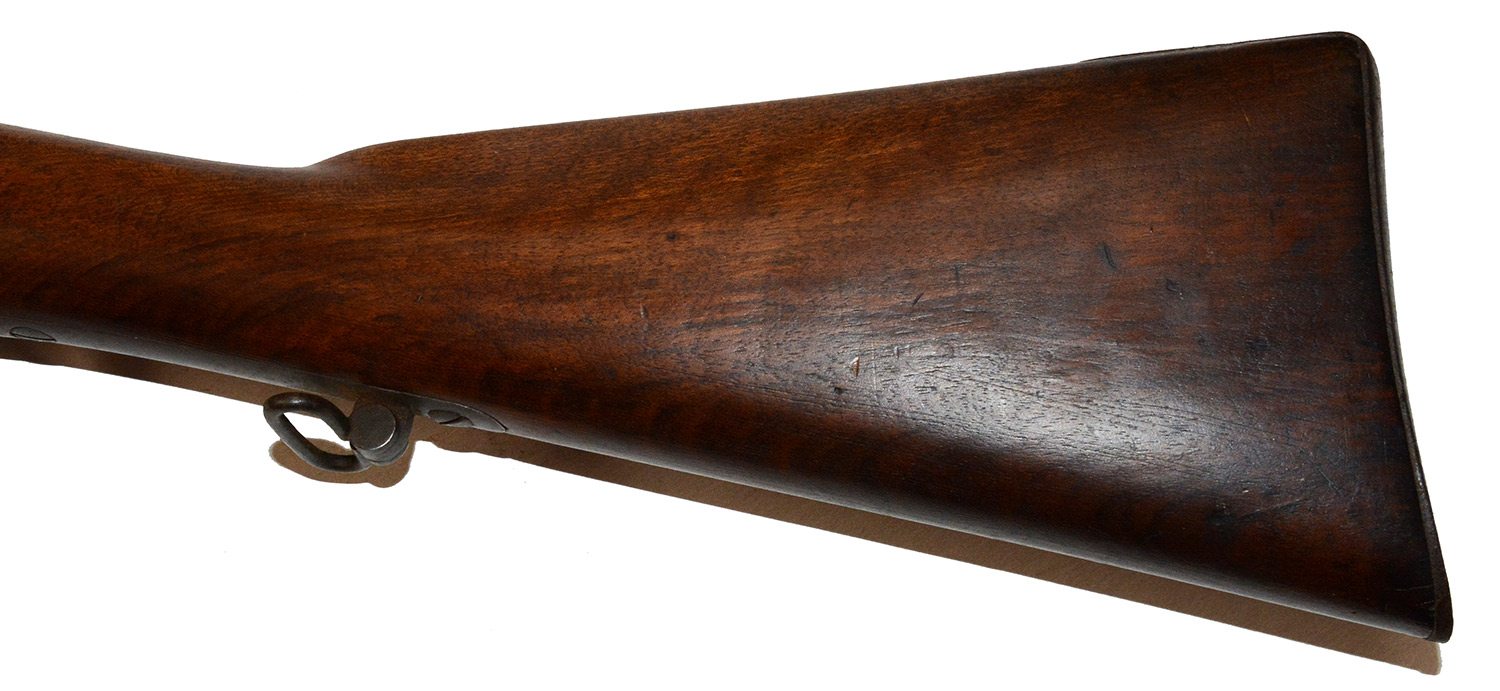
The lockplate on this one is marked forward of the hammer [crown]/ MADRID / 1861, indicating it is one of Riera, Zamora guns. Behind the hammer the lockplate is stamped the number 372, which is also stamped on the left side flat of the barrel at the breech, and in the wood of the right butt flat. The numbers are fully legible in both wood and metal. We have not disassembled the rifle, but the number should appear inside on some other parts as well. The metal is very good. The barrel shows a mix of thin blue turned plum over silver-gray. The bands and sight show stronger blue. The buttplate shows some corrosion. The lock plate is excellent though the crown is a tad light. The wood is very good, with good color, fit, and edges. There is a little chattering behind the nose cap from movement of the upper band. We see only minor handling marks, a small ding on the right forestock between the bands, one at the upper edge behind the lower band, and one on the underside forward of the triggerguard.
One immediate indicator of Confederate usage is pitting on the top of the barrel next to the nipple and bolster. This has concealed any breech markings, but left untouched some thin blue on the breechplug tang. This is typical of Confederate-used arms fired with imported British high-pressure percussion caps. These more powerful caps were introduced to ensure ignition in arms using combustible cartridges and only dropped in the British service about 1864 after complaints.
Evidence for a Kentucky connection in particular for these rifles comes not just from reports of some surfacing in Kentucky estates, all dated 1861 and bearing serial numbers under 500 on the lock, stock, and barrel, but more concretely from one identified by the family as belonging to a member of the 5th Kentucky (Schwalm and Hofmann, 74-75.) These may have been among guns known to have been privately purchased by the regimental commander, but there is an even stronger Spanish connection through brigade commander William Preston who was on his way home to Kentucky from his post as ambassador in Madrid when the war broke out and was asked by C.S. authorities to acquire Spanish arms or at least set up contacts. That some Spanish arms were actually offered to the Confederacy at an early date is proven by a letter from two arms dealers in Cuba (a Spanish possession, after all) who had been engaged in May 1861 to look for military supplies by C.S. Chief of Ordnance Josiah Gorgas. On July 17, 1861, they forwarded a list of available items, with prices, to a CS purchasing agent. The list starts off with “6,500 Infantry muskets, Spanish pattern,” immediately followed by “500 minie rifles with bayonets,” which might be the Spanish M1857/59.
A later C.S. purchase of Spanish Enfields by Magruder in Texas is well documented, but dates to December 1863 and likely accounts for the higher numbered, 1863-dated examples that occasionally turn up. Magruder engaged “contractors” to purchase arms in Mexico and transport them across the border, paying them in cotton at an exchange rate he regarded as high, but absolutely necessary. Magruder wrote on December 21, 1863, that he had purchased and distributed “300 stand of arms, powder, &c., from Mr. House.” Those arms are identifiable as Spanish Enfields from a letter written the day before, Dec. 20, by Magruder’s A.A.G. indicating 16,000 British Enfields were available in Vera Cruz, which he regarded essential to the war effort: “They must be had, as they are the only English Enfield rifles on this side of the Atlantic that can be had. The Enfield rifles just brought in by Mr. House are Spanish, and not nearly as good.” (O.R. 26.2.517) And, on Dec. 22 Magruder himself refers to the arrival of, “a cargo of 300 Spanish rifles.”
Some Spanish arms may have come into U.S. hands as well, but not many. The U.S. consul in Madrid wrote in March 1862 that he had sent Spanish arms for the use of the Union army, but gives no numbers or types, though they may have been among those listed in some postwar government firearms sales as, “355 Spanish, caliber small,” or scattered sales from September 1880 to December 1881 of “.577 Spanish Rifles” that total 391, with an undated single stray sale bringing it to 392, but there is no record of when they were acquired or what their dates might be.
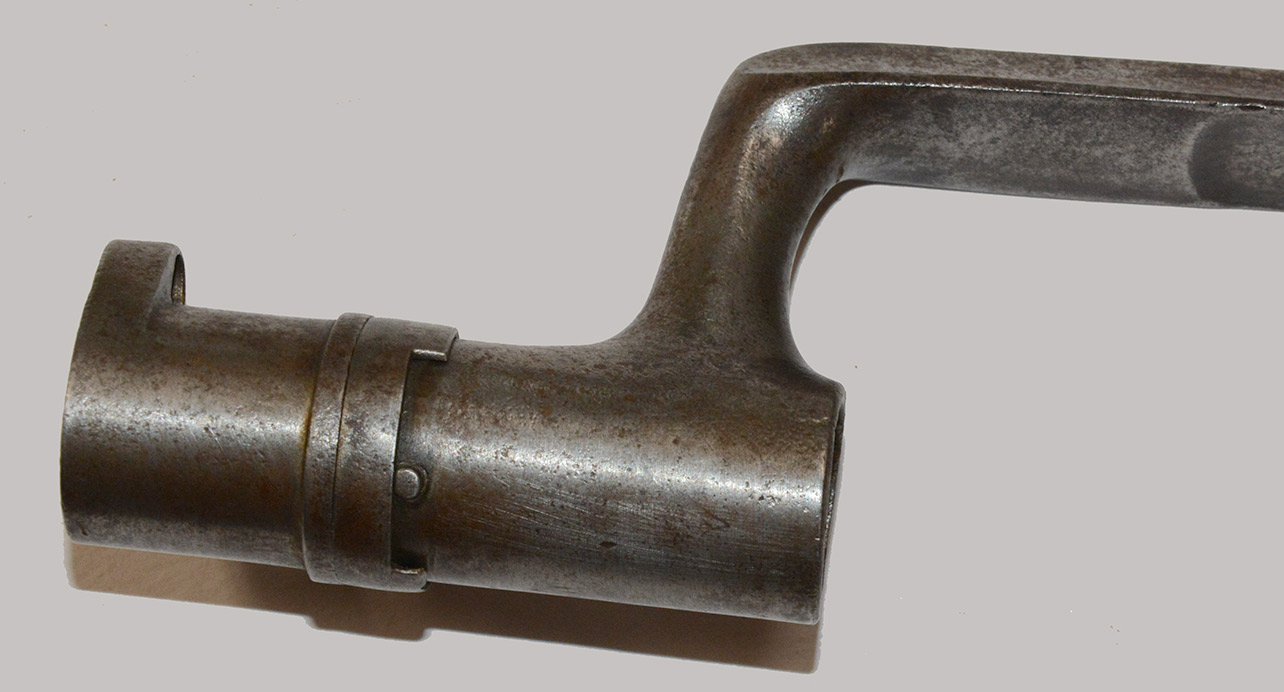
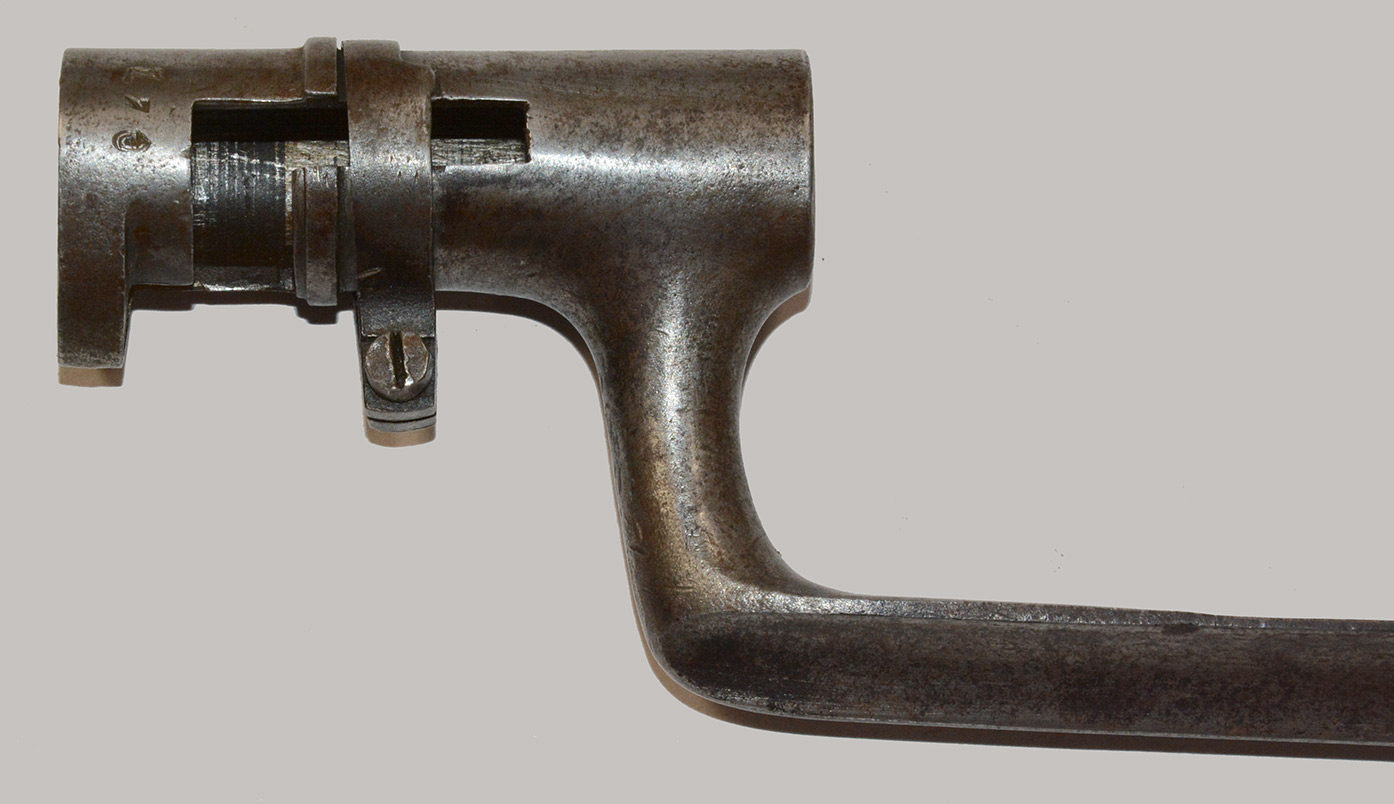
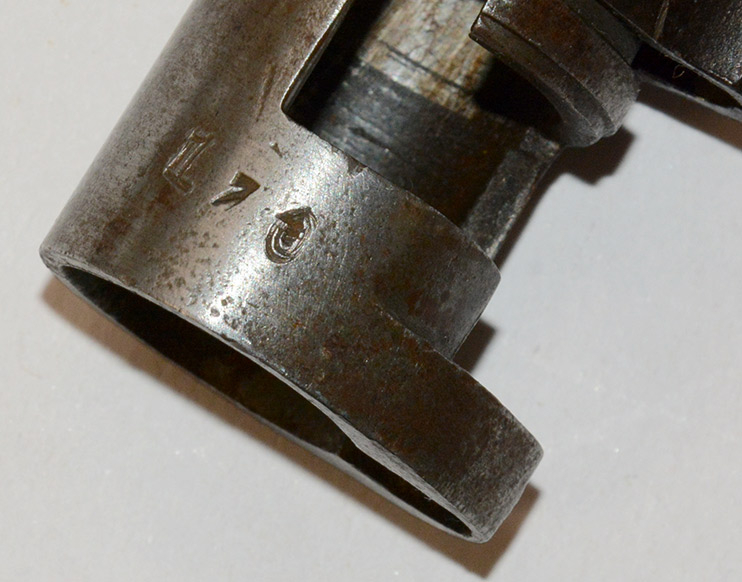
We include with this an original Spanish M1857 bayonet, correct for this rifle, with locking ring in place, smooth metal, good edges and point, and showing as a steel gray with small thin gray and light brown spots. We see no markings on the ricasso. The socket is marked below the mortise “L 74” with the first mark rather large and not impossibly a “1,” and the last digit apparently over an inspection or maker’s mark. According to Noe and Sebaroli, it is not known where the domestic rifle makers like Riera Zamora obtained their bayonets, which were made in Spain, Belgium, England and Germany. We would guess the lack of ricasso markings points away from the last two at least. In any case, they illustrate one with numbers in the same position on the socket (183-184.)
These 1861-dated and low serial numbered Spanish Enfields are incredibly rare. This has all the right indicators and the area of high-pressure percussion cap corrosion is a nice confirmation. This one would make a great addition to a Confederate arms collection or a display related to Kentucky Confederates. [SR] [ph:L]
DISCLAIMER: All firearms are sold as collector's items only - we do not accept responsibility as to the shooting safety or reliability of any antique firearm. All firearms are described as accurately as possible, given the restraints of a catalog listing length. We want satisfied customers & often "under" describe the weapons. Any city or state regulations regarding owning antique firearms are the responsibility of the purchaser. All firearms are "mechanically perfect" unless noted, but again, are NOT warranted as safe to fire!
~~~~~~~~~~~~~~~~~~~~~~~~~~~~~~~~~~~
THIS ITEM, AS WITH ALL OTHER ITEMS AVAILABLE ON OUR WEB SITE,
MAY BE PURCHASED THROUGH OUR LAYAWAY PROGRAM.
FOR OUR POLICIES AND TERMS,
CLICK ON ‘CONTACT US’ AT THE TOP OF ANY PAGE ON THE SITE,
THEN ON ‘LAYAWAY POLICY’.
THANK YOU!
Inquire About RARE CONFEDERATE SPANISH ENFIELD - THE MODEL 1857/59, #372, ORPHAN BRIGADE!
Most Popular
Historical Firearms Stolen From The National Civil War Museum In Harrisburg, Pa »
Theft From Gravesite Of Gen. John Reynolds »
Selection Of Unframed Prints By Don Troiani »
Fine Condition Brass Infantry Bugle Insignia »
featured item
CAVALRY OFFICER’S SABRE IDENTIFIED TO CAPTAIN MARCUS A. MOORE, 1ST MASSACHUSETTS CAVALRY
Manufactured: Newark, NJ Maker: Sauerbier, Henry Year: Early Civil War Model: Model 1840 transitional with 1860 style grip Size: 34.2 inch blade, 1.17 wide, .353 thick This sword has all true Type 1 features with the exception of the Model 1860 style… (870-159). Learn More »
site search