

site search
online catalog
STATE OF NEW JERSEY MARKED US CONTRACT MUSKET

Hover to zoom




$2,250.00 SOLD
Quantity Available: None
Item Code: 2025-3653
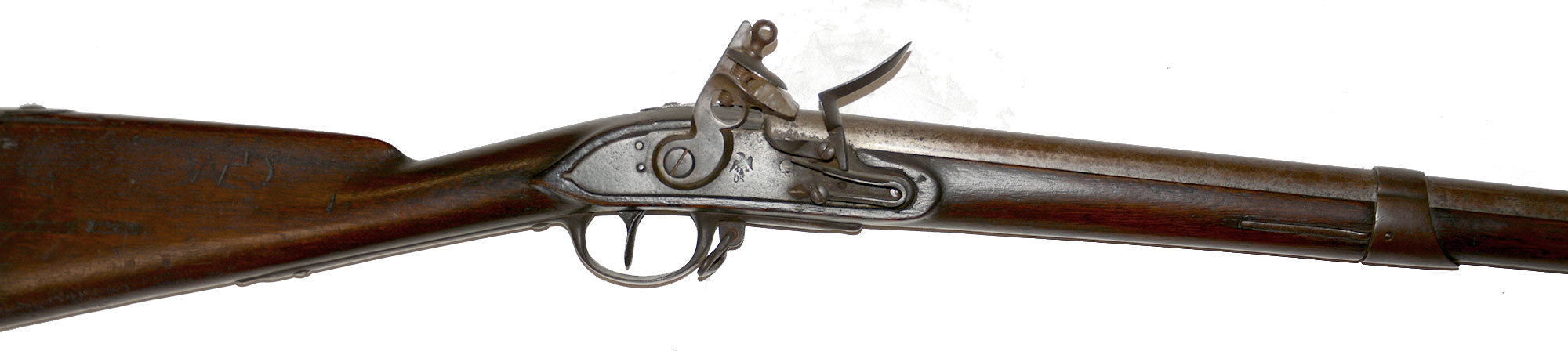
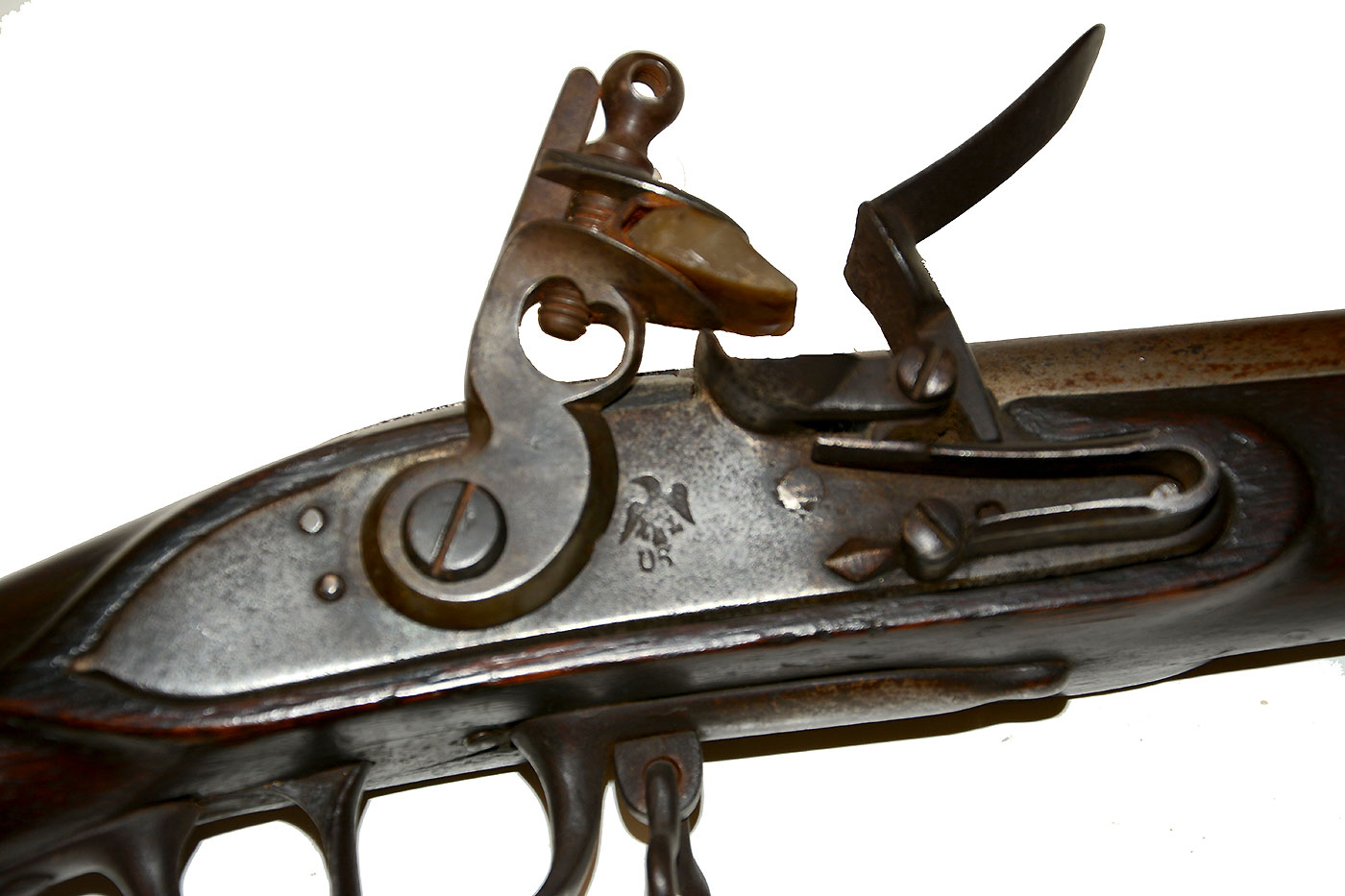
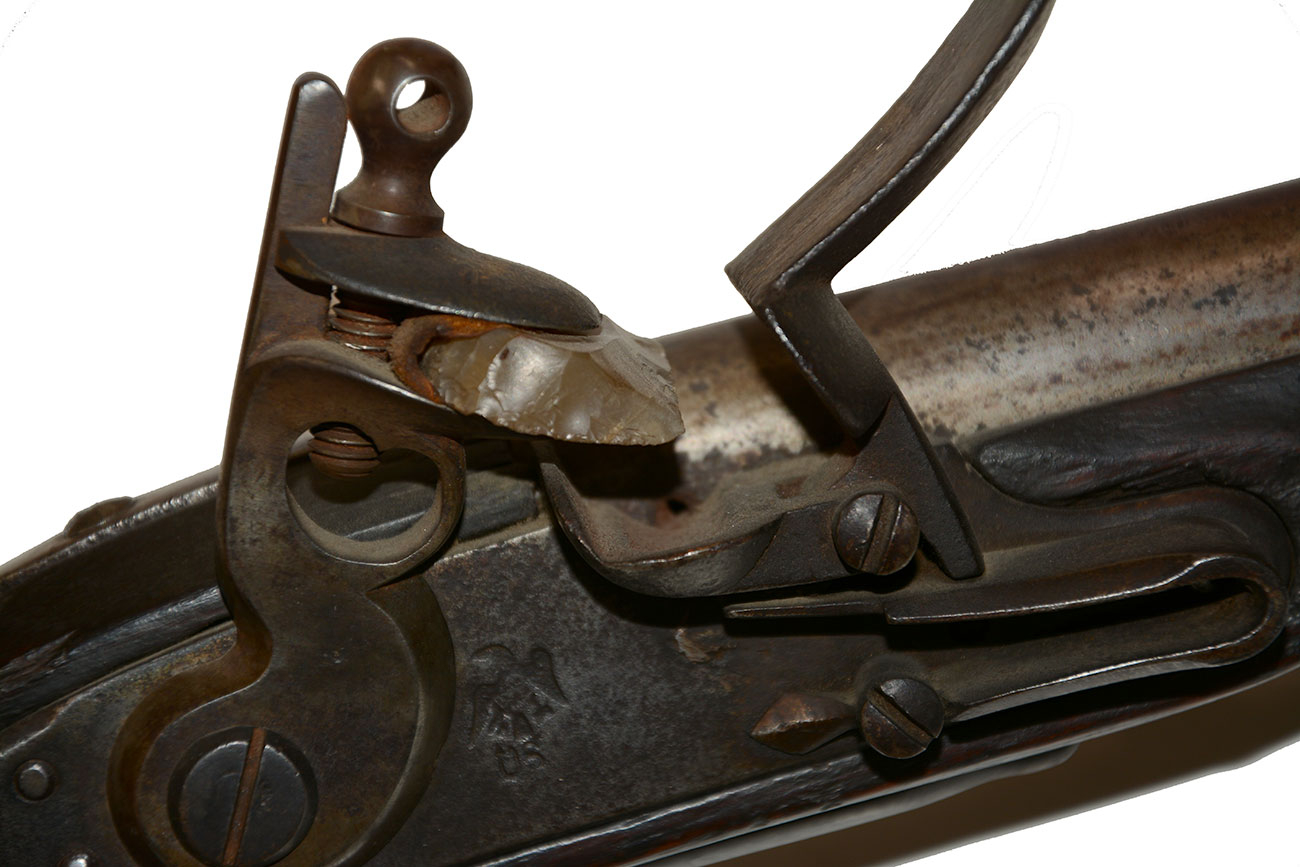
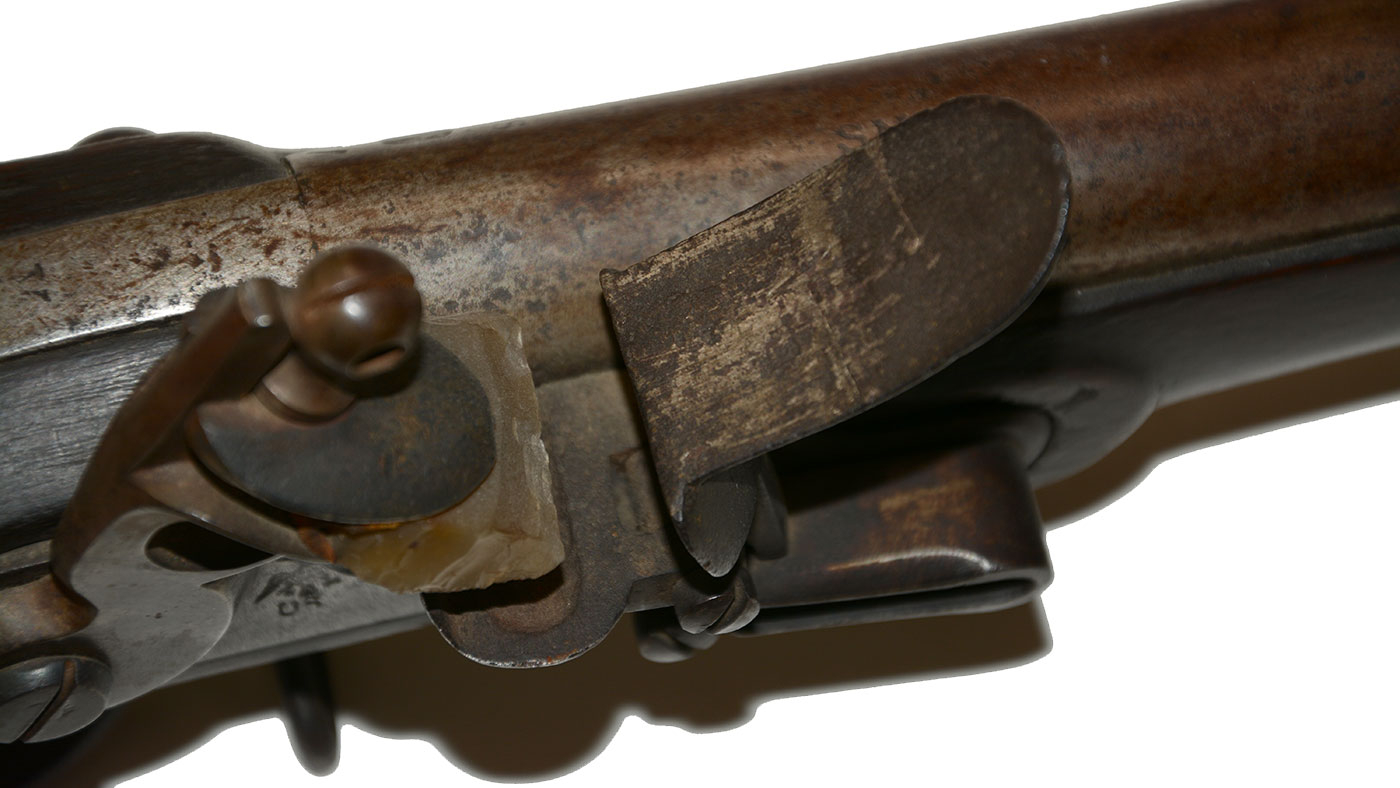
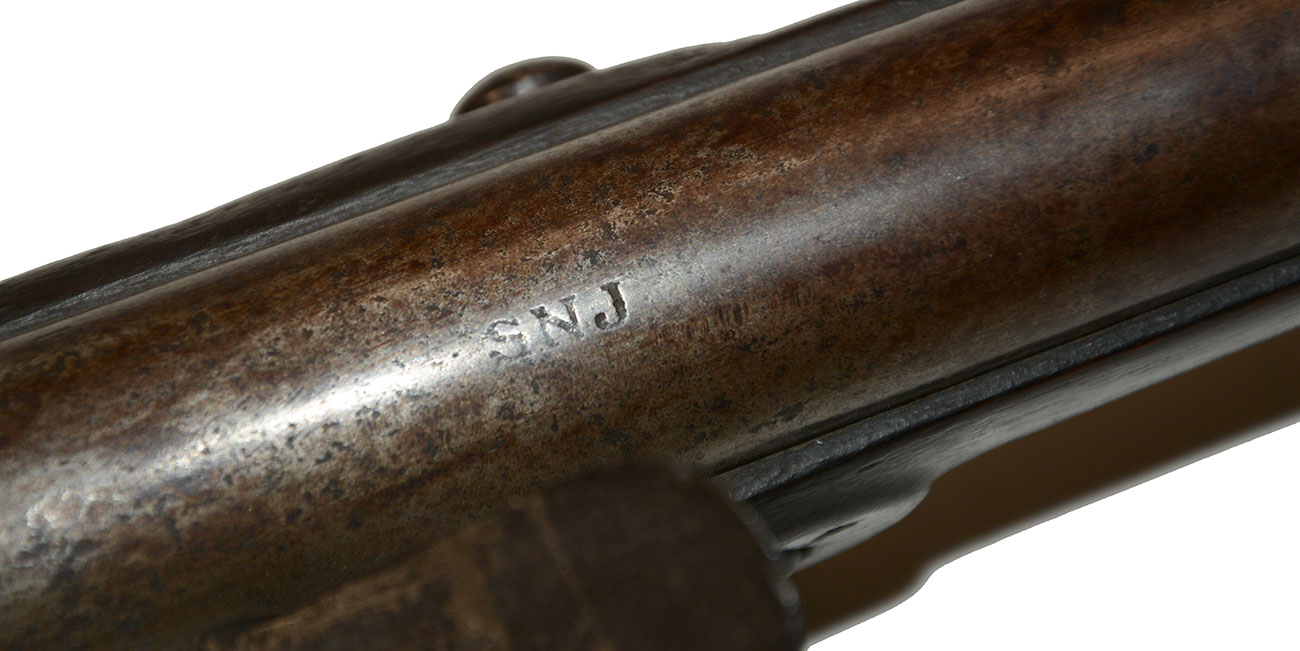
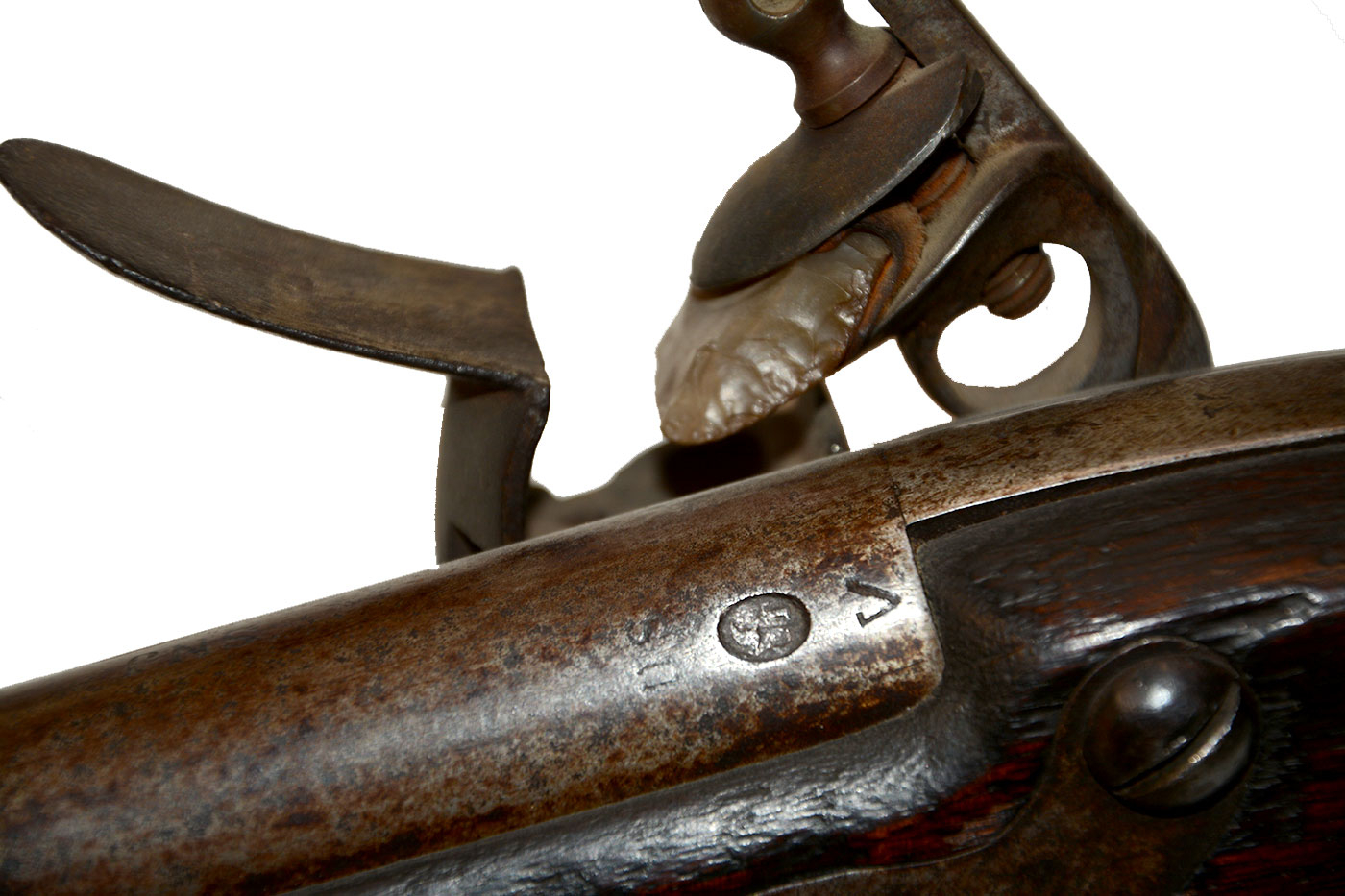
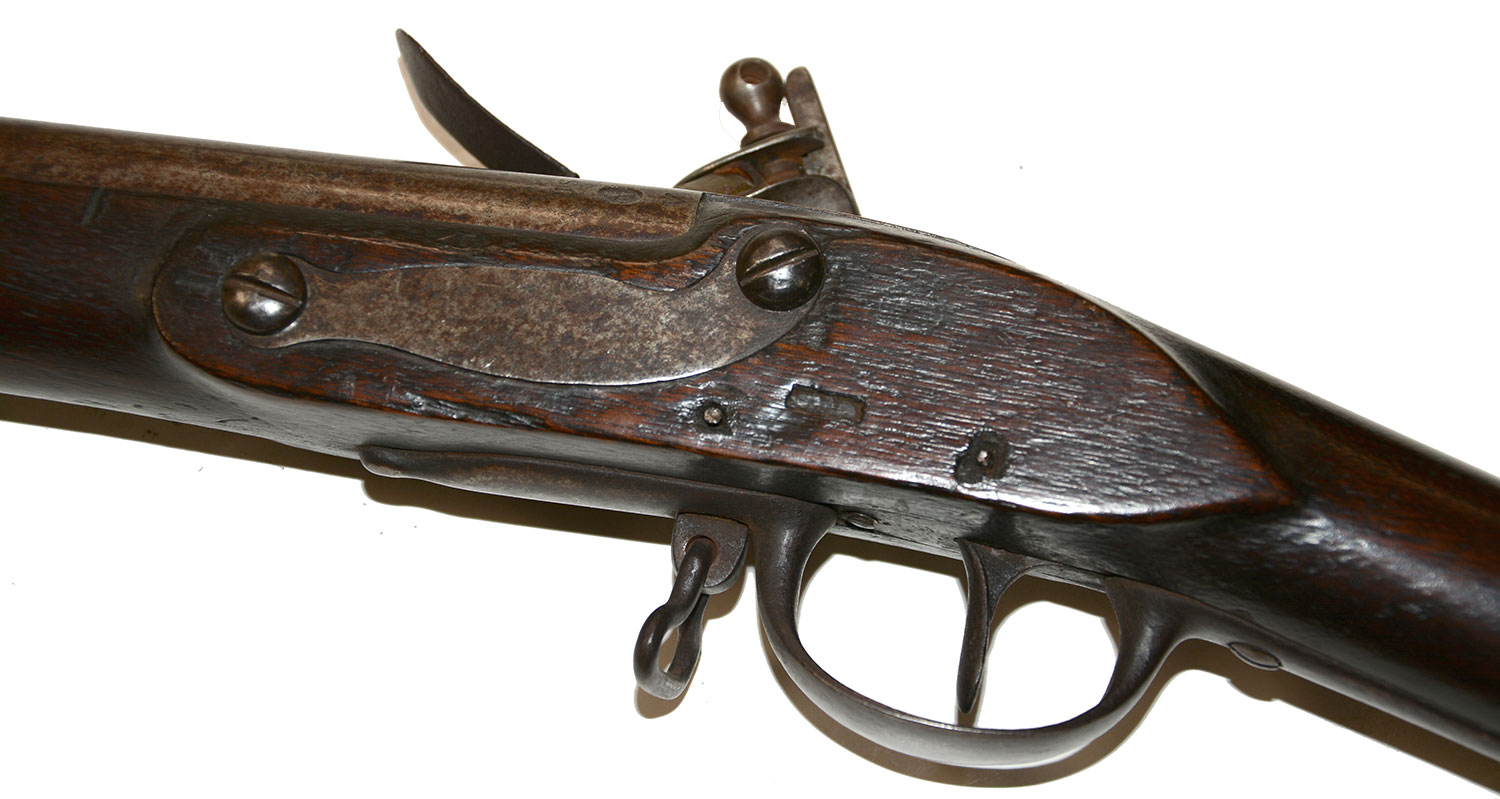
This musket bears a very clear “SNJ” state ownership stamp on the top of the barrel just forward of the frizzen. The barrel has very clear proof marks on the left breech: a “US” over a sunken oval with eagle’s head (facing right) over “CT,” and “V” at the base of the breech, indicating it was produced on a US contract. The lock plate is not maker marked, but does show a very clear eagle with raised wings, head turned to the rear, long tail feathers extending below its claws, over a block “US” that is slightly toward the rear rather than centered. The barrel is 44-5/8” long, with all bands, springs, bell-shaped sling swivels in place and bottom-mounted bayonet stud in place. The right-facing eagle in the barrel cartouche is mostly associated with US inspection of muskets made by New England contractors. The bottom mounted bayonet stud usually indicates the musket was based on a Harpers Ferry pattern, though the straight rear tang profile with rounded top suggests a Springfield pattern, a mix seen on other muskets by makers such as Jenks and Leonard in New England. We have not removed the lock to check for markings. The absence of a maker’s mark on the plate may indicate a subcontractor product for someone with a US contract.
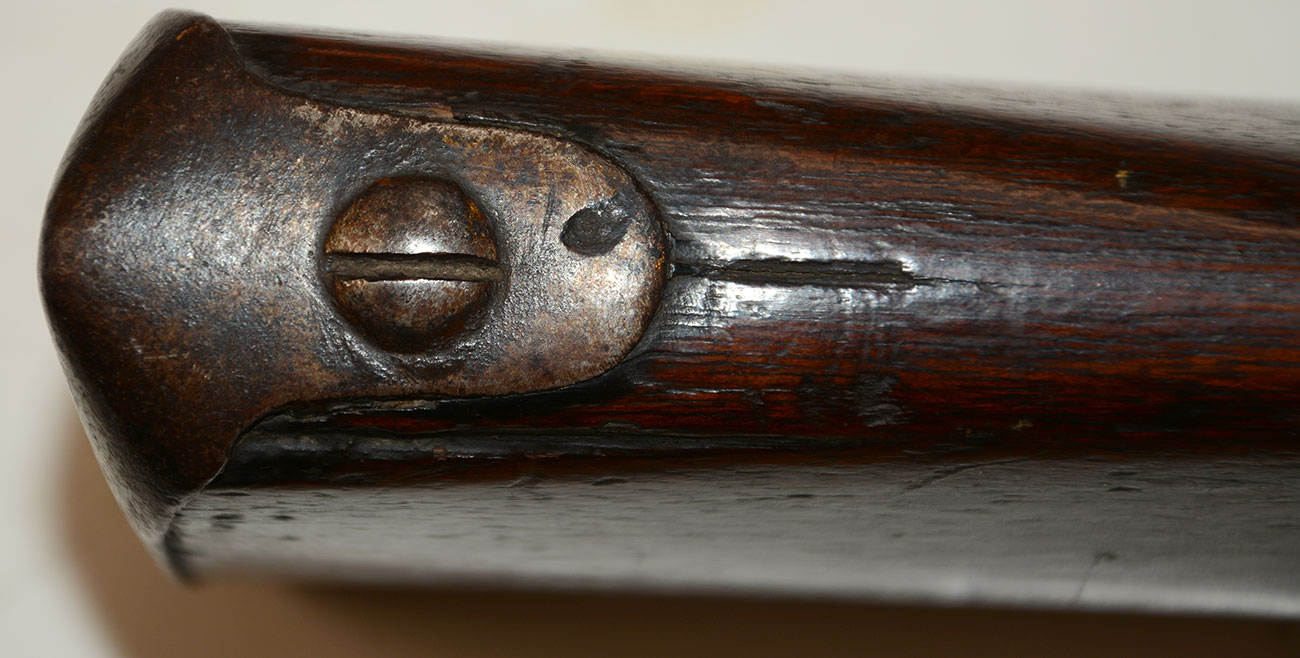
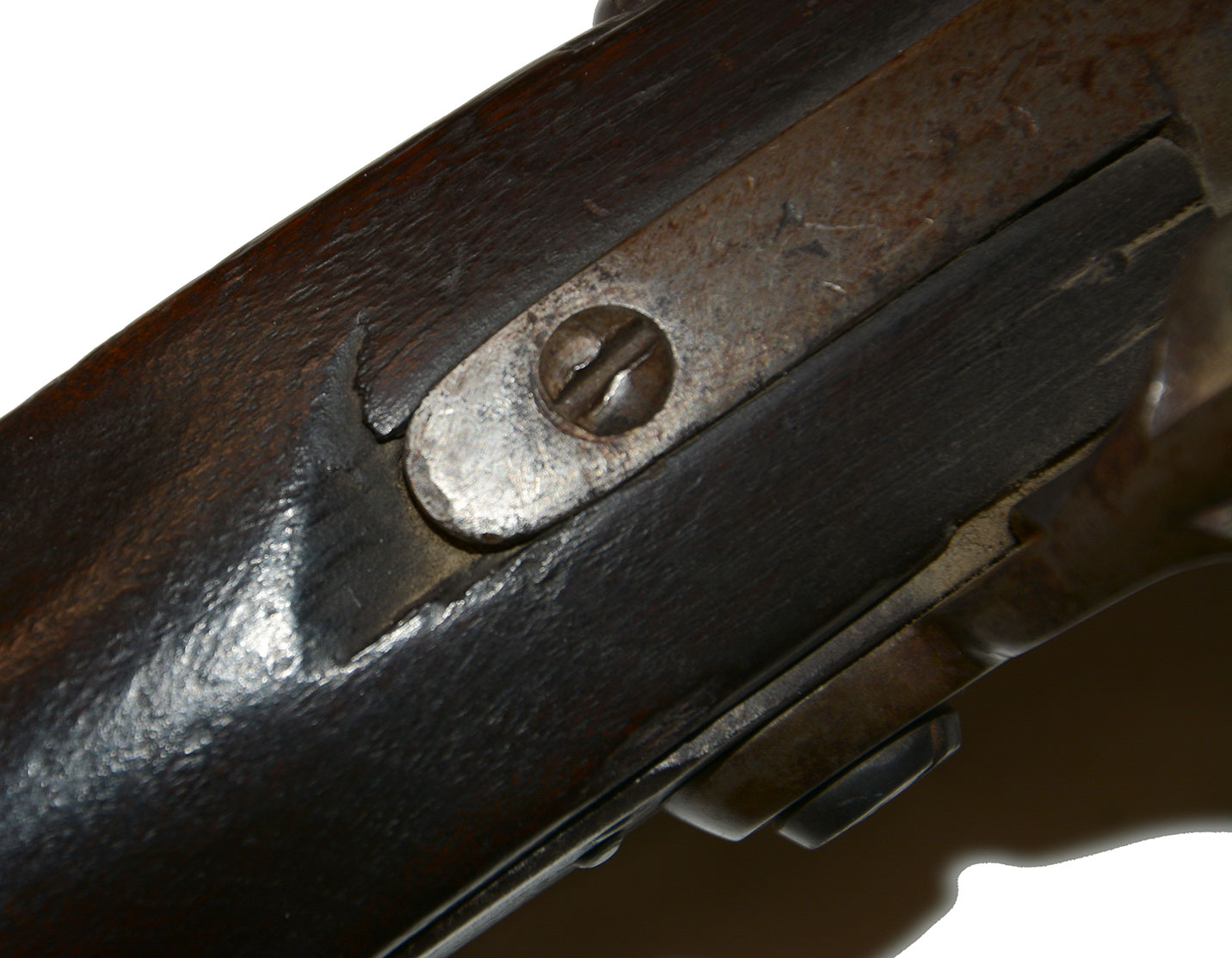
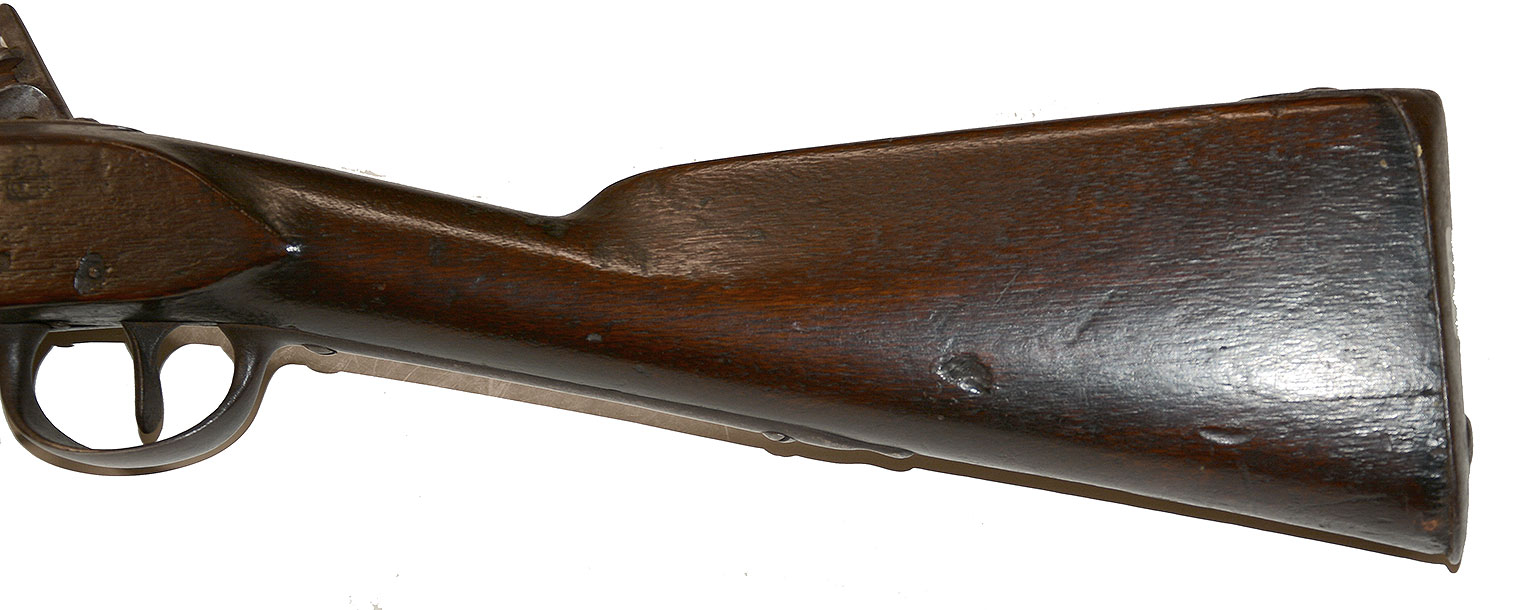
The metal is smooth overall, showing gray mixed with thin brown. The fit of wood to metal is tight, with just a slight shrinkage gap along the right of the breechplug tang, and a shallow chip at its base. Edges of the lock apron and side flat are very good, as are those of the barrel and ramrod channel. The side flat shows some dings just forward and aft of the lock screws. The butt shows some scattered handling dings, pressure dents, and scratches on the sides and belly, along with a short hairline on the lower left butt running forward from the buttplate, a small, narrow chip on the belly and one at the buttplate tang. The ramrod is a bit short and could be an old replacement. An old collector number “7” in white paint is on the left of the muzzle. The mechanics are good.
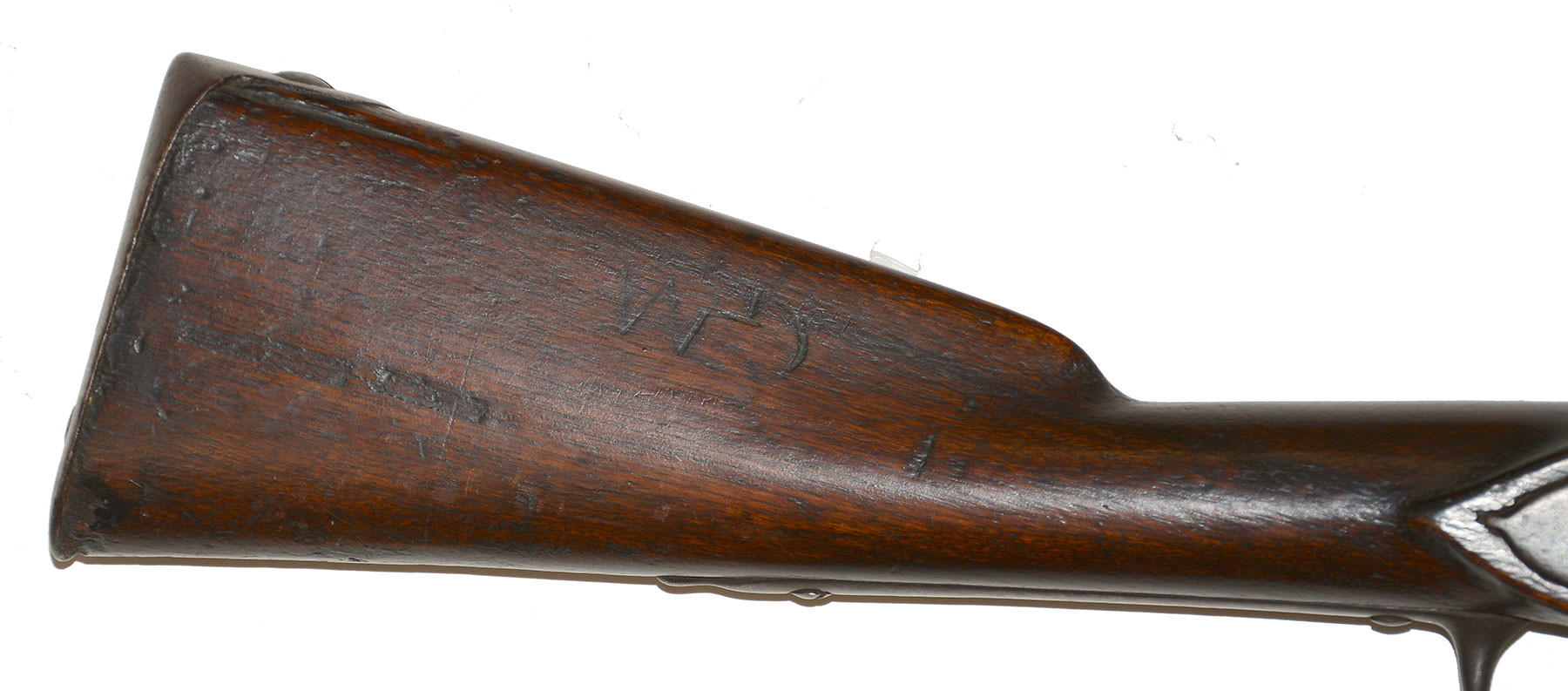
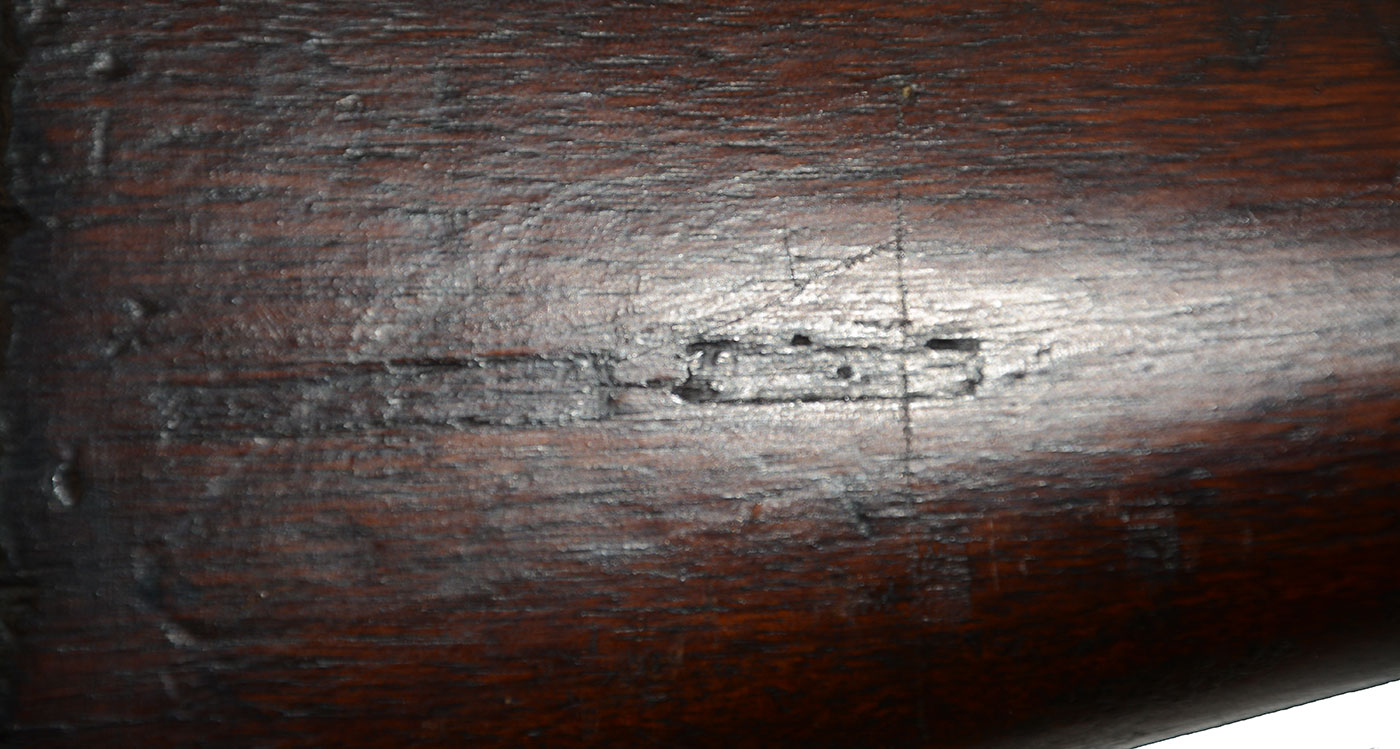
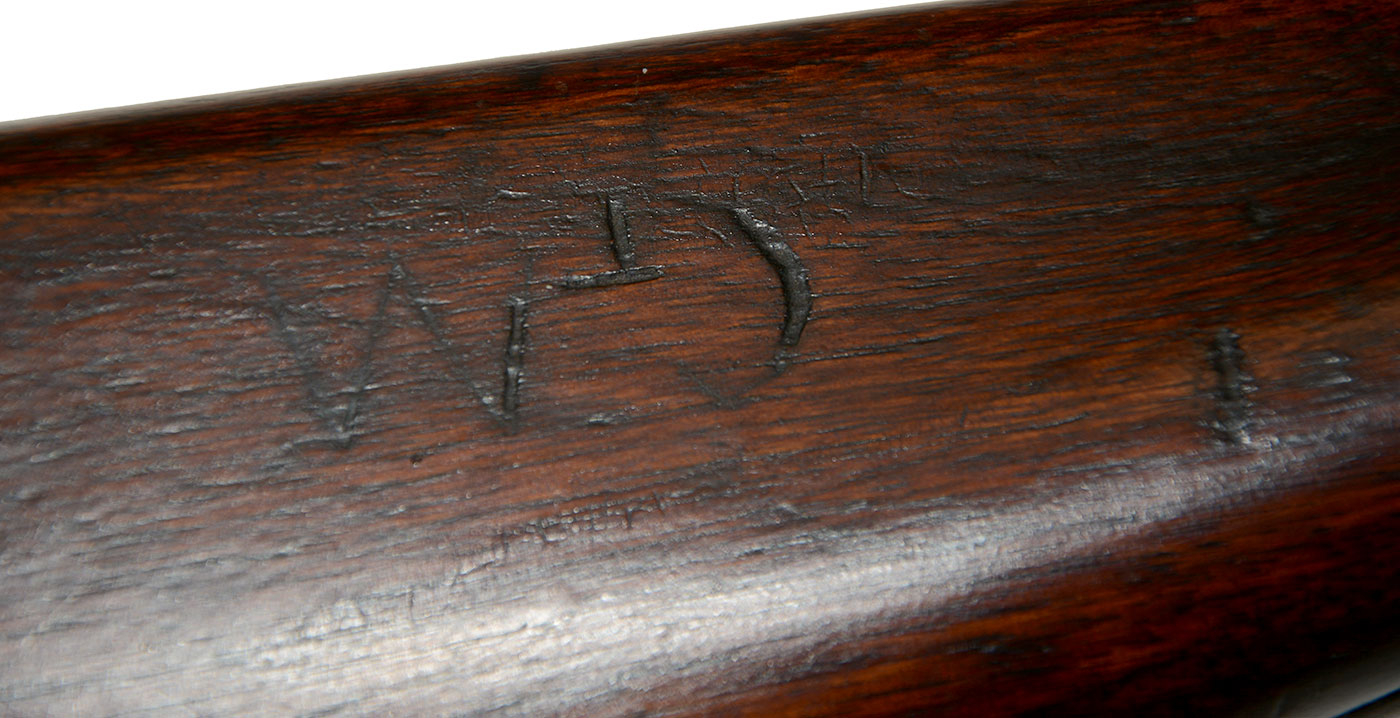
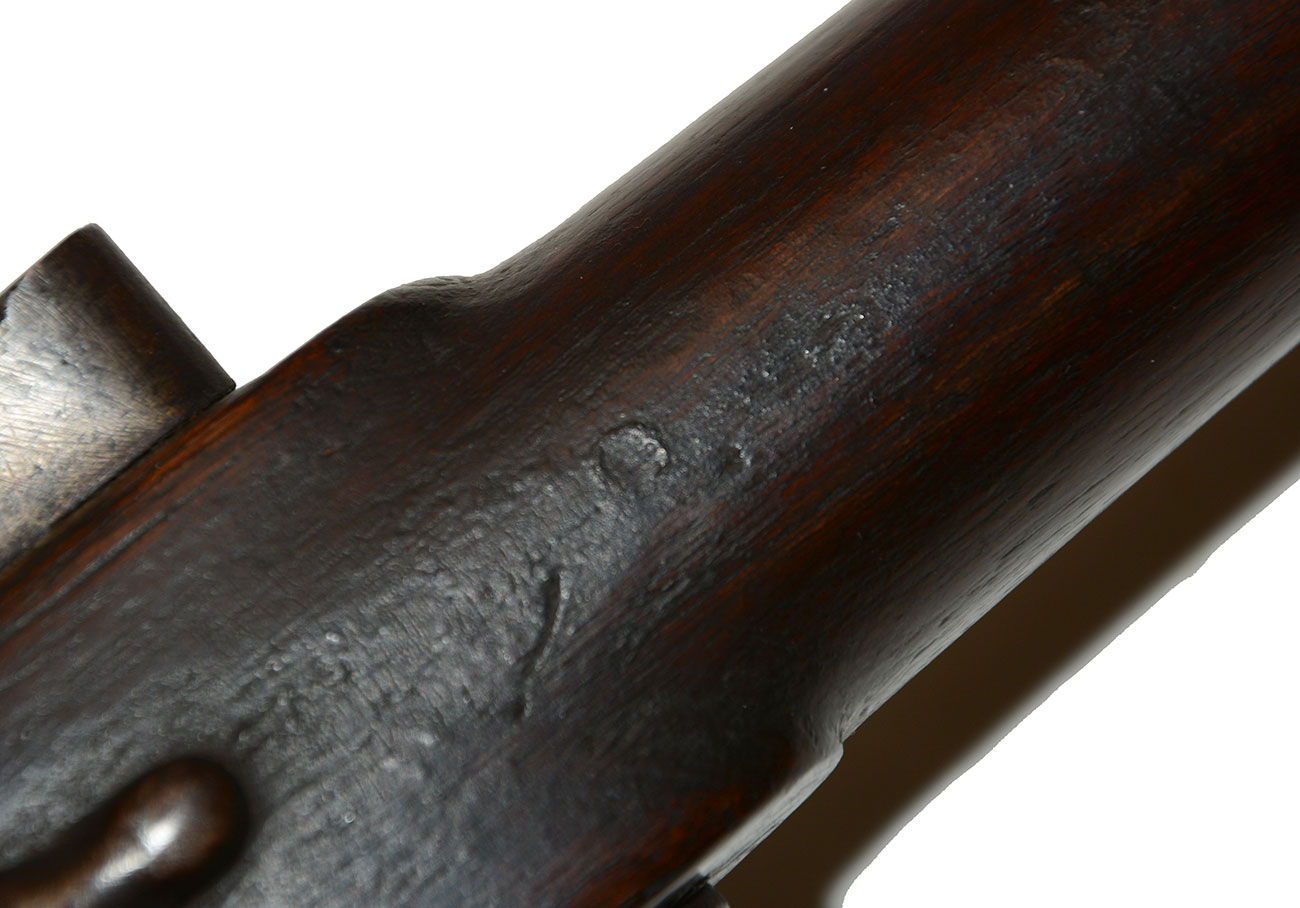
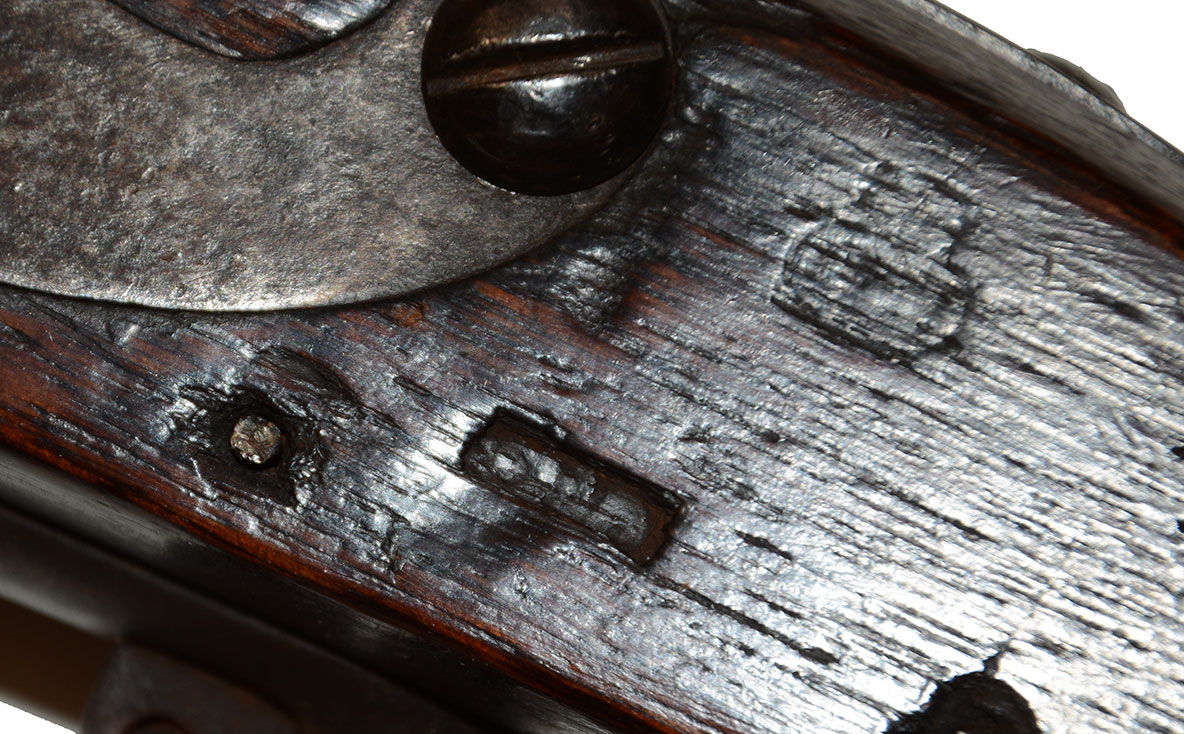
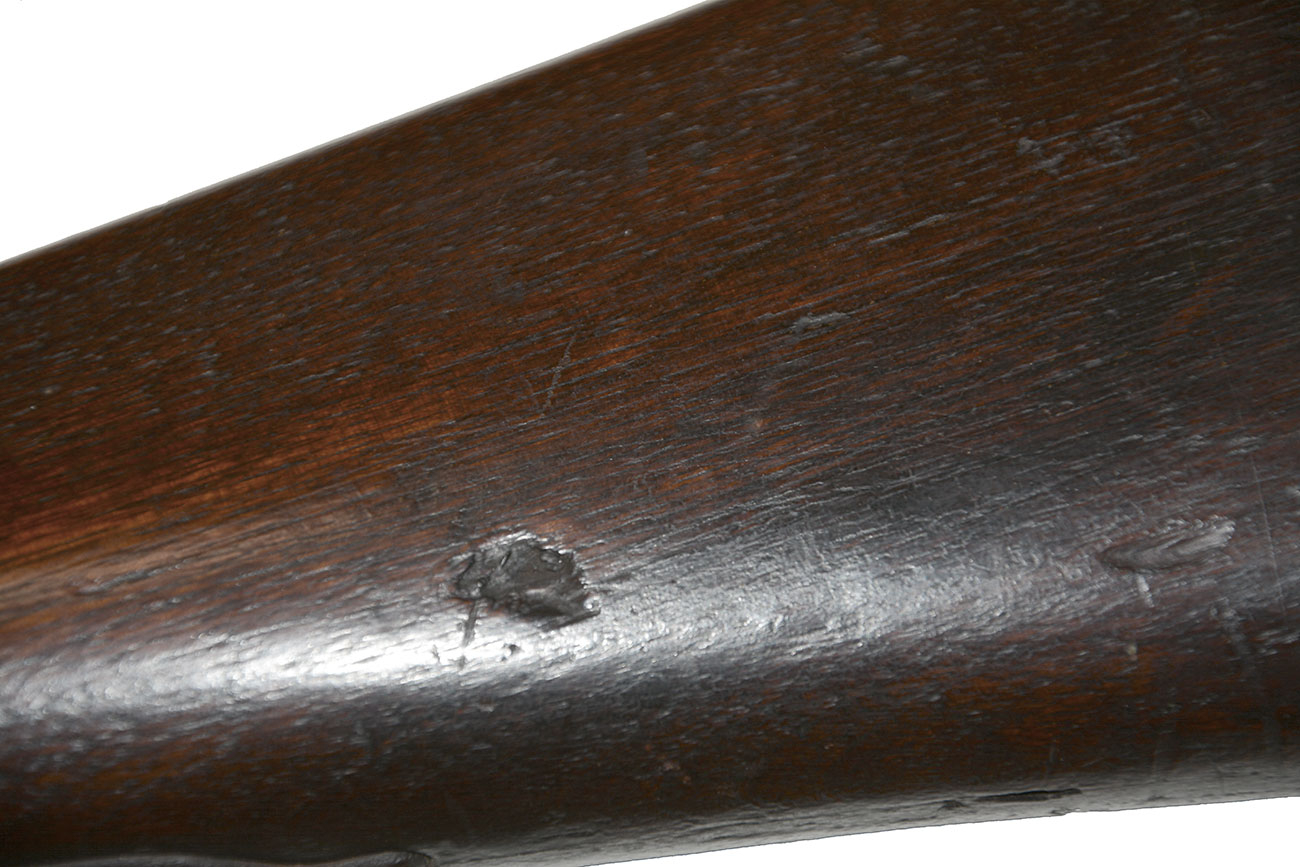
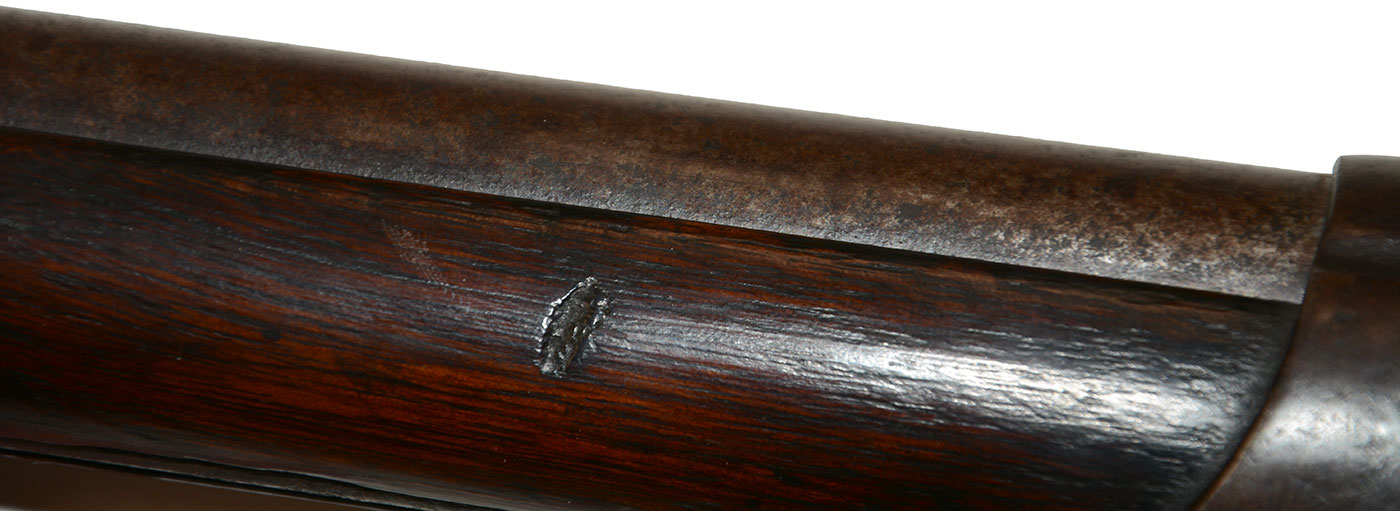
The right buttstock shows a horizontal stamp that appears to have been intentionally obliterated, perhaps a county militia ownership marking. Just above and forward of that the the worn intials “GM” seem to have been added, likely by a subsequent private owner. The belly of the buttstock also shows what might be remnants of rectangular mark that was effaced. The left side flat shows a worn but visible rounded triangle cartouche just aft of the rear lock screw that might contain the “V / CW” mark of inspector Charles Williams, who inspected arms in New England. A deep, narrow horizontal stamp just above the triggerguard appears to read “SNJ,” corresponding to the state ownership stamp on the barrel. The barrel markings in any case indicate the musket came to the state via the US government under the terms of the Militia Act.
This is an interesting and good looking US flintlock musket with a solid New Jersey connection. We don’t see many. [sr][ph:L]
DISCLAIMER: All firearms are sold as collector's items only - we do not accept responsibility as to the shooting safety or reliability of any antique firearm. All firearms are described as accurately as possible, given the restraints of a catalog listing length. We want satisfied customers & often "under" describe the weapons. Any city or state regulations regarding owning antique firearms are the responsibility of the purchaser. All firearms are "mechanically perfect" unless noted, but again, are NOT warranted as safe to fire!
~~~~~~~~~~~~~~~~~~~~~~~~~~~~~~~~~~~
THIS ITEM, AS WITH ALL OTHER ITEMS AVAILABLE ON OUR WEB SITE,
MAY BE PURCHASED THROUGH OUR LAYAWAY PROGRAM.
CLICK HERE FOR OUR POLICIES AND TERMS.
THANK YOU!
Inquire About STATE OF NEW JERSEY MARKED US CONTRACT MUSKET
Most Popular
Historical Firearms Stolen From The National Civil War Museum In Harrisburg, Pa »
Theft From Gravesite Of Gen. John Reynolds »
Selection Of Unframed Prints By Don Troiani »
Fine Condition Brass Infantry Bugle Insignia »
featured item
VERY ATTRACTIVE DOUBLE CASED SIXTH-PLATE AMBROTYPES OF CIVILIAN AND CONFEDERATE SOLDIER IN A RARE UNION CASE
The relationship between the two men pictured is not known but no doubt they are either brothers or the same man at different points in his life. The left side ambrotype is of a seated man sporting a closely trimmed beard and mustache wearing a dark… (1138-1975). Learn More »
site search