


site search
online catalog
Longarms
Showing 41 to 60 out of 69

US “CONTRACT 1812” MUSKET BY J.J. HENRY
Flayderman noted that US Contract Muskets Model 1812 or Contract 1812 types would more aptly be titled, “Contract Muskets of the 1812 Period.” This J.J. Henry produced musket is a perfect example… (2025-3648). Learn More »

U.S.MODEL 1871 SPRINGFIELD ROLLING BLOCK ARMY RIFLE
.50 caliber centerfire. All metal furnished bright with case-hardened receiver and trigger-guard assembly. Obverse lockplate marking: Eagle motif/"U.S./Springfield/1872"; Reverse lock marking: "Model… (2025-3687). Learn More »
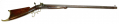
RARE EXCELLENT CONDITION CHARLESTON S.C. JOHN HENRY HAPPOLDT SCHUETZEN TARGET RIFLE
Happoldt (1830-1895) came from a large family of German origin living in and around Charleston, SC, several of whom, like his father and brother, were also involved in the gun business as makers and… (766-1759). Learn More »

U.S. MODEL 1816 TYPE III SPRINGFIELD FLINTLOCK .69 CALIBER MUSKET
This example is still in its original flintlock configuration and is dated 1837 both on the lock plate as well as on the breech tang. Also present, are the Government proof test markings of P within a… (2025-3688). Learn More »

IMPORT SAXON FIREARM LIEGE MANUFACTURE MODEL 1851 FROM GEORGE ROSENSTEEL’S CIVIL WAR NATIONAL MUSEUM IN GETTYSBURG
This Civil War P.J. Malherbe & Company “Saxon” Percussion Rifle was once part of George Rosensteel’s Civil War National Museum located in Gettysburg, PA on the Taneytown Road. Later the… (2025-3338). Learn More »

US MODEL 1842 HARPER’S FERRY MUSKET FROM GEORGE ROSENSTEEL’S CIVIL WAR NATIONAL MUSEUM IN GETTYSBURG
This US Model 1842 Harper’s Ferry Musket dated 1850 was once part of George Rosensteel’s Civil War National Museum located in Gettysburg, PA on the Taneytown Road. Later the museum incorporated… (2025-3337). Learn More »

CAPTURED AND COLLECTED M1842 SPRINGFIELD – DATED 1847
This nice example of a M1842 Springfield Musket features a “Q” mark in the stock, forward of the trigger guard, indicating that this is a Confederate "Captured & Collected" Reissued Firearm.… (2025-3031). Learn More »

EXCELLENT LINDSAY M1863 TWO-SHOT RIFLE-MUSKET
Considering its age, this rifle-musket surely classifies as near fine. All prominent metal surfaces are smooth and armory bright, with only some very light patina beginning to form near the muzzle… (490-7640). Learn More »

US MODEL 1861 CONTRACT RIFLE MUSKET - DATED 1863 - BY E. ROBINSON OF NEW YORK, FROM THE YORK SPRINGS, PA GAR POST
Edward Robinson had US contracts for a total of 47,000 rifled muskets. The first contract was dated June 10th 1863, with subsequent contracts up to October 4th 1864. A total of 30,000 were… (1202-276). Learn More »

CONFEDERATE CAPTURED & COLLECTED "POTSDAM" TYPE MUSKET (THE PUMPKIN THROWER)
The Prussian model 1809 measures 56 and 1/2 inches in overall length and has a 41 and 1/4-inch-long barrel. The caliber is.72 and it is smoothbore. The barrel is bright as originally made. There is… (490-7371). Learn More »
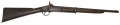
A RARE SURVIVOR: EARLY-WAR CONFEDERATE MARKED BRITISH P53 ARTILLERY CARBINE #1500 WITH A TENNESSEE PROVENANCE
British artillery carbines were used by both Confederate cavalry and infantry: in October 1862 Jeb Stuart wanted to exchange rifles carried by some his troopers for “Enfield carbines (artillery) in… (846-571). Learn More »

G. T. DAVIDSON AND CO. FULL STOCK PERCUSSION RIFLE
This attractive gun is an antique full-stock percussion long rifle with a Tyler Davidson Lock, made circa the 1840s in Ohio. The barrel is heavy and octagonal. The bore is .43 caliber and while dull,… (172-6067). Learn More »

SPRINGFIELD 1838 DATED M1816 PERCUSSION CONVERSION MUSKET FROM THE YORK SPRINGS, PA., G.A.R. POST, WITH MILITARY RACK MARKINGS
A good example of a classic early Civil War musket: a Model 1816 converted from flintlock to percussion in the early 1850s to bring it up to par with the new, percussion M1842 muskets. These are .69… (1202-429). Learn More »

ATTRACTIVE GERMAN SILVER MOUNTED FULL STOCK PERCUSSION RIFLE WITH DEFREES LOCK
This is a very good looking hunting rifle with nicely tiger-striped applied graining, mounted with a brass buttplate and the other fittings, both decorative and functional, in German silver. The side… (2024-1848). Learn More »

“EXTREMELY RARE” SILVERED BRASS FRAME ALLEN AND WHEELOCK DROP-BREECH RIMFIRE RIFLE
Also known as the Allen Drop Breech, these breech-loading rimfire rifles were produced in limited numbers at Worcester, MA, from 1860 to 1871. Flayderman estimates them at 1,500 to 2,000 all told, but… (172-6030). Learn More »

DRUM CONVERSION OF A STATE OF VIRGINIA SWAN CONTRACT MUSKET MARKED “VA. REGT. FAUQUIER” WITH CUT DOWN STOCK
In 1795 Virginia advertised for a contract to procure 4,000 muskets per annum. Colonel James Swan of Boston offered in September of 1796 to supply 4,000 musket per year for five years for a total of… (1000-245). Learn More »
$3,025.00
Originally $3,800.00

VERY SCARCE 1799-1800 SWAN CONTRACT VIRGINIA MILITIA REGIMENTALLY MARKED MUSKET: 42nd REGIMENT, PITTSYLVANIA
This musket is stamped “42. VA. REGT. PITTSYLVANIA” on the barrel, was later altered to percussion and then shortened for use in the civilian market. It is a scarce survivor from muskets delivered… (1000-241). Learn More »

MODEL 1841 HALL BREECHLOADING RIFLE: A SCARCE RIFLE, MADE IN PERCUSSION, AND THE LAST OF THE BREED
The breechloading Model 1841 Hall rifle retained the .52 caliber 32 5/8” rifled barrel of the Model 1819, but finally caught up with Hall carbines in the use of percussion priming. These are fairly… (490-3498). Learn More »

SCARCE MODEL 1841 SPRINGFIELD CADET MUSKET, DATED 1844
Model 1841 Cadet Musket was produced at Springfield Armory between 1844 and 1845. This is one of only 450 of these weapons produced. Intended for the Corps of Cadets at West Point. This is a .57… (1000-138). Learn More »
$6,800.00
Originally $8,500.00

MODEL 1858 CADET MUSKET DATED 1858
An original Springfield Model 1858 Cadet rifle musket in .58 caliber in nice condition. Metal surfaces appear to have been cleaned and are bright. The 38.00-inch barrel has a surface that wears a… (490-3489). Learn More »
Showing 41 to 60 out of 69
Most Popular
Historical Firearms Stolen From The National Civil War Museum In Harrisburg, Pa »
Theft From Gravesite Of Gen. John Reynolds »
Selection Of Unframed Prints By Don Troiani »
Fine Condition Brass Infantry Bugle Insignia »
Rare Identified 65Th Ny Sergeant’s Jacket, With Manscript Material: 1St U.s. Chasseurs »
featured item
RARE INSPECTOR MARKED REGULATION MODEL 1850 FOOT OFFICER’S SWORD BY AMES, ID’D TO 11TH US INFANTRY CAPTAIN & LATER BRIGADIER GENERAL JOHN W. AMES
This inspected regulation Model 1850 foot officer’s sword made by Ames. Overall the drawn sword meas. approx. 36.25” long from point to pommel. The blade itself measures 30.00” long with a 20.50” long stopped central fuller and a 15.50”… (2025-3342). Learn More »
site search