


site search
online catalog
Relics
Showing 181 to 185 out of 314
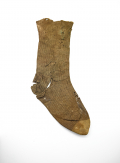
INDIAN WAR SOLDIER’S SOCK FROM FORT PEMBINA, ND
This appears to be the 1877 pattern army sock, which was medium gray in color, had white toes, and the weave of the heel running parallel with the leg and nearly at a right angle to the foot. We show… (1052-594). Learn More »
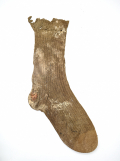
INDIAN WAR SOLDIER’S SOCK FROM FORT PEMBINA, ND
This comes from the excavations at Fort Pembina, ND, and appears to be the 1877 pattern army sock, which was medium gray in color, had white toes, and the weave of the heel running parallel with the… (1052-593). Learn More »
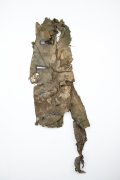
CIVIL WAR-INDIAN WAR UNIFORM COAT LAPEL FROM FORT PEMBINA
This strip of cloth with four closely spaced button holes is likely the remnant of an army dress coat discarded after its useful days were done at Fort Pembina, a small frontier garrison in North… (1052-613). Learn More »
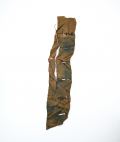
CIVIL WAR-INDIAN WAR UNIFORM LAPEL FROM FORT PEMBINA
This strip of cloth showing six buttonholes is likely the remnant of an army dress coat discarded after its useful days were done at Fort Pembina, a small frontier garrison in North Dakota, where wet,… (1052-612). Learn More »
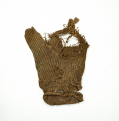
SCARCE INDIAN WAR SOLDIER’S MITTEN FROM FORT PEMBINA, ND
This comes from the excavations at Fort Pembina, occupied 1870-1895, where cold weather in winter months might well be a concern. The army began issuing mittens in 1873. Before that men were left to… (1052-585). Learn More »
Showing 181 to 185 out of 314
Most Popular
Historical Firearms Stolen From The National Civil War Museum In Harrisburg, Pa »
Theft From Gravesite Of Gen. John Reynolds »
Selection Of Unframed Prints By Don Troiani »
Fine Condition Brass Infantry Bugle Insignia »
featured item
FINE ITALIAN SNAPHAUNCE BELT PISTOL CA. 1675
The snaphaunce is one of the earlier forms of flint and steel ignition and was introduced in the mid-16th century. It remained in use in Northern Italy into the mid-18th century giving it a particularly long period of use. Ornate pistols such as… (2026-657). Learn More »
site search