


site search
online catalog
Relics
Showing 171 to 180 out of 338
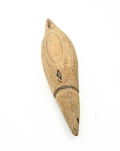
FISHING NET FLOAT OR BUOY FROM FORT PEMBINA
Excavated at Fort Pembina, near the Red River in North Dakota, this tapered wood cylinder is most likely a buoy or float from a fishing net, having grooves cut at either end for tying in place. Army… (1052-638). Learn More »
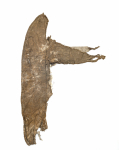
MODEL 1872 FATIGUE BLOUSE FRAGMENT: FORT PEMBINA
This appears to be the rollover collar and portion of the chest from a M1872 fatigue blouse. This was pleated nine-button blouse piped on the collar and cuff, made in lined and unlined versions, with… (1052-598). Learn More »
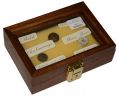
ATTRACTIVE WOOD CASE WITH RELICS FROM SHILOH, STONES RIVER, & CHICKAMAUGA
Here is a wood display case 6.75” x 5” with fine brown tone. Inside are three relics; one each from Shiloh, Chickamauga, and Stones River. At top is a fine Confederate Staff Officer’s button… (1235-59). Learn More »
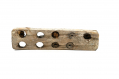
DRILLED WOOD BLOCK FROM FORT PEMBINA
This comes from the excavations at Fort Pembina, ND, conducted on private property with the owner’s permission, and is in a remarkable state of preservation from the wet, anaerobic conditions of the… (1052-635). Learn More »
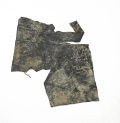
SCARCE CIVIL WAR PONCHO OR “GUM BLANKET” FRAGMENT
Civil War period ponchos and rubber blankets are extremely scarce despite being widely used and valued by troops in the field. They were so useful at home as to be used up by veterans and their… (1052-630). Learn More »
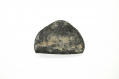
KEPI OR DRESS HAT STIFFENER FROM FORT PEMBINA
This leather disk seems to be the stiffener from inside the top of a hat, either a kepi or dress hat. It is circular and folded over on one side, black in color with gray and white stains, and comes… (1052-476). Learn More »
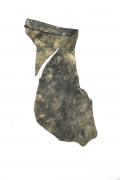
SCARCE CIVIL WAR PONCHO OR “GUM BLANKET” FRAGMENT
This scarce fragment comes from either a poncho or blanket (often referred to as “rubberized,” “gum,” or “painted” blankets.) The significant difference being the presence of slit for the… (1052-627). Learn More »
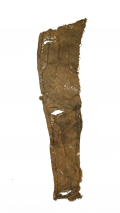
CIVIL WAR-INDIAN WAR UNIFORM COAT LAPEL FROM FORT PEMBINA
This strip of cloth shows three buttonholes indicating it is from the lapel of a coat and the spacing suggests it is from an army fatigue blouse. This comes from excavations at Fort Pembina, a small… (1052-614). Learn More »
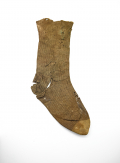
INDIAN WAR SOLDIER’S SOCK FROM FORT PEMBINA, ND
This appears to be the 1877 pattern army sock, which was medium gray in color, had white toes, and the weave of the heel running parallel with the leg and nearly at a right angle to the foot. We show… (1052-594). Learn More »
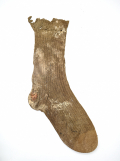
INDIAN WAR SOLDIER’S SOCK FROM FORT PEMBINA, ND
This comes from the excavations at Fort Pembina, ND, and appears to be the 1877 pattern army sock, which was medium gray in color, had white toes, and the weave of the heel running parallel with the… (1052-593). Learn More »
Showing 171 to 180 out of 338
Most Popular
Historical Firearms Stolen From The National Civil War Museum In Harrisburg, Pa »
Theft From Gravesite Of Gen. John Reynolds »
Selection Of Unframed Prints By Don Troiani »
Fine Condition Brass Infantry Bugle Insignia »
Large English Bowie Knife With Sheath 1870’S – 1880’S »
Imported (Clauberg) Us Model 1860 Light Cavalry Officer's Saber »
featured item
VERY SCARCE 1799-1800 SWAN CONTRACT VIRGINIA MILITIA REGIMENTALLY MARKED MUSKET: 42nd REGIMENT, PITTSYLVANIA
This musket is stamped “42. VA. REGT. PITTSYLVANIA” on the barrel, was later altered to percussion and then shortened for use in the civilian market. It is a scarce survivor from muskets delivered to Virginia by Jame Swan of Boston in January… (1000-241). Learn More »
site search