

site search
online catalog
Uniforms
Showing 101 to 120 out of 124
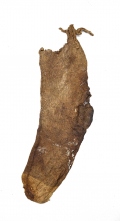
INDIAN WAR SOLDIER’S SOCK FROM FORT PEMBINA, ND
This comes from the excavations at Fort Pembina, ND, and appears to be the 1877 pattern army sock, which was medium gray in color, had white toes, and the weave of the heel running parallel with the… (1052-583). Learn More »
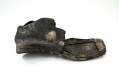
SCARCE CIVIL WAR ARMY ISSUE SHOE, A.K.A. BROGAN OR BOOTTEE
This Civil War issue shoe is missing the vamp, but shows illustrates the typical construction of an issue brogan. This comes from a U.S. Army Indian War post established in 1870, a period in which the… (1052-542). Learn More »
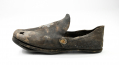
SCARCE CIVIL WAR ARMY ISSUE BROGAN ALTERED TO A BARRACKS SHOE AT FORT PEMBINA
This Civil War army-issue shoe is in very good condition though excavated and easy to take for a barn or attic find. This was recovered at Fort Pembina, ND, a US army post established in 1870, where… (1052-287). Learn More »
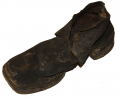
US ISSUE MODEL 1872 SHOE, MAKER MARKED, POSSIBLY BY JOHN MUNDELL OF PHILADELPHIA
This army-issue was excavated at Fort Pembina, ND, established in 1870 and in operation to 1895. It was found on private property, with the owner’s permission, and is in good condition, a result of… (1052-492). Learn More »
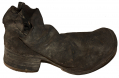
EARLY INDIAN WAR ALTERED BARRACKS OR CAMP SHOE
This is an unusual Indian War soldier’s camp or barracks shoe from Fort Pembina, ND, a small U.S. army post from 1870 to 1895. The heel portion of the quarters was cut away, either to salvage the… (1052-288). Learn More »
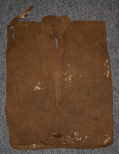
CIVIL WAR ERA WORKSHIRT/SMOCK MADE FROM ALTERED SHIRT FORT PEMBINA
This is a simple shirt altered by a soldier at a frontier US Army fort for wear as smock to shield his uniform while on a work or fatigue detail and comes from excavations at Fort Pembina, North… (1052-649). Learn More »
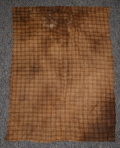
CIVIL WAR ERA WORKSHIRT/SMOCK MADE FROM ALTERED SHIRT FORT PEMBINA
This is a simple shirt altered by a soldier at a frontier US Army fort for wear as smock to shield his uniform while on a work or fatigue detail and comes from excavations at Fort Pembina, North… (1052-648). Learn More »
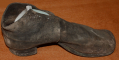
RARE MARKED CIVIL WAR ARMY ISSUE SHOE
Civil War army-issue shoes were among the most essential things issued to a soldier and about the rarest of Civil War items to survive despite being made literally in the millions. They were cheaply… (1052-286). Learn More »
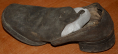
SCARCE INDIAN WAR US ARMY 1872 PATTERN SHOE ALTERED TO CAMP OR BARRACKS SHOE
New pattern shoes and boots were introduced in the U.S. Army in 1872 and in use until the 1880s with a minor change in 1876 to a longer tongue. These shoes improved upon Civil War issue patterns… (1052-286). Learn More »
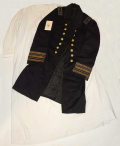
CIVIL WAR COMMODORE’S UNDRESS FROCK COAT OF SILAS H. STRINGHAM, USN: LEADER OF THE FIRST COMBINED OPERATION OF THE UNION NAVY AND ARMY IN THE CIVIL WAR; VICTOR OF THE BATTLE OF HATTERAS INLET BATTERIES
Fought on Aug. 28-29, 1861, little more than a month after the Union defeat at Bull Run, the capture of Forts Hatteras and Clark on the outer banks helped restrict Confederate blockade running,… (1179-504). Learn More »
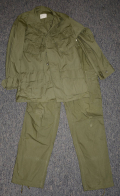
SET OF VIETNAM JUNGLE FATIGUES DATED 1967 & 1971
Coat is made of a green “rip-stop” material with slanted breast pockets and flaps that button down. The flap buttons are not exposed but are covered. There are five green buttons down the front.… (772-92A). Learn More »
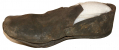
SCARCE CIVIL WAR ISSUE SHOE ALTERED TO CAMP/BARRACKS SHOE
The army did not issue “post,” “barracks,” or “camp” shoes until the 1880s. Before that it was up to soldiers to privately purchase or improvise footwear that might prove more comfortable… (1052-426). Learn More »
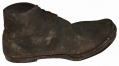
SCARCE INDIAN WAR US ARMY 1872 PATTERN SHOE WITH FIELD REPAIR
New pattern shoes and boots were introduced in the U.S. Army in 1872 and in use until the 1880s. These shoes improved upon Civil War issue patterns mainly by using brass screws in the soles, rather… (1052-576). Learn More »
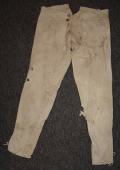
VERY RARE CIVIL WAR U.S. ARMY ISSUE DRAWERS
Civil War army-issue undergarments are extremely rare. They were made and issued in huge numbers, but were characteristically cheaply made, often disliked, and hardly worth preservation as a cherished… (1052-255). Learn More »
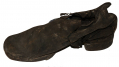
“FORTY MILES A DAY ON BEANS AND HAY IN THE REGULAR ARMY-O” SCARCE INDIAN WAR US ARMY 1872 PATTERN SHOE FROM FORT PEMBINA, N.D.
New pattern shoes and boots were introduced in the U.S. Army in 1872 and in use until the 1880s. These shoes were similar to Civil War issue patterns, with square toe, rough-side out black leather… (1052-292). Learn More »
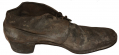
EARLY BARRACKS OR CAMP SHOE BY JOHN MUNDELL OF PHILADELPHIA
This is a usual soldier’s shoe from Fort Pembina, ND, a small U.S. army post from 1870 to 1895, and is typical army construction using rough-side out black leather and is clearly stamped “J.… (1052-388). Learn More »
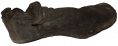
SCARCE INDIAN WAR US ARMY 1872/76 PATTERN CAVALRY BOOT FROM FORT PEMBINA, N.D.
This scarce Indian War U.S. cavalry boot actually comes from Fort Pembina, a small U.S. Army frontier fort in North Dakota in operation from 1870 to 1895. The army introduced new shoe and boot… (1052-304). Learn More »
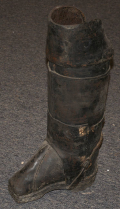
RARE POSTILION BOOT WITH SPUR
A postilion was a man who rode one of a pair of horses that pulled a coach or artillery piece. It could be very dangerous if a leg became caught between the two horses, so each postilion wore one boot… (1032-176). Learn More »
$1,200.00
Originally $1,500.00
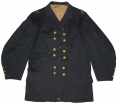
UNION CAVALRY GENERAL WILLIAM WELLS’ FIELD BLOUSE: MEDAL OF HONOR FOR GETTYSBURG WHERE HE RODE IN THE LEAD OF FARNSWORTH’S CHARGE; BRIGADE COMMANDER UNDER CUSTER; BLOUSE ACTUALLY WORN IN ONE OF HIS PHOTOS
This coat is the epitome of a Civil War Union general’s field uniform, a blouse following the popular sack coat pattern of the period, looking somewhat like an enlisted man’s fatigue blouse and… (1179-281). Learn More »
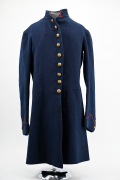
VERY NICE BOYLAN CONTRACT MARKED CIVIL WAR HEAVY ARTILLERY ENLISTED MAN’S FROCK COAT: THESE REGIMENTS WERE CALLED INTO THE FIELD AS INFANTRY FOR GRANT’S 1864 OVERLAND CAMPAIGN AGAINST RICHMOND AND PETERSBURG
This Civil War U.S. regulation enlisted man’s frock coat for heavy (or “foot”) artillery is in very good condition, with strong color to the body and piping, and is nicely marked in the upper… (172-5915). Learn More »
Showing 101 to 120 out of 124
Most Popular
Historical Firearms Stolen From The National Civil War Museum In Harrisburg, Pa »
Theft From Gravesite Of Gen. John Reynolds »
Selection Of Unframed Prints By Don Troiani »
Fine Condition Brass Infantry Bugle Insignia »
Rare Identified 65Th Ny Sergeant’s Jacket, With Manscript Material: 1St U.s. Chasseurs »
featured item
LARGE FRAMED RELIC SHOWBOARD
This relic board is very like those assembled from Gettysburg relics by John Rosensteel and displayed on the porch of the Round Top Museum, but differs in displaying the relics on horizontal rather than raw vertical boards, in having a glass frame,… (1242-06). Learn More »
site search