

site search
online catalog
RARE SPRINGFIELD CHAFFEE-REECE REPEATING RIFLE, ONE OF 753 MADE

Hover to zoom




$4,250.00 SOLD
Quantity Available: None
Item Code: 172-5781
Designed by R.S. Chaffee and Gen. J.N. Reece in 1879, a Chaffee-Reece sample rifle was one of only three to survive rigorous testing by an Ordnance committee trying out designs for a repeating, or “magazine” rifle in 1881-1882. These three were then authorized for field trials by troops with 750 of each ordered by the Army. The Chaffee-Reece had been submitted directly by the inventors, however, and no factory was set up to produce it. Colt quoted a high price for making them, and could only promise 200, so the Army engaged Springfield Armory for the project. Three rifles were apparently made in setting up the machinery, and the Armory then manufactured the required 750 in 1884.
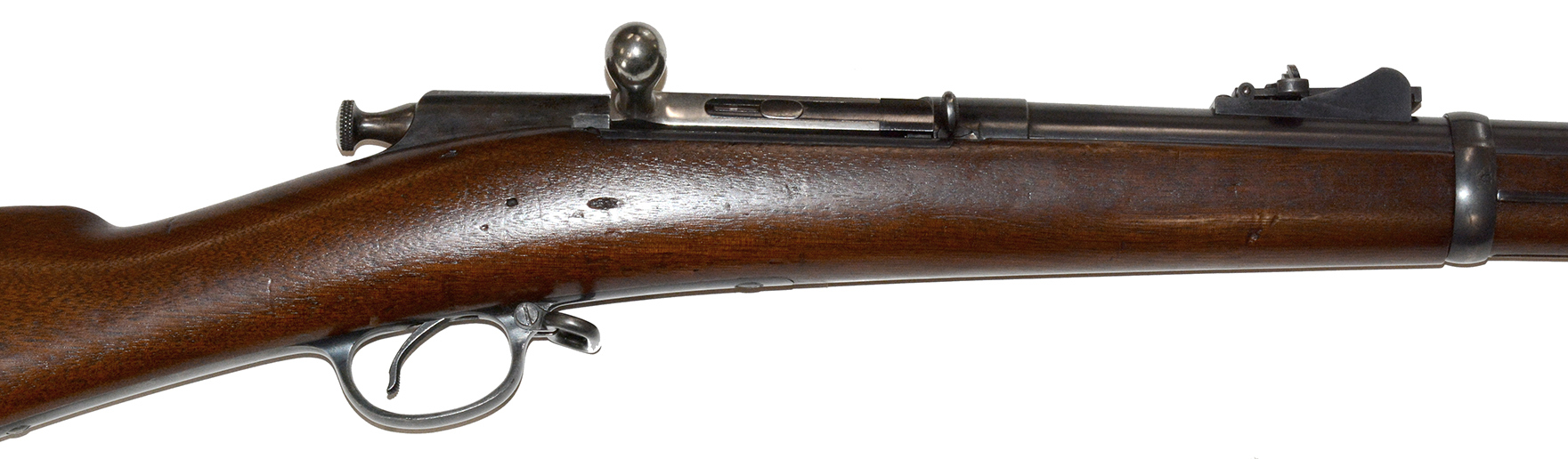
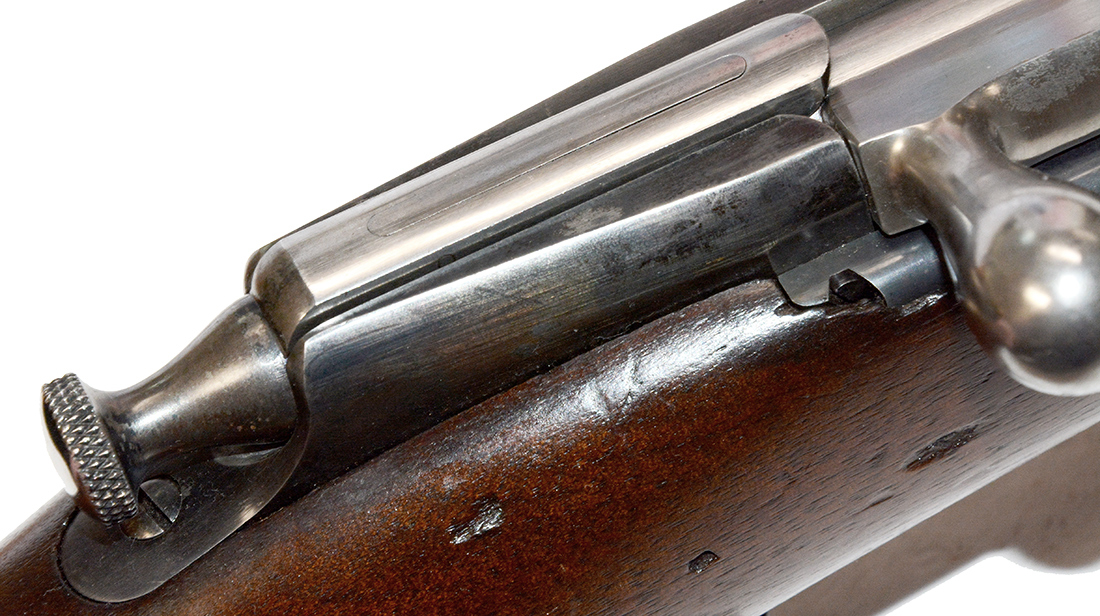
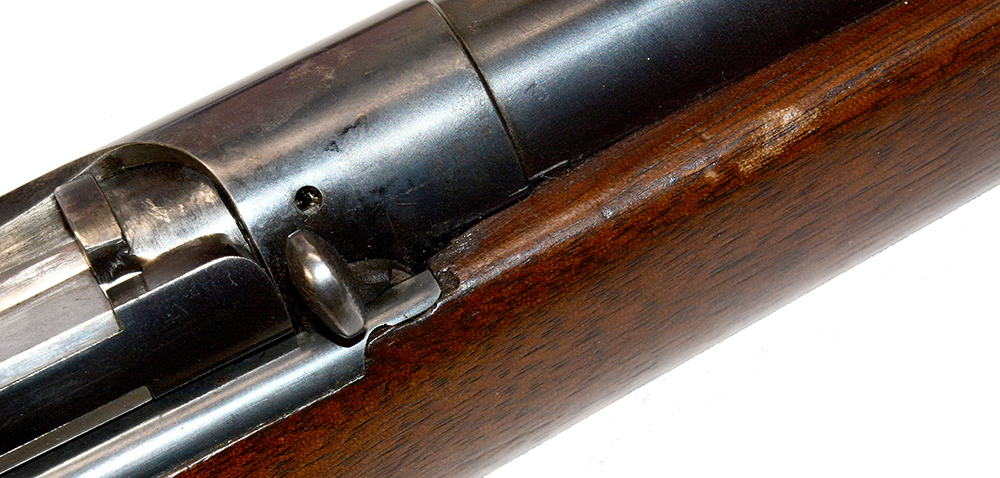
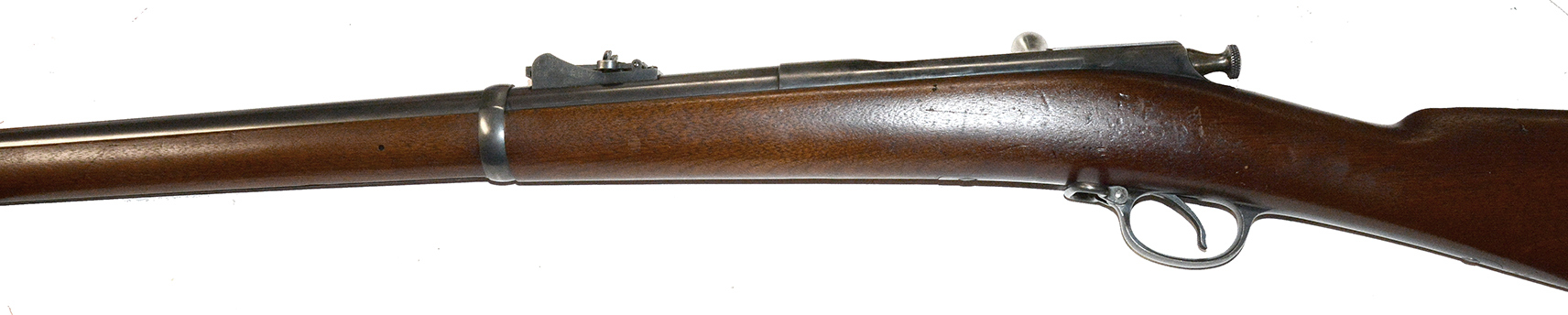
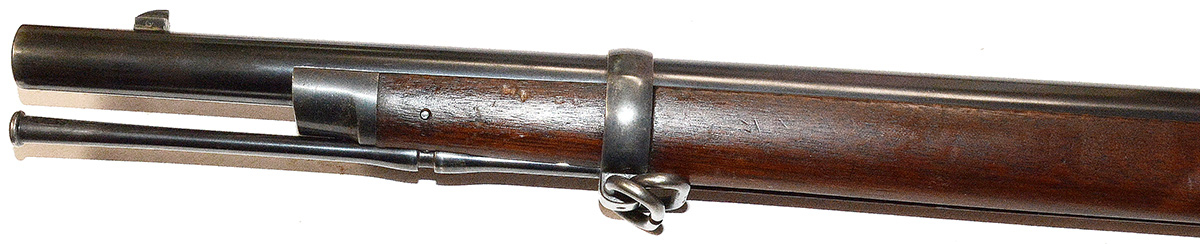
The rifle is a bolt-action, .45-70 rifle fed by a tubular magazine in the buttstock holding six cartridges, with a seventh in a carrier (and an eighth potentially in the barrel.) Loaded through a trapdoor in the butt, the rifle uses a ratchet system to advance the cartridges by action of the bolt and has a cut-off lever on the receiver to keep magazine rounds in reserve and use it as a single shot rifle. No carbines were produced, in part perhaps due to unhappiness with the .45-55 carbine cartridge and the possibility of shifting to a short rifle, which also may account for the 27 7/8 inch barrel length despite initial specifications that the barrels would be standard rifle length.
For field trials the Army sent out equal numbers of each rifle. These were distributed in two shipments, one in late 1884 and the other in mid-1885. Differing total numbers, but equal numbers of each rifle went to troops posted in the Military Divisions of the Missouri, the Atlantic, and the Pacific. The numbers sent out indicate 720 of each rifle were distributed in total. Instructions were to not mix the types within companies and thus to limit distribution to posts with at least three companies. Officers were to report at the end of the fiscal year. In the case of the Chaffee-Reece, at least, a civilian employee was sent out from Springfield to each post to instruct the troops in its use. According to secondary sources, units receiving them included companies from the 8th, 9th, 14th, 15th, 19th, 23rd & 25th Infantry and 1st US Artillery. Posts included Forts Randall, Missoula, Assiniboine, Leavenworth, Supply, Lewis, Douglas, Laramie, Sidney, Concho, Clark, and Ringgold.
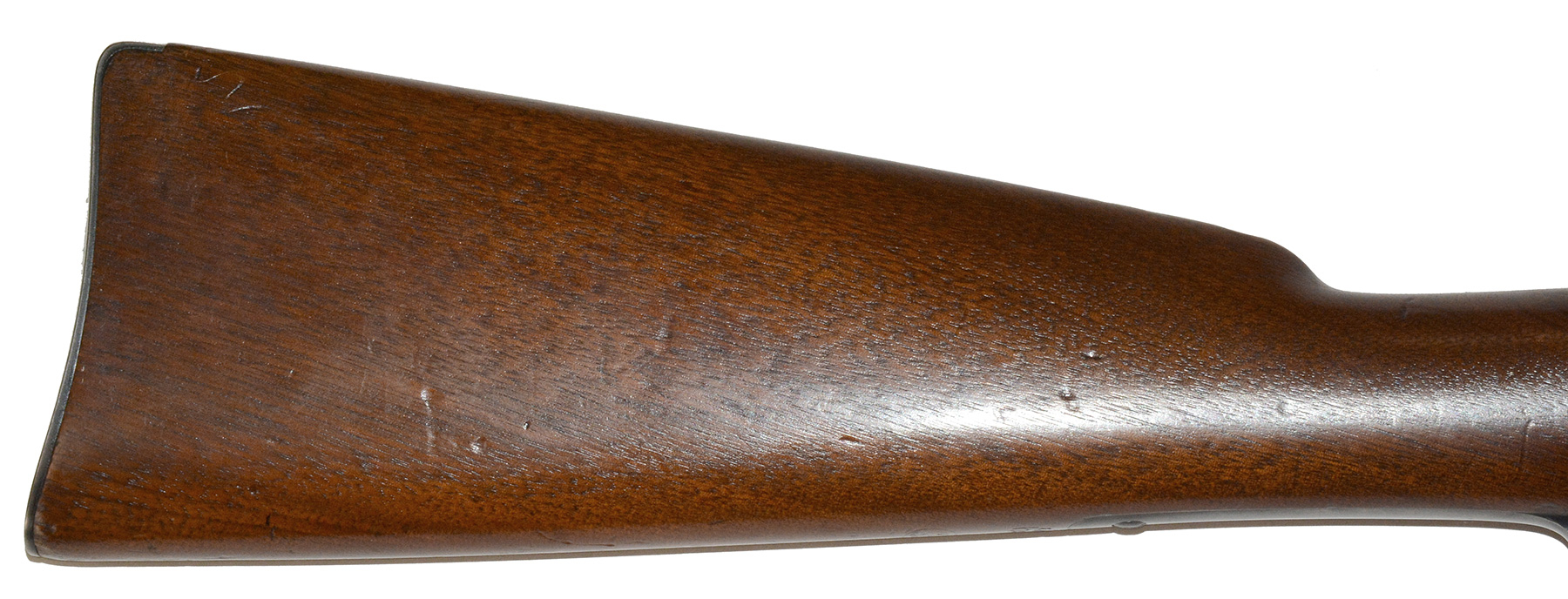
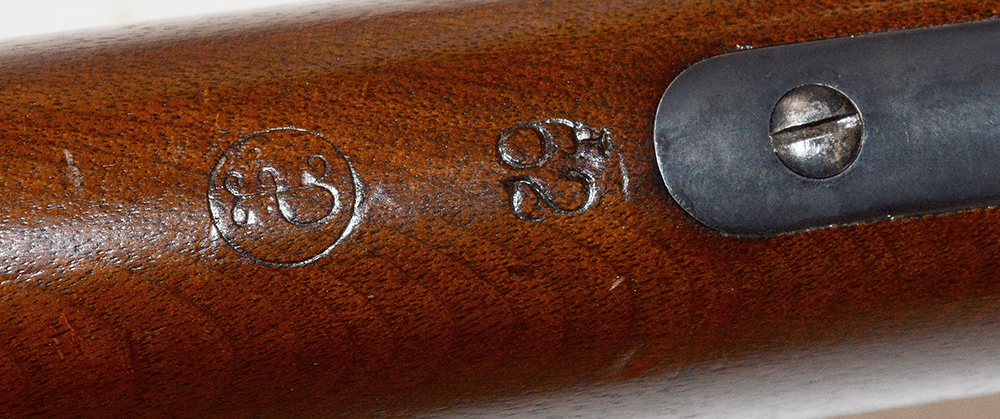
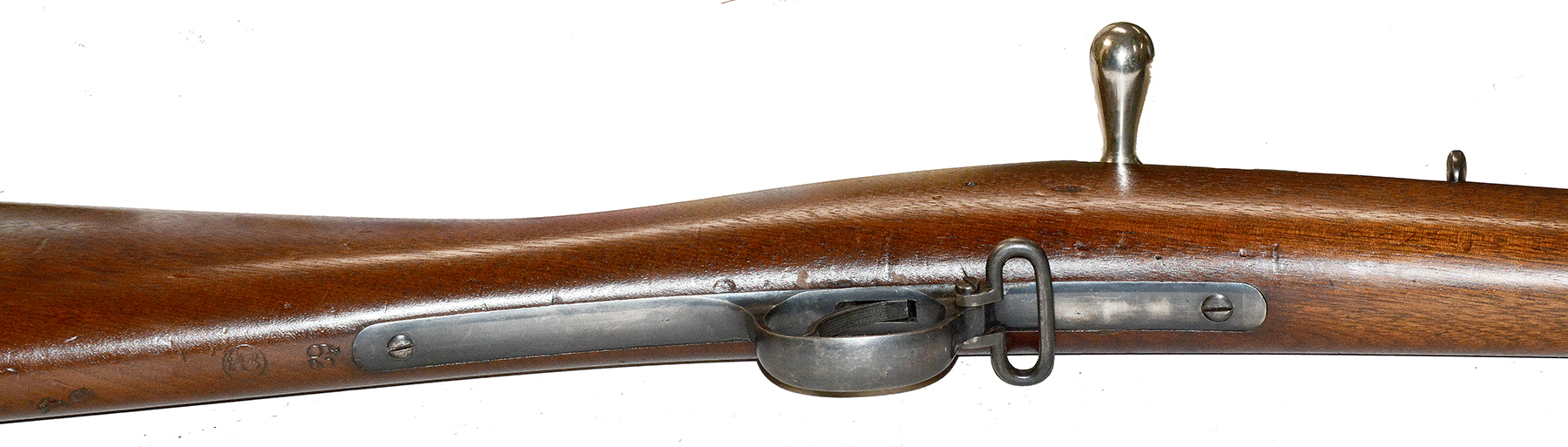
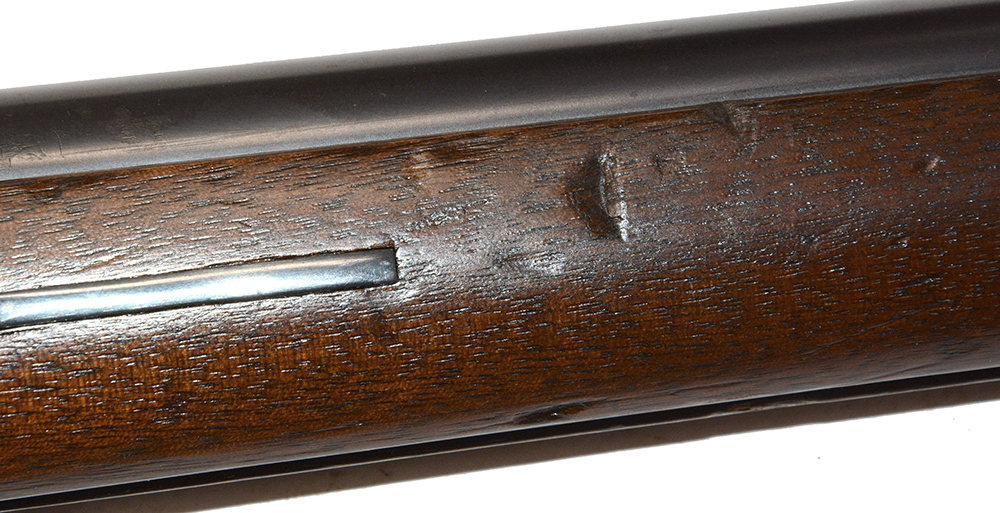
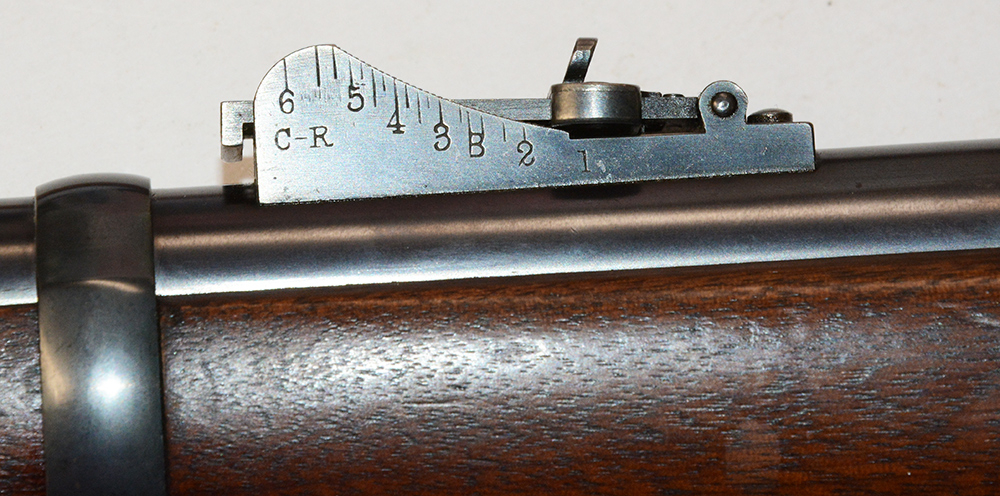
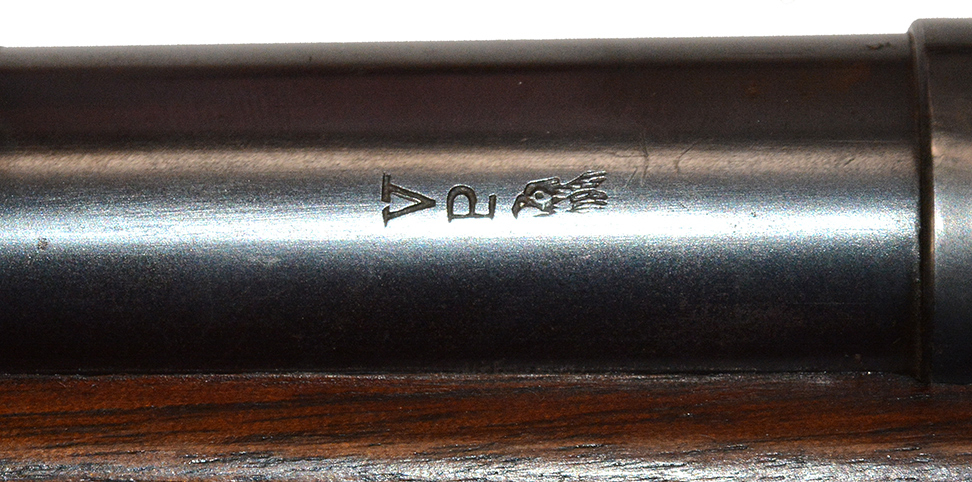
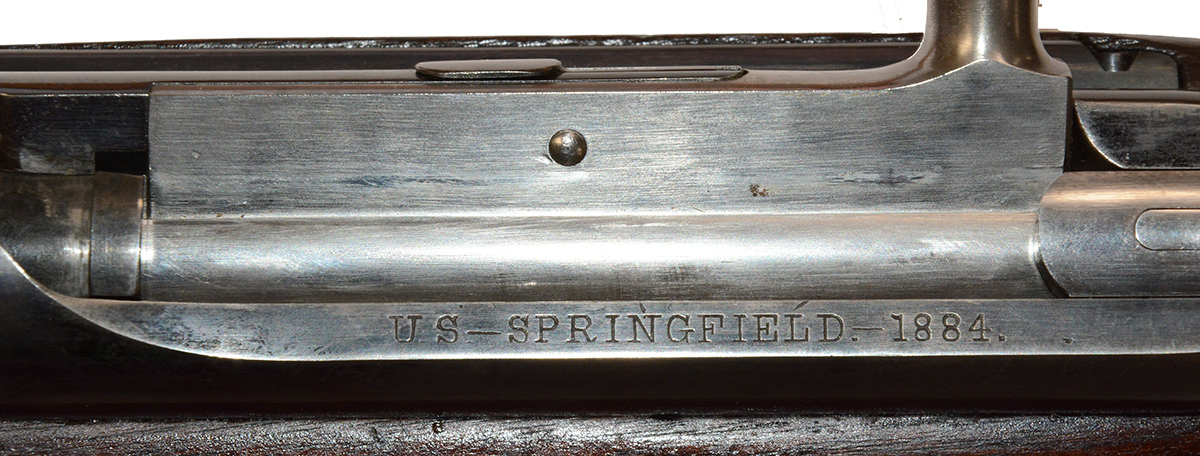
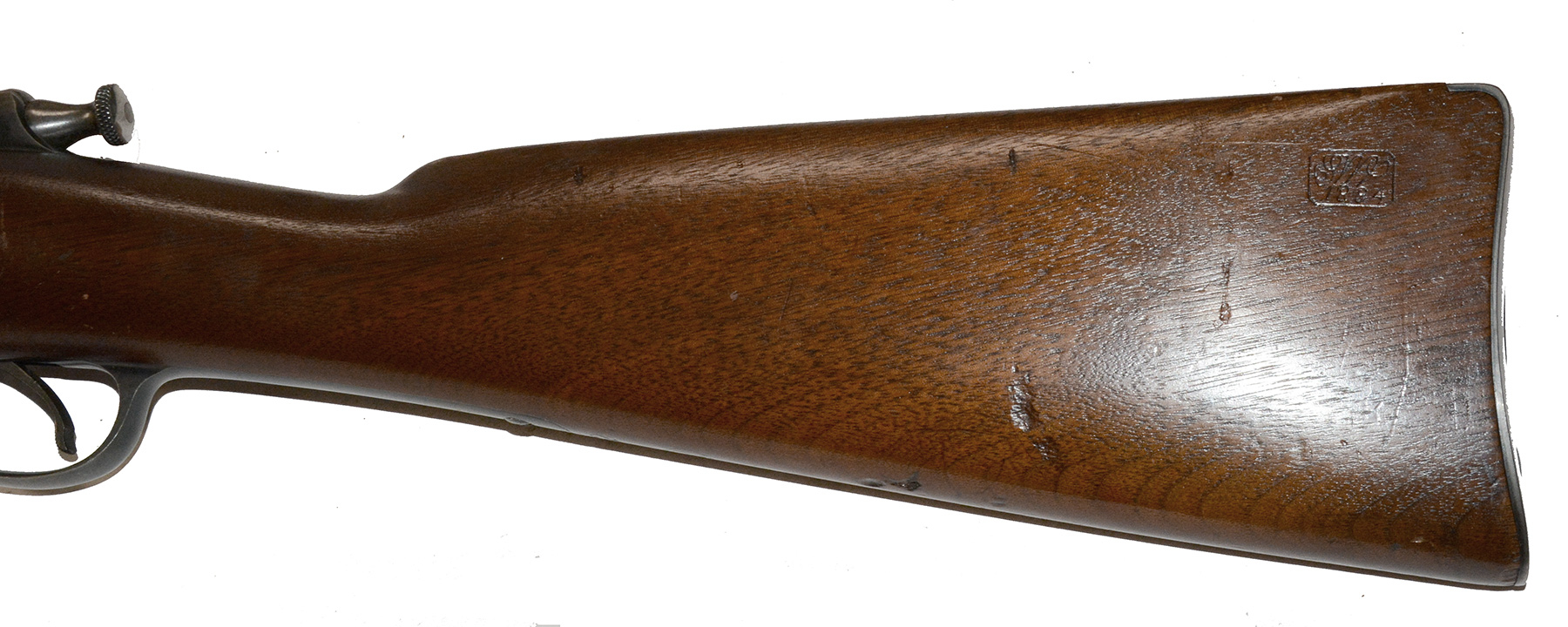
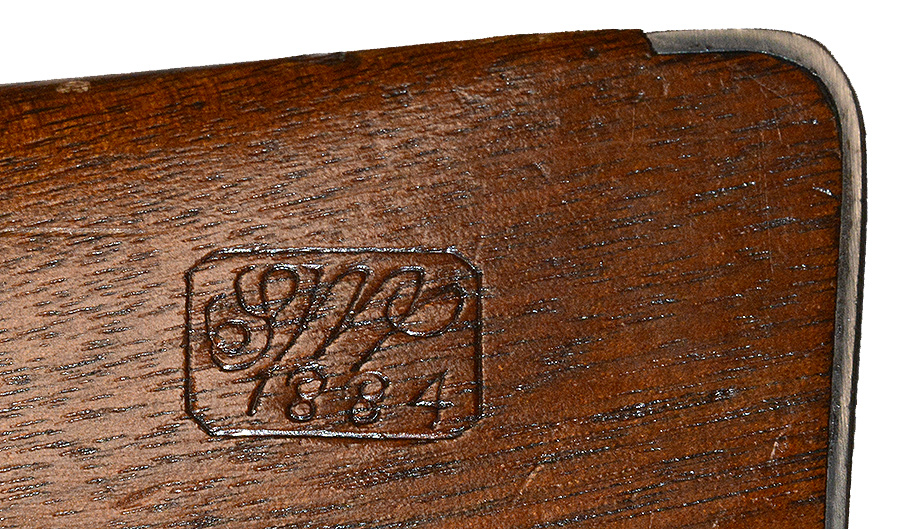
This rifle follows the standard configuration of the Chaffee-Reece- in fact, there is really only one configuration. None are serial numbered. This one is in very good overall condition, with the wood showing some dings, as should expected from a rifle used in field trials, and it bears a rack number behind the triggerguard, making clear it was one of those, the vast majority, issued. The top of the left side of the receiver wall is marked "U.S. SPRINGFIELD 1884" and the barrel is has the standard Springfield "V/P/ [eaglehead]” proofs at the left breech. The rear sight is a standard 1879 pattern trapdoor sight, as specified for the trials, but which is marked "C-R" on the left side, indicating it has been graduated for use on the Chaffee-Reece. The front sight is a standard U.S. sight in keeping with directions that it takes a standard bayonet. The front band has sling swivel and stacking swivel. The other sling swivel is on the triggerguard bow. As a trial arm passing inspection at Springfield it has an “SWP / 1884” cartouche, but placed on the left buttstock at top near the buttplate rather than on the wrist. The usual circled script " P" firing proof is stamped behind the triggerguard tang, with a rack number, “62” stamped between, which seems to have a small “I” or upside down “T” at its top. It might be possible to narrow done possible recipients by looking at the number of guns sent to each detachment, but there is no guarantee the numbering was not done at a higher level, say Division, Department, or regimental before distribution for trial.
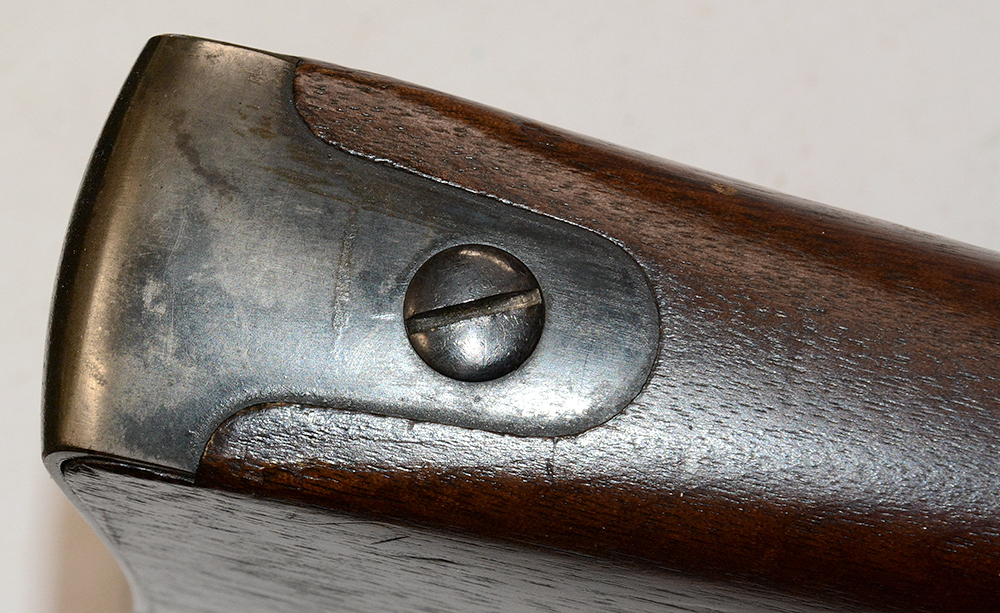
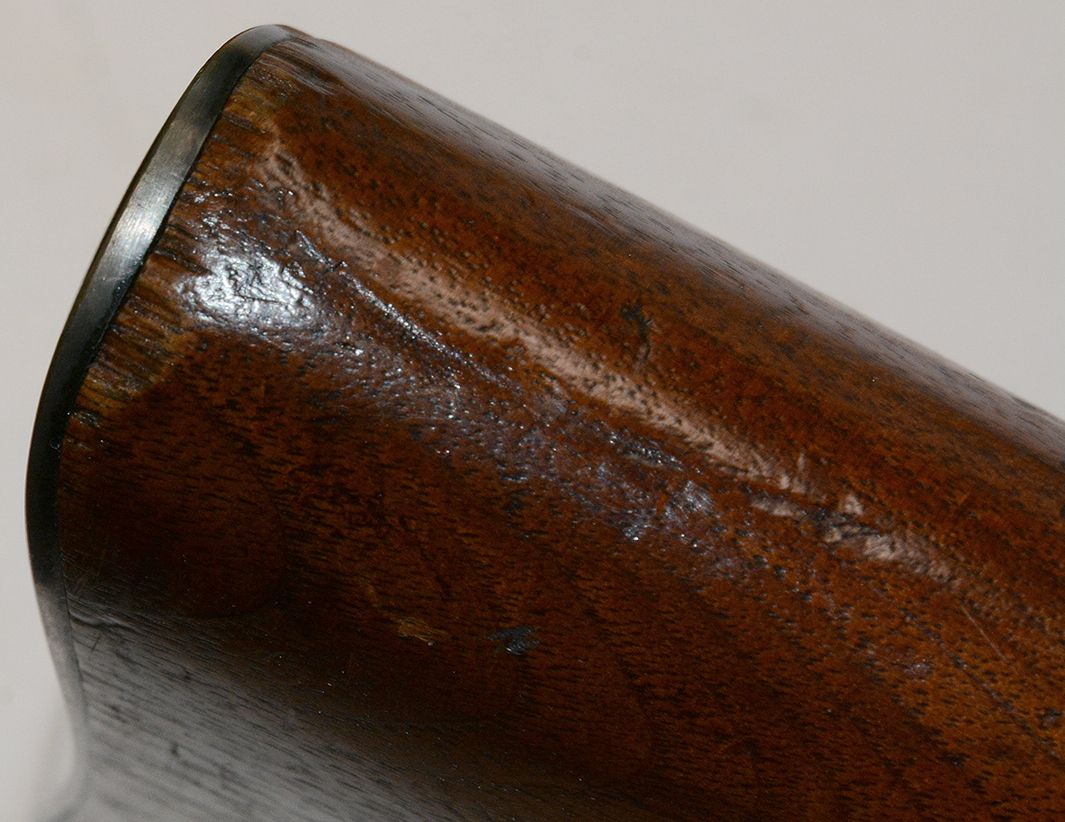
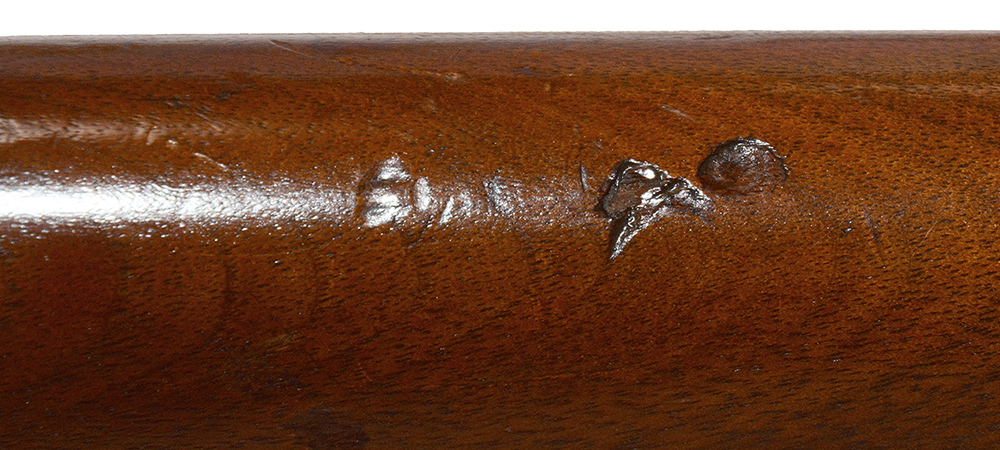
The barrel and sight retain 95 percent of their blue, thinning a little toward the receiver, with the bolt and bolt handle showing bright and some rubbing to the triggerguard. The wood has good color, edges and fit, and has some handling dings as would be expected with a gun used in field trials. These are mainly on the right under the bolt, the left side above the triggerguard, left buttflat, a natural point of contact with the body, and the belly of the stock that shows two or three small divots and some slight chipping to the toe at the buttplate, which is smooth metal and shows the mottled gray and faded blue of faded case colors.
These is a very scarce military rifle and would make a nice addition to a display devoted the Indian War army and the U.S. military’s efforts to keep up with the international drive to develop efficient magazine arms. It would also make a good addition to collection concentrating on the regiments or military posts that received them for trial. [sr] [ph:L]
DISCLAIMER: All firearms are sold as collector's items only - we do not accept responsibility as to the shooting safety or reliability of any antique firearm. All firearms are described as accurately as possible, given the restraints of a catalog listing length. We want satisfied customers & often "under" describe the weapons. Any city or state regulations regarding owning antique firearms are the responsibility of the purchaser. All firearms are "mechanically perfect" unless noted, but again, are NOT warranted as safe to fire.
~~~~~~~~~~~~~~~~~~~~~~~~~~~~~~~~~~~
THIS ITEM, AS WITH ALL OTHER ITEMS AVAILABLE ON OUR WEB SITE,
MAY BE PURCHASED THROUGH OUR LAYAWAY PROGRAM.
CLICK HERE FOR OUR POLICIES AND TERMS.
THANK YOU!
Inquire About RARE SPRINGFIELD CHAFFEE-REECE REPEATING RIFLE, ONE OF 753 MADE
Most Popular
Historical Firearms Stolen From The National Civil War Museum In Harrisburg, Pa »
Theft From Gravesite Of Gen. John Reynolds »
Selection Of Unframed Prints By Don Troiani »
Fine Condition Brass Infantry Bugle Insignia »
featured item
VIRGINIA OFFICER’S BELT PLATE REMOVED FROM THE BODY OF COL. JAMES G. HODGES, 14th VIRGINIA, KILLED IN PICKETT’S CHARGE, WITH HIS COLONEL’S STARS- THE PLATE RETURNED TO HIS WIDOW IN 1903!
This historic group includes the Virginia Confederate officer’s sword belt plate removed from the body of Colonel James Gregory Hodges, 14th Virginia, Armistead’s brigade, killed at the stone wall near the 69th Pennsylvania monument and High… (846-563). Learn More »
site search