

site search
online catalog
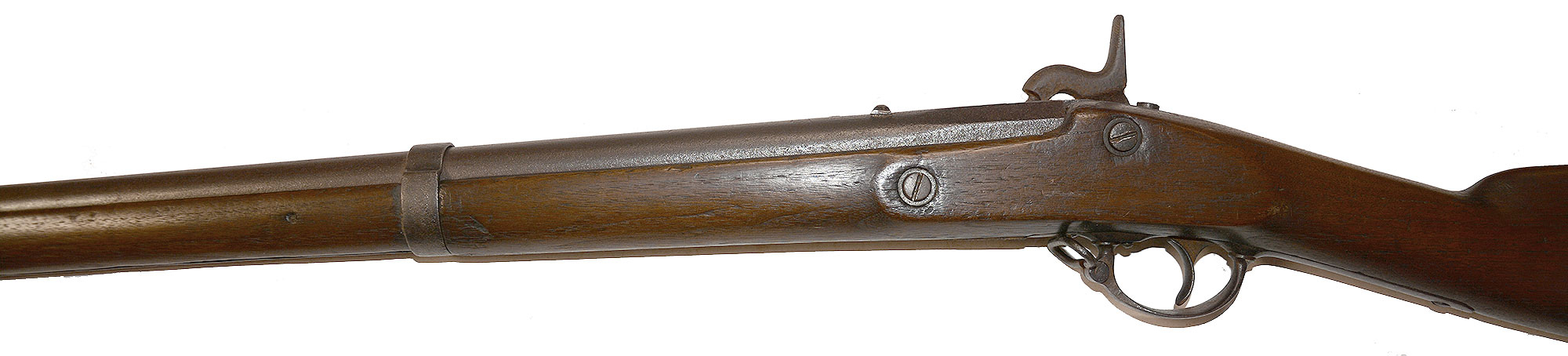
AN IDENTIFIED GETTYSBURG PICKED-UP RICHMOND RIFLE-MUSKET

Hover to zoom




$13,500.00
Quantity Available: 1
Item Code: 1268-076
Shipping: Determined by Method & Location of buyer
To Order:
Call 717-334-0347,
Fax 717-334-5016, or E-mail
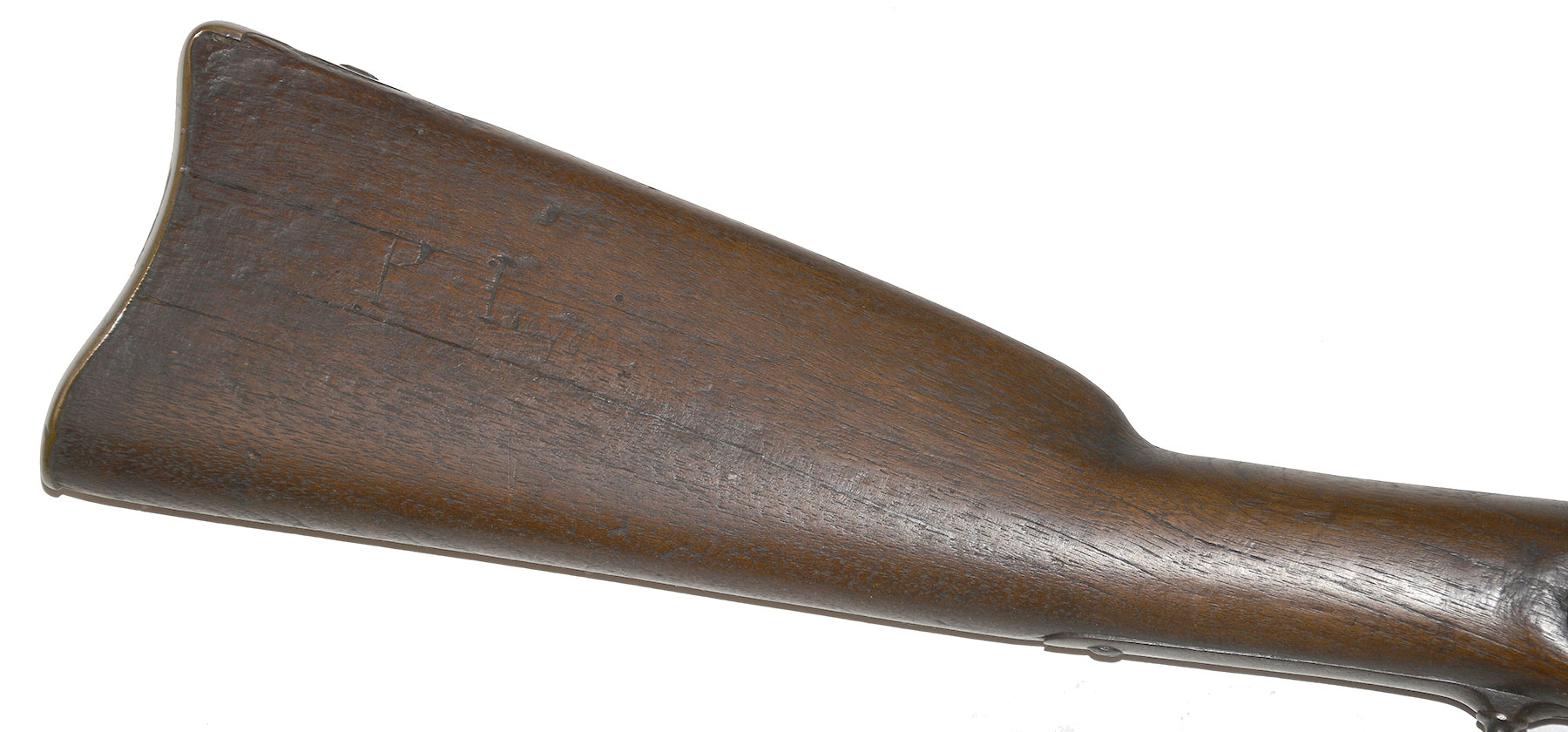
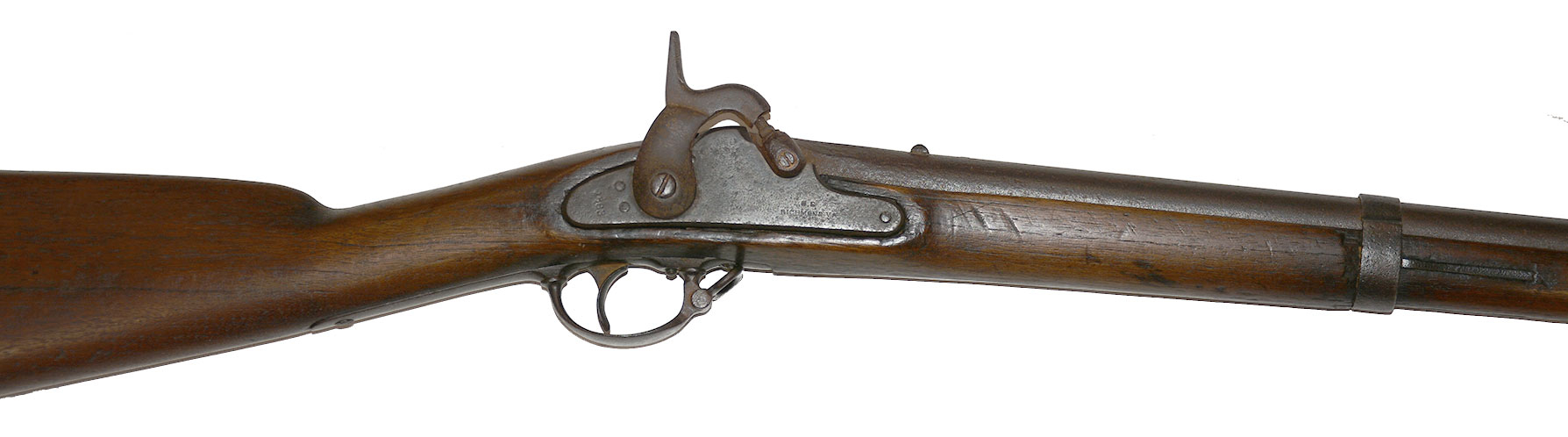
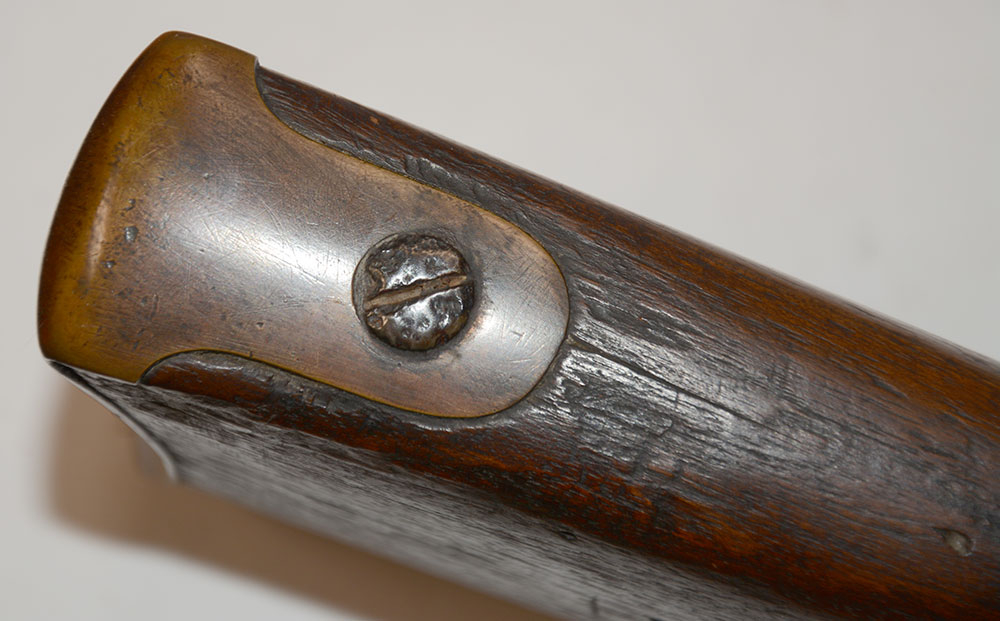
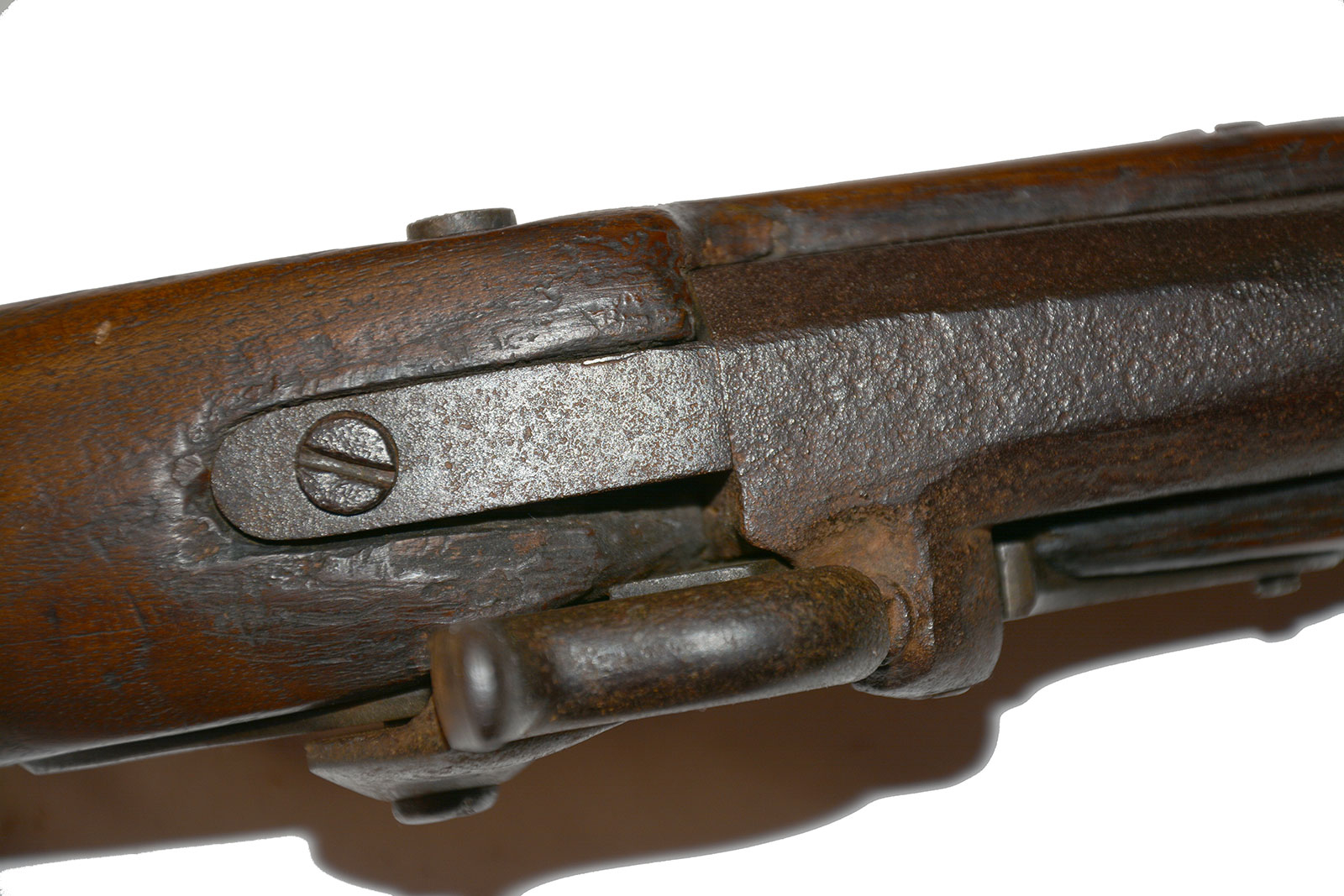
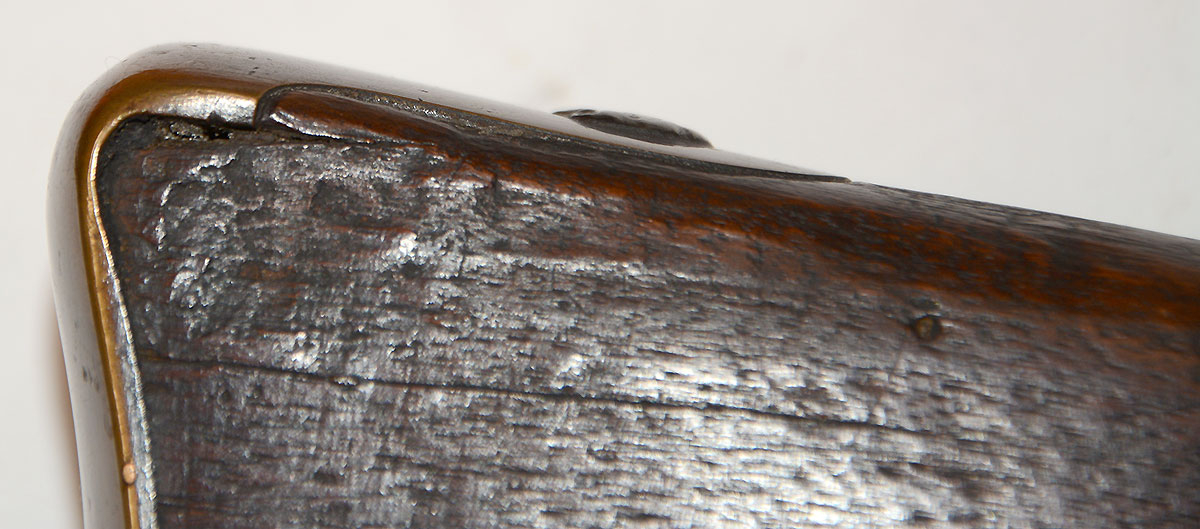
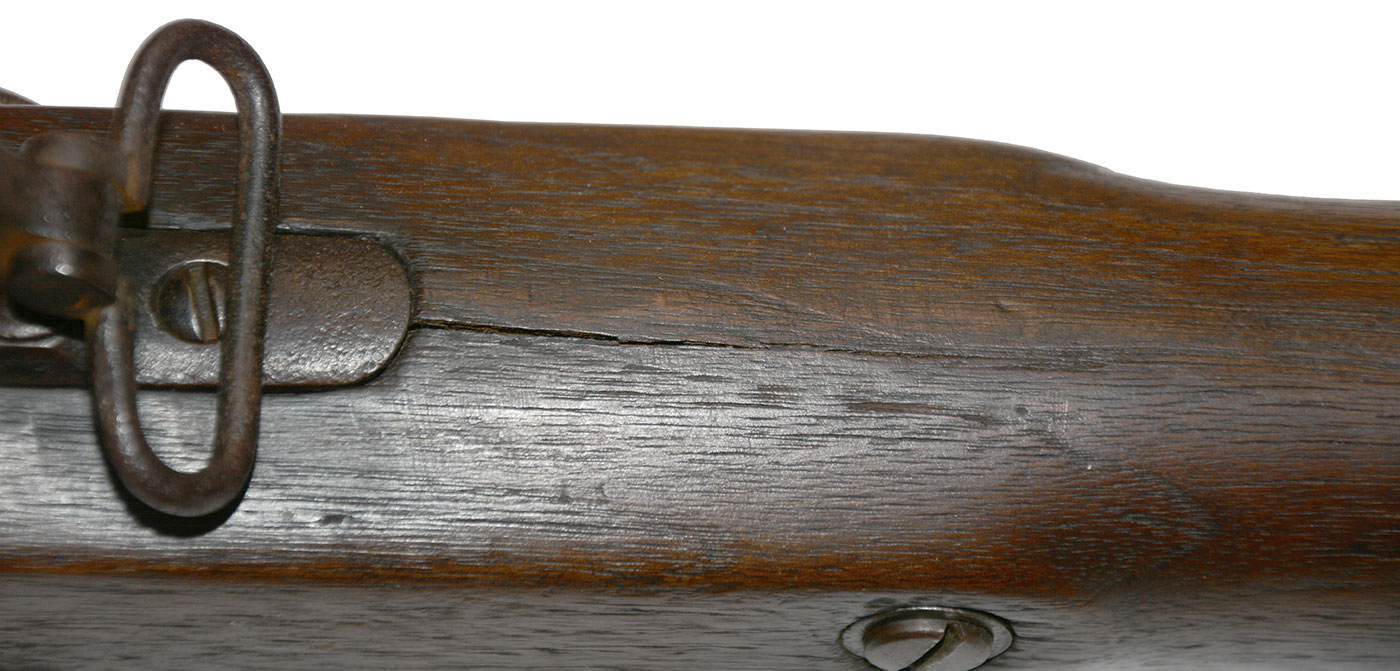
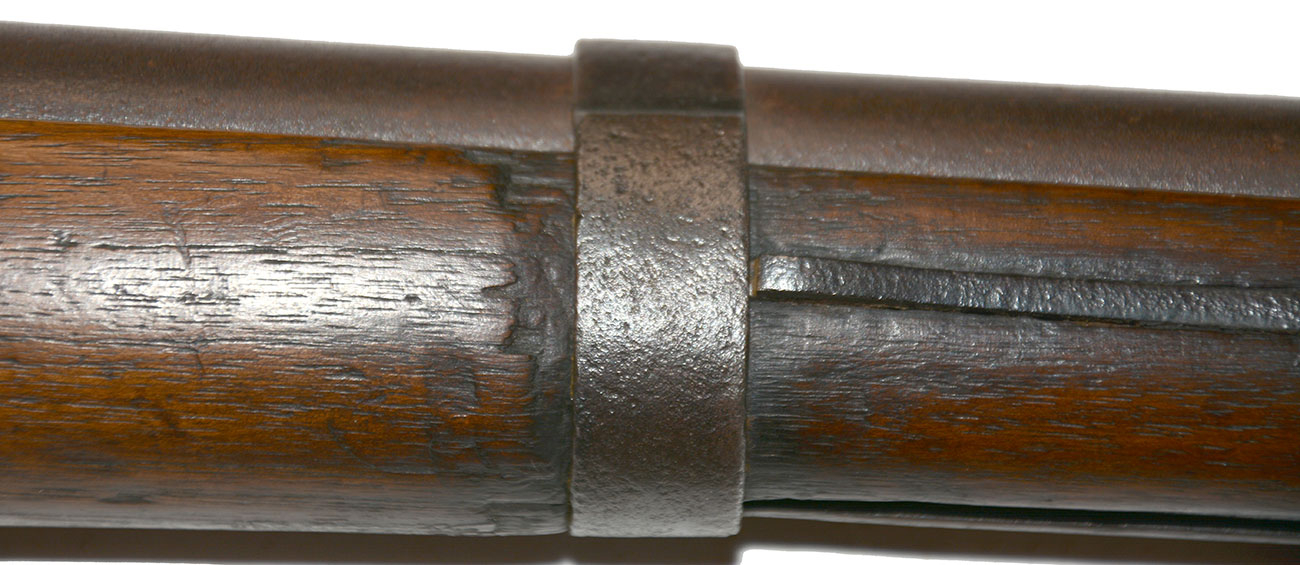
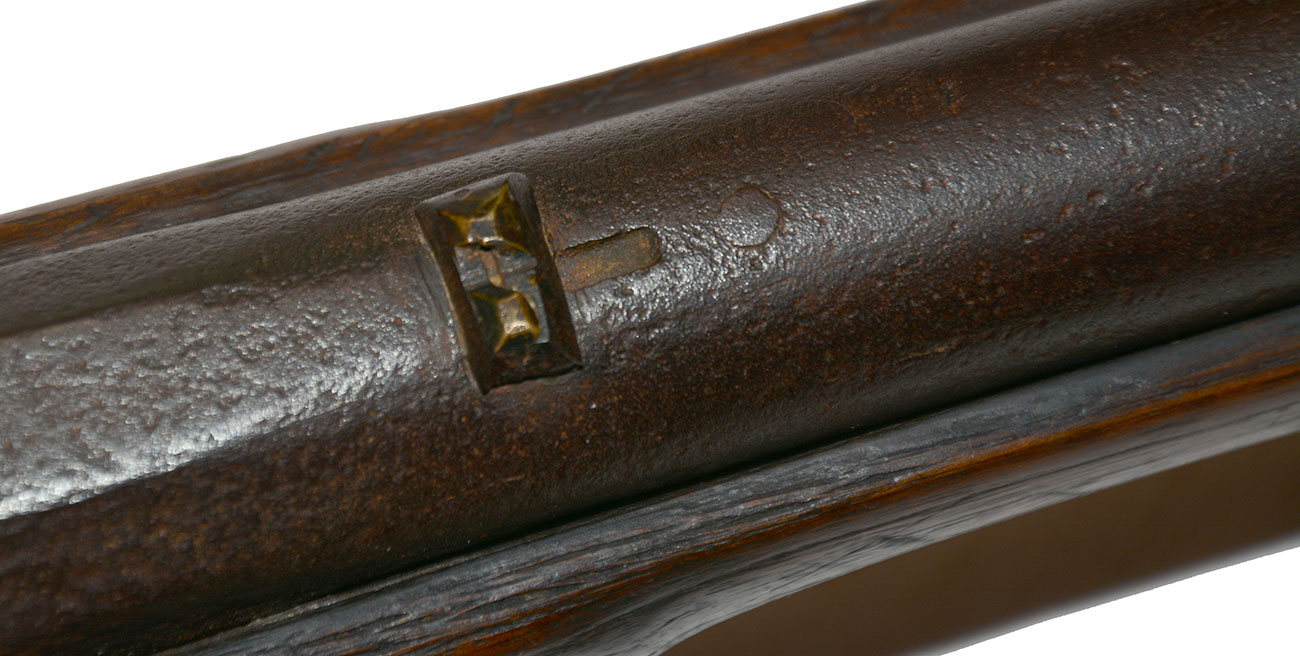
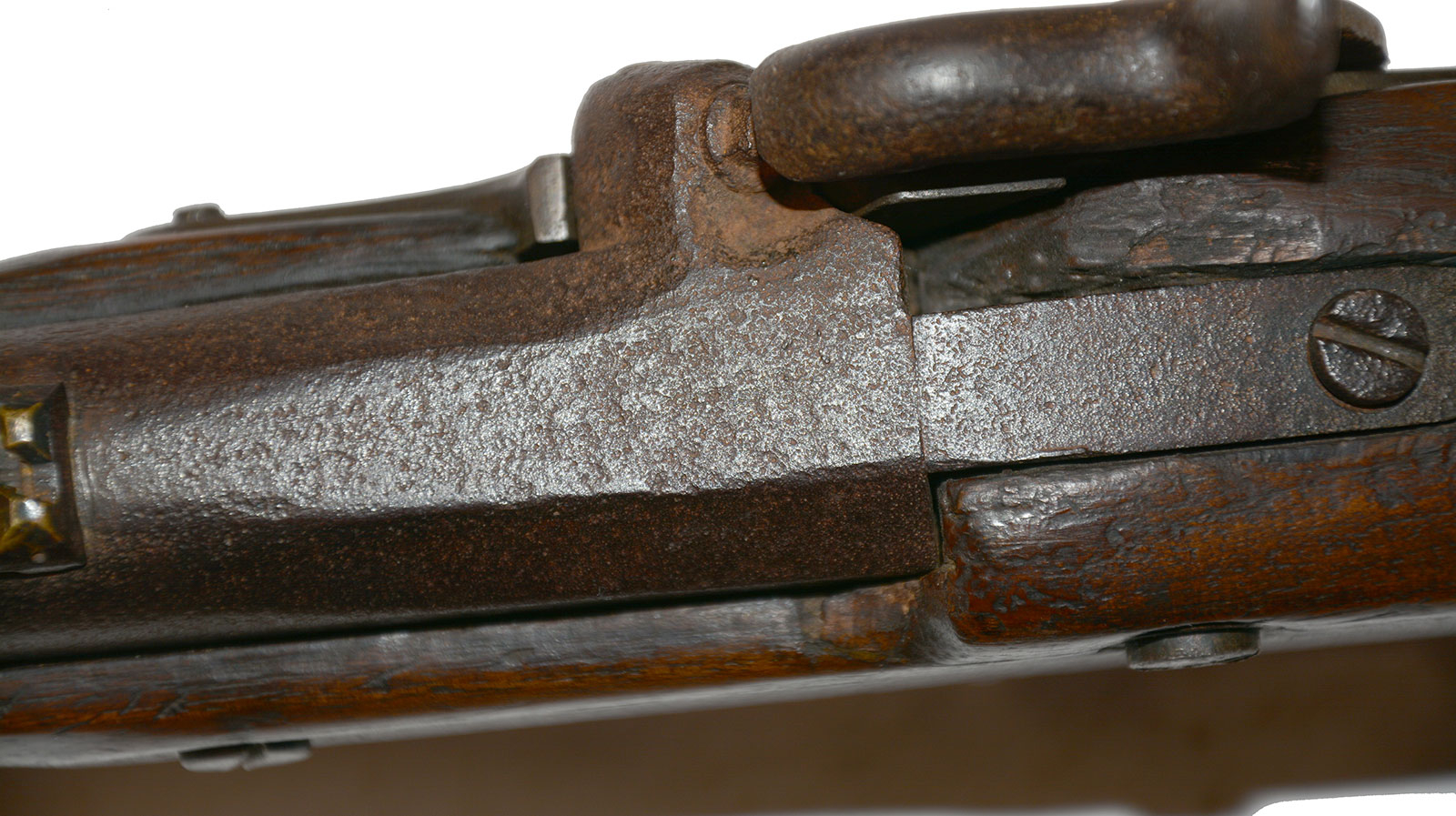
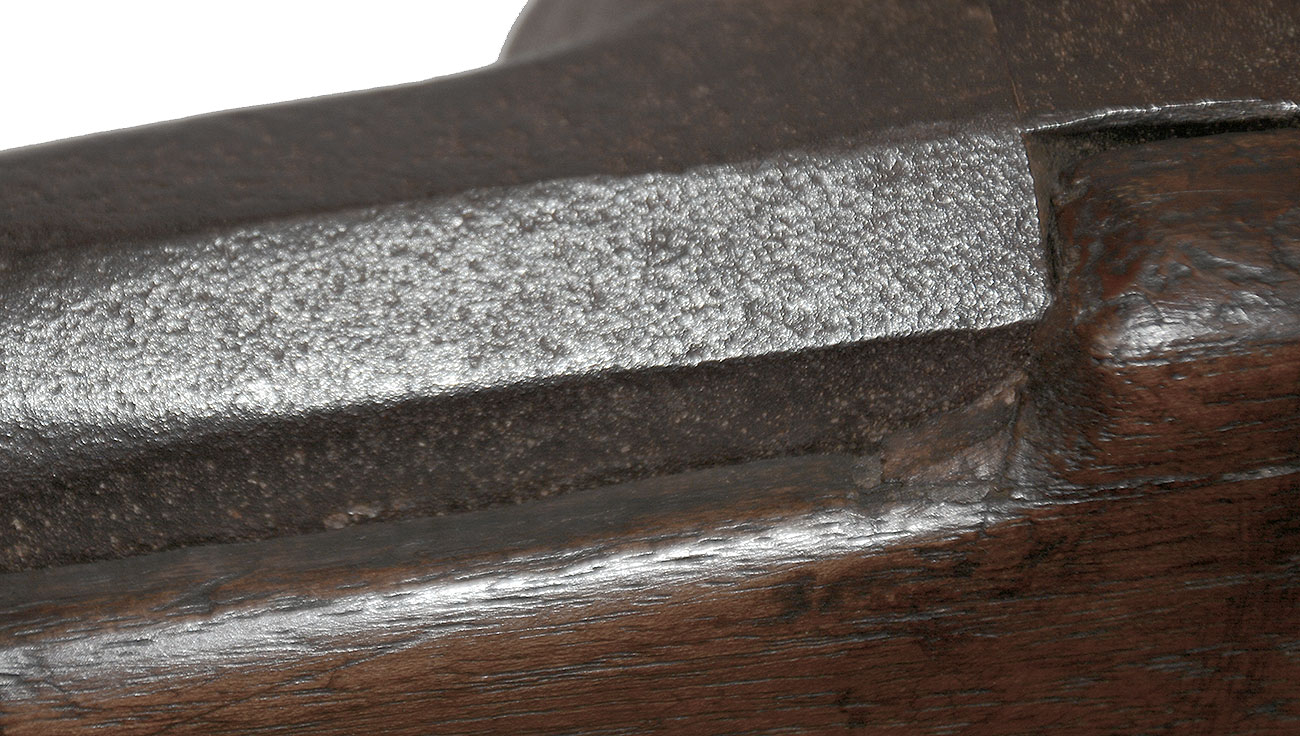
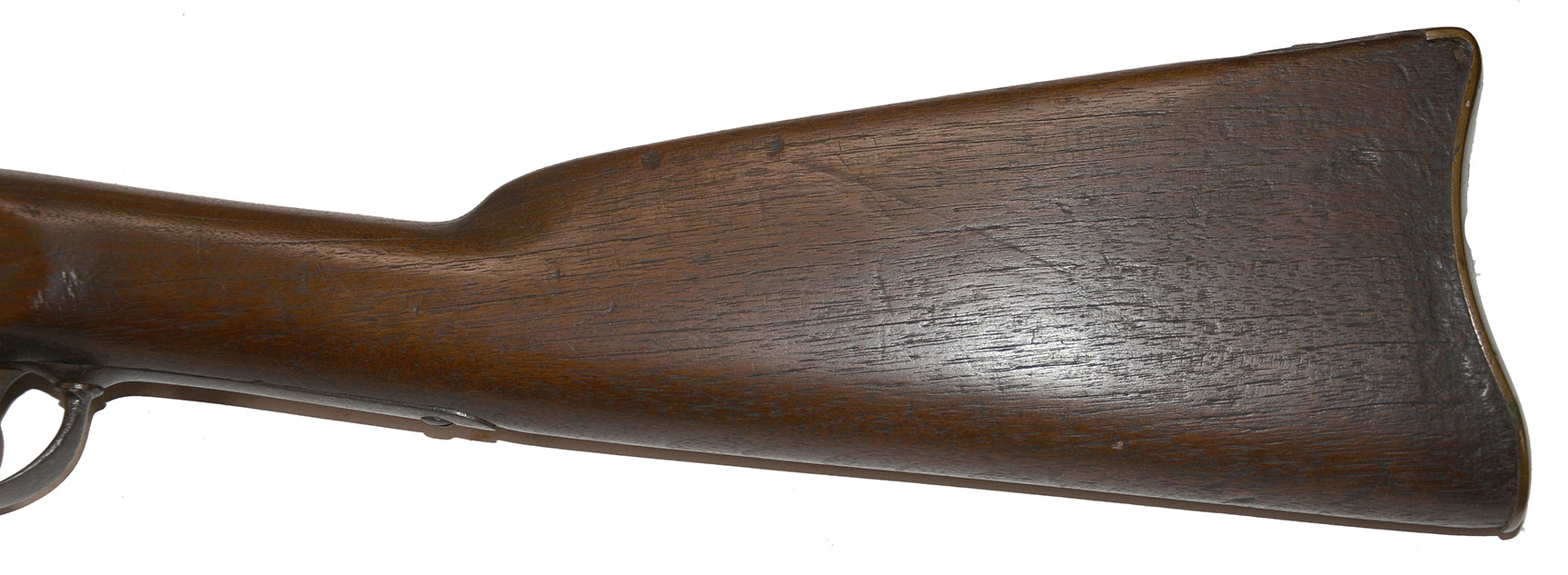
This is very good example of a Richmond rifle-musket that was made in 1863. It has the beveled "low-hump" lock plate introduced in the spring of 1862. It has the desirable brass butt plate and nose cap; the iron barrel bands are all Richmond made with the distinctive, if you know what to look for, "U"s haphazardly struck. The rear sight is missing, and a crude open sight was swagged in, but the barrel shows the correct in letting for the Richmond made 1855 sight's steady pin. The Richmond stock, with no inspector's mark, is nice with no breaks or restorations but shows abrasions and bumps that are to be expected on a veteran. There is searing and burn loss on the wood between the lock and barrel tang behind the hammer. "This was thought by older collectors to be just careless handling and maintenance but is now recognized as characteristic of Confederate long arms using the imported powerful British high-pressure percussion caps". The older collectors were correct! It is strange that in over 60 years of involvement in antique gun collecting in general and for a time totally involved with British military firearms this compiler never saw this kind of wood burn-out or pitting created by British percussion caps on British military firearms. This is "gun show wisdom". The loss to the wood behind the cock (and the powder pitting on the barrel) can be explained by extended use well beyond the war. If then not stored in optimum conditions or not cleaned properly (as a soldier was expected to do and did do) corrosion followed by loss would eventually occur.
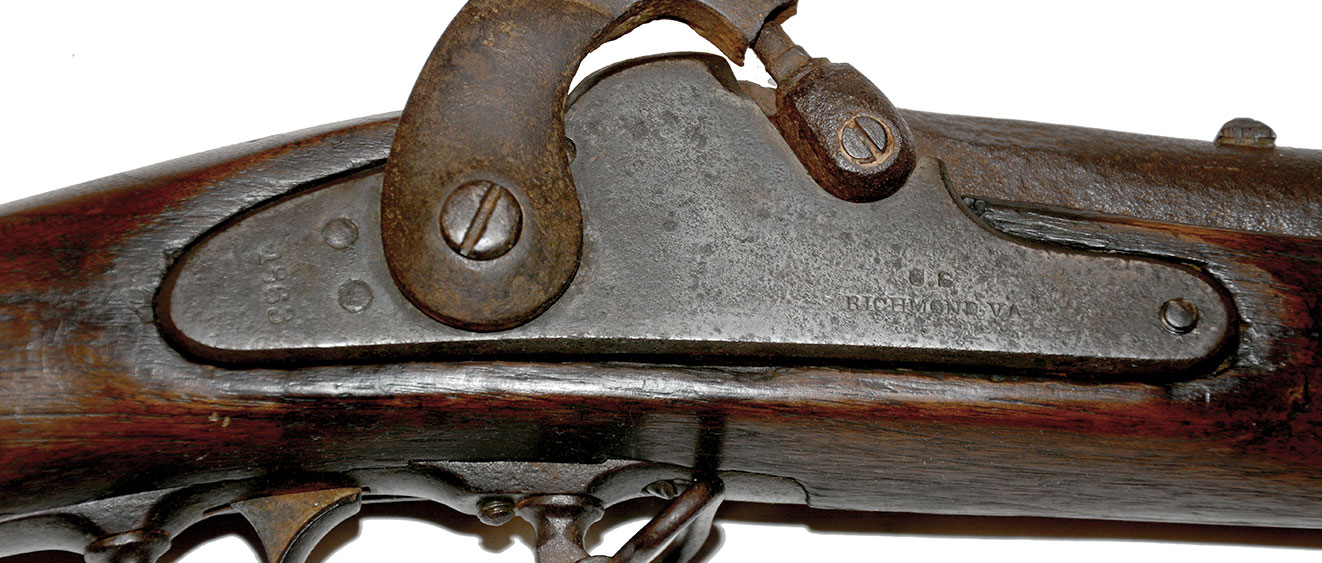
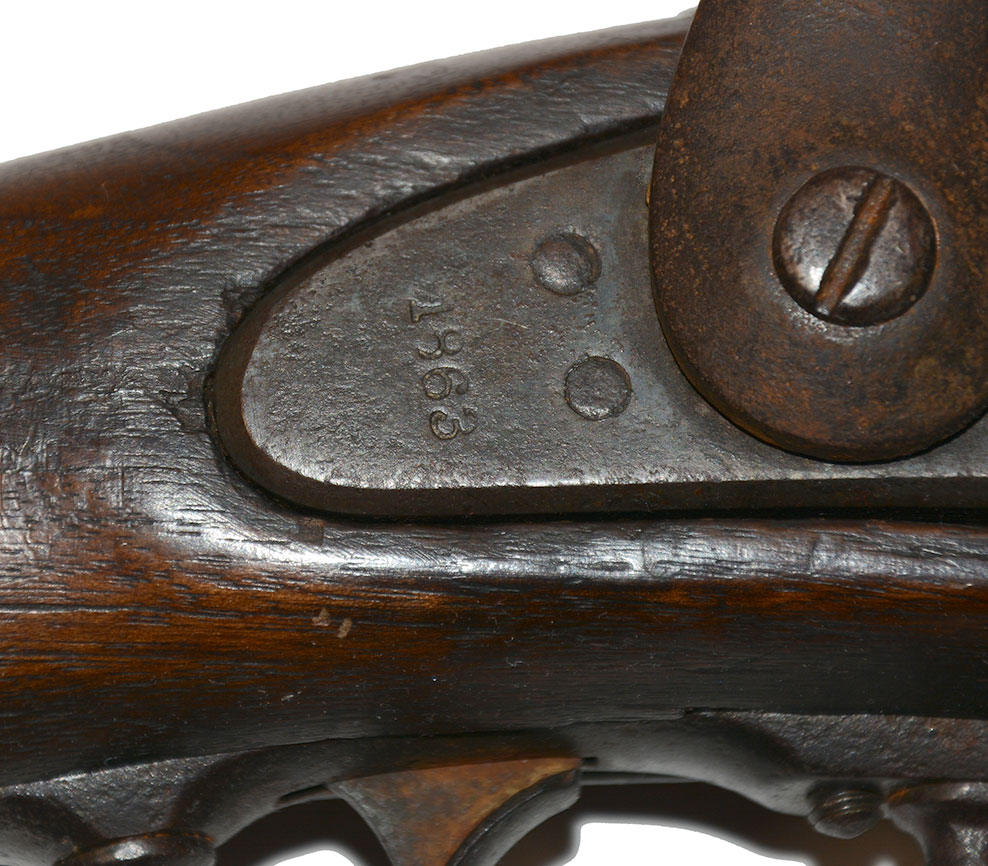
The lock markings are sharp and read "1863" at rear of the hammer and "C.S." over "RICHMOND VA." forward of the cock. There is scattered pitting on the once case-hardened lock plate. The cock has considerable chipping around the nose so typically seen and expected on Richmond rifles. The bolster and breech on the 40-inch barrel are lightly pitted and heavily patinated, obscuring the barrel date and the barrel proofs "V" and "P" and the eagle head but these are certainly under the desirable deep dark patina; cleaning to expose these is not recommended. All 3 bands and their springs are intact. The 2 swivels are in place. All metal components have patinas that match that of the barrel. The Richmond cast brass nose cap and brass butt plate are in a plum-brown patina. The front sight is correct and in place. The trumpet-head thin shaft threaded ramrod with a patina that matches is Richmond made. These are rarely found in place. The Richmond's had no internal ramrod spoons and so the friction held rods got easily lost. The bore is mostly smooth and again this is explained by extensive post-war use. In May of 1864 General Lee issued a directive to soldiers of the Army of Northern Virginia to, when possible, pick up the new (Model 1863) Yankee rifle-musket and drop their Enfields etc. which after 2 years' service were getting worn in the bore. Confederate front line infantry soldiers did not carry bored out or worn-out rifles. The Confederate C & R system also saw to this.
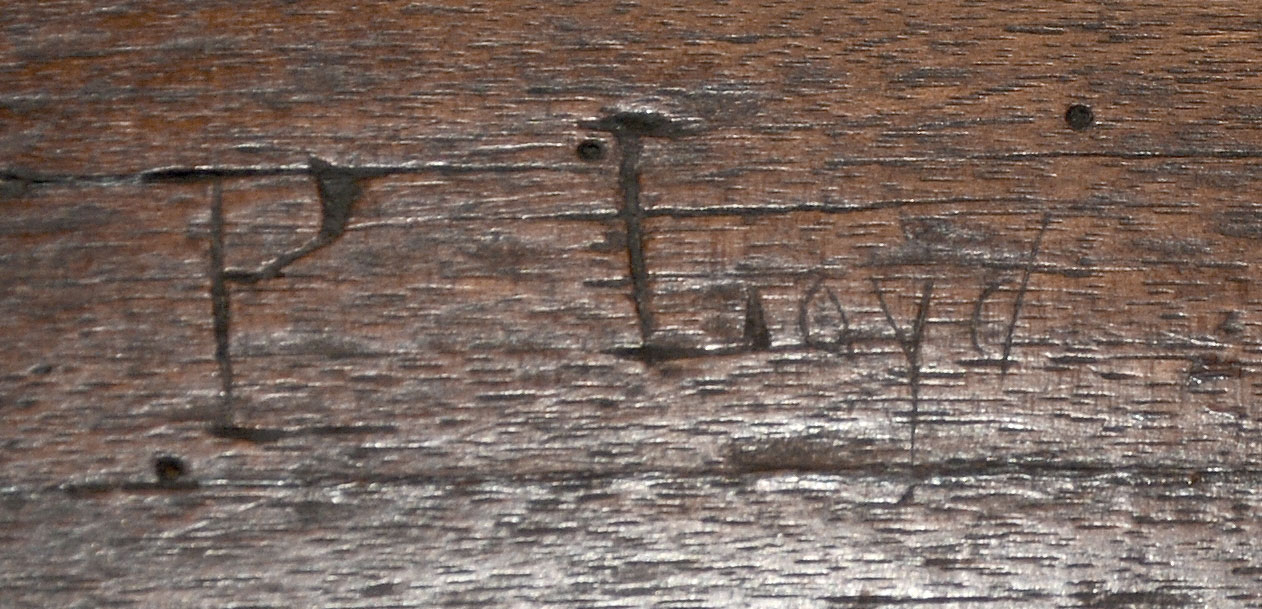
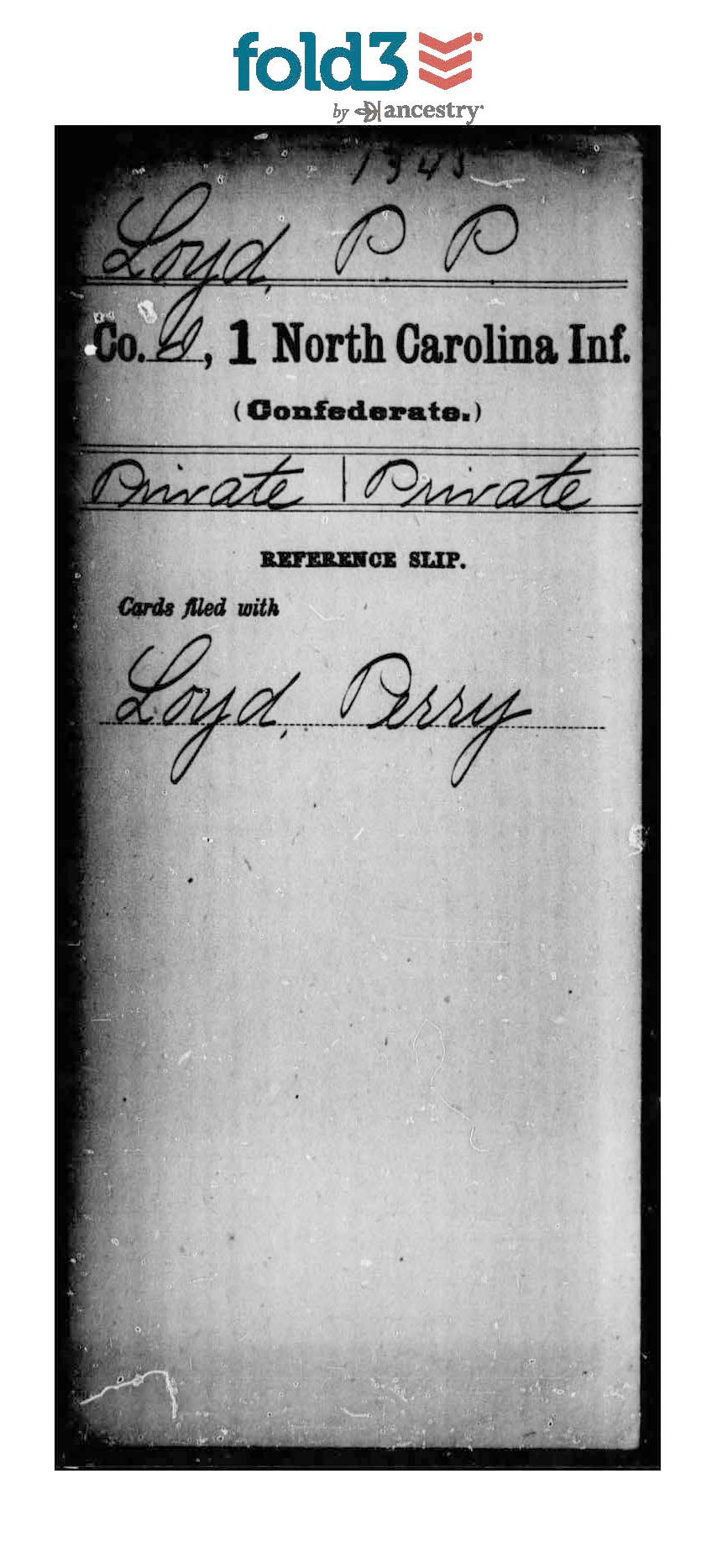
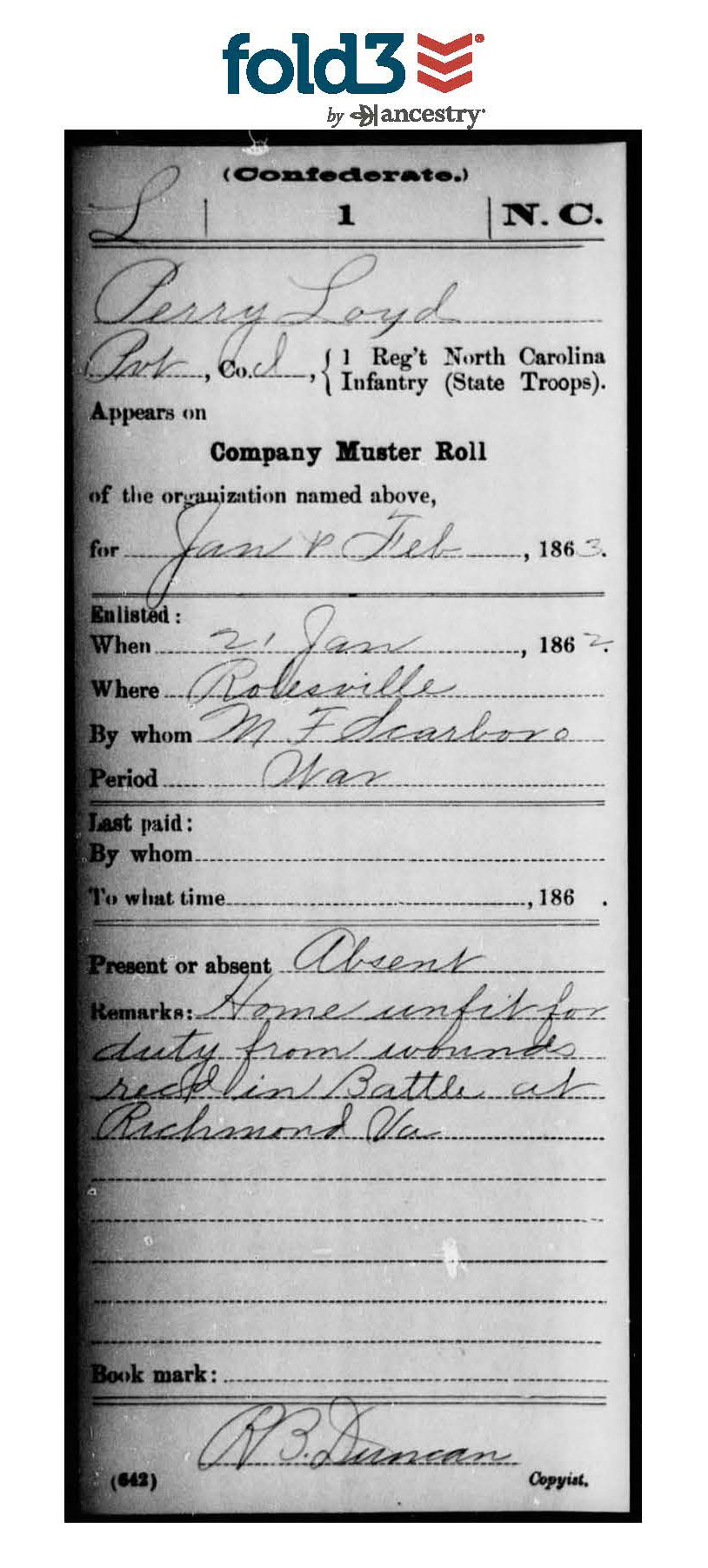
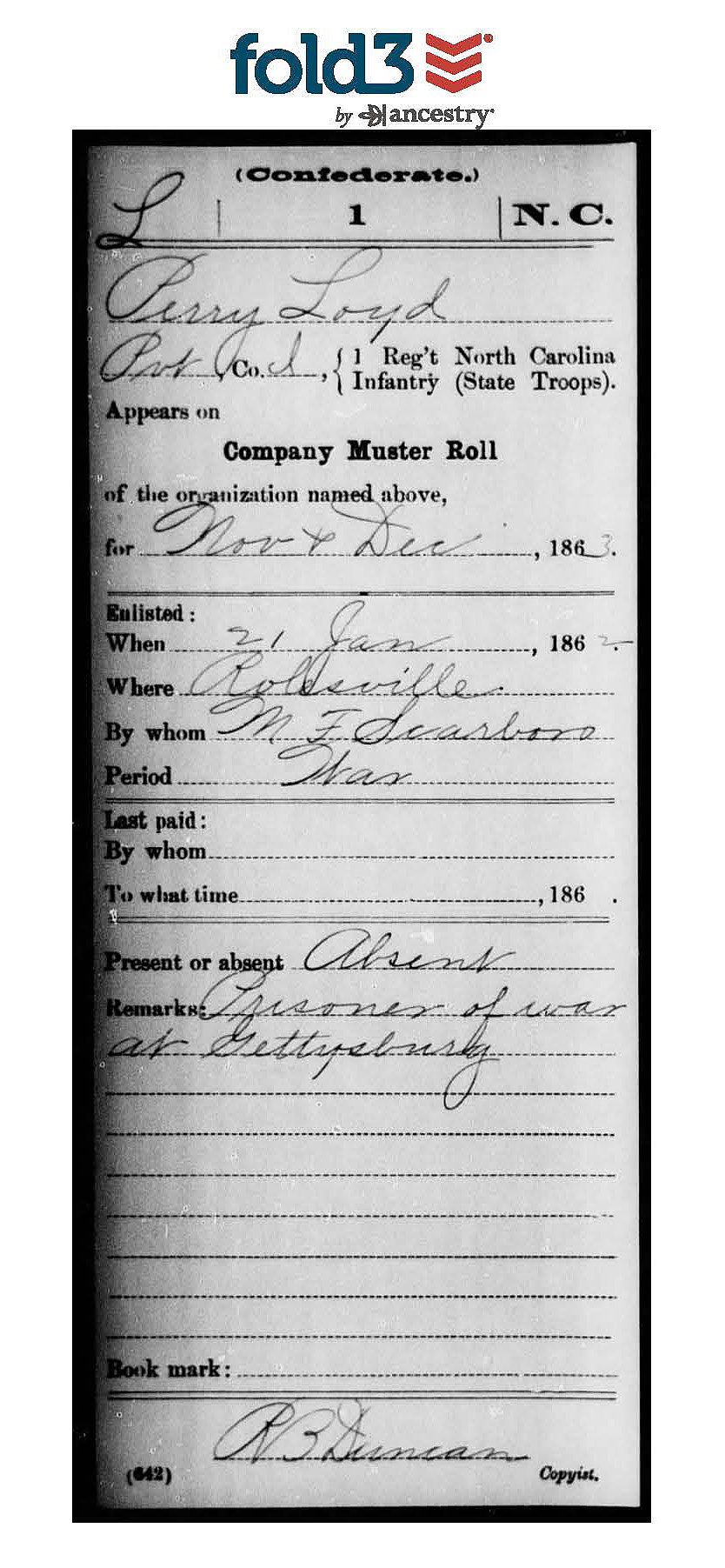
On the right side of the stock in 1 inch high neatly carved letters is “ P. Loyd". This can only be Perry Loyd of Company I of the 1st North Carolina Infantry Regiment CSA. Please click this link for the regiment's detailed history (https://civilwarintheeast.com/confederate-regiments/north-carolina/1st-north-carolina-infantry-regiment/). Loyd enlisted early in the war and was severely wounded in the summer of 1862 at Ellyson's Mill during the Seven Days battles around Richmond. Returning to the ANV in 1863 he was issued the Richmond we are offering. He fought at Gettysburg and was captured here. Here he lost this Richmond! He was imprisoned and in time turned his back on Dixie becoming a "Galvanized Yankee". Please see portions of his record as attachments. This is a Richmond you can absolutely put on the Gettysburg battlefield. [pe][ph:L]
~~~~~~~~~~~~~~~~~~~~~~~~~~~~~~~~~~~
THIS ITEM, AS WITH ALL OTHER ITEMS AVAILABLE ON OUR WEB SITE,
MAY BE PURCHASED THROUGH OUR LAYAWAY PROGRAM.
CLICK HERE FOR OUR POLICIES AND TERMS.
THANK YOU!
Inquire About AN IDENTIFIED GETTYSBURG PICKED-UP RICHMOND RIFLE-MUSKET
Most Popular
Historical Firearms Stolen From The National Civil War Museum In Harrisburg, Pa »
Theft From Gravesite Of Gen. John Reynolds »
Selection Of Unframed Prints By Don Troiani »
Fine Condition Brass Infantry Bugle Insignia »
featured item
MAMALUKE SABER MANUFACTURED IN ENGLAND
Manufactured: England Maker: William Harvey Year: 1840 - 1850 Model: Mameluke Size: 30.25 Condition: VG Wonderful Mamaluke Saber manufactured in England. Most likely for a British officer but possible it was imported to the US market. … (870-74). Learn More »
site search