


site search
online catalog
CONFEDERATE CLOVERLEAF PIKE
Hover to zoom
$2,250.00 ON HOLD
Quantity Available: 1
Item Code: 1179-1659
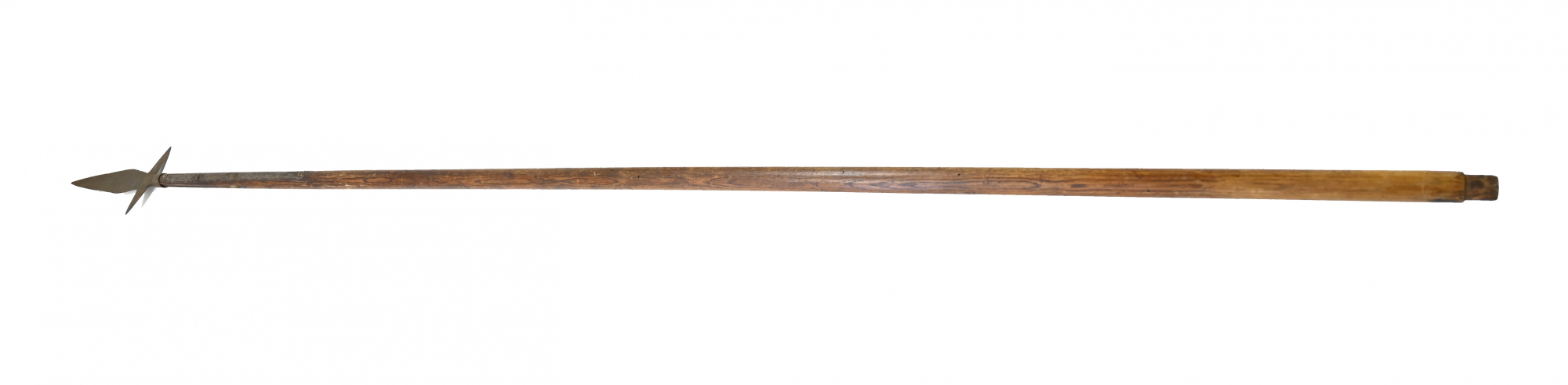
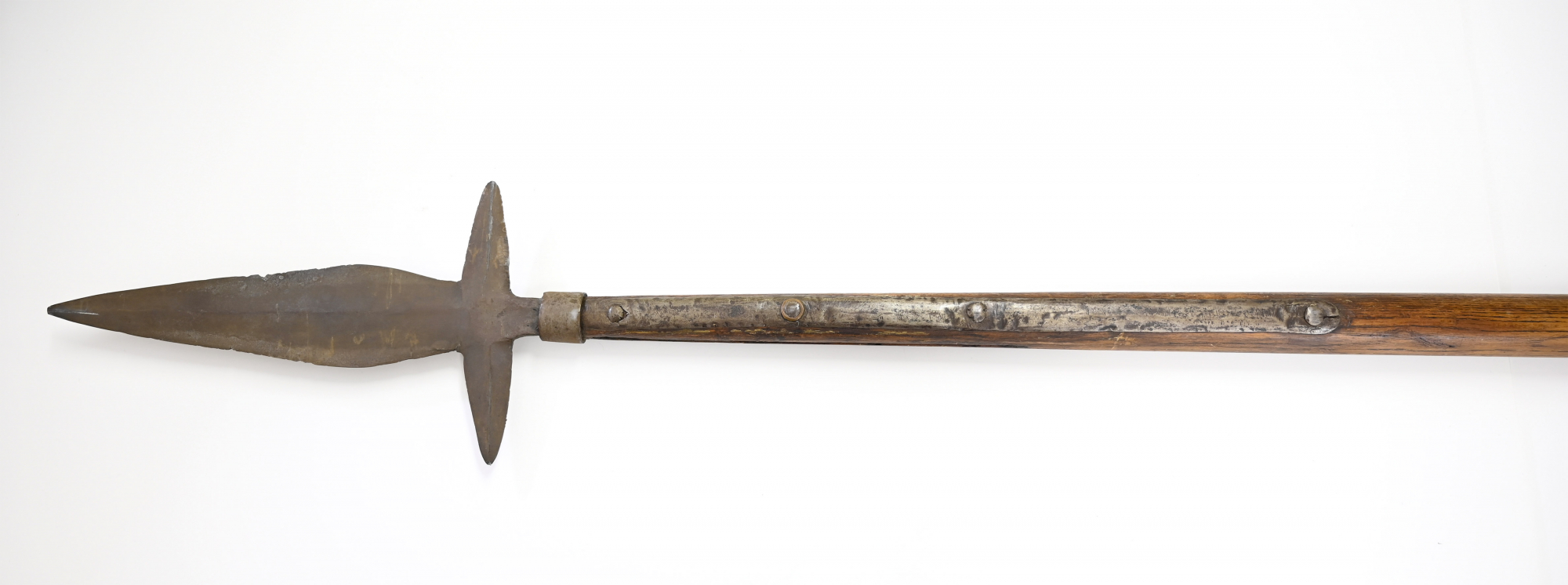
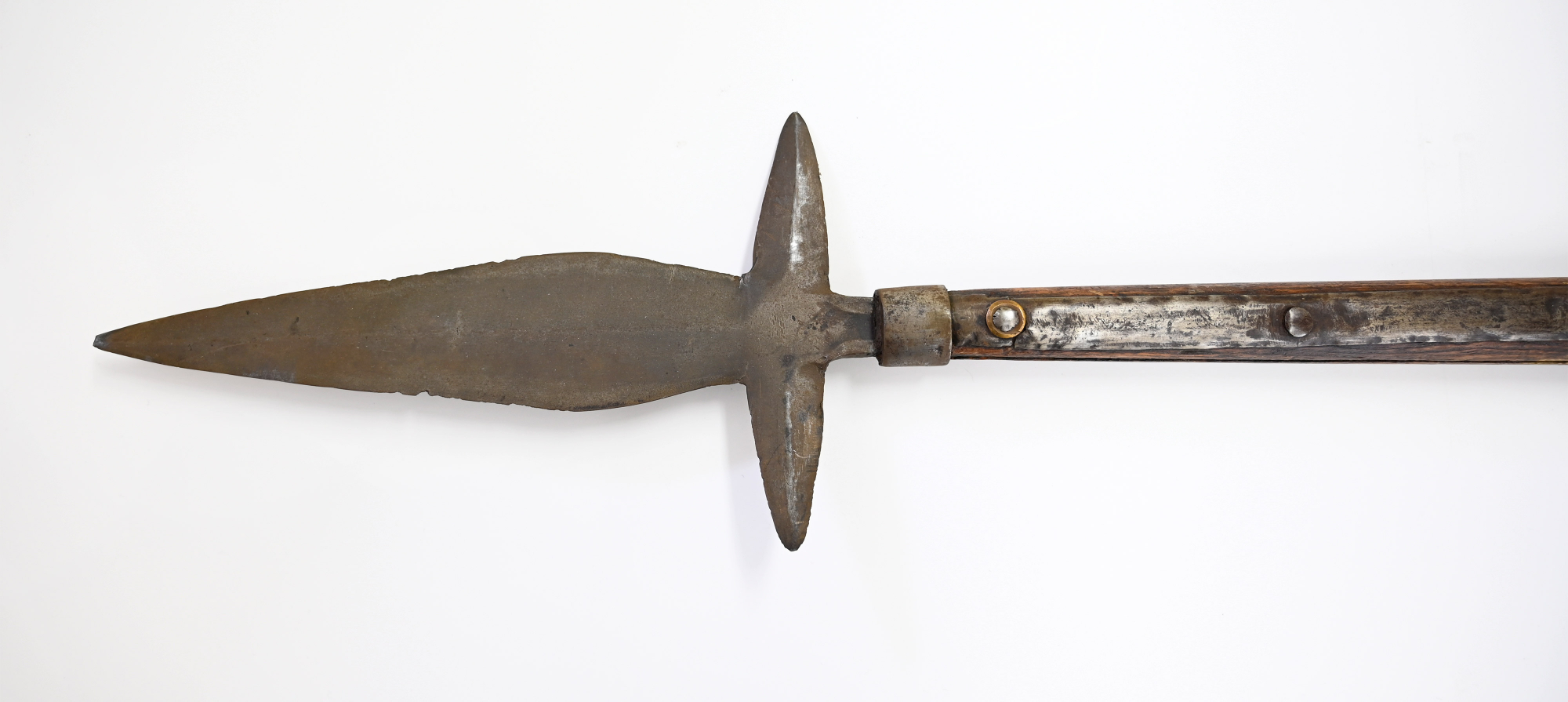
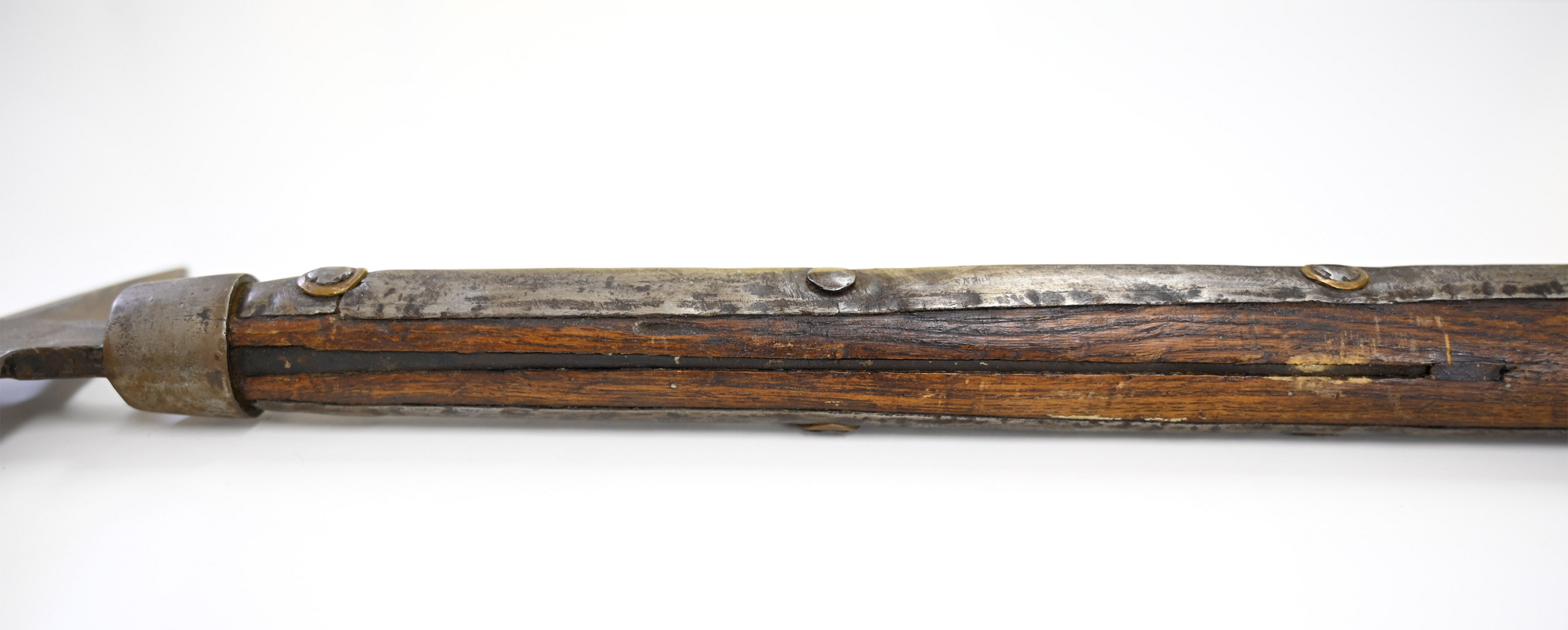
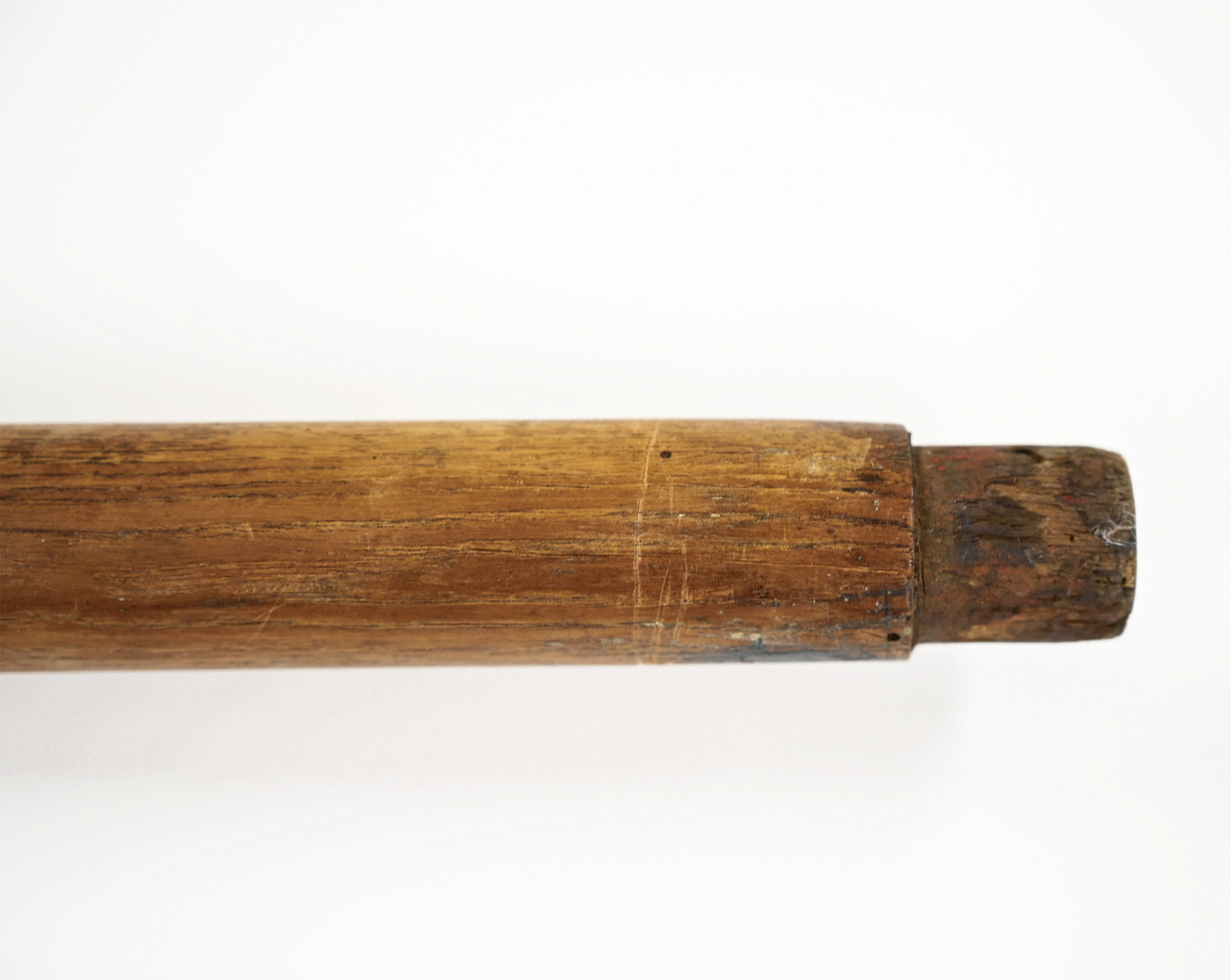
A very good, unmarked example of the striking Confederate “cloverleaf” pike formerly in the collections of the Texas Civil War Museum. The nickname obviously derives from the trefoil spearhead with a long central blade widening out for the lower third or so of the blade and then tapering to the point in an elongated diamond shape, with two symmetrical leaf-shaped side blades projecting from the base. All three points are a flattened diamond in cross-section with medial ridges, those on the side blades being more pronounced. These are forged in one piece, together with a long tang that is held in the slotted upper portion of the shaft and secured by the top three of four rivets that also secure side straps extending down from underneath an iron collar on the end of the shaft. The shaft is full length, with the end narrowed for a missing butt cap.
The spearhead is gray, with some thin brown. The collar and side straps show as a lighter, silver gray with some darker age spots. Some of the rivets show use of a copper washer in securing the sidestraps, wood and blade tang. The wood shaft shows light in color from handling and rubbing of the finish on lower portions. The upper edges of the main blade and one of the side blades show some roughness and a very small bit of the tip of the main blade is missing, but this displays very well overall and is a key pattern in a collection of CS pikes. The form is associated with the Macon, Georgia, area with some marked examples known by J. McElroy, H. Stevens, and Samuel Griswold. Rodney Brown, American Polearms, posited these were made specifically for the state of Georgia, though McElroy may have approached the central government since Brown records a receipt from him to the Confederate government for “one spear head” that may have accompanied the one known marked example by him as a sample (Brown, p. 126.)
Some dealers and collectors suggest the pattern may have seen use as flag or guidon lance as well, likely on the basis of the shape of the spearhead, but they are clearly in the same category as the “bridle cutter” pikes whose single curved blade extensions from the main blade could cut a cavalryman’s reins but better serve in delivering a piercing blow from distance or simply entangle a rider’s clothing or gear to drag him from his horse, something harking back to the middle ages and the renaissance, with associations not only with peasant rebellions against an oppressive knightly class, but battalions of Swiss pikemen. Needless to say, despite those precedents and Georgia Governor Brown’s overly enthusiastic expectations that pike armed infantry reserves might rout an enemy force in close combat, they might still be effective in defending artillery embrasures against storming infantry and the like, though most that saw service did so in the hands of rear echelon units on guard duty and many remained in store until destroyed by marauding Union cavalry before they could be issued out for any last-ditch defense.
Polearms, like side-knives, are a quintessentially Confederate weapon with a variety of interesting forms and they make an impressive display. [sr][ph:L]
Extra shipping charge required.
~~~~~~~~~~~~~~~~~~~~~~~~~~~~~~~~~~~
THIS ITEM, AS WITH ALL OTHER ITEMS AVAILABLE ON OUR WEB SITE,
MAY BE PURCHASED THROUGH OUR LAYAWAY PROGRAM.
CLICK HERE FOR OUR POLICIES AND TERMS.
THANK YOU!
Inquire About CONFEDERATE CLOVERLEAF PIKE
Most Popular
Historical Firearms Stolen From The National Civil War Museum In Harrisburg, Pa »
Theft From Gravesite Of Gen. John Reynolds »
Selection Of Unframed Prints By Don Troiani »
Fine Condition Brass Infantry Bugle Insignia »
featured item
SILVERED PRESENTATION FIFE TO MARTIN MURPHY, 4th NEW YORK VOLUNTEERS, 17th NY VETERAN ZOUAVES, AND REGULAR ARMY
This elegant silvered fife, 15-1/4” long, bears a great presentation and was carried by a company musician with Civil War service in two New York regiments, one of them a zouave regiment, and substantial service in the regular army. He seems to… (1268-167). Learn More »
site search