


site search
online catalog
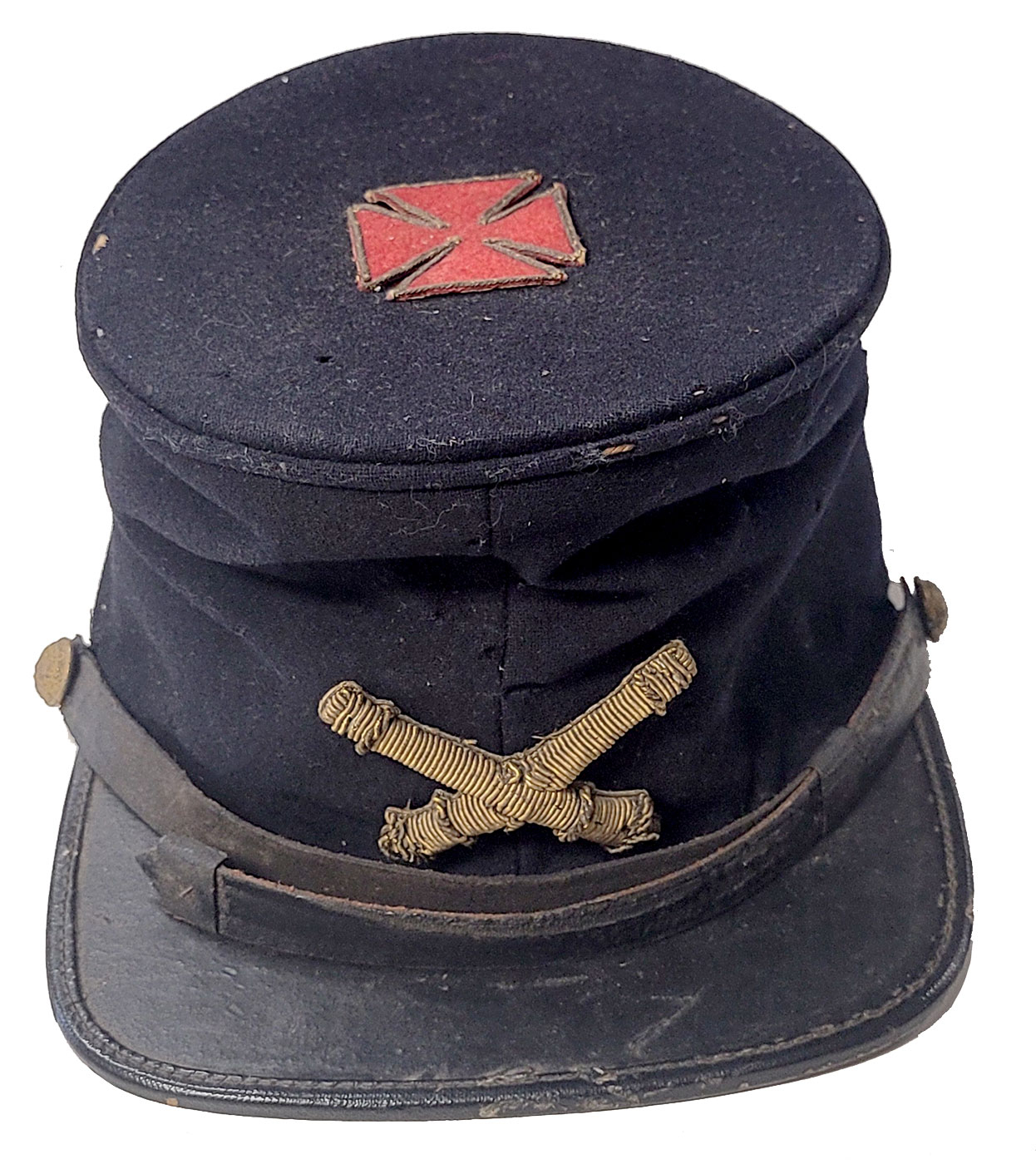
IDENTIFIED 5th CORPS ARTILLERY OFFICER’S CAP OF AUGUSTUS P. MARTIN, DIVISION AND 5th CORPS CHIEF OF ARTILLERY, WIA 1864
Hover to zoom
$5,500.00
Quantity Available: 1
Item Code: 1268-549
Shipping: Determined by Method & Location of buyer
To Order:
Call 717-334-0347,
Fax 717-334-5016, or E-mail
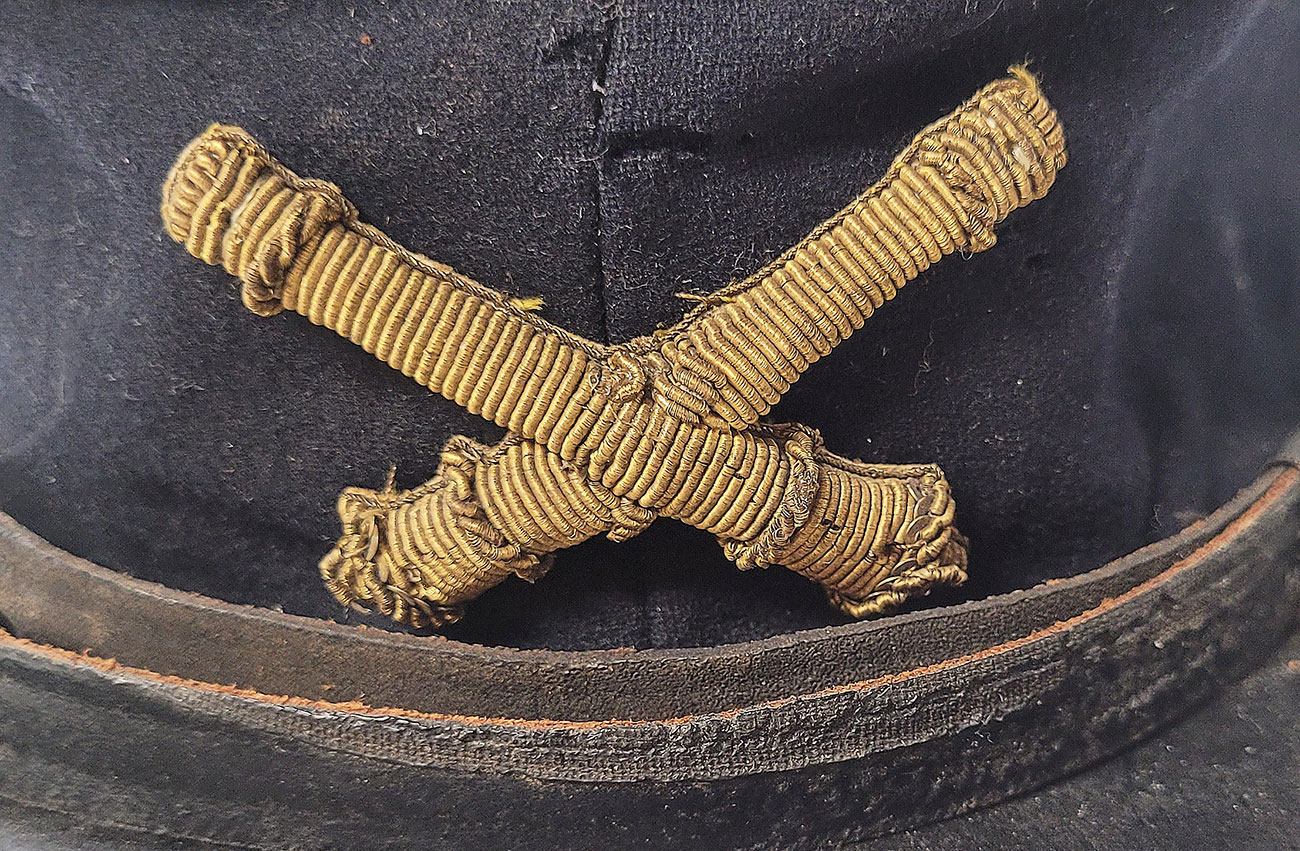
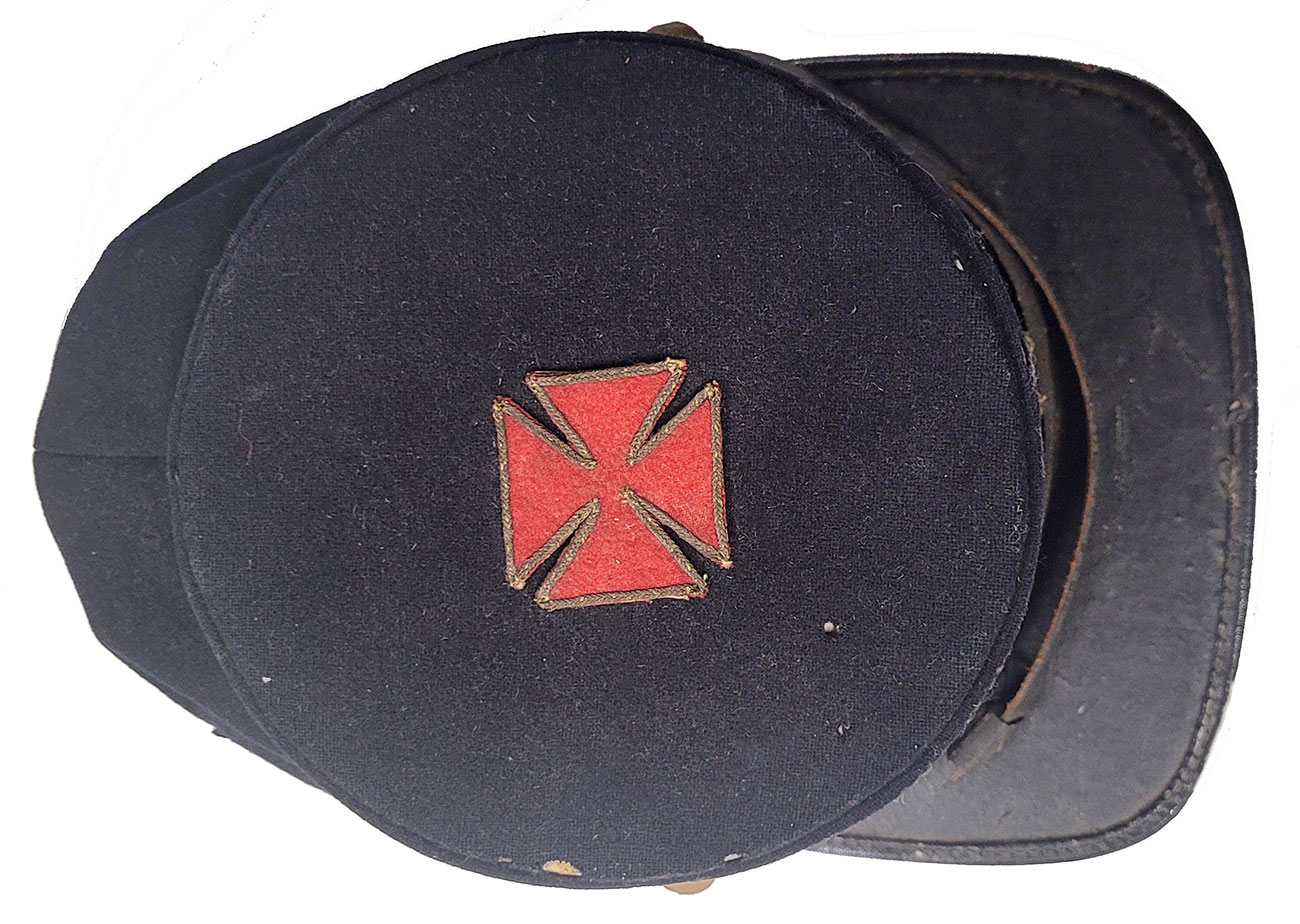
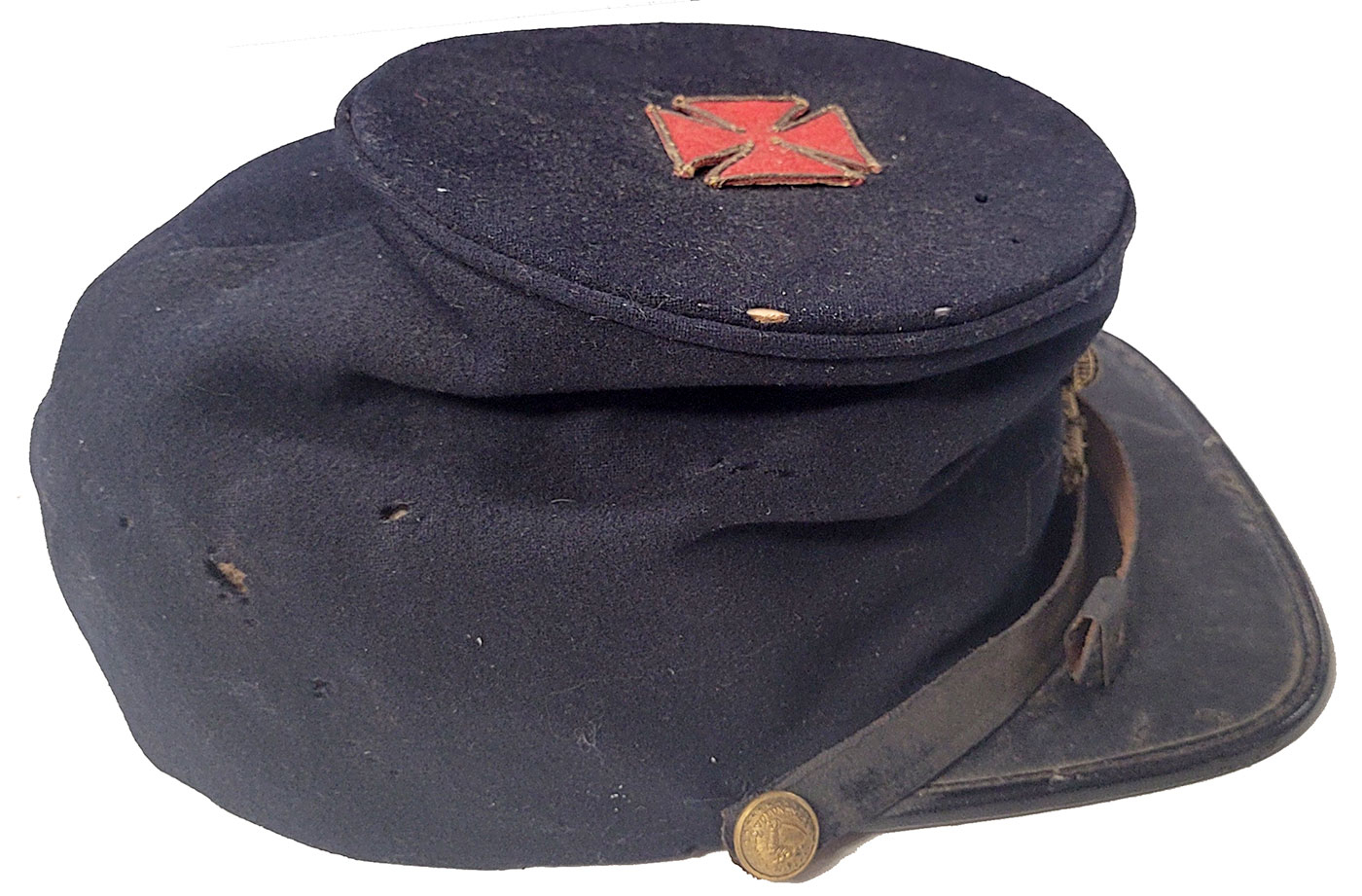
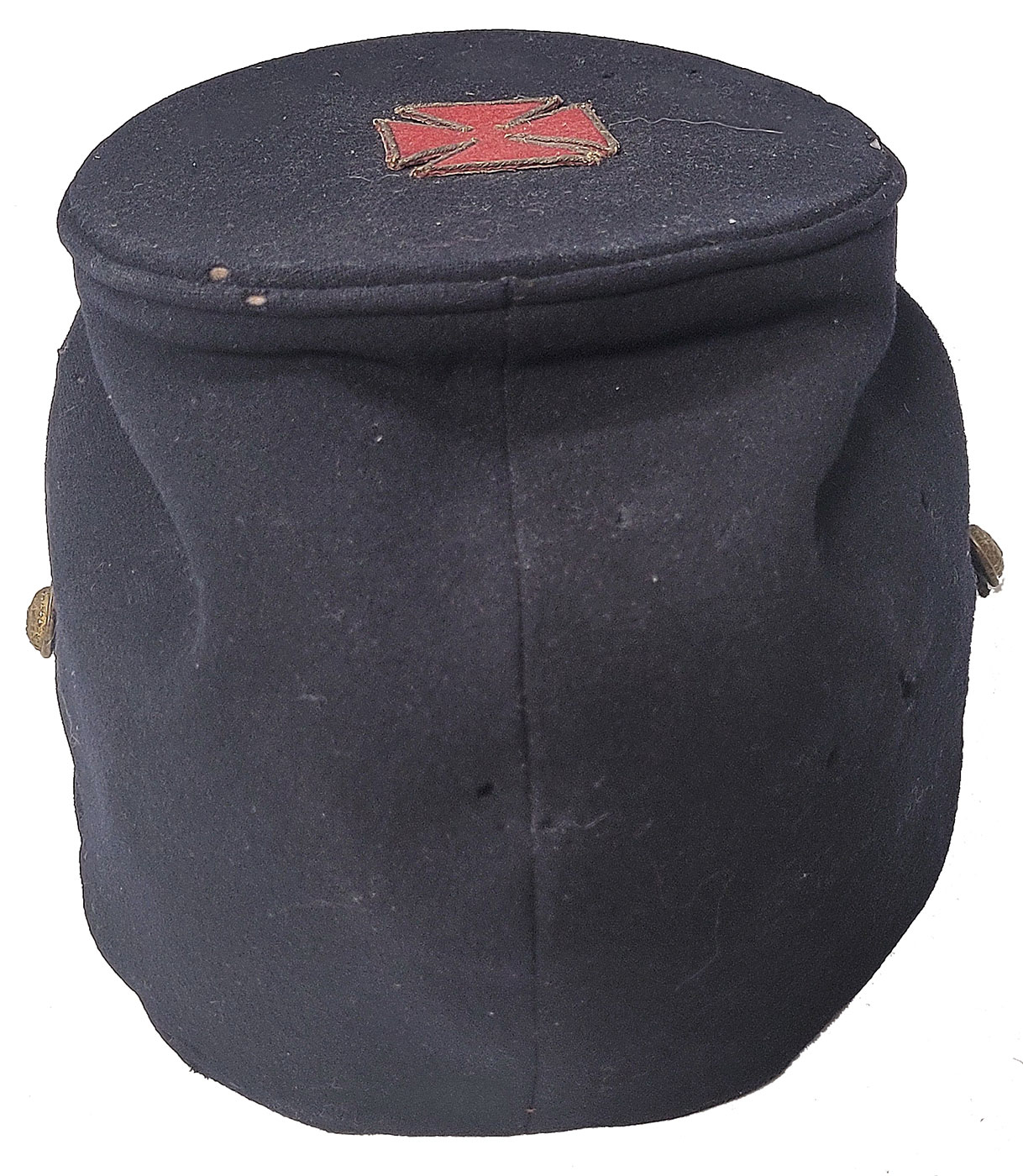
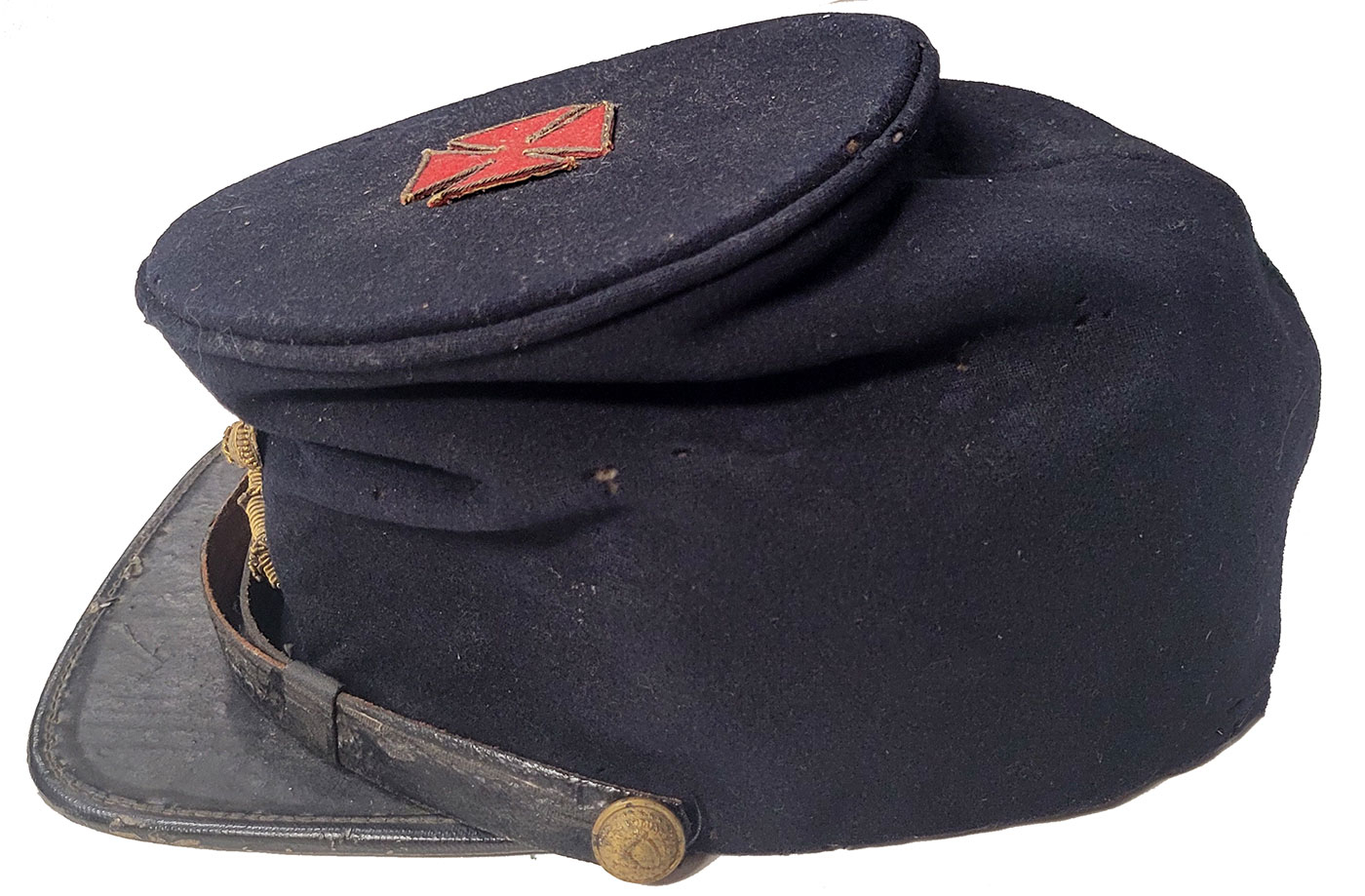
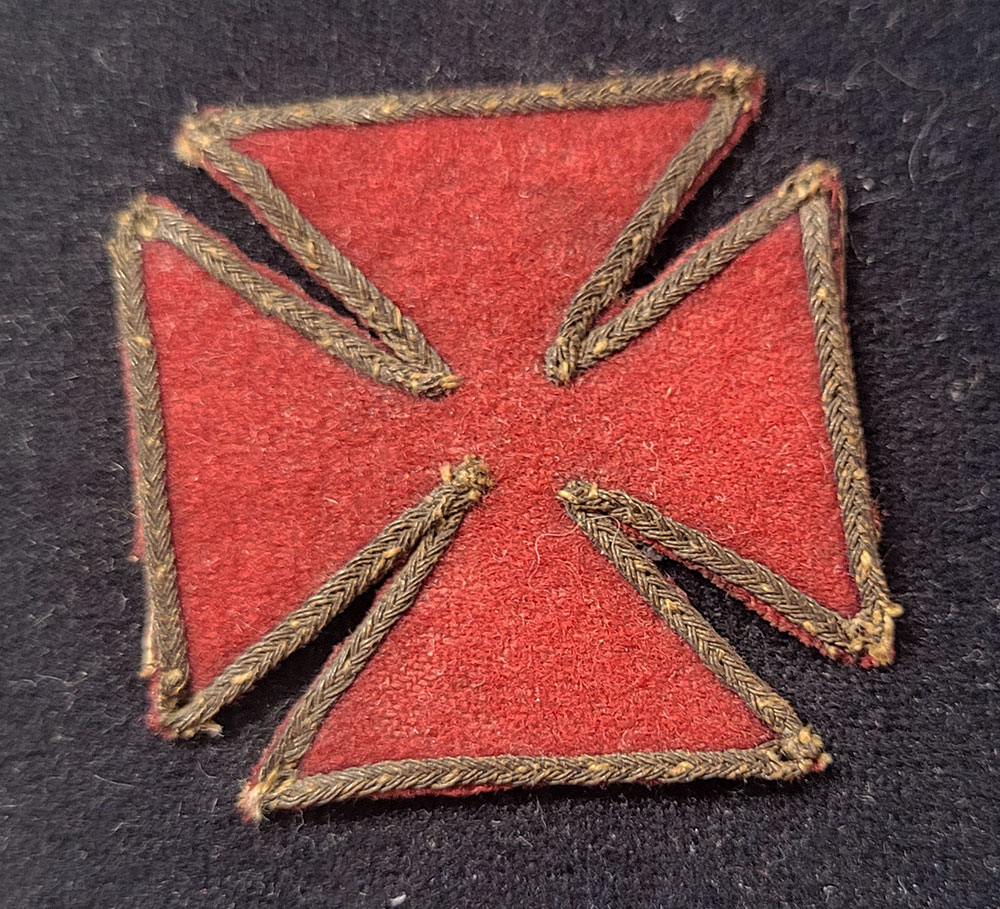
Until recently in the collections of the Texas Civil War Museum, this artillery officer’s cap is one of two that have passed through our hands owned by Captain Augustus Pearl Martin. The first still retained a small numeral “3” as a sign of his service in the 3rd Massachusetts Battery Light Artillery in which he rose from Lieutenant to Captain by late 1861. This is a slightly dressier affair, fitting his increasingly important posts, carrying on the top a gold braid bordered red wool Fifth Corps badge, adopted March 21, 1863, and fitted on the front with a large gold embroidered bullion pair of crossed cannon. These would fit the battery’s and Martin’s continued service in 5th Corps, and also Martin’s appointment as Chief of Artillery for the 1st Division, 5th Corps from July 1862 and his advancement to Chief of Artillery for the entire Fifth Corps from June 1863 when batteries were organized into a single “brigade” within the corps.
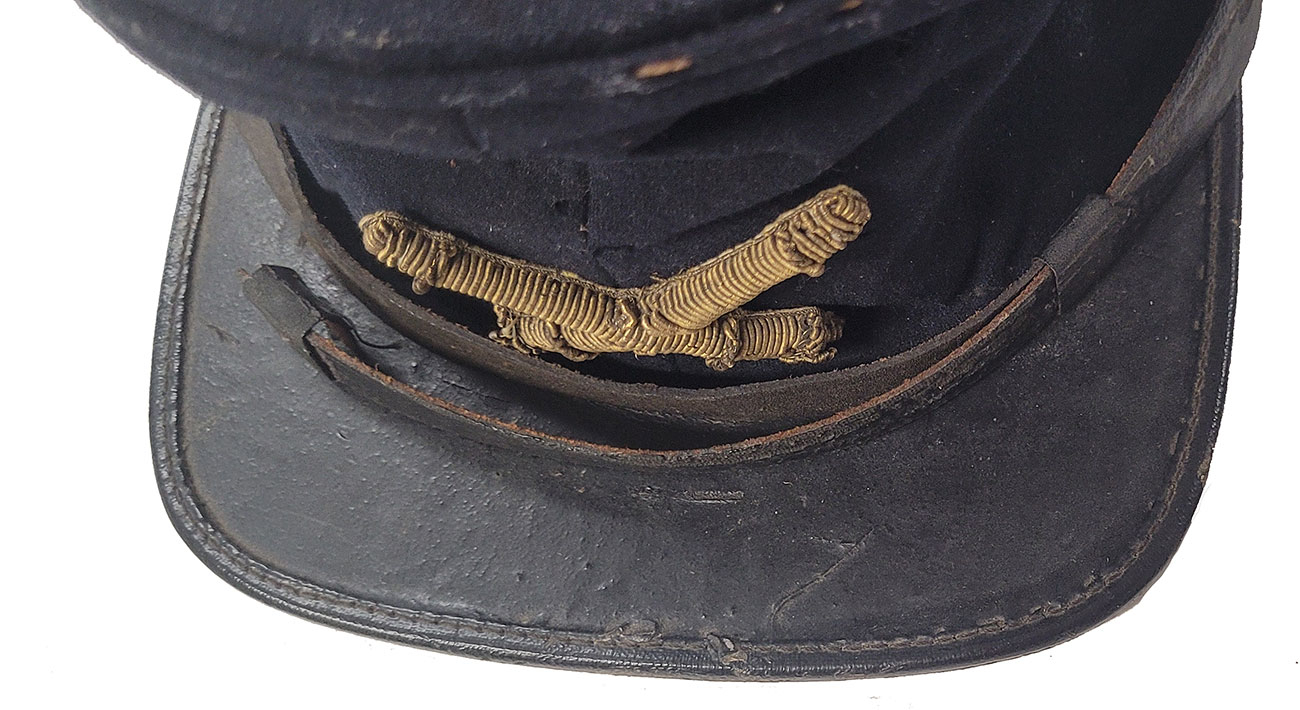
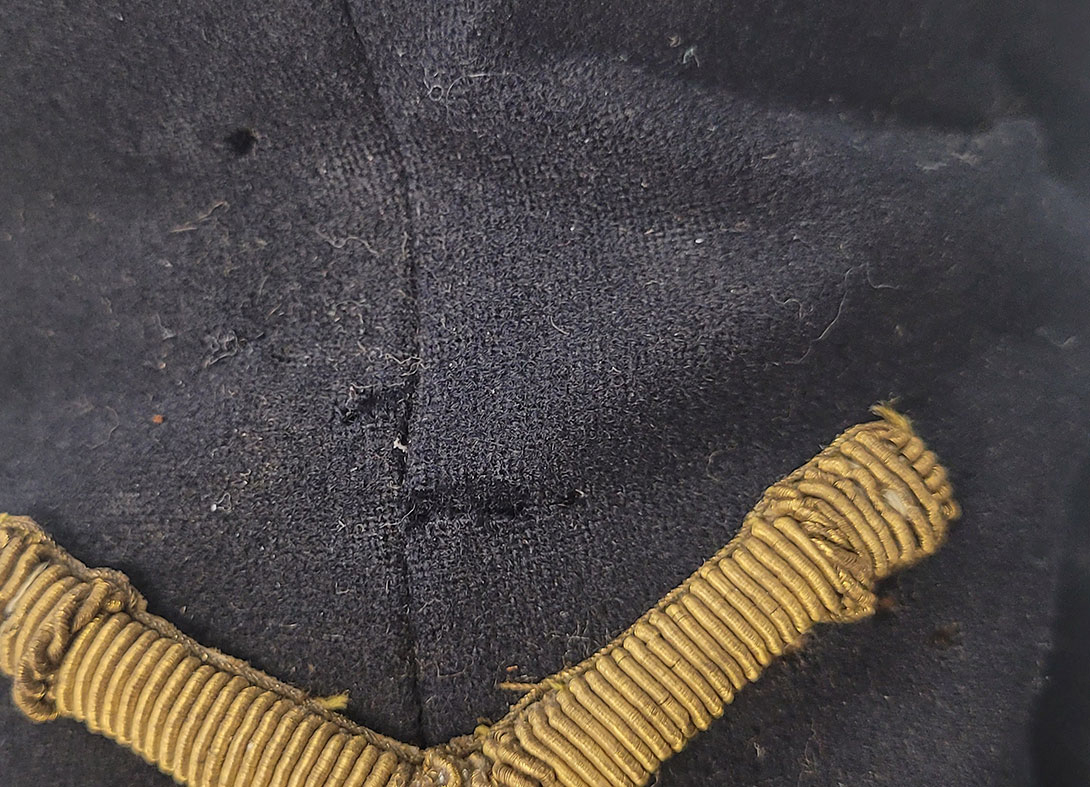
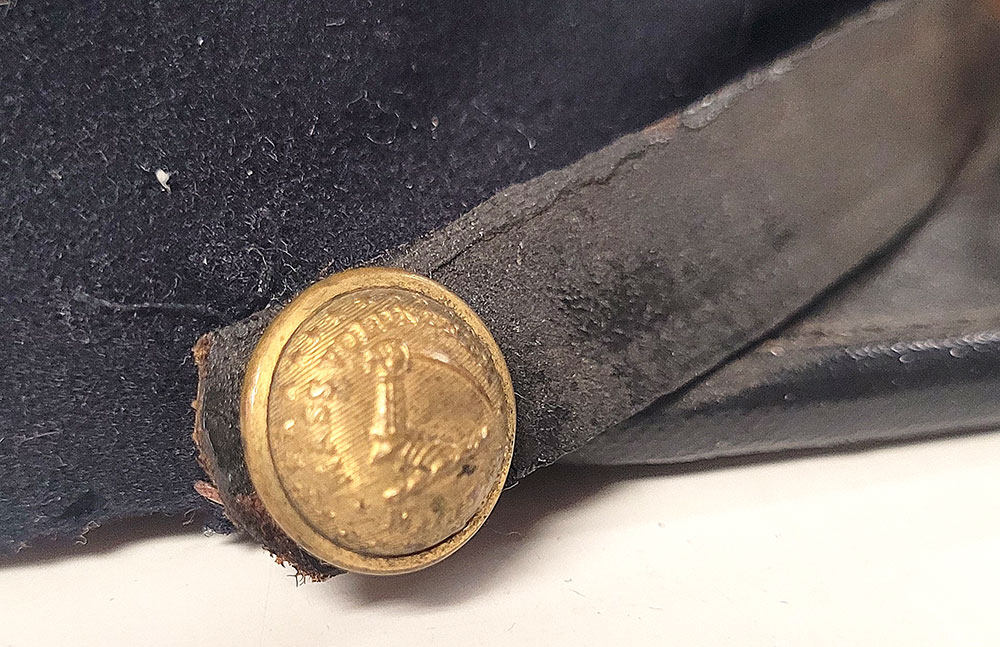
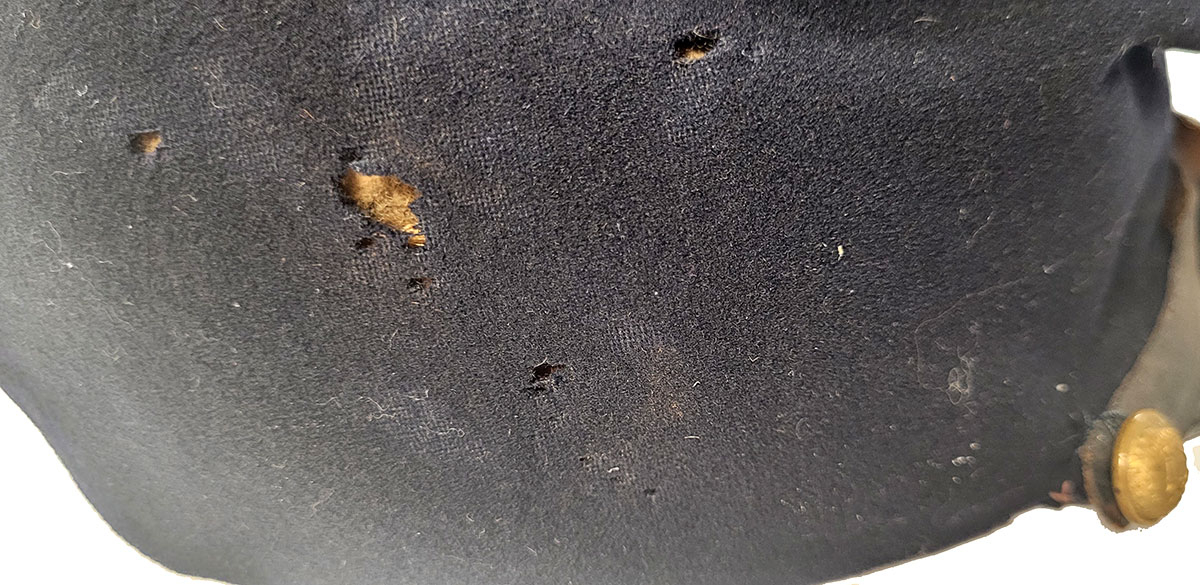
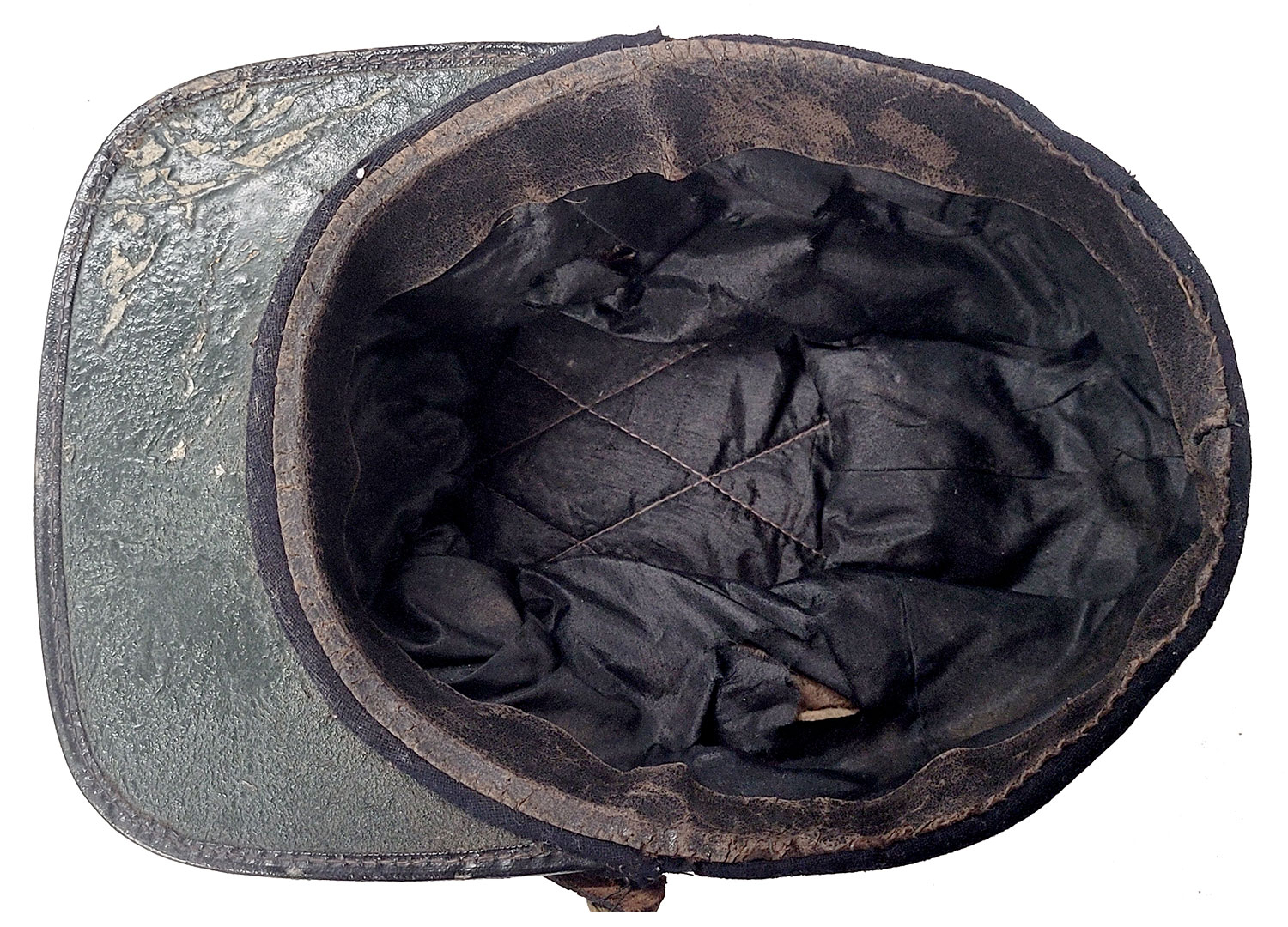
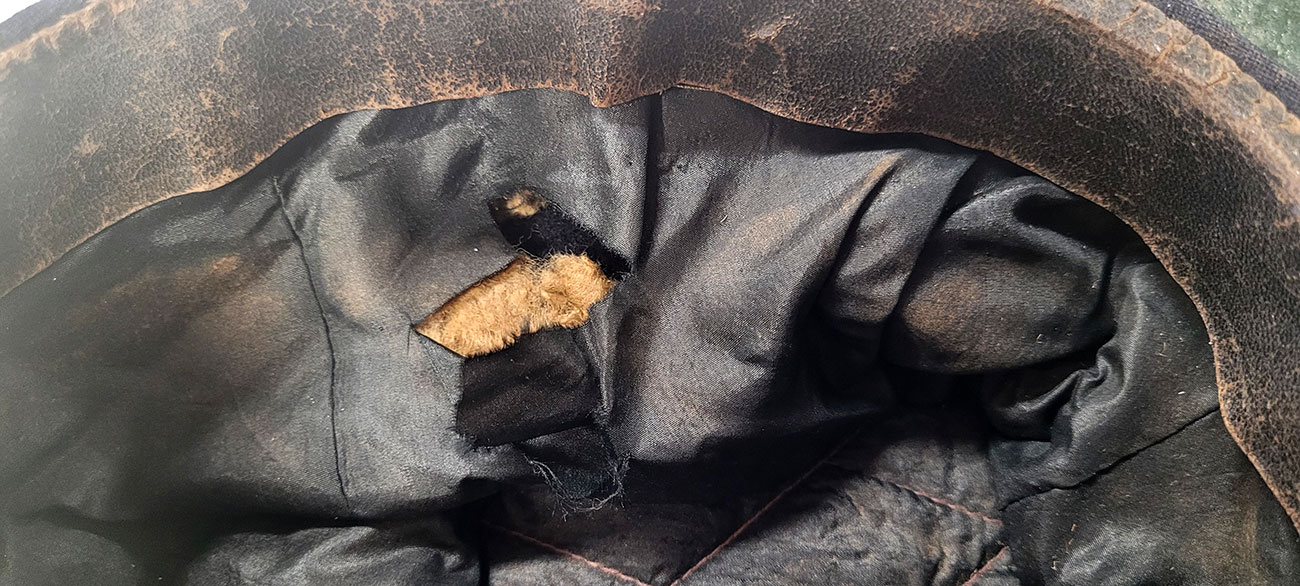
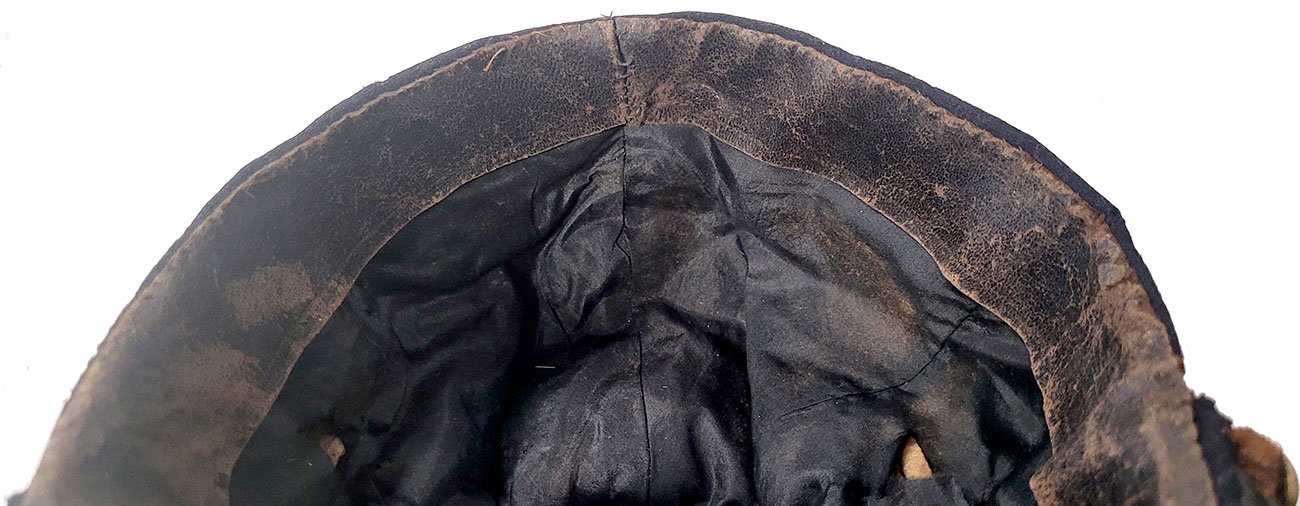
The cap shows some wear, but remains in very good condition. The blue wool exterior has strong color and tight seams. There are a few, small wear spots along the edge of the top, and some scattered pencil-point or pencil-eraser size moth nips, but no significant holes. The chinstrap is in place, though the friction buckle is missing and the side button on the wearer’s left came loose. We see a few old stitches added beneath it. Some new thread now holds it loosely in place. Both side buttons are small size Massachusetts Vol. Militia buttons, showing some muted gilt with slight rubs and age spots. Inside, the sweatband is present and in place, showing expected rubbing along the lower edge and along the sides in places such as above the wearer’s right ear. The cap is lined with black silk, quilted on the underside of the top. This shows some expected soiling and a few small tears or runs at either side above the ears. The visor is firmly in place, has a bound edge, and is green on the underside, showing some scratches and rubs on what would be the wearer’s left, but the binding is complete and in place. The corps badge is wool and fairly simple. The artillery insignia on the front is impressive- gold bullion embroidered in the 1851 pattern where the cannon barrels cross lower down than later versions. This more traditional form remained popular among officers. See Campbell & O’Donnell, Am. Mil. Headgear Insignia, Fig. 281 for an example of this pattern used on a ca. 1858-1865 regulation black velvet, jaceron wire bordered officer’s separate oval insignia for a dress hat. In this case the embroidered bullion cannon were sewn directly to the front of the cap. They are securely in place though the muzzles of the barrels were not themselves sewn down, and the barrels show some muting of the color from age, wear with slight abrasion to the bullion and a few loose threads, with loss of some sequins on the breeches of the barrels.
Born in 1835, Martin joined a Massachusetts militia light artillery battery in 1854 and received a commission as 2nd Lieutenant in 1858. He resigned the commission in 1860, but remained in the unit and answered the Governor’s call for troops in April 1861, enlisting for three months with Cook’s Battery as a sergeant and chief of Gun #1. The battery served at Annapolis until May, when they were sent to Baltimore and posted at the Relay House protecting the railroad lines, and posing for a number of early war photographs. They mustered out August 2 and Martin immediately reenlisted, receiving a commission as 1st Lieutenant of Follet’s 3rd Battery Mass. Light artillery on Sept. 5, and a promotion to captain and commander of the battery on Nov. 28.
The battery served in the 5th Corps and Martin mustered out with it in September 1864 as still a Captain, despite extensive combat experience and expanding responsibilities. Since Massachusetts fielded only independent batteries of light artillery, the Secretary of War refused to countenance any promotion of those officers above Captain, despite a recommendation for Martin’s promotion to field grade by General Porter as early as October 1862 and the fact that his responsibilities as corps chief of artillery merited the rank of brigadier general in the view of Massachusetts Governor Andrews. Martin remained devoted to the light artillery, however, turning down a commission as Lieutenant Colonel in a heavy artillery regiment.
Martin was continually active in the front lines of battle. At Gaines Mill, using double canister, his battery three times held off Confederate attacks that reached as close as 100 yards, some of the last rounds being fired with the rammers still in the muzzles of the guns. Despite the loss of guns in other Union batteries that day, he escaped with the loss of only one, and that one not captured in the fighting, but mired in a creek while pulling back in the general federal retreat. At Gettysburg on July 2, he placed Union 5th Corps artillery on Little Round Top and other key positions to shore up Sickles’s misguided advance of the line. At Spottsylvania in 1864 he was wounded in the neck. Upon leaving the army he received numerous letters of thanks and commendation, including one from Meade, and several March 1865 brevets.
After mustering out, Martin returned to his old occupation, the boot and shoe business in Boston, eventually forming his own company. He prospered, held various civic offices, including Mayor of Boston in 1884, but was active in veterans’ affairs, commander of the Massachusetts chapter of MOLLUS, and retained an interest in the military, rising in the Massachusetts National Guard in 1882 to brigadier general on the staff of the governor. As fitting a devoted artilleryman, he also became a member of the elite Ancient and Honorable Artillery Company, presenting to their museum his sword inscribed with his battle honors, which make quite a service record: Yorktown, Siege of Yorktown, Hanover Court House, Mechanicsville, Gaines Mill, Malvern Hill, Harrison’s Landing, Manassas, Antietam, Leestown, Fredericksburg, Chancellorsville, Middleburg, Aldie, Gettysburg, Rappahannock Station, New Hope Church, Mine Run, Bristoe Station, Wilderness, Laurel Hill, Spottsylvania Court House, Petersburg, Siege of Petersburg, and Weldon Railroad. [sr][ph:L]
~~~~~~~~~~~~~~~~~~~~~~~~~~~~~~~~~~~
THIS ITEM, AS WITH ALL OTHER ITEMS AVAILABLE ON OUR WEB SITE,
MAY BE PURCHASED THROUGH OUR LAYAWAY PROGRAM.
CLICK HERE FOR OUR POLICIES AND TERMS.
THANK YOU!
Inquire About IDENTIFIED 5th CORPS ARTILLERY OFFICER’S CAP OF AUGUSTUS P. MARTIN, DIVISION AND 5th CORPS CHIEF OF ARTILLERY, WIA 1864
Most Popular
Historical Firearms Stolen From The National Civil War Museum In Harrisburg, Pa »
Theft From Gravesite Of Gen. John Reynolds »
Selection Of Unframed Prints By Don Troiani »
Fine Condition Brass Infantry Bugle Insignia »
featured item
RARE EBERLE 1796 CONTRACT MARKED BAYONET
This rare bayonet is marked by the maker in a sunken cartouche with raised letters on the base of the blade reading “Eberle.” Charles Louis Eberle emigrated to the U.S. from Germany with brothers George A. and Henry J. in 1794, arriving in… (1052-86). Learn More »
site search