

site search
online catalog
IDENTIFIED BURGER & BOYLE "D GUARD" CONFEDERATE SHORT SWORD OR LARGE ARTILLERY KNIFE
Hover to zoom

$6,500.00
Quantity Available: 1
Item Code: 282-460
Shipping: Determined by Method & Location of buyer
To Order:
Call 717-334-0347,
Fax 717-334-5016, or E-mail
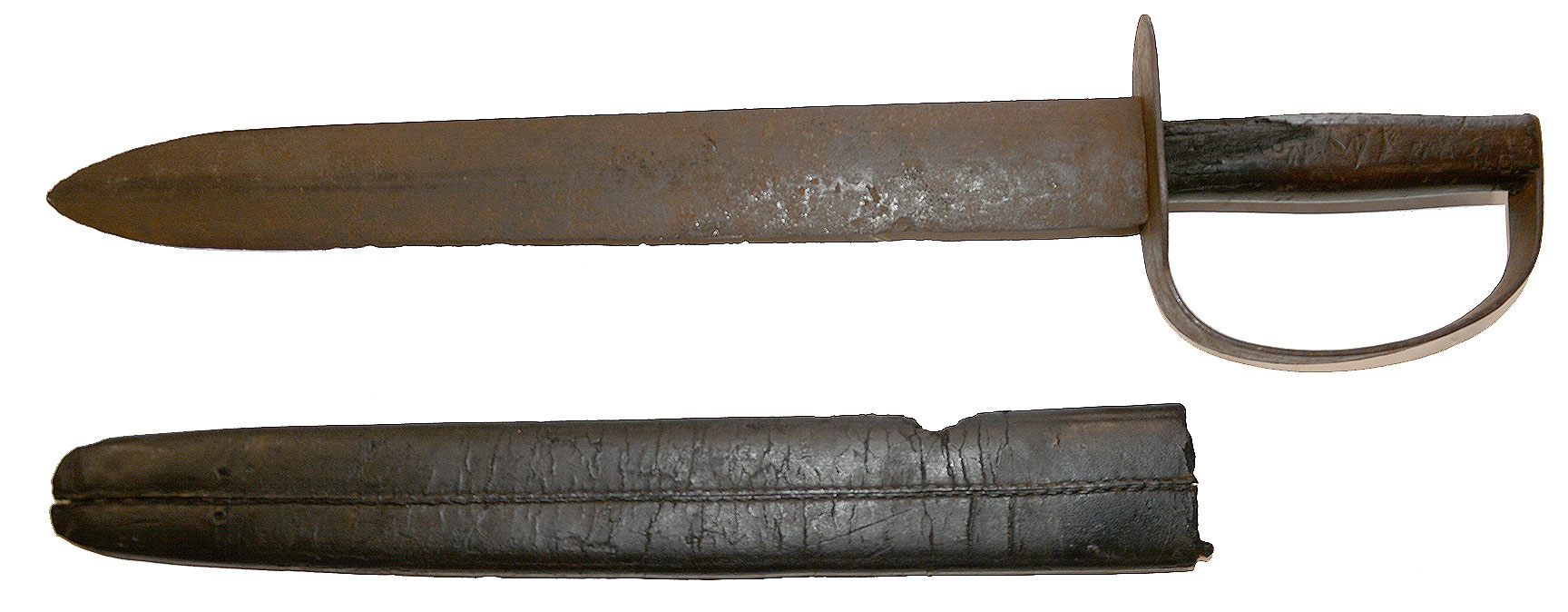
Offered for sale is an attic condition large cut and thrust side arm frivolously called a "Bowie Knife" and erroneously considered to be a product of Louis Froelich of Kenansville, North Carolina. However, this compiler and other Confederate scholars are convinced that this short artillery sword or "Artillery Knife" (which it is referred to in contemporary sources, but other nations had artillery edged weapons swords of similar length) was made by Burger & Boyle of Richmond Virginia (within months of the war's commencement they became associated with Mr. Gamble. The Richmond Directory lists the company as Burger & Boyle of Richmond, Virginia at the corner of Arch St. and 8th St. in 1860. Soon known as Burger Boyle & Gamble then Burger & Bro. and Boyle & Gamble, then Boyle & Gamble; along the way Mr. McFee came into the picture.).
I will take the liberty of reproducing verbatim what the highly respected author and prolific dealer of items of the Confederacy, Mr. Shannon Pritchard wrote in describing a similar arm: "For more than half a century the maker of the D-Guard knife shown here has been misidentified as a product of Louis Froelich’s CSA Armory in Kenansville, North Carolina....The story begins when I purchased a Bowie knife that had a grip like those found on Burger & Brothers’ knives, and a blade like the very distinctive Froelich identified knife with a triangular shaped flat on each side at the ricasso. It was also interesting to note that it was in its original, tin scabbard with the design characteristics of the Boyle & Gamble knives. This opened my eyes to the possibility that the knives had been misidentified. Following extensive research, I found that through this last half century, no example of a knife commonly called a "Kenansville” has been discovered which had a Louis Froelich CSA Armory maker mark. Nor have any been discovered bearing the Roman Numerals so often found on Froelich products. After canvasing the old time Kenansville site relic hunters, I found that no one had ever found a part of a "Kenansville” knife in the vicinity...In the National Archive files, I found receipts for hundreds of "Artillery Knives” made by Burger/Boyle & Gamble. In my own mind, the above information was enough to convince me that Burger/Boyle & Gamble made these knives. However, changing 50 years of public opinion cannot be undertaken lightly so I did not disclose my findings and kept looking for more confirmation. That confirmation came in the form of a knife captured from Samuel Wilson of the Goochland Light Artillery at the Battle of Carnifex Ferry. On September 10, 1861, the battle was fought throughout the afternoon. The Yanks were repulsed at dark, and Confederate forces withdrew during the night. The Yankees advanced the following morning to claim the camp. At the time of the battle, Samuel Wilson was in Captain Guy’s Goochland Light Artillery. I find no record of him having been captured in the battle, so the knife must have been left in the camp during the retreat and the label identifying its time (9/10/61) and location of capture put on it by the captor. John McAden’s Louis Froelich Arms Maker to the Confederacy reports the establishment of Froelich’s manufactory in September of 1861. However, Wilson’s knife had been delivered, issued, and captured by the time Froelich was in operation. This leaves no doubt that the "Kenansville” knives, cannot have been made at Kenansville. We have invoices for many "Artillery Knives” by Burger/Boyle. No doubt in my mind this local Goochland County Company was issued these "Artillery Knives”, though I do not have their particular invoice. Prior to the War Between the States, Edwin Boyle and the Burger Brothers were in the saw manufactory business. When the Northern states invaded Virginia, Mr. Boyle joined with a P. Gamble and began the manufacture of various types of edged weapons, including knives and swords for private purchase and for the Confederate Government. The Burger Brothers had a much smaller production, but they too made swords and knives. I would like to think that the Burgers and Mr. Boyle were motivated by patriotism; but I am sure, as an astute businessman he could see that there was going to be a bigger demand for swords than saws."
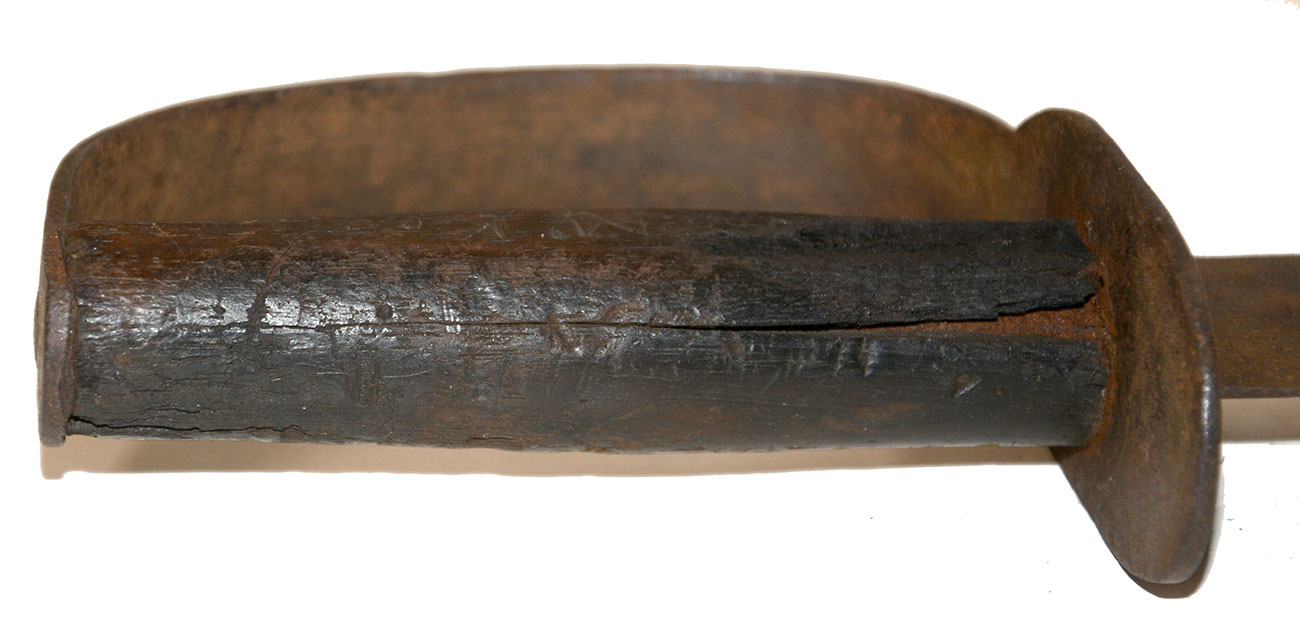
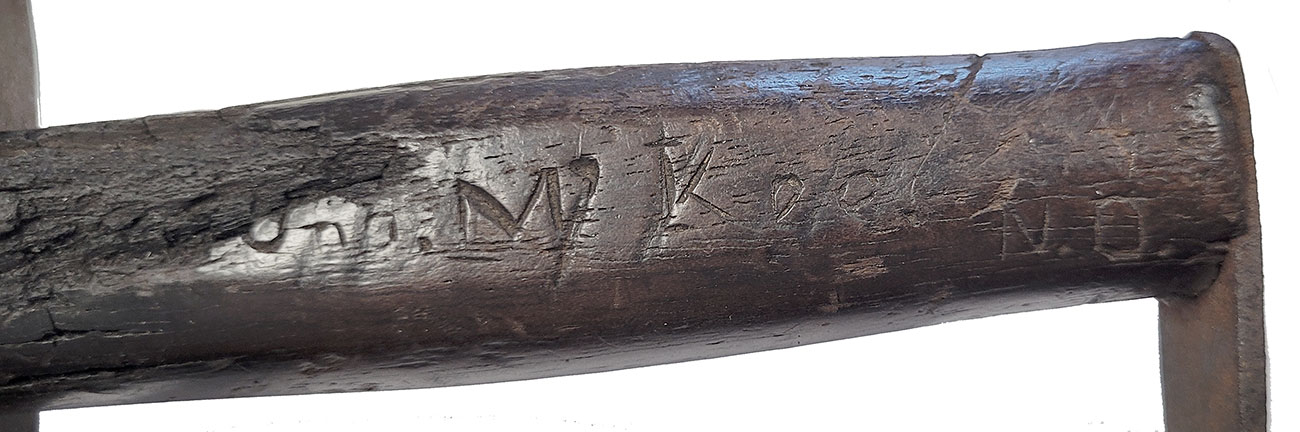
DATING: Before we describe the weapon, I will "jump the gun" and clarify why it is very early war and more than problematic as a Kenansville North Carolina product. The sword or large knife was issued rather than purchased by Jonathan M. Kee. Kee was a up state Louisiana resident who enlisted in 1861 in Stanford's Mississippi artillery battery then stationed over the line in Grenada Mississippi. His name is carved on the grip followed boldly by "N.O." (New Orleans). The city of New Orleans fell to National forces on April 25th, 1862. Kee by November of 1861 was actively campaigning with his unit Stanford's Mississippi Battery and present with them until well after the surrender of New Orleans; in fact, he served them until May of 1865. Please click on this site (A History of Stanford’s Mississippi Battery – Mississippians in the Confederate Army) The only time he could have officially or unofficially been in New Orleans was in the fall of 1861. It was at this time in late 1861 that he acquired the weapon. He was there in the Cresent City for a reason not specified in his records, but perhaps to acquire uniforms and weapons for the battery. Be aware that I have looked and been unable to find a John (Jonathan) M. Kee in any other Confederate or Yankee organization that fits geographically.
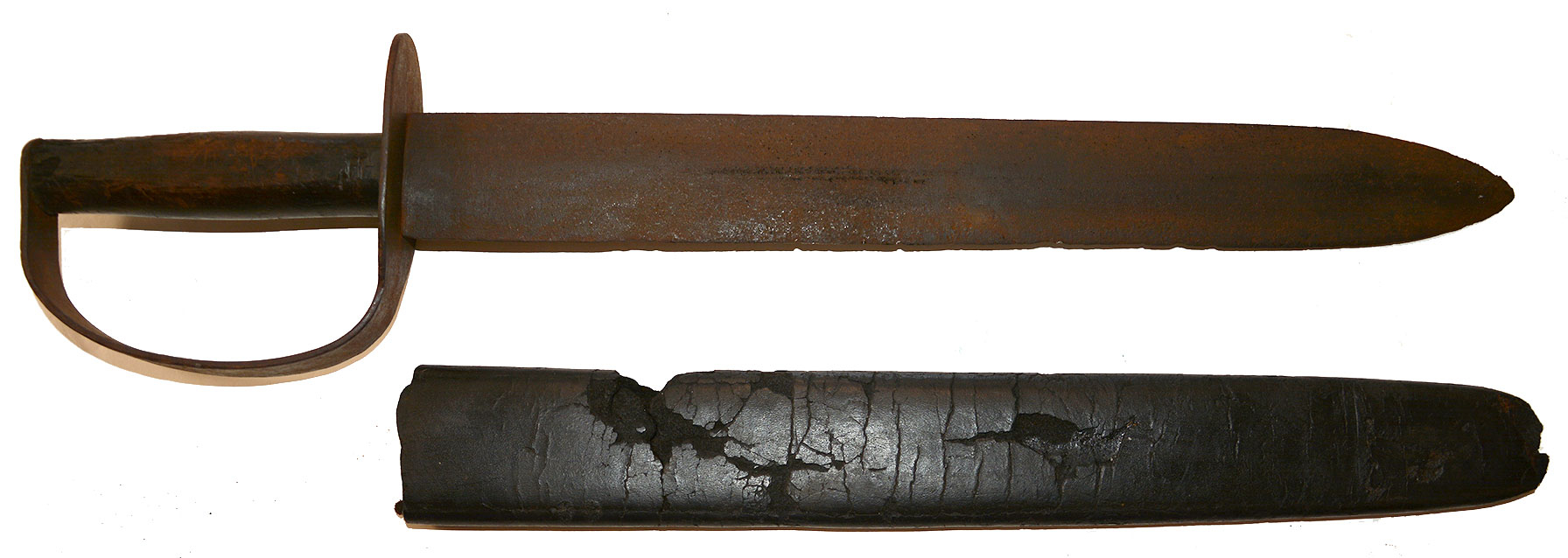
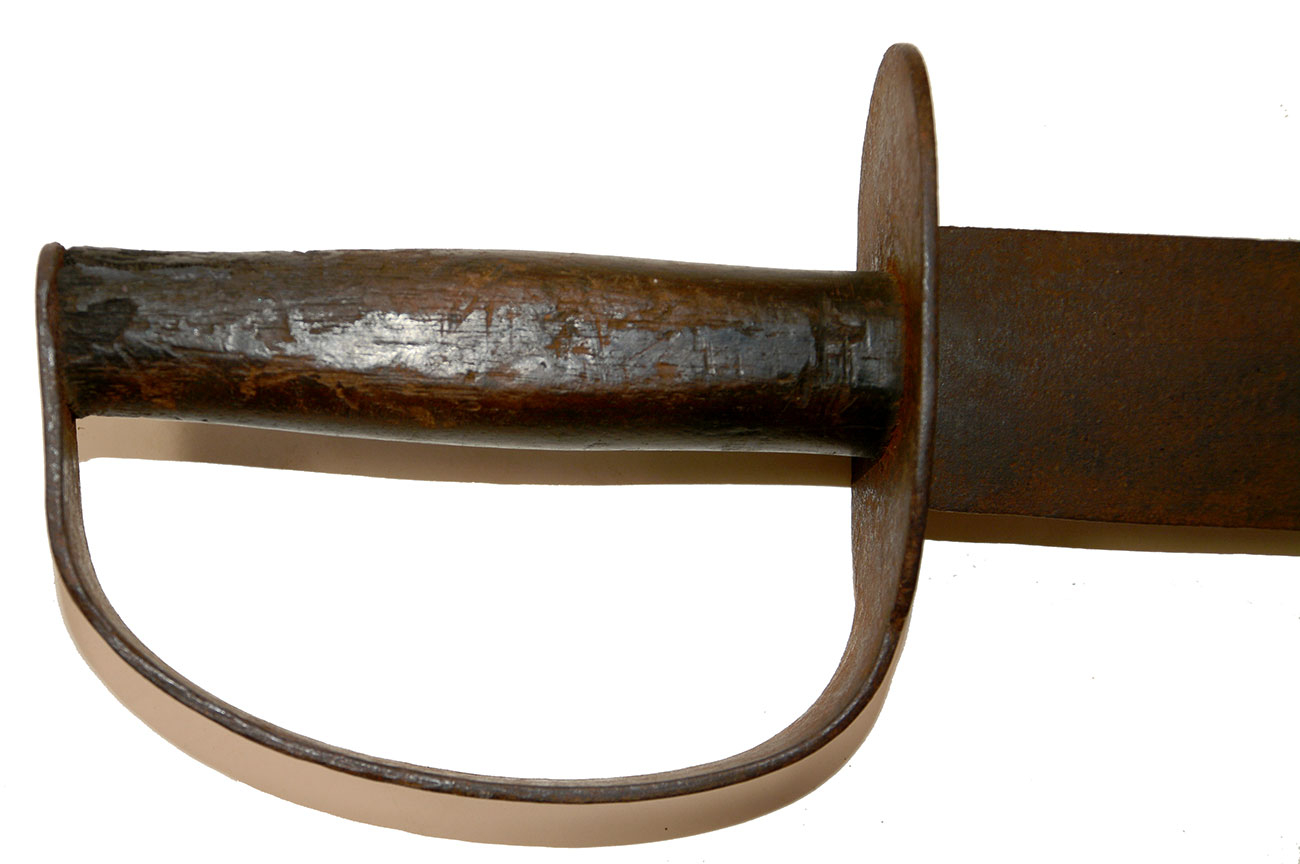
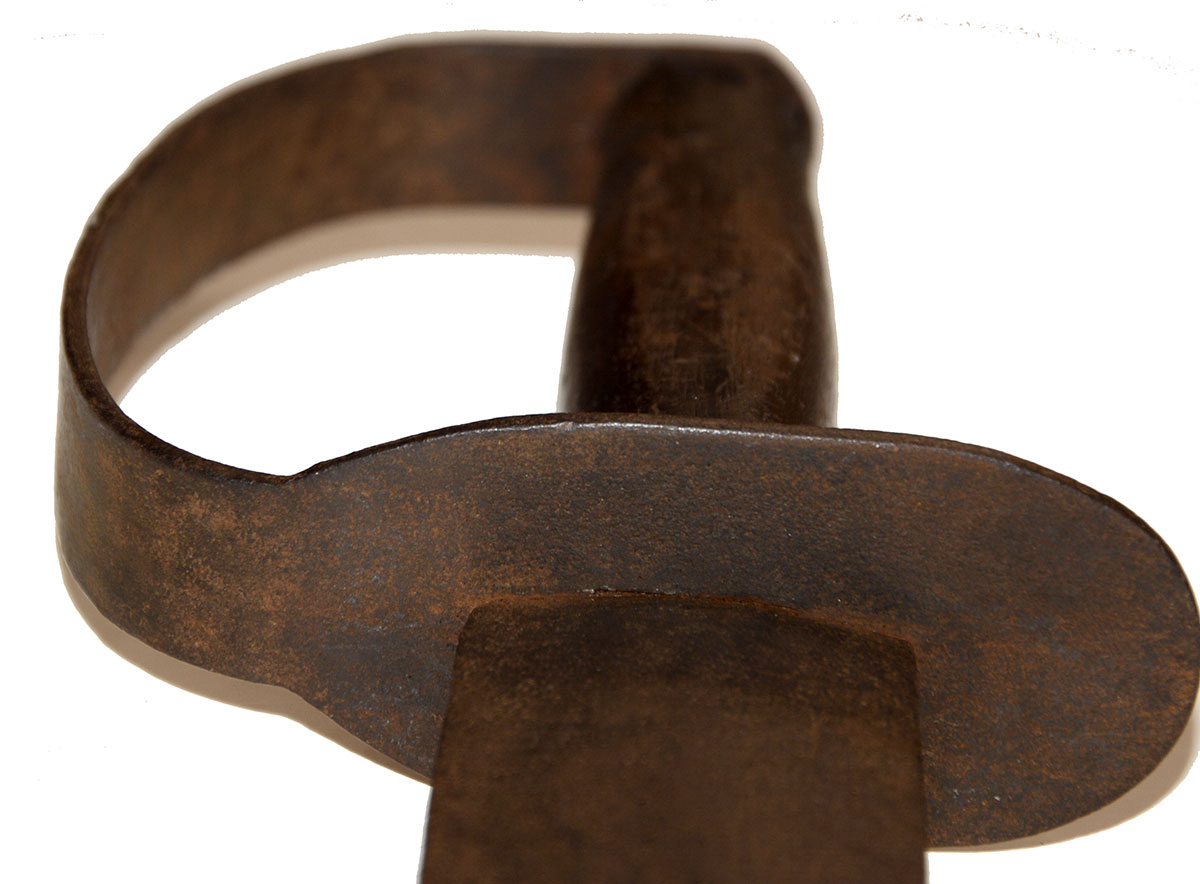
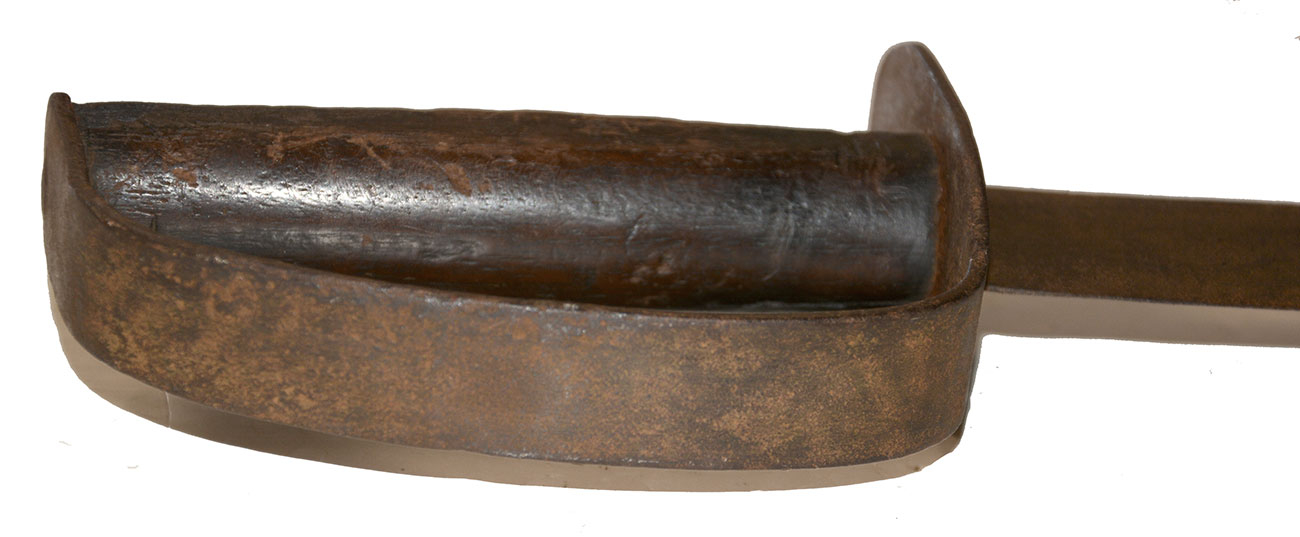
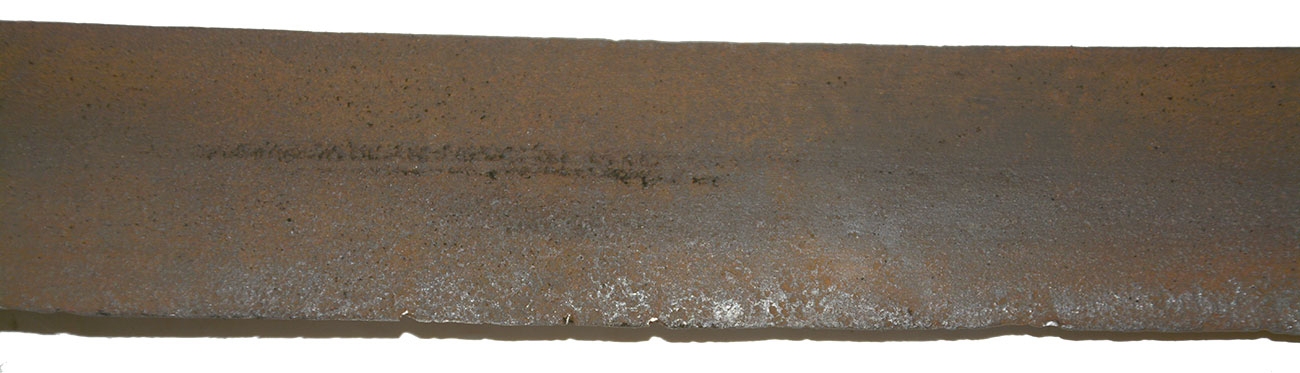
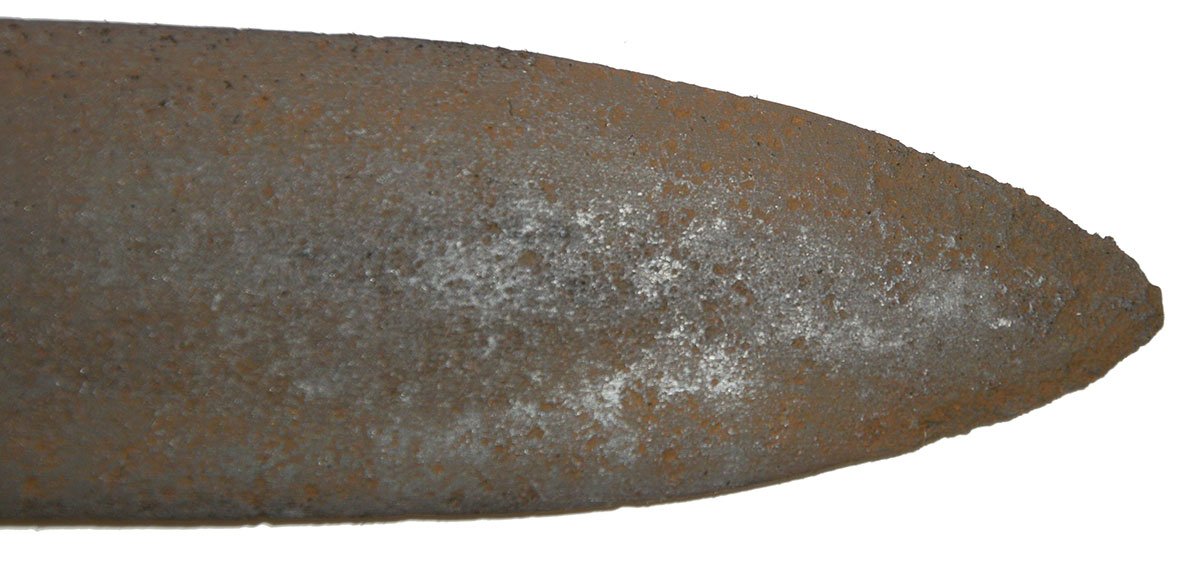
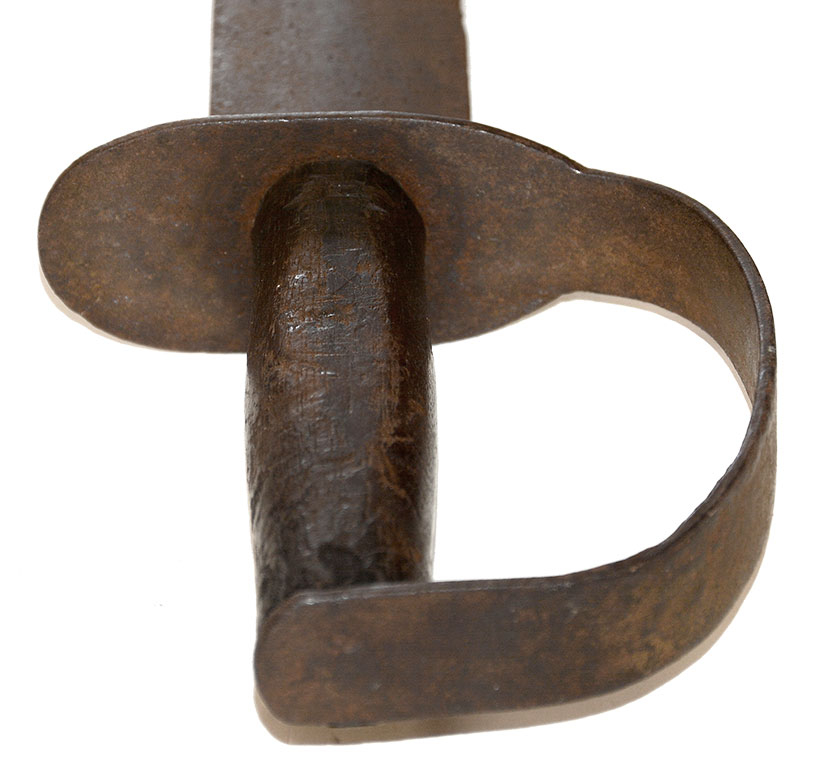
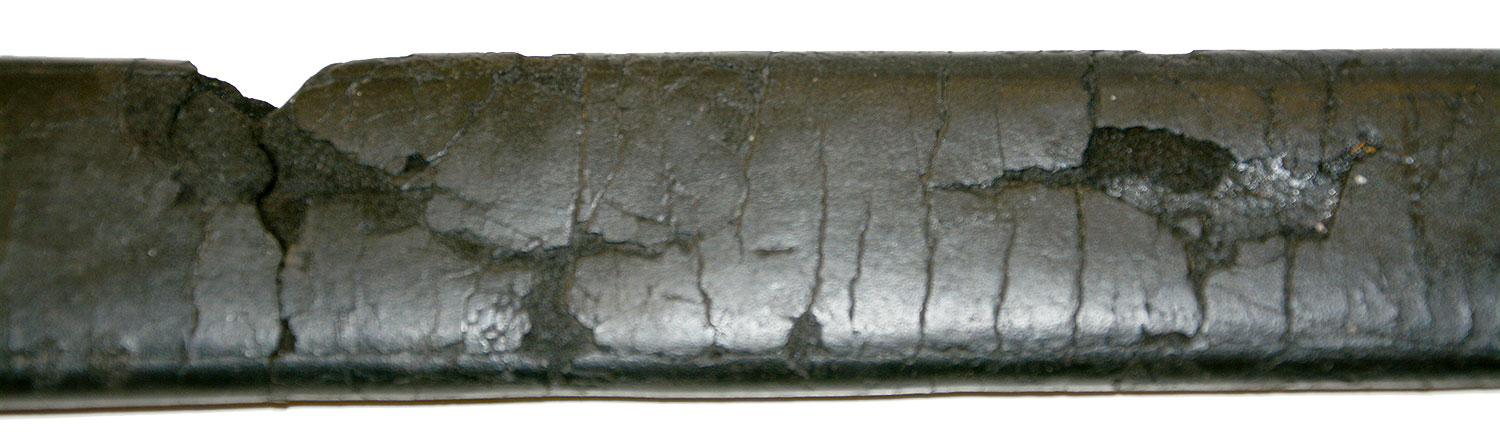
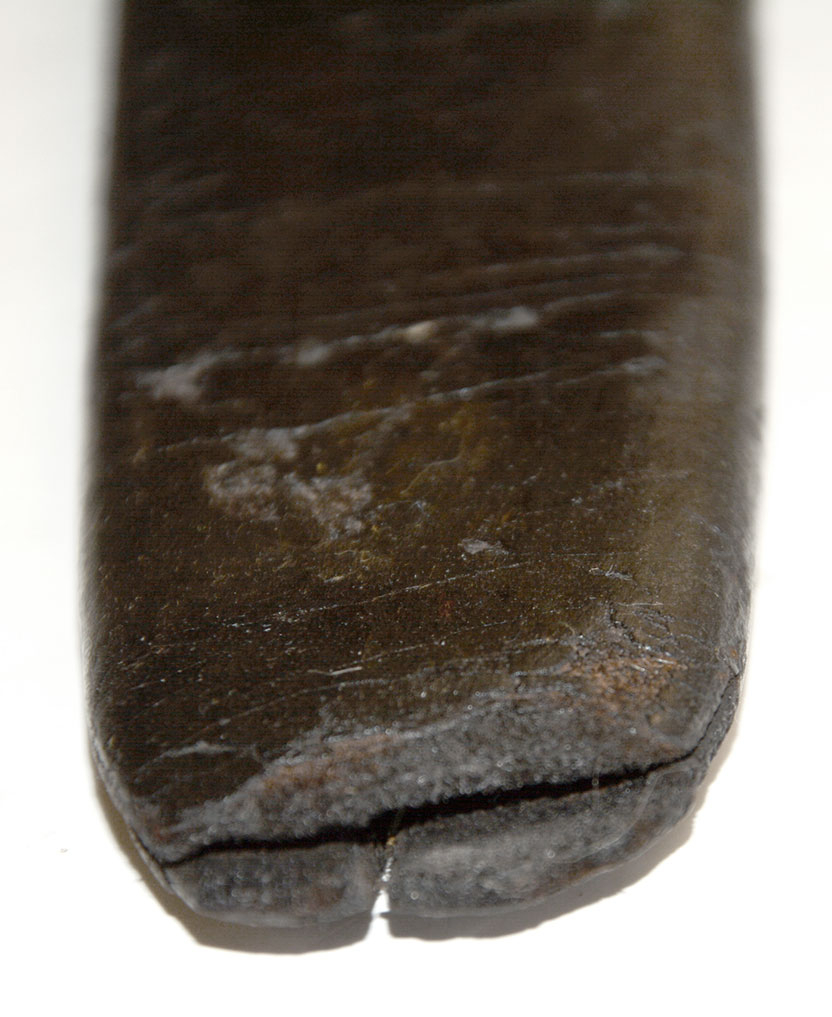
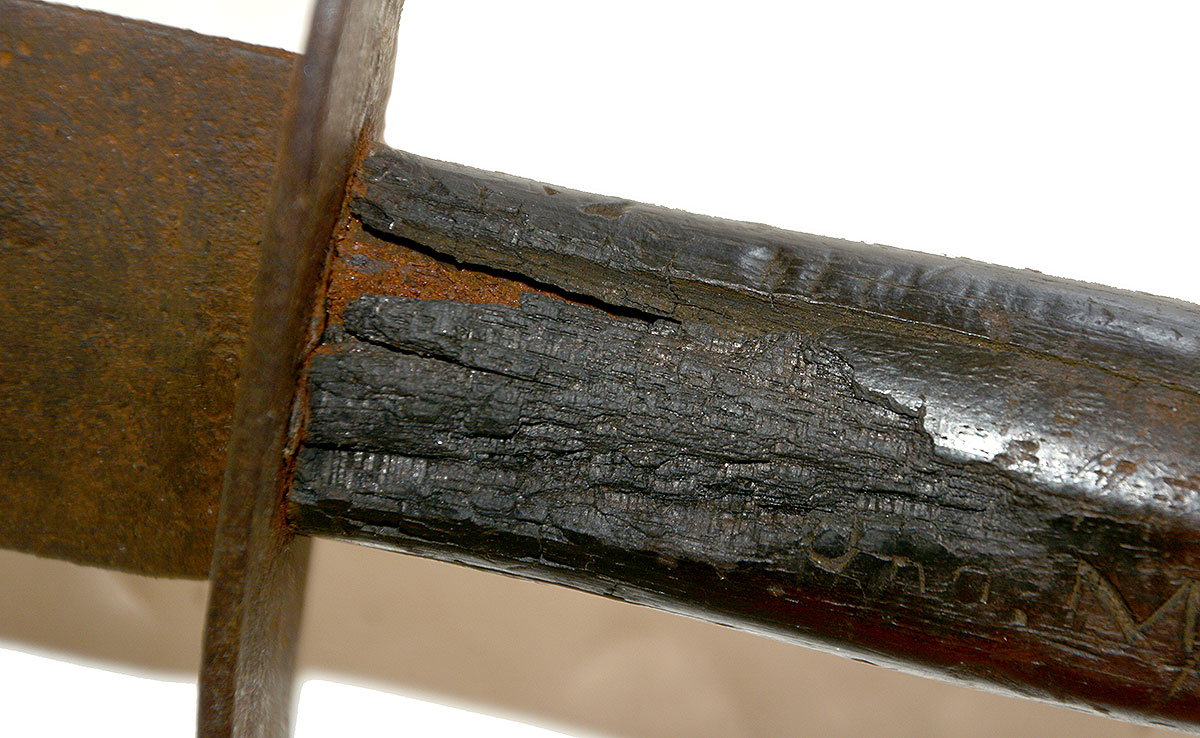
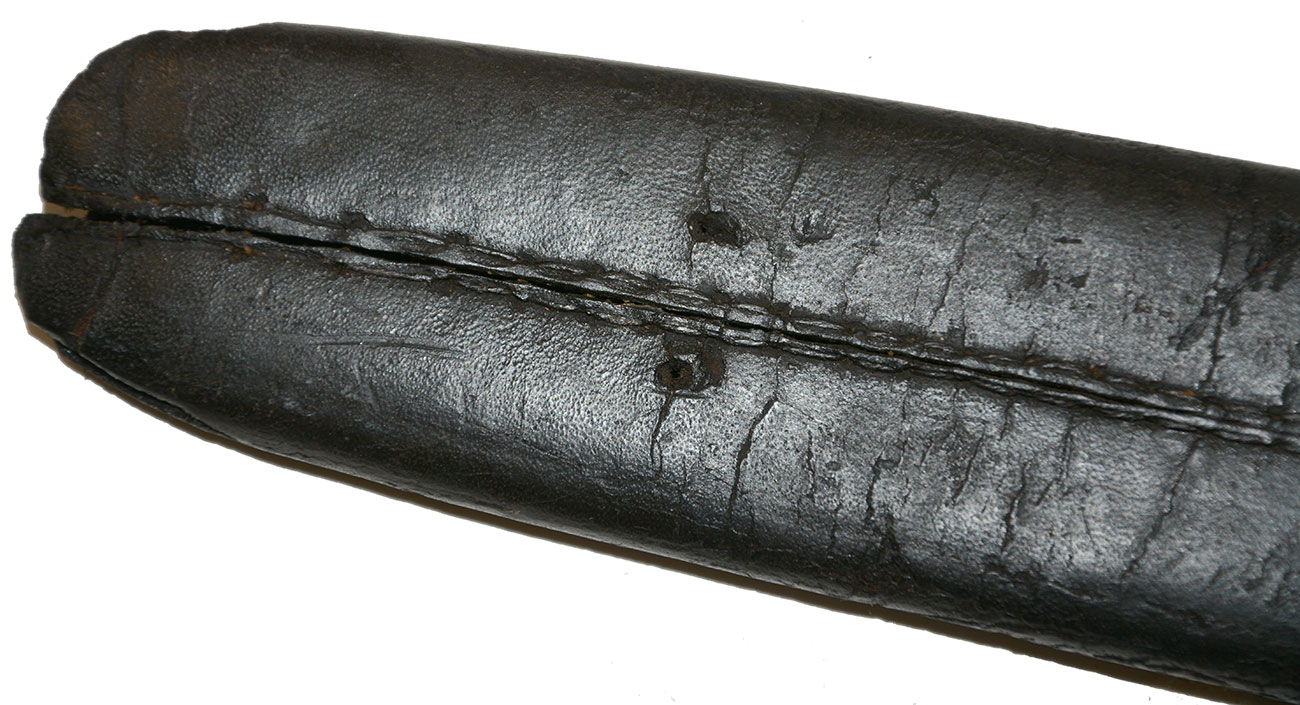
THE WEAPON: This short artillery arm measures 20 inches in total length with a 15 1/4-inch double edged 2-inch wide (at the ricasso) blade. The iron "D" guard hilt is 5 1/8 inches long. The one-piece wooden grip is 4 and 7/8 inches long. The blade has a deep unmolested brown patina with minor pitting here and there and some surface rust incrustations. The iron D guard knuckle bow is in the same condition. The grips are scuffed in spots and heavily patinated. They are 90% intact with about a 10% surface loss on the left side at the junction of the grip with the guard, this loss of wood has only partially obliterated the owner's carved name which was Jno. M. Kee but now reads "(the bottom of "J")no. M. Kee."; the letters "no." are 1/8 inch tall while "M. Kee." are 3/8 inches and 1/8 inches in height. The artilleryman's name is followed by "N.O." in capital letters, also in the same hand and 3/8 of an inch tall. Of the original heavy leather 15-inch scabbard 14 3/4 remains. A once in place 3 inch drag of tin or sheet iron is now missing as was, most likely, but not certainly a metal "throat". Shrinkage of the leather, or a missing throat prevents the full closure of rhe scabbard over the blade. There are some surface losses and one break (not through and through) 1/4 of the way down the scabbard that is stable with a piece of leather in the edge, less than 1/2 inch, missing.
THE ARTILLERYMAN JOHN M. KEE: Served his battery well for the entire war 1861 to 1865. In 1864 for a couple of months, he was a teamster with Eldridge's Battalion of Artillery but was captured and surrendered at Meridian Mississippi in May of 1865 serving Stanford's guns. One can use critical thought here and assume he, as an artilleryman would have carried this sword the entire war. It is a stretch or even a myth to contemplate that any Confederate soldier would have worn such a massive weapon as a side knife for more than a second. In fact, it is a fact that despite the allure of such weapons for modern collectors the actuality is that most large "Bowie knives" were discarded before the first hostile shots were fired; the exception to this would be the blades of the artillery so necessary for the protection of the guns if over run or at least for "root hogging" (digging in) or dying.
This "artillery knife" or sword in its original scabbard has a great look and an interesting history. [pe][ph:L]
~~~~~~~~~~~~~~~~~~~~~~~~~~~~~~~~~~~
THIS ITEM, AS WITH ALL OTHER ITEMS AVAILABLE ON OUR WEB SITE,
MAY BE PURCHASED THROUGH OUR LAYAWAY PROGRAM.
CLICK HERE FOR OUR POLICIES AND TERMS.
THANK YOU!
Inquire About IDENTIFIED BURGER & BOYLE "D GUARD" CONFEDERATE SHORT SWORD OR LARGE ARTILLERY KNIFE
Most Popular
Historical Firearms Stolen From The National Civil War Museum In Harrisburg, Pa »
Theft From Gravesite Of Gen. John Reynolds »
Selection Of Unframed Prints By Don Troiani »
Fine Condition Brass Infantry Bugle Insignia »
featured item
THEFT FROM GRAVESITE OF GEN. JOHN REYNOLDS
A large artillery shell, one of pair that sit on either side of the grave of Gen. John F. Reynolds in Lancaster Cemetery, Lancaster, PA has been removed from the site. If anyone comes into contact with the shell or has any information regarding its… . Learn More »
site search
Upcoming Events
May 13 - 17: N-SSA Spring Nationals, Fort Shenandoah, Winchester, VA Learn More »