

site search
online catalog
CONFEDERATE IMPORTED ENFIELD, BOTH "JS ANCHOR" AND "C&R" MARKED

Hover to zoom


$6,500.00
Quantity Available: 1
Item Code: 1268-099
Shipping: Determined by Method & Location of buyer
To Order:
Call 717-334-0347,
Fax 717-334-5016, or E-mail
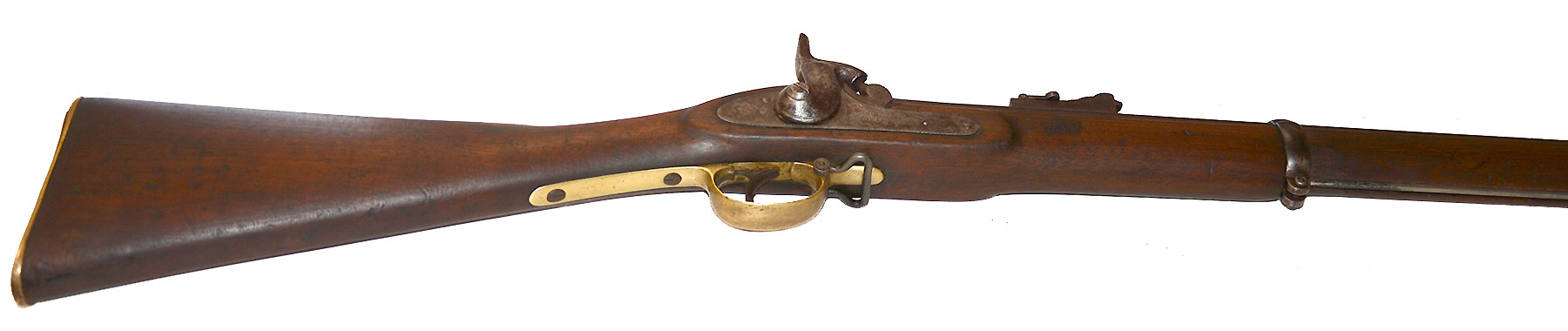
Once in the Ray Ritchie Texas Civil War Museum comes this significant, in several ways, blockade run "Tower" rifle-musket. The British made Pattern 1853 “Enfield” rifle-musket was the second most used infantry long arm of the American Civil War. It was the first “small bore” rifled long arm to see general issue to all British military personnel, effectively making every soldier a “rifleman” and the smoothbore musket obsolete. The .577 caliber rifled bore was a significant ballistic development. The Pattern 1853 would significantly influence the design of the new American Model 1855 Rifle-Musket and all arms production going forward. Approaching a million Enfields including rifles, rifle-muskets, musketoons and carbines saw use in the American Civil War.
GENERAL INFORMATION ON THE HIGHLY SOUGHT OUT JS AND ANCHOR MARKINGS: The highly respected and prolific antique arms dealer and author Mr. Tim Prince must be quoted here at length; he above all others is the "go to guy" on Confederate Enfields; this compiler falls short of his knowledge. Prince says: "The majority of these arms were purchased from the firms of S. Isaac, Campbell & Company (who relied on John Edward Barnett & Sons to deliver many of those arms) or Sinclair, Hamilton & Company, who often routed their sales through S. Isaac, Campbell & Co as well. Additional Pattern 1853s were purchased from William Grazebrook of Liverpool, who made his first sales to Confederate purchasing agent Caleb Huse within 30 days of the opening of the war. Sinclair, Hamilton & Company entered into several contracts with the Confederacy to deliver Pattern 1853 Enfield Rifle Muskets, with the typical contract terms requiring 30,000 stands of arms to be delivered over a six-month period. During the course of the war, Sinclair, Hamilton & Company appears to have received at least five of these contracts for Pattern 1853 Enfield Rifle Muskets from the Confederate central government.
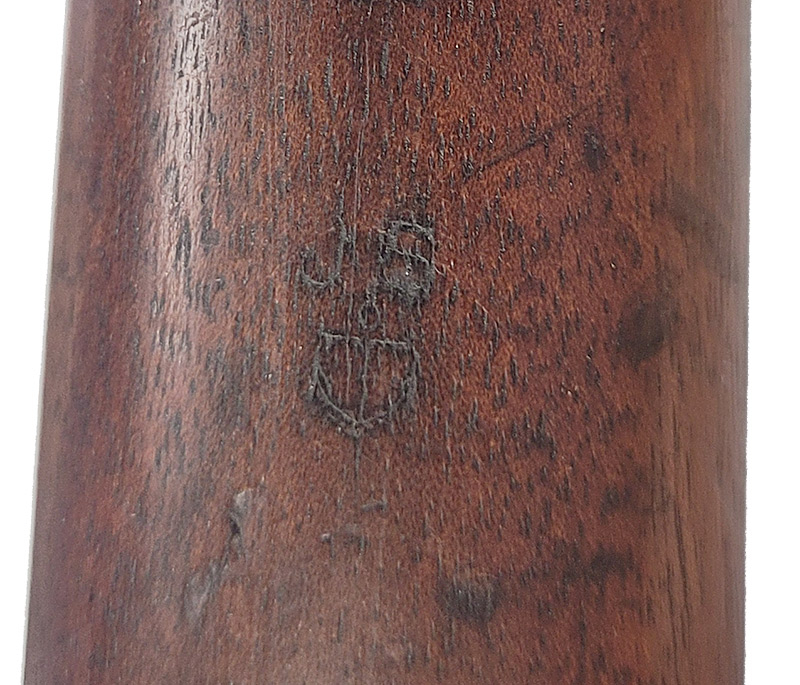
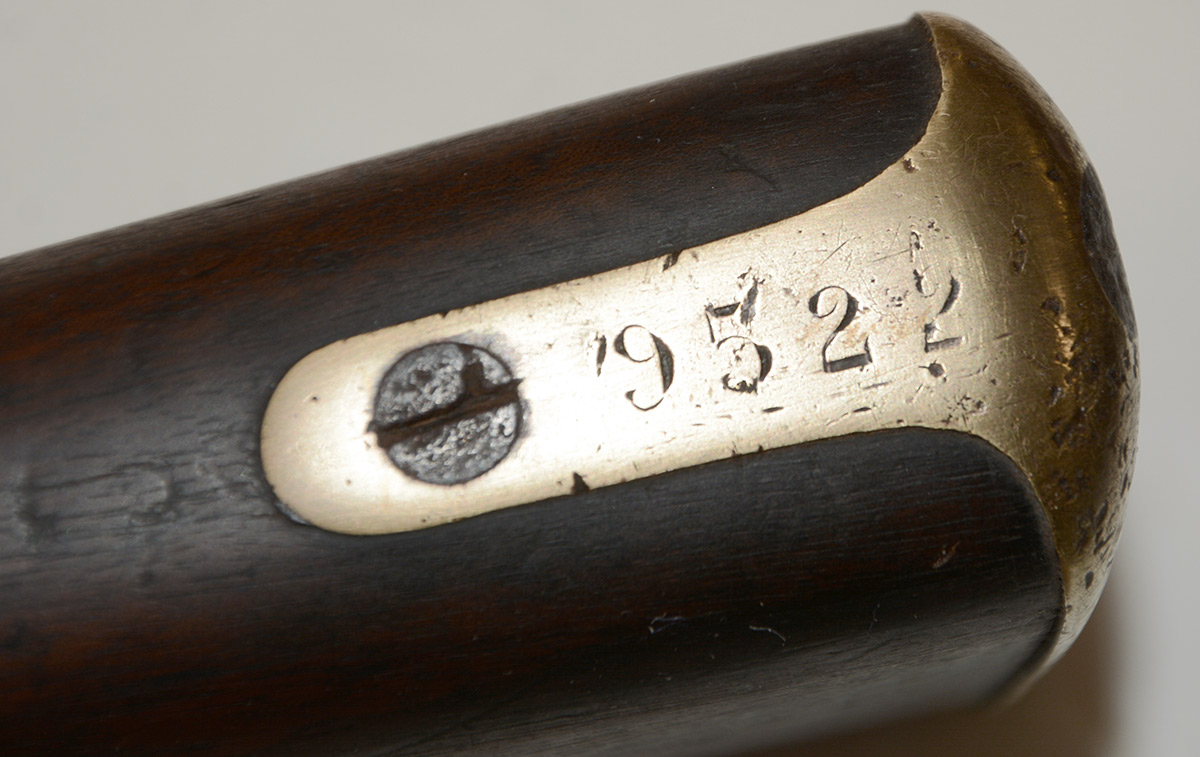
The second of these contracts for 30,000 Pattern 1853 “Long Enfields” is the one represented by the guns with the JS ANCHOR viewer’s mark, along with the engraved butt plate tang inventory numbers. The initials “JS” stand for John Southgate, one of the primary English “viewers” (inspectors) hired by the Confederacy to inspect the arms purchased on contract from the English gunmakers. These inventory numbers ran from 1-10,000 in three series (to date no gun with a 10,000 number is known, although theoretically they existed). The first series had no suffix after the number, while the second series of 10,000 had an “A” suffix under the inventory number and the third series of 10,000 had a “B” suffix. These numbered guns represent the October 1861 contract with Sinclair, Hamilton & Company that is referred to in Confederate documents as the “Second Contract”. This contract required the 30,000 Enfields to be delivered between October of 1861 and April of 1862. At least two identified B-suffix guns with three-digit inventory numbers have been determined to have been issued in Corinth, MS immediately prior to the battle of Shiloh on April 6-7 of 1862. Thus, is it clear that the contract timeline for production and delivery was closely followed, and the Confederacy did a good job delivering arms through the Union blockade during the first year of the war. Sinclair, Hamilton & Company acquired their arms through a series of sources referred to as the “Five Furnishers” in period documents. These were well-established gun making firms that were able to fill the large Sinclair, Hamilton & Company orders in a reasonable period of time or at least arrange with additional contractors to make the deliveries needed. The “five furnishers” were the two multigenerational London gunmakers EP Bond, and Parker, Field & Sons, along with James Kerr. Kerr apparently received a tiny portion of the contract, only 500 of the 30,000 guns, due to his relationship with the London Armoury Company. Archibald Hamilton who was the principle of Sinclair, Hamilton & Company was also the managing director of The London Armoury Company. James Kerr of Kerr revolver fame, was London Armoury Company’s manager, having replaced his revolver designing rival Robert Adams in that position. The balance of the guns was delivered by the Birmingham based firms of C. W, James and W. C. Scott & Son. The furnishers often marked the guns that were delivered under this contract with a large single letter on the upper comb of the stock, just forward of the buttplate tang. The guns were marked with a B for Bond, a F for Parker, Field & Sons, a J for C.W. James, a K for James Kerr, and an S for Scott & Son. A sixth single letter mark, P has been noted on a very few extant Confederate Enfields from this contract. This mark was previously thought to be an alternate mark for Parker, Field & Company. However, more recent examination of extant examples and the other associated marks on those guns have revealed that this was the mark of Francis Preston of Manchester, England. Preston’s relationship within the contracting circle of the “five furnishers” is not clear, but he delivered many socket bayonets for the numbered guns of this contract and may have received a small sub-contract to provide long arms as well. No period documents have shown that Preston delivered the guns directly to Sinclair, Hamilton & Company, so it is most likely that his guns were sub-contracted by James or Scott, who delivered the majority of the guns.
A 31 October 1861 dated letter from Sinclair, Hamilton & Co. notes that the contract was divided between the furnishers as follows: 8,000 guns from Scott & Son, 10,000 from CW James, 6,000 from E.P. Bond, 5,500 from Parker, Field & Sons and 500 from James Kerr. This indicates that the guns delivered by CW James, who was the largest supplier, represented about 33% of the total delivery under this contract. Scott & Sons delivered about 25% of the guns, Bond about 20% and Parker, Field & Sons about 18% of the guns. James Kerr’s deliveries represented less than 2% of all of the Second Contract rifle muskets. An extensive database comprised of more than two decades of collected information related to Confederate purchased Enfields contains approximately 300 numbered Pattern 1853 Enfield rifle muskets, not counting the numbered state purchased guns. Of those guns, the large majority are numbered guns with no suffix, which represent about 77% of the recorded samples. A-suffix guns represent about 16% of the recorded examples, while B-suffix guns represent about 7% of surviving examples that are recorded. To date, about 50 A-suffix and about 20 B-suffix Pattern 1853 Enfields are known to exist. The reason for the paucity of these arms is not clear, but it may simply be the result of attrition and the arms having been used up. With B-suffix guns, which would have theoretically been delivered later than the no suffix or “A” guns, the lack of extant examples may be an indication of the early successes experienced by the Union’s Atlantic Blockading Squadron.
Recorded numbers show a good distribution of engraved numbers from two digits through the mid 2XXX range. Then there is then a nearly 4,000 number gap in the database that seems to indicate that a large quantity of the “B-guns” in the 25XX to 62XX range may well be on the bottom of the Atlantic Ocean. “A suffix” guns, although uncommon and with few examples to study, show a nice even distribution through the entire numbering sequence. This suggests that their scarcity today is the result of them having seen hard use, rather than having been dumped overboard while a Confederate blockade runner tried to elude a pursuing US Naval vessel."-Tim Prince.
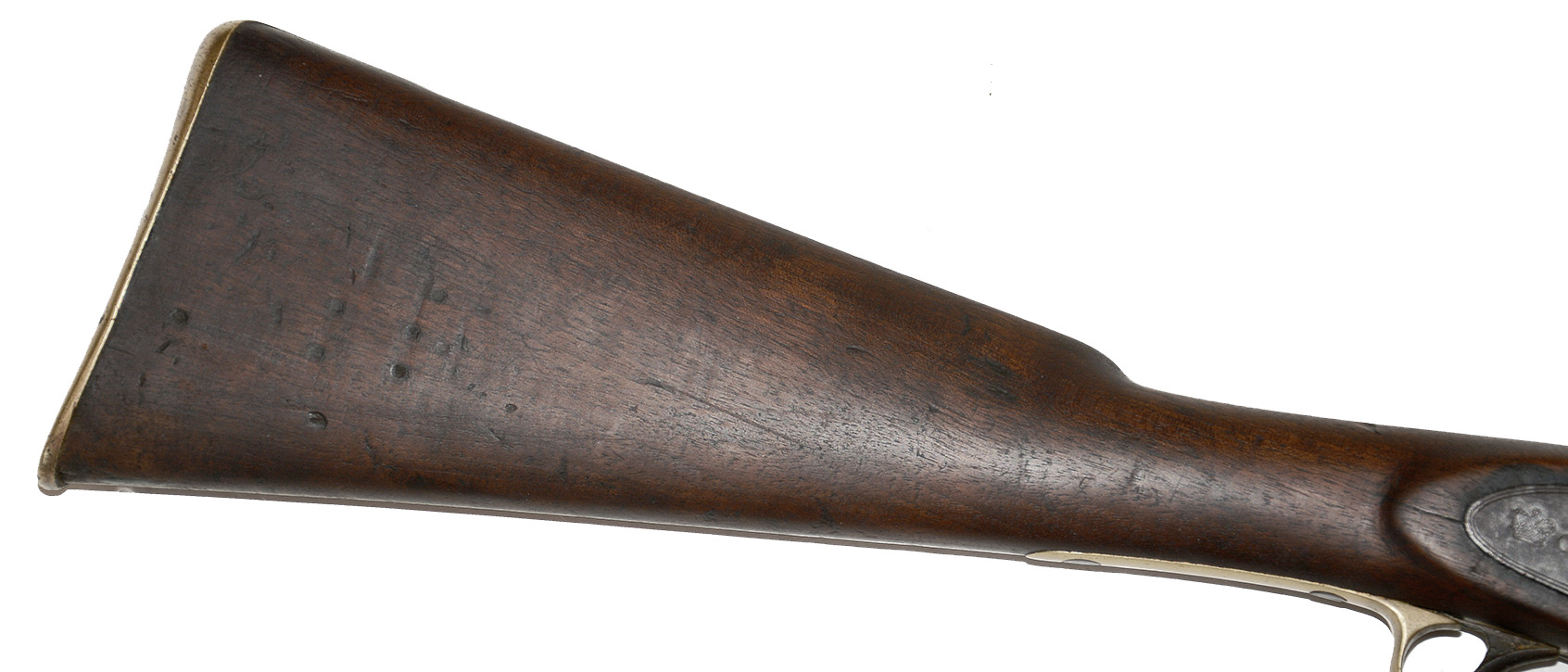
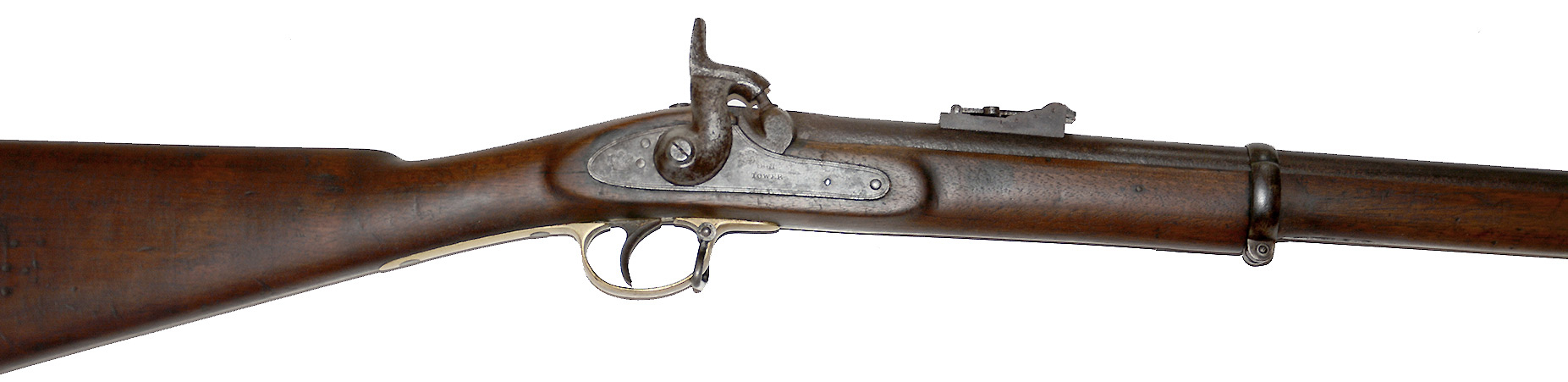
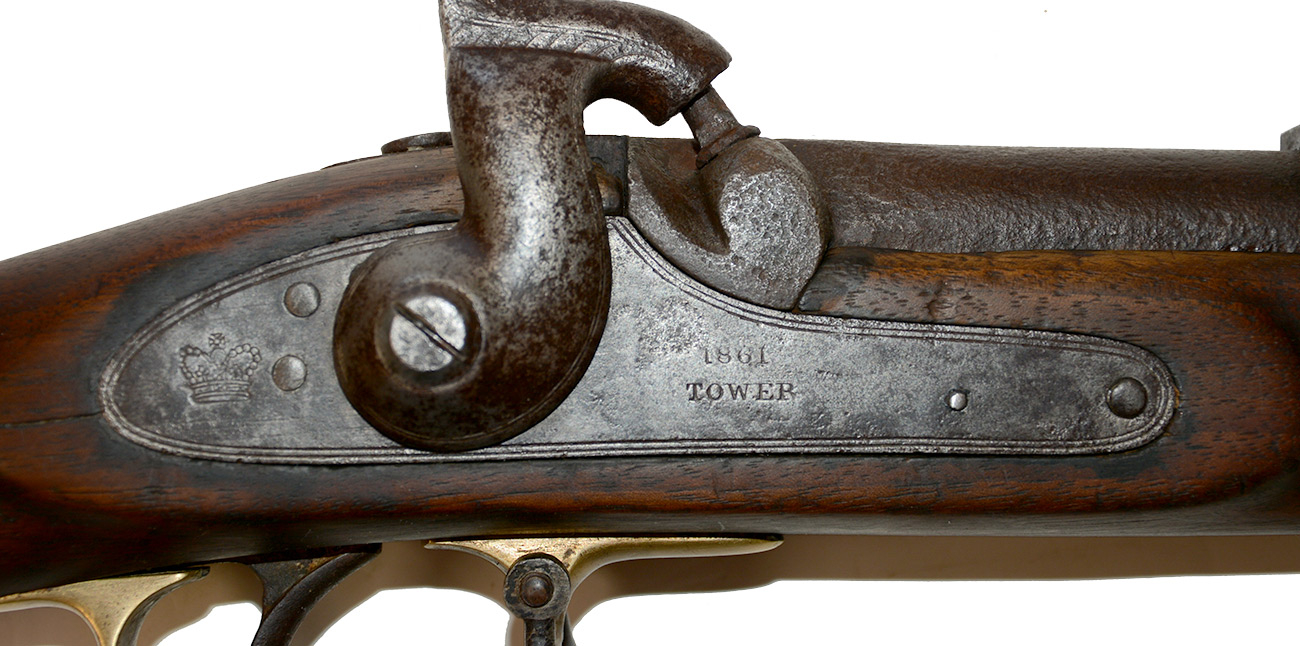
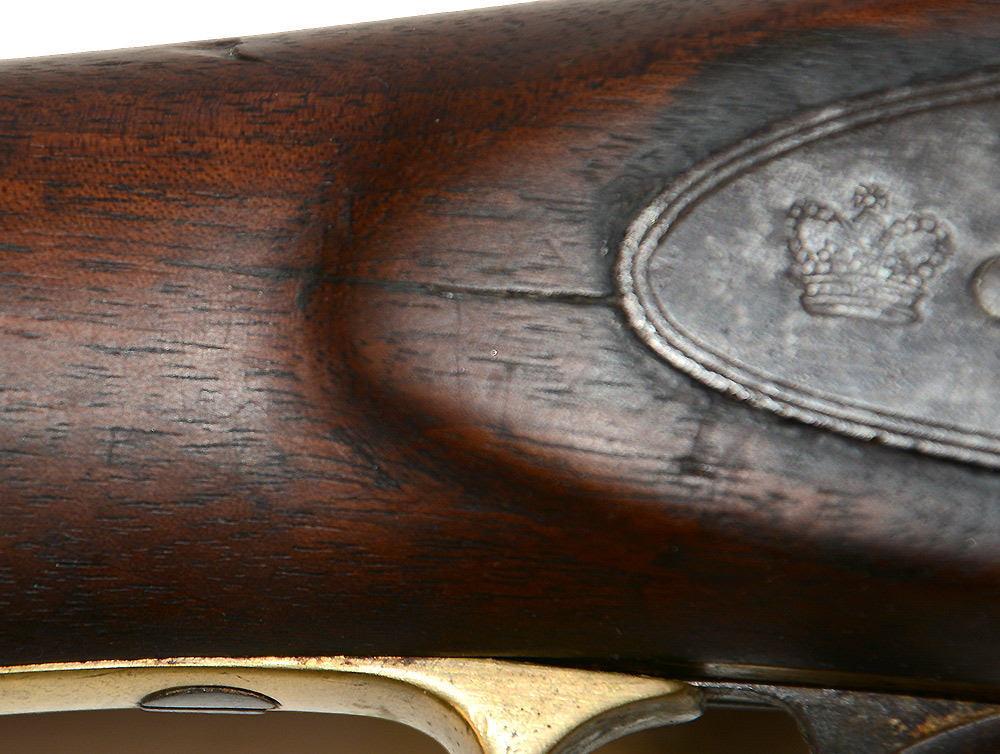
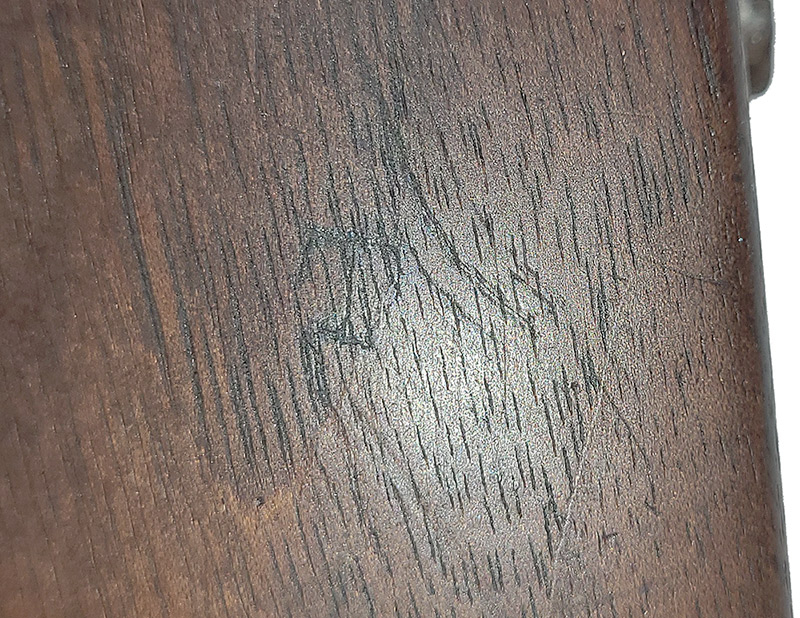
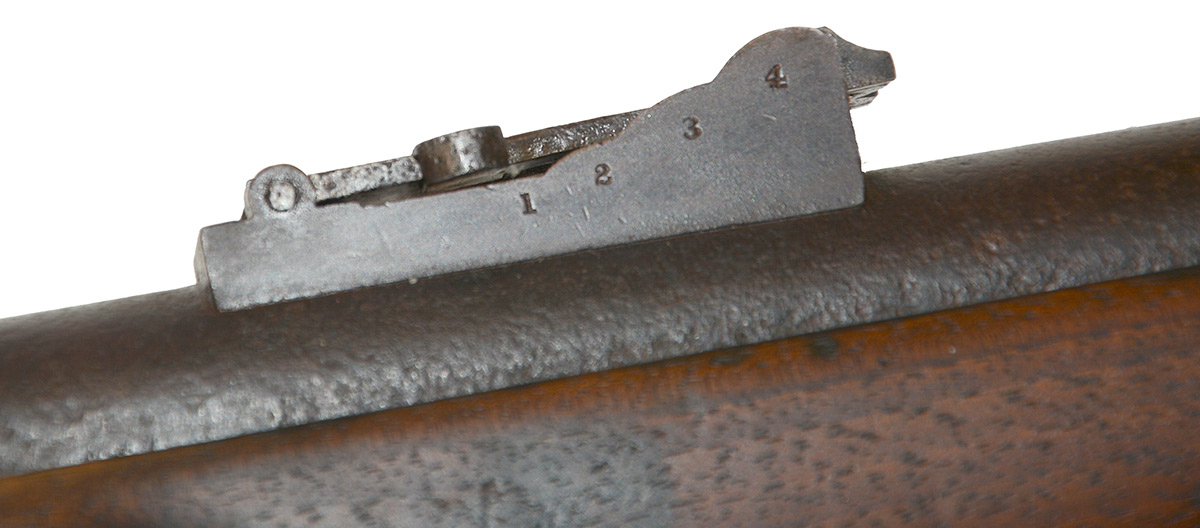
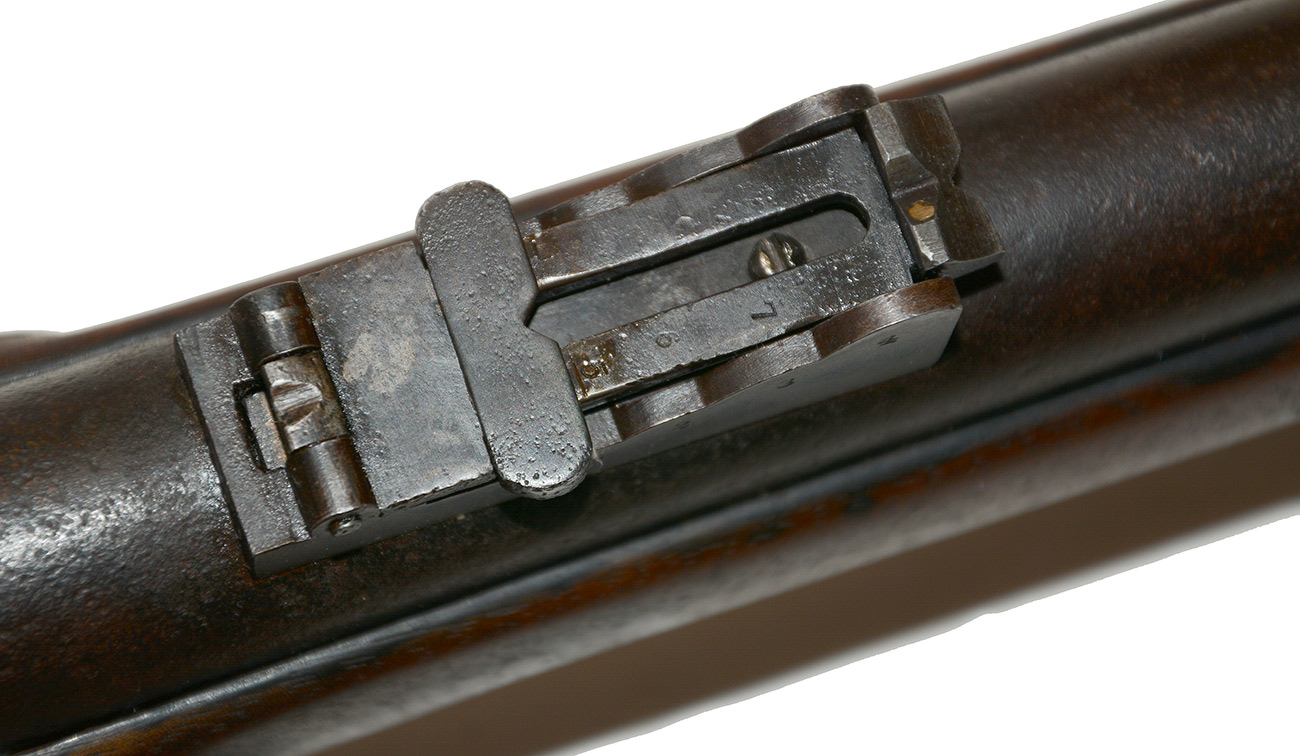
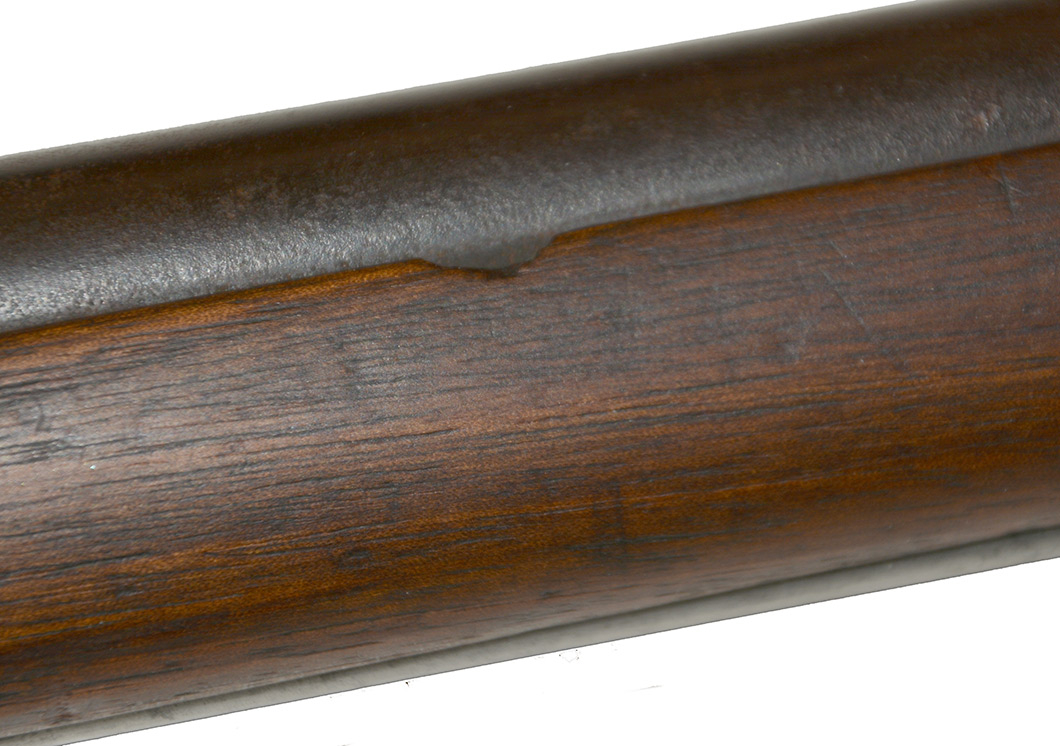
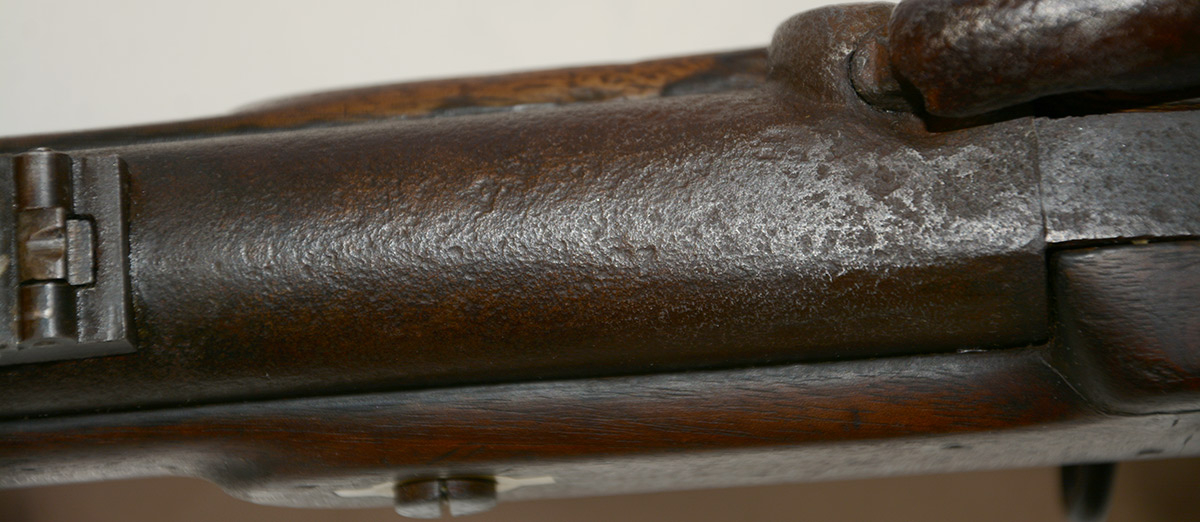
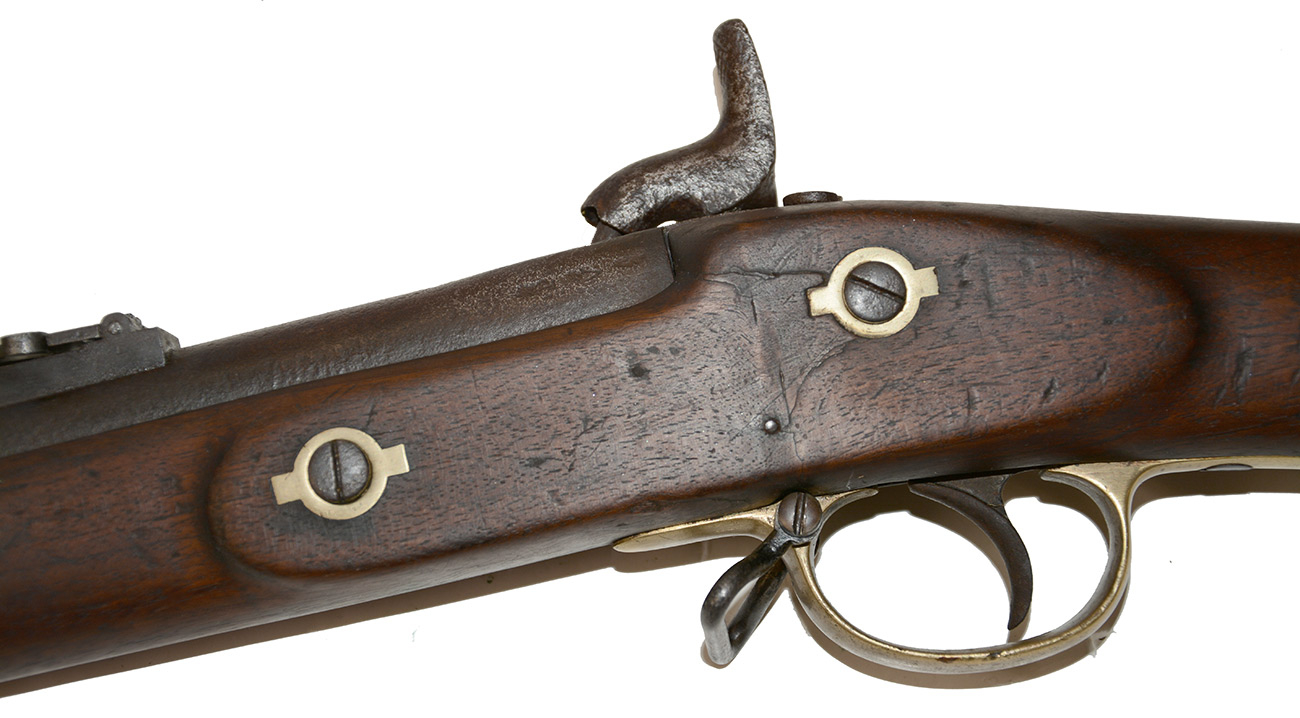
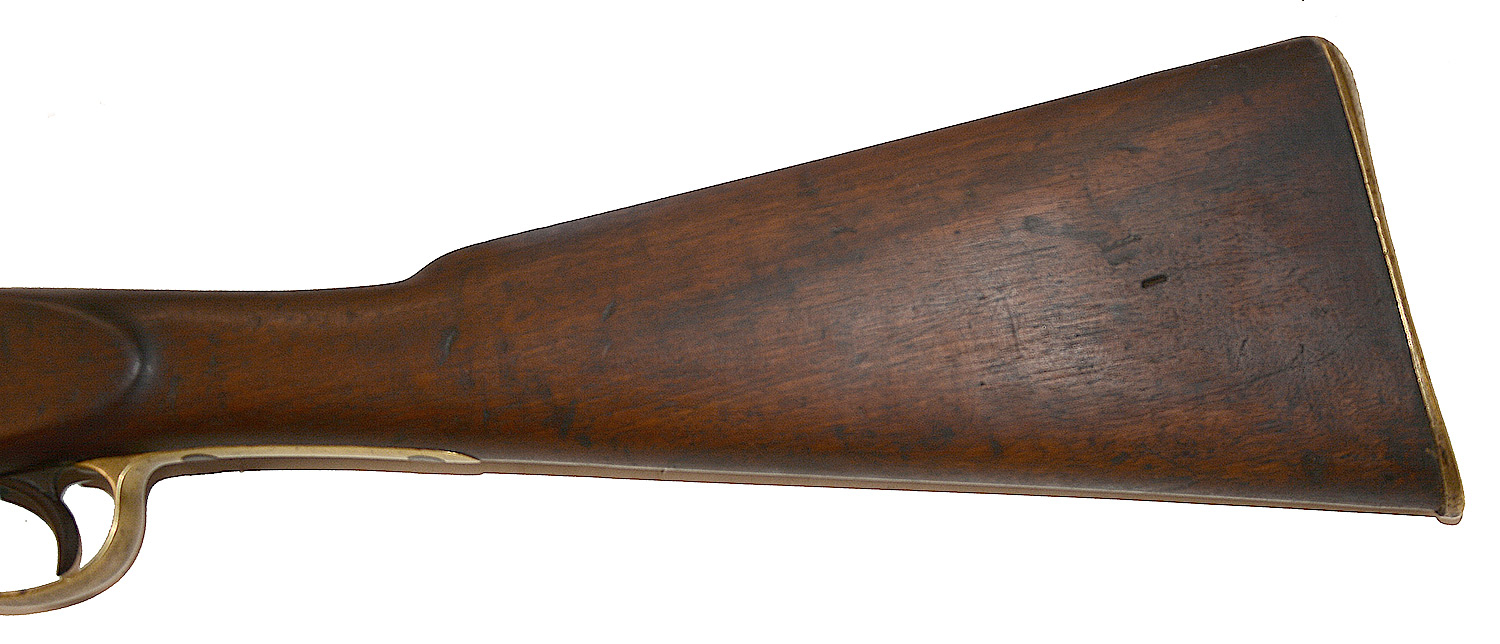
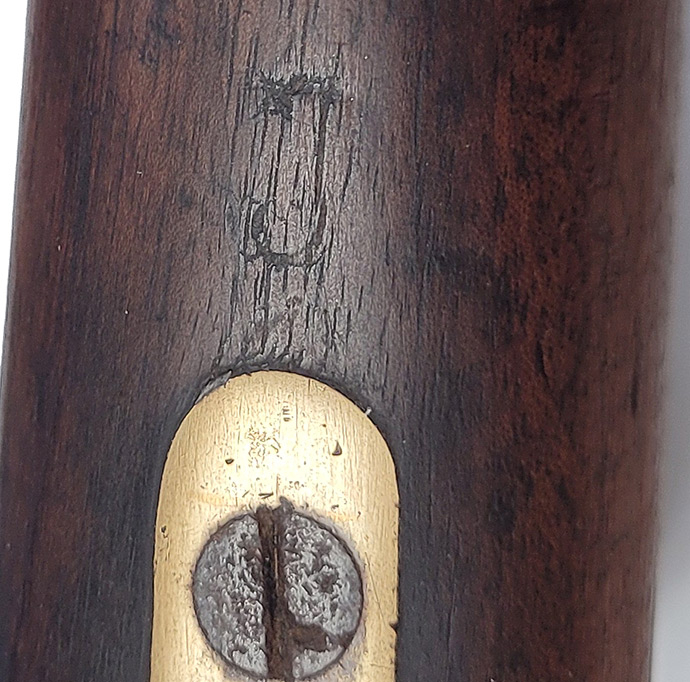
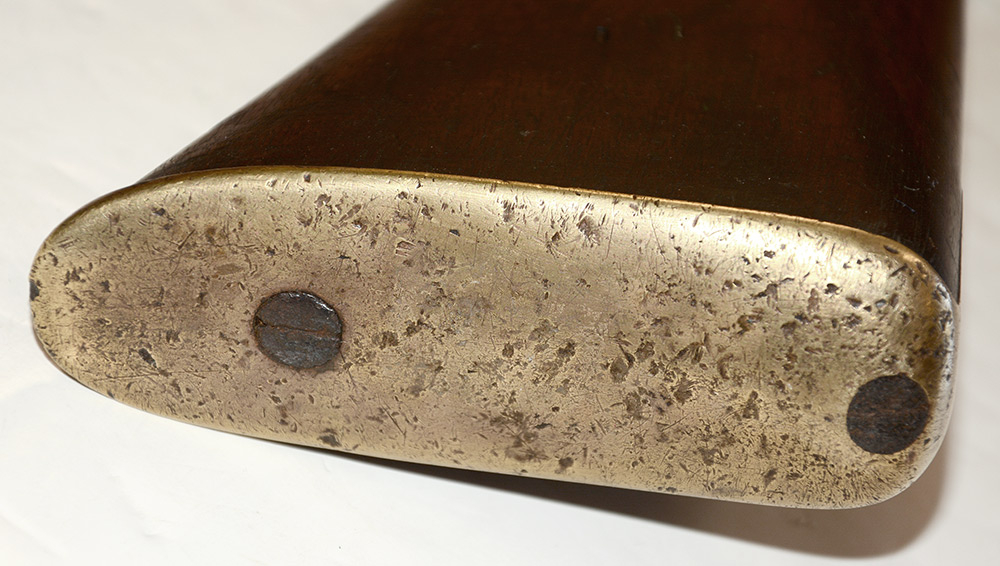
DESCRIPTION: Interesting in itself is the fact that this 100% original .577 caliber rifle-musket has a 39-inch London proved barrel, but a lock-plate marked "TOWER" with a crown at its rear typically found on Birmingham assembled "Enfield" types. In this case this is totally correct and this arm, probably assembled by Barnett of London (whose name is stamped under the barrel), uses a Birmingham lock fitted to it perfectly that internally bears the mark of James Bevan ("JB") under a crown, a London arms inspector. Please be aware Enfields, other than those made by the London Armoury Company, cannot interchange parts and are all custom hand fitted; therefore, this weapon is what we call "factory" or unaltered since birth. In fact, all major parts like the barrel and significant screws have matching Roman "mating numbers". This rifle musket has a mottled dark patina overall; there are areas where cleaning was attempted bringing out a gun metal color. There scattered moderate pitting and other places with little or no pitting where the brown of great age is less significant, but the general appearance is consistent and all components are original. The lock plate bears the date "1861" also "TOWER" and a crown with no "VR". The mechanism works well. The barrel, still rifled, has a deep patination at the breech area with pitting and patina that matches that on the lock plate. The original elevating rear sight sits unmolested in place. The three iron barrel bands are in place with the top band having its original sling swivel. The brass trigger guard carries the rear sling swivel. The nose cap is brass as is the butt plate that bears the Confederate engraved inventory number "9522". An original ramrod is in place but not the original ramrod which would have had number 9522 engraved on it. The walnut stock is in very nice condition with no repairs or major dents and has not been sanded. There is some real battlefield use burn out between the lock plate and barrel tang of no significance. Stamped on the top of the butt stock is a 3/4 inch high "J" for James the furnisher and stamped below the trigger guard also in the wood is the ubiquitous "JS" and ANCHOR. Ahead of the trigger guard is stamped an approximately 5/8 of an inch C&R letter "T".
THE C&R SIGNIFICANCE: Steven Knott identified these alphabet capital letters as belonging to CS Ordnance inspectors. In his seminal 2019 book “Captured and Collected Confederate Reissued Firearms” he breaks it all down. It should be said that decades before Mr. Knott did his research old school collectors were well aware that the letters consistently seen on firearms including pistols were of Confederate origin. Mr. Knott who put it all "to pen" estimated that as many as 200,000 firearms gathered by CS Ordnance teams or civilians were placed into the Confederate cleaning and repair (“C&R”) system for reissue to Confederate troops, along with perhaps another 50,000 turned in by Confederate units. Most of these were in the eastern theatre, where Confederate victories left battlefields in southern hands, and the guns went through the process at Danville, Staunton, Lynchburg, or Richmond. Knott’s original catalog of five letter marks designating different inspectors (A,F,Q,T,Z) has expanded to include a “D” and also this “&” stamp. Our Enfield bears the "T".
This is a significant rifle-musket for ways we hope has been explained. It is worthy of the most advanced collector. [pe][ph:L]
DISCLAIMER: All firearms are sold as collector's items only - we do not accept responsibility as to the shooting safety or reliability of any antique firearm. All firearms are described as accurately as possible, given the restraints of a catalog listing length. We want satisfied customers & often "under" describe the weapons. Any city or state regulations regarding owning antique firearms are the responsibility of the purchaser. All firearms are "mechanically perfect" unless noted, but again, are NOT warranted as safe to fire!
~~~~~~~~~~~~~~~~~~~~~~~~~~~~~~~~~~~
THIS ITEM, AS WITH ALL OTHER ITEMS AVAILABLE ON OUR WEB SITE,
MAY BE PURCHASED THROUGH OUR LAYAWAY PROGRAM.
CLICK HERE FOR OUR POLICIES AND TERMS.
THANK YOU!
Inquire About CONFEDERATE IMPORTED ENFIELD, BOTH "JS ANCHOR" AND "C&R" MARKED
Most Popular
Historical Firearms Stolen From The National Civil War Museum In Harrisburg, Pa »
Theft From Gravesite Of Gen. John Reynolds »
Selection Of Unframed Prints By Don Troiani »
Fine Condition Brass Infantry Bugle Insignia »
featured item
WORLD WAR TWO / KOREA UNITED STATES MARINE CORPS OFFICER’S MAMALUKE SWORD
The drawn sword meas. approx. 36.00 inches long. The blade itself meas. approx. 31.00 inches long x 0.75 of an inch wide at the ricasso. It has a central fuller that starts just above the ricasso and runs for approx. 27.00 inches. The blade surface… (2021-944). Learn More »
site search