
site search
online catalog
THE MEDICAL STAFF SWORD AND SURGEON’S MEDICAL KIT OF URIAH Q. DAVIS, 148th PENNSYLVANIA INFANTRY
Hover to zoom




$9,500.00
Quantity Available: 1
Item Code: 1321-01
Shipping: Determined by Method & Location of buyer
To Order:
Call 717-334-0347,
Fax 717-334-5016, or E-mail
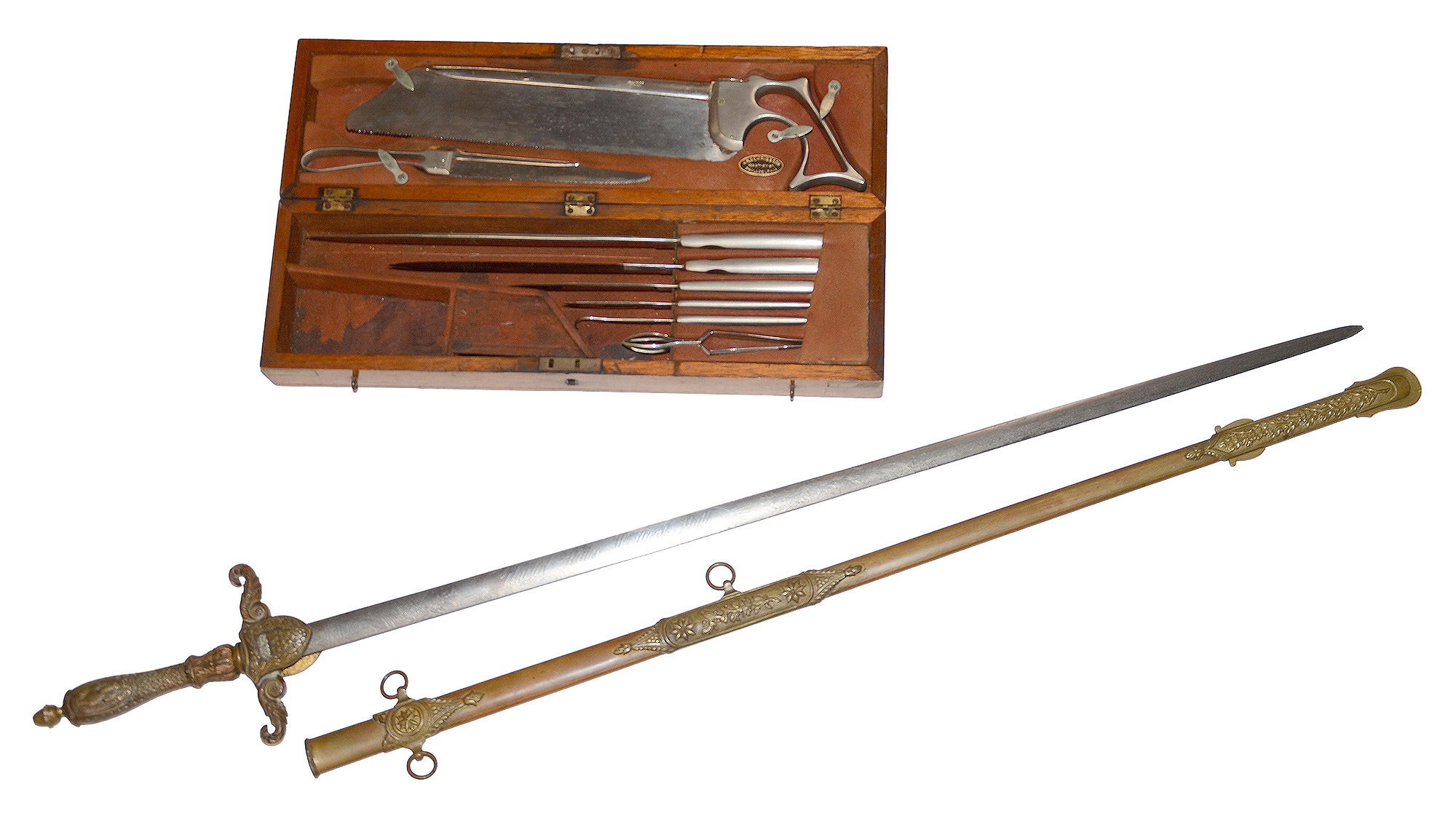
The 1840 sword for officers of the Medical Staff was the regulation pattern for surgeons and assistant surgeons throughout the Civil War. This included not only doctors posted to general hospitals and the like, but to the regimental surgeon and assistant surgeon (in 1862 increased to two assistant surgeons,) who were posted to line regiments and frequently served under fire like Davis did at battles such as Gettysburg.
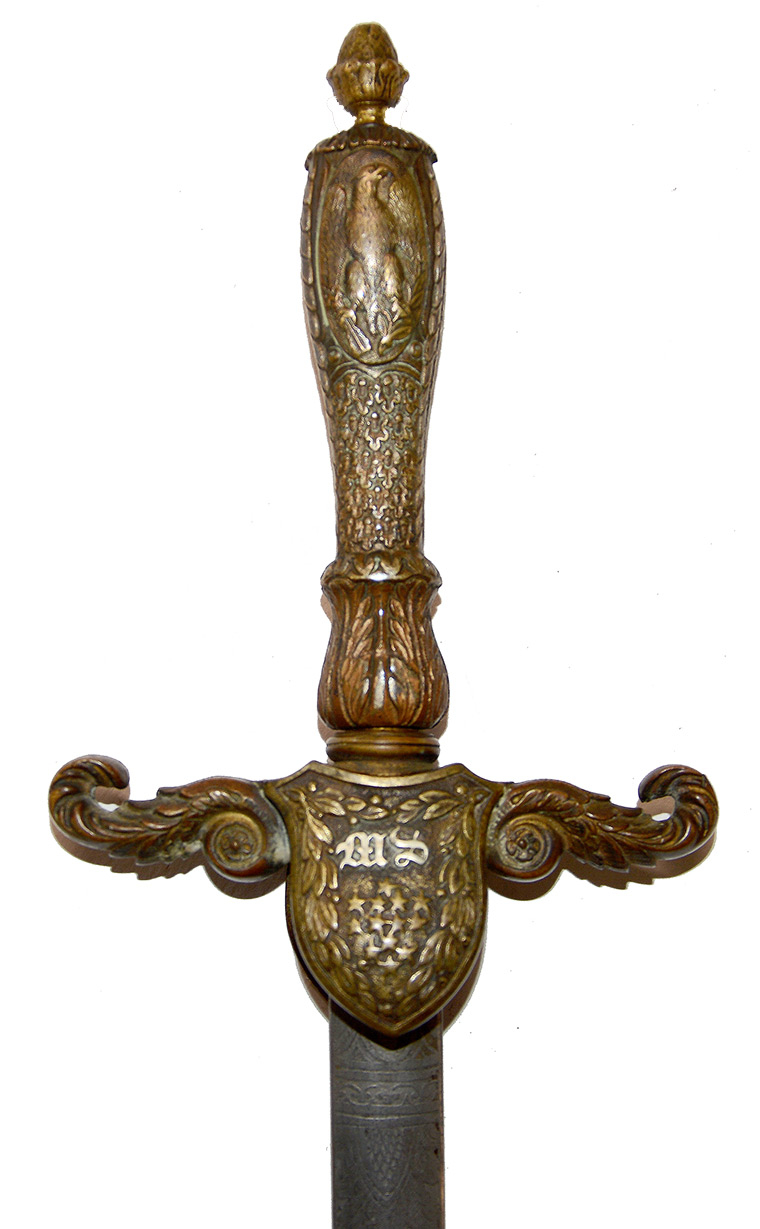
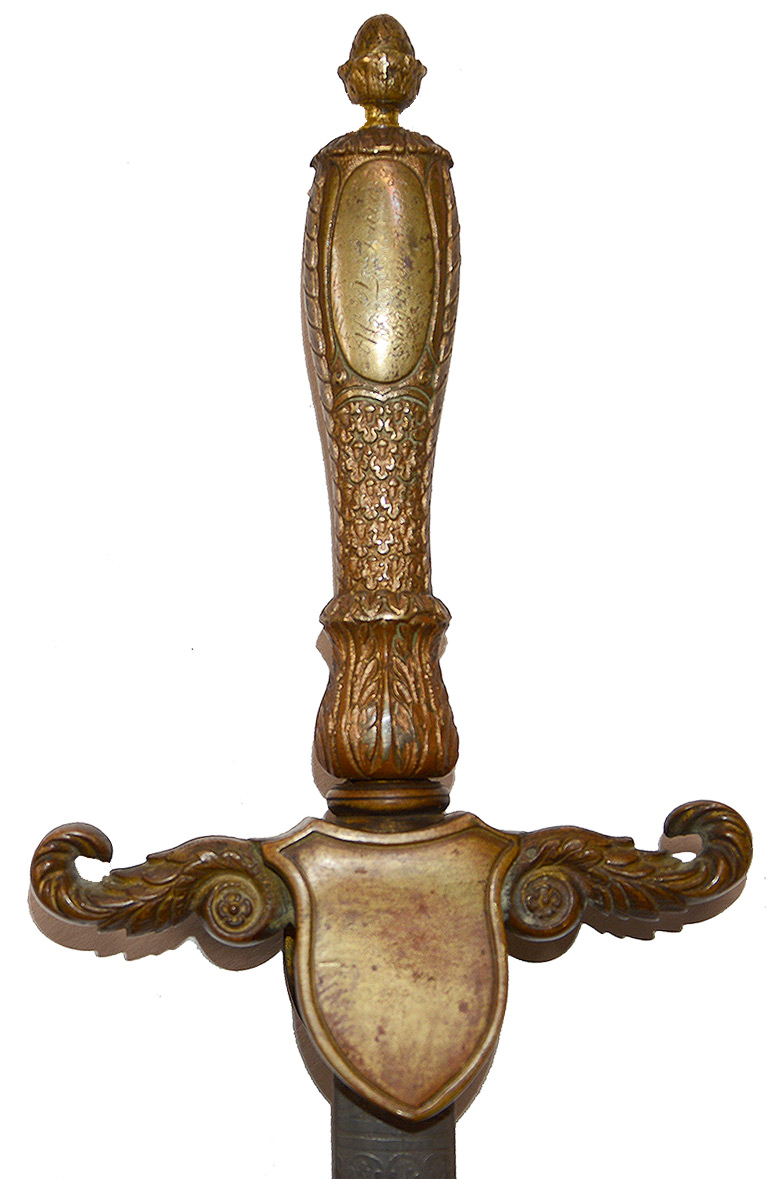
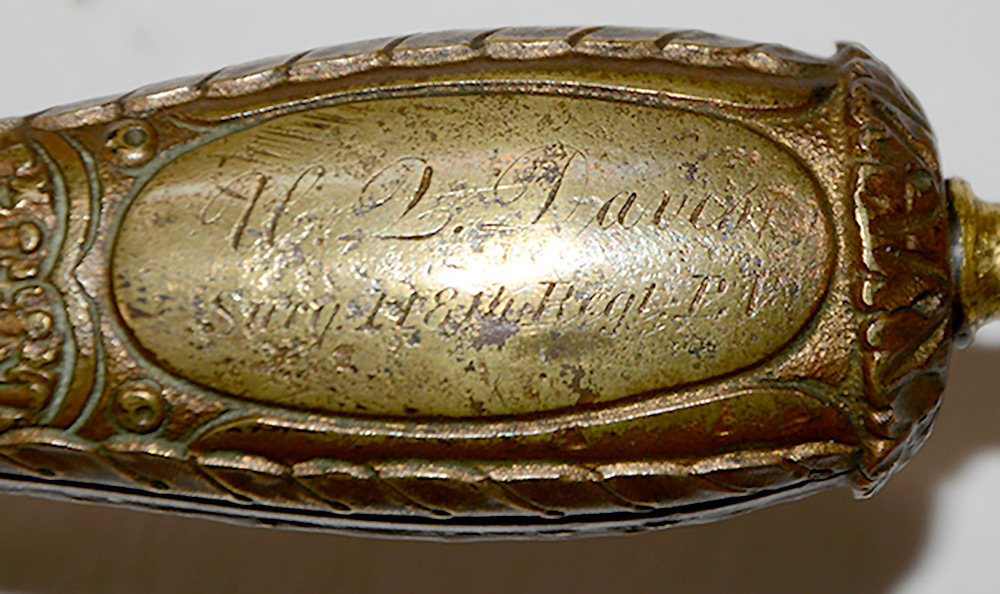
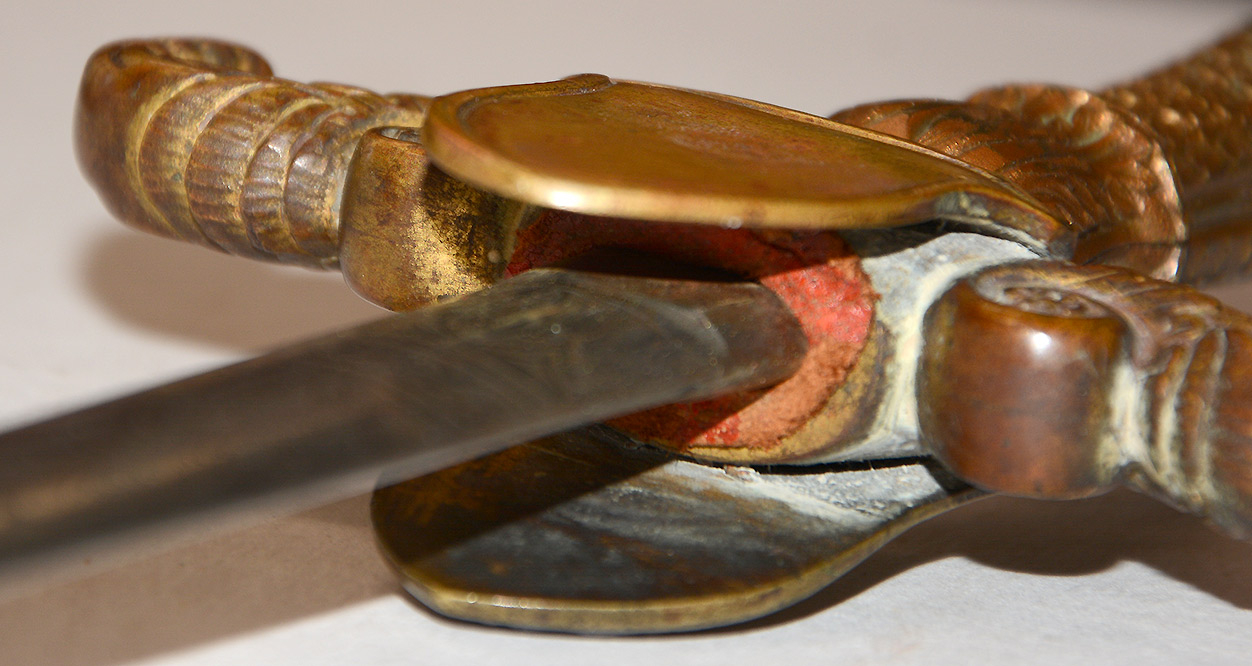
This sword measures 34 inches overall. The pommel is topped by an acorn-pineapple finial and has long oval panels on either side, the reverse of which is engraved in period script: "U.Q. Davis" over " Surgeon 148th Regt P.V." and the obverse filled with an eagle flanked by branches of a wreath. Below that the brass grip is finely cast and chased in floral motifs that seem to spring out of a vase-shaped flowering bulb at the base of the grip. The cross guard is equally ornate. The branches are in the form of scrolling acanthus leaves. The shield-shaped languets extend downward from the quillon block. The reverse languet is blank. The obverse contains a silver “MS” above a cluster of thirteen stars, all bordered by a bellflower garland.
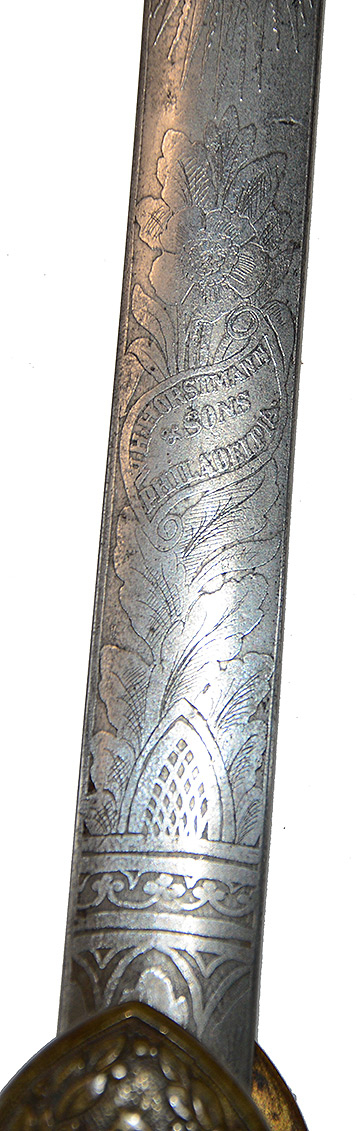
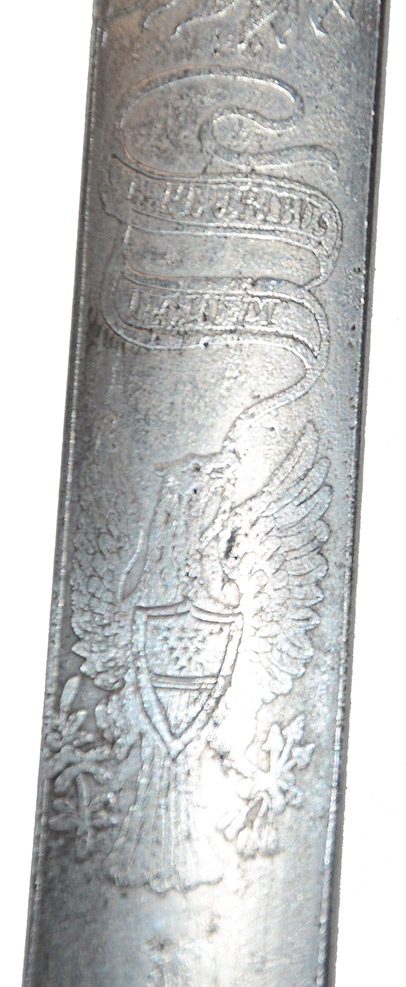
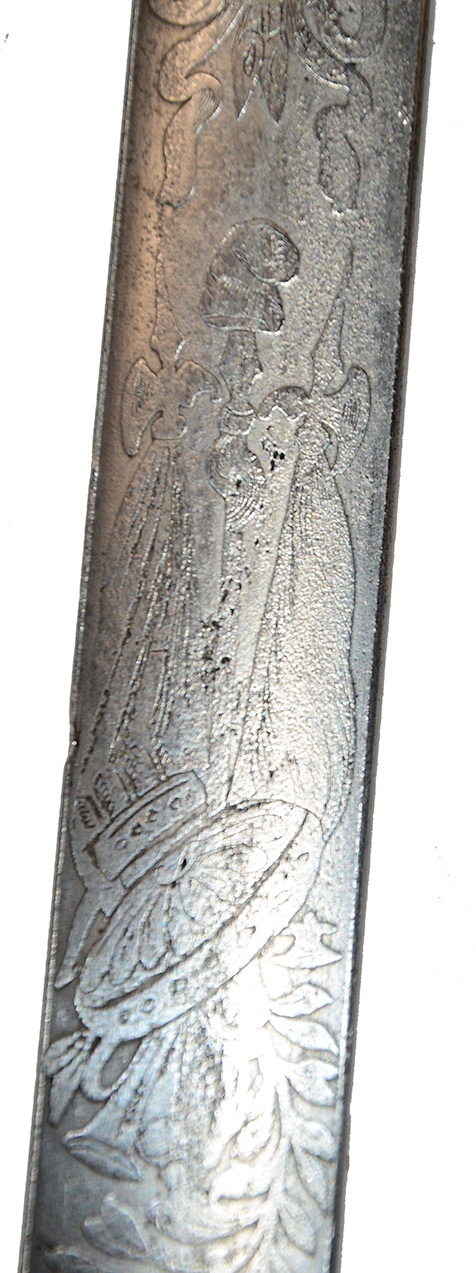
The blade is oval in cross-section, without a fuller, double edged and end in a spearpoint. The edge is very good, with no nicks or chips. The point is good. The etching is very legible and for the most part showing as bright against a frosted background; this is in several places muted to a light gray. The obverse has a floral motif with the firm name etched “W. H. Horstmann & Sons" over “Philadelphia". Over that is an arched lattice work and floral sprays, leading up to a long central panel etched in a flowing script, “United States Medical Staff,” followed by more floral motifs rounding out the panel. The reverse shows the same arched latticework at the bottom, along with firm name and address again, surmounted by a spray of oak leaves over which is an American eagle with raised wings and an “E Pluribus Unum" in a ribbon overhead, surmounted by a panoply of arms, flags and halberd, above which vines and floral elements extend to the end of the etched panel.
The brass scabbard is in very good condition and shows great detail on the deeply cast and chased floral mounts at the throat, middle carrying ring, and drag. The brass shows uncleaned and dark in the recesses of the raised designs of the mounts, and a tad lighter on the smoother areas from handling. All the mounts are present, as are the correct two carrying rings at the throat and single ring on the middle mount.
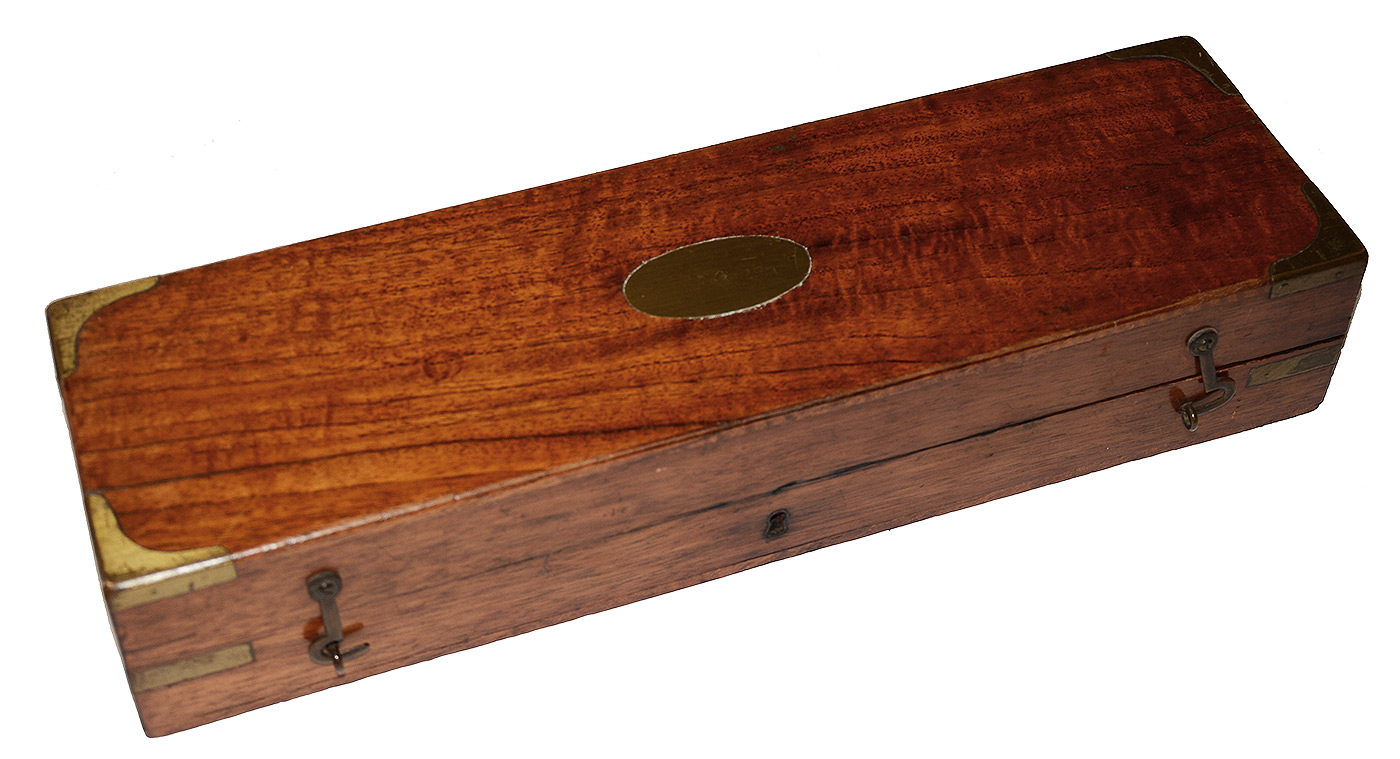
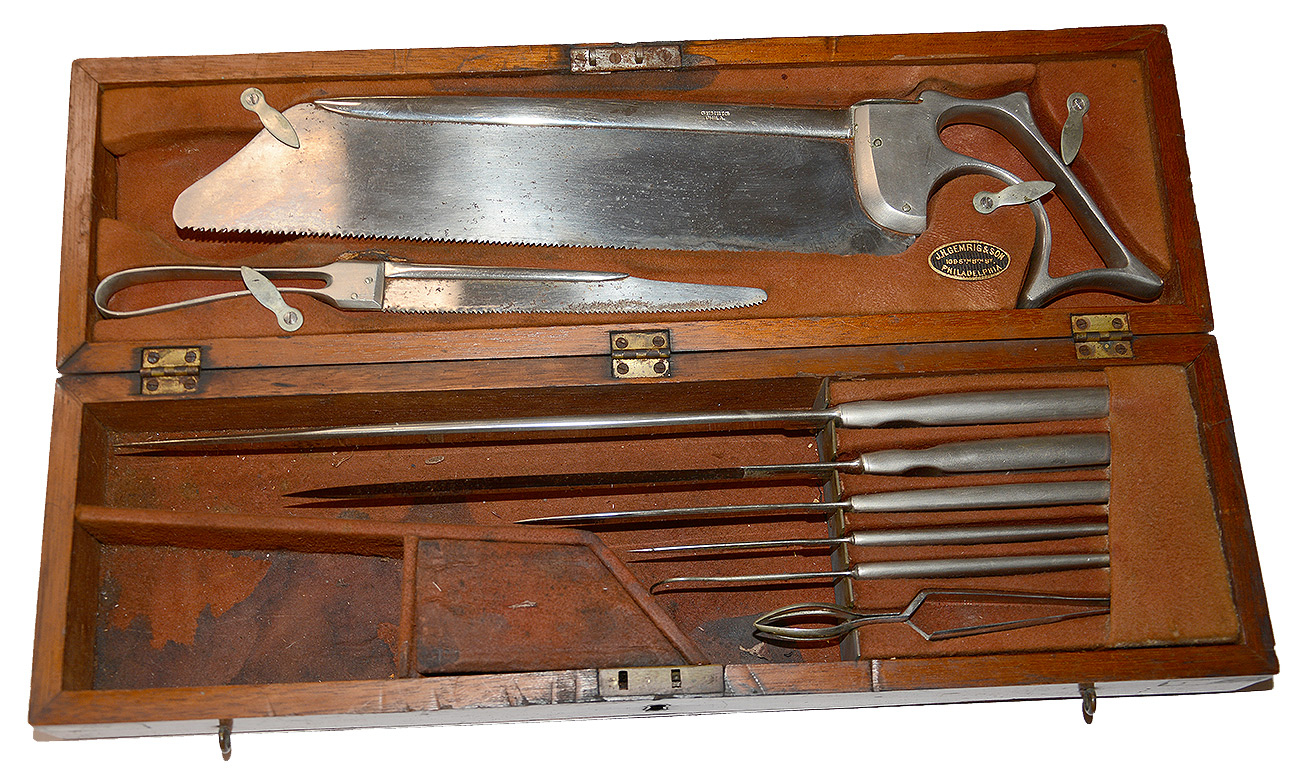
Accompanying the sword is Surgeon Davis's cased operating set, marked by J.H. Gemrig & Son of Philadelphia. The brass-mounted hardwood case houses an all-metal instrument set whose construction and maker's address place it in the post-war period — consistent with the practice Davis carried on at Milton, Pennsylvania, after mustering out of the 148th in June 1865.
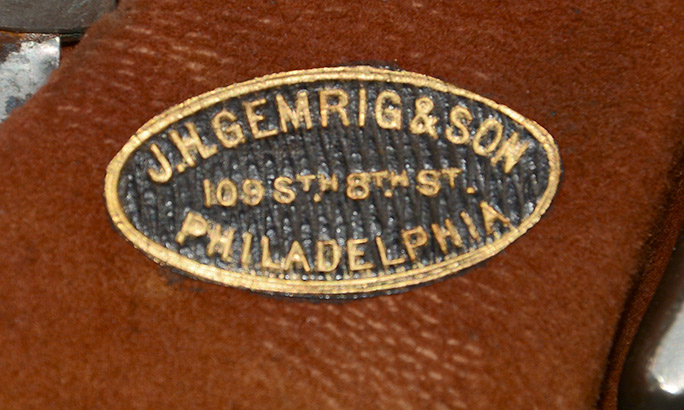
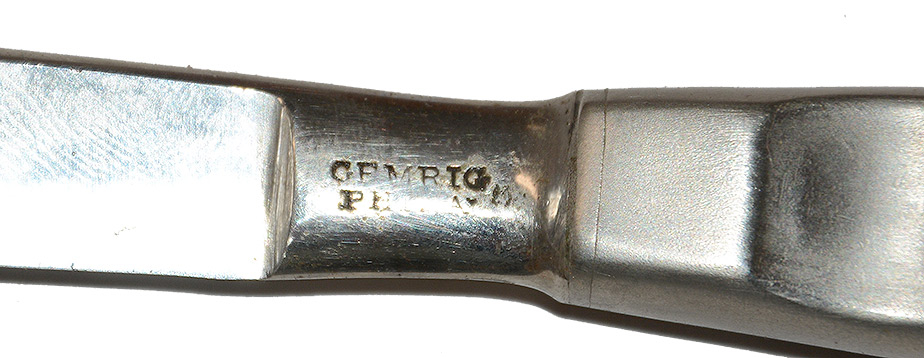
MAKER & DATE: Instruments stamped GEMRIG / PHILA; the case retains the firm's gilt-lettered oval label, "J.H. GEMRIG & SON, 109 S. 8th St., Philadelphia." Per Edmonson's address listings (American Surgical Instruments), Gemrig occupied 109 South Eighth Street from 1866 to 1880, placing manufacture squarely in the post-war years. The all-metal, one-piece handles — in place of the ebony grips standard on the firm's Civil War-era sets — reflect the shift toward fully cleanable, antiseptic-era instruments and point to the later end of that window.
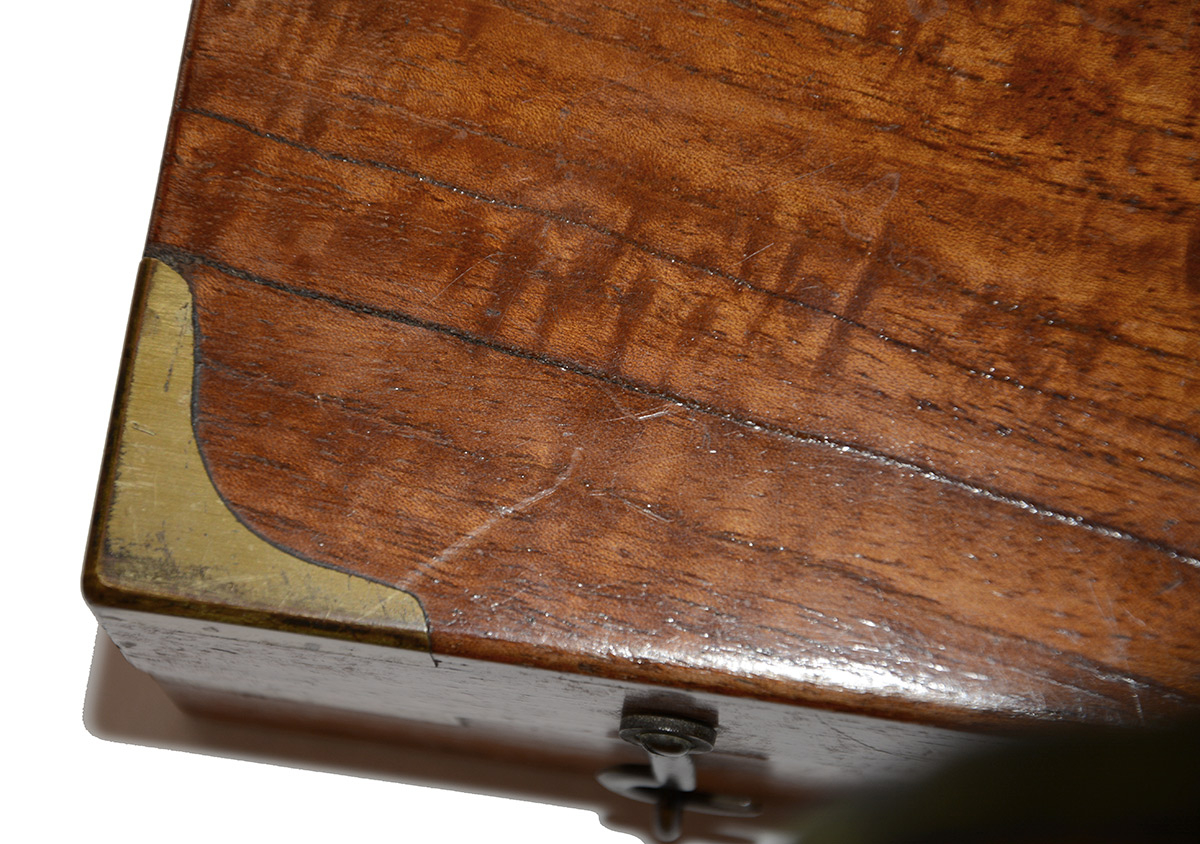
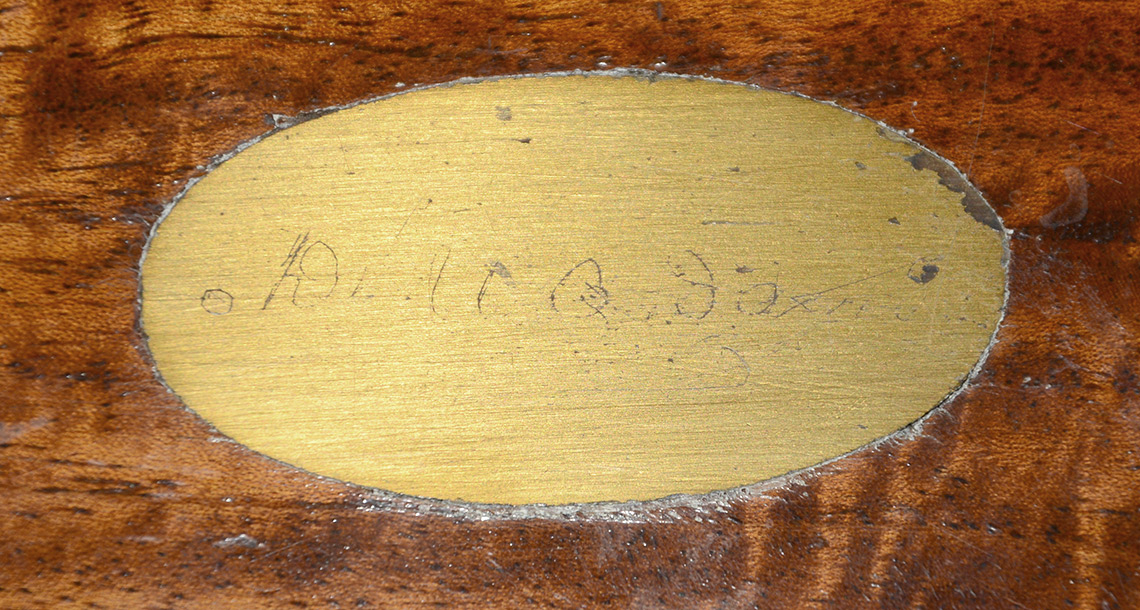
CASE: Brass-bound hardwood case with brass corner mounts, inset brass escutcheon, and an oval brass cartouche to the lid with “Dr. U.C. Davis” scratched into it.. Fitted, chamois-lined interior with sliding latches and spade-form turn-button retainers. Approx. 15 ¼’” (l) x 4 ½” (d) x 2 ¾” (h).
INSTRUMENTS: The right well holds a capital amputation saw with German-silver frame and contoured grip, retained by spade-form turn buttons, together with a smaller looped-handle saw. The left well holds a graduated row of metal-handled bone instruments, a slender spring forceps, and a hooked instrument. A handsome and substantial set by the same Philadelphia maker known for his Civil War Union contract work.
The set is offered as found and is short two instruments — the tourniquet and the gnawing forceps are absent from their fitted recesses.
SURGEON URIAH Q. DAVIS: He was born in Limestone Valley, Montour County, Pennsylvania, July 16, 1821. His early education was completed at the Lewisburg Academy, Pennsylvania, and he graduated from the Medical Department of the University of Pennsylvania in 1848. The same year he opened an office in Lewisburg, Pennsylvania, where he practiced medicine. In 1856 he permanently lived in Milton, Pennsylvania, and practiced his profession during the rest of his life. On October 8, 1862, he joined the One Hundred and Forty-eighth Regiment, Pennsylvania Volunteers on September 12th, 1862; please view this link (148th Pennsylvania Infantry Regiment). He entered as Assistant Surgeon and was promoted to the rank of full Surgeon November 21st of the same year. He mustered out June 1, 1865. His records, copies of which pass with the sword, show him present the greater part of the war and he was the regimental surgeon on the field at the time of the Battle of Gettysburg. After the war he was politically active with the Republican party. In 1887 he was killed when his buggy was hit by a train at the Mahoning Street crossing. This is a wonderful sword billowing with history.
Accompanied by military records and additional research information. [pe/ss][ph:L]
~~~~~~~~~~~~~~~~~~~~~~~~~~~~~~~~~~~
THIS ITEM, AS WITH ALL OTHER ITEMS AVAILABLE ON OUR WEB SITE,
MAY BE PURCHASED THROUGH OUR LAYAWAY PROGRAM.
CLICK HERE FOR OUR POLICIES AND TERMS.
THANK YOU!
Inquire About THE MEDICAL STAFF SWORD AND SURGEON’S MEDICAL KIT OF URIAH Q. DAVIS, 148th PENNSYLVANIA INFANTRY
Most Popular
Historical Firearms Stolen From The National Civil War Museum In Harrisburg, Pa »
Theft From Gravesite Of Gen. John Reynolds »
Selection Of Unframed Prints By Don Troiani »
Fine Condition Brass Infantry Bugle Insignia »
Rare Identified 65Th Ny Sergeant’s Jacket, With Manscript Material: 1St U.s. Chasseurs »
featured item
RARE COLLECTION OF NINE ALBUMEN PHOTOS OF FORT MORGAN IN 1864
Offered here is a wonderful lot of nine mounted photographs recorded around Fort Morgan following the Battle of Mobile Bay. All the photographs are pasted to plain card-stock mounts, each measuring 9.5” x 7.75”. Each mount features printed… (2025-1889). Learn More »
site search