

site search
online catalog
THE CONFEDERATE SWORD OF E. Q. THORNTON, 39th ALABAMA INFANTRY
Hover to zoom



$19,750.00
Quantity Available: 1
Item Code: 1100-503
Shipping: Determined by Method & Location of buyer
To Order:
Call 717-334-0347,
Fax 717-334-5016, or E-mail
This has to be one of the most interesting Confederate swords we have had the opportunity to handle; worn by an officer for almost 3 years who was cited for gallantry at the battle of Murfreesboro. It was in the personal collection of Ron Tunison. Ron Tunison (1947 – 2013) was born in Richmond Hill, N.Y., and was a graduate of the School of Visual Arts in Manhattan. He was a scholarship student at the NYC National Academy where he continued his sculpting studies. He went on to become an internationally acclaimed sculptor of nine heroic bronze monuments: "General W. Crawford," near Little Round Top on the Gettysburg Battlefield, the “Friend to Friend Masonic Memorial" on Steinwehr Ave., the bas-relief "Delaware State Memorial" on Taneytown Road, and "The Gettysburg Civil War Women's Memorial" at Evergreen Cemetery. On the Antietam National Battlefield is Tunison's "Irish Brigade Monument." "The Bivouac" is at the entrance to the Civil War Soldier's Museum at Pamplin Historical Park near Petersburg, Va. "The Delaware Continentals" heroic size bronze of three advancing Revolutionary War soldiers stands atop a twenty-five-foot granite pedestal in front of Legislative Hall at Dover, Delaware. At Ringgold Gap in Atlanta, Ga., is Ron's life-size General Patrick Cleburne. Dedication ceremonies for “General John Barry, U.S. Naval Commander”, took place May 10th, 2014, at U.S. Naval Academy in Annapolis, MD. Ron was the entrepreneur behind his own company Historical Sculptures, where he sculpted smaller statues. He also had a world class collection of eclectic militaria spanning from before the Napoleonic Wars to the Civil War and beyond.
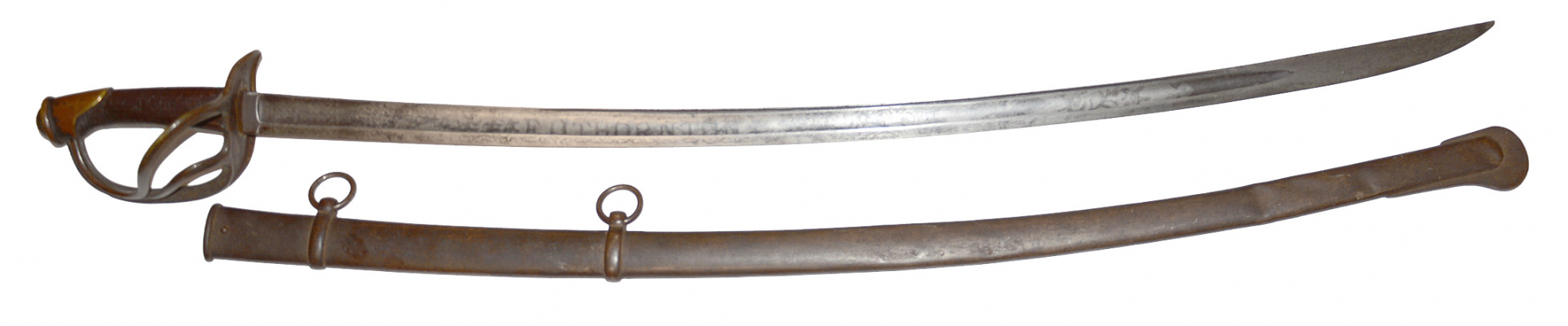
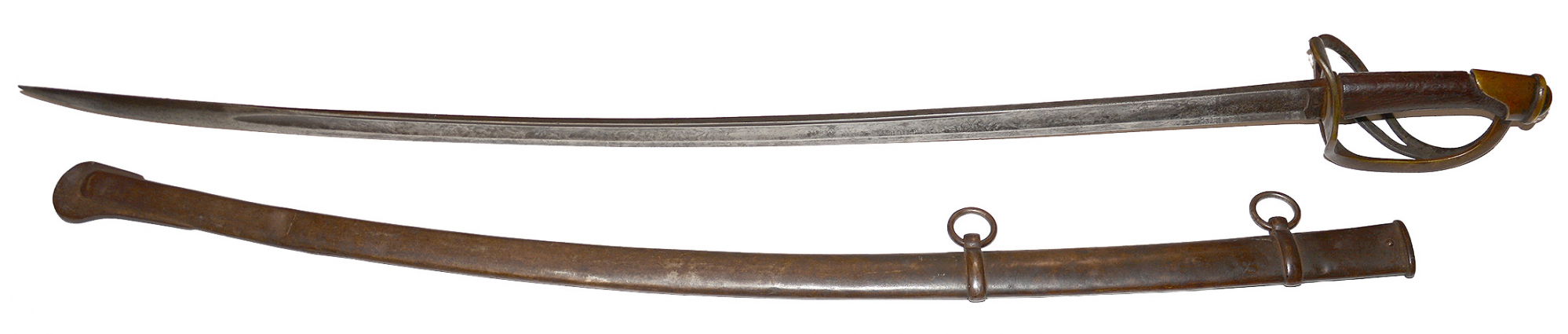
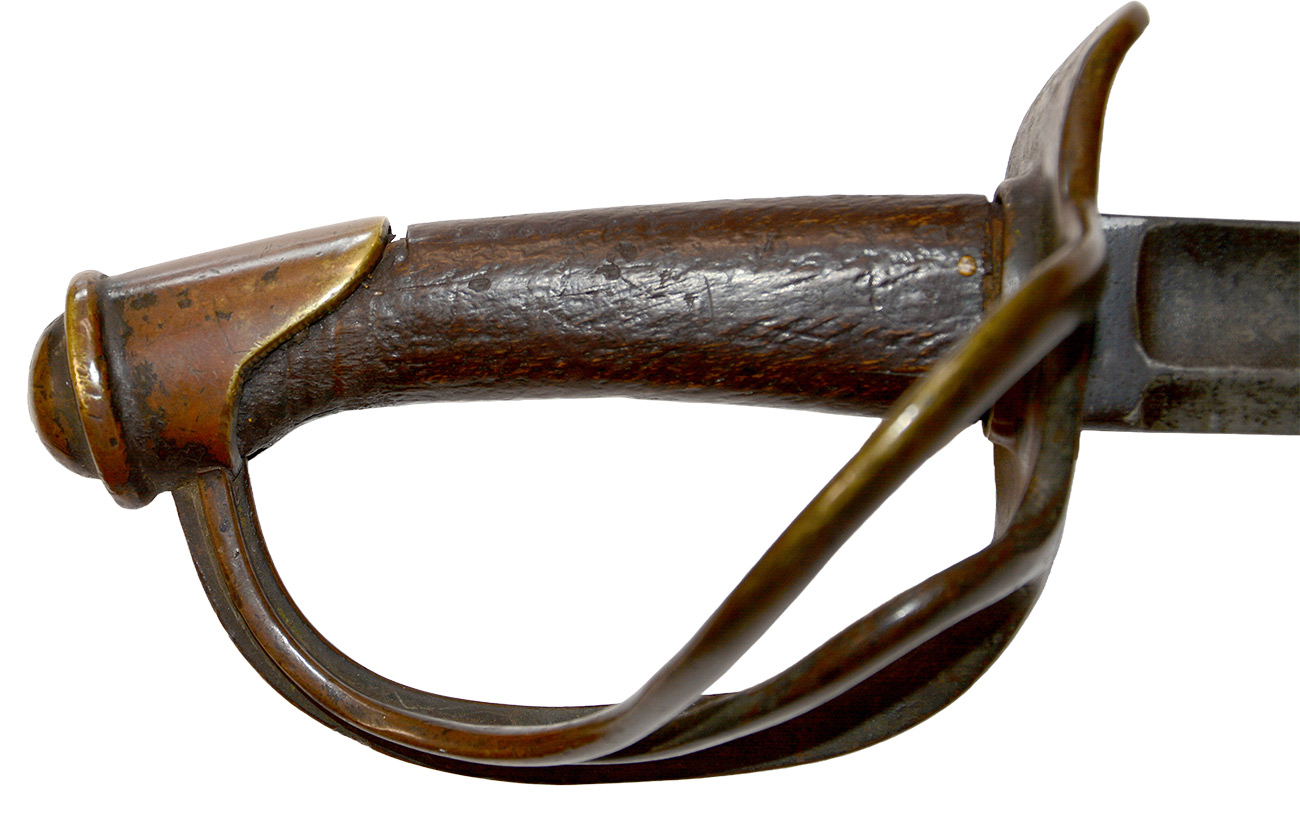
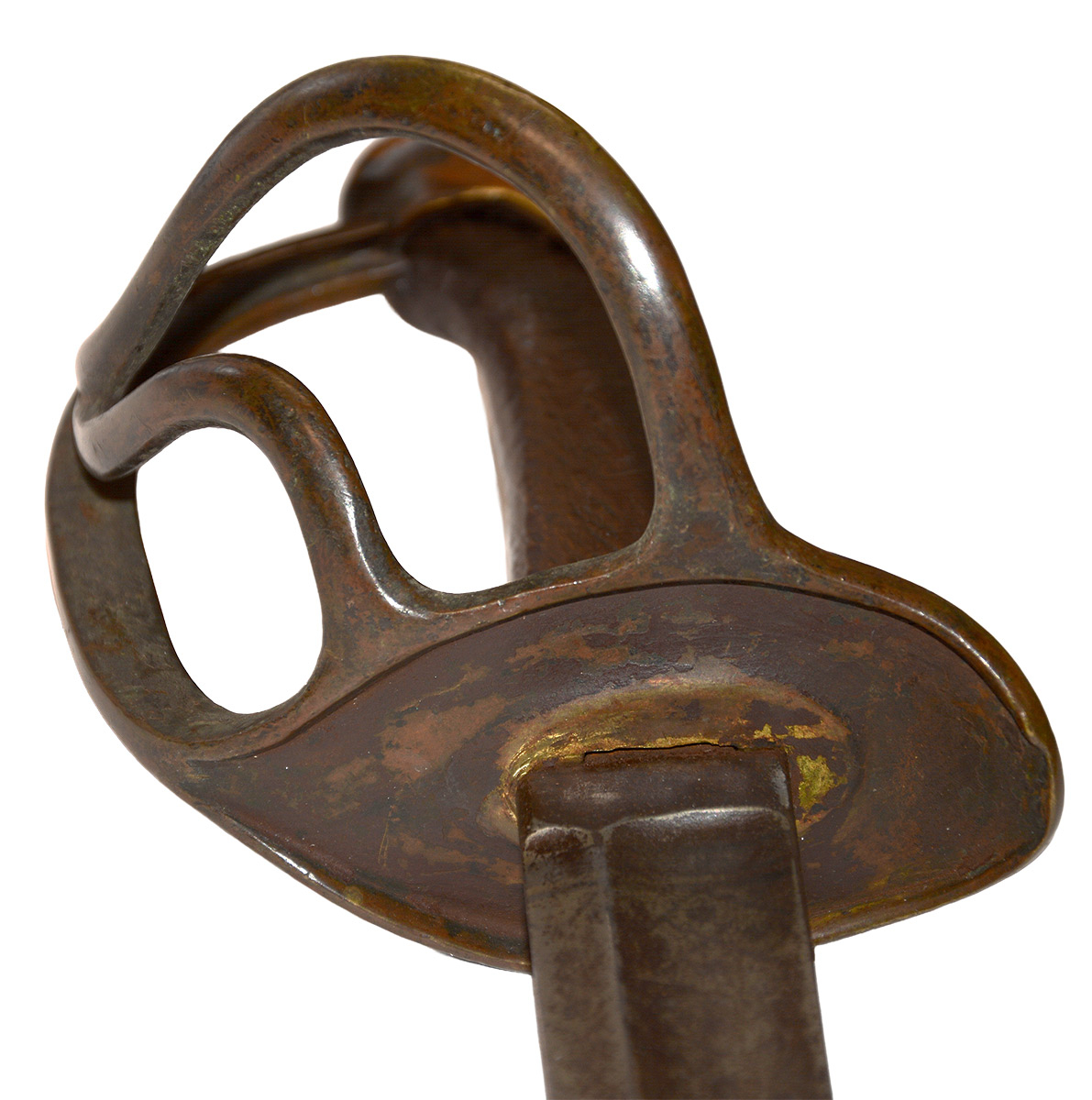
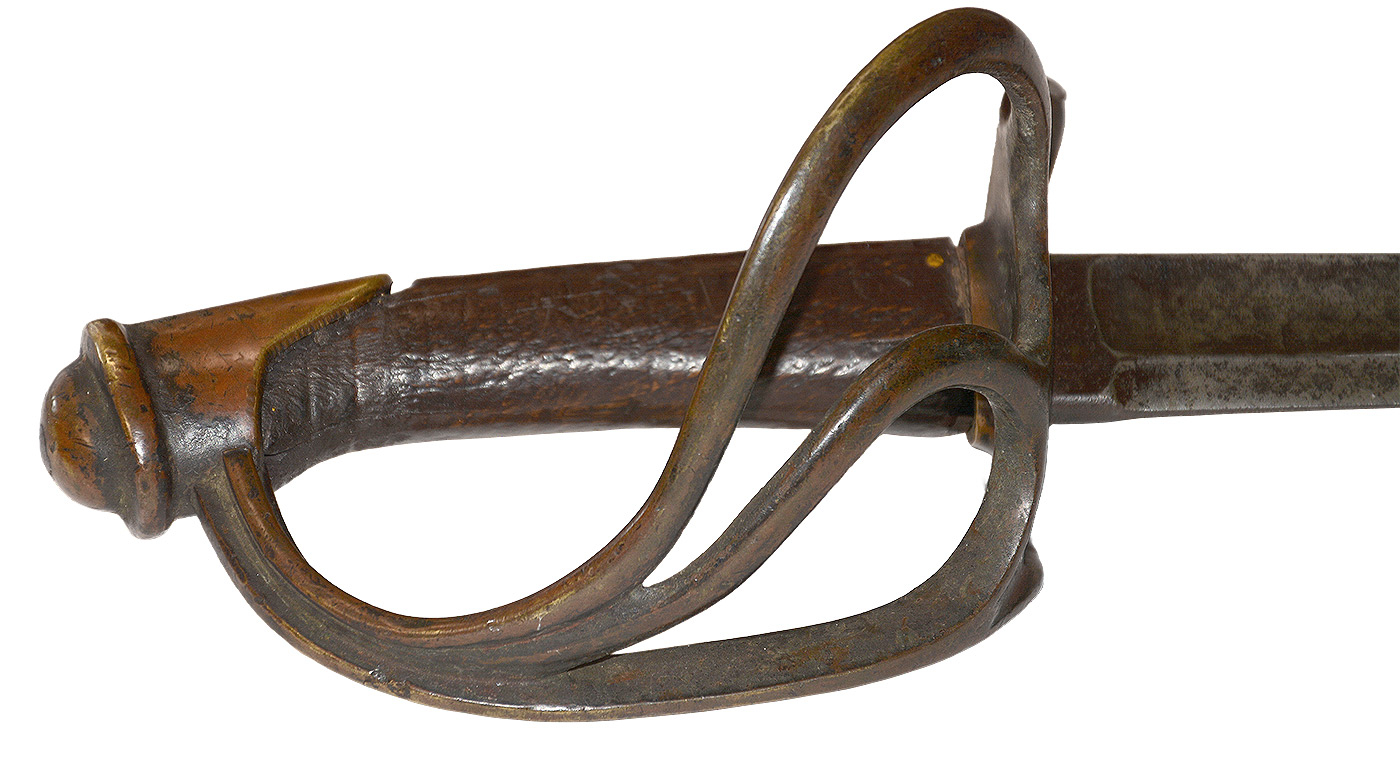
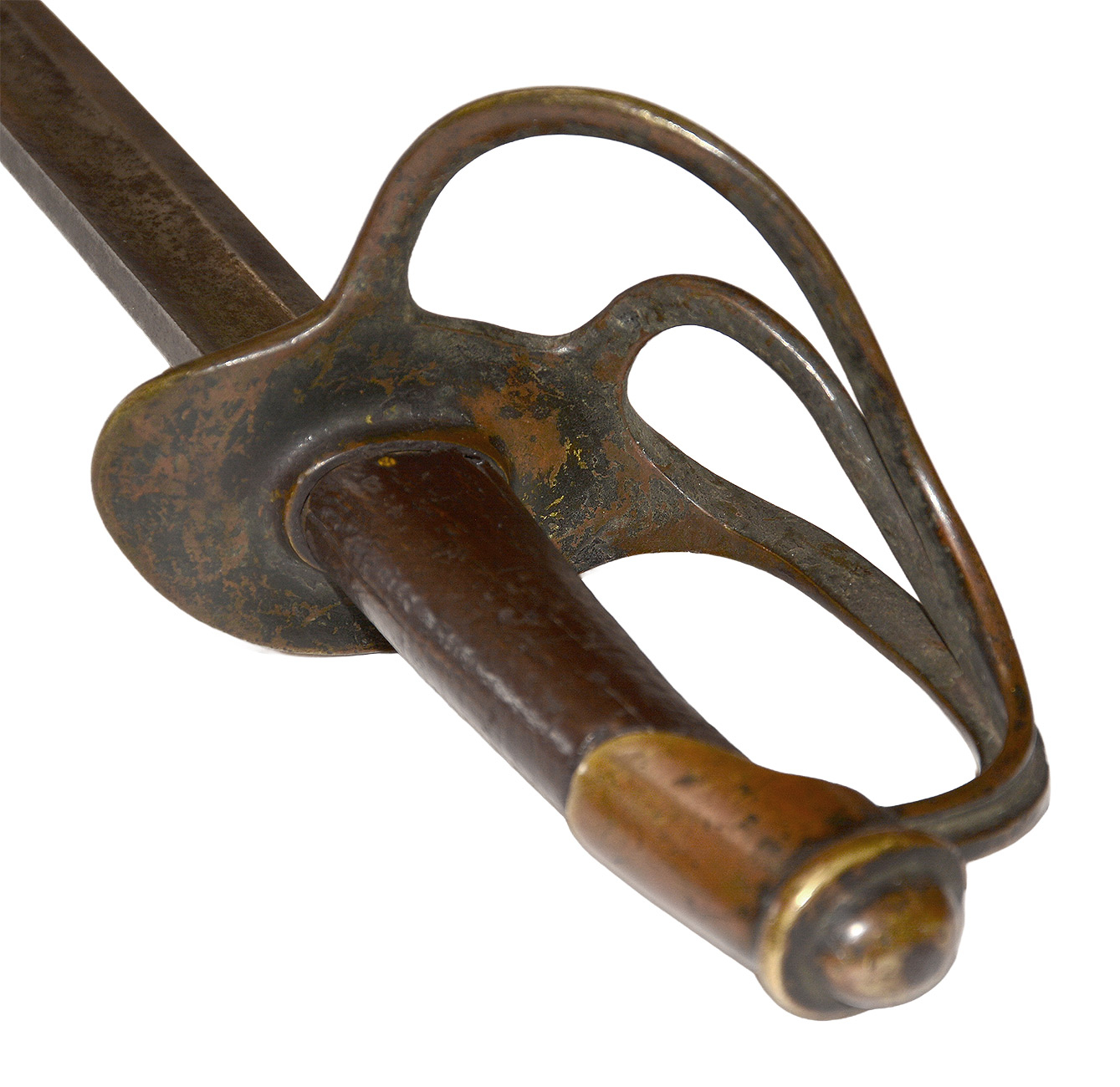
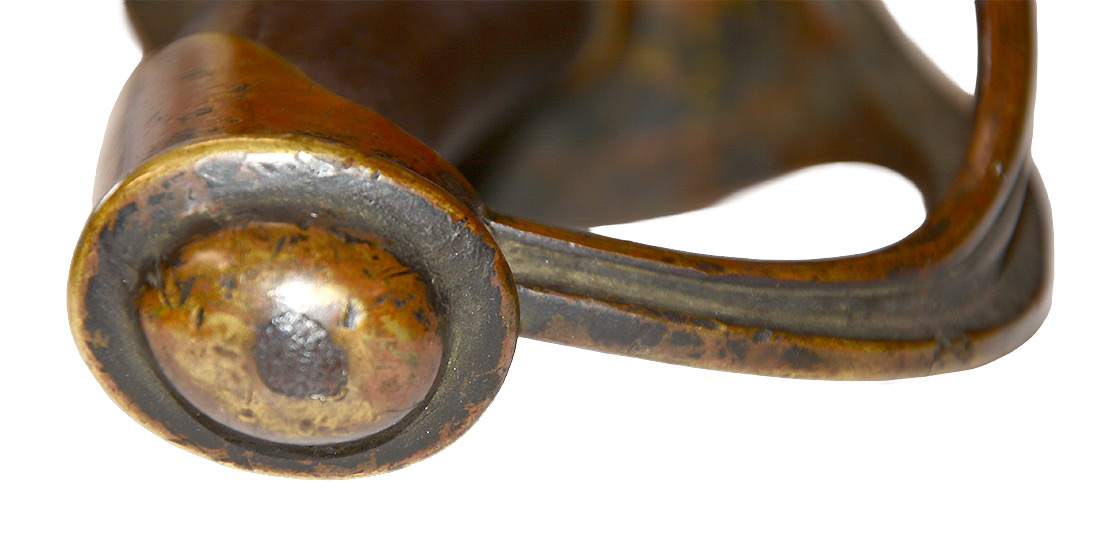
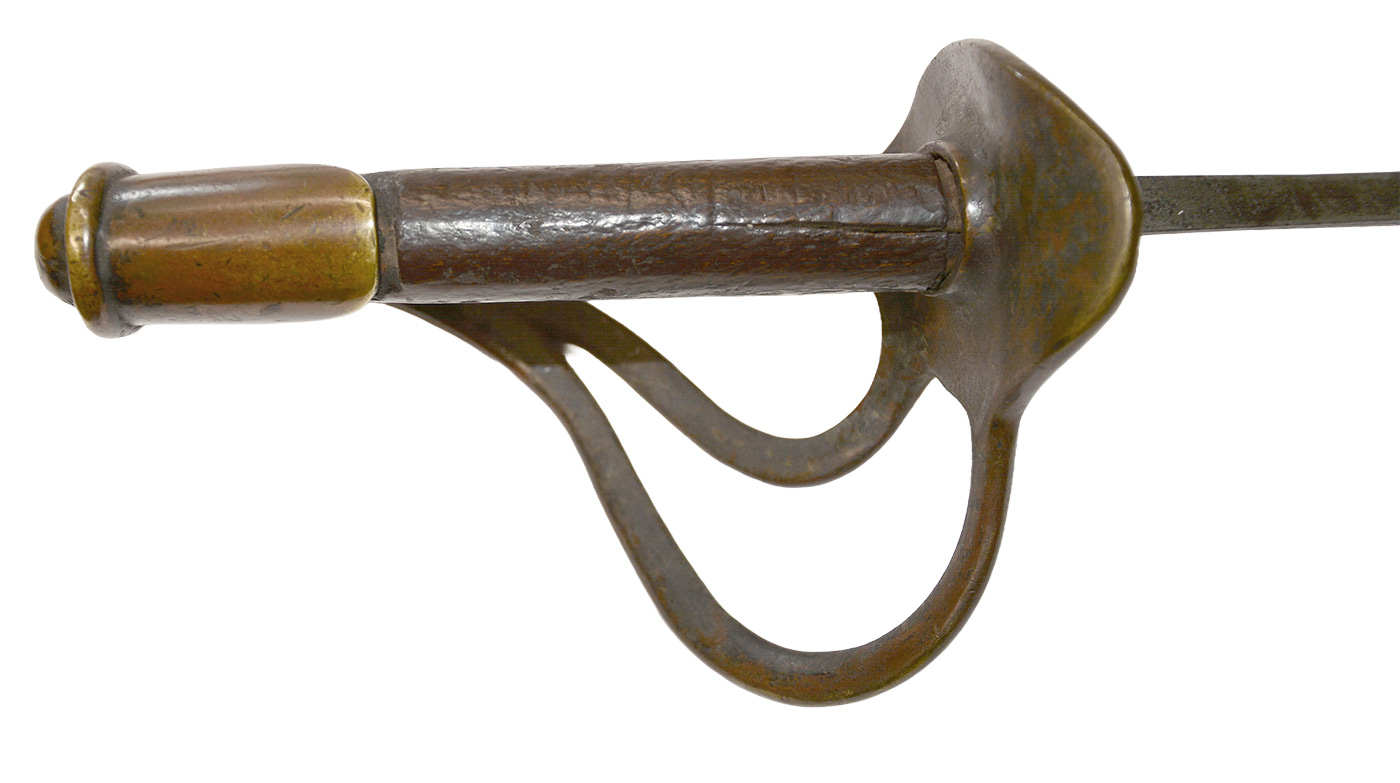
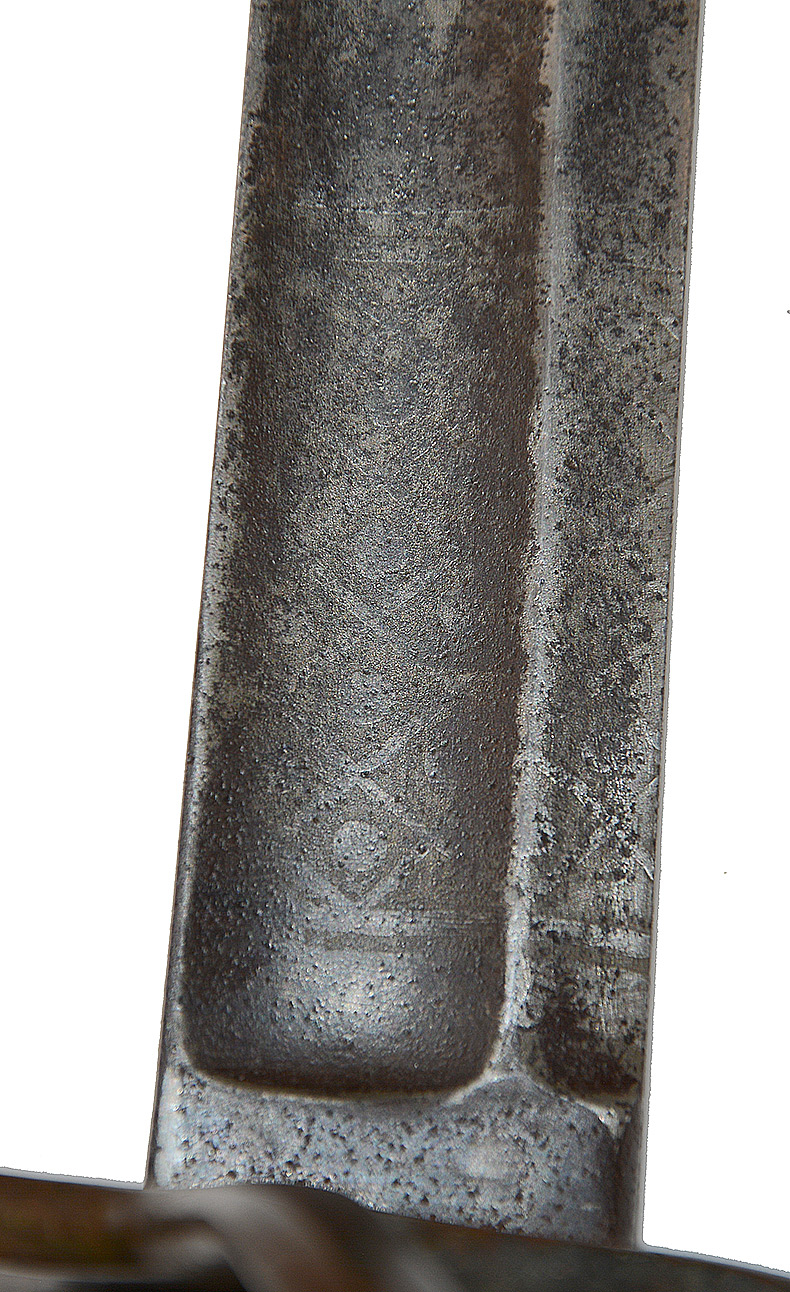
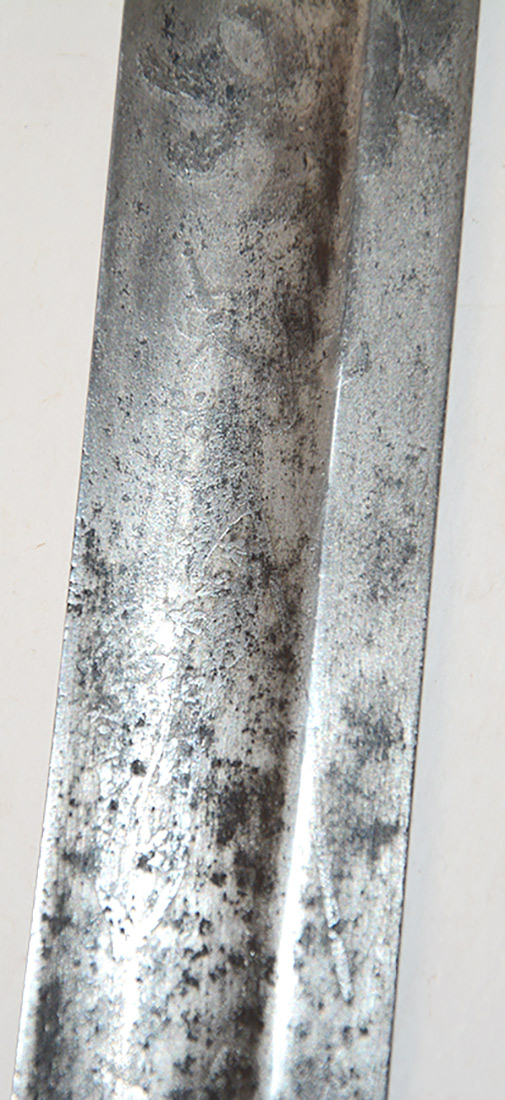
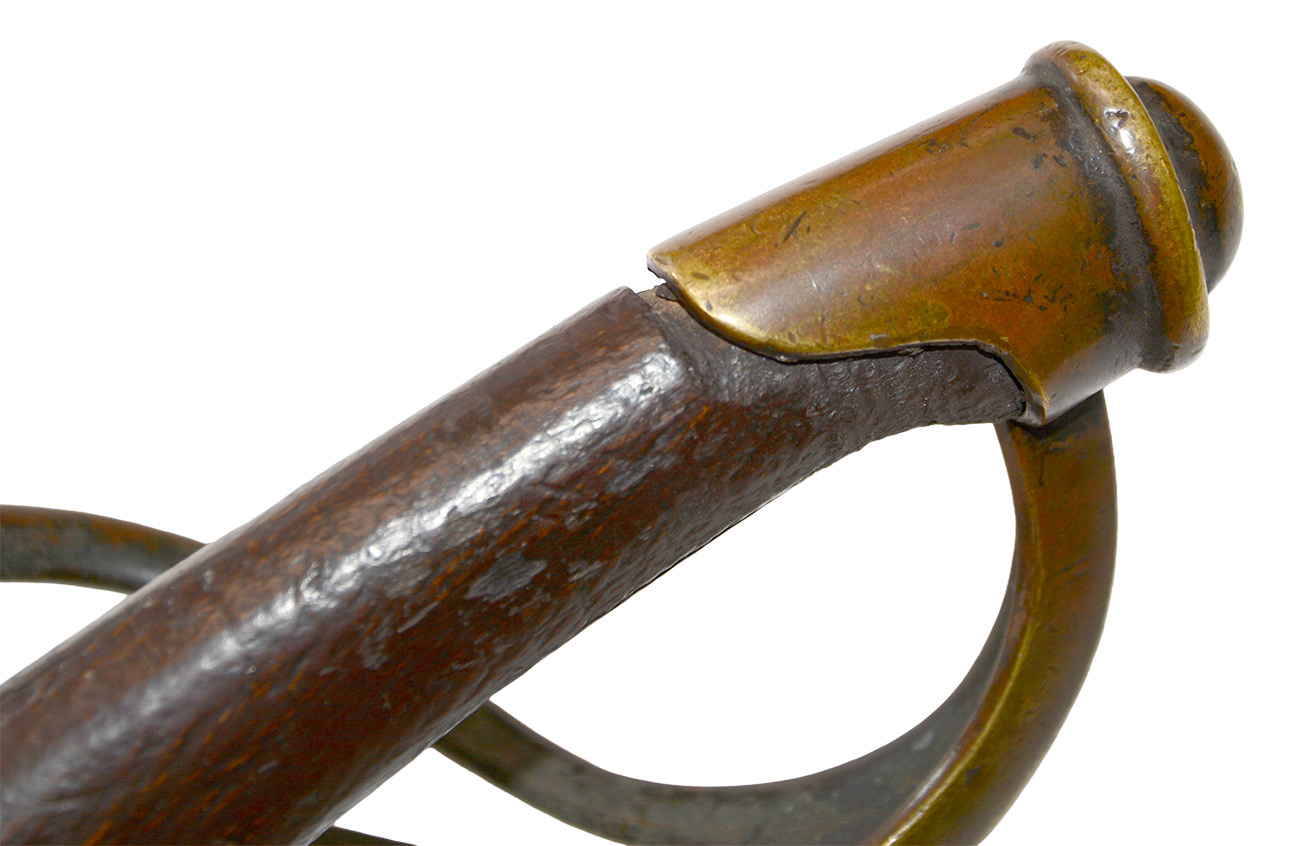
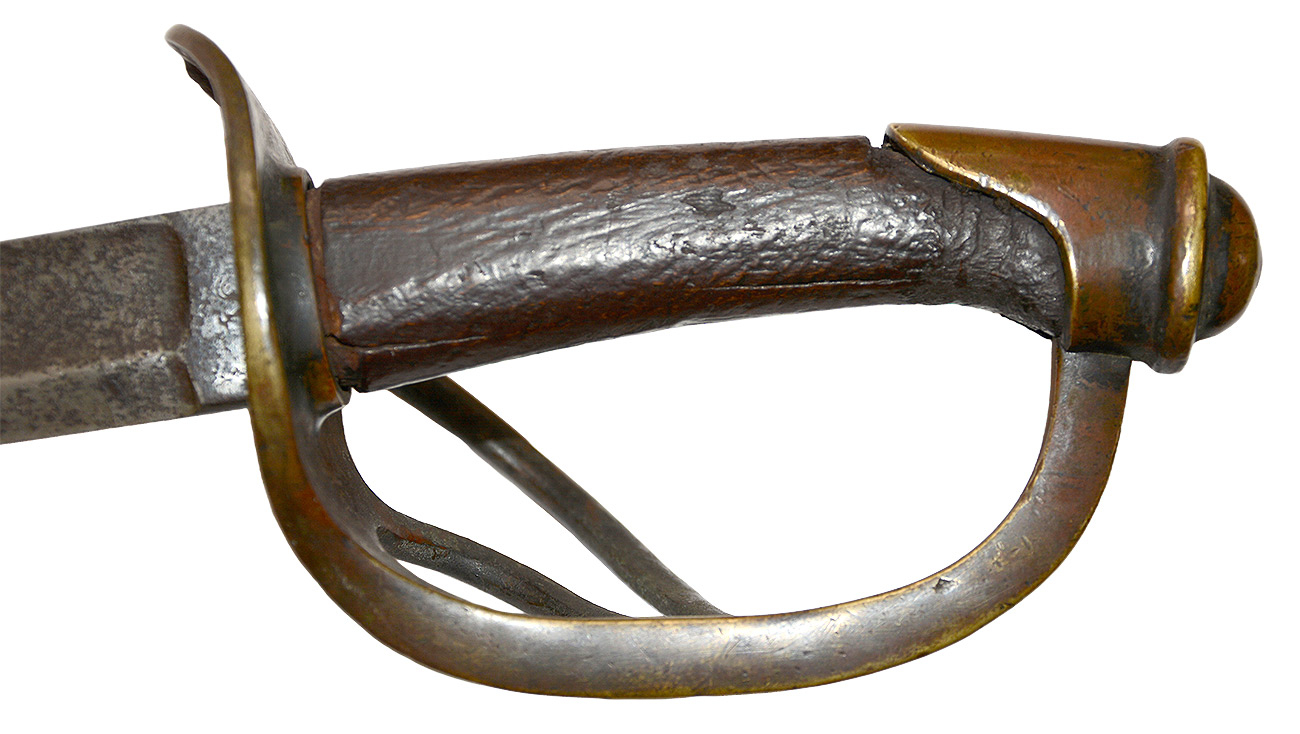
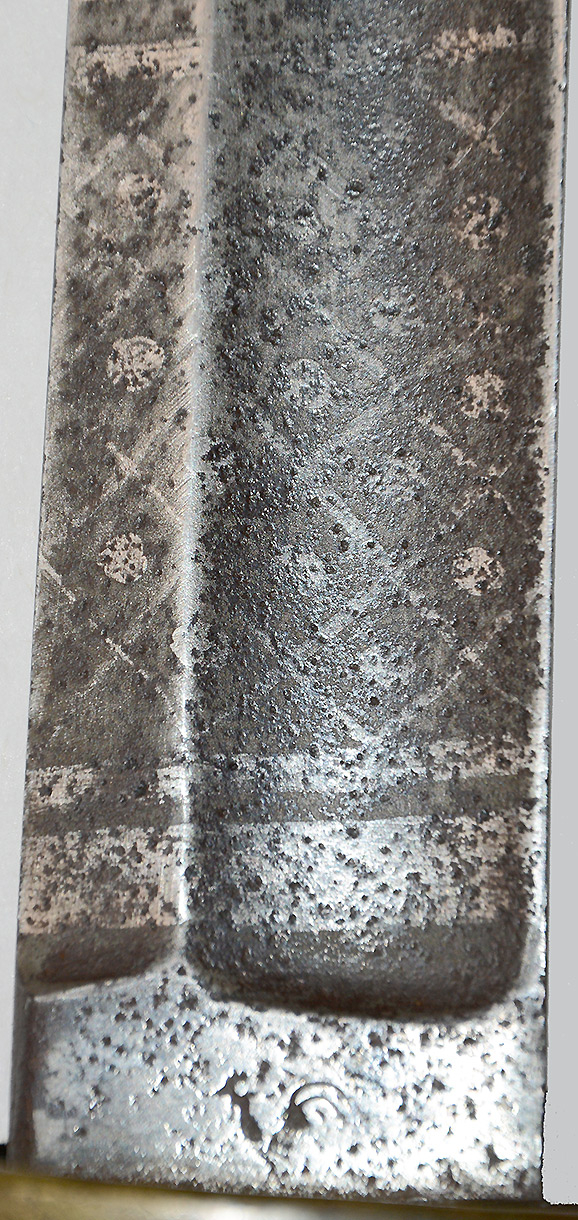
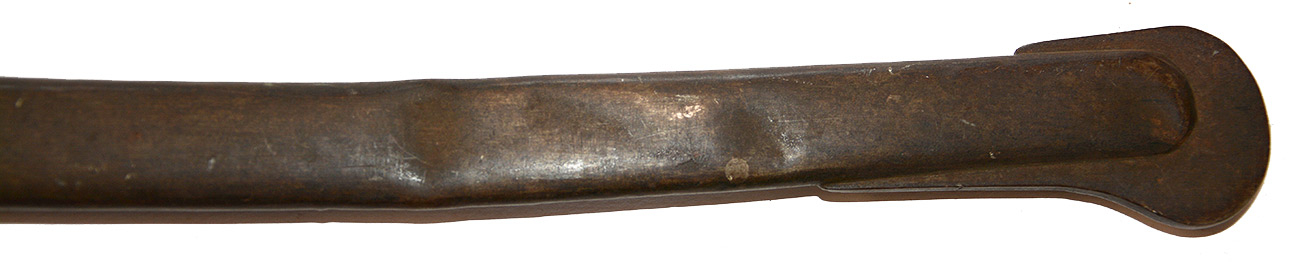
The sword is an imported Model 1822 French cavalry trooper's sword. A stamped rooster mark on the left ricasso dates the sword's manufacture to circa 1845. Its overall length is 43 inches. The hilt has a brass pommel and a hand guard also of brass composed of a knuckle-bow with 2 branches; it conforms to the US Model 1840 saber. The patina on the brass is a rich amber color. The grips were once covered in leather, cord and twisted wire, but this is now gone leaving a smooth dark wooden core which suggests that the sword was actually carried during its working life for a considerable time after the wire and leather were gone. The nice condition iron scabbard has a deep age brown patina with the last 6 inches of its length showing bumps and nicks expected on a sword consistently worn in the field. There are 2 intact large iron carrying rings. The blade is 35 inches long and 1 1/4 wide where it meets the hilt. It has a 29-inch tapering fuller (blood gutter). The blade is a silver-gray color with age blemishes and areas of the finest surface pitting. For over 24 inches of the blade is a custom and professional absolutely period acid etch. This etching, done after importation, since this sword was originally made with a plain blade, looks to this compiler and others in the field whose opinions were sought, to be most likely the work of McElroy of Macon Georgia. The overall look and the lattice work etching seen below the ricasso is just so typically McElroy. Additionally, it has been observed that at least 10 other imported swords have this characteristic McElroy etch.
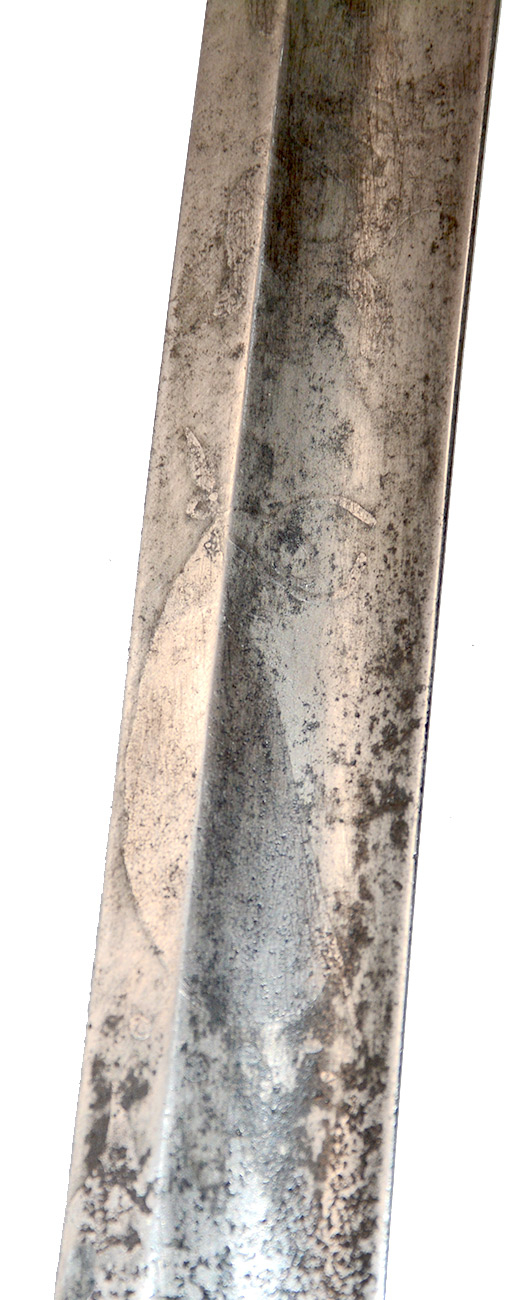
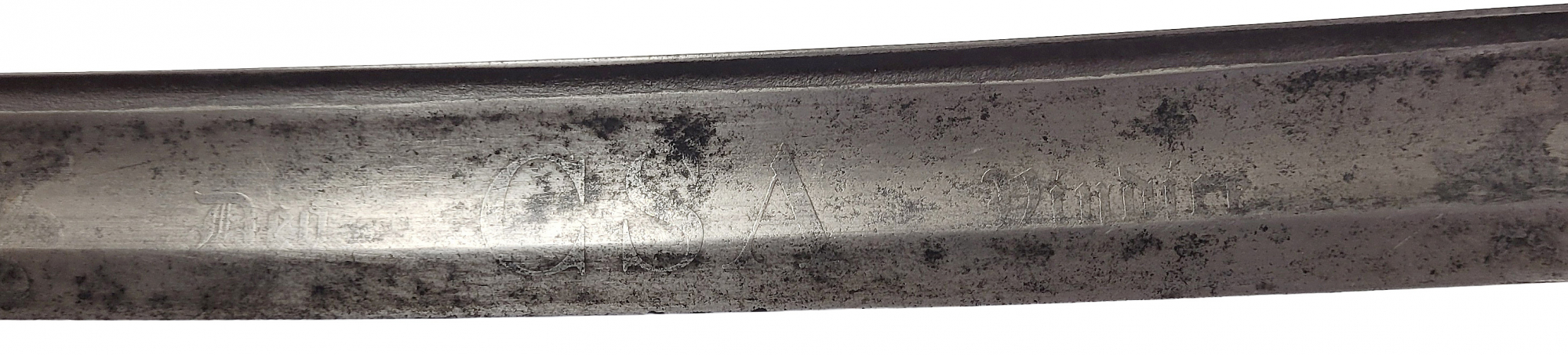
Mr. Fred Edmund the curator and owner of The Confederate States Armory & Museum in Gettysburg who was aware of this sword over 30 years ago, then owned by his friend Ron Tunison. Tunison acquired the sword at auction from a sale that contained de-accessed Civil War items from the Little Falls Library in Little Falls New Jersey. Mr. Edmunds suggested three possible firms involved in the etching of this sword: "1) James Conning, Mobile. 2) L. Haiman & Brother, Columbus, Georgia. 3) W.J. McElroy, Macon Ga.". The etching with remaining shiny highlights contains the following design motifs: There is 2 inches of that lattice design just below the ricasso followed by a 2-inch CONFEDERATE BATTLE FLAG of the Army of Northern Virginia type. This is followed by floral/laurel designs which are then followed by the name " E. Q. THORNTON" in 3/4-inch capital letters. More florals for 5 1/2 inches and then a wonderful 3-inch-long EAGLE spreading its wings standing on a banner; this is then followed by another 4 inches of florals. The obverse of the sword has the following: The ubiquitous 2 inches of lattice followed by a 2- inch FLAG on pole which may be Confederate. this proceeds florals that run 4 inches and are followed in etched 1/4-inch-high letters in Old English script "Deo" and "Vindice" ("God will decide" the official motto from the great seal of the Confederate States of America). Between Deo and Vindice there is a 1/2 inch high "C S A". So, it all reads: "Deo C S A Vindice". A letter from the Curator of Collections for the state of Alabama Robert A. Cason dated May 21. 1992 also suggests the sword was etched by L. Haiman. Cason says: "Several extant swords by Haiman are etched with "C.S.A." and "Deo Vindice" as yours is. Another reason for considering Haiman is that Colonel H.D. Clayton (Thornton served as Clayton's aide-de-camp). General Alpheus Baker. and Archibald Gracie (both served with Clayton) all had swords made by Haiman.". Following down the blade stylized floral designs run for 8 inches. The etching shows the expected wear from age and the sword being continually taken out of the scabbard but is 95% intact and legible.
THE 39th ALABAMA INFANTRY: The Thirty-ninth Alabama was organized in May 1862, and went immediately to Mississippi, where it was brigaded under Gen. Frank Gardner with the Nineteenth, Twenty-second, Twenty-fifth and Twenty-sixth (Fiftieth) regiments. It went into Kentucky, being in the reserve. Its first battle of consequence was at Murfreesboro, December 31st, 1862, where it made a fine record. The regiment behaved gallantly at Chickamauga, September 19 and 20, 1863, losing nearly 27 per cent of its force. At Missionary Ridge, November 25th, it fought again. The regiment wintered at Dalton and fought under Hood through the Dalton to Atlanta campaign. At Atlanta, July 20th to 22nd, it suffered great loss, and Colonel Clifton was severely wounded. At Jonesboro, August 31st and September 1st, it was again in the sharpest of the fighting. At Nashville, December 15th and 16th, a large number were captured. The regiment went with Johnston into the Carolinas, fought its last fight at Bentonville, and was surrendered at Yadkin River bridge.
EDWARD QUINN THORNTON: The following biographic information is extracted from the Confederate Veteran: Volume 8, page 544 an obituary entitled CAPT. QUIN THORNTON and notes made by Ron Tunison. Thorton born in Wilkes County Georgia in 1832 was a 2nd and 1st lieutenant of Company K 39th Alabama Infantry a capacity in which he served until the latter part of 1864 when he was appointed aide-de-Camp to General H. D, Clayton with the brevet rank of captain. He enlisted in March of 1862 and promoted to 2nd lieutenant May of the same year then serving until paroled in 1865. He was continually present for duty with the regiment. For a brief time, he was detached on conscript duty; this was at Shelbyville in 1863 (Fighting in Shelbyville Historical Marker). Later he was on General Clayton's staff. At the battle of Murfreesboro in 1862, he distinguished himself, was mentioned in post battle reports and placed on the Confederate Roll of Honor. He fought at Chickamauga, Missionary Ridge and Dalton to Atlanta. He was at the bloody battle of Franklin and the Confederate disaster at Nashville. He surrendered with the Army of Tennessee in April of 1865. A folder with his records and additional information compiled by Mr. Tunison since 1992 passes with the sword.
It is this compiler's belief that this sword was acquired by Thornton upon his promotion to a lieutenant in mid-May of 1862. The sword, because it is etched with an Army of Northern Virginia type battle flag, suggests this; it was not until the spring of 1862 that this flag appeared south and west of Virginia. At the battle of Shiloh April 6th, 1862, a minority of regiments carried this form. In Virginia by this time the great majority of regiments had drawn the Beauregard pattern aka the Army of Northern Virginia battle flag but even there the "ANV flag" was not yet iconic. It is possible that the sword was acquired by Thornton in 1864 when he was ADC to General Clayton as curator Cason of the Alabama Archives suggests, but the tremendous amount of period field wear suggests an earlier origin to this compiler.
This is a great sword. It is basically fine attic condition and worthy of the most advanced collection. It was utilitarian designed originally for a cavalry trooper, but it is what many practical minded Confederate combat Infantry officers chose to wear on the battlefield. It is identified and actually etched to a distinguished Southern officer. This sword has "It". [pe][ph:L]
~~~~~~~~~~~~~~~~~~~~~~~~~~~~~~~~~~~
THIS ITEM, AS WITH ALL OTHER ITEMS AVAILABLE ON OUR WEB SITE,
MAY BE PURCHASED THROUGH OUR LAYAWAY PROGRAM.
CLICK HERE FOR OUR POLICIES AND TERMS.
THANK YOU!
Inquire About THE CONFEDERATE SWORD OF E. Q. THORNTON, 39th ALABAMA INFANTRY
Most Popular
Historical Firearms Stolen From The National Civil War Museum In Harrisburg, Pa »
Theft From Gravesite Of Gen. John Reynolds »
Selection Of Unframed Prints By Don Troiani »
Fine Condition Brass Infantry Bugle Insignia »
Rare Identified 65Th Ny Sergeant’s Jacket, With Manscript Material: 1St U.s. Chasseurs »
featured item
MINT IDENTIFIED BREVET BRIGADIER GENERAL’S FROCK COAT AND CHAPEAU OF ALONZO ALDEN
This sets consists of Brevet Brigadier General Alonzo Alden’s mint condition brigadier general’s frock coat with shoulder straps and his full dress “light French chapeau,” allowed for officers of the General Staff and Staff Corps” under the… (1179-156). Learn More »
site search