

site search
online catalog
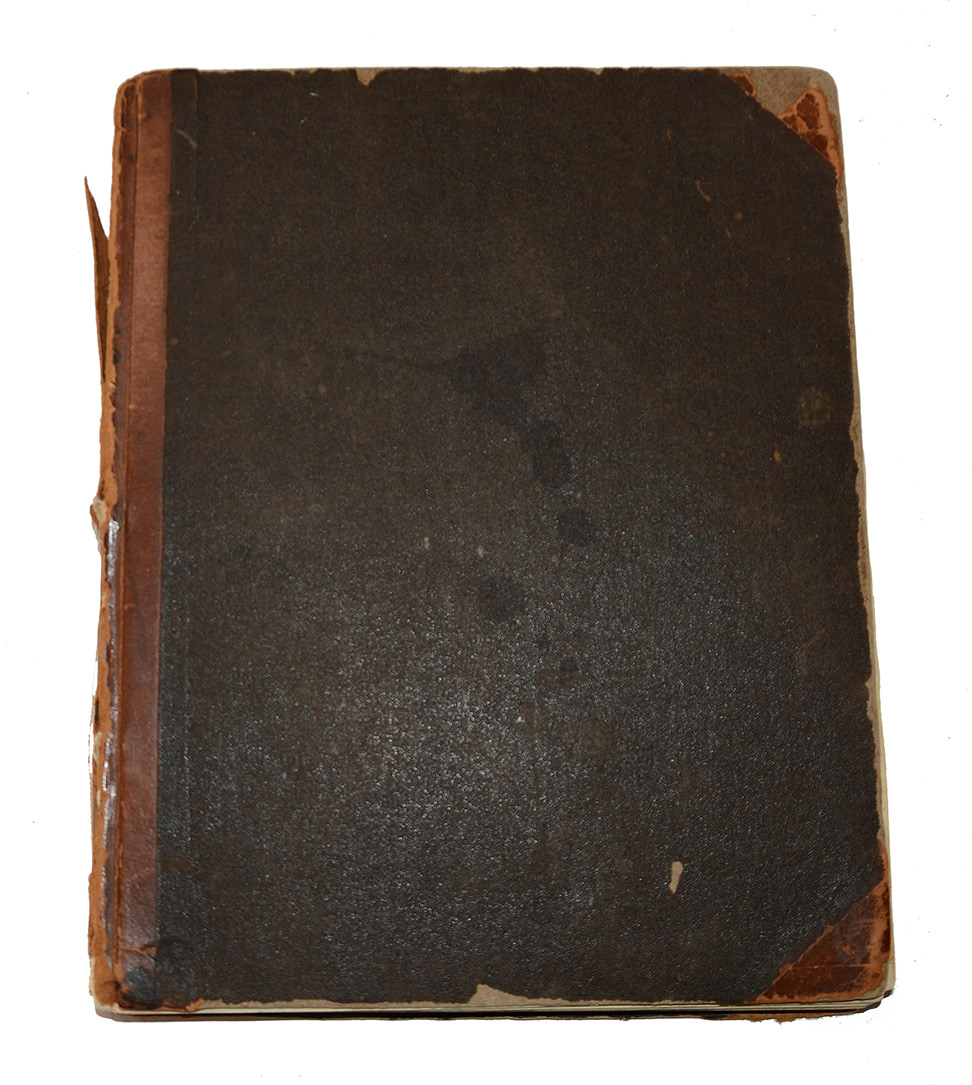
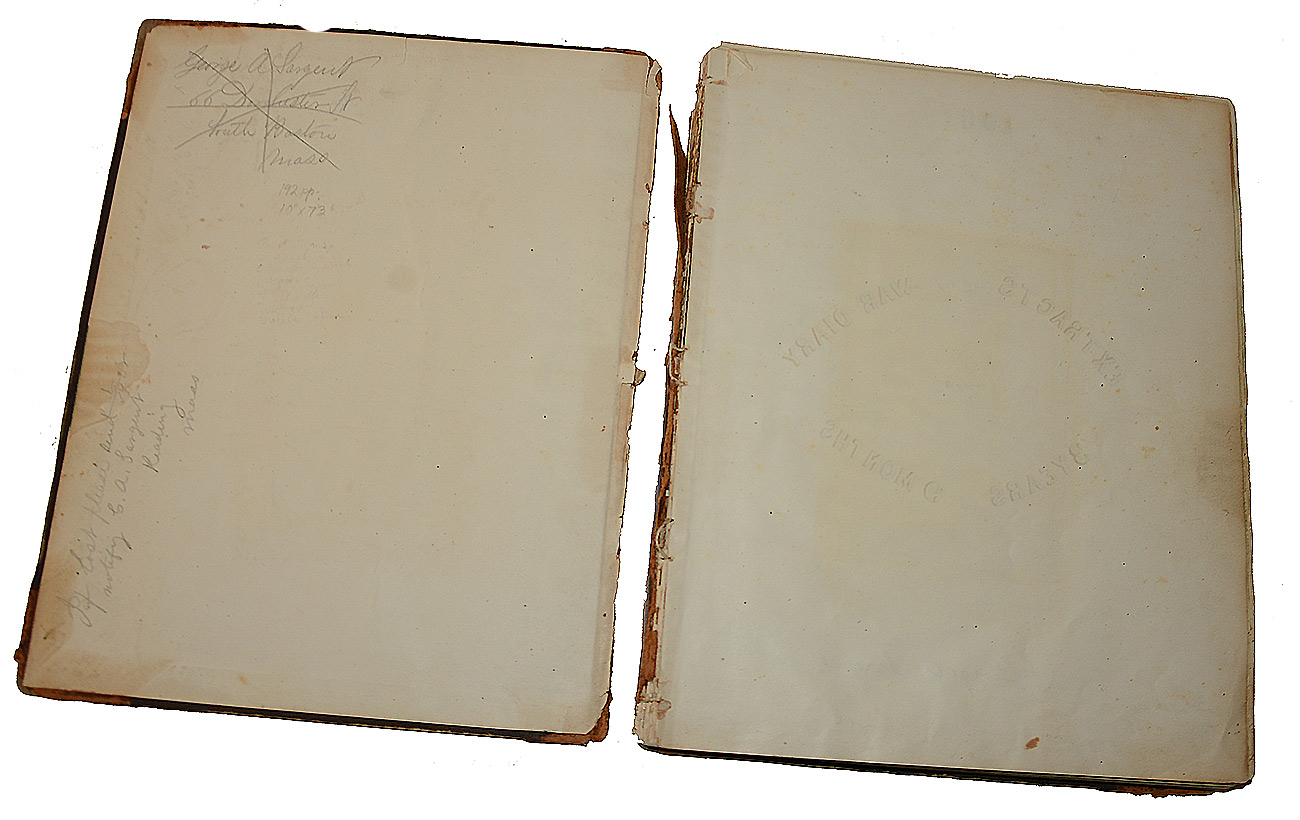
MANUSCRIPT WAR DIARY OF GEORGE A. SARGENT, BUGLER, 1st RHODE ISLAND CAVALRY (1st NEW ENGLAND CAVALRY) — EXTENSIVE FIRST-PERSON ACCOUNT, 1861-1864, WITH PASTED NEWSPAPER CLIPPINGS AND PERIOD PHOTOGRAPHS
Hover to zoom
$4,500.00
Quantity Available: 1
Item Code: 2026-2193
Shipping: Determined by Method & Location of buyer
To Order:
Call 717-334-0347,
Fax 717-334-5016, or E-mail
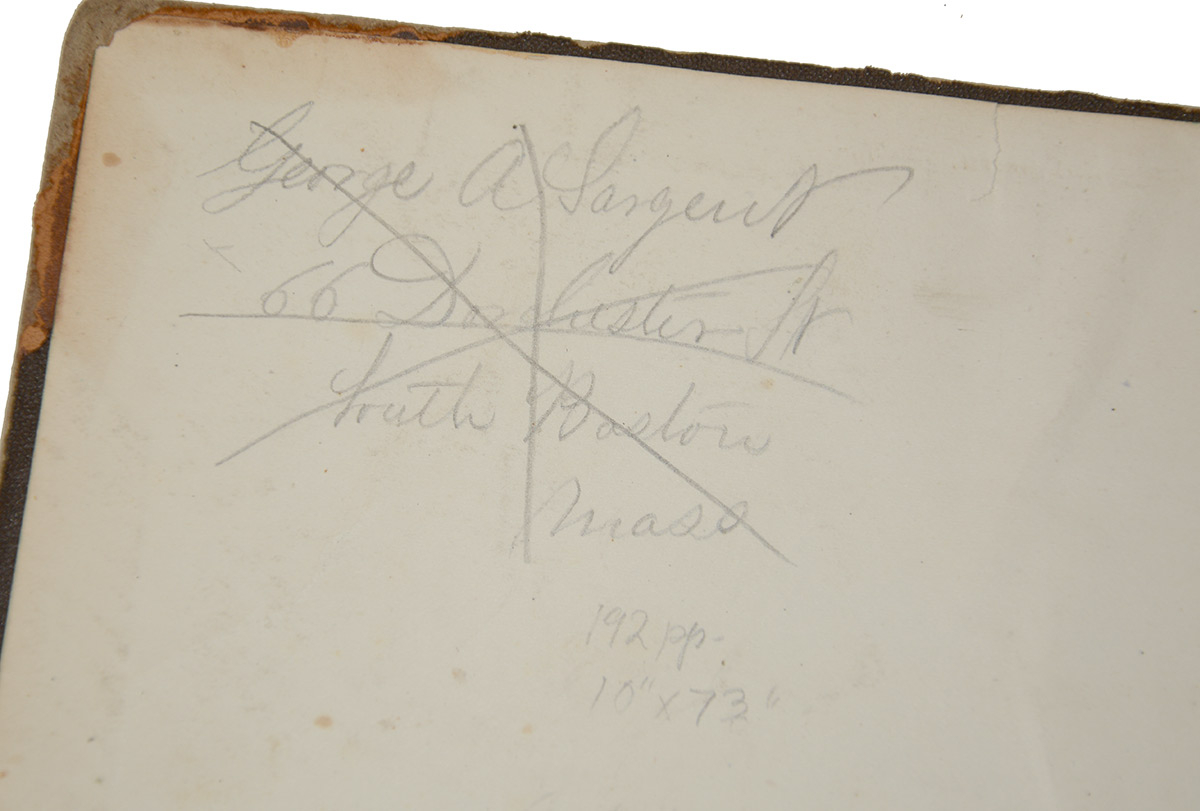
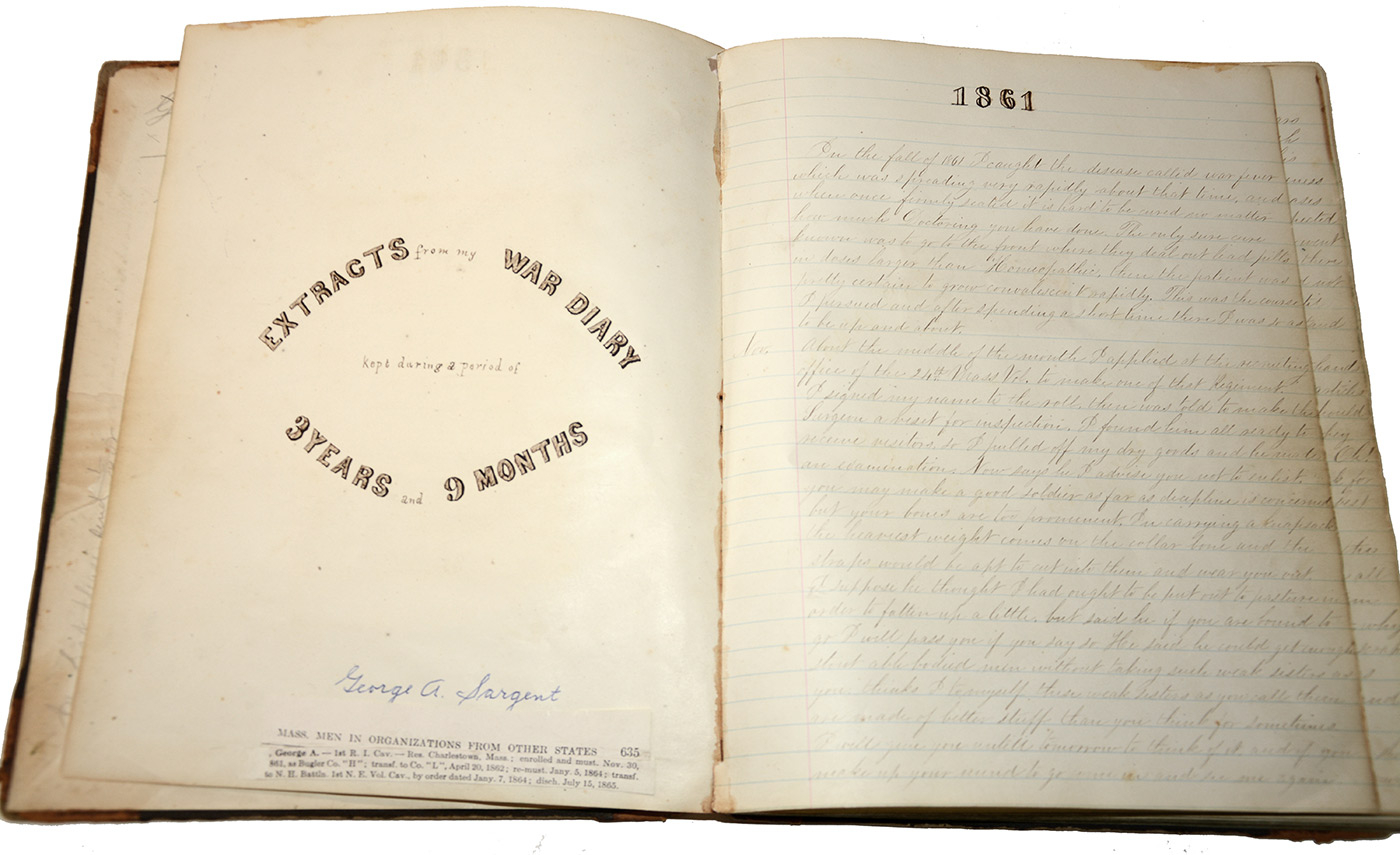
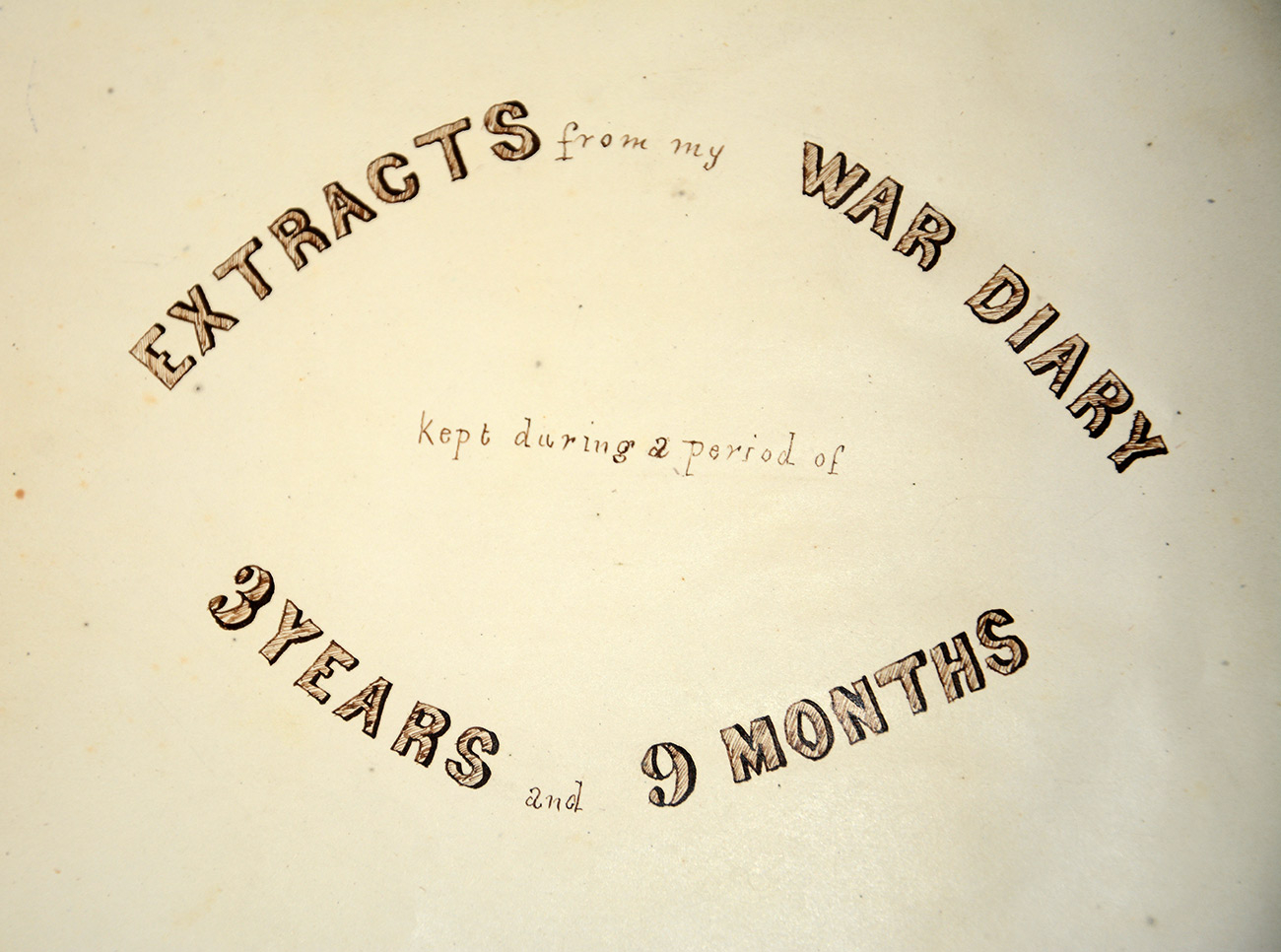
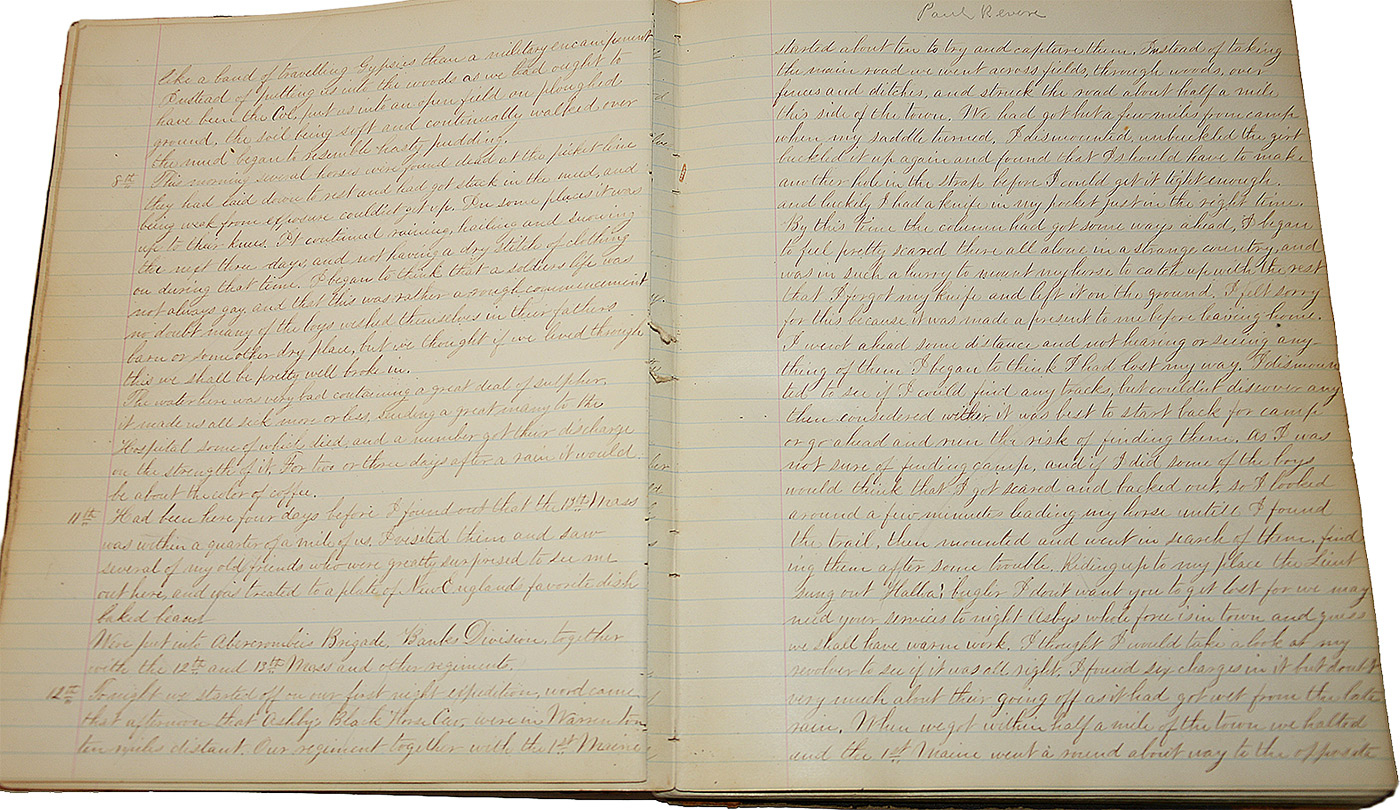
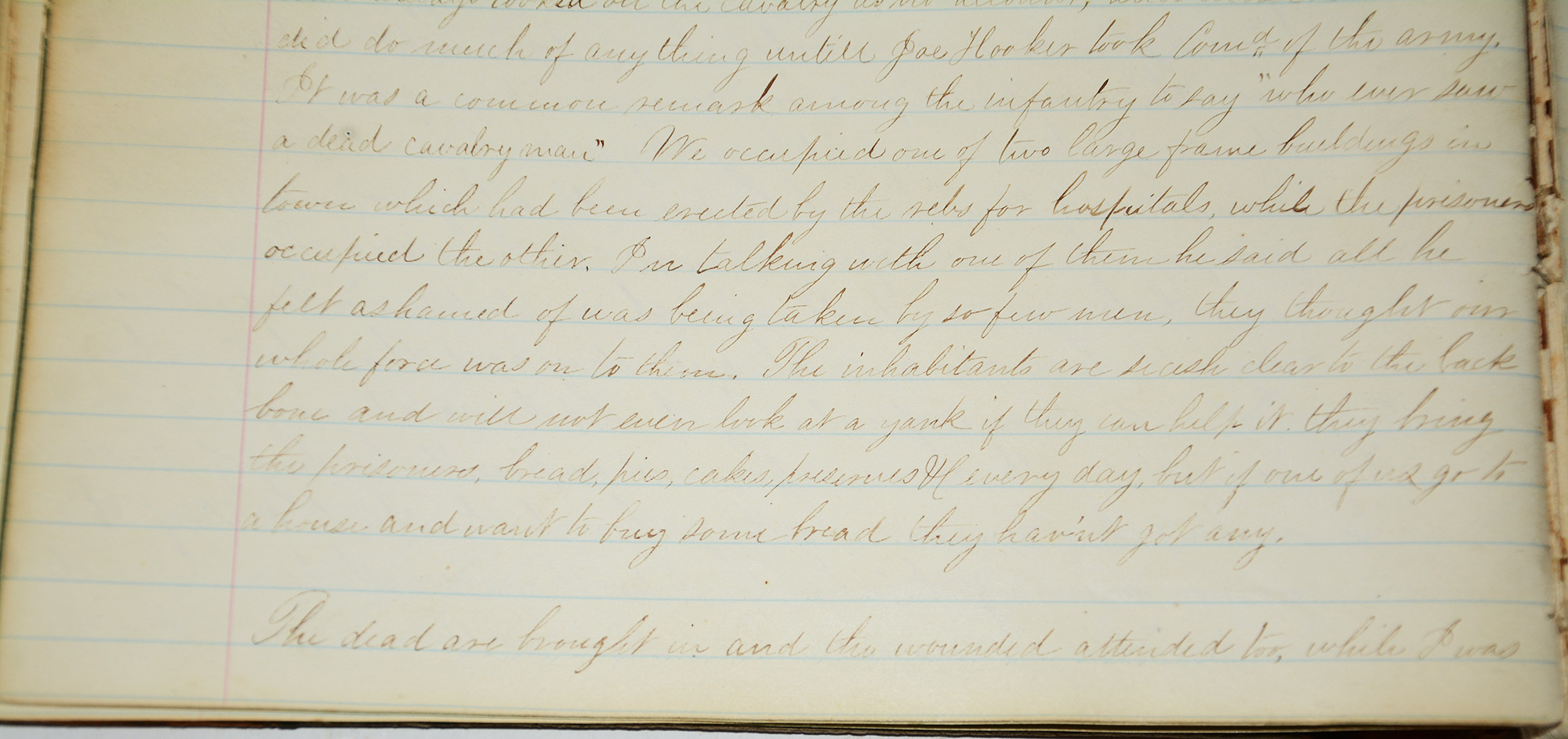
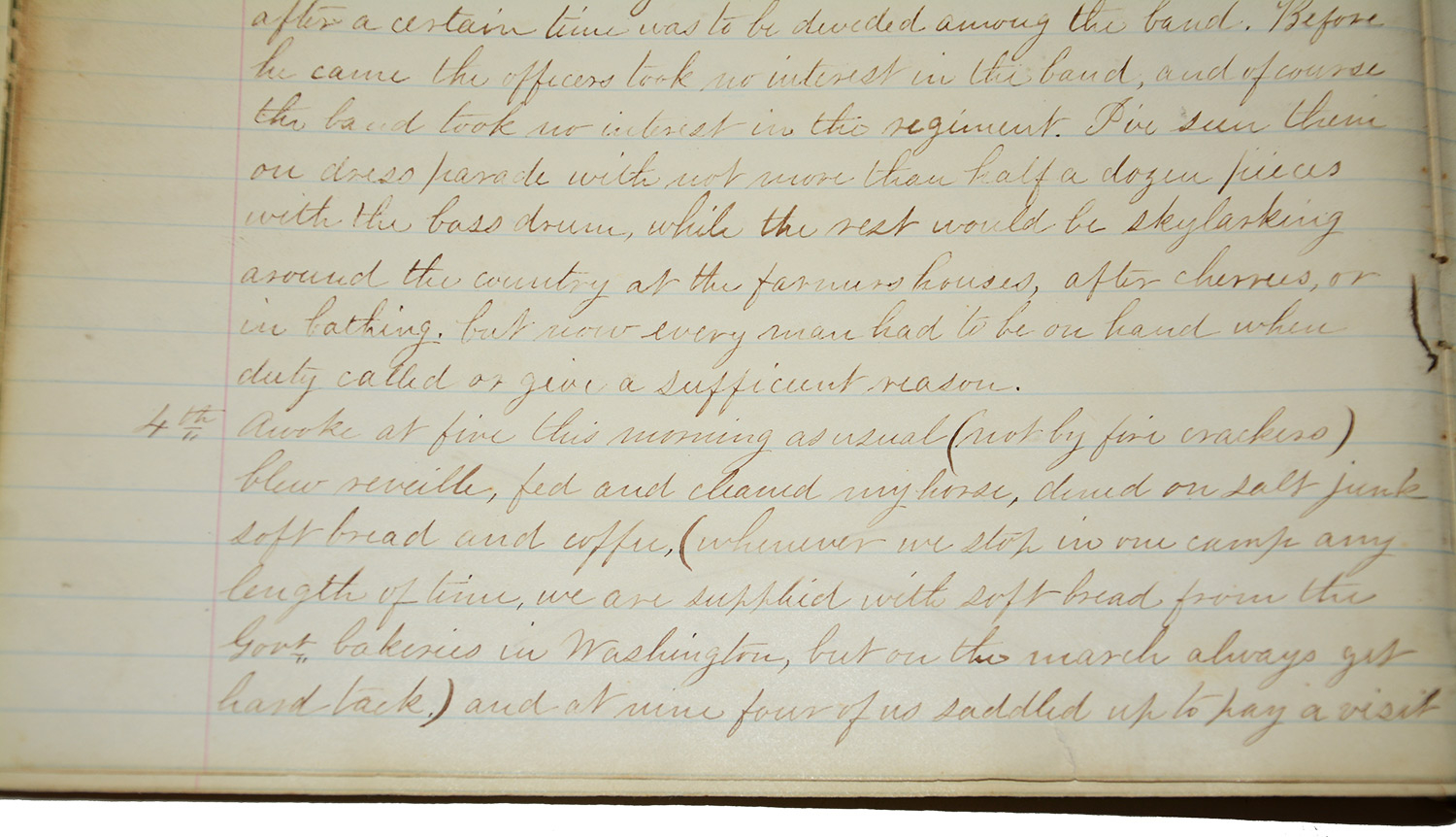
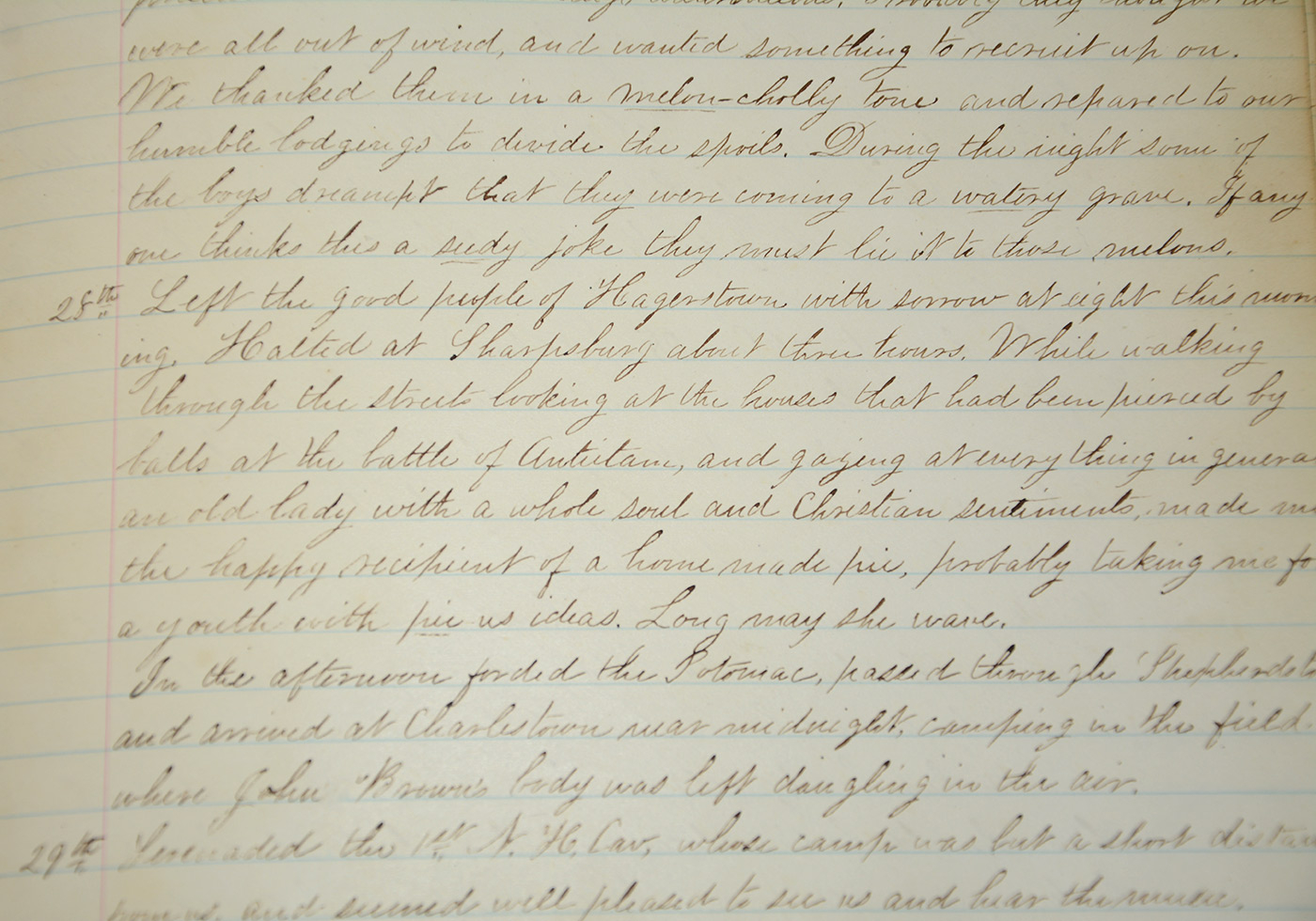
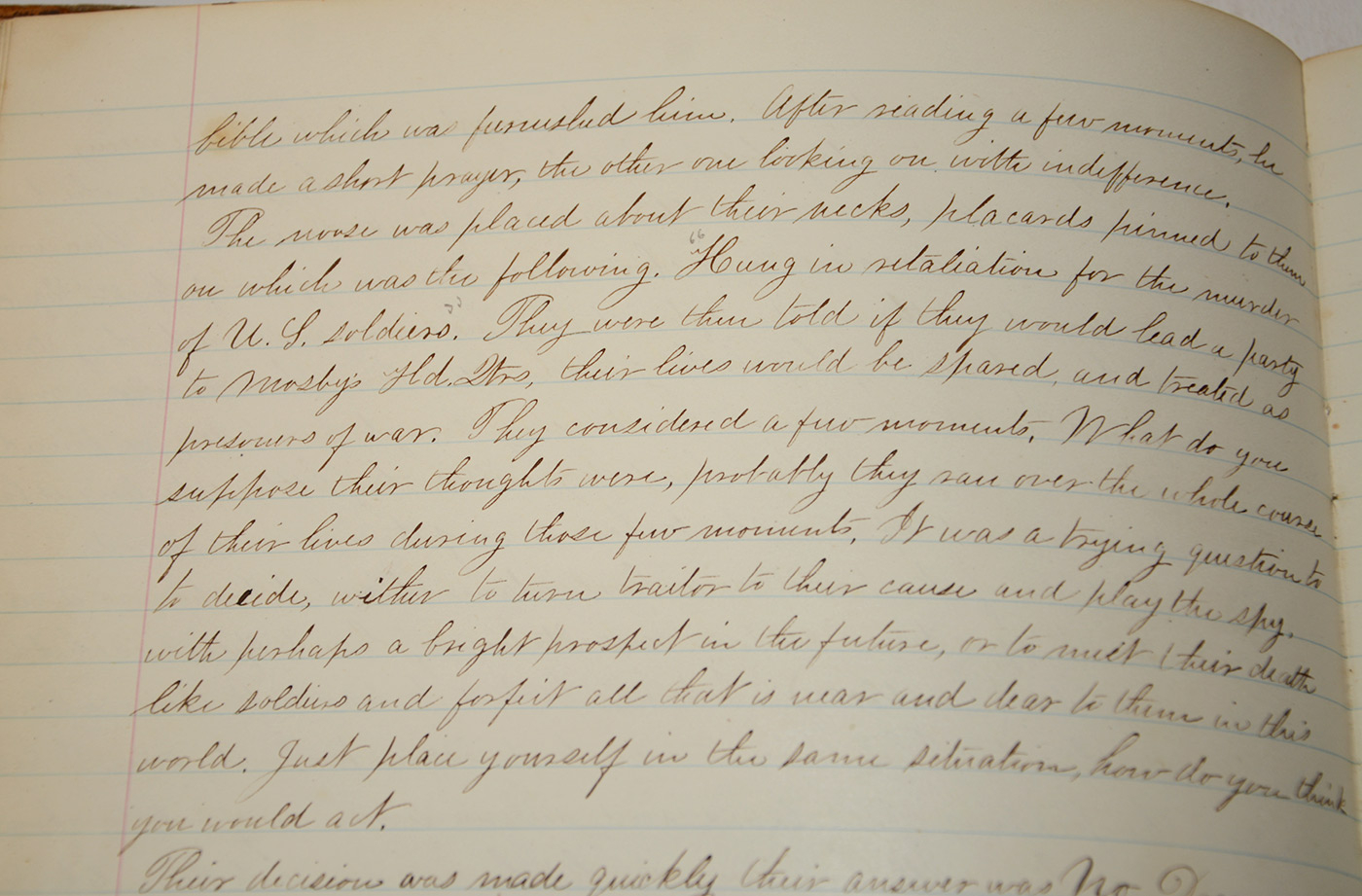
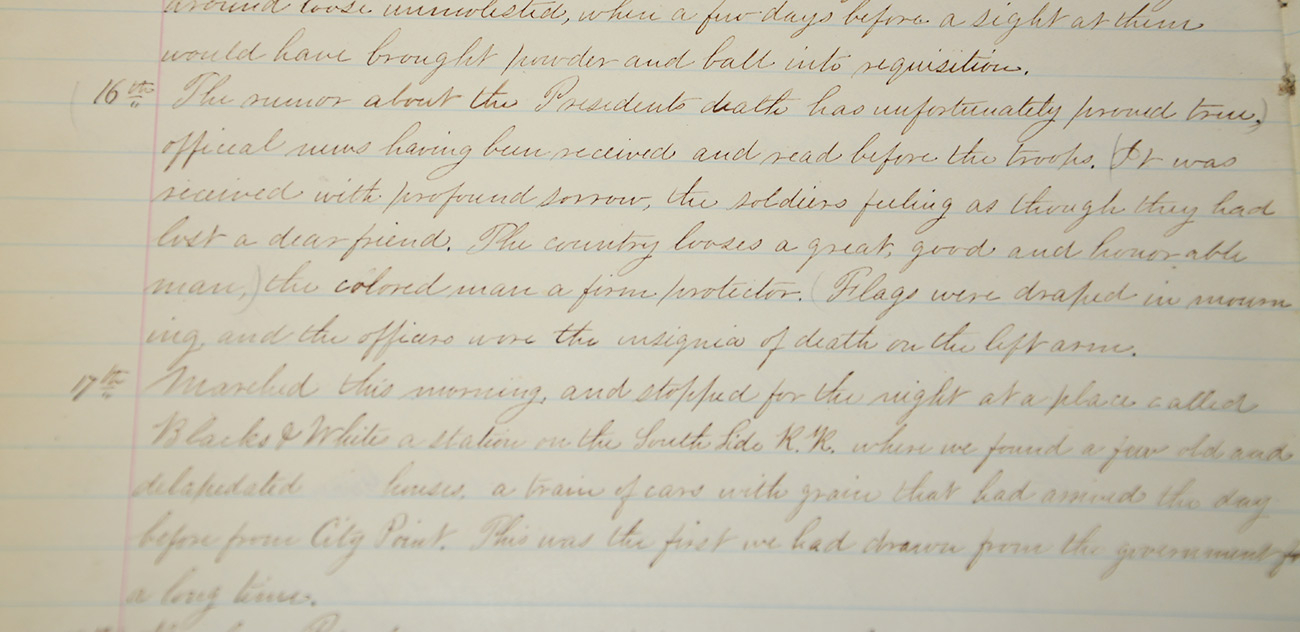
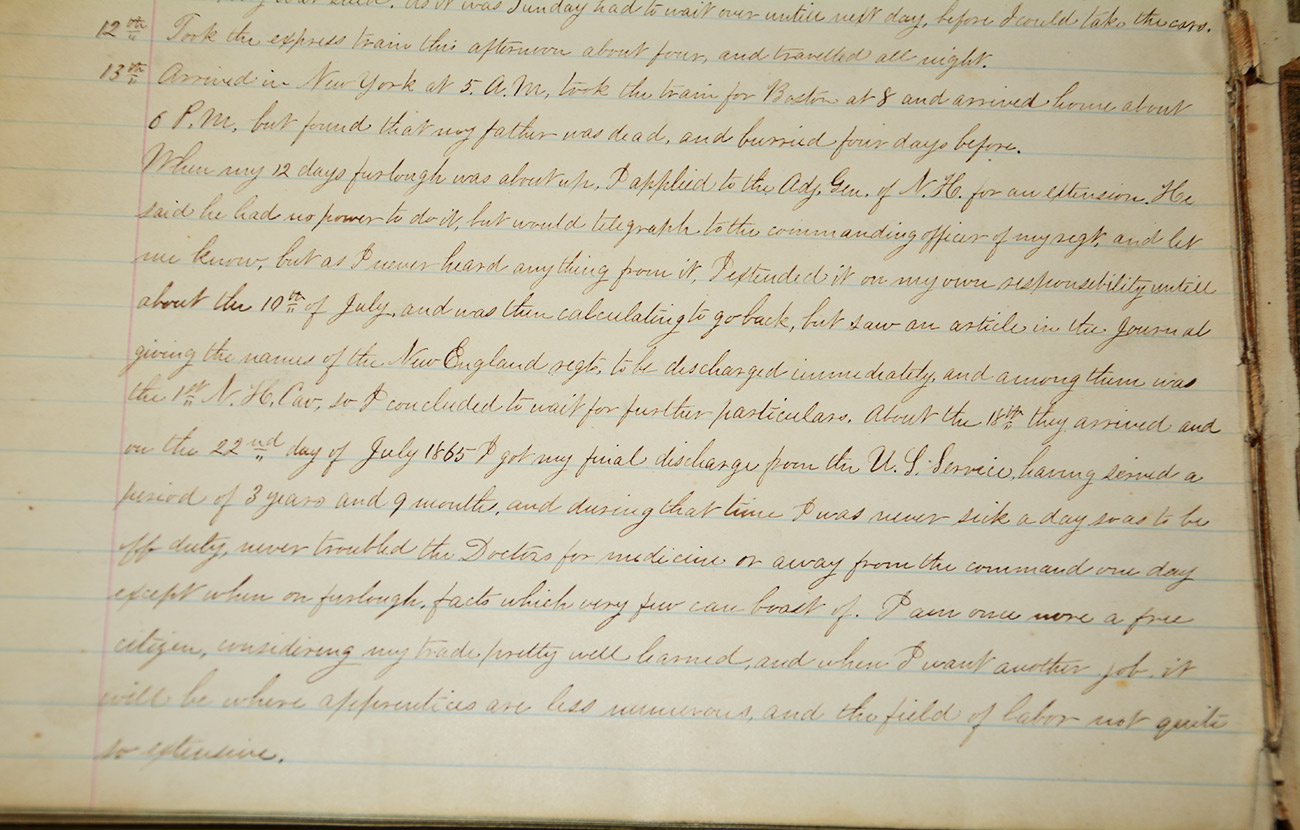
Offered is the manuscript war diary of George A. Sargent, who served as a Bugler in Co. H and later Co. L of the 1st Rhode Island Cavalry (also known as the 1st New England Cavalry), enrolled and mustered November 30, 1861, at Charlestown, Mass. Sargent later served with the regimental band and re-enlisted as a veteran volunteer in January 1864 for a total term of service spanning to July 1865. The diary is titled by the author "EXTRACTS FROM MY WAR DIARY, Kept During a Period of 3 Years and 9 Months," and appears to be a fair-copy narrative composed from earlier notes, written in a clear, legible hand with occasional marginal corrections.
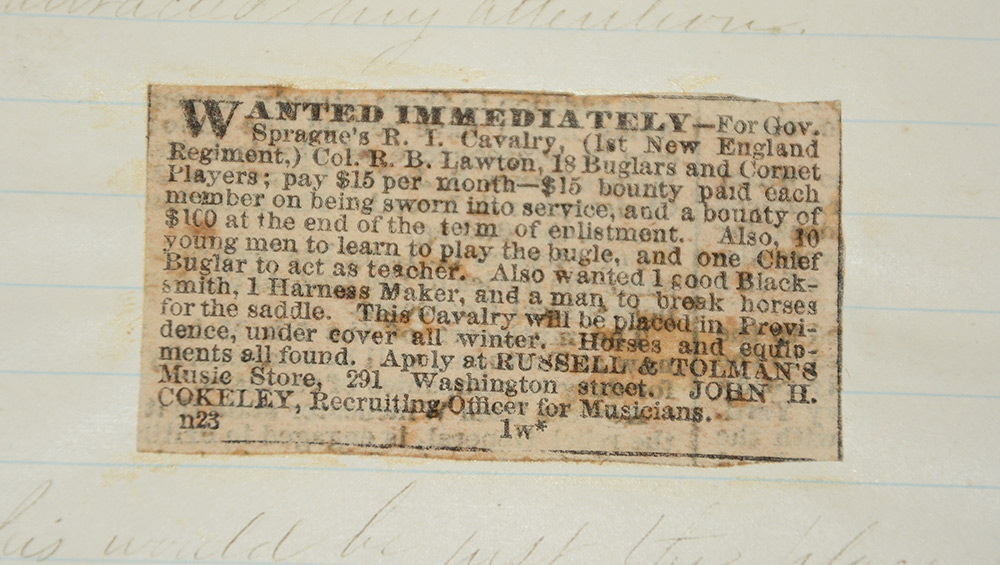
The diary opens with Sargent's account of catching "war fever" in the fall of 1861, his rejection by a recruiting surgeon of the 24th Massachusetts on account of his build, and his subsequent enlistment as a bugler with the newly forming 1st Rhode Island Cavalry, answering a newspaper advertisement for musicians. The narrative follows the regiment continuously through winter quarters at Camp Hallett and Camp Arnold (Pawtucket/Providence, R.I.), the march to Washington and Virginia in spring 1862, and an extended and detailed campaign narrative running through the spring of 1864, covering:
— The May 30, 1862 cavalry charge at FRONT ROYAL, in which Sargent's battalion, numbering barely 100 men, routed a much larger Confederate force, capturing 120 prisoners at the cost of one captain and seven men killed — an action Sargent calls "the most disastrous one of the whole war considering the number of men engaged." A period clipping from the Boston Traveller describing the same action, and naming Capt. Ainsworth among the killed, is pasted into the diary.
— CEDAR MOUNTAIN (August 1862), including a harrowing account of Sargent's own service assisting Union surgeons at a field hospital, where he personally helped carry a wounded comrade to the amputating table.
— SECOND BULL RUN and the retreat to Washington, the destruction of Pope's wagon train at Catlett's Station by Stuart's cavalry, and a night spent believing the band to be surrounded by the enemy.
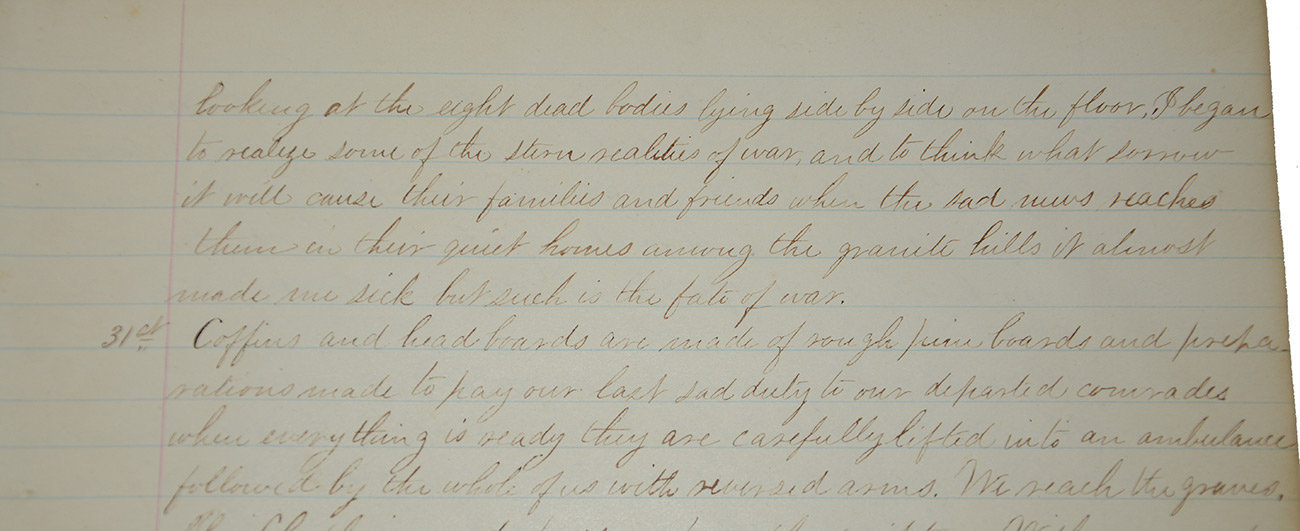
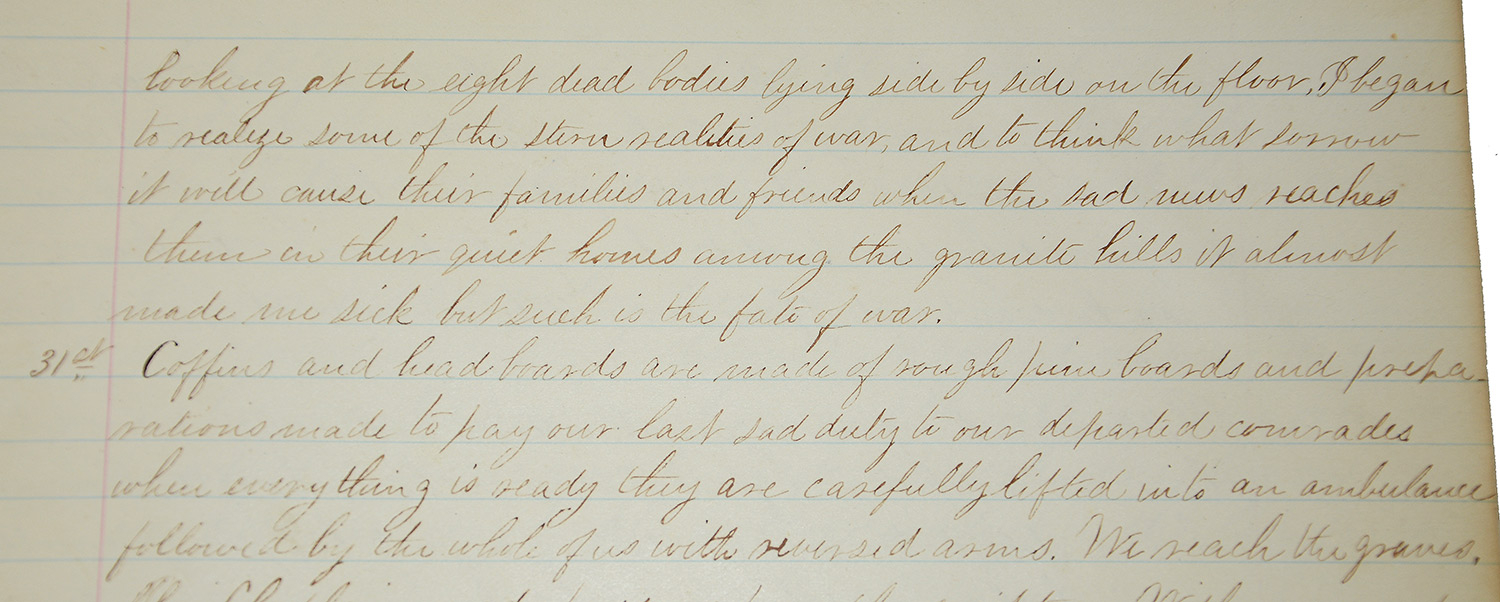
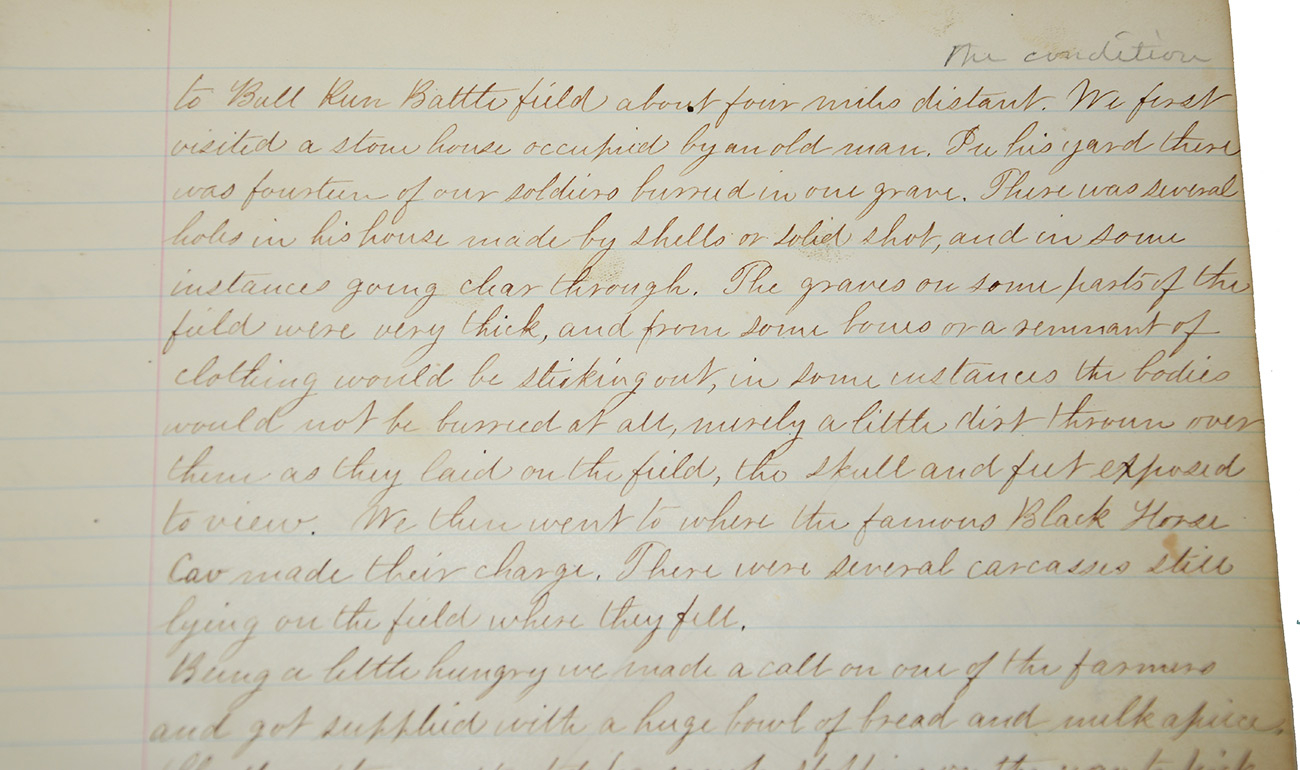
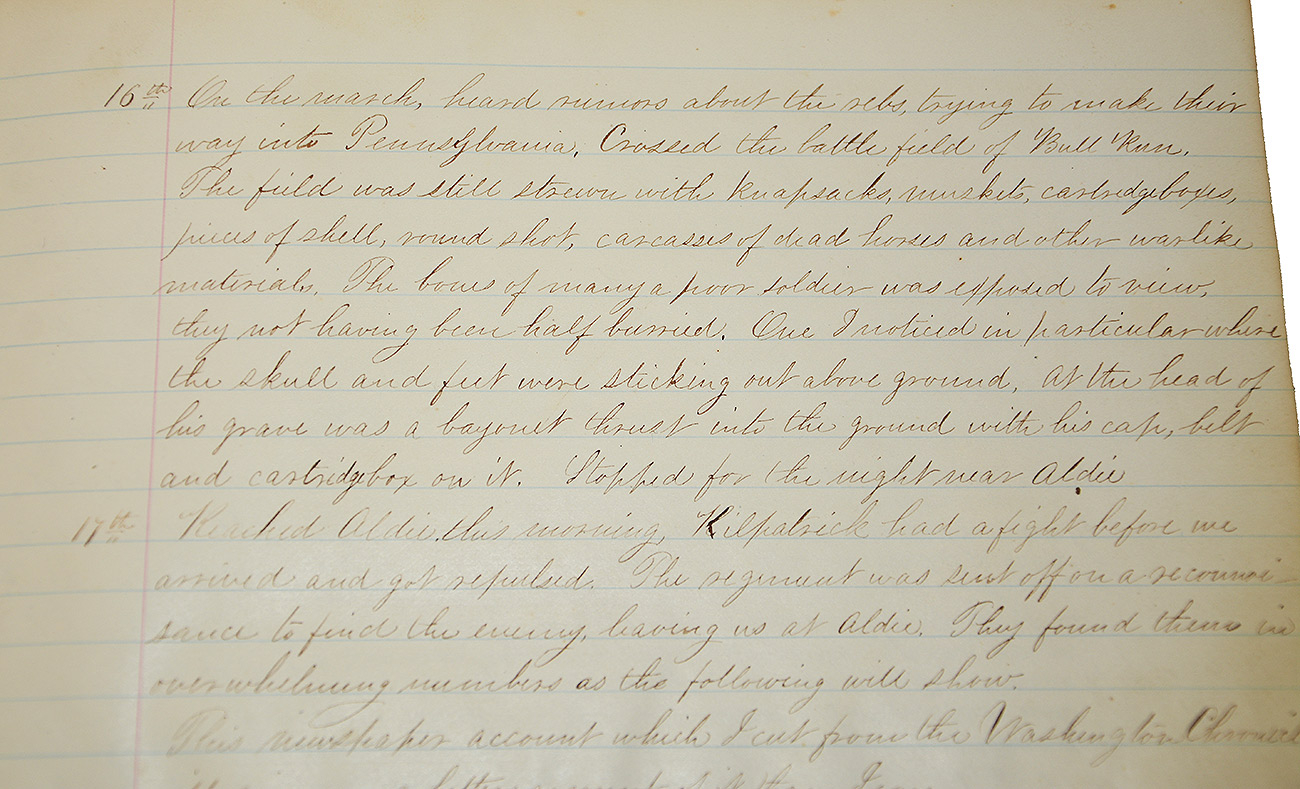
— Two separate, harrowing visits to the BULL RUN BATTLEFIELD, roughly a year apart, both describing the field's unburied and partially buried dead in vivid detail. In August 1862, touring the field near a stone house where fourteen Union soldiers lay buried in a single grave, Sargent writes that in places "the bodies would not be buried at all, merely a little dirt thrown over them as they laid on the field, the skull and feet exposed to view," and notes "several carcasses still lying on the field" where the "famous Black Horse Cav" had made their charge. Returning to the same ground on June 16, 1863 — three days before the regiment's Middleburg disaster and just weeks before Gettysburg — he found it "still strewn with knapsacks, muskets, cartridge boxes, pieces of shell, round shot, carcasses of dead horses and other warlike materials," the "bones of many a poor soldier... exposed to view, they not having been half buried," and describes one grave in particular where "the skull and feet were sticking out above ground," marked by a bayonet thrust into the earth and hung with the soldier's cap, belt, and cartridge box. Taken together, the two passages offer a striking, dated record of how long the battlefield went unreclaimed.
— FREDERICKSBURG (December 1862), witnessed from the Union side of the river, with a description of Prof. Lowe's observation balloon drawing rebel artillery fire.
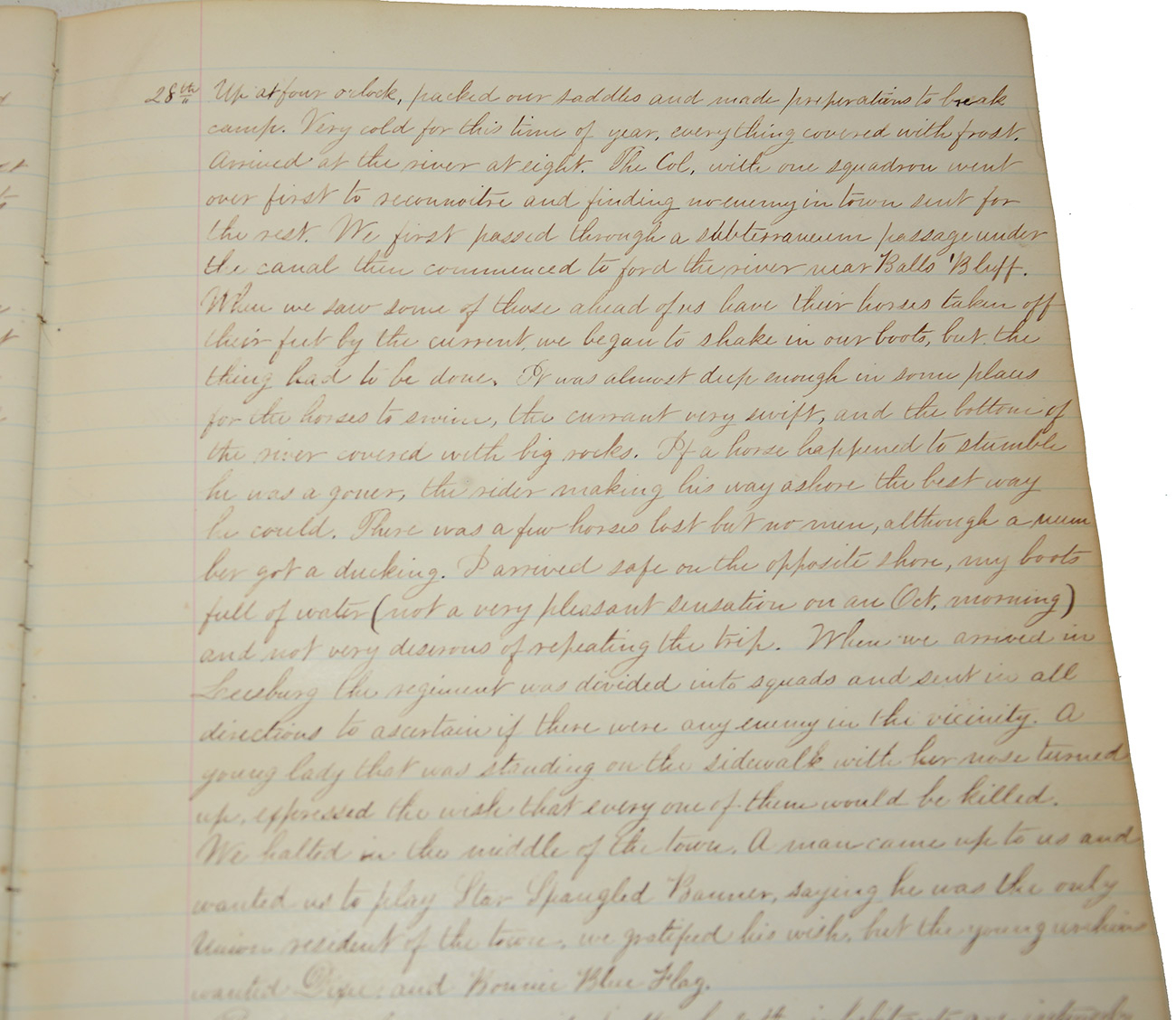
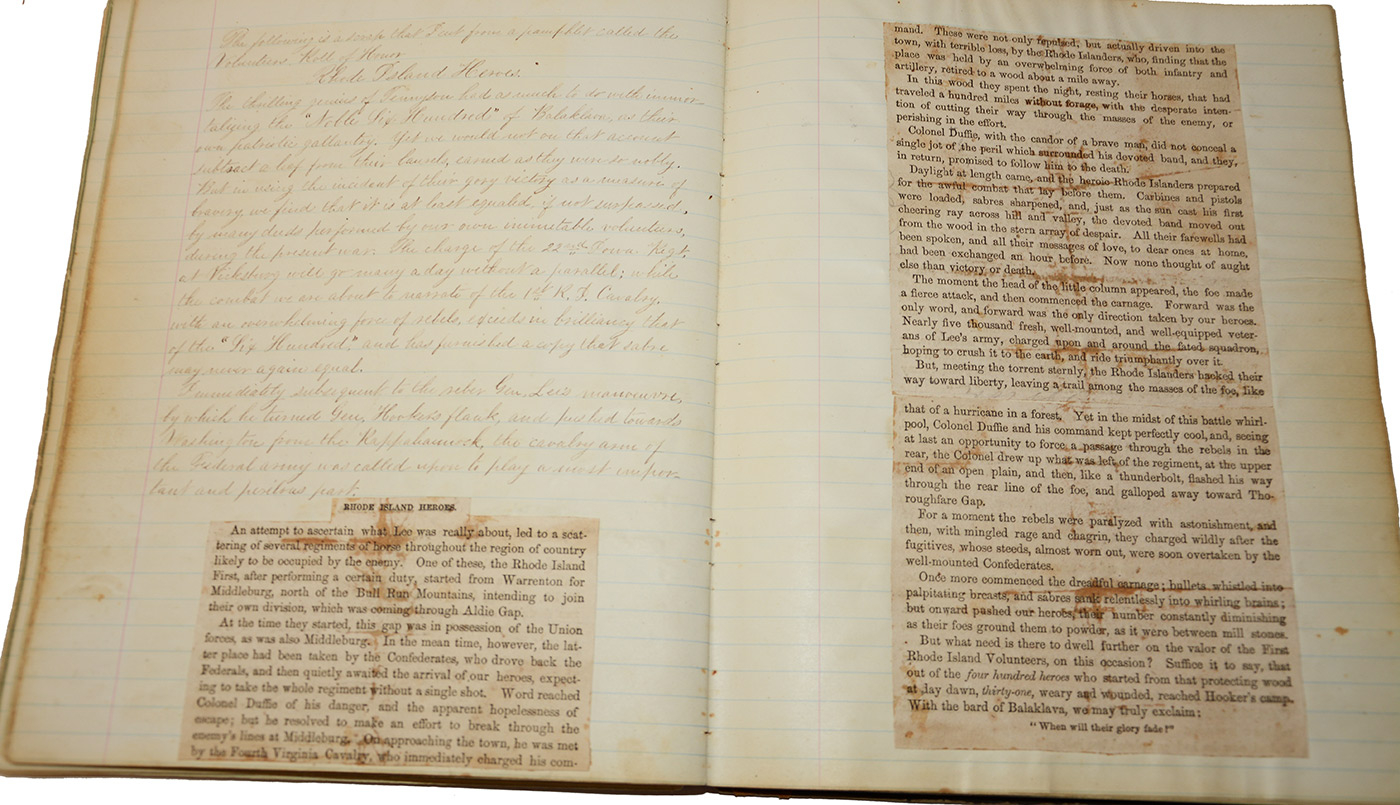
— The regiment's disastrous engagement near MIDDLEBURG, VIRGINIA (June 17, 1863), three days before Gettysburg, in which the 1st Rhode Island Cavalry was surrounded and nearly destroyed while attempting to break through Confederate lines under Col. Alfred N. Duffié. This is the diary's centerpiece engagement, documented from three independent angles: Sargent's own contemporaneous entry (giving a casualty estimate of roughly 80 survivors of nearly 300 engaged, with many of those captured later dying in Confederate prison camps); a pasted period clipping from the Washington Chronicle (dateline June 19, 1863, by correspondent E. A. Paul) describing the regiment's ordeal; and a second, more dramatic pasted excerpt from a wartime pamphlet titled "Volunteers' Roll of Honor," which frames the action in Balaklava-esque terms and gives a considerably higher casualty figure. The divergence between the diarist's sober count and the published accounts' more sensational numbers is itself a point of interest.
— KELLY'S FORD (March 1863) and BEVERLY FORD (June 1863), both witnessed at close range, the latter including a graphic and unflinching description of a captured Confederate soldier's leg amputation at a field hospital.
— The CULPEPER COURT HOUSE cavalry action (September 1863) and the BRISTOE STATION campaign / "Meade's Retreat" (October 1863), which Sargent calls "the most masterly [retreat] of the war."
— The MINE RUN campaign (November-December 1863), including a Thanksgiving dinner eaten cold, in the saddle, and a forced night withdrawal.
— A firsthand eyewitness account of PRESIDENT LINCOLN reviewing the Army of the Potomac's cavalry corps at Brandy Station (April 6, 1863), including a memorable, unflattering physical description of Lincoln on horseback: "the most awkward looking figure on horseback I ever saw, long legs dangling down most to the ground... and had on an old stove pipe hat many years behind the fashion."
— A verbatim period military document: a Special Order from Col. A. N. Duffié, Head Quarters 1st R.I. Cavalry, Poolesville, Md., dated October 5, 1862, commending the regiment's conduct during the retreat from the Rapidan and at Second Bull Run — transcribed by Sargent in full.
Beyond combat narrative, the diary is rich in camp-life detail: an extended, almost ethnographic description of winter-quarters hut construction and furnishing (1862-63 and 1863-64), soldiers' rations and improvised cooking methods, the formation and equipping of the regimental band (including the purchase of a $700-800 set of German silver instruments), a mock military ball that ends in chaos, the regiment's veteran re-enlistment in January 1864 (with Sargent's own weighing of bounty, furlough, and risk of a future draft), and an extensive account of the band's furlough journey home to New England and Sargent's return south in April 1864, touring Barnum's, Five Points, and the Brooklyn Navy Yard (including a firsthand look at the monitor USS Tecumseh, later lost at Mobile Bay).
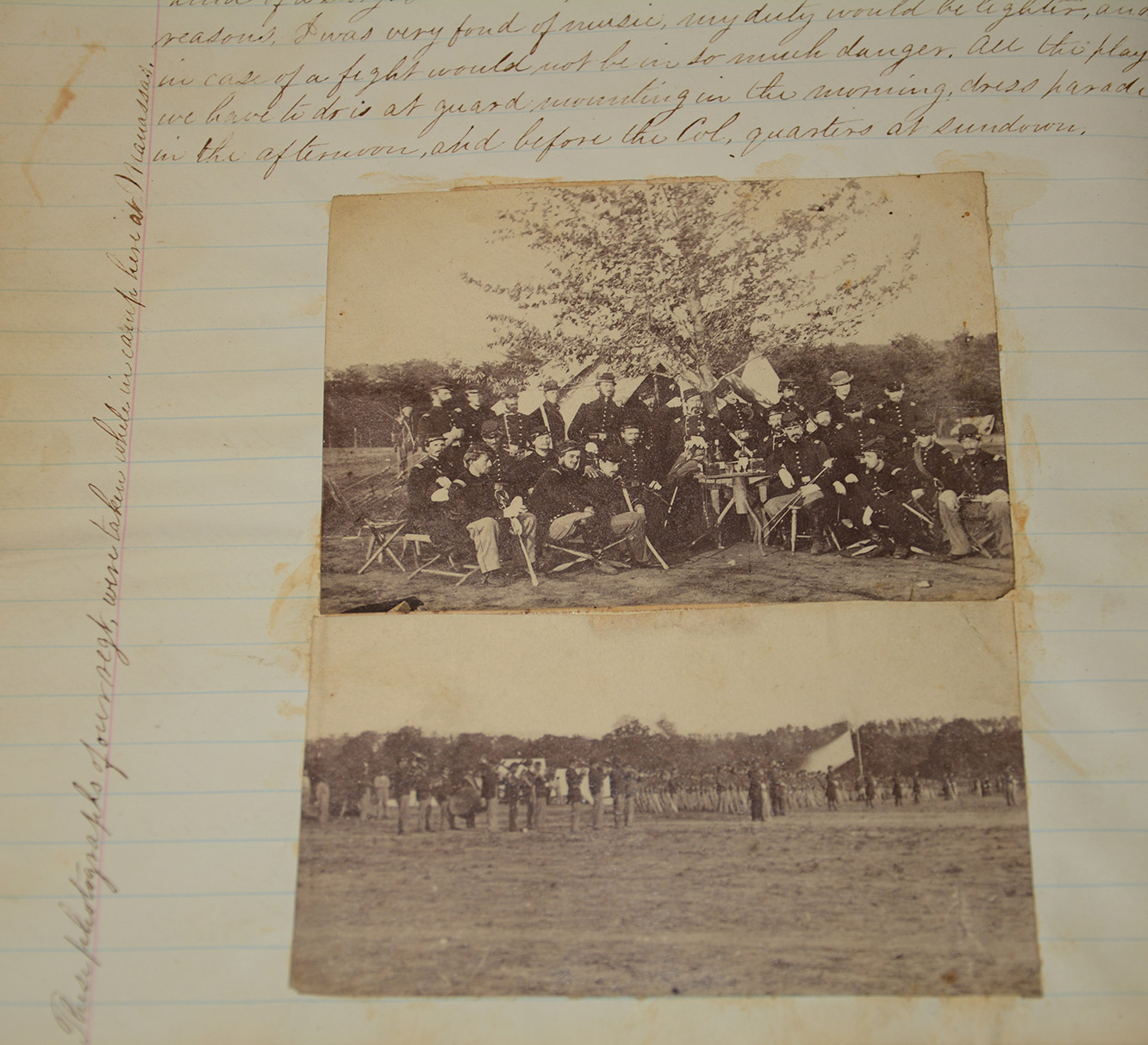
Two period photographs are mounted in the diary at the July 1862 entry, captioned by Sargent as taken in camp at Manassas: a group portrait of regimental officers and a wide view of the regiment on dress parade.
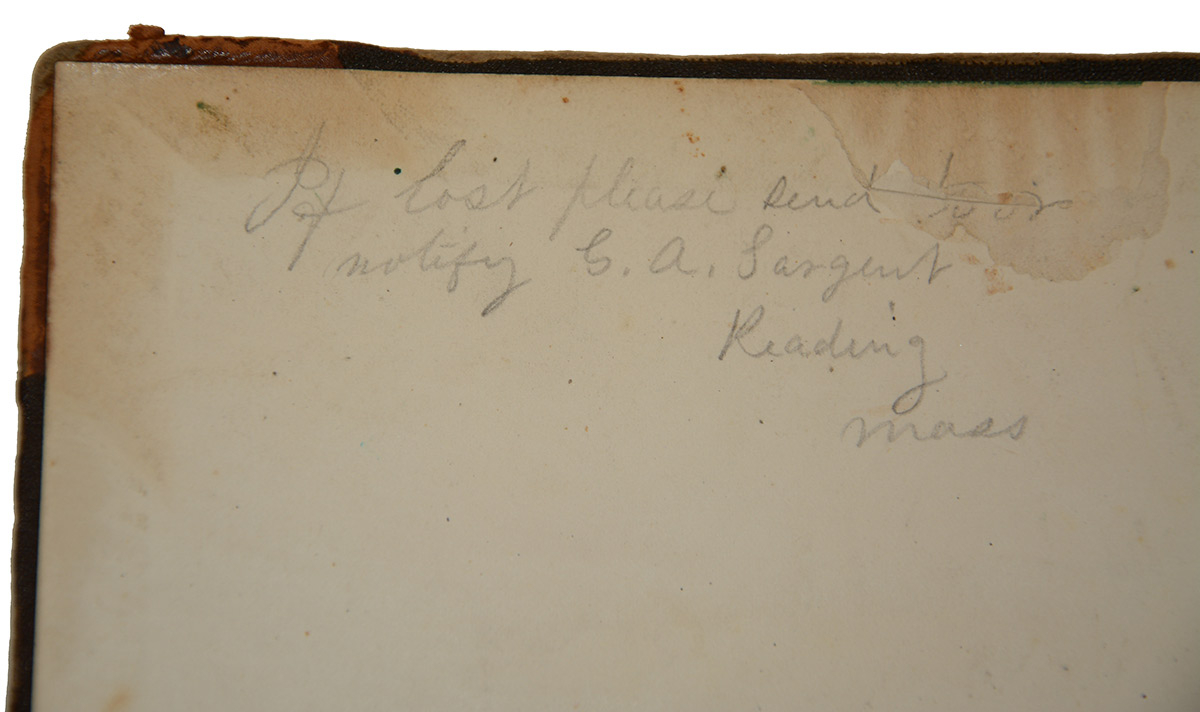
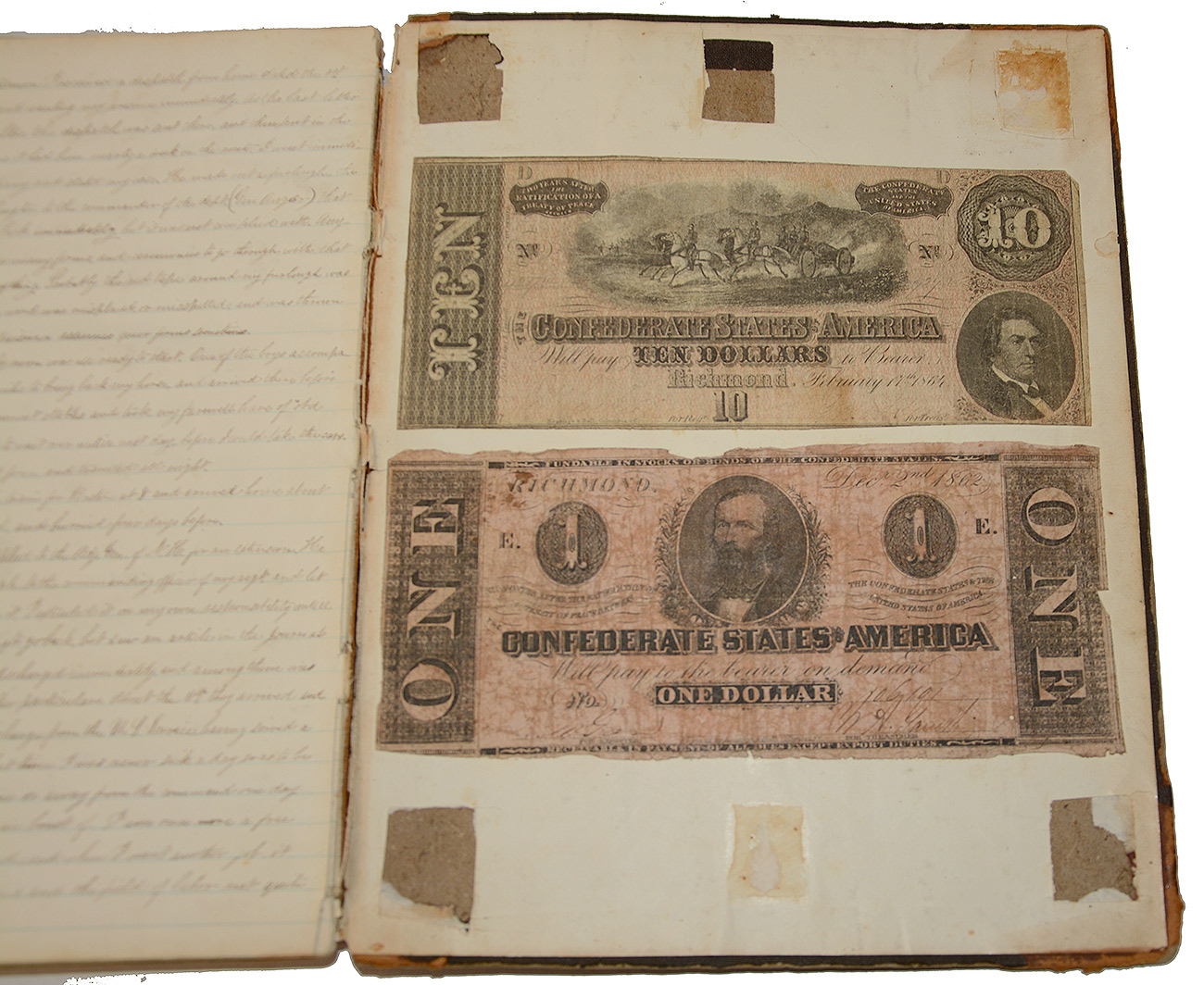
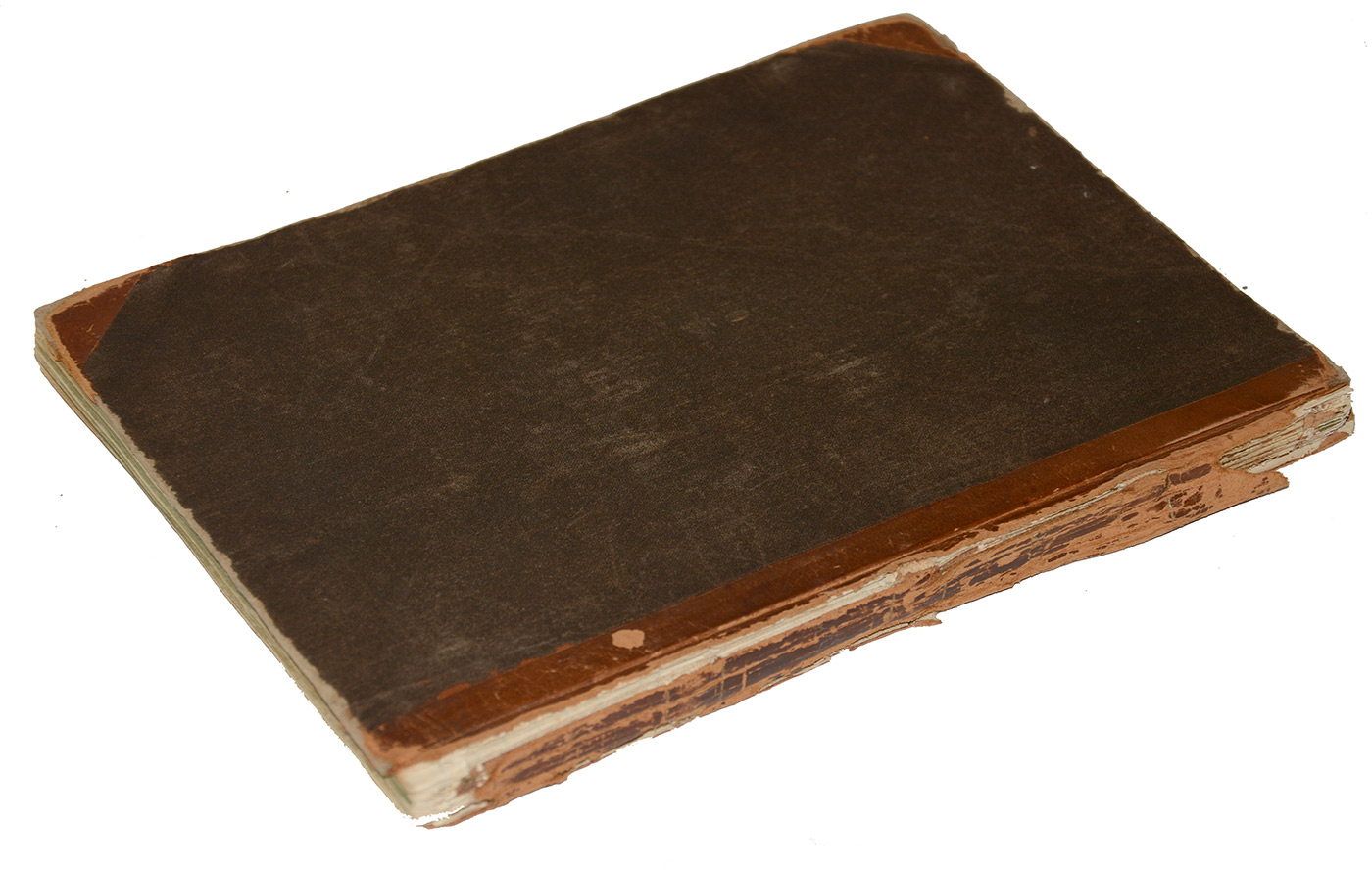
Original binding is broken; several leaves are loose or detached from the text block. Contents otherwise complete and legible throughout the portion examined. Scattered foxing and staining noted in places; pasted clippings and photographs show expected period toning and edge wear, with adhesion intact. Recommend and careful handling/inventory of loose leaves to preserve pagination and sequence.
Accompanied by full typewritten transcription and a folder of research material. [ss][ph:L]
~~~~~~~~~~~~~~~~~~~~~~~~~~~~~~~~~~~
THIS ITEM, AS WITH ALL OTHER ITEMS AVAILABLE ON OUR WEB SITE,
MAY BE PURCHASED THROUGH OUR LAYAWAY PROGRAM.
CLICK HERE FOR OUR POLICIES AND TERMS.
THANK YOU!
Inquire About MANUSCRIPT WAR DIARY OF GEORGE A. SARGENT, BUGLER, 1st RHODE ISLAND CAVALRY (1st NEW ENGLAND CAVALRY) — EXTENSIVE FIRST-PERSON ACCOUNT, 1861-1864, WITH PASTED NEWSPAPER CLIPPINGS AND PERIOD PHOTOGRAPHS
Most Popular
Historical Firearms Stolen From The National Civil War Museum In Harrisburg, Pa »
Theft From Gravesite Of Gen. John Reynolds »
Selection Of Unframed Prints By Don Troiani »
Fine Condition Brass Infantry Bugle Insignia »
Rare Identified 65Th Ny Sergeant’s Jacket, With Manscript Material: 1St U.s. Chasseurs »
featured item
AN OUTSTANDING CONDITION MODEL 1862 COLT POLICE REVOLVER
In 1861 Colt introduced two new pocket model revolvers in caliber .36. These two new models were known as the Model 1862 Police and the Model 1862 Pocket Navy; neither were earmarked for the police or the navy. This .36 caliber revolver had a five… (1304-78). Learn More »
site search