

site search
online catalog
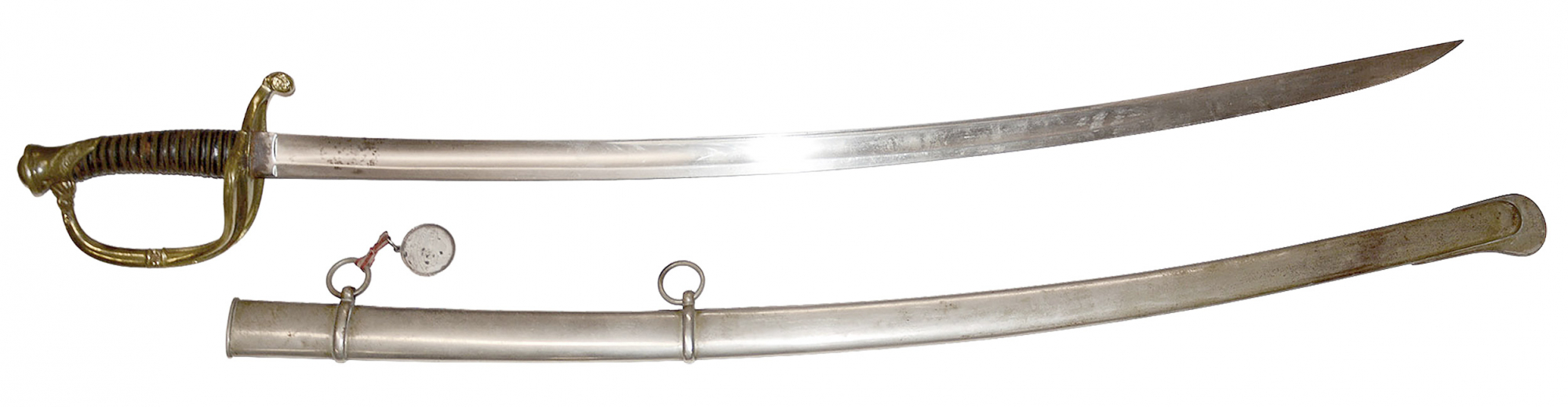
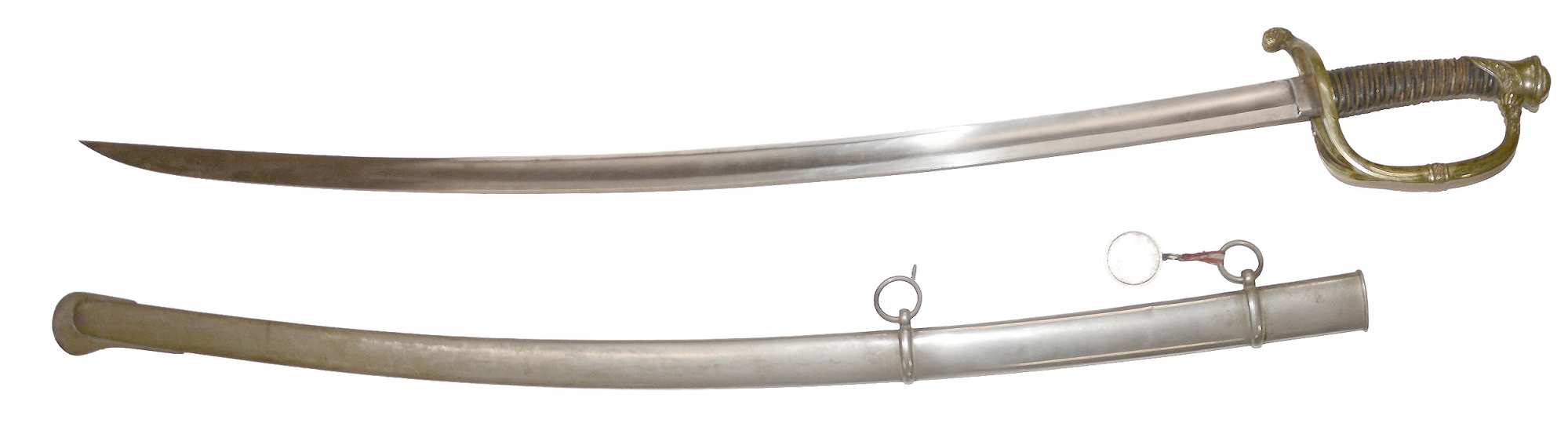
FRENCH IMPORTED CAVALRY SABER FROM THE EFFECTS OF MAURICE LEYDEN, THIRD NEW YORK CAVALRY – PRESENTED TO COL. GEORGE WALTER TURNER, ADC, BY LT. COL. JOHN MIX, 3RD NEW YORK CAVALRY
Hover to zoom
$3,500.00
Quantity Available: 1
Item Code: 1268-777V
Shipping: Determined by Method & Location of buyer
To Order:
Call 717-334-0347,
Fax 717-334-5016, or E-mail
This saber, along with several other items, came directly from the Leyden family in 1998 and within a few months was in the Ray Richey collection. Maurice Leyden was 22 years of age when he enrolled at Syracuse in the military June 12, 1861. By July of 1861 he was a second lieutenant of Co. B Third New York Cavalry (aka Van Alan Cavalry). On June 12th, 1863, he was promoted to a 1st lieutenant. His service was that of the 3rd New York cavalry's. Please refer to this link (https://civilwarintheeast.com/us-regiments-batteries/new-york-regiments-and-batteries/3rd-new-york-cavalry/). Leyden was captured in action at Darbytown road near Richmond. This was the last advance by the Army of Northern Virginia north of the James River. The battle began successfully at dawn on October 7, 1864, as the combined Confederate assault overpowered the Union cavalry stationed on Darbytown Road. Two hours elapsed before the attack could continue, however, giving Union Gen. Alfred H. Terry time to redeploy his division to face the Confederate attack in the fields just north of there. The attack soon fell apart, and the remnants of the Confederate force withdrew west to their original defensive lines. Lee’s last advance north of the James River resulted in more than 1,000 Confederate casualties while the Federals suffered fewer than 500. Leyden was subsequently confined in three rebel prisons, Salisbury, Danville and Libby. On February 22, 1865, he was paroled and officially exchanged April 1, 1865. He was given a captain's commission in absentia December 22, 1864, retroactive to October 10, 1864. Leyden returned to the 3rd New York cavalry as a captain shortly after April 1, 1865. Within 3 months he transferred to Co, B 1st Mounted Rifles. The designation of the regiment was changed to the 4th Provisional Cavalry on September 6, 1865. On November 29, 1865, he mustered out with his company. In January 1866 he was brevetted a major of US volunteers. Please click on this link for more on this interesting soldier (Emerging Civil War). After the war he was also variously president of the American Dental Association, the Rochester Savings and Loan Association and the Davis & Leyden dental equipment manufacturing company, Monroe County Clerk, first secretary of the Rochester Title Insurance Company and supervisor of Rochester's 8th Ward and was active in the GAR and the 3rd NY Cavalry Association. He died in 1906.
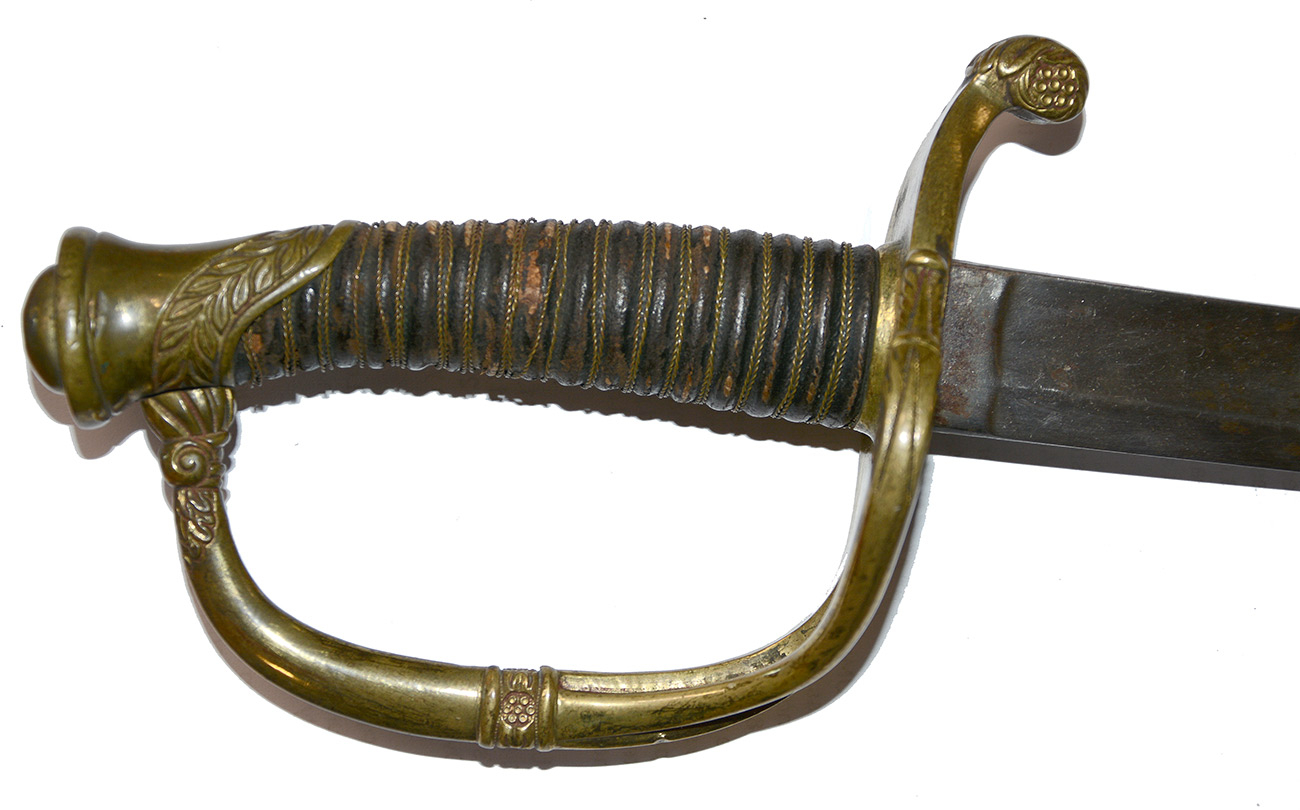
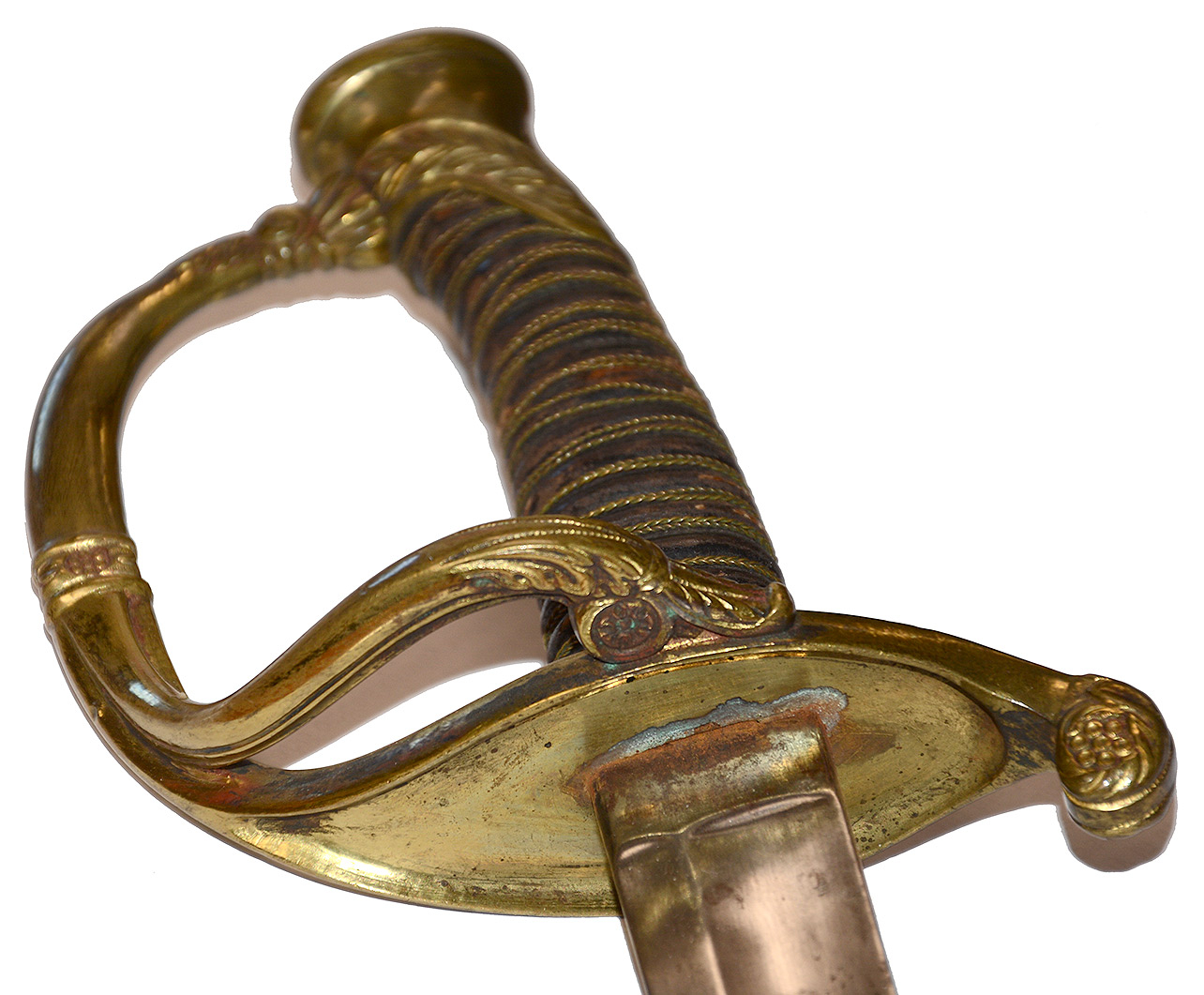
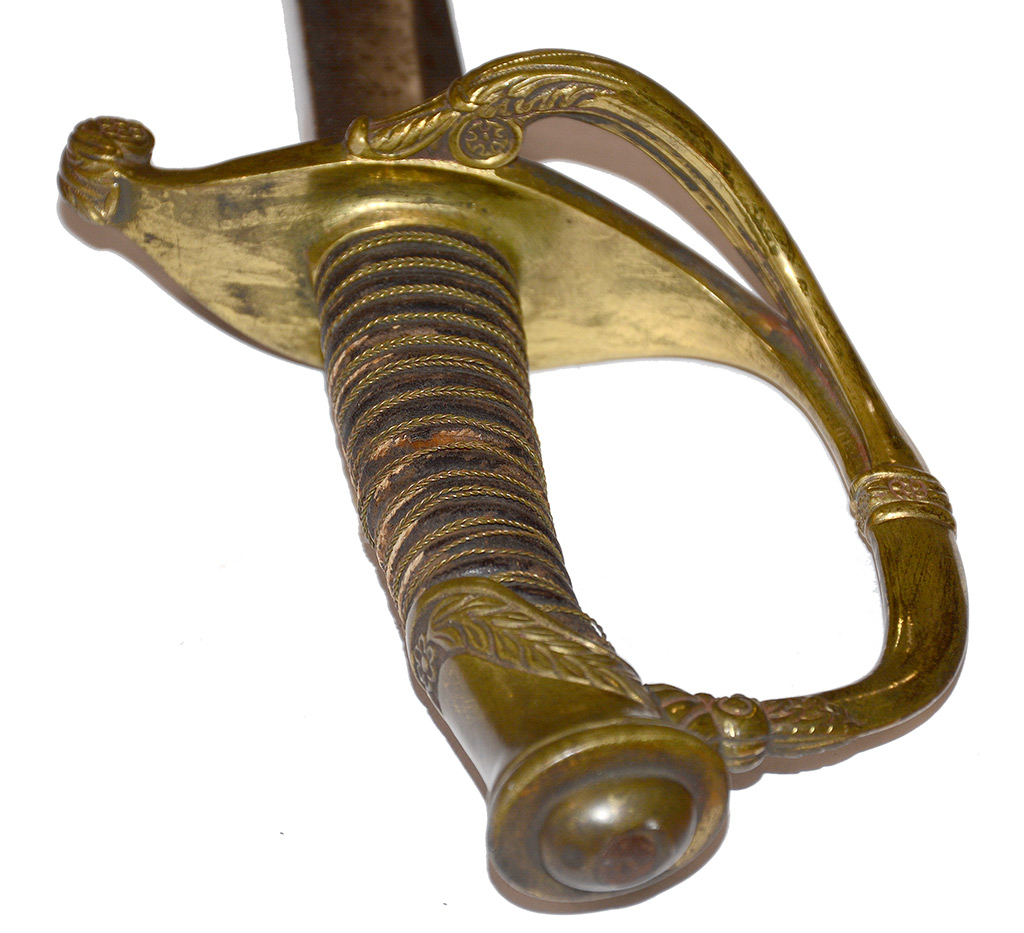
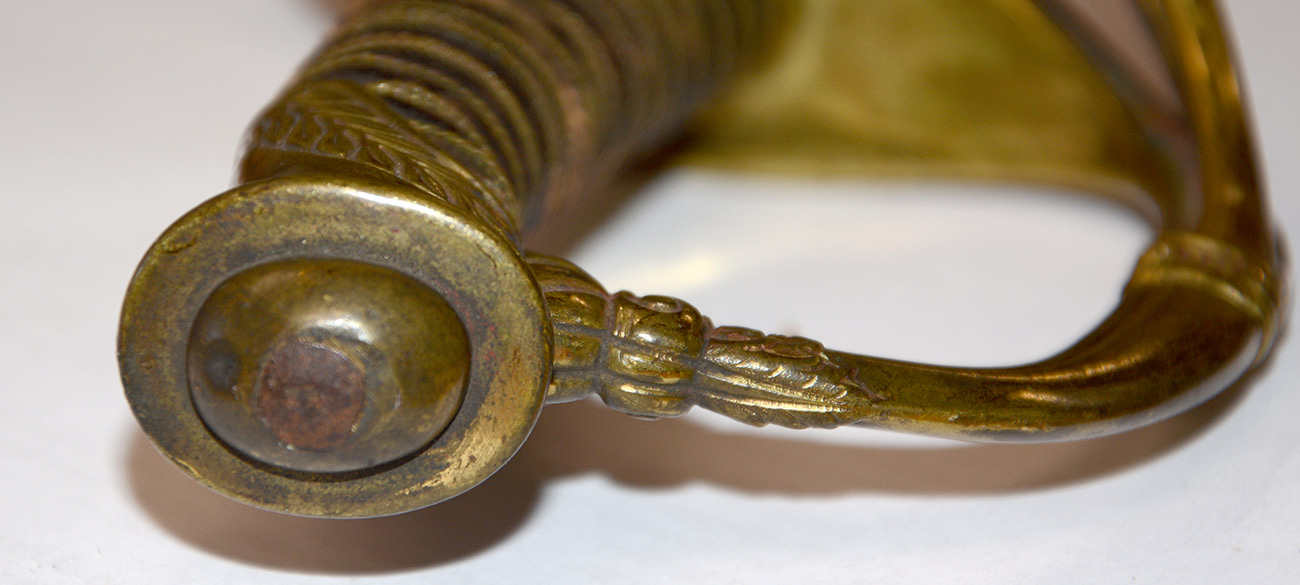
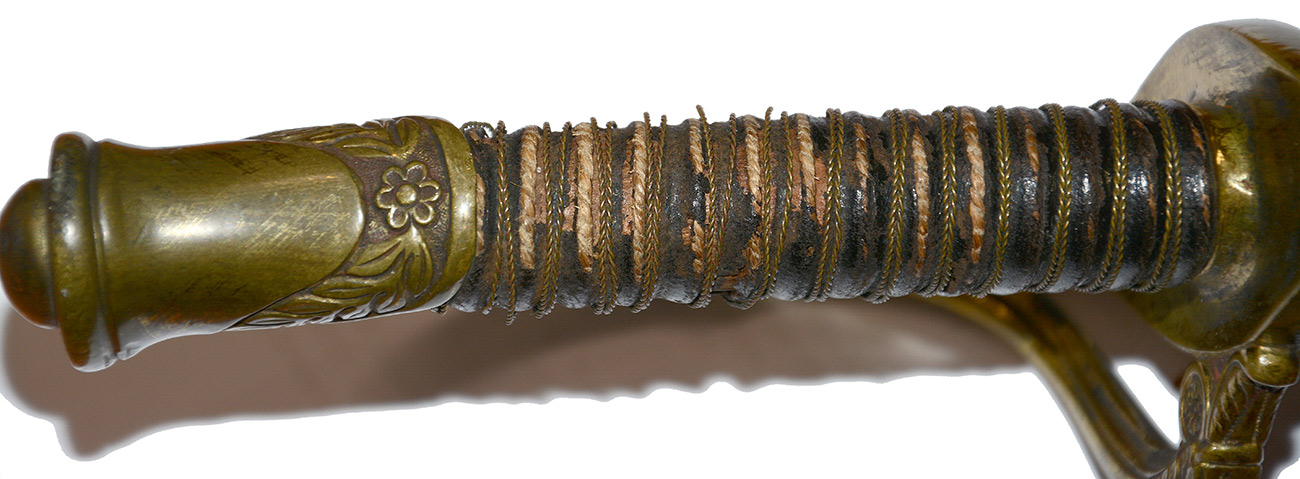
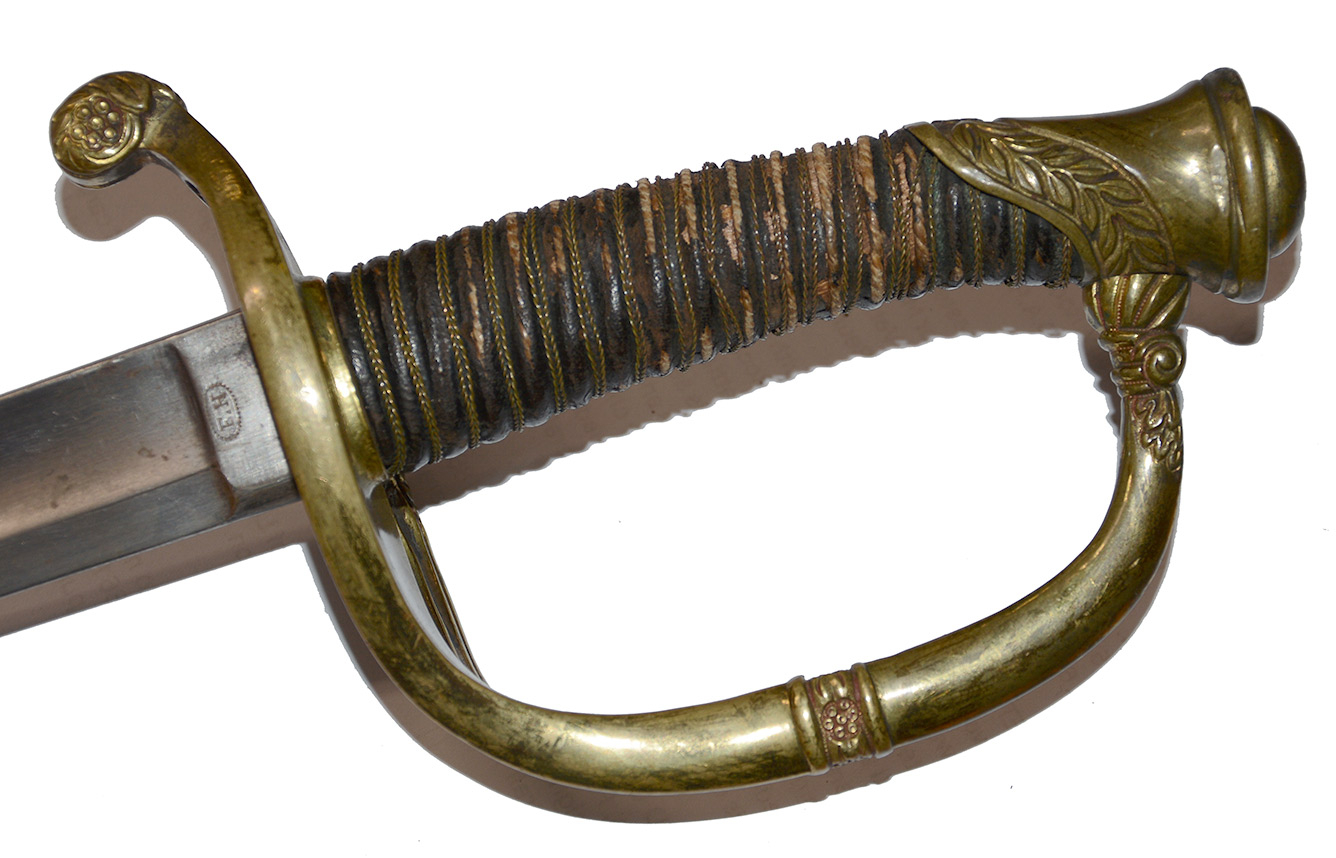
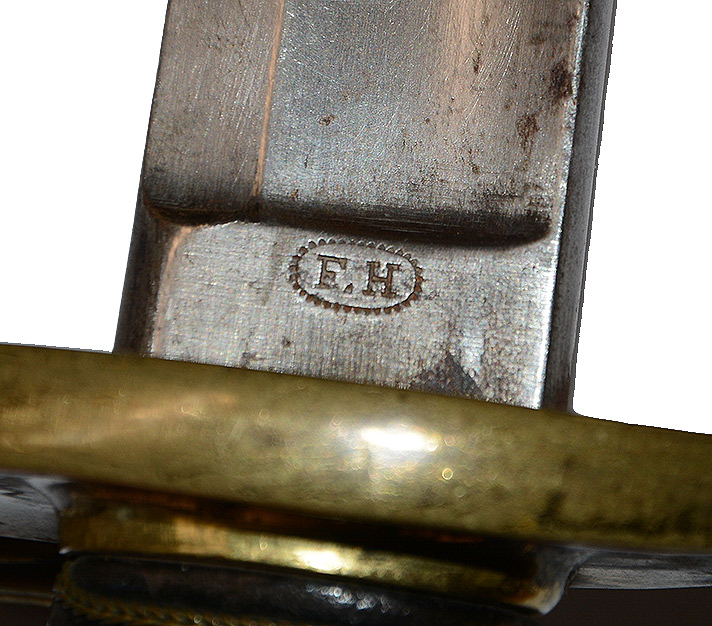
This sword has a fascinating story. It is French made and based on the "Modele 1822/54 Sabre de Cavalerie", its inspiration was the Garde Royale Modele de 1821. This example was made for export just prior to or early into our Civil War. The sword hilt of the D guard type has a single small branch and is of superior quality with deeply cast floral motifs on the brass hilt, including leaves along the edge of the pommel cap, a geometric flower at the upper end of the knuckle bow with overlapping leaves below, and more floral and geometric elements at the ends of the branches where they meet the guard. The grips are brown leather and 75 % intact. The brass wire binding is two strands. The scabbard with 2 suspension rings has 90% of its original tinned finish and is without dents. The blade is excellent and is 30 inches in length. And the total length including hilt and scabbard is 37 inches. This is short for a cavalry sword and actually of little use to a mounted man, but this will soon be explained.
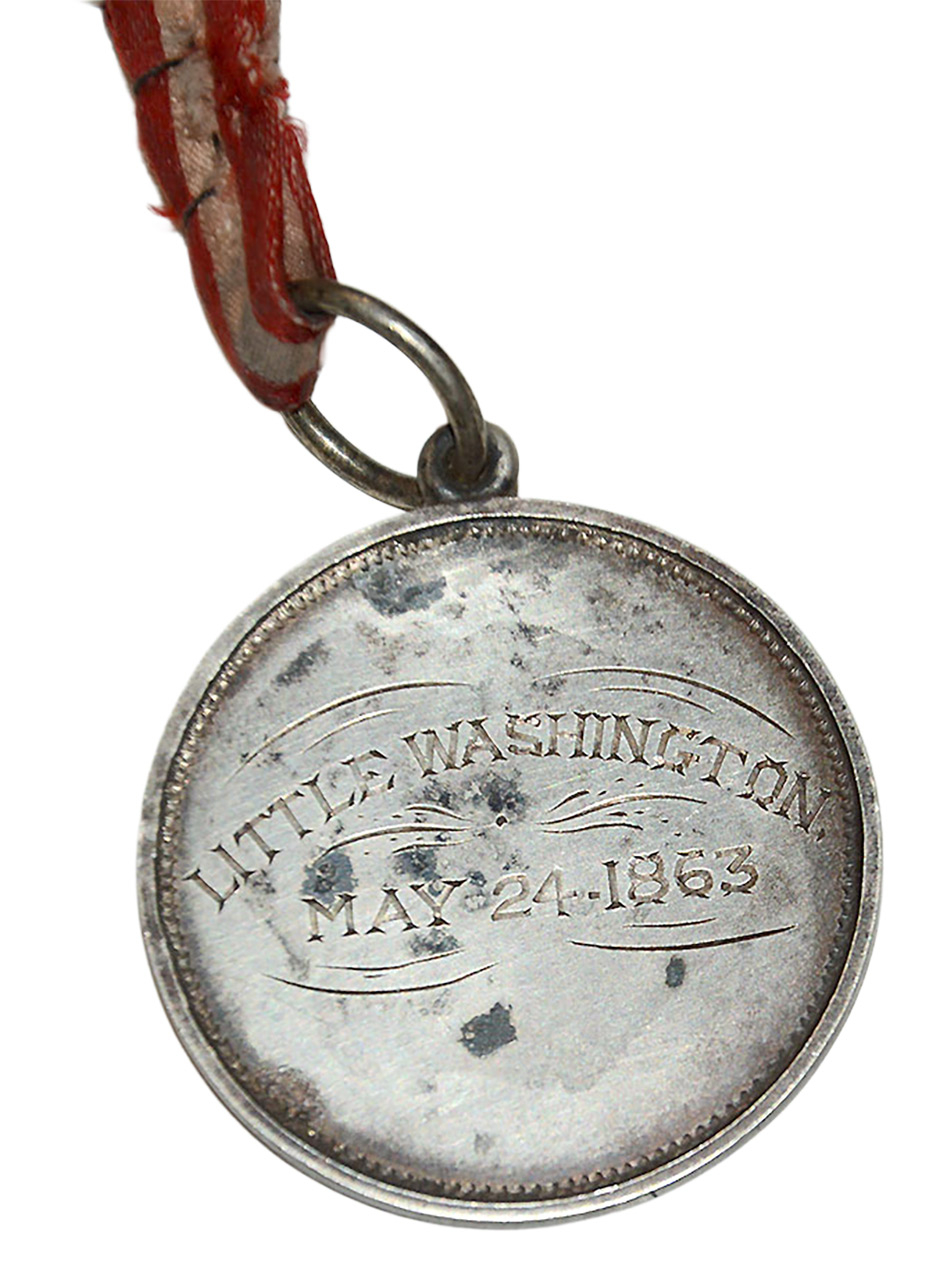
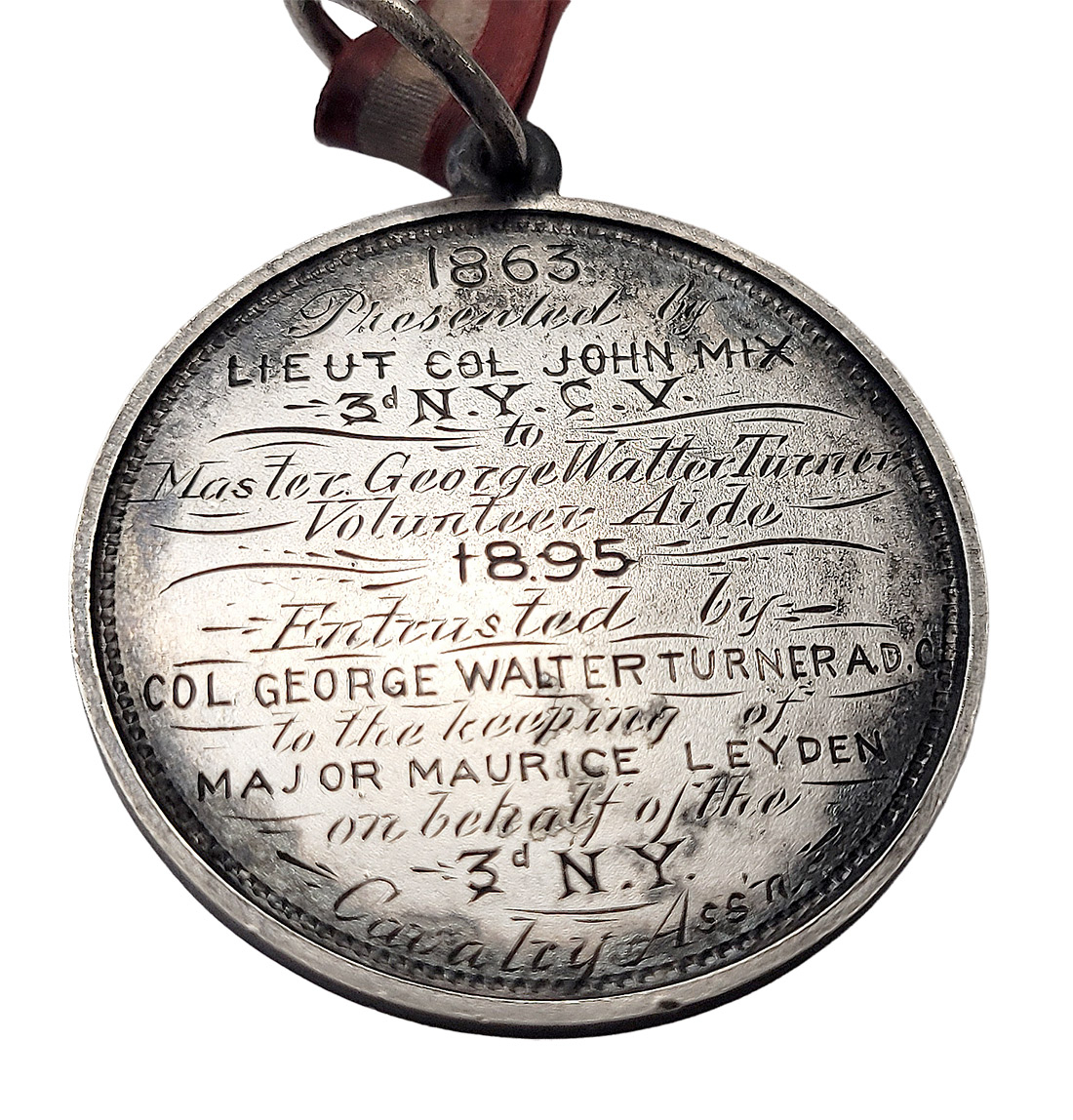
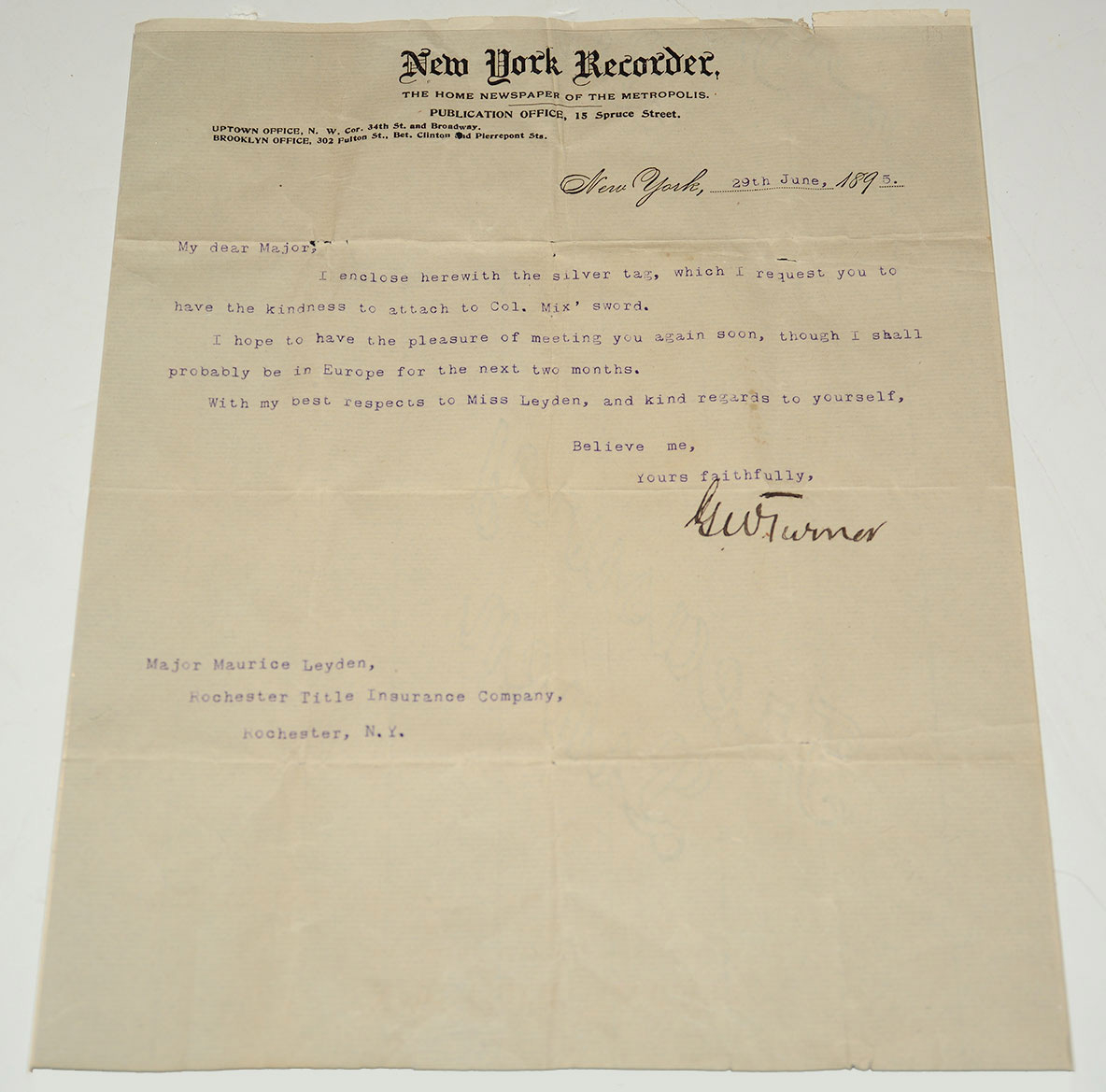
This historically significant sword has a silver medallion attached to it and an 1895 document also accompanies it. The 29th of June 1895 document sent to "Major Maurice Leyden" of Rochester, NY by G.W. Turner reads: "My dear Major, I enclose herewith the silver tag, which I request you to have the kindness to attach to Col. Mix's sword. I hope to have the pleasure of meeting you soon, though I shall probably be in Europe for the next two months. With my best regards to Miss Leyden, and kind regards to yourself, Believe me, yours faithfully G.W. Turner."
Affixed to the top ring mount of the scabbard by a red and white ribbon is a 1 1/4-inch sterling silver round thin medal that is professionally engraved on one side, "'LITTLE WASHINGTON" over "MAY 24th 1863" and on the obverse, "1863" over "Presented by LIEUT. COL. JOHN MIX 3d NYCV to Master George Walter Turner Volunteer Aide" This is above "1895" over "Entrusted by COL GEORGE WALTER TURNER ADC to the keeping of MAJOR MAURICE LEYDEN on behalf of the 3d N.Y. Cavalry Ass'n". For information on Lieutenant Colonel John Mix Pre-Civil War soldier, Civil War officer and later Indian fighter please click on this link: Fiddler’s Green: John Mix | Regular Cavalry in the Civil War. The 3rd New York Cavalry Association was formed in Rochester, Monroe County, New York in June 1881. Maurice Leyden was the president of the Association and Samuel Chase Pierce, the Association's secretary. The person of Colonel George Walter Turner is more allusive. And as a young volunteer aide to Mix he has no record in the US Archives. But what is certain is that being referred to as " Master" he was certainly under military age at time of the presentation. The sword is fine enough and exotic enough to be perfect for presentation and it is not impossible that the sword was previously captured from a Confederate. The blade length makes sense when considering Turner's age (possibly as young as 15). And even though the letter accompanying the medallion says "Col. Mix's sword" this makes no sense due to the sword's length being incompatible for a horse soldier. It is of interest to note that just 6 days before this presentation the 3rd NY Cavalry was in combat at (Little) Washington, North Carolina. "On April 18, 1863, near Little Washington, North Carolina, detachments from Companies A and E, 3rd Regiment Cavalry, New York Volunteers captured a battle flag carried by the 7th Confederate Cavalry. Major General John Foster commended the men from the 3rd Cavalry, NY Volunteers in General Orders No. 68 dated April 29, 1863. The order states, in part, "The battle-flag of the Seventh Confederate (Claiborne) Cavalry, which was captured from the enemy in the gallant charge by a detachment of Companies A and E against superior numbers near Little Washington on the 18th day of April instant, is presented to the regiment as a distinguishing mark of the favor and appreciation in which the gallant services of this command are held." The Army of Northern Virginia battle flag... identified in museum records as the 7th Confederate Cavalry's flag received by the Bureau of Military Statistics by February 1864, most closely matches the third bunting issue...".
This sword is fascinating and both it and aide Turner are worthy of greater research! [pe/ss][ph:L]
~~~~~~~~~~~~~~~~~~~~~~~~~~~~~~~~~~~
THIS ITEM, AS WITH ALL OTHER ITEMS AVAILABLE ON OUR WEB SITE,
MAY BE PURCHASED THROUGH OUR LAYAWAY PROGRAM.
CLICK HERE FOR OUR POLICIES AND TERMS.
THANK YOU!
Inquire About FRENCH IMPORTED CAVALRY SABER FROM THE EFFECTS OF MAURICE LEYDEN, THIRD NEW YORK CAVALRY – PRESENTED TO COL. GEORGE WALTER TURNER, ADC, BY LT. COL. JOHN MIX, 3RD NEW YORK CAVALRY
Most Popular
Historical Firearms Stolen From The National Civil War Museum In Harrisburg, Pa »
Theft From Gravesite Of Gen. John Reynolds »
Selection Of Unframed Prints By Don Troiani »
Fine Condition Brass Infantry Bugle Insignia »
Rare Identified 65Th Ny Sergeant’s Jacket, With Manscript Material: 1St U.s. Chasseurs »
featured item
CIVIL WAR US NAVY LT. COMMANDER’S COAT AND BUCKLE OF ALEXANDER COLE RHIND - USS CONSTELLATION, USS CRUSADER, USS KEOKUK, FOUGHT CS BATTERIES AT DEEP BOTTOM, COMMANDED A “POWDER BOAT” AGAINST FT. FISHER, LATER REAR ADMIRAL
This is a very appealing regulation Civil War navy officer’s frock coat with interesting history. The coat is very dark blue, almost black, double-breasted with two rows of 9 US Navy officer’s button each down the front, two at the rear waist,… (1179-650). Learn More »
site search