


site search
online catalog
BEAUTIFULLY CARVED WOUNDED-IN-ACTION VETERAN’S CANE: 12th CT AND 1st ME BATTERY- EX-STONE HOUSE MUSEUM

Hover to zoom


$2,950.00
Quantity Available: 1
Item Code: 2026-1457
Shipping: Determined by Method & Location of buyer
To Order:
Call 717-334-0347,
Fax 717-334-5016, or E-mail
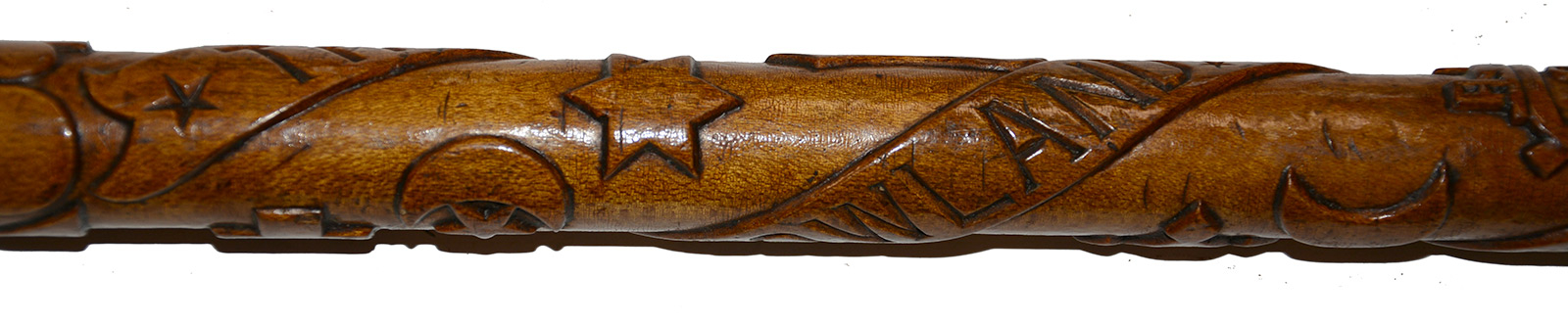
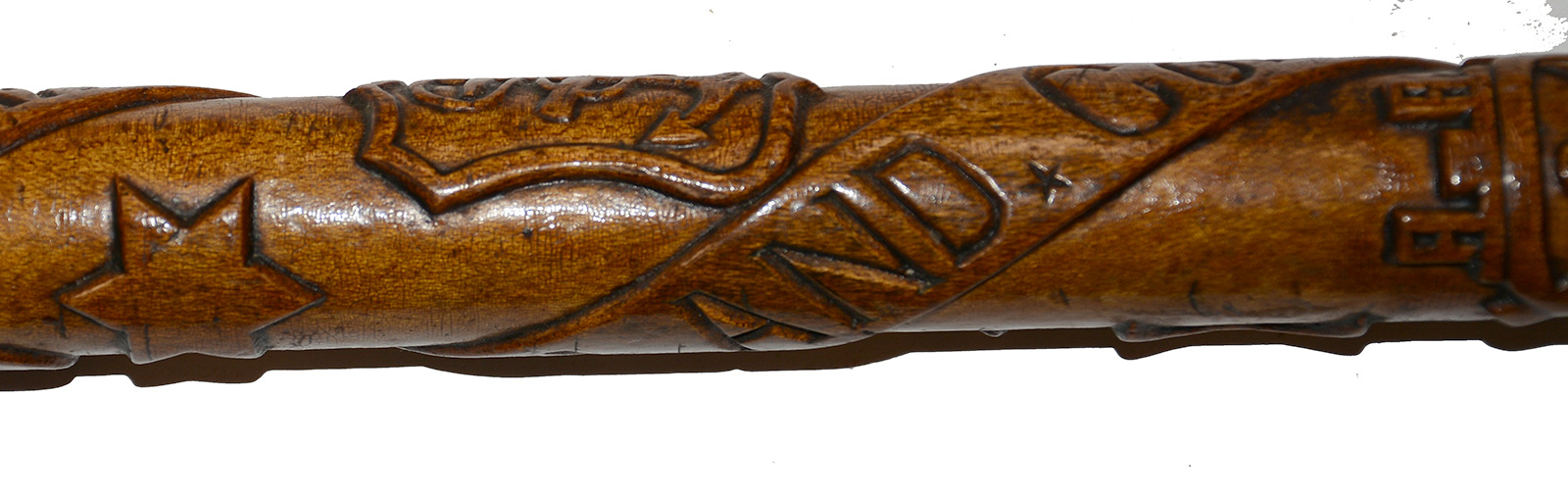
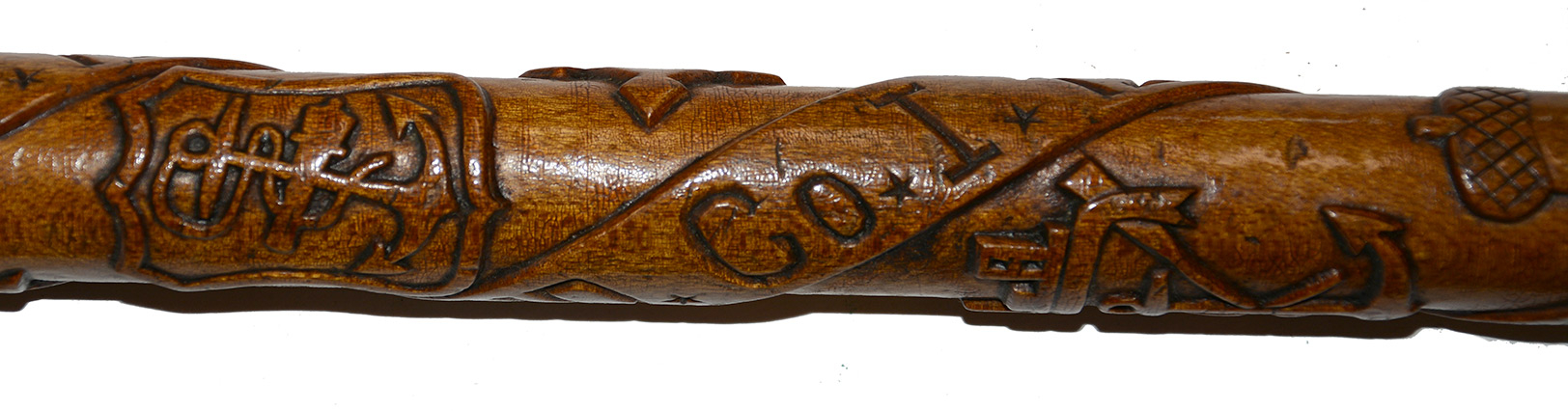
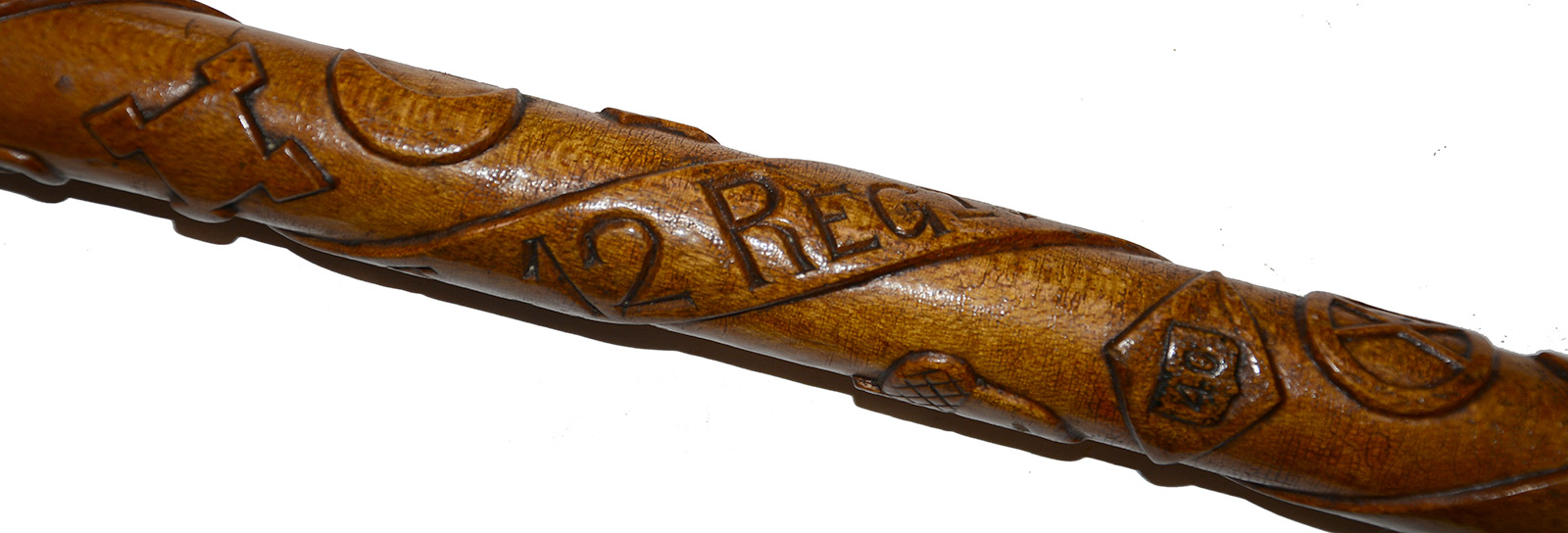
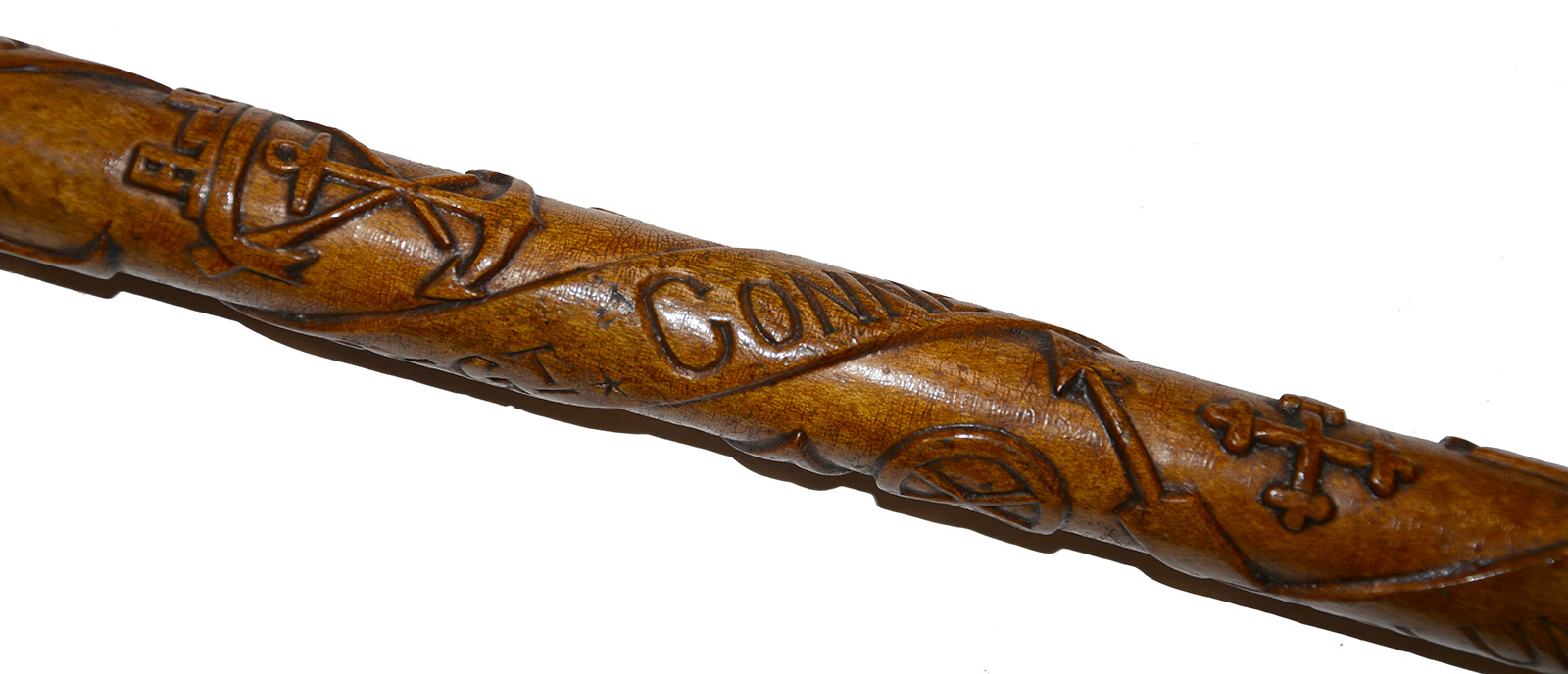
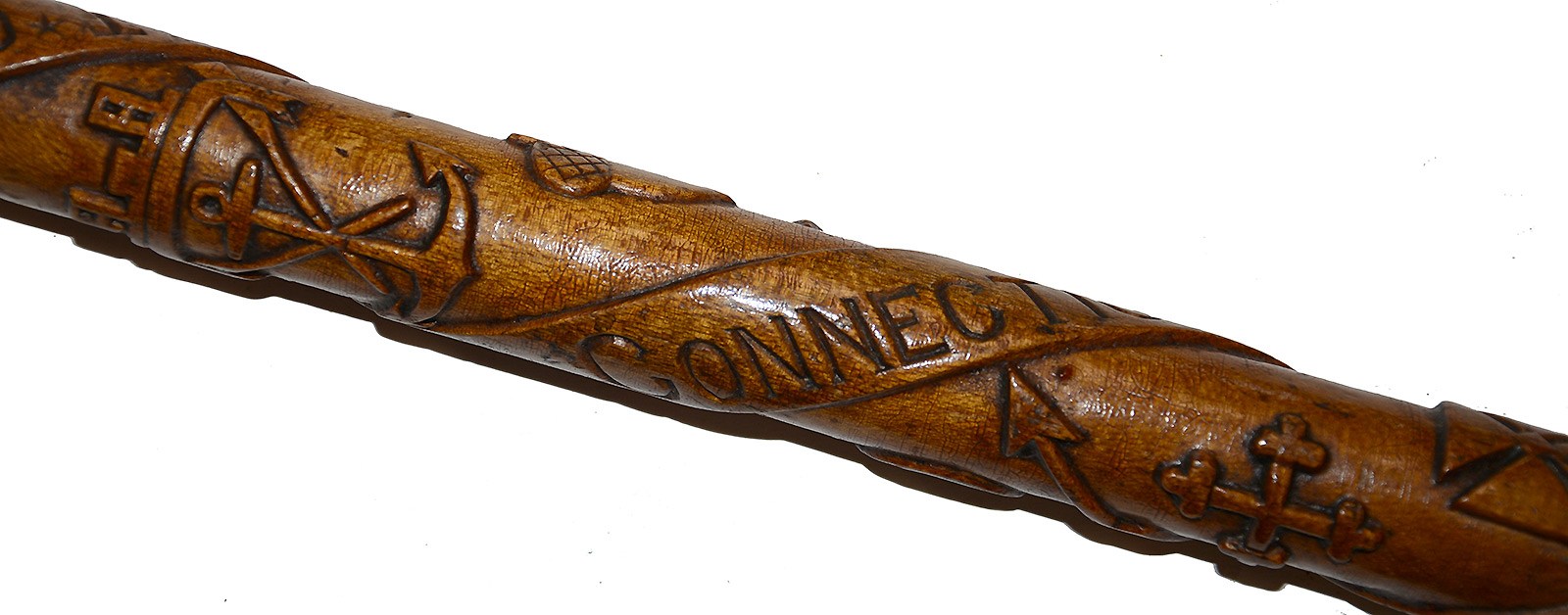
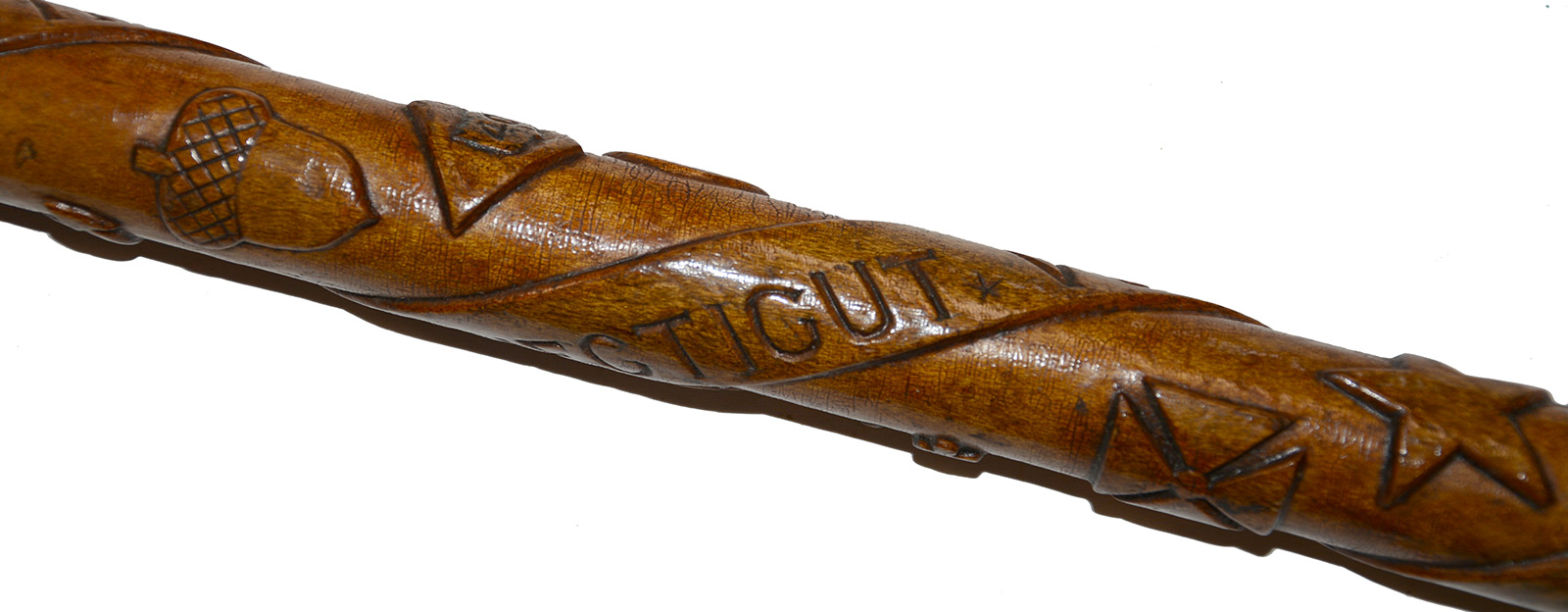
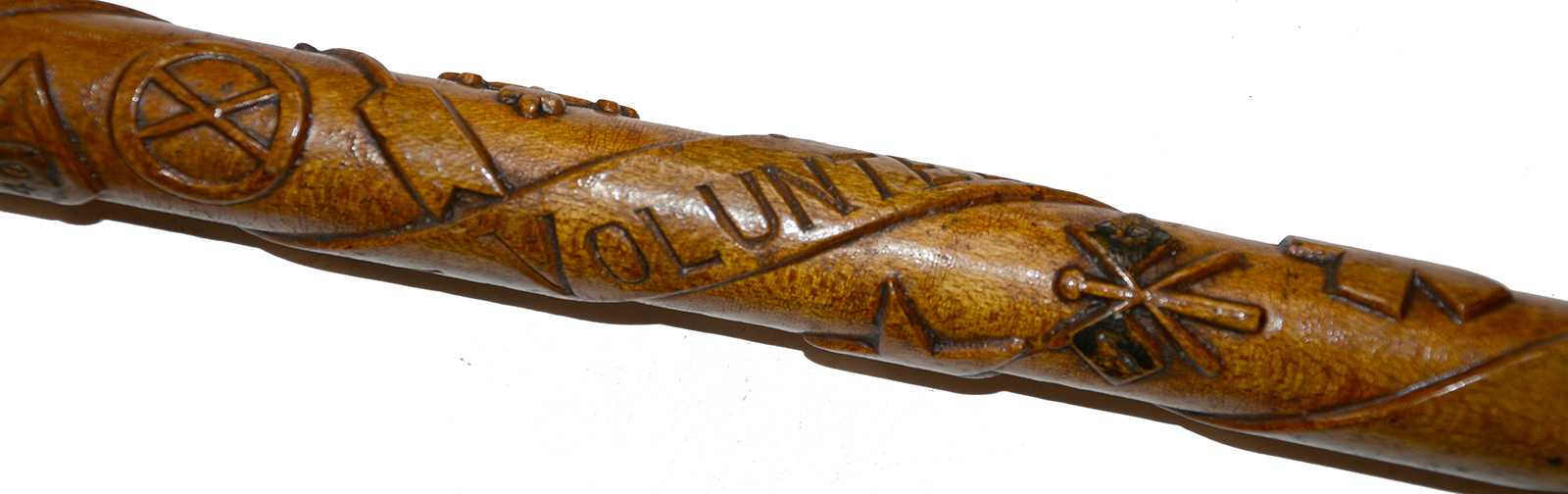
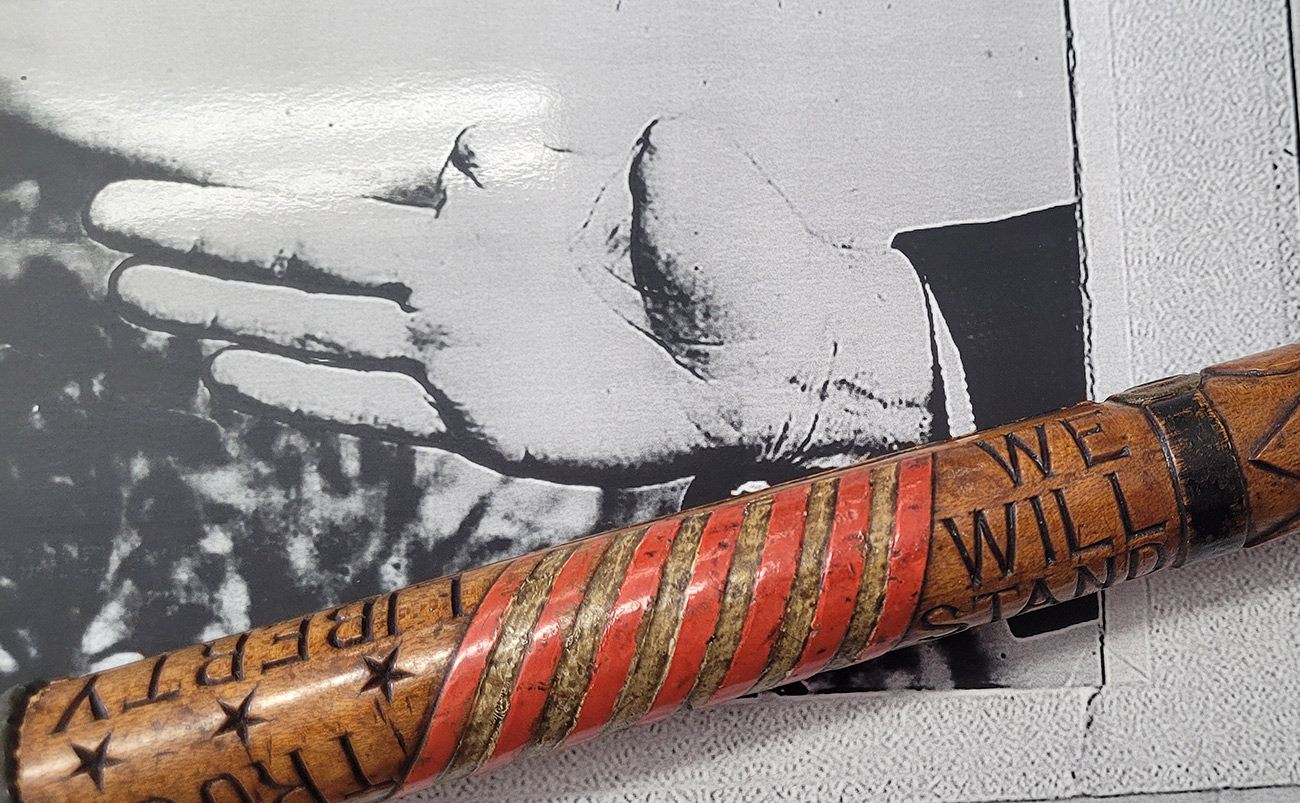
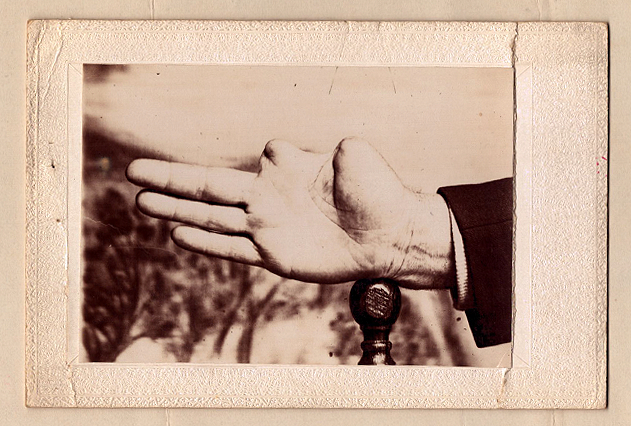
One of the best G.A.R. Civil War veterans’ canes, combining history, eye-appeal, craftsmanship and art, made for and carried by a veteran with service in the 12th Connecticut Infantry and extended detached duty with the 1st Maine Battery, during which duty he was wounded at Donaldsville, LA, in July 1863, but returned to the 12th CT to serve out his three-year enlistment. This remarkable cane was formerly in the collection of the “Stone House Museum” in New York, acquired by them about 1979 from a local collector, which fits with the history of the owner, who was in the disabled veterans’ home in Bath, NY, from the 1890s to his death in 1913. Rowland’s cane is accompanied by copies of his service and pension files, the latter including a remarkable photograph he submitted showing the loss of his right thumb and forefinger to a shell fragment or gunshot, and the surgeon’s knife.
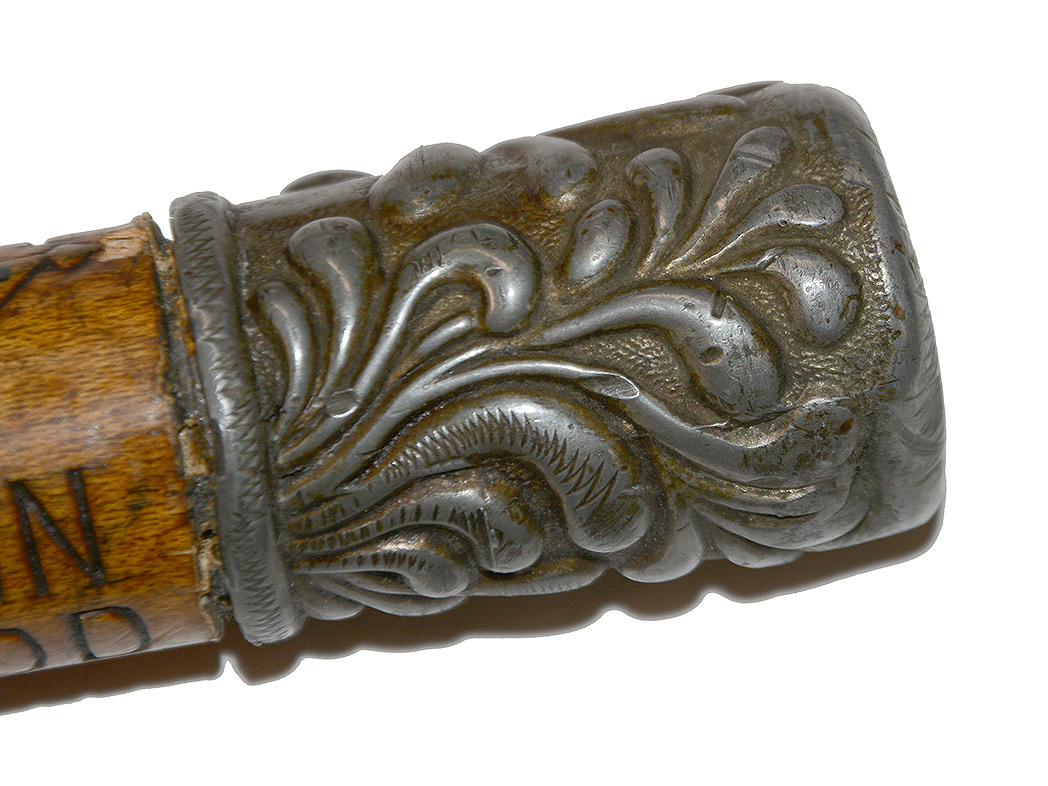
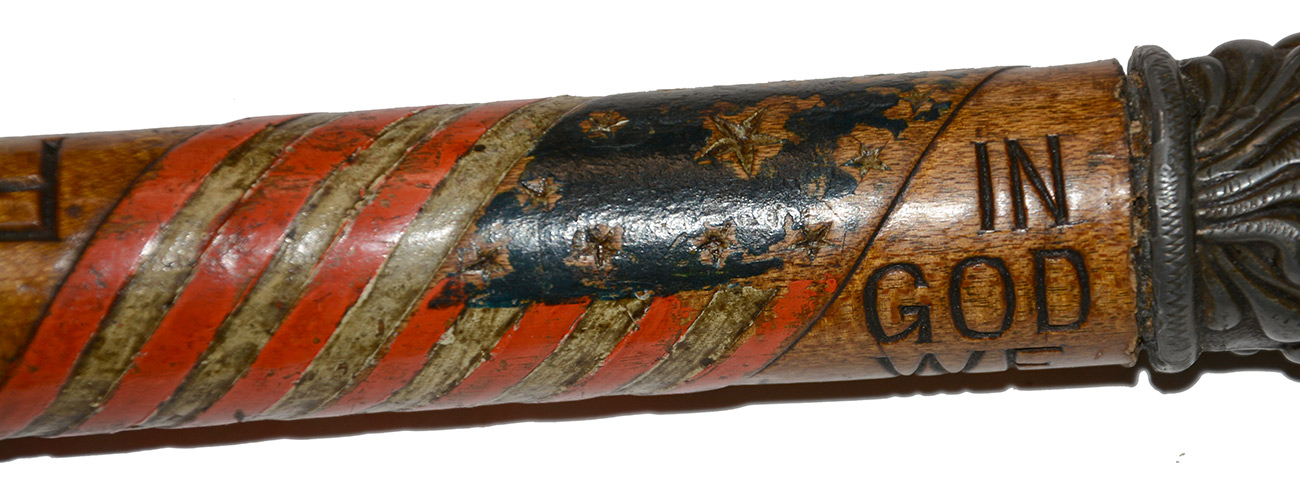
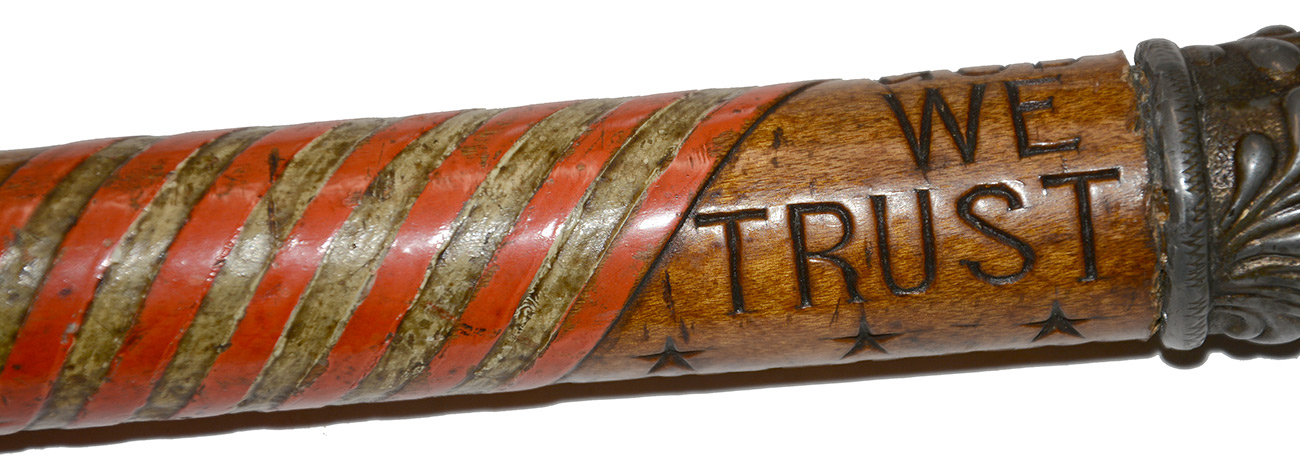
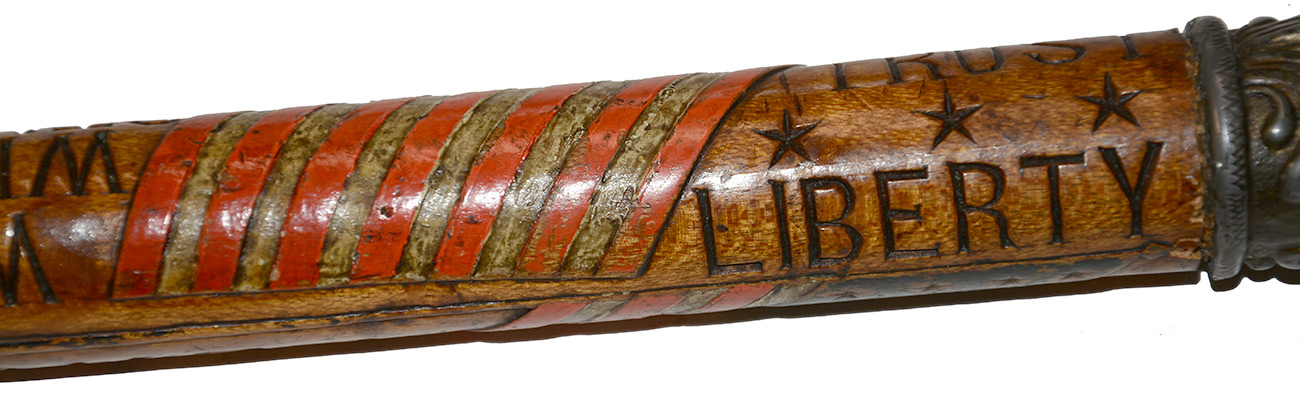
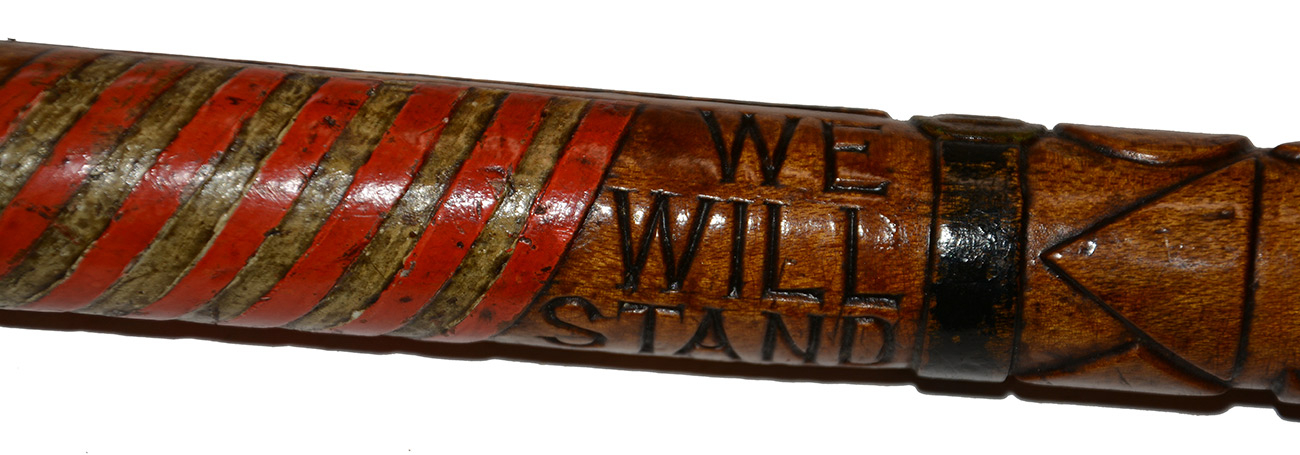
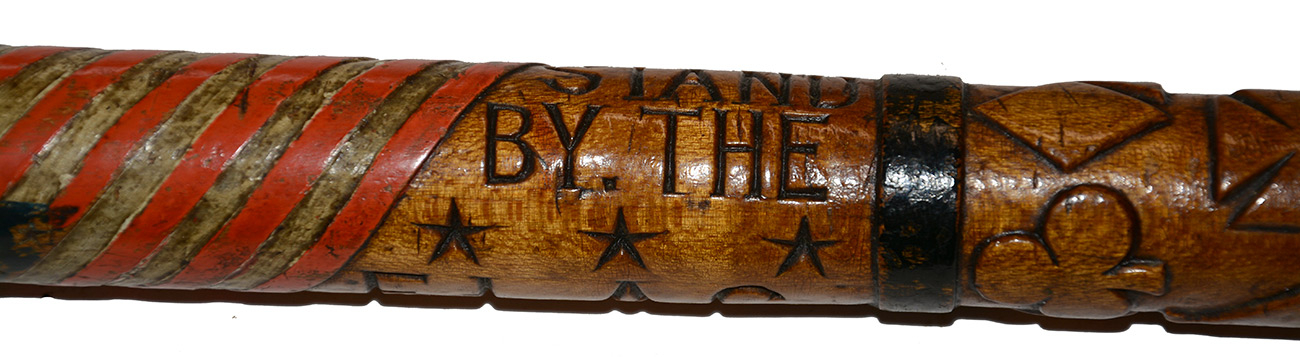
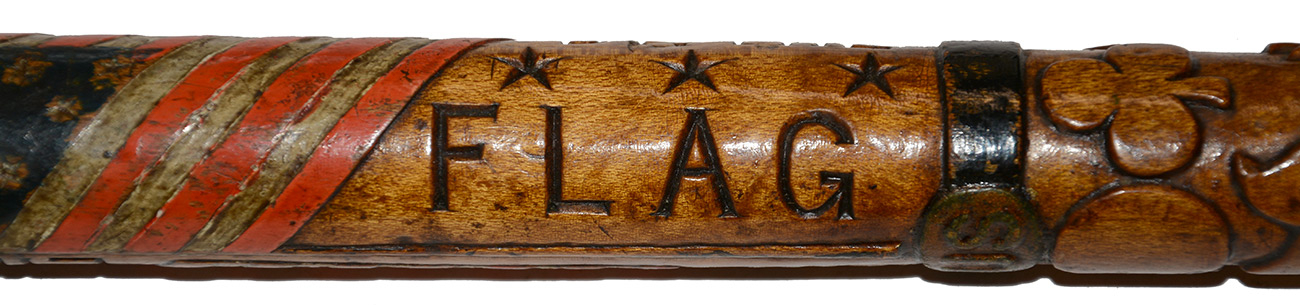
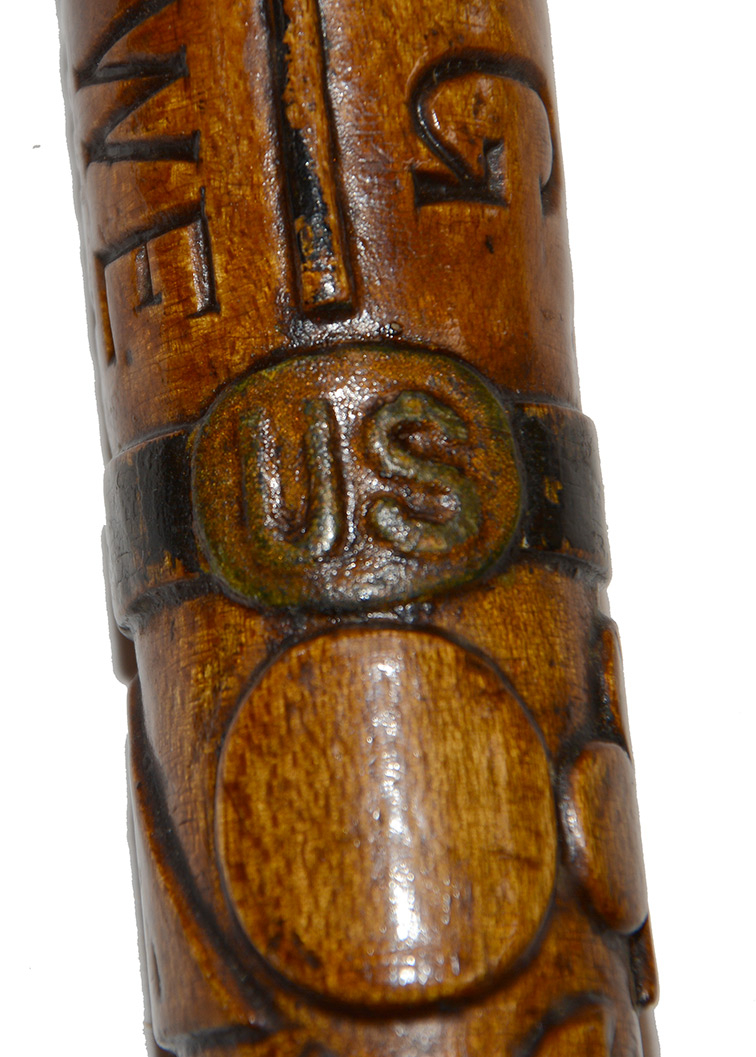
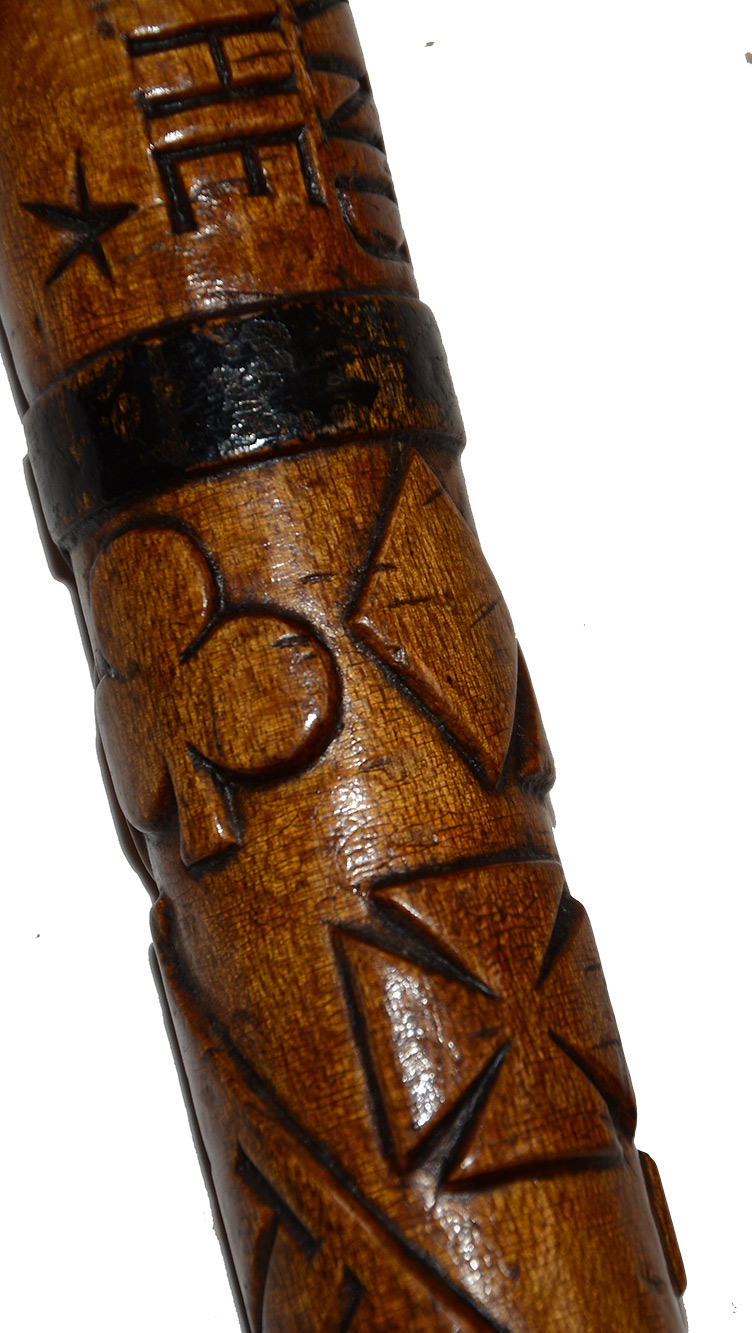
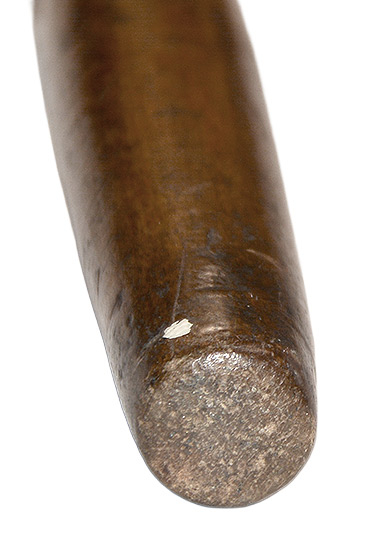
The cane measures 35-1/2 inches overall and is full length, in excellent condition with no breaks or cracks or damage, just some slight paint losses, no large chips or flakes. The top has a cast pewter foliate-decorated cap. Below this a red, white and blue painted US flag wraps around the upper portion of the shaft in a slightly downward spiral, showing stars carved in its blue field, the flag flying from a flagpole rising up from an oval US buckle on a black belt that circles the shaft. In the uppermost angle created by the top edge of the flag is carved “IN GOD WE TRUST * * * LIBERTY.” In the lower angle between the bottom edge of the flag and narrow black infantry waist belt is, “WE WILL STAND BY THE * * * FLAG.” Both phrases are carved in incised block letters.
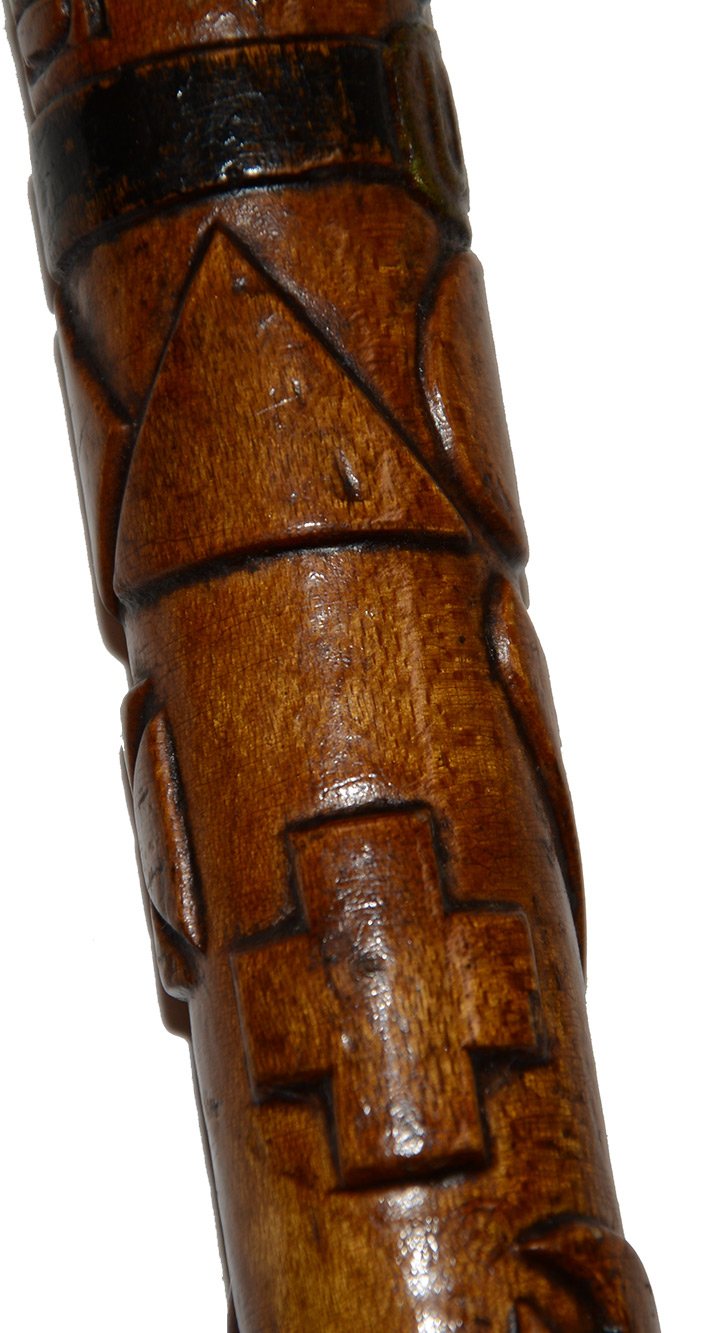
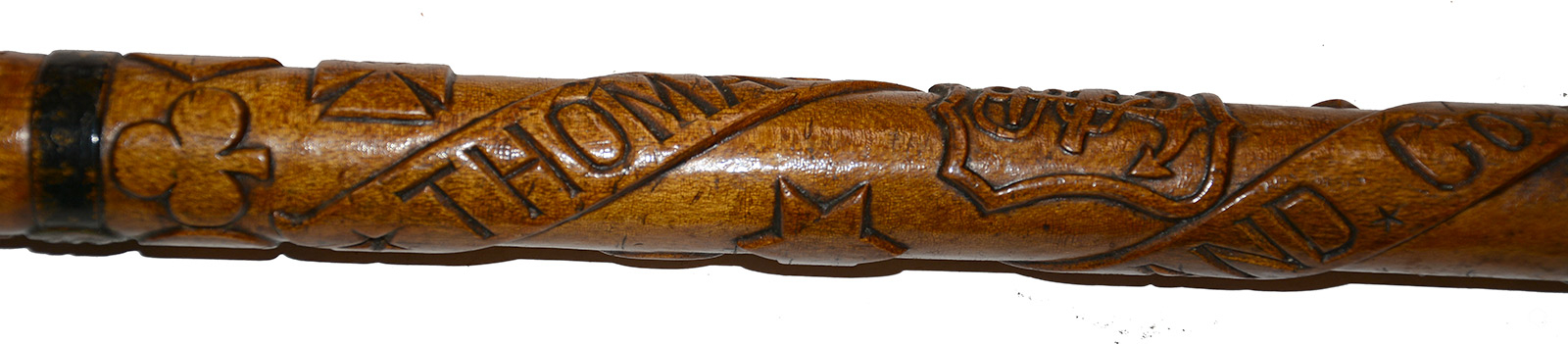
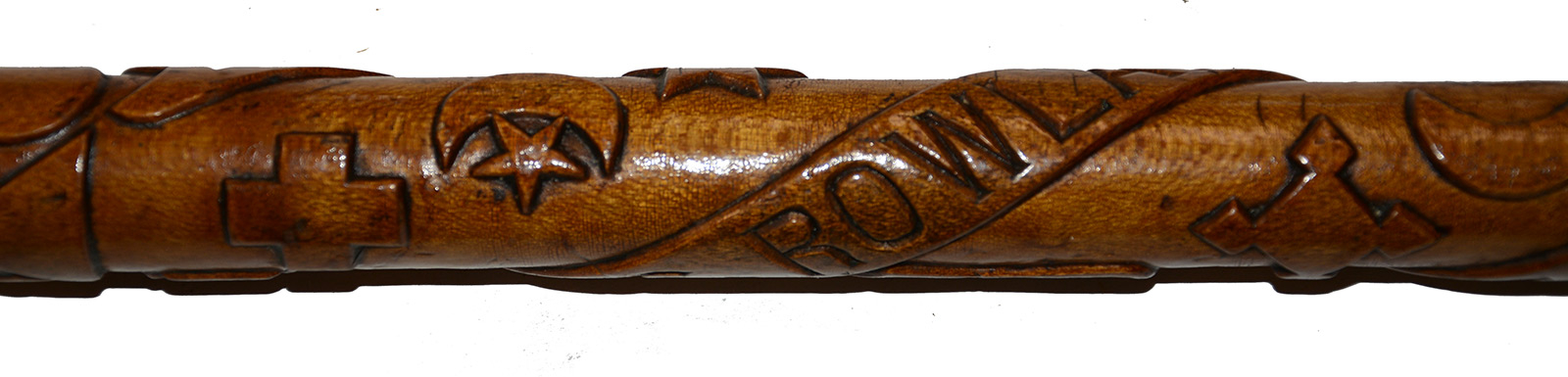
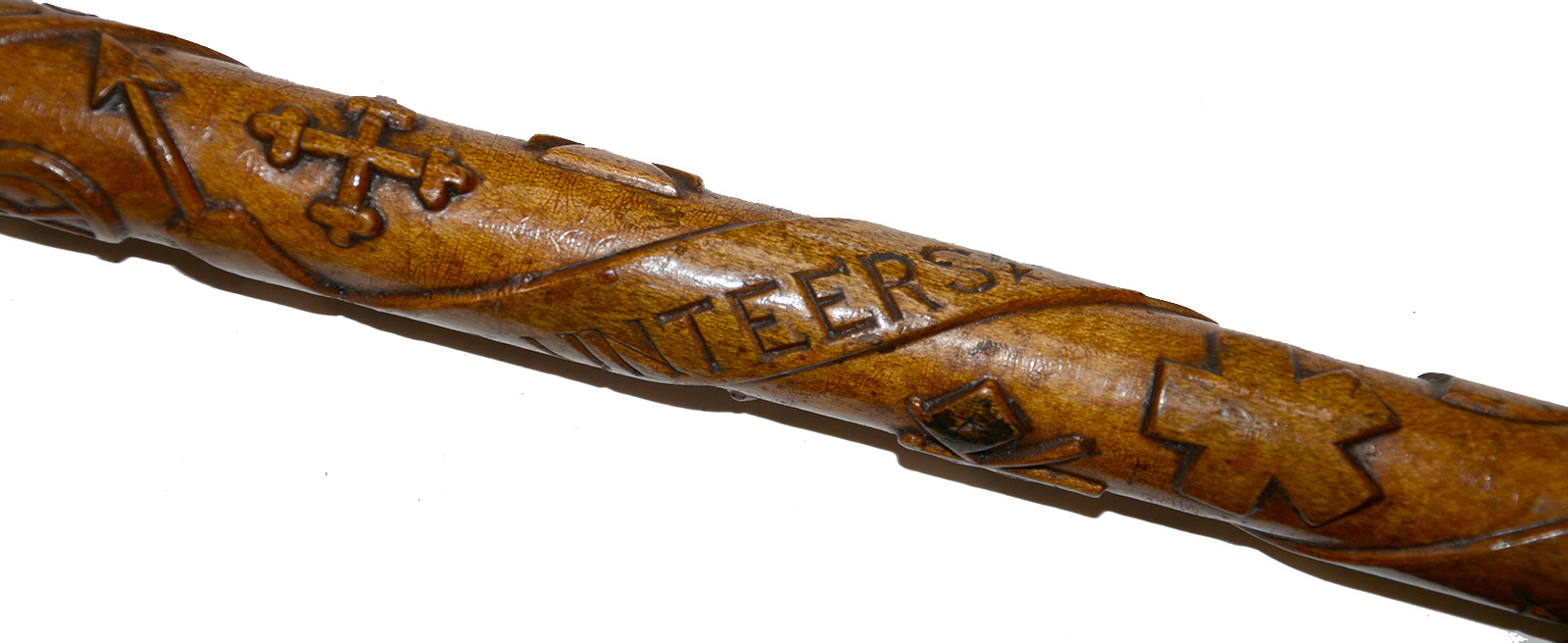
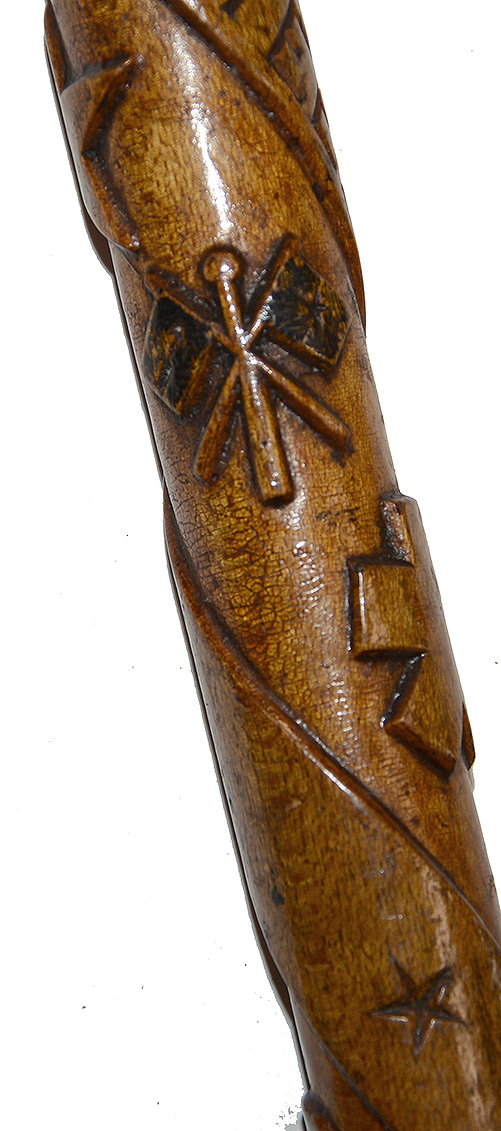
Below this is a band winding down around the shaft carved with veteran’s name and unit in large and small incised capital letters with star-shaped periods: “THOMAS . ROWLAND . CO. I . 12 CONNECTICUT . VOLUNTEERS .” This band winds through a maze of raised-carved corps and branch of service insignia as found on the reverse of G.A.R. badges beginning with the circle of the 1st corps, trefoil of the 2nd Corps, diamond of the 3rd, etc., along with elements like the crossed flags and torch of the Signal Corps, and even the crossed oars and anchor badge for the engineers and pontoniers.
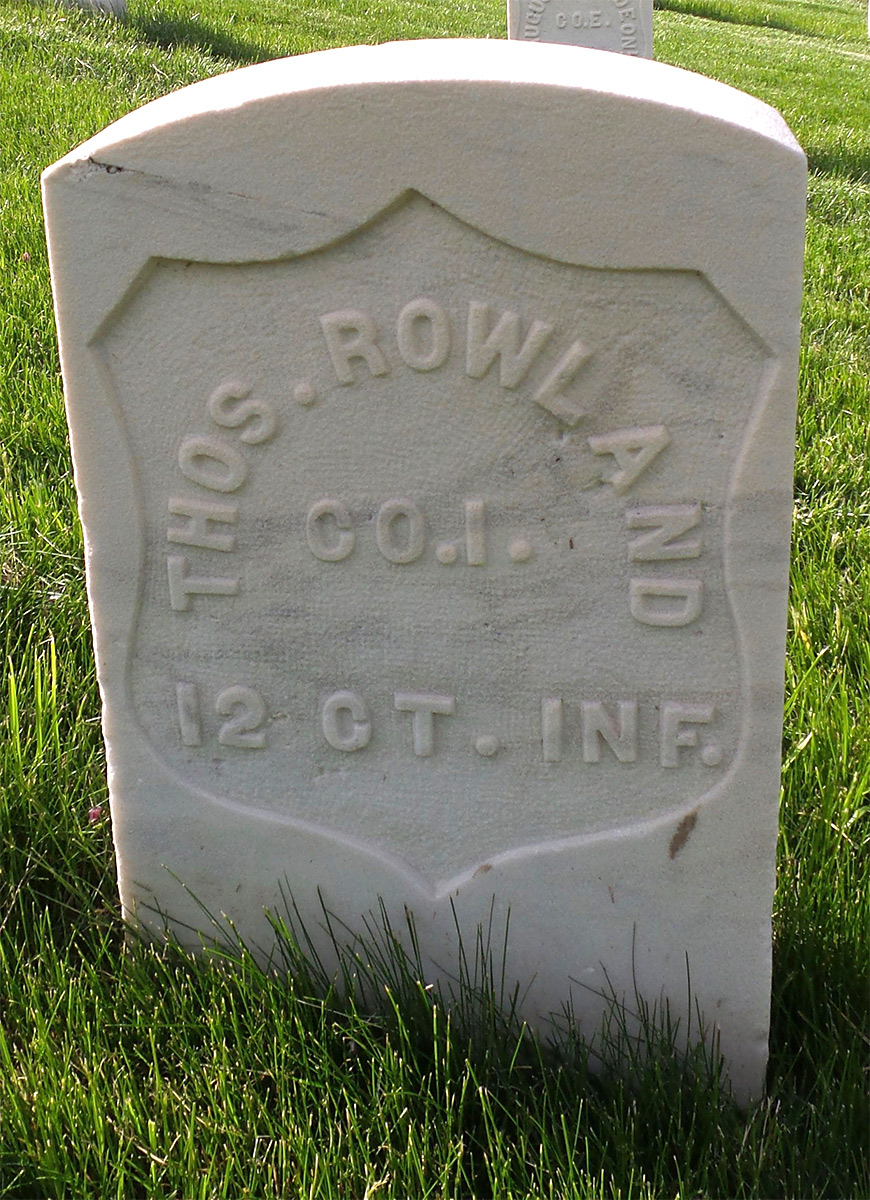
Thomas Rowland was born about 1843 in Utica, NY, but enlisted at Bridgeport, CT, on 12/16/1861, mustering in for three years as a private in Company I on 1/16/62, to date 12/19/61. He was described as age 18, standing 5’8” tall, with dark complexion, hazel eyes and brown hair, and a teamster by occupation. Muster rolls show him present with the regiment until Sept/Oct 1862, when he was detailed by Gen. Weitzel to the 1st Maine Battery. His function there is not stated, but given background as a teamster, may have been a driver. He is on their rolls until July 1863, when he was wounded at Donaldsonville, LA, also known as Cox’s or Koch’s Plantation. He was wounded in the right hand, he always said by shell, though records sometimes call it a gunshot wound, resulting in the amputation of his thumb by a surgeon on the field and his index finger later in the hospital. He seems to have been officially returned to duty in October, but attached to the St. James General Hospital in New Orleans at least through the end of the year. He returned to the 12th Connecticut, however, by May-June 1864, when the regiment had returned from veteran furlough and as part of the 19th Corps joined the Army of the Shenandoah then saw action against Jubal Early in the Valley. He is listed as serving as Company Cook, Company Clerk, and also at regimental headquarters, until his discharge at the end of his term of service, Dec. 19, 1864.
Dyer gives the follow history of the 12th CT until Rowland left it in October 1862. Assigned to the Department of the Gulf, the 12th CT was on duty at Ship Island, Miss., until April 15, 1862. It took part in operations against Fort St. Phillip and Jackson, Mississippi River, April 15-28, occupied New Orleans, La., May 1, and served at Camp Parapet and Carrollton until October, taking part in the expedition to Lake Pontchartrain, Pass Manchac and up Techefuneta and Pearl rivers July 25-August 2, skirmishes at Madisonville and near Covington July 27, and operations in the District of La Fourche starting in late October 1862.
During Rowland’s time with the 1st Maine Battery they are listed as taking part in: Operations in La Fourche District October 24 – November 6. Action at Georgia Landing, Labadieville, October 27. At Thibodeauxville until January 1863. Expedition up the Teche January 11–18. Action with steamer Cotton, Bayou Teche, January 14. At Camp Stevens, Brashear City, and Bayou Boeuf until April. Operations in western Louisiana April 9 – May 14. Teche Campaign April 11–20. Fort Bisland, near Centreville, April 12–13. Jeanerette April 14. Expedition from Opelousas to Barre Landing April 21. Siege of Port Hudson May 23 – July 8. Thompson's Creek May 25. Assaults on Port Hudson May 27 and June 14. Surrender of Port Hudson July 8. Koch's Plantation, Donaldsonville, July 12–13, 1863.
After Rowland rejoined the 12th Connecticut in May/June 1864 they were on duty: at Carrollton till July. Moved to Fortress Monroe, Va., thence to Washington, D. C., July 5-13. Snicker's Gap expedition July 14-23. Sheridan's Shenandoah Valley Campaign, August to December. Battle of Opequan, Winchester, September 19. Fisher's Hill September 22. Battle of Cedar Creek October 19. He was thus with them through the end of their active large-scale combat operations, losing 170 in killed, wounded and captured at Cedar Creek. They were on duty at Winchester, Newton and Summit Point until April 1865, and had been officially consolidated into a battalion before Rowland’s muster out, with his company becoming part of a new Company D.
In later years Rowland always listed his occupation as “laborer” and applied for a pension due to his hand injury as early as May 1865. The remarkable photo documenting his injury was including among his various applications. His file includes several increases, with notes that he could somewhat hold a spoon or fork and write his name but had a loss of motion in his lower arm as well. He seems to have moved to the Midwest for a time, showing up in the records of disabled veterans’ homes in Illinois, Wisconsin, and elsewhere, being admitted and discharged at his own request several times, but then settled in the veterans’ home in Bath, NY, in the 1890s, dying there in 1913 and interred in its national cemetery. When and where he got the cane is unclear, but he was likely a member of several G.A.R. posts given his postwar moves. He seems to have married, but separated in the 1890s. His widow applied for a pension about 1927, but had difficulty establishing the facts of the marriage.
This is a wonderful, eye-catching veteran’s piece, carried by a soldier with an interesting and varied military record. [sr][ph:L]
~~~~~~~~~~~~~~~~~~~~~~~~~~~~~~~~~~~
THIS ITEM, AS WITH ALL OTHER ITEMS AVAILABLE ON OUR WEB SITE,
MAY BE PURCHASED THROUGH OUR LAYAWAY PROGRAM.
CLICK HERE FOR OUR POLICIES AND TERMS.
THANK YOU!
Inquire About BEAUTIFULLY CARVED WOUNDED-IN-ACTION VETERAN’S CANE: 12th CT AND 1st ME BATTERY- EX-STONE HOUSE MUSEUM
Most Popular
Historical Firearms Stolen From The National Civil War Museum In Harrisburg, Pa »
Theft From Gravesite Of Gen. John Reynolds »
Selection Of Unframed Prints By Don Troiani »
Fine Condition Brass Infantry Bugle Insignia »
Rare Identified 65Th Ny Sergeant’s Jacket, With Manscript Material: 1St U.s. Chasseurs »
featured item
A CIVIL WAR NATIONAL ARMY ISSUE BLANKET
These wool blankets were an essential piece of a Union soldier's gear. This high quality one is full length and unaltered. It measures 63 inches wide by 76 inches in length. The ends are "raw" on the four sides. From the ends of the blanket at a… (1316-13). Learn More »
site search