

site search
online catalog
US REGULATION ISSUE CIVIL WAR BLANKET
Hover to zoom
$4,950.00
Quantity Available: 1
Item Code: 1273-61
Shipping: Determined by Method & Location of buyer
To Order:
Call 717-334-0347,
Fax 717-334-5016, or E-mail
Along with the canteen and haversack, the blanket was an essential piece of the soldier’s field gear. We have been lucky enough to take in several Civil War issue blankets from a Massachusetts collection, but don’t be fooled by the number. Civil War issue blankets have always been scarce. Inexpensively made and not exactly colorful or eye-catching, after taking rough treatment, getting dirty and soiled in the field, the few that were taken home were likely soon discarded, if they were allowed in the house at all, and the smaller number in good condition and of practical use were largely used up in civilian life. They were hardly attractive enough make it to the status of cherished family memento, but they are a key piece in any collection or display of Civil War field gear.
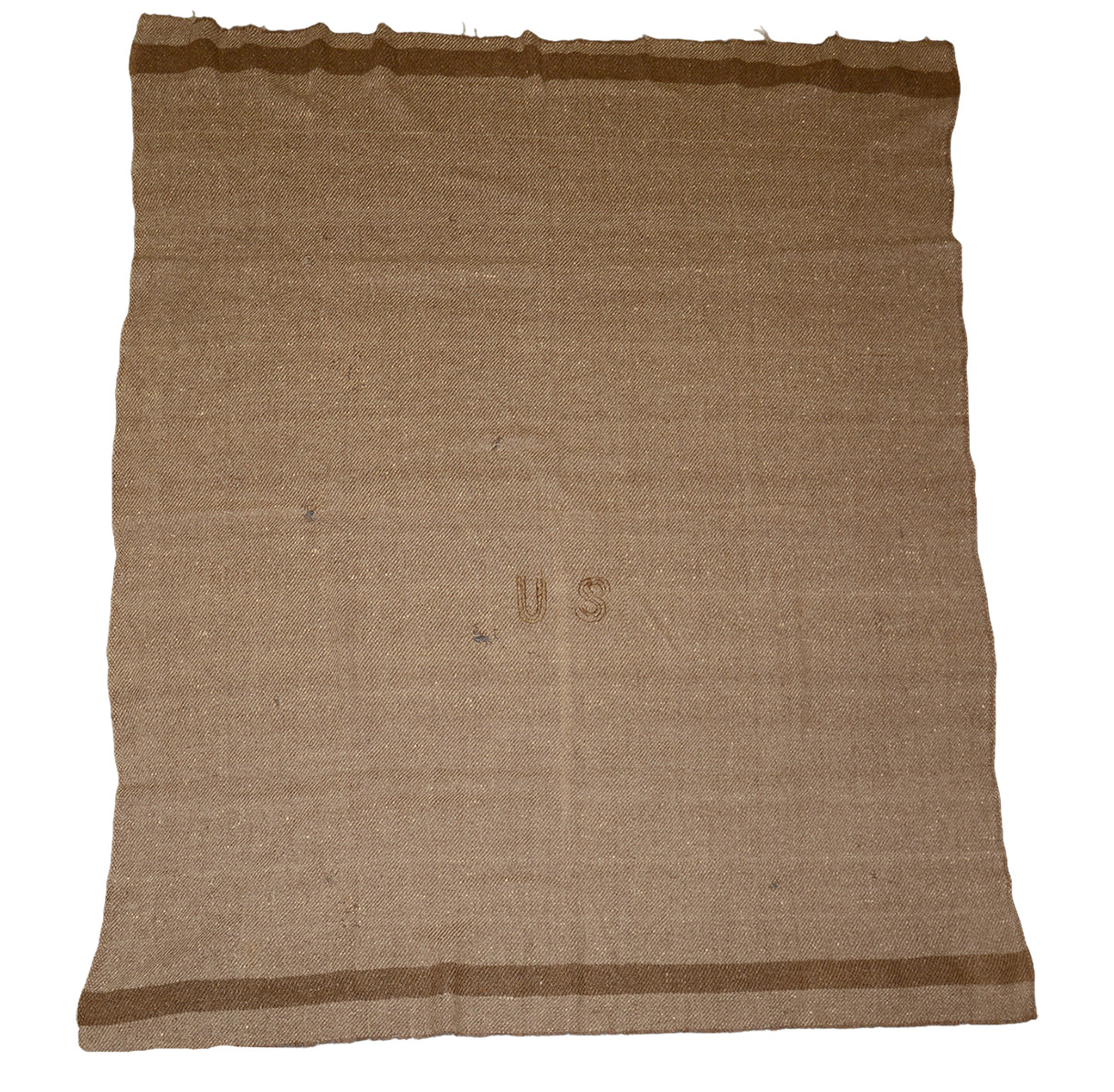
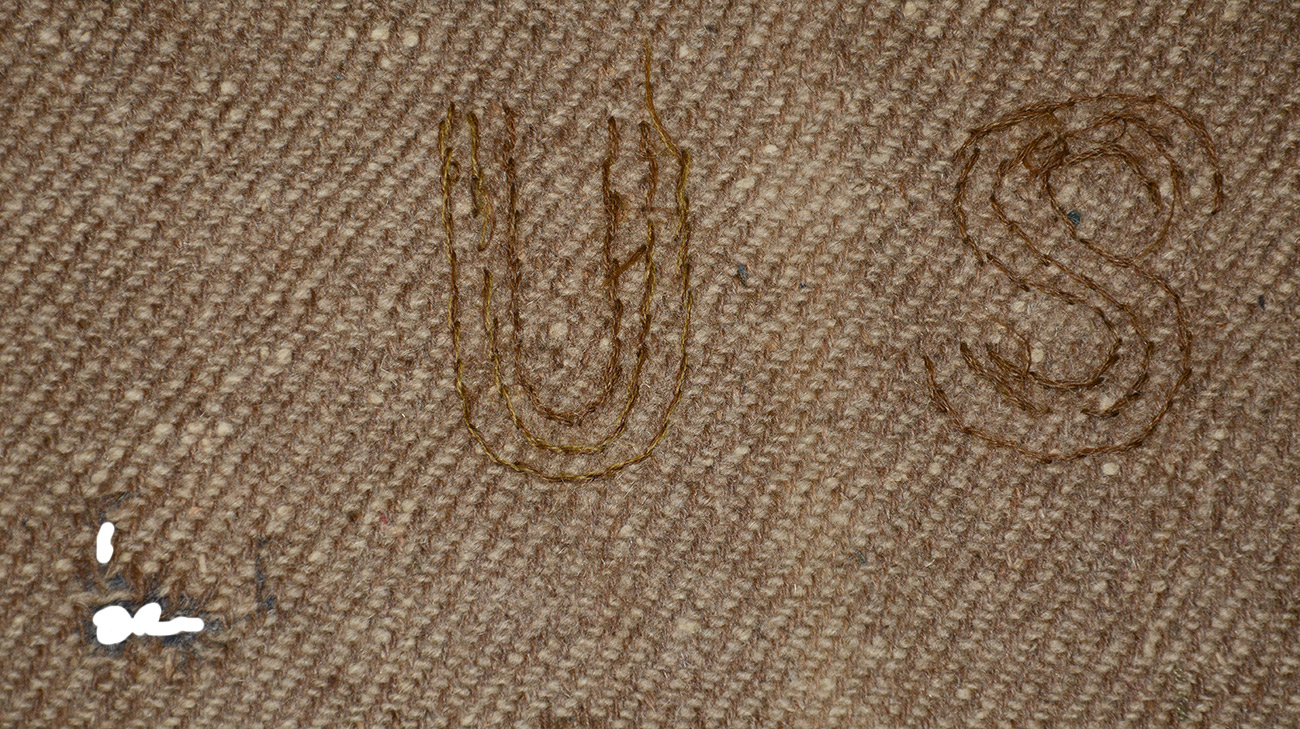
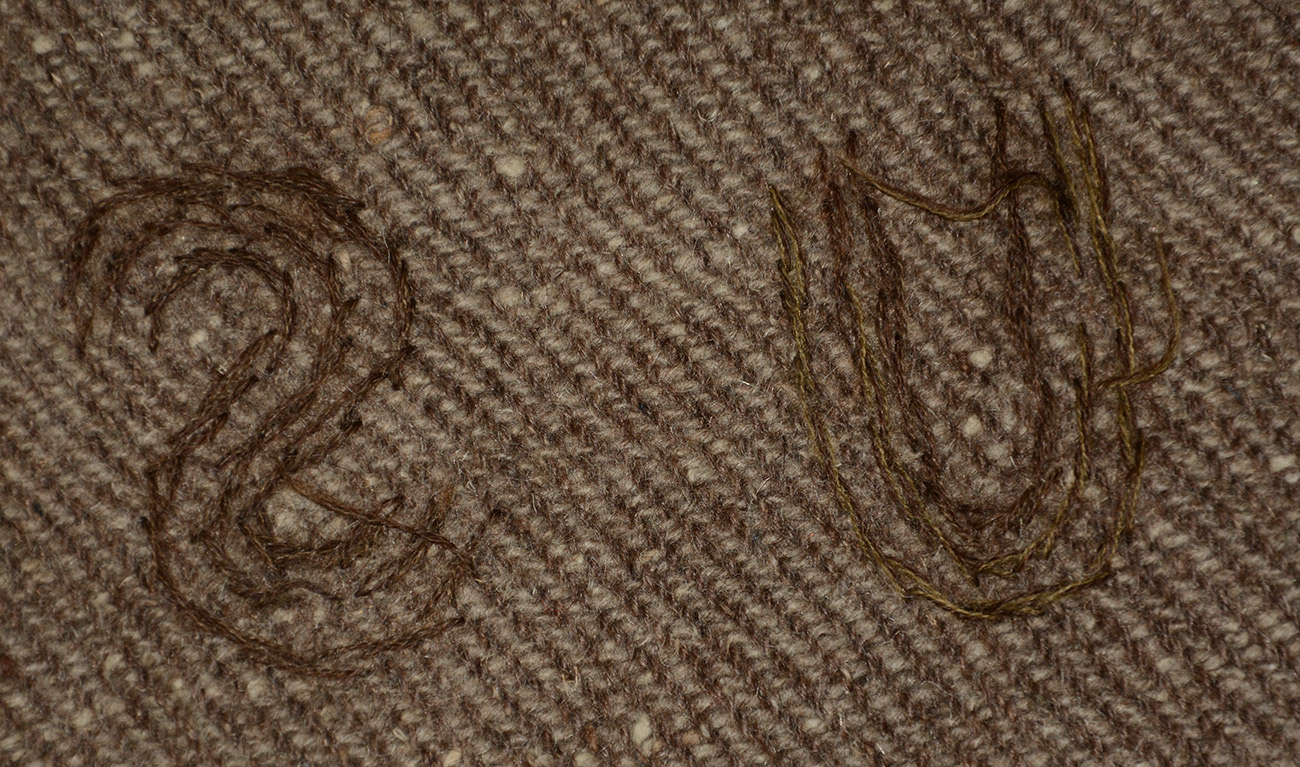
This measures about 81 inches long and 69 inches wide. The bottom stripe is 2 1/4 inches wide set about 3 inches from the edge. The top stripe is also about 2-1/4 inches wide but varies from 2-1/2 to 1 inch from the top edge, which has more fraying and a few shallow edge losses, with the narrowest portion of the edge above the stripe at center. (The blankets being cut from a roll will often show variation in the distance of the stripe from the edge.) The letters are 3-1/2 inch tall and ¾ inch wide block letters with open ends, made of three lines of yarn, chainstitched, with the letters about 3 inches apart. They are along the vertical center line of the blanket, but slightly below the half-way point, perhaps to allow them to show when the blanket was followed, rolled, and strapped to the top of a knapsack.
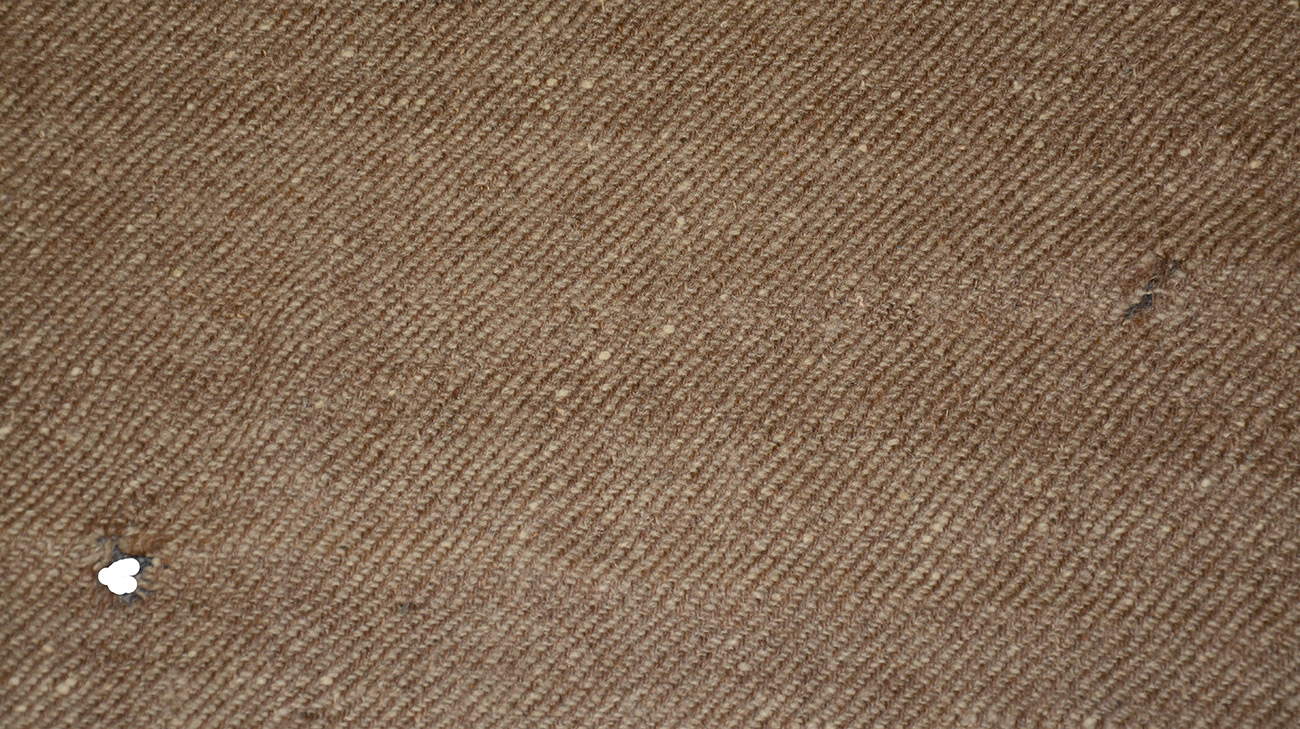
The US 1861 Regulations specified only that blankets be, “woolen, gray, with letters US in black, four inches long, in the center; to be seven feet long, and five and half feet wide; and to weigh five pounds.” Surveys of extant examples, admittedly minute samples given the huge number produced, show a wide variety in color, weave, finish, exact dimensions, size and placement of the “US,” etc. Some of this is due to manufacturer variations, with many domestic and foreign makers, and some changes due to age, exposure to the elements, etc. Width, for instance, varies from 66 to 68 inches, length from 78 to 82, and the end stripes a quarter of an inch on either side of 3 inches. Color has almost always shifted from gray to a tannish-brown, from the oxidation of iron mordants used in the dying process, which was supposed to be “in the yarn,” but in some examples may have been done to the completed blanket. Experiments indicate the color shift could occur between two and four months of use. This shows the typical color shift to a tannish brown, with the yarn used in the US and in the end stripes a medium brown, as the diagonal warp threads to a light brown, suggesting they, like the end stripes and the US, were dyed black, to create the required gray in combination with apparently undyed horizontal weft threads. See, Fred Gaede’s article on the Danish exchange blankets in CMH 1984, 36.2, articles by Gaede and by Sutton in the Watchdog, and, for an especially useful survey, “The Army Issue Blanket,” by the redoubtable “Ed Quigley” in the Columbia Rifles Research Compendium, edited by John E. Tobey.
The condition is very good. There are some edge losses, as mentioned above, along the upper edge, but they simply vary the distance slightly from that edge to the upper stripe and do not intrude into it. There are a few holes. There is 1-1/2 x 1” L-shaped hole just below and to the left of the U, and another about 1 x 1” hole 40” from the top edge and about 14-1/2 inches from the left edge, putting it slightly above and about 16” to the left of the “U;” another 1” hole about 16” from the left edge and 12” from the bottom, and a couple of 1” holes on the lower right about 6 inches above the bottom stripe. Most of these blend in well with the loose weave of the blanket, are not obtrusive, would not be visible when the blanket is folded, and do not affect its structural integrity.
This is a very strong example and the three-line chain-stitched “US” is considered by the author of the CRRC article to be a very common design, and thus a good candidate for a “typical” blanket. We also note that it seems to be the same form as used in the 1858 Danish exchange blankets published by Fred Gaede, though some have disagreed with his interpretation of “gray wool” as undyed wool in discussion of the blanket body. [sr] [ph:L]
~~~~~~~~~~~~~~~~~~~~~~~~~~~~~~~~~~~
THIS ITEM, AS WITH ALL OTHER ITEMS AVAILABLE ON OUR WEB SITE,
MAY BE PURCHASED THROUGH OUR LAYAWAY PROGRAM.
CLICK HERE FOR OUR POLICIES AND TERMS.
THANK YOU!
Inquire About US REGULATION ISSUE CIVIL WAR BLANKET
Most Popular
Historical Firearms Stolen From The National Civil War Museum In Harrisburg, Pa »
Theft From Gravesite Of Gen. John Reynolds »
Selection Of Unframed Prints By Don Troiani »
Fine Condition Brass Infantry Bugle Insignia »
Rare Identified 65Th Ny Sergeant’s Jacket, With Manscript Material: 1St U.s. Chasseurs »
featured item
ID’D WW2 LEATHER A-2 FLYING JACKET, 351ST BOMB GROUP – B-17 P.O.W.
This nice condition A-2 jacket was worn in WW2 by Lt. Kenneth Lester Vaughn. He was a B-17 co-pilot with the 511th Bomb Squadron, 351st Bomb Group, 8th Air Force in England. The Type A-2 flying jacket was standardized by the U.S. Army Air Corps on… (534-46). Learn More »
site search