

site search
online catalog
CIVIL WAR CHAPLAIN'S ARCHIVE — REV. LEVI W. NORTON, 72ND NEW YORK INFANTRY, EXCELSIOR BRIGADE
Hover to zoom
$6,500.00
Quantity Available: 1
Item Code: 1268-1272
Shipping: Determined by Method & Location of buyer
To Order:
Call 717-334-0347,
Fax 717-334-5016, or E-mail
Extensive Correspondence, October 1861–1862, with Content on Camp Life, Battlefield Chaplaincy, Emancipation, and a Presidential Sighting
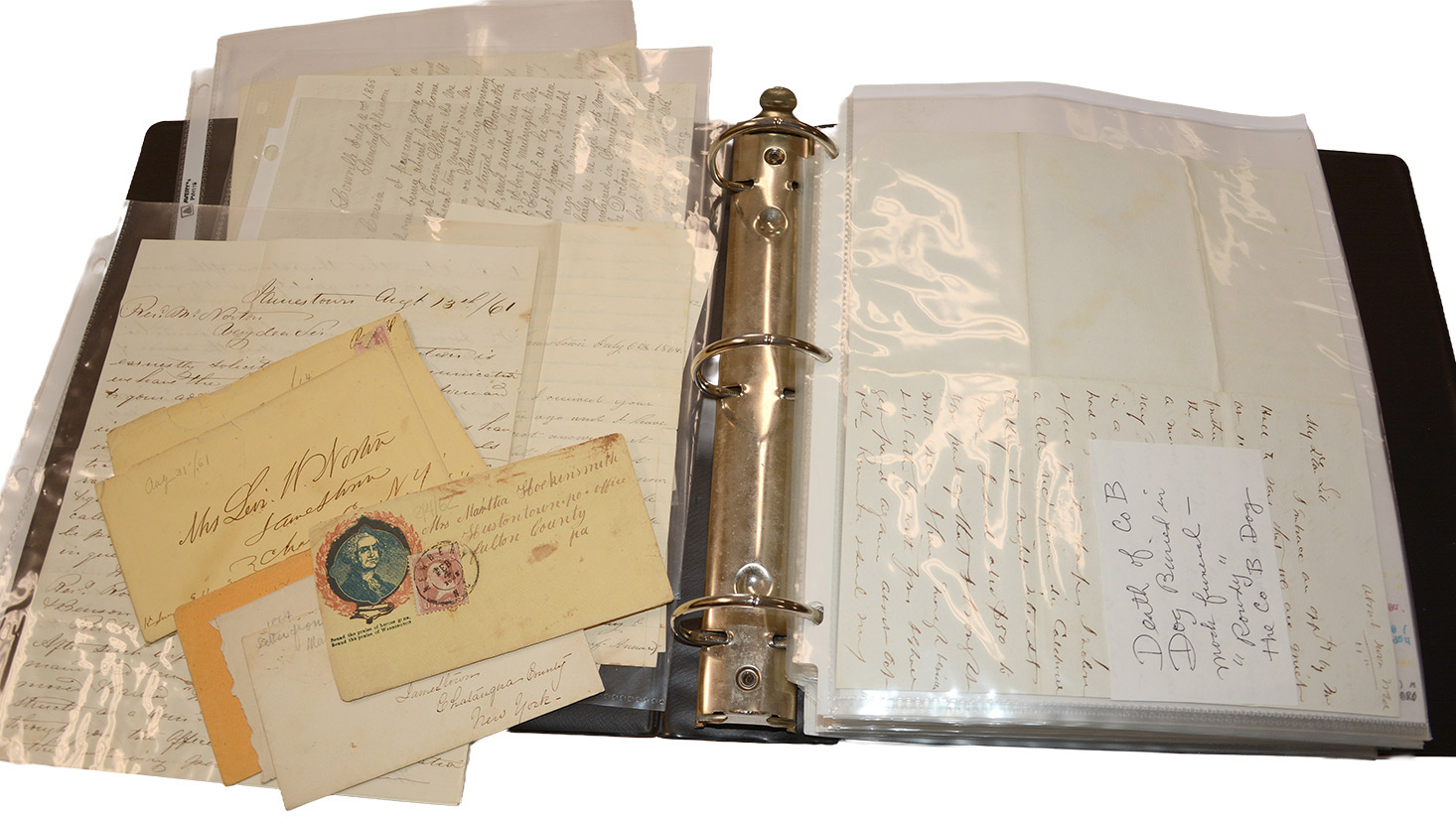
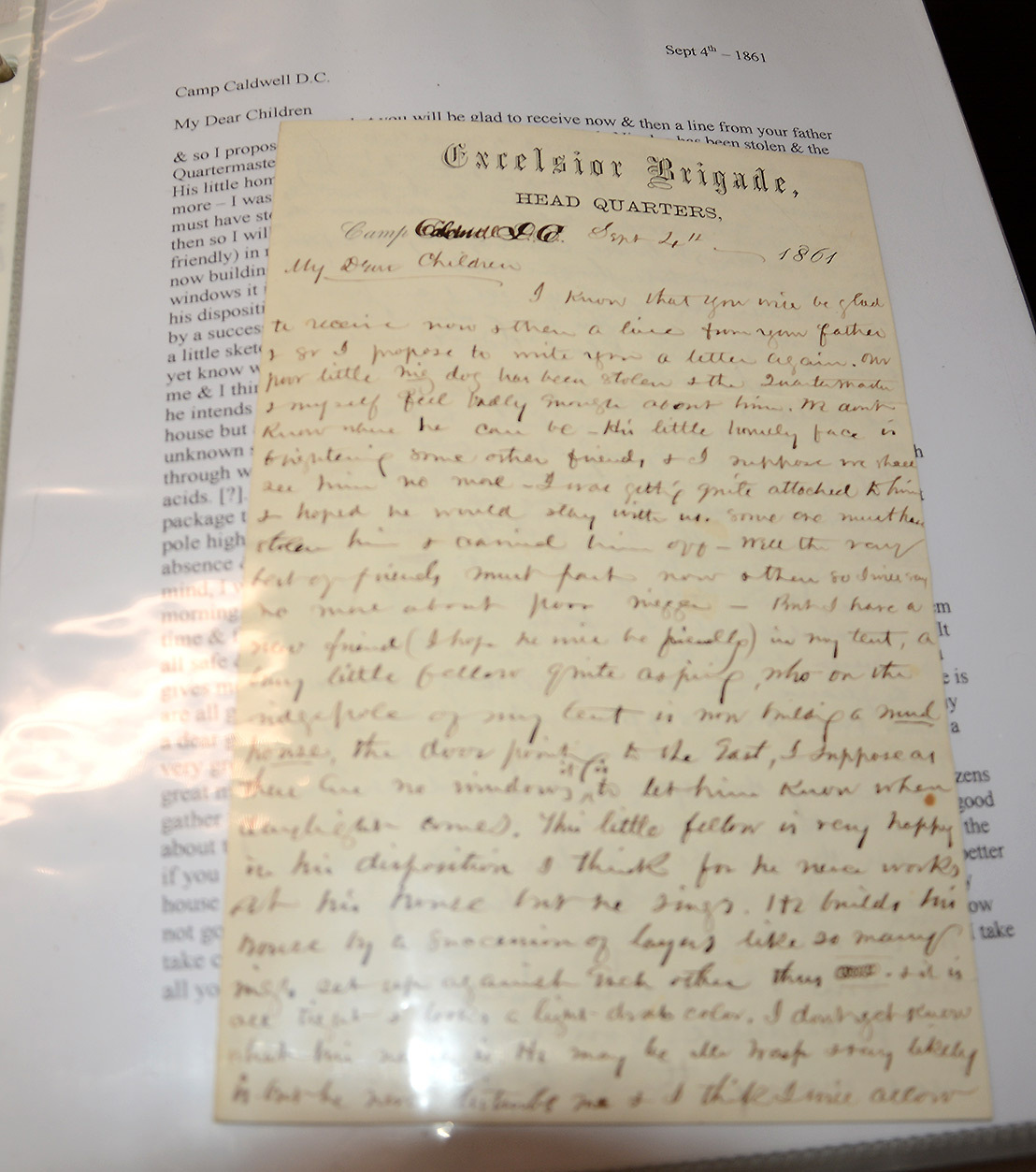
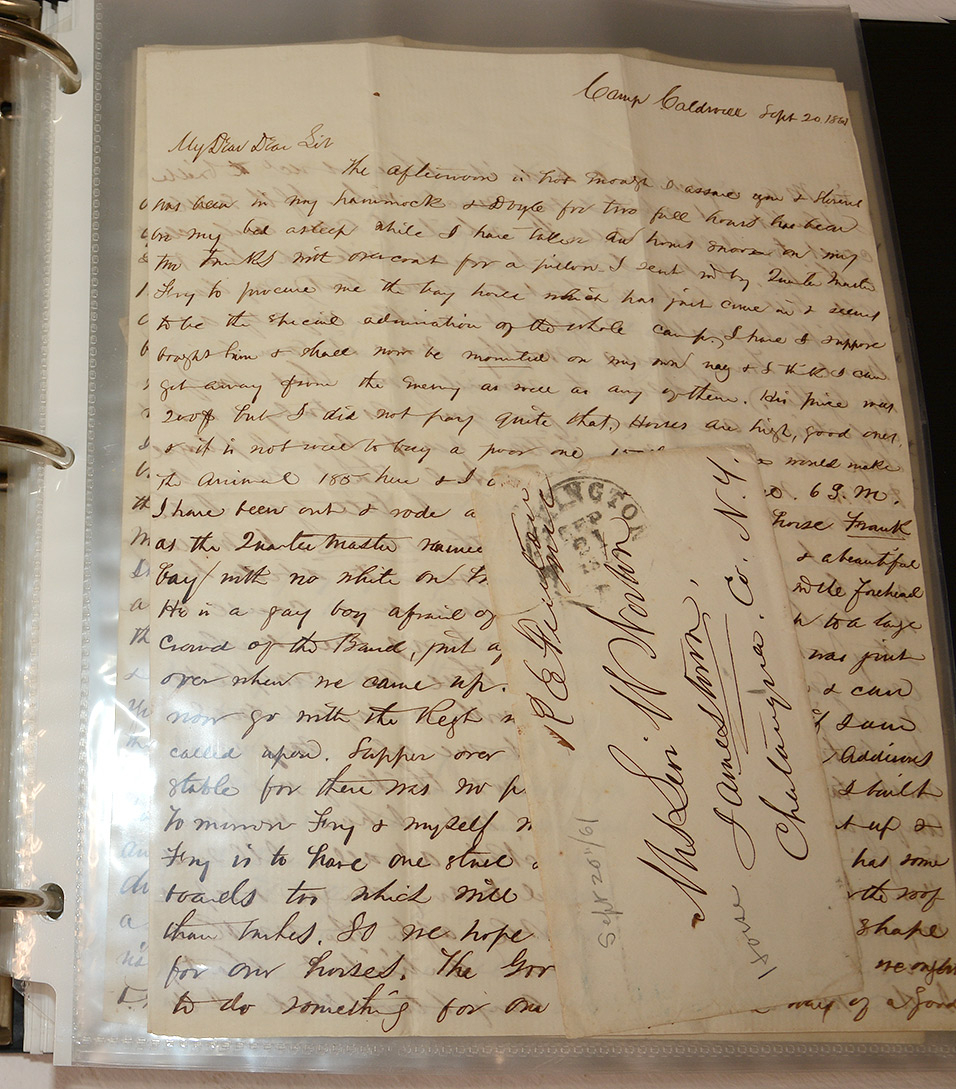
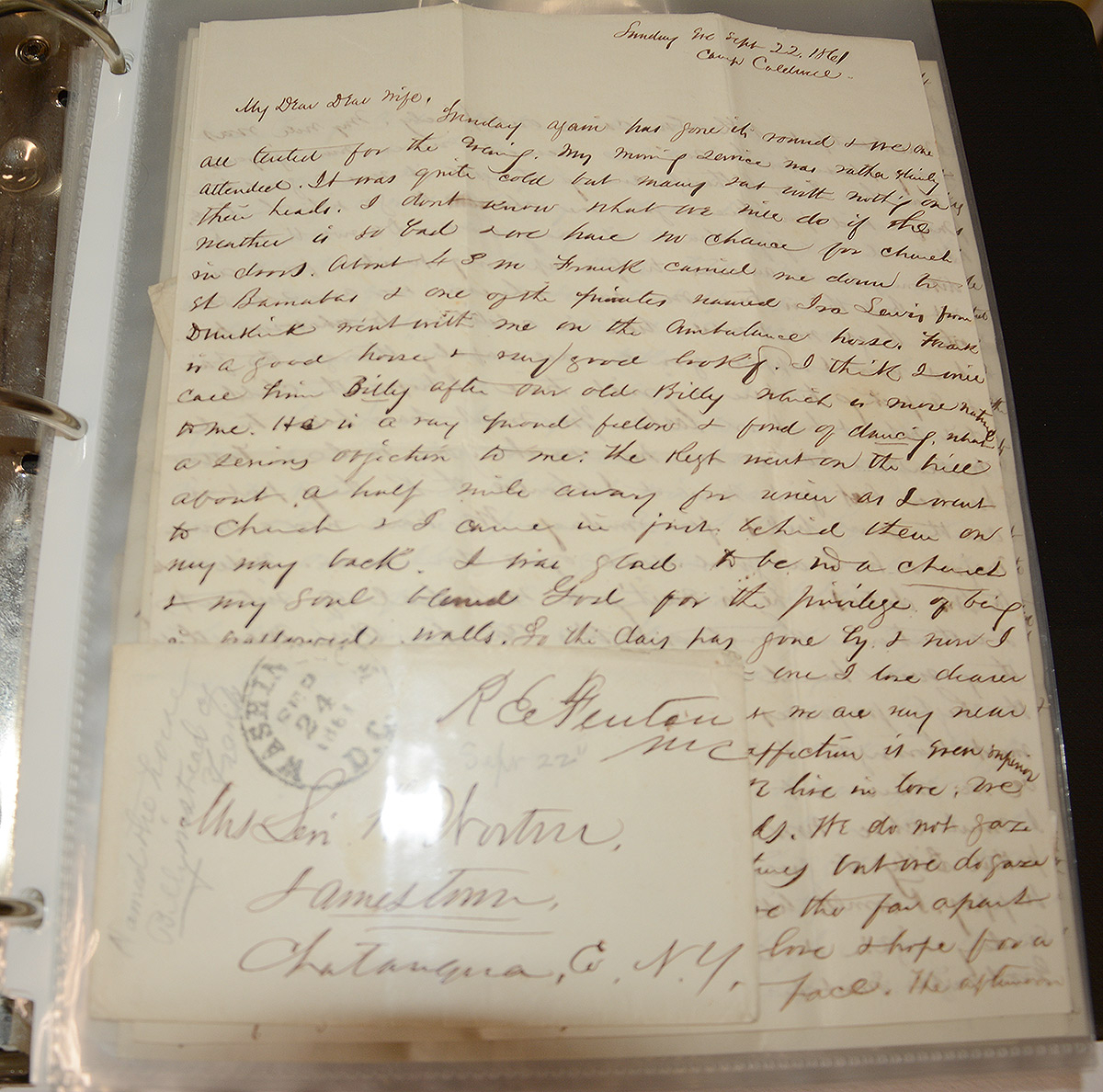
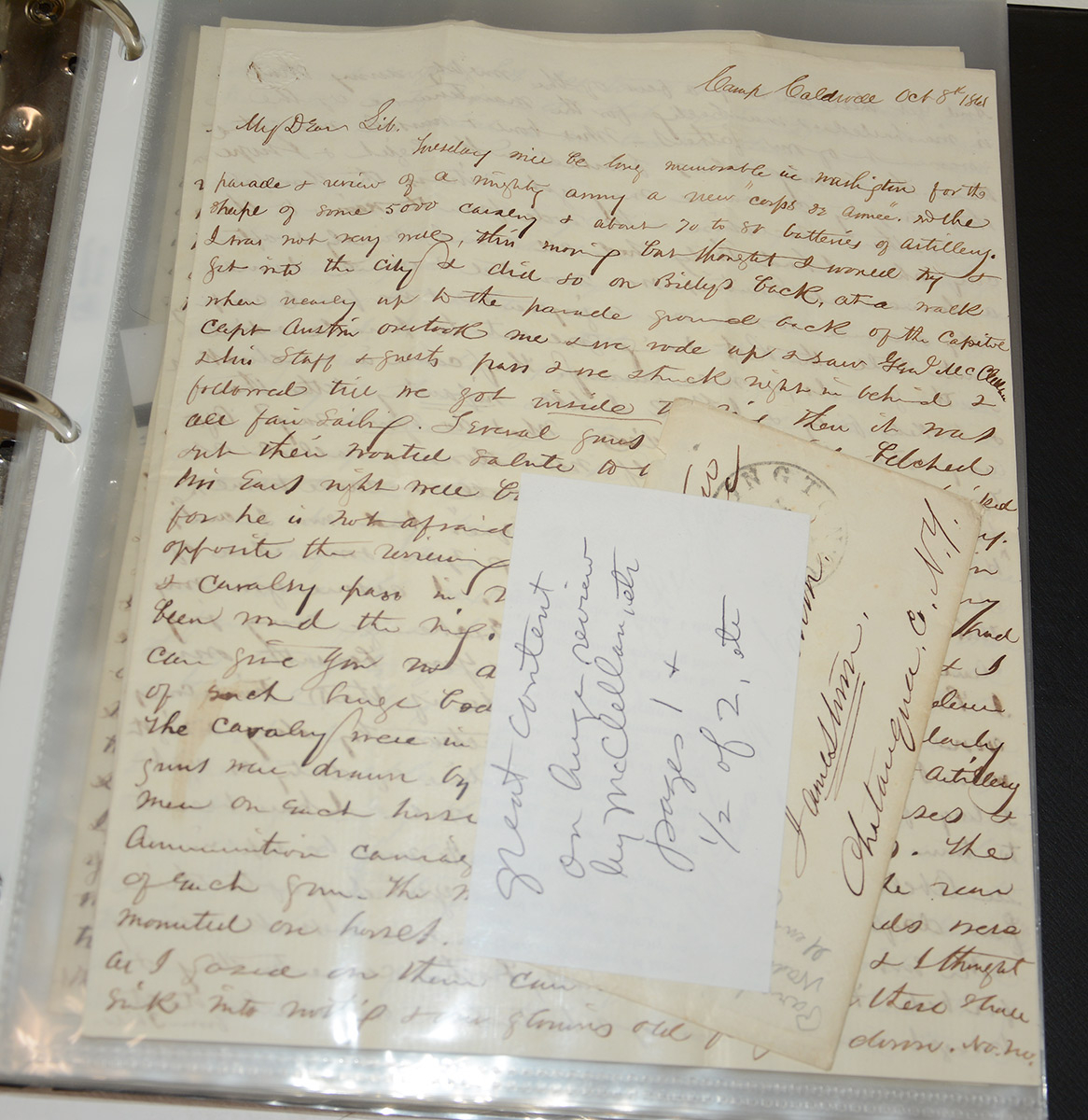
An outstanding archive of approximately 25 autograph letters signed, most with original covers, written by Rev. Levi W. Norton of Jamestown, Chautauqua Co., New York, serving as Chaplain of the 3rd Regiment, Excelsior Brigade (Sickles' Brigade) under Col. Nelson Taylor, to his wife Lemira ("Lib") Norton and, on occasion, to their children. The correspondence runs from a courtship-toned 1861 group through the winter encampment at Camp Caldwell, Camp Baker, the hospitals at Good Hope and Georgetown, Camp Wood in lower Maryland, and Norton's eventual resignation and journey home via Washington in the spring of 1862.
Norton's letters are extraordinarily rich, combining the devotional voice of a working chaplain — burying the dead, visiting the sick, holding services "on a box, case on my knee" — with the tender, grieving voice of a father mourning a young daughter, "our darling Jennie," lost before the war. Few chaplain's archives of this depth and emotional candor appear on the market.
CAMP LIFE, BURIALS, AND THE WORK OF A REGIMENTAL CHAPLAIN
Norton's letters return again and again to the grim daily labor of a Civil War chaplain — burying soldiers, comforting the dying, and keeping careful account of losses. From Camp Wood, Nov. 28, 1861 (Thanksgiving Day):
"In the morning at 9 o'clock a funeral train passed from one quarters to an adjoining woodside where two poor boys were laid away in their soldiers' graves... It was a sad and solemn time as I read the service for the two at the same time... O how have I thought of their parents and friends and wondered and wept at the sad losses this war is to make in almost every household."
By December 4th he is tallying the toll with grim precision: "This afternoon I have buried two of our boys from Co. I... The fever has abated wonderfully and now we have less them go to the hospital." And on March 31, 1862, a sobering statistical note ideal for exhibition or research use:
"I wrote up my list of dead yesterday and find that 36 of our boys have laid down since the beginning, ten months, for a thousand men. My little cemetery is now being fenced."
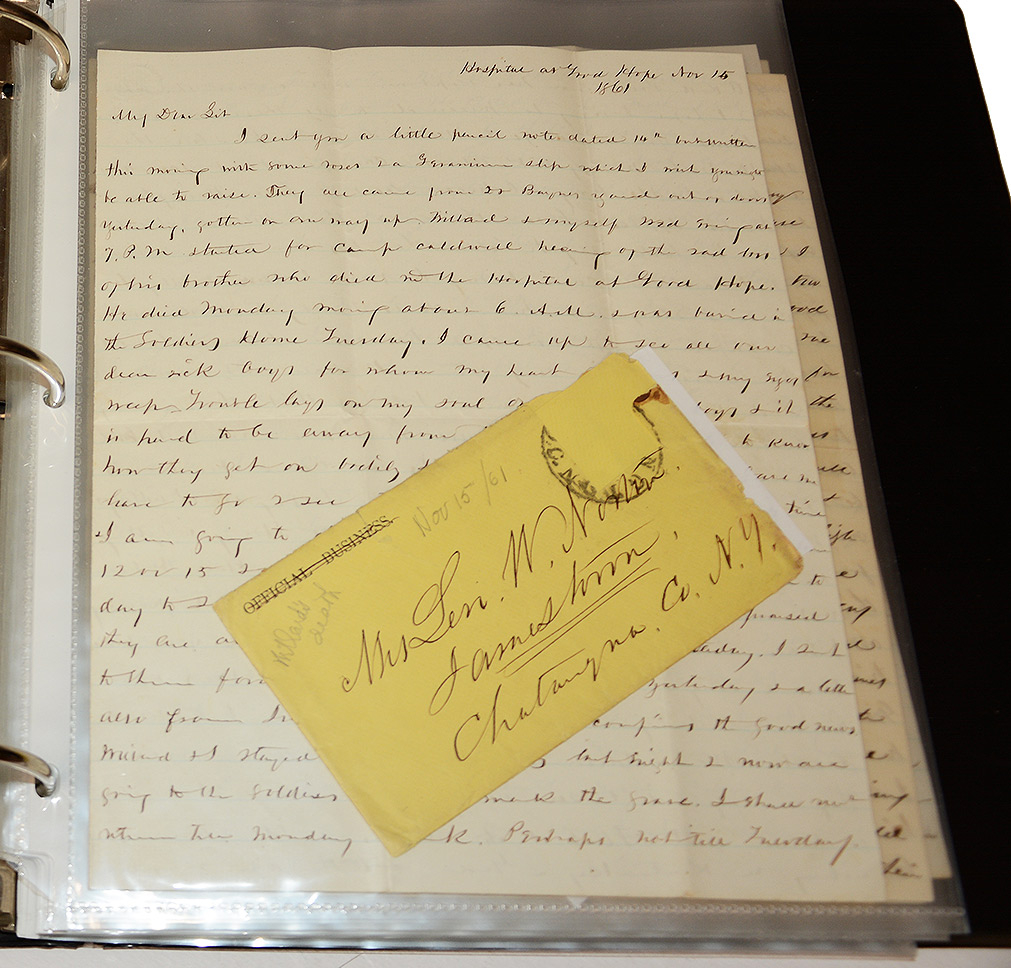
A powerful November 15, 1861 letter from the hospital at Good Hope finds Norton administering to the dying with almost pastoral desperation:
"I have visited some 12 or 15. I am going to the Union Hotel Hospital today to see Harry and James and Lyon... Trouble lays on my soul over these poor boys and it is hard to be away from them and not be able to know how they get on bodily and spiritually. Col. Taylor gave me leave to go see them all without limit of time and I am going to do my duty to them."
Norton describes an unforgettable reunion with two convalescing soldiers at Georgetown, Nov. 16, 1861:
"Imagine the joy, if you can, when I entered Room 18 and came suddenly upon Henry Brown and James Bull... I felt as if I wanted to take them both in my arms and bless God for their safety. I cannot even write of my joy without the tears starting... My joy was very great, and no time in the whole of my life will be more gladly remembered than this."
The same letter contains a harrowing account of a wounded soldier's arm injury and field surgery near Budd's Ferry:
"Poor Donahue, who was hurt with the shell at Budd's Ferry... gave me a most terrible account of his sufferings while on his way up. There in the ambulance the poor fellow lay over all those rough roads, his arm broken... Since he came here they have saved the ends of the bone and brought the two together."
THANKSGIVING IN CAMP AND A CHAPLAIN'S "PULPIT" OF DRUMS
Norton's Nov. 28, 1861 Thanksgiving letter is a set-piece of Civil War camp-life description, complete with menu:
"At 11 o'clock the assembly was beat and all the companies appeared on the color line without muskets or knapsacks... He soon put them in a hollow square and with two drums for my pulpit, after prayers I endeavored to recount somewhat of God's goodness... Hail Columbia and Star Spangled Banner were played by the band as opening and closing pieces... Our first course was soup... The second was fried oysters. The third was a splendid gobbler well stuffed and roasted, flanked by chicken with oyster sauce, mashed potato, pickles, butter, bread, etc. I will not mention how many glasses of champagne. Our dessert was peach pie."
PICKET FIRE, THE MARYLAND COUNTRYSIDE, AND THE SOUND OF WAR
A vivid December 7, 1861 letter records the sound and math of distant artillery fire at night — genuinely evocative material:
"It is now very late at night... Bang, boom! which we hear from afar off... You see the flash and wait awhile for it, takes sound a second to fly 1142 feet, and it is probably 4 miles to where the gun is... One of the shots was a shell and we heard it burst distinctly. 'Play away ye rebels, 'tis your home, the prince of darkness.'"
A November 30, 1861 letter to his son Fred, written from Camp Wood, gives a detailed firsthand description of lower Maryland — depleted tobacco farmland, enslaved laborers in the fields, and life within range of Confederate batteries near Budd's Ferry. This material should be presented with appropriate historical framing, but is significant as a contemporary Union chaplain's direct observation of the region and its people:
"This country is a miserable one hereabouts. The farms have all been used up raising tobacco... I saw the other day a lot of negroes in a corn field, picking and husking corn, men women and children... We are about three or four miles from the river, and it is one mile and three quarters where the batteries are, and we are in no danger here of their shells. I have however been within range of their shells several times."
WASHINGTON, LINCOLN, AND THE EMANCIPATION BILL
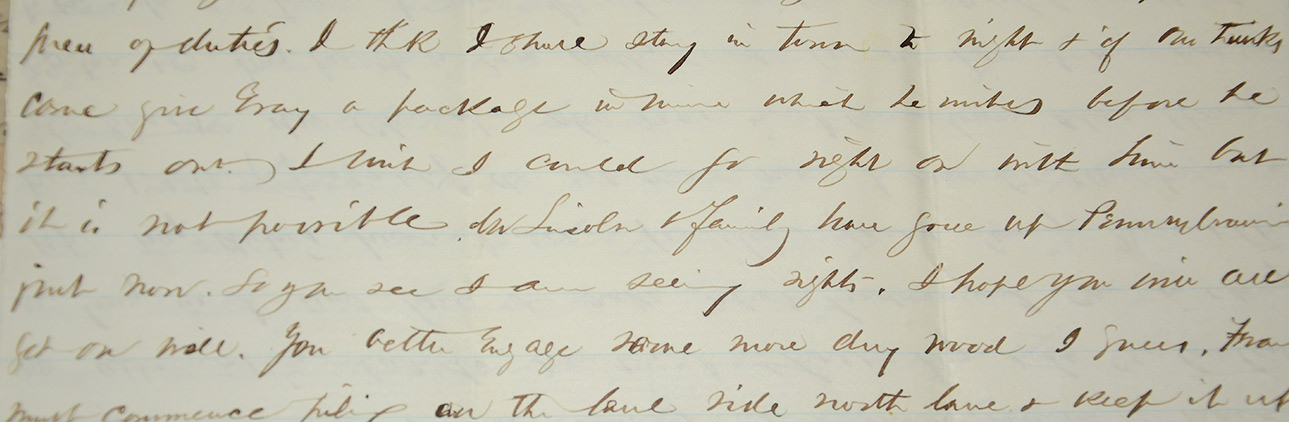
While on leave in the capital, Norton records a passing glimpse of the presidential carriage, April 11, 1862:
"I saw Abraham riding out yesterday with Mrs. Lincoln, I presume — a lady dressed in black in the carriage."
A week later, writing from Washington with a period docketing note reading "Emancipation Bill," he gives a contemporary Union officer's account of reaction to the D.C. compensated emancipation act, April 18, 1862:
"There is a good deal of stir hereabouts on the Emancipation bill of the President. It is raising considerable strife among the Union men here, and they think it may be inopportune. But I hope God may preserve this land and hush the strife that now prevails."
A companion letter of the same date reports rumored unrest in the ranks over the measure: "I heard Dr. McKim say there was trouble over the river last night — some of our troops mutinying on account of this Emancipation Act."
Norton also visited seated Congress in the House chamber (a separate March 24, 1862 letter to his sons, seated in the chair of Rep. A. W. Clark of Watertown), and toured Mount Vernon on his final journey north, Dec. 28, 1861:
"Today I passed Mt. Vernon and gazed on that spot so memorable to all true sons of this land. There stood the home of Washington. There rested his bones, while unworthy children are engaged in [disruptions] that very government which he fought to found and maintain."
GRIEF FOR A LOST DAUGHTER
Threaded through the military content is a recurring, deeply personal grief for the Nortons' young daughter Jennie, who died before the war. An April 4, 1862 letter contains one of the most moving passages in the archive:
"All my own I commit unto God, and one I need not — one we need never more pray for, she is safe from all harm. Oh may we so live as to be with her in God's own time... May God's blessed angels be with you and around you evermore. Bright indeed is one starry one, a crown on her youthful brow and a harp within her hand. Dear child, we loved her."
A later letter records an anguished dream:
"Last night I had a dream of our darling Jennie. I thought I came from the dining room into the hall... and there I met her and embraced her and kissed her and wept over her. O how natural it all was, it was as if true, so true. But I wake to know my sorrow is real, that she is not here."
This same letter reveals that Norton forwarded his formal resignation to Col. Taylor — a key document milestone for the archive — and a subsequent brief note records the death of a family friend, Mrs. Clark, who on her deathbed "asked what day Jennie died," having evidently been the child's godmother.
PROVENANCE / GROUP COMPOSITION
The group comprises letters from Camp Caldwell, Camp Baker, the hospital at Good Hope, Camp Wood, National Hotel and Dr. McKim's residence in Washington, and Dr. McKim's Office in Marlboro, MD, nearly all with original covers postmarked Washington, D.C., 1861–1862, addressed to Mrs. Levi W. Norton, Jamestown, Chautauqua Co., N.Y. Several covers carry period docketing notes in a secondary hand ("Willard's death," "Emancipation Bill," "Mrs. Clark's death"). Condition generally strong for the type, with expected folds, some edge wear and minor loss to a few covers; complete transcriptions available on request.
Levi Warren Norton was born in 1819 in Attica, NY; graduated from Union College in 1843, and the General Theological Seminary (Protestant Episcopal) New York, 1846. Ordained July 21, 1847. Served as rector in Waterstown and Jamestown, NY and Metuchen and Rahway, NJ. Mustered as Chaplain 72nd NY Infantry on 7/24/61. Served with his regiment until sent home sick with typhoid fever; later returned to his regiment but due to continued ill health was obliged to resign. Mustered out April 20, 1862 and returned to Jamestown, NY. In 1892 he gave up his active ministry work due to impaired health. He died at Bemus Point, NY on 8/23/1900. He is buried in Lake View Cemetery, Jamestown, NY. [ss][ph:L]
~~~~~~~~~~~~~~~~~~~~~~~~~~~~~~~~~~~
THIS ITEM, AS WITH ALL OTHER ITEMS AVAILABLE ON OUR WEB SITE,
MAY BE PURCHASED THROUGH OUR LAYAWAY PROGRAM.
CLICK HERE FOR OUR POLICIES AND TERMS.
THANK YOU!
Inquire About CIVIL WAR CHAPLAIN'S ARCHIVE — REV. LEVI W. NORTON, 72ND NEW YORK INFANTRY, EXCELSIOR BRIGADE
Most Popular
Historical Firearms Stolen From The National Civil War Museum In Harrisburg, Pa »
Theft From Gravesite Of Gen. John Reynolds »
Selection Of Unframed Prints By Don Troiani »
Fine Condition Brass Infantry Bugle Insignia »
Rare Identified 65Th Ny Sergeant’s Jacket, With Manscript Material: 1St U.s. Chasseurs »
featured item
HISTORICAL FIREARMS STOLEN FROM THE NATIONAL CIVIL WAR MUSEUM IN HARRISBURG, PA
Please click on the photograph above to view a flyer containing information regarding a Model 1860 Henry Rifle and pair of cased presentation Colt Revolvers identified to Secretary of War Simon Cameron which were stolen from the museum on February… . Learn More »
site search