

site search
online catalog
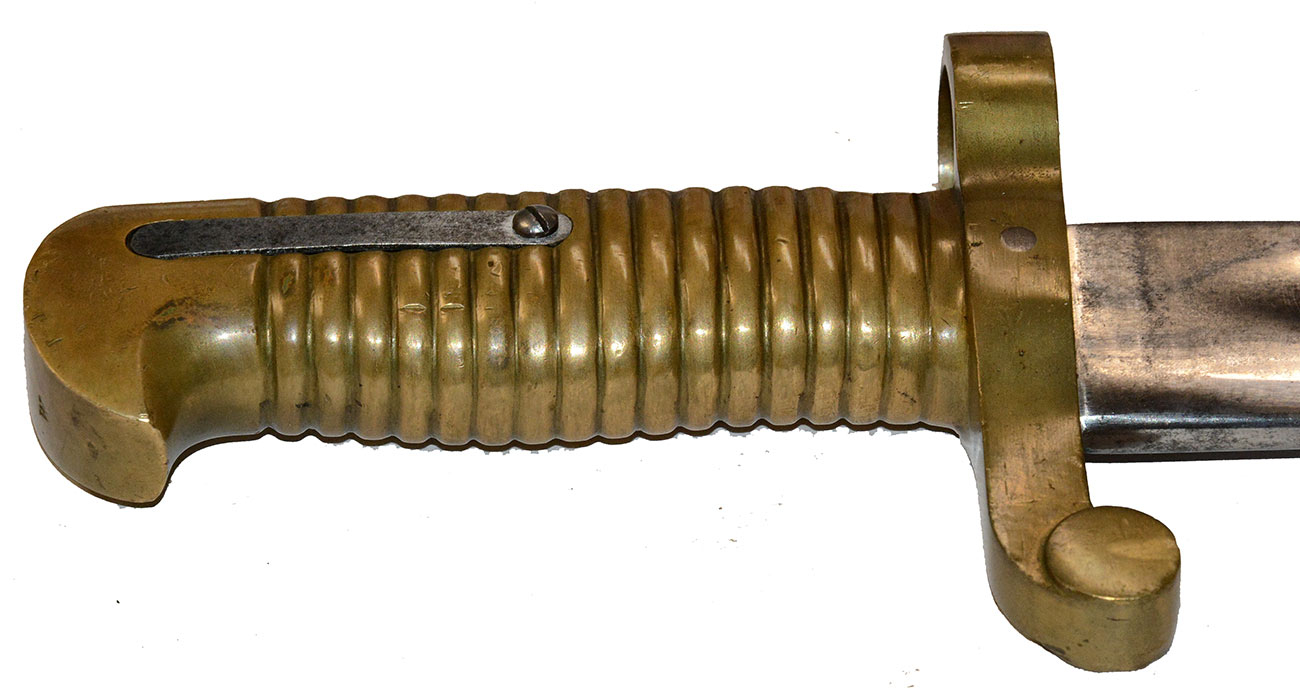
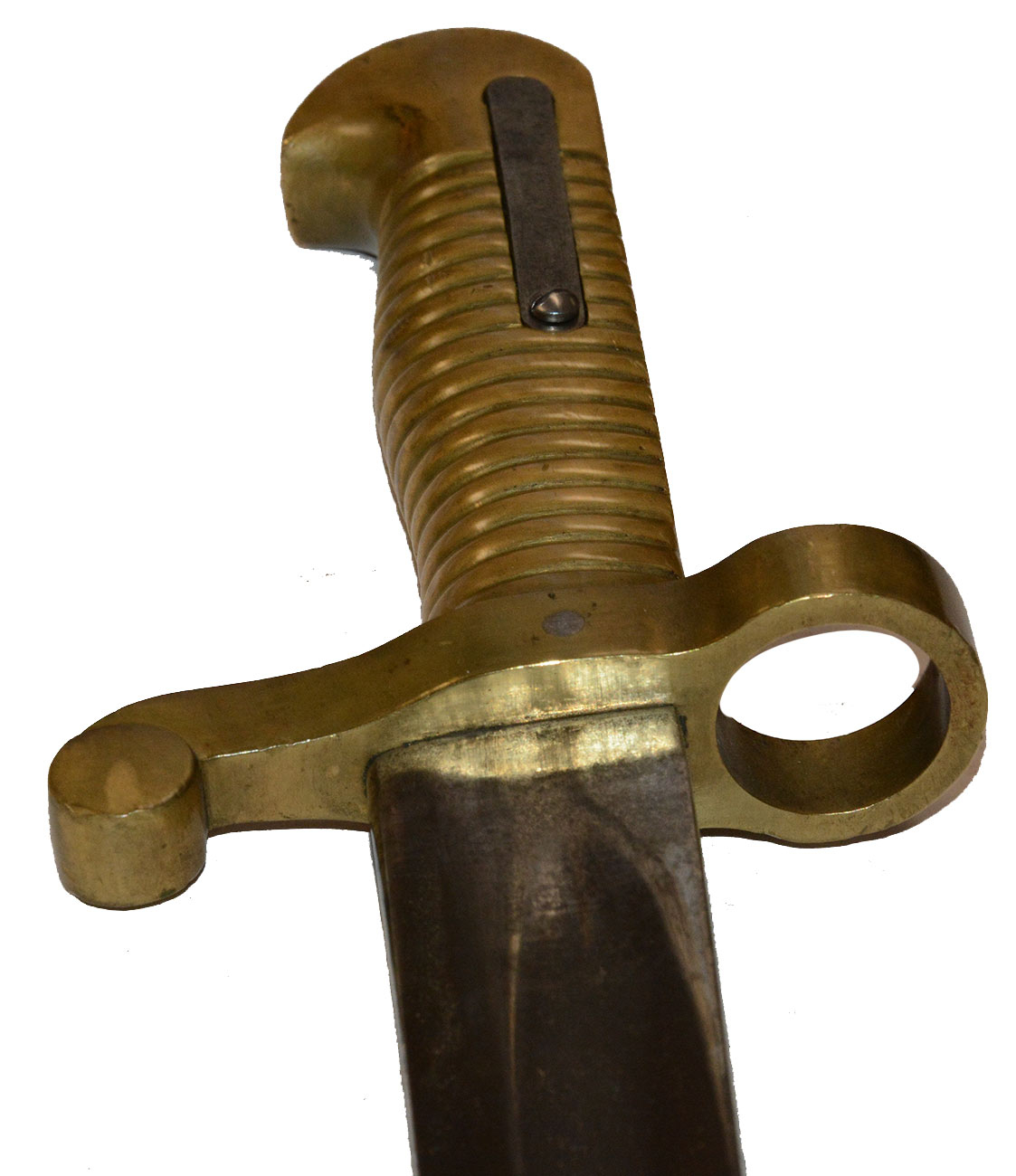
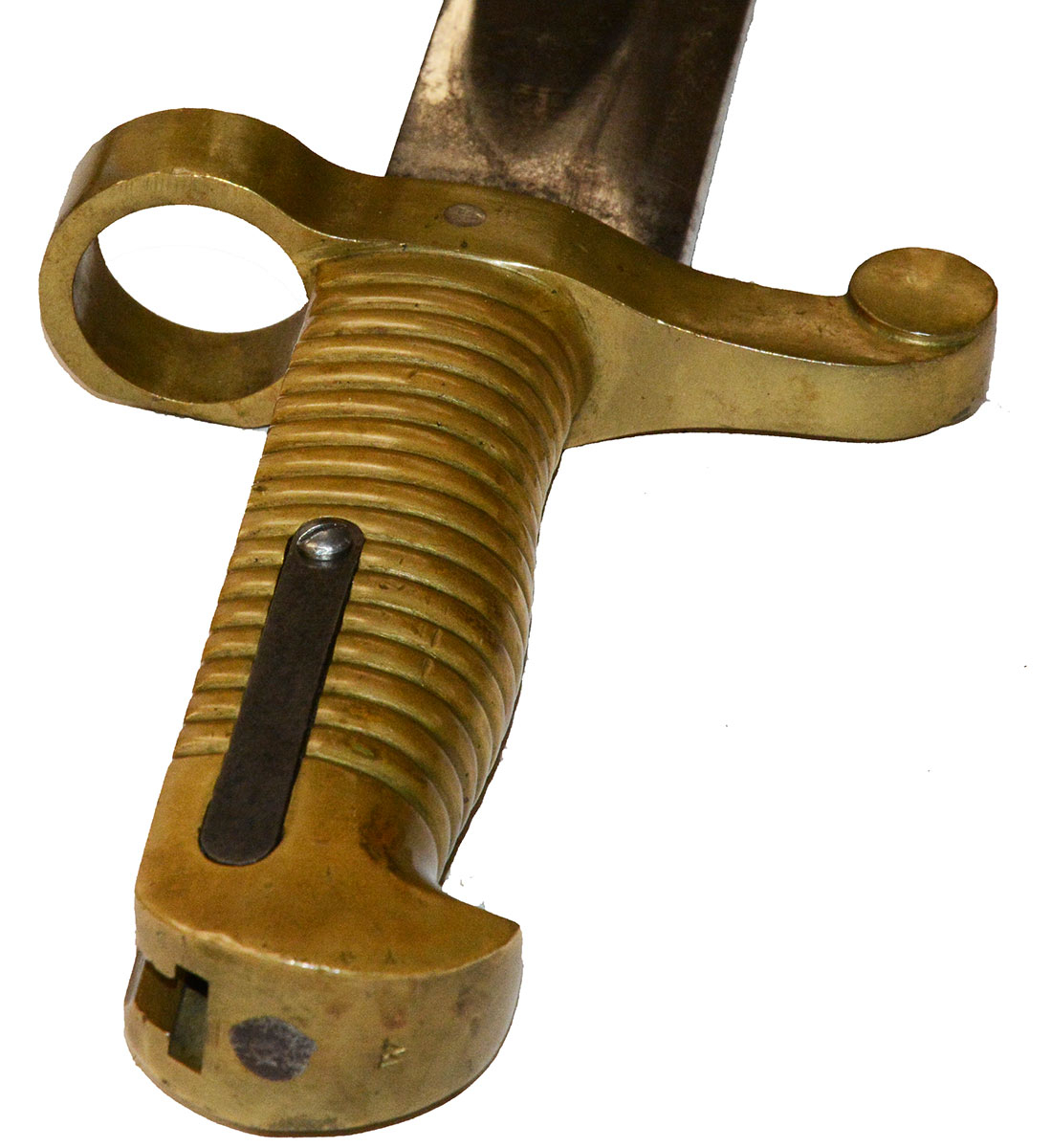
SABER BAYONET AND SCABBARD FOR THE WHITNEY PLYMOUTH 1861 NAVY RIFLE SERIAL NUMBER 3424

Hover to zoom



$595.00 SOLD
Quantity Available: None
Item Code: 286-1096
This is very good example of the saber bayonet issued with the US Navy’s Model 1861 rifle complete with its original brass mounted black leather scabbard. Developed by John Dahlgren in the late 1850s, and nicknamed for the USS Plymouth, on which the ordnance trials were conducted, 10,000 of the rifles were produced on contract by Eli Whitney, Jr., and delivered from mid-1863 to mid-1864. The short, .69 caliber rifles were issued with these 22.5-inch bladed saber bayonets to put them on an equal footing in close-in fighting against longer rifle muskets.
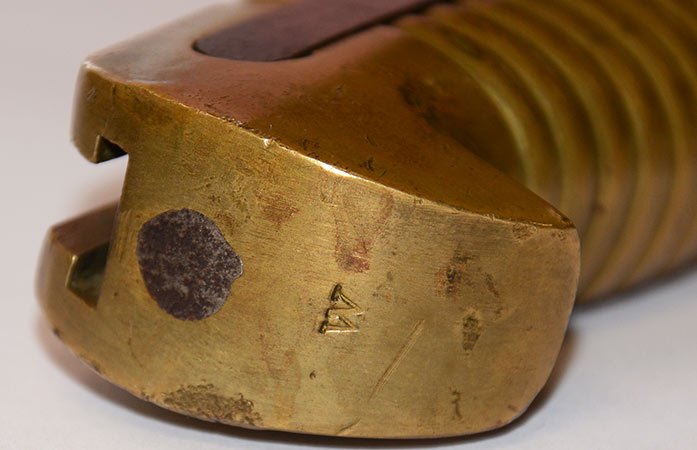
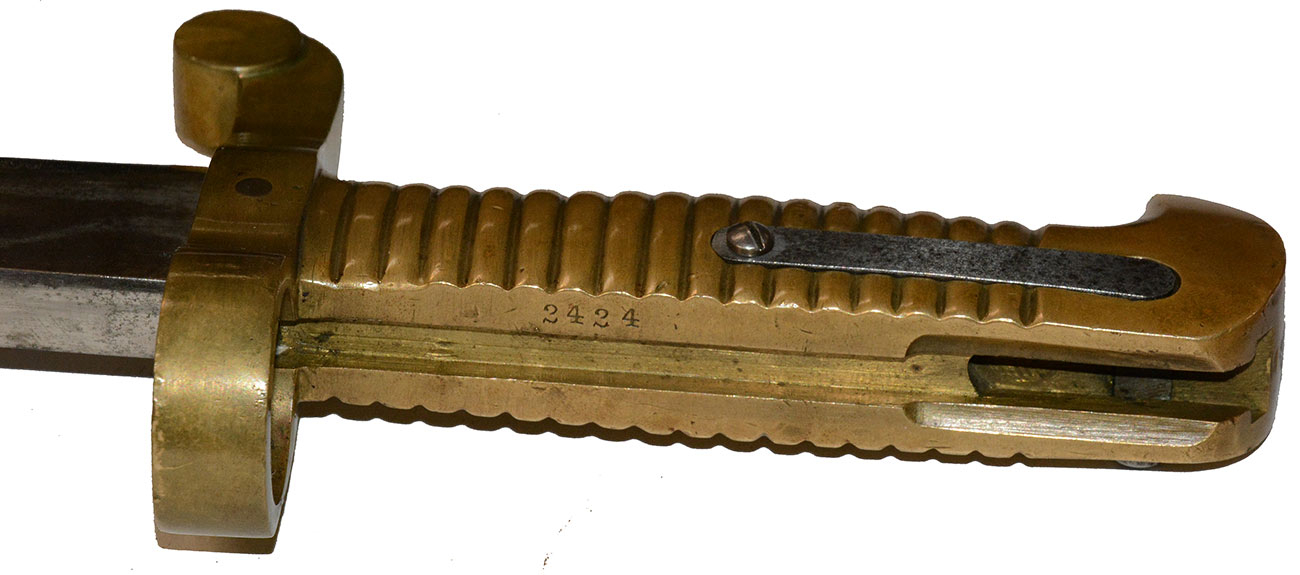
The brass hilt has an untouched medium patina with no dings and only light age spots and with the locking spring and button in place and functional, the spring and screw showing good color and the button just natural wear from handling. The top of the pommel bears a Navy inspector’s deep stamp “W,” which must be that of Franklin C. Warner, whose three initials show up in script and block letters on the stocks and barrels of Plymouth rifles, and seems to have varied in his stamp for bayonets with “FW” and “FCW” also appearing on the bayonet pommels in block letters. The grip flat shows the serial/mating number stamped next to the long guide stud groove- some hand-fitting to the rifle was necessary in finishing. This one is numbered 3424, which puts its delivery in 1863 (with a total of 5300 delivered by the end of the year.)
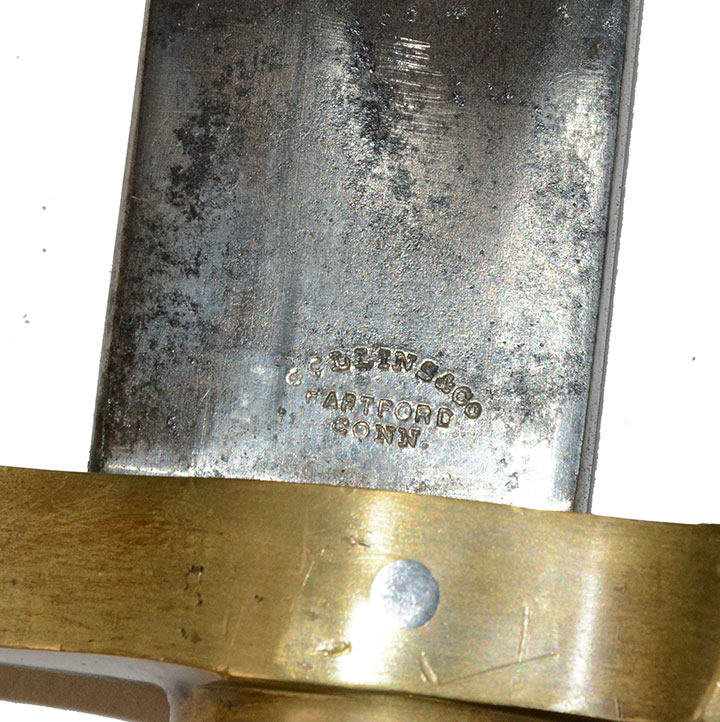
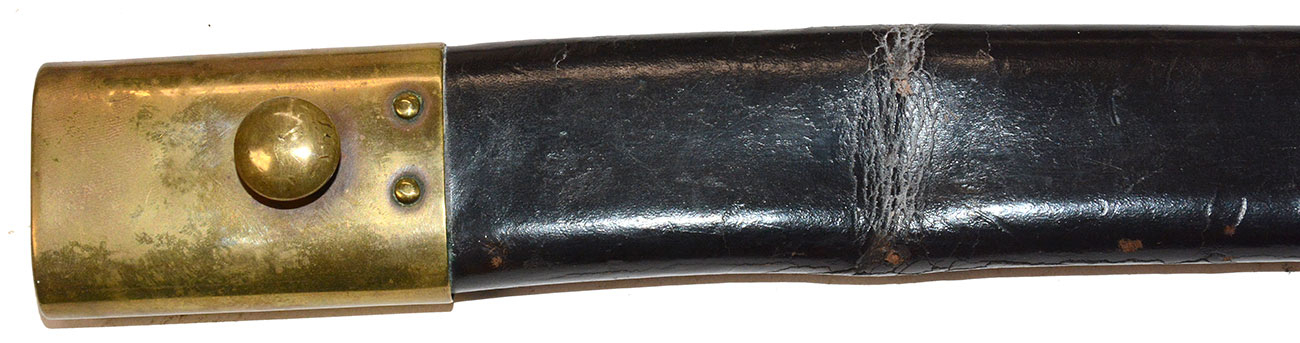
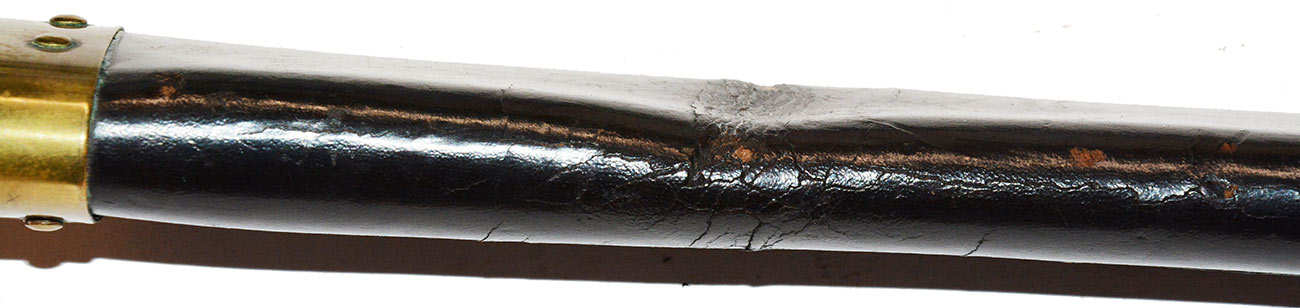
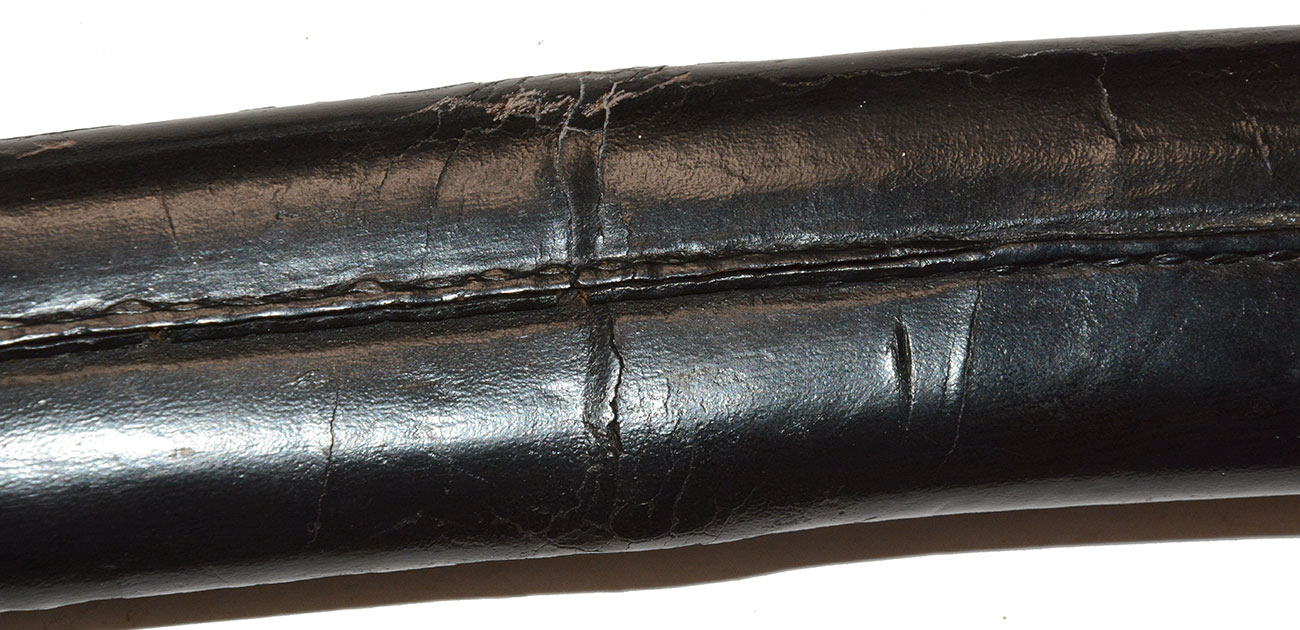
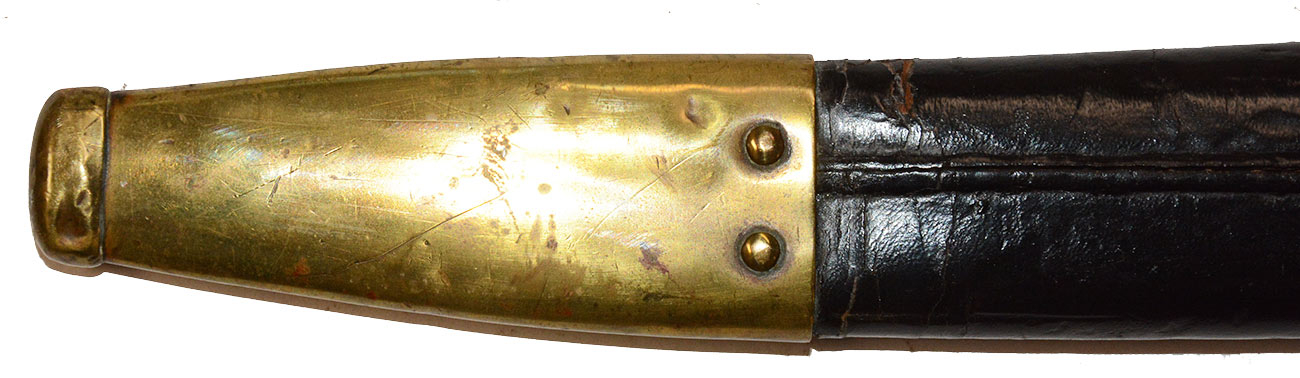
The blade is smooth metal, largely in the bright with just some thin gray areas, mostly near the guard, no pitting, and a good edge and point. One side has a legible, “Collins & Co. / Hartford / Conn.” maker’s stamp at the ricasso. The brass throat with frog stud and the drag are both in place on the scabbard and have a matching age patina. The black leather scabbard body has good color and finish with some crazing and a few wear spots that are not very visible under old polish, but does show a crease a couple of inches below the upper mount on the obverse that has crazed the finish and lost couple of small chips. This could be dressed up, but we have left it as is.
These rifles were intended for shipboard actions, patrol duty, landing parties, and expeditions both small and large, such the Battle of Tulfinny Crossroads in 1864, where a Plymouth-armed sailor shot down the colorbearer of the 5th Georgia. McAulay lists more than thirty vessels that received Plymouth rifles and also notes that the Potomac Flotilla even preferred them to Spencers, which were subject to accidental discharge and explosion from natural rough handling onboard ship and in landing parties.
This is a very good example of a regulation issue Civil War saber bayonet that would display well in an edge weapons or Navy collection, and would naturally pair well with a Plymouth rifle. Check your serial number! [sr] [ph:L]
~~~~~~~~~~~~~~~~~~~~~~~~~~~~~~~~~~~
THIS ITEM, AS WITH ALL OTHER ITEMS AVAILABLE ON OUR WEB SITE,
MAY BE PURCHASED THROUGH OUR LAYAWAY PROGRAM.
CLICK HERE FOR OUR POLICIES AND TERMS.
THANK YOU!
Inquire About SABER BAYONET AND SCABBARD FOR THE WHITNEY PLYMOUTH 1861 NAVY RIFLE SERIAL NUMBER 3424
Most Popular
Historical Firearms Stolen From The National Civil War Museum In Harrisburg, Pa »
Theft From Gravesite Of Gen. John Reynolds »
Selection Of Unframed Prints By Don Troiani »
Fine Condition Brass Infantry Bugle Insignia »
Rare Identified 65Th Ny Sergeant’s Jacket, With Manscript Material: 1St U.s. Chasseurs »
featured item
MODEL 1851 SWORD BELT PLATE FROM HARPERS FERRY ON A GREAT DISPLAY CARD
This sword belt plate, a very good example of an early pick-up, is mounted on a great old card typical of early relic displays labeled in brown ink, “Officers Belt Plate / battlefield of Harpers Ferry / West Virginia.” The plate has an untouched,… (1202-196). Learn More »
site search