


site search
online catalog
SCARCE US MODEL 1816 FENCING BAYONET SOCKET
Hover to zoom
$350.00
Quantity Available: 1
Item Code: 2026-931
Shipping: Determined by Method & Location of buyer
To Order:
Call 717-334-0347,
Fax 717-334-5016, or E-mail
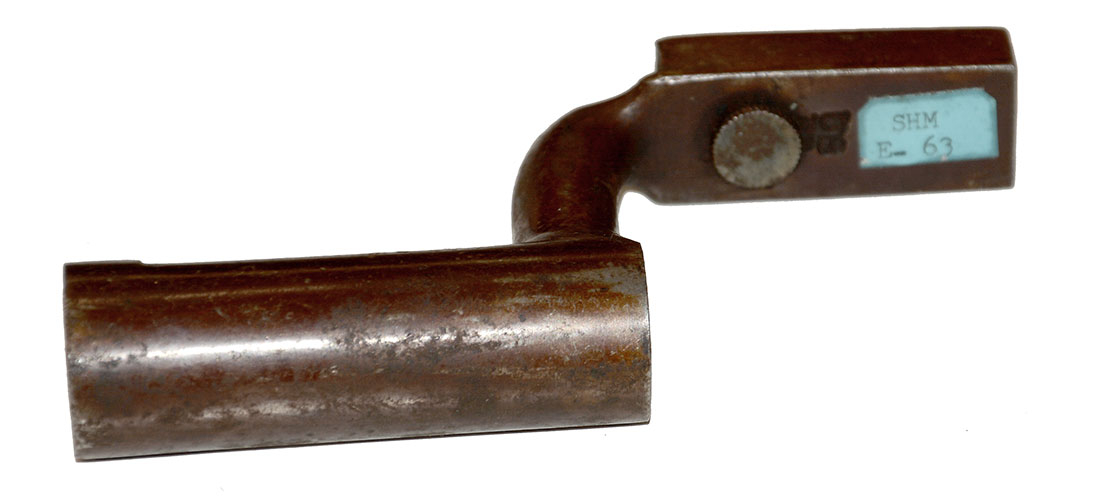
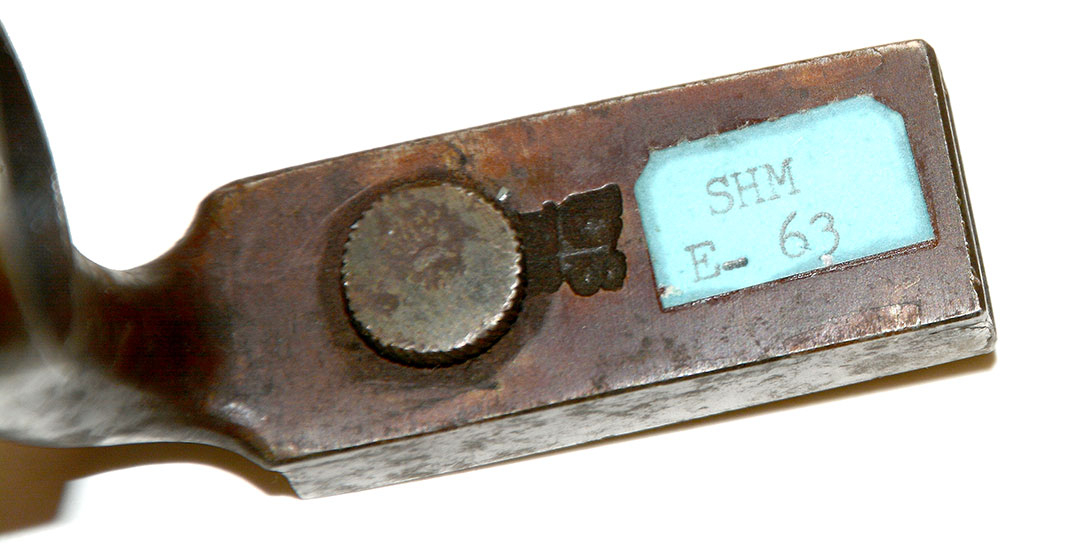
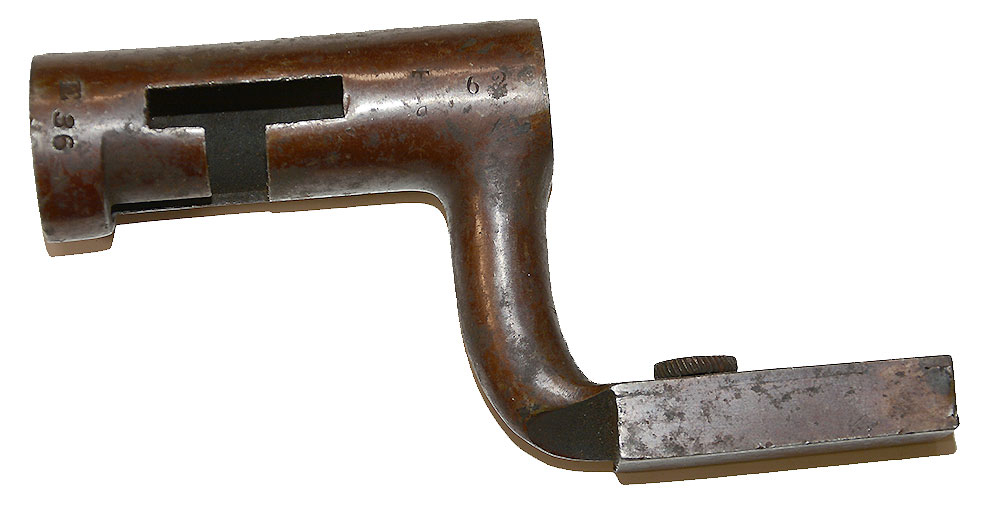
See Chapter VII of Reilly, Socket Bayonets, for details and a typology of socket fencing bayonets. This is his Type-I: the socket and elbow of a US M1816 bayonet modified by elimination of the blade and addition of a rectangular socket with knurled-edge thumbscrew to hold a flexible whalebone blade fitted with a leather covered ball on the tip.
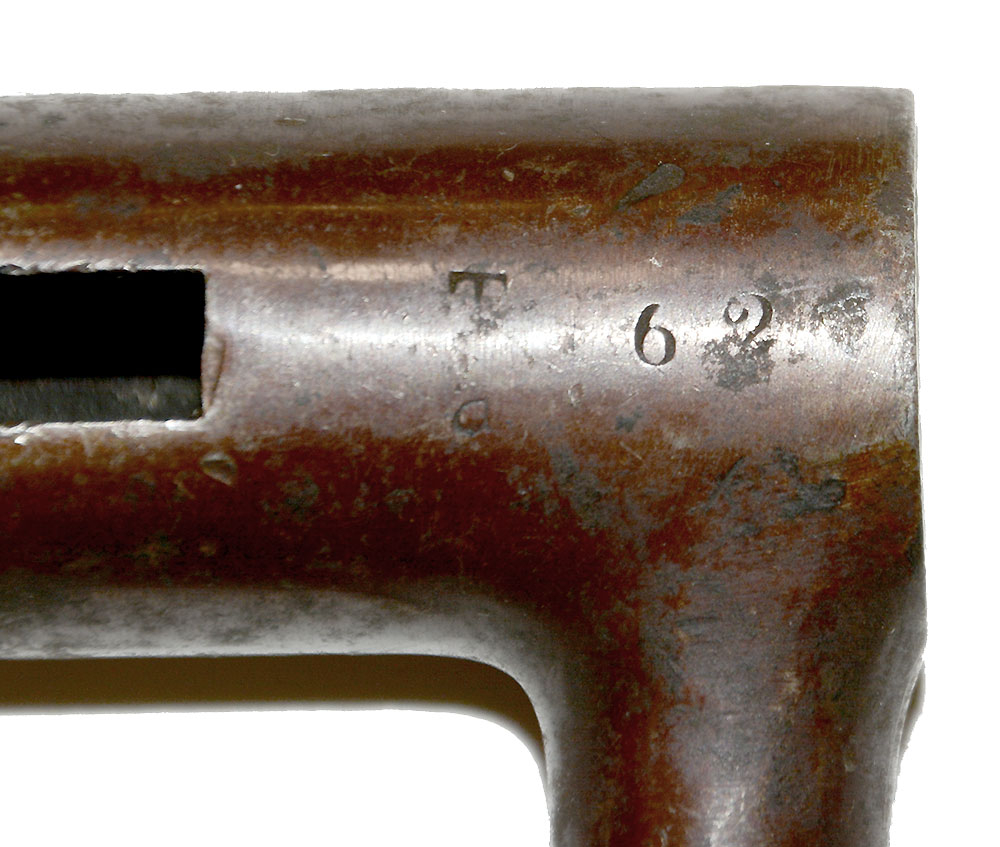
This bears three sets of markings. The top of the rectangular socket near the screw is stamped US over EB, the latter mark being the Springfield Armory bayonet forger’s mark of Elizur Bates, later a master armorer and an inspector at Springfield Armory, but who was a blacksmith by training and was forging bayonets, fabricating parts and assembling arms when this bayonet was originally made. Daum and Pate mention specifically that he was recorded on the armory payroll as being paid $42.51 in February 1825 for forging 481 bayonets. Whether this one was in that group or not is unknown, but the browned finish it bears is characteristic of that applied to the US M1816 Type-2 Muskets (Flayderman’s designation) and their bayonets as produced from about 1822-1831, with Schmidt labelling the bayonets as “Model 1822.”
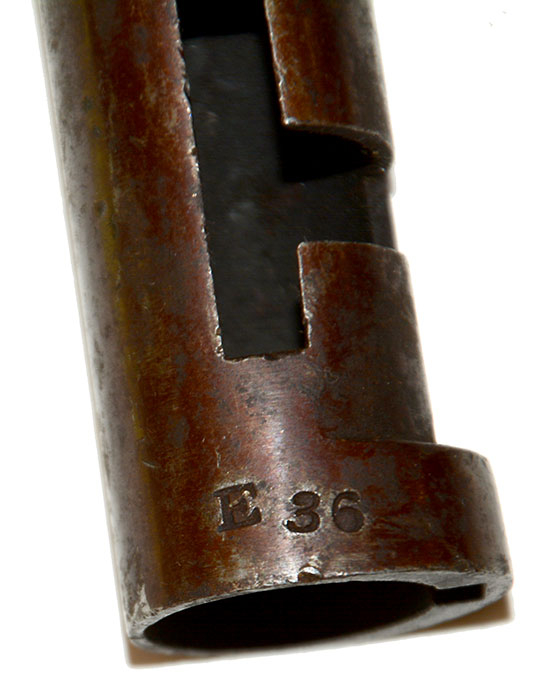
A second stamp appears just forward of the mortice that would be the original alpha-numeric stamp mating it to the musket to which it had been fitted and also intended to serve as a rack number. A second alpha-numeric stamp, “E 36” is stamped near the base of the socket either a second rack number, since bayonets and muskets could be separated even in shipping, though some feel such numbers on these fencing bayonet sockets were applied after their alteration and were intended to match them with muskets selected for bayonet fencing.
This brings up the dating of the alteration, with some suggesting it may have happened early and indicate bayonet fencing in the army as early as the 1820s. The earliest manual reflecting such training in the US Army, however, was McClellan’s 1852 translation of a French manual and it seems most likely the practice, to whatever degree it was actually implemented, did not take place until after that. The use of an 1822-1831 period bayonet and musket would, in fact, fit that later time period since those muskets had by then been designated 2nd Class, making their selection, and likely those in the worst condition, appropriate for likely rough treatment in bayonet fencing.
Needless to say, more research needs to be done, but these are scarce pieces and merit a place in a bayonet or longarm collection, as well as one illustrating developments in army training. [sr][ph:L]
~~~~~~~~~~~~~~~~~~~~~~~~~~~~~~~~~~~
THIS ITEM, AS WITH ALL OTHER ITEMS AVAILABLE ON OUR WEB SITE,
MAY BE PURCHASED THROUGH OUR LAYAWAY PROGRAM.
CLICK HERE FOR OUR POLICIES AND TERMS.
THANK YOU!
Inquire About SCARCE US MODEL 1816 FENCING BAYONET SOCKET
Most Popular
Historical Firearms Stolen From The National Civil War Museum In Harrisburg, Pa »
Theft From Gravesite Of Gen. John Reynolds »
Selection Of Unframed Prints By Don Troiani »
Fine Condition Brass Infantry Bugle Insignia »
Rare Identified 65Th Ny Sergeant’s Jacket, With Manscript Material: 1St U.s. Chasseurs »
featured item
WORLD WAR TWO / KOREA UNITED STATES MARINE CORPS OFFICER’S MAMALUKE SWORD
The drawn sword meas. approx. 36.00 inches long. The blade itself meas. approx. 31.00 inches long x 0.75 of an inch wide at the ricasso. It has a central fuller that starts just above the ricasso and runs for approx. 27.00 inches. The blade surface… (2021-944). Learn More »
site search