

site search
online catalog
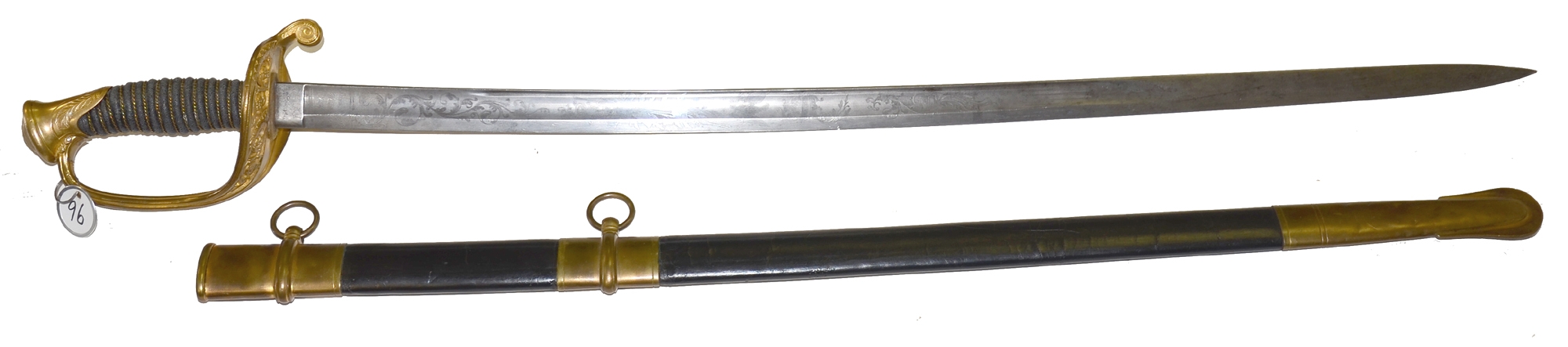
M1850 FOOT OFFICER’S SWORD AND SCABBARD BY AMES
Hover to zoom
$2,950.00 SOLD
Quantity Available: None
Item Code: 1047-96
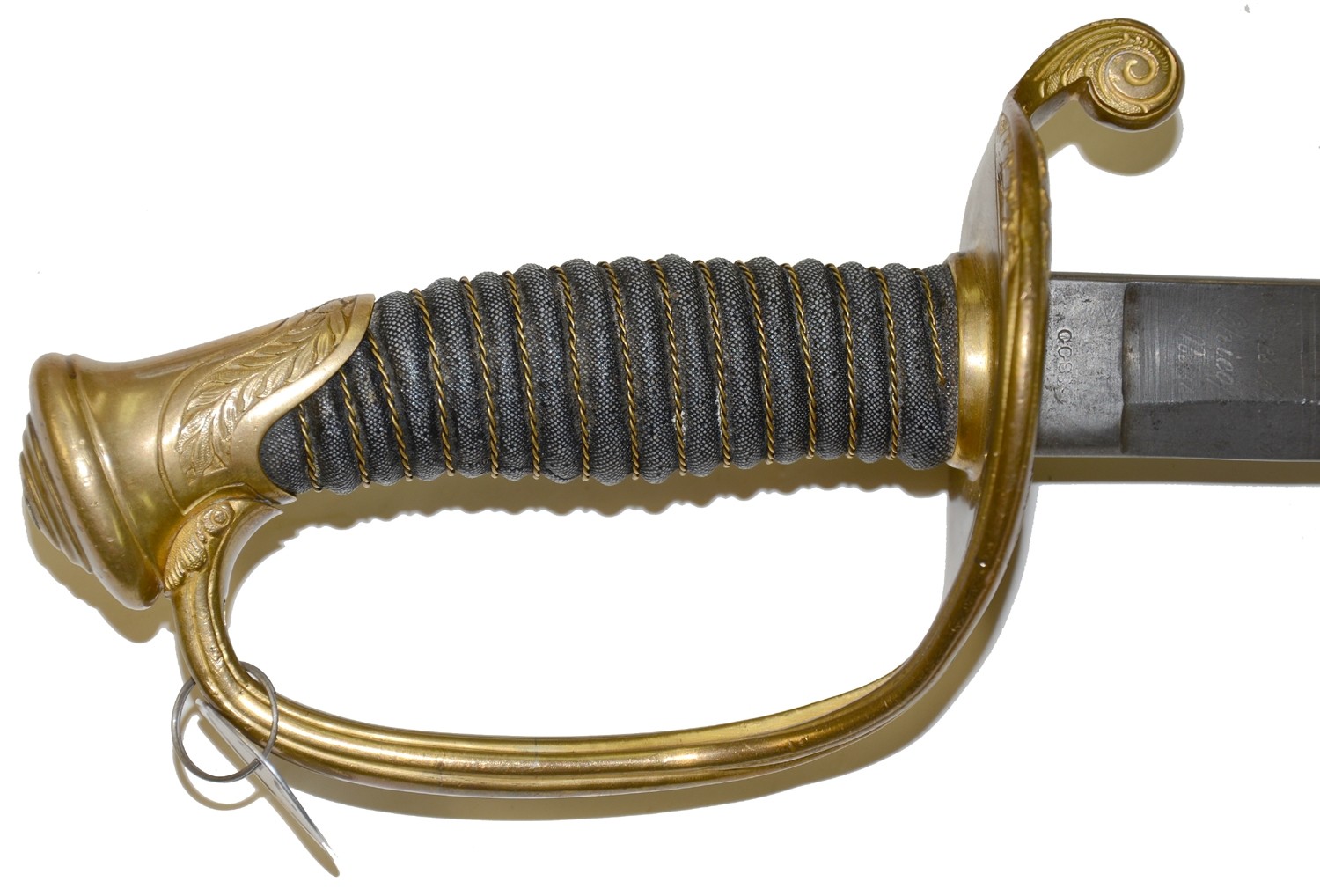
This attractive, regulation Foot officer’s sword was manufactured by Ames in 1862.
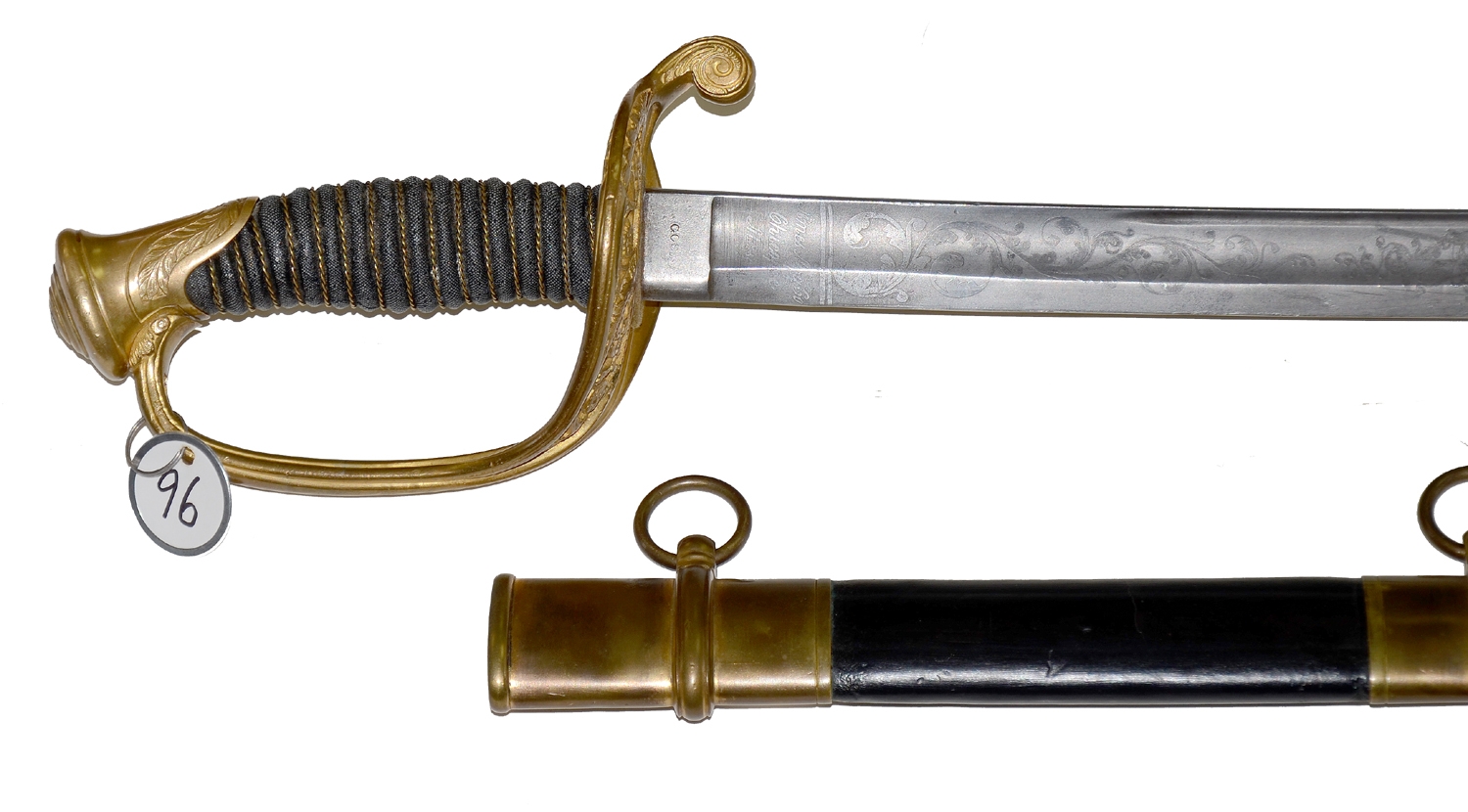
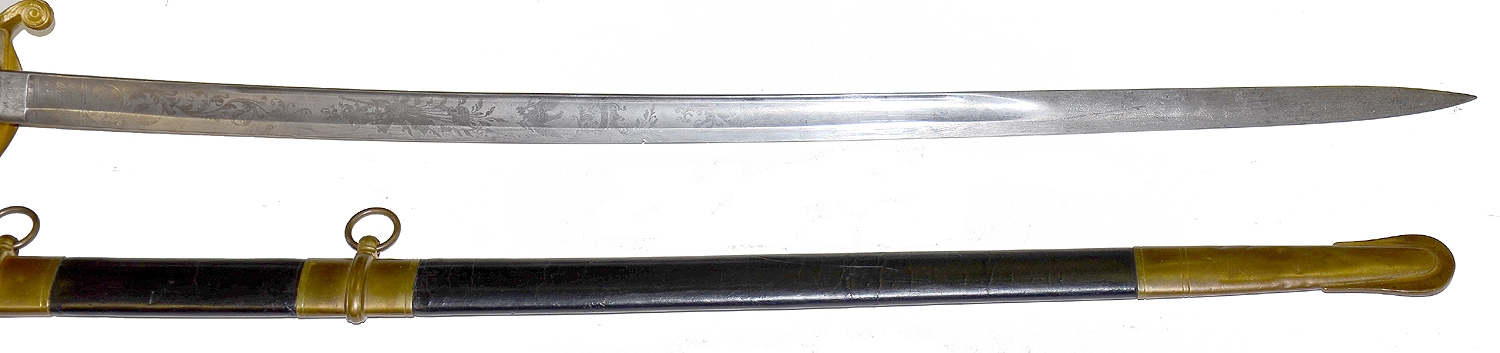
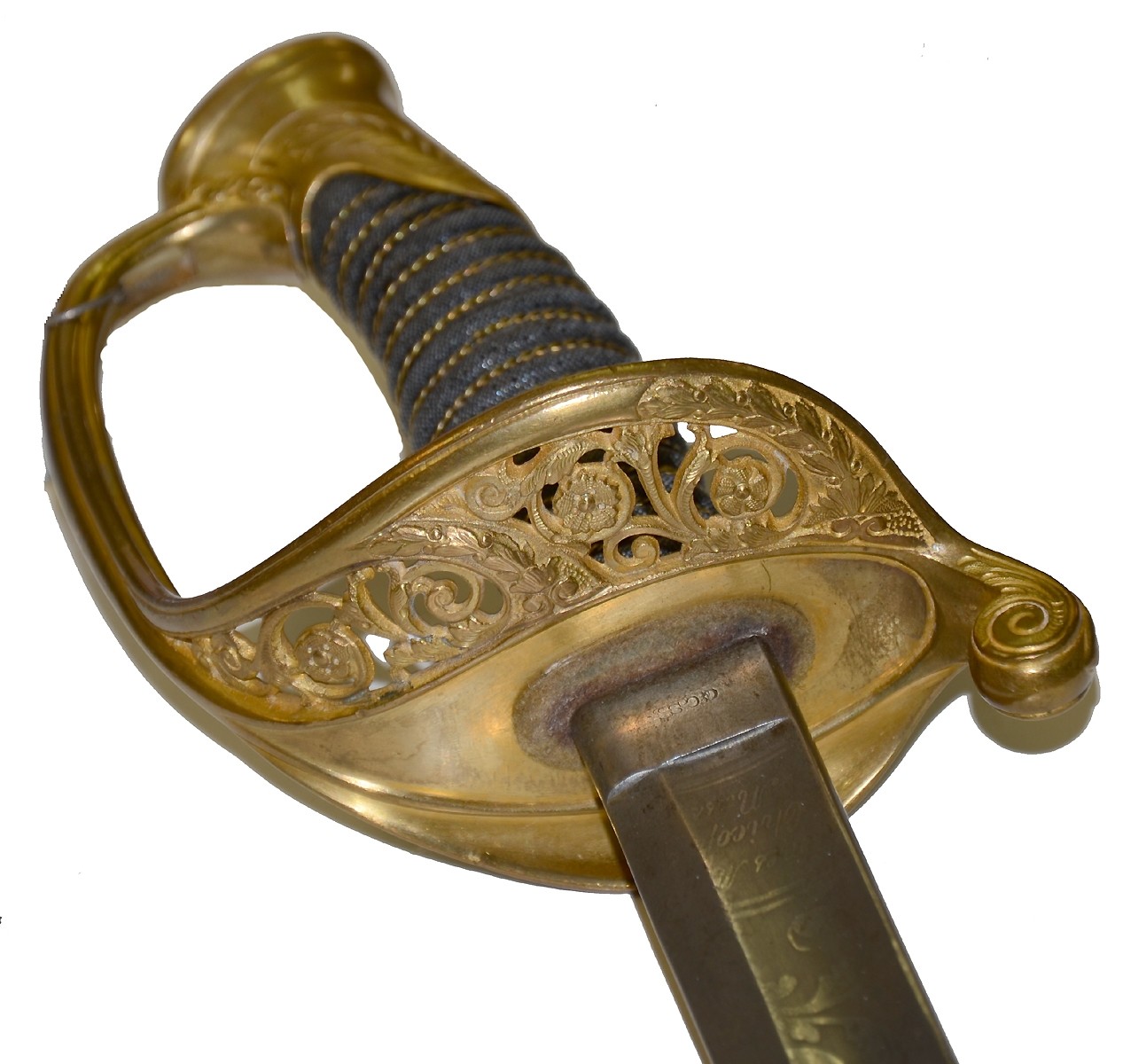
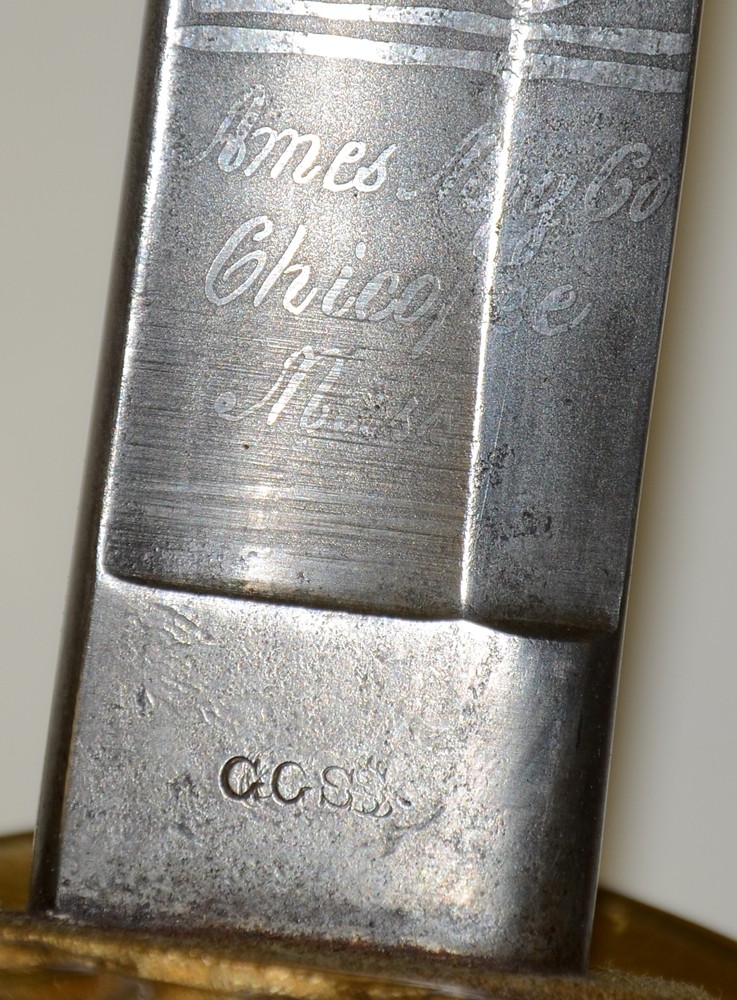
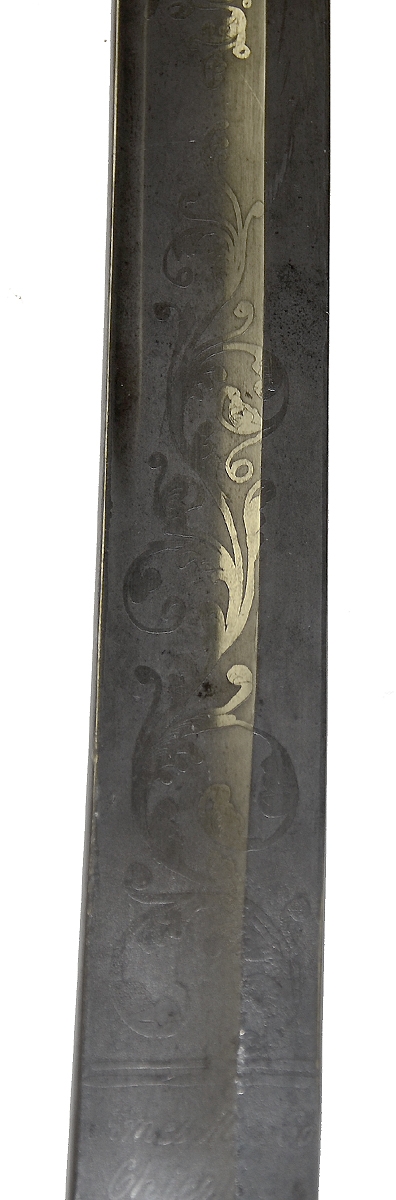
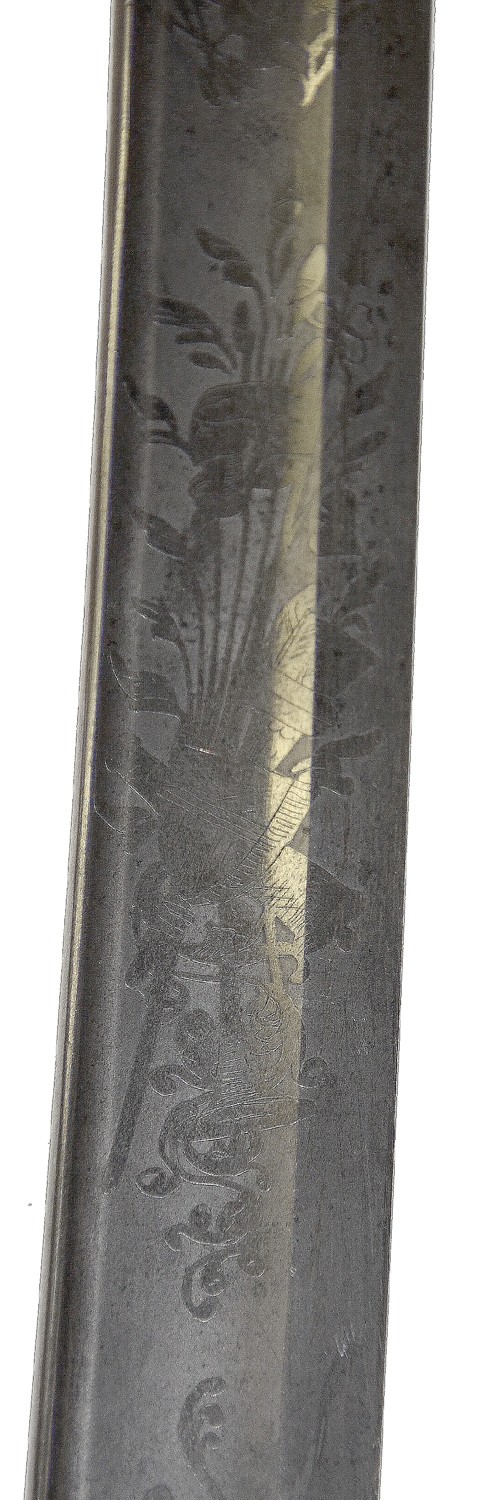
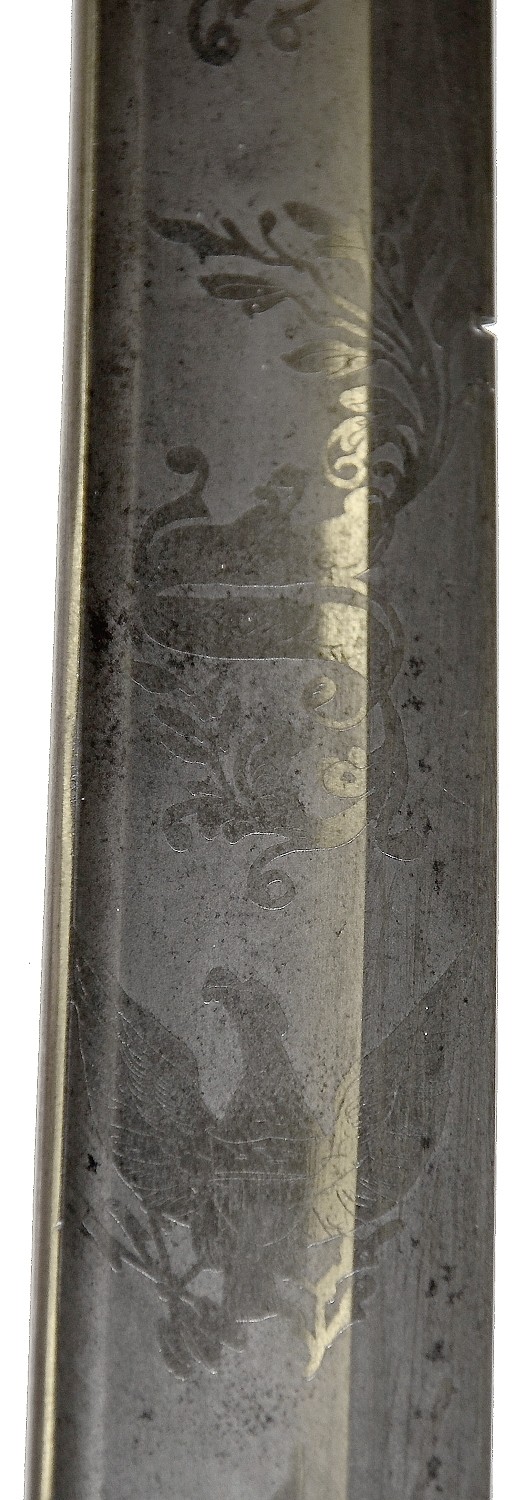
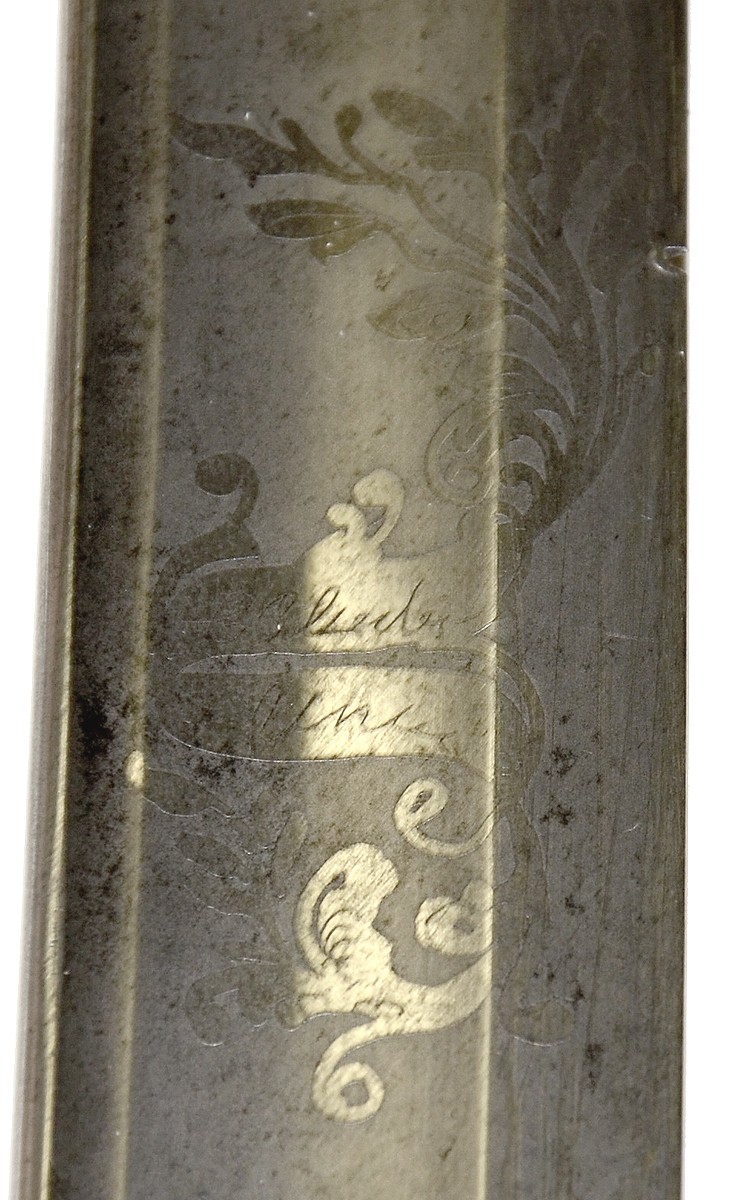
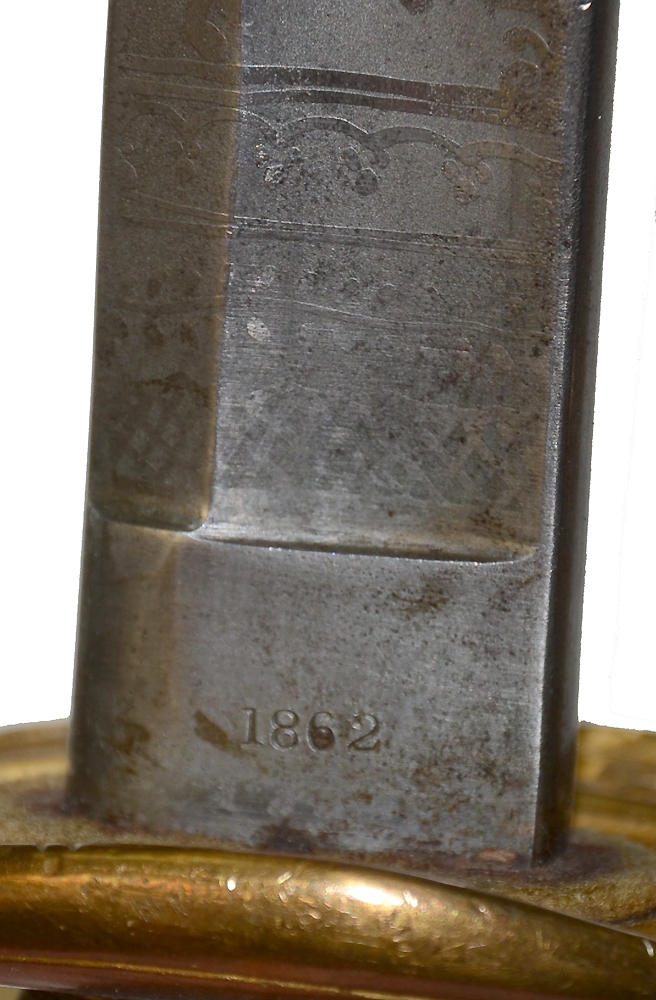
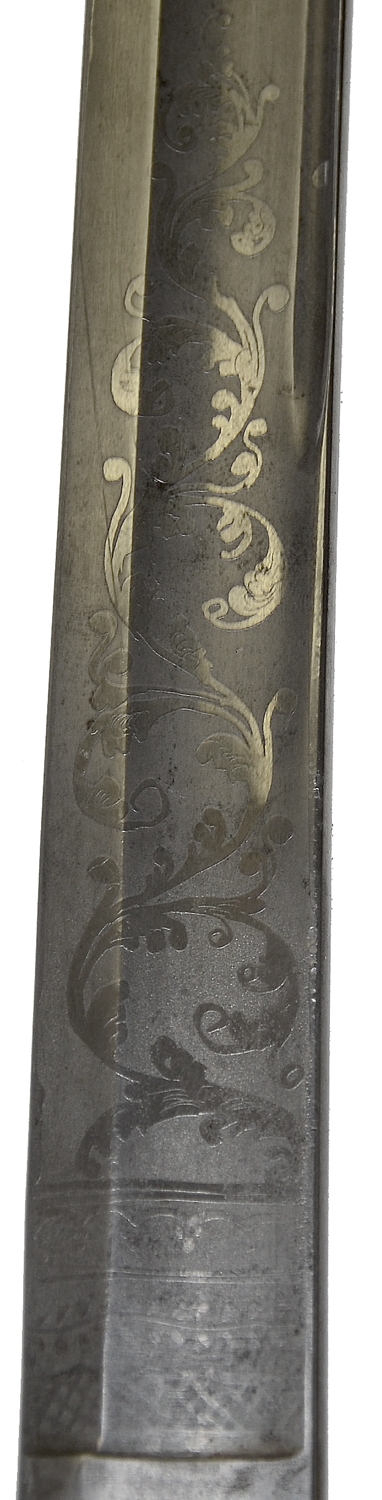
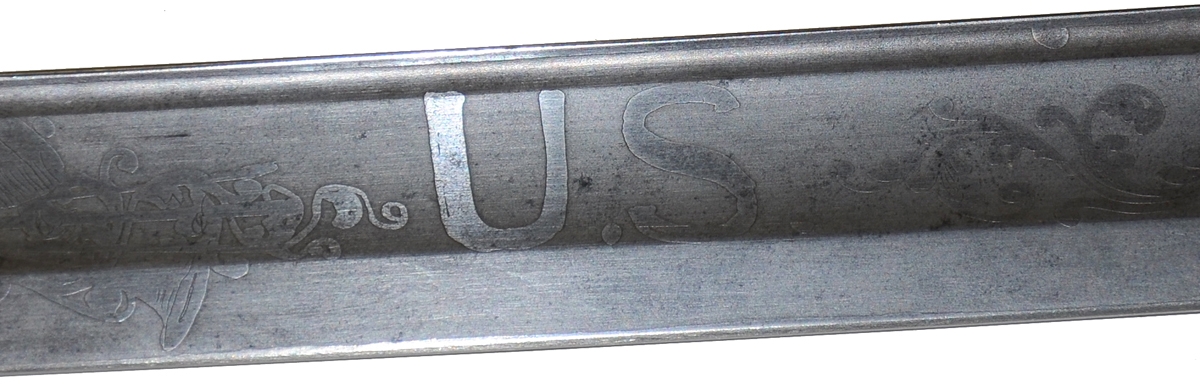
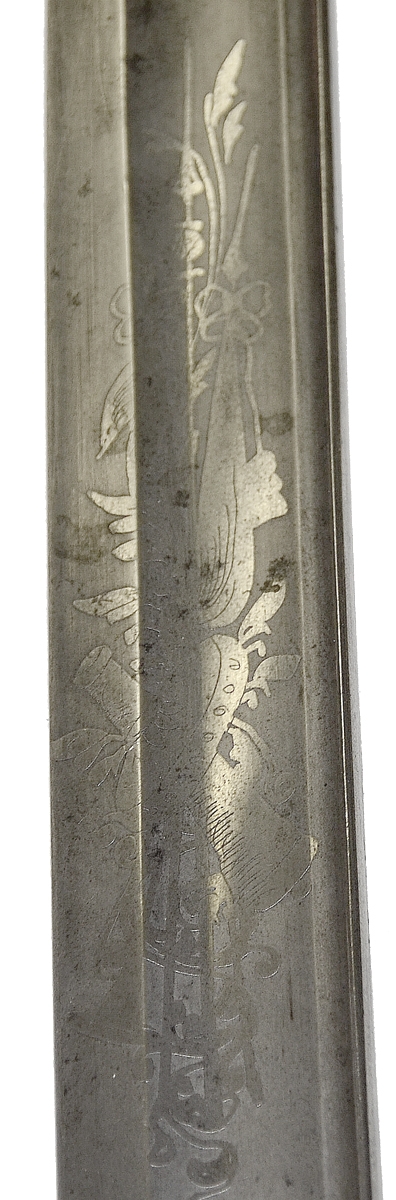
The blade of the Foot Officer sword is so slightly curved that it looks straight at first glance. It is single-edged with a false edge extending back about nine inches from the point. There is a wide deep fuller which runs from the ricasso to the beginning of the false edge. The blade is decorated on both sides with floral and military etchings. The ricasso features the date “1862” on one side and the inspector’s initials on the other. On the blade, just above the inspector’s initials is etched “Ames Mfg. Co. / Chicopee / Mass”. The blade is semi-bright with two nicks, and some light pitting near the point. Original felt washer remains.
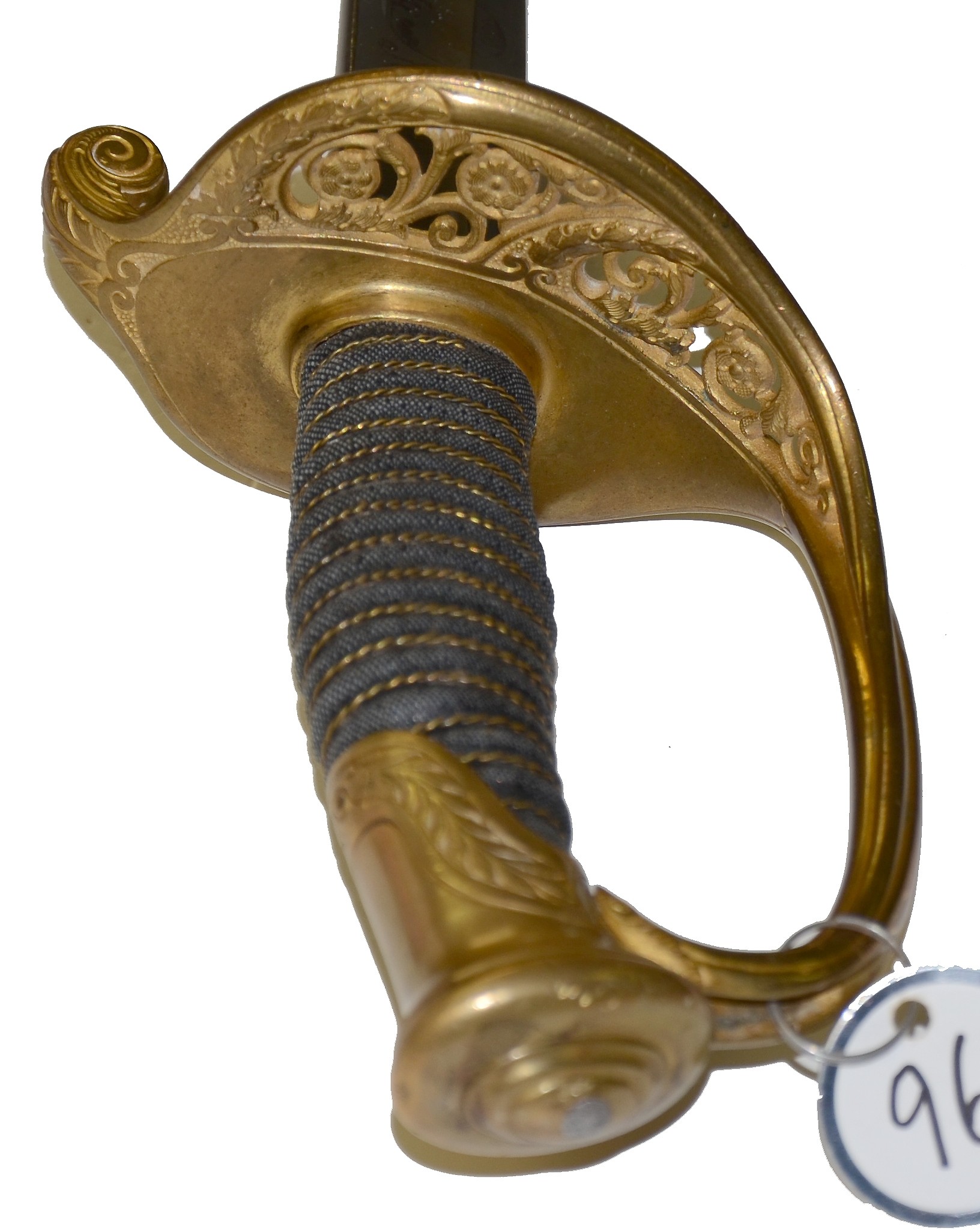
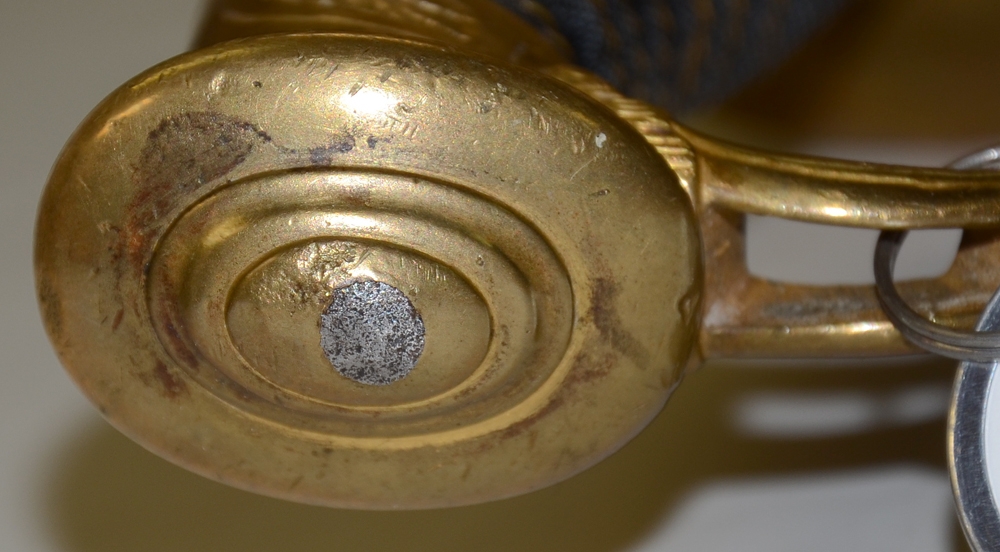
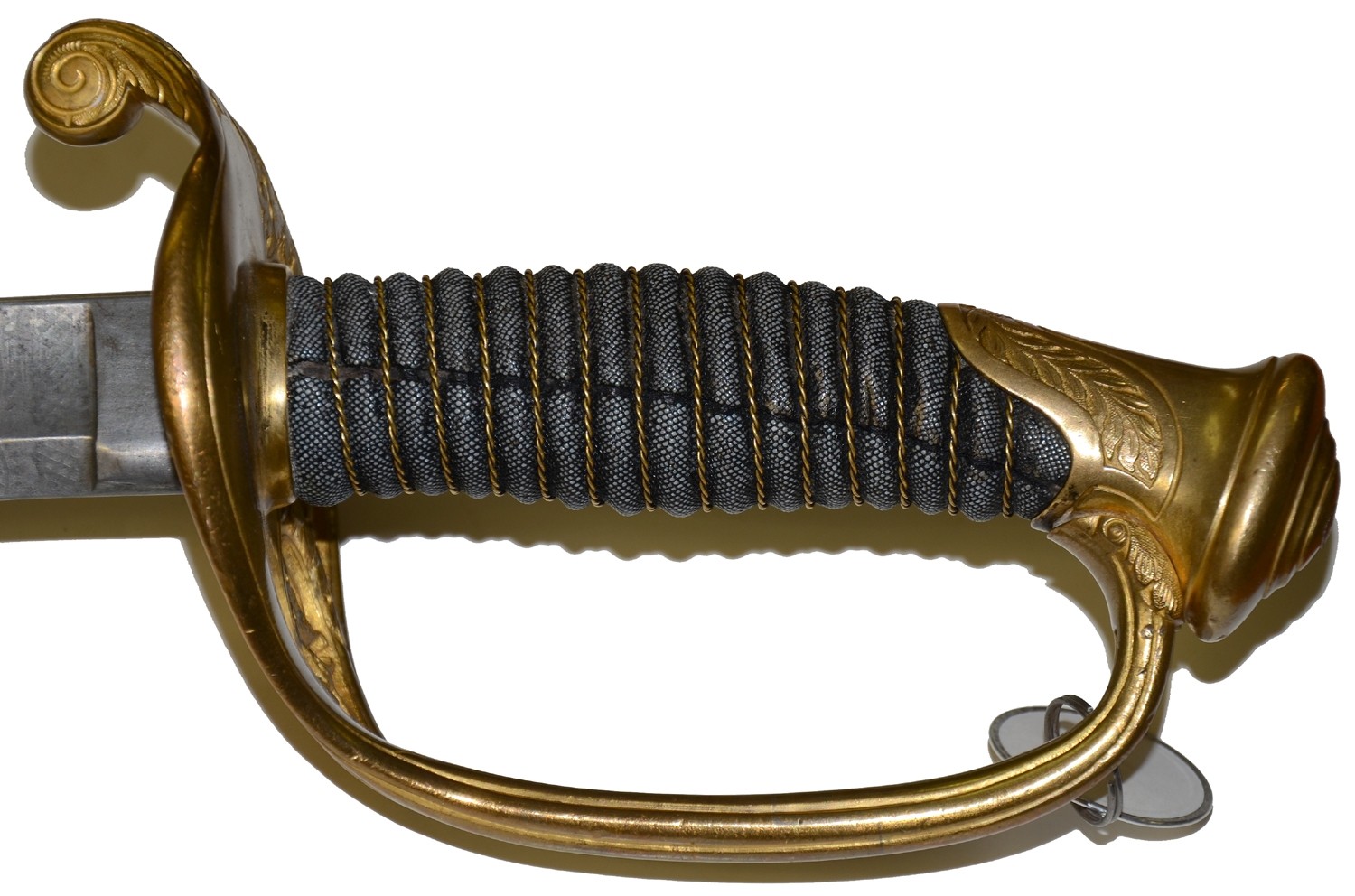
The grips have a wooden handle with a sharkskin cover in good condition. Cover is wrapped with double-twist brass wire. Wire remains tight. The brass guard has a cut-out floral design and quillion. Knuckle bow attaches to a pommel with cast floral designs. All brass is clean and bright.
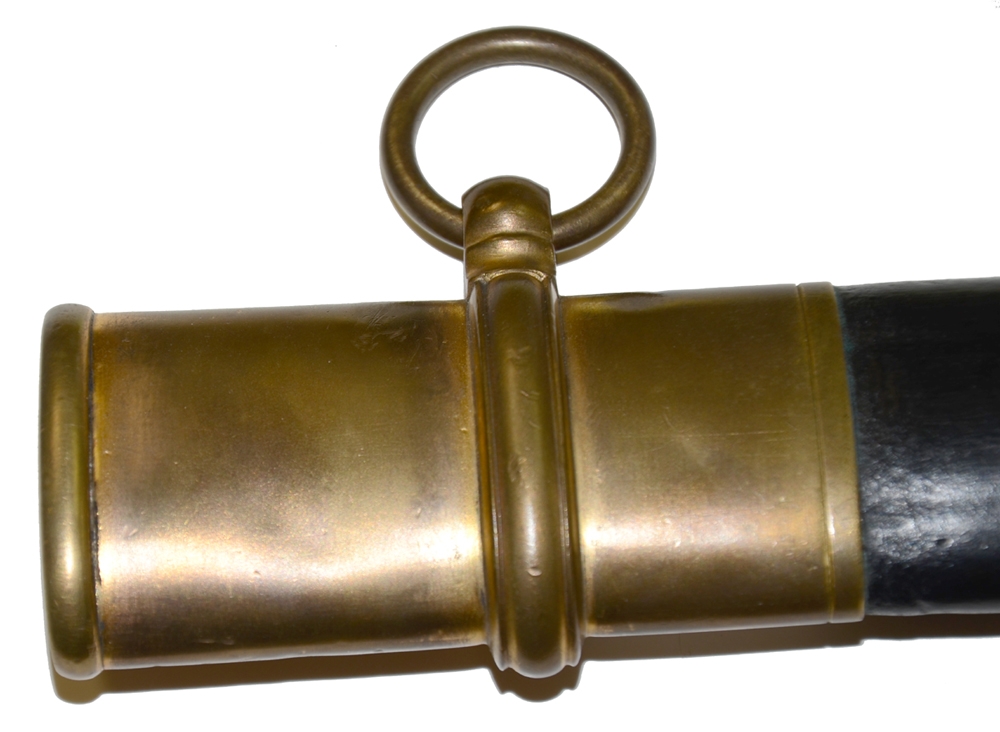
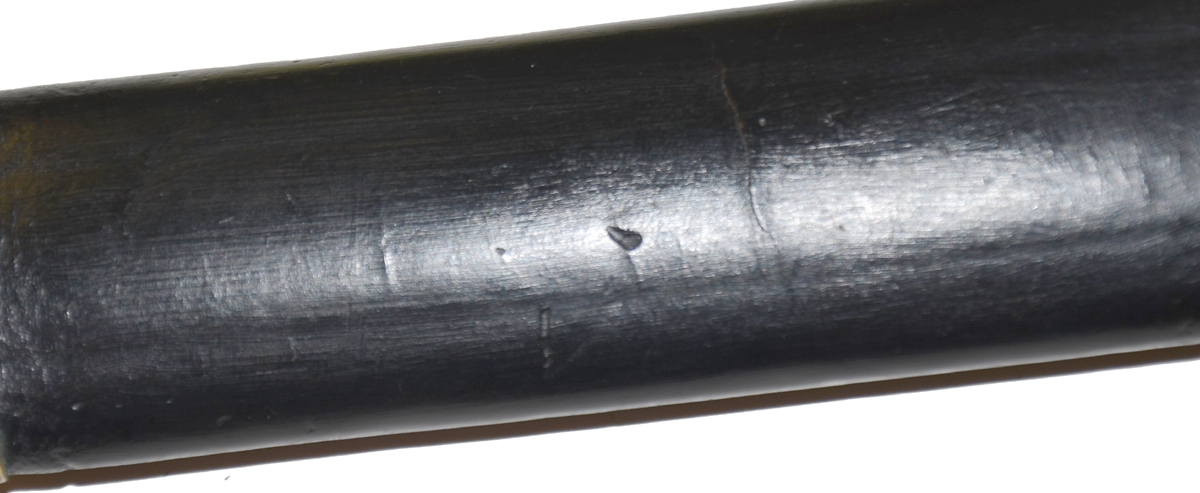
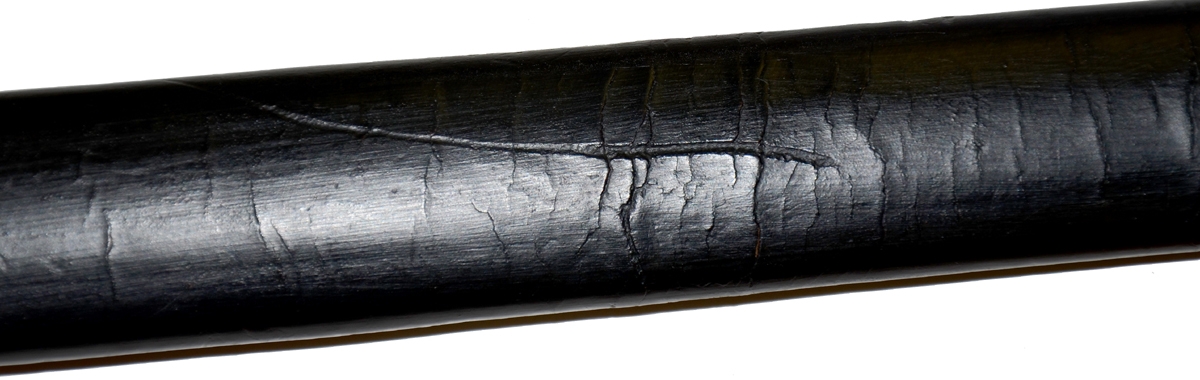
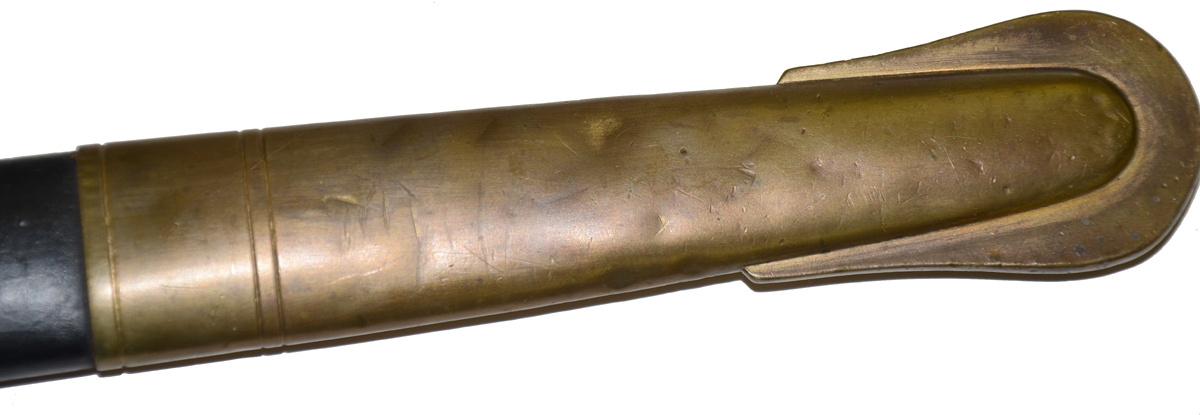
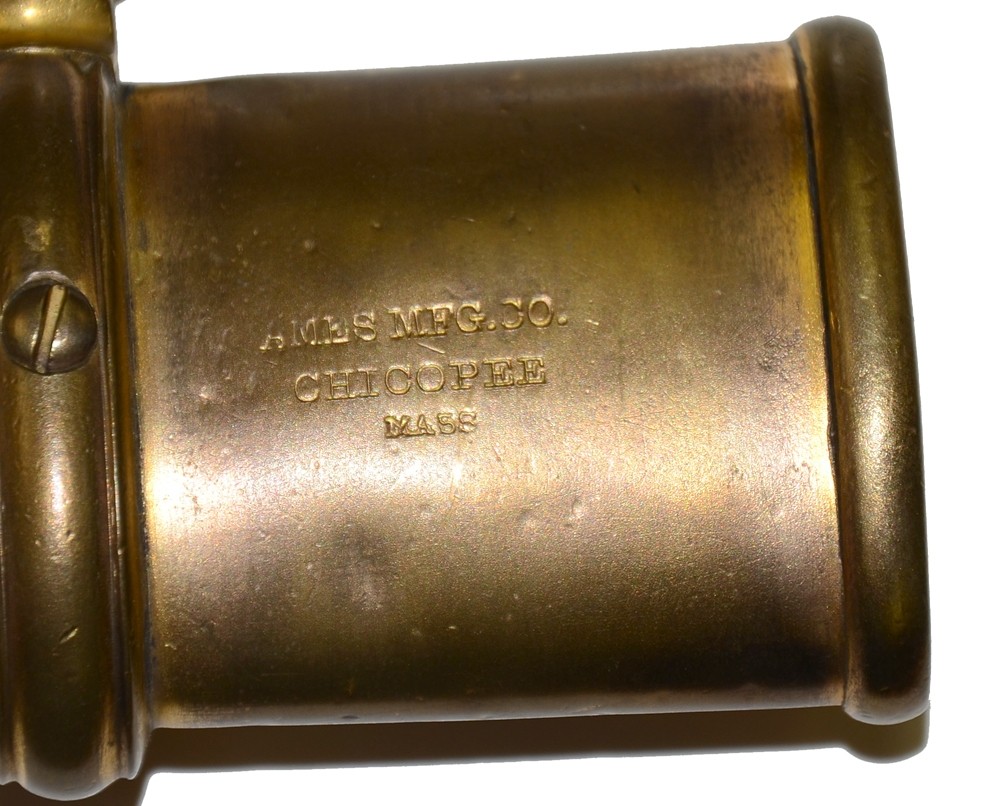
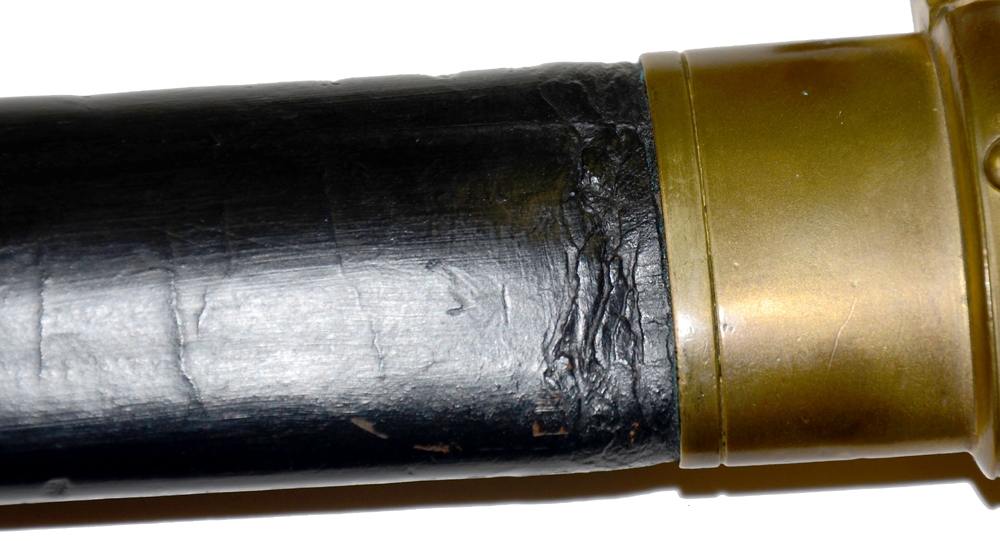
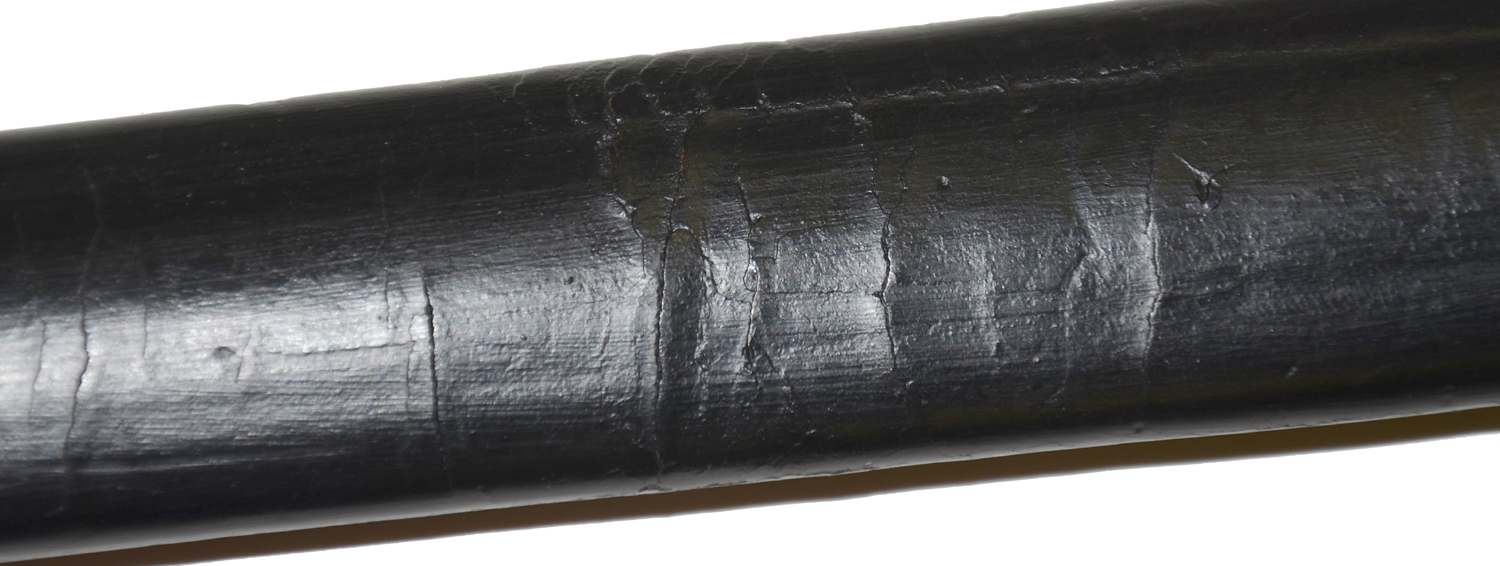
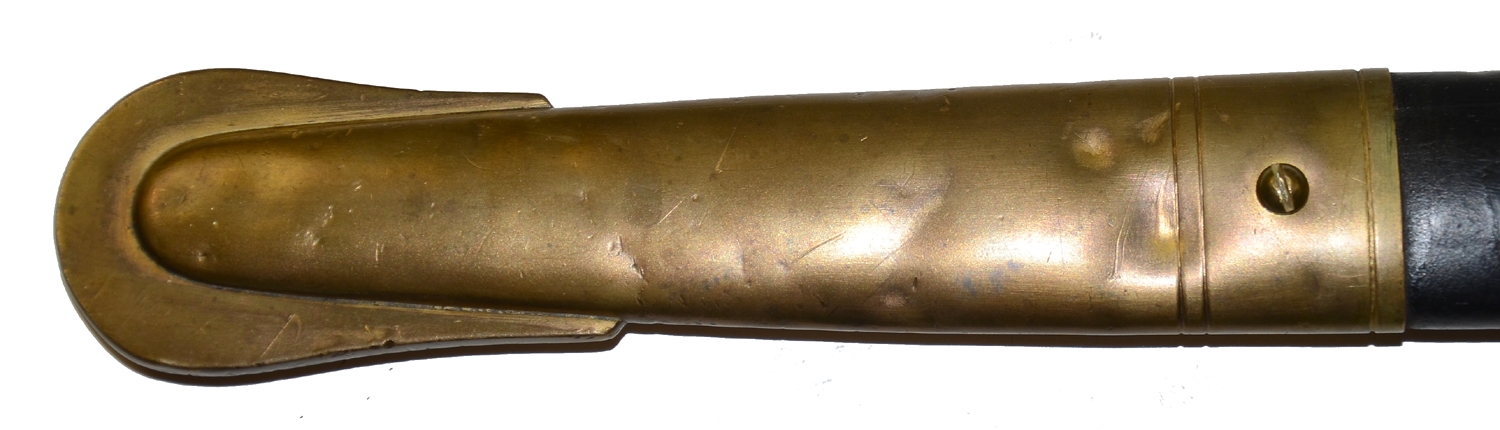
The scabbard is in very good condition. The three brass mounts remain tightly fastened. The throat is stamped with “Ames Mfg. Co. / Chicopee / Mass.” Drag exhibits several small dents. Black leather shows minor finish cracking but remains strong and rigid.
A very nice example of an Ames officer’s sword with early date. [jet]
~~~~~~~~~~~~~~~~~~~~~~~~~
THIS ITEM, AS WITH ALL OTHER ITEMS AVAILABLE ON OUR WEB SITE,
MAY BE PURCHASED THROUGH OUR LAYAWAY PROGRAM.
FOR OUR POLICIES AND TERMS,
CLICK ON ‘CONTACT US’ AT THE TOP OF ANY PAGE ON THE SITE,
THEN ON ‘LAYAWAY POLICY’.
THANK YOU!
Inquire About M1850 FOOT OFFICER’S SWORD AND SCABBARD BY AMES
Most Popular
Historical Firearms Stolen From The National Civil War Museum In Harrisburg, Pa »
Theft From Gravesite Of Gen. John Reynolds »
Selection Of Unframed Prints By Don Troiani »
Fine Condition Brass Infantry Bugle Insignia »
featured item
CONFEDERATE CLOVERLEAF PIKE
A very good, unmarked example of the striking Confederate “cloverleaf” pike formerly in the collections of the Texas Civil War Museum. The nickname obviously derives from the trefoil spearhead with a long central blade widening out for the lower… (1179-1659). Learn More »
site search