

site search
online catalog
SCHUYLER, HARTLEY AND GRAHAM MODEL 1860 STAFF OFFICER’S SWORD 1865-1867
Hover to zoom

$1,250.00
Quantity Available: 1
Item Code: 1306-07
Shipping: Determined by Method & Location of buyer
To Order:
Call 717-334-0347,
Fax 717-334-5016, or E-mail
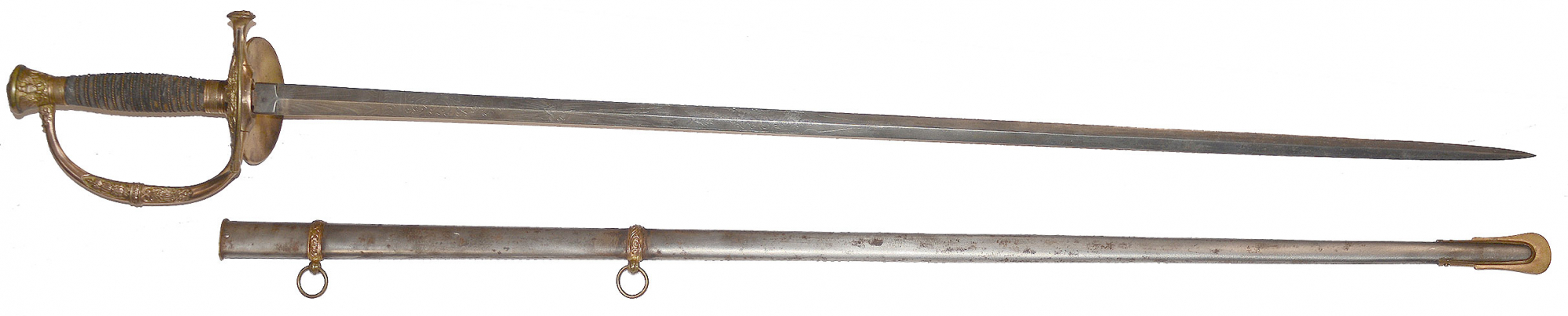
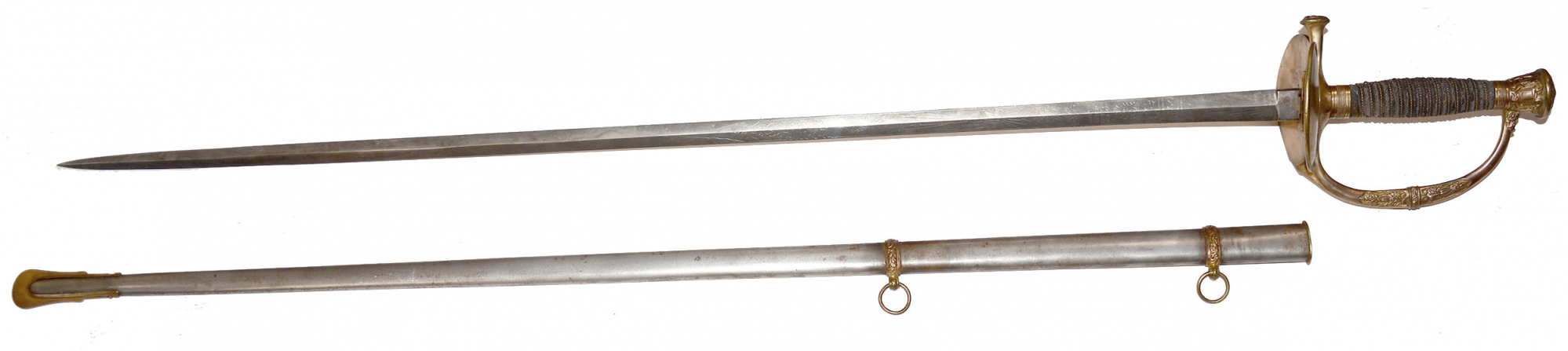
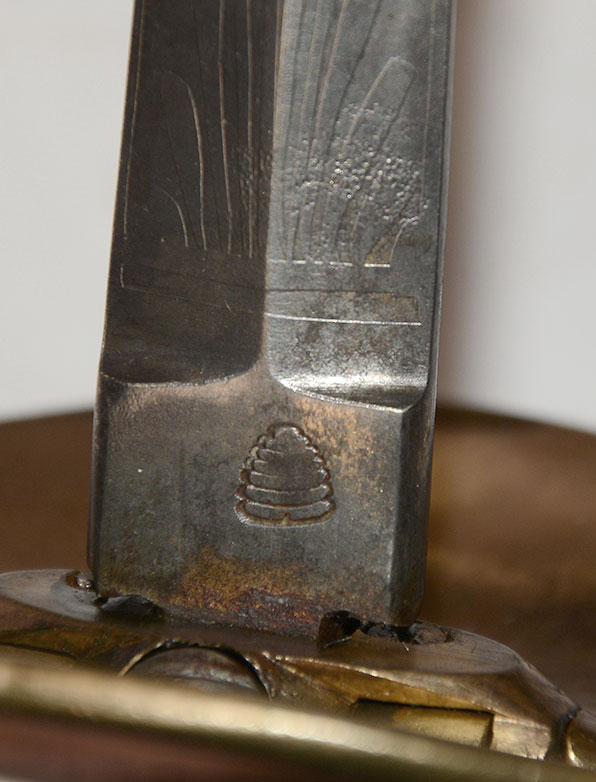
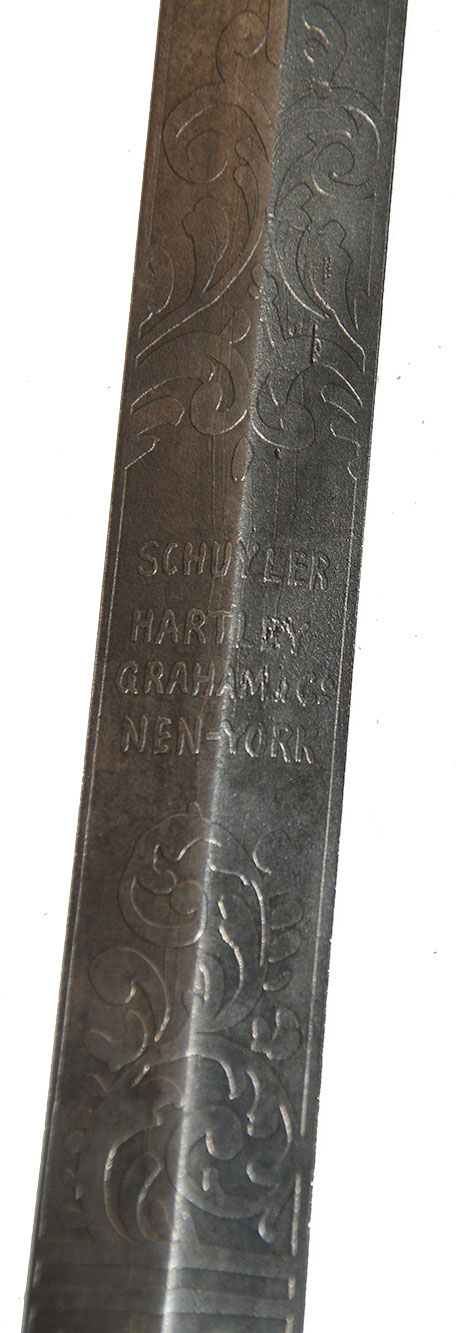
The Model 1860 Staff Officer’s Sword was descended from the 1840 Foot Officer’s Sword and in turn morphed into the 1872 Staff and Line Officer’s Sword, both of which were called the Model 1860 Staff and Field Sword by Peterson, a misnomer that has stuck with them, making them both difficult to date in some cases and difficult to label. This one is clearly marked on the reverse ricasso with a blade-maker’s stamp in the form of a beehive- the mark of Samuel Hoppe of Solingen. A little further up the blade is the etched American retailer’s name, “SCHUYLER / HARTLEY / GRAHAM & Co / NEW-YORK” (with the “W” of “new” actually an “N.”) Schuyler, Hartley and Graham is, of course, the well-known military goods dealer established in the 1850s and Hoppe supplied blades to the American market during the Civil War- the Chicago Public Library has a February 1863 dated presentation M1850 foot officer’s sword by him, for example. This form of the SH&G company name, however, seems to date to March 1865 and last into 1867 when the company went back to its old designation, which gets it in just under the cut-off for a Civil War sword in some views. In keeping with that dating, the sword shows some of the early characteristics of the pattern- the “arris” or diamond shaped blade, for instance, the use of two single ring suspension bands, rather than a two ring band at top and single ring below, and what appears to be a thinner German silver wash on the scabbard rather than later, heavier nickel plate, etc.
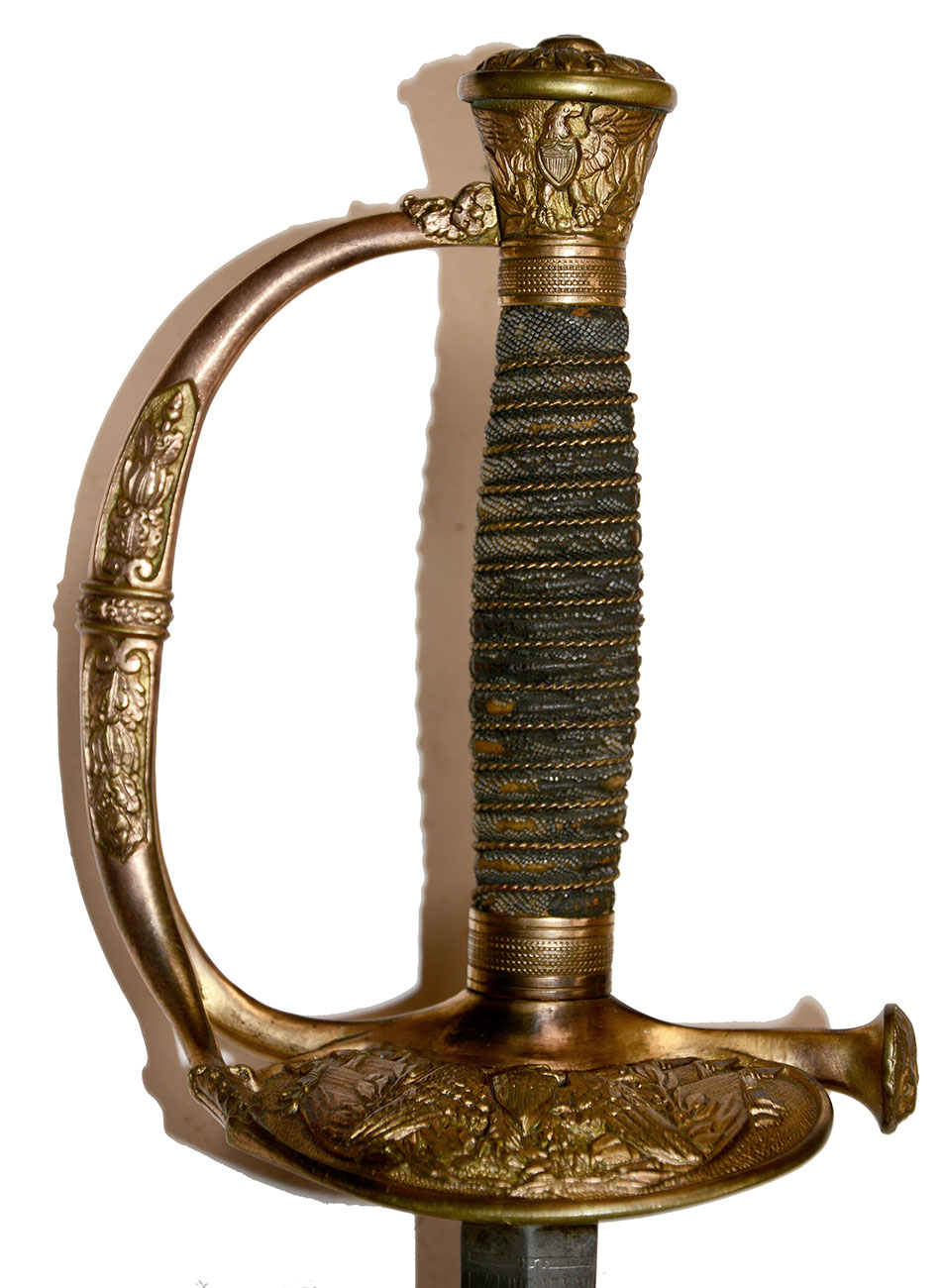
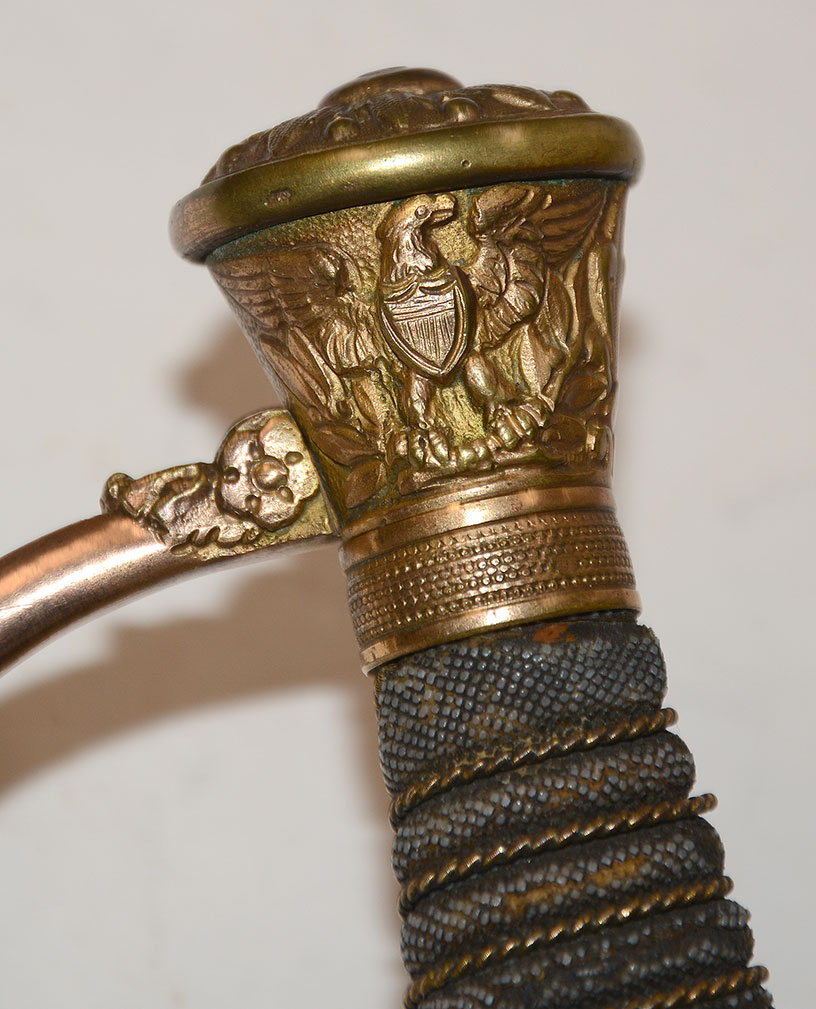
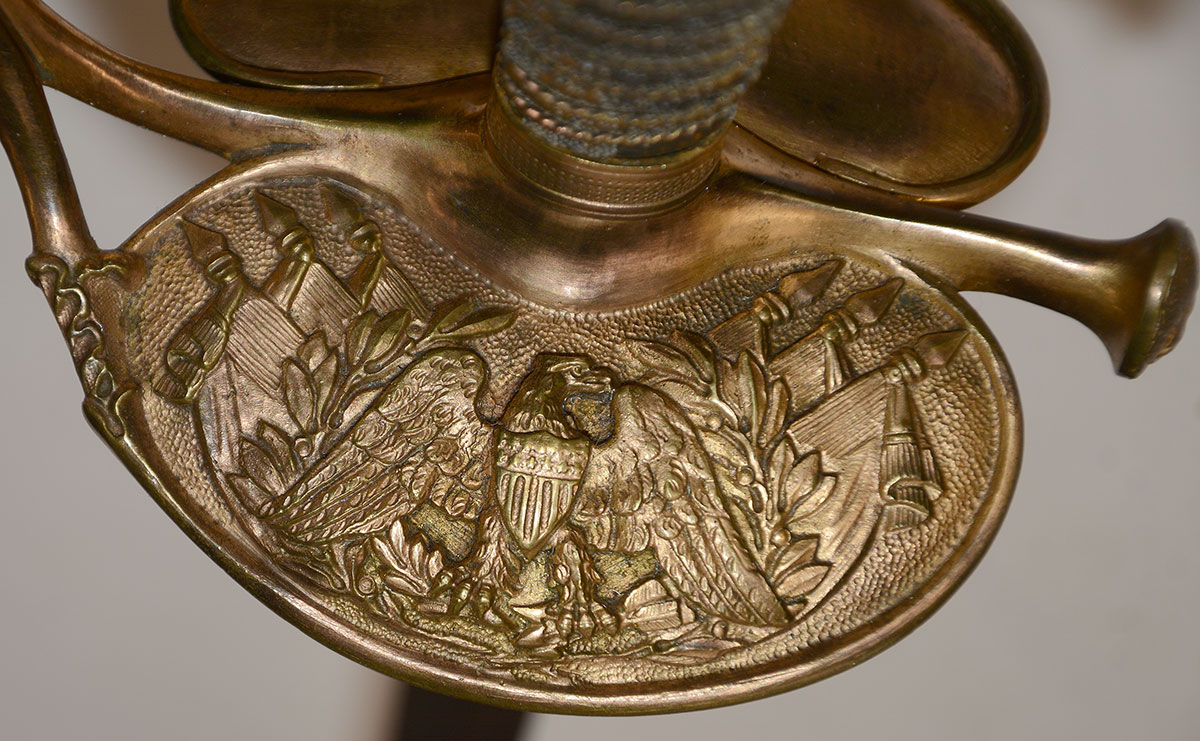
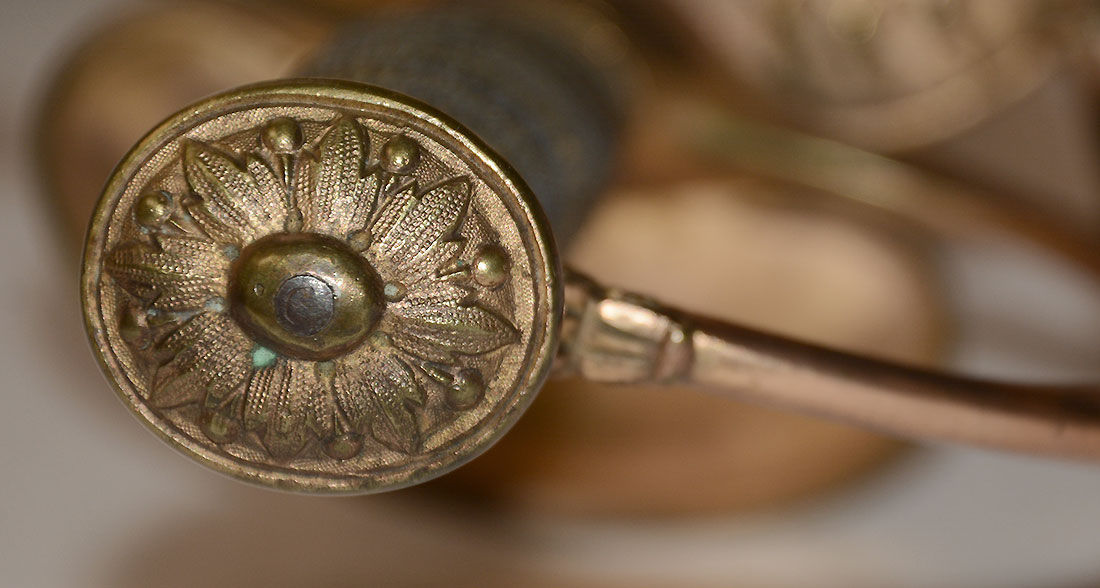
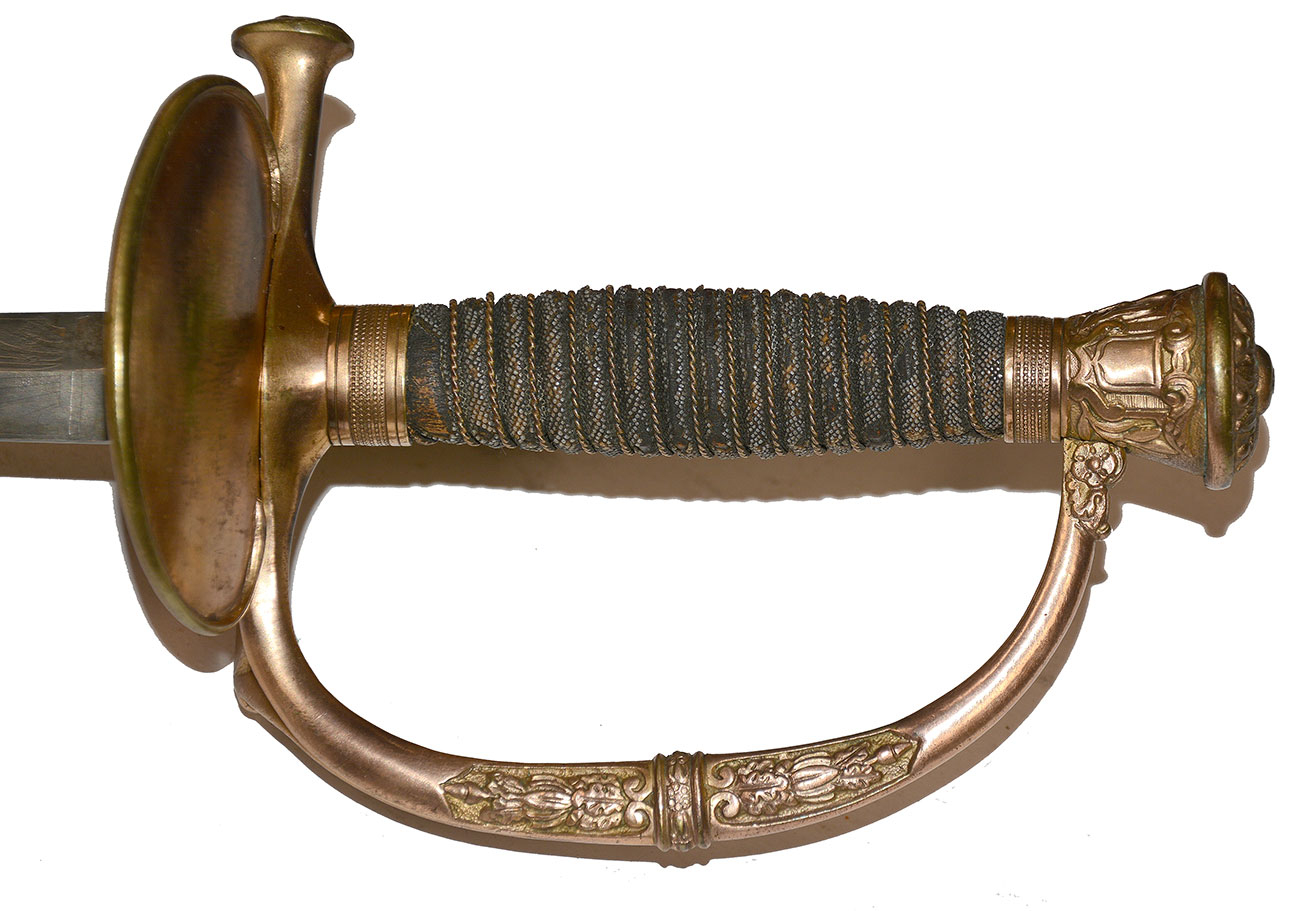
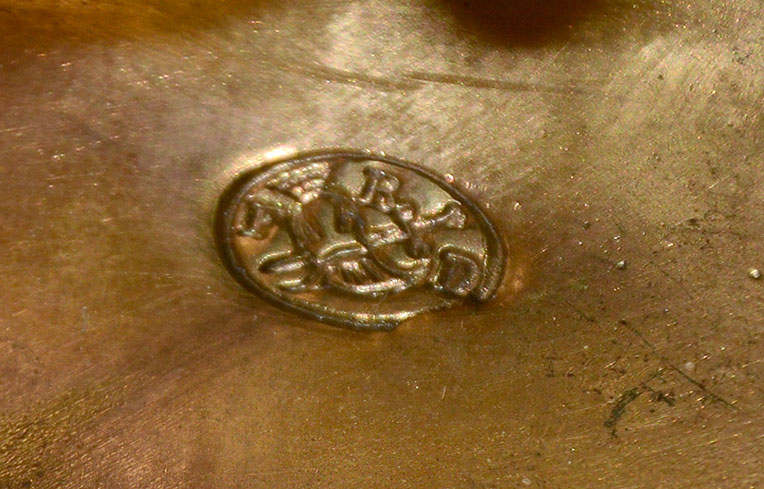
The hilt is the standard pattern with lantern-shape pommel, with leaves and berries in relief on the top, a US eagle on one face and blank shield on the other. The knucklebow has a central band with inset panels with raised foliate motifs above and below, rather than the entwined thunderbolts often seen. The obverse counterguard has a supporting branch and is decorated with a cast and chased eagle superimposed on three banners slanting out from behind it on either side, all on a stippled ground. The reverse folding guard is plain. The icon of the French firm of Francois Delacour & Bakes, Paris is stamped on the underside of the counterguard, which shows the sword was a French made sword using a Solingen blade (Hoppe) for the American retailer SH&G.
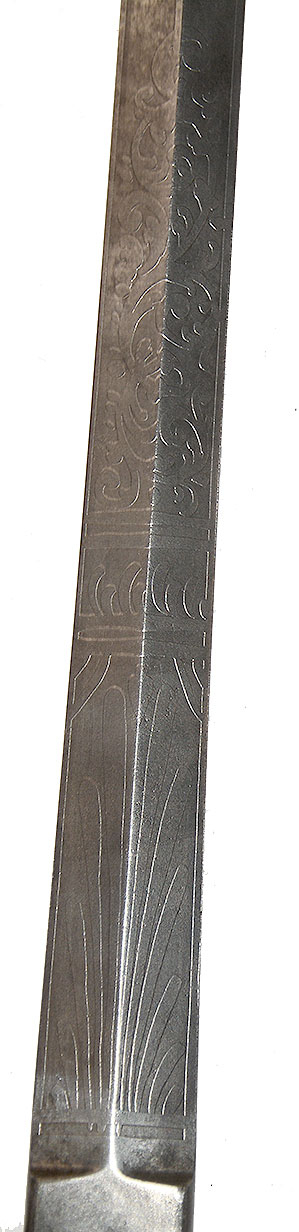
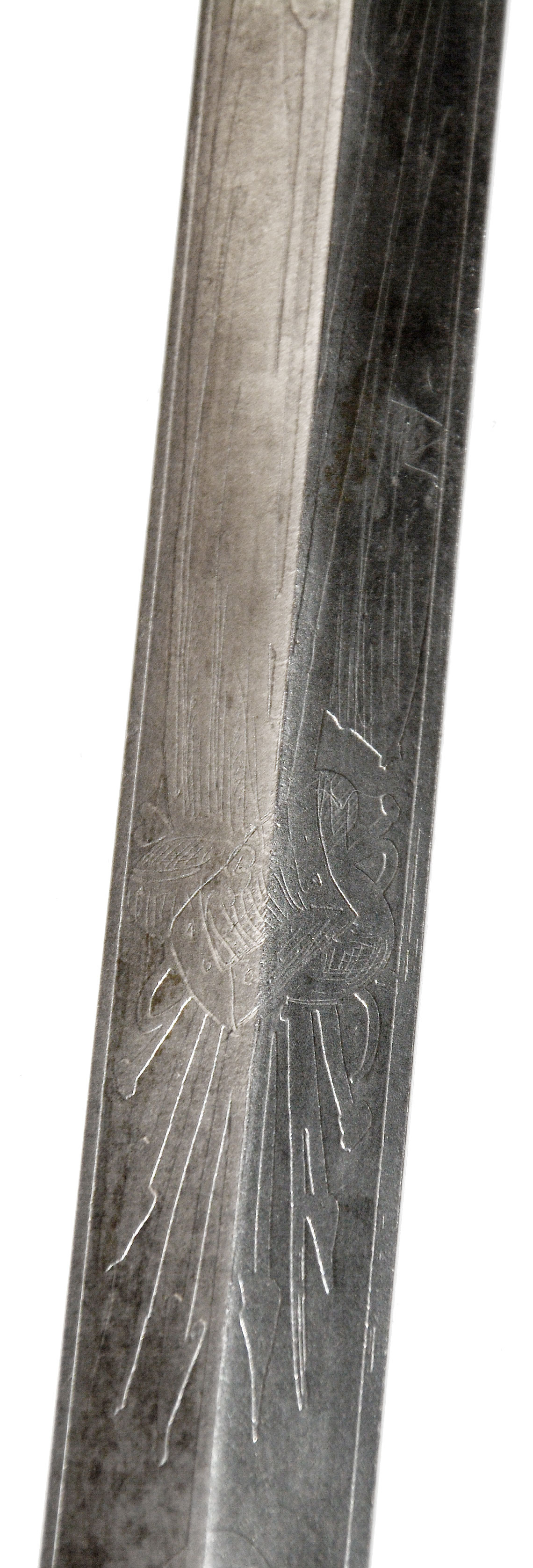
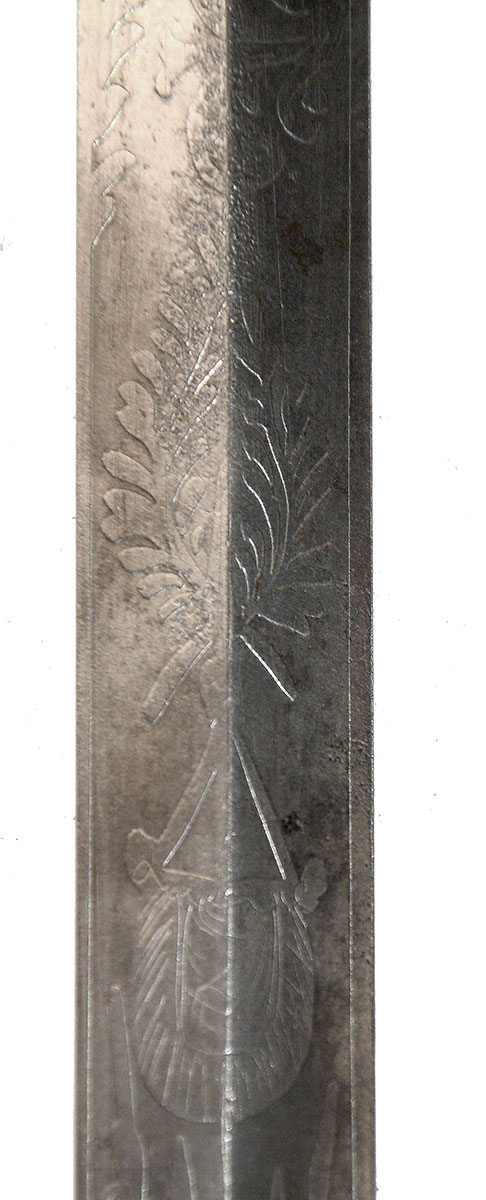
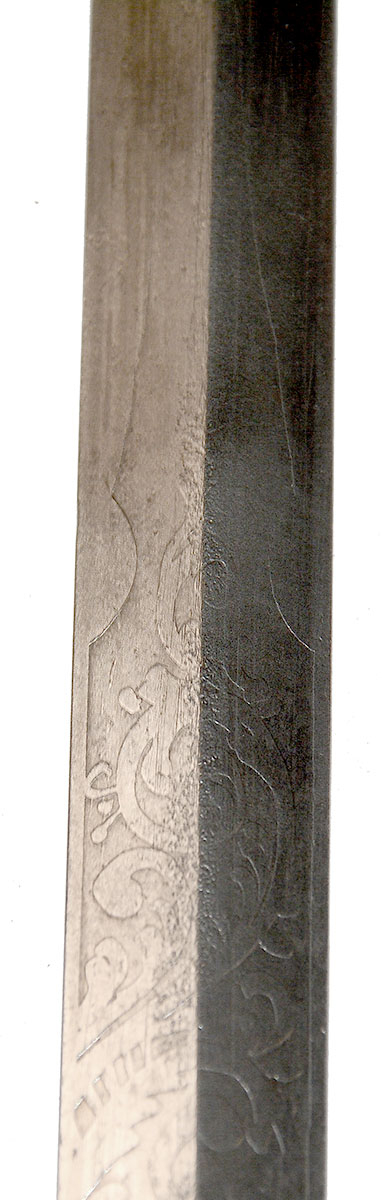
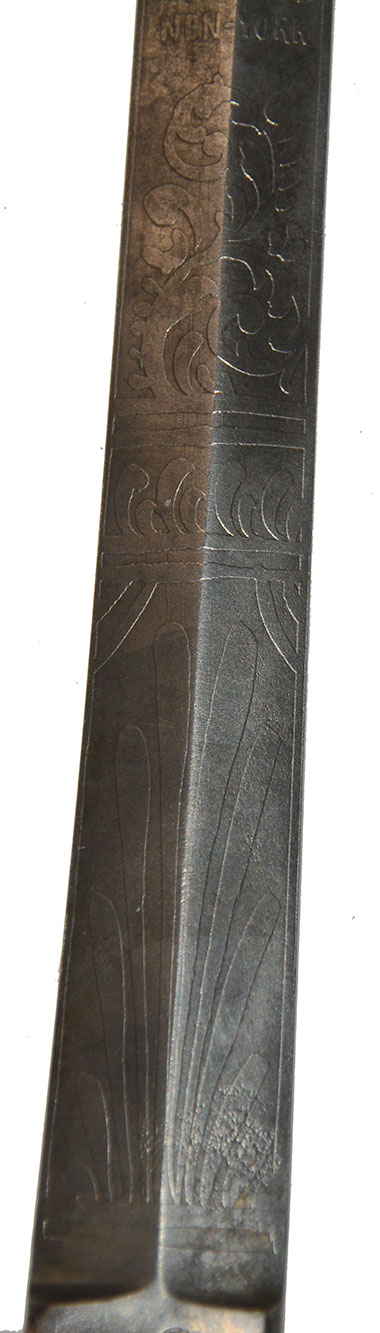
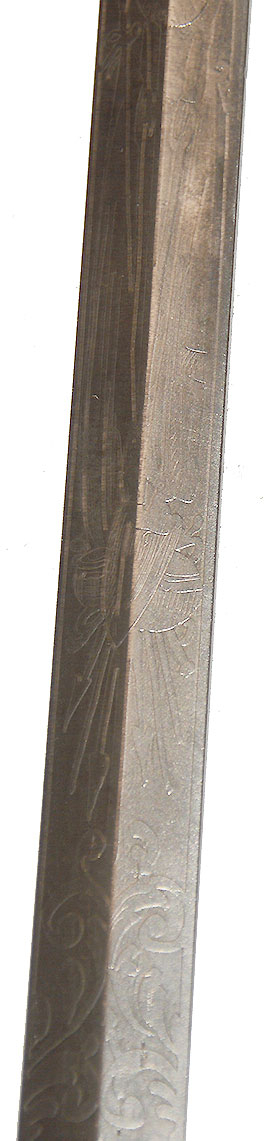
The blade etching on both sides uses an elongated palmette at bottom. On the obverse this is followed by foliate scrolls, a long stand of arms showing crossed spears and pikes with drum and bugle visible at center, above which is what appears to be a hunting bag or sabretache suspended from crossed branches, and ending with more foliate scrollwork, and the panel terminating in a spearpoint. The reverse uses the SHG & Co. address above the palmette, followed by foliate scrolls, the sabretache/bag, etc.
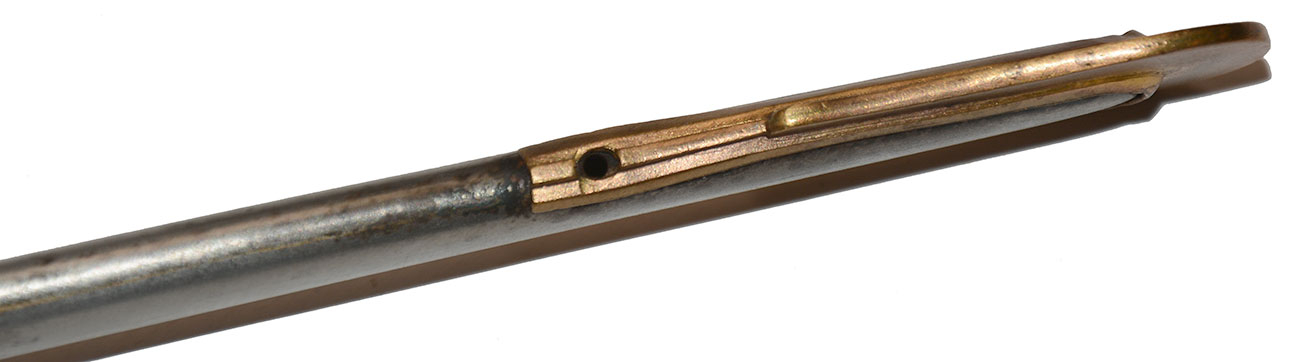
The condition overall is very good. The hilt preserves some gilt and the details are sharp. The grip shows some small wear spots to the rayskin, but is good overall, has good color and the wire binding is in place. The detailing and color of the obverse counterguard is very good. The blade shows smooth metal with good edge and point, with just a small bit of freckling on the maker’s address. The etching is fully visible, though not frosted. The scabbard shows some gray staining to the plating on both sides, and some small flakes and brown coming through on the reverse, but shows as a muted silver overall. The narrow ring bands have raised foliate elements. The drag is plain, as is characteristic of the early versions of the pattern, as is the use of relatively simple, not openwork, bands and the single ring in the upper mount.
See Bazelon’s Directory for information on the firm and Thillmann, “Civil War Army Swords,” for discussion of the pattern. He illustrates a French-made version of the sword for his SH&G example, though we note it has the same style of drag on the scabbard and same central band and foliate motifs on the knucklebow. This is an interesting example, predating the pattern’s adoption for line as well as staff officers. [sr] [ph:L]
~~~~~~~~~~~~~~~~~~~~~~~~~~~~~~~~~~~
THIS ITEM, AS WITH ALL OTHER ITEMS AVAILABLE ON OUR WEB SITE,
MAY BE PURCHASED THROUGH OUR LAYAWAY PROGRAM.
CLICK HERE FOR OUR POLICIES AND TERMS.
THANK YOU!
Inquire About SCHUYLER, HARTLEY AND GRAHAM MODEL 1860 STAFF OFFICER’S SWORD 1865-1867
Most Popular
Historical Firearms Stolen From The National Civil War Museum In Harrisburg, Pa »
Theft From Gravesite Of Gen. John Reynolds »
Selection Of Unframed Prints By Don Troiani »
Fine Condition Brass Infantry Bugle Insignia »
Rare Identified 65Th Ny Sergeant’s Jacket, With Manscript Material: 1St U.s. Chasseurs »
featured item
A RARE SURVIVOR: EARLY-WAR CONFEDERATE MARKED BRITISH P53 ARTILLERY CARBINE #1500 WITH A TENNESSEE PROVENANCE
British artillery carbines were used by both Confederate cavalry and infantry: in October 1862 Jeb Stuart wanted to exchange rifles carried by some his troopers for “Enfield carbines (artillery) in the hands of our infantry.” This is one of just… (846-571). Learn More »
site search