

site search
online catalog
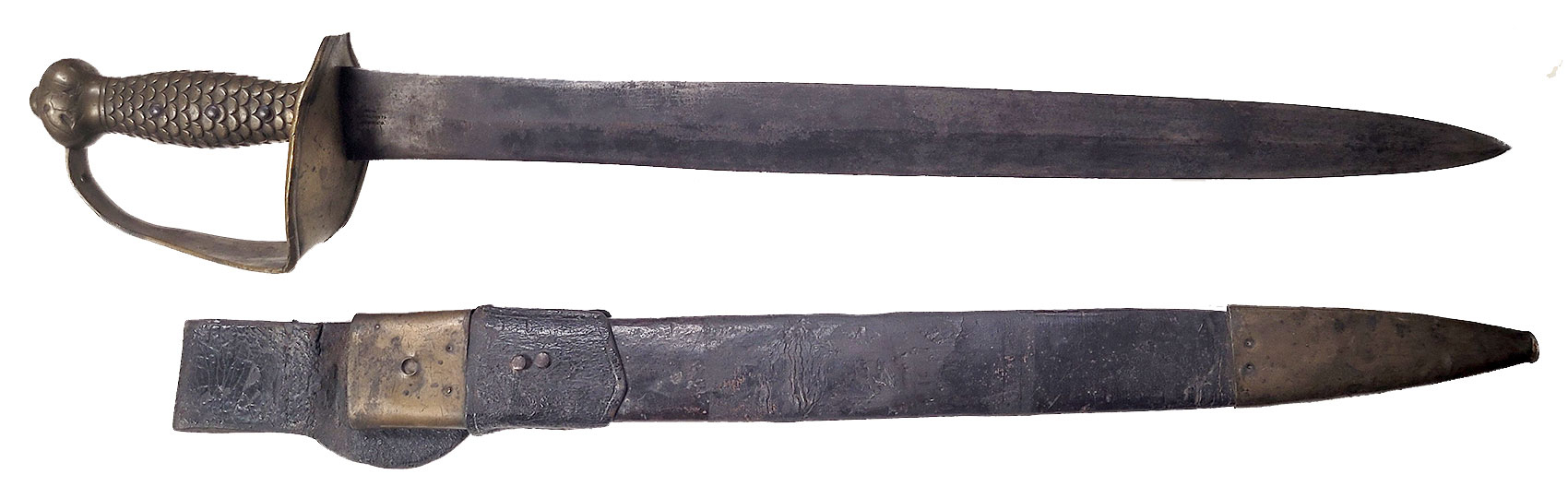
AMES MODEL 1841 U.S. NAVAL CUTLASS DATED 1842: FIRST YEAR OF PRODUCTION; FIRST CONTRACT
Hover to zoom
$1,625.00
Quantity Available: 1
Item Code: 172-6124
Shipping: Determined by Method & Location of buyer
To Order:
Call 717-334-0347,
Fax 717-334-5016, or E-mail
The 1841 U.S. Navy cutlass is scarce. Only 6,600 of them were made from 1842 through 1846. Ames sent three cutlasses of slightly different configuration to the Board of Naval Ordnance in November 1841. The Navy selected this pattern and a contract for 3,000 was signed late in 1841 or very early in 1842, with delivery of the first 500 made in March 1842, another 1,000 by May, and the remaining 1,500 before the end of the year.
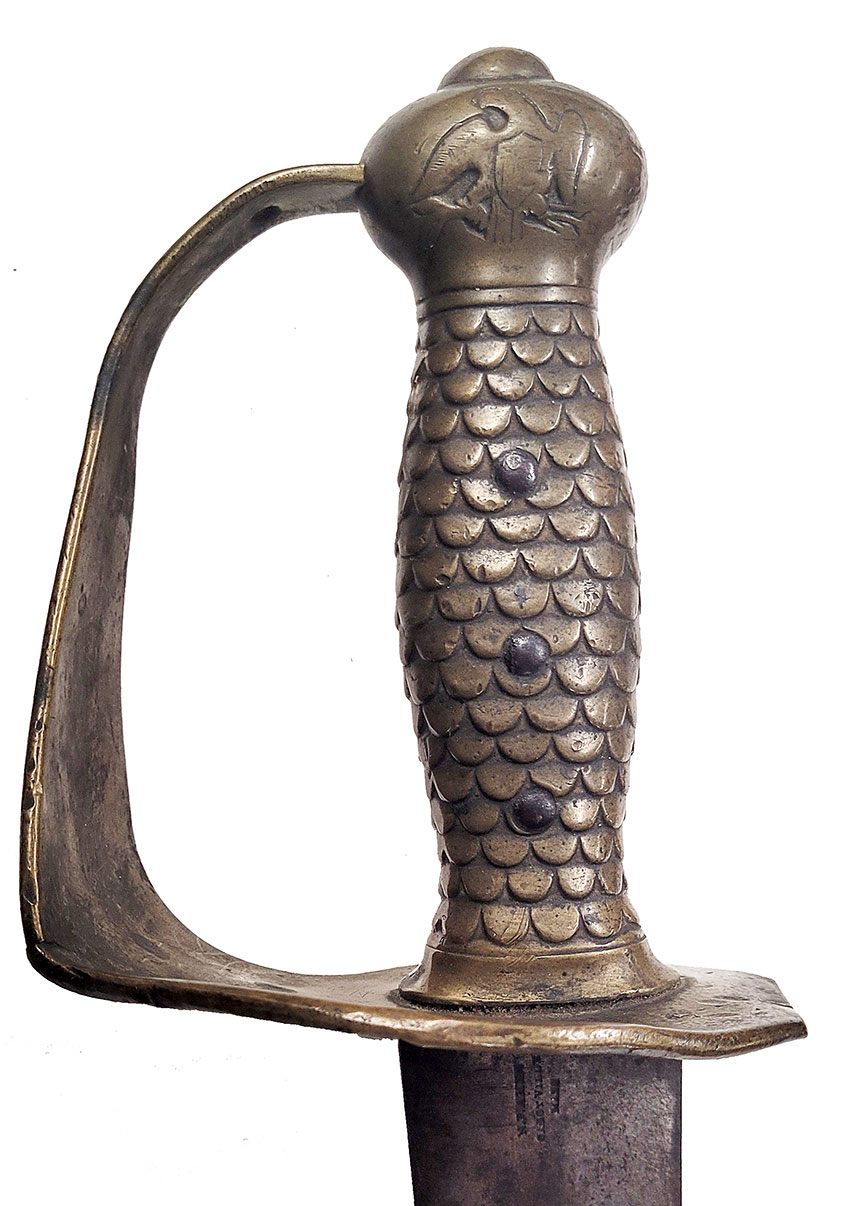
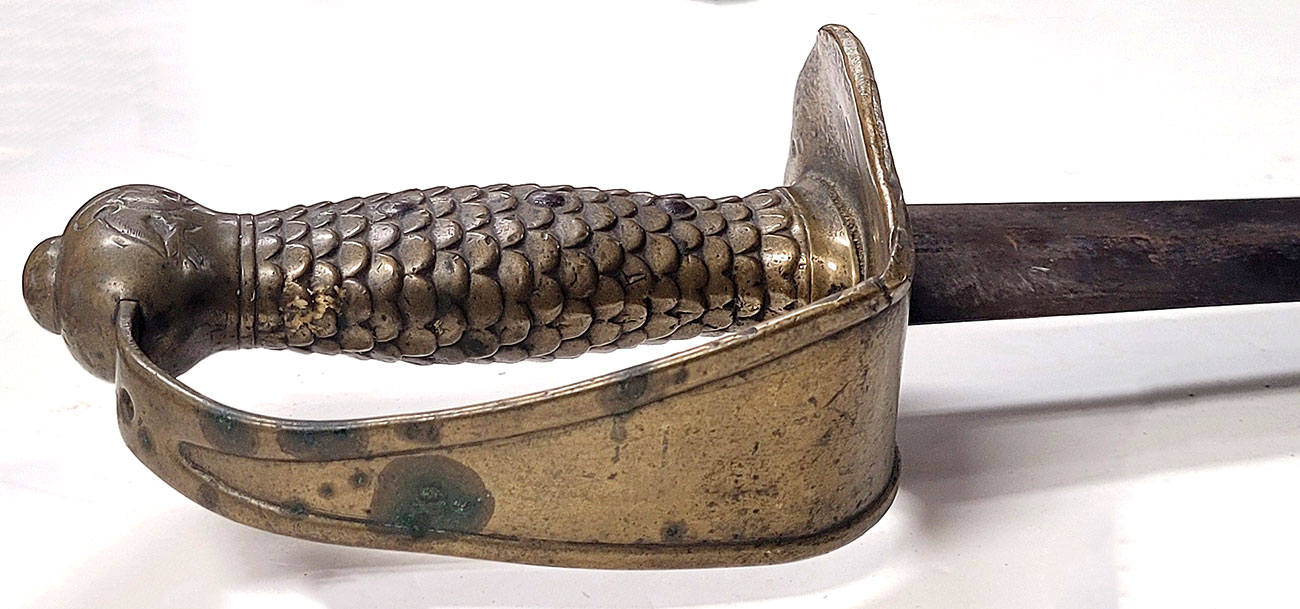
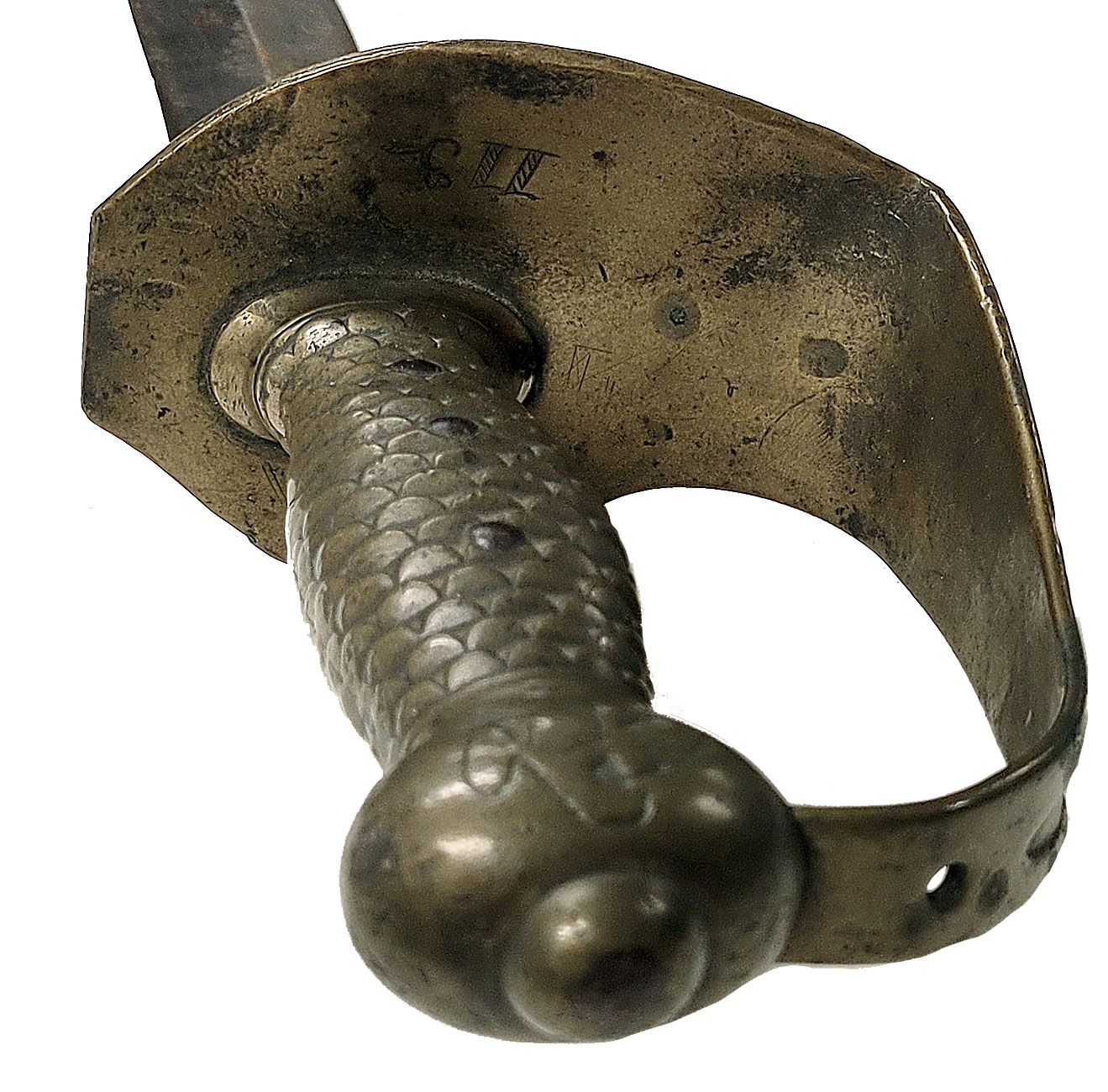
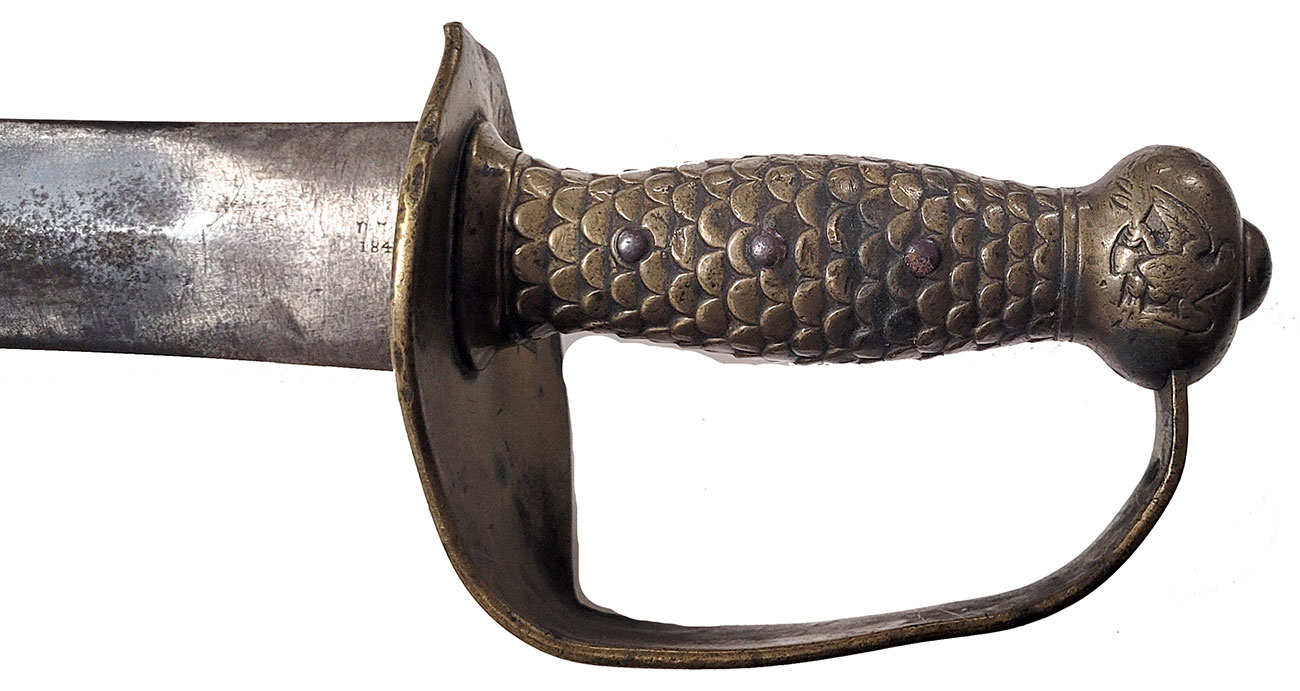
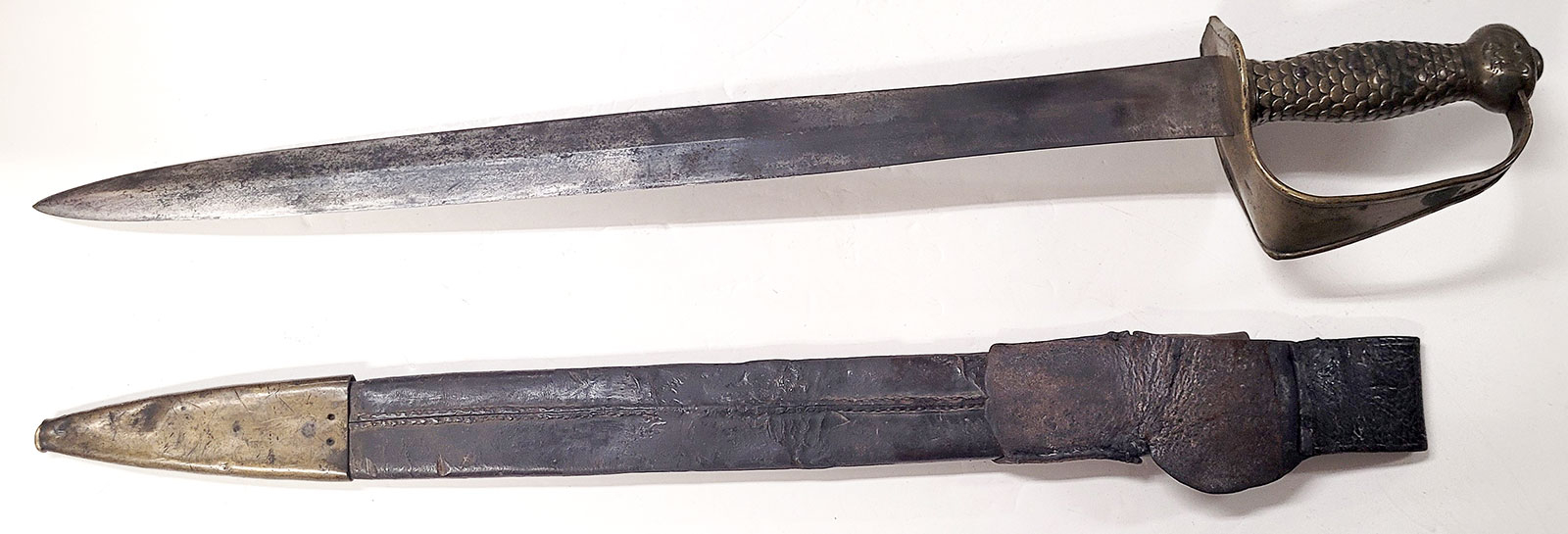
Ames based his pattern on the M1832/3 army short sword. Both have short, wide, straight, double-edged blades with slight wasp waist and the grips and pommels use the same or a similar mold: the grip has scales (or feathers in some interpretations) and is secured by three rivets, and the pommel is cast with an eagle on either side. The cutlass blade differs, however, in having a median ridge without fullers and the guard offers greater protection to the hand, using knuckle guard formed from a flat piece of brass with reinforced edge, descending from the pommel and widening to form a counterguard around the blade with a quillon terminating in a disk. They were formidable weapons intended not only for hand-to-hand combat, but the necessary preliminary of cutting through enemy anti-boarding nets just to get to close quarters in boarding an enemy vessel.
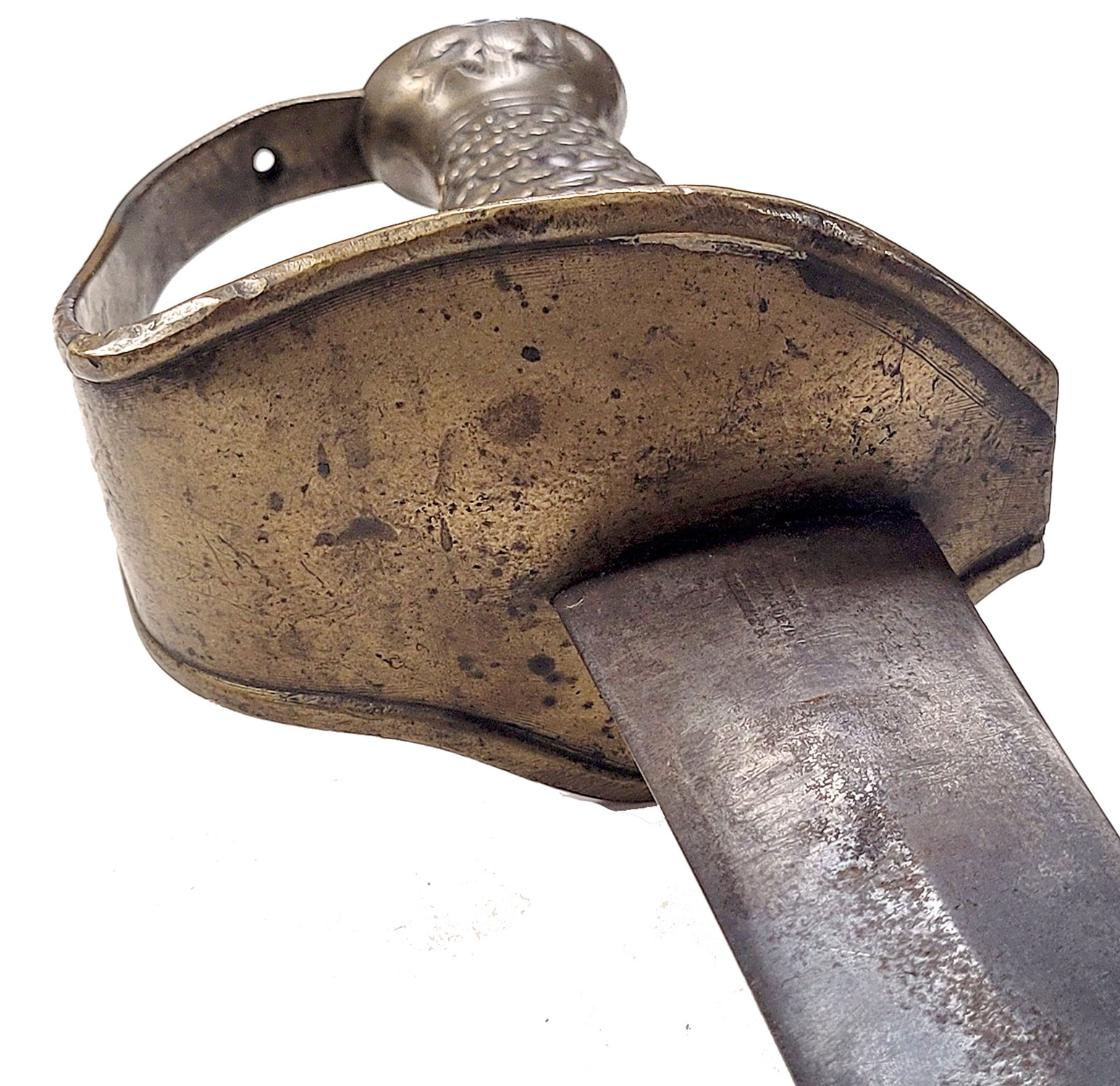
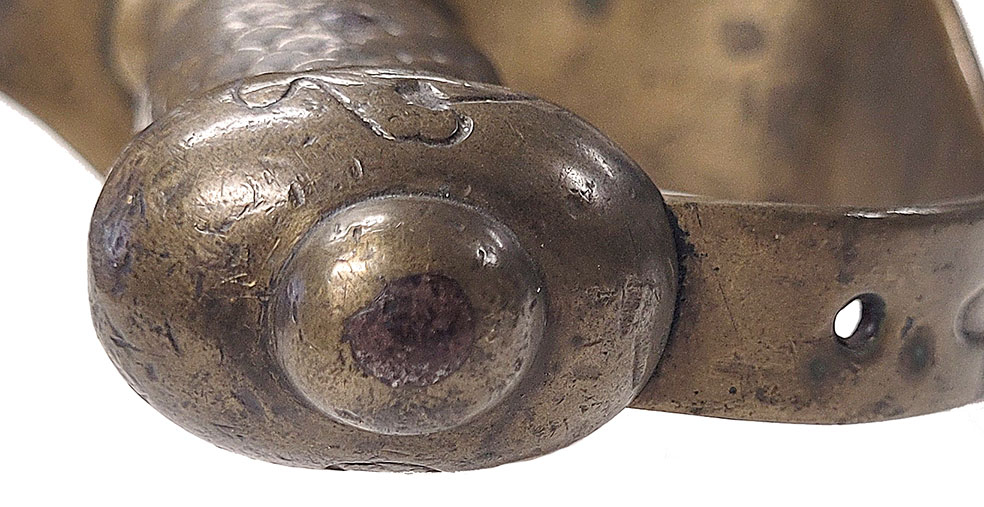
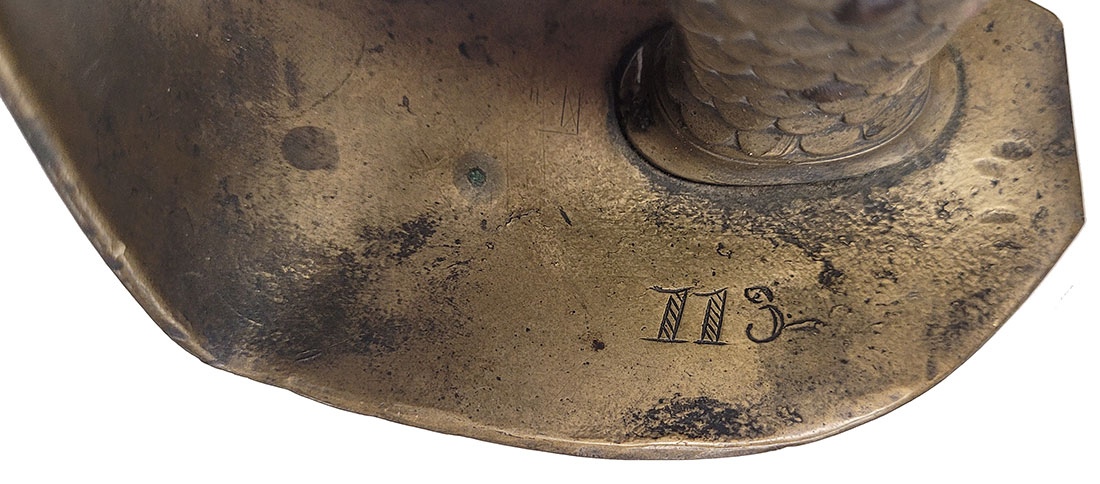
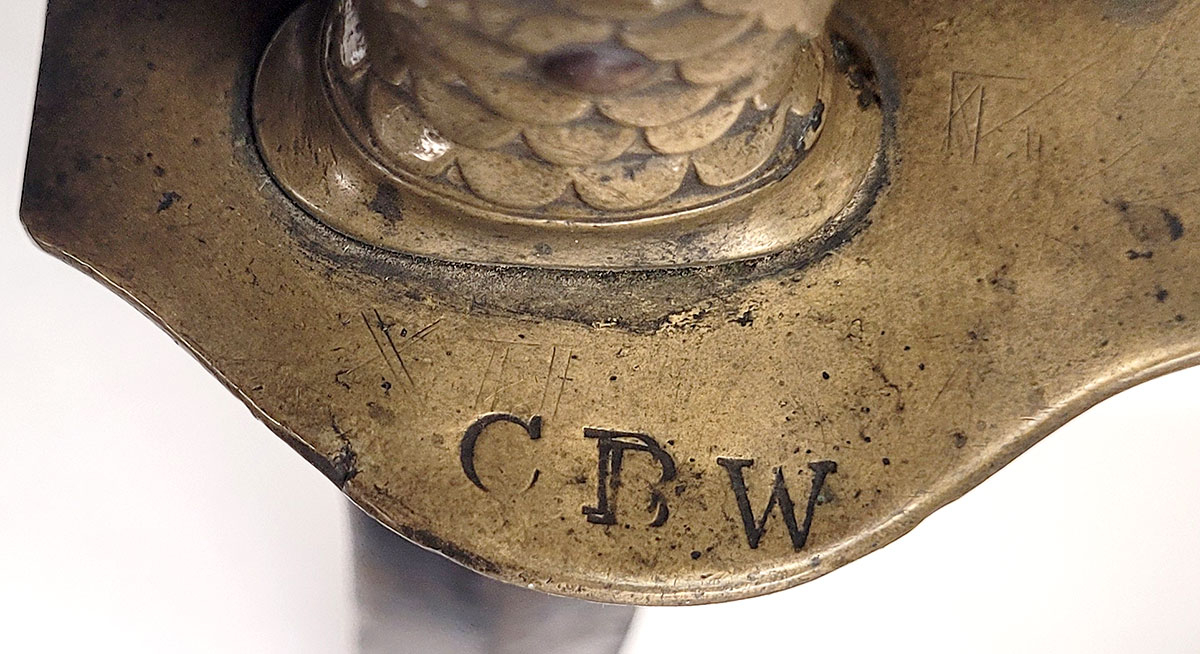
These usually show long and hard shipboard use. This one rates in fair condition, with both hilt and blade showing an uncleaned patina. The eagle on both sides of the pommel is worn but, discernable. The brass fish scale grip has three iron rivets and a visible casting seam. The counterguard has been bent and straightened, with the quillon section having been broken off at its thinnest point. The remaining edge has been smoothed off with a period patina. A rack number “113” is hand engraved in cross-hatched block numbers on the guard. Also, block letter stamped “CBW”. The pommel has a smooth undisturbed peen to the blade tang.
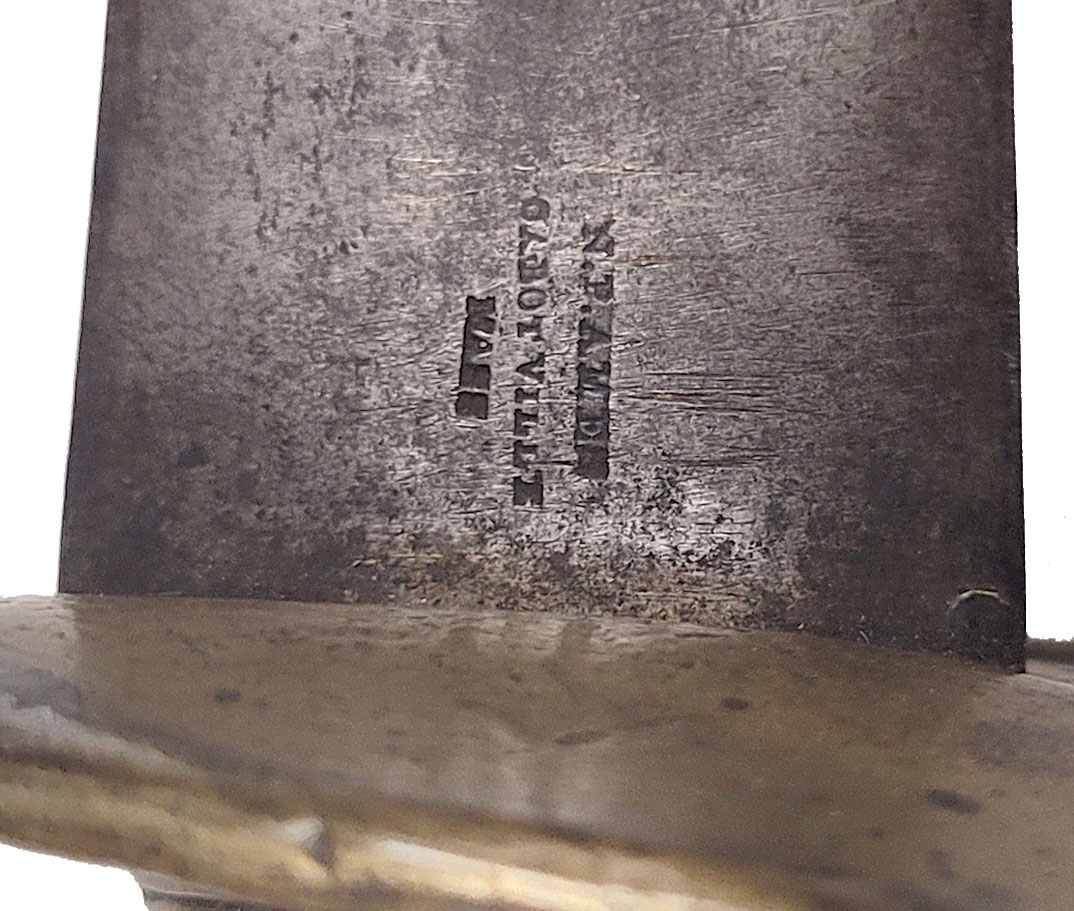
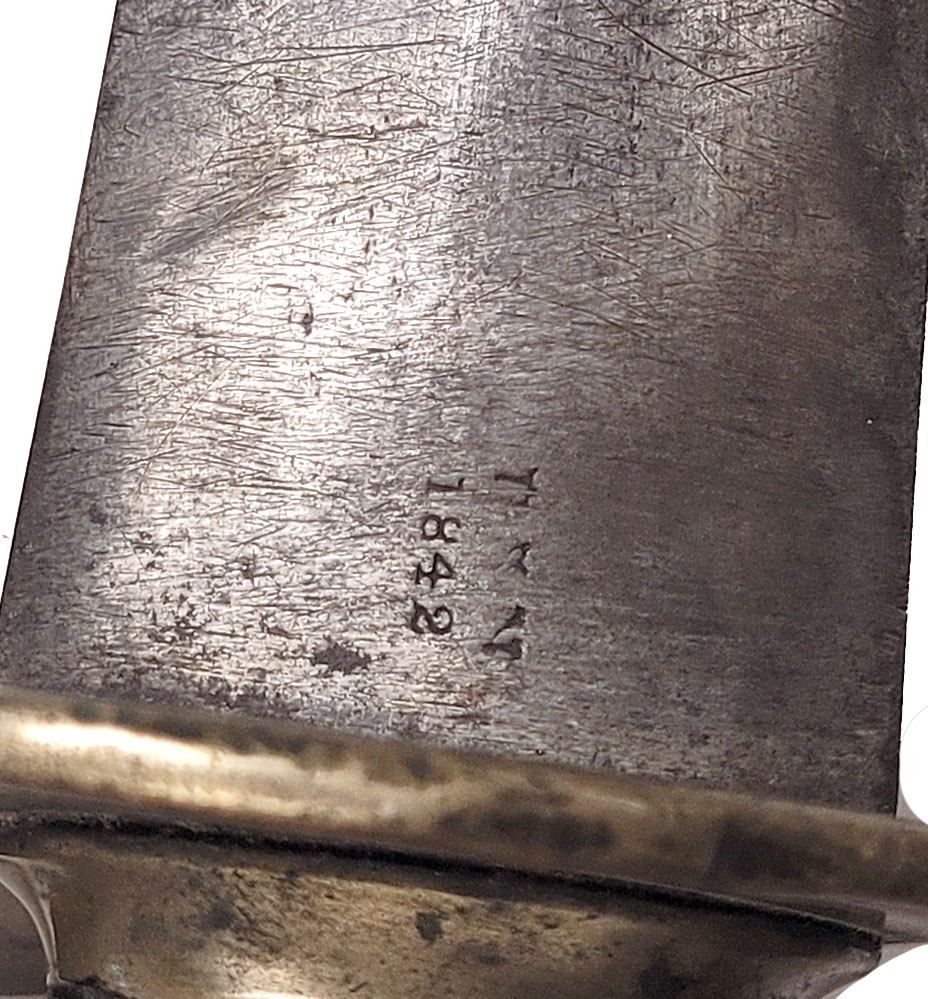
The blade has a good edge and point. No obvious chips or nicks. Muted, silver grey in color, showing some darker spots and some shallow salt-and-peppering, or “freckling” here and there. A few lines visible from a period light sharpening around the base. The obverse ricasso is stamped in small block letters, “N.P. AMES / CABOTVILLE / MASS.” This is in line with the blade and on the spine. The reverse is lightly stamped “U.S.N / 1842,”. As Kevin Hoffman noted in his Swords of Regulation and Honor, these early M1841 cutlasses bear no inspector marks on the blade or the hilt (on later production inspector initial appear on the quillon disk- these show no sign of ever being marked.) We also note later production seems to omit the state designation, and also shifts to “Springfield.”
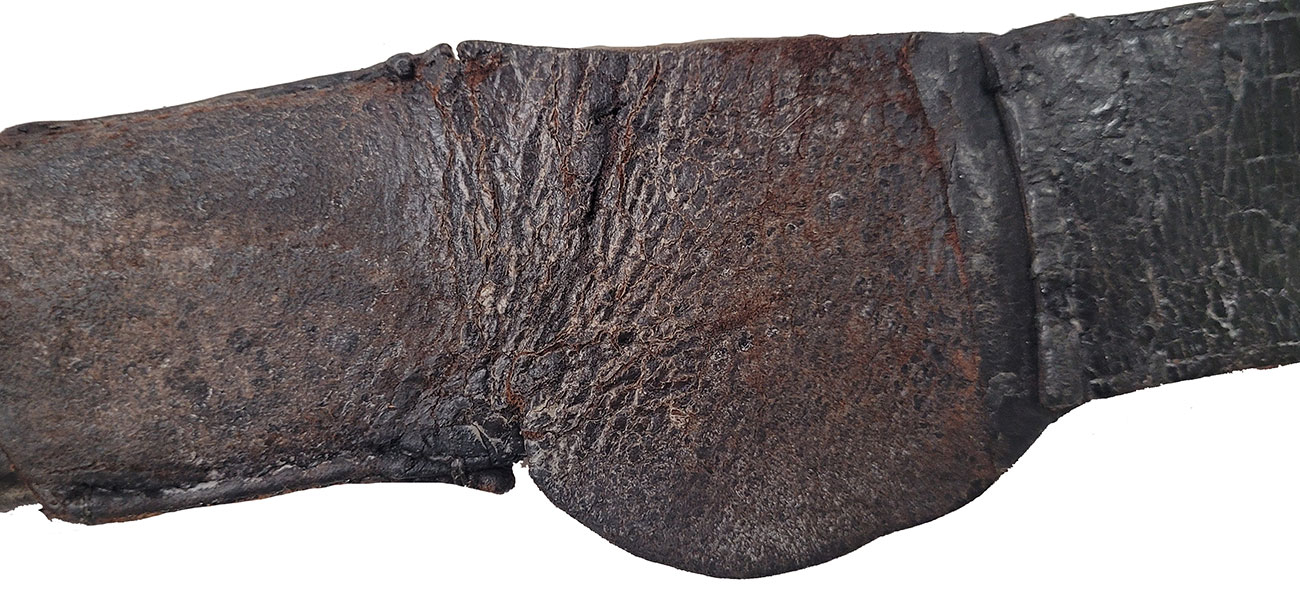
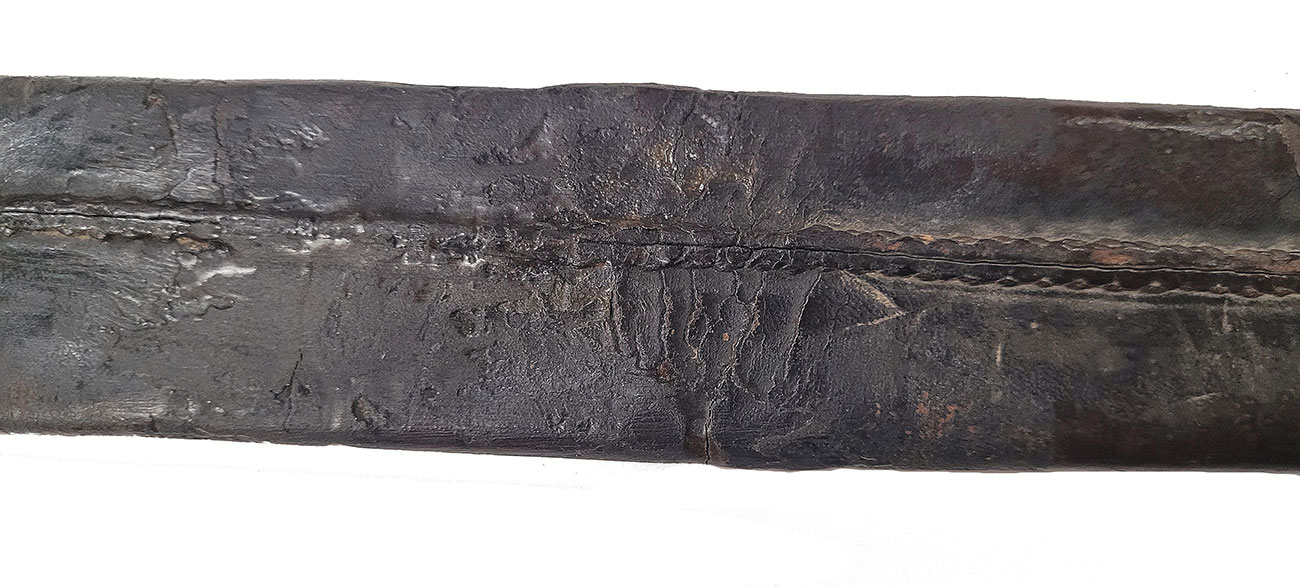
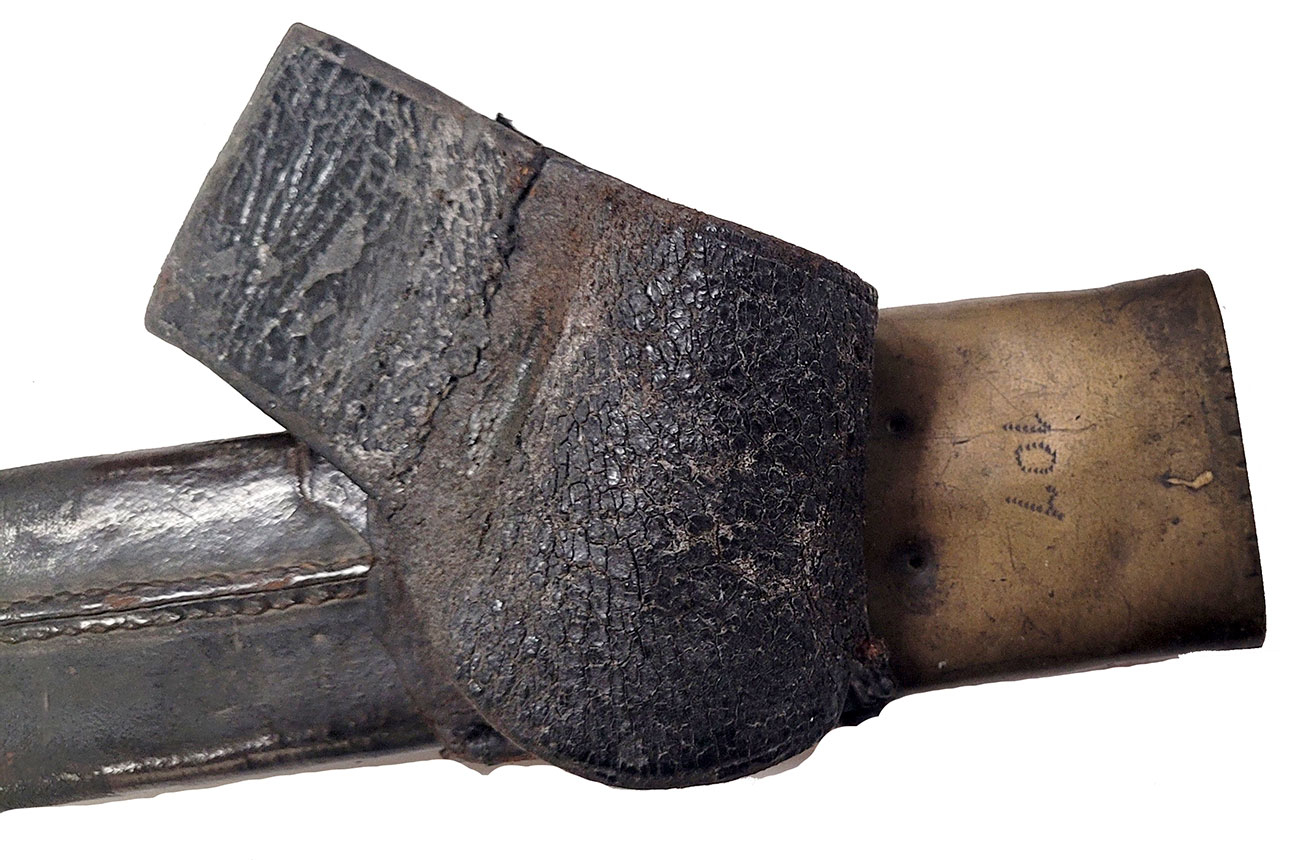
The original black bridle leather scabbard is present with brass throat and drag. The throat is peened-on with brass pins and is missing the fastening stud. A period black leather frog (possibly confederate) is mounted just below the throat with two heavy iron rivets. The drag has numerous dents and scratches. The body of the scabbard looks to have been possibly repaired about mid-way but, still tight and not flexible.
The navy was active in the Mexican War not only on blockading duty, but in amphibious operations in California and the Gulf of Mexico, and on land as well, most notably at Vera Cruz, where it not only landed a large army force, but erected and manned a naval gun battery on shore that took part in the bombardment of the city. When the Civil War broke out, the navy had to expand quickly to blockade the coast and control the rivers. A new pattern of cutlass, contracted for in May 1861 began to arrive in June, but older cutlasses were called back into service, making them veterans of two wars and more than twenty years’ service.
This is a good example of a scarce USN regulation cutlass, with an early date and rack number, indicating actual issue. [stp] [ph:L]
~~~~~~~~~~~~~~~~~~~~~~~~~~~~~~~~~~~
THIS ITEM, AS WITH ALL OTHER ITEMS AVAILABLE ON OUR WEB SITE,
MAY BE PURCHASED THROUGH OUR LAYAWAY PROGRAM.
CLICK HERE FOR OUR POLICIES AND TERMS.
THANK YOU!
Inquire About AMES MODEL 1841 U.S. NAVAL CUTLASS DATED 1842: FIRST YEAR OF PRODUCTION; FIRST CONTRACT
Most Popular
Historical Firearms Stolen From The National Civil War Museum In Harrisburg, Pa »
Theft From Gravesite Of Gen. John Reynolds »
Selection Of Unframed Prints By Don Troiani »
Fine Condition Brass Infantry Bugle Insignia »
Rare Identified 65Th Ny Sergeant’s Jacket, With Manscript Material: 1St U.s. Chasseurs »
featured item
IDENTIFIED FIELD-USED AND SOLDIER MODIFIED SCHUYLKILL ARSENAL MARKED HEAVY ARTILLERY ENLISTED FROCK COAT OF S.H. YAHRES, 5th PA HEAVY ARTILLERY
This Civil War Pattern 1858 uniform coat worn by a heavy artilleryman while serving as infantry has a great deal of character- good overall condition and color, but legitimate age in the darker tone of its brass buttons and slightly muted color of… (1268-543). Learn More »
site search