

site search
online catalog
EXCELLENT U.S. M1850 FOOT OFFICER’S SWORD BY SAUERBIER
Hover to zoom
$1,895.00
Quantity Available: 1
Item Code: 1273-37
Shipping: Determined by Method & Location of buyer
To Order:
Call 717-334-0347,
Fax 717-334-5016, or E-mail
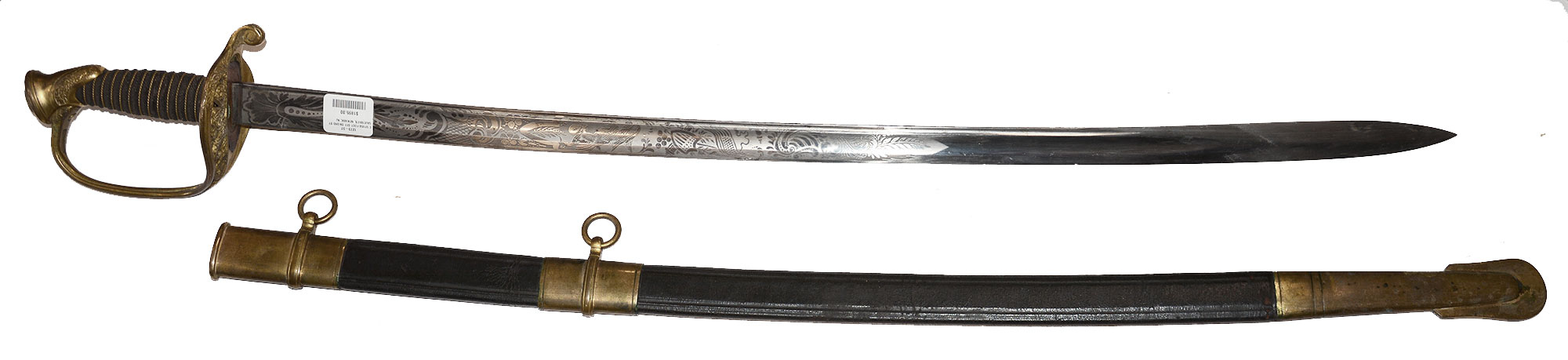
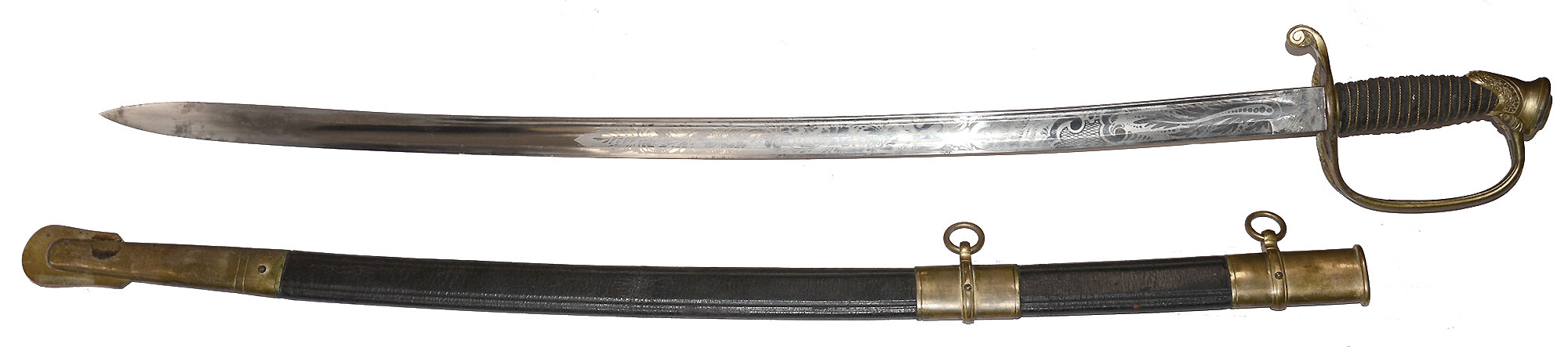
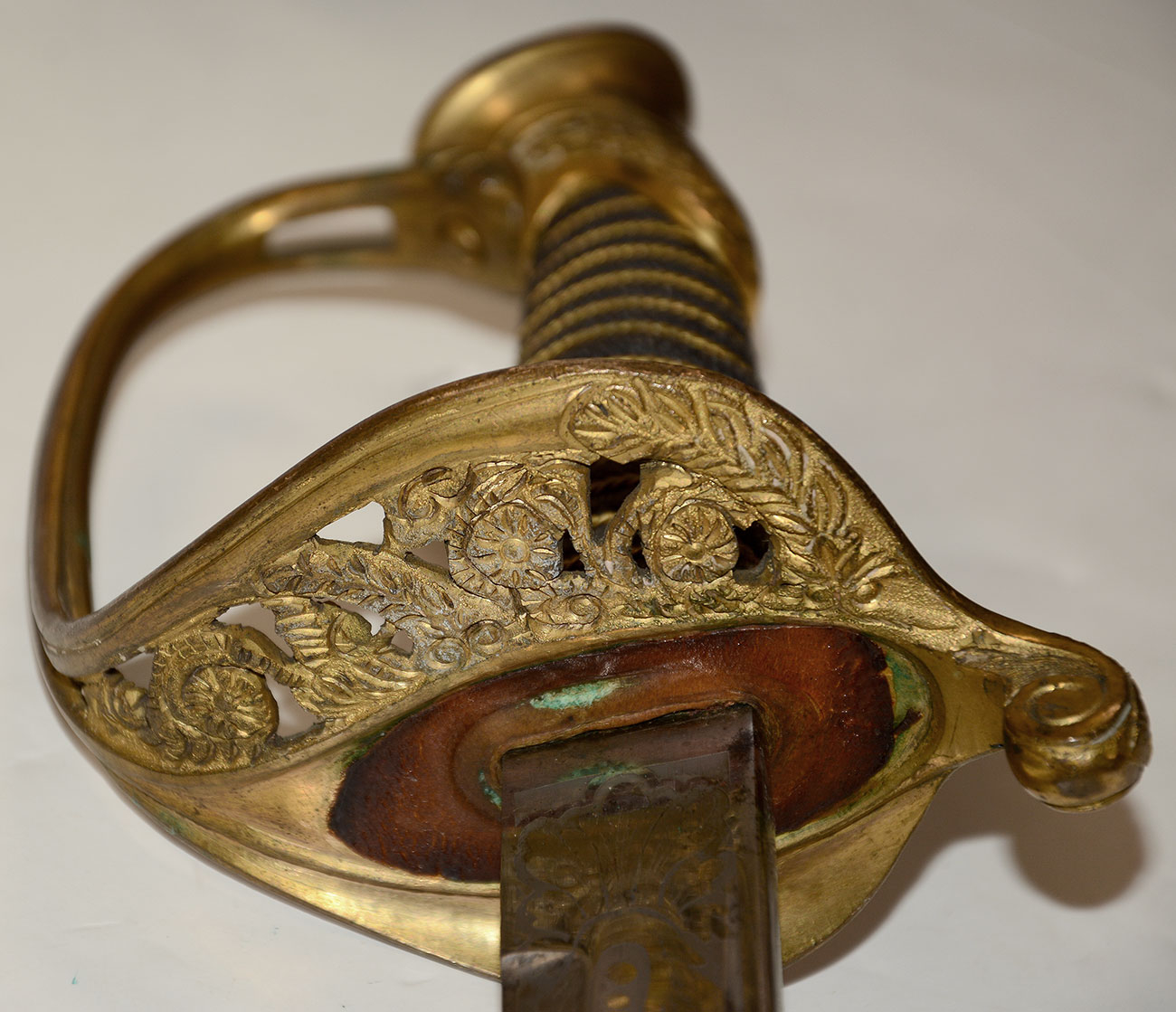
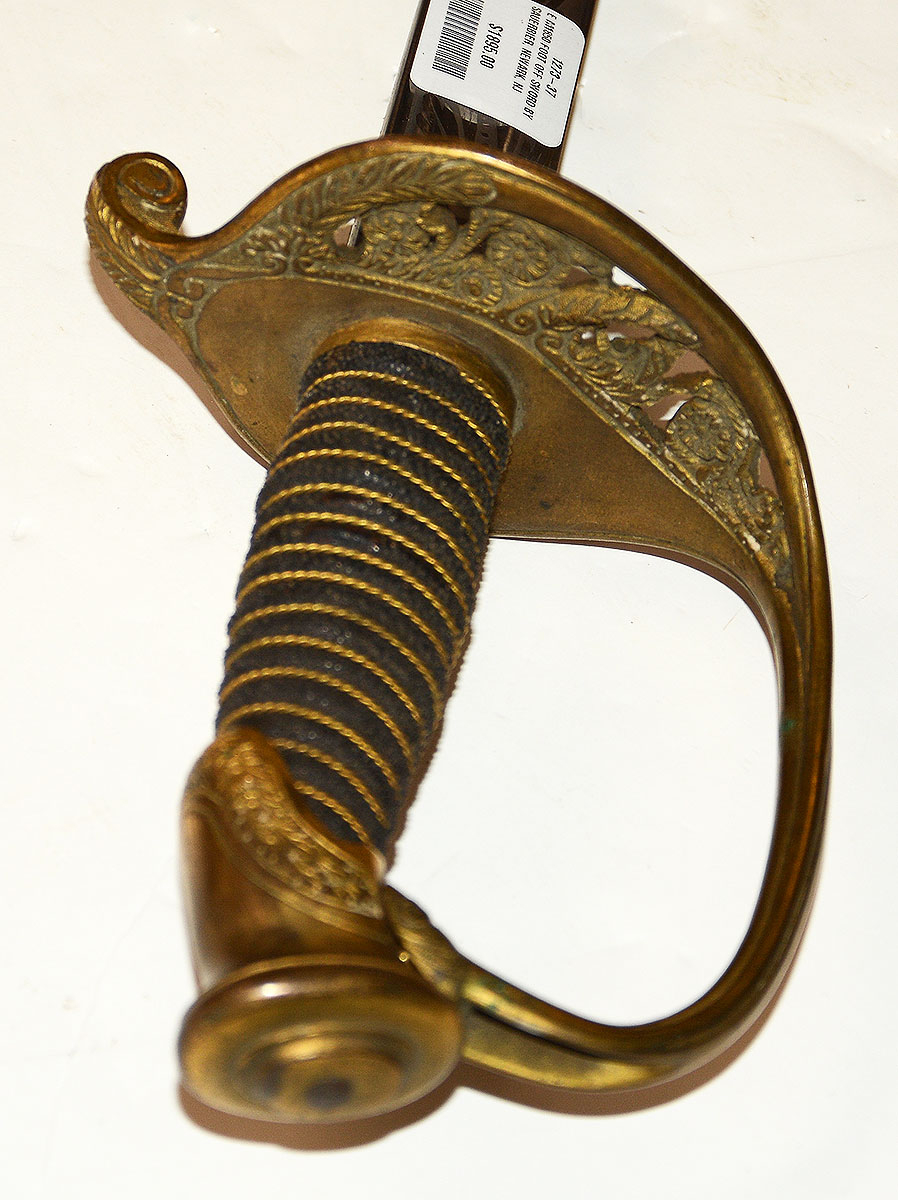
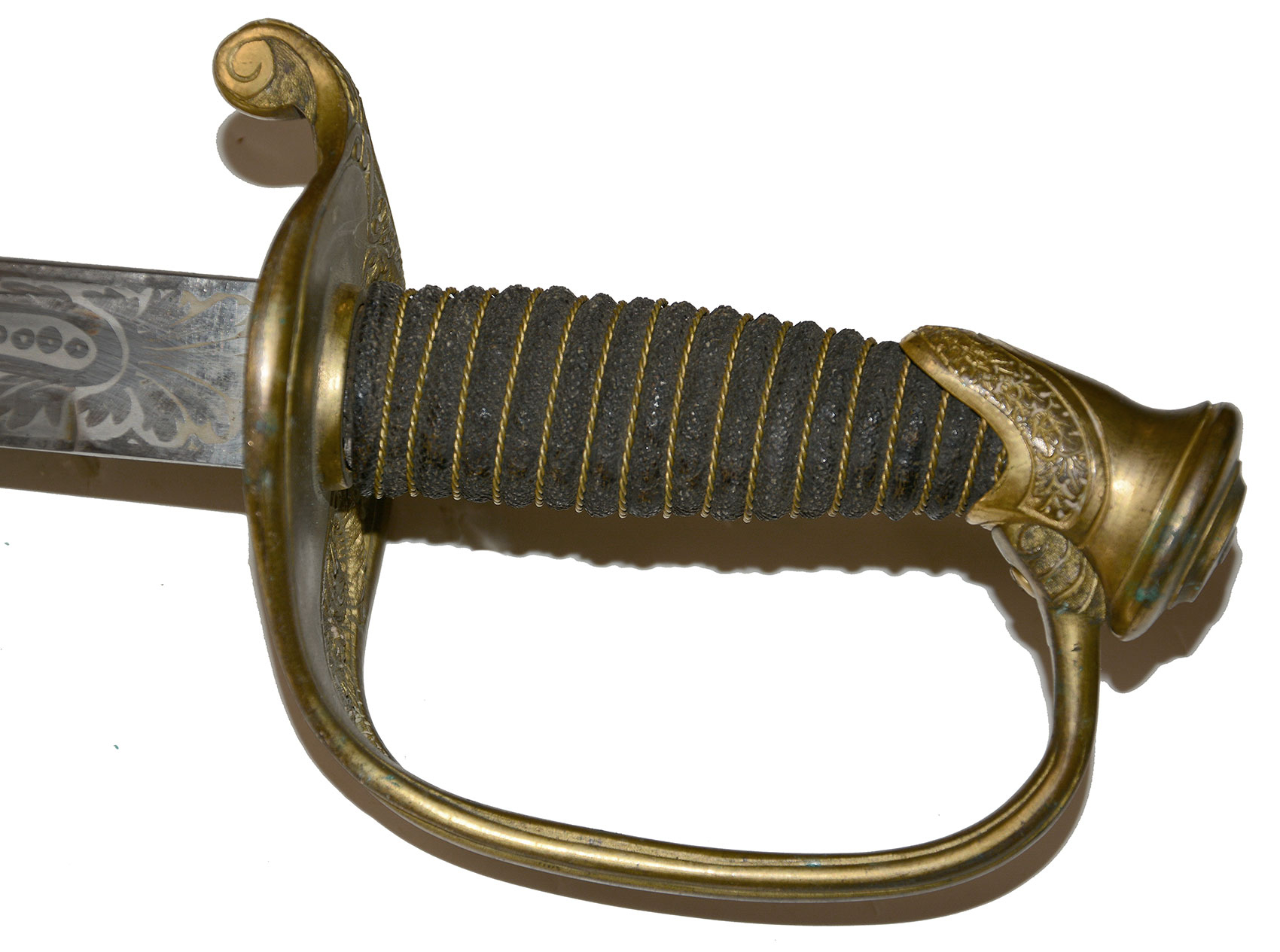
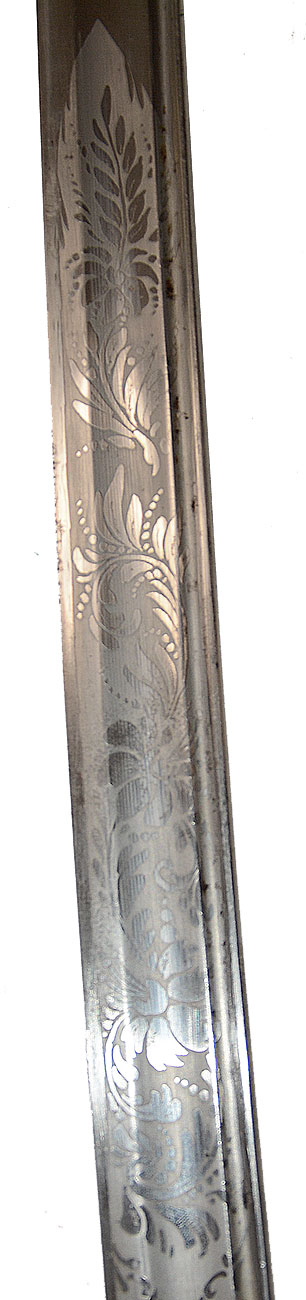
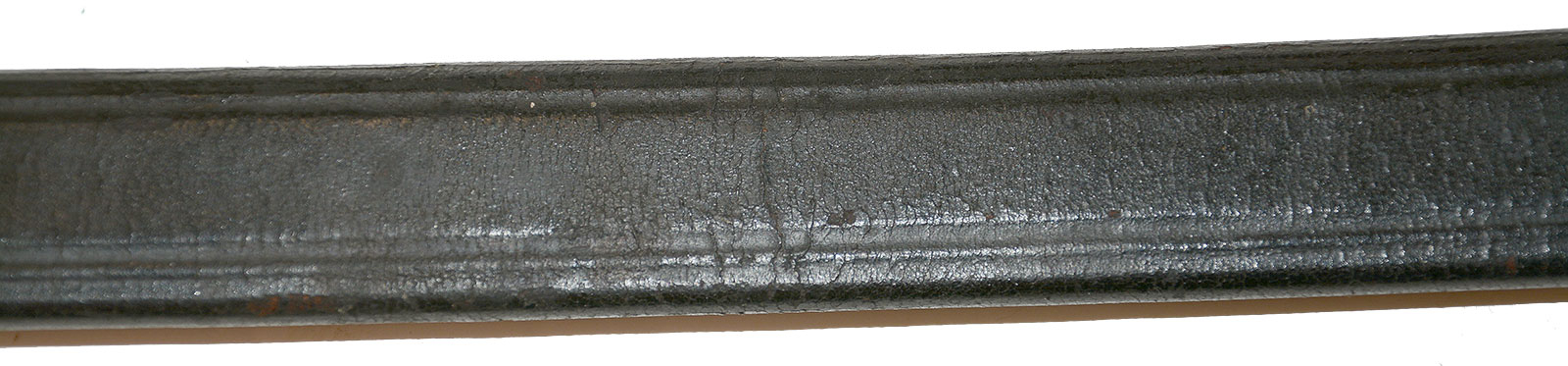
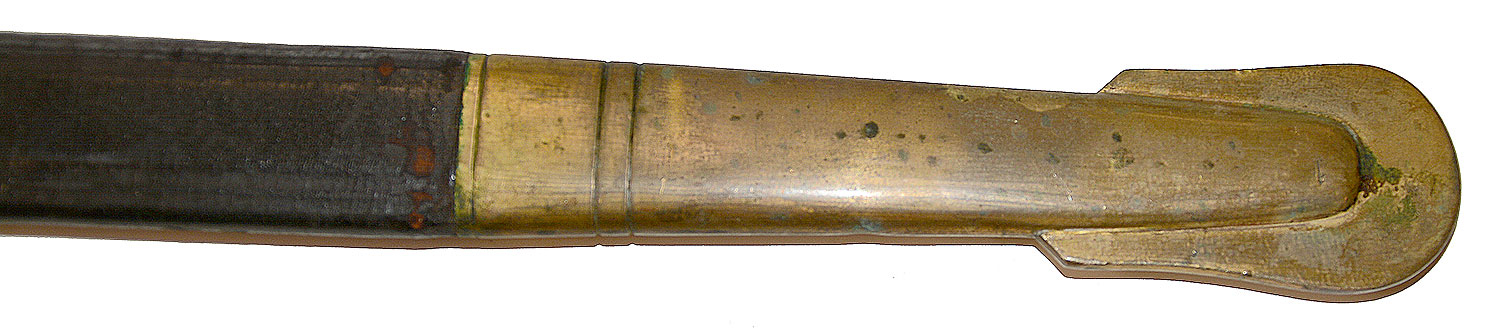
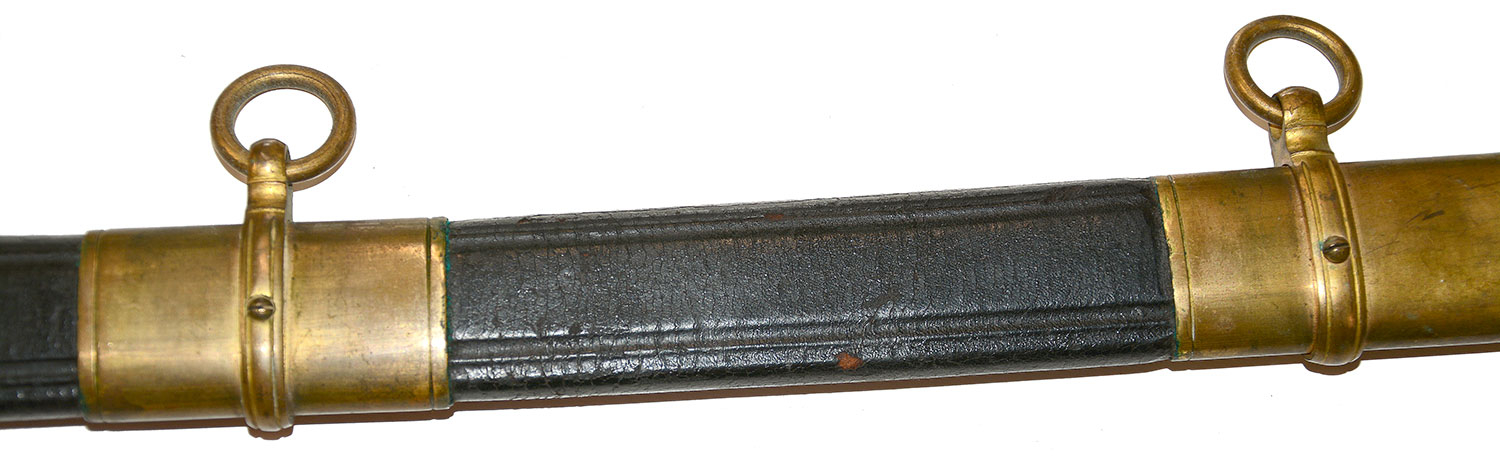
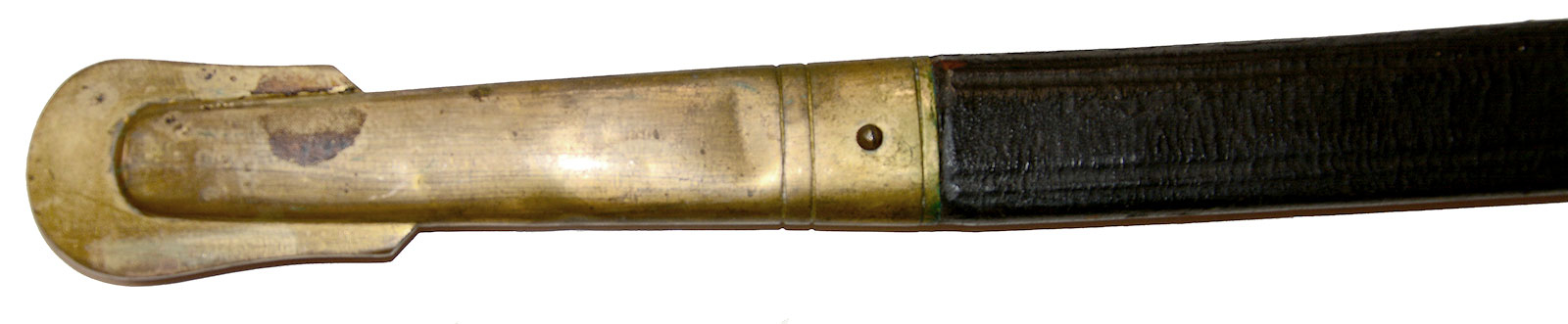
A very good looking Civil War US Model 1850 Foot Officer’s sword, the regulation side-arm of lieutenants and captains of infantry, and other line officers serving on foot. This is complete, all original, and in excellent condition. The blade is bright, with vivid etching. The brass hilt and scabbard mounts have a matching, subdued, but not dark, aged patina. The grip shows just minor wear and the scabbard is solid, showing just some expected age crazing to the finish and a few minor flakes.
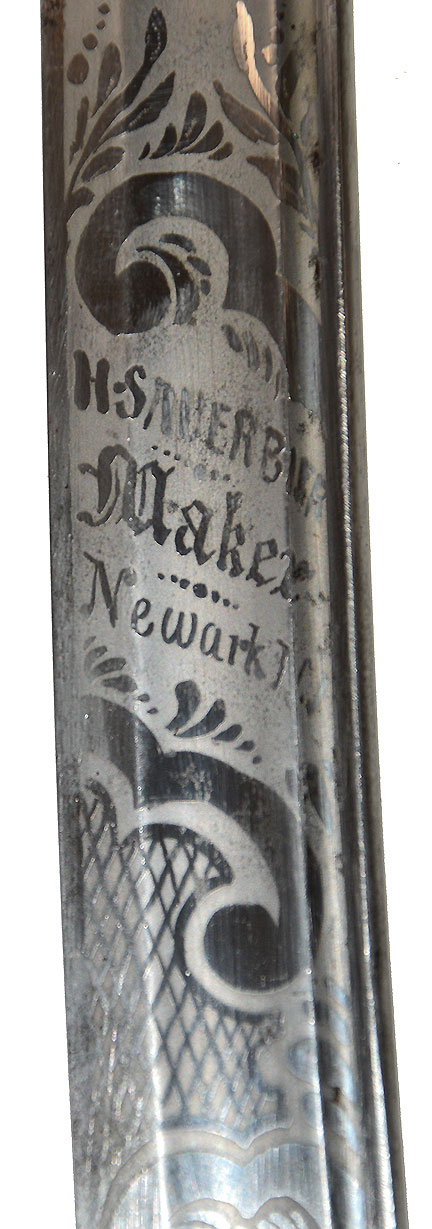
The etched blade bears the maker’s name on the left side amid the foliate, military, and patriotic motifs: “H. SAUERBIER / Maker / Newark N.J.” A well-known maker and assembler of swords, Henry Sauerbier produced both enlisted cavalry sabers and officer’s pattern sabers and swords. For details see in particular Thillmann’s chapters in both his “Civil War Cavalry and Artillery Sabers” and his “Civil War Army Swords.” Sauerbier emigrated to the US in 1839 (according to Bezdek) and likely apprenticed as a cutler 1845-48 before forming a brief partnership with Aaron Crawford and William Brown 1851-1852 and then opening his own cutlery business and tool-making operation in Newark, first on Market Street, and by the beginning of the Civil War on Mechanic Lane. The business apparently failed at the beginning of the war but soon recovered. Thillmann postulates the failure may have been due to repudiated debts by southern customers once the war began. Some of his enlisted sabers were made on a New Jersey contract, but the bulk are unmarked and he had no federal contract for them, leading Thillmann to suggest they may have gone south before the outbreak of the war and not been paid for.
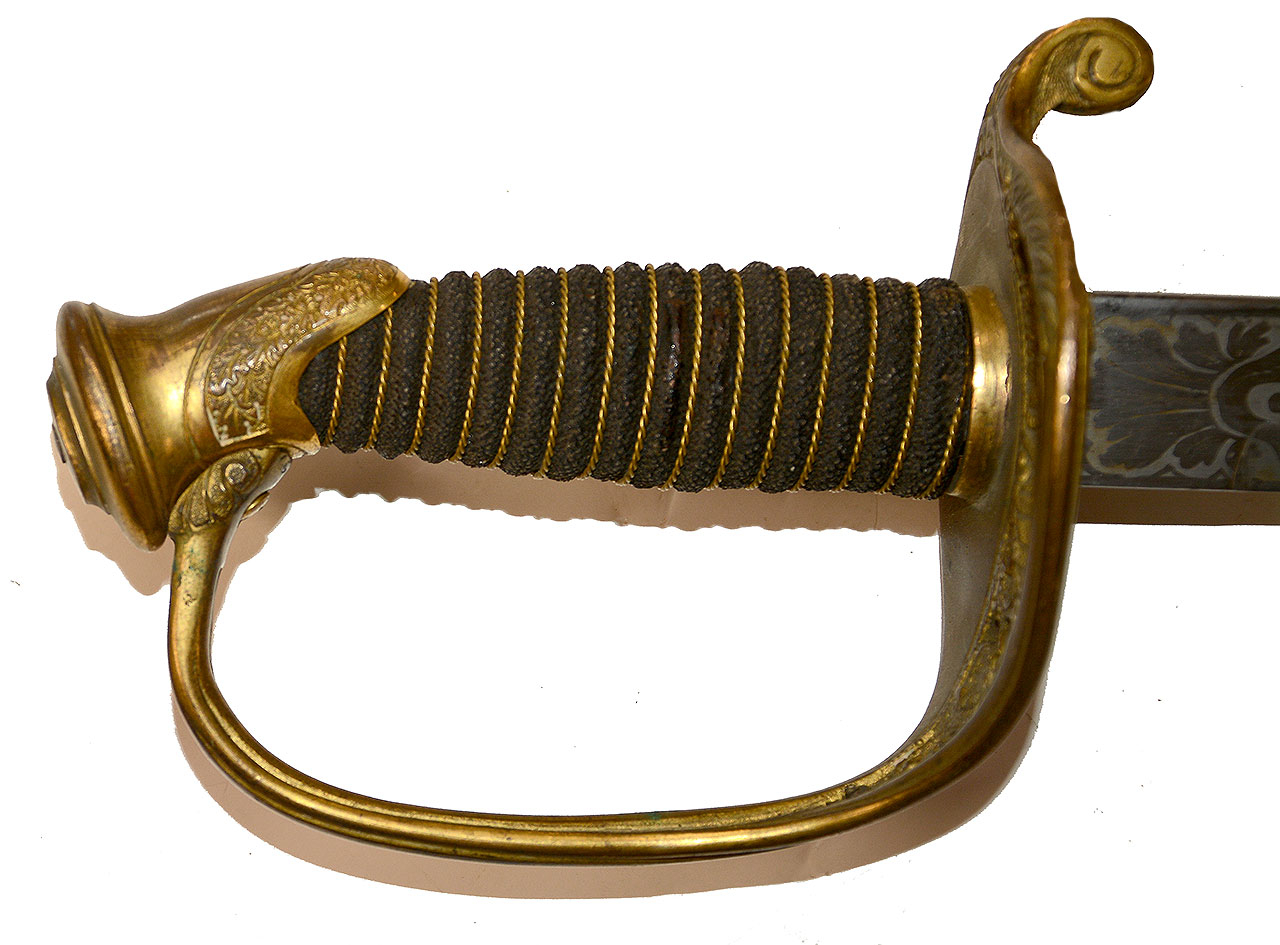
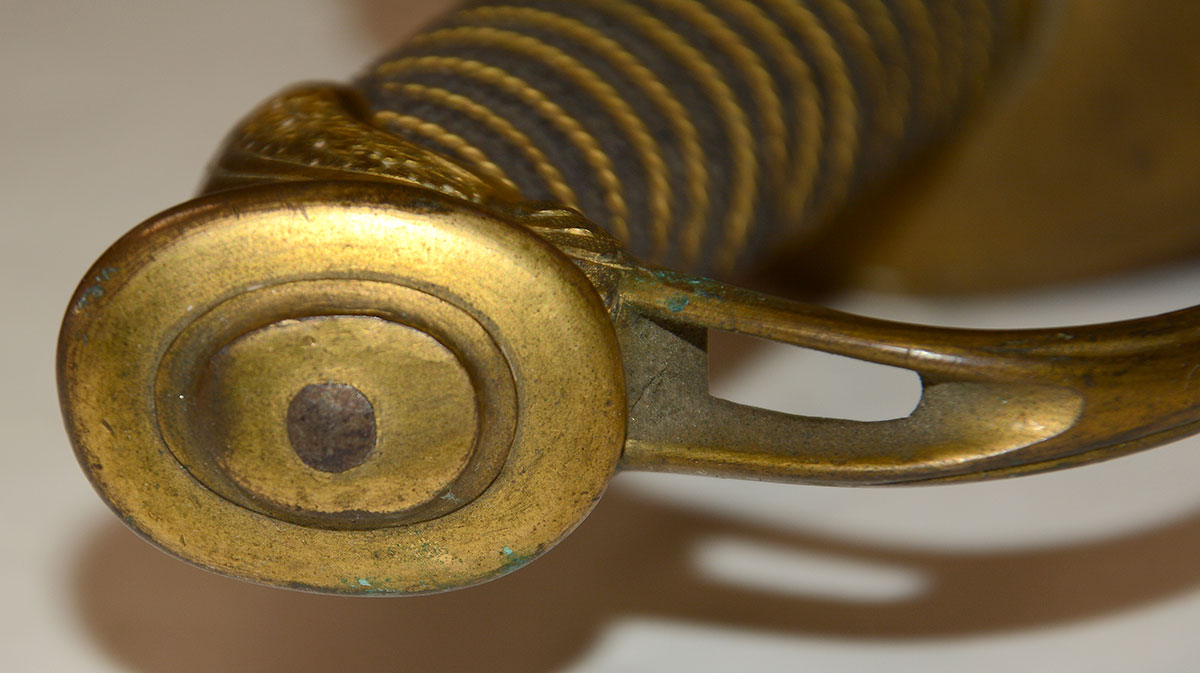
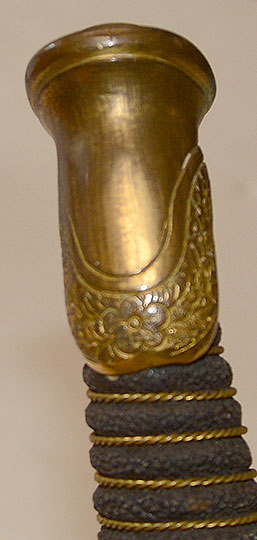
This follows the regulation pattern for the US M1850 Foot Officer’s Sword, using a gilt brass hilt with Sauerbier’s characteristic down-turned pommel and screw-fastened knucklebow, with foliate motifs with a central rosette cast and chased in a band along the lower edge of the pommel, with the foliate elements picked up again on the upper end of the knucklebow and then continued along the integral branches of the guard, inside and out, the upper inner face of the guard, and along the top of the quillon and scrolled finial. The same foliate and floral motifs appear in the openwork guard, profusely if not always delicately rendered. The grip is a dark gray sharkskin (rayskin) with gilt brass twisted wire binding in place. The underside of the guard has typical football shaped red leather blade pad, missing just some of the upper point.
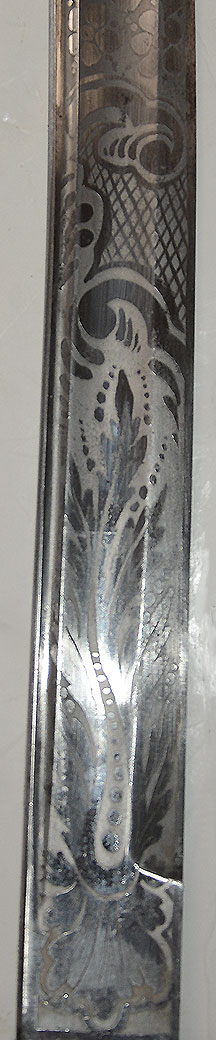
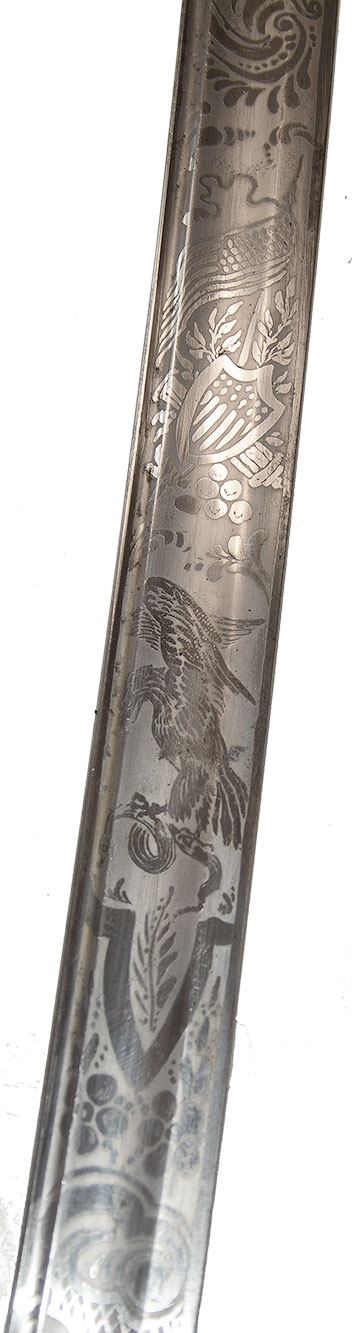
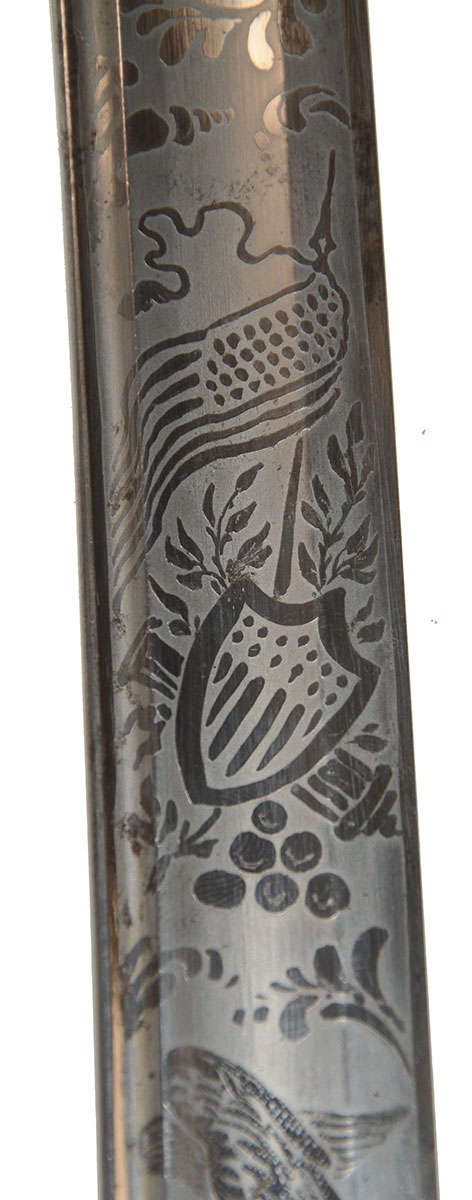
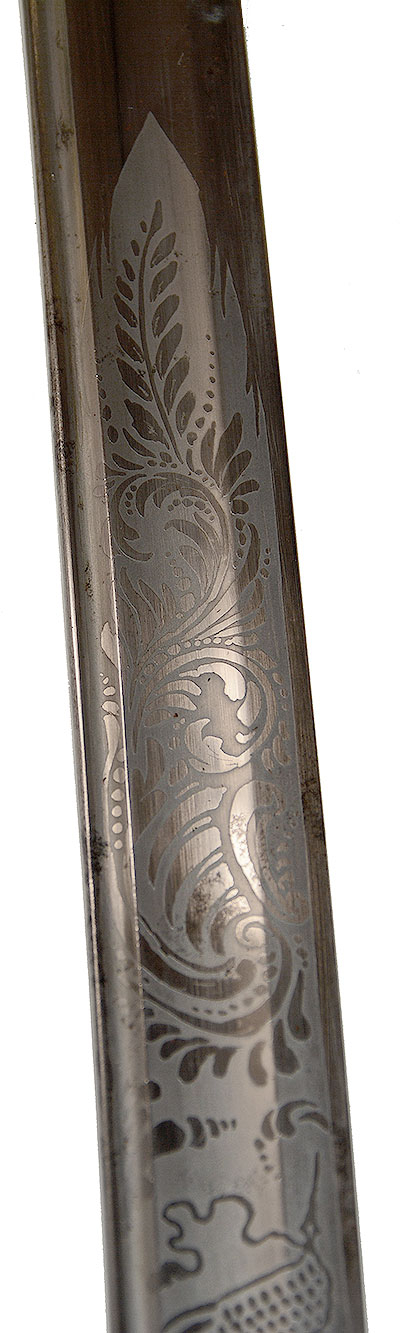
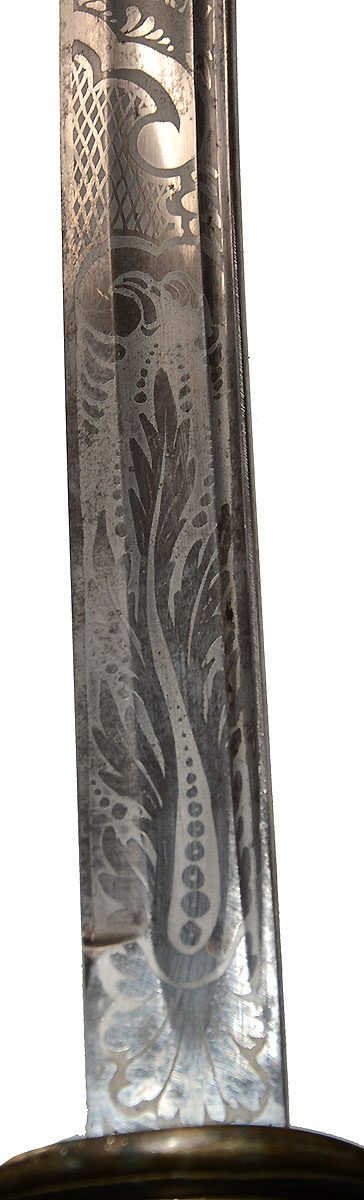
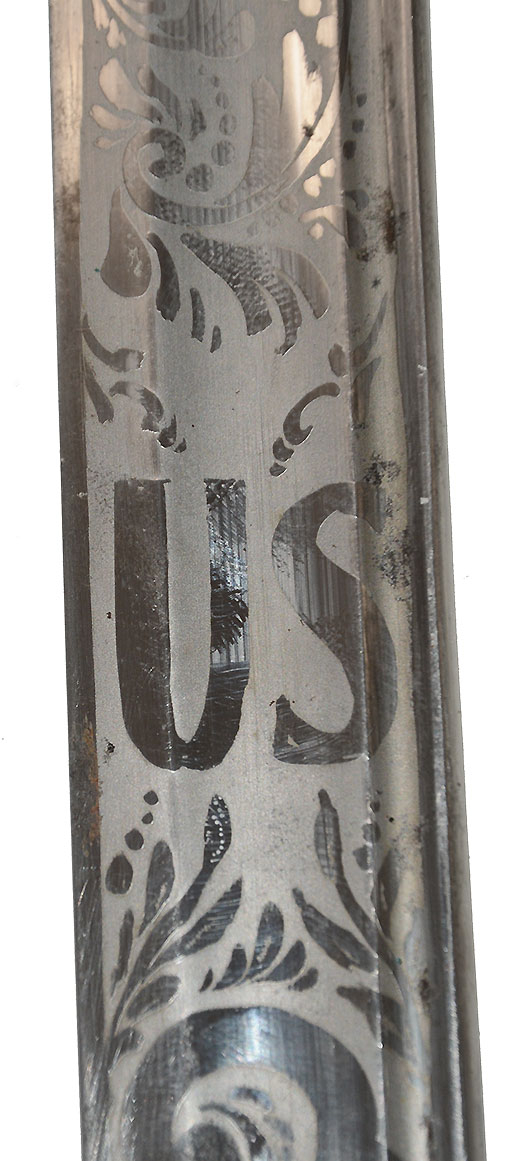
The blade has the unstopped wide central fuller and narrower top fuller characteristic of Sauerbier blades. The metal is smooth, bright, with good edge and point, and the etching is vivid. Both sides employ foliate and geometric scrolls with some of the foliate elements showing as long, and feathery, mixed with some lattice work, and curling in what some might regard as a sea-shell motif, but seem more likely influenced by the curling tear-drop shaped Indian “Boteh” motifs of paisley patterns so popular in Victorian design. Thillmann categorizes some of Sauerbier’s etching as naive, but it seems akin to some of his sword ornamentation, which some see as overdone, but is likewise of the Victorian sensibility that “too much is not enough.” The obverse shows a somewhat cursorily rendered flowing US flag at upper center, with waving flag cord as well, over a US shield superimposed on and crossing a cannon barrel, with a small pile of cannonballs below. Under that a rather dynamic and fierce looking eagle descends with upraised wings and outstretched talons at what at first seems a typical ribbon scroll, but rather a cursorily rendered snake, with long tongue extended at bottom. On the reverse the maker’s address is at lower center with a fairly plain, large “US” place across the blade just above. Along with the eagle that brings the etching into line with that found on most US M1850 Foot Officer Swords though, as Thillmann notes, neither of those motifs is specified in the 1850 regulations.
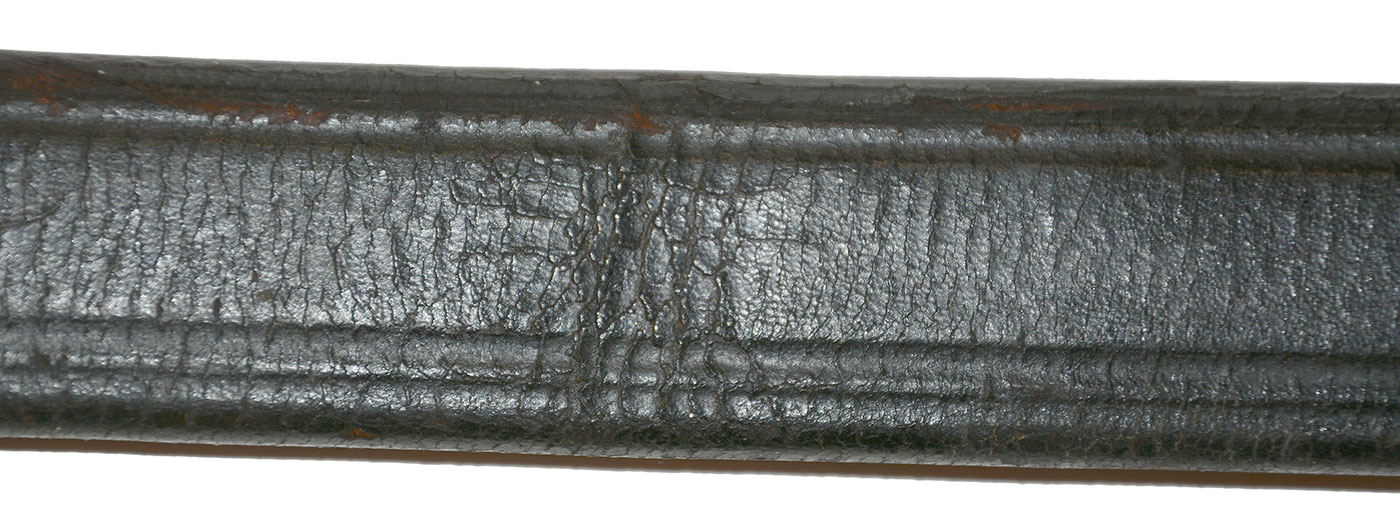
The scabbard is the regulation black leather with gilt brass mounts. The leather is solid, with good color, showing expected age-crazing to the finish but no significant losses, with distinct, deeply impressed border lines, and gilt brass upper and middle ring mounts and the drag in place.
Sauerbier produced a wide variety of swords, regulation and non-regulation, fairly plain and some very high-end. Thillmann notes that likely anticipated the need for officers’ swords at the beginning of the war, being able to supply the US Army with 100 M1850 officer’s swords in August 1861 on a direct purchase order. (Bezdek says these had a “’US ‘cast into the guard,” which would imply a M1850 Staff and Field, but it seems unlikely Thillmann would have overlooked that detail.) That significant number indicates the size of Sauerbier’s business, with Thillmann noting he had a large and varied product line, perhaps explaining some hastiness in execution of his less elaborate offerings. In any case, if he anticipated an increased demand in 1861, he also seems to have anticipated a drop-off in 1865, returning to tool-making after war.
This is an interesting sword in very strong condition, a great addition to an officer’s display, or a good study piece in a specialized sword collection. [sr][ph:L]
~~~~~~~~~~~~~~~~~~~~~~~~~~~~~~~~~~~
THIS ITEM, AS WITH ALL OTHER ITEMS AVAILABLE ON OUR WEB SITE,
MAY BE PURCHASED THROUGH OUR LAYAWAY PROGRAM.
CLICK HERE FOR OUR POLICIES AND TERMS.
THANK YOU!
Inquire About EXCELLENT U.S. M1850 FOOT OFFICER’S SWORD BY SAUERBIER
Most Popular
Historical Firearms Stolen From The National Civil War Museum In Harrisburg, Pa »
Theft From Gravesite Of Gen. John Reynolds »
Selection Of Unframed Prints By Don Troiani »
Fine Condition Brass Infantry Bugle Insignia »
featured item
IDENTIFIED ISSUE RED BLANKET OF THEODORE P. BOWKER 13th MASSACHUSETTS - DIED OF WOUNDS AT ANTIETAM!
This is a rare, early-war, identified Massachusetts issue red blanket carried by a soldier in the 13th Massachusetts who was wounded at Antietam on Sept. 17, 1862, and died of those wounds at a U.S. hospital at Rappahannock Station on November 12.… (490-7138). Learn More »
site search
Upcoming Events
May 13 - 17: N-SSA Spring Nationals, Fort Shenandoah, Winchester, VA Learn More »