

site search
online catalog
SAUERBIER-MADE SCHUYLER, HARTLEY AND GRAHAM M1850 FOOT OFFICER SWORD WITH BLADE-ETCHED PENINSULA CAMPAIGN BATTLE HONORS
Hover to zoom


$1,695.00 ON HOLD
Quantity Available: 1
Item Code: 1273-38
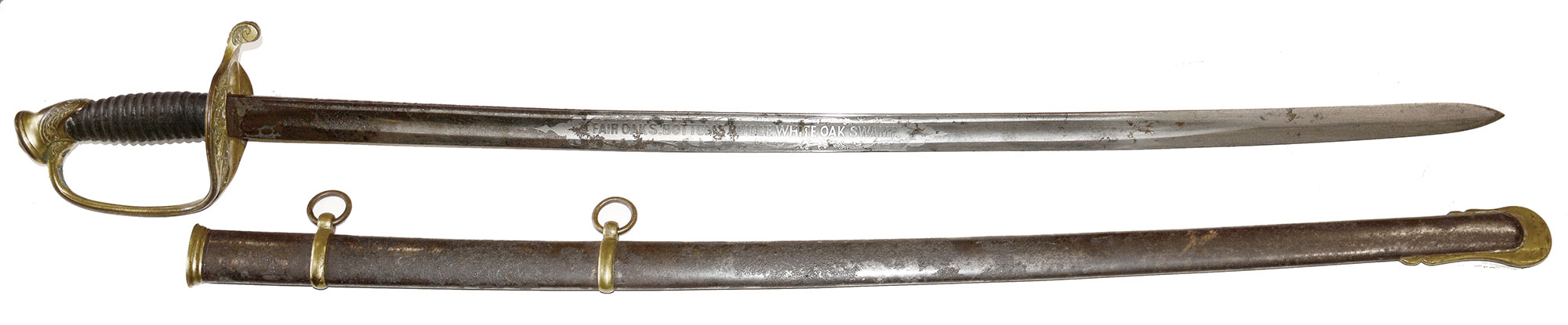
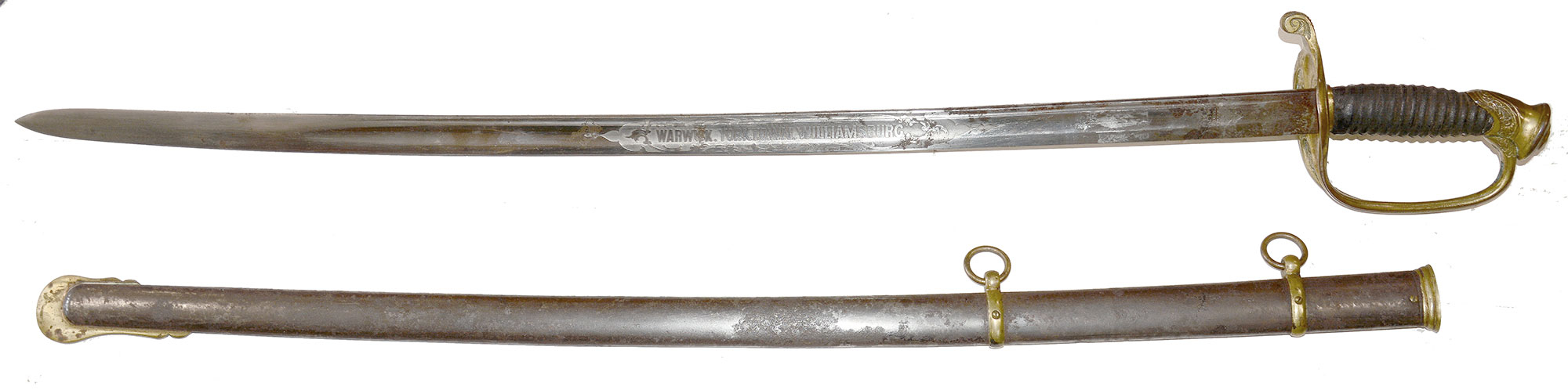
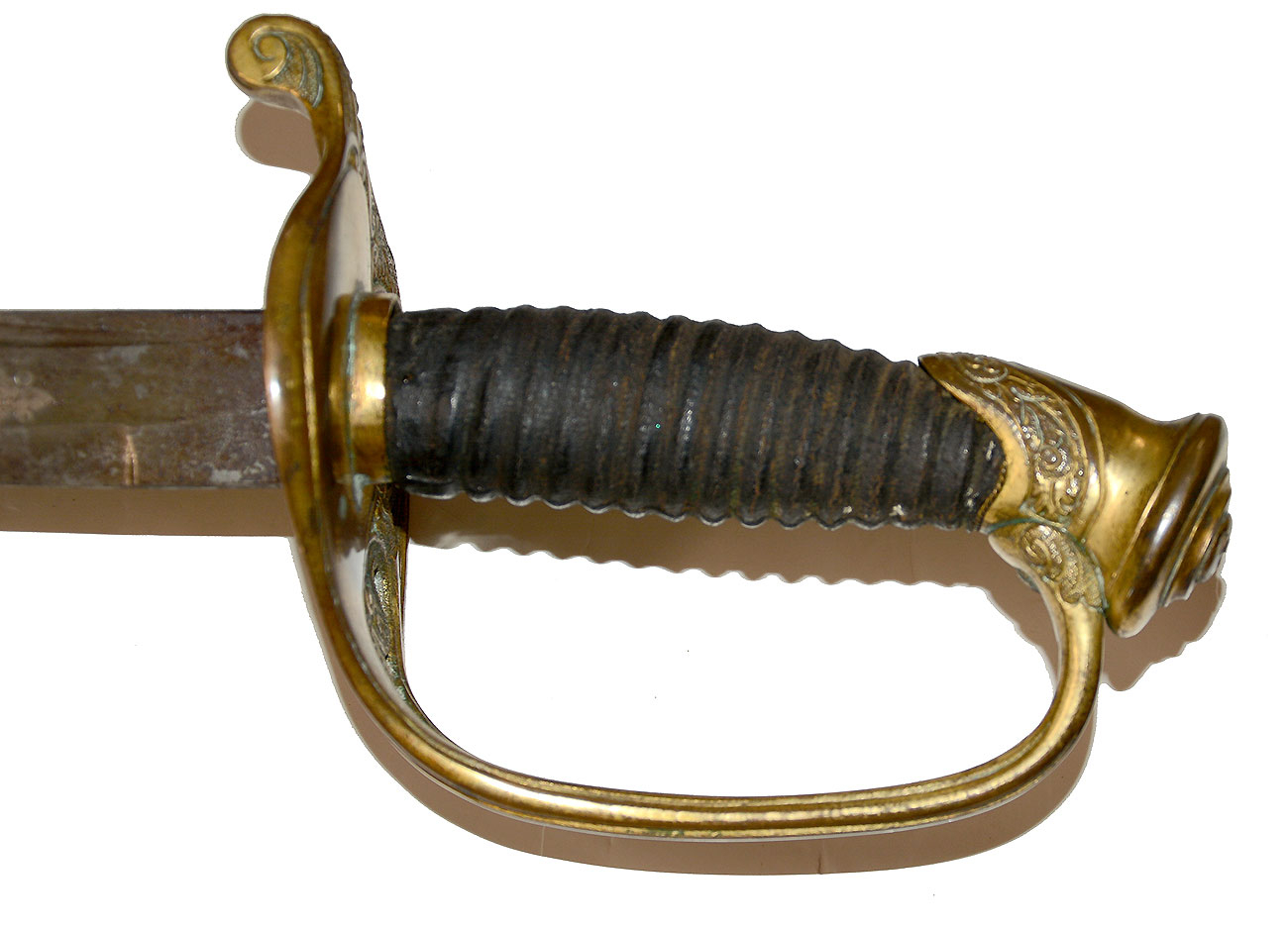
This a compelling Model 1850 Foot Officer’s Sword, the regulation sidearm of infantry lieutenants and captains, the company officers who fought beside and governed their men in the front lines of battle. The sword bears six battle honors from McClellan’s 1862 Peninsula Campaign etched on the blade, indicating the owner saw active field service, and the choice of a non-regulation robust metal scabbard rather than the regulation leather indicates he expected, or was expected, to have more - an expectation borne out by signs of wear and use to the sword and scabbard.
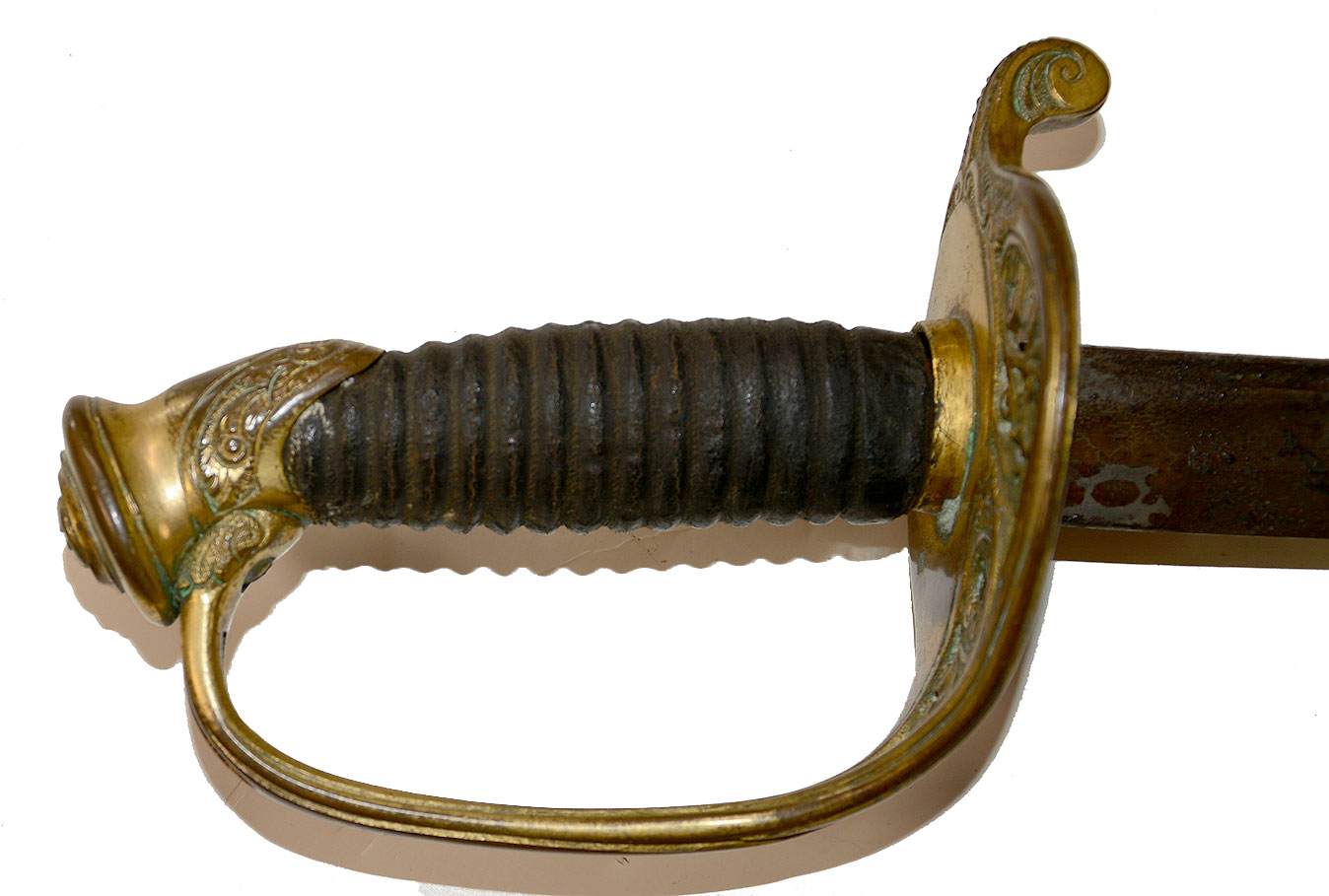
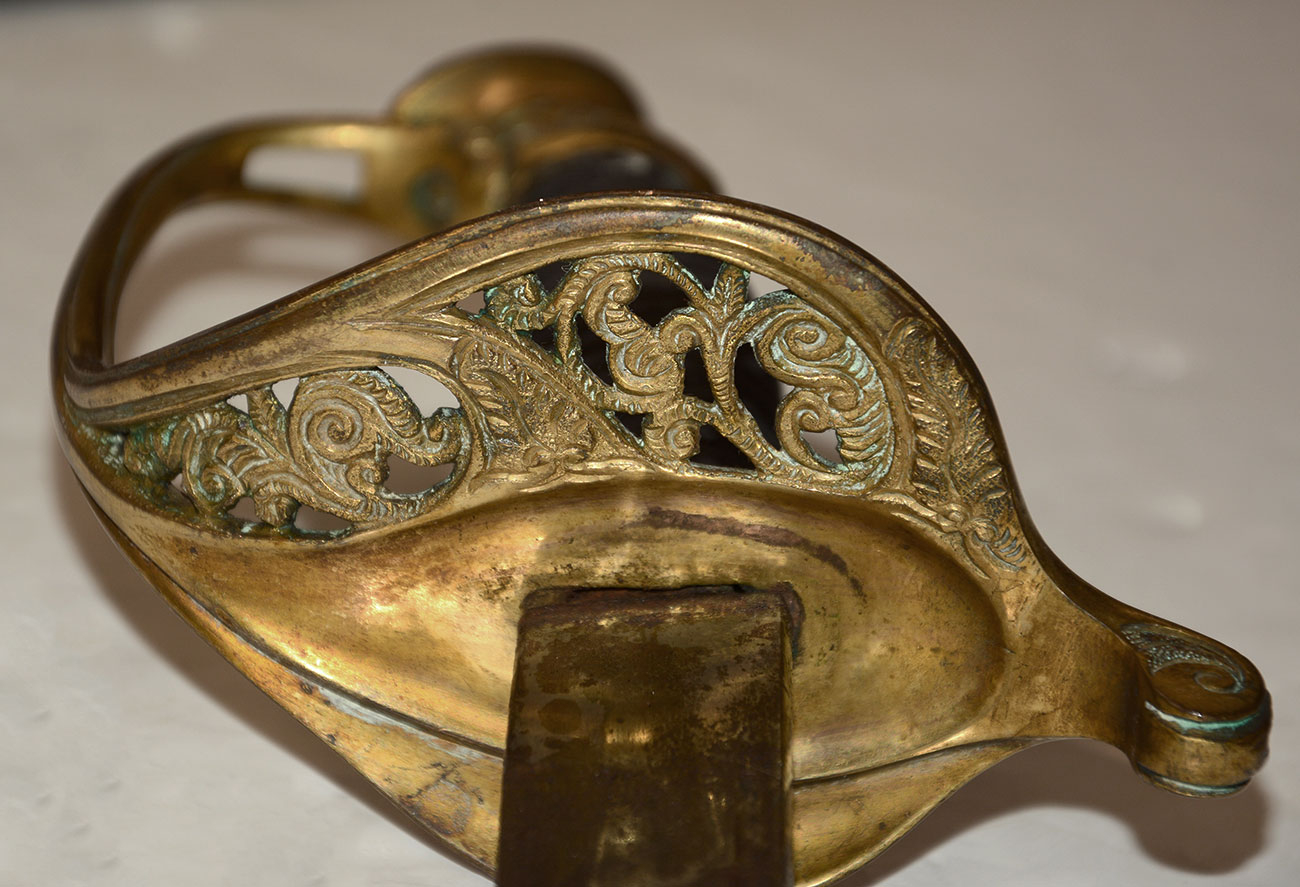
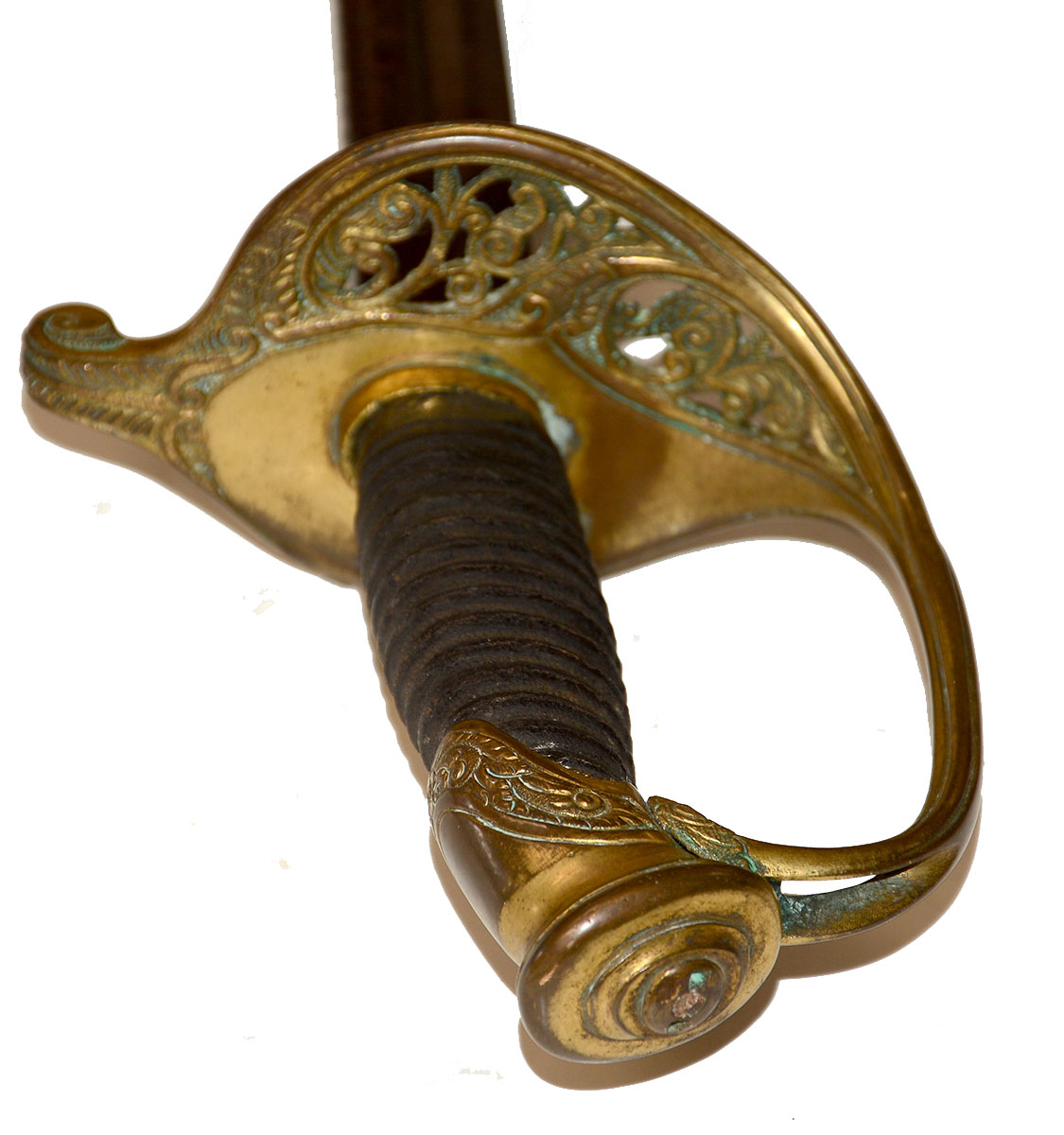
Except for the missing twisted wire binding for the grip and thin blade pad on the underside of the guard, the sword is complete and rates good for condition. The brass hilt is the standard configuration and shows age-toned brass on raised surfaces subject to rubbing and some muted gilt finish left in lower areas, along with small spots of verdigris in recessed spots in the open-work guard. The decoration also follows the standard form and is well rendered, with raised foliate motifs in a recessed band along the lower edge of the pommel, and repeated in relief on the upper end of the knucklebow, picked up again in cast and chased and some incised decoration on the integral bars of the guard, and then flowing onto the face of the quillon and scrolling finial, with delicate openwork foliate elements in the guard itself, mainly Y-shaped sprouts with scrolling branches. Although the wire binding is missing, the leather grip wrap is complete, showing rubs and wear, but no holes or tears.
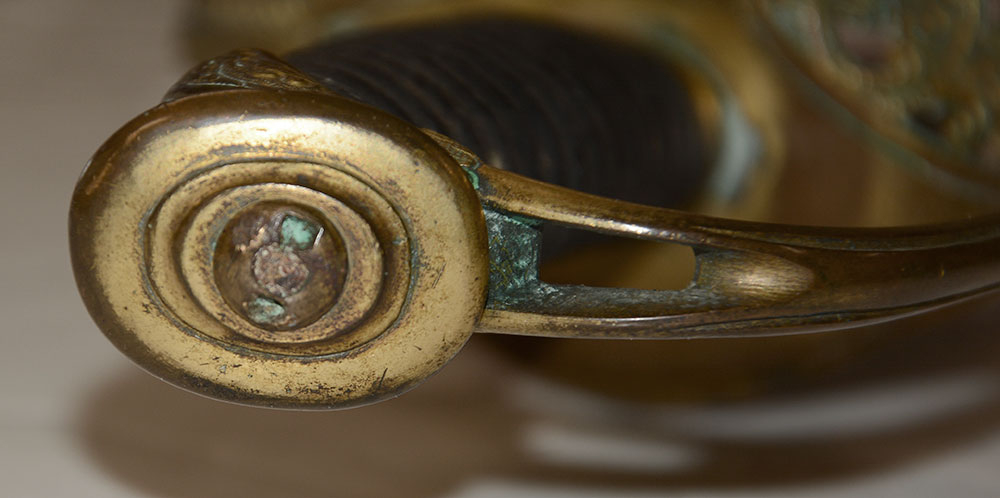
The leather grip, rather than shark or rayskin, the slightly down-turned pommel with a spanner nut securing the blade tang, and the screw-fastened knucklebow all point to Henry Sauerbier of Newark, NJ, as the maker of the sword. This is supported by the form of the blade, which has an unstopped wide central fuller and secondary narrow fuller along the upper edge.
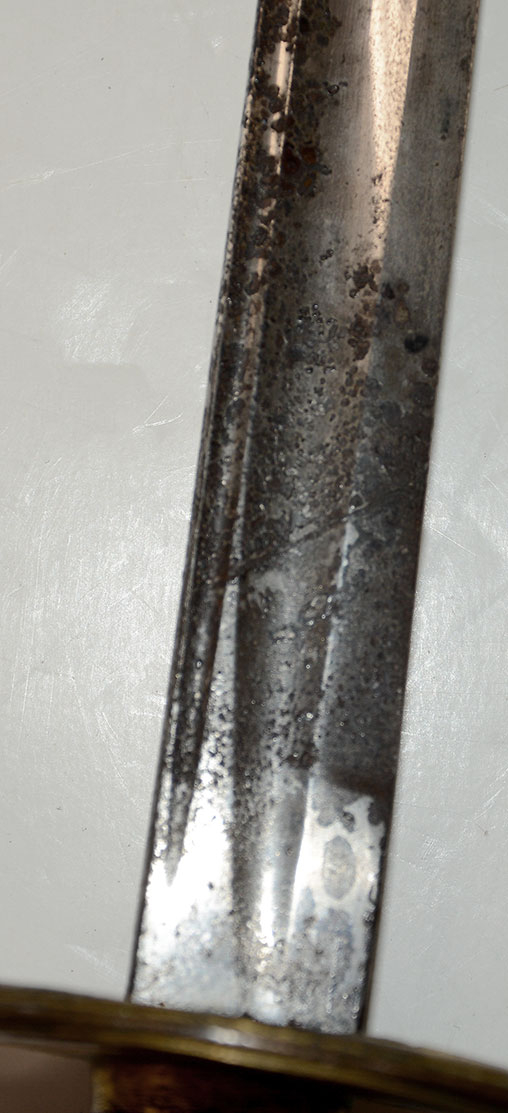
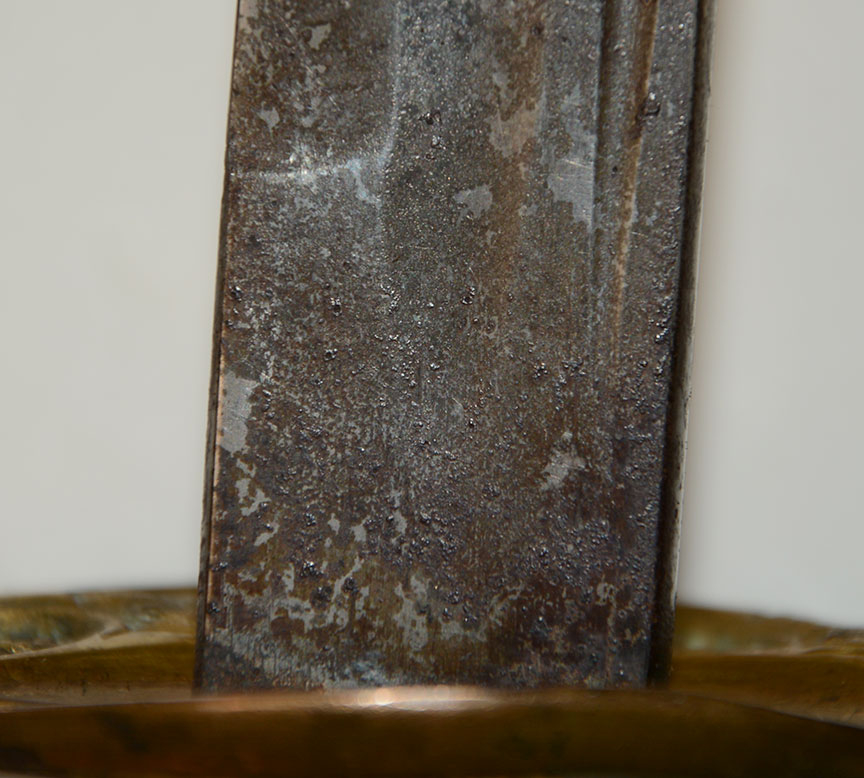
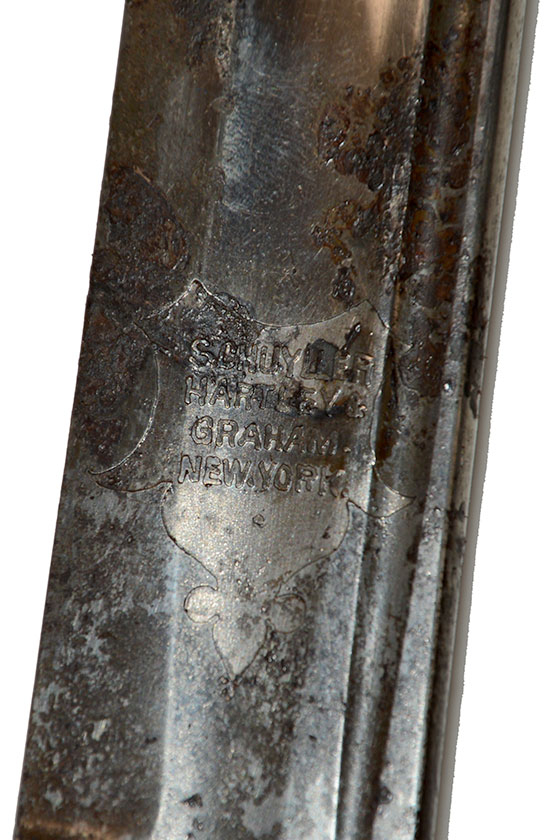
The blade has a good edge and point. Both sides show dark areas extending several inches from the hilt, with the obverse showing darker and more surface corrosion. On both sides, however, the metal is smooth beyond that with good edge and point, though with age stains, and the central etched panels are fully legible, though also with some gray age stains. The reverse of the blade has a legible, etched shield-shaped retailer’s address panel near the guard. This is partially obscured by the stains and corrosion, but is legible: “SCHUYLER / HARTLEY & / GRAHAM / NEW-YORK,” perhaps the best-known military goods dealer of the period. Above that the long etched panel with Arabesque terminals at the ends of the frosted ground has a leafy vine border running along its top and bottom edge and is etched in block letters: “WARWICK. YORKTOWN. WILLIAMSBURG.” On the obverse the blade has only the long central etched panel, with the same terminals to the panel and leafy-vine border, with similar, fully legible block letter etching reading: “FAIR OAKS. BOTTOMS BRIDGE. WHITE OAK SWAMP.” Please see our photos.
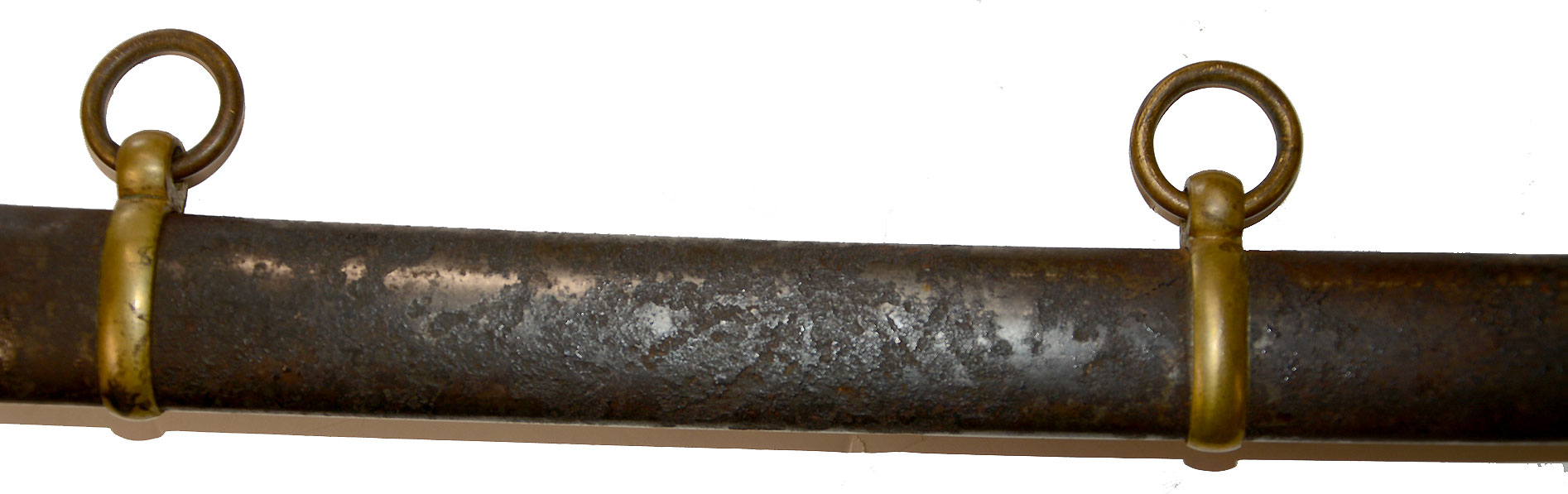
The officer thus saw significant field service from April 16, 1862, at Warwick, at least to June 30, White Oak Swamp: Day 6 of the Seven Days Battles. It might thus be possible to narrow down the owner by cross-referencing participants in all six engagements. Elements of Franklin’s 6th Corps, for instance, were at both Warwick and White Oak Swamp- specifically units from William F. “Baldy” Smith’s division, with the Vermont Brigade in particular seeing action at Warwick, with four companies of the 3rd Vermont making the cross-river assault that temporarily broke the Confederate line, an opportunity McClellan literally rode away from. We see no indication on the sword or scabbard of a presentation or the owner’s name. It may well have been engraved on the steel scabbard, which is complete, with good brass mounts (throat, ring bands with rings, and drag) and shows no dents, dings, cracks or holes, but does show shallow pitting on both sides, mainly patches on the reverse and more extensive on the obverse, which might conceal light or worn engraving. It is also possible the officer himself purchased it. In any case, the sword is one of Sauerbier’s better quality products and one that saw continued field use.
See Thillmann, Civil War US Army Swords, for details on Sauerbier and Schuyler, Hartley and Graham. His earlier, Civil War Cavalry and Artillery Sabers also has very useful information on both firms, though not dealing with foot officer patterns. This is an interesting sword clearly carried in the field by an active officer and with room for further research. [sr][ph:L]
~~~~~~~~~~~~~~~~~~~~~~~~~~~~~~~~~~~
THIS ITEM, AS WITH ALL OTHER ITEMS AVAILABLE ON OUR WEB SITE,
MAY BE PURCHASED THROUGH OUR LAYAWAY PROGRAM.
CLICK HERE FOR OUR POLICIES AND TERMS.
THANK YOU!
Inquire About SAUERBIER-MADE SCHUYLER, HARTLEY AND GRAHAM M1850 FOOT OFFICER SWORD WITH BLADE-ETCHED PENINSULA CAMPAIGN BATTLE HONORS
Most Popular
Historical Firearms Stolen From The National Civil War Museum In Harrisburg, Pa »
Theft From Gravesite Of Gen. John Reynolds »
Selection Of Unframed Prints By Don Troiani »
Fine Condition Brass Infantry Bugle Insignia »
featured item
UNITED CONFEDERATE VETERANS PAINT-DECORATED DRUM- C.S. NATIONAL FLAGS, SHIELD, LIBERTY CAP; MOUNTED WITH PHOTO OF DRUMMER; WITH DRUMSTICKS
The drum is a rod tension snare drum 12 inches tall and 16-1/2 inches in diameter. The rims, heads, and screw tightened snare are intact and in place, with the snare showing just two or three loose strands. The 8 tightening rods with screw adjusted… (2025-54). Learn More »
site search