

site search
online catalog
SCARCE NEAR EXCELLENT REMINGTON-JENKS MAYNARD TAPE-PRIMED NAVY CARBINE

Hover to zoom




$3,695.00
Quantity Available: 1
Item Code: 490-7445
Shipping: Determined by Method & Location of buyer
To Order:
Call 717-334-0347,
Fax 717-334-5016, or E-mail
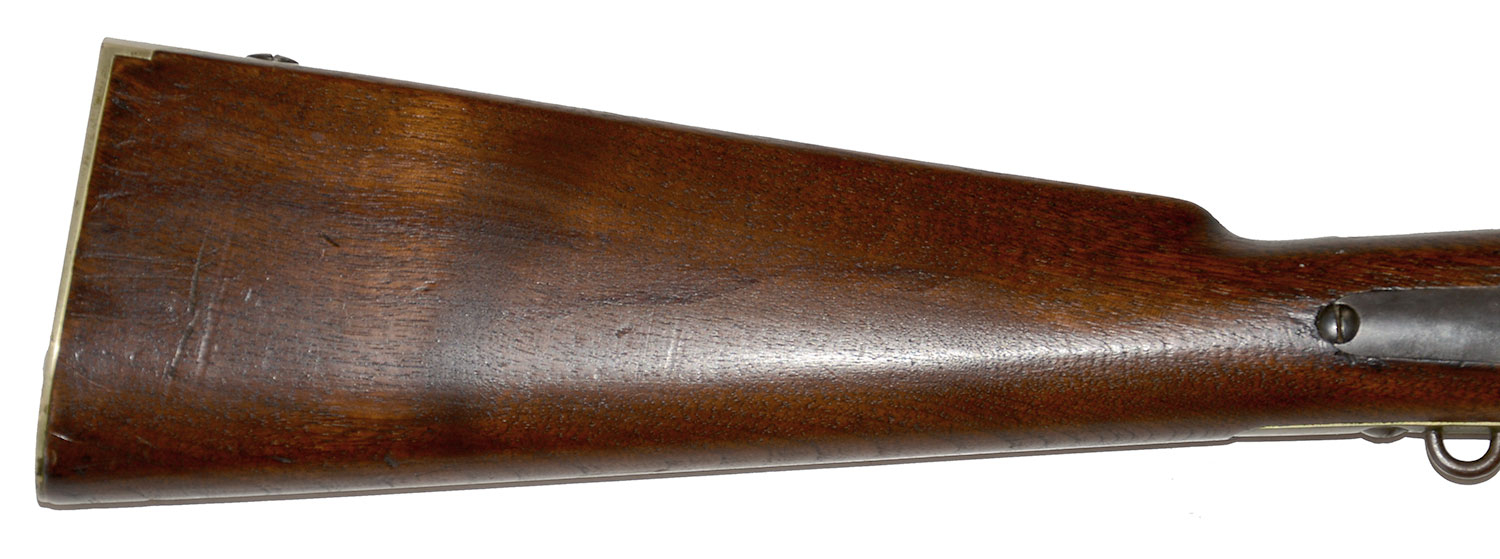
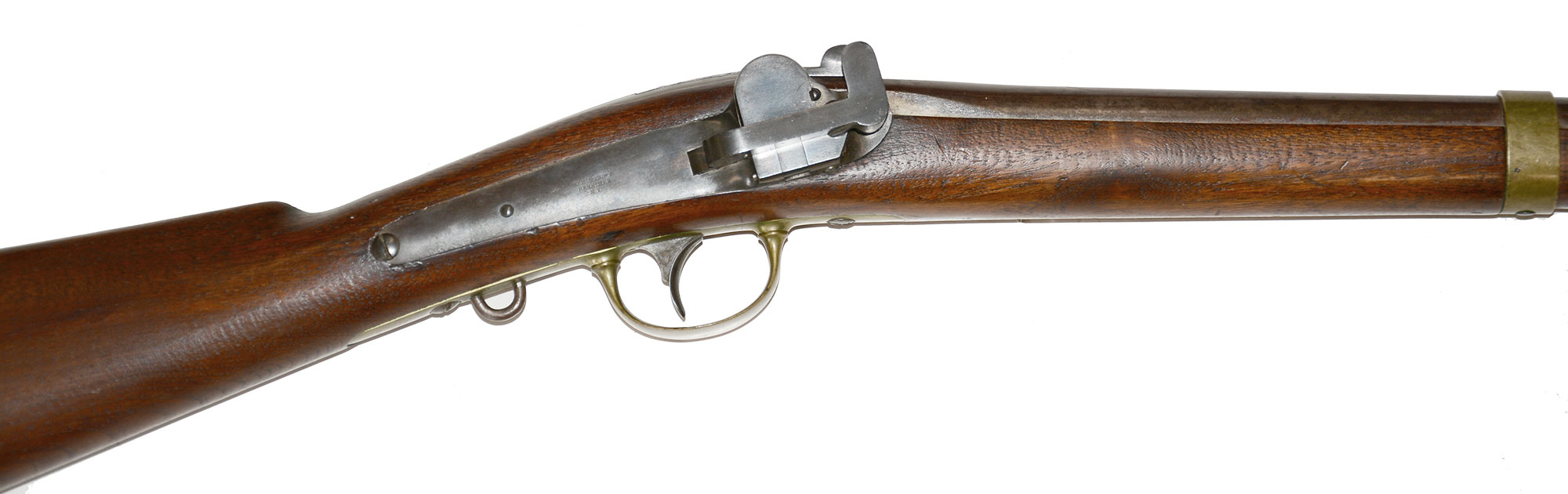
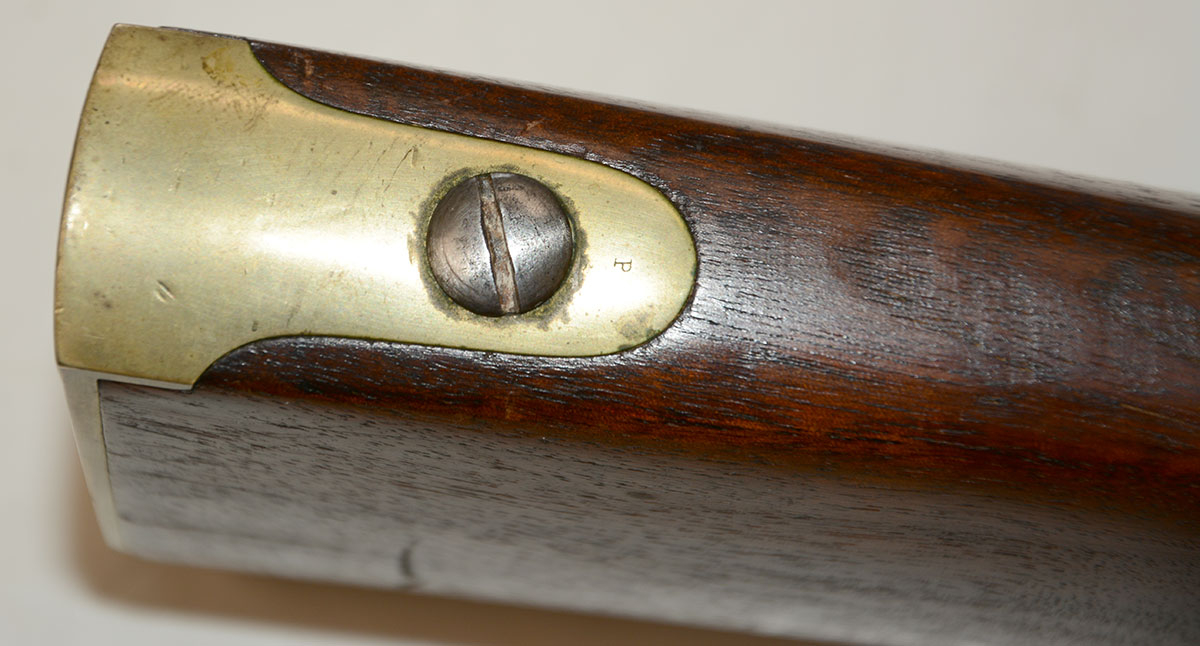
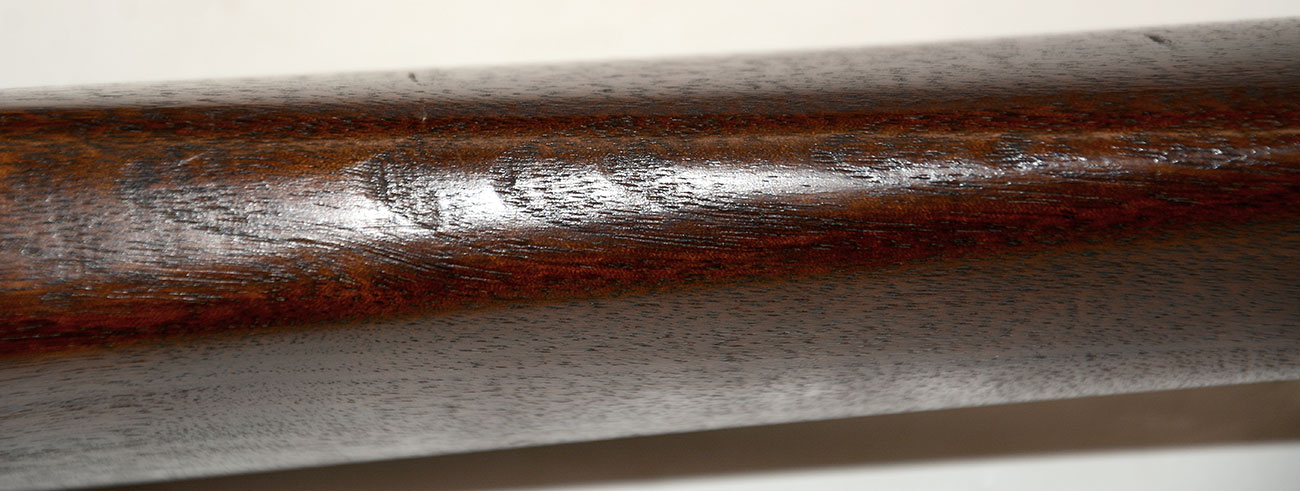
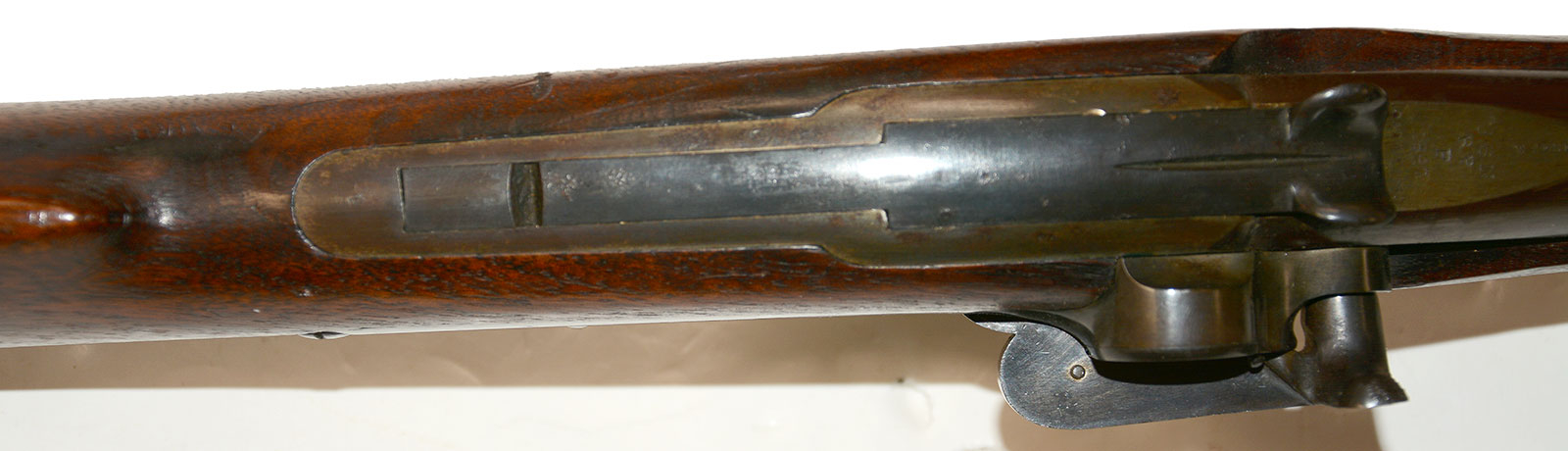
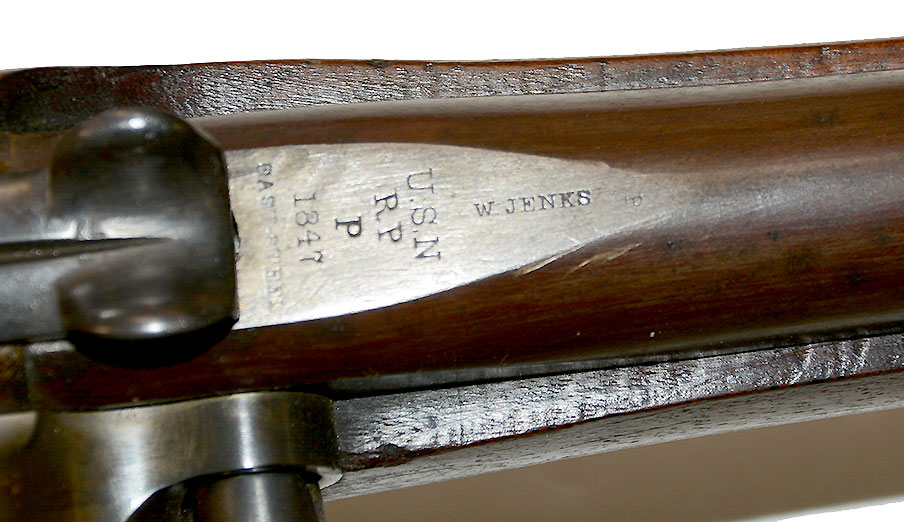
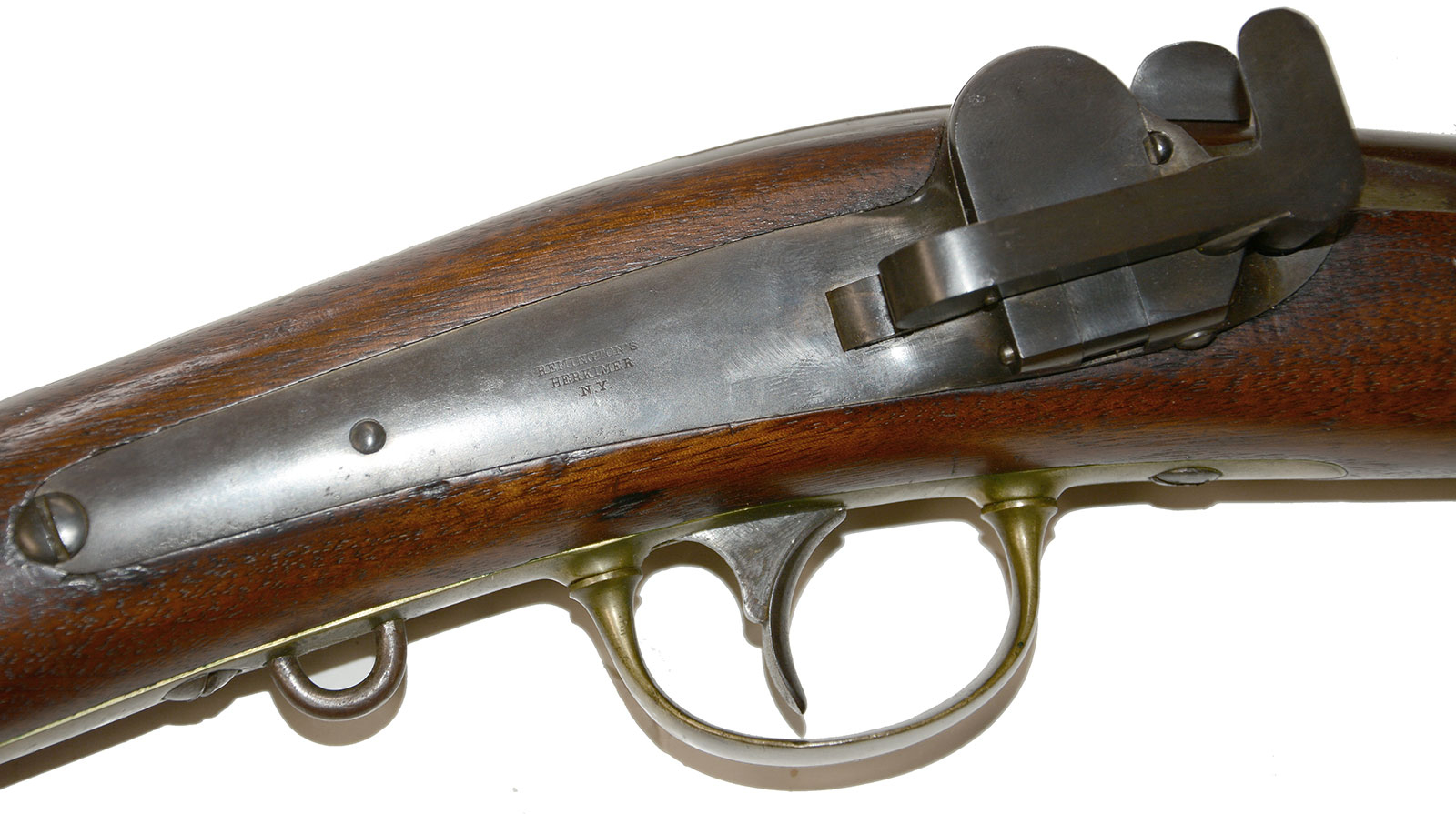
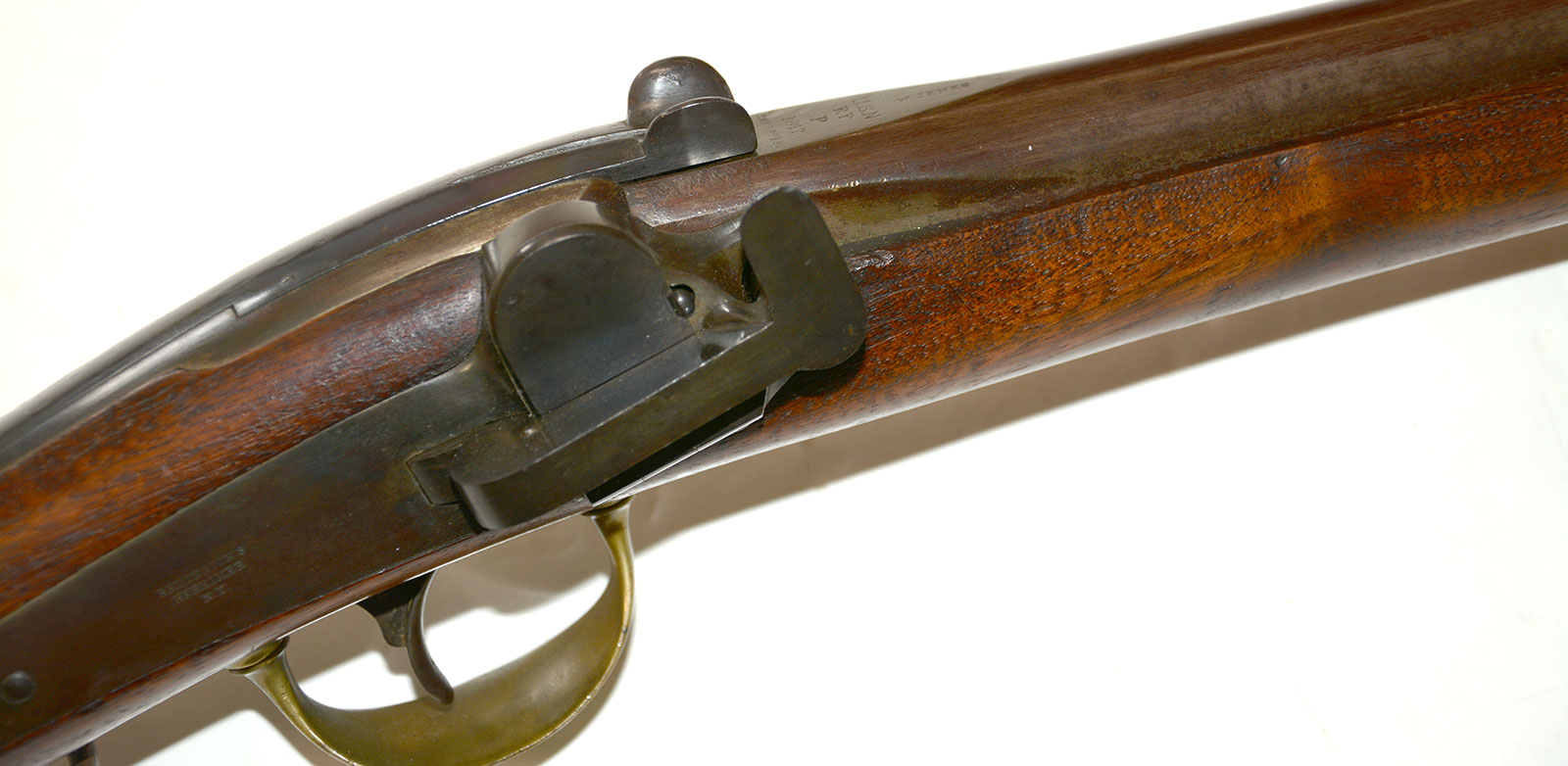
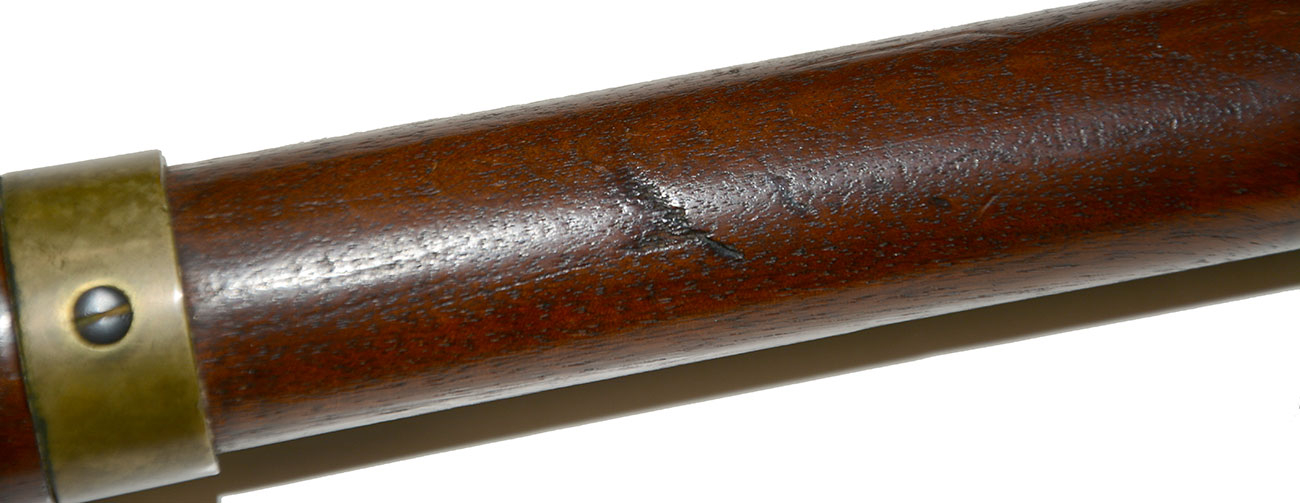
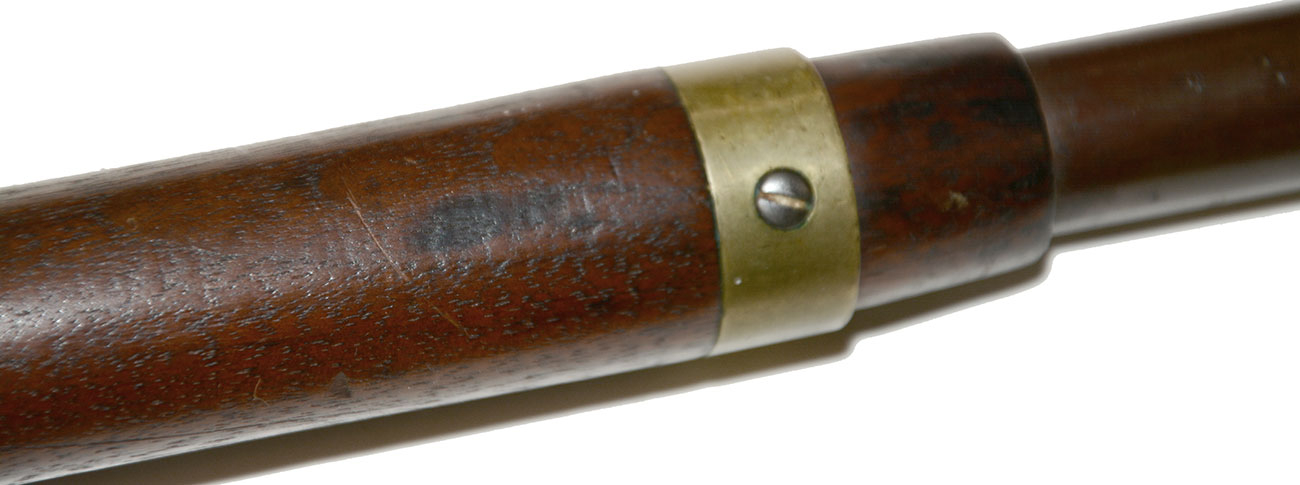
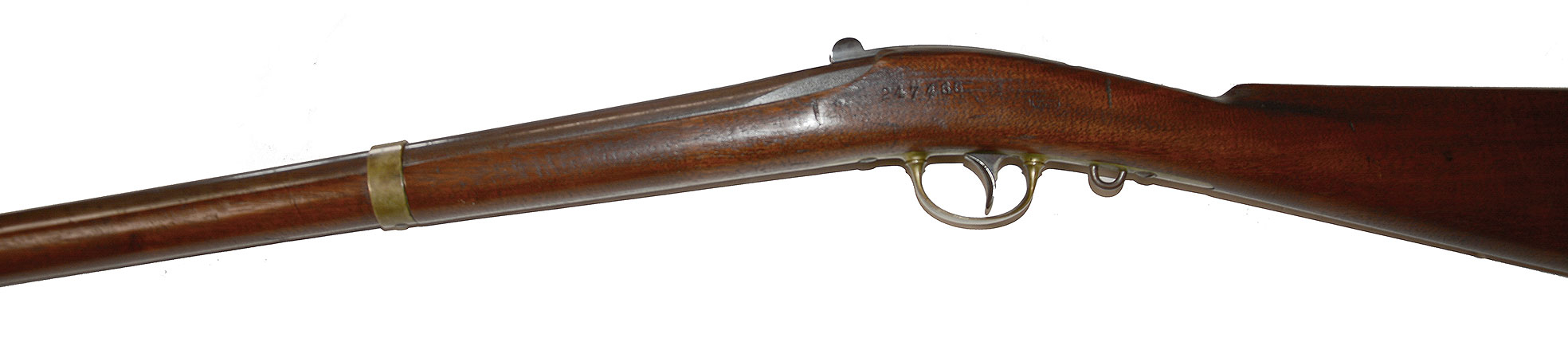
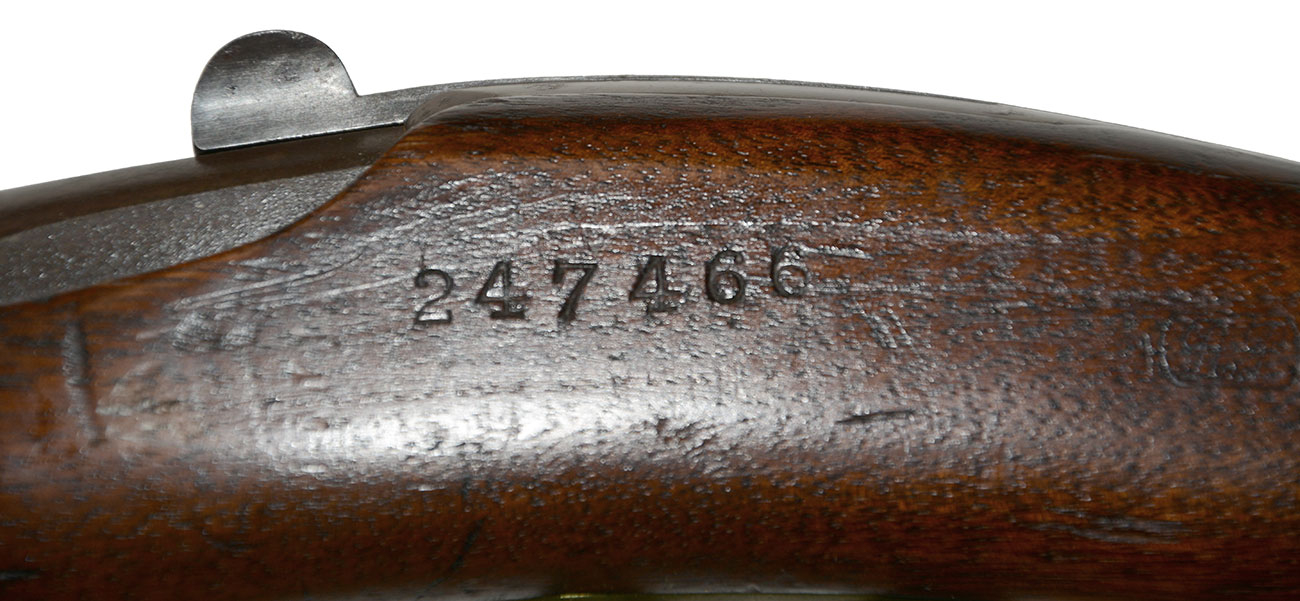
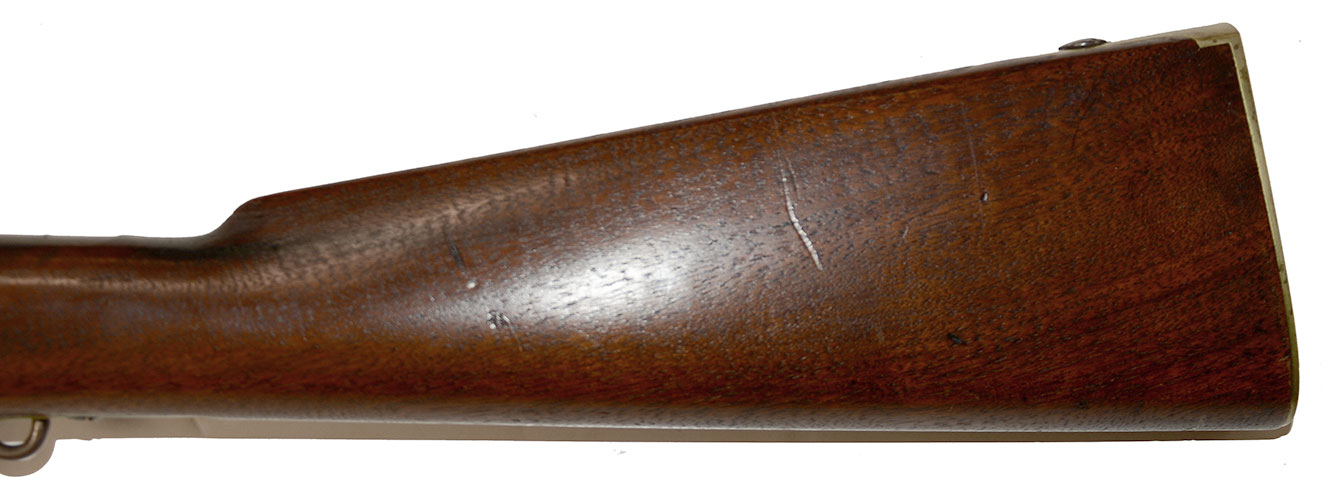
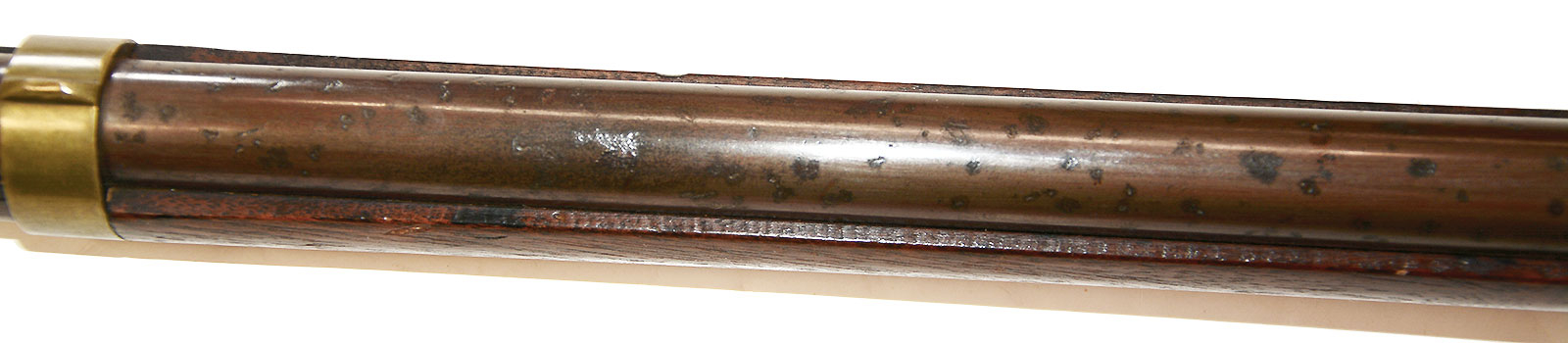
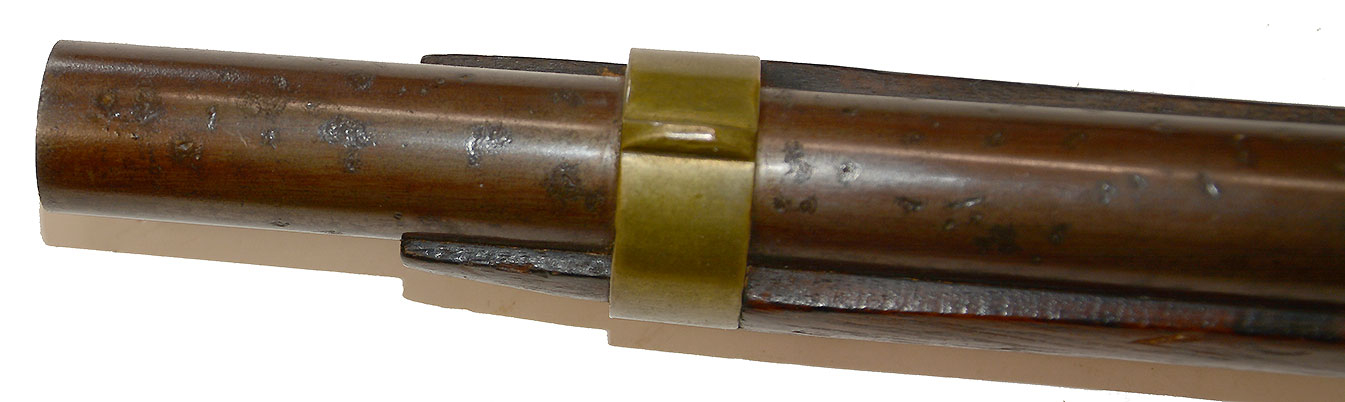
This Jenks carbine is one of just 1,000 of these streamlined breech-loaders manufactured with the Maynard tape primer and rates near Excellent for condition. This is complete, all original, with smooth metal showing better than 90 percent caramel brown on the barrel and along the upper edges of the receiver, showing just some darker brown spots under the surface between the barrel bands, with vibrant blue remaining on the loading lever, and just slightly subdued mottled case colors on the lockplate, hammer and priming mechanism. The brass mounts- barrel bands, triggerguard, and buttplate- have a pleasing, mellow tone. The markings in the metal and wood are very good. The rear of the lockplate is crisply marked: “REMINGTON’S / HERKIMER / N.Y.” The barrel is stamped at the top of the breech flat “W. JENKS” lengthwise, over “USN / RP / P / 1847 / CAST STEEL” stamped crosswise. The inside of the primer door is numbered “215.” The stock has a pleasing, warm brown color and good finish, showing just a couple of scratches on the heel of the butt, on the right butt flat forward of the buttplate, and on the underside of the forestock forward of the lower band. A slightly rubbed but legible “RP” inspection cartouche of Richard Paine is visible on the left wrist, corresponding to his barrel stamp. Forward of that the wood shows some light wear and is stamped “247466,” a collection or inventory number. The mechanics and bore are good.
Jenks patented his breechloading system in 1838 and first tried it out on flintlock arms in 1839 without much success, but it found favor in Navy tests of his percussion version, using the “mule-ear” side hammer, resulting in sales of some 4,200 to the US Navy from 1843 to 1846. This is one of 1,000 additional carbines manufactured by Remington for Jenks to fulfill a Sept. 22, 1845, Navy contract for Jenks carbines fitted with a Maynard tape primer, the rights to which, for use on 1,000 locks, the Navy had acquired in March 1845. Earlier conventional percussion versions had been made by Ames. Remington purchased both the contract and necessary machinery from Ames for their manufacture.
Some minor changes were made in the contract, such as permitting the use of “cast steel” for the barrels, as noted in the barrel marking, and an extension was granted May 1846, with the first carbines inspected in January 1848 by Richard Paine, whose initials are on the barrel and stock, with deliveries made of 300 to the Boston Navy Yard in April 1848; 300 to the NY Navy Yard in June; 300 in September to Norfolk and 100 the same month to New York. The number inside the primer door seems to have served as a serial number on these. If the numbers on the primer door functioned as serial numbers and the guns were inspected and delivered in numerical order, this one (#215) would have been in the first shipment to the Boston Navy Yard.
Jenks carbines were widely issued and used in the Navy. In December 1858 1,359 of the Navy’s 5,400 Jenks carbines were recorded as in service and the carbine remained standard issue right up to the beginning of the Civil War, though McAulay thinks that major issues of the Remington-Jenks versions began only after remedy of a shortage of Maynard tape primers noted in October 1854. He suggests that these new Remington-Jenks went to the new screw frigates (Merrimack, Wabash, Colorado, Niagara, and Minnesota) in the 1856-58 period with some perhaps among the varied Jenks patterns issued as well to the Preble, Congress, Cumberland, Susquehanna, Portsmouth, Cyane, Lancaster and Iroquois in the 1858-1860 period.
This carbine is rifled (usually stated to be .54 caliber, but in reality .52 according to some sources,) shows the oval loading aperture for use of cartridges rather than loose ball and powder from a flask, and has a sling ring on the base of the triggerguard tang. Opinion is divided on when and by whom the barrels were rifled, shape of the loading aperture was changed and the sling ring installed. The rifling and oval loading aperture are often attributed to alterations made by the Navy “as the Civil War loomed,” but no records are cited. Others take these to be alterations made to the arms after sale to the civilian market as the Navy replaced the Jenks with the Sharps beginning in 1861, though a good number remained in Navy inventory at various locations, with a final 107 recorded in 1866.
Perhaps the largest and best known deaccession of these to the commercial market was some 2,800 Jenks carbines sold to A.M. Eastman, authorized in August 1861. McAulay notes that Eastman turned them over to W.W. Marston for rifling and installation of the sling rings. (In fact, the only roughness we see to the wood is next to the triggerguard tang, which would have been taken out for the modification.) He does not say the loading aperture was altered at that point, but it is possible. Some take these alterations to have been done earlier on contract for the navy, but again without citation, but Eastman was involved in the Hall Carbine Affair, which involved reselling surplus arms back to the government at exorbitant prices and it seems clear he was thinking of marketing Jenks carbines as cavalry arms where the ability to take a cartridge would have been essential. Some Confederate-salvaged Jenks carbines did make their way to the 2nd VA Cavalry Battalion, but their configuration is unknown. As general pattern the Jenks had been rejected for US cavalry use before the war, and their subsequent fate of those acquired by Eastman is unclear.
This is a very strong example of a very scarce version of the Jenks, which itself merits a place in any collection of American naval arms or carbines in general, and has room for some further interesting research. [sr][ph:L]
DISCLAIMER: All firearms are sold as collector's items only - we do not accept responsibility as to the shooting safety or reliability of any antique firearm. All firearms are described as accurately as possible, given the restraints of a catalog listing length. We want satisfied customers & often "under" describe the weapons. Any city or state regulations regarding owning antique firearms are the responsibility of the purchaser. All firearms are "mechanically perfect" unless noted, but again, are NOT warranted as safe to fire!
~~~~~~~~~~~~~~~~~~~~~~~~~~~~~~~~~~~
THIS ITEM, AS WITH ALL OTHER ITEMS AVAILABLE ON OUR WEB SITE,
MAY BE PURCHASED THROUGH OUR LAYAWAY PROGRAM.
CLICK HERE FOR OUR POLICIES AND TERMS.
THANK YOU!
Inquire About SCARCE NEAR EXCELLENT REMINGTON-JENKS MAYNARD TAPE-PRIMED NAVY CARBINE
Most Popular
Historical Firearms Stolen From The National Civil War Museum In Harrisburg, Pa »
Theft From Gravesite Of Gen. John Reynolds »
Selection Of Unframed Prints By Don Troiani »
Fine Condition Brass Infantry Bugle Insignia »
Rare Identified 65Th Ny Sergeant’s Jacket, With Manscript Material: 1St U.s. Chasseurs »
featured item
BEAUTIFUL OFFICER’S SHELL JACKET OF COLONEL, LATER BREVET BRIG. GEN. WINSOR B. FRENCH 77th NEW YORK
This officer’s shell jacket was worn by Winsor B. French while Colonel of the 77th New York and carries his name in old brown ink on interior of the hanging loop inside the collar. Short jackets like this were non-regulation, but popular with both… (1314-06). Learn More »
site search