

site search
online catalog
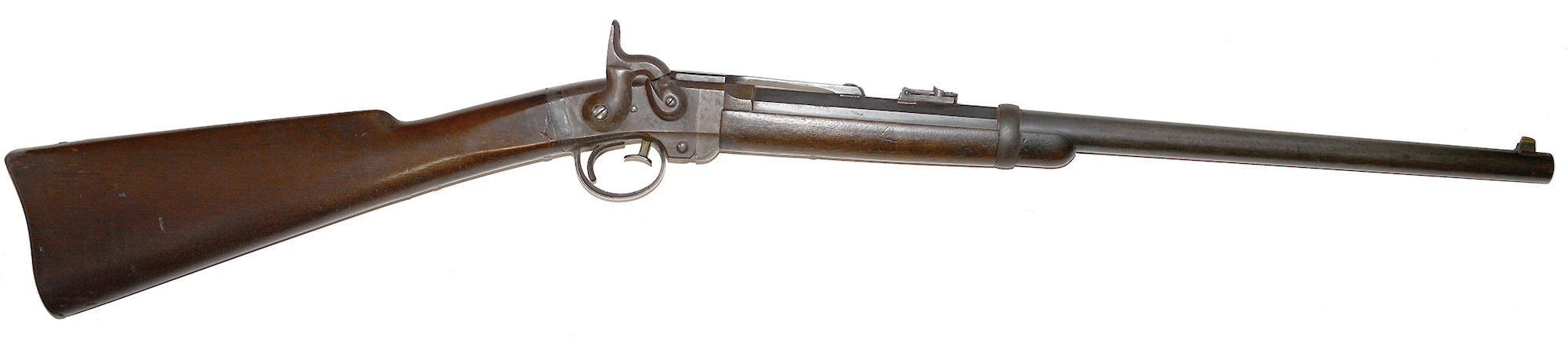
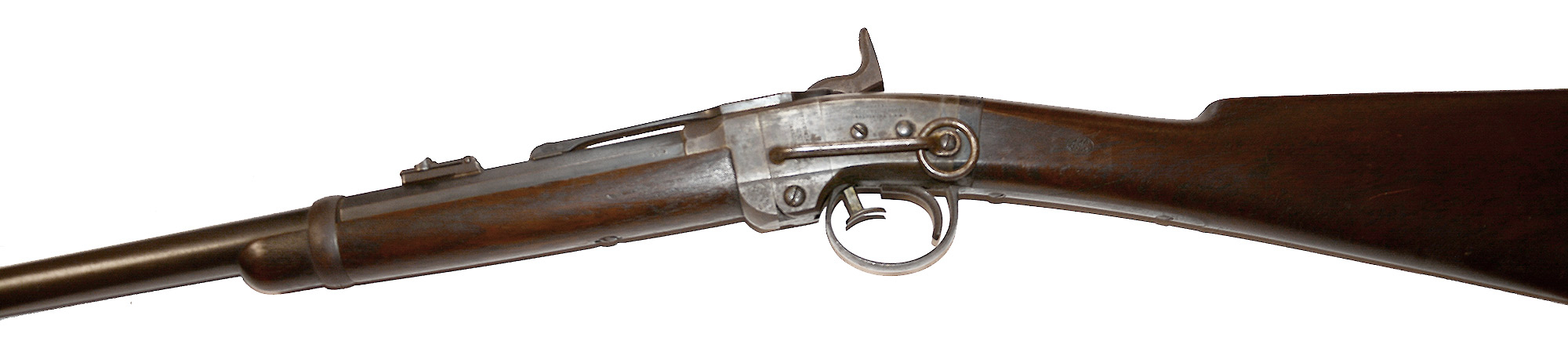
CIVIL WAR MODEL 1863 AMERICAN MACHINE WORKS SMITH CAVALRY CARBINE #3878 IN VERY GOOD CONDITION
Hover to zoom




$3,950.00
Quantity Available: 1
Item Code: 490-6777
Shipping: Determined by Method & Location of buyer
To Order:
Call 717-334-0347,
Fax 717-334-5016, or E-mail
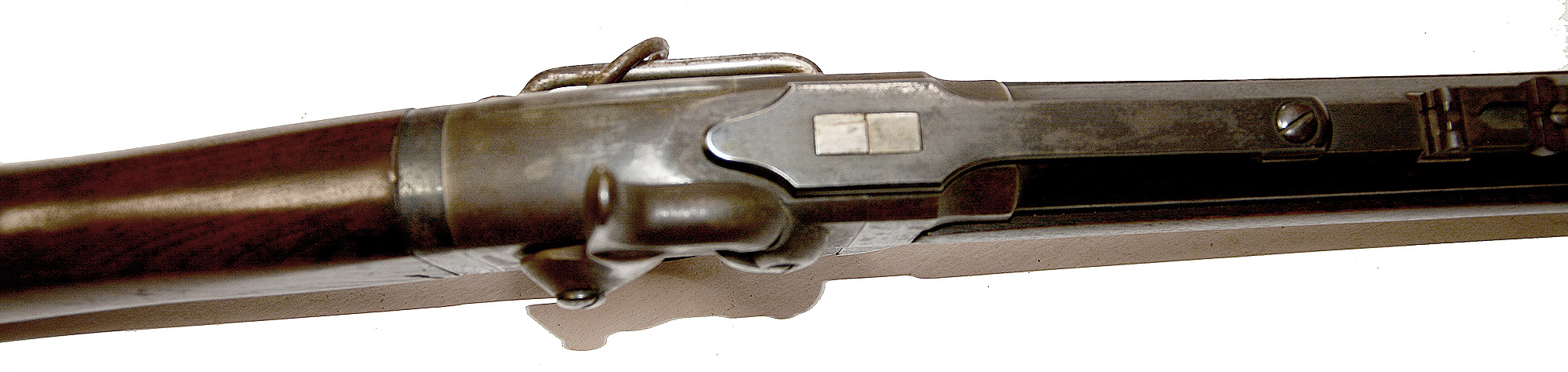
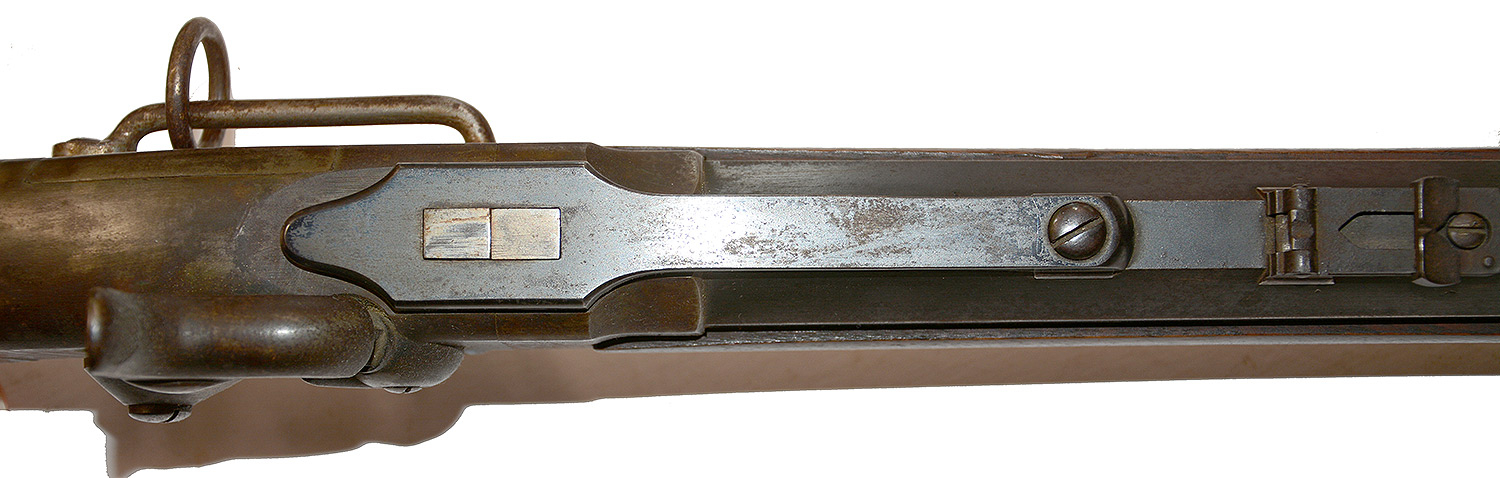
This is a nice Model 1863 Smith Civil War cavalry carbine, all original, showing full coverage of muted blue on the barrel and significant vibrant blue on the breech spring, with sharp markings in both the metal and the wood, and a good bore and mechanics. Sometimes also known as the “Second Model,” this pattern of Smith Carbine, using the conventional side bar and sling ring for carriage on a carbine sling was introduced in August 1863.
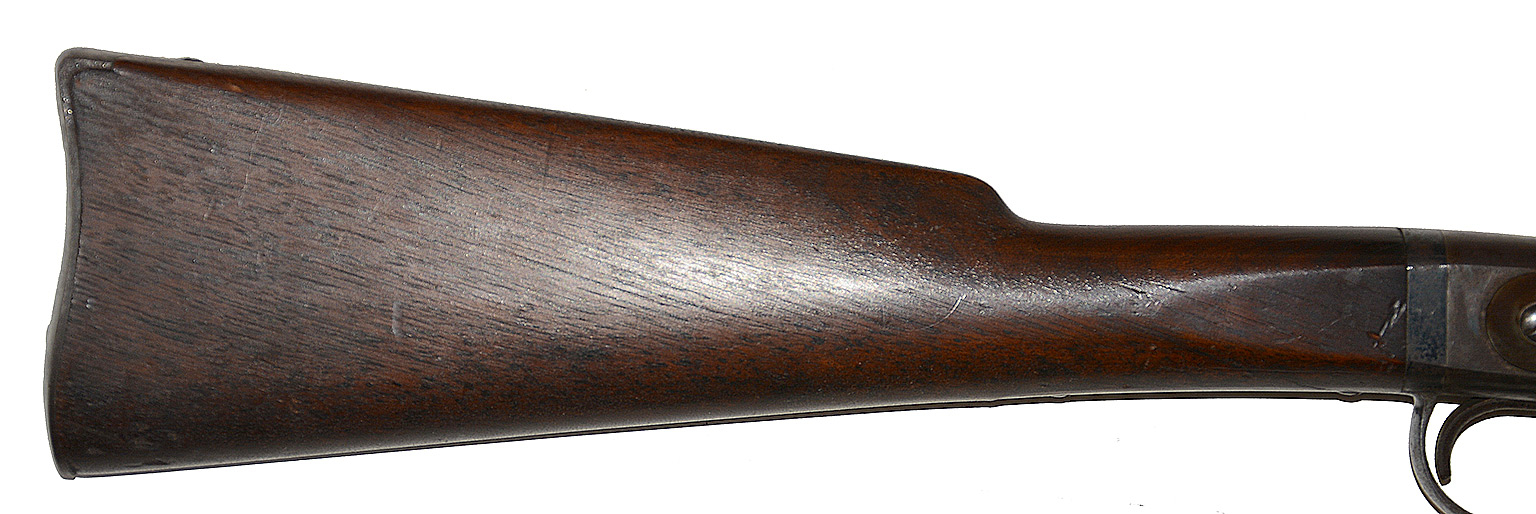
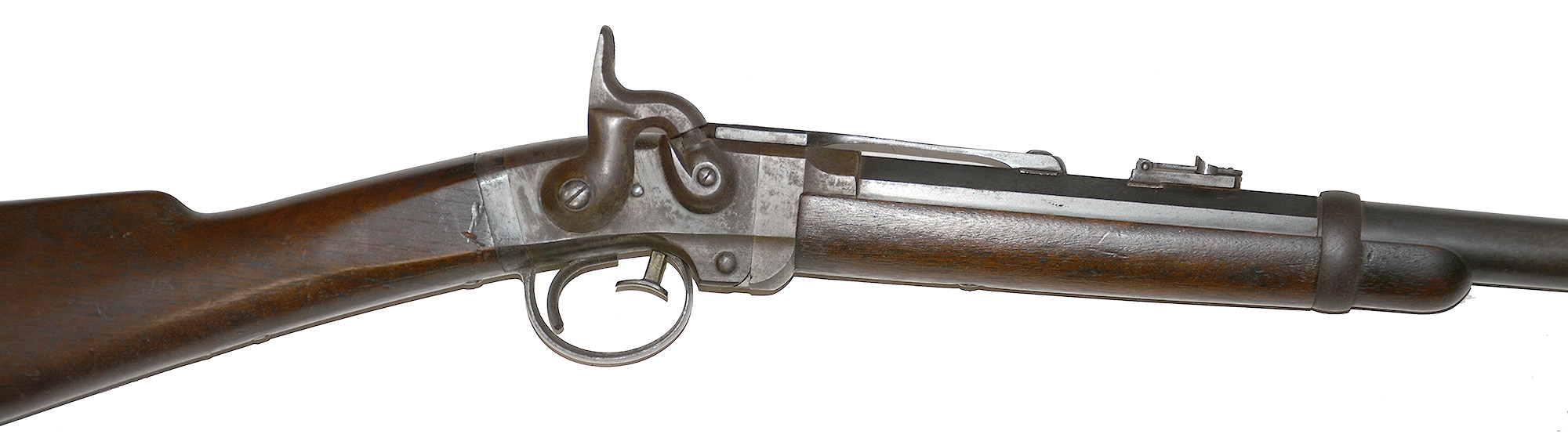
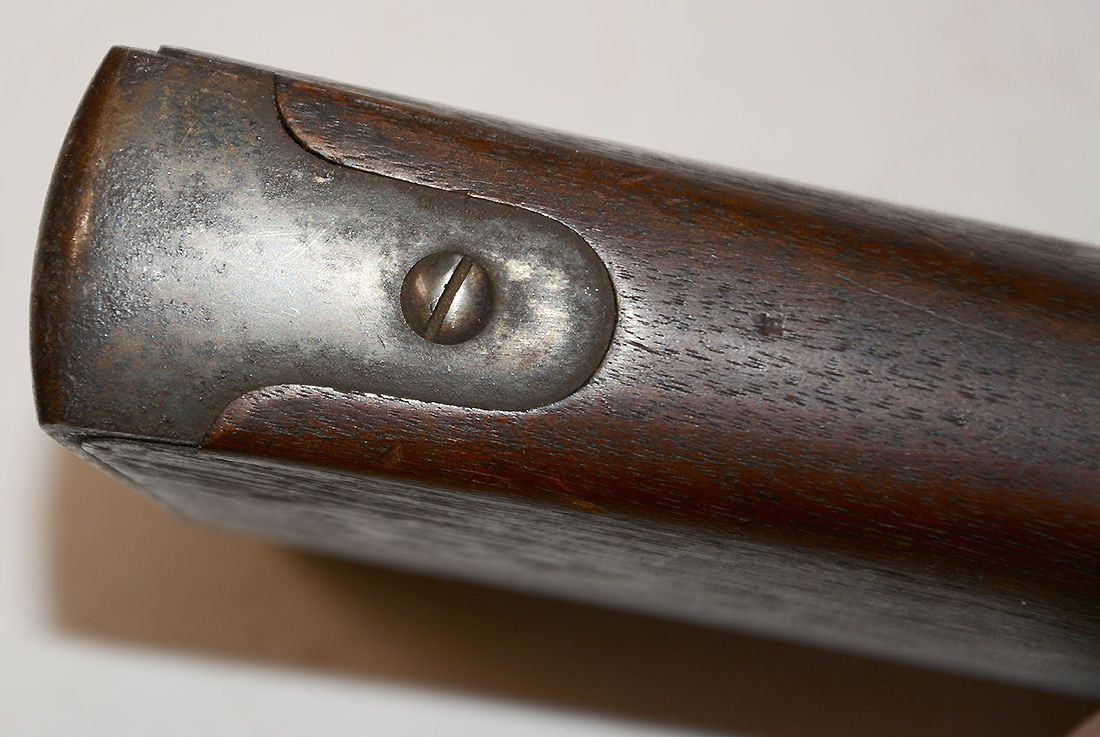
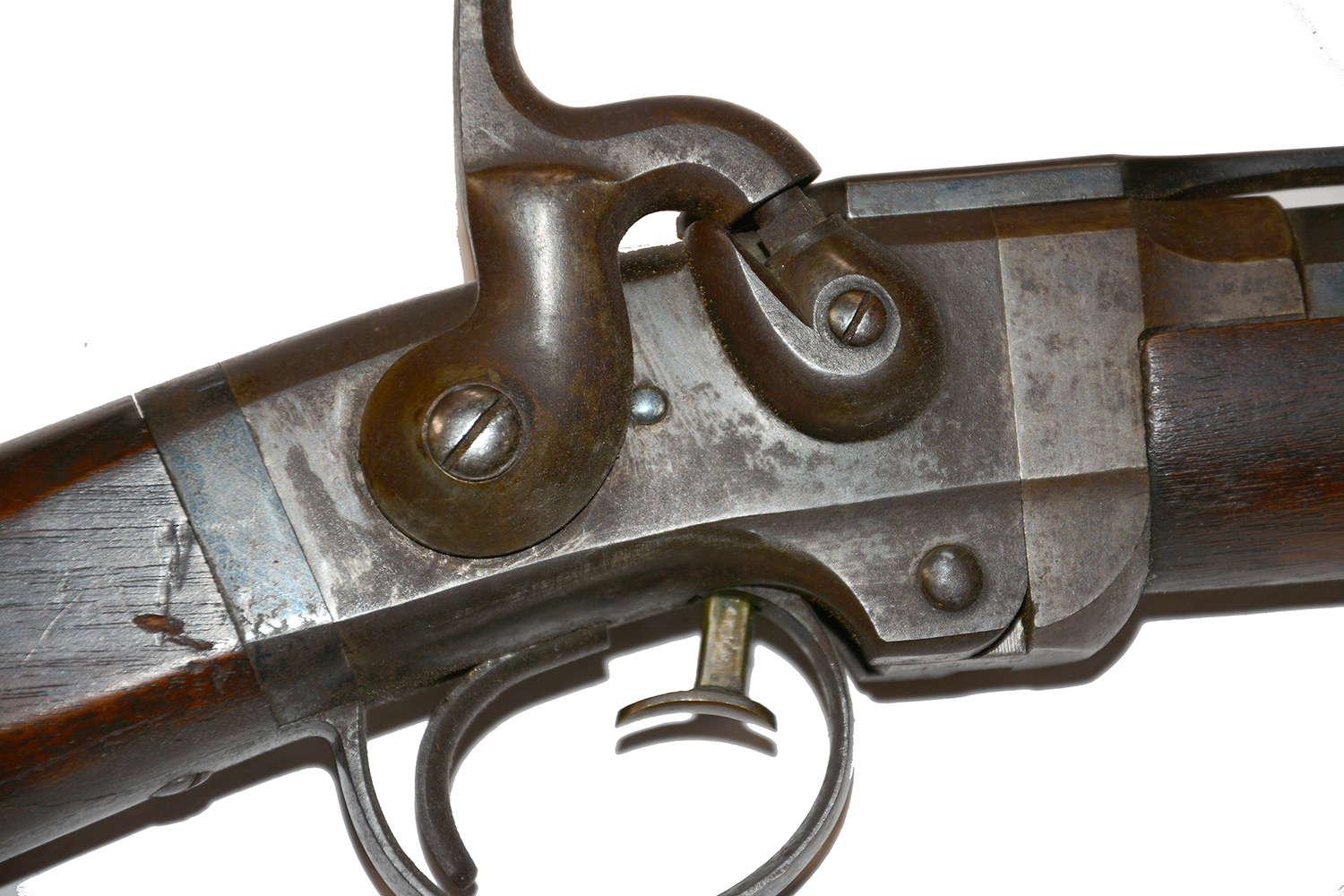
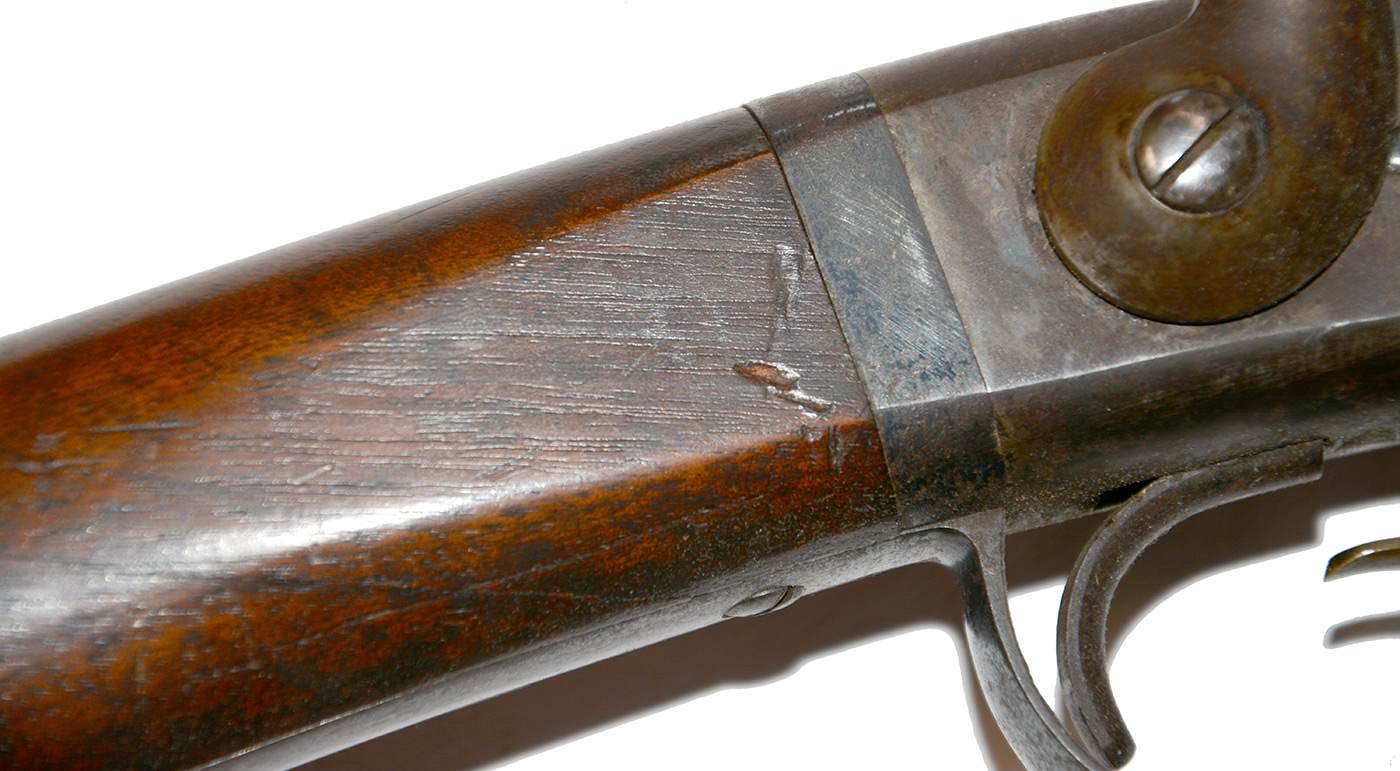
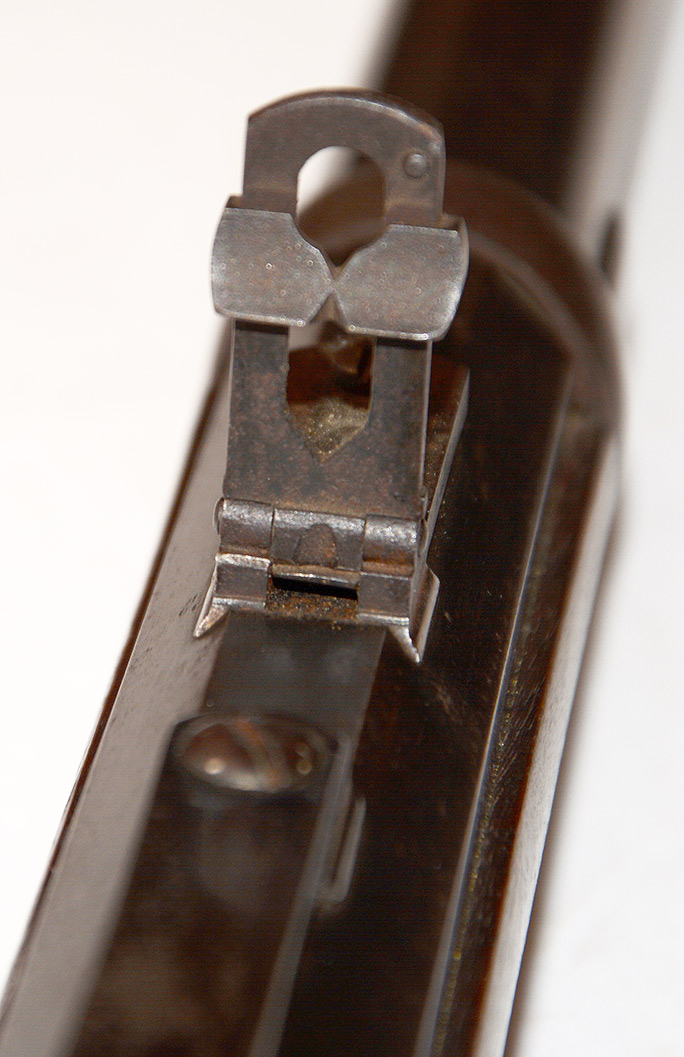
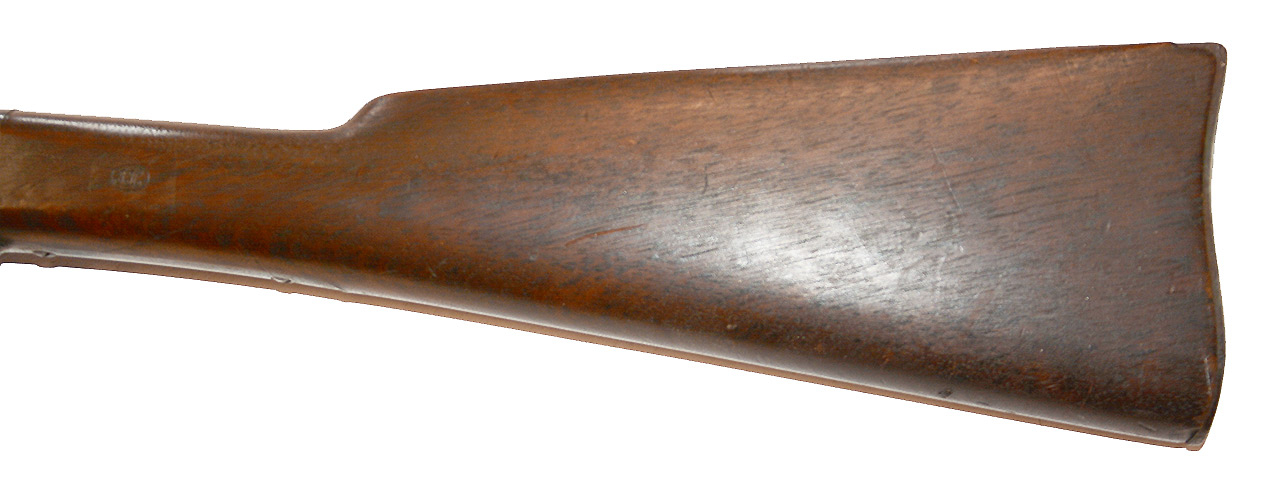
Front and rear sights, barrel band, side bar and sling ring, etc., are all in place. The metal is smooth and the wood has a good surface and good color, showing just a few handling marks and a very narrow shrinkage gap at the top of wrist of buttstock. The barrel band has shifted to plum brown, but blends in well. The breech spring has full coverage of softened, but vibrant blue with just some freckling aft of the screw showing as a dusting of thin gray and light brown. The receiver shows some faint, mottled case color on the right, but mostly a mix of silver gray and caramel with some darker grays at the rear, with the wrist collar showing some rubbing, but also some thin blue mixed with silver gray. The left side of the receiver shows more color: mottled blues and case color on the forward band and side flat, and stronger blue on the wrist collar. The triggerguard bow shows a mix of faded blue and caramel. The surface and finish of the fore and butt stocks are good, though there are some shallow dings on the right wrist at the wrist collar and a very slight shrinkage gap at the top. The buttplate shows some faint blue, with some thin brown and darker gray freckling.
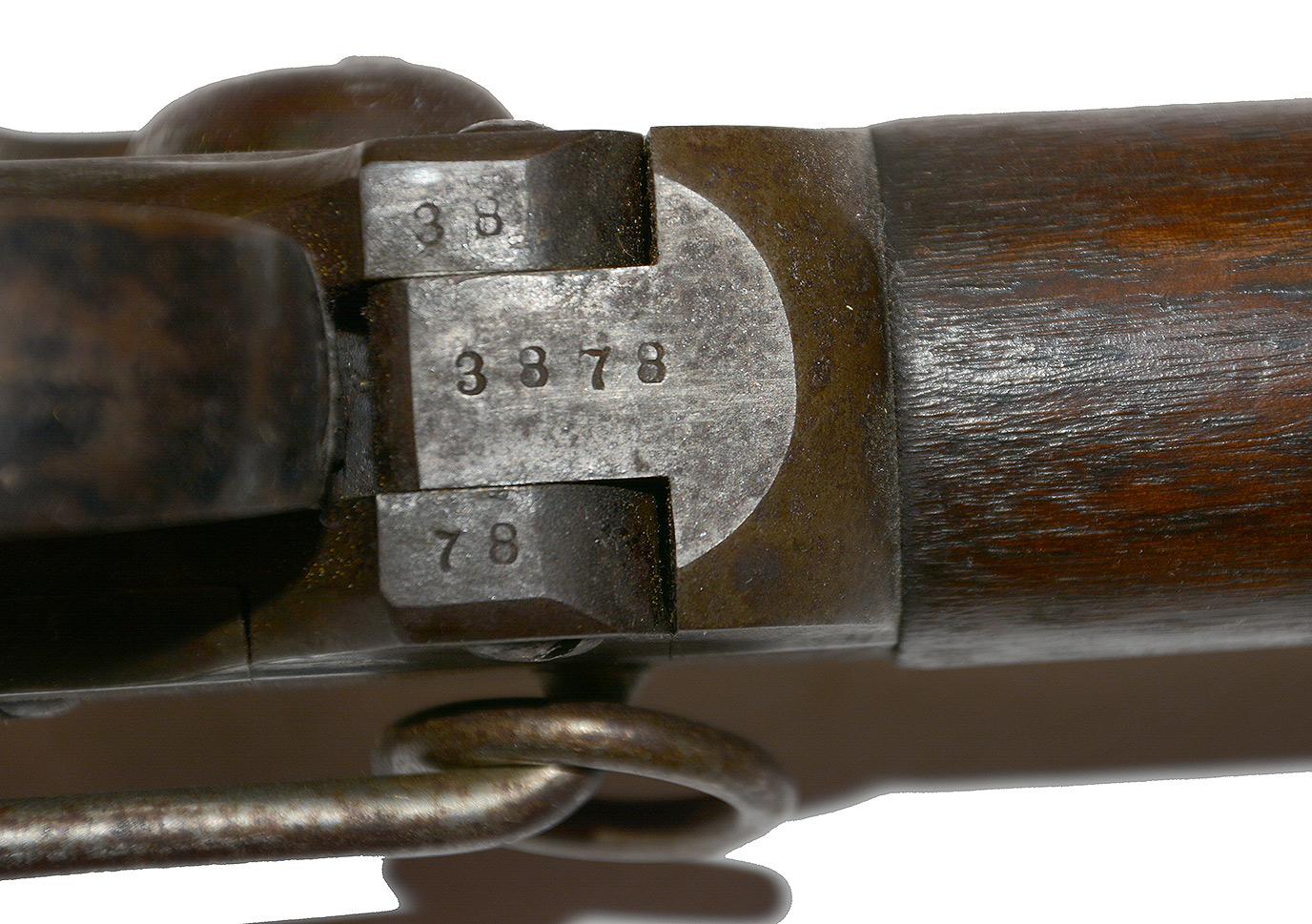
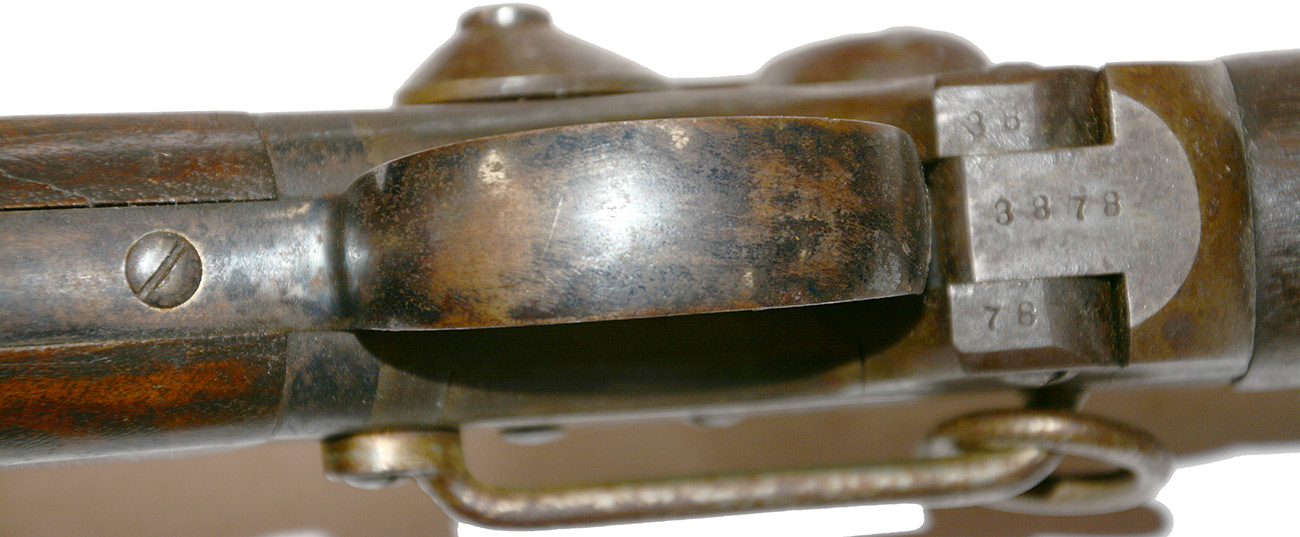
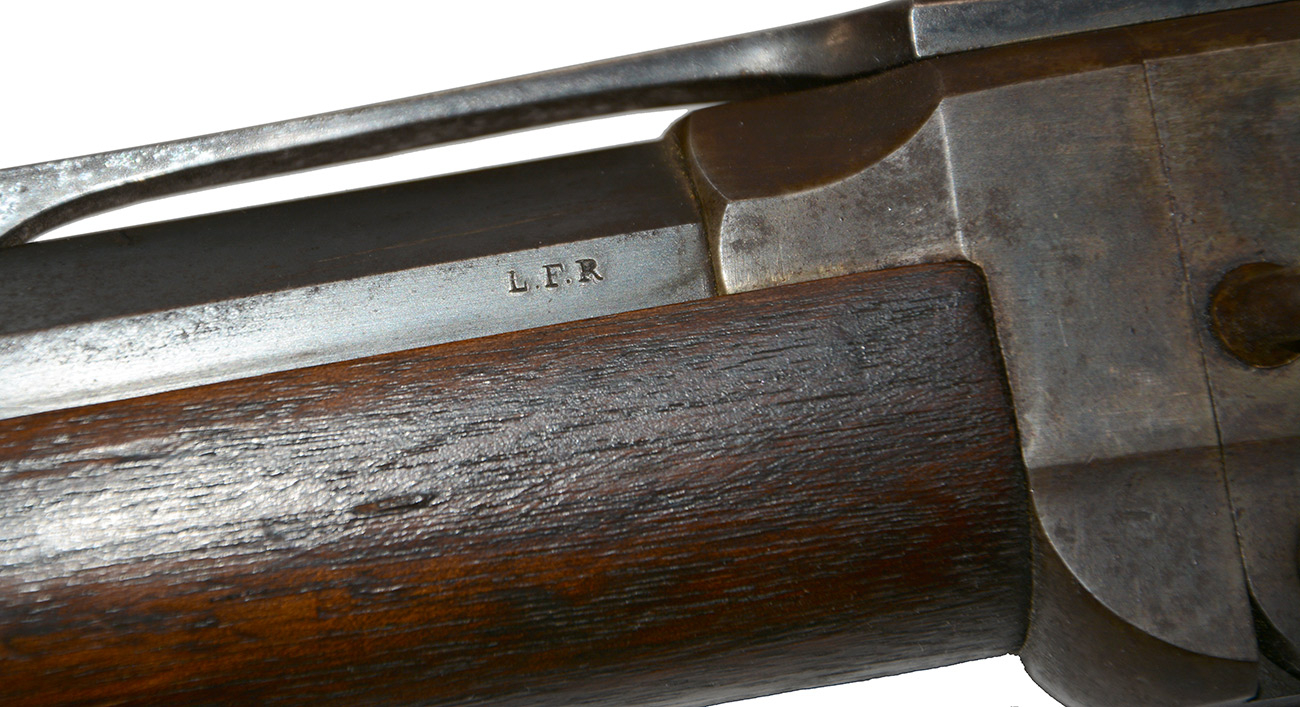
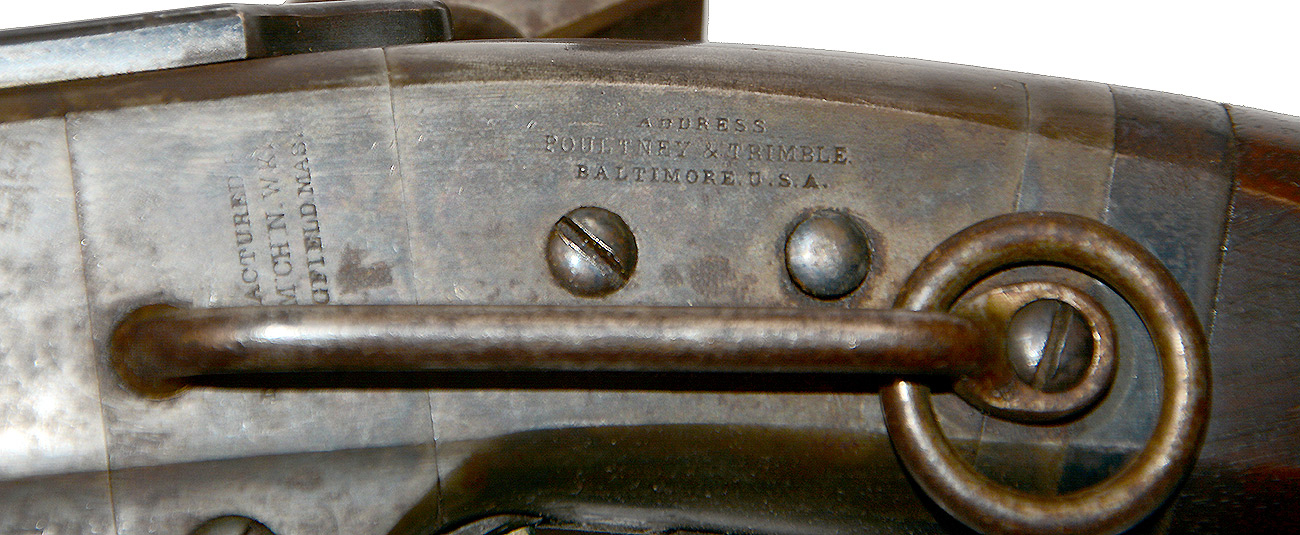
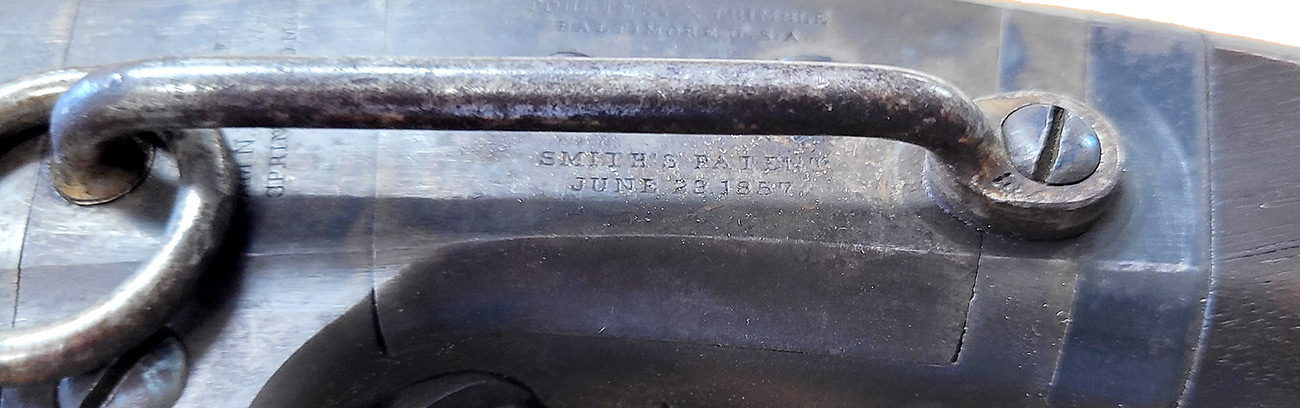
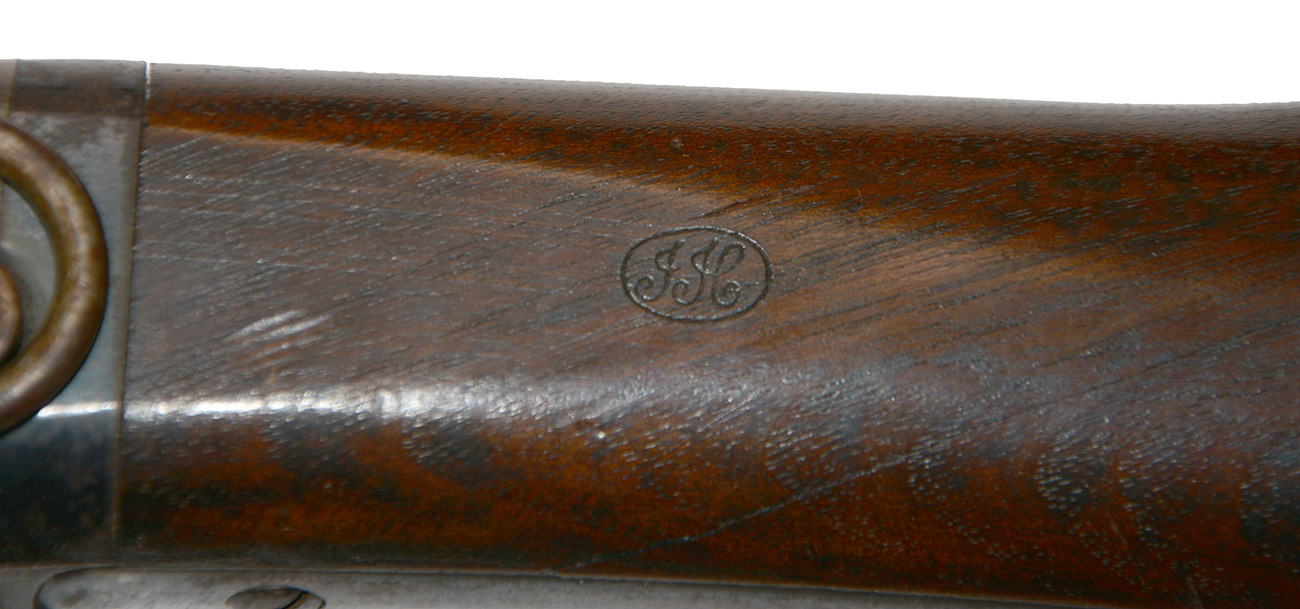
Markings in both the wood and metal are very good. The left wrist of the buttstock has a crisp “JH” in oval inspector’s stamp of Joseph Hannis. The serial number “3878” is similarly sharp on the hinge of the loading assembly and as is the L.F.R. barrel inspection stamp of La Fayette Rogers on the left barrel flat at the breech. The left of the receiver is stamped toward the front vertically just under the forward bend of the sling ring bar, “MANUFACTURED BY / AMN. M’CH’N WKS. / SPRINGFIELD, MASS.” Toward the rear, stamped horizontally is, “ADDRESS / POULTNEY & TRIMBLE / BALTIMORE U.S.A.” at top and below, under the sling bar, is “SMITH’S PATENT / JUNE 23, 1857.” This arrangement of markings is seen on Smiths made by the American Machine Works from about serial #2000 to serial #6480. See Spears’s excellent two-part article on Smiths in the ASAC Journal.
When this carbine first came to us it was identified on the basis of the serial number to George W. Fullerton of the 2nd WV Cavalry. The printed Springfield Research Service tables give February 1863 as the record date. A photocopy of the company Order Book recording it lists it with a Colt revolver and a “Cav Saddle Complete” dated Aug. 14, 1863. Both those dates, however, are too early for this carbine. Not only were Model 1863 Smiths not produced until August 1863, they were produced by two different manufacturers with duplication in numbering. This one was made and marked by the American Machine Works, who had supplied some components to the Mass. Arms Company for their guns, and then started producing their own about February 1864, producing a total of about 12,200 carbines. Spears estimates the form of marking used on the left side of the receiver of this carbine started at about their serial #2,000 and was used through #6479, when the arrangement of the stampings changed.
This is a very good example of a widely used Civil War cavalry carbine in any case. Patented in 1855 (with some changes in 1856 and 1857,) the Smith .50 caliber carbine is hinged in the middle, exposing the breech for insertion of a rubber-cased or paper and foil cartridge pierced at the bottom for ignition by a standard percussion cap. Poultney and Trimble of Baltimore acted as agents on commission, selling the government some 31,002 from January 1862 to June 1865, making it one of the top four carbines purchased by the government with some others sold on the commercial market through military goods dealers such at Schuyler, Hartley and Graham. Spears raises the total manufactured to 34,250, including both the 1861 model (with sling swivels) and 1863 model (made after July 1863, with side bar and sling ring,) with some 40 cavalry units reportedly supplied in whole or part at some point in the war with Smiths. Flayderman includes particularly the 3rd WV, 7th and 11th Illinois, 1st CT, 7th and 17th PA, 6th and 9th Ohio, and the 1st Mass. as among the cavalry regiments carrying it.
This is a classic Civil War cavalry carbine that merits a place in any carbine or cavalry collection. [sr][ph:L]
DISCLAIMER: All firearms are sold as collector's items only - we do not accept responsibility as to the shooting safety or reliability of any antique firearm. All firearms are described as accurately as possible, given the restraints of a catalog listing length. We want satisfied customers & often "under" describe the weapons. Any city or state regulations regarding owning antique firearms are the responsibility of the purchaser. All firearms are "mechanically perfect" unless noted, but again, are NOT warranted as safe to fire!
~~~~~~~~~~~~~~~~~~~~~~~~~~~~~~~~~~~
THIS ITEM, AS WITH ALL OTHER ITEMS AVAILABLE ON OUR WEB SITE,
MAY BE PURCHASED THROUGH OUR LAYAWAY PROGRAM.
CLICK HERE FOR OUR POLICIES AND TERMS.
THANK YOU!
Inquire About CIVIL WAR MODEL 1863 AMERICAN MACHINE WORKS SMITH CAVALRY CARBINE #3878 IN VERY GOOD CONDITION
Most Popular
Historical Firearms Stolen From The National Civil War Museum In Harrisburg, Pa »
Theft From Gravesite Of Gen. John Reynolds »
Selection Of Unframed Prints By Don Troiani »
Fine Condition Brass Infantry Bugle Insignia »
Rare Identified 65Th Ny Sergeant’s Jacket, With Manscript Material: 1St U.s. Chasseurs »
featured item
CONFEDERATE GENERAL LUNSFORD LINDSAY LOMAX AS A U.S. CAVALRY SECOND LIEUTENANT
Formerly in the collection of Virginia collector and dealer Bill Turner this sixth plate ambrotype shows Confederate General Lunsford Lindsay Lomax as a Second Lieutenant in the U.S. Army, sometime between 1856 and 1861. Lomax was born in Rhode… (1138-1830). Learn More »
site search