


site search
online catalog
SEVEN-SHOT MOORE RIMFIRE REVOLVER
Hover to zoom

$975.00 SOLD
Quantity Available: None
Item Code: 2026-883
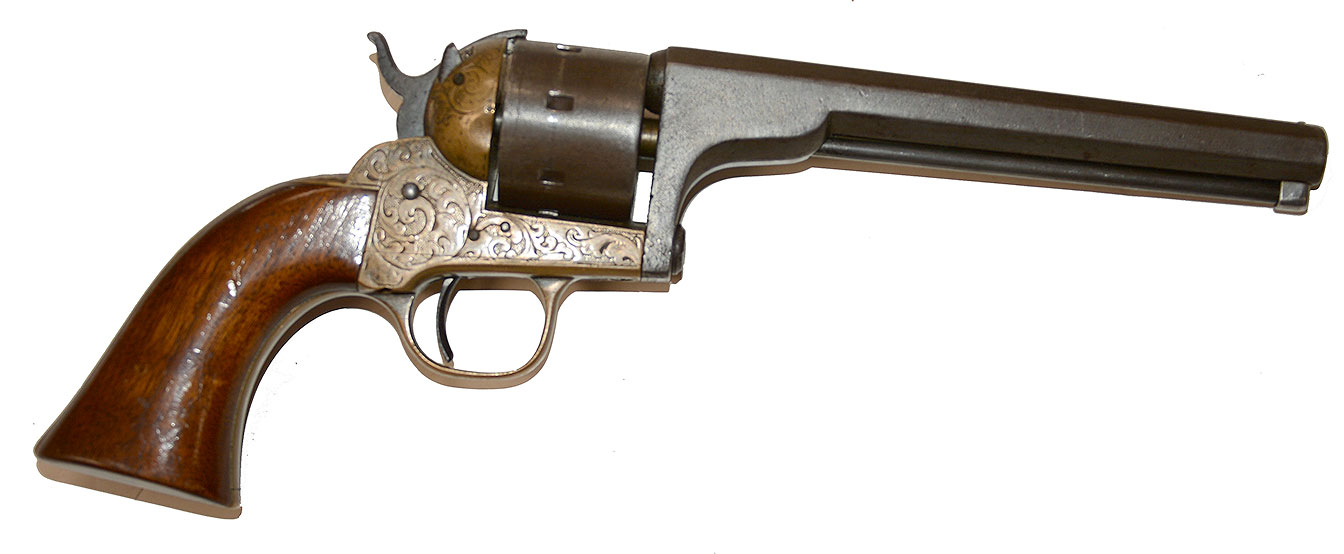
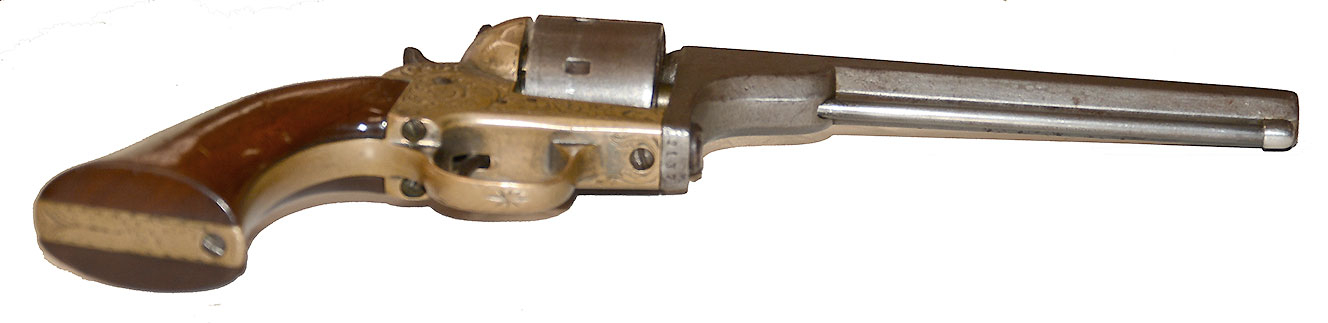
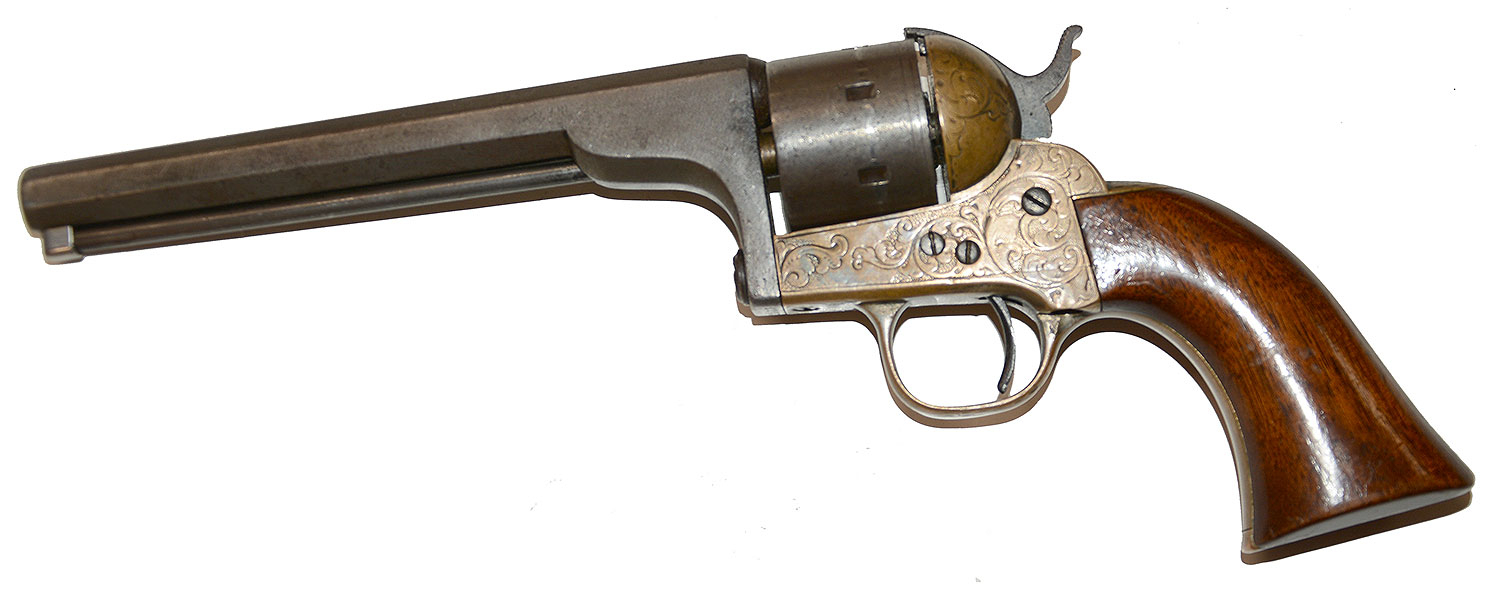
The seven-shot .32 Caliber Moore was an attractive and robust revolver offering blued barrel and cylinder with silvered foliate engraved brass frame, triggerguard, grip and buttstraps as standard features, but one that eventually fell afoul of Smith and Wesson’s holding of a patent involving a bored-through cylinder, which that company used to shut down production of the Moore. That maneuver likely gained additional impetus from the Moore’s seven-shot capacity, and its use of a swing-out cylinder for reloading that some consider a stronger arrangement than the top-break action of Smith and Wesson No. 2, for instance, a very popular six-shot side-arm also using the waterproof, self-contained, .32 caliber rimfire cartridge.
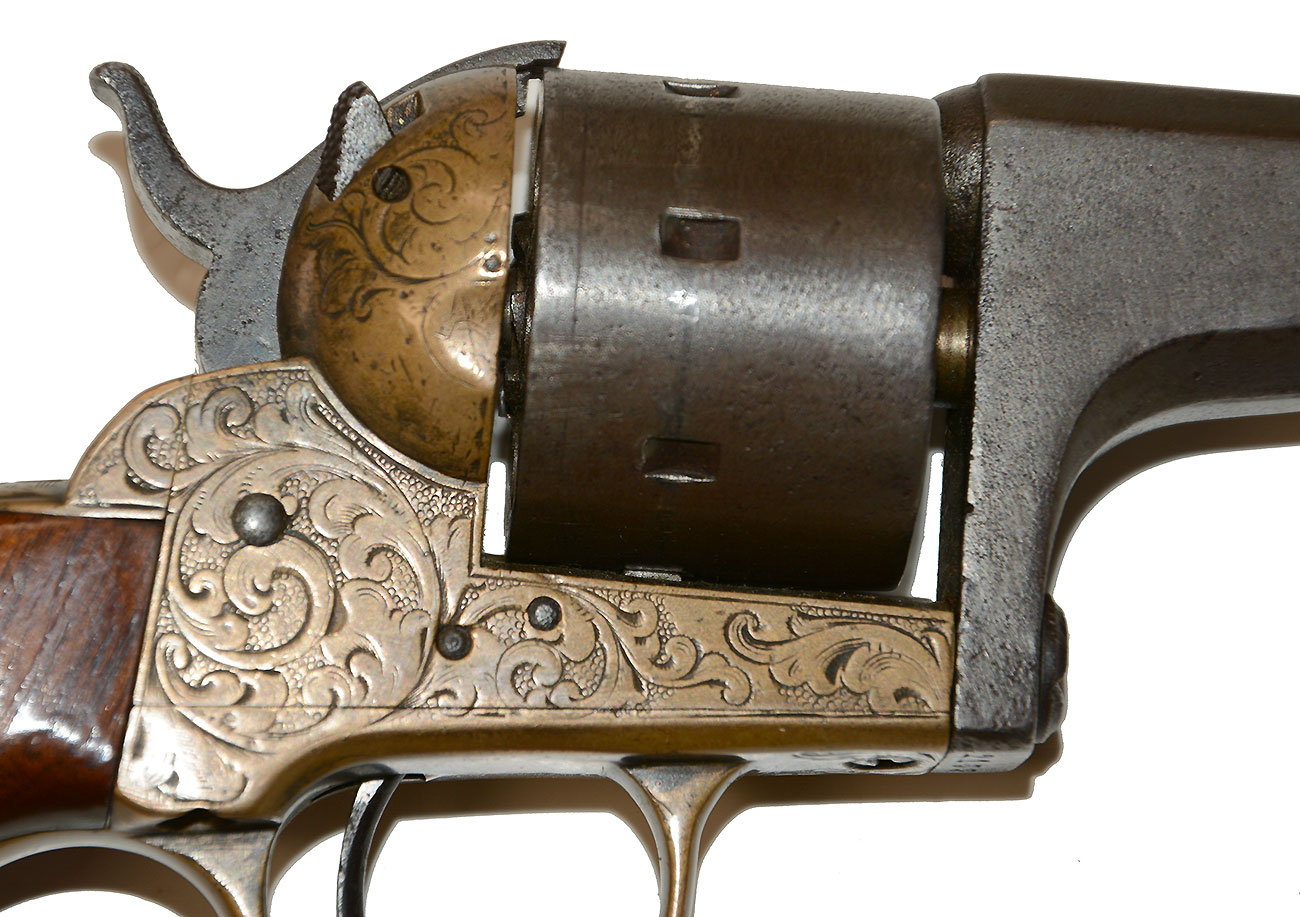
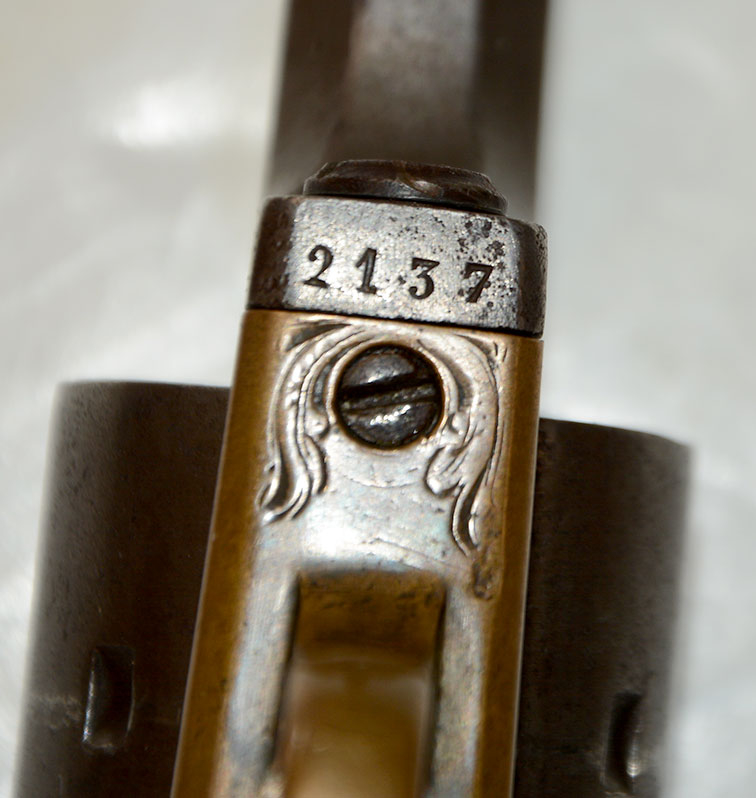
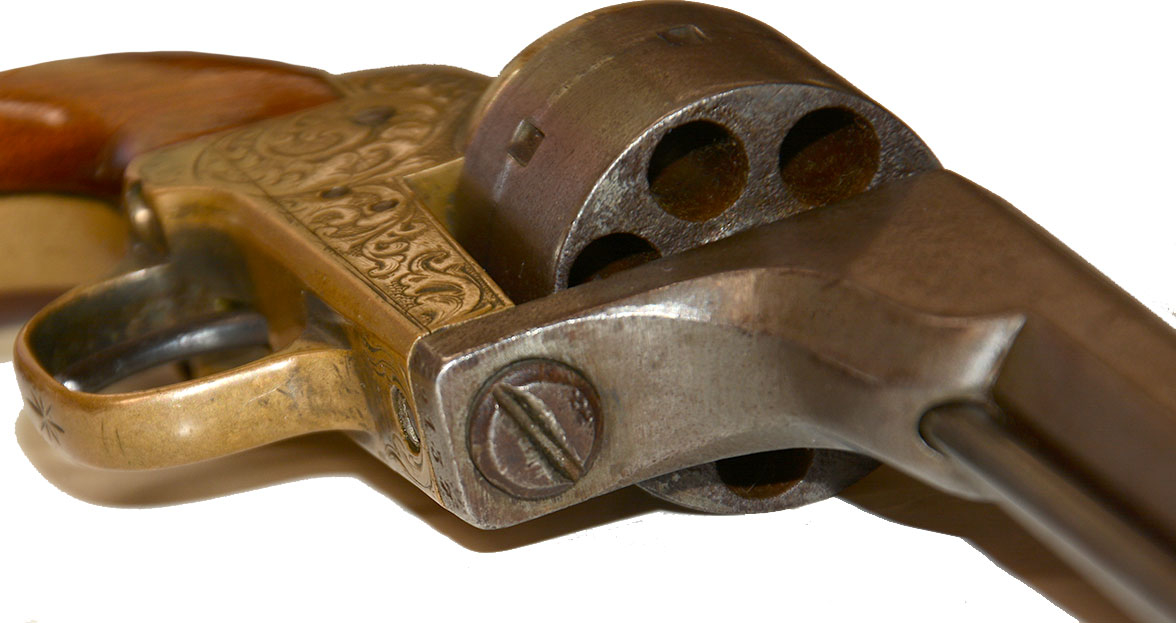
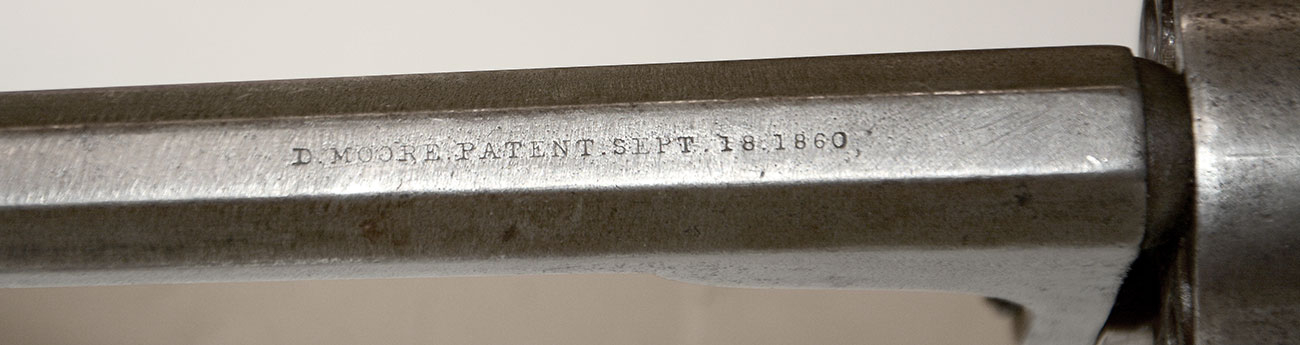
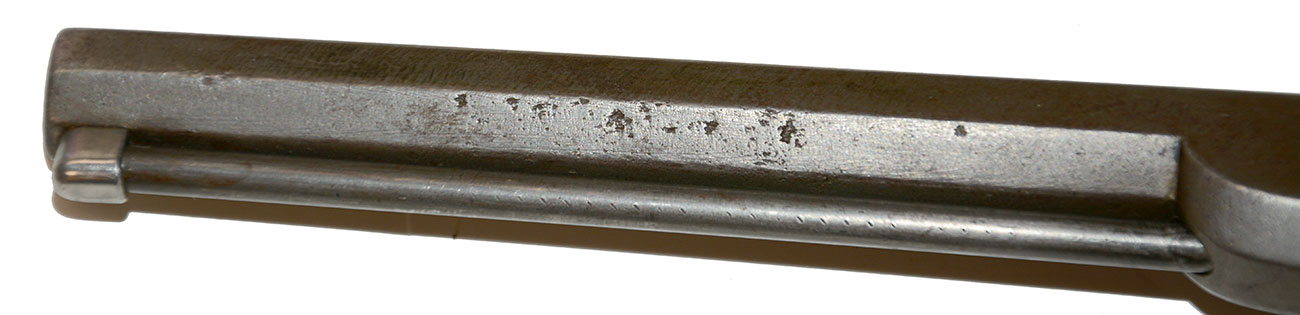
This is a very good example of the Moore, serial #2137, with the 6” barrel and the cylinder showing smooth metal, the barrel largely gray in color, showing some faint traces of blue near the muzzle, but very good “D. MOORE PATENT SEPT. 18, 1860” barrel address, and the cylinder shading slightly toward plum, with a very light drag line along the stops and some brown with a tiny bit of corrosion on the face of the cylinder, likely from firing. The trigger shows some blue. The hammer shows some faint case. The mechanics are good. The rod is in place under the barrel- used for manually poking out the fired cartridge cases from the front of the cylinder once it was released by the catch on the recoil shield and swung out far enough for the ejected shells to clear the frame.
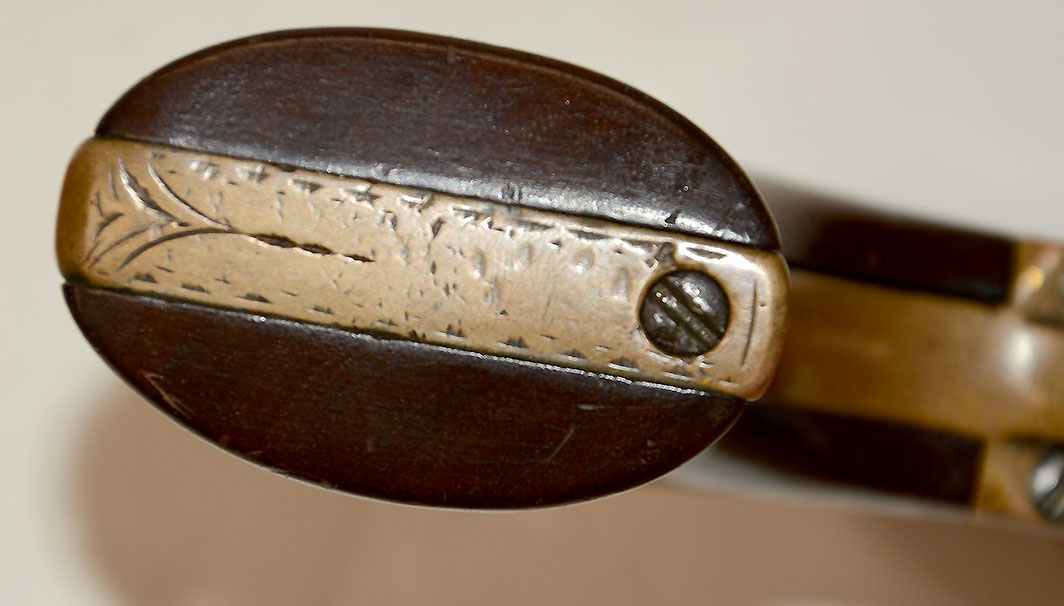
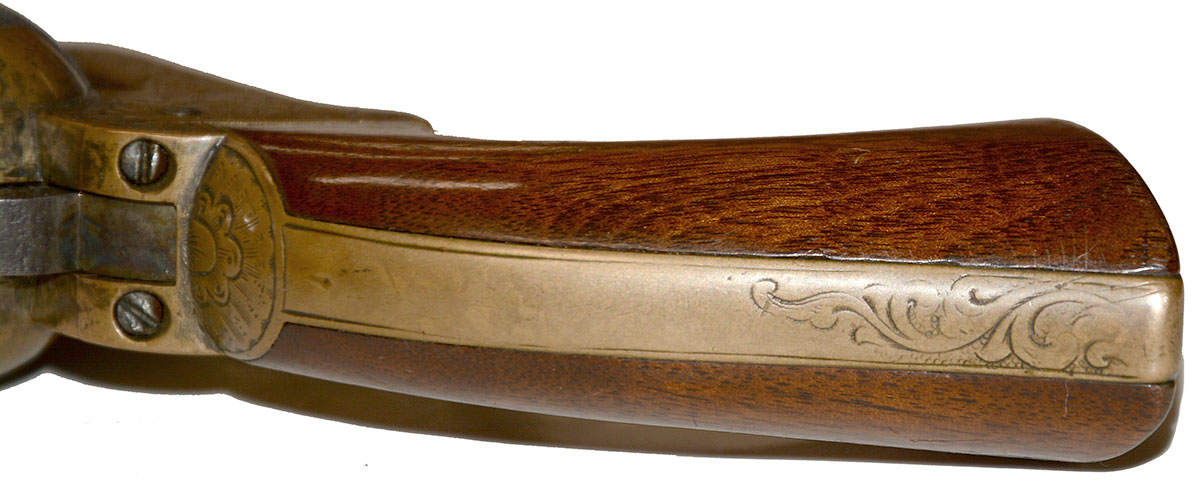
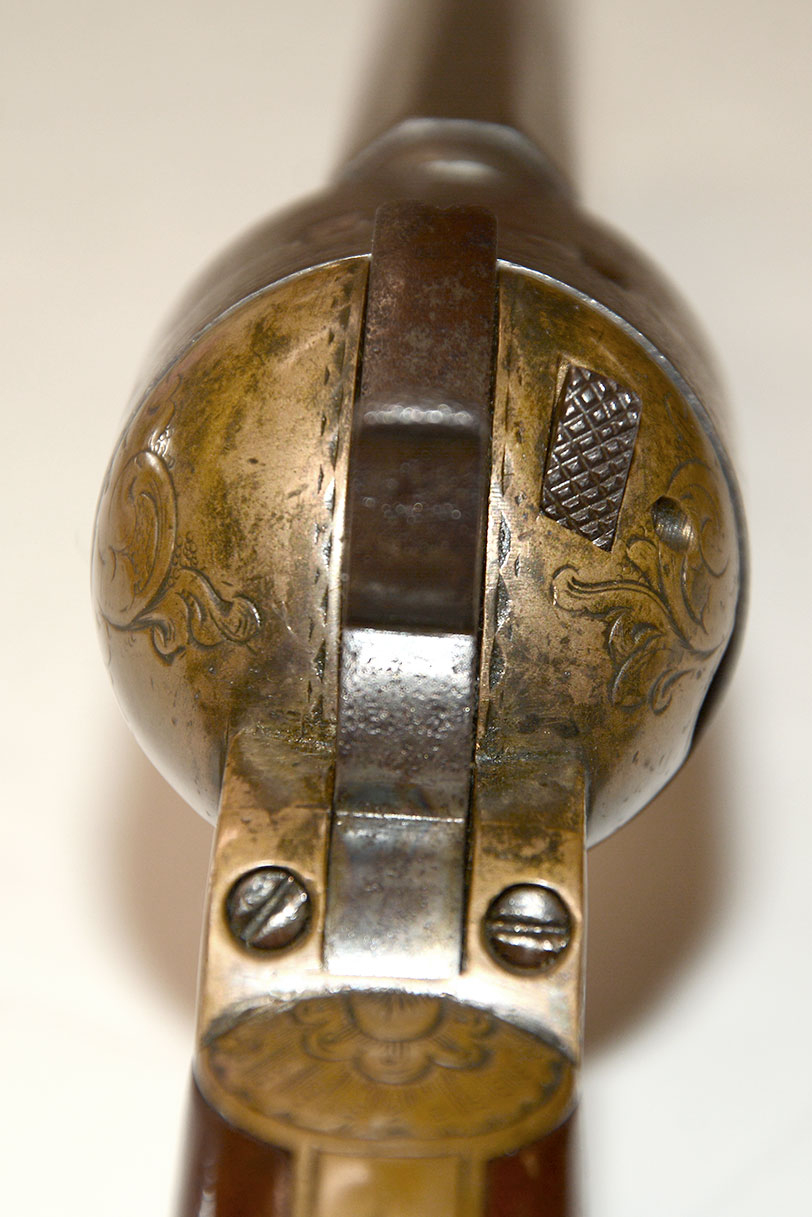
The brass frame, triggerguard, grip and butt straps have a pleasing, untouched, aged patina. The foliate engraving, a standard feature and likely good selling point, is very good and even preserves some of the original thin silver wash on the forward left, rear right and underside of the frame, with some darker spots on the back of the recoil shield. The fanshell and foliate engraving at the top and bottom of the buttstrap are very good with the rococo foliate spray at the heel of the buttstrap showing some wear as is fitting for a pistol with some handling and use, and the engraving on the bottom of the buttstrap very good. The wood grips show good edges and a pleasing warm brown finish with only minor handling marks.
Total production is estimated at 5,000 to 8,000 from 1861 to 1863, when it was shut down after losing the patent-infringement lawsuit by Smith and Wesson, resulting also in the application of Smith and Wesson markings to remaining inventory. This one correctly lacks those later markings. This is an attractive pistol and one that would nicely fit an officer’s display, display of Civil War handguns, or rimfire revolvers in particular. [sr][ph:L]
DISCLAIMER: All firearms are sold as collector's items only - we do not accept responsibility as to the shooting safety or reliability of any antique firearm. All firearms are described as accurately as possible, given the restraints of a catalog listing length. We want satisfied customers & often "under" describe the weapons. Any city or state regulations regarding owning antique firearms are the responsibility of the purchaser. All firearms are "mechanically perfect" unless noted, but again, are NOT warranted as safe to fire!
~~~~~~~~~~~~~~~~~~~~~~~~~~~~~~~~~~~
THIS ITEM, AS WITH ALL OTHER ITEMS AVAILABLE ON OUR WEB SITE,
MAY BE PURCHASED THROUGH OUR LAYAWAY PROGRAM.
CLICK HERE FOR OUR POLICIES AND TERMS.
THANK YOU!
Inquire About SEVEN-SHOT MOORE RIMFIRE REVOLVER
Most Popular
Historical Firearms Stolen From The National Civil War Museum In Harrisburg, Pa »
Theft From Gravesite Of Gen. John Reynolds »
Selection Of Unframed Prints By Don Troiani »
Fine Condition Brass Infantry Bugle Insignia »
featured item
A CONFEDERATE CAPTAIN'S (ACTING MAJOR'S) UNIFORM GROUP, EDWARD CLIFTON WHARTON
Offered is an outstanding uniform ensemble consisting of a frock coat, a vest, a high crowned kepi, a pair of pants and a sash. These belonged to Edward Clifton Wharton Acting Quarter Master CS Army and Chief of Clothing Bureau in Texas at Houston. … (1268-062). Learn More »
site search