

site search
online catalog
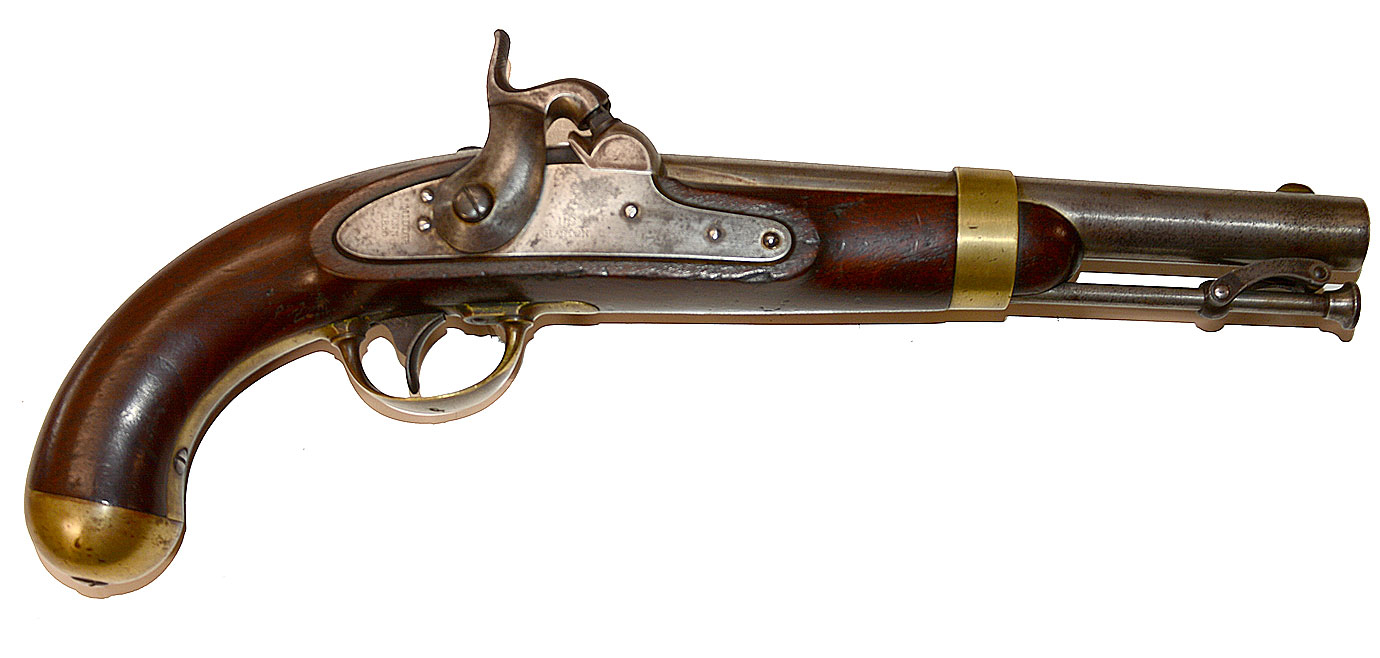
US MODEL 1842 PISTOL BY ASTON, MADE IN 1850
Hover to zoom
$1,495.00
Quantity Available: 1
Item Code: 490-7461
Shipping: Determined by Method & Location of buyer
To Order:
Call 717-334-0347,
Fax 717-334-5016, or E-mail
The last of the US single shot martial pistols and first of the US percussion pistols, the US Model 1842 percussion pistol was successor to the flintlock Model 1836. Like that earlier pistol, it was intended to be carried by mounted troops in pairs, one in each pocket of the holsters strapped across the pommel of the saddle. They were intended for use by both US forces and state militias. Some saw early-war service in Confederate cavalry, drawing from militia stores and even some later service in southern rear-echelon/local guard units. With the advent of revolvers that had become the sidearm of choice in the 1850s, the horse pistol fell into disuse.
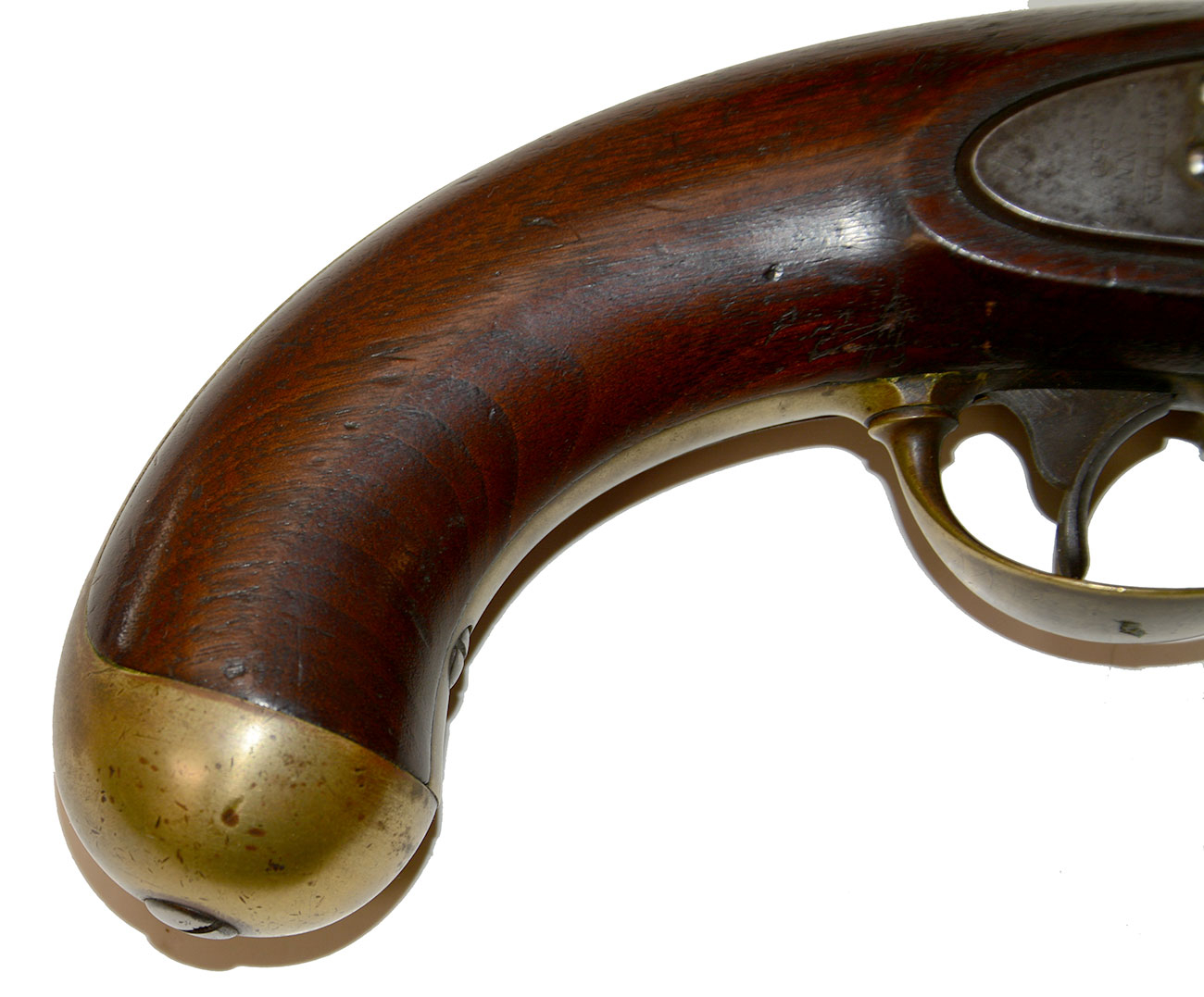
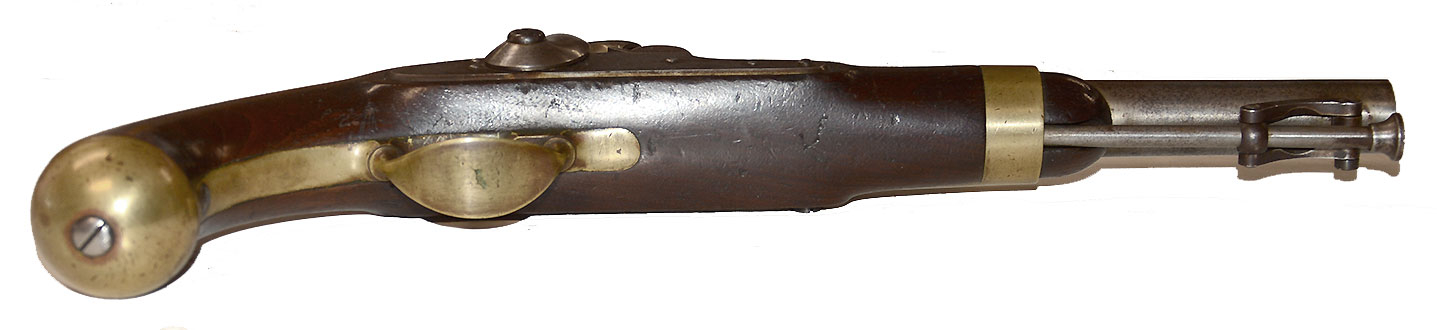
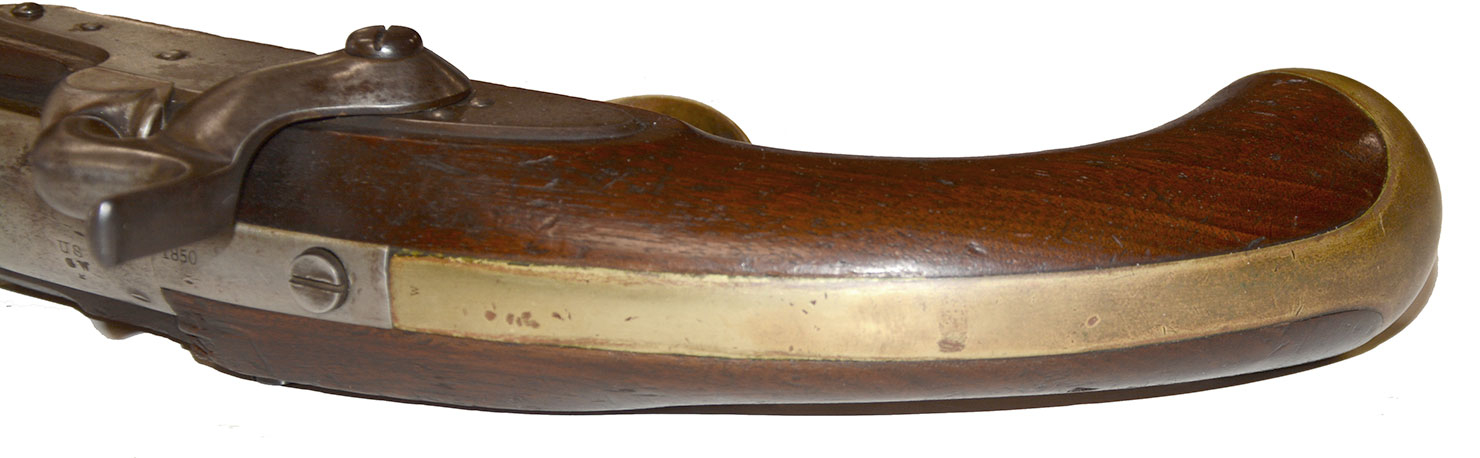
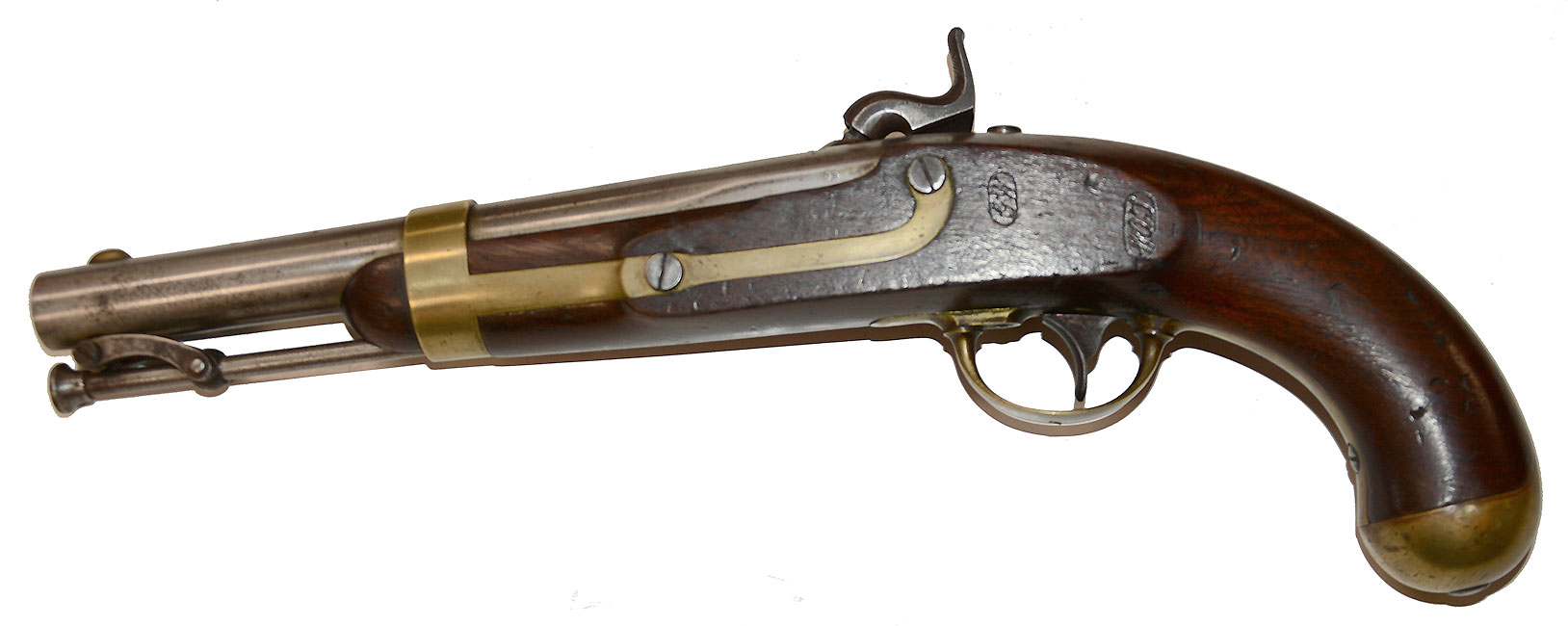
This is a good example made by Henry Aston under his first contract for 24,000 from 1846 to 1851. A Third contract, with Ira N. Johnson, an Aston business partner, who bought the factory and assets, brought the government another 10,000 from 1853 to 1855. (William Glaze also produced his non-US contract Palmetto Armory version in South Carolina.) The pistols were single-shot, .54 caliber smooth-bores, and were fitted with a captive, swivel ramrod, in the hope a trooper might actually be able to reload his pistol while mounted, and not lose the ramrod in the process. They were mounted with brass butt-cap, trigger-guard with long strap, backstrap, side plate and barrel band. All in all, these are hefty, robust pistols.
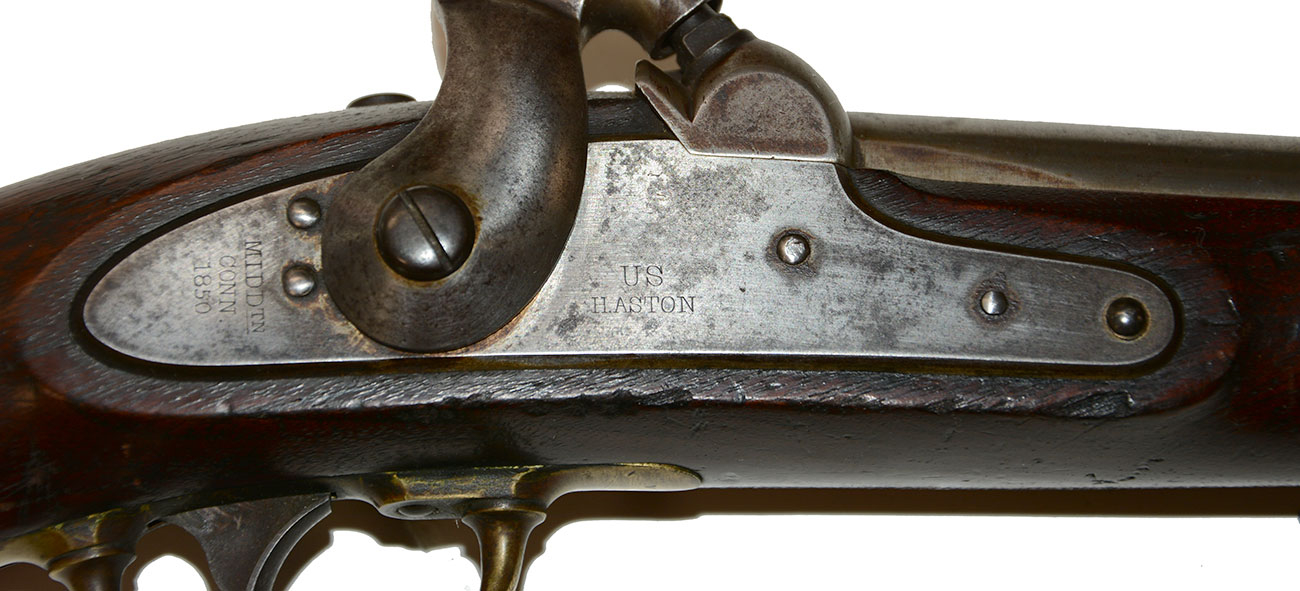
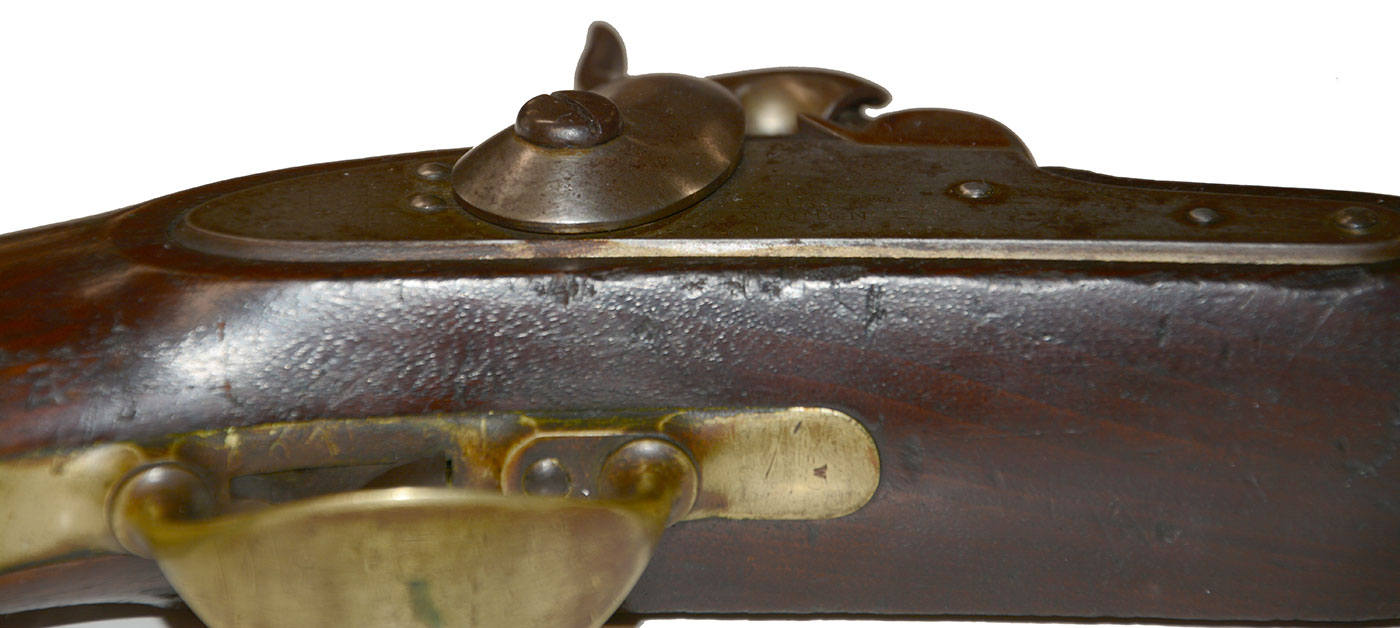
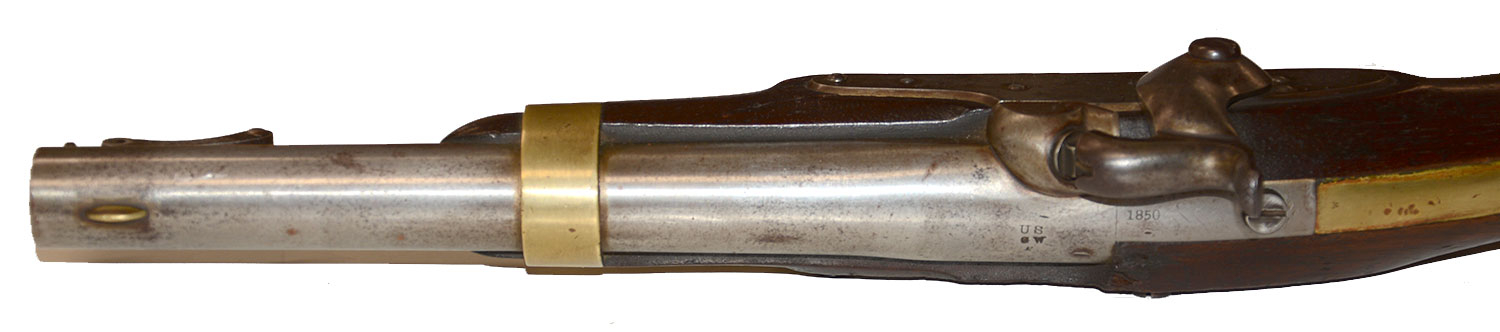
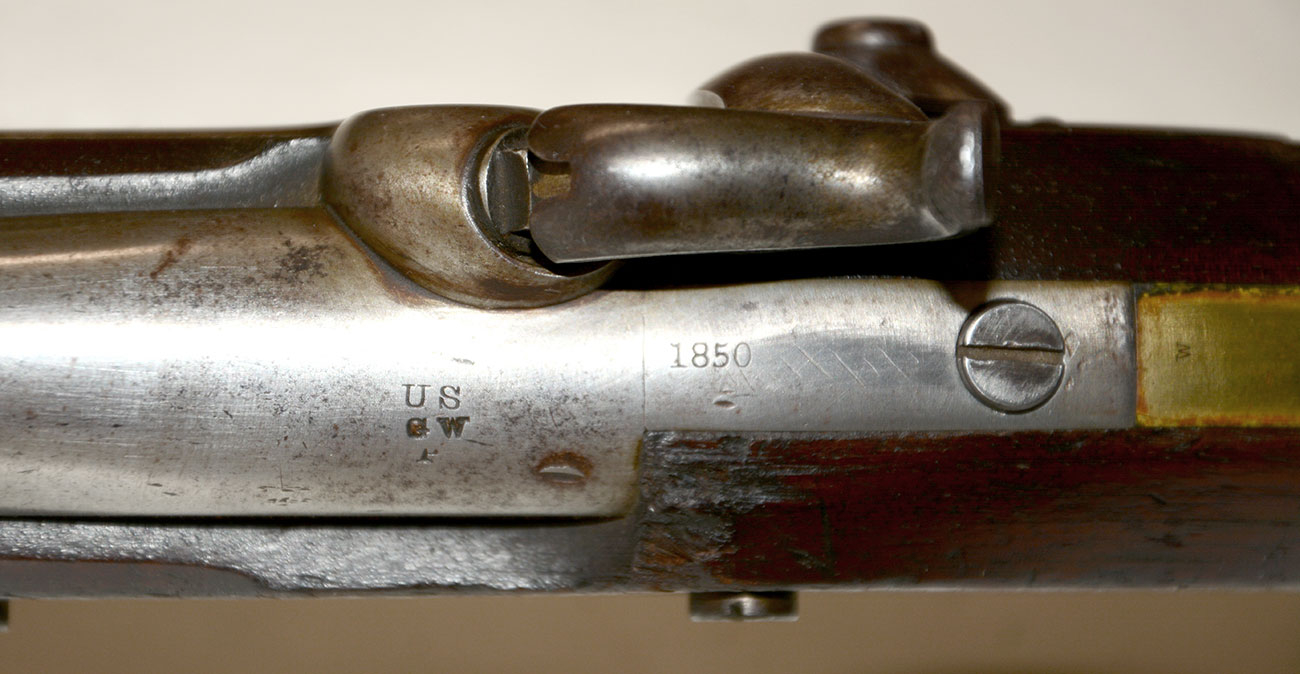
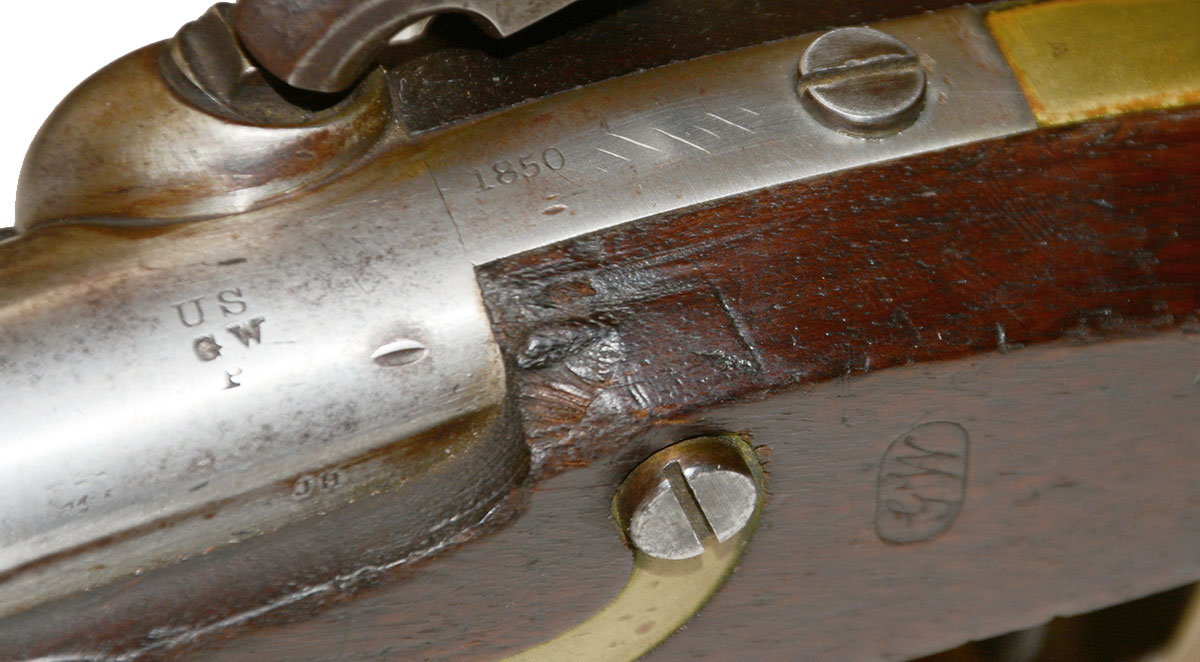
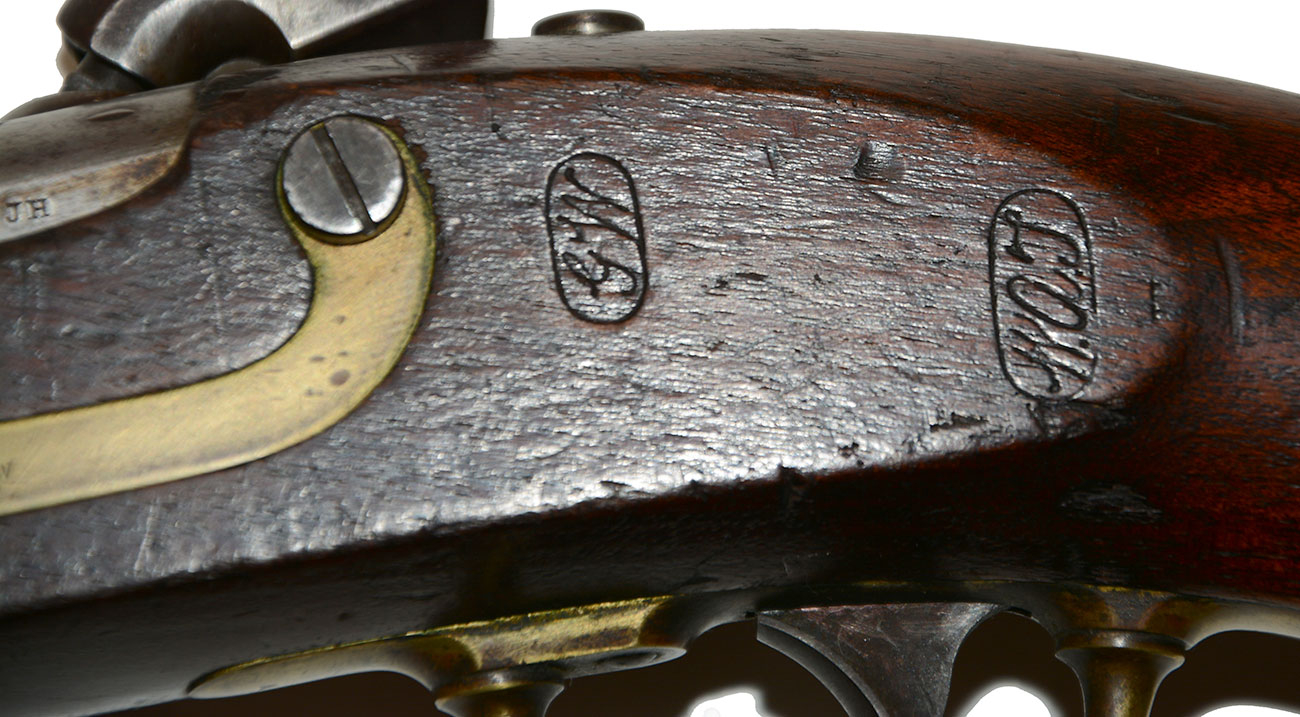
All markings are sharp. The lock is stamped forward of the hammer, US / H. ASTON & CO. (the proper marking for these second contract pistols) and MIDDTN/ CONN/1850 to the rear. The barrel proof at left breach reads US/ GW / P, indicating inspection by George Wright, who worked at the Springfield Armory and was an inspector of contract arms in the early 1850s. The breech-plug tang has a crisp 1850 date. The wood has two crisp script inspection cartouches on the side flat: the final ordnance acceptance stamp “W.A.T.” in script of William A. Thornton, and just forward of that the “GW” inspection stamp of George Wright, one of nine different inspectors of the Model 1842 pistol at different times. (We note also what is likely is a small “JH” on the barrel side-flat at left breach.)
The barrel is smooth metal, silver gray in color, with a few small dots of browning. The bolster and lock show a silver gray also, with the hammer/lock-plate matching in color. The brass has an undisturbed, aged mellow patina. The wood has a good fit to the metal, nice brown tones, good edges, no sign of sanding or refinishing, just a few light scratches and handling dings.
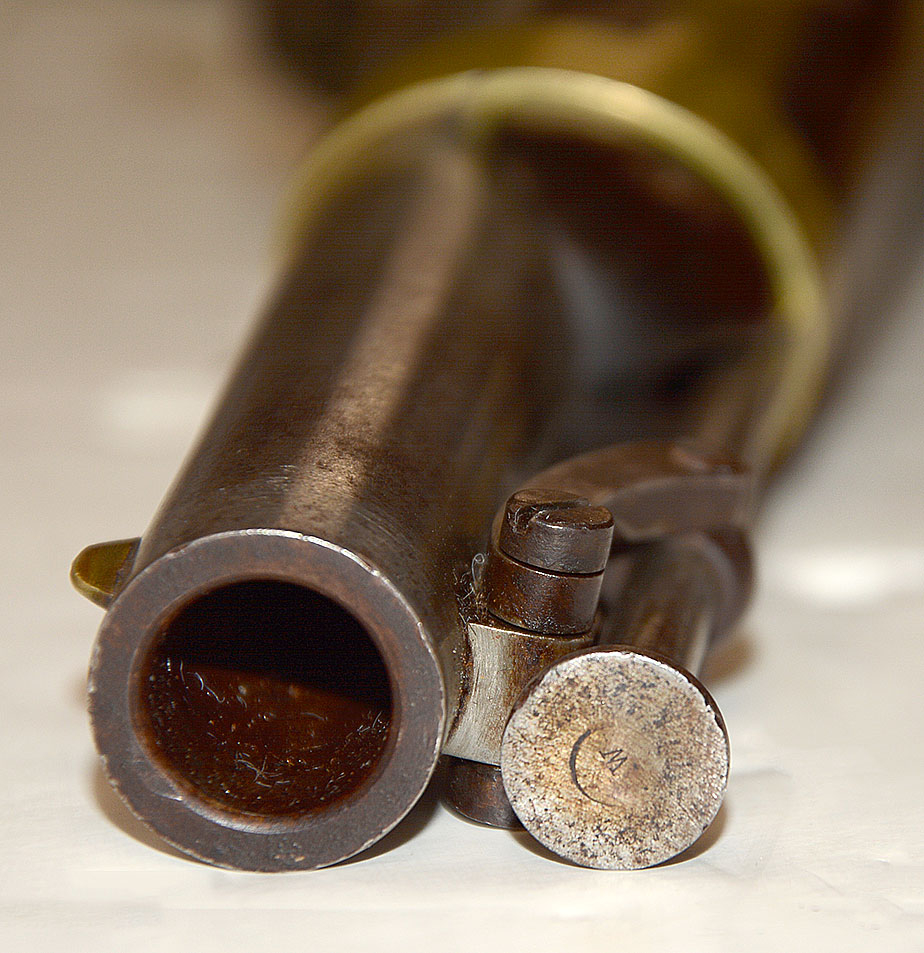
The pistol rates very good overall. The action is fine. The bore is a bit dirty and dusty. This is a very nice example of a regulation US pistol for mounted troops that is a key piece in tracing the development of cavalry arms. [stp] [ph:L]
DISCLAIMER: All firearms are sold as collector's items only - we do not accept responsibility as to the shooting safety or reliability of any antique firearm. All firearms are described as accurately as possible, given the restraints of a catalog listing length. We want satisfied customers & often "under" describe the weapons. Any city or state regulations regarding owning antique firearms are the responsibility of the purchaser. All firearms are "mechanically perfect" unless noted, but again, are NOT warranted as safe to fire!
~~~~~~~~~~~~~~~~~~~~~~~~~~~~~~~~~~~
THIS ITEM, AS WITH ALL OTHER ITEMS AVAILABLE ON OUR WEB SITE,
MAY BE PURCHASED THROUGH OUR LAYAWAY PROGRAM.
CLICK HERE FOR OUR POLICIES AND TERMS.
THANK YOU!
Inquire About US MODEL 1842 PISTOL BY ASTON, MADE IN 1850
Most Popular
Historical Firearms Stolen From The National Civil War Museum In Harrisburg, Pa »
Theft From Gravesite Of Gen. John Reynolds »
Selection Of Unframed Prints By Don Troiani »
Fine Condition Brass Infantry Bugle Insignia »
Rare Identified 65Th Ny Sergeant’s Jacket, With Manscript Material: 1St U.s. Chasseurs »
featured item
RARE ID’D FIELD PRESENTATION BUGLE JACOB KECK - 7TH NEW YORK, 9TH NYSM (83RD NY), 97TH NEW YORK
This handsome instrument is in exquisite condition and is professionally inscribed in cursive with the words, “Presented to / J. F. Keck, / By the Members of the / 9th N.Y.S.M / in the Field. / March 1864”. Very rarely were bugles or such musical… (2024-1443). Learn More »
site search