


site search
online catalog
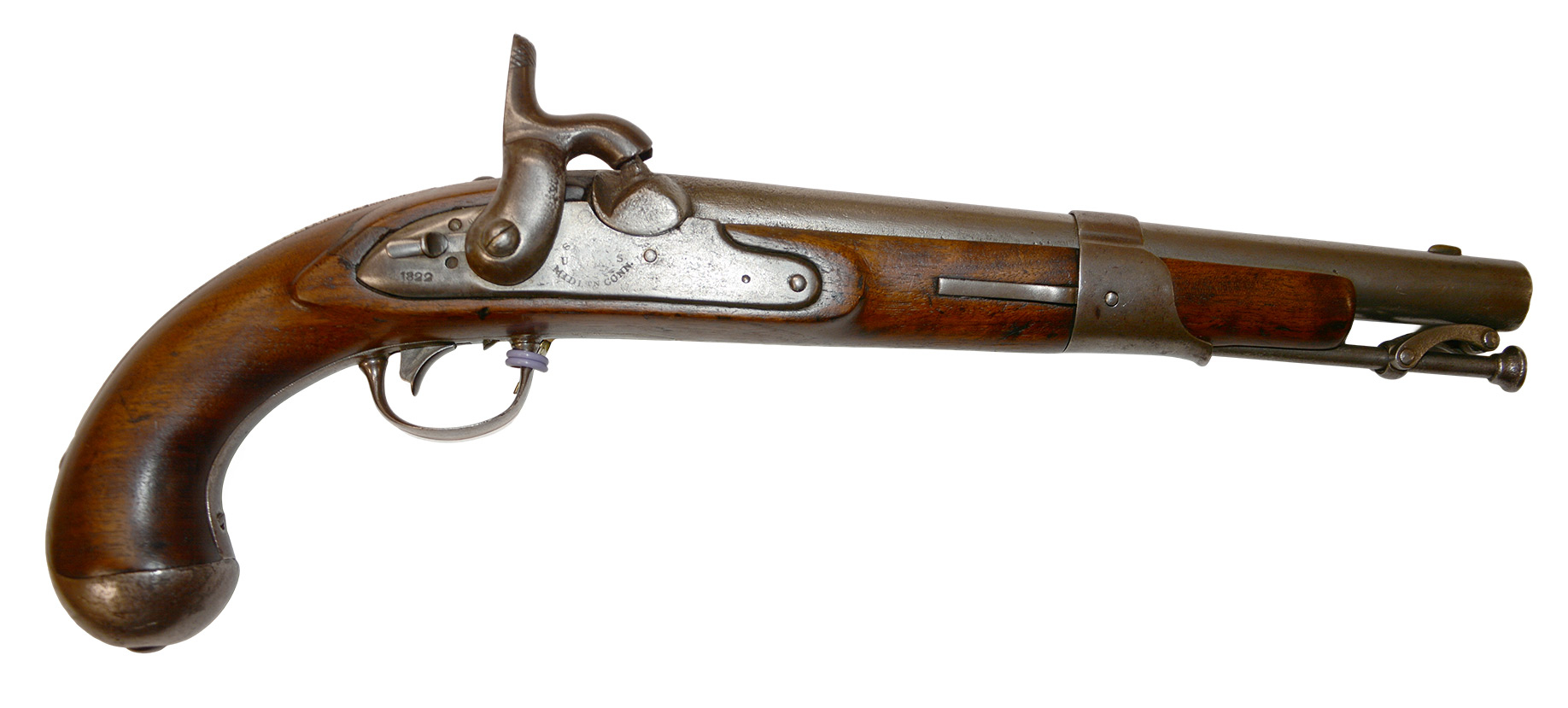
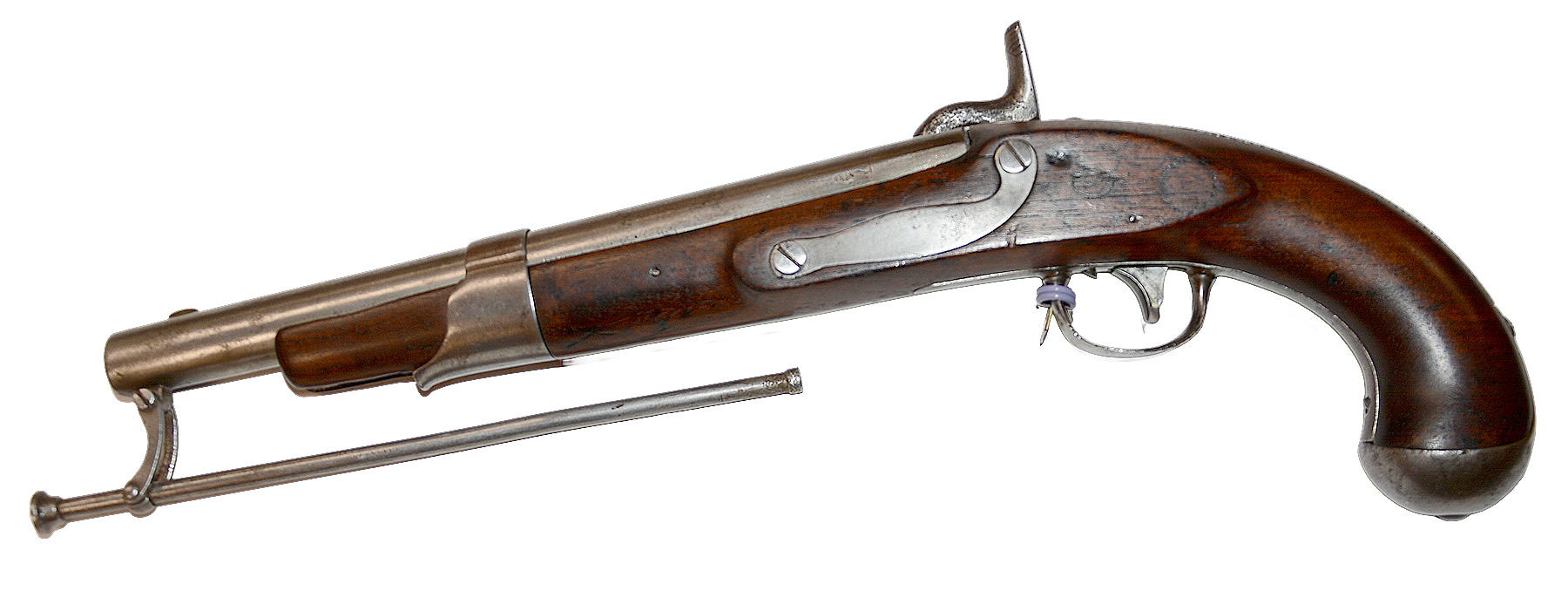
U.S. MODEL 1819 PISTOL BY SIMEON NORTH, MIDDLETOWN, CONNECTICUT – WITH CONFEDERATE PERCUSSION ALTERATION
Hover to zoom

$1,950.00
Quantity Available: 1
Item Code: 1000-485
Shipping: Determined by Method & Location of buyer
To Order:
Call 717-334-0347,
Fax 717-334-5016, or E-mail
Simeon North of Middletown, Connecticut, was among the most important early contractors to the U.S. government, and his Model 1819 pistol represents a significant step forward in American martial handgun design. Produced under an 1819 contract, the M1819 introduced a swivel ramrod permanently attached beneath the barrel, so it could not be lost on horseback, along with a sliding safety bolt at the rear of the lock plate that locked the hammer at half-cock. Built as a .54 caliber smoothbore flintlock with a 10-inch barrel and iron mountings, it was issued primarily to mounted troops in the years that followed.
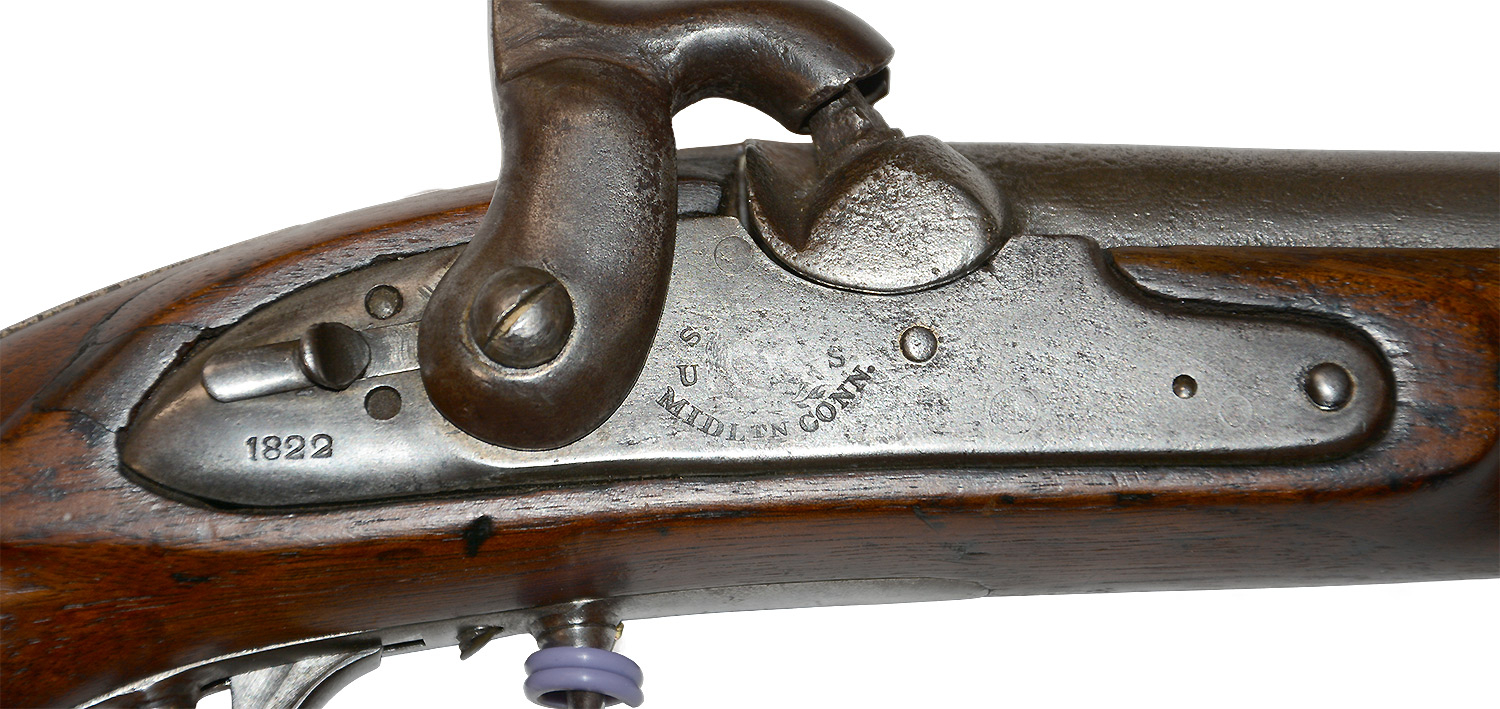
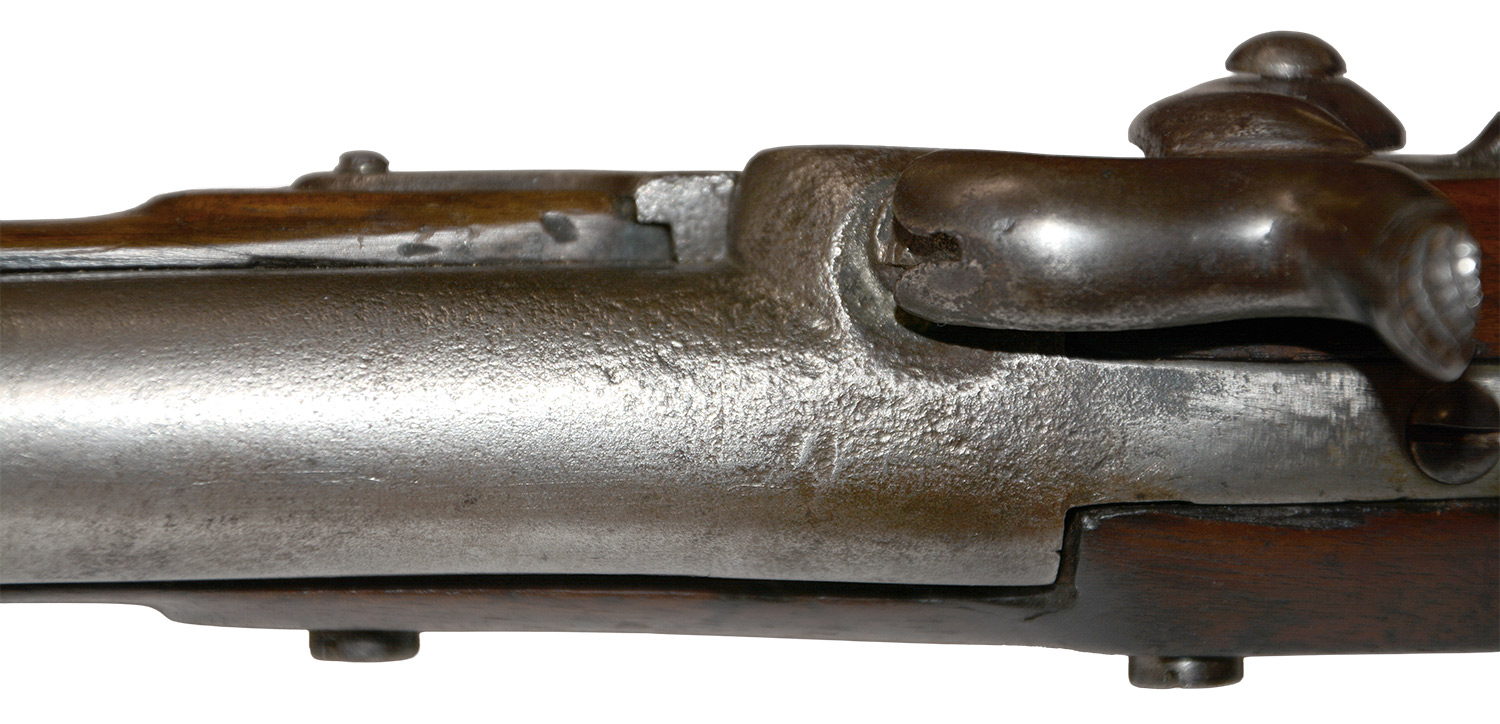
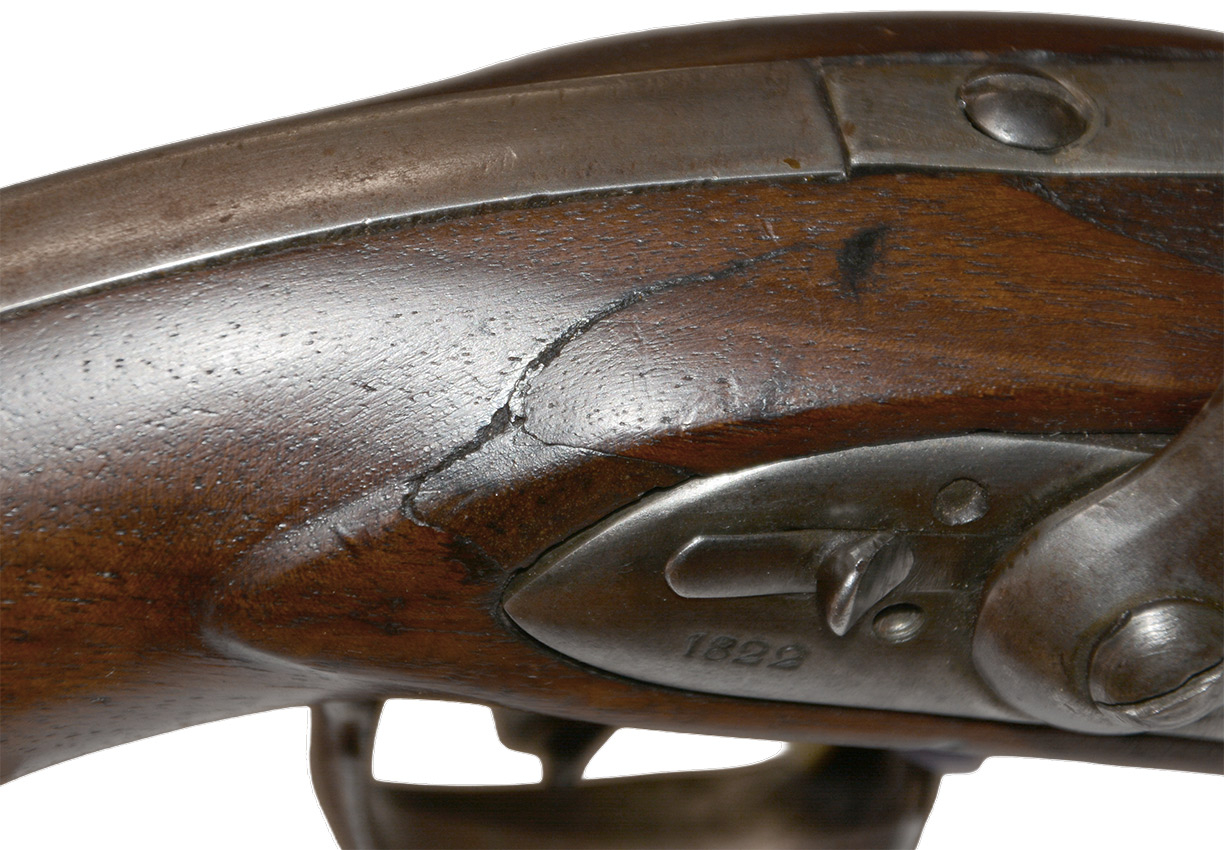
This example is dated 1822 on the tail of the lock plate, which is marked forward of the hammer with the U.S. and "MIDDn CONN." North markings. The pistol was later altered from flintlock to percussion, and the alteration bears the likely hallmarks of Southern work: a brazed-on bolster at the breech fitted with a percussion nipple, a replacement percussion hammer with a checkered spur, and the former frizzen and pan screw holes visible on the lockplate. With the outbreak of war in 1861, Southern states and the Confederacy pressed every available older arm into service, and large numbers of obsolete U.S. flintlocks held in state arsenals were converted to percussion for issue to cavalry.
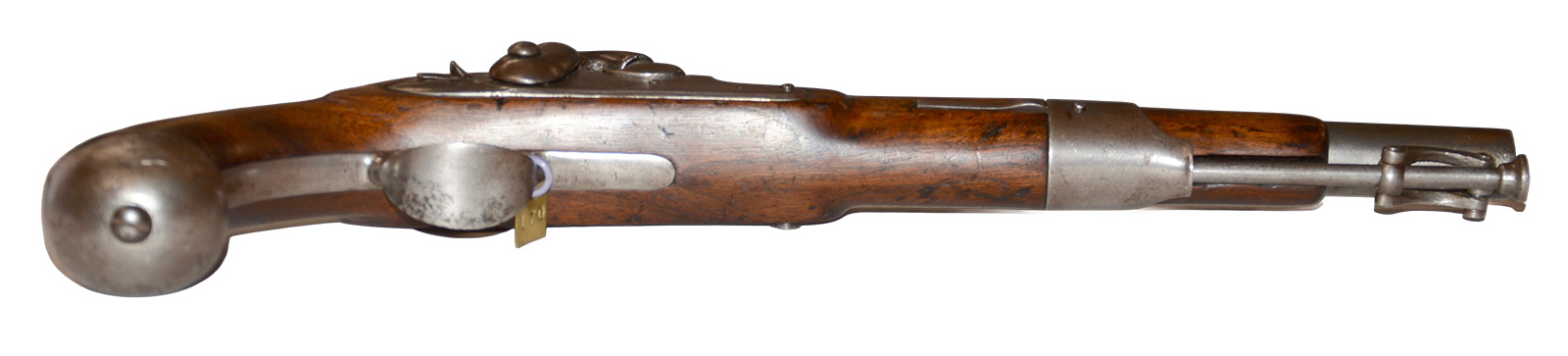
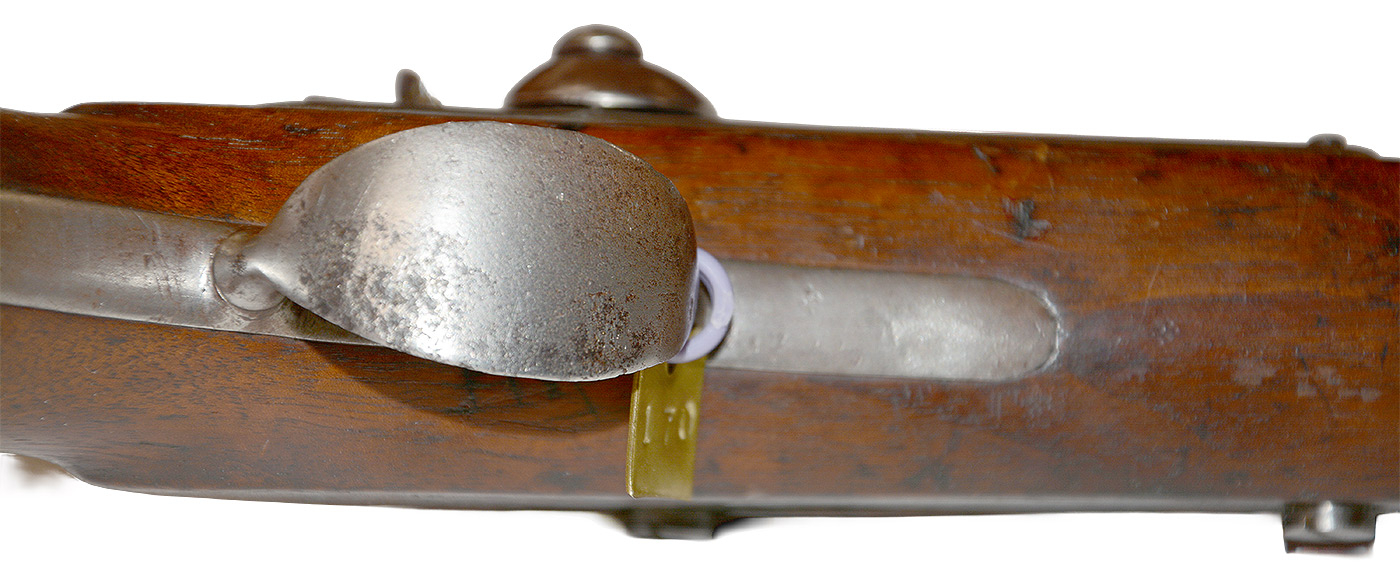
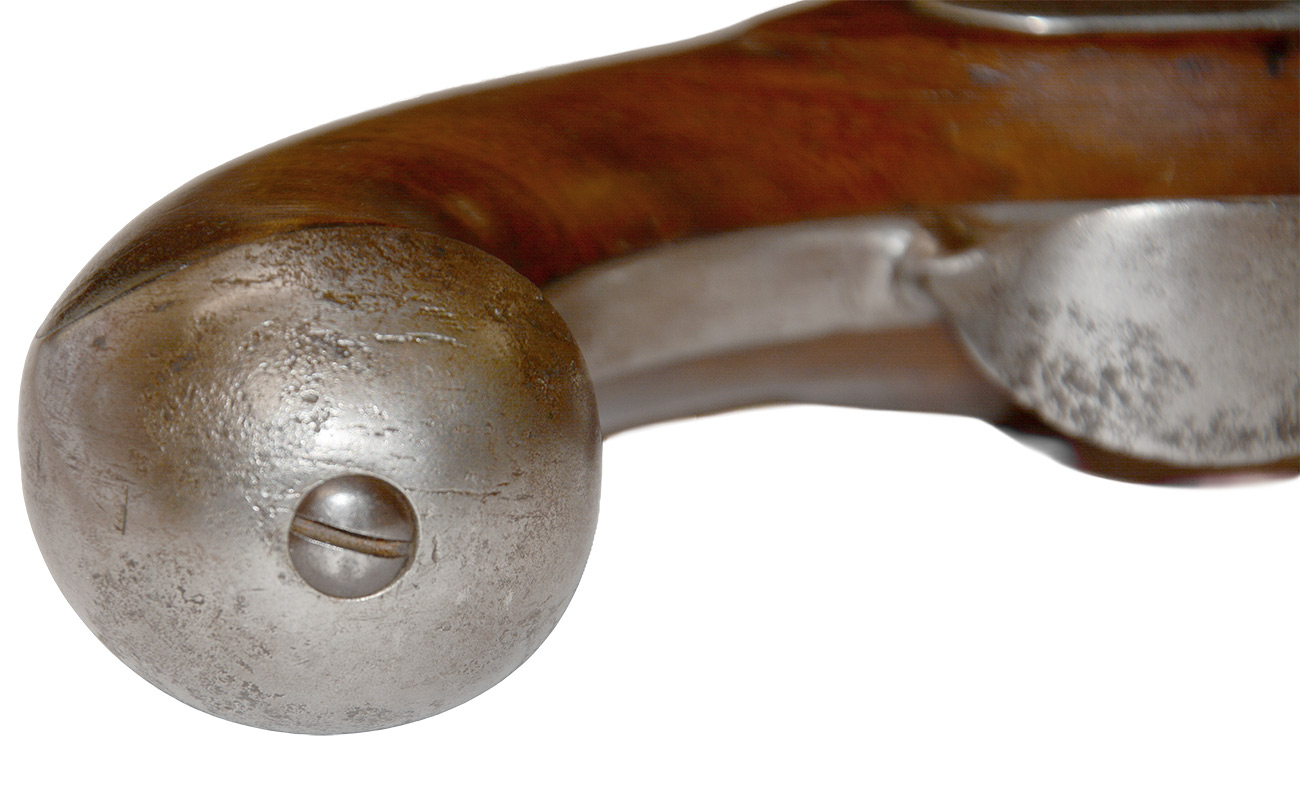
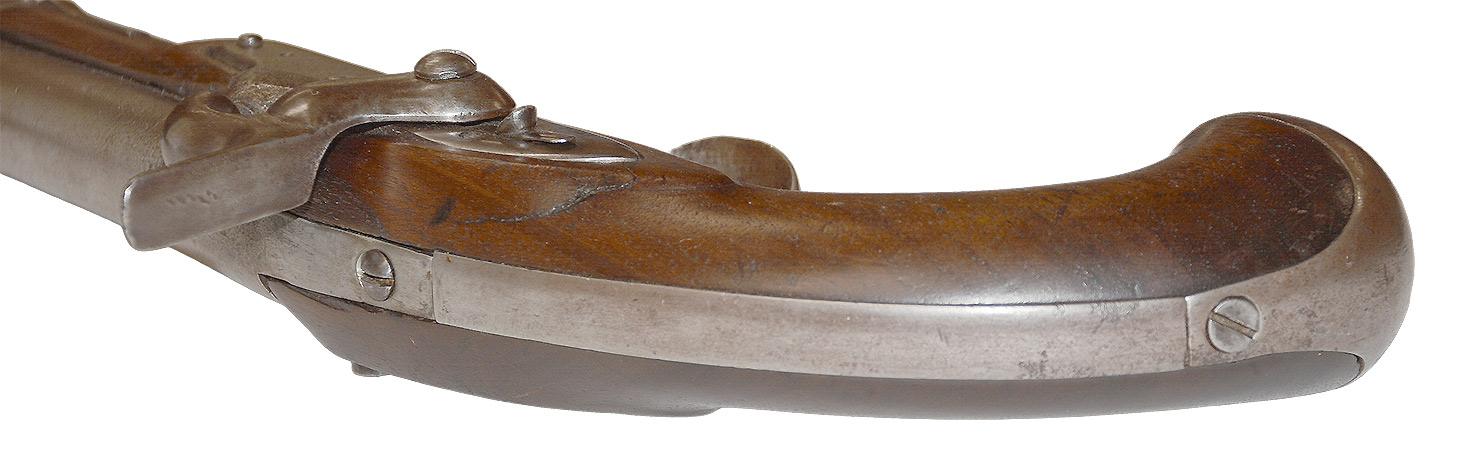
Overall, the pistol presents well. The iron barrel, band, trigger guard, backstrap and butt cap show an even gray patina with scattered light pitting, most noticeable around the breech and bolster area. The original sliding safety remains in place on the lock, and the swivel ramrod is present and intact. The walnut stock is solid, with handling marks and minor dings consistent with age and service, and faint inspector cartouches remain visible on the left flat opposite the lock. The hammer holds low at half cock and normally in the full position – with strong lockup. A crack is noted as extending from the rear of the lock plate mortise. Hammer locking safety moves but does not lock the hammer. The bore shows some surface oxidation and gauges .58. Overall length is approximately 15 1/2 inches.
An essential pistol for the Civil War collector. [cm] [ph:L]
DISCLAIMER: All firearms are sold as collector's items only - we do not accept responsibility as to the shooting safety or reliability of any antique firearm. All firearms are described as accurately as possible, given the restraints of a catalog listing length. We want satisfied customers & often "under" describe the weapons. Any city or state regulations regarding owning antique firearms are the responsibility of the purchaser. All firearms are "mechanically perfect" unless noted, but again, are NOT warranted as safe to fire!
~~~~~~~~~~~~~~~~~~~~~~~~~~~~~~~~~~~
THIS ITEM, AS WITH ALL OTHER ITEMS AVAILABLE ON OUR WEB SITE,
MAY BE PURCHASED THROUGH OUR LAYAWAY PROGRAM.
CLICK HERE FOR OUR POLICIES AND TERMS.
THANK YOU!
Inquire About U.S. MODEL 1819 PISTOL BY SIMEON NORTH, MIDDLETOWN, CONNECTICUT – WITH CONFEDERATE PERCUSSION ALTERATION
Most Popular
Historical Firearms Stolen From The National Civil War Museum In Harrisburg, Pa »
Theft From Gravesite Of Gen. John Reynolds »
Selection Of Unframed Prints By Don Troiani »
Fine Condition Brass Infantry Bugle Insignia »
Rare Identified 65Th Ny Sergeant’s Jacket, With Manscript Material: 1St U.s. Chasseurs »
featured item
IMPORT SAXON FIREARM LIEGE MANUFACTURE MODEL 1851 FROM GEORGE ROSENSTEEL’S CIVIL WAR NATIONAL MUSEUM IN GETTYSBURG
This Civil War P.J. Malherbe & Company “Saxon” Percussion Rifle was once part of George Rosensteel’s Civil War National Museum located in Gettysburg, PA on the Taneytown Road. Later the museum incorporated the famous “Electric Map”… (2025-3338). Learn More »
site search