


site search
online catalog
SMITH & WESSON NO. 2 “OLD ARMY” TIP-UP REVOLVER, SERIAL# 6808 – CIVIL WAR PRODUCTION, 1862
Hover to zoom
$795.00
Quantity Available: 1
Item Code: 2026-2485
Shipping: Determined by Method & Location of buyer
To Order:
Call 717-334-0347,
Fax 717-334-5016, or E-mail
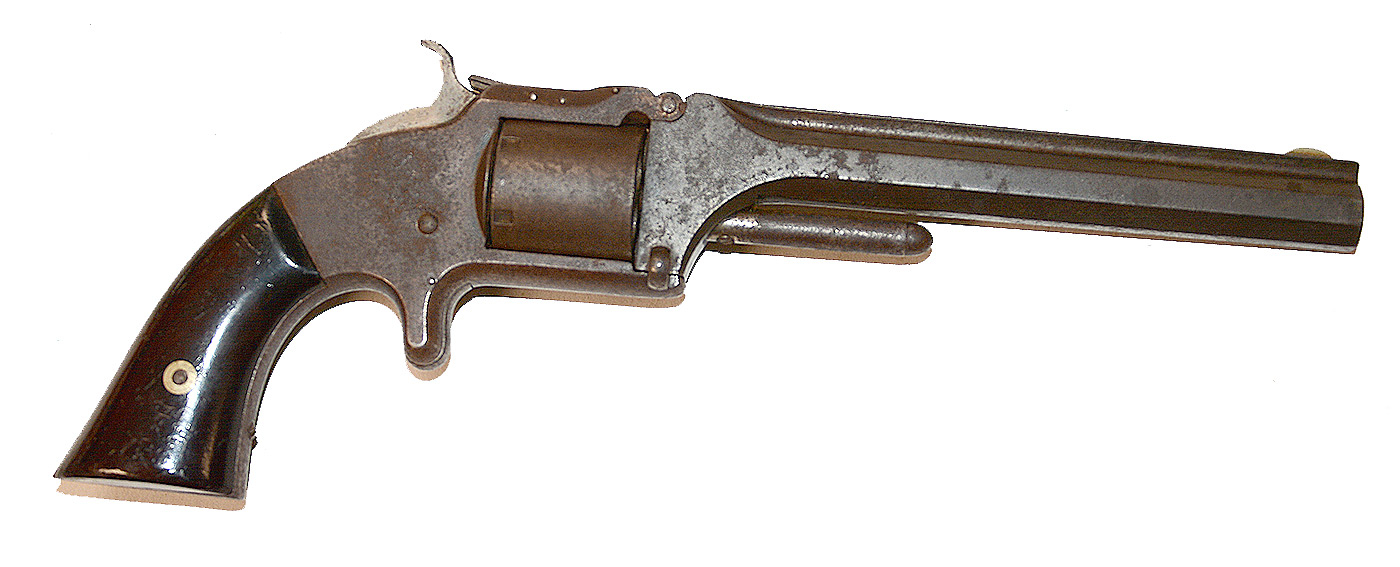
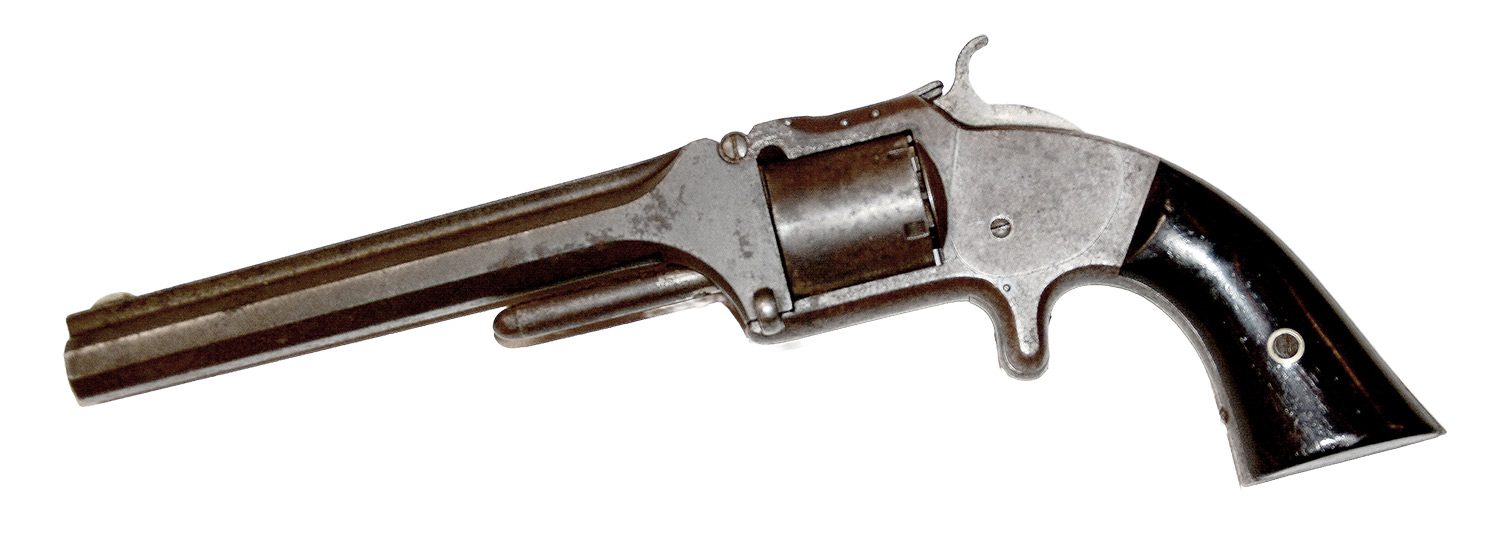
This is a Smith & Wesson No. 2 Army revolver in .32 rimfire with a 6-inch barrel and its original rosewood grips. Its low serial number places it early in Civil War production. The No. 2 was one of the most popular private-purchase sidearms of the war.
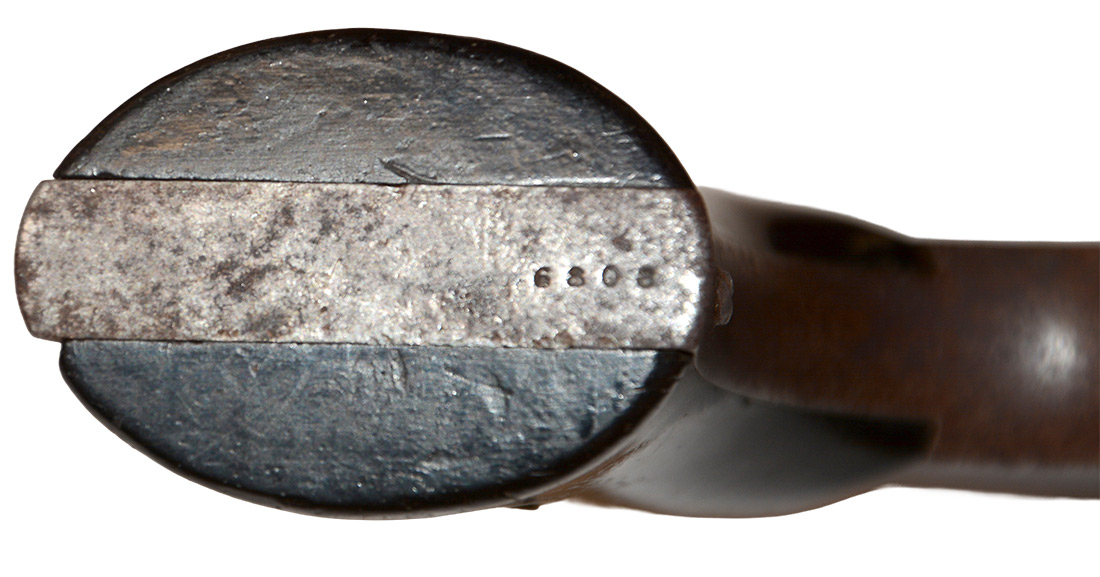
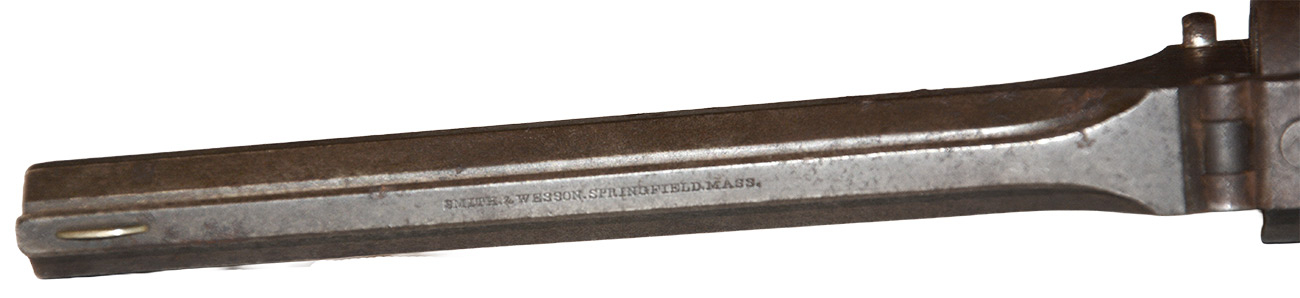
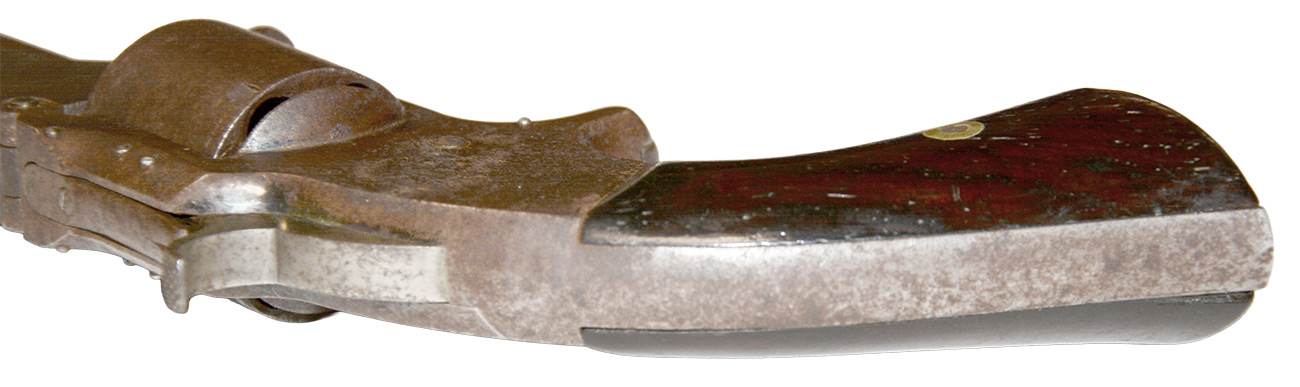
The top of the barrel is stamped “SMITH & WESSON. SPRINGFIELD, MASS.” in one line. The serial number 6808 is on the butt. Serials from about 2,100 to 10,500 were made in 1862, so this revolver dates to that year. We could not find serial numbers on the barrel or cylinder. The cylinder still has its patent dates, but they are very faint and need a jeweler’s loupe to read.
Smith & Wesson made the No. 2 Army from 1861 to 1874, about 77,000 in all. It was a six-shot .32 rimfire with an octagonal barrel and an unfluted cylinder. It had a “tip-up” action: the barrel is hinged at the front of the top strap and swings upward to release the cylinder for loading. Smith & Wesson held the rights to Rollin White’s patent for a bored-through cylinder, which meant it was the only American maker that could build a revolver loaded with metallic cartridges. That gave the No. 2 a big advantage over cap-and-ball revolvers. The Army never formally adopted it; however, officers and enlisted men of both sides purchased them privately. The state of Kentucky bought 700 of these revolvers for the men the 7th Kentucky Cavalry. About 35,700 had been made by the war’s end in May 1865. George Armstrong Custer owned a pair, and Wild Bill Hickok carried one.
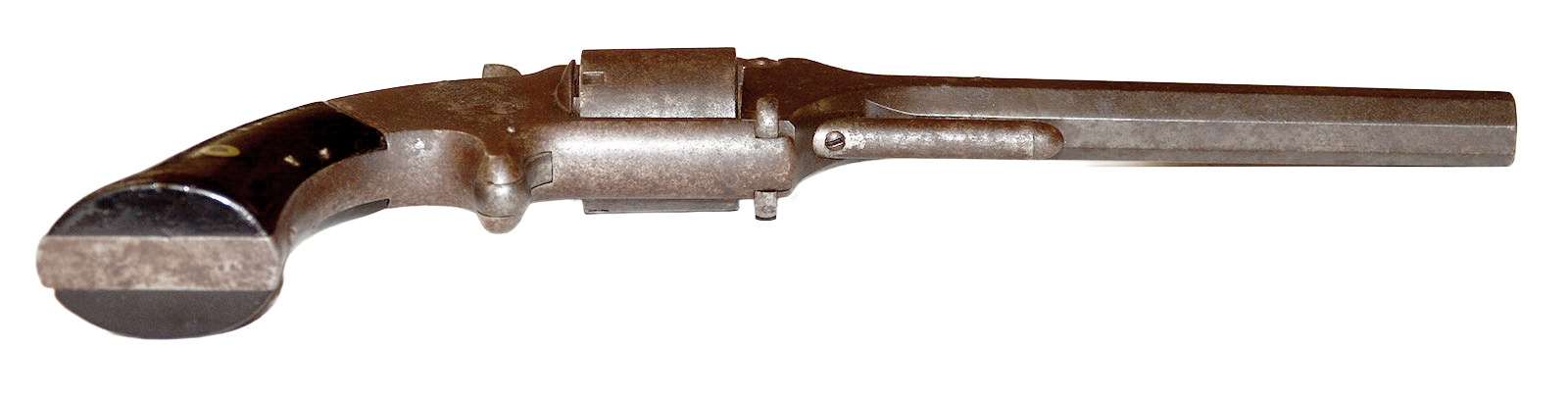
The revolver has the 6-inch octagonal barrel with a blade front sight, an ejector rod mounted below the barrel, a spur trigger and a flat-bottomed grip frame. It has a six-shot unfluted cylinder. The grips are the original rosewood with a round escutcheon. They have darkened with age to nearly black.
The original blue has worn to a gray-brown patina. The barrel keeps the most finish, with darker areas and light freckling. The frame, cylinder and recoil shield have scattered light pitting and old surface rust. The hammer and trigger are bright from wear. The barrel stamping is clear. The cylinder markings are worn almost smooth. The grips have light handling wear and small scratches. The tip-up action opens and the cylinder comes out as designed. The action is tight and the timing is perfectly synchronized with the hammer. The barrel is solid with much of the rifling still present. The hinged action is a little loose and shaky but locks down tightly. This piece would serve better as a collectible item than an operational example.
An early Smith & Wesson cartridge revolver from the first full year of the Civil War. [gh][ph:L]
DISCLAIMER: All firearms are sold as collector's items only - we do not accept responsibility as to the shooting safety or reliability of any antique firearm. All firearms are described as accurately as possible, given the restraints of a catalog listing length. We want satisfied customers & often "under" describe the weapons. Any city or state regulations regarding owning antique firearms are the responsibility of the purchaser. All firearms are "mechanically perfect" unless noted, but again, are NOT warranted as safe to fire!
~~~~~~~~~~~~~~~~~~~~~~~~~~~~~~~~~~~
THIS ITEM, AS WITH ALL OTHER ITEMS AVAILABLE ON OUR WEB SITE,
MAY BE PURCHASED THROUGH OUR LAYAWAY PROGRAM.
CLICK HERE FOR OUR POLICIES AND TERMS.
THANK YOU!
Inquire About SMITH & WESSON NO. 2 “OLD ARMY” TIP-UP REVOLVER, SERIAL# 6808 – CIVIL WAR PRODUCTION, 1862
Most Popular
Historical Firearms Stolen From The National Civil War Museum In Harrisburg, Pa »
Theft From Gravesite Of Gen. John Reynolds »
Selection Of Unframed Prints By Don Troiani »
Fine Condition Brass Infantry Bugle Insignia »
Rare Identified 65Th Ny Sergeant’s Jacket, With Manscript Material: 1St U.s. Chasseurs »
featured item
LARGE FRAMED RELIC SHOWBOARD
This relic board is very like those assembled from Gettysburg relics by John Rosensteel and displayed on the porch of the Round Top Museum, but differs in displaying the relics on horizontal rather than raw vertical boards, in having a glass frame,… (1242-06). Learn More »
site search