


site search
online catalog
HISTORIC REGIMENTALLY MARKED BRITISH CRIMEAN WAR ERA ENFIELD

Hover to zoom



$1,795.00 SOLD
Quantity Available: None
Item Code: 1284-21
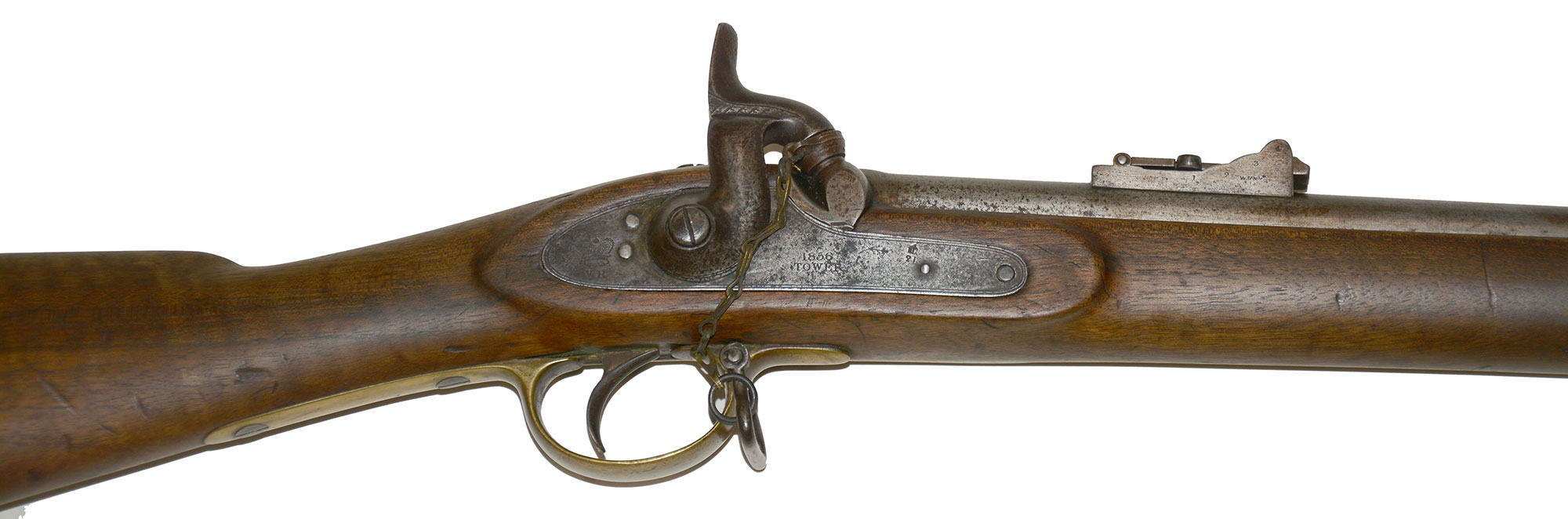
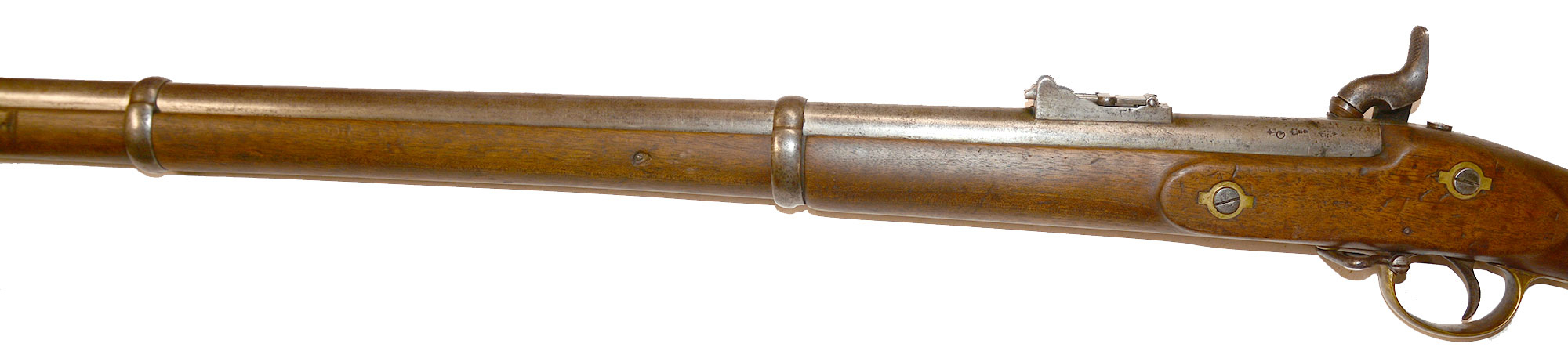
This Pattern 1853 Type II Enfield percussion ignition rifle-musket is unbelievably not only due to its original 1856 configuration, but it is also regimentally marked and to a hard fighting combat regiment. With the development and subsequent introduction of the Pattern 1853 "Enfield" rifle-musket all other British infantry weapons became " Second and Third Class Reserve" including the much-lauded and groundbreaking Pattern 1851 Minie rifle. Please review this link (The Enfield Pattern 1853: A Definitive History of the P53 Enfield Rifle - Powder & Lead).
As early as 1855 the Pattern 1853 Enfield 1st Type was beginning to be distributed to British infantry in the Crimea replacing not only the smooth bore Brown Bess type muskets but also the deadly large bore Pattern 1851 Minie Rifles. The Type I Enfield rifle-musket had clamping barrel bands, a swelled shaft cup headed ramrod, and its 39-inch barrel was 25 bore or .577 caliber. Soon actual battlefield use prompted some redesigning, and the Type II began to make its appearance with solid bands retained by springs, a more robust cock, and a knurled jag-headed swelled shaft ramrod. Production on this type began in late 1855 and by early 1856 these began to make their appearance with the British in the Crimea. By late spring of 1856 a majority of British infantry were armed with Enfields both Type I and Type II. And by July of 1856, when the troops were evacuated, all were armed with these rifle-muskets
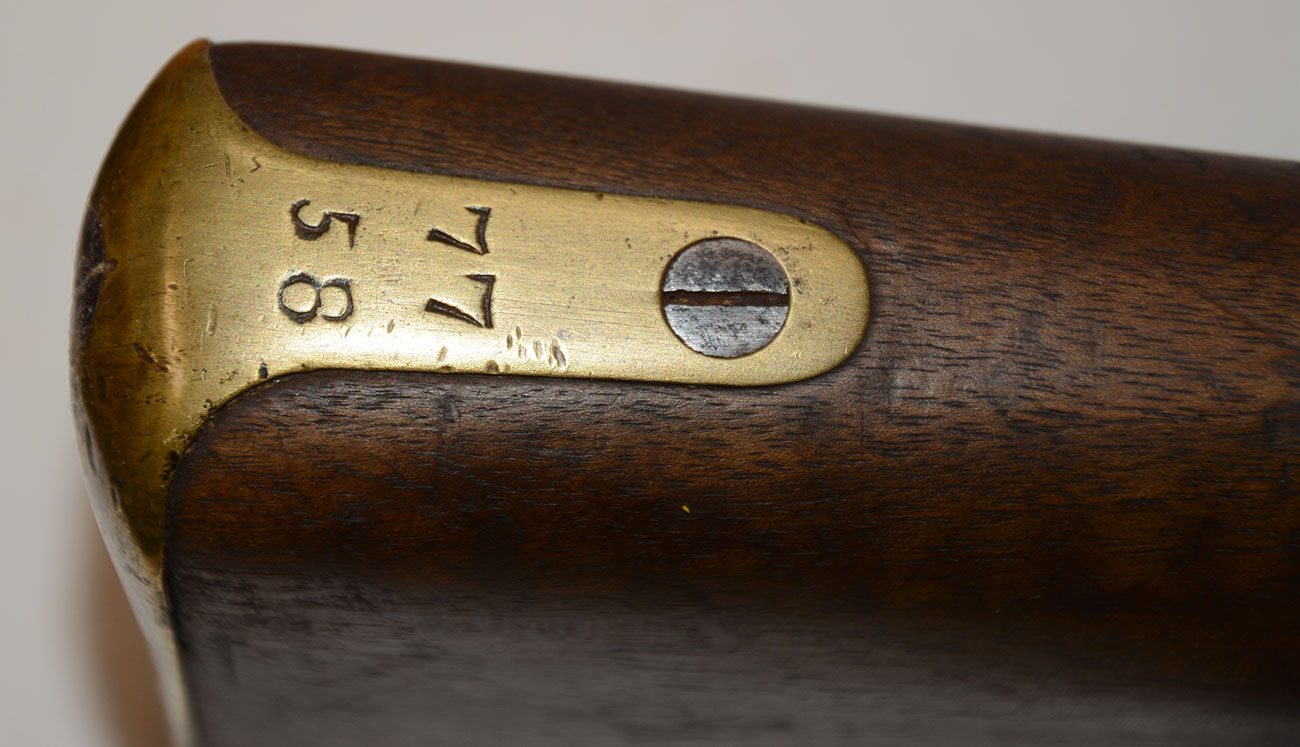
Interestingly among the first regiments to receive the Pattern 1851 Minie Rifles was the 77th Regiment of Foot (77th (East Middlesex) Regiment of Foot - Wikipedia). They drew these as early as 1853 and carried them with deadly effect to the Crimea. They were also among the first troops there to have these well-worn rifles replaced with the new Pattern 1853 types. The rifle-musket offered by us is actually regimentally marked to the hard fighting 77th Regiment.
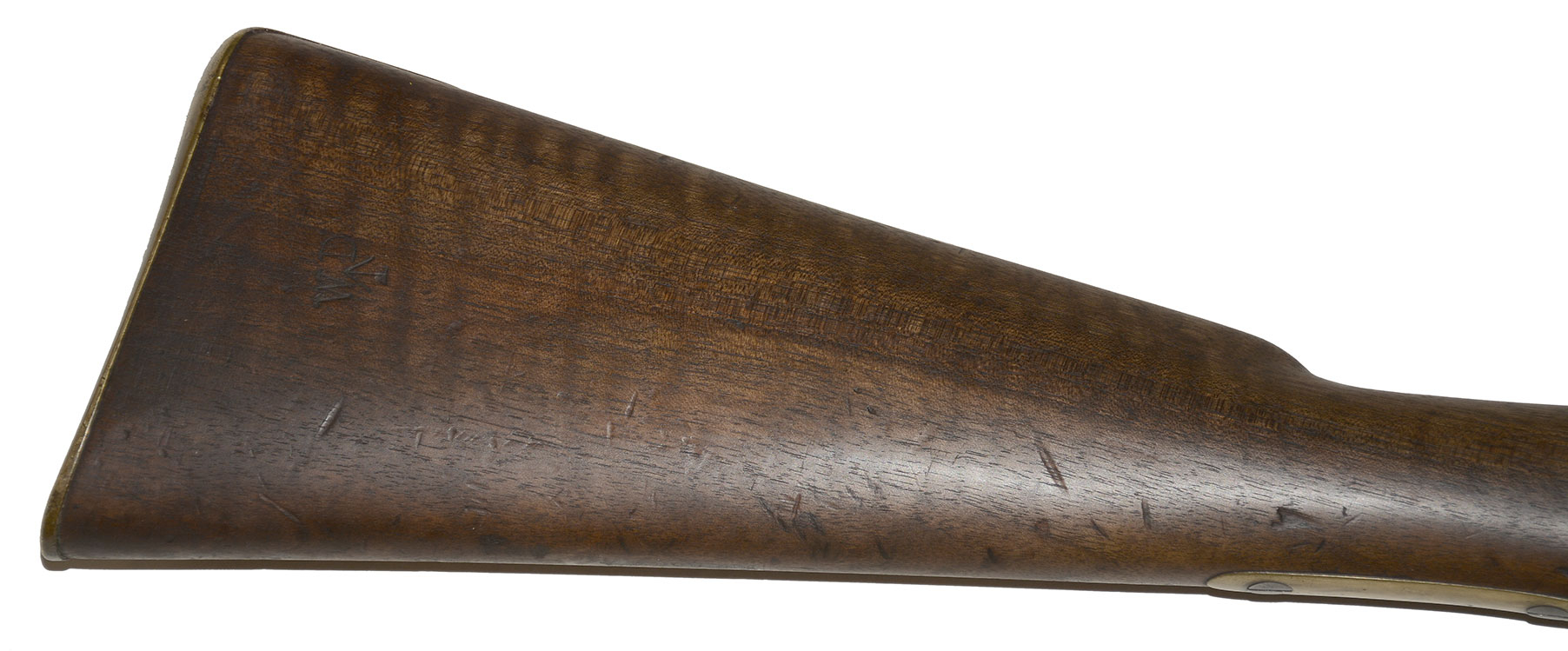
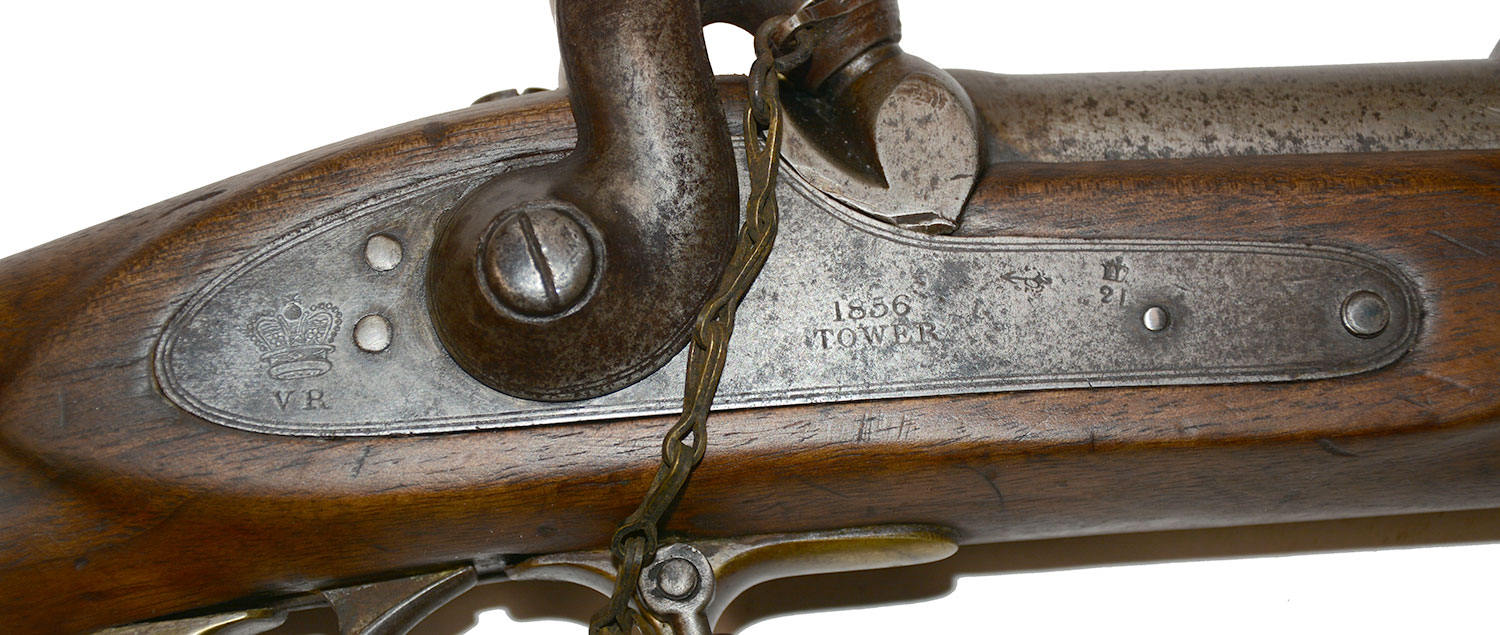
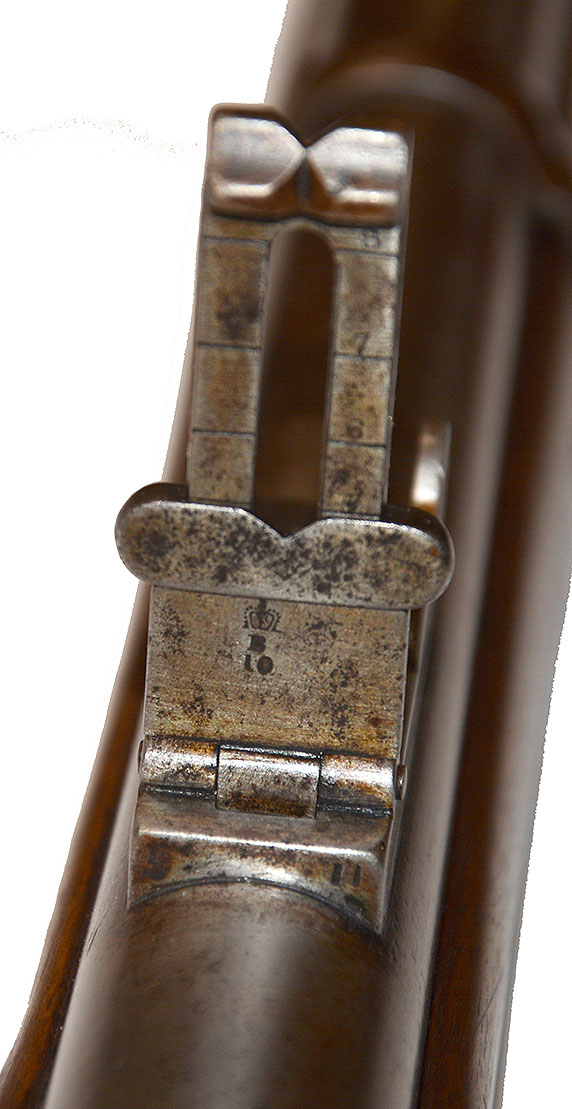
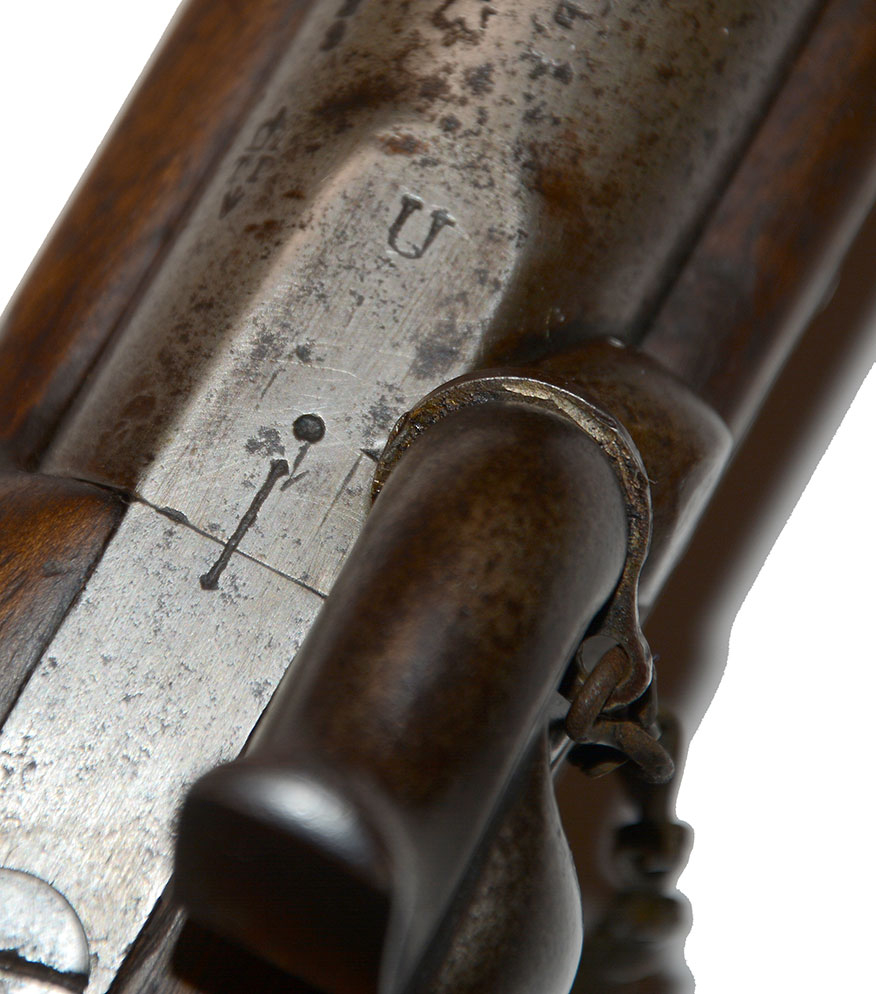
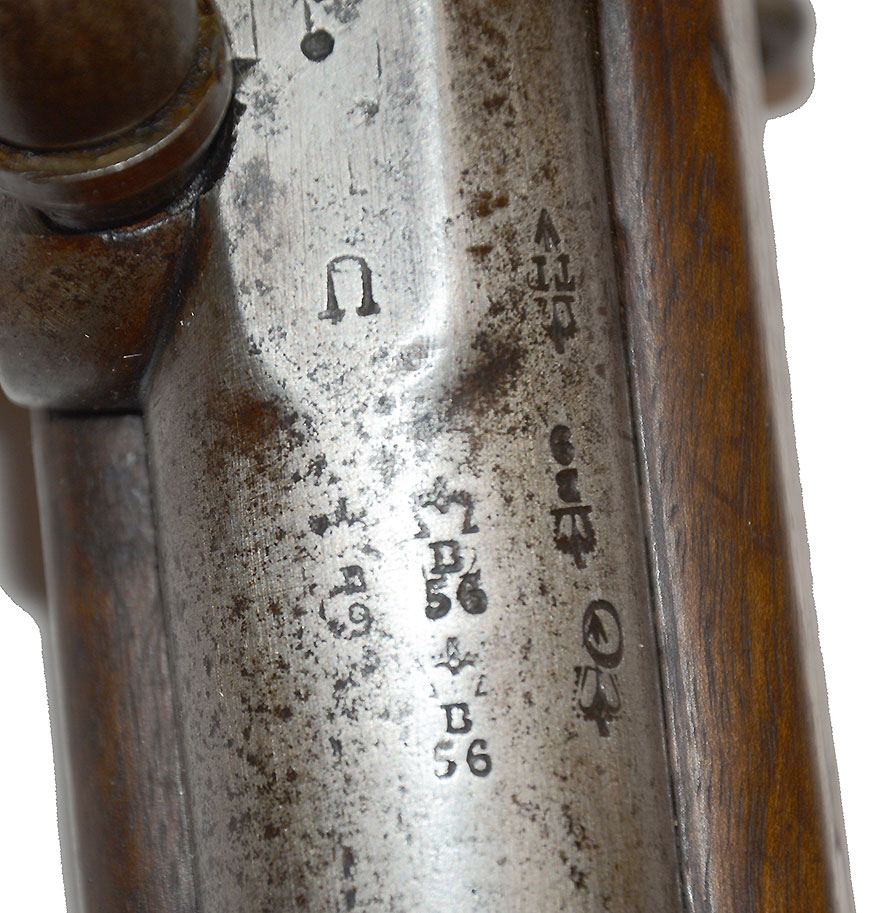
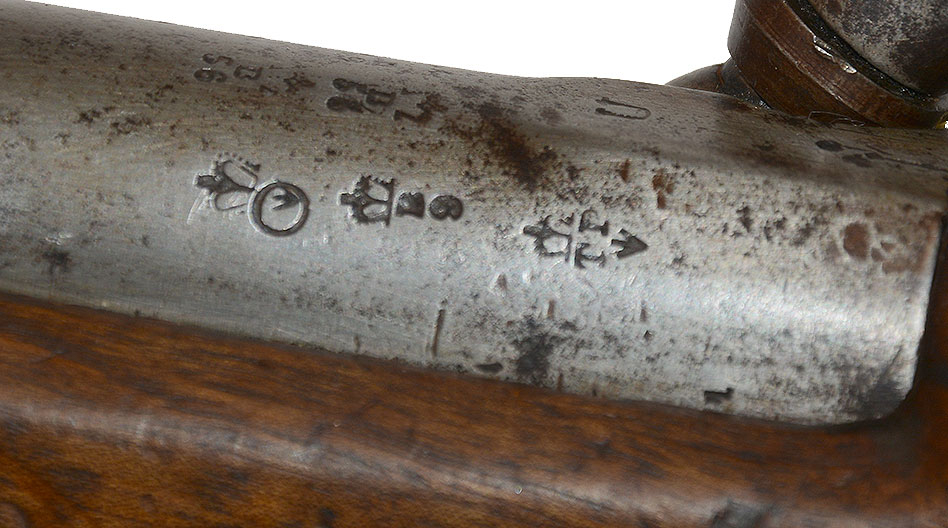
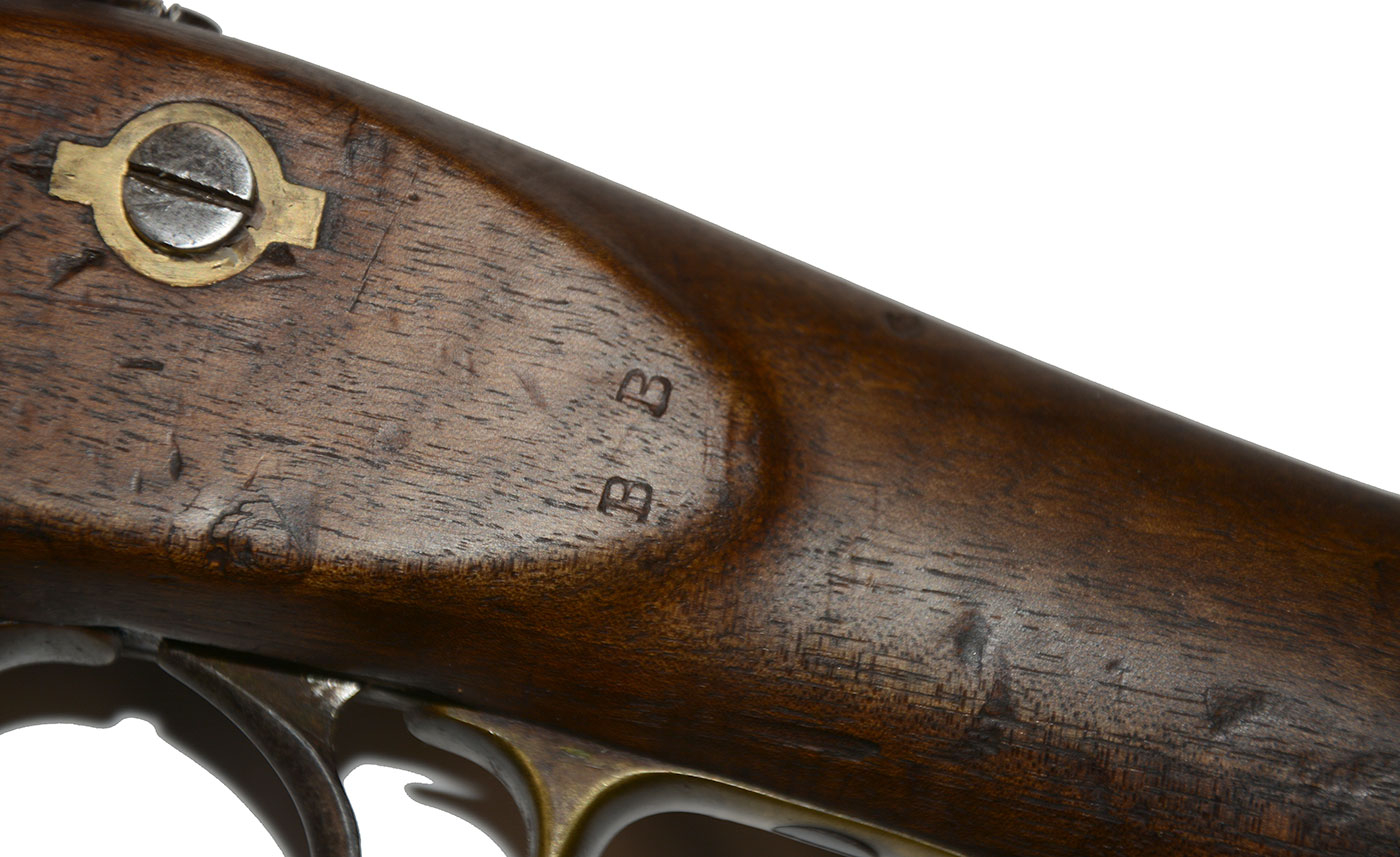
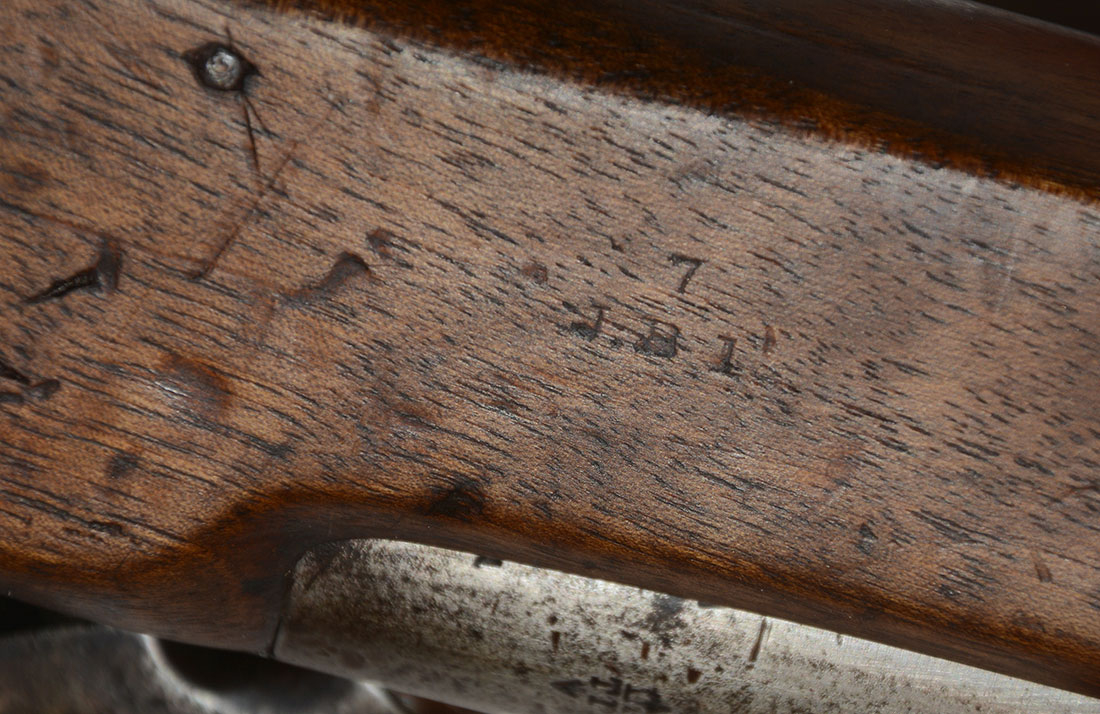
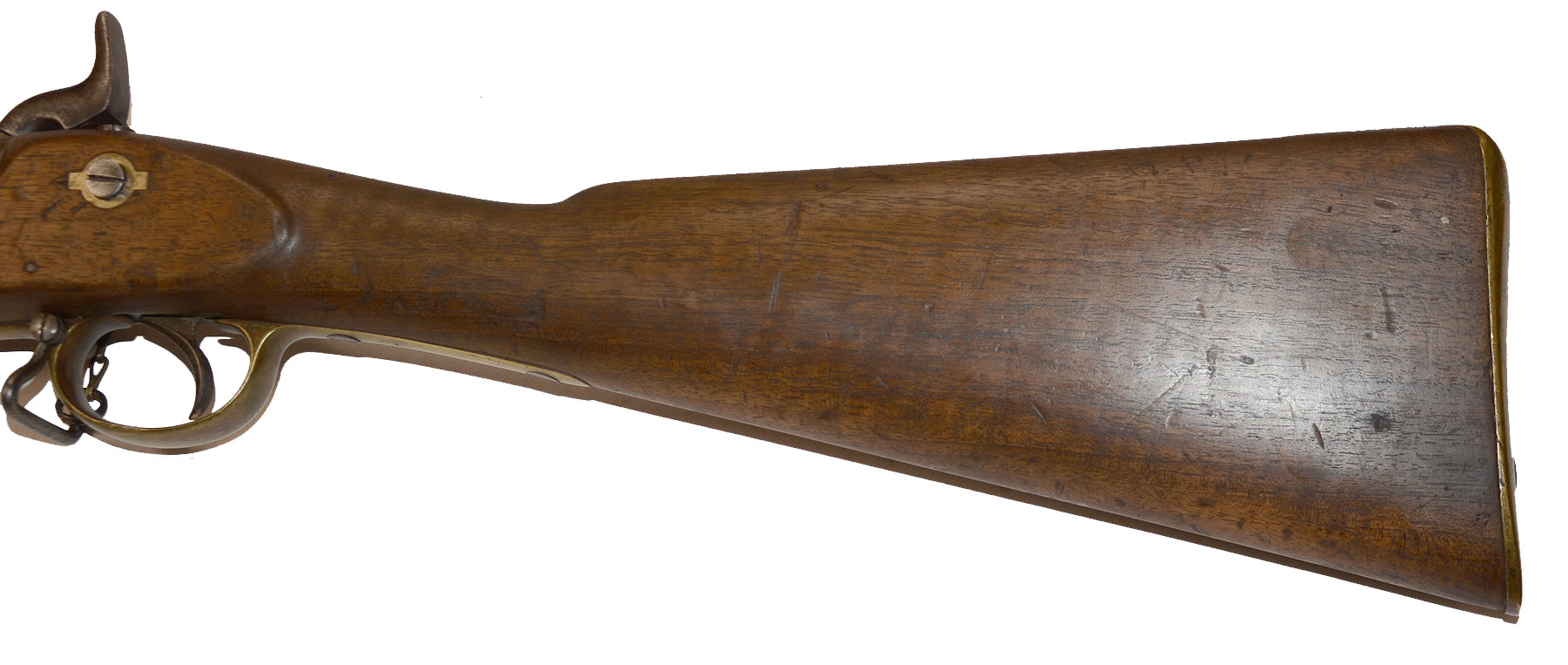
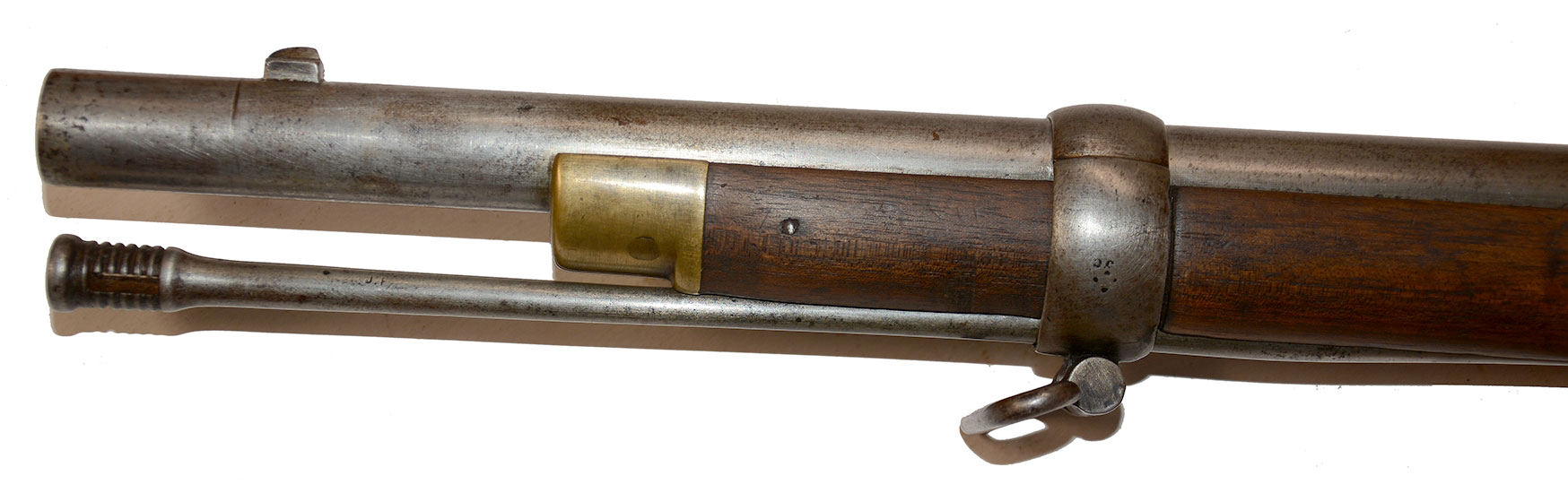
The description of this rifle-musket is as follows: The lock plate, once case hardened, is now a gun metal gray tone with no pitting. It is nicely stamped in front of the cock "TOWER" under "1856". Behind the percussion hammer is a crown over "VR". The lock action is crisp. The 39-inch-long barrel, once blued, is heavily British military proofed and inspected. The rear sight is of the elevating long based type graduated to 900 yards. The bore has good rifling, and the surface of the metal is a pewter color with no pitting to speak of. The walnut stock is very good with the usual expected dings from active field service. It has not been re-finished and has no repairs or breaks. It is stamped on the right side of the butt with a Broad Arrow over "WD" (War Department). This mark was applied upon issuance in 1856. Butt plate, trigger guard and nose cap are brass. The Type II ramrod (second type) is in place as made in 1856. The solid Type II iron bands are all proofed and spring held. Both sling swivels are intact. The British proofed snap cap and brass chain are in place. The regimental designation "77" is engraved on both the brass butt plate and the shaft of the ramrod. Also engraved below this regimental designation on ramrod and butt plate is the soldier's number "58". Few are aware that it was common practice going back to the 18th century for the British Military to stamp or engrave regimental, soldier and often company designations on barrels (prior to 1851), butts (as early as 1800 and universally after 1851) and ramrods.
The rare, configured weapon offered is a Pattern 1853 Type II in unaltered condition. Be aware that such an unaltered rifle-musket is an extreme rarity because between 1860 and 1862 the vast majority of these arms were re-furbished at Pimlico. Here the arms were re-blued and casehardened with new straight shaft ramrods added and new sight graduated to 1000 yards replaced the old ones. Stocks were re-finished and a dated "Pimlico" rondelle was stamped into the wood. The Enfield we are offering went through no such transformation! It is a pure Crimean War Type II, as issued to infantry while still in Crimea. Immediately after the Crimea this gun was carried to India where the 77th was actively engaged in suppressing the Sepoy Mutiny (Indian Rebellion of 1857 - Wikipedia). This weapon escaped later modification and is therefore rare indeed. [pe] [ph:L]
DISCLAIMER: All firearms are sold as collector's items only - we do not accept responsibility as to the shooting safety or reliability of any antique firearm. All firearms are described as accurately as possible, given the restraints of a catalog listing length. We want satisfied customers & often "under" describe the weapons. Any city or state regulations regarding owning antique firearms are the responsibility of the purchaser. All firearms are "mechanically perfect" unless noted, but again, are NOT warranted as safe to fire!
~~~~~~~~~~~~~~~~~~~~~~~~~~~~~~~~~~~
THIS ITEM, AS WITH ALL OTHER ITEMS AVAILABLE ON OUR WEB SITE,
MAY BE PURCHASED THROUGH OUR LAYAWAY PROGRAM.
CLICK HERE FOR OUR POLICIES AND TERMS.
THANK YOU!
Inquire About HISTORIC REGIMENTALLY MARKED BRITISH CRIMEAN WAR ERA ENFIELD
Most Popular
Historical Firearms Stolen From The National Civil War Museum In Harrisburg, Pa »
Theft From Gravesite Of Gen. John Reynolds »
Selection Of Unframed Prints By Don Troiani »
Fine Condition Brass Infantry Bugle Insignia »
Rare Identified 65Th Ny Sergeant’s Jacket, With Manscript Material: 1St U.s. Chasseurs »
featured item
REGULATION CIVIL WAR US ARMY ISSUE BLANKET IN AMAZING CONDITION
These wool blankets were an essential piece of a Union soldier's gear. This one is full length and unaltered. It measures 66 inches wide by 80 inches in length. The ends are finished on the sides, and they are basted over 1/2 inch on the long ends to… (2025-1850). Learn More »
site search