


site search
online catalog
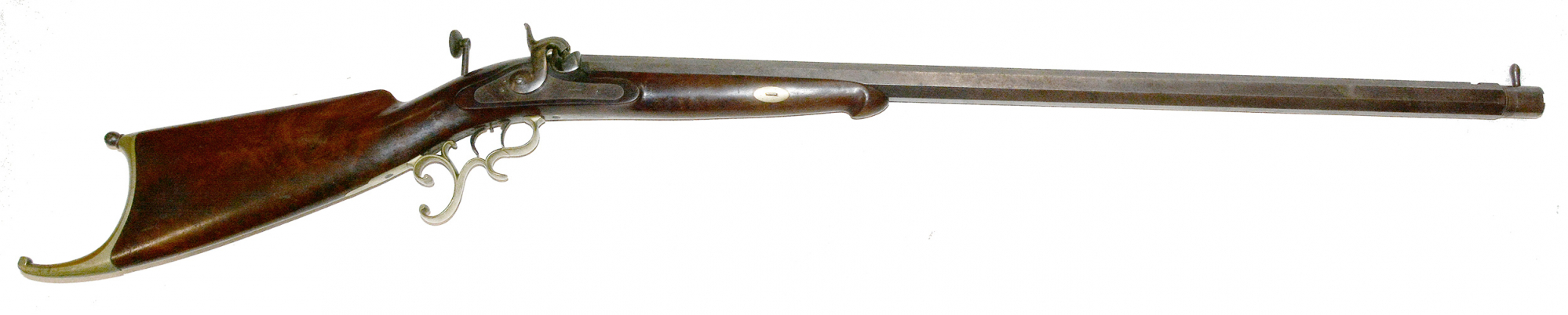
RARE EXCELLENT CONDITION CHARLESTON S.C. JOHN HENRY HAPPOLDT SCHUETZEN TARGET RIFLE
Hover to zoom


$3,750.00
Quantity Available: 1
Item Code: 766-1759
Shipping: Determined by Method & Location of buyer
To Order:
Call 717-334-0347,
Fax 717-334-5016, or E-mail
Happoldt (1830-1895) came from a large family of German origin living in and around Charleston, SC, several of whom, like his father and brother, were also involved in the gun business as makers and dealers. He seems to have opened his own shop not long before October 1859, situated at 35 State St., just down from his father’s shop at 45 State, and not far from a brother’s on Queen Steet. The quality of his work was recognized, or at least advertise very early. At the South Carolina Institute Fair in November 1859 he exhibited, “a case of shotguns and rifles, gotten up in his usual perfect workmanship.” (One of his shotguns took “first premium” there according to another ad.) A September 1860 advertisement notes the arrival at his shop of some new English guns but that, “Very many of Mr. Happoldt’s friends prefer guns from his own hands to any other, without reference to price, but it is impossible for him to fill all orders.” A bit of salesmanship, but not contradicted by any testimony. This is a great example of one of his Schuetzen rifles, which gained a good reputation for their performance in various Schuetzenfests in which he himself was an active participant and prize-winning marksman. Charleston newspapers were proud to champion a local craftsman. Here’s the Charleston Daily News, July 1, 1869:
HAPPOLDT'S RIFLES.-The majority of the rifles used at the Schuetzenfest yesterday were made by our townsman, Mr. J. H. Happoldt, and it is pleasing in the highest degree that weapons so handsome externally, and so perfect for the purpose for which they are intended, should have been provided in our city by a Charleston artificer. Mr. H. enjoys a high reputation as a gunsmith, and the good work done yesterday by his rifles cannot fail to increase his well-deserved popularity.
They were especially glad to do so when it involved a rival South Carolina city. Here’s the Charleston Daily courier of June 22, 1872, delighting in the preference for a Happoldt rifle by the son of Savannah schuetzenfest competitor:
During the day a youth of 14 years, the son of Mr. Wescott, of Savannah, distinguished himself in the Shooting Gallery. He borrowed a rifle in the city for target practice, but became dissatisfied with it, and was induced to try one of Mr. Happoldt's rifles. The result was that out of twenty shots, six pierced the bull's eye, and not one of the remaining fourteen was more than eight inches from the centre.
Happoldt will be familiar to Civil War collectors from his wartime work in Charleston rifling muskets and fitting saber bayonets to rifles, though his other wartime doings are difficult to disentangle from other members of the Happoldt family, especially the similarly named John P. Happoldt. John H. got his start in the gun making business through his father, John M. Happoldt, about 1852 to 1855 according to Murphy and Madaus, but even there confusion is caused by his father’s firm designation as J.M. Happoldt and Son, since at least one John Henry’s brothers, and possibly two, were involved in the business as well. Things get clearer with wartime arms work clearly attributed to him and then his postwar gun making, repair, and retail business. He seems to have shut down his gunmaking business with the federal occupation of the city. In an 1865 petition to retain ownership of his property at 76 Smith St. he simply calls himself a “mechanic,” a diplomatic choice, but reopened the gun business in April 1866, offering repairs and restocking, and soon again included gun making, at one point even opening a shooting gallery on his premises, and later expanded into sporting goods as well.
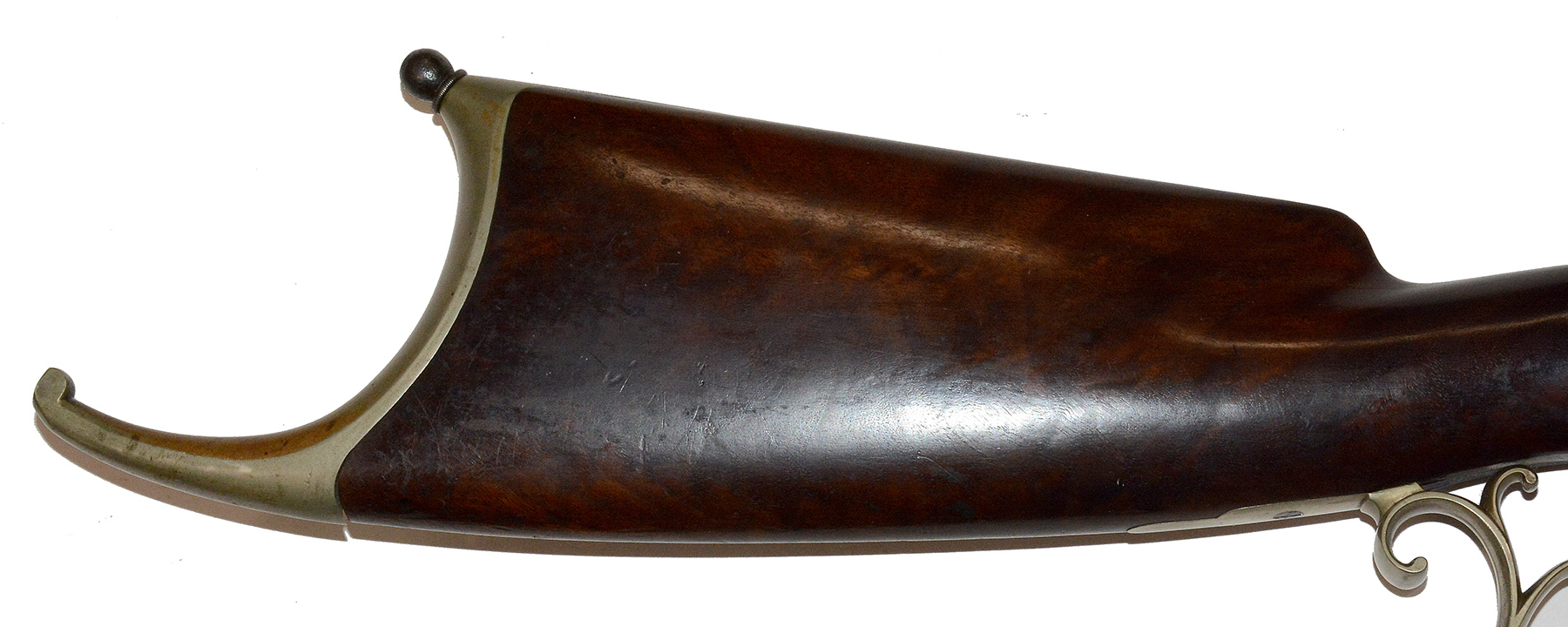
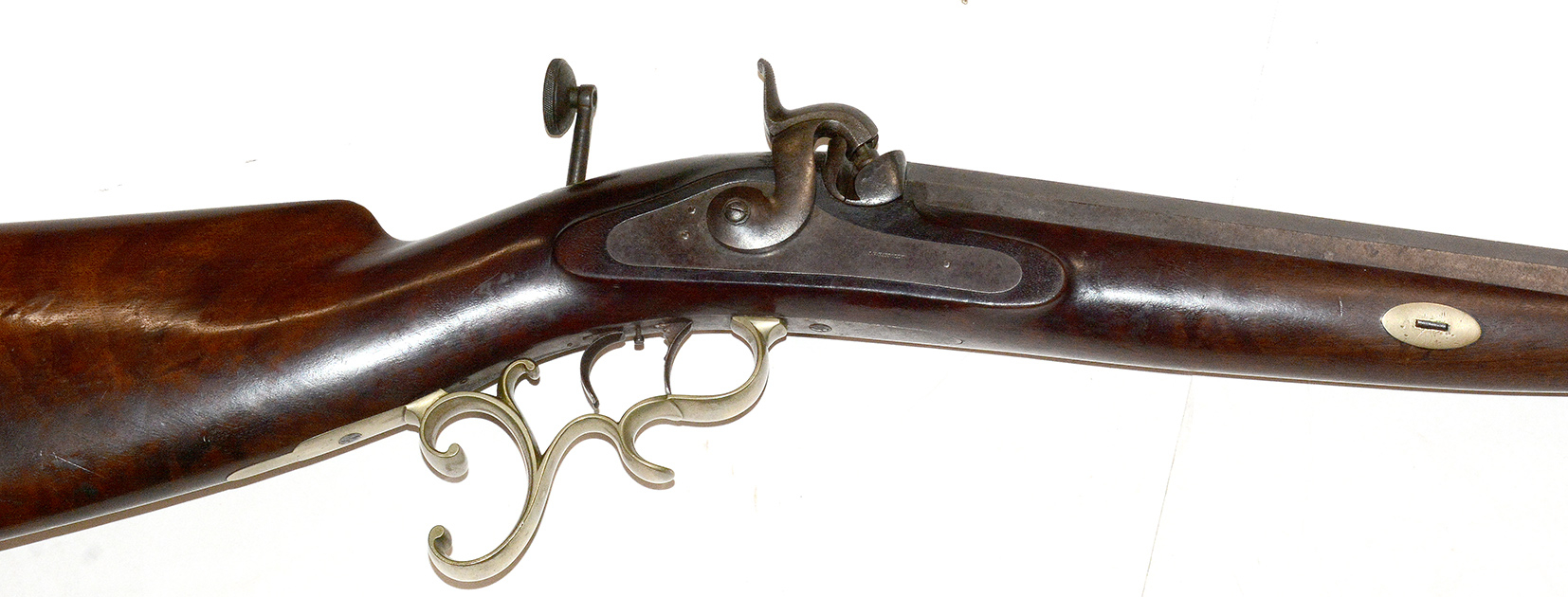
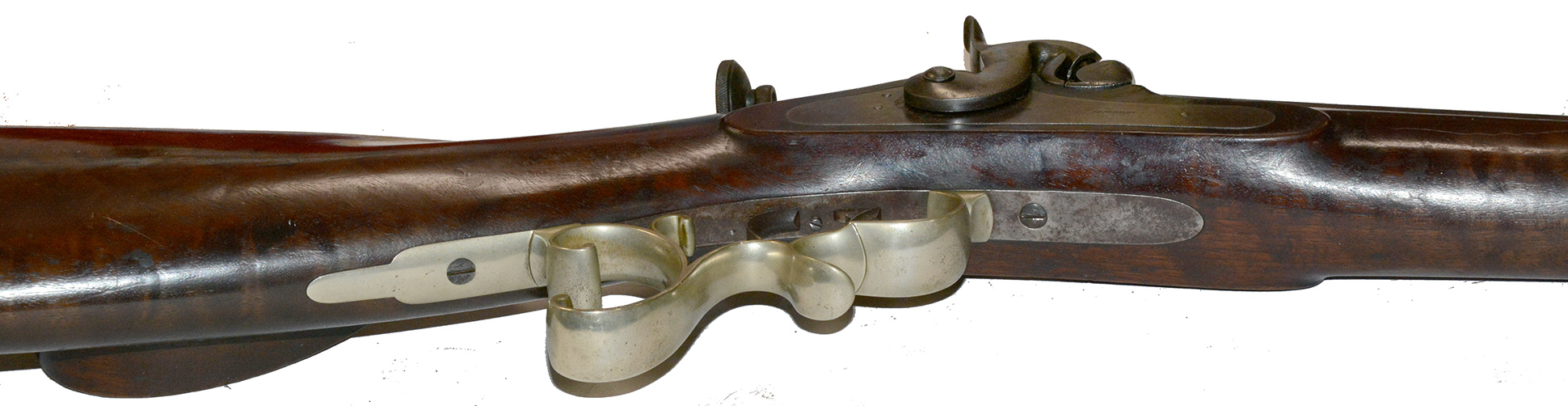
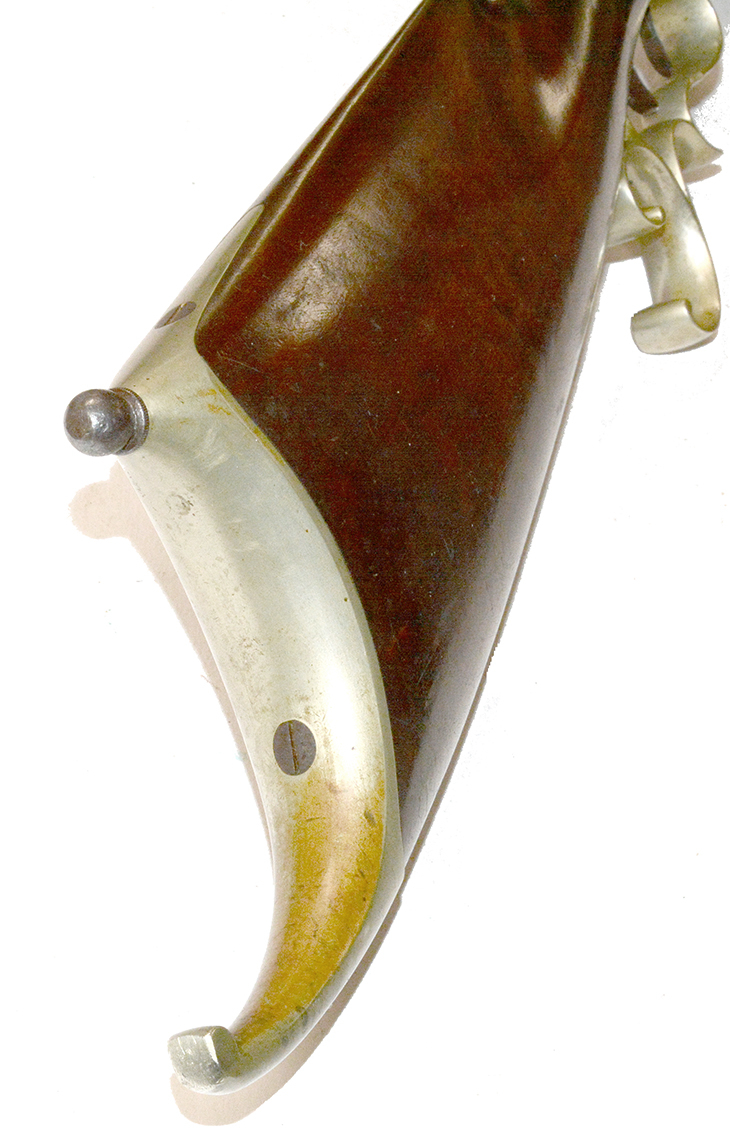
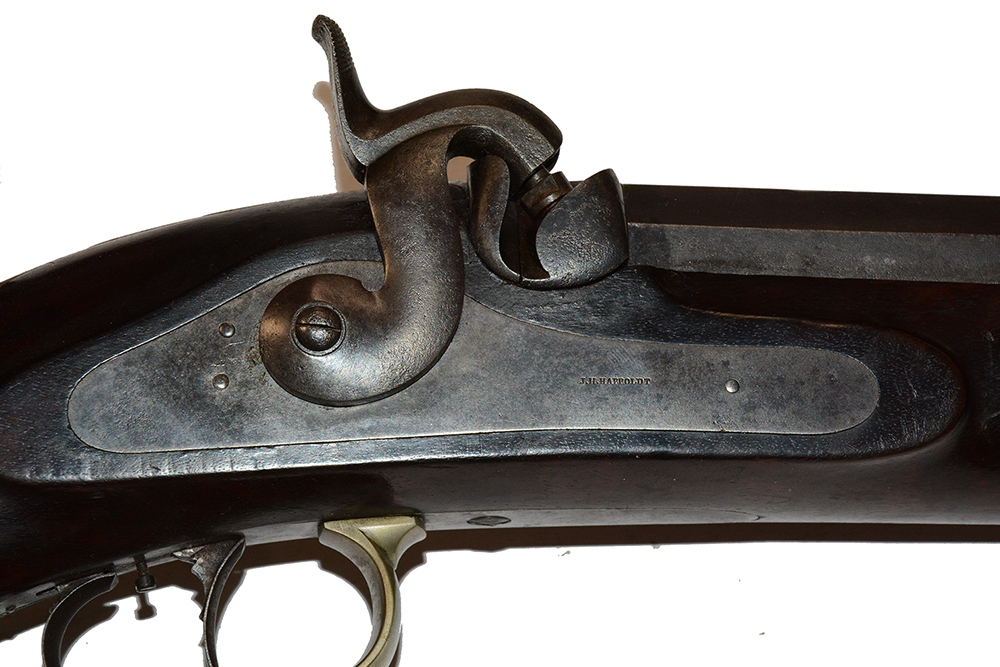
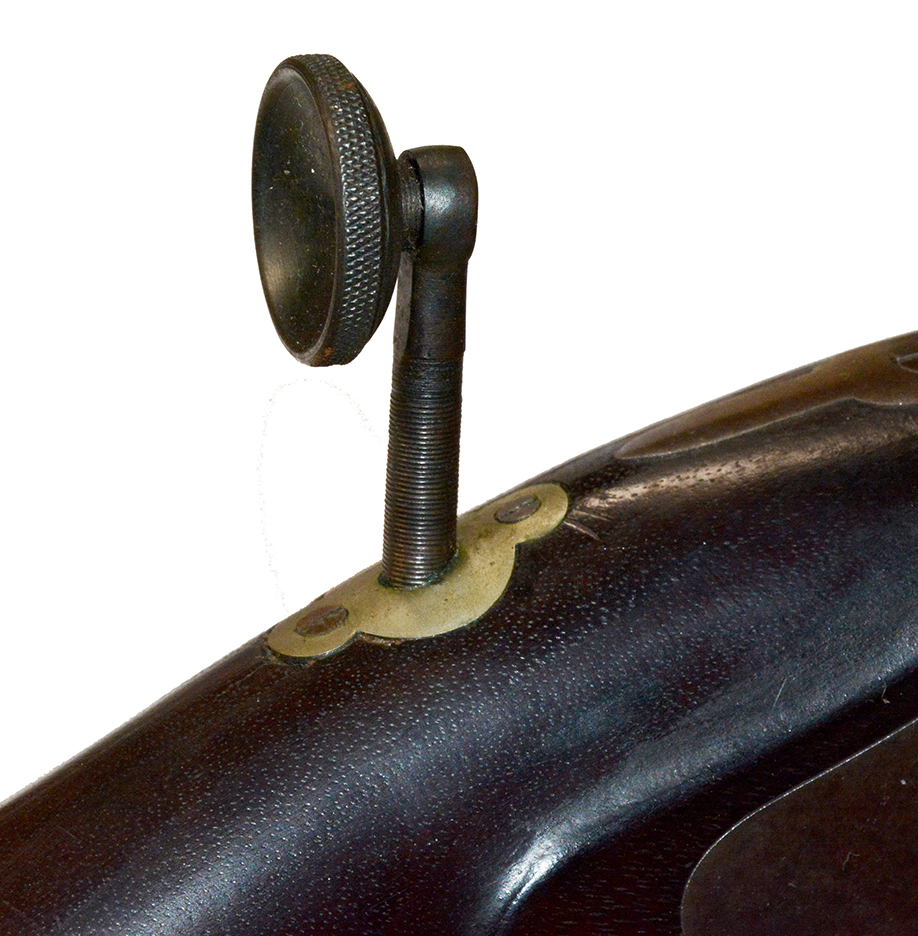
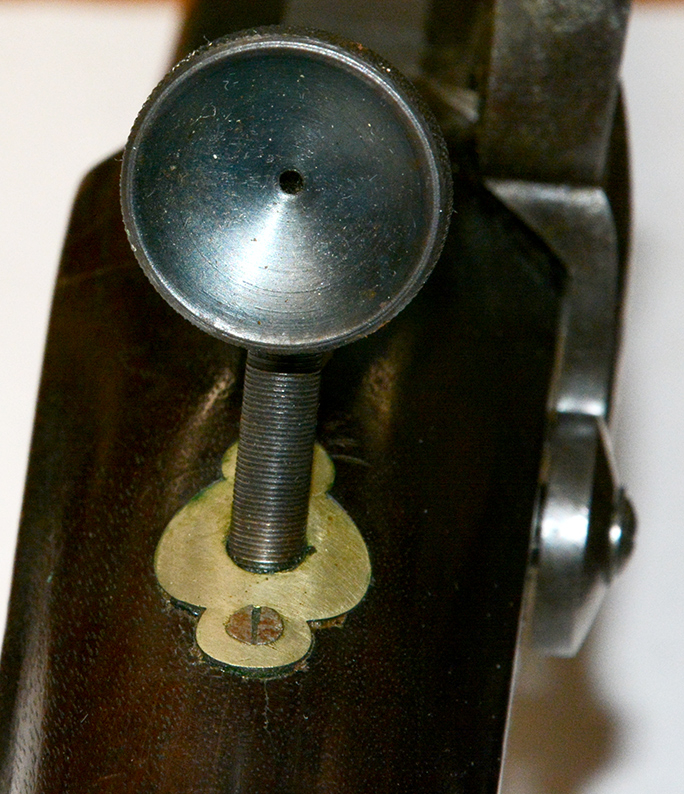
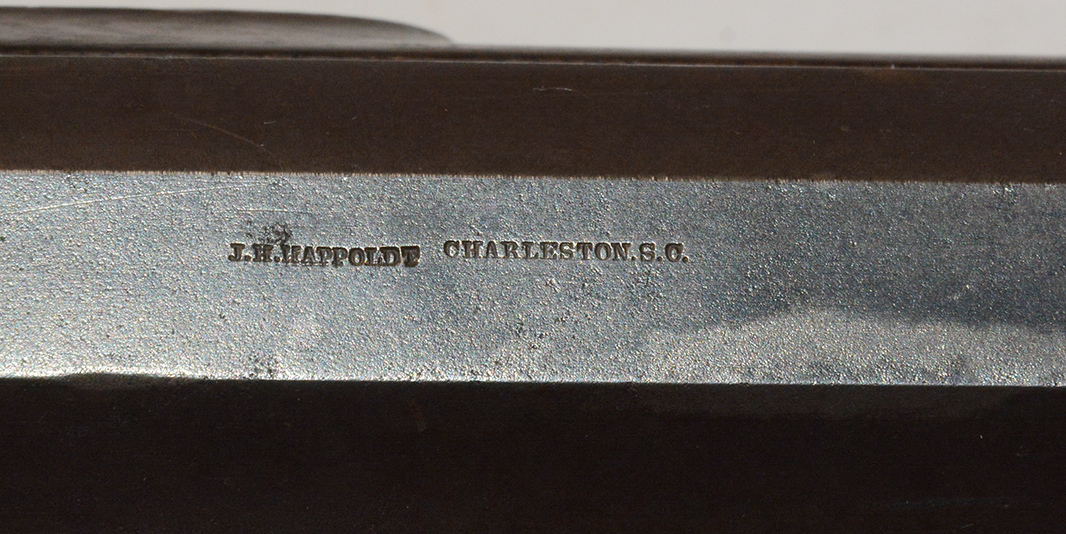
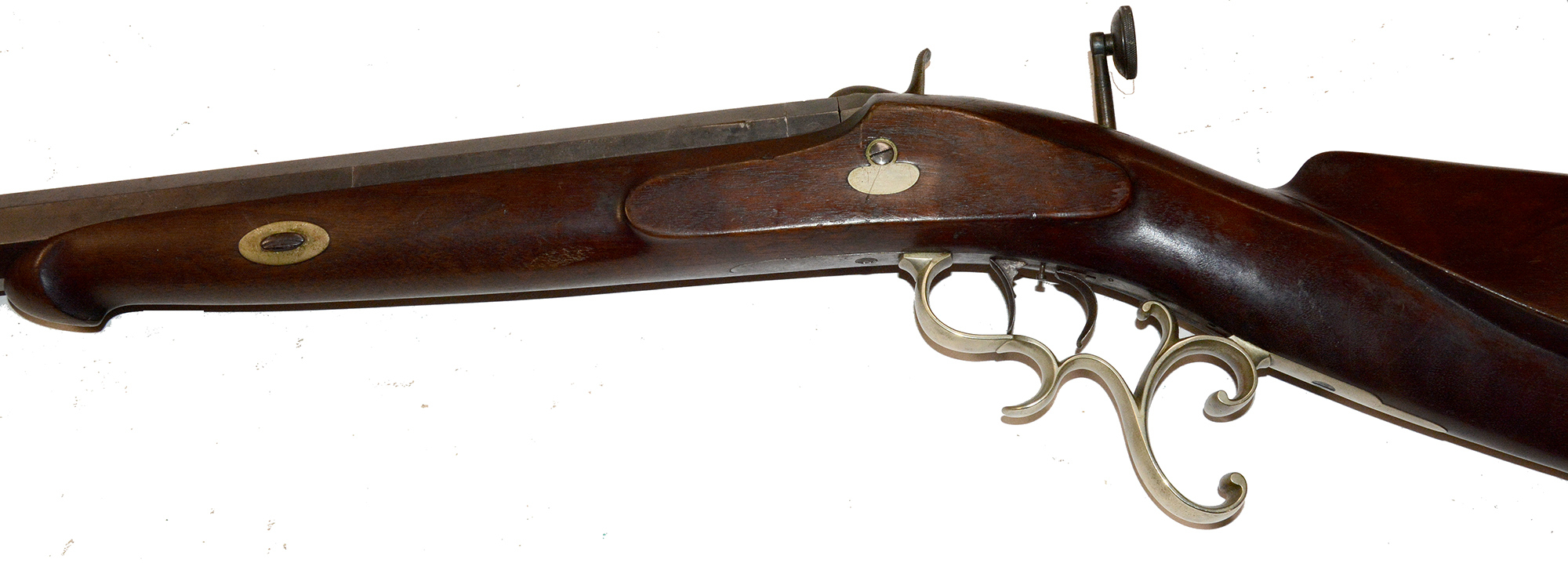
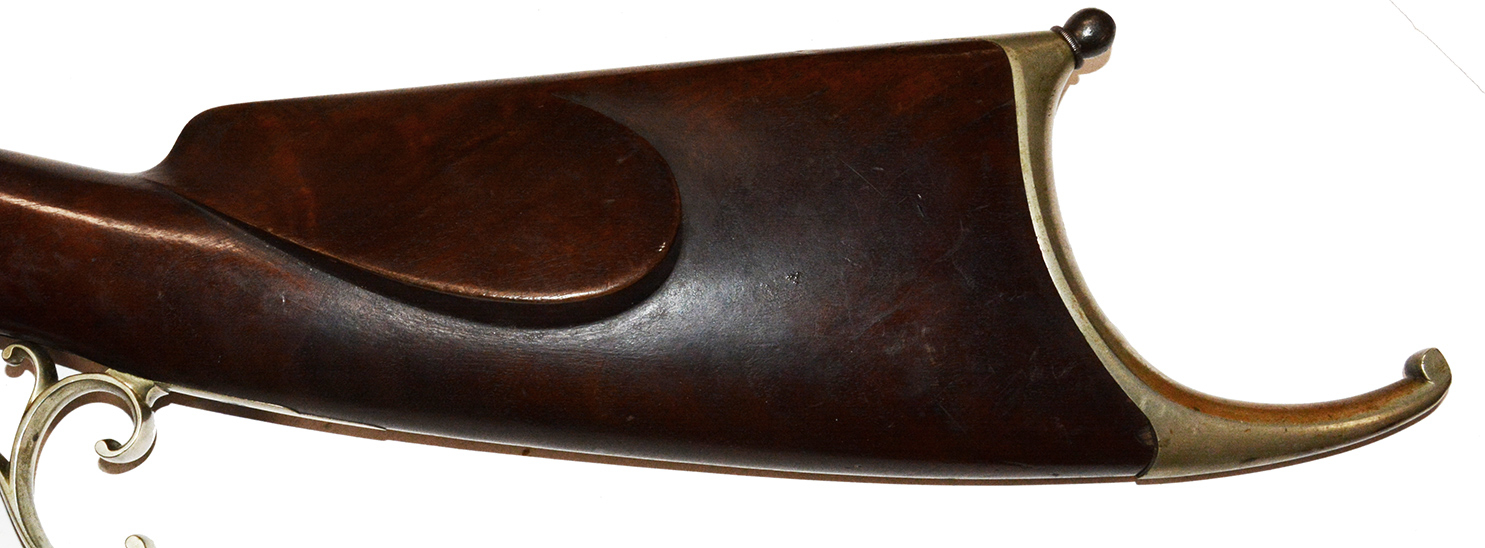
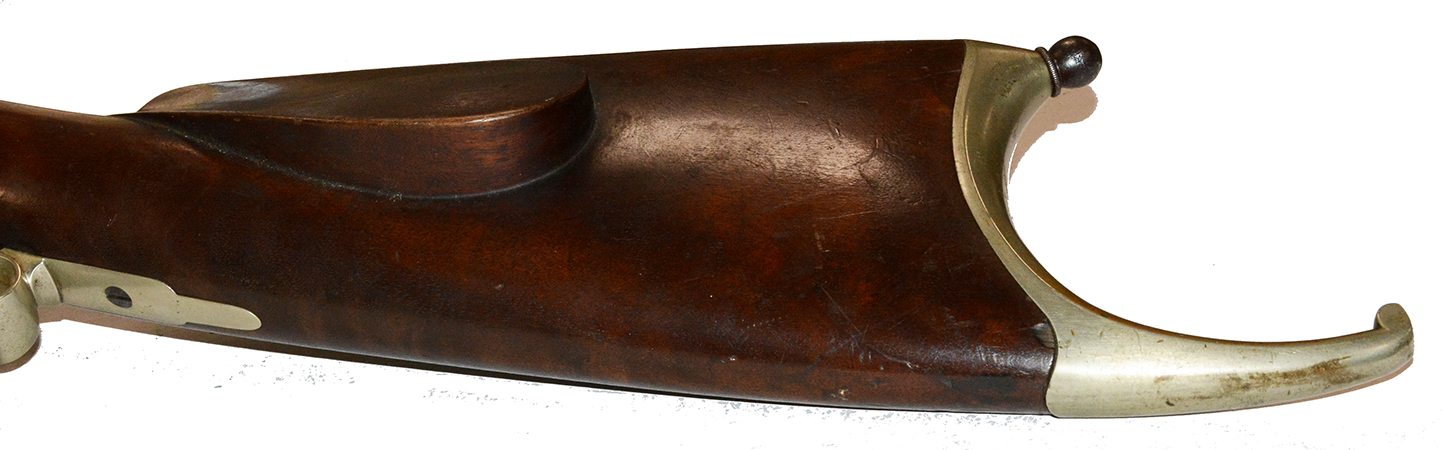
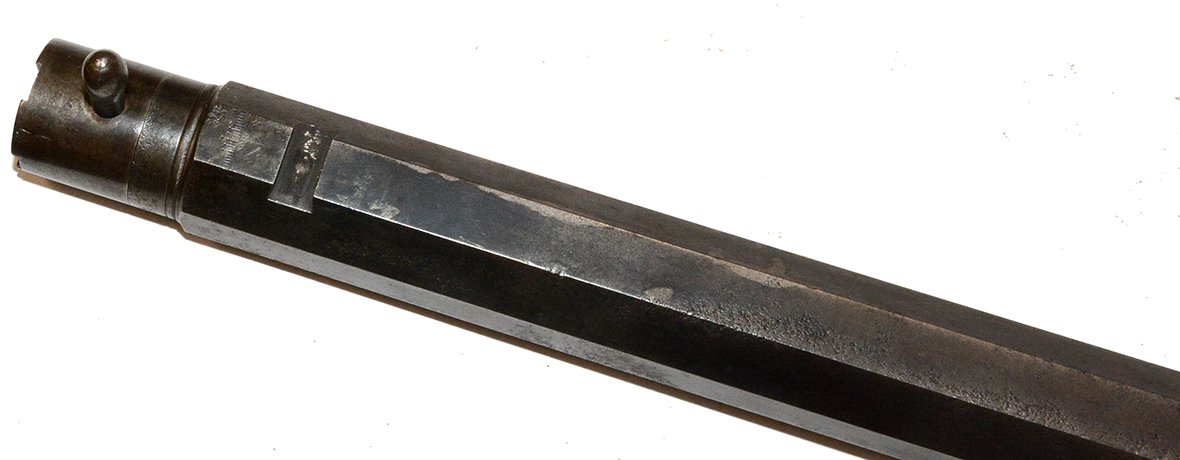
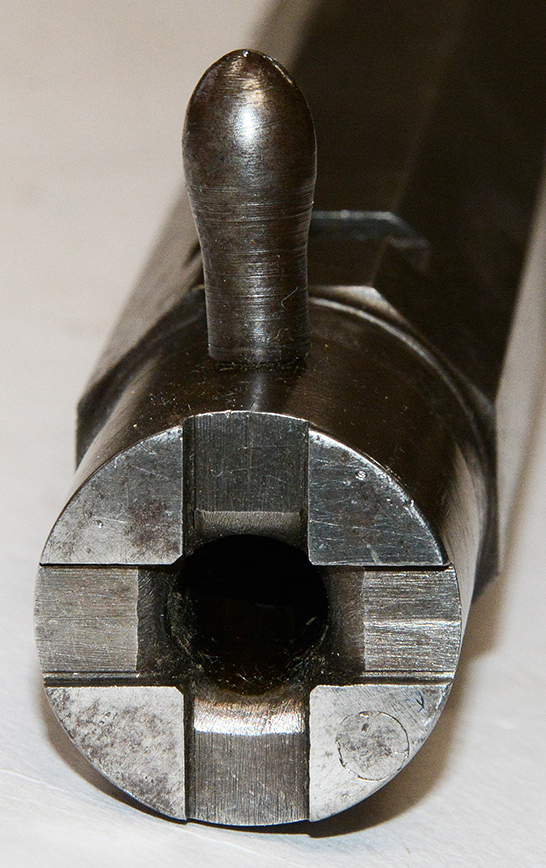
This rifle is crisply marked on the lockplate in small letters, “J.H. HAPPOLDT.” The top barrel flat at about the end of the forestock is similarly stamped “J.H. HAPPOLDT” and next to it, slightly higher, but in the same small font: “CHARLESTON S.C.” The rifle passed through the hands of legendary antique-arms dealer Norm Flayderman in 1985 and we include his letter offering it to a collector, describing it as: “33 1/2" medium to heavy weight octagon barrel with original removable false muzzle (overall barrel length with muzzle 35") .42 caliber finely rifled bore PERFECT. Metal showing just smooth normal aging and wear with nice overall even age brown patina; some patches very fine, light pitting mostly on barrel but minor; would rate metal as excellent. Markings are perfect (very sharp, and deep); mechanically perfect with double set triggers. Very nicely grained, beautifully made walnut stock with large cheekrest. Fancy massive scroll shape German silver triggerguard with matching pronged buttplate. Original peep sight inset in special escutcheon plate just behind the barrel tang; lacks only the narrow, easily replaced front sight. overall weight approximately 15 pounds.” We would note some light scratches to the wood on the left and the barrel showing more as a blue, with some dark patches and some natural rubbing to the edges of the octagon barrel, and some small flaking to the blue on the underside toward the muzzle, certainly from resting the gun in shooting competitions. The lockplate shows some nice, light mottled coloring from faded case color. The hammer shows some nice blue, as does the flashguard around the nipple. The edges of the wood are very good and the wood to metal fit is tight.
Flayderman noted the rarity of this rifle and that it might, “also be considered a SNIPER’S RIFLE by virtue of its southern manufacture and style.” (The capital letters and spelling are his.) The rifle is indeed in percussion and muzzle-loading, but this was a lasting preference of precision shooters who were both traditionalists and did not want to rely on commercial cartridges and bullets. The German Shooting Club of Charleston, of which Happoldt was a member, predated the war, but the immense popularity of schuetzenfests in the U.S. dates to the later 1860s and we would hesitate to assign a necessarily prewar or wartime date to this, though as the notices cited above demonstrate, Happoldt was certainly making long guns before war and we note Murphy and Madaus maintain that from 1855 to 1861 J.H. Happoldt, “made a number of custom single shot percussion target pistols, deringer pocket pistols, and at least one ‘scheutzen’ style target rifle,” likely referring to this gun (p. 343.)
This rifle is a splendid example of a Schuetzen rifle by a scarce southern maker that would be a great addition to a collection of Schuetzen rifles or South Carolina made arms. We include some newspaper clippings with it dating 1868 to 1872 that refer to Happoldt, Schuetzenfests, and Happoldt rifles at those events and note it has strong connections with Charleston Antebellum, Civil War, and Reconstruction history. [sr][ph:L]
DISCLAIMER: All firearms are sold as collector's items only - we do not accept responsibility as to the shooting safety or reliability of any antique firearm. All firearms are described as accurately as possible, given the restraints of a catalog listing length. We want satisfied customers & often "under" describe the weapons. Any city or state regulations regarding owning antique firearms are the responsibility of the purchaser. All firearms are "mechanically perfect" unless noted, but again, are NOT warranted as safe to fire.
~~~~~~~~~~~~~~~~~~~~~~~~~~~~~~~~~~~
THIS ITEM, AS WITH ALL OTHER ITEMS AVAILABLE ON OUR WEB SITE,
MAY BE PURCHASED THROUGH OUR LAYAWAY PROGRAM.
CLICK HERE FOR OUR POLICIES AND TERMS.
THANK YOU!
Inquire About RARE EXCELLENT CONDITION CHARLESTON S.C. JOHN HENRY HAPPOLDT SCHUETZEN TARGET RIFLE
Most Popular
Historical Firearms Stolen From The National Civil War Museum In Harrisburg, Pa »
Theft From Gravesite Of Gen. John Reynolds »
Selection Of Unframed Prints By Don Troiani »
Fine Condition Brass Infantry Bugle Insignia »
Rare Identified 65Th Ny Sergeant’s Jacket, With Manscript Material: 1St U.s. Chasseurs »
featured item
CONFEDERATE SOLDIER LETTER—MAJOR SAMUEL S.J. MOORE, STONEWALL BRIGADE / WIA AT KERNSTOWN--SECOND MANASSAS--THE WILDERNESS
Dated “Camp near Centerville November 1 1861.” Addressed to wife Ellen Scollay Moore. 3 pp. In ink on unlined paper, 12.75 x 7.75.” Exhibits fold marks & slight smudging while remaining entirely legible. In protective sleeve. Born June… (846-566). Learn More »
site search