


site search
online catalog
REMARKABLE WILDER’S LIGHTNING BRIGADE SERIAL RANGE SPENCER RIFLE W/ 1863 SOCKET BAYONET
Hover to zoom



$3,950.00 SOLD
Quantity Available: None
Item Code: 2025-2795
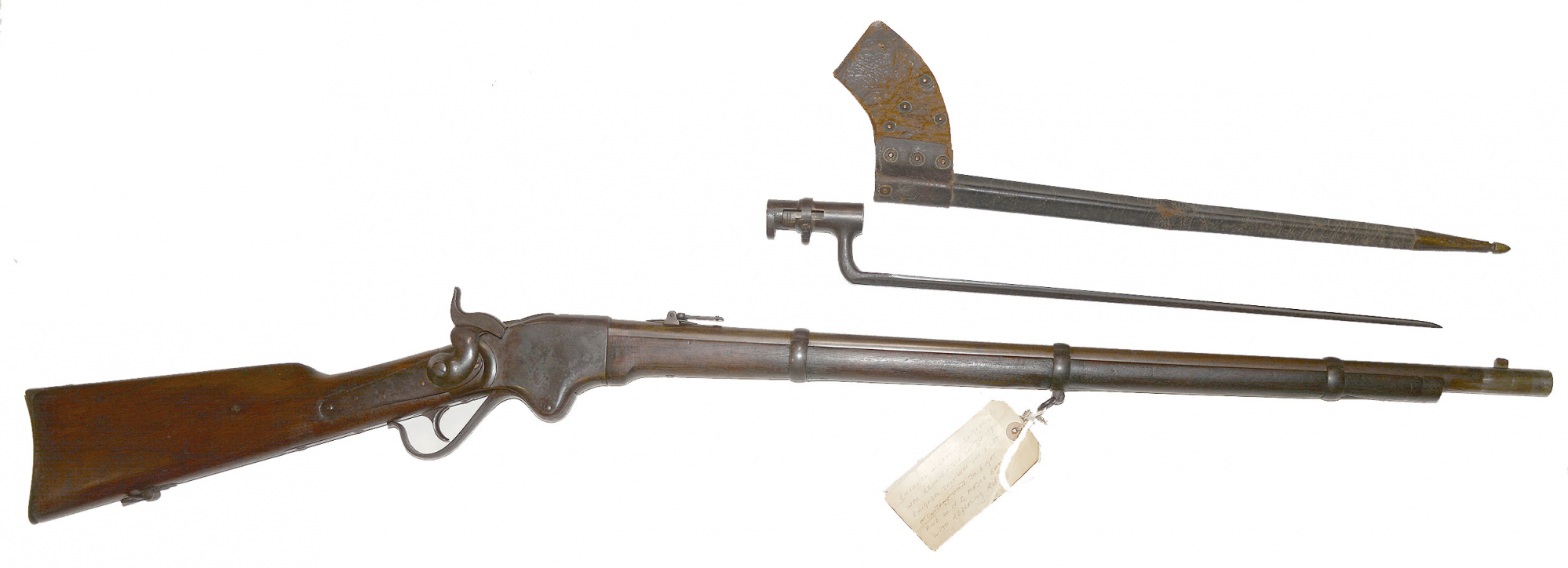
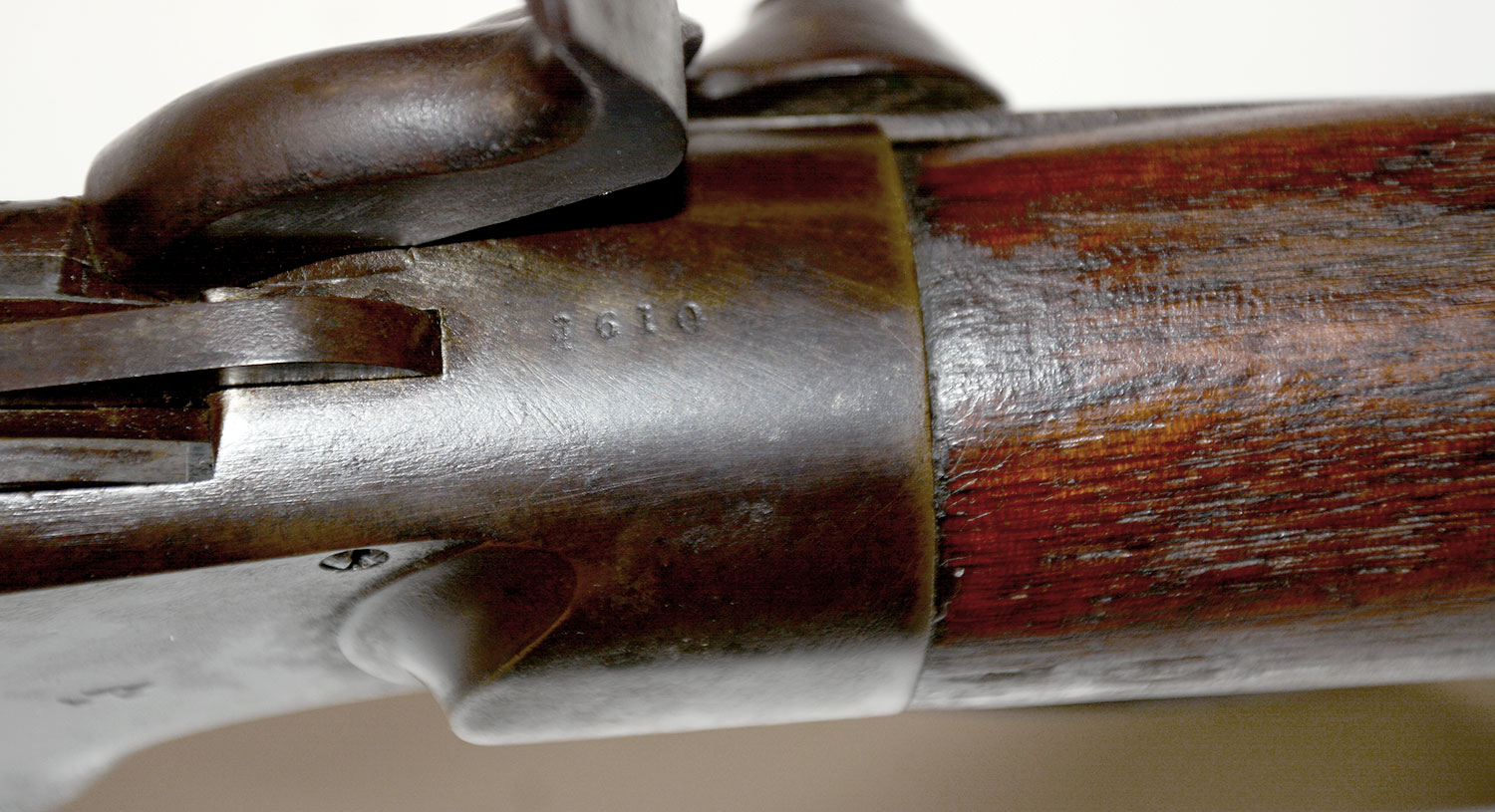
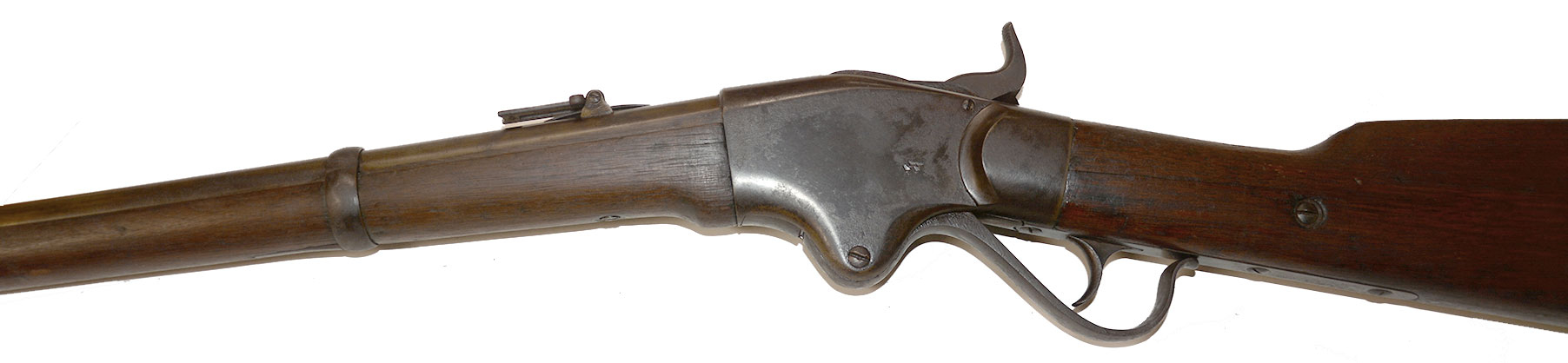
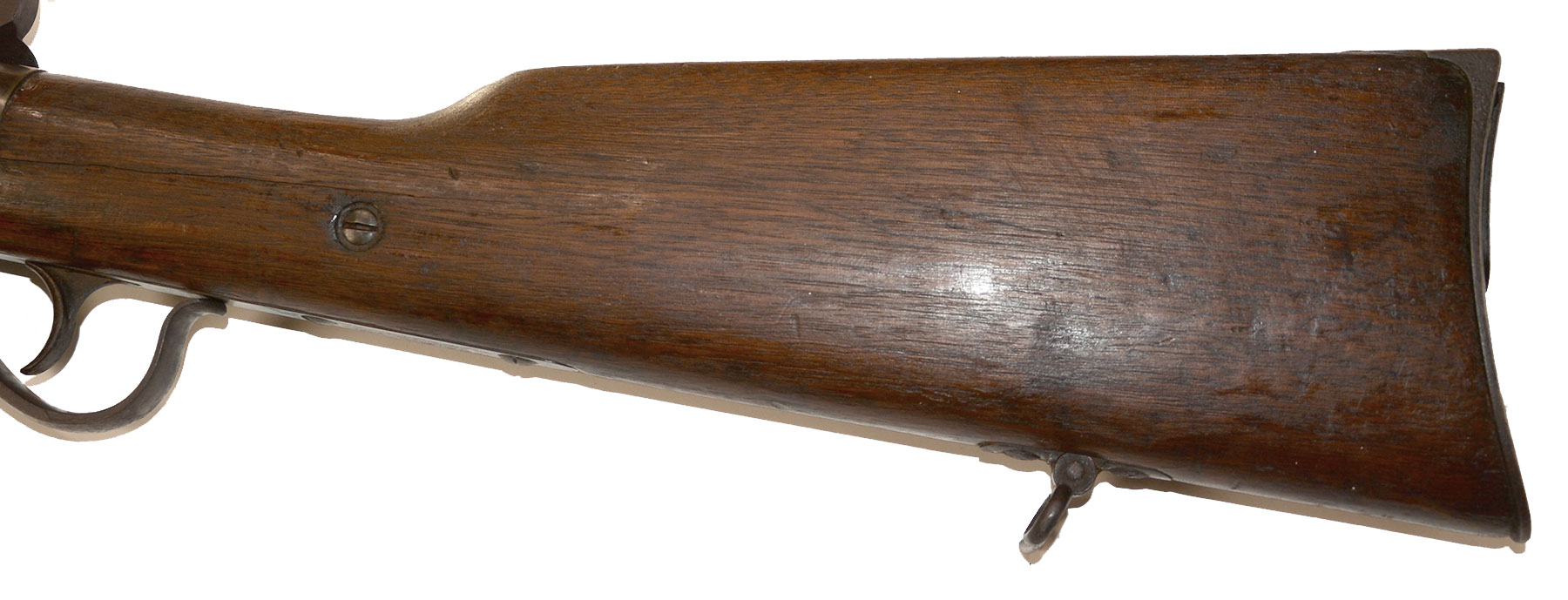
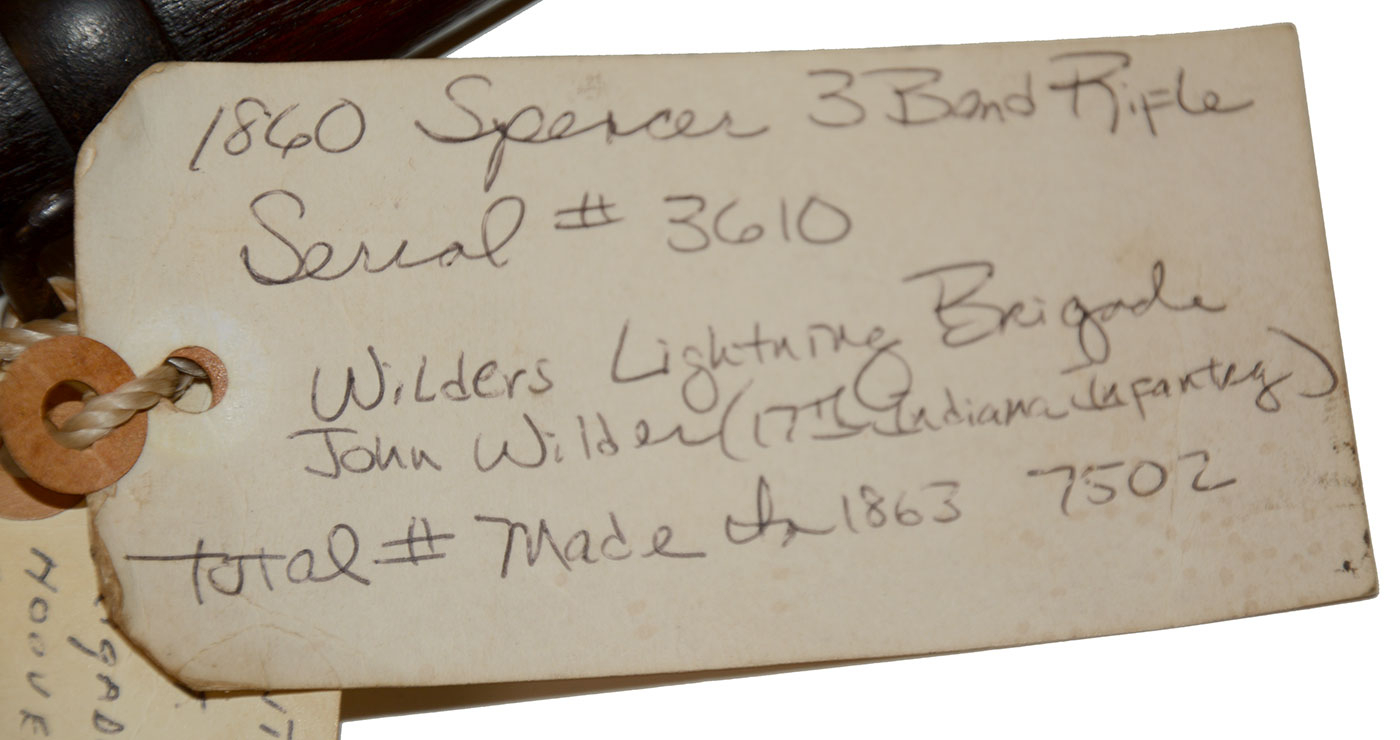
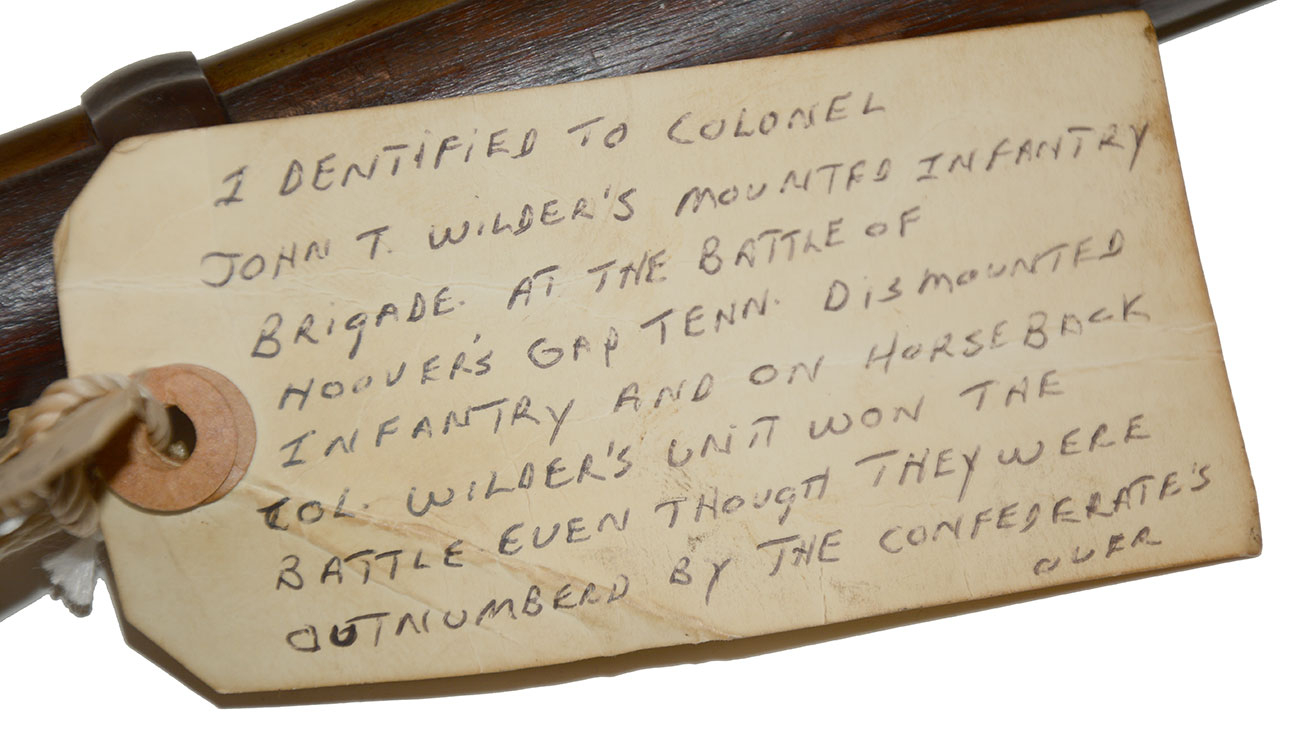
This important Spencer arguably stands above many others. With its serial number of “3610”, it falls within the range of Spencer rifles ordered for, and delivered to, John T. Wilder’s famed “Lightning Brigade” of the Western Theater. More specifically, this rifle’s number falls within a range of 1500 serialized rifles that were delivered between April 13, 1863 and April 22, 1863.
This example shows use commensurate with service, but maintains a decent bore with pronounced rifling and strong mechanics. Evidence of cleaning and maintenance is noted across the barrel surface. Muzzle shows a few minor nicks. Two notable gashes on either side of barrel’s the metal surface are visible just forward of the stock’s end cap. These marks are likely the result of a vice. The front sight blade has been worn down some along the top edge.
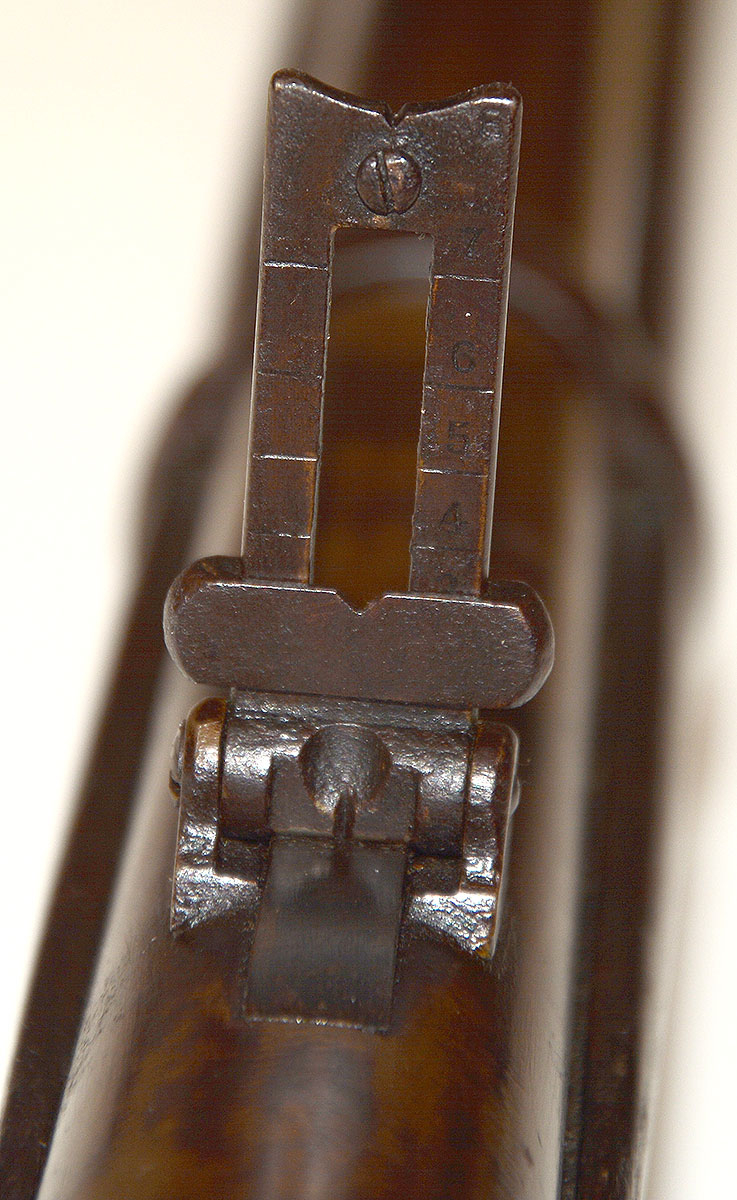
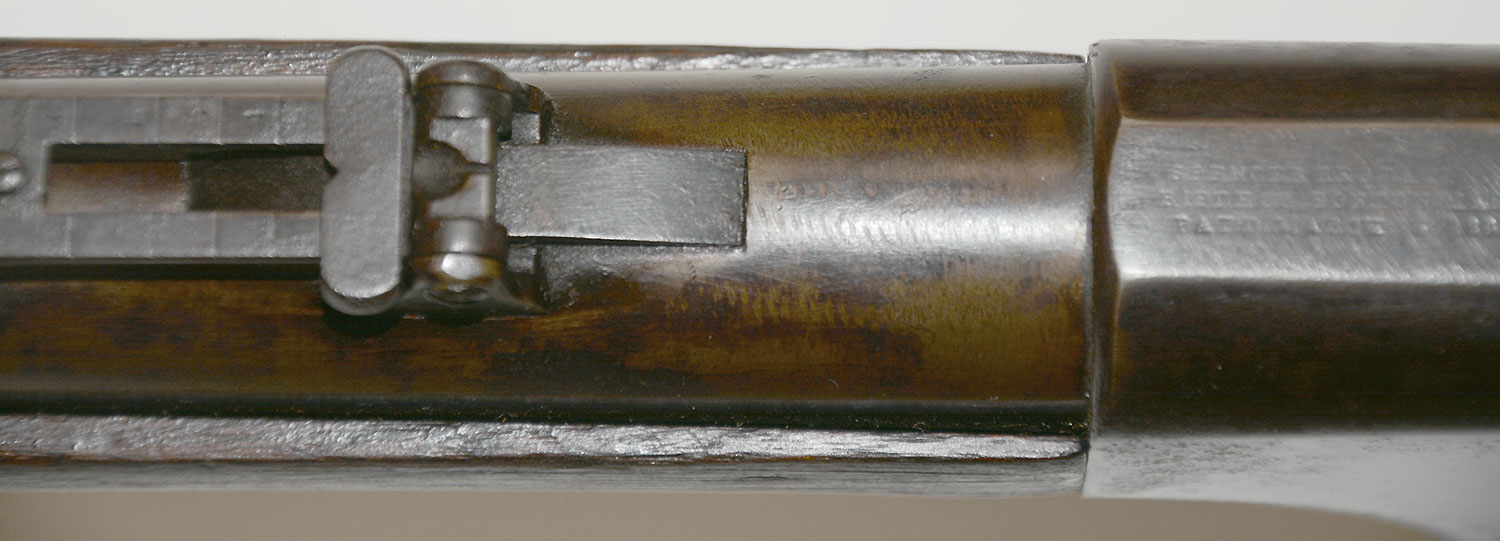
The original sight with elevation bar is securely attached and complete. Barrel is inspector marked “S.L.” on the left of the barrel near the receiver. All barrel bands are present and complete, including the sling swivel band with matching counterpart on the butt stock. All bands show traces of original finish blended with a plum-colored patina and light surface pitting – primarily on the underside of each part. Band springs show light surface wear but maintain proper tension.
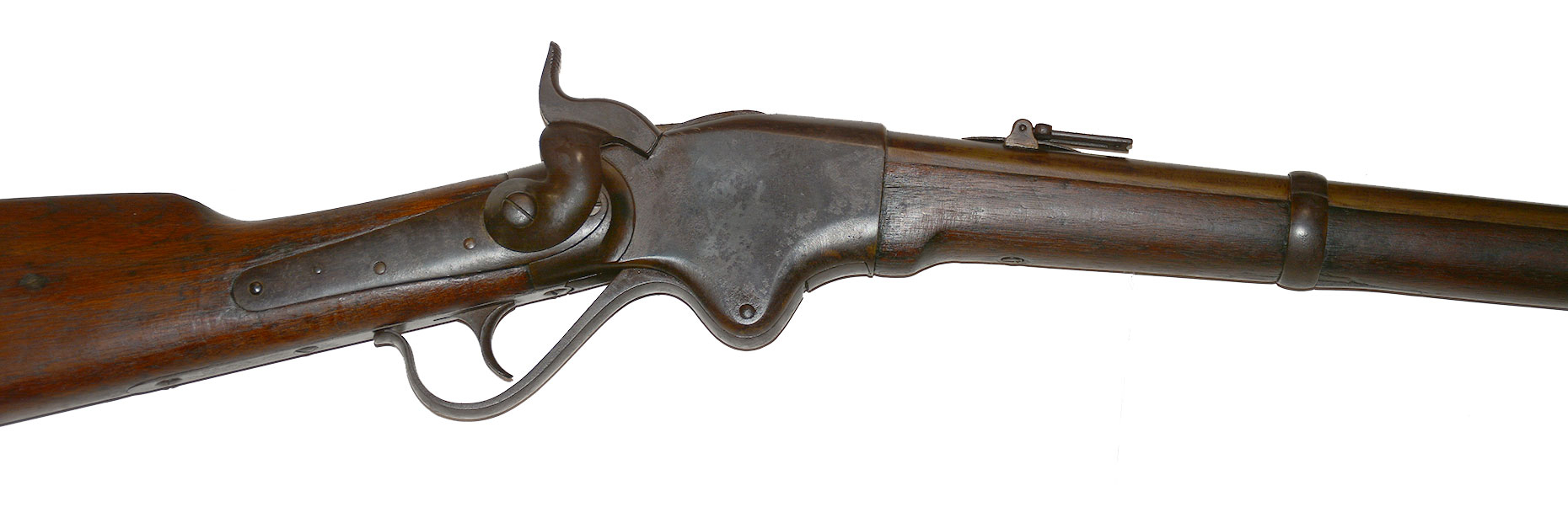
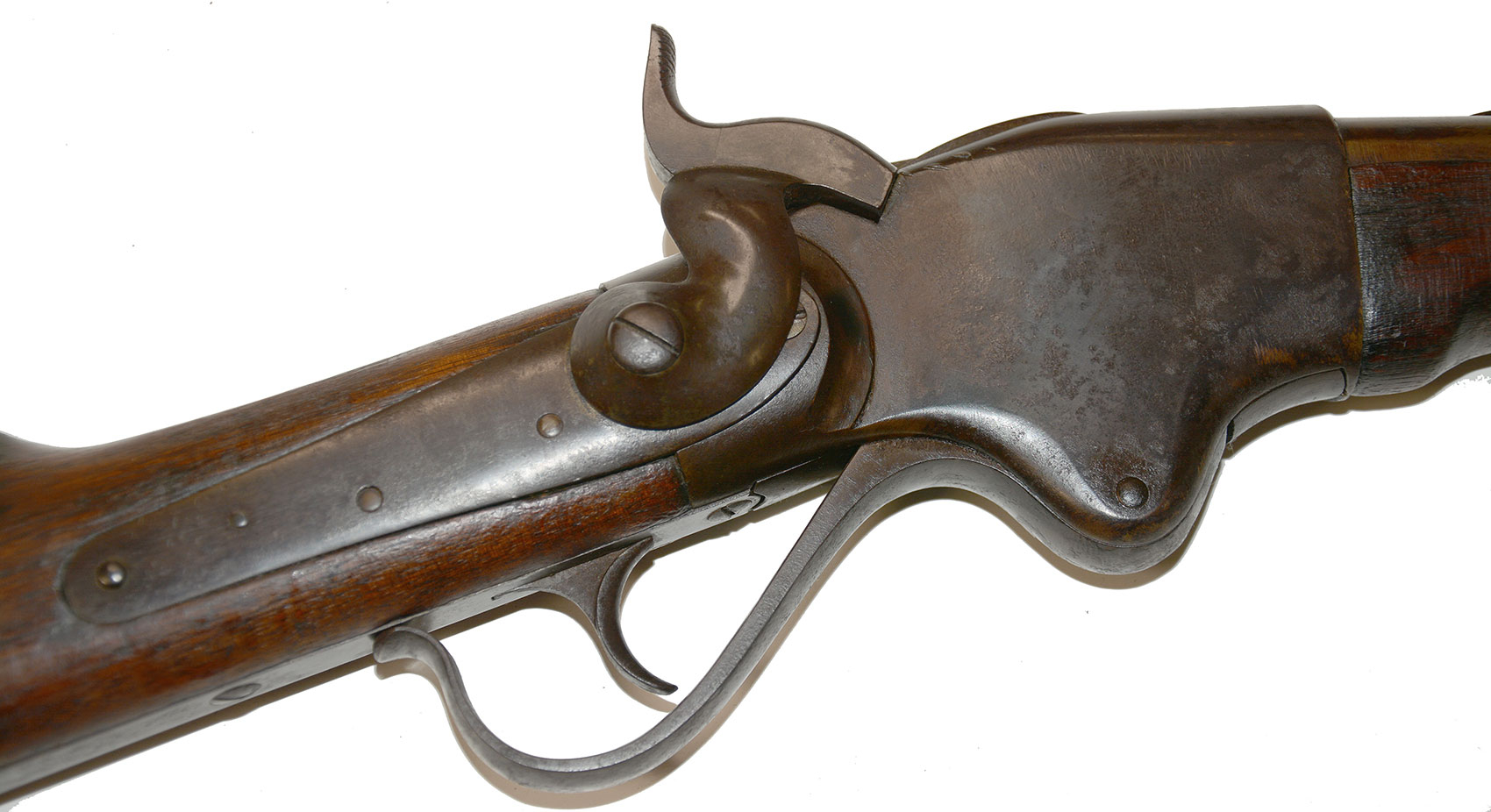
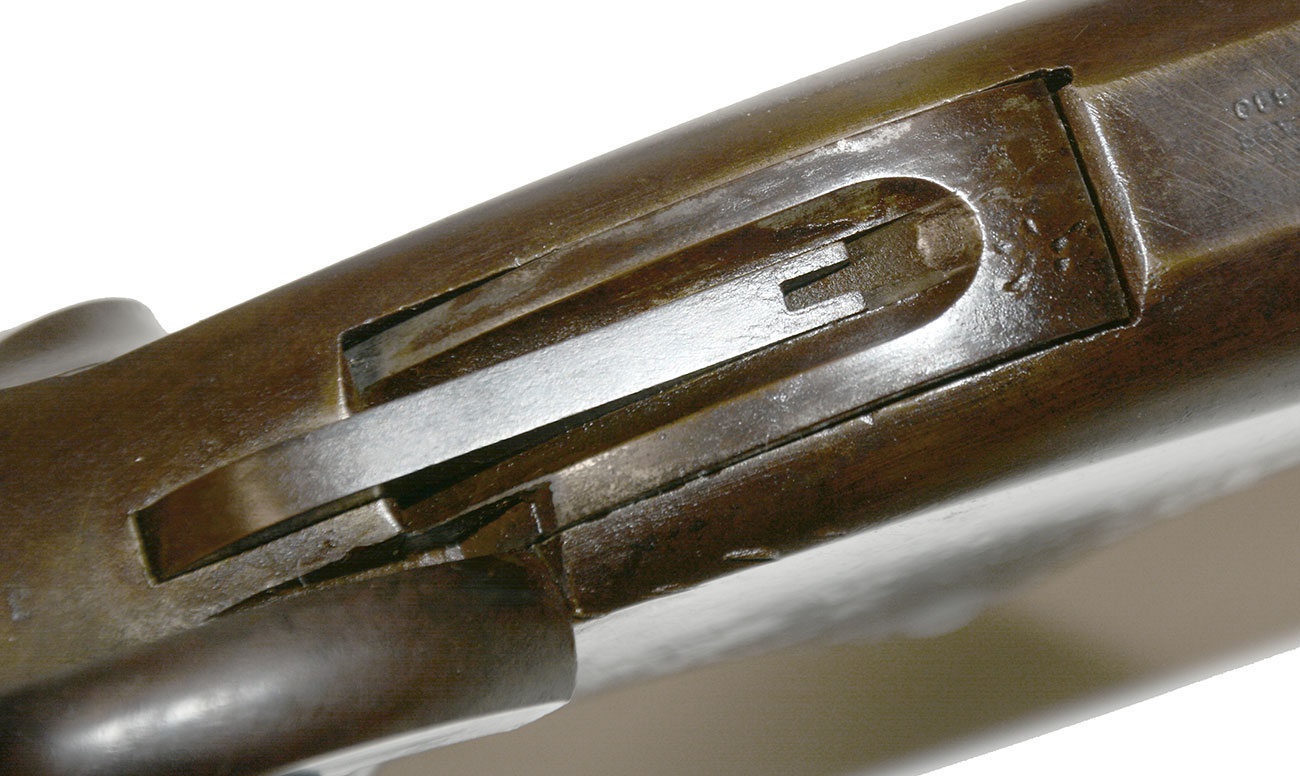
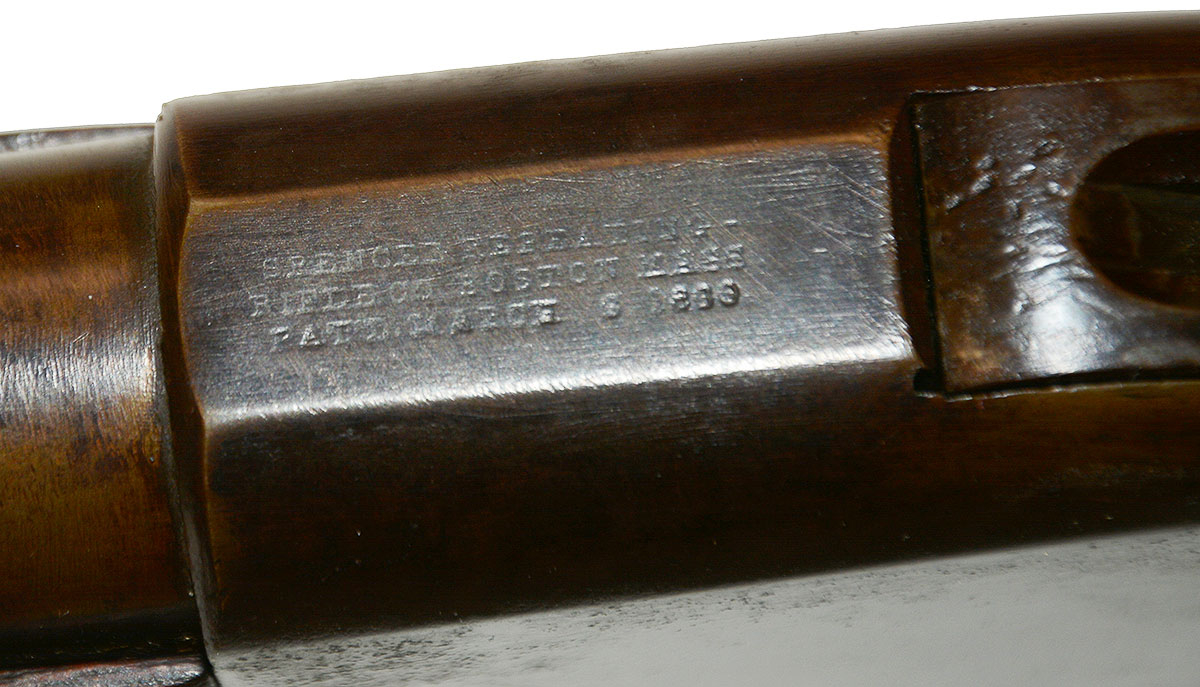
The receiver shows some case color finish, and features a patent stamp on the top flat (“SPENCER REPEATING RIFLE CO. BOSTON MASS. PAT’D MARCH 6, 1860”). The trigger guard/lever has a deep patina mixed with finish remnants. Wear is noted on the receiver near the base and just forward of the lever, fitting the profile of a metal file. Four small, triangular dings on the left receiver plate are observed, along with minor surface pitting. The serial number “3610” is clearly stamped on the top round of the wrist extension of the receiver.
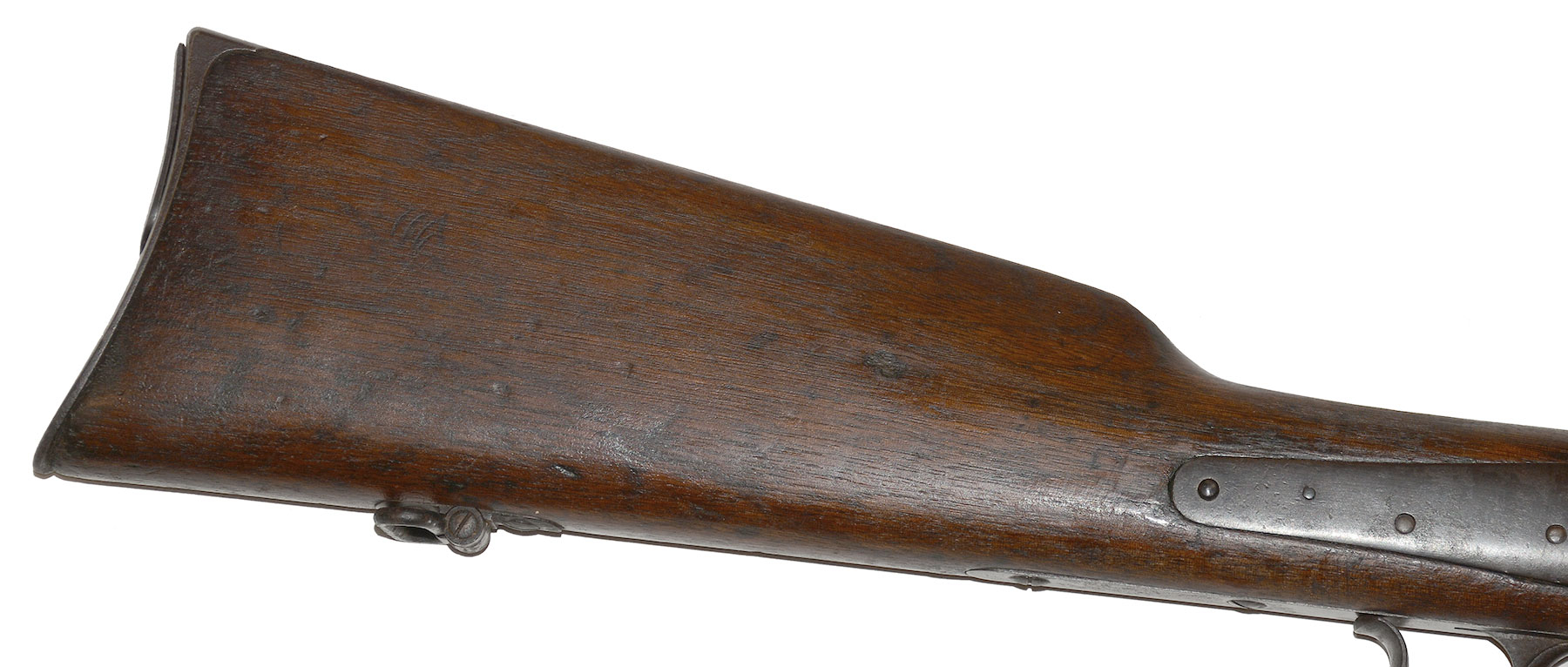
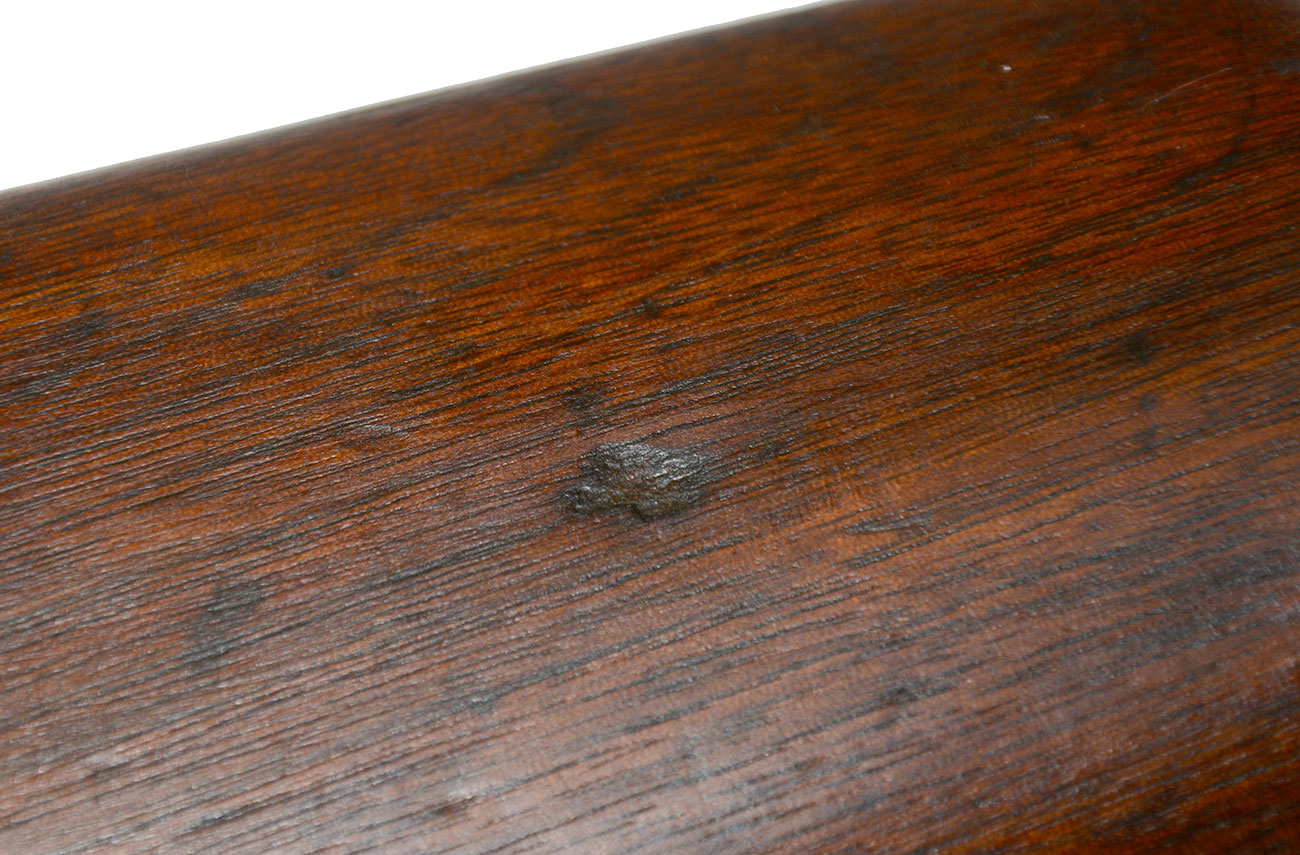
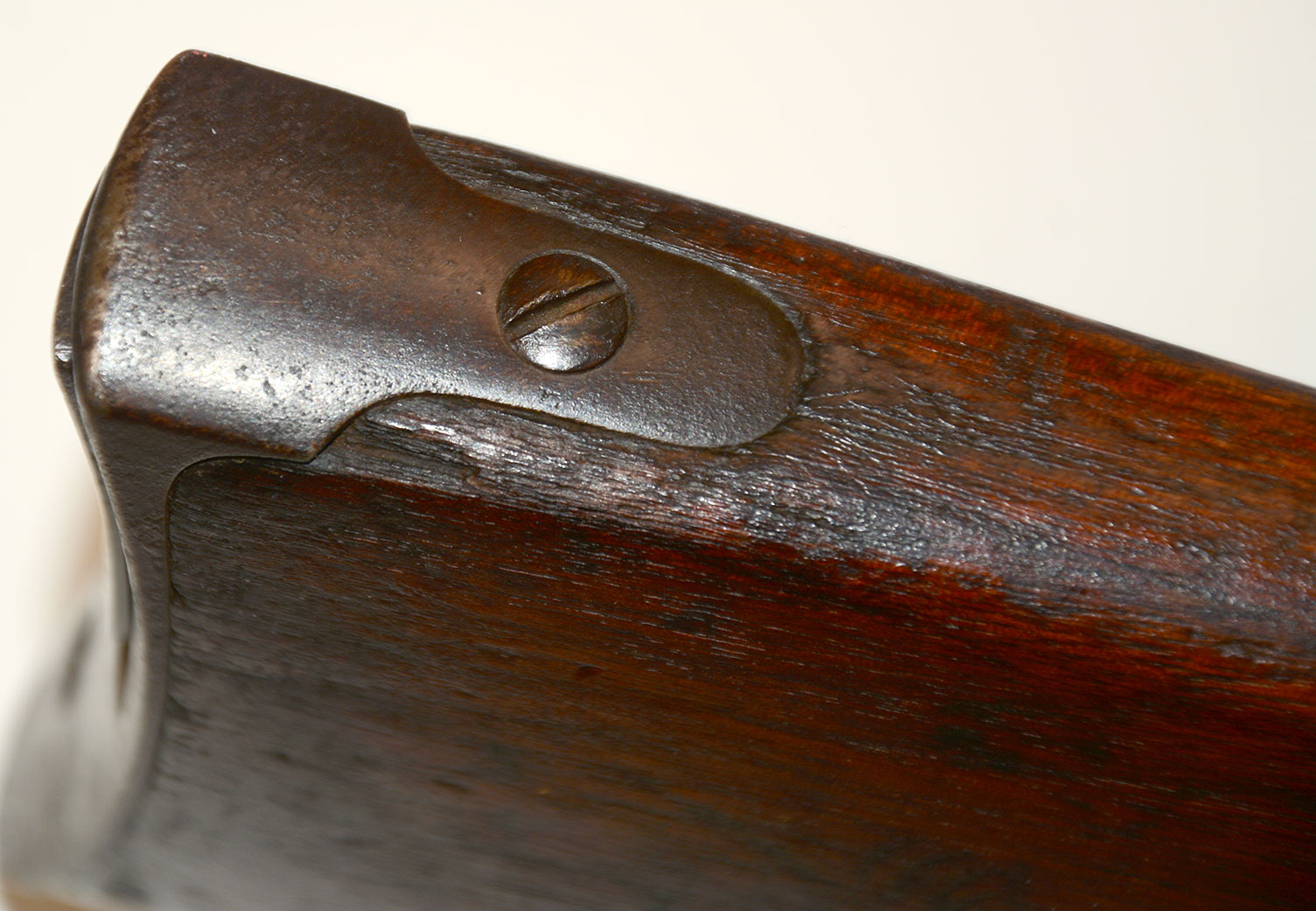
The stock and foregrip are complete, with a deep finish and scattered light denting and scratching. Evidence of fine abrasion can be found in some areas – likely from a light sanding. Minor wood loss is noted around the band springs, along with a few light cracks at the base of the foregrip near the receiver, and singular crack at the wrist measuring 5” (does not compromise integrity and may be shallow). A sliver of wood loss is noted on the right side of the wrist, where it meets the receiver and just behind the hammer. All screws match the wear and patina of the rifle. The captive magazine in the butt stock is in rust-free and semi-bright condition, with some tension left in the follower spring.
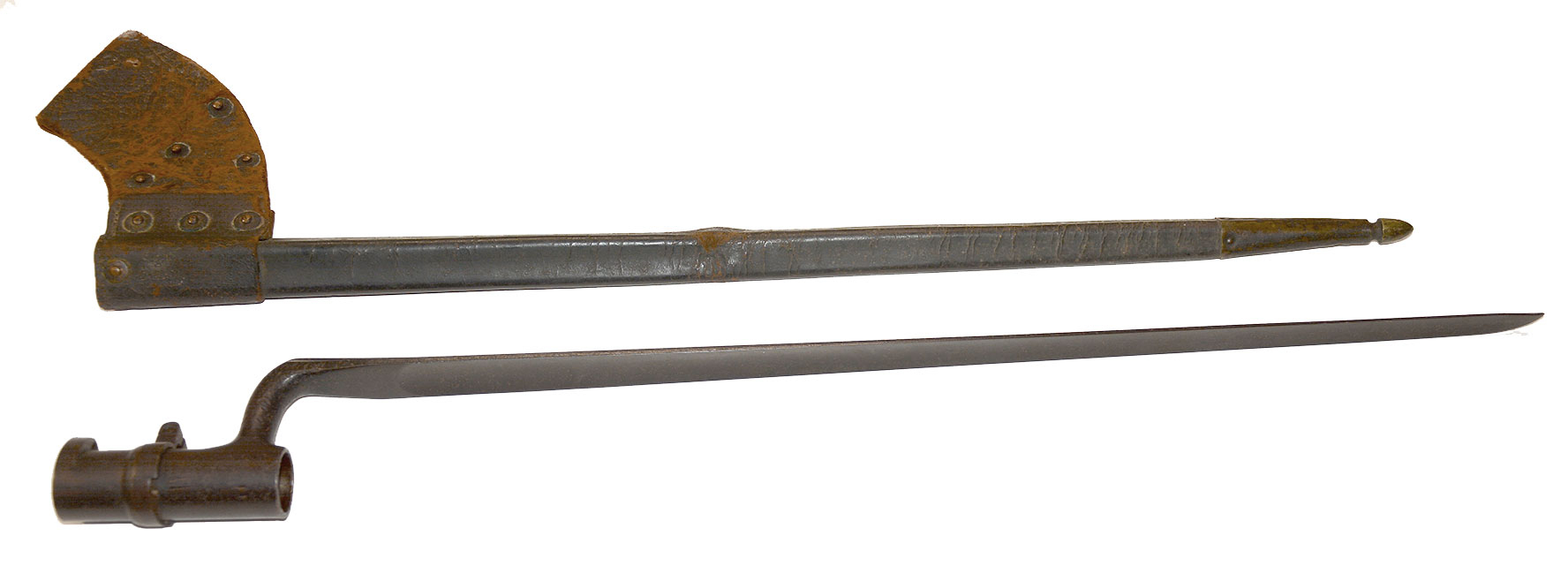
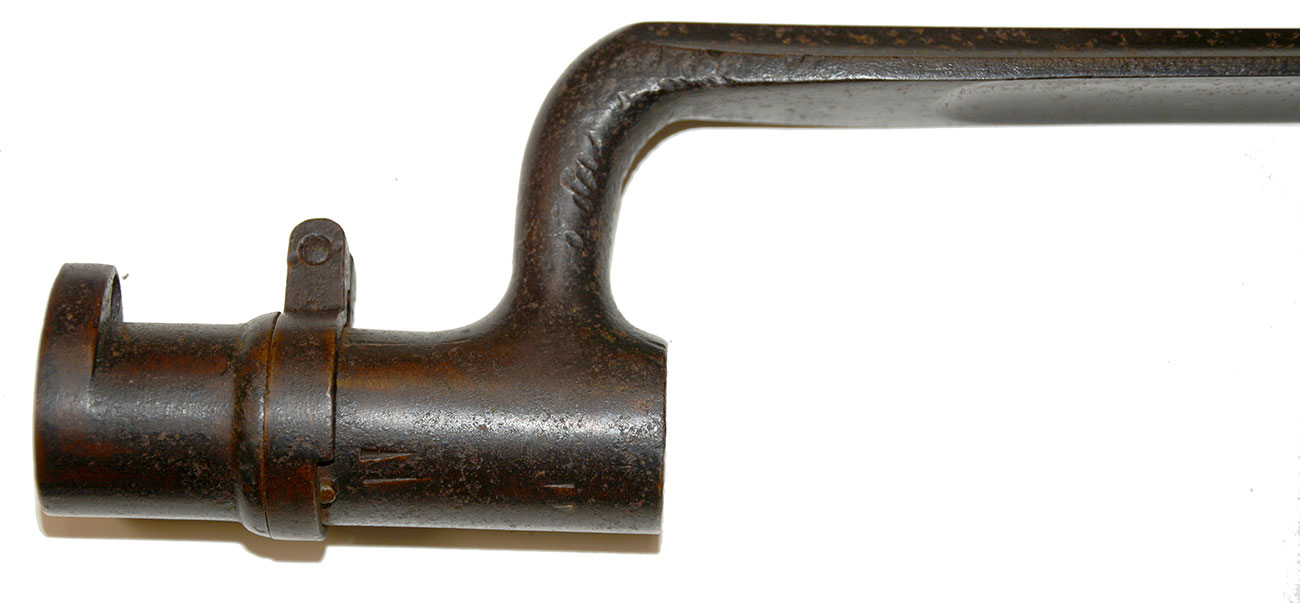
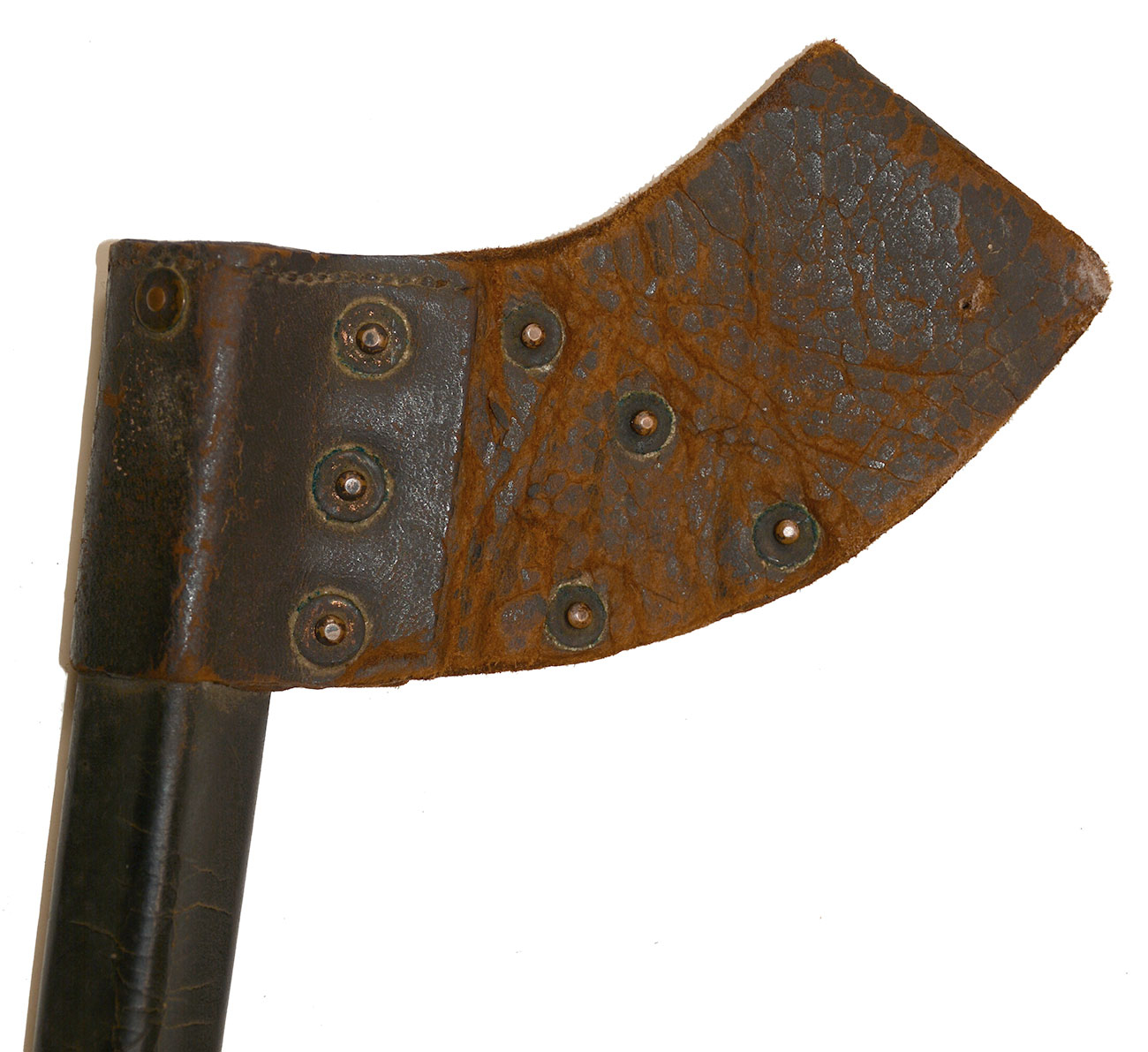
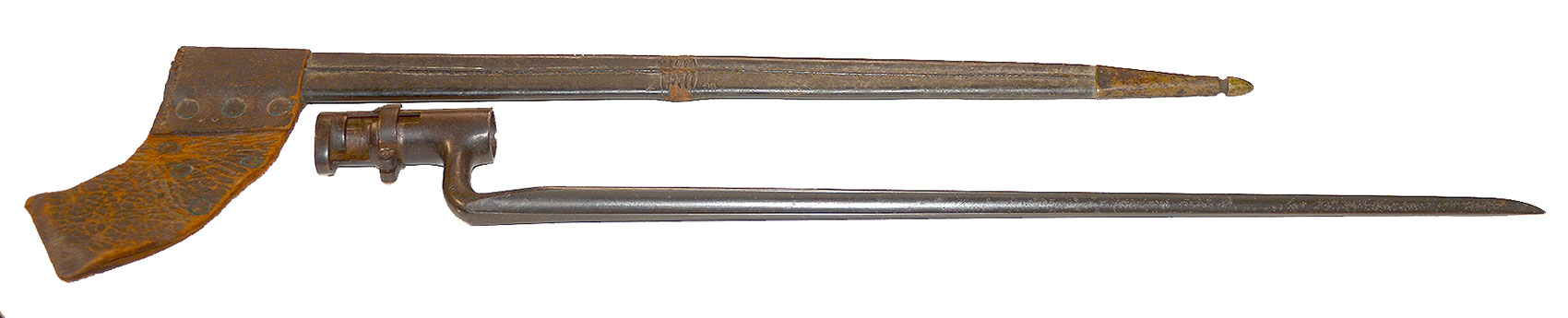
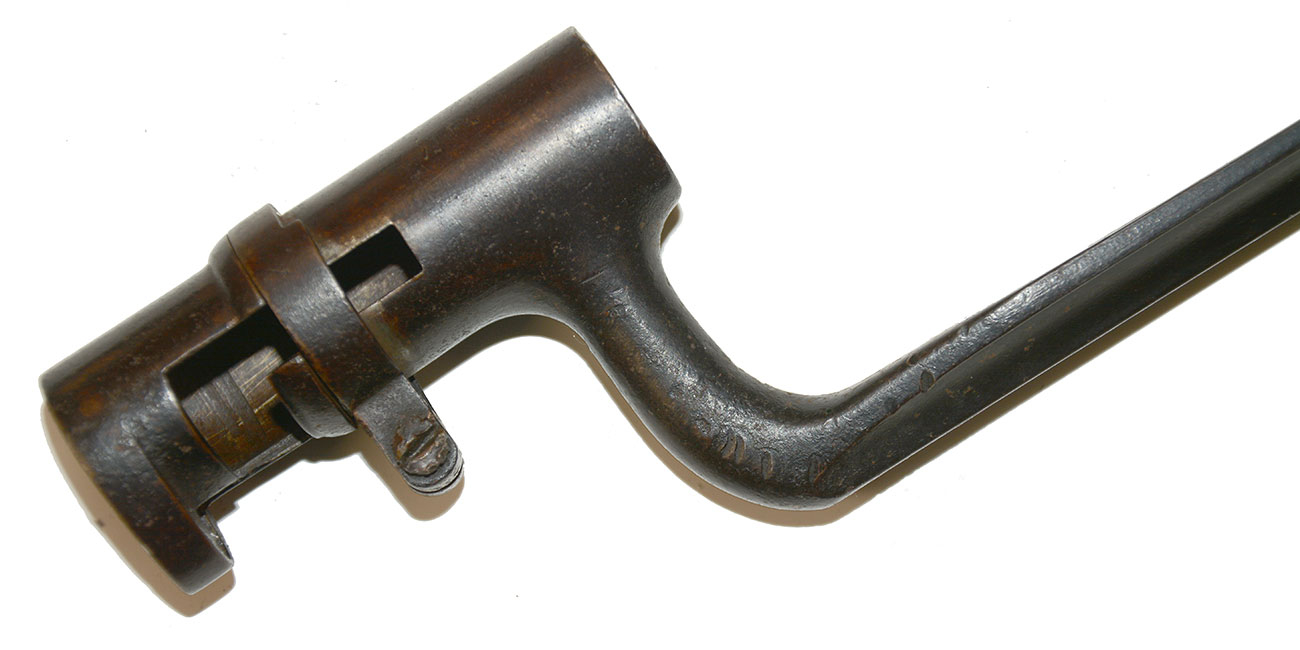
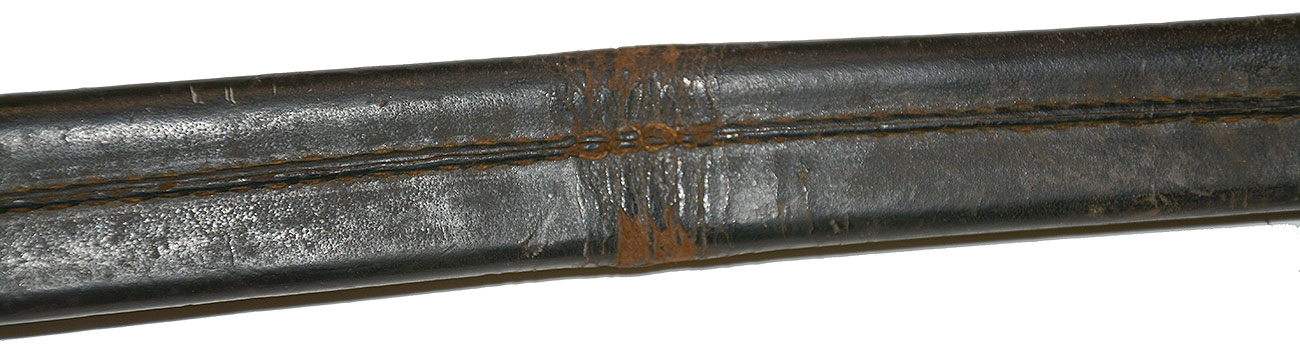
A Spencer bayonet that accompanied the rifle is included, along with a P1863, 7-rivet scabbard. The scabbard is intact with expected crazing and a crease in the mid-section. A “34” is stamped into the reverse near the throat. Finial is still securely attached. The patina of the bayonet closely matches that of the rifle, along with similar gashes/vice grips.
Wilder negotiated a $35 price per gun with Spencer and landed upon an unorthodox way to pay for them: self-financing. Turning to banker friends back in Indiana, Wilder persuaded them to put forward the money so that each man would sign a promissory note agreeing to purchase their own gun. Wilder even offered up his home and business as collateral to facilitate the loan; the bankers agreed to execute the loan without the collateral if Wilder co-signed which he readily agreed to do. Wilder promptly cut an order for 1,400 Spencer rifles directly from the Spencer Repeating Rifle Company in Massachusetts. Eventually, Wilder and Rosecrans worked out a deal where the War Department paid for the rifles alleviating Wilder’s men from the debt. At the end of the war, the survivors of the Lighting Brigade had the opportunity to purchase their Spencer’s for just a few dollars apiece by having the amount deducted from their final settlement payment.
Cavalrymen dismissed Wilder’s experiment as “tadpole cavalry,” but morale was high and within weeks the brigade would meet its first test at Hoover’s Gap in one of the opening engagements of the Tullahoma campaign. Here they would earn the nickname as Wilder’s Mounted Lightning Brigade, a sobriquet they would carry for the rest of the war. Famously, Wilder’s outnumbered but not out-gunned men used their Spencer’s to hold a key bridge over the Chickamauga and successfully blocked the approach of an entire Confederate infantry Corps.
An honest Civil War Spencer with a truly scarce attached history. An ideal piece for the collector of identified pieces or unique weaponry. [cm][ph:L]
DISCLAIMER: All firearms are sold as collector's items only - we do not accept responsibility as to the shooting safety or reliability of any antique firearm. All firearms are described as accurately as possible, given the restraints of a catalog listing length. We want satisfied customers & often "under" describe the weapons. Any city or state regulations regarding owning antique firearms are the responsibility of the purchaser. All firearms are "mechanically perfect" unless noted, but again, are NOT warranted as safe to fire!
~~~~~~~~~~~~~~~~~~~~~~~~~~~~~~~~~~~
THIS ITEM, AS WITH ALL OTHER ITEMS AVAILABLE ON OUR WEB SITE,
MAY BE PURCHASED THROUGH OUR LAYAWAY PROGRAM.
CLICK HERE FOR OUR POLICIES AND TERMS.
THANK YOU!
Inquire About REMARKABLE WILDER’S LIGHTNING BRIGADE SERIAL RANGE SPENCER RIFLE W/ 1863 SOCKET BAYONET
Most Popular
Historical Firearms Stolen From The National Civil War Museum In Harrisburg, Pa »
Theft From Gravesite Of Gen. John Reynolds »
Selection Of Unframed Prints By Don Troiani »
Fine Condition Brass Infantry Bugle Insignia »
Rare Identified 65Th Ny Sergeant’s Jacket, With Manscript Material: 1St U.s. Chasseurs »
featured item
VERY RARE EARLY PRE- CONTRACT FREEMAN REVOLVER WITH A GETTYSBURG CONNECTION
The Freeman Army is a scarce .44 caliber, 6-shot, single-action percussion revolver. Approximately 2,000 were produced by Hoard's Armory in Watertown, New York from 1863. These were earmarked for the US Army, none were officially purchased, but… (2026-887). Learn More »
site search