

site search
online catalog
NEW YORK 1808 PATTERN CONTRACT FLINTLOCK MUSKET BY COGSWELL

Hover to zoom

$2,250.00 SOLD
Quantity Available: None
Item Code: 2025-3663
Given New York’s long border with Canada, the state was naturally worried by the rising tensions with Britain starting with the Chesapeake-Leopard affair of 1808 and supplemented its arms on hand and militia allotments with state contracts, beginning with Whitney and with Pomeroy from 1808 to 1810. With the outbreak of war in 1812, and the state eventually fielding more than 63,000 infantry alone, they turned to other suppliers as well. According to Moller, Smith Cogswell (1771-1844) supplied New York with at least 1,250 muskets on two contracts: an 1812 contract made with the firm of Cogswell and Horsford for 750 and an 1814 extension of that contract for an additional 500.
Cogswell lived in Albany, ran an ironworks, and is thought to have produced his guns from about 1810 to just after the War of 1812, producing muskets and rifles. Moller notes that he later referred to his “New York Gun Factory,” advertising that he had manufactured “many thousand stands of arms” during the war, though he does not seem to have had any US contracts. This may be braggadocio, but there is an 1820 NY Commissary General report that, “There was in 1815, an exchange of arms made with Smith Cogswell, by the authority of Governor Tompkins, by which a saving was made to the State, of probably six thousand dollars, it was an exchange of arms manufactured in Vermont in 1798, which had been received from the United States, and were of little or no value, for arms of Cogswell's Manufacture.” This would refer to older US 1798 contract arms supplied to the states under the militia act, and if not taken in as partial payment for his contracted arms, may indicate he did, in fact, manufacture more substantial numbers. Clearly, more research needs to be done, and there is the interesting detail that a fire at his factory in Troy in March1814 destroyed stock, tools, and other items, with a loss estimated at $15,000.
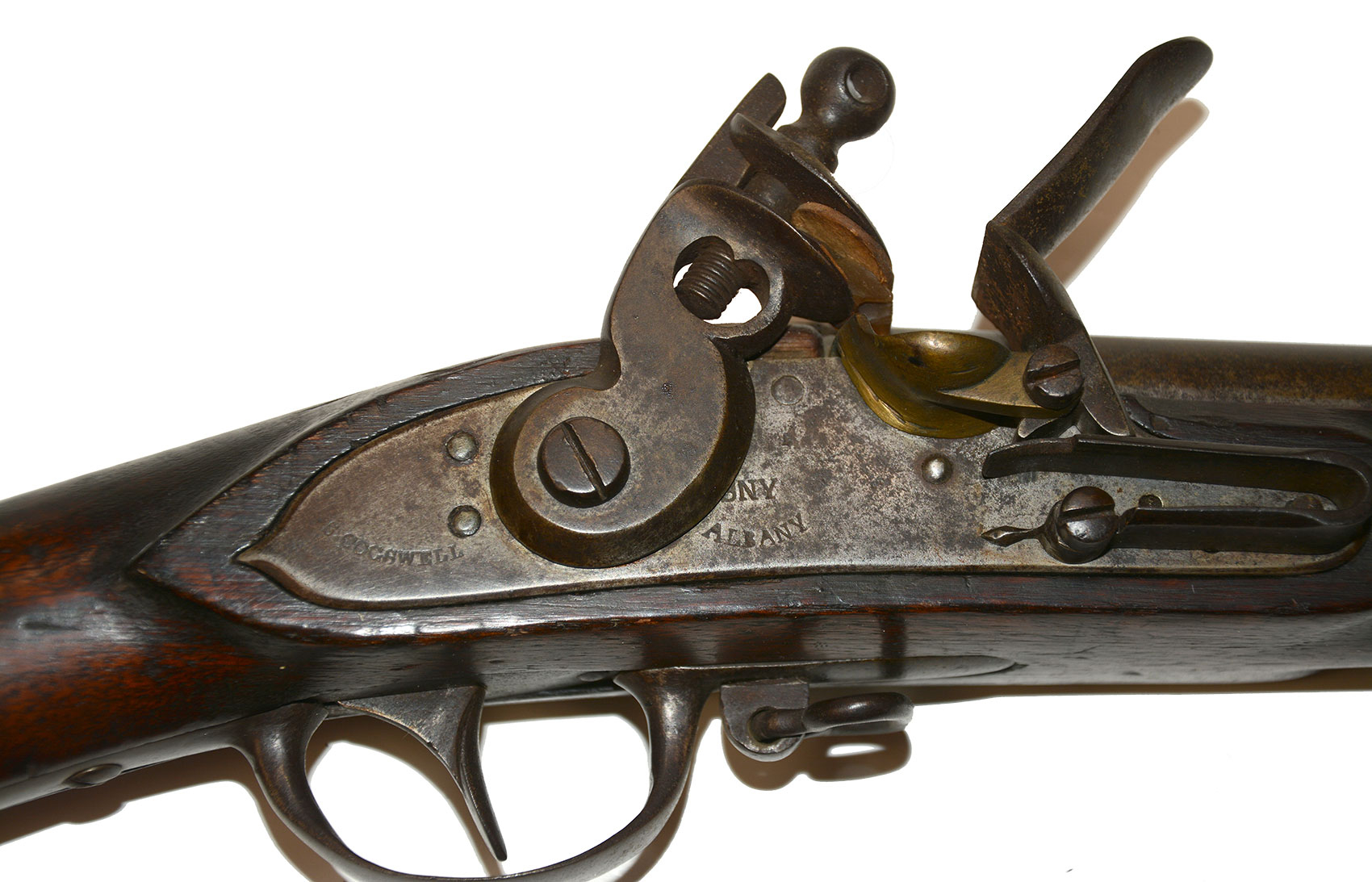
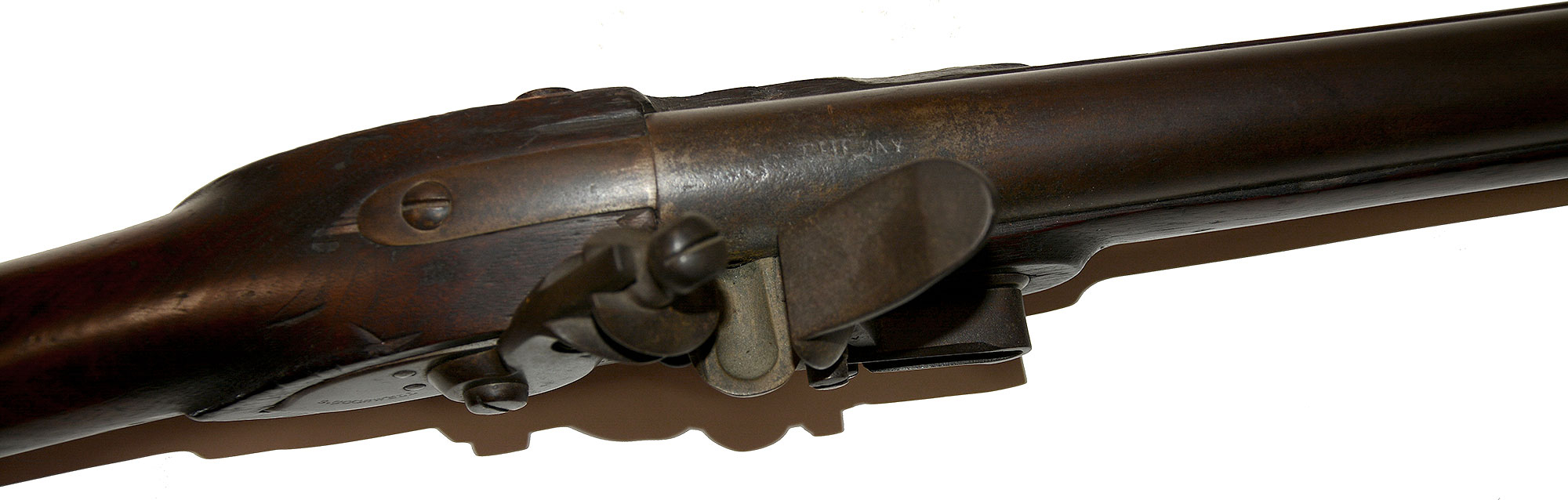
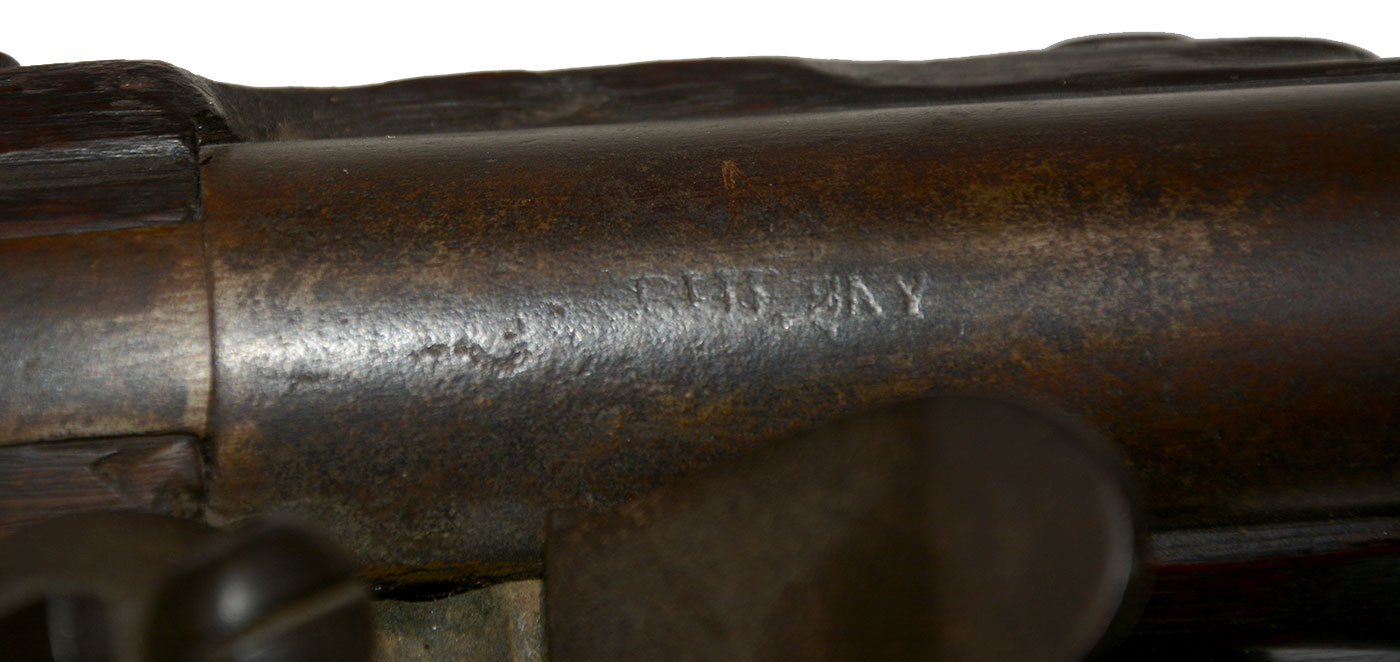
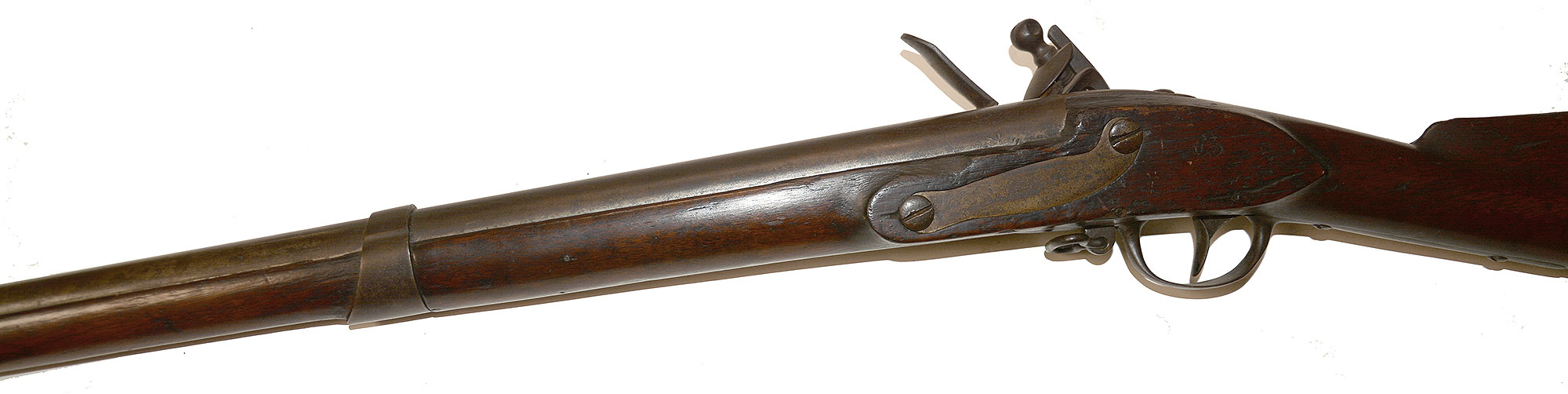
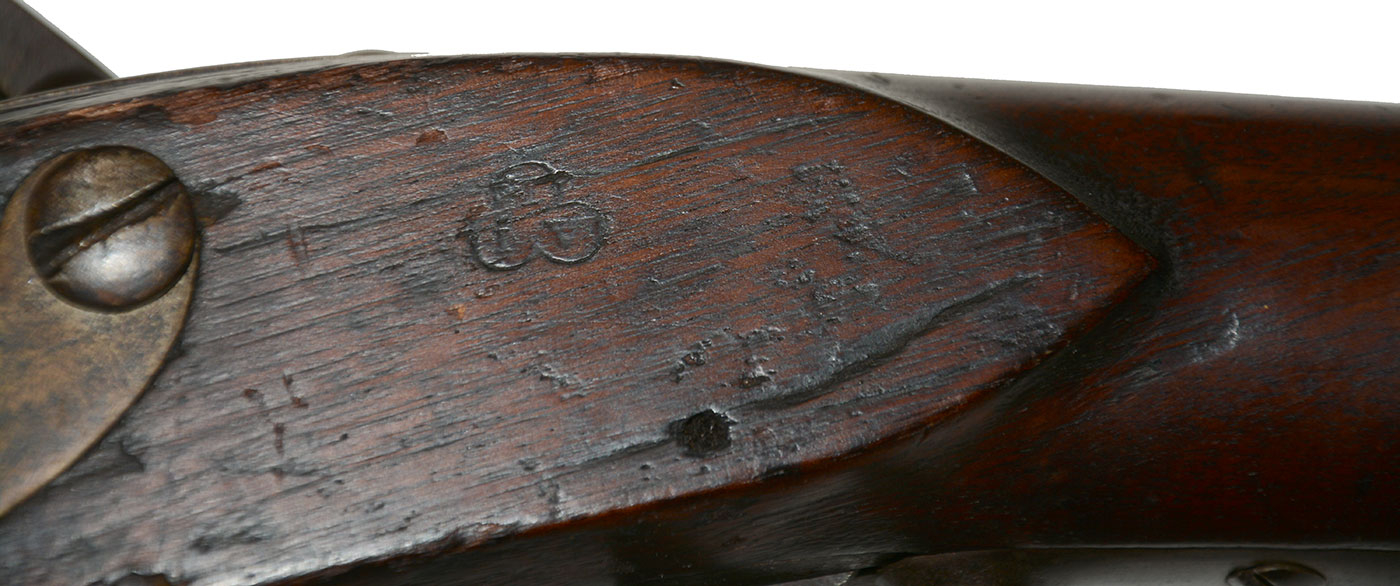
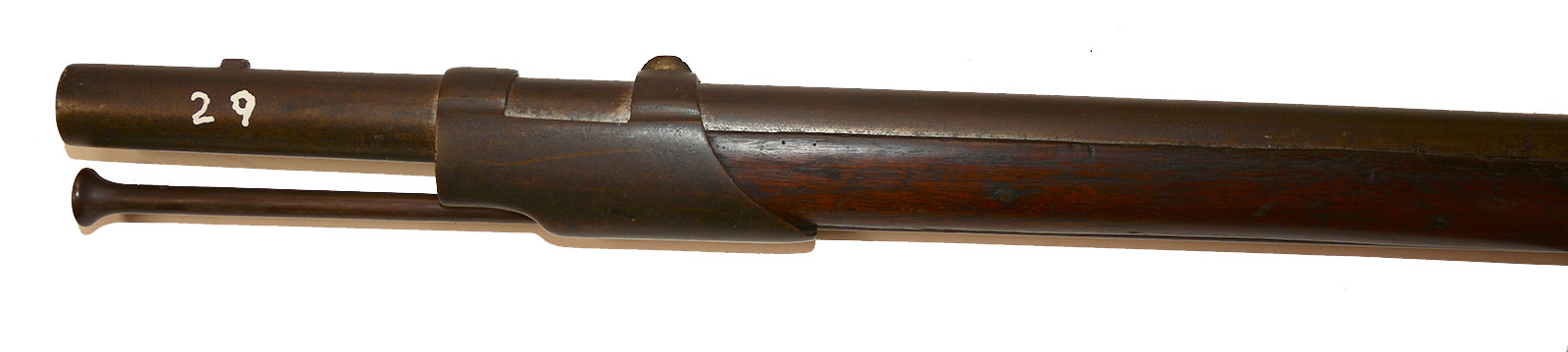
This musket was clearly made for New York, bearing a partially legible three-letter inspector’s stamp on the barrel near the frizzen followed by “SNY” in slightly smaller letters indicating inspection or proof and state ownership. These muskets show up with a couple of different lockplate, proof and inspection markings. On this one, and we have seen one other, “S. COGSWELL” is stamped behind the hammer in a horizontal arc and “SNY” in a straight line over “ALBANY” is stamped in a horizontal arc in front of the hammer. In some other examples the Cogswell stamp is placed under the other markings forward of the hammer. In both styles, in the limited number we have seen, the barrel is shows a similar SNY ownership mark on top of the barrel with an inspector’s initials before it. On the musket illustrate by Moller, 144.P1F, those initials are “H.P.” Here they are only partially legible, rubbed along the bottom, but clearly three letters, perhaps “BHF.” Moller states the side-flat on his was stamped with an “H” over “MC” in round cartouche with scalloped edges. On this the stamp is clearly a trefoil, with the letters tough to make out, but seemingly an “L” and a “V” in the bottom two circles. Please see our photos.
The difference in markings perhaps reflects the two different contracts, though it could simply result from a longer production run and period of delivery. In addition, we note a difference in barrel length. Moller’s example and others with those Cogswell markings have 41-1/2” barrels, where this one and the one other we have seen with the same style of markings, has a 42-1/4” barrel and a composite Cogswell musket illustrated by Moller as 144.P2M, utilizes an SNY marked 42-1/2” barrel.
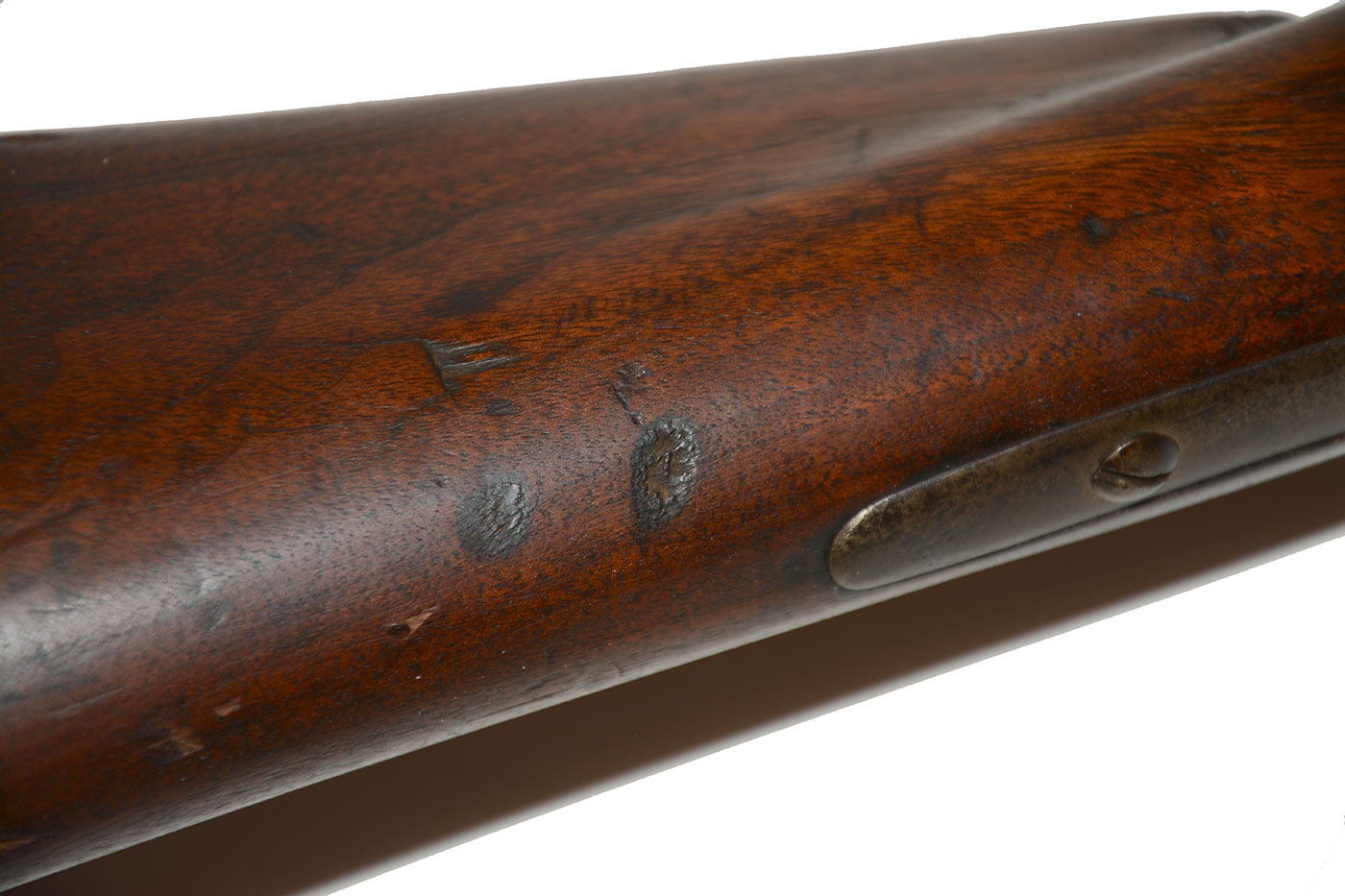
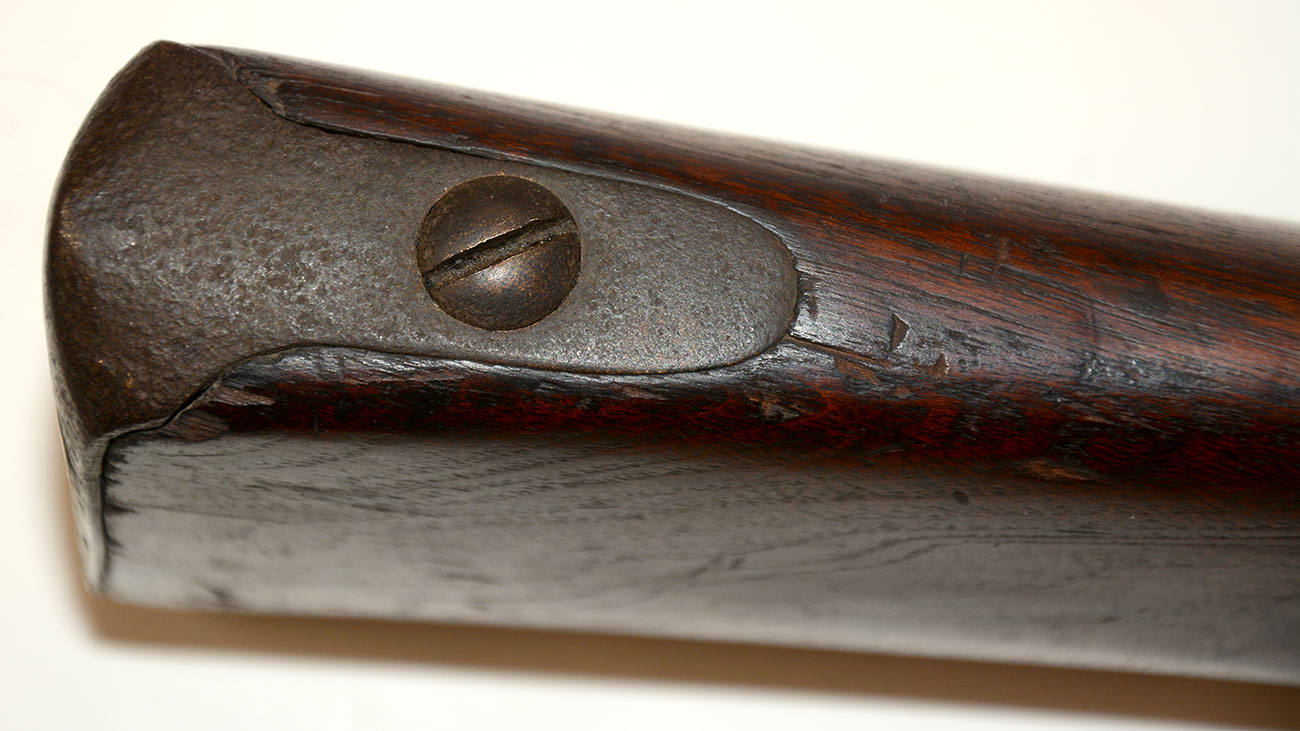
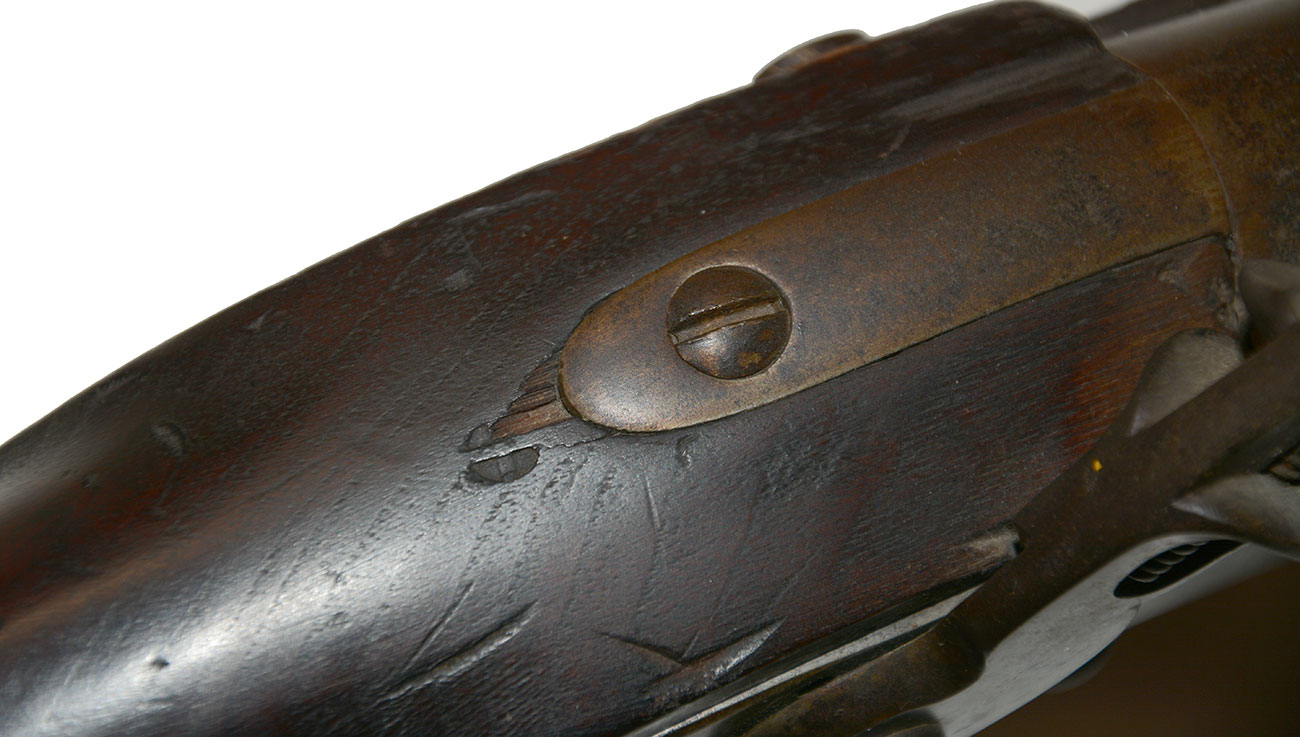
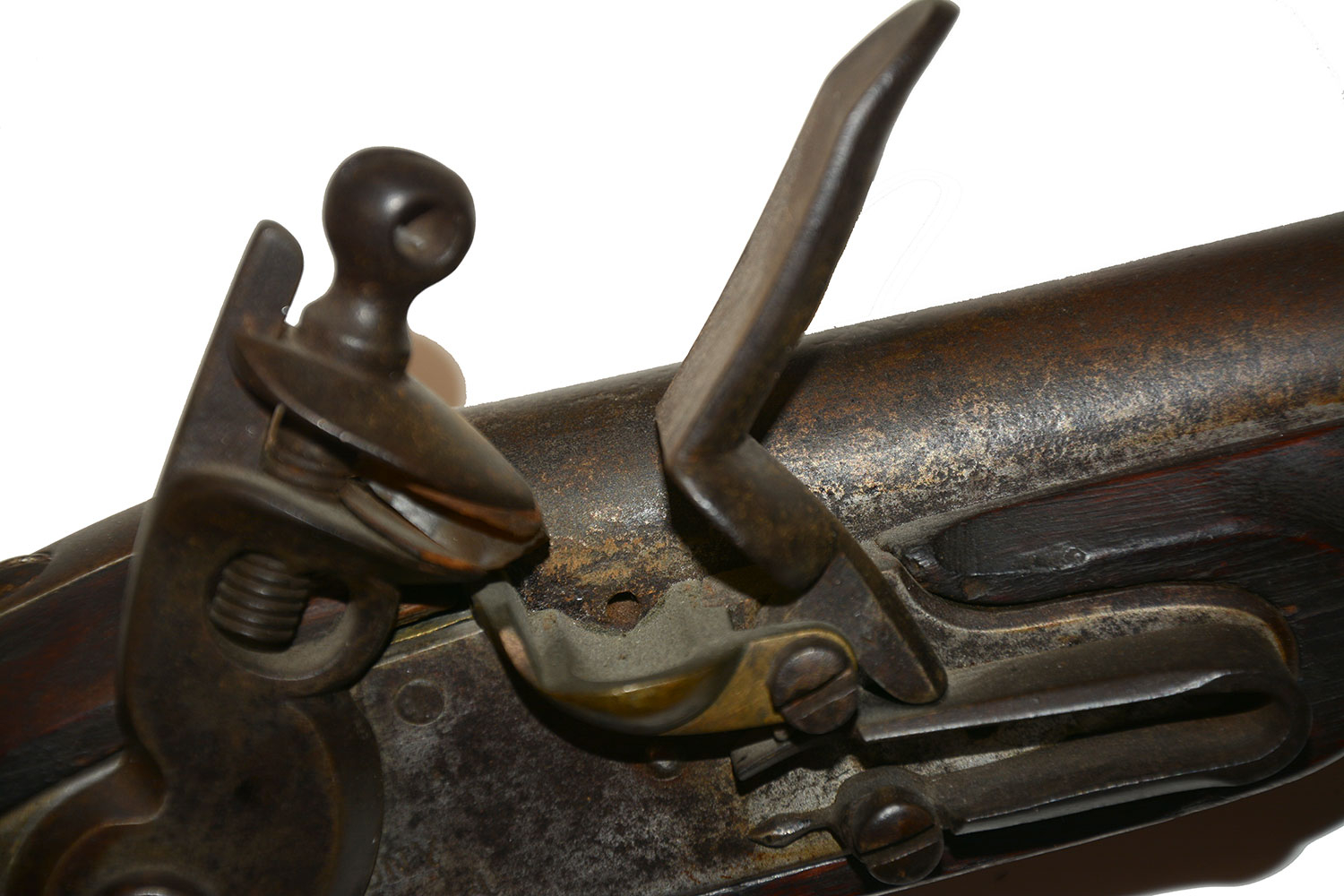
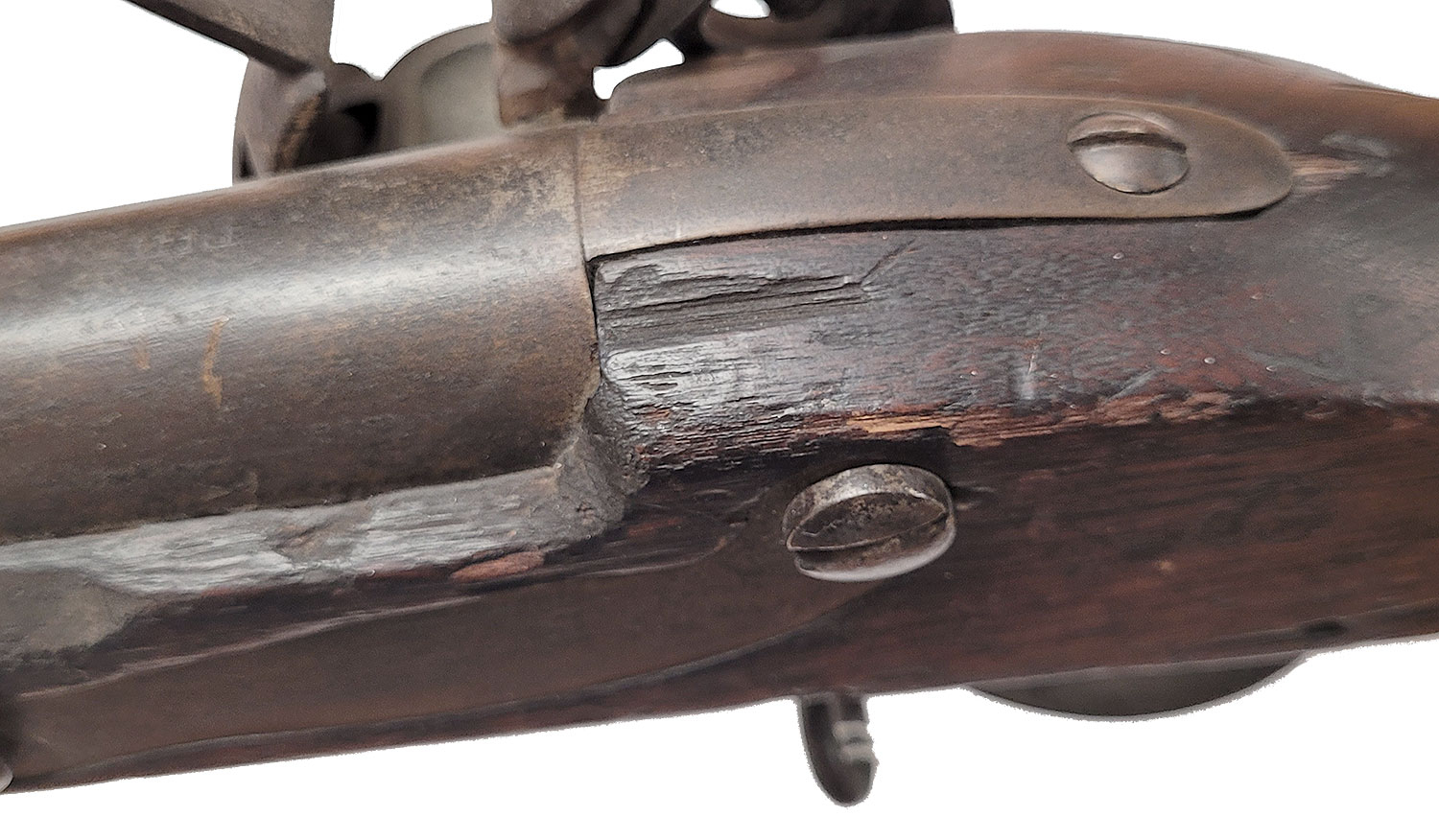
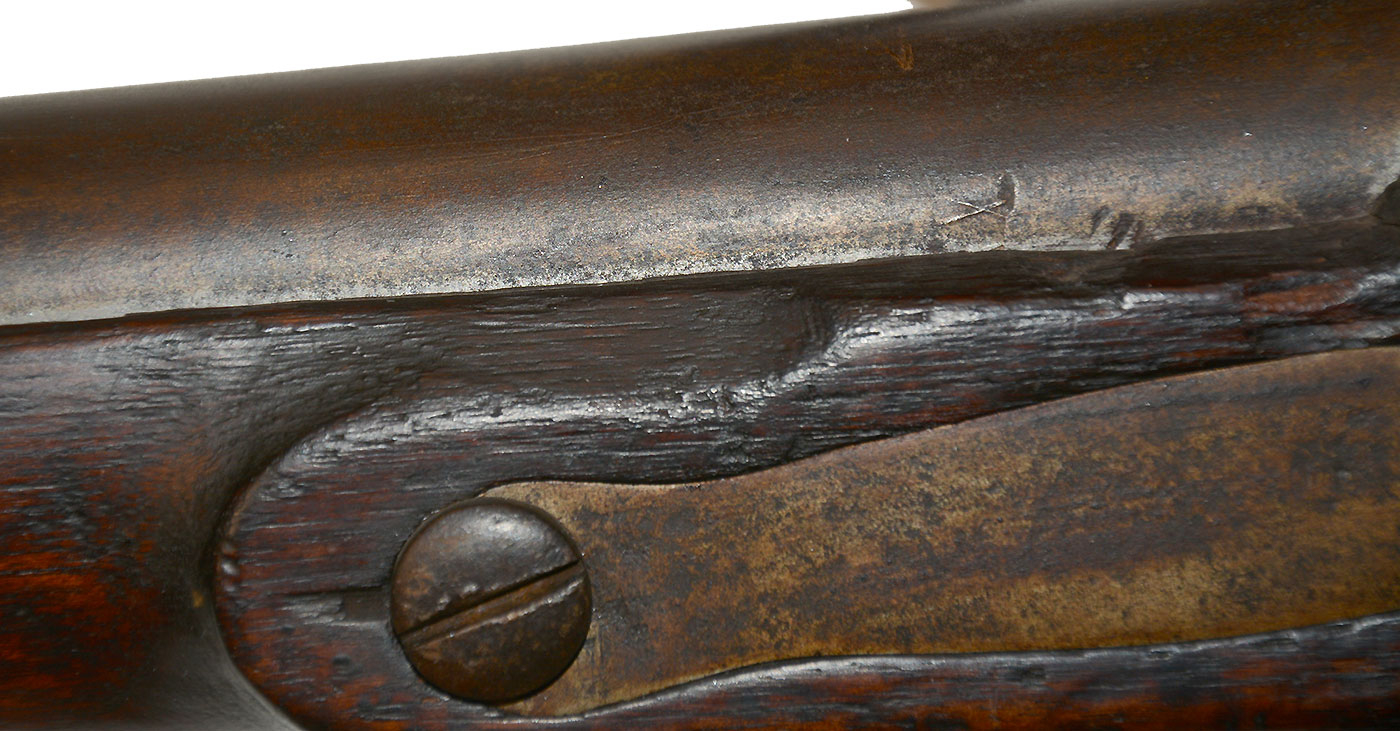
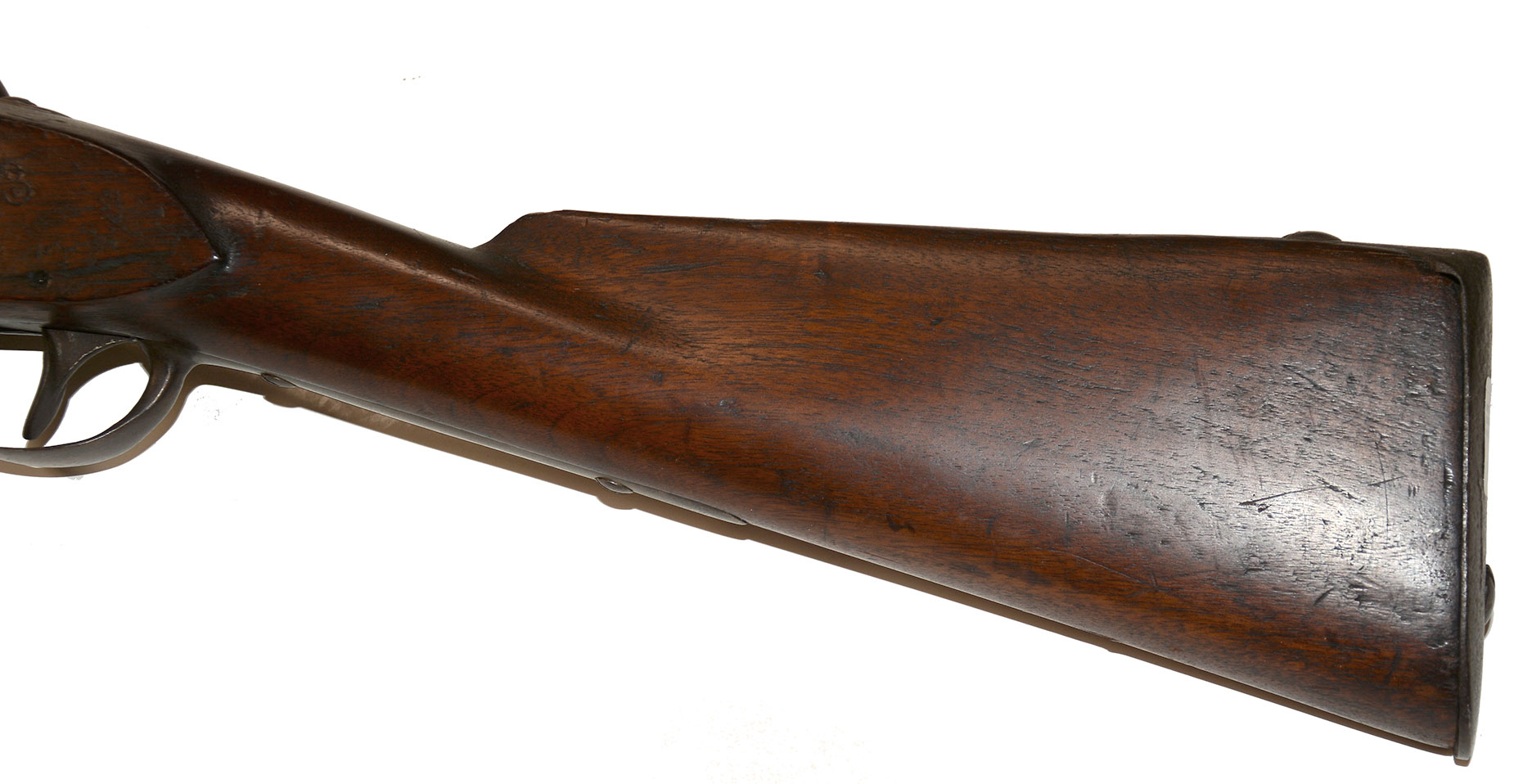
Overall the musket follows Cogswell’s general lines, which followed a Springfield configuration as modified by Whitney in muskets he supplied to the state starting with an 1808 contract, with muskets later supplied to the state by both Cogswell and Lemuel Pomeroy following his modifications, using a slightly heavier barrel and stock, etc., and most noticeably, a horizontally mounted brass pan. This one rates very good for condition, with original parts, good mechanics, and in original flint. The markings are good- sharp on the lockplate, somewhat worn on the barrel and side flat, but visible and partially legible. The wood to metal fit is tight. The wood shows scattered handling dings, some drag lines, with shallow divots on the right underside of the buttstock, a slight chip at the base of the breechplug tang and left barrel breech, etc., but no cracks, splintering or breaks and good edges to the lock apron, side flat (with some wear at top front along the barrel, a chip at the forward lock screw, etc., but good edges along the barrel, good definition of the wrist, and generally good finish and color. The metal is generally smooth with the barrel a plum brown mixed with gray, the sideplate more brown, but smooth as well. We see just a little shallow corrosion around the vent. The brass pan has a mellow, aged tone. The lock shows as a mix of gray and plum, with the markings sharp. All bands, springs, and swivels are present, as is the bayonet lug and rammer.
This is very good War of 1812 musket by a maker whose products in some ways show enough variation to be a collecting category of their own. [sr][ph:L]
DISCLAIMER: All firearms are sold as collector's items only - we do not accept responsibility as to the shooting safety or reliability of any antique firearm. All firearms are described as accurately as possible, given the restraints of a catalog listing length. We want satisfied customers & often "under" describe the weapons. Any city or state regulations regarding owning antique firearms are the responsibility of the purchaser. All firearms are "mechanically perfect" unless noted, but again, are NOT warranted as safe to fire!
~~~~~~~~~~~~~~~~~~~~~~~~~~~~~~~~~~~
THIS ITEM, AS WITH ALL OTHER ITEMS AVAILABLE ON OUR WEB SITE,
MAY BE PURCHASED THROUGH OUR LAYAWAY PROGRAM.
CLICK HERE FOR OUR POLICIES AND TERMS.
THANK YOU!
Inquire About NEW YORK 1808 PATTERN CONTRACT FLINTLOCK MUSKET BY COGSWELL
Most Popular
Historical Firearms Stolen From The National Civil War Museum In Harrisburg, Pa »
Theft From Gravesite Of Gen. John Reynolds »
Selection Of Unframed Prints By Don Troiani »
Fine Condition Brass Infantry Bugle Insignia »
Rare Identified 65Th Ny Sergeant’s Jacket, With Manscript Material: 1St U.s. Chasseurs »
featured item
CIVIL WAR U.S. CAVALRY HARDEE HAT
A very good example of the regulation U.S. Model 1858 Army Hat, known also as the Hardee or Jeff Davis hat, adopted by the new cavalry regiments of 1855 and in 1858 by the entire army. Constructed of stiffened black felt, oxidized very slightly… (1273-139). Learn More »
site search