


site search
online catalog
US “CONTRACT 1812” MUSKET BY J.J. HENRY

Hover to zoom



$1,850.00
Quantity Available: 1
Item Code: 2025-3648
Shipping: Determined by Method & Location of buyer
To Order:
Call 717-334-0347,
Fax 717-334-5016, or E-mail
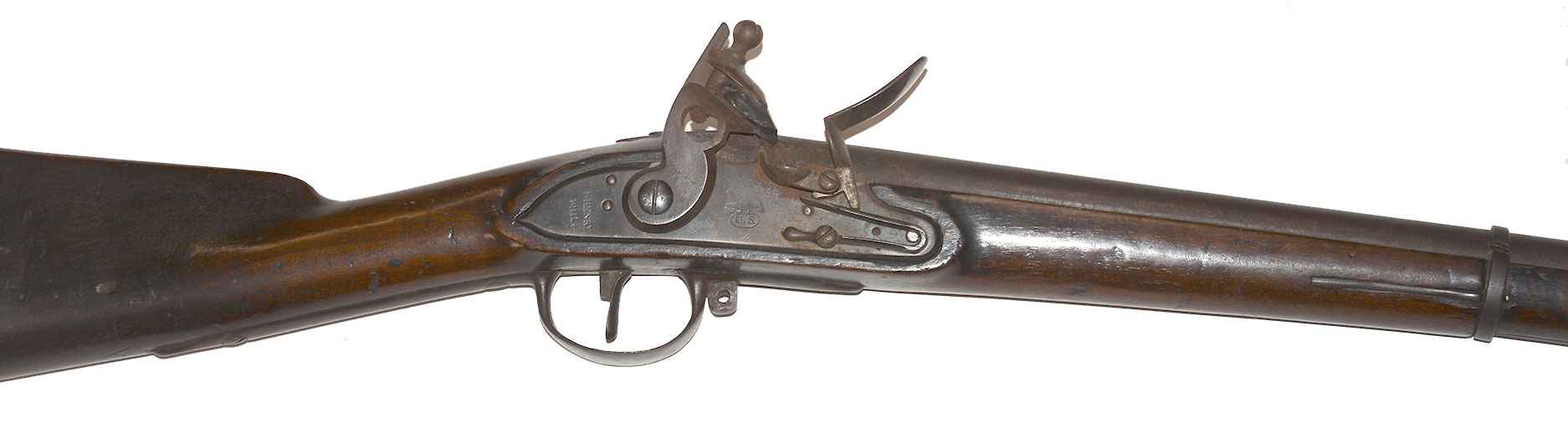
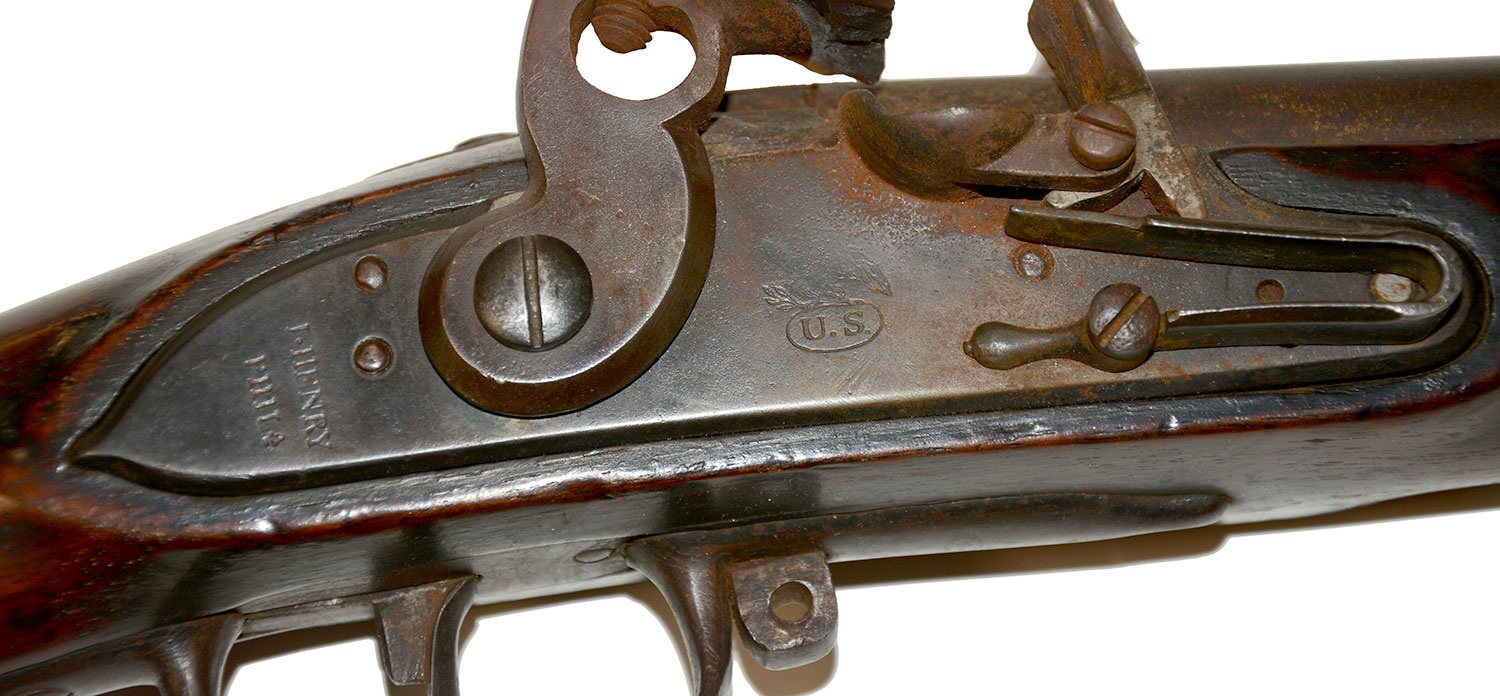
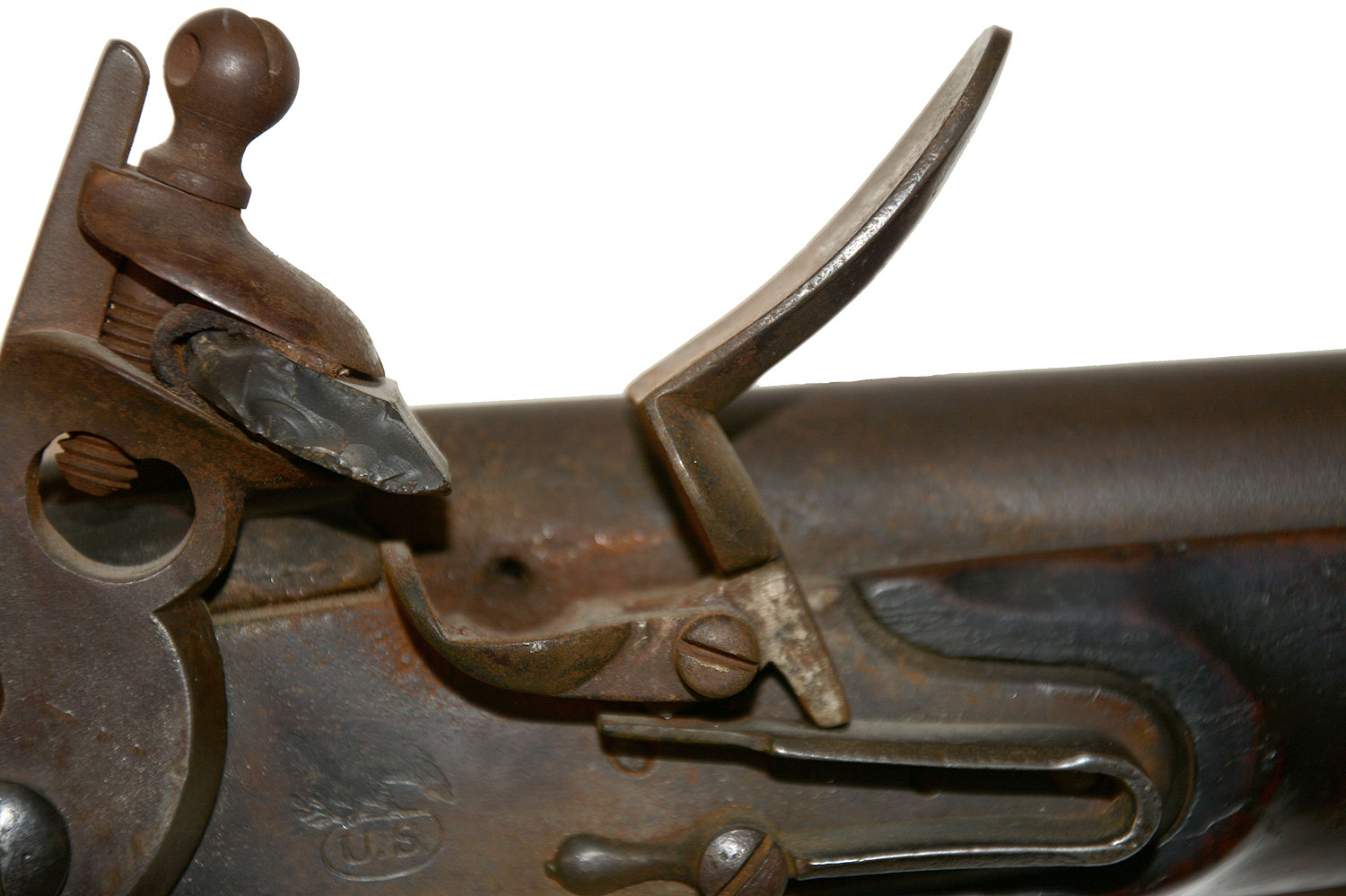
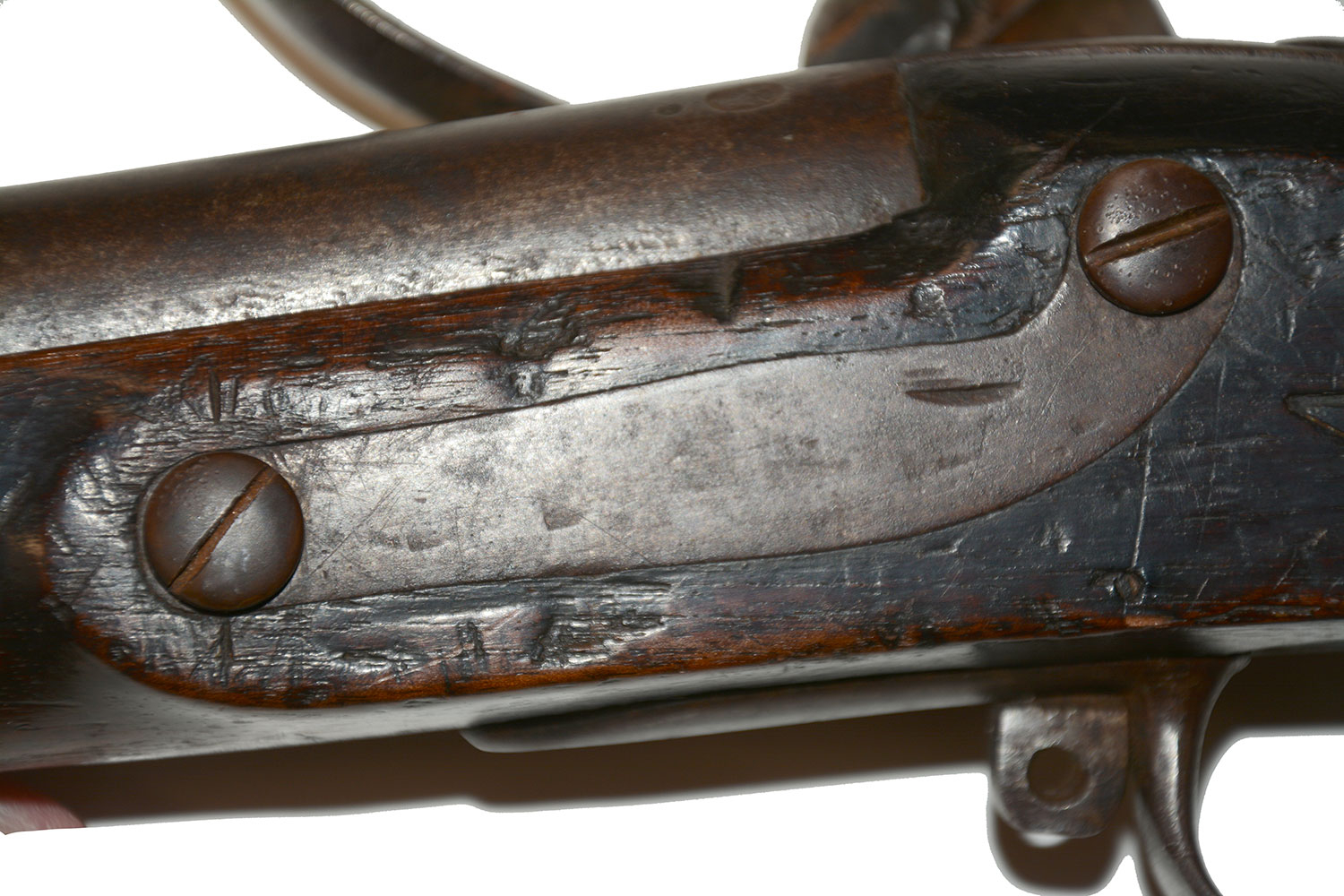
Flayderman noted that US Contract Muskets Model 1812 or Contract 1812 types would more aptly be titled, “Contract Muskets of the 1812 Period.” This J.J. Henry produced musket is a perfect example that some might call an 1808 (as sort of an extension of an old contract,) and that was, in fact, made between 1815 and 1817. William and John Joseph Henry were among the 1808 contractors bedeviled by cost over-runs, inconsistent pattern arms and contradictory directions from inspectors, delivering less than half of the 10,000 muskets they contracted for by 1812. In a partial effort to make up for the roughly $5,500 they still owed the government for advances on that contract, they received another contract, on Feb. 9, 1815, for 2,277 muskets (Moller; Flayderman says 2,707) at the relatively high price of $14.25 each. J.J. Henry bought out William’s share of the business and then began to complete the contract using metal components he himself made, rather than subcontracting them, delivering 300 muskets in 1815 and likely completing some 300 more by the time he, in turn, sold the business, inventory and tools to Marine T. Wickam, who would complete the contract, rent the shop, and pay Henry a commission on further muskets sold to the government, with a total of 1300 delivered by Wickam in 1815 and the remaining 677 in 1817. These used parts left over by Henry along with new parts produced by Henry as subcontractor to Wickam. (The Henry family had other workshops than the one leased to Wickam.) There were apparently enough lockplates already forged and marked by Henry to fill the contract- none are known from this contract marked by Wickam. All are marked behind the hammer like this one, “I HENRY / PHILA” but show three variations in the marking forward of the hammer: an eagle turned toward the muzzle over “US” in an oval, like this one; a smaller eagle with block “US;” and simply a “US” without the eagle. Wickam went on to take a contract for M1816 muskets, using more Henry parts, but with his own markings on the lockplates. See Moller Vol. 2 and Schmidt Vol. 1 for complete details.
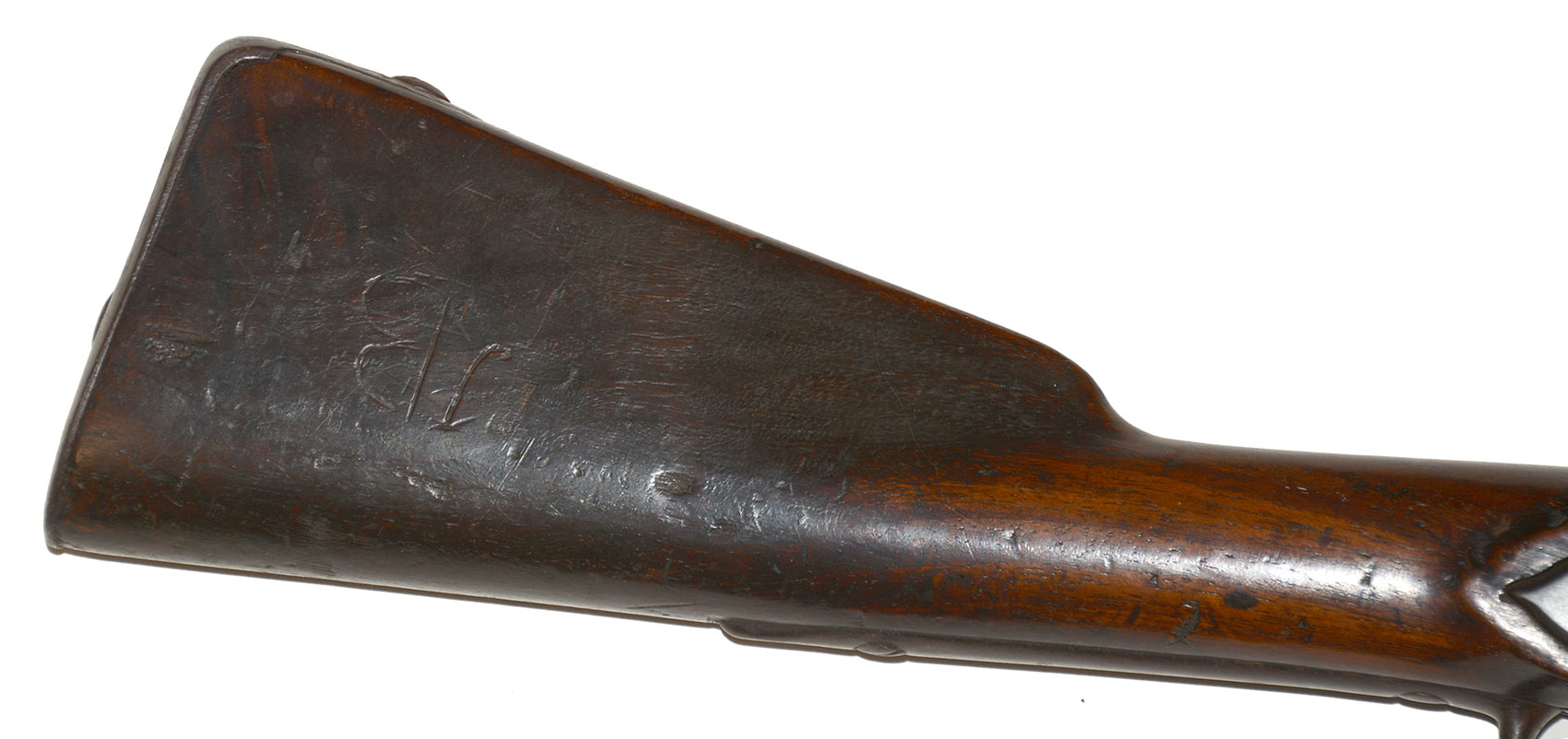
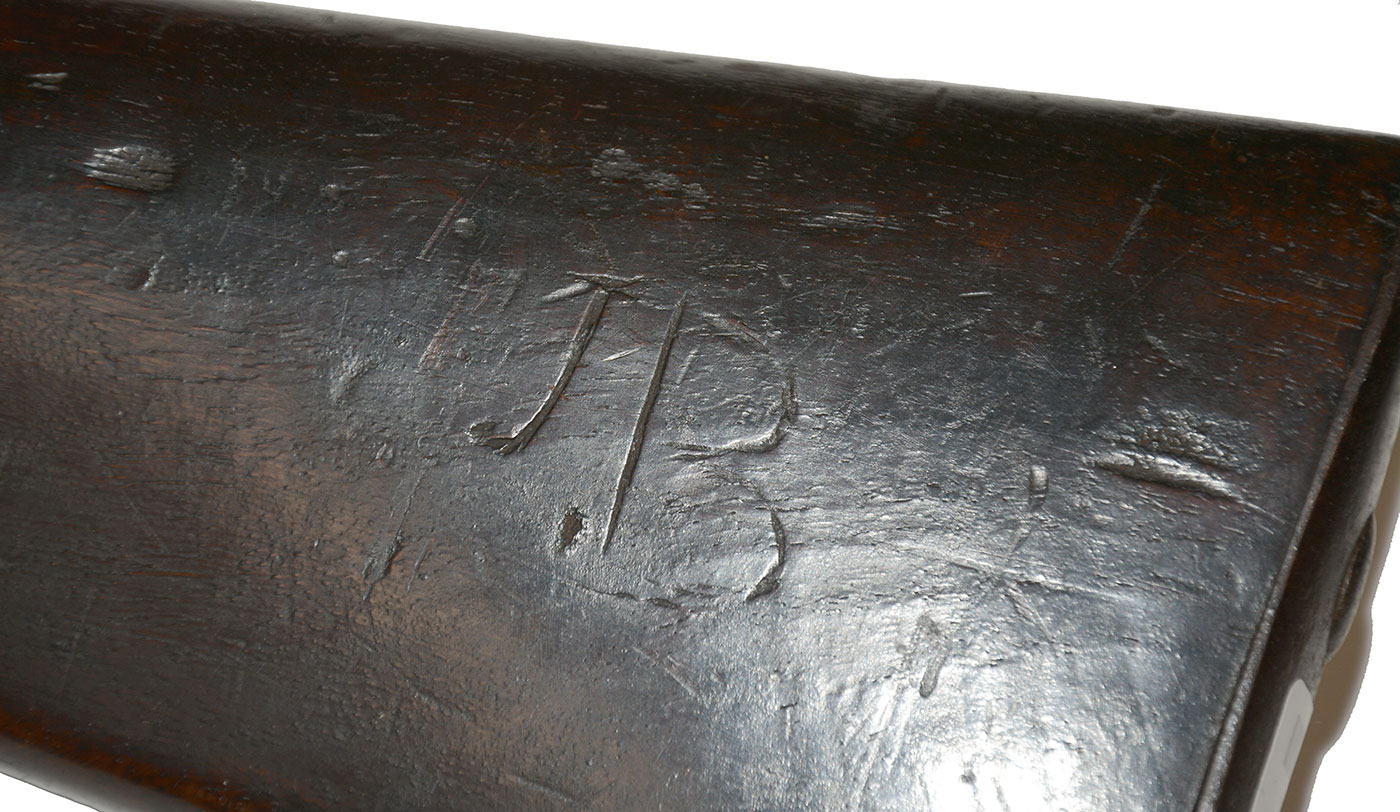
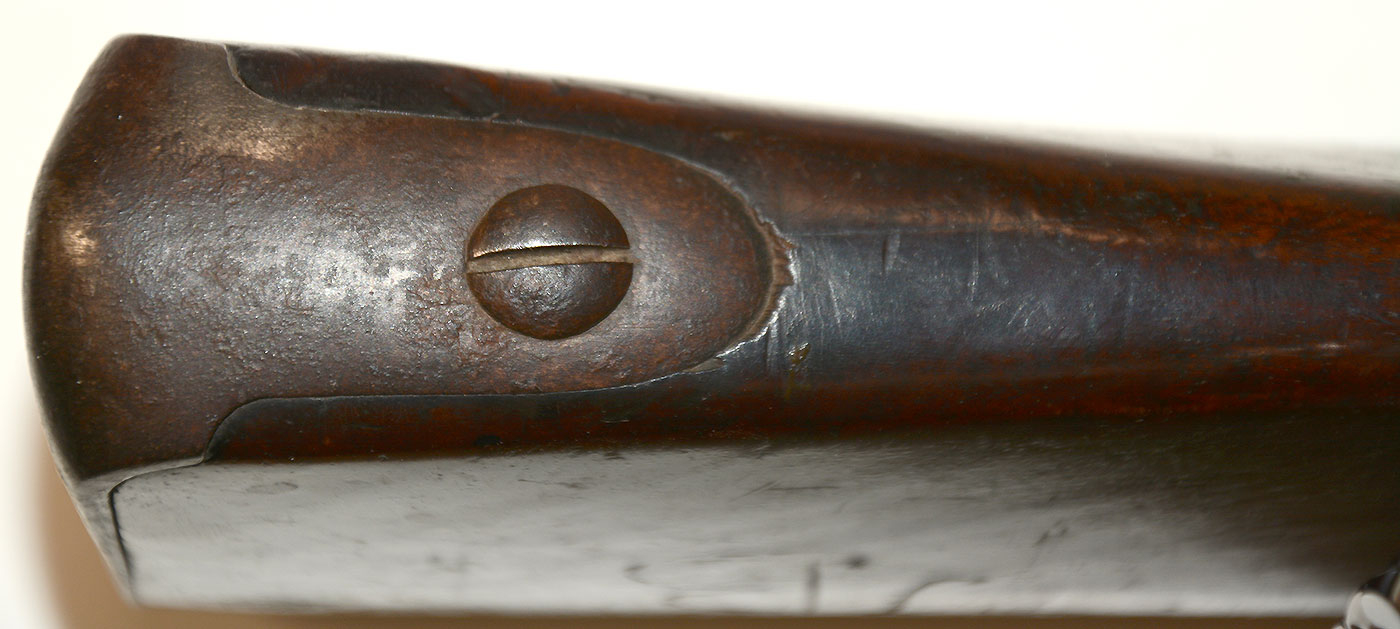
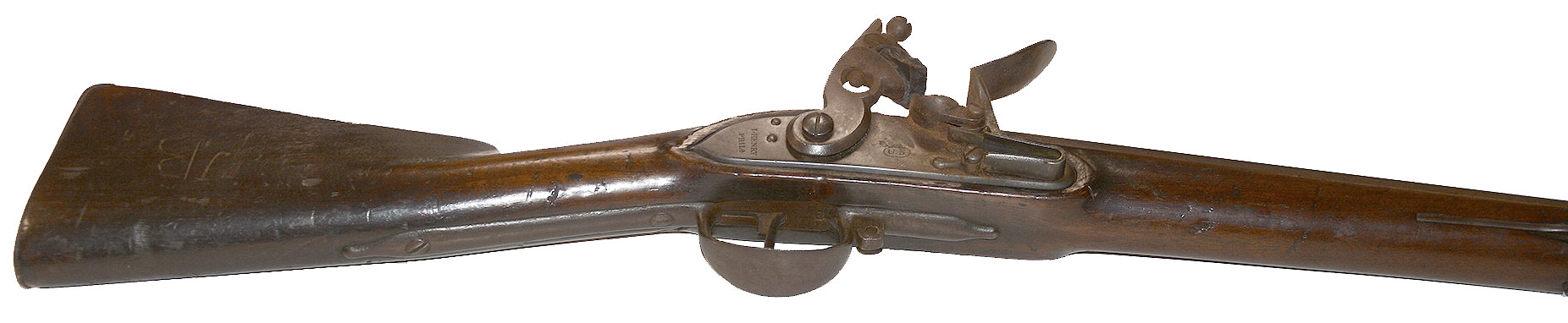
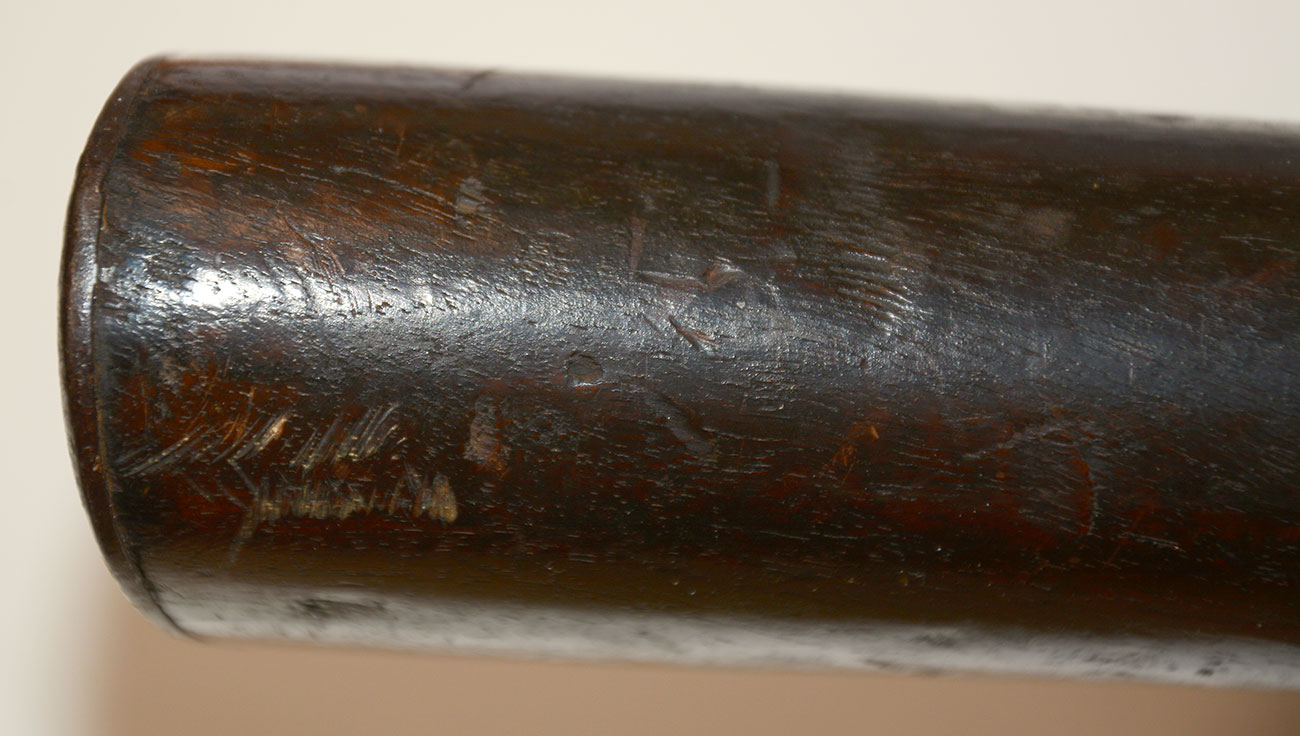
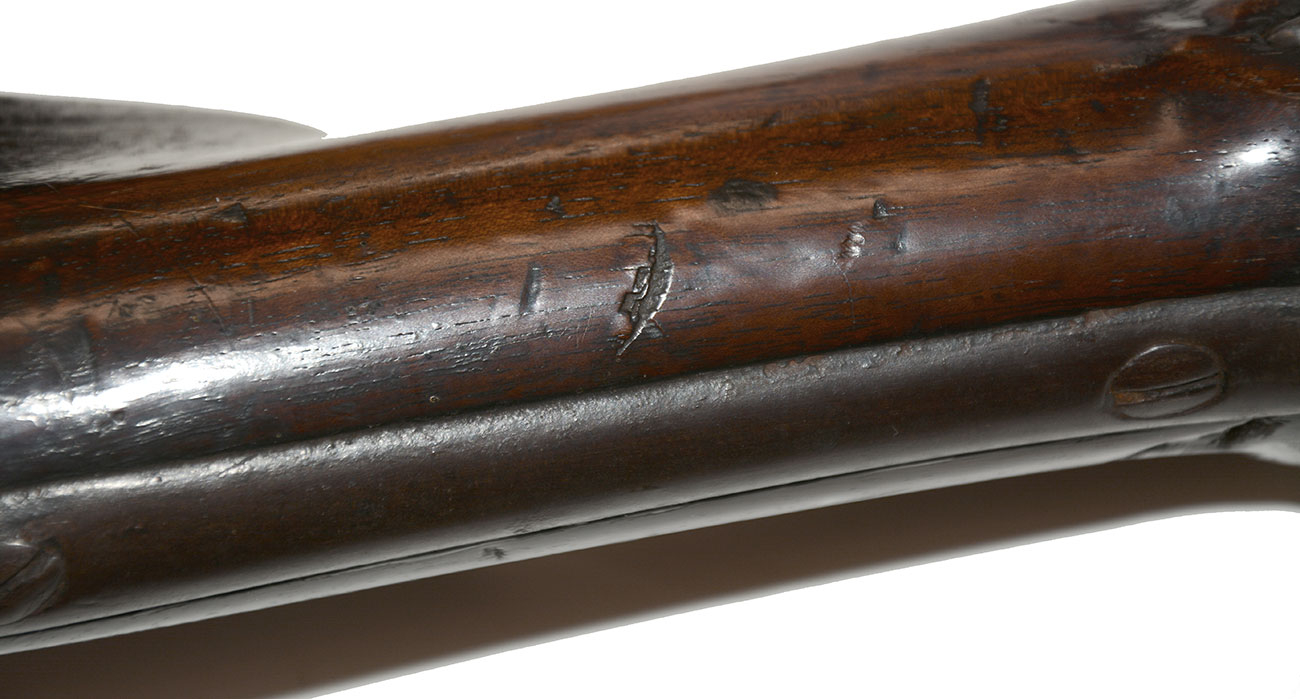
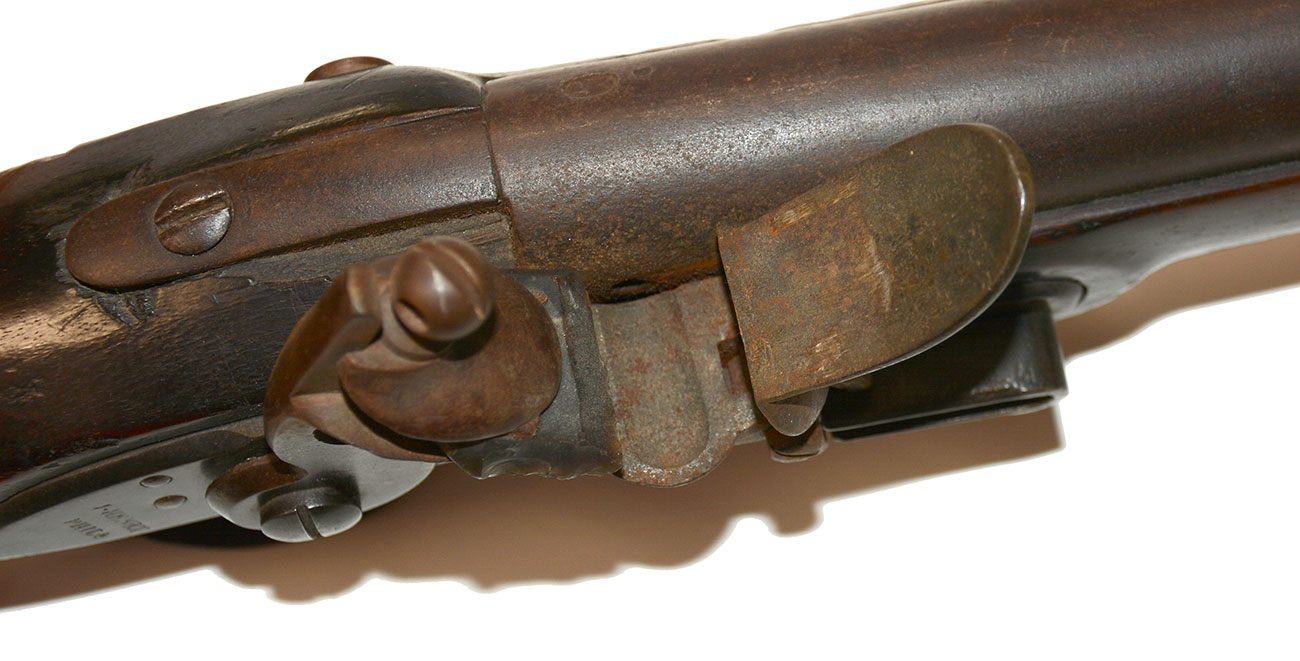
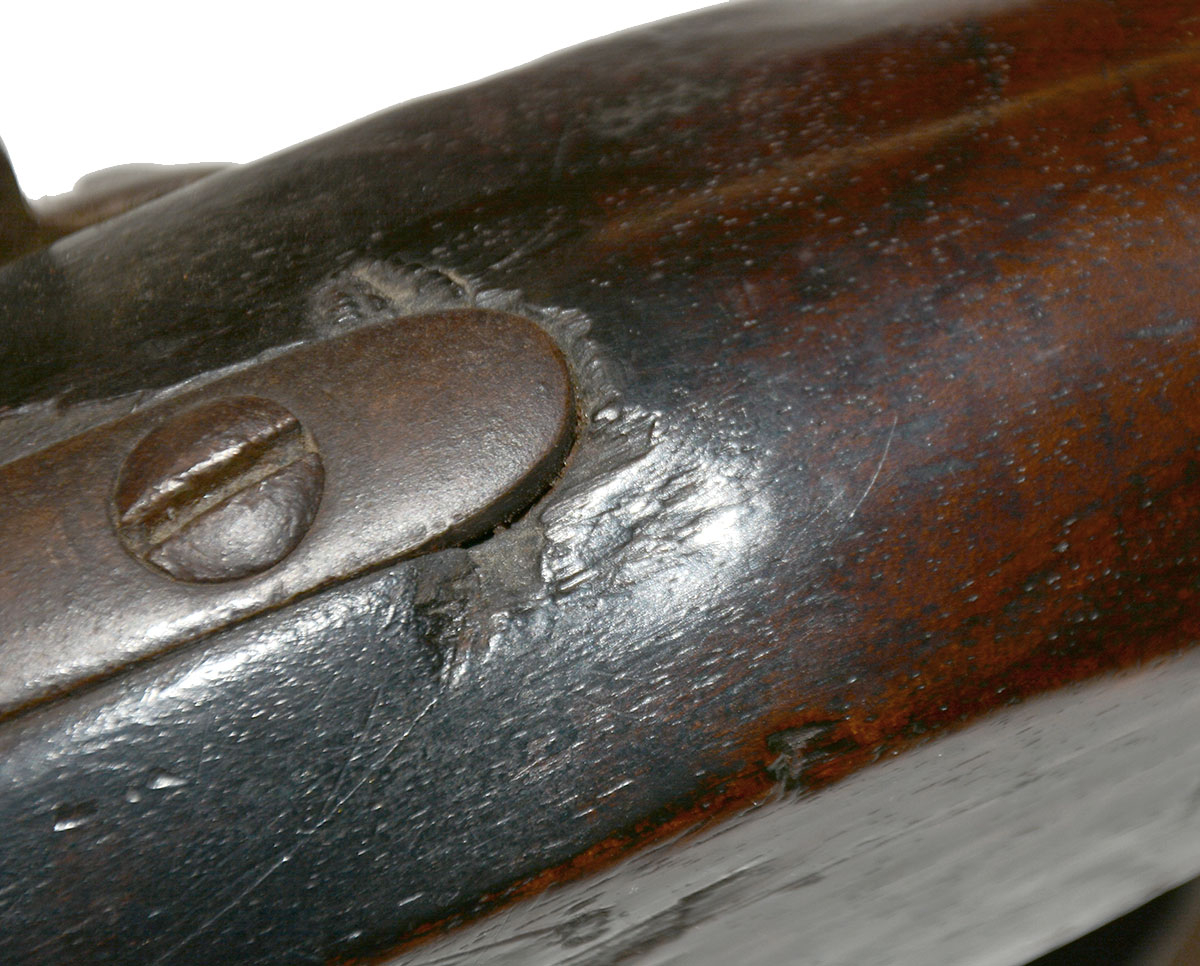
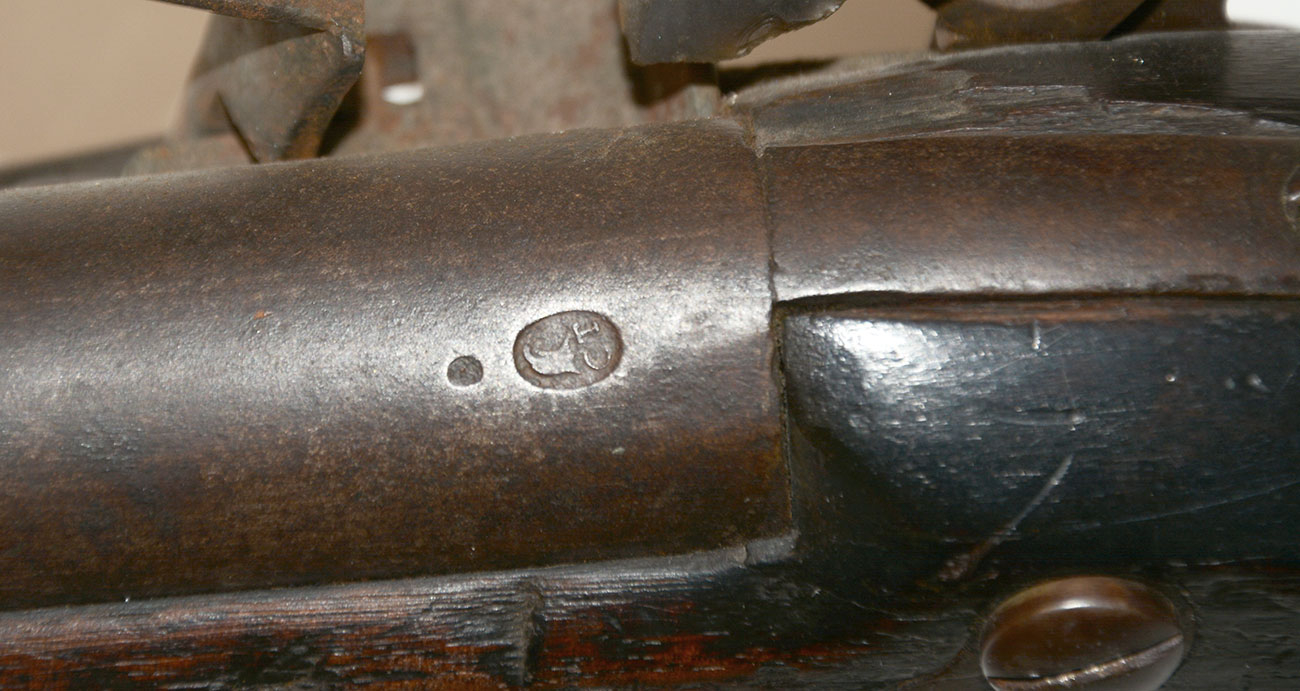
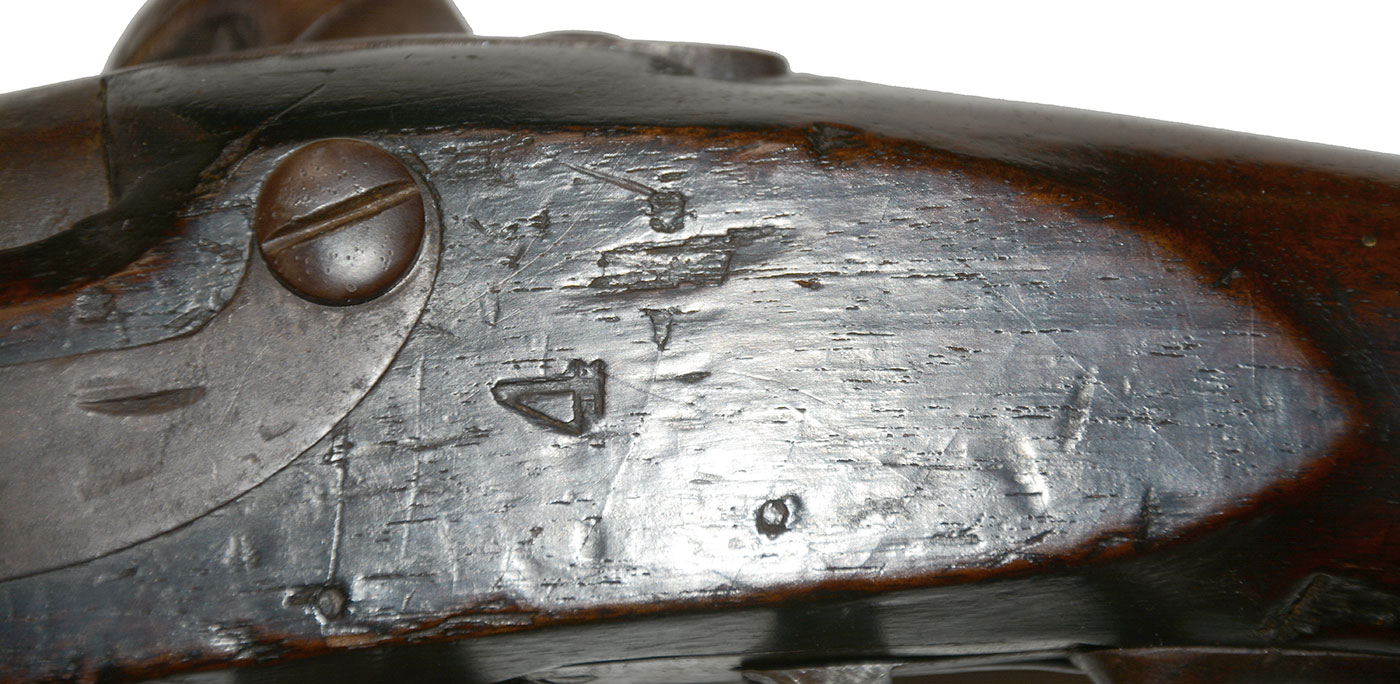
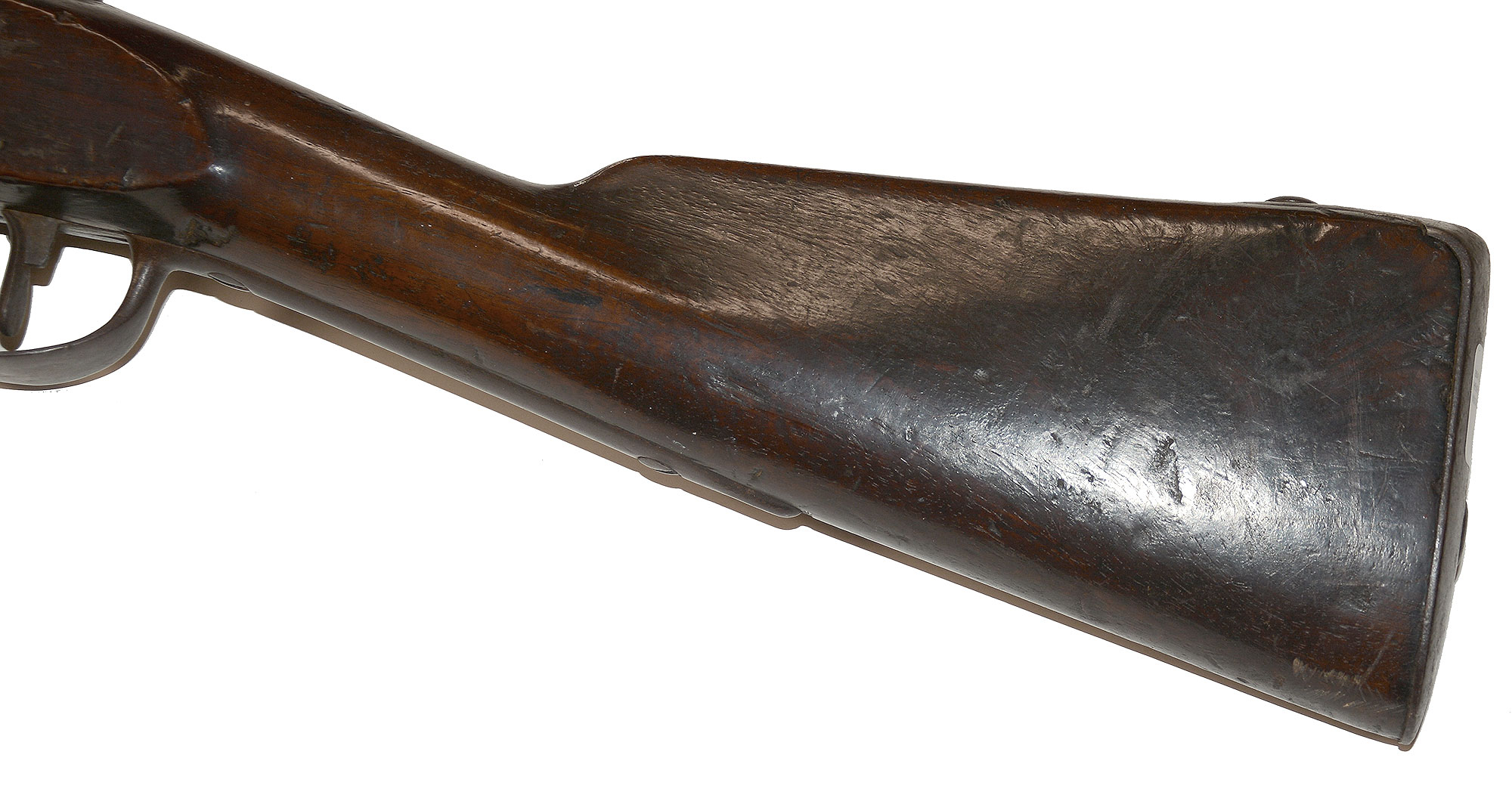
Moller notes Henry’s muskets followed the Harpers Ferry pattern, but are more “massively” proportioned than the muskets he had produced under his 1808 contract, likely because he had decided to forge his own parts. This musket rates very good for condition, still in flint, with full length 44-1/2” inch barrel, retaining the bottom mounted bayonet stud, good markings in the metal, good fit of wood to metal, with the wood showing some stains, dings and some small chips and a set of carved initials on the right, but no cracks or breaks. The upper and middle bands are good. The lower barrel band is a narrow, very old, replacement, likely from later days in civilian hands. The ramrod has a slight bend near the tip and is period, though whether always with the musket is anyone’s guess. The sling swivel is in place on the upper band, but missing from the triggerguard. The barrel is smooth metal, showing mostly as plum, with some shallow corrosion and brown at the vent, but a clear V with eagle’s head and CT in a sunken oval, indicating US proof/inspection of a contract arm. The lockplate shows plum at the rear, with gray and light brown forward. The lockplate marks are distinct. The triggerguard is smooth metal, mostly brown. The buttplate has some shallow corrosion and shows a mix of gray and brown. The wood shows decent edges along the barrel, with some slight rounding and one or two short places where an old chip was smoothed out by handling over the years. The ramrod channel shows expected wear. The sides are good, showing some dings and handling marks, fewer on the right than the left, which shows them mainly aft of the lower band and on the sideflat, which also shows them along the top near the barrel, though a stamped “4” is clearly visible, as is a smaller “V” above it, over which there seems to be the remains of a cartouche. There is chipping along the right and bottom of the breechplug tang. The lock apron, however, has good edges. The wrist has been rubbed to a lighter brown by handling. The butt is dark and shows handling dings and scratches, more on the left than the right, but there a set of initials, “JB” scratched into the right butt, certainly a later civilian owner.
This is an interesting musket made by a prominent Pennsylvania gunmaking family and one that is part of the story of the country’s effort to develop its own arms industry to preserve its independence as hostilities with Britain occurred once again. [sr][ph:L]
DISCLAIMER: All firearms are sold as collector's items only - we do not accept responsibility as to the shooting safety or reliability of any antique firearm. All firearms are described as accurately as possible, given the restraints of a catalog listing length. We want satisfied customers & often "under" describe the weapons. Any city or state regulations regarding owning antique firearms are the responsibility of the purchaser. All firearms are "mechanically perfect" unless noted, but again, are NOT warranted as safe to fire!
~~~~~~~~~~~~~~~~~~~~~~~~~~~~~~~~~~~
THIS ITEM, AS WITH ALL OTHER ITEMS AVAILABLE ON OUR WEB SITE,
MAY BE PURCHASED THROUGH OUR LAYAWAY PROGRAM.
CLICK HERE FOR OUR POLICIES AND TERMS.
THANK YOU!
Inquire About US “CONTRACT 1812” MUSKET BY J.J. HENRY
Most Popular
Historical Firearms Stolen From The National Civil War Museum In Harrisburg, Pa »
Theft From Gravesite Of Gen. John Reynolds »
Selection Of Unframed Prints By Don Troiani »
Fine Condition Brass Infantry Bugle Insignia »
Rare Identified 65Th Ny Sergeant’s Jacket, With Manscript Material: 1St U.s. Chasseurs »
featured item
RARE MAINE GRAY FORAGE CAP; STENCILED HAVELOCK RAIN COVER AND STENCILED KNAPSACK; US HAVERSACK AND CANTEEN: PERLEY WHITTIER CO. K 24th MAINE
This grouping from Perley Whittier of the 24th Maine includes some very scarce material and his gray forage cap with Maine buttons on the chinstrap is downright rare. With this is his privately purchased long, havelock-style, caped rain cover -… (1179-229). Learn More »
site search