


site search
online catalog
RARE ASHER AND PLINY BARTLETT 1813 DATED MASSACHUSETTS PROCURED M1808 MUSKET

Hover to zoom



$1,950.00 SOLD
Quantity Available: None
Item Code: 2025-3662
This is just one of 125 muskets purchased by the State of Massachusetts from Asher and Pliny Bartlett of Springfield, Mass, through J. Farnsworth & Co. on Sept. 13, 1813, and transported to the Cambridge Arsenal two days later (See Moller, Vol. 2.) Massachusetts militia had been required to supply their own arms and with the start of the war the state was trying to build up a reserve of martial arms. State purchases like these are distinct from both privately purchased muskets and muskets produced for the US government and then allotted to the state under the Militia Act.
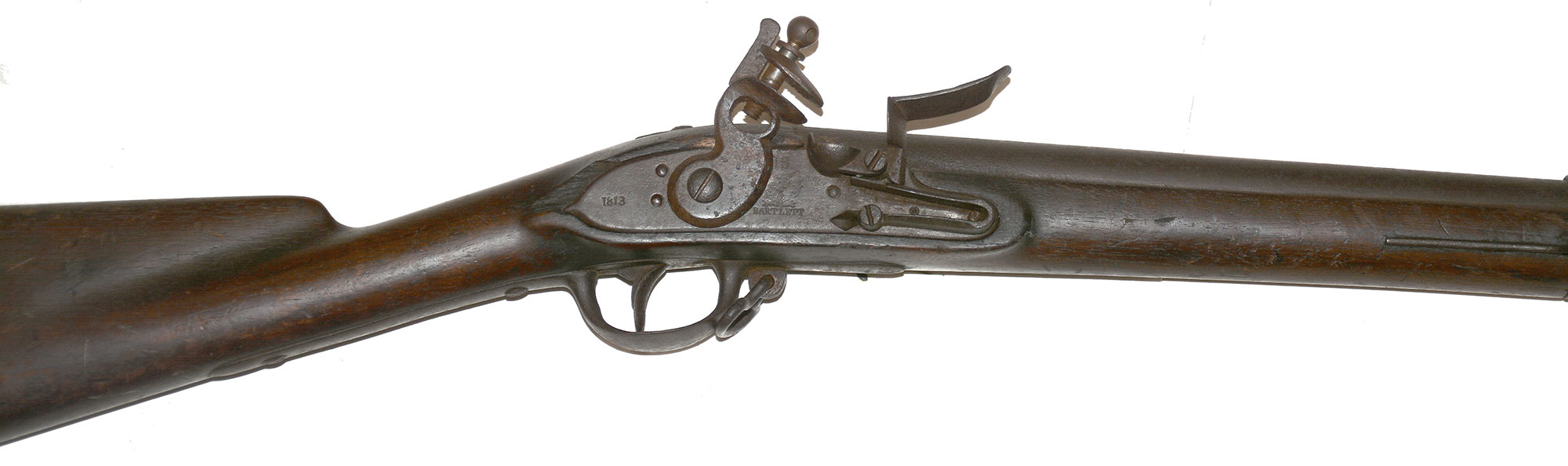
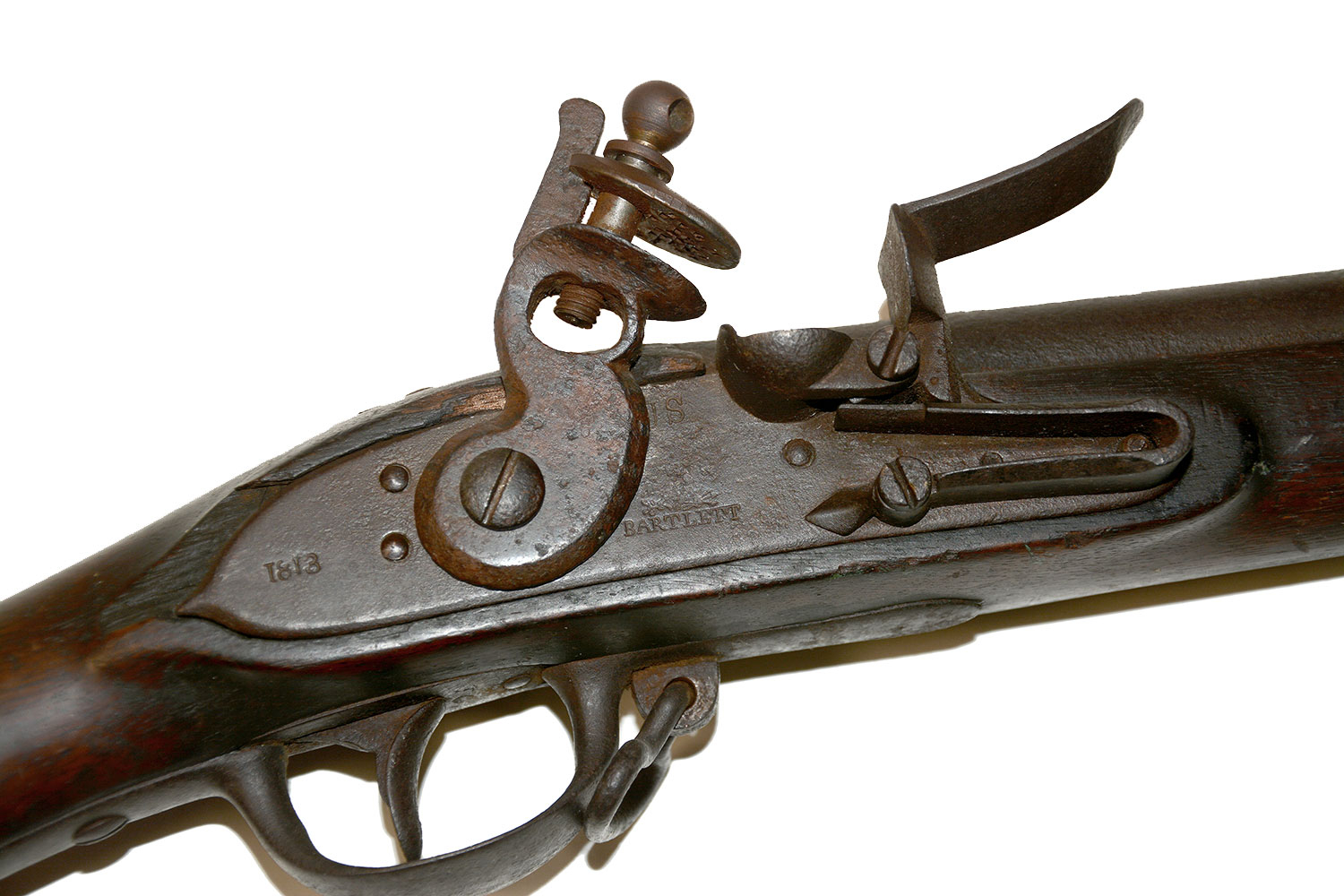
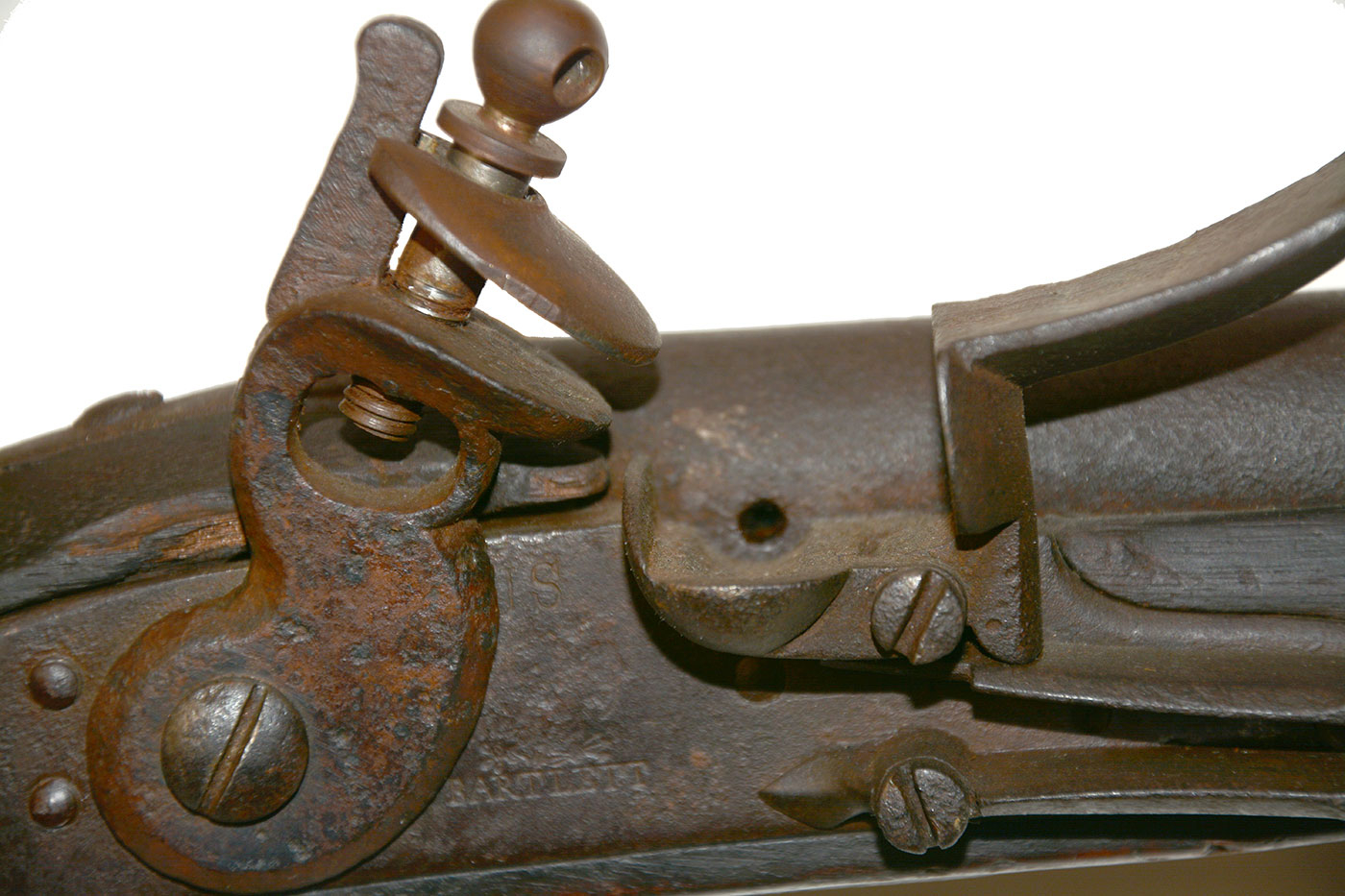
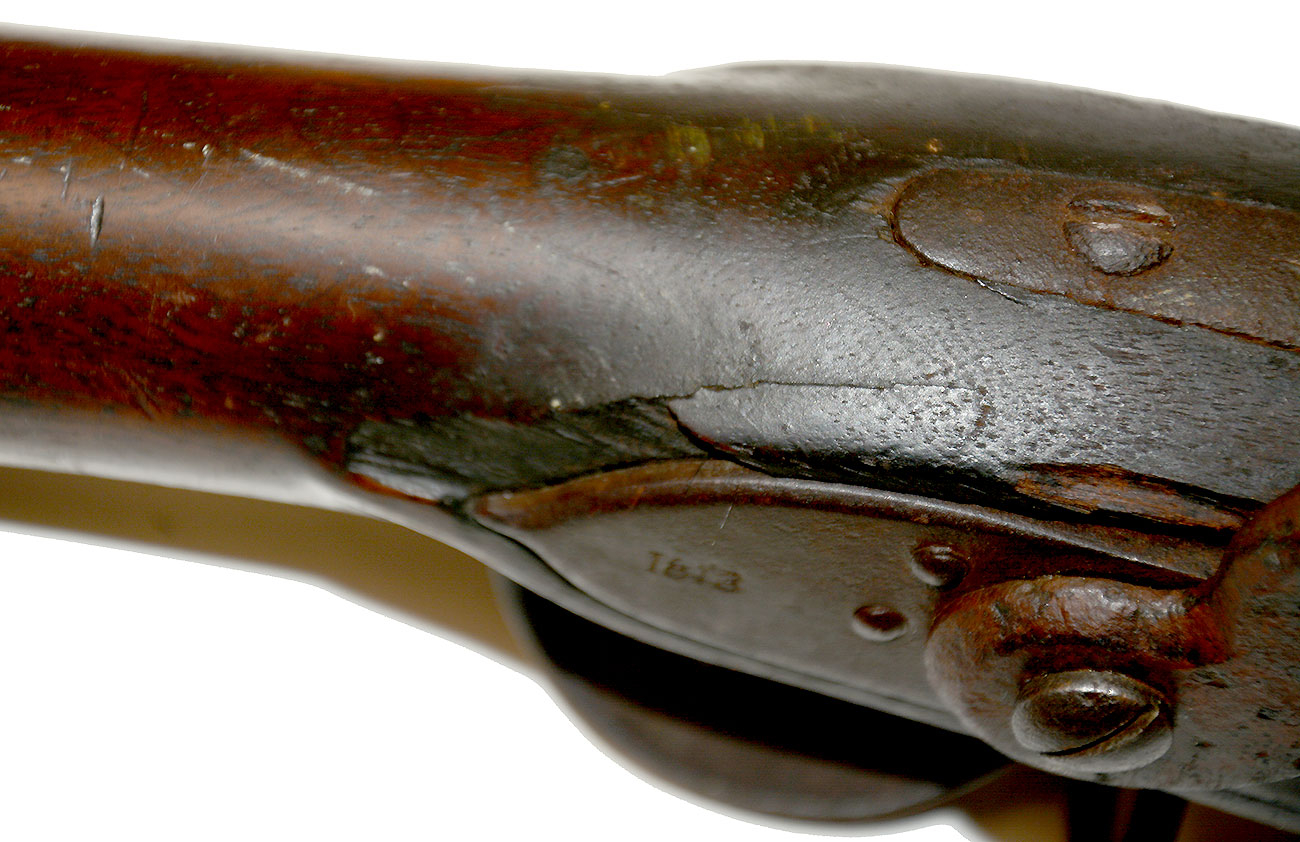
The Bartletts had obtained an 1808 US contract for 2,500 muskets to be delivered over five years. They managed to supply 1,825, not the worst performance by an 1808 contractor, delivered from 1810 through 1813. Riley illustrates five different lockplate markings used on their muskets. This is his #212, having an 1813 date at the rear of the plate and “US / [eagle] / BARTLETT” forward of the cock as here. Flayderman states that Bartlett state contract arms omitted the “US” on the lock but, even if so, this was a state purchase not a contract and the “US” marking could indicate a lock diverted from their US contract for more profitable sale elsewhere, or even used as a selling point indicating the musket matched US standards. (As a side note, one of the Bartletts’ lock markings uses a “S.CT” that Riley takes to be “State Contract,” noting the musket has Massachusetts proofmarks. Moller (2.203,) on the other hand, understands it as “State of Connecticut,” with Massachusetts proofmarks being distinct from state ownership marks and appearing because the Massachusetts required them on muskets made within the state.)
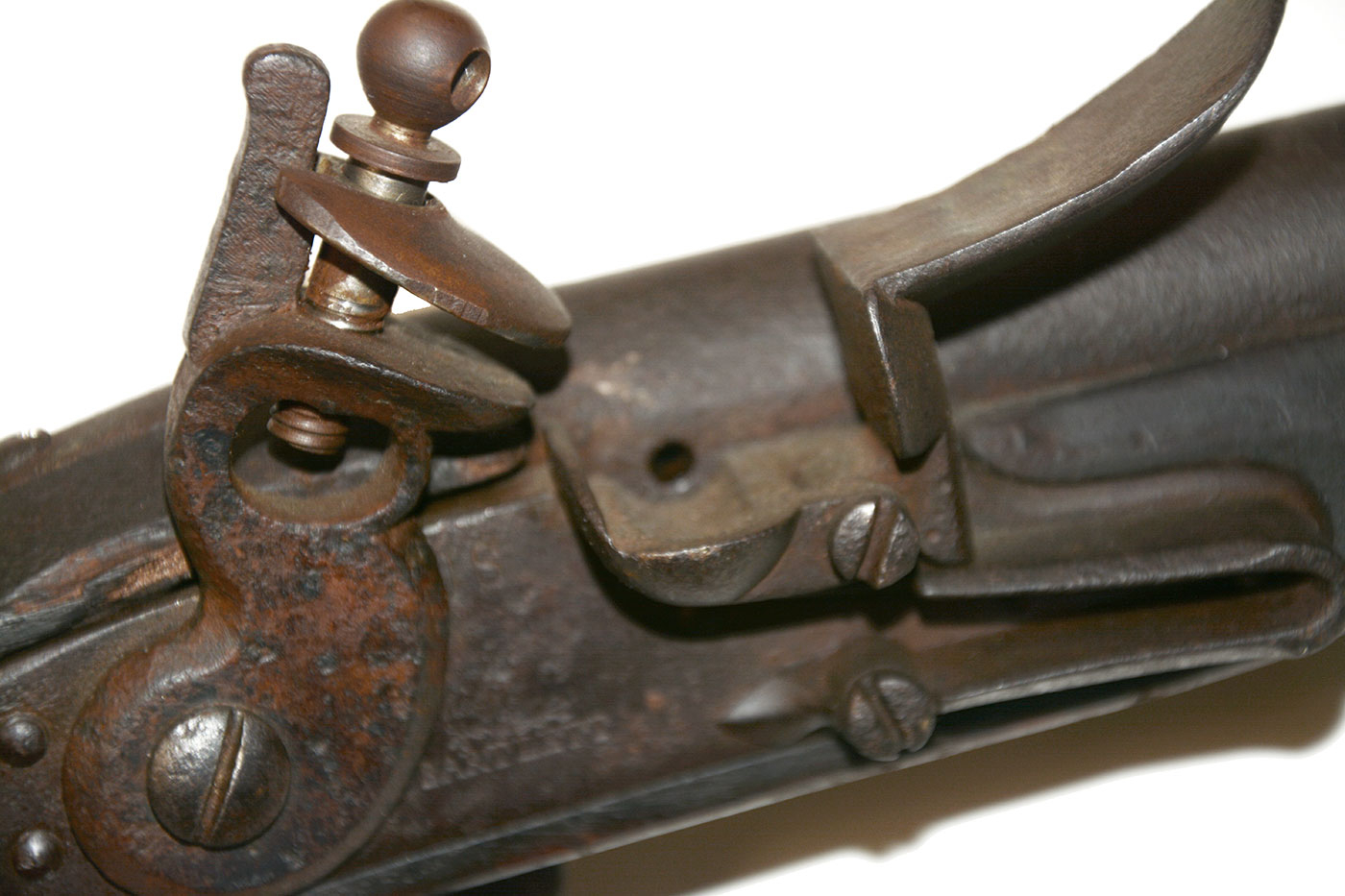
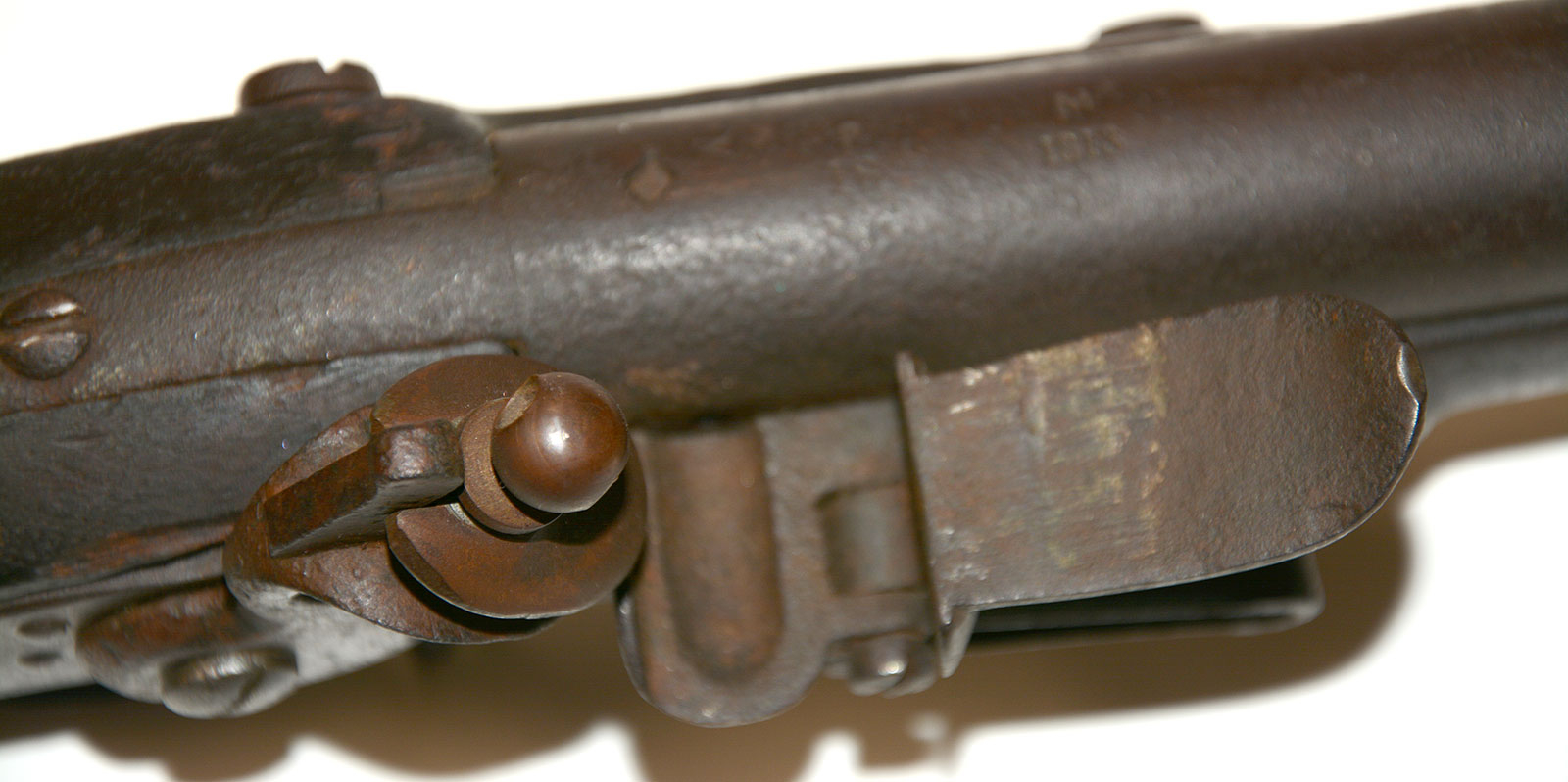
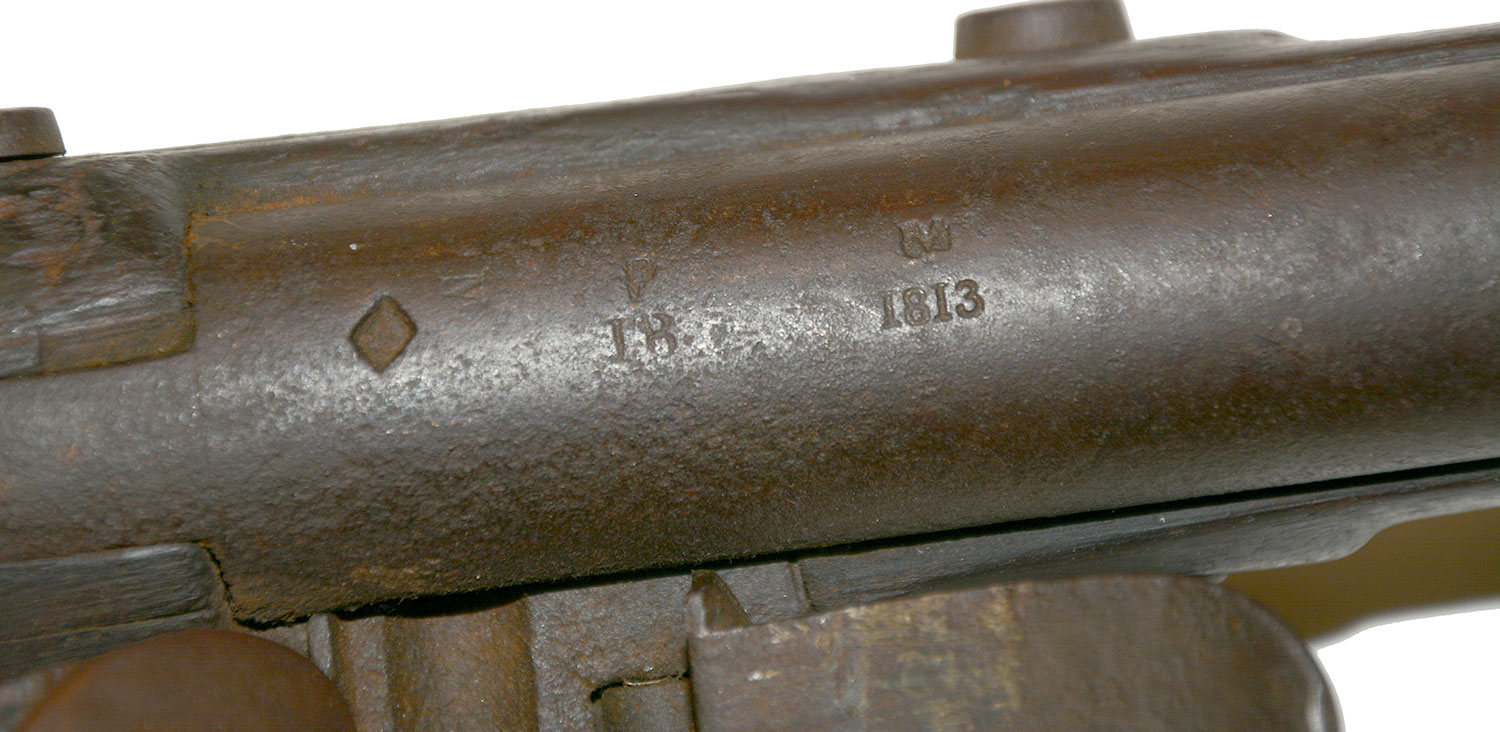
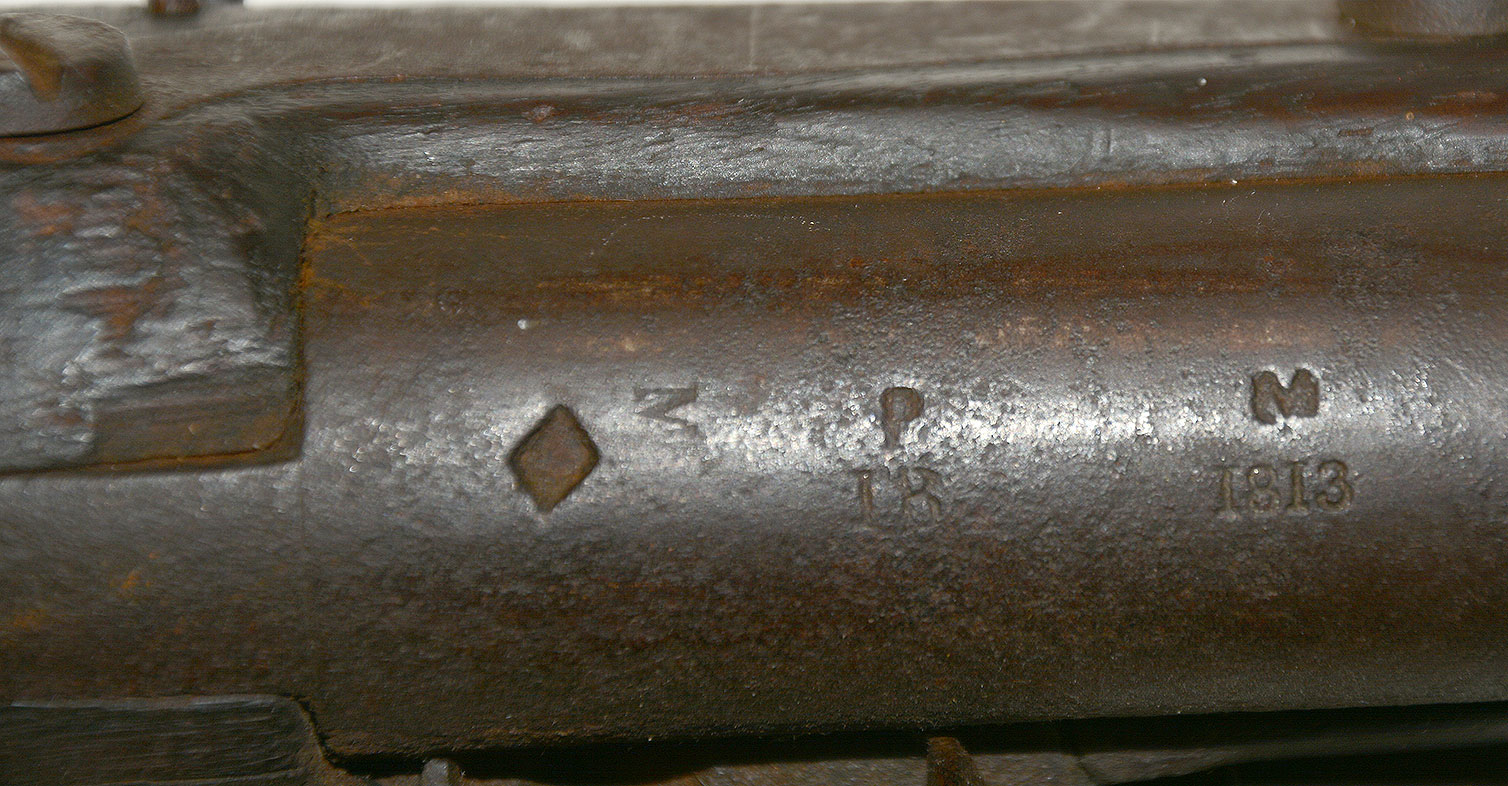
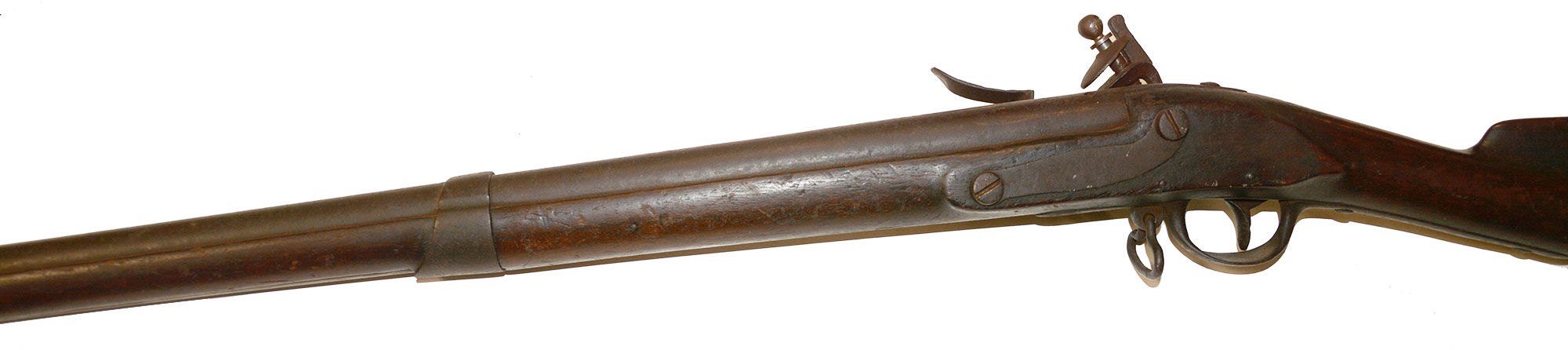
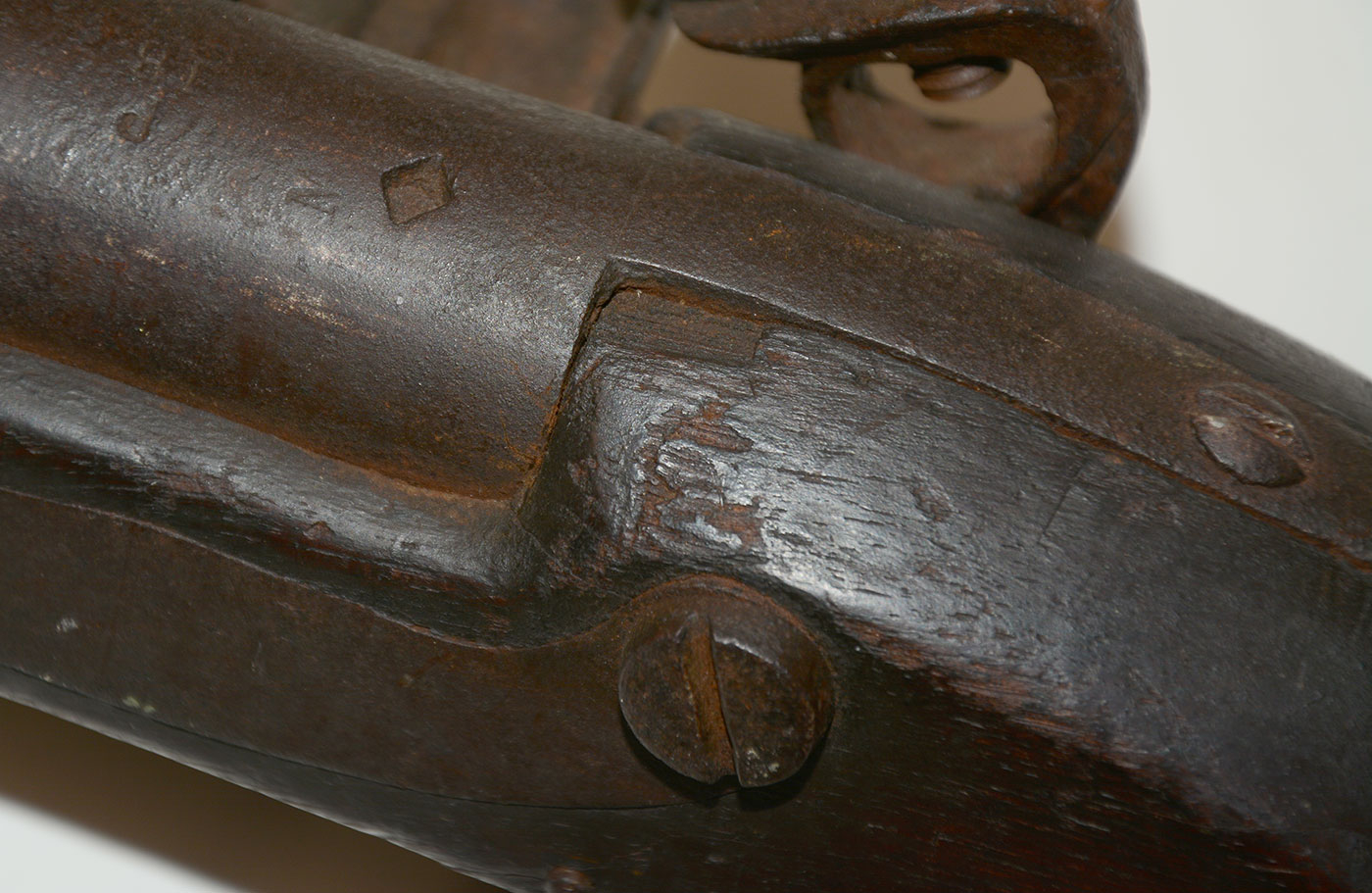
Bartlett’s muskets follow the general lines of the US 1795 “Charleville pattern” as produced at Harpers Ferry. This is complete, full length, original flint and rates near very good, showing generally sharp markings though the eagle on the lockplate is worn and obscured by some corrosion that has deeply pitted the cock, and there is a chip out of the lock apron at the upper rear, with a hairline above the missing piece extending a bit forward. The lockplate date, however, Bartlett and US marks are very good. The barrel shows very clear Massachusetts proofmarks near the breech: “P/IB” and “M/1813” stamped in line with barrel. Just aft of them is a partially rubbed “M” near a sunken diamond or square. The latter may have contained a raised letter or mark that is now illegible. We take those marks to indicate inspection and Massachusetts ownership after the direct purchase, with absence of state view marks on the sideflat being correct since the musket did not come to the state from the US government through the militia act.
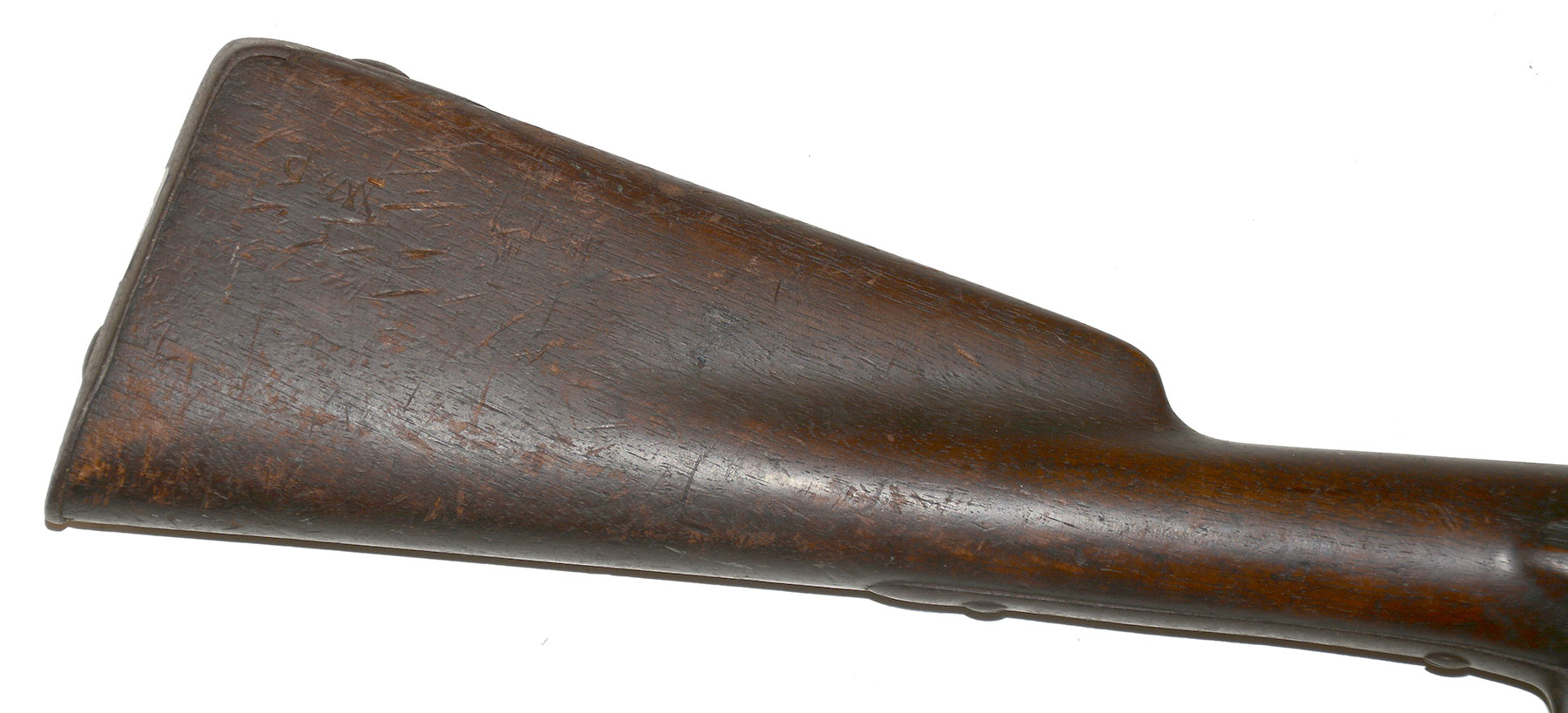
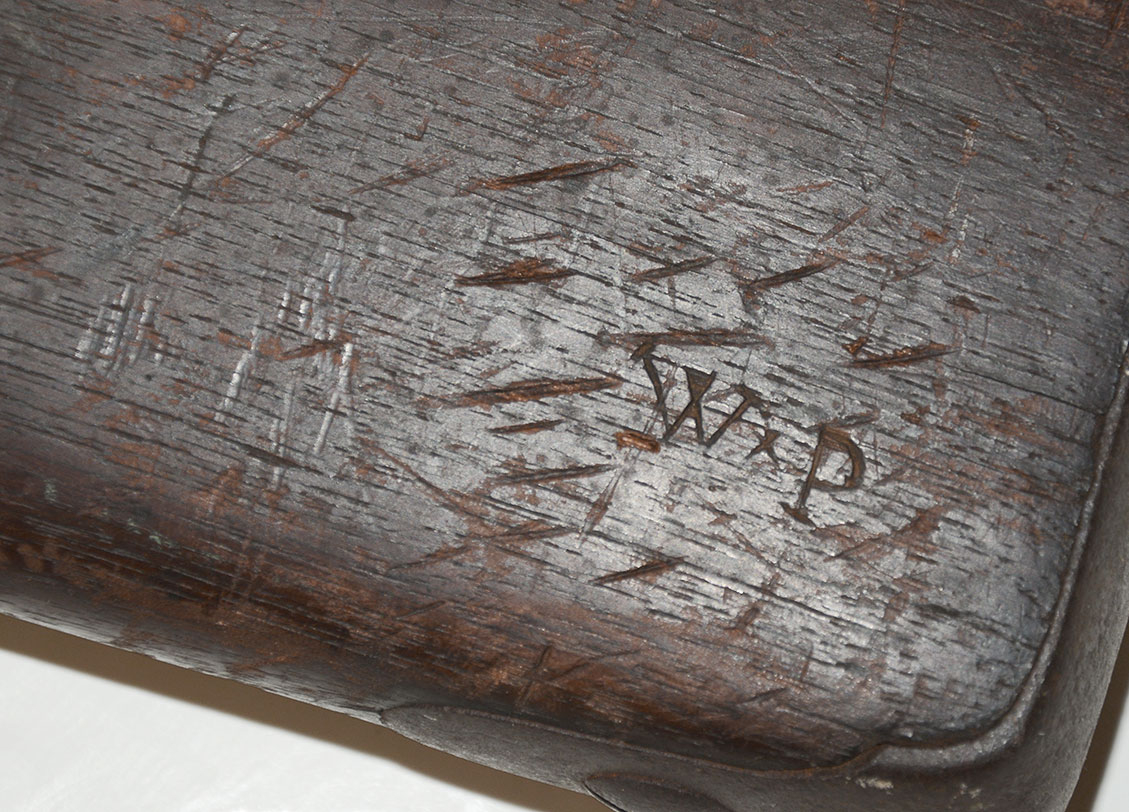
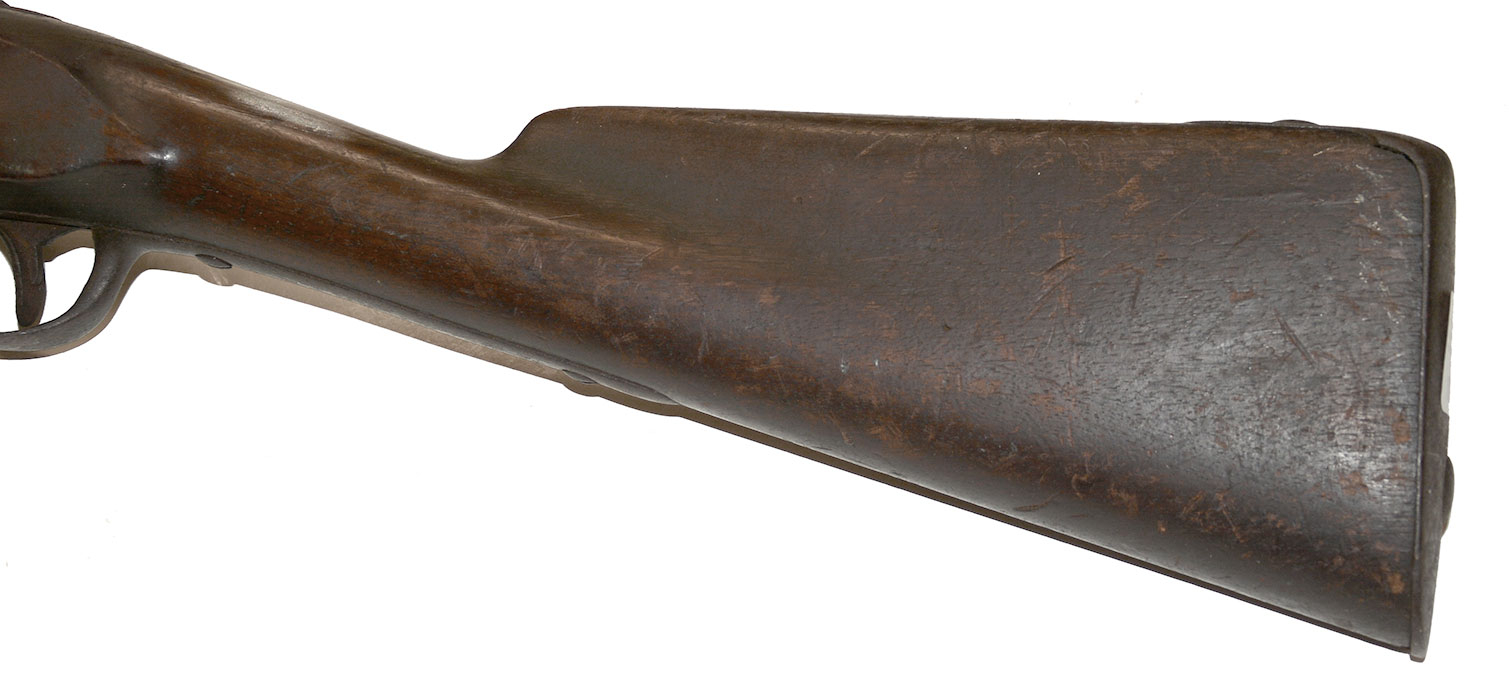
The 44-3/4” barrel is full length, brown in tone, but smooth metal, with bayonet lug in place on top of the muzzle and front sight on the rear strap of the upper band. Barrel bands match the barrel. All bands, springs and swivels are in place. The ramrod shows a lighter gray and and dusty brown and is likely a replacement. The cock shows pitting to the tang and some scaling on its lower half near the screw. As noted above, the eagle forward of the cock is tougher to make out, though the US and Bartlett are very clear, as is the date at rear. The vent and pan show just light age corrosion. The wood is a mix of medium and dark brown, showing numerous handling dings and some abrasions on the buttstock. The ramrod channel shows only moderate wear. There is a chip out of the lock apron at the upper left, with a hairline above and a narrow gap along the top edge forward of that. The lower edge is good and tight to the metal. The sideflat shows just moderate handling marks and decent edges, though with some dings and a short hairline at the rear lock screw running toward the breech of the barrel, some dings on top and some chipping along the left of the breechplug tang. The butt shows a lighter brown with abrasions, some light scratches and a dozen or more deeper, but short ones near a set of thinly carved intials, “WP” upside down, on the right butt flat near the buttplate, but there are no cracks or breaks. The left muzzle bears an old collection number “22” in white paint that we have left untouched.
American 1808 contract muskets are collecting field of their own with connections to the War of 1812 and the story of efforts by the government to develop domestic arms manufacture. This is an interesting example that also ties in with Massachusetts’s efforts to build up its reserve of muskets when another war with Britain broke out since it had largely relied upon privately owned arms in the militia since the Revolution. [sr][ph:L]
DISCLAIMER: All firearms are sold as collector's items only - we do not accept responsibility as to the shooting safety or reliability of any antique firearm. All firearms are described as accurately as possible, given the restraints of a catalog listing length. We want satisfied customers & often "under" describe the weapons. Any city or state regulations regarding owning antique firearms are the responsibility of the purchaser. All firearms are "mechanically perfect" unless noted, but again, are NOT warranted as safe to fire!
~~~~~~~~~~~~~~~~~~~~~~~~~~~~~~~~~~~
THIS ITEM, AS WITH ALL OTHER ITEMS AVAILABLE ON OUR WEB SITE,
MAY BE PURCHASED THROUGH OUR LAYAWAY PROGRAM.
CLICK HERE FOR OUR POLICIES AND TERMS.
THANK YOU!
Inquire About RARE ASHER AND PLINY BARTLETT 1813 DATED MASSACHUSETTS PROCURED M1808 MUSKET
Most Popular
Historical Firearms Stolen From The National Civil War Museum In Harrisburg, Pa »
Theft From Gravesite Of Gen. John Reynolds »
Selection Of Unframed Prints By Don Troiani »
Fine Condition Brass Infantry Bugle Insignia »
Rare Identified 65Th Ny Sergeant’s Jacket, With Manscript Material: 1St U.s. Chasseurs »
featured item
IMPRESSIVE PERIOD FRAMED DISPLAY OF WARTIME AND POSTWAR VETERAN MATERIAL OF LT. EDGAR G. STOWELL, 92nd NY, WIA FAIR OAKS, INCLUDING HIS IDENTIFICATION DISK AND CDV IN UNIFORM, MESS UTENSILS, AND CAMP ART RINGS
This is a great framed display of wartime and postwar veteran’s memorabilia belonging to Lieutenant Edward G. Stowell of the 92nd NY. The items include a wartime carte-de-visite photo of Stowell in uniform as 2nd lieutenant, tacked in the center… (2024-369). Learn More »
site search