


site search
online catalog
WHITNEY US 1798 CONTRACT MUSKET

Hover to zoom




$1,950.00 SOLD
Quantity Available: None
Item Code: 2025-3666
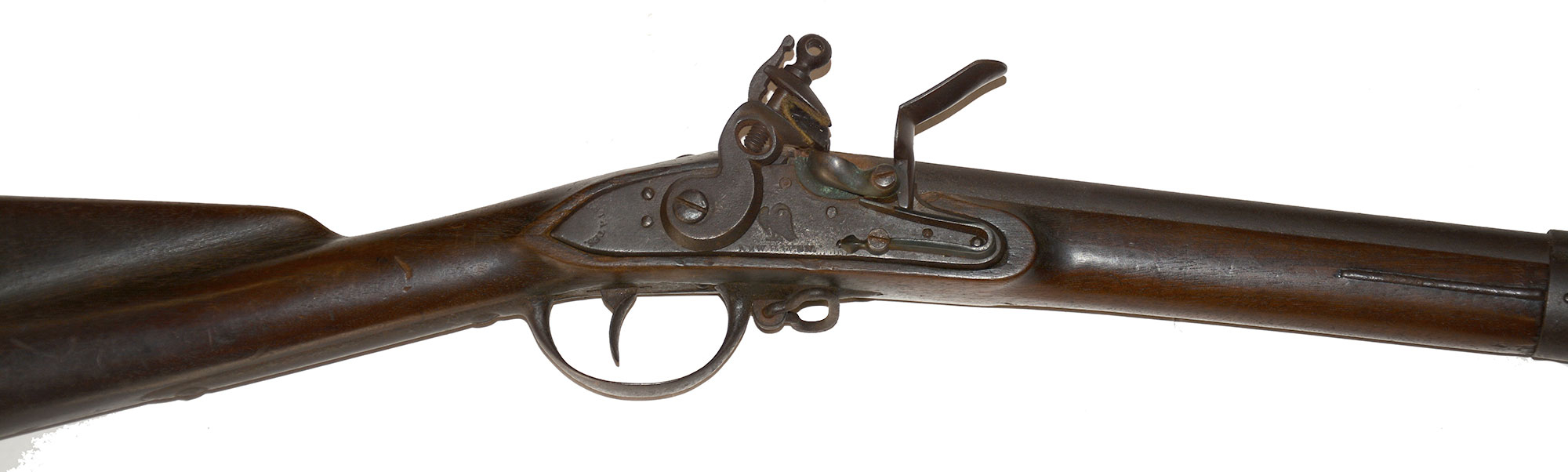
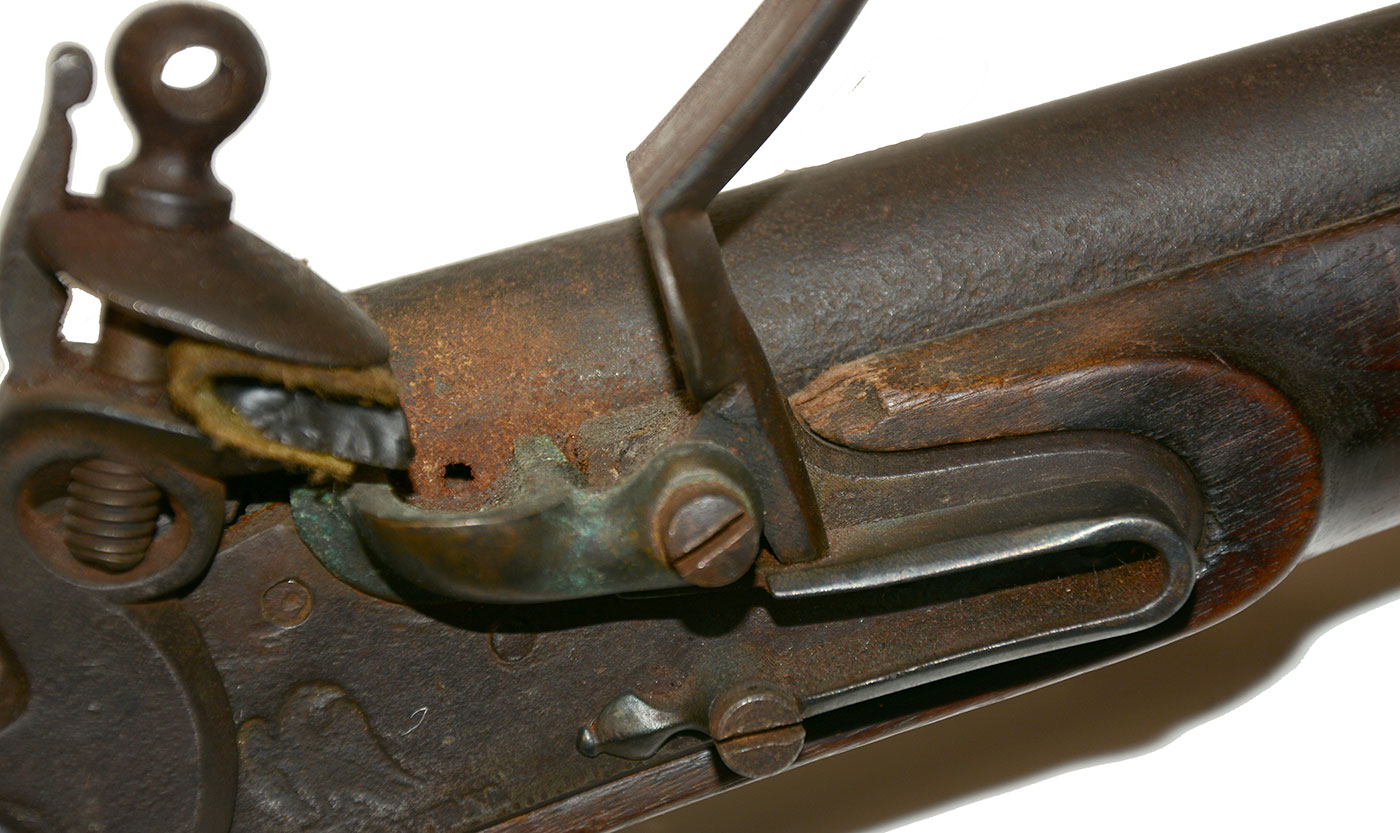
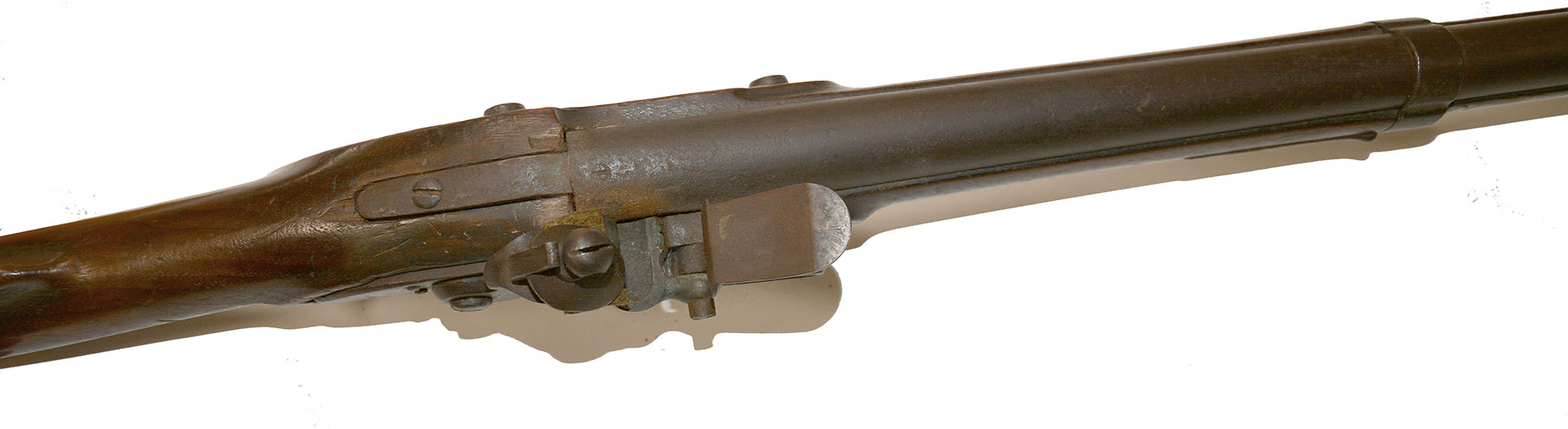
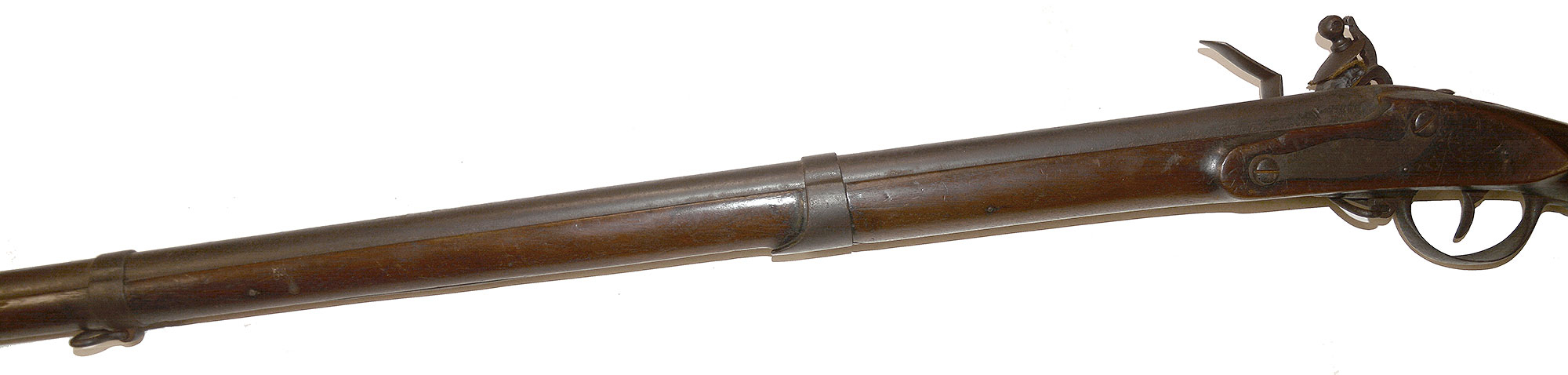
This musket might be classified as a Whitney 1798 US Contract transitional Type-2 / Type-3. It shows the rounded, detachable brass pan, frizzen with straight toe, and lockplate omitting the pointed teat at the tail of the Type-3, but retains the Type-2 flat cock as designated by Moller and by Riley, and carries a 44-3/4” barrel that is closer to the 43-15/16” noted by Moller on the Type-2 than the 42-3/4” to 43” barrel he notes on the Type-3. Whitney had received a contract for 10,000 muskets on June 14, 1798, and was given several extensions so that deliveries stretched into 1809. The musket he first used as a pattern, an Evans 1794 contract based on the French M1766, was changed in 1801 to a French M1777, accounting for a number of differences and the collector typology. Later substitution of an earlier part is always possible, but arms production over an extended period is often more of a continuum than broken up into the distinct phases and the combined Type-2 and Type-3 elements suggest production early in the Type-3 production run that, with a total of 8,000, encompassed most of Whitney’s deliveries, with 1,000 estimated for the Type-1 and Type-2 each. See, among others, Riley 73-743 and Moller V.2, pp. 155-163.
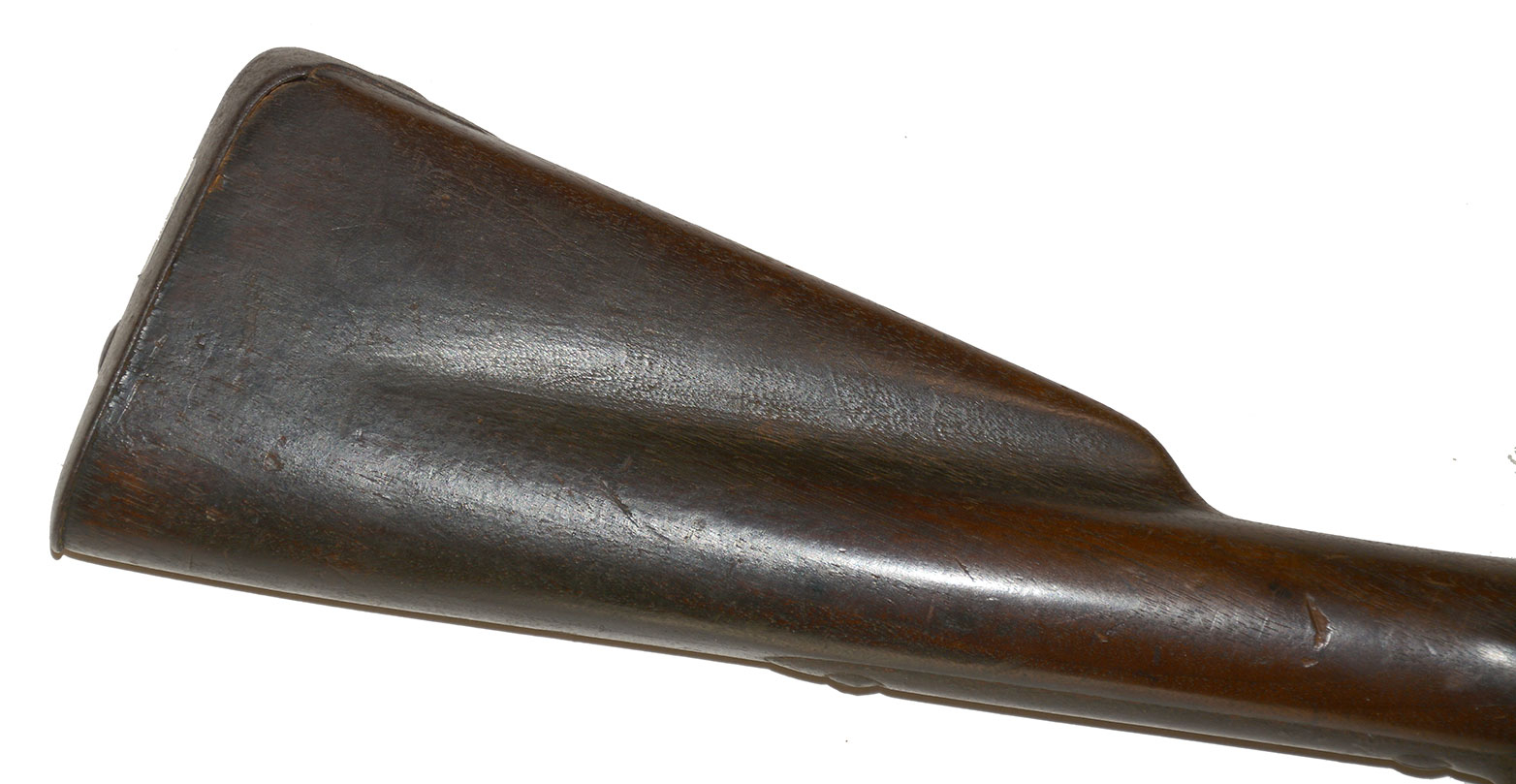
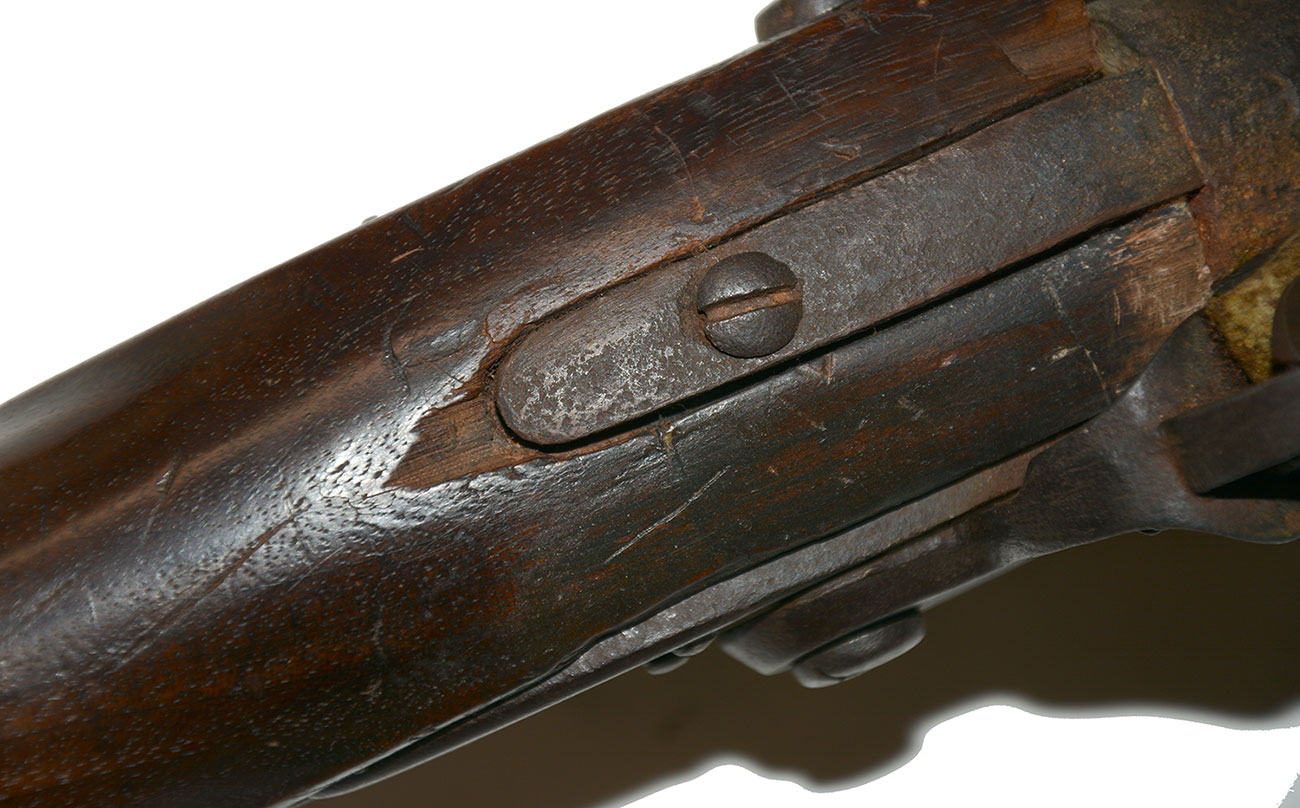
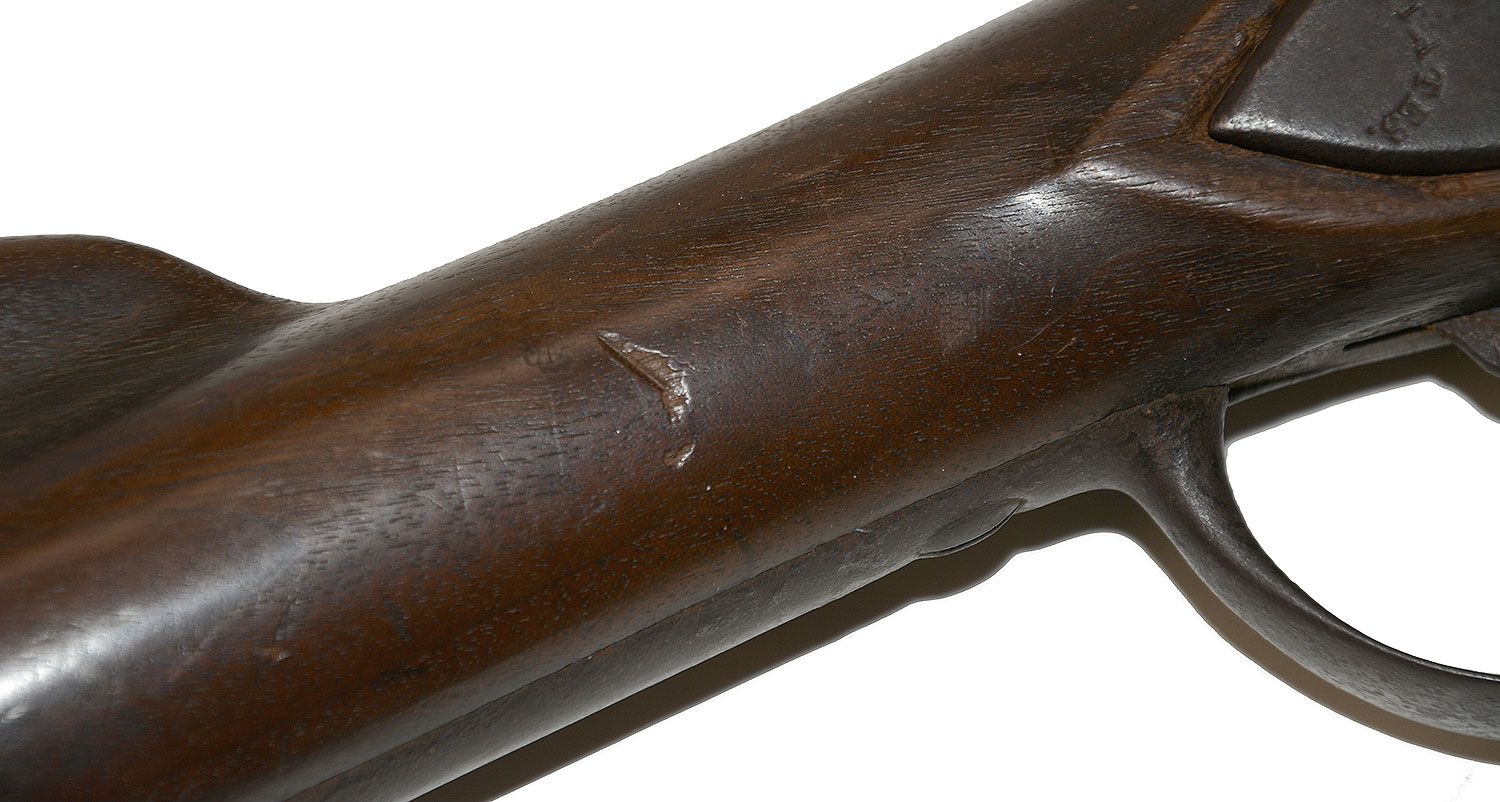
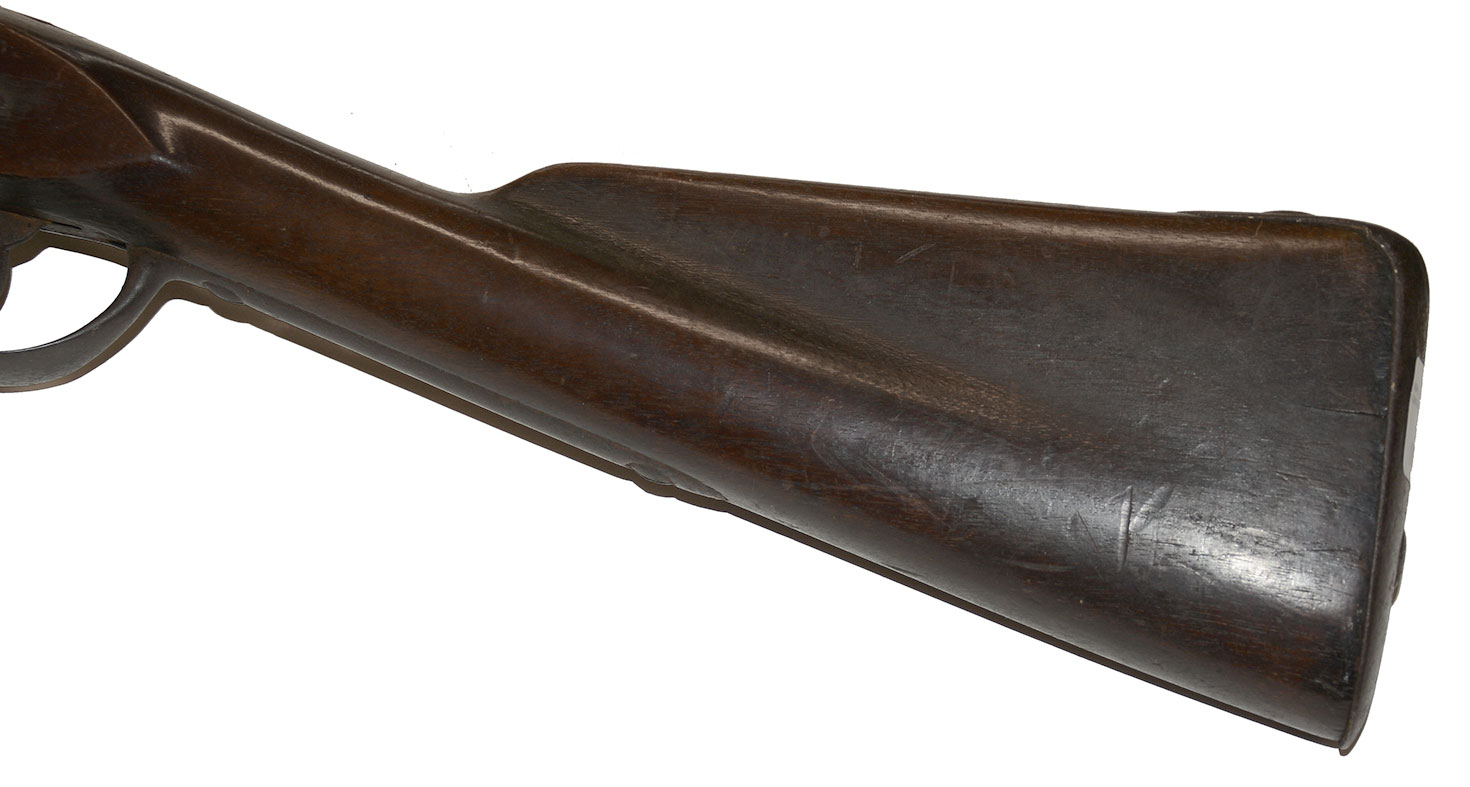
The metal is generally brown and shows scattered patches of shallow pitting along the top of the barrel with slight corrosion on the triggerguard finial and rear sling swivel. There is some light brown surface rust near the vent. The brass pan has a pleasing aged patina. The wood shows warm brown color and good finish to the forestock with minor handling dings and darker stains adjacent to barrel bands and triggerguard. The ramrod channel shows some wear and abrasion with small chipping at base of bottom entry band. The side flat shows scratches and dings. There are also abrasions and small chipping at base of breech, base of the breechplug tang, a short gouge the right wrist, a small hairline at rear point of plate, and a short hairline to left buttstock at buttplate. Shrinkage gaps along breechplug tang and edges of lockplate may be quite old and part of the musket’s story: the quality of Whitney’s stocks and wood-to-metal fit of his parts notably came in for criticism during reinspections in February 1812, with inspectors Robert Orr, his son Noble Orr, and Decius Wadsworth (before becoming head of Ordnance,) possibly sharing some responsibility in Moller’s view (Vol. 2 pp.155-56. Moller takes the Orrs to be brothers. Daum and Pate note them as father and son.)
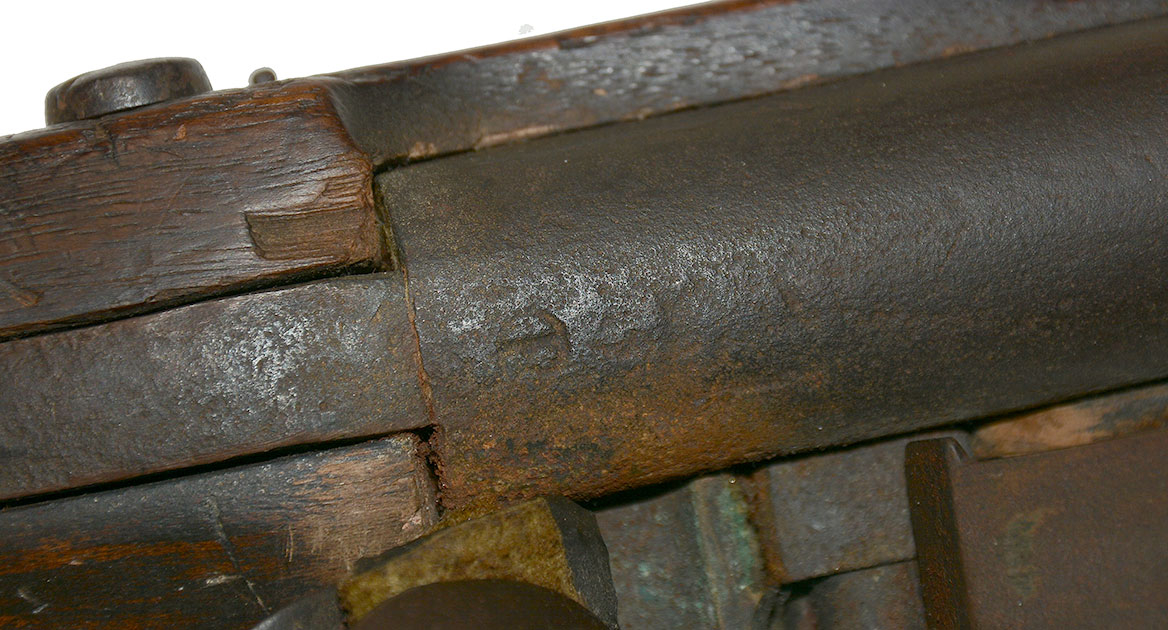
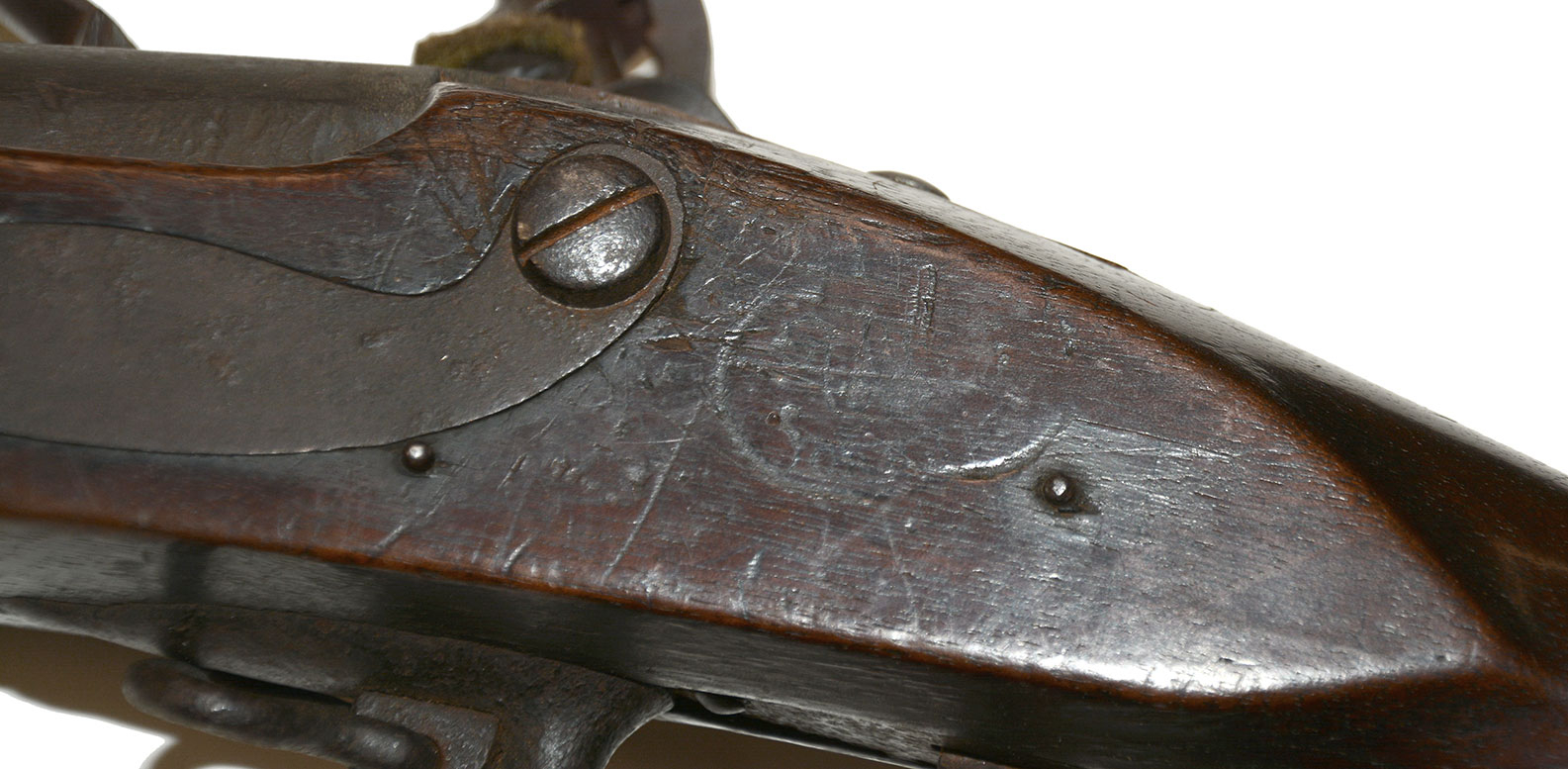
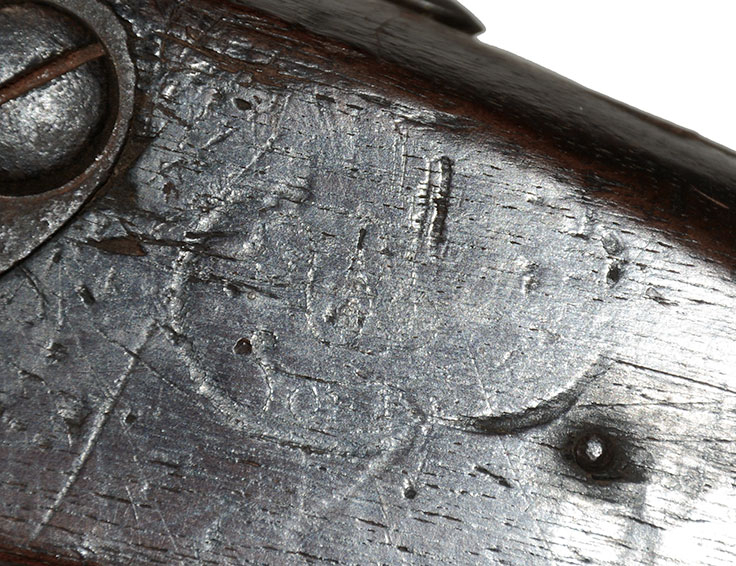
The markings on the lockplate are good: “U STATES” in a vertical arc at the rear, with a standing eagle with head turned toward the muzzle forward of the cock and “NEW HAVEN” in small capital letters along the lockplate lower edge. On top of the barrel at the breech is the worn C/P proofmark on top of James Carrington, foreman of Whitney’s factory from 1799 to 1825, and of good enough reputation that he was allowed to proof the barrels even though employed by Whitney. (Daum and Pate note his mark on “the final lot of Whitney’s 1798 muskets,” which is ambiguous in terms of the numbers involved. Moller simply notes some Type-III muskets show no proofs and others have this mark, which he attributed to Carrington.) The side flat shows the worn inspection mark “US / ORR” in an oval, with the large, looping US tougher to make out, but the ORR clear enough in the right light. Daum and Pate note this mark as belonging to Robert Orr, with Noble Orr’s use of it uncertain, observing that it shows up on Whitney 1798 Type-2 muskets delivered after Noble Orr’s brief work as an inspector from 1800 to 1802. We note the left muzzle has collection number “66” in white paint, which we have left as we got it.
This is an interesting US contract arm made by one of America’s most notable mechanical geniuses, who also had something of a talent for self-promotion. His supposedly interchangeable parts were better than most, but still required hand fitting, and his reputation likely provided leverage for the extensions of his contract, though his personal contacts likely played a role as well. He had been classmates at Yale with the Secretary of the Treasury, and his June 15, 1798, contract for arms actually predated Congress’s authorization of the contracts by almost three weeks. [sr][ph:L]
DISCLAIMER: All firearms are sold as collector's items only - we do not accept responsibility as to the shooting safety or reliability of any antique firearm. All firearms are described as accurately as possible, given the restraints of a catalog listing length. We want satisfied customers & often "under" describe the weapons. Any city or state regulations regarding owning antique firearms are the responsibility of the purchaser. All firearms are "mechanically perfect" unless noted, but again, are NOT warranted as safe to fire.
~~~~~~~~~~~~~~~~~~~~~~~~~~~~~~~~~~~
THIS ITEM, AS WITH ALL OTHER ITEMS AVAILABLE ON OUR WEB SITE,
MAY BE PURCHASED THROUGH OUR LAYAWAY PROGRAM.
CLICK HERE FOR OUR POLICIES AND TERMS.
THANK YOU!
Inquire About WHITNEY US 1798 CONTRACT MUSKET
Most Popular
Historical Firearms Stolen From The National Civil War Museum In Harrisburg, Pa »
Theft From Gravesite Of Gen. John Reynolds »
Selection Of Unframed Prints By Don Troiani »
Fine Condition Brass Infantry Bugle Insignia »
featured item
DASHING UNION CAPTAIN’S SHORT JACKET AND VEST
A very good example of short, non-regulation style popular among officers, both foot and mounted, for comfort and for style, for which the officer who wore this one had a flair. (“Shades of Custer,” we might say.) The jacket is dark blue with… (1314-02). Learn More »
site search