


site search
online catalog
US 1808 JENKS CONTRACT MUSKET

Hover to zoom




$1,850.00
Quantity Available: 1
Item Code: 2025-3664
Shipping: Determined by Method & Location of buyer
To Order:
Call 717-334-0347,
Fax 717-334-5016, or E-mail
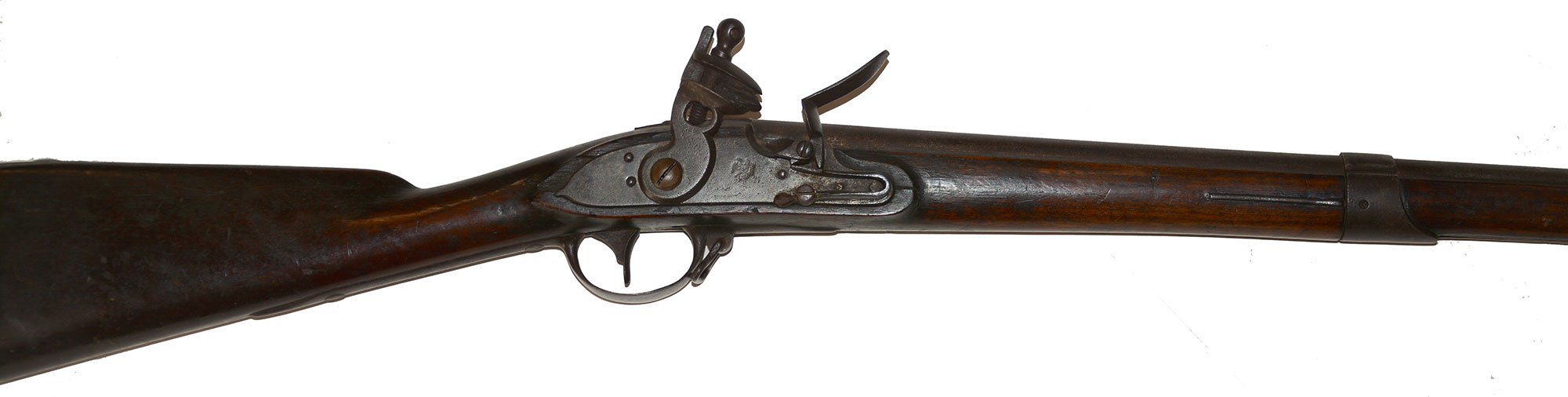
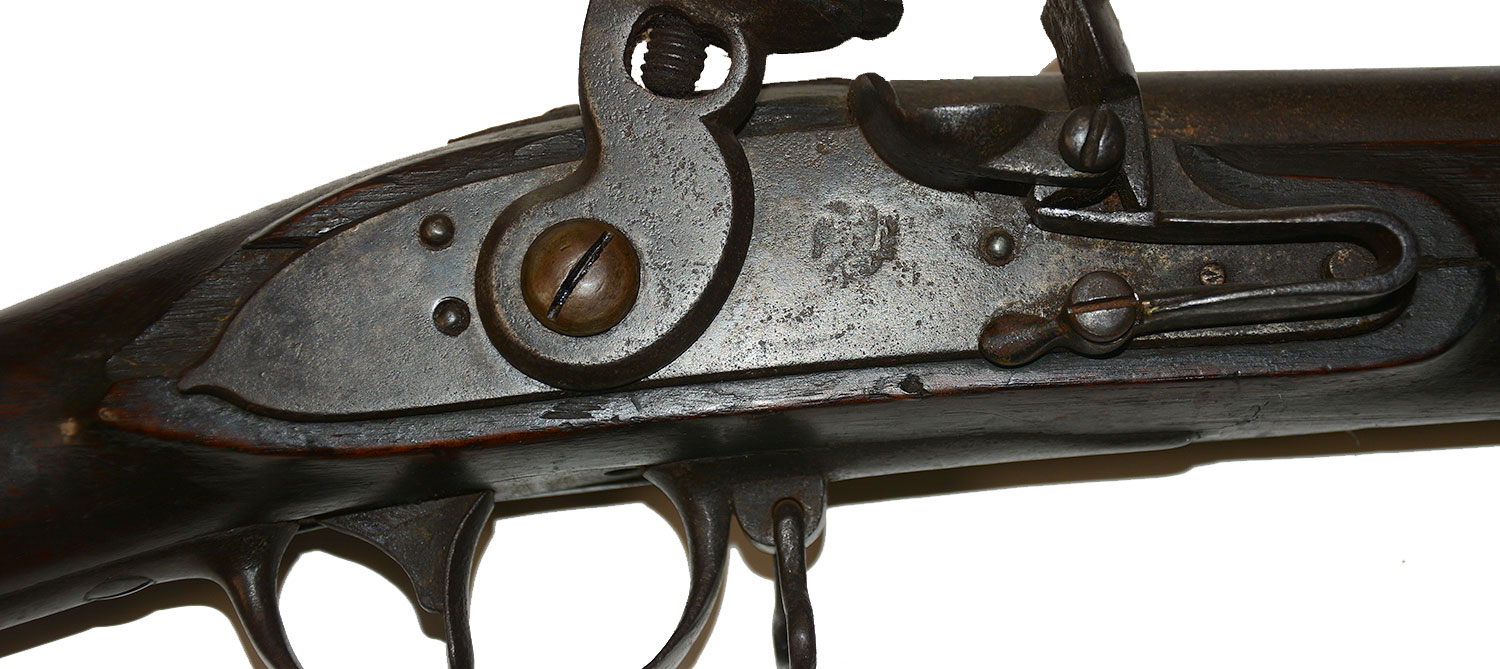
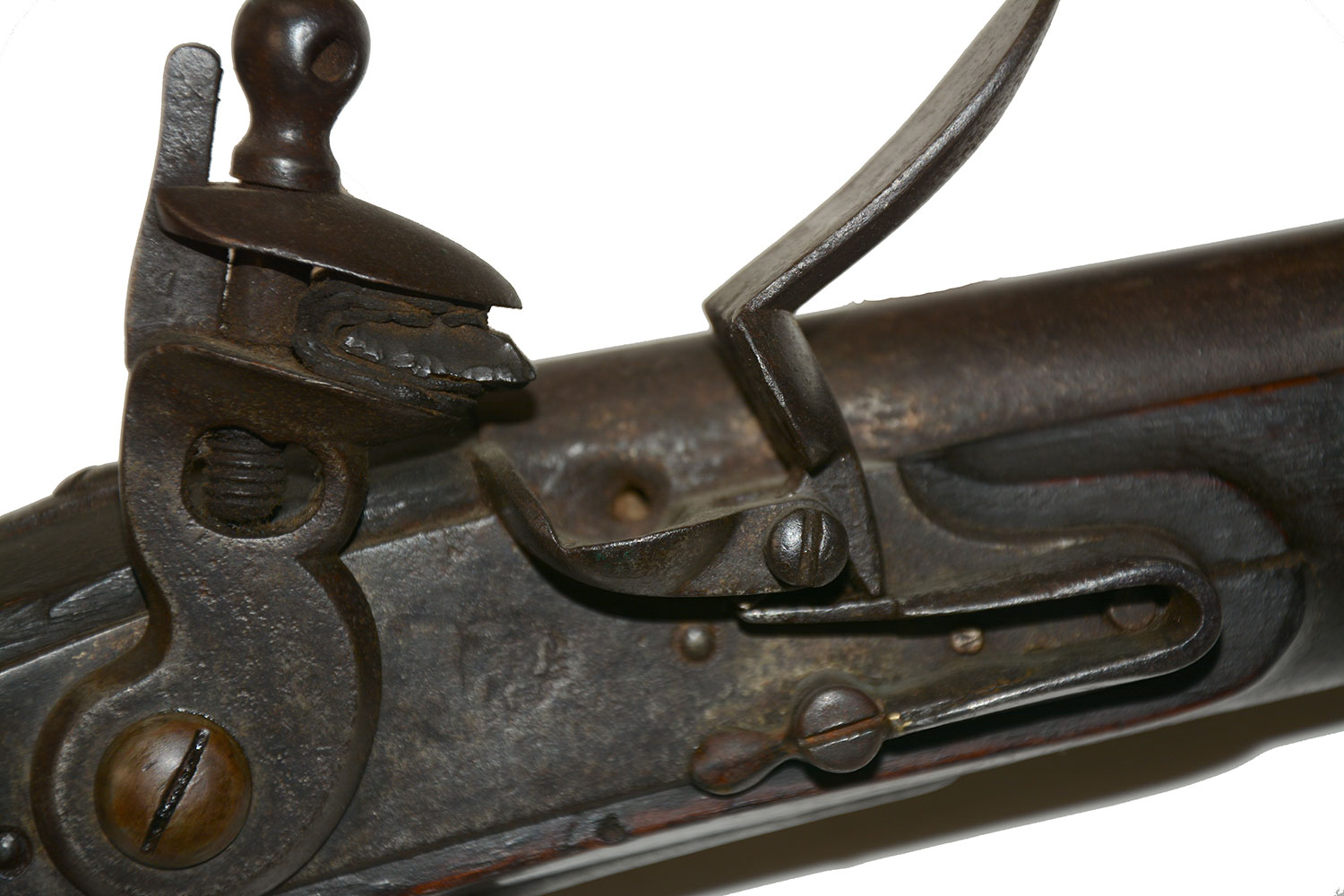
This 1808 US contract musket follows the lines of the Harpers Ferry pattern muskets, but with the Springfield style lock as seen on some other contract muskets that generally follow the Harpers Ferry pattern. It bears a lockplate marked only with a rearward facing eagle forward of the cock and a rubbed but discernable number “7” toward the rear of the plate, taken to be an assembly number. This is Riley’s Figure 255, and may be the very musket whose plate he illustrates in a line drawing. He notes that it cannot be positively identified, but posits it is by Stephen Jenks since the eagle is identical to that in his Fig. 253, which is on a Jenks marked plate.
Jenks, from Rhode Island, had participated in a 1798 contract undertaken with his father and Hosea Humphreys, apparently taking over his father’s end of the business after 1800. The younger Jenks had a Oct. 8,1808, contract for 4,000 muskets, of which he delivered 3,925, from 1810 to 1814, withholding 75 in a dispute over money he was owed, according to Moller. Riley also opens the possibility that the mark indicates a musket supplied by Jenks to Amos Sweet to help him complete a US contract for 3,000 muskets Sweet had undertaken with Enoch Hidden, who later withdrew from his partnership with Sweet. Riley states that Jenks agreed to supply half the total called for in the contract, which then shows up in some sources as coming from Sweet & Jenks. In any case, Sweet was credited with delivering just 1,000 muskets, with the last 250 delivered by Jenks to the State of Rhode Island in 1817, on direction of Chief of Ordnance Wadsworth. See Riley, Moller and Scmidt for details.
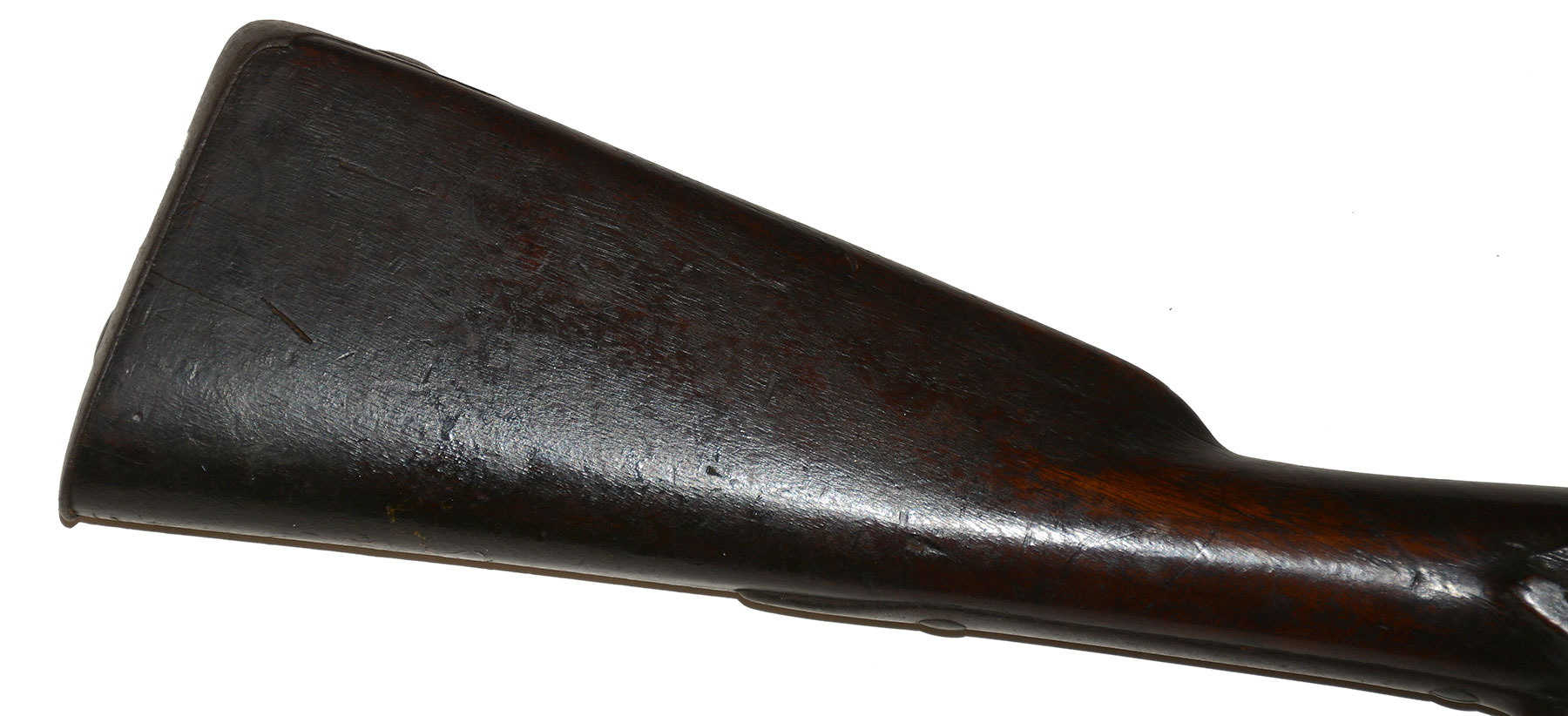
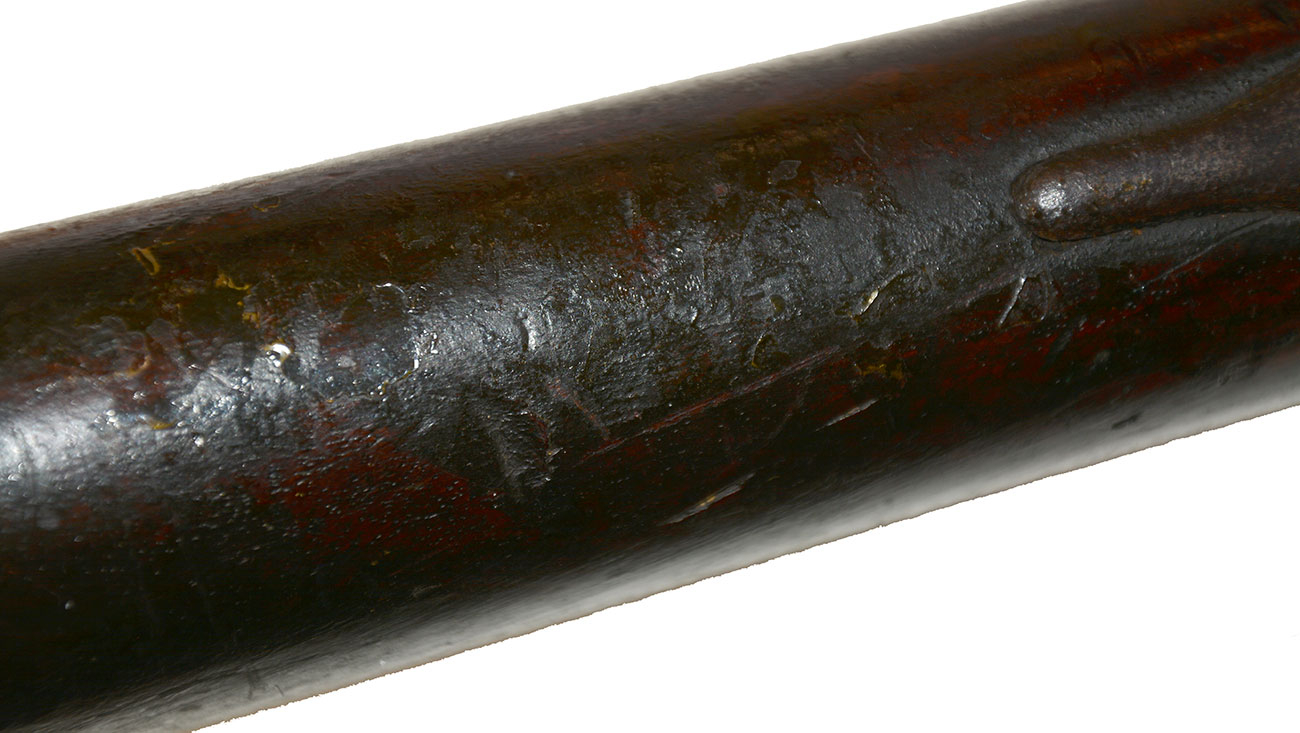
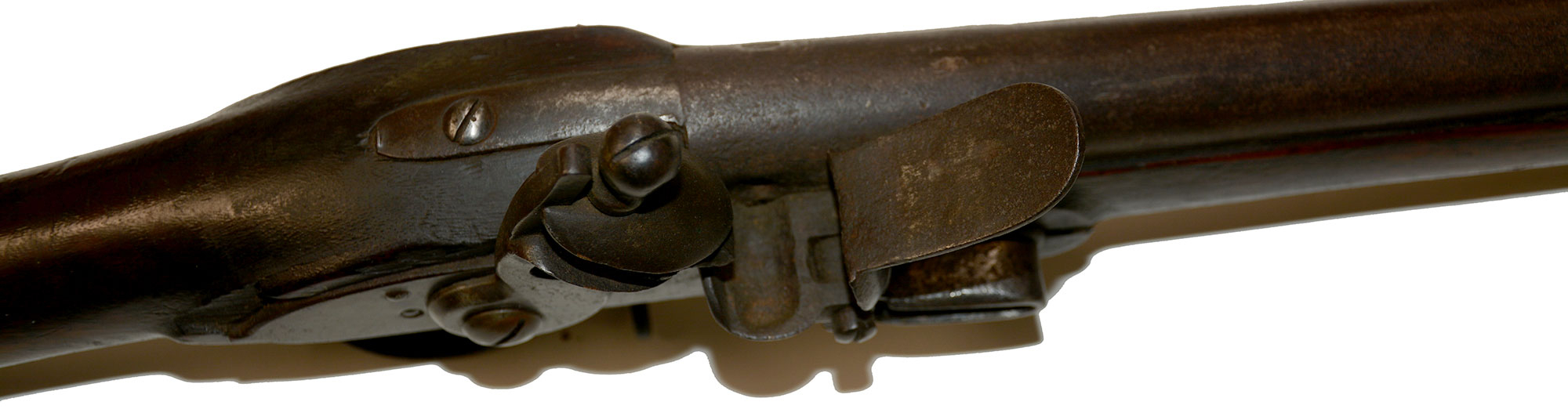
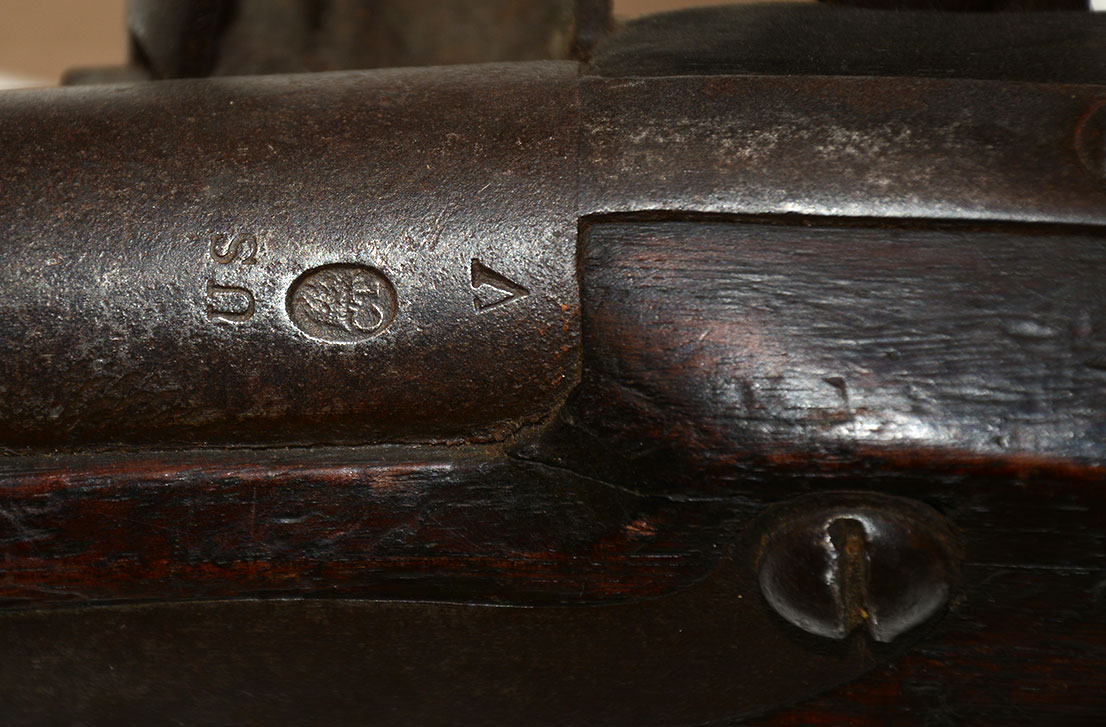
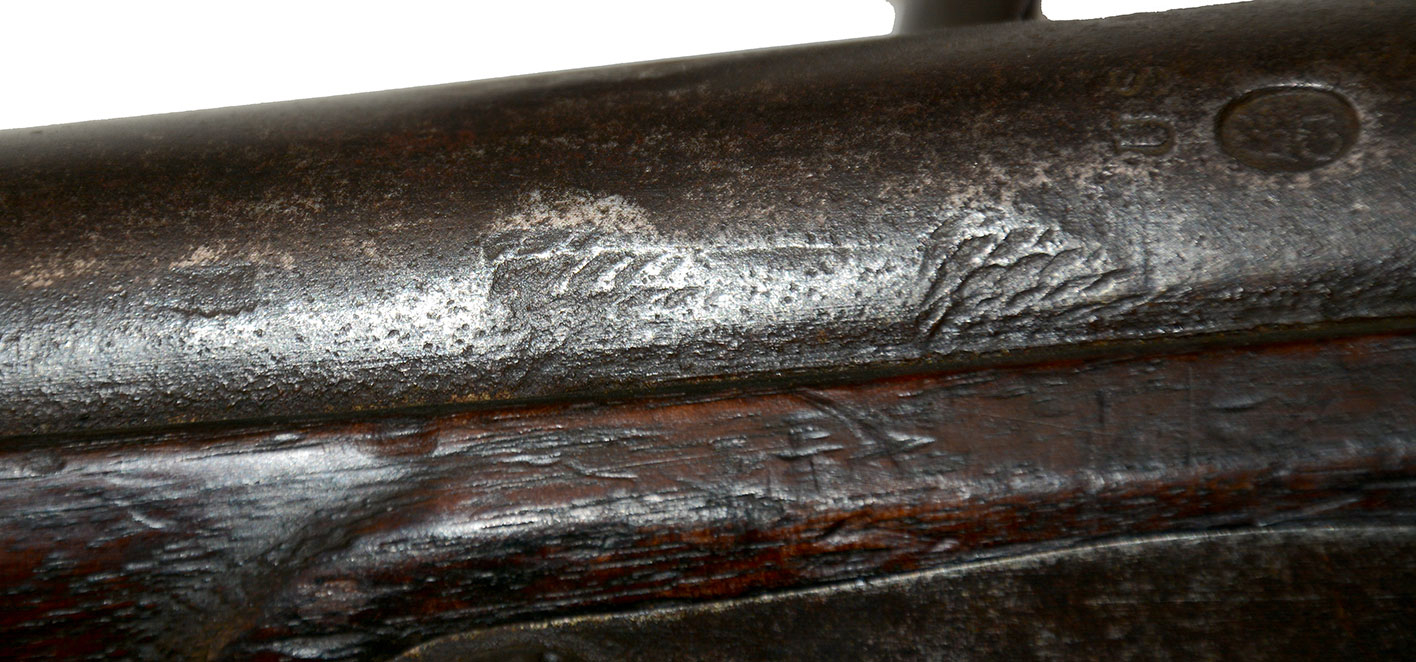
The musket is full length and complete with all bands, springs, swivels, ramrod and bottom-mounted bayonet stud in place, with good fit of wood to metal. The metal is brown, showing some thin crustiness toward the breech, with two vise marks near the left breech, the touch hole showing a good deal of use, some light pitting to the cock and lock plate, with but with good fitting wood and very good markings in both metal and wood. The left breech shows a sharp eagle’s head over “CT” in a sunken oval indicating proof of a contract arm, with a sharp “US” just forward of it and a deep “V” just aft. The lockplate and cock show shallow pitting, but the rearward facing eagle holding an oval with a “US” with a wreath curling up forward of it is good and the small, thin “7” appears in line with the lower lock screw and projecting rear teat of the plate, about two-thirds of the way along.
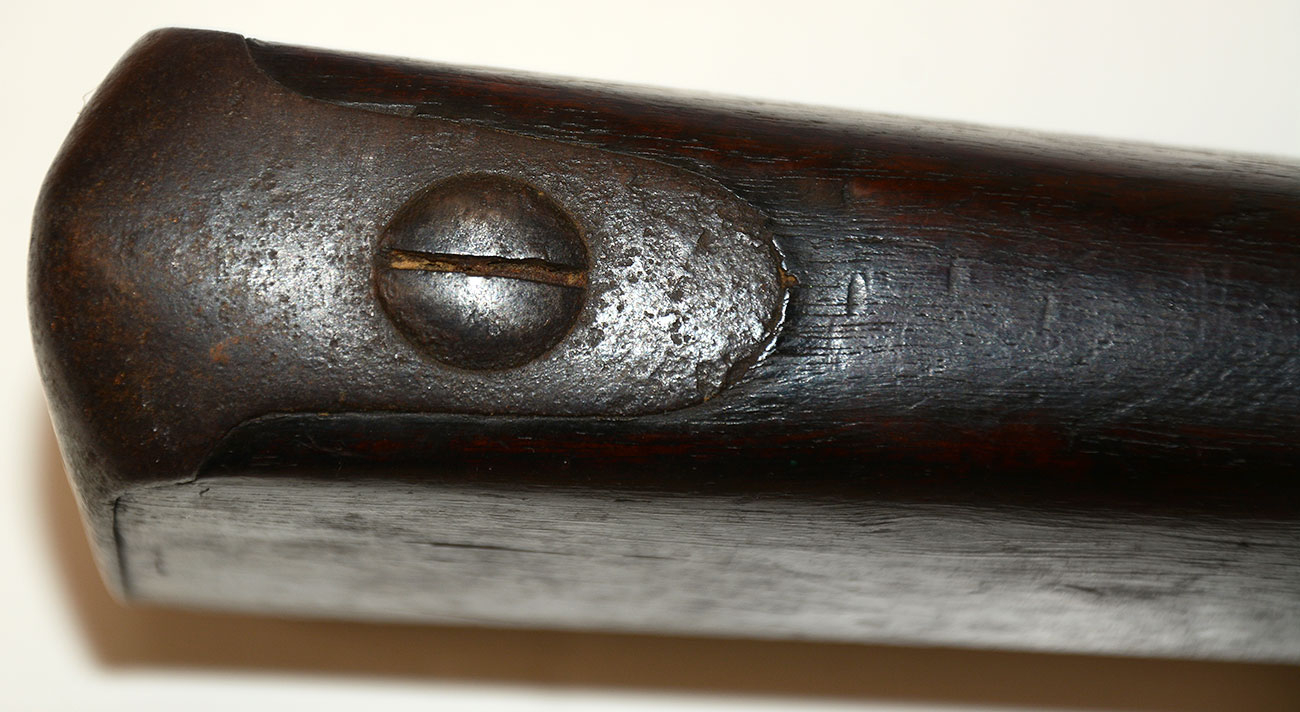
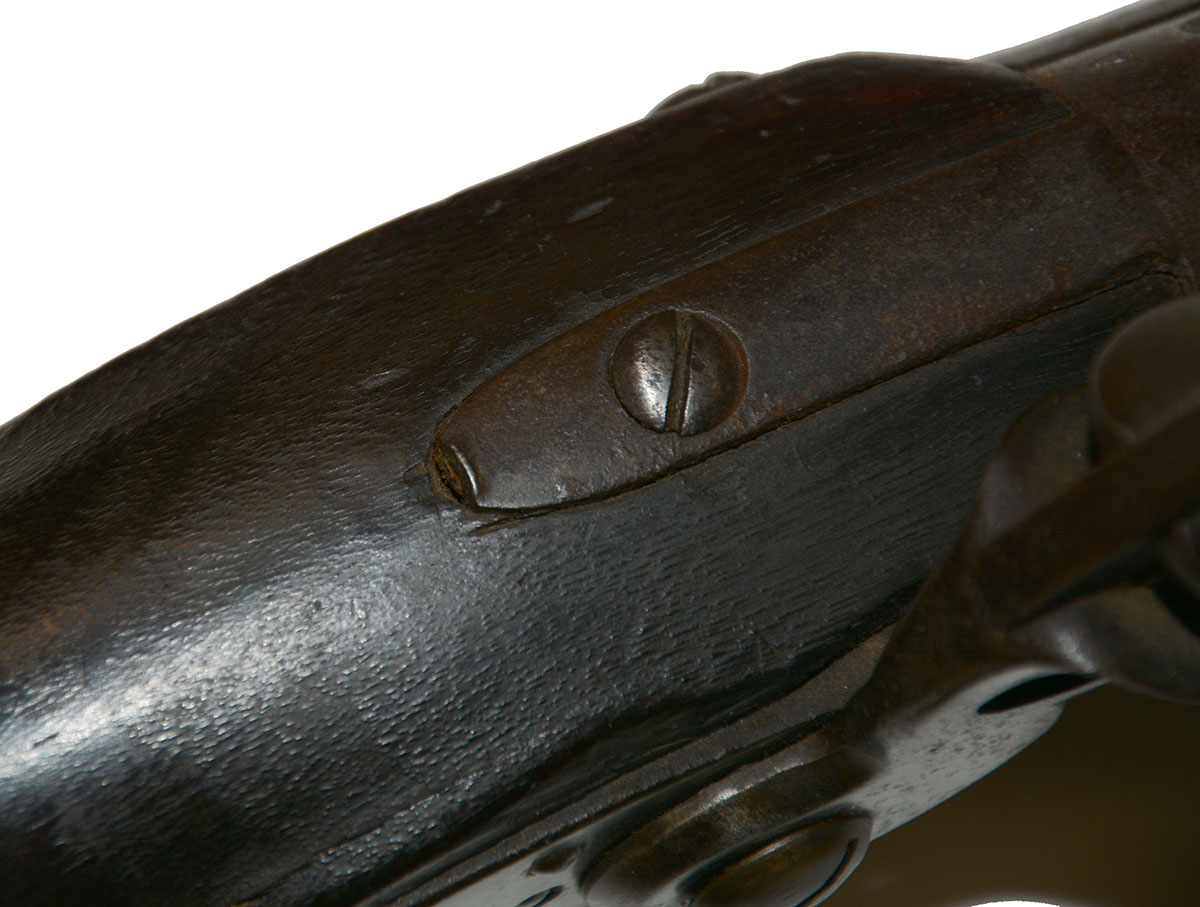
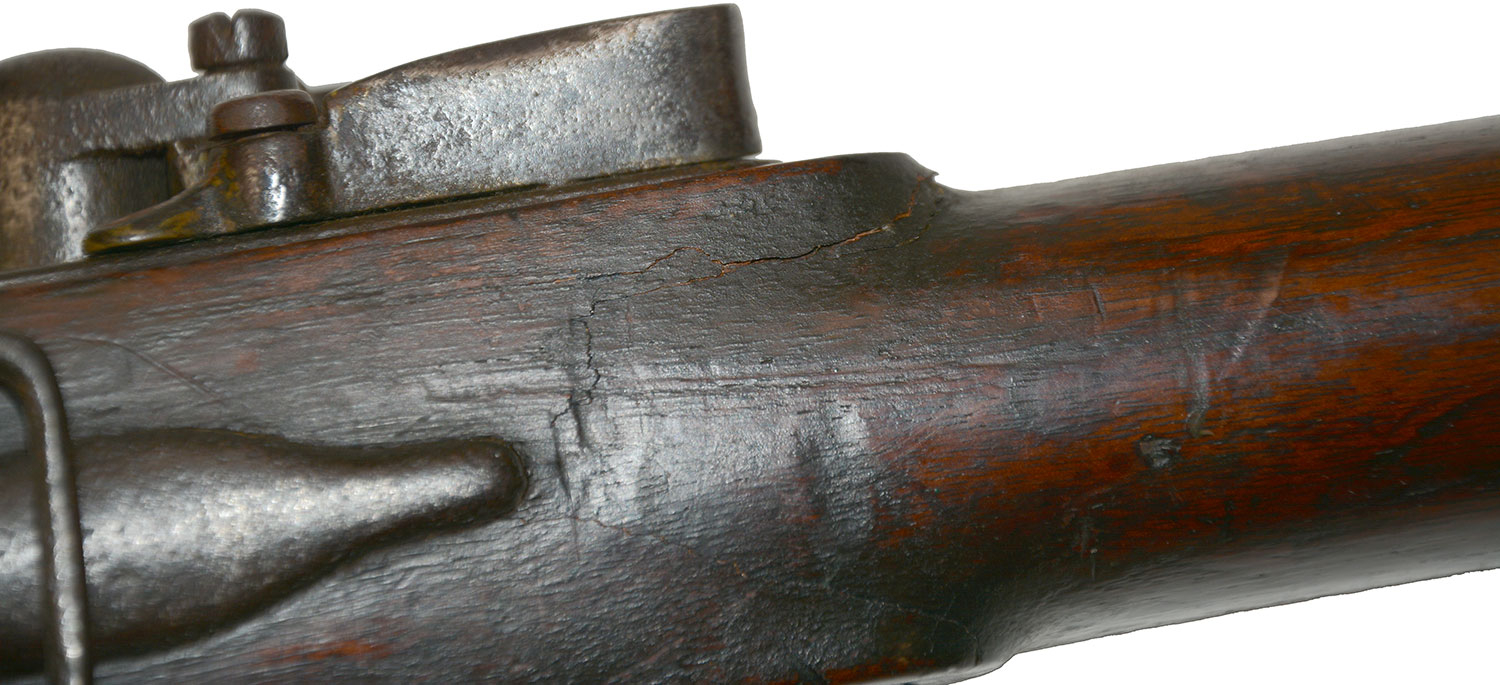
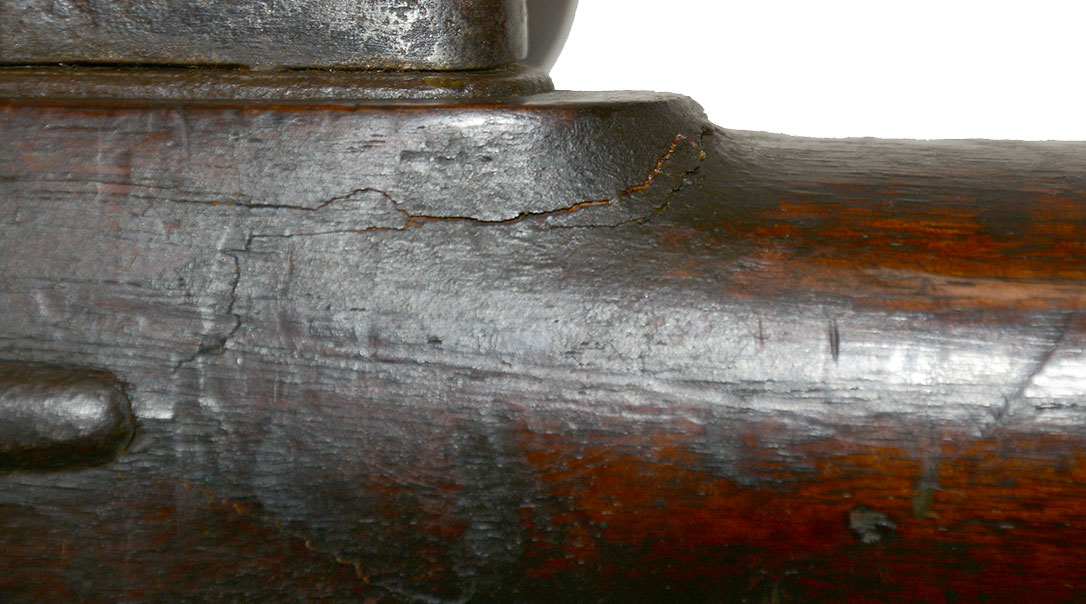
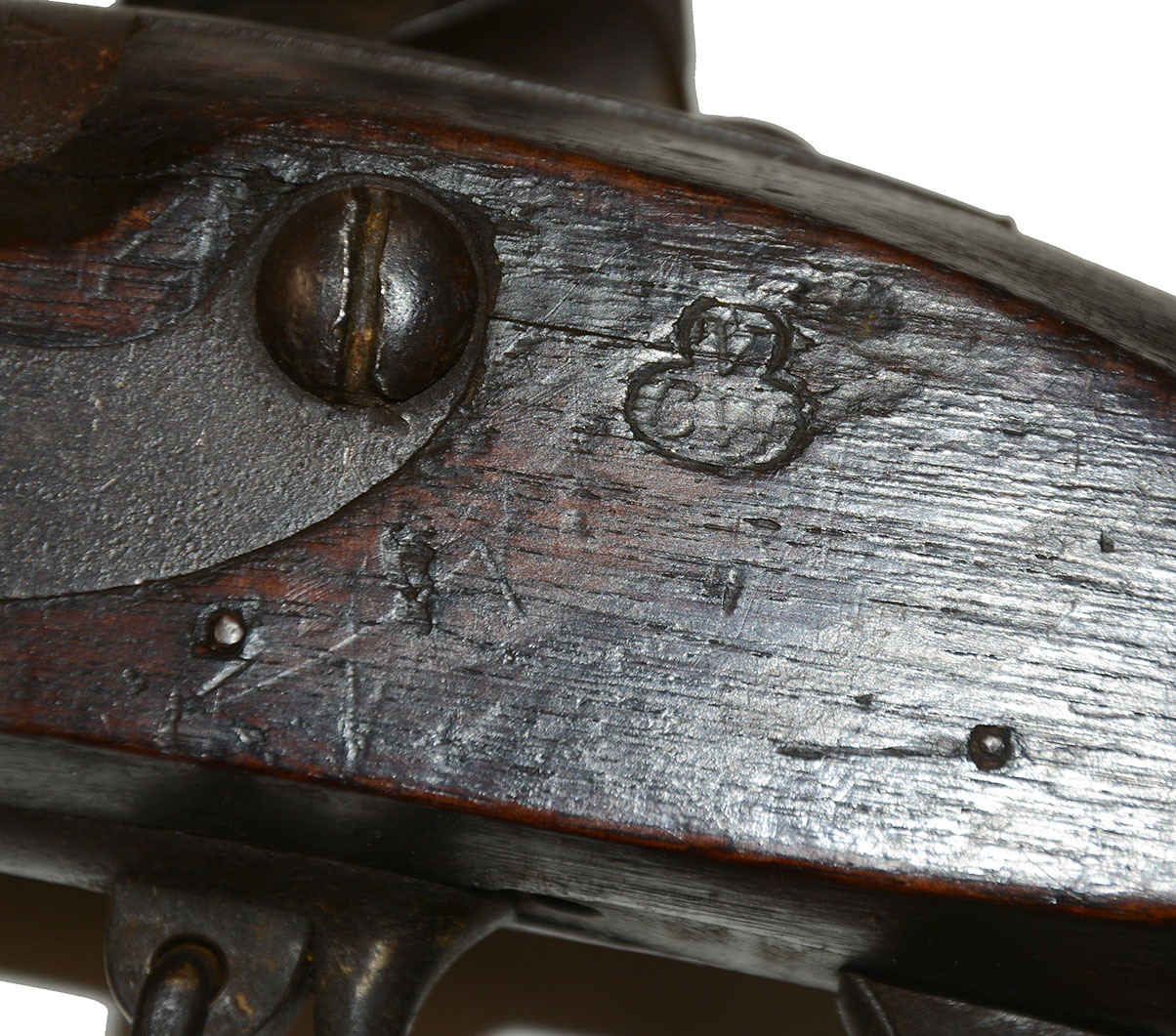
The wood is a deep brown, for the most part, showing a bit lighter in some places from handling. It is solid, though showing handling dings and scratches to the underside of the wrist, and belly of the stock. The edges of the lock apron are good, but show a missing piece on the upper rear, from above the rear point of the lock plate, and a hairline on the underside from the forward curve of the lock apron back, and a narrow gouge on the front edge of the apron. The side flat shows some dings on the forward top, but has generally good edges and a wonderfully sharp inspection mark, “V/CW” in trefoil cartouche, of Charles Williams, who had served as master armorer at Harpers Ferry and was appointed inspector contract arms in October 1808, a duty he performed to his resignation in April 1814. The wood at the base of the breechplug tang has a narrow chip. The buttstock shows a couple of short, shallow hairline at the buttplate. The muzzle has a small, old collection number, “28” in white paint on the left. Please see all our photos.
The 1808 series of arms is an important phase in the development of domestic arms manufacture for national defense. The muskets supplied under the various contracts and the problems encountered in fulfilling them were important in the subsequent industrial revolution with mass production and eventual achievement of interchangeable parts, as well as improvements in managing private contractors. The muskets themselves also offer a wide variety for the collector. [sr][ph:L]
DISCLAIMER: All firearms are sold as collector's items only - we do not accept responsibility as to the shooting safety or reliability of any antique firearm. All firearms are described as accurately as possible, given the restraints of a catalog listing length. We want satisfied customers & often "under" describe the weapons. Any city or state regulations regarding owning antique firearms are the responsibility of the purchaser. All firearms are "mechanically perfect" unless noted, but again, are NOT warranted as safe to fire.
~~~~~~~~~~~~~~~~~~~~~~~~~~~~~~~~~~~
THIS ITEM, AS WITH ALL OTHER ITEMS AVAILABLE ON OUR WEB SITE,
MAY BE PURCHASED THROUGH OUR LAYAWAY PROGRAM.
CLICK HERE FOR OUR POLICIES AND TERMS.
THANK YOU!
Inquire About US 1808 JENKS CONTRACT MUSKET
Most Popular
Historical Firearms Stolen From The National Civil War Museum In Harrisburg, Pa »
Theft From Gravesite Of Gen. John Reynolds »
Selection Of Unframed Prints By Don Troiani »
Fine Condition Brass Infantry Bugle Insignia »
Rare Identified 65Th Ny Sergeant’s Jacket, With Manscript Material: 1St U.s. Chasseurs »
featured item
THE ESTILLVILLE DAVIS GUARDS: THE PRESENTED COMPANY COLOR OF CAPT. HENRY CLINTON WOOD, COMPANY D, 37TH VIRGINIA INFANTRY, WITH THE FAMILY ARCHIVE DOCUMENTING ITS SUBSCRIPTION, PURCHASE, PRESENTATION AND ACCEPTANCE — SCOTT COUNTY, VIRGINIA, 1861
THE FLAG Confederate national flag of the First National pattern, eleven stars, made as a company color and presented in the summer of 1861 to the volunteer company raised at Estillville, Scott County, Virginia by Henry Clinton Wood. Leading edge 62… (1268-335). Learn More »
site search