


site search
online catalog
46th REGIMENT SHORT LAND BROWN BESS MUSKET OF THE REVOLUTIONARY WAR ERA

Hover to zoom




$6,950.00 SOLD
Quantity Available: None
Item Code: 1273-30
Before we go into a description of this weapon be aware that very few regimentally marked British military long arms from any period survive today. They were used extensively on campaign and on the fields of battle for up to fifteen or more years, but after a regiment's deployment and before returning to Great Britain the weapons were often ordered left in that colony or with an allied nation (Portugal for example). There were exceptions to this of course, but it was "law of the land" that British soldiers, rank and file, return home, for the most part, unarmed and officer's swords dulled. The long arms left behind were scrubbed of their former regimental designations and put in local military/militia stores. Long arms that survive today with regimental marks were captured, lost, stolen or souvenired after a battle. Be aware that it was the rule rather than the exception that arms issued to British soldiers be regimentally marked, company marked and soldier marked. This practice began in the first quarter of the eighteenth century and continued until the first few months of World War One.
It is believed, but this could be purely apocryphal, that the "Brown Bess" was named after Elizabeth I of England (However she was dead over a century before the first of these was made). Uses of the term first appear in the later 18th century. The Connecticut Courant in April 1771, said "...but if you are afraid of the sea, take Brown Bess on your shoulder and march." The 1785 Dictionary of Vulgar Tongue, a contemporary work which defined vernacular and slang terms, contained this entry: "Brown Bess: A soldier's firelock. To hug Brown Bess; to carry a firelock or serve as a private soldier." Other popular explanations of the use of the word "Brown" include that it was a reference to either the color of the walnut stocks or to the characteristic brown color that was produced by russeting, an early form of metal treatment. However, the Oxford English Dictionary notes that "browning" was only introduced in the early 19th century, well after the term had come into general use. The word "Bess" is commonly held to either derive from the word arquebus. More plausible is that the name could have been derived from the German words "brawn buss" or "braun buss", meaning "strong gun" or "brown gun"; King George I who sanctioned its use as early as the first quarter of the 18th century was from Germany.
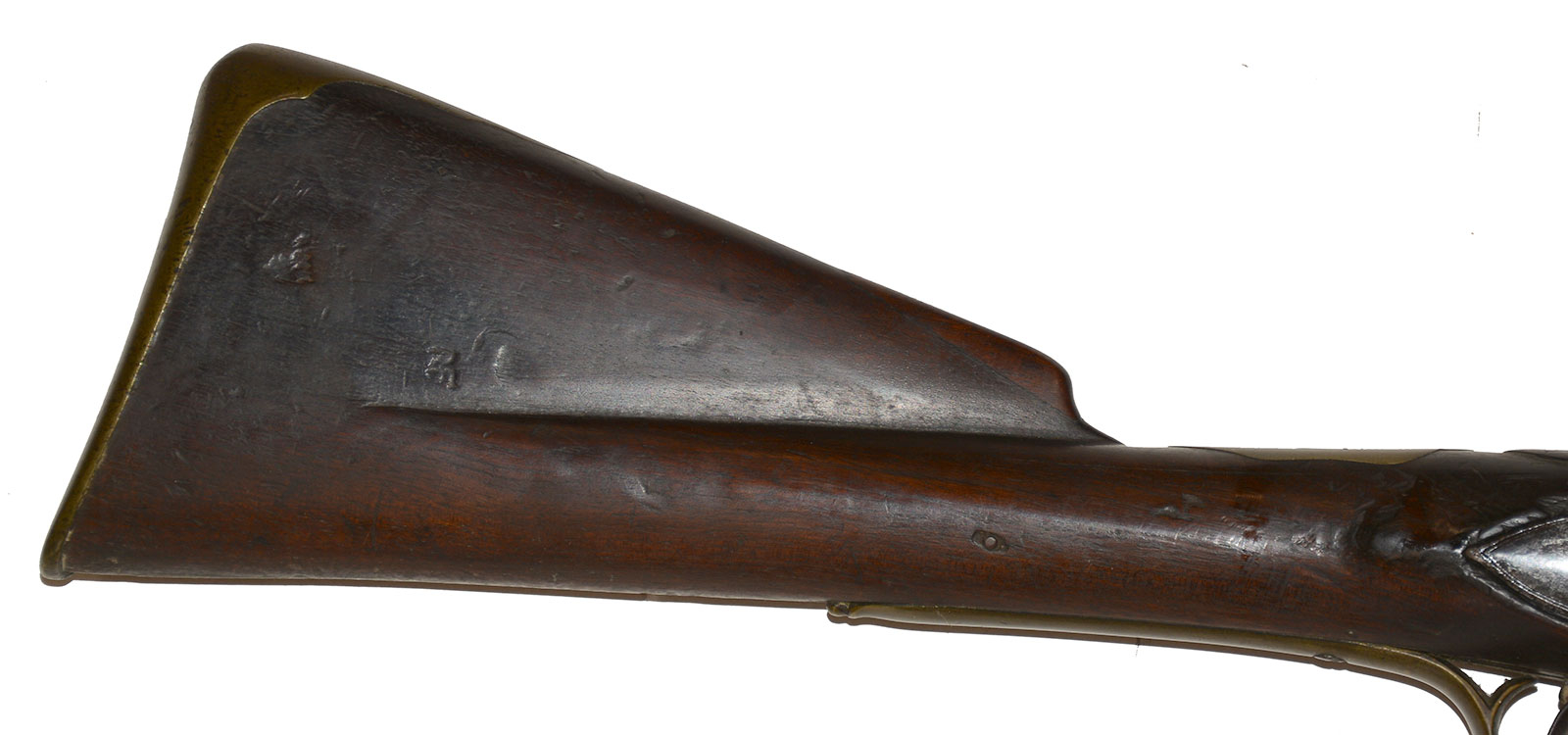
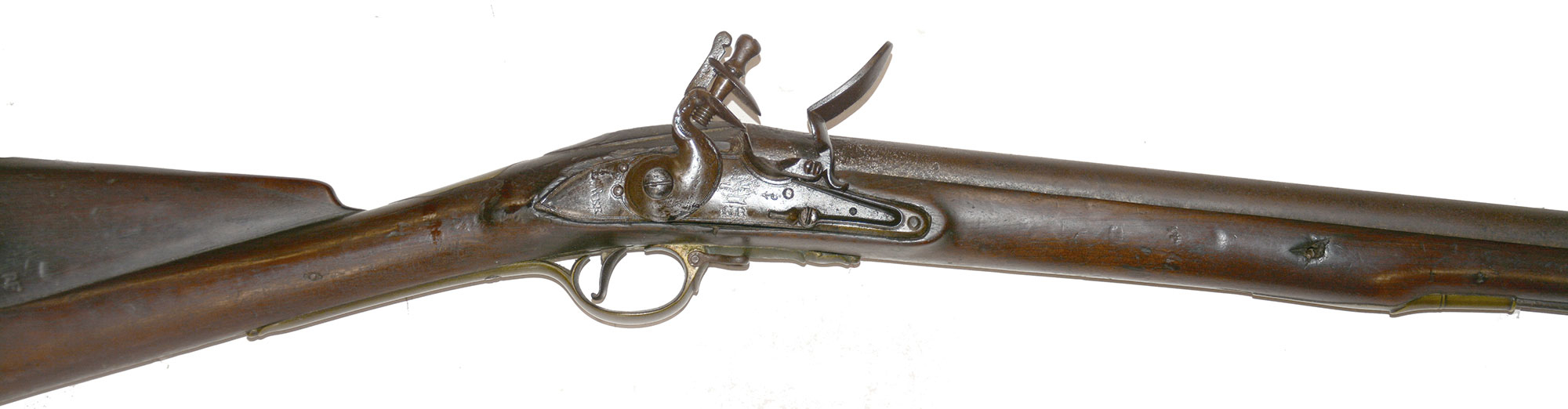
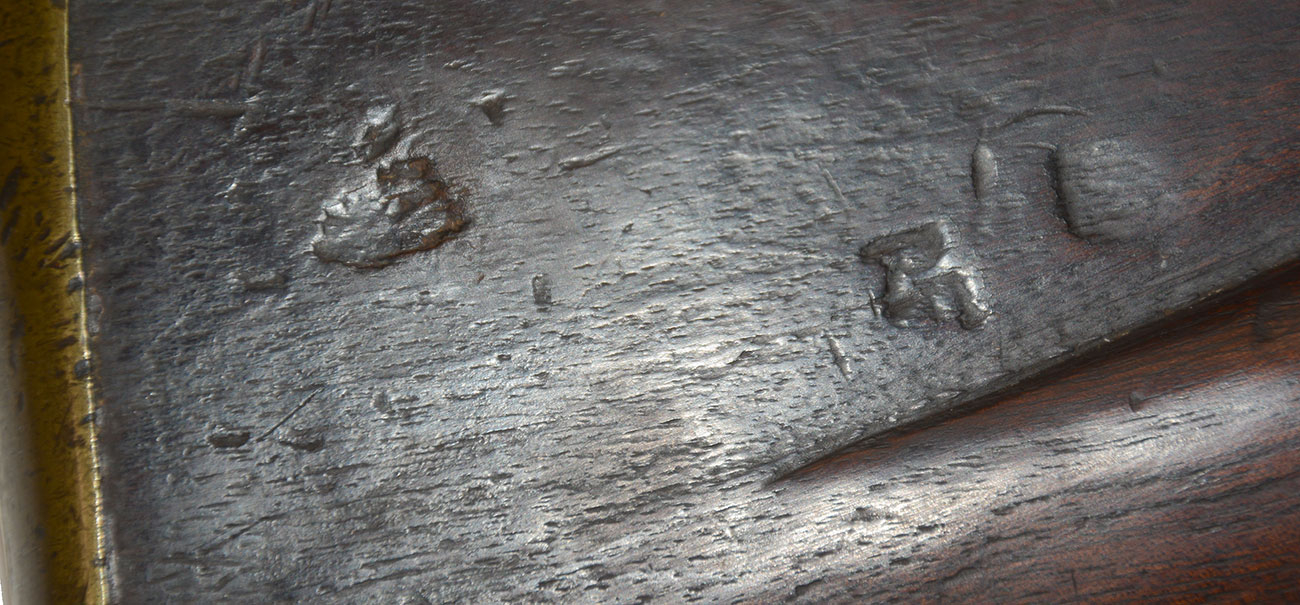
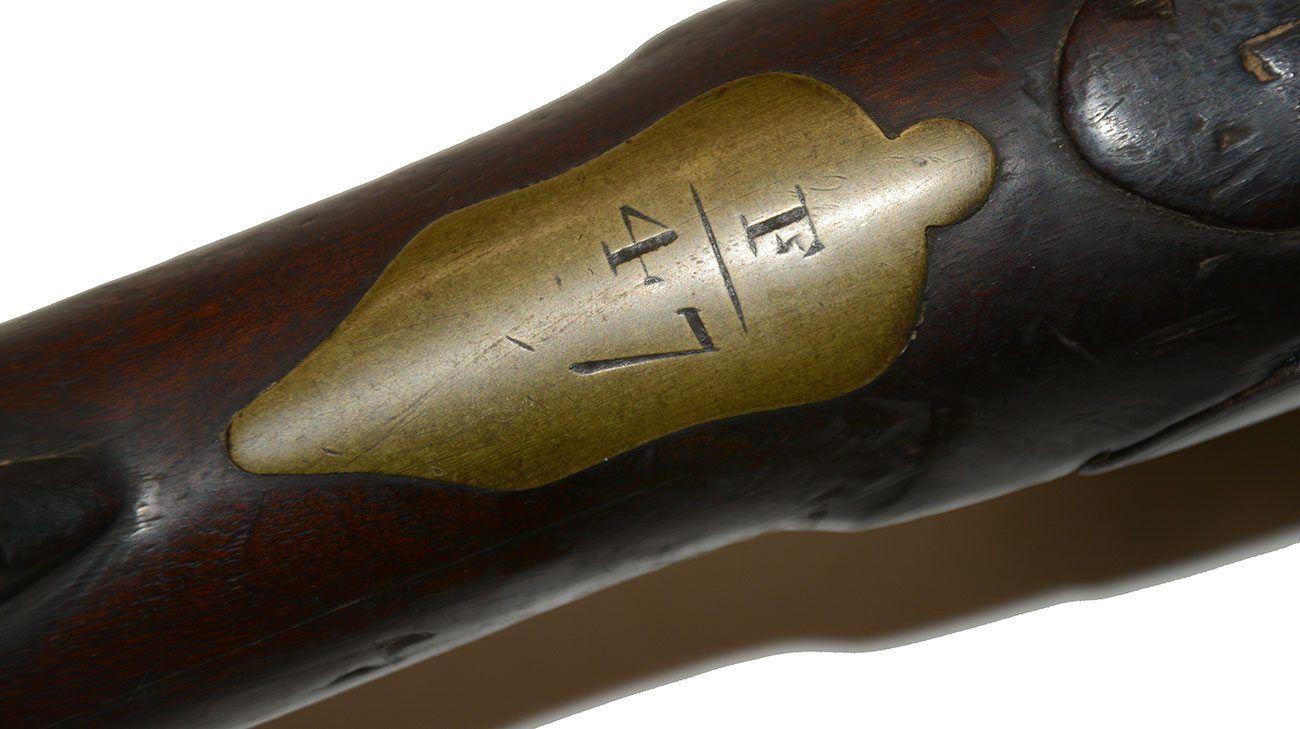
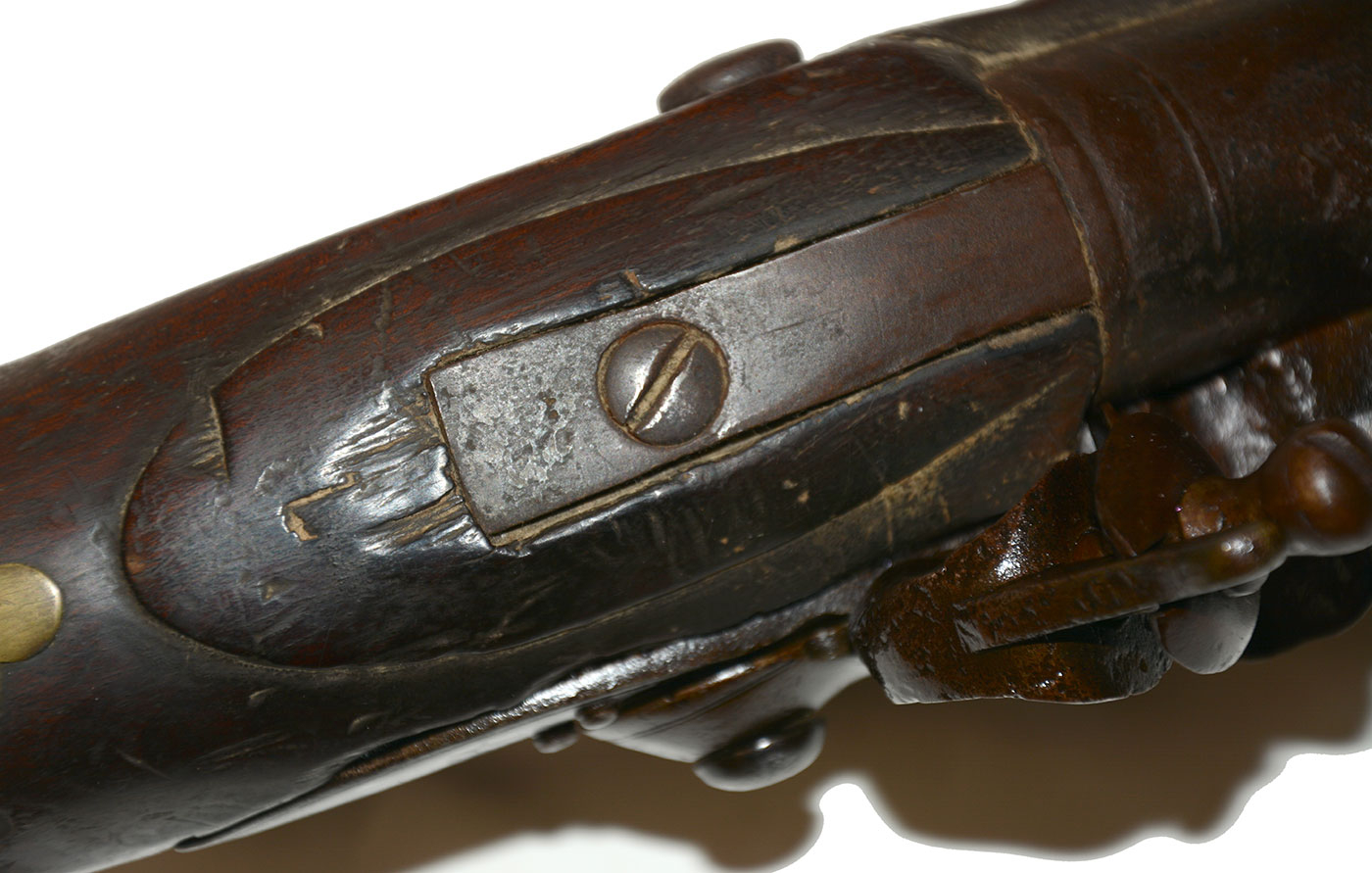
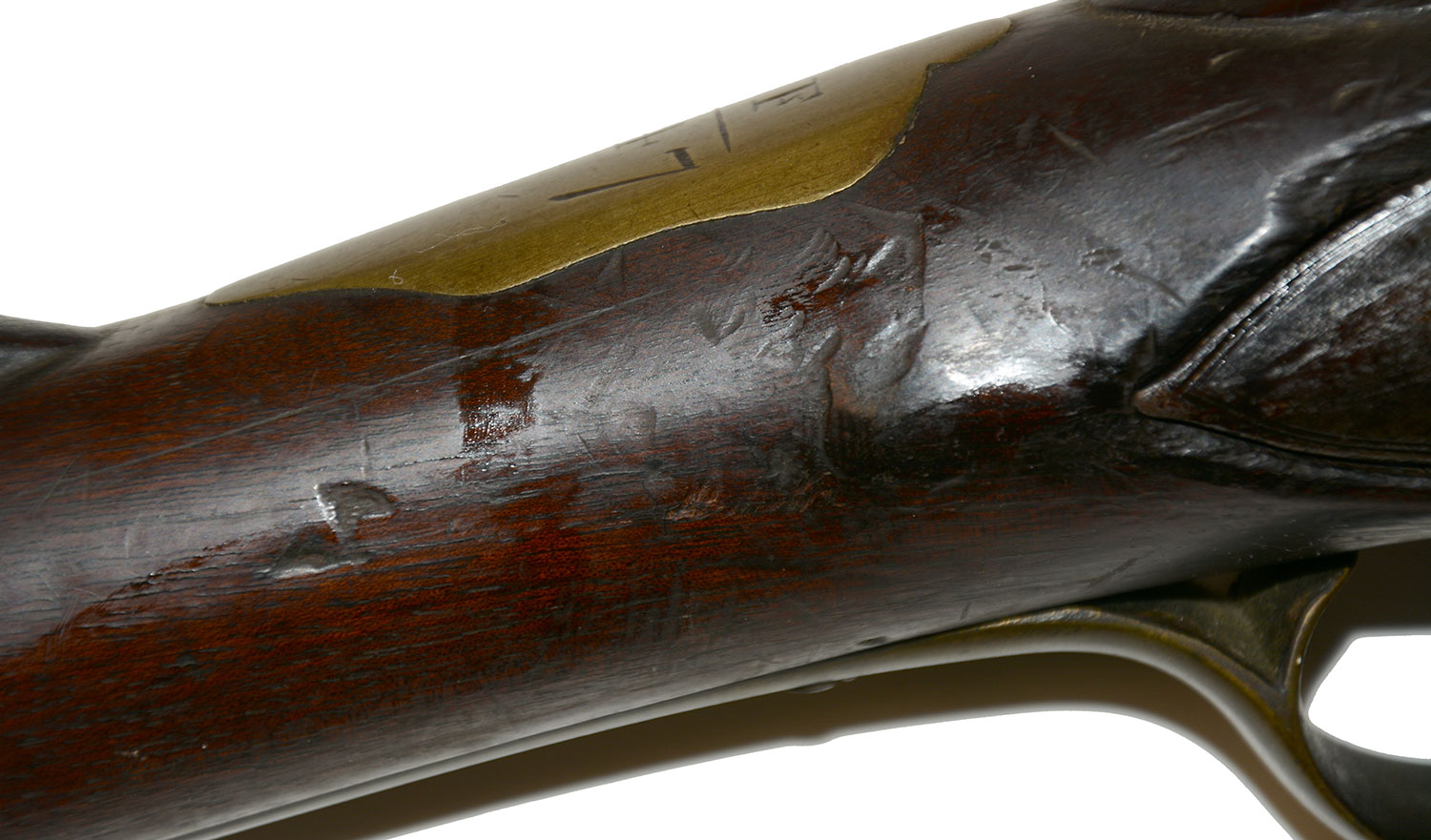
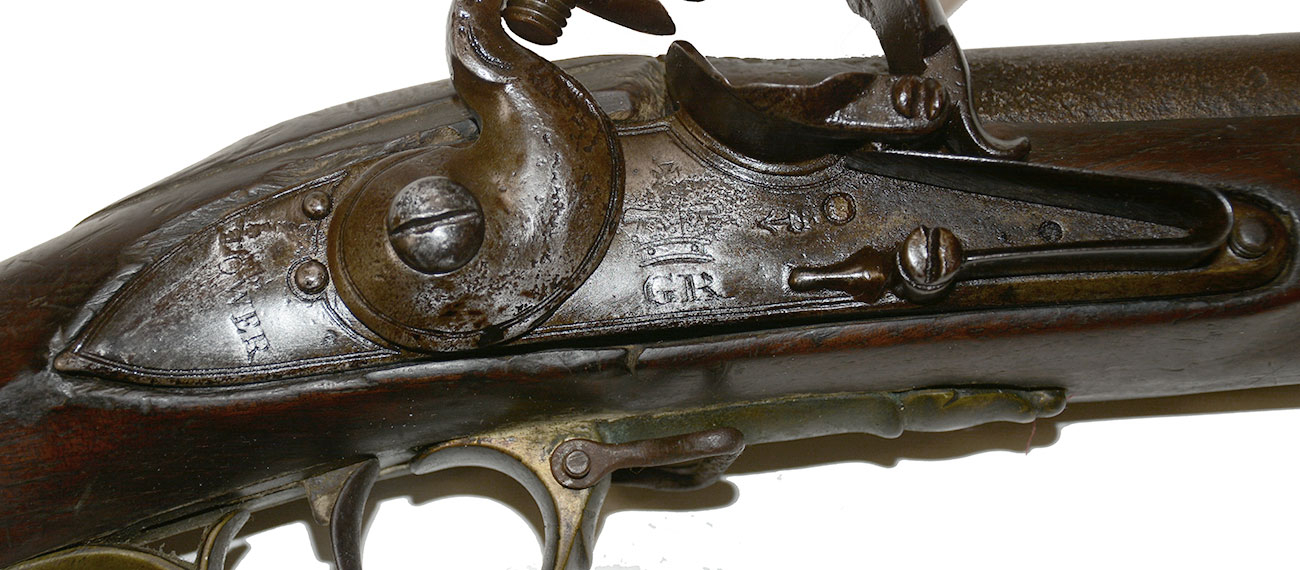
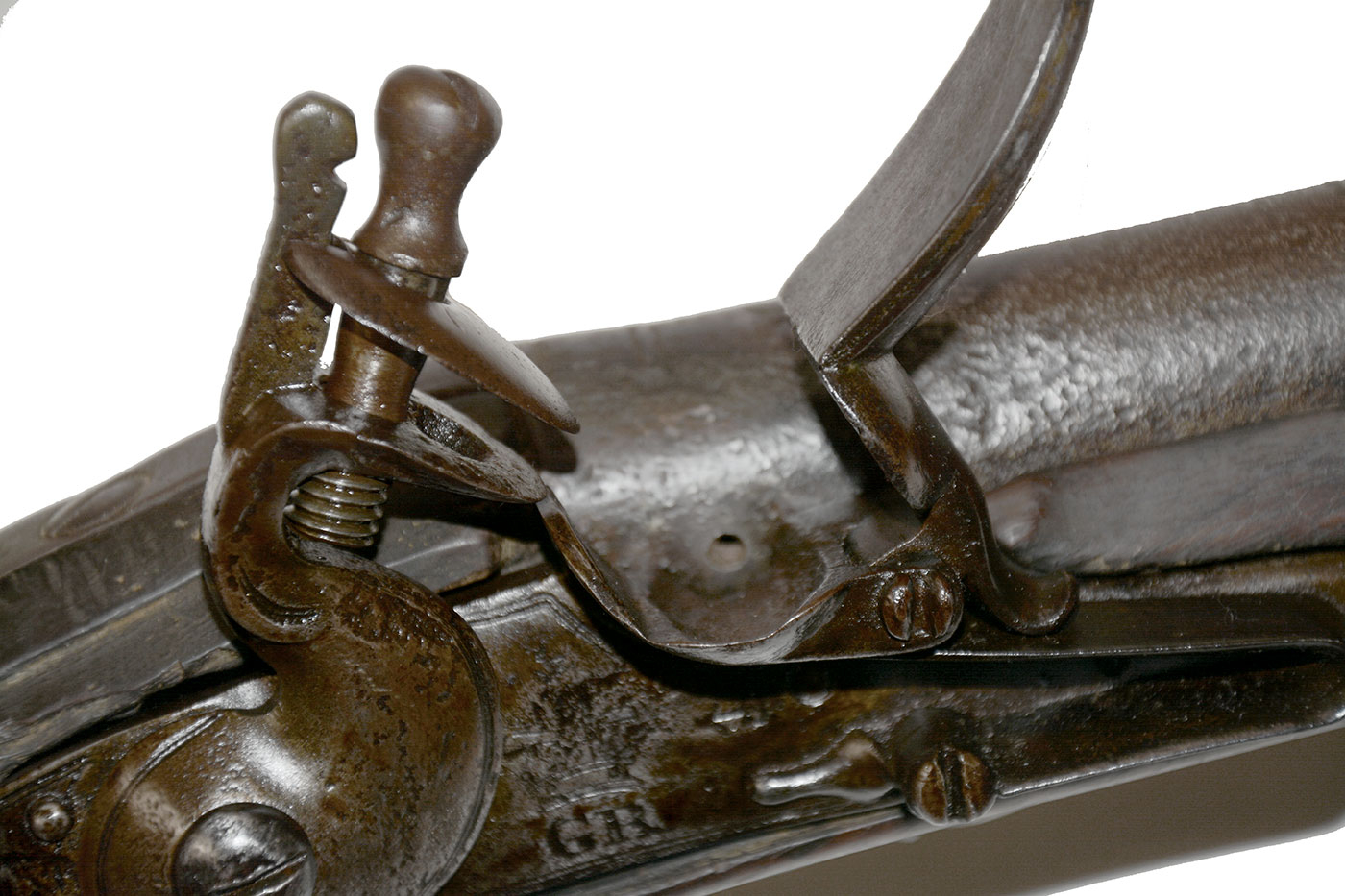
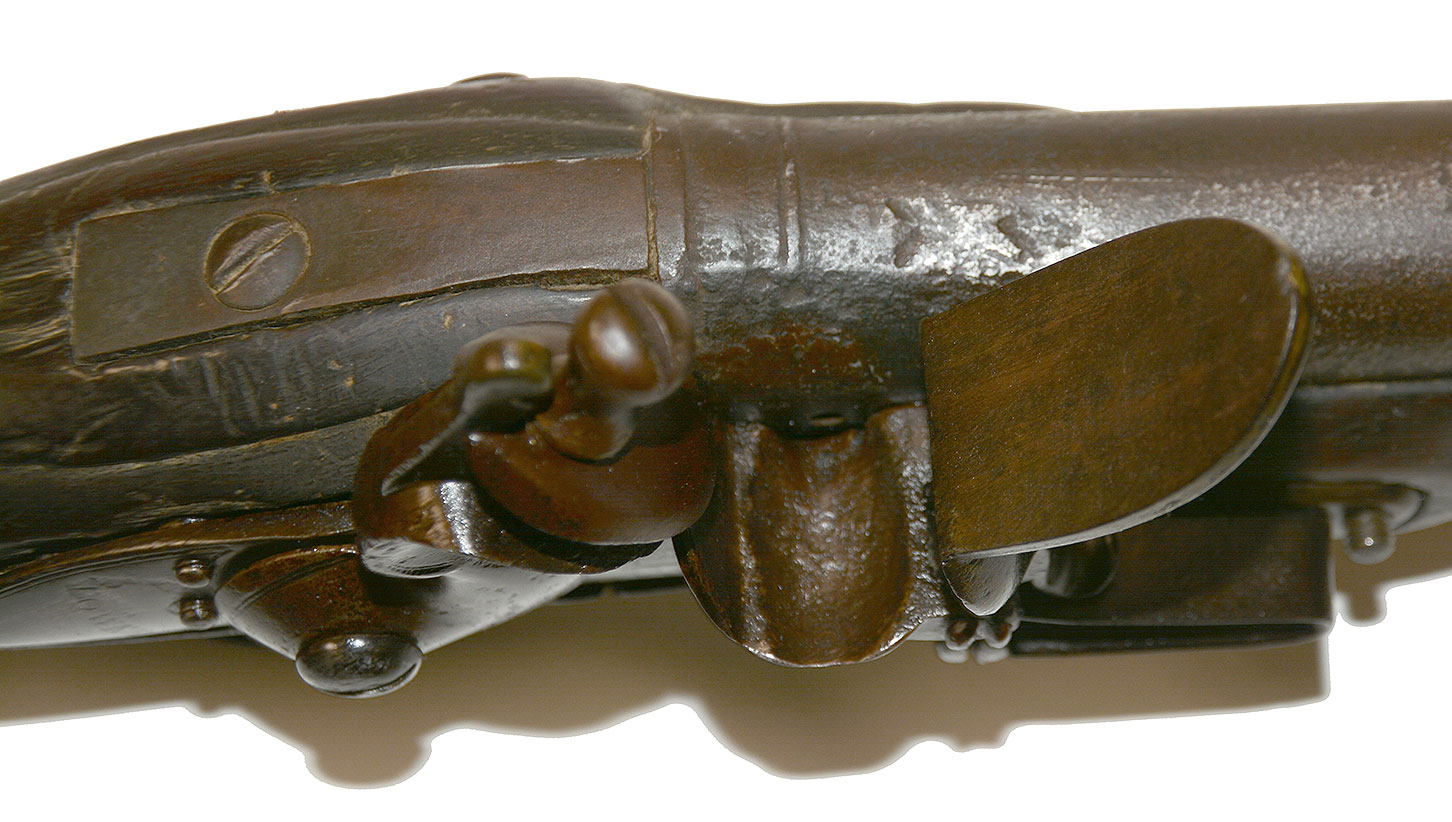
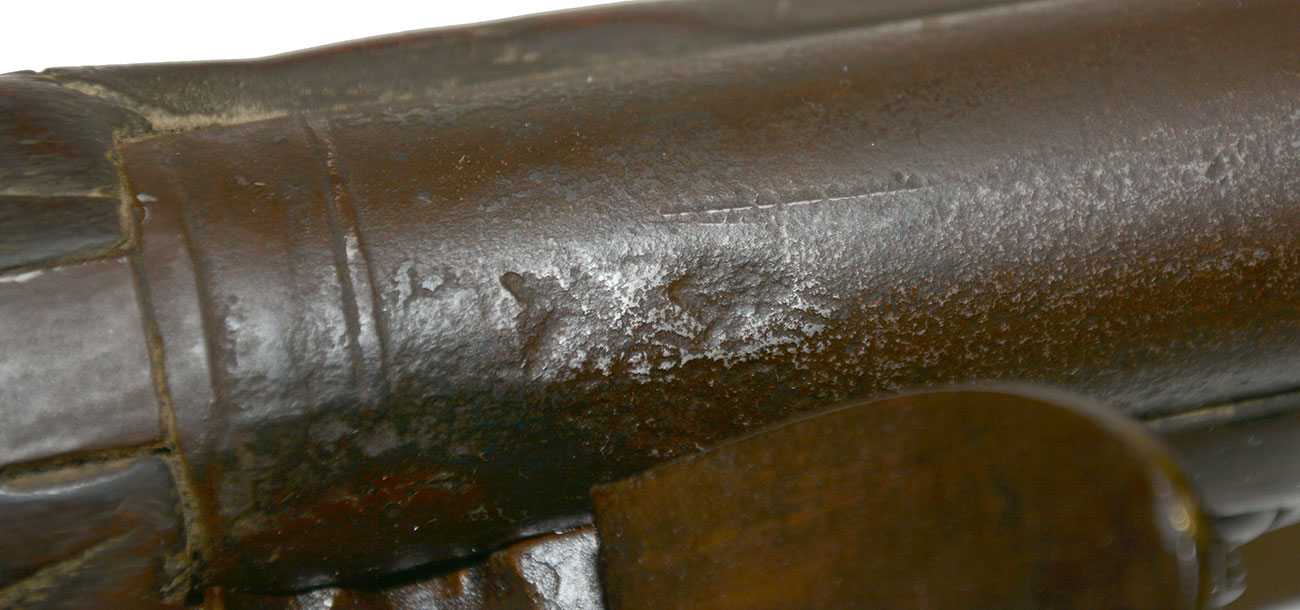
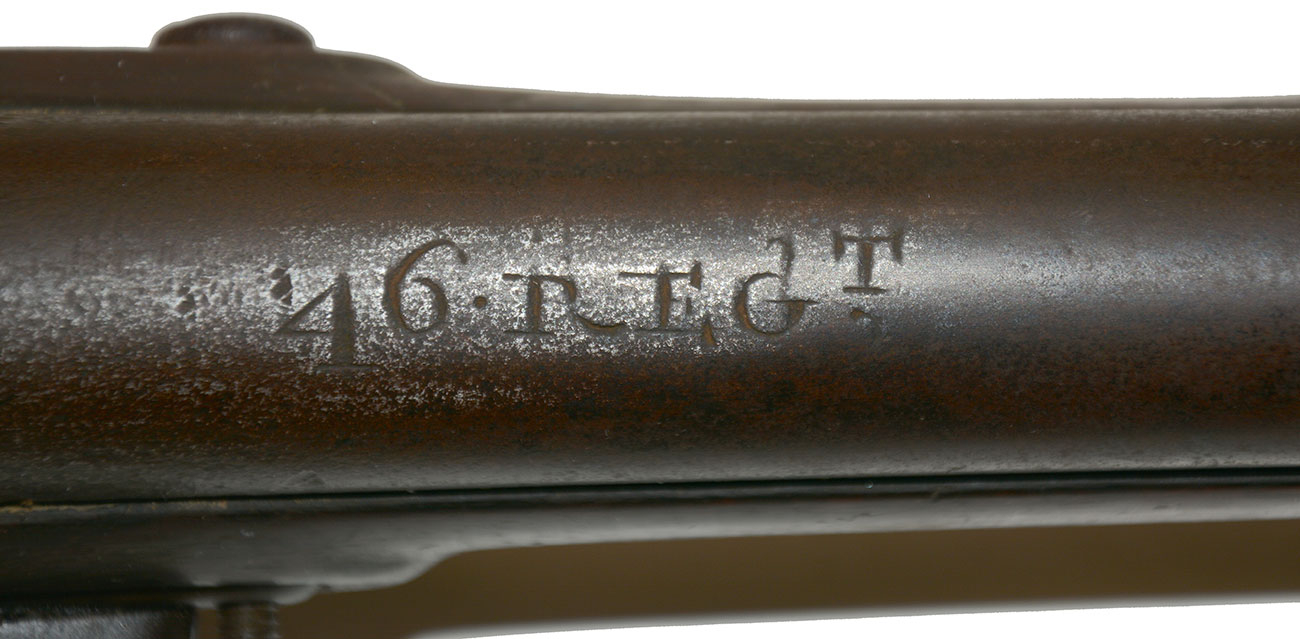
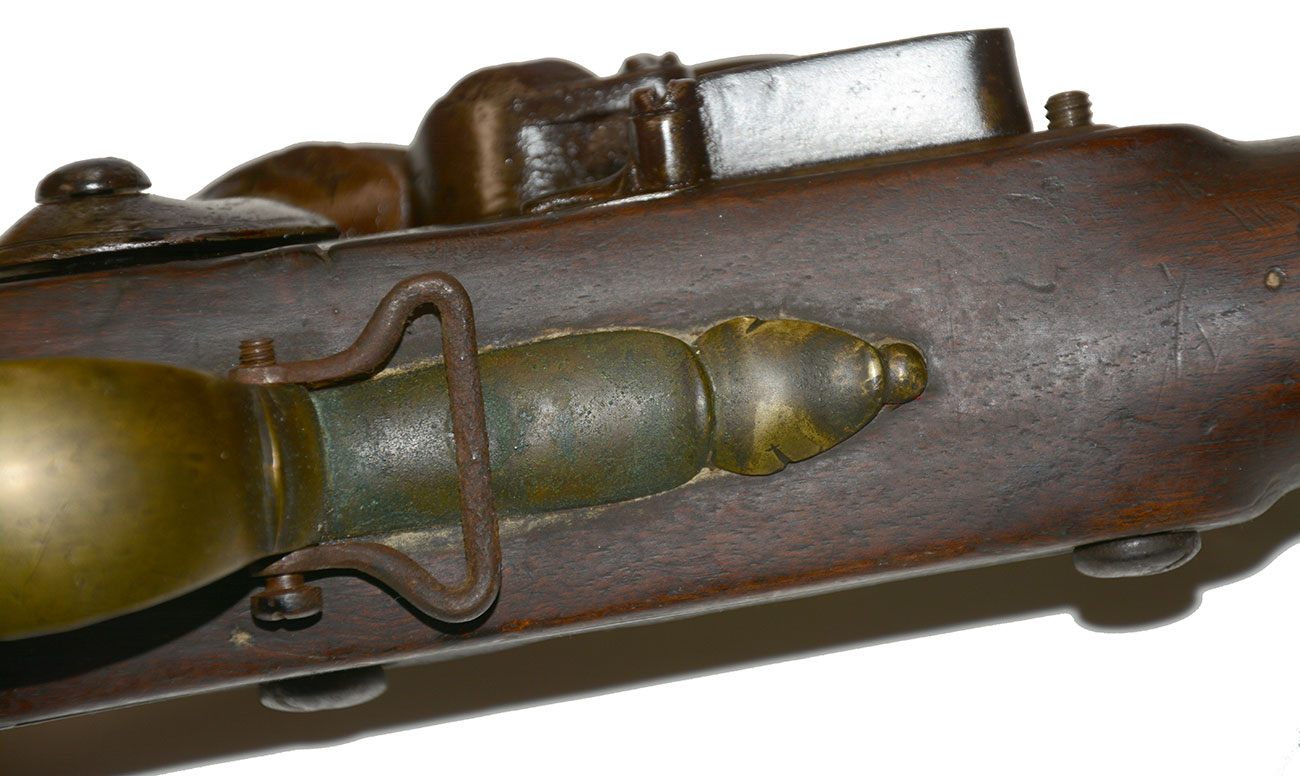
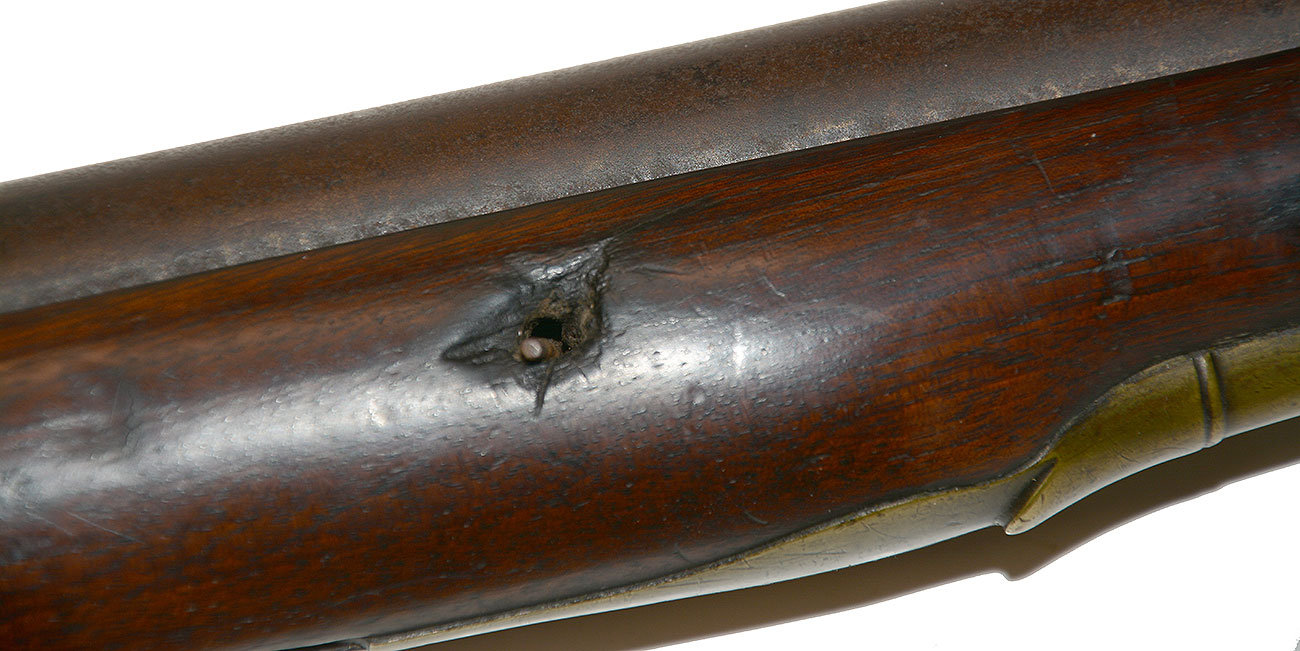
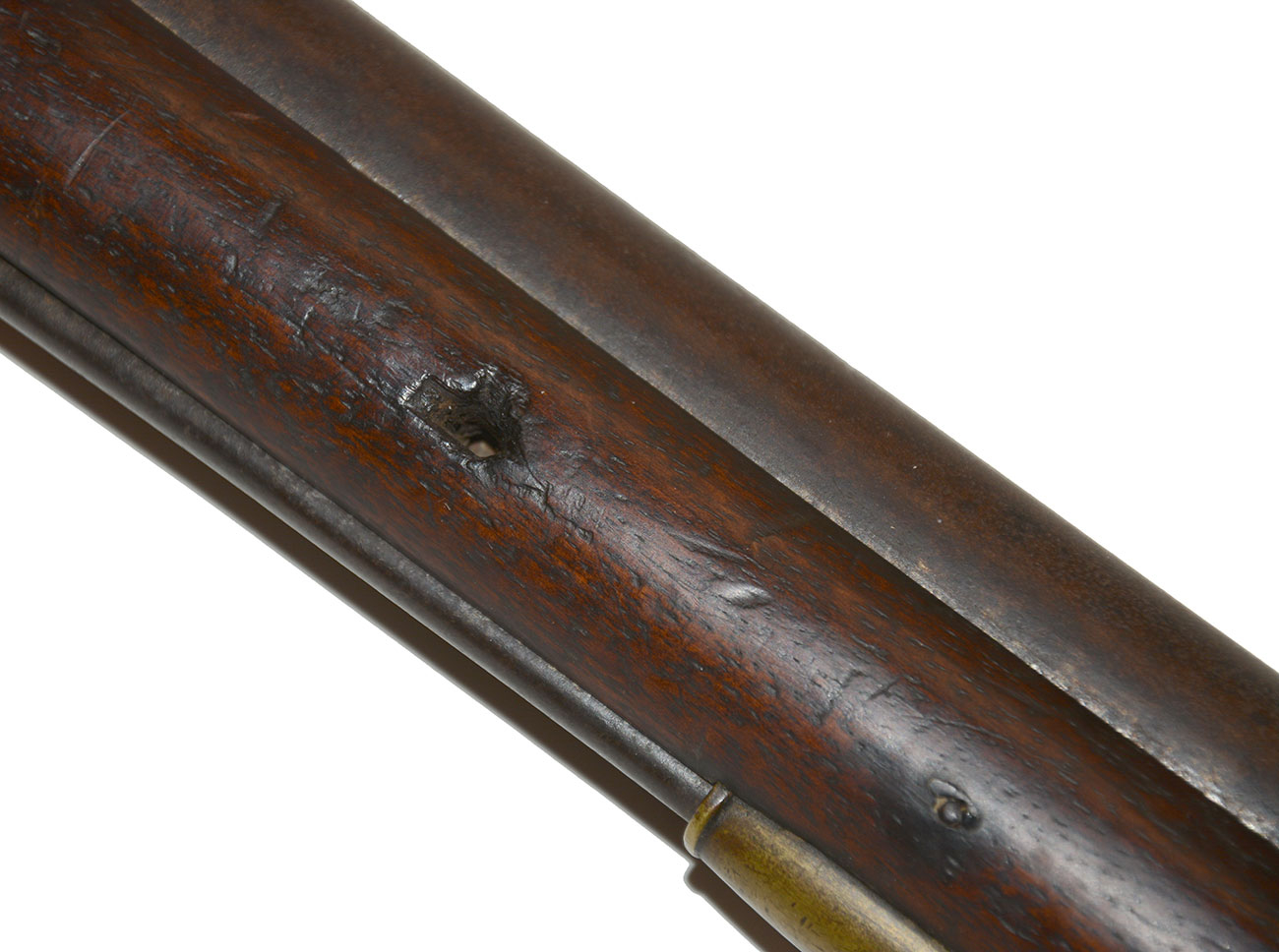
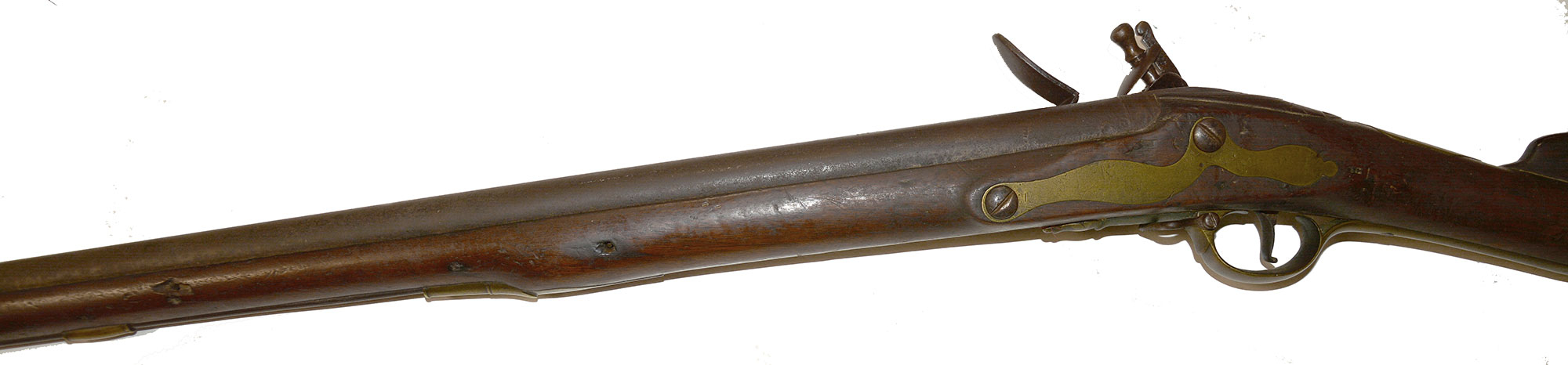
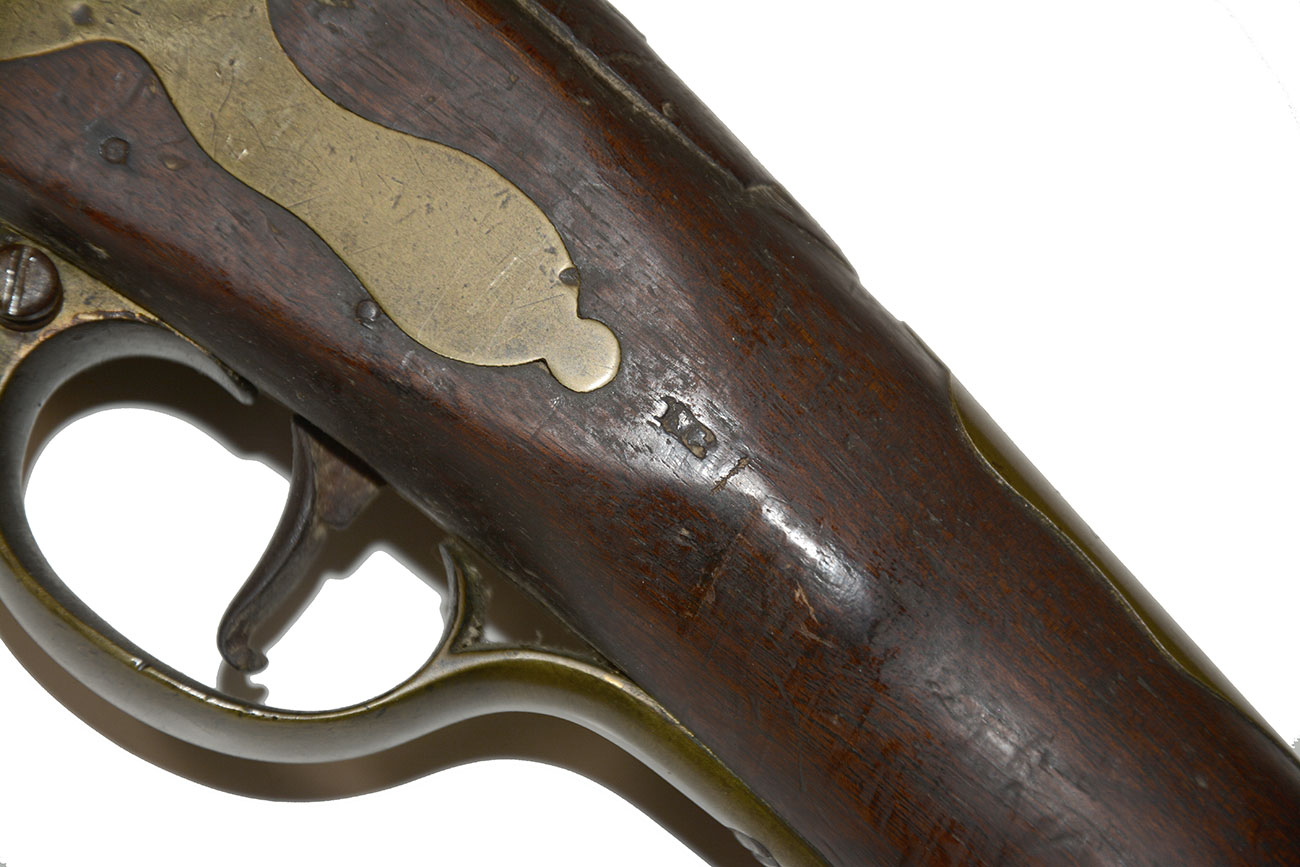
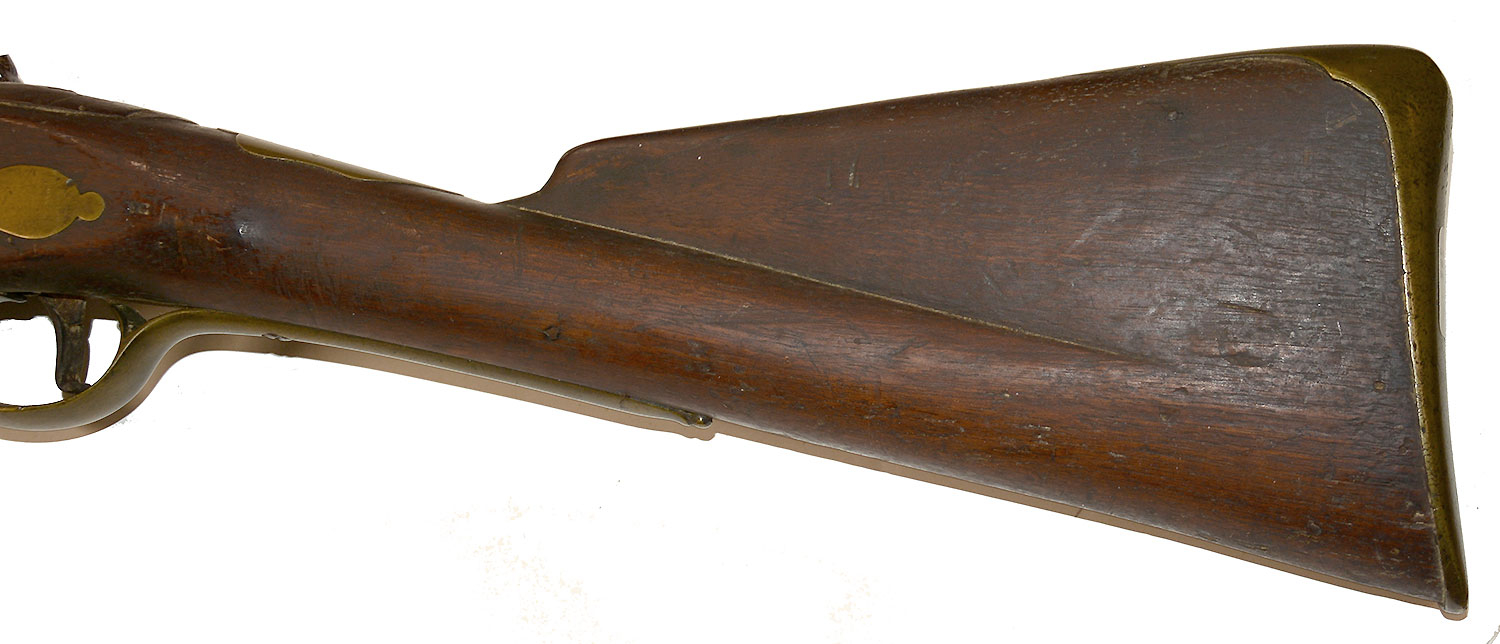
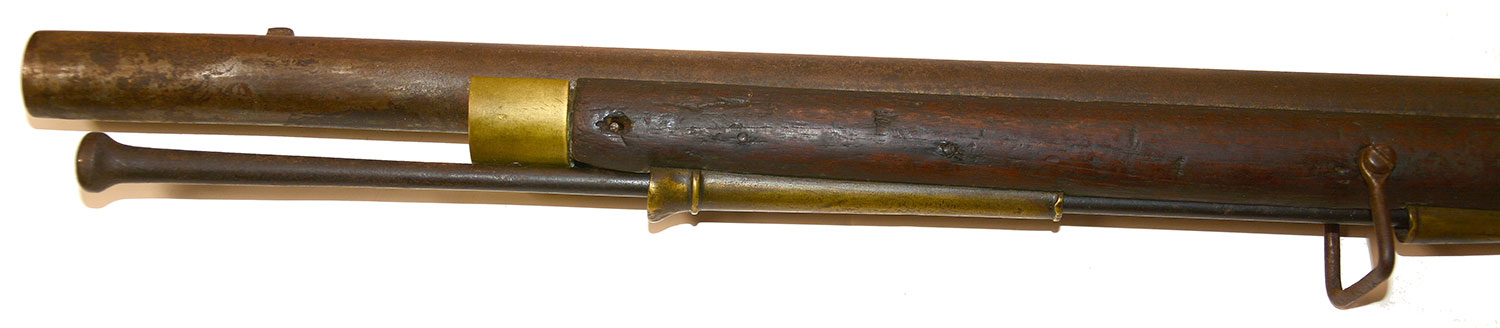
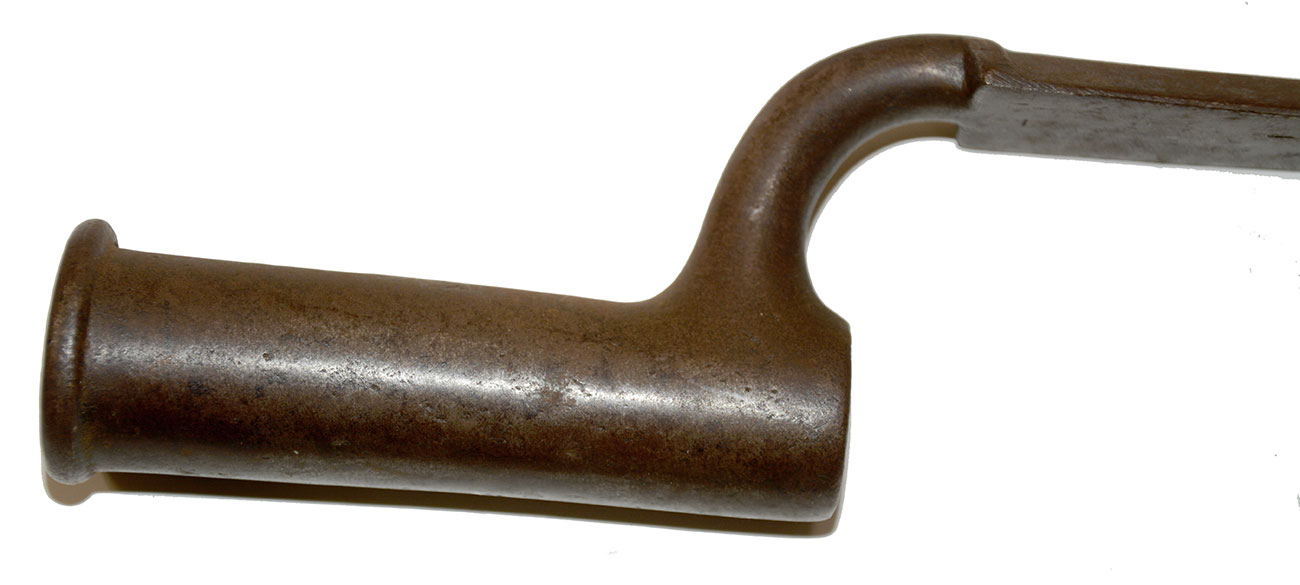
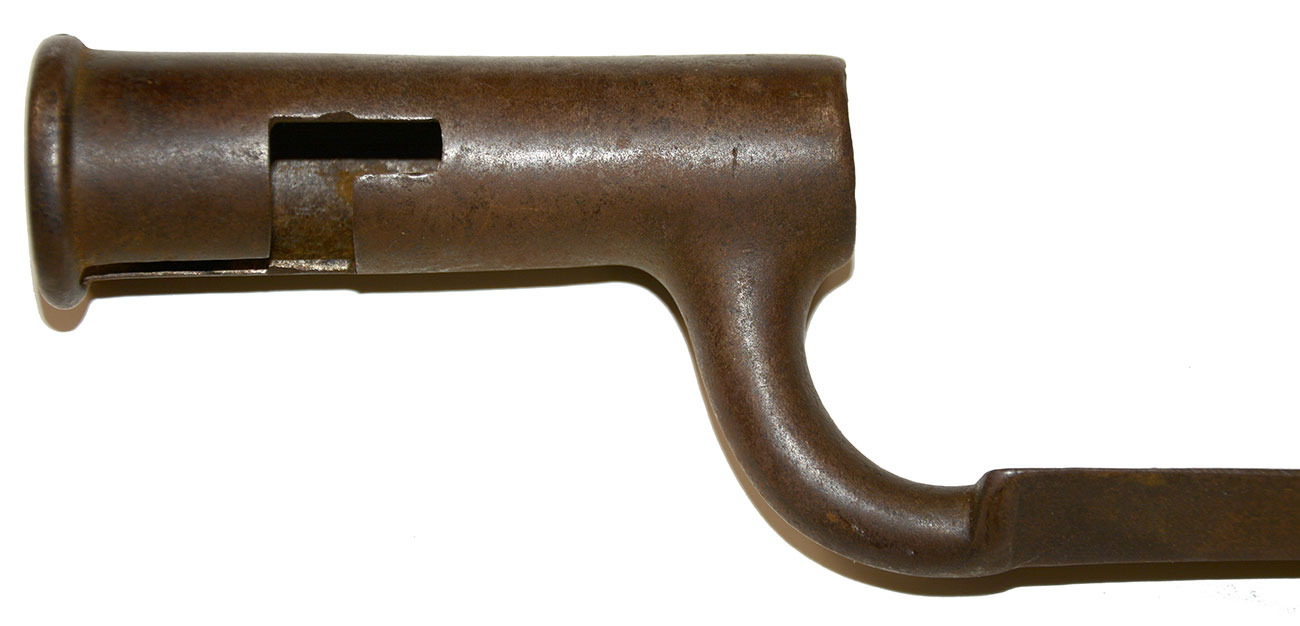
This regimentally "engraved" original flint musket of the Pattern 1769/77 is in nice condition. The 42-inch barrel is fully British Ordinance proofed. These stampings on the top right rear of the barrel (pre-1783 when they migrated to the left side) are a crown over crossed scepters and a crown over "GR" over a broad arrow. Ahead of these well-worn stamped proofs is neatly engraved "46 REGt" (46th Regiment). This was possibly applied at the Tower of London before issue but more likely at the regimental depot level. Please click this link for details on the 46th Regiment of Foot (https://46thfoot.com/46thhistory.html).This Short Land Pattern comes with a fine looking perfectly fitting bayonet. The lock plate is engraved at the rear "TOWER" and in front of the cock is a king's crown over "GR". The cock and its top jaw and screw are original as are the frizzen, frizzen pan and frizzen spring. The original well-worn frizzen was re-faced during the period attesting to the weapons great use. The walnut stock is brass mounted, these metal components are the butt plate, the trigger guard, the wrist escutcheon, the brass nose cap (which is a replacement but fits perfectly) and the 4 ramrod pipes of which the second entry pipe is Pratt's Pattern and dates the manufacture of this particular Brown Bess to after 1777. The wrist escutcheon is engraved "F" over "47" which is Co F and the 47th Infantryman. The original ramrod shows evidence where it was similarly engraved but only "-7" is legible. The treads of the ramrod are broken or worn off. The walnut stock shows plenty of period use and has a hard wood 1 by 1 1/2 repair at the top end of the comb; this is professionally done. The right side of the butt stock is deeply stamped with the storekeeper's mark of a crown over "GR" over "1780". This means the weapon, before issue to the 46th regiment, was stored in an armory. Accordingly, due to early features like the cock and placement of barrel proofs but mitigated by the 1777/1779 Pratt entry pipe, one can date manufacture of this weapon to late 1779 or 1780. This places it in the time of our American Revolution 1775 to 1783. However, the regiment at the time of issuance of this weapon was in the West Indies fighting the French (America's allies) which non-the-less was collateral damage and part of that world-shaking conflict ("The shot heard round the world").
This is a well-used regimentally identified veteran that certainly continued in service ell into the Napoleonic conflict. [pe][ph:L]
DISCLAIMER: All firearms are sold as collector's items only - we do not accept responsibility as to the shooting safety or reliability of any antique firearm. All firearms are described as accurately as possible, given the restraints of a catalog listing length. We want satisfied customers & often "under" describe the weapons. Any city or state regulations regarding owning antique firearms are the responsibility of the purchaser. All firearms are "mechanically perfect" unless noted, but again, are NOT warranted as safe to fire.
~~~~~~~~~~~~~~~~~~~~~~~~~~~~~~~~~~~
THIS ITEM, AS WITH ALL OTHER ITEMS AVAILABLE ON OUR WEB SITE,
MAY BE PURCHASED THROUGH OUR LAYAWAY PROGRAM.
CLICK HERE FOR OUR POLICIES AND TERMS.
THANK YOU!
Inquire About 46th REGIMENT SHORT LAND BROWN BESS MUSKET OF THE REVOLUTIONARY WAR ERA
Most Popular
Historical Firearms Stolen From The National Civil War Museum In Harrisburg, Pa »
Theft From Gravesite Of Gen. John Reynolds »
Selection Of Unframed Prints By Don Troiani »
Fine Condition Brass Infantry Bugle Insignia »
featured item
FROCK COAT, SASH, EPAULETS AND SWORD BELT OF COLONEL AND BREVET BRIGADIER GENERAL ELI HOUSTON MURRAY, 3rd KENTUCKY CAVALRY
This set consists of a wonderful, identified Union cavalry colonel’s frock coat, epaulets, sash and sword belt, all in excellent condition and belonging to Col. E.H. Murray, 3rd Kentucky Cavalry, who saw action in Kentucky, Mississippi, Alabama,… (1268-783). Learn More »
site search