


site search
online catalog
WAR OF 1812 POMEROY 1809 NY CONTRACT MUSKET

Hover to zoom


$1,850.00 ON HOLD
Quantity Available: 1
Item Code: 2025-3658
Flayderman refers to Lemuel Pomeroy as, “A prolific maker of Pittsfield, Massachusetts, with entire production evidently devoted to numerous state contracts.” Pomeroy was apparently new to arms manufacture, having manufactured plows and sleighs at Albany from 1799-1805. He purchased the Whitney Forge in Pittsfield only in 1808, and undertook his first musket contract, from which this musket derives, with New York for 1,000 guns in November 1809. As usual, deliveries were spread out over several years- by March 1811 he had delivered “a considerable part of the contract.”
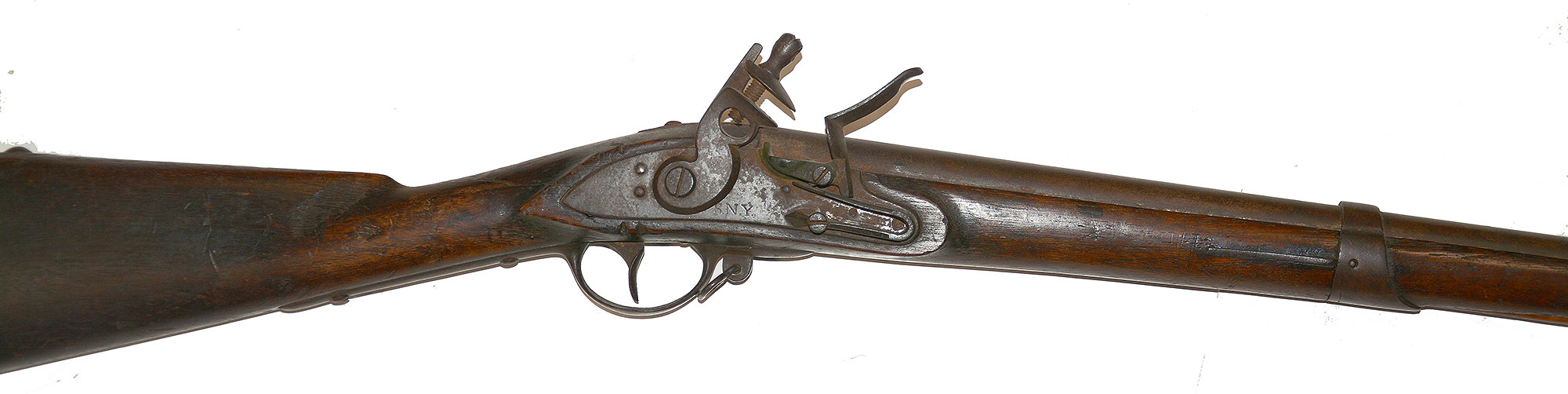
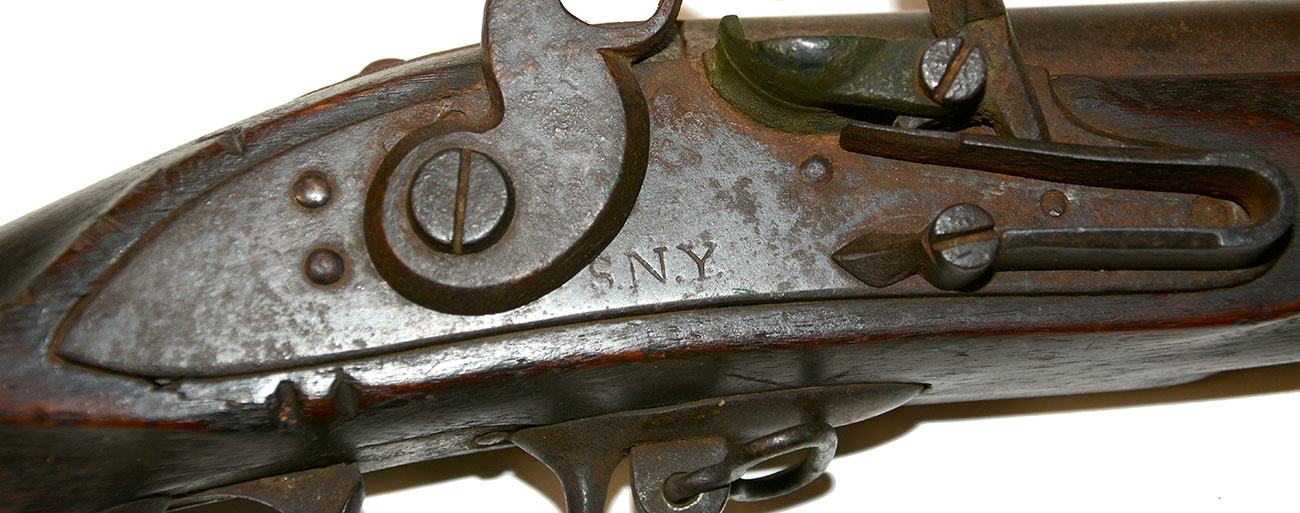
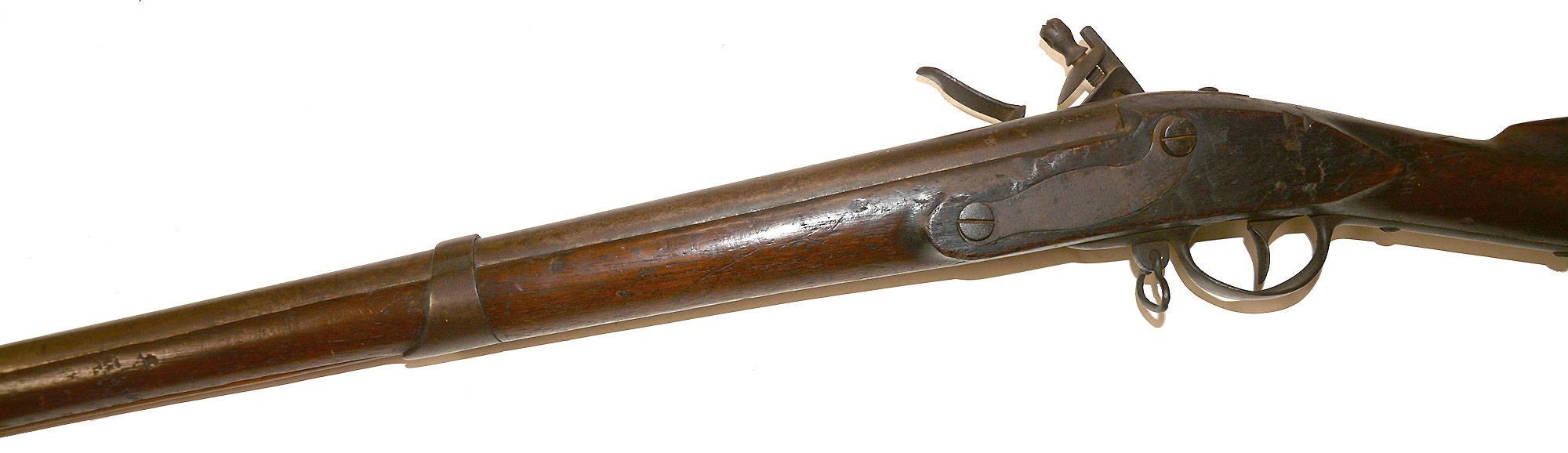
This one has an 1812-dated barrel, dating the completed musket to that year or shortly after. The lockplate is clearly stamped “S.N.Y.” in large block letters along the lower edge just forward of the cock. Moller does not mention this form of Pomeroy’s marking for his New York muskets, but the marking is Riley #278, is mentioned by Flayderman, and clearly follows the same form as Pomeroy’s simple “MASS” lockplate stamp for his 1813-1814 Massachusetts contract muskets and the “S. CT.” lockplate stamps, which some have thought to be “State Contract,” but others take to be “State of Connecticut,” with whom Pomeroy also had contract about 1812 and also made deliveries 1813-1814. It is thus possible he started using this form of lock about 1812 simply to distinguish muskets for his various state contracts.
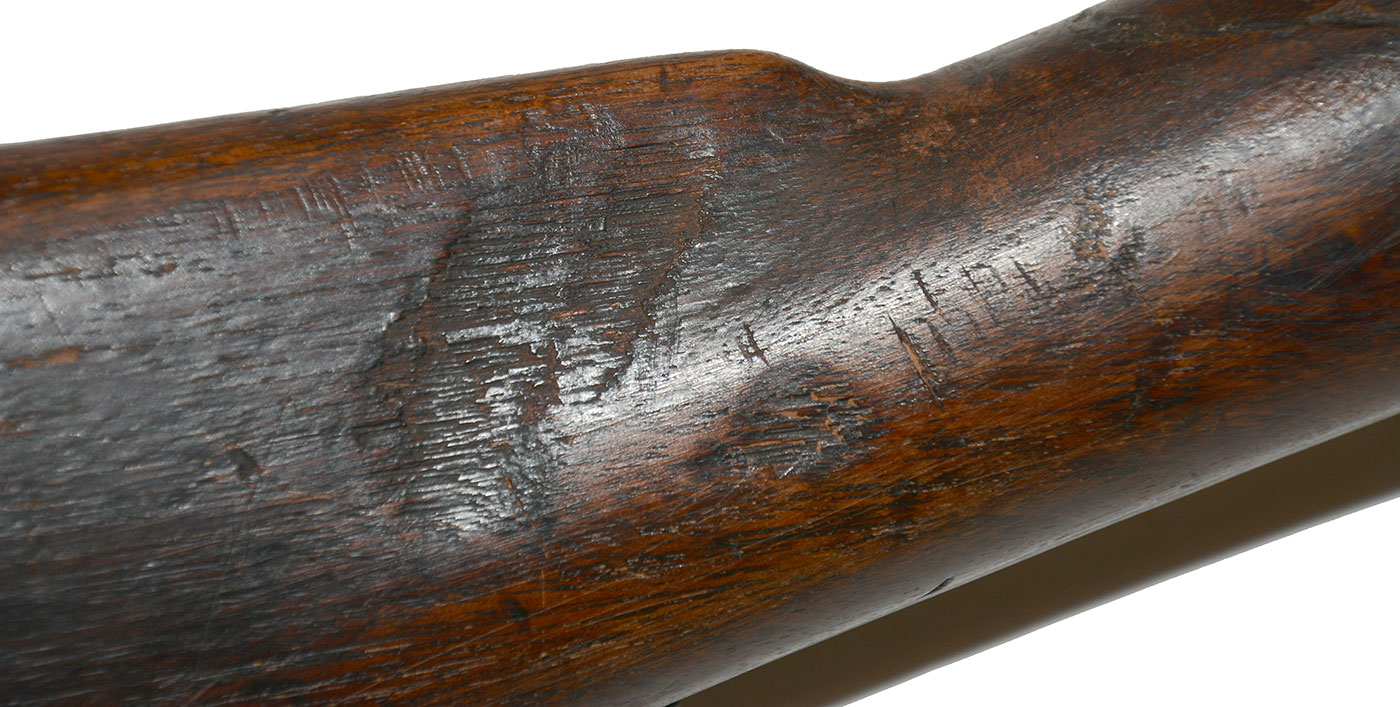
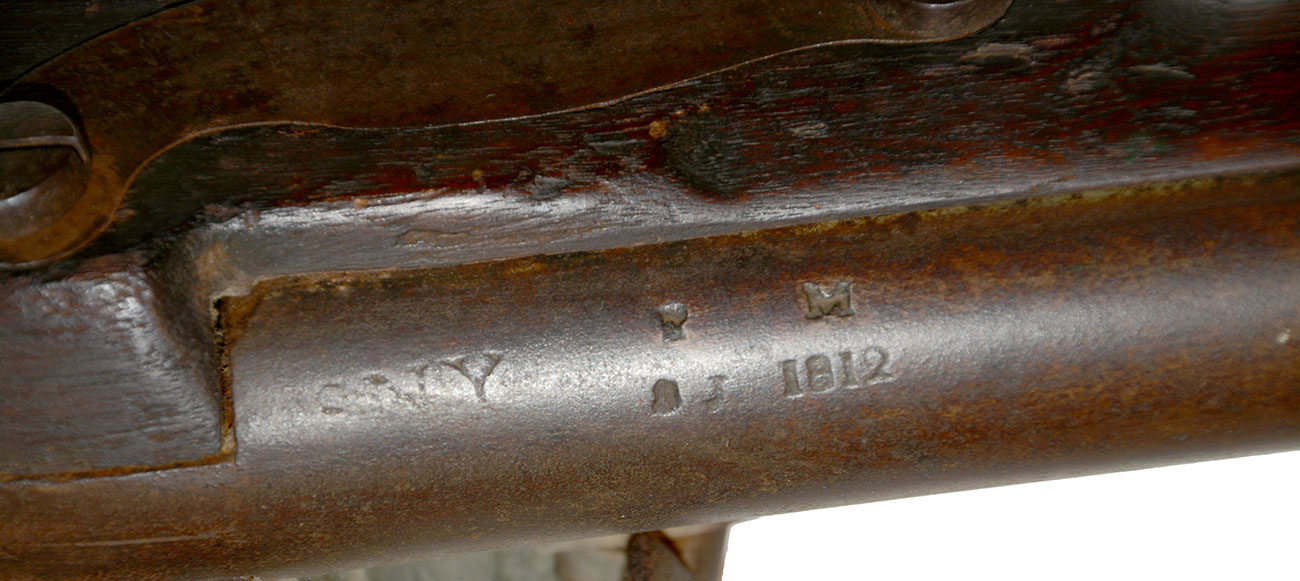
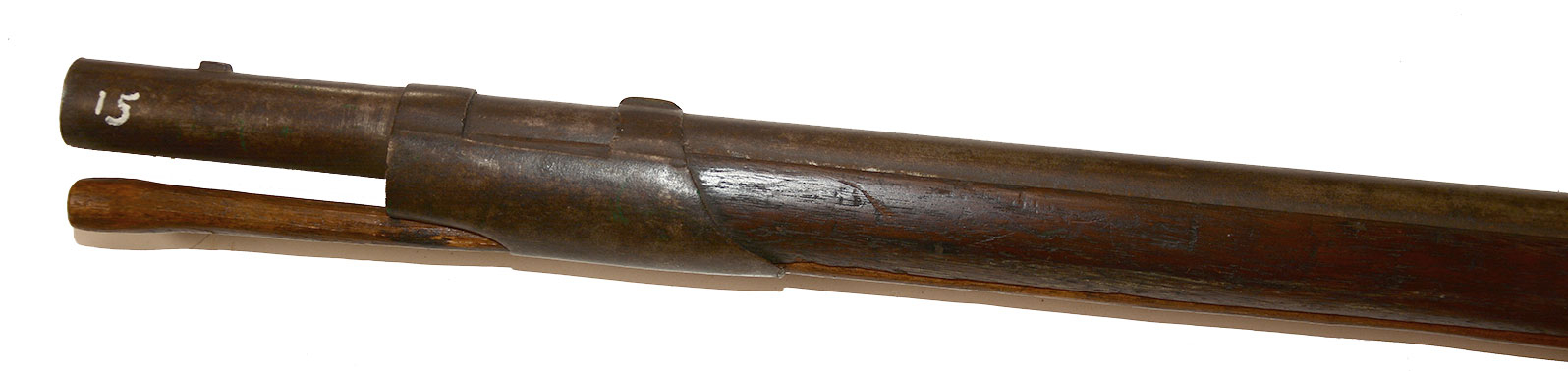
Markings on the barrel are equally strong. Being made in Massachusetts, the barrel proof marks follow Mass state law, reading “P / SJ” and “M / 1812” at the left breech. To their rear is an equally sharp, “S.N.Y.” in block letters that we take to be a state ownership mark, unless it, too, was applied by the maker. We don’t see a state inspection cartouche in the side flat, though the wood shows some wear and it may have been lightly applied. (Moller shows the view mark of John McLean on an 1810 dated example.)
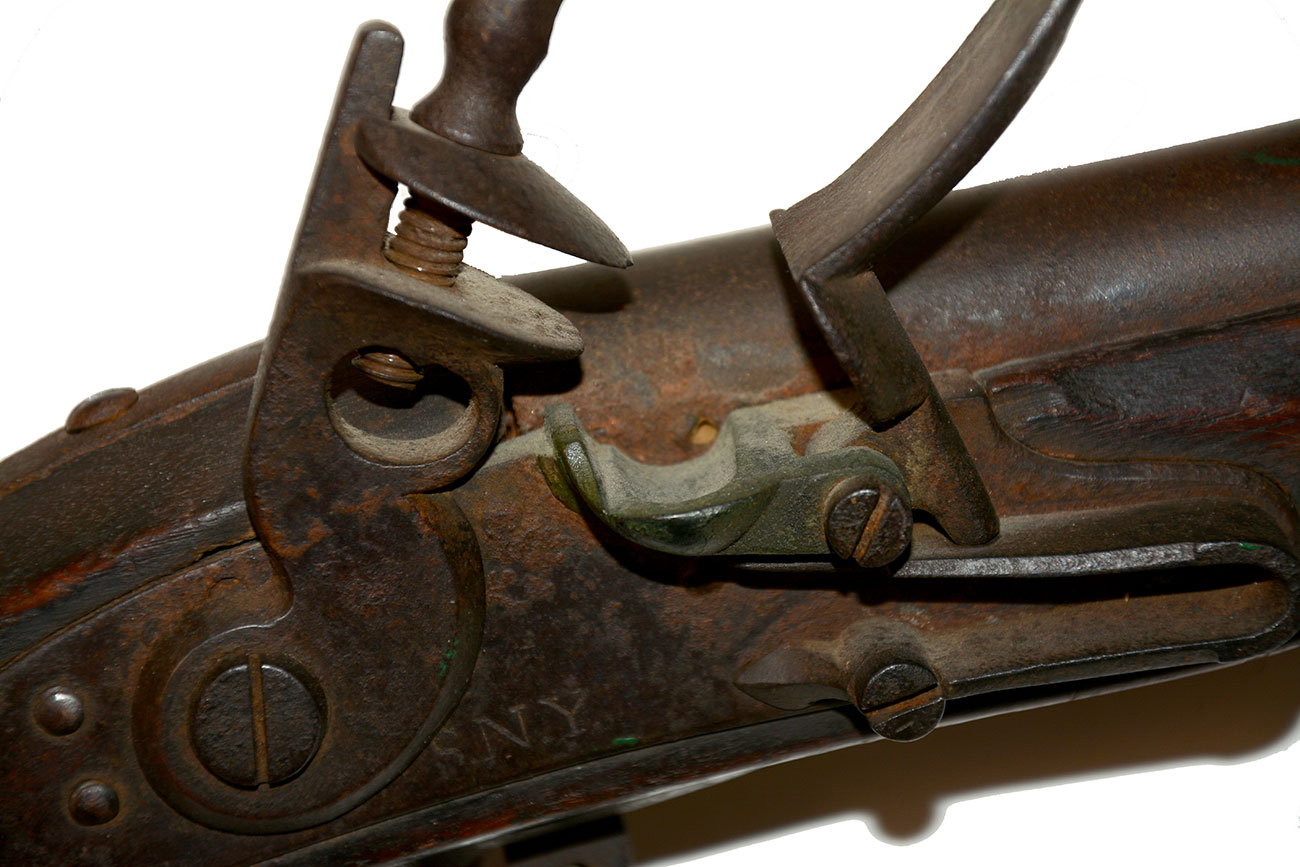
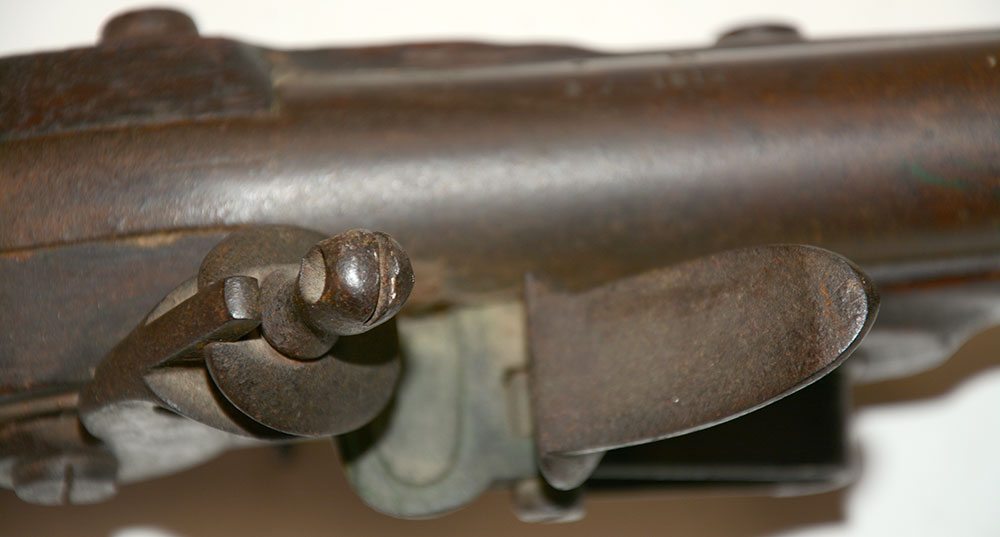
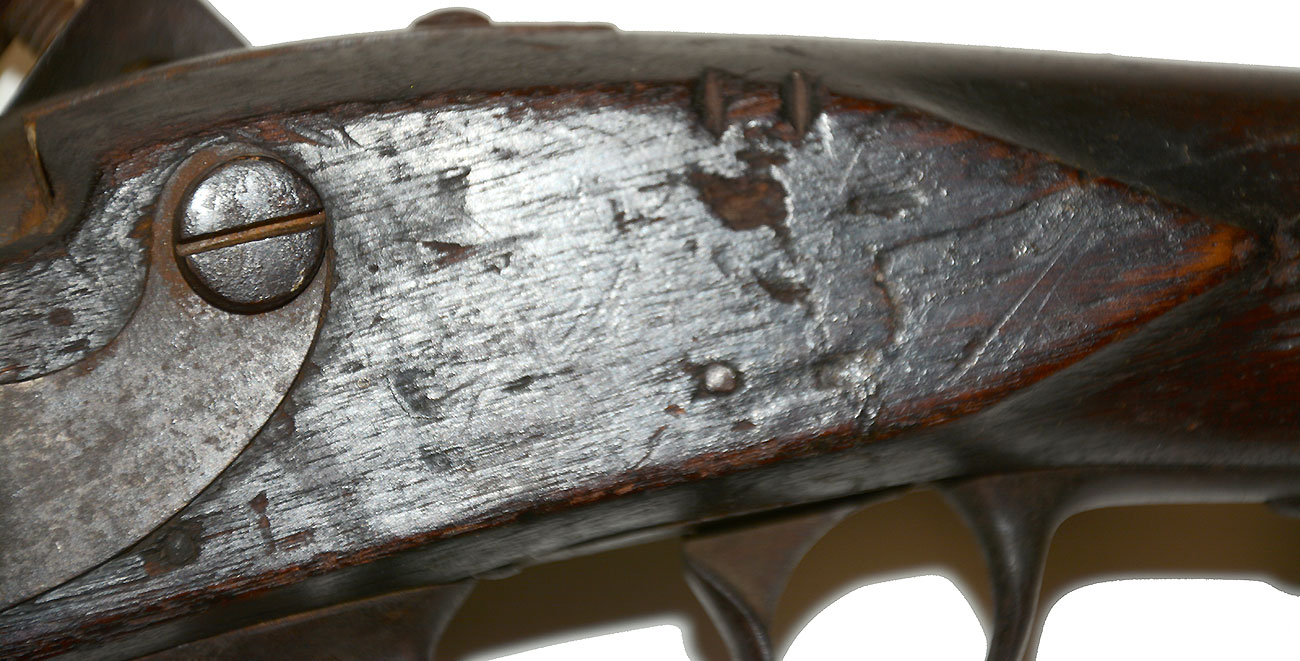
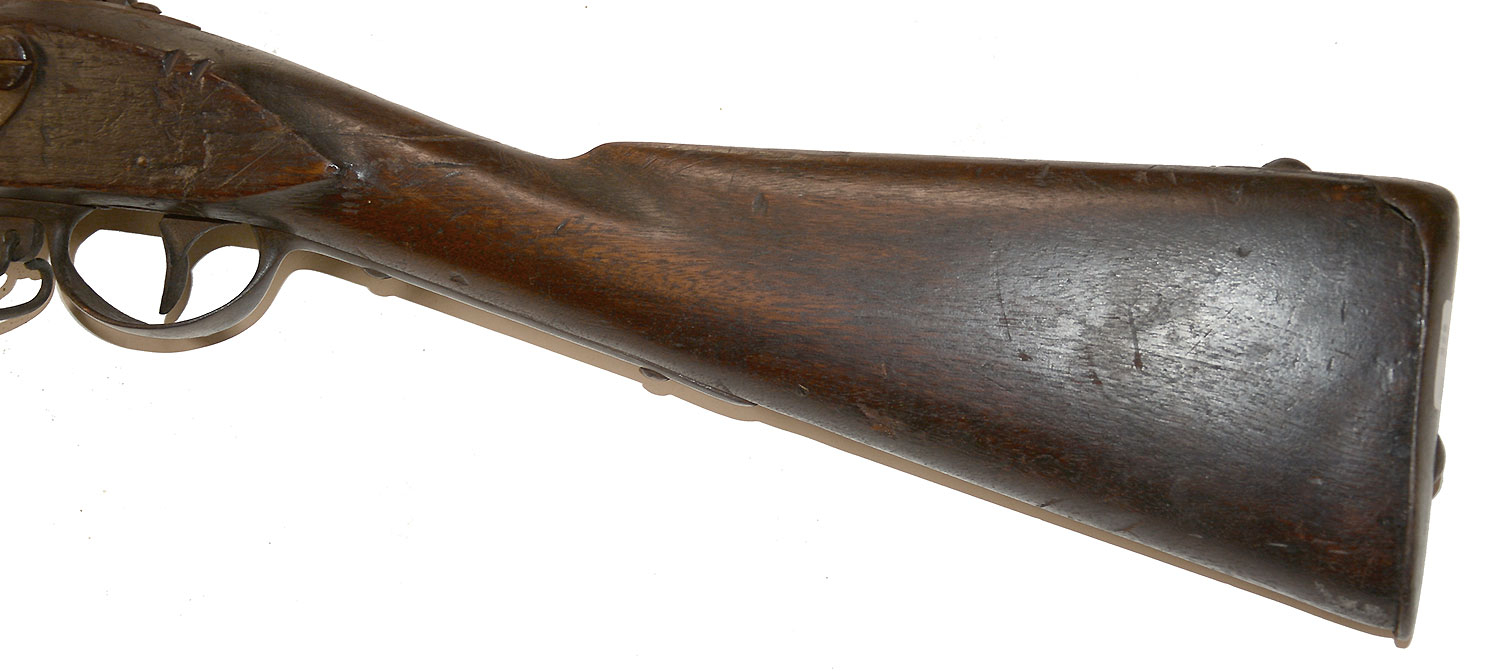
The musket follows the lines of Pomeroy’s muskets for state contracts. His New York contract had specifically mentioned using a Whitney NY state contract musket as pattern, but Moller notes Pomeroy’s NY muskets combine some Whitney features with others typical of Springfield Armory produced muskets ca. 1807-1809. We measure the barrel as 41-3/4” long, close enough for the specified length of 42-inches. The rear of the lockplate arcs to a point rather than having a pronounced teat. The top jaw has convex upper front profile Moller associates with Whitney NY contract muskets and the pan is brass, though not inclined, and has a short fence, neither of which are Whitney features. Also differing from Whitney, the stock has a pronounced comb (though without flutes,) and we note the front extension of the triggerguard is oval, as on Springfield armory muskets, not pointed, as on Whitney’s, and differs in that respect also from the Pomeroy NY contract 1810 barrel dated example shown by Moller (V.2, p.246.)
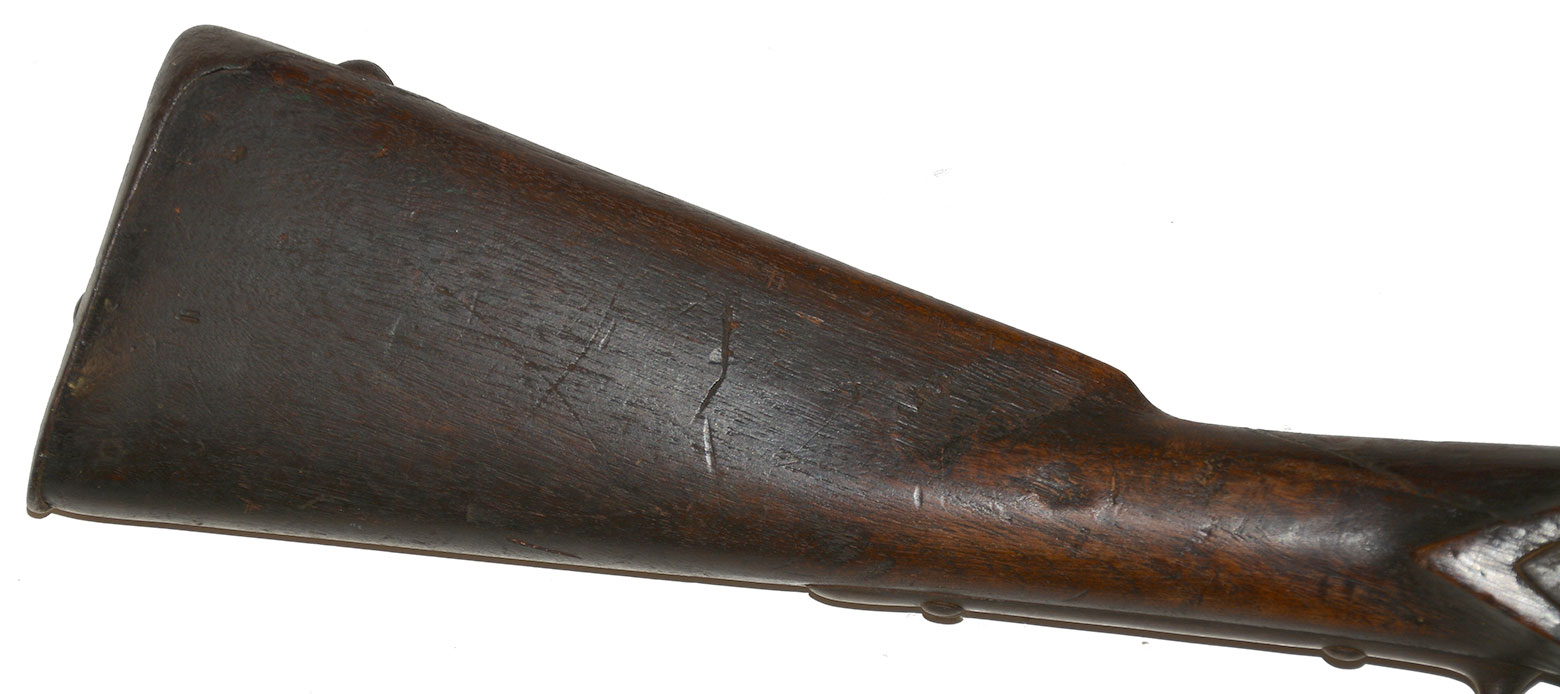
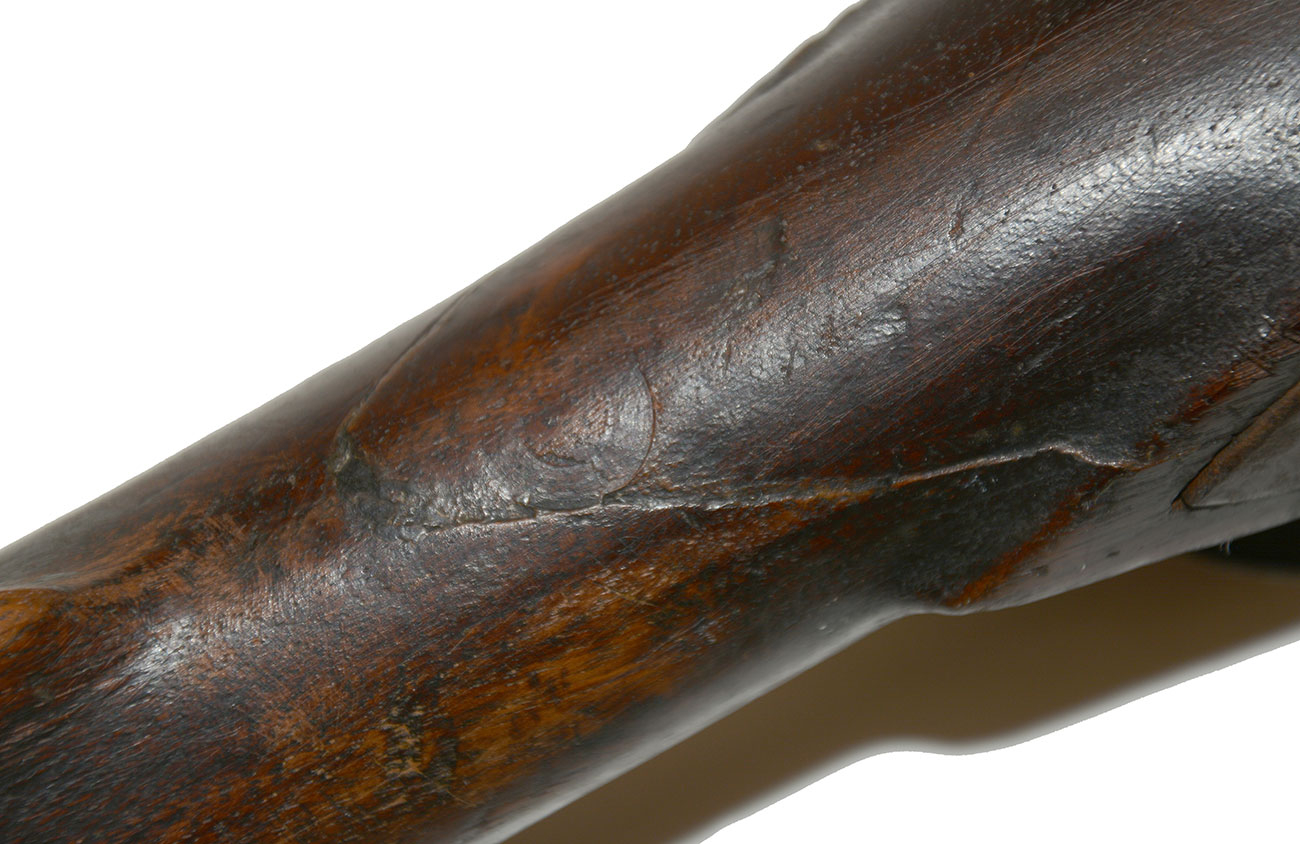
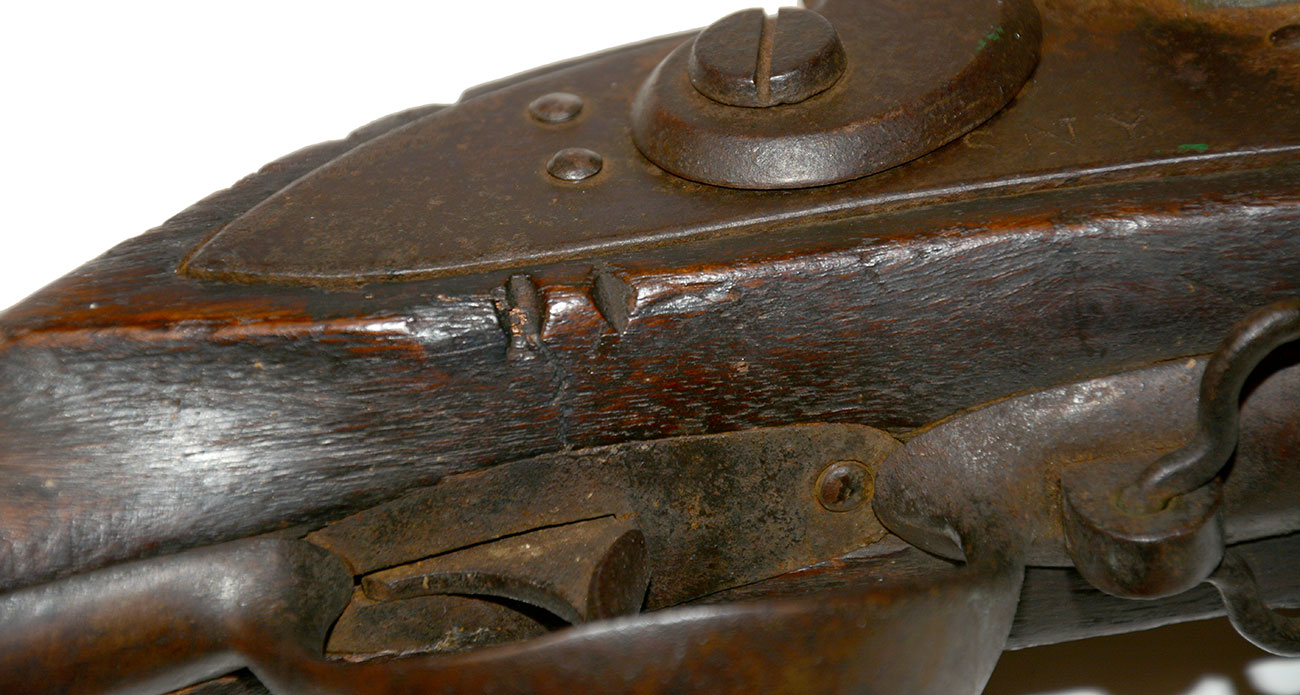
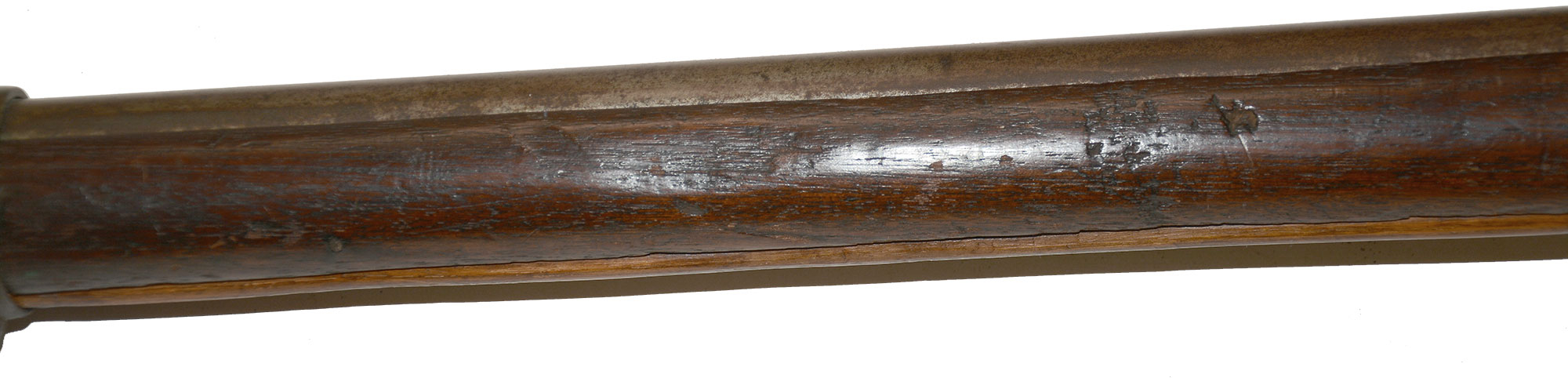
Overall the condition is good, with an old repair at the wrist. The metal is brown and generally smooth, though with some shallow rust in recesses of the lock. The brass pan has an untouched, aged patina. The wood to metal fit is tight, but there is an old glue repair at wrist, the old crack visible as a line running from the upper rear of the lock apron, over the wrist and forward to the rear of the side flat. The side flat has some dings, scratches and small chips, but the edges are good, as are those of the lock apron. The mechanics are good, though while the cock holds at half cock it can still be released by the trigger. All bands, springs and swivels are there. Top mounted bayonet stud is present, as is the front sight on the rear strap of the top band. The ramrod is wood- of course, an old replacement.
State procured and state contract muskets of this period offer a great variety to the collector, each type and maker telling part of the story of US industrial development and the effort on the government’s part to foster and develop a domestic arms industry capable of protecting the nation in the face of recurring foreign threats. [sr][ph:L]
DISCLAIMER: All firearms are sold as collector's items only - we do not accept responsibility as to the shooting safety or reliability of any antique firearm. All firearms are described as accurately as possible, given the restraints of a catalog listing length. We want satisfied customers & often "under" describe the weapons. Any city or state regulations regarding owning antique firearms are the responsibility of the purchaser. All firearms are "mechanically perfect" unless noted, but again, are NOT warranted as safe to fire!
~~~~~~~~~~~~~~~~~~~~~~~~~~~~~~~~~~~
THIS ITEM, AS WITH ALL OTHER ITEMS AVAILABLE ON OUR WEB SITE,
MAY BE PURCHASED THROUGH OUR LAYAWAY PROGRAM.
CLICK HERE FOR OUR POLICIES AND TERMS.
THANK YOU!
Inquire About WAR OF 1812 POMEROY 1809 NY CONTRACT MUSKET
Most Popular
Historical Firearms Stolen From The National Civil War Museum In Harrisburg, Pa »
Theft From Gravesite Of Gen. John Reynolds »
Selection Of Unframed Prints By Don Troiani »
Fine Condition Brass Infantry Bugle Insignia »
Rare Identified 65Th Ny Sergeant’s Jacket, With Manscript Material: 1St U.s. Chasseurs »
featured item
VERY RARE EARLY PRE- CONTRACT FREEMAN REVOLVER WITH A GETTYSBURG CONNECTION
The Freeman Army is a scarce .44 caliber, 6-shot, single-action percussion revolver. Approximately 2,000 were produced by Hoard's Armory in Watertown, New York from 1863. These were earmarked for the US Army, none were officially purchased, but… (2026-887). Learn More »
site search