

site search
online catalog
TWICE PUBLISHED EXTRAORDINARY 1864 RICHMOND RIFLE-MUSKET

Hover to zoom




$16,950.00 SOLD
Quantity Available: None
Item Code: 1284-31
If you wish to see this exact firearm, please refer to The Fighting Men of the Civil War by William C. Davis, Gallery/Salamander Books 1989, Pages 231 and 232. Also Echoes of Glory Arms and Equipment of the Confederacy Time-Life Books 1991, Pages 38 and 39. This was then owned by scholar and author Mr. Russ Pritchard Sr. The arm was originally turned up by the world-famous dealer and author Norm Flayderman around 1978. The compiler believes, but cannot now be certain, that it was acquired by him from the Peabody-Essex Institute in Salem Mass. Flayderman in 1979 sold this arm to Mr. Eric Vaule of Bridgewater, Connecticut. Vaule was a dealer in the finest arms and armor with a sterling international reputation. A larger-than-life character and a great friend. In 1980 Vaule sold this 1864 dated Richmond to this compiler. Around 1982 the weapon was, in a weak moment, sold to a dealer/collector in Morristown New Jersey who sold it to Mr. Pritchard. This was one of Mr. Pritchard's "sacred cows" until he decided to sell the majority of his collection around 1992. It then went to another highly respected collector. Upon his passing and through a third party the Richmond was reunited with this compiler in 2025 after a separation of over 40 years.
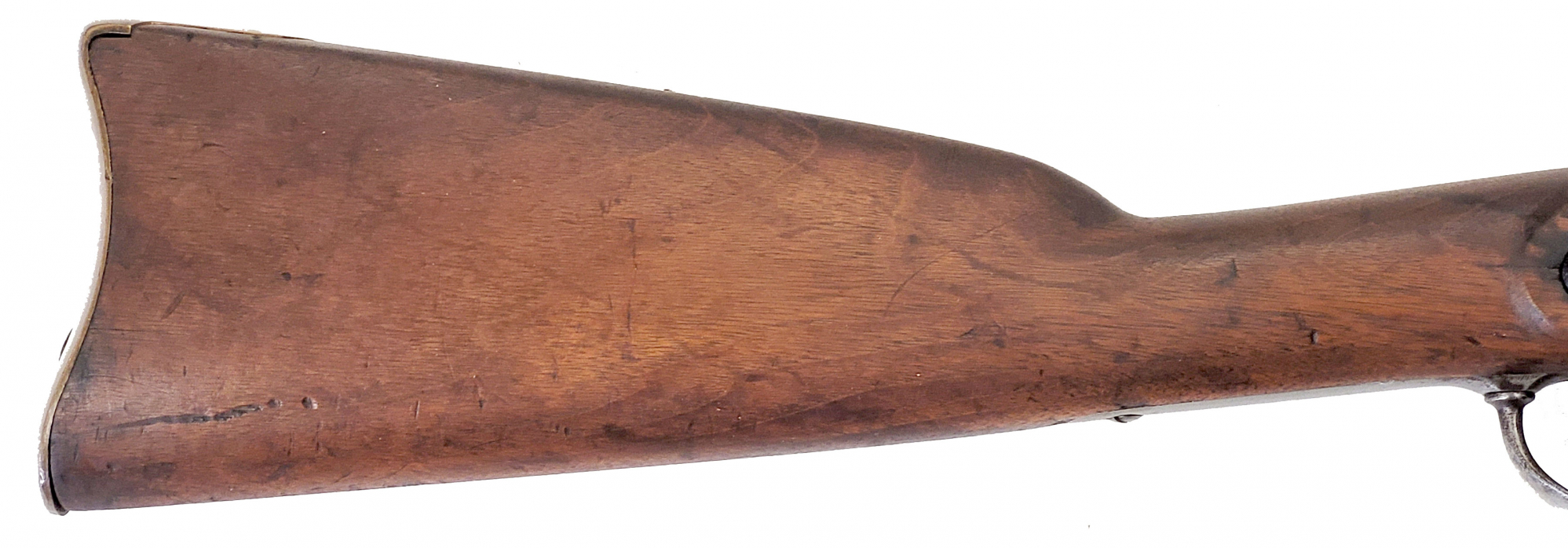
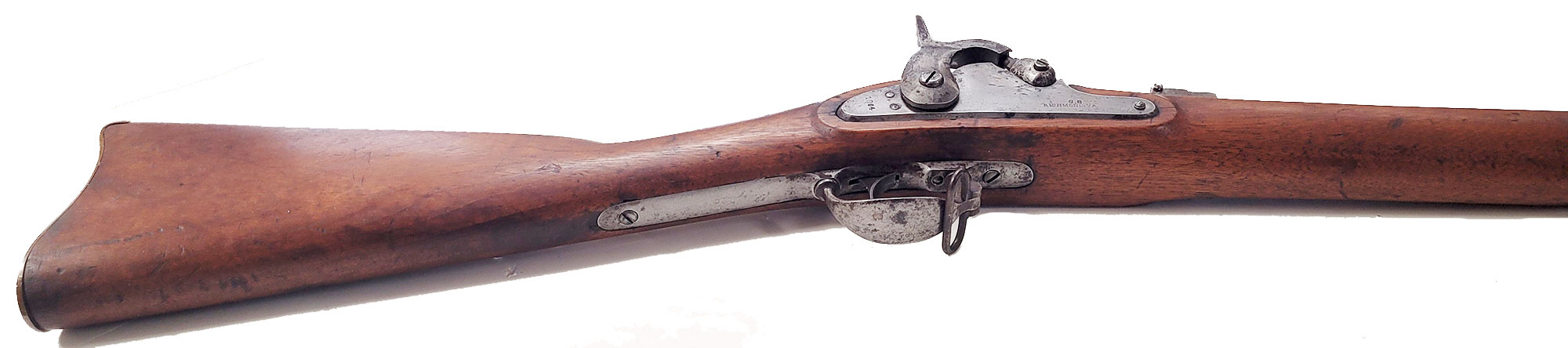
This 1864 rifle-musket is in what appears to be the original factory polish. If you are able to study the pictures of this weapon referenced above, you will see that the wood stock has a blackish tone; this was because it had an ancient coating of varnish on it. The Richmond stocks were not varnished so this coating was post-War and had typically turned black with age. However, this varnish not only protected the wood it put a protective seal on the metal. The varnish on the metal was removed back in the 1970s by Flayderman, the stock remained covered. In 2025, this compiler, a trained restorer, removed that un-necessary finish using a 70% solution of Alcohol. This revealed the true beauty and color of the stock. No abrasives were used on metal or wood!
Other than "1865" dated Richmonds of which there are less than a handful, Richmond rifle-muskets dated "1864" are the rarest. Be aware this example is 100% Richmond. All components are Richmond Armory made. There are no Harpers Ferry parts nor are there battlefield gleaned components; this in itself is a rarity.
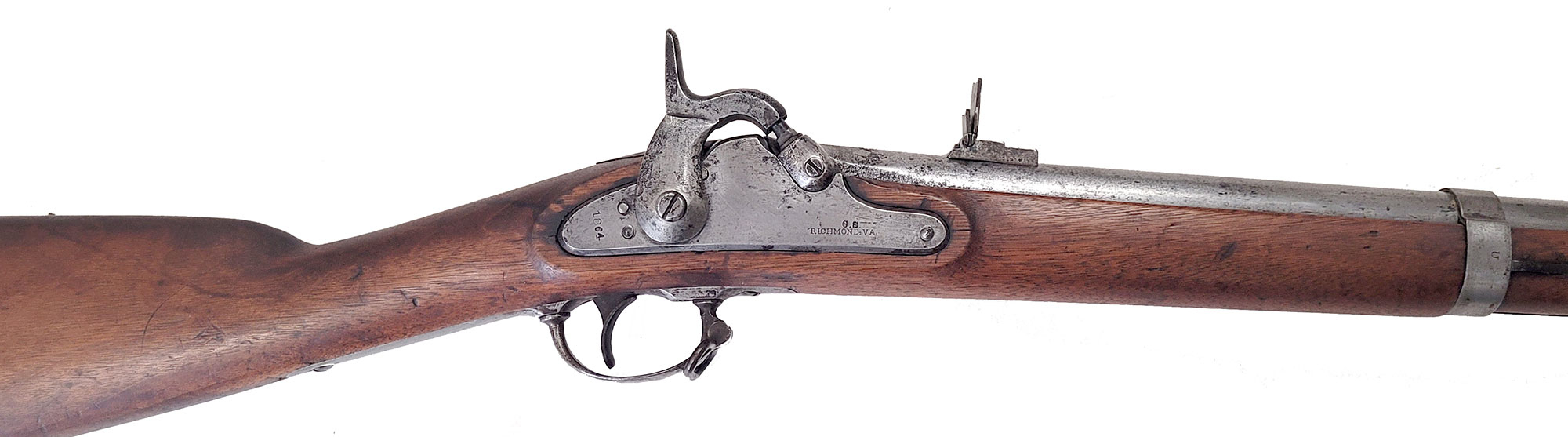
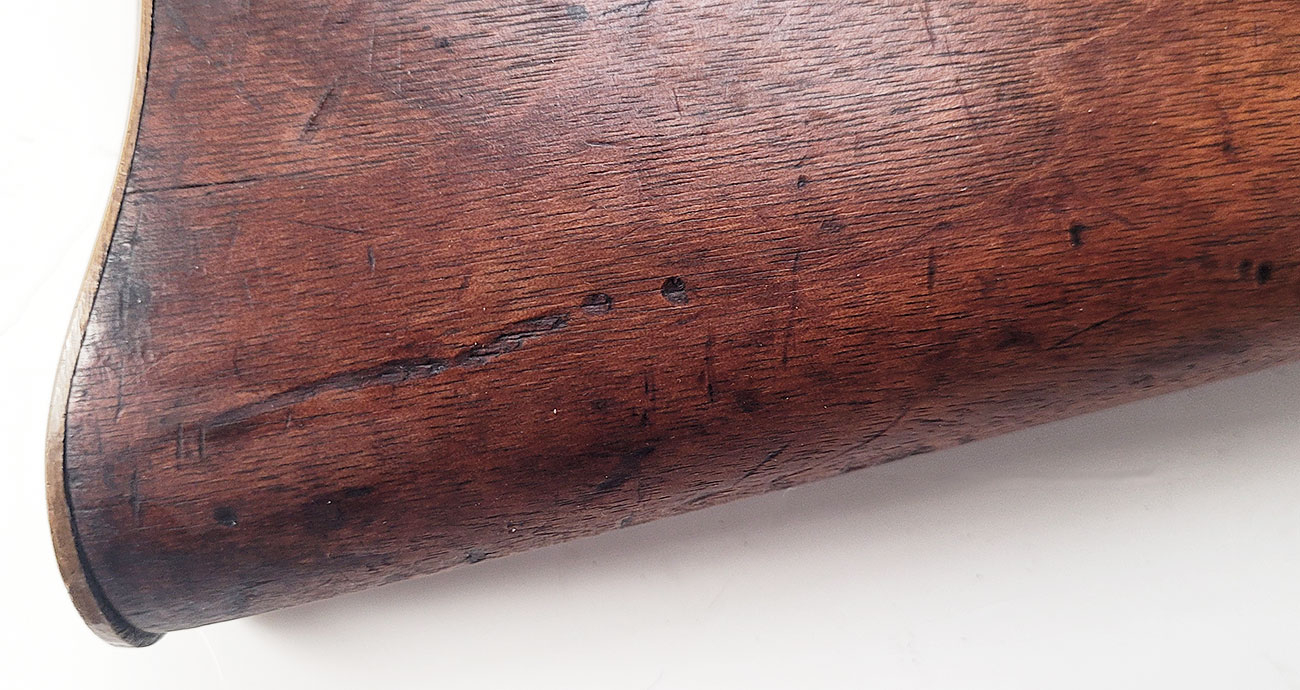
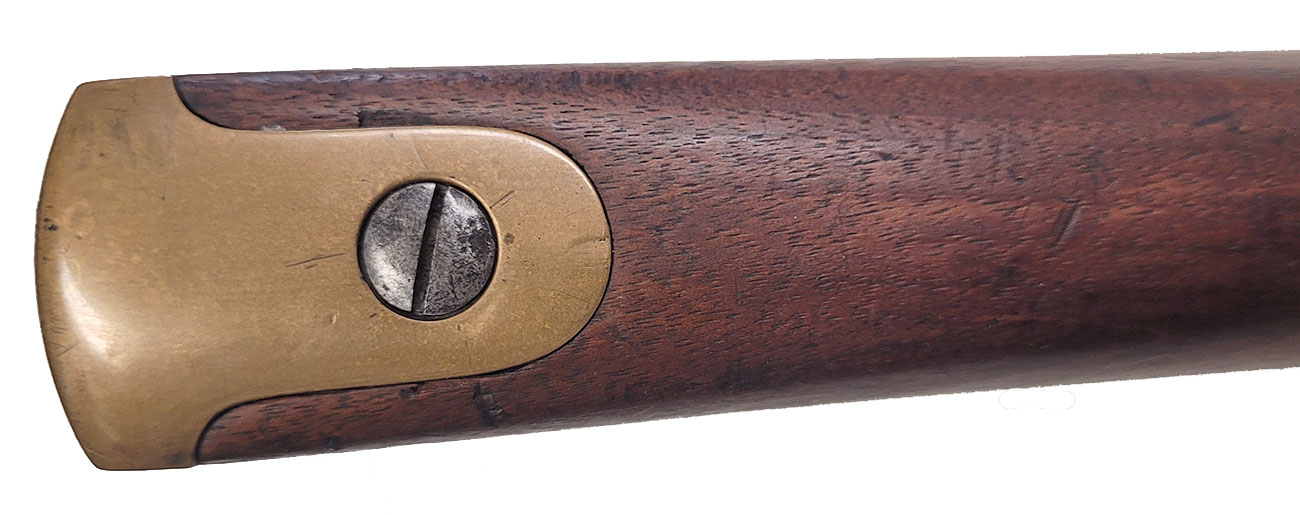
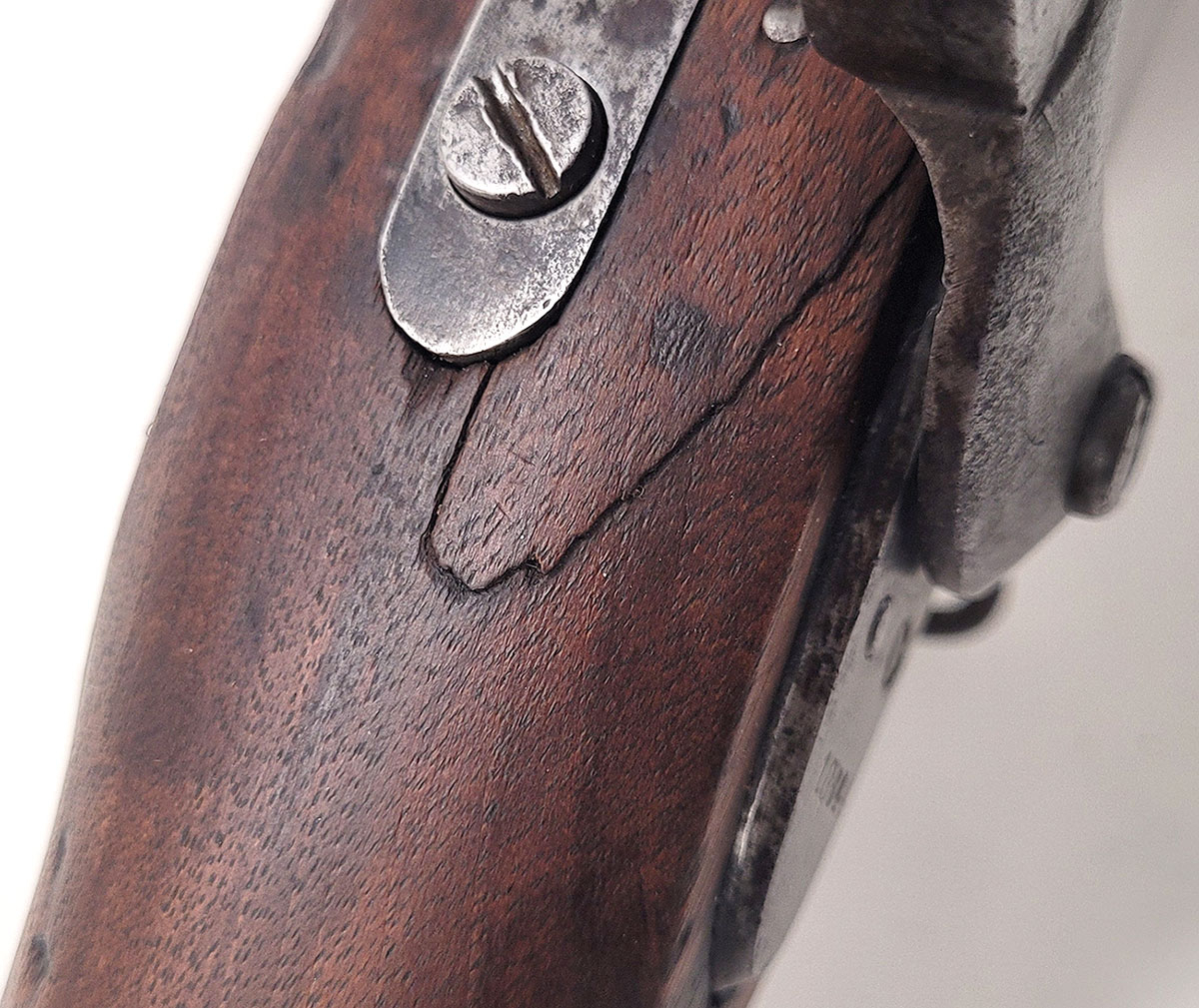
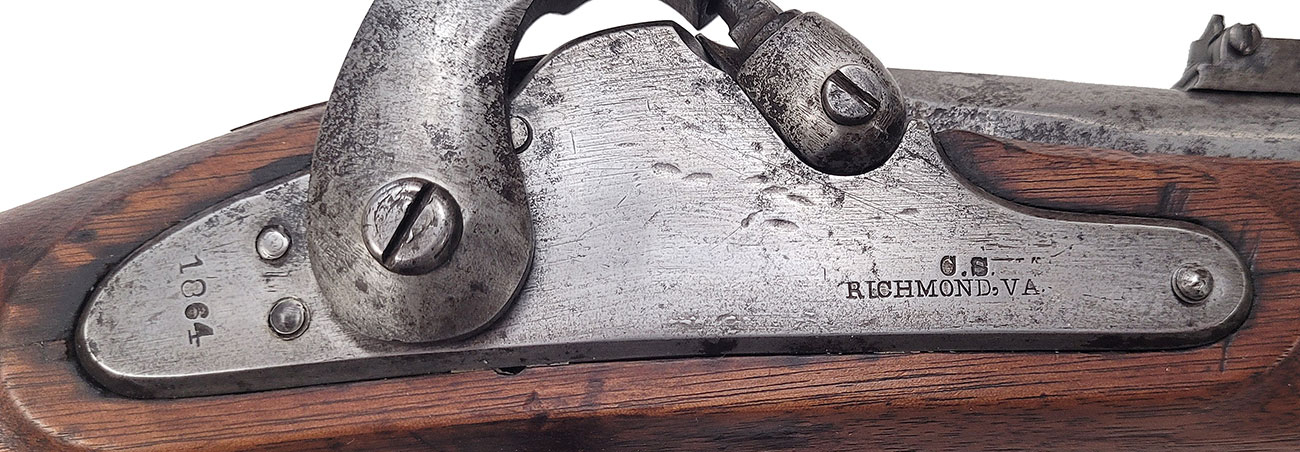
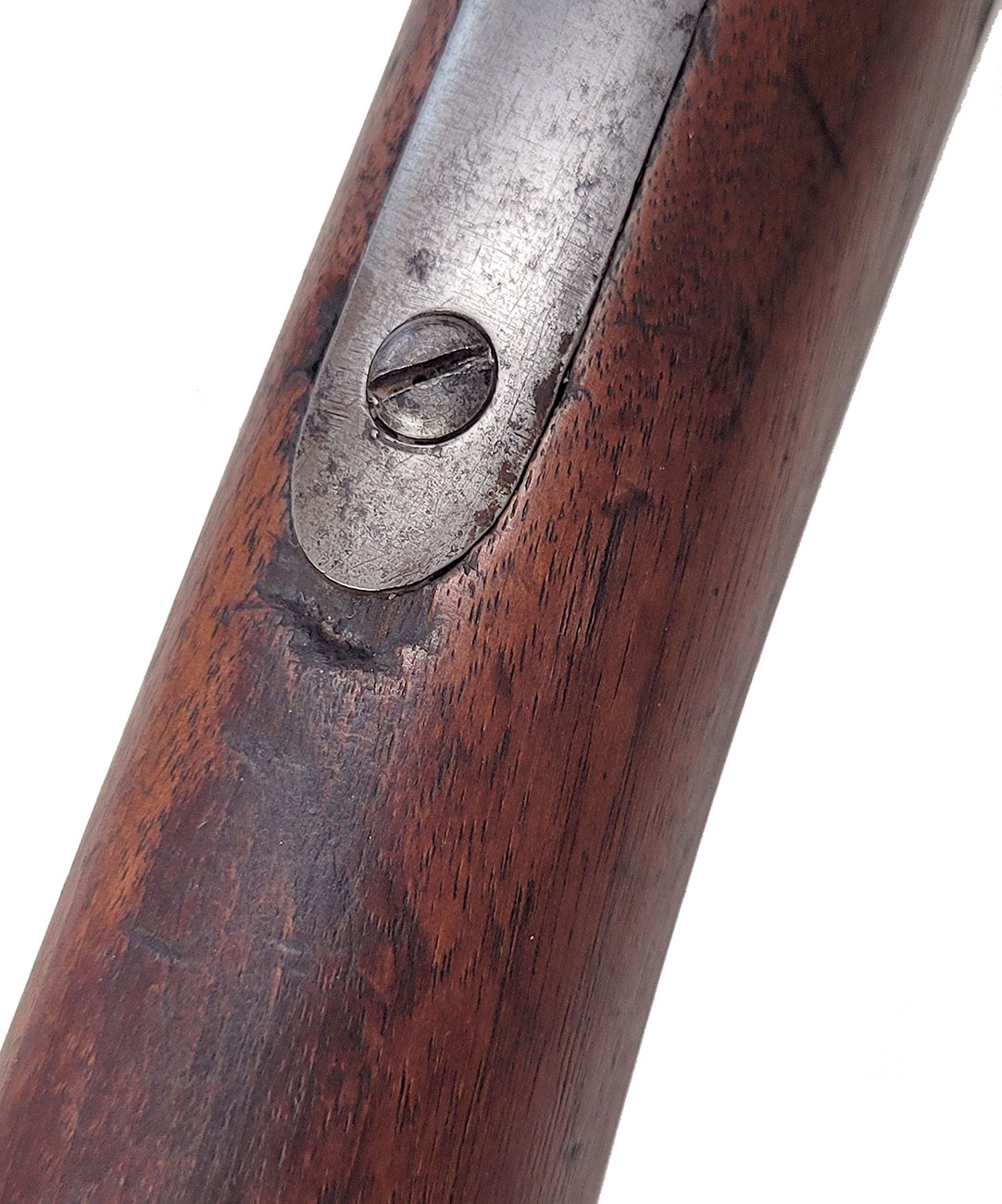
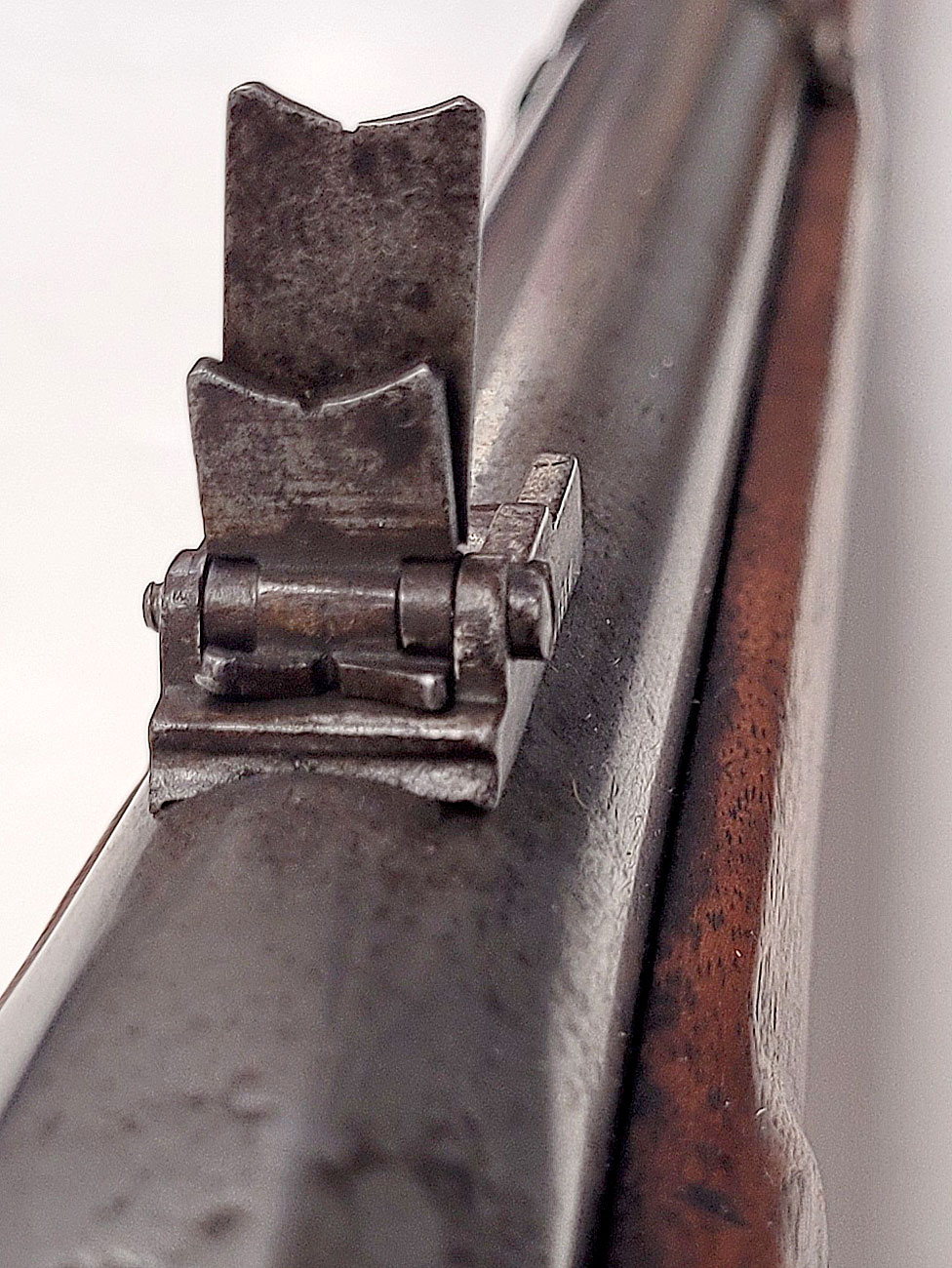
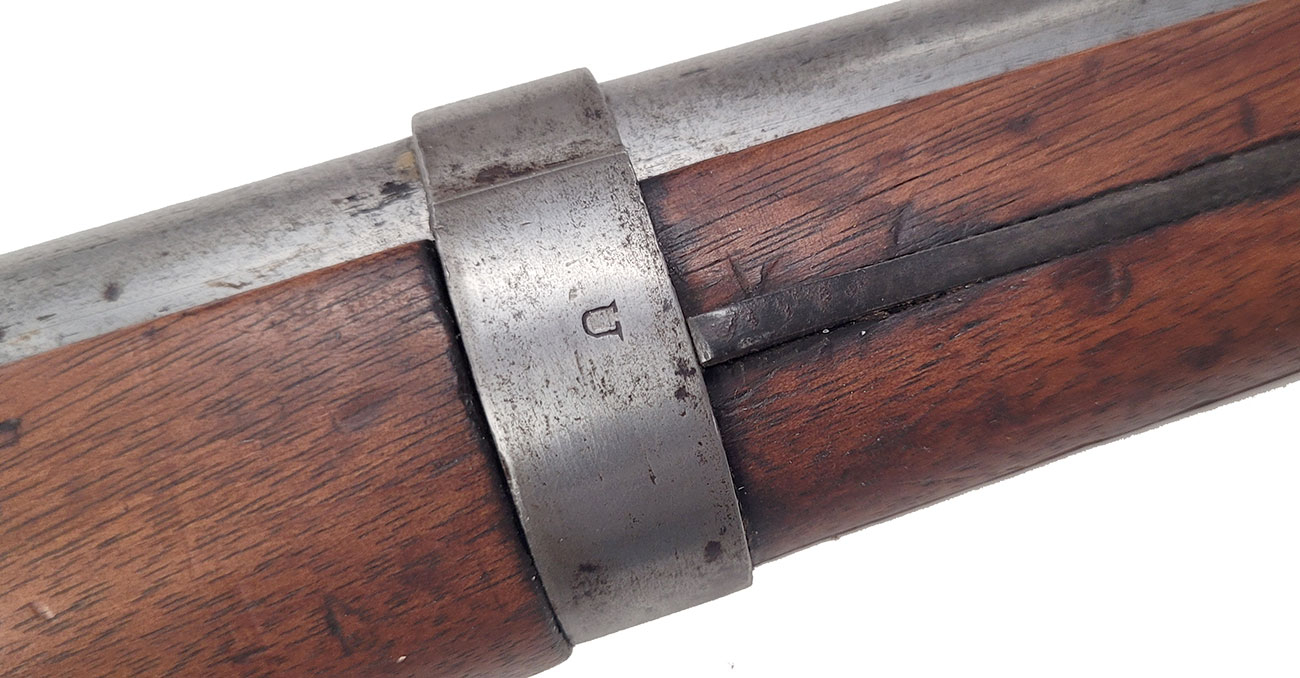
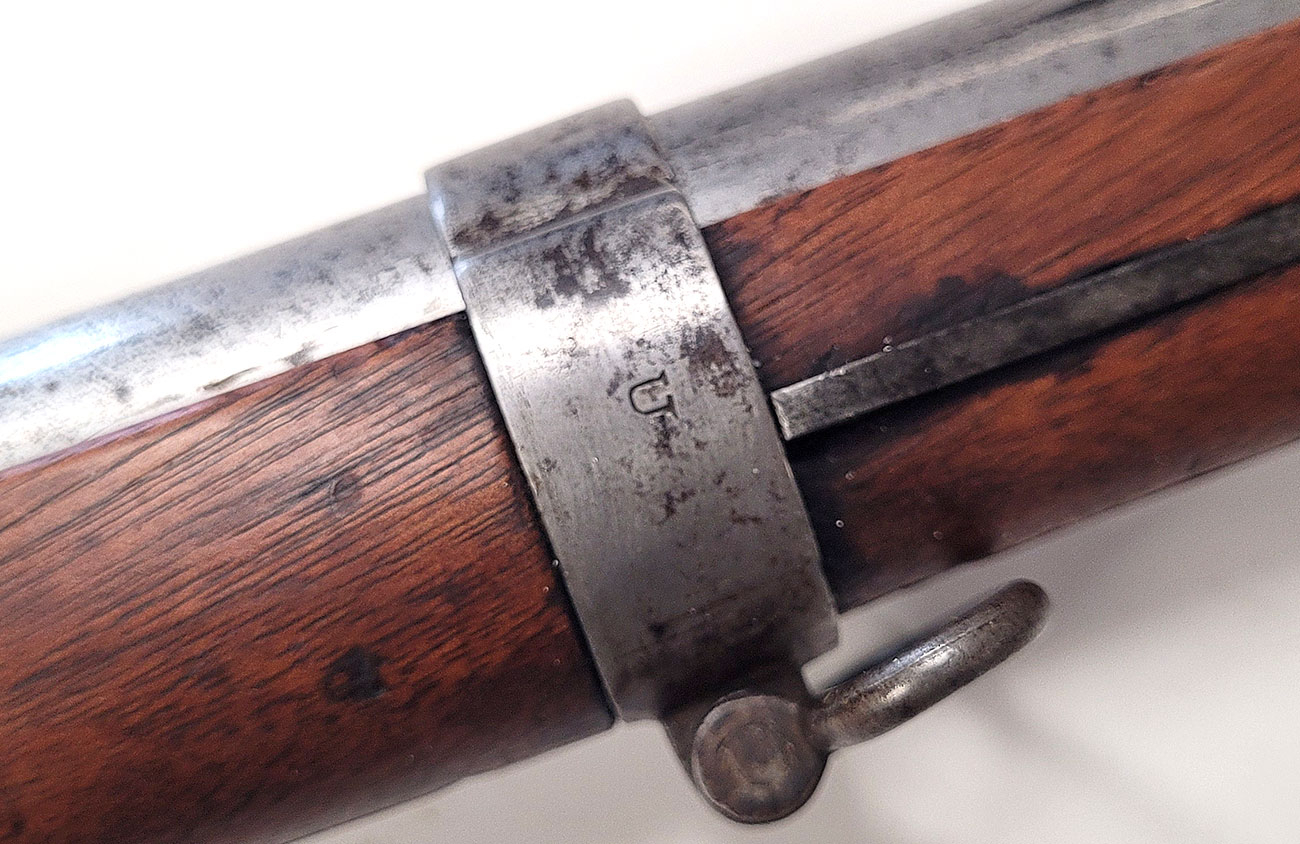
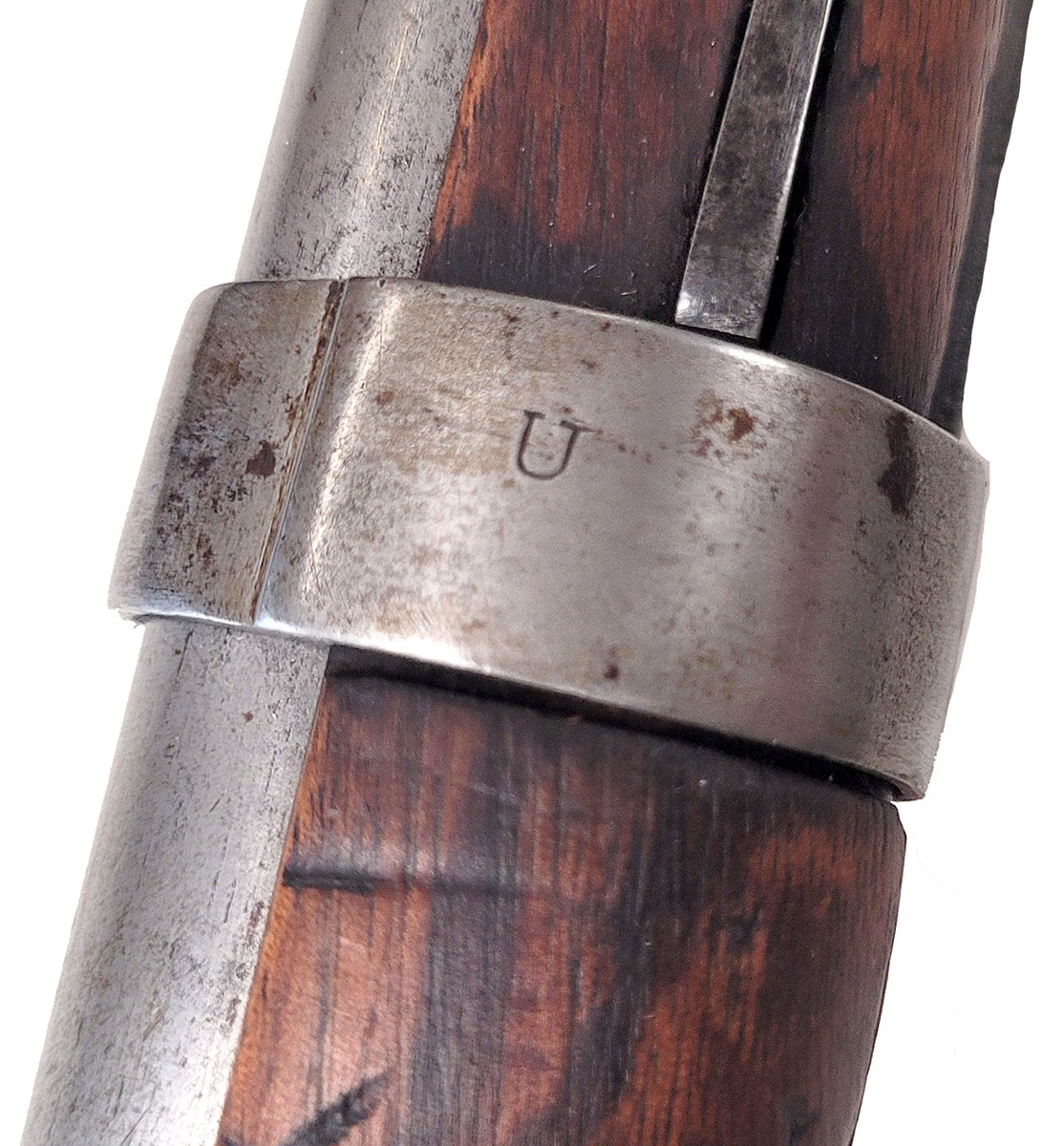
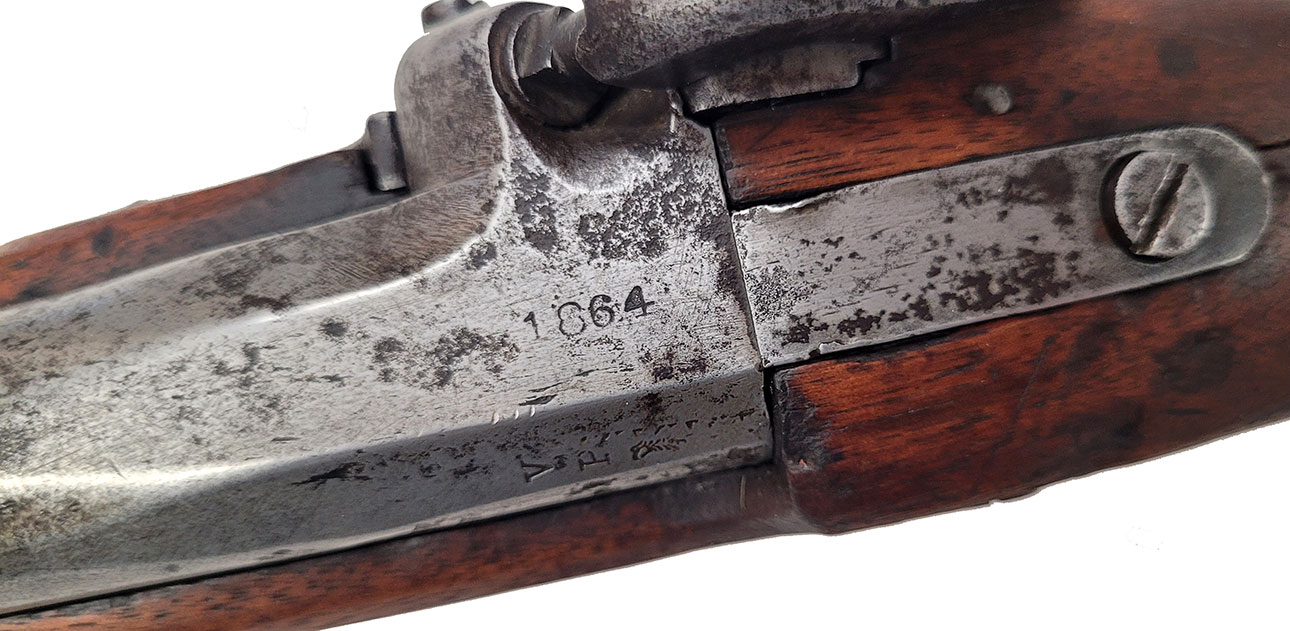
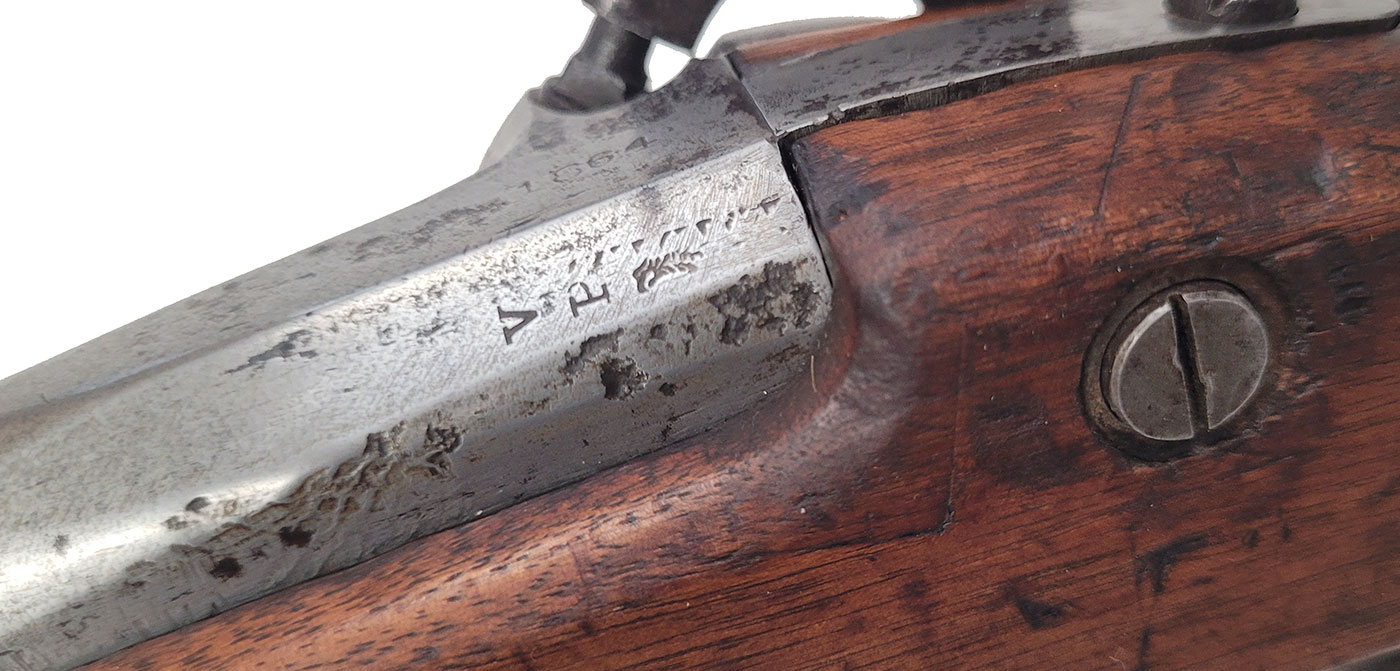
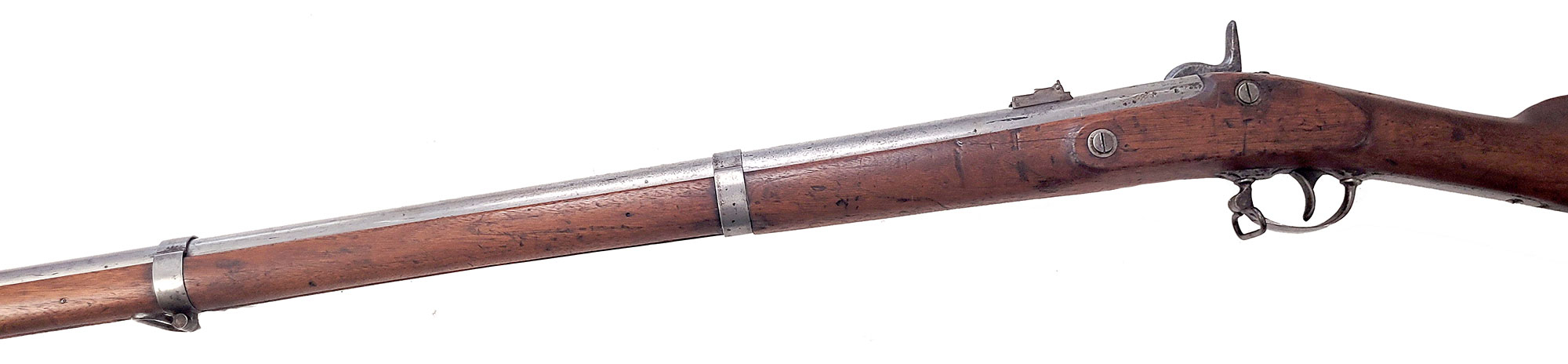
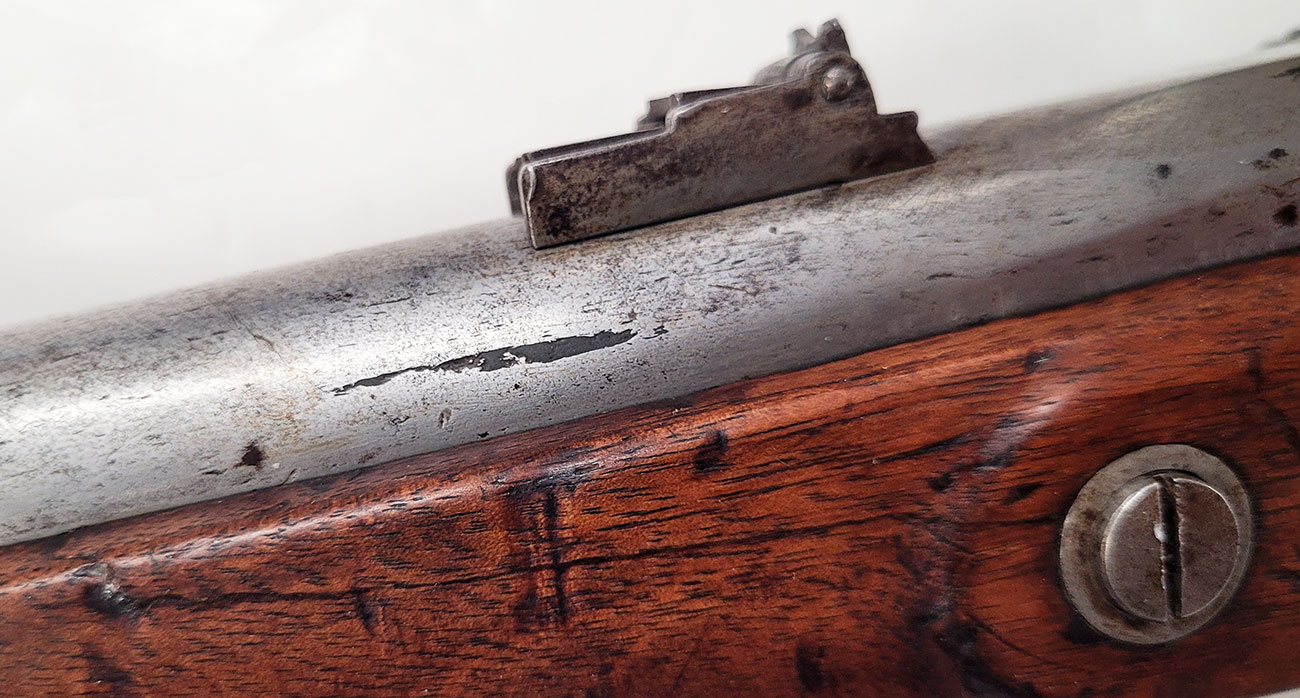
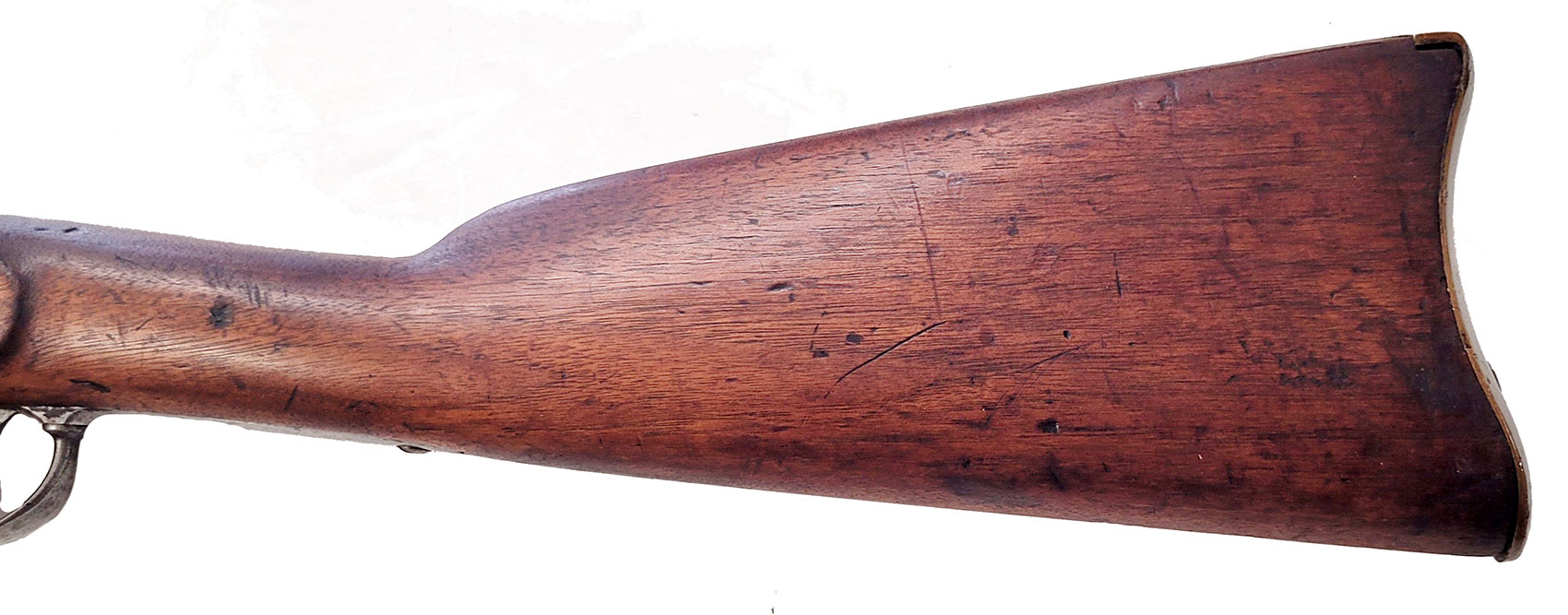
This is a "low hump" Richmond. The lock markings are sharp and read "1864" at rear of the hammer and "C.S." over "RICHMOND VA." forward of the cock. There is no pitting on the lock plate. The cock or hammer is Richmond made. The bolster and breech on the 40-inch barrel are smooth and shows no rust and minor pitting from percussion cap burn. The clean-out screw and percussion nipple are original. The barrel date of "1864" is sharp as are the barrel proofs "V" and "P" and the correct eagle head stamp. The tiny Richmond "break" in the "P" is evident. The barrel in a few places shows those ubiquitous Richmond flaws (carbon inclusions) looked for by the knowledgeable collector. All 3 bands and their springs are intact they are free of rust and pitting and the bands each exhibit the deeply stamped, haphazardly placed, Richmond "U"s. The 2 sling swivels are in place. All metal components surface finish that matches that of the barrel and lock. The front sight is correct. The Richmond made trumpet-head thin shaft threaded ramrod is in place. These are rarely found in Richmonds. Why, because Richmonds had no internal ramrod spoons and so the friction held narrow shaft rods got easily slipped out and got lost. The .58 caliber bore has excellent rifling. The rear sight is of the Model 1855 type, and is Richmond made. On its underside is the "steady pin" and the barrel is appropriately cut to accommodate this sight's pin. The walnut stock has sharp corners and a fine patina. It shows signs of period field use, but no abuse. On the lock side between the low hump and the barrel tang a piece of wood measuring 2 1/2 inches by 1/2 inches had cracked and come loose during the period of use. To prevent loss, it was set firmly back in place by 1 small hand cut nail. Thankfully because this is a "period" fix, a field repair if you will, no previous owner has considered a modern solution. Under the hand of a skilled gunsmith this minor flaw would become invisible, but it is better left as is. The Richmond made cast brass nose cap and brass butt plate are in a mellow patina.
If you have been looking for a great 100% correct Richmond rifle-musket this one is for you. Museum quality and twice featured in significant publications. [pe] [ph:L]
DISCLAIMER: All firearms are sold as collector's items only - we do not accept responsibility as to the shooting safety or reliability of any antique firearm. All firearms are described as accurately as possible, given the restraints of a catalog listing length. We want satisfied customers & often "under" describe the weapons. Any city or state regulations regarding owning antique firearms are the responsibility of the purchaser. All firearms are "mechanically perfect" unless noted, but again, are NOT warranted as safe to fire!
~~~~~~~~~~~~~~~~~~~~~~~~~~~~~~~~~~~
THIS ITEM, AS WITH ALL OTHER ITEMS AVAILABLE ON OUR WEB SITE,
MAY BE PURCHASED THROUGH OUR LAYAWAY PROGRAM.
CLICK HERE FOR OUR POLICIES AND TERMS.
THANK YOU!
Inquire About TWICE PUBLISHED EXTRAORDINARY 1864 RICHMOND RIFLE-MUSKET
Most Popular
Historical Firearms Stolen From The National Civil War Museum In Harrisburg, Pa »
Theft From Gravesite Of Gen. John Reynolds »
Selection Of Unframed Prints By Don Troiani »
Fine Condition Brass Infantry Bugle Insignia »
Rare Identified 65Th Ny Sergeant’s Jacket, With Manscript Material: 1St U.s. Chasseurs »
featured item
FANTASTIC FRAMED DRAWING OF THE BATTLE OF DRAINSVILLE DONE BY GETTYSBURG CARTOGRAPHER EMMOR B. COPE
This wonderful and detailed drawing shows the meeting engagement on December 20, 1861 between a brigade of Pennsylvania Reserve regiments under Brig. Gen. E. O. C. Ord and a mixed Confederate force led by Gen. J. E. B. Stuart. The scene was drawn by… (1054-2733). Learn More »
site search