

site search
online catalog
1812 DATED RUFUS PERKINS 1808 US CONTRACT STYLE MILITIA MUSKET

Hover to zoom


$2,250.00 SOLD
Quantity Available: None
Item Code: 2025-3657
Rufus Perkins of Bridgewater, CT, undertook a US contract on Oct. 31, 1808, for 2,500 muskets to be delivered within five years. He was experienced in firearms manufacture, apparently having worked for his father, James Perkins, who partnered a 1798 US contract with Adam Kinsley. The younger Perkins, however, ran into problems in obtaining the necessary water power for his workshop and defaulted on the contract after delivering just 100 muskets in June 1810, inspected by Charles Williams, and another 100 in April 1811, inspected by Benjamin Moore. He was able to repay the government for money advanced to him, however, and instead manufactured muskets of various patterns (armory variant patterns, New England militia musket patterns, etc.,) for private sale to the militia, many of which likely used parts left over from his US contract venture.
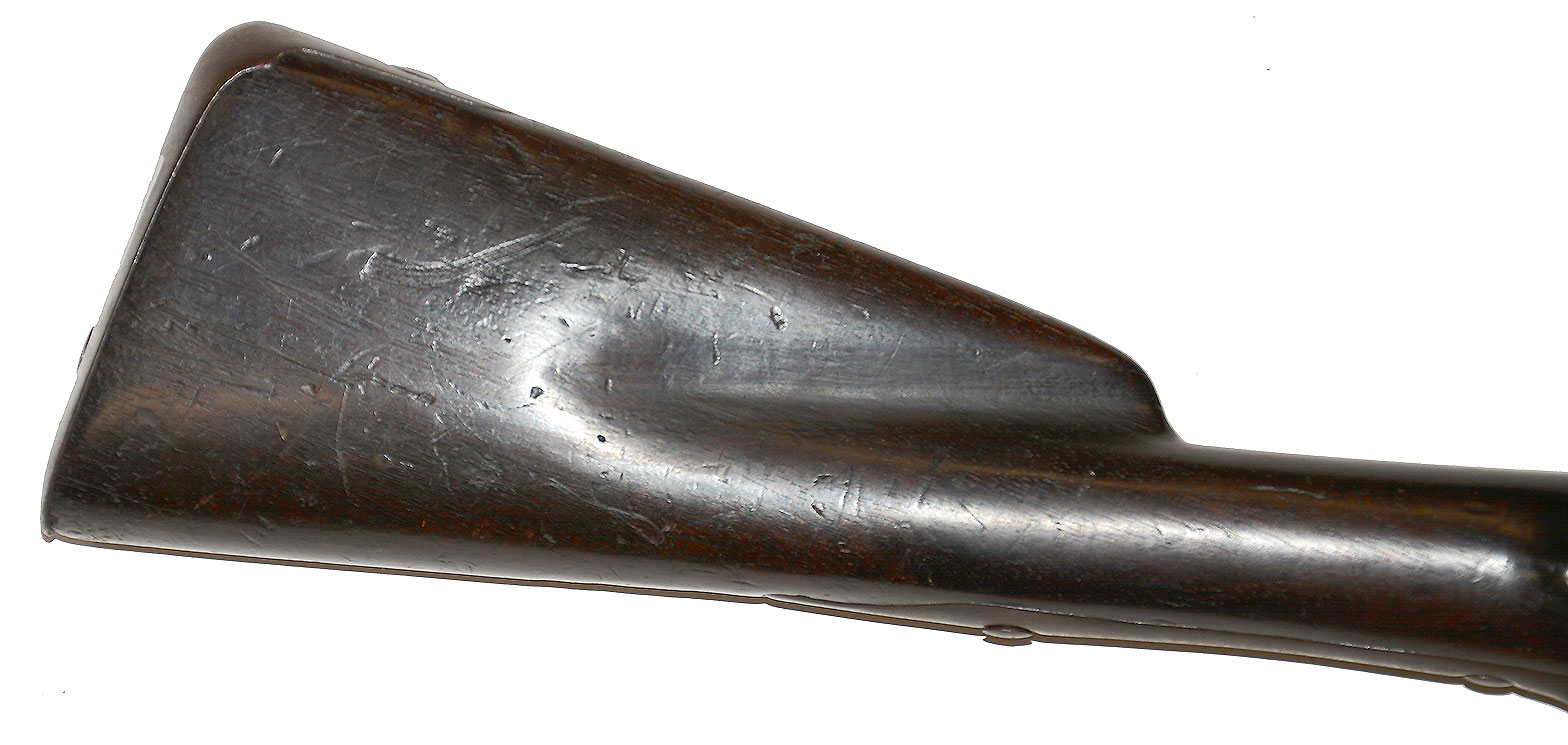
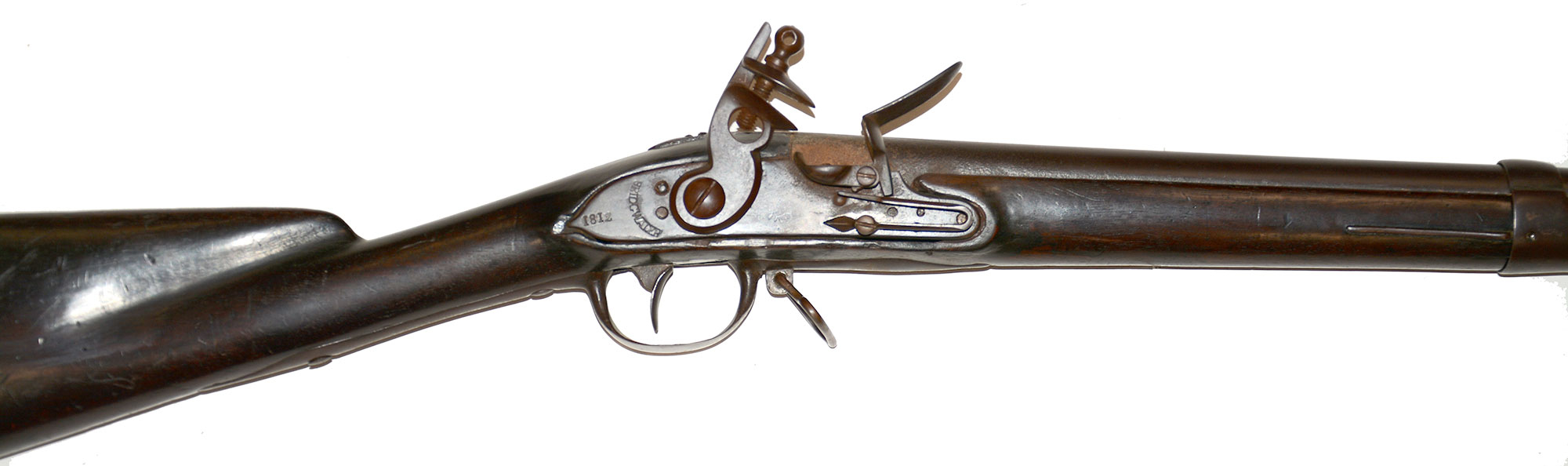
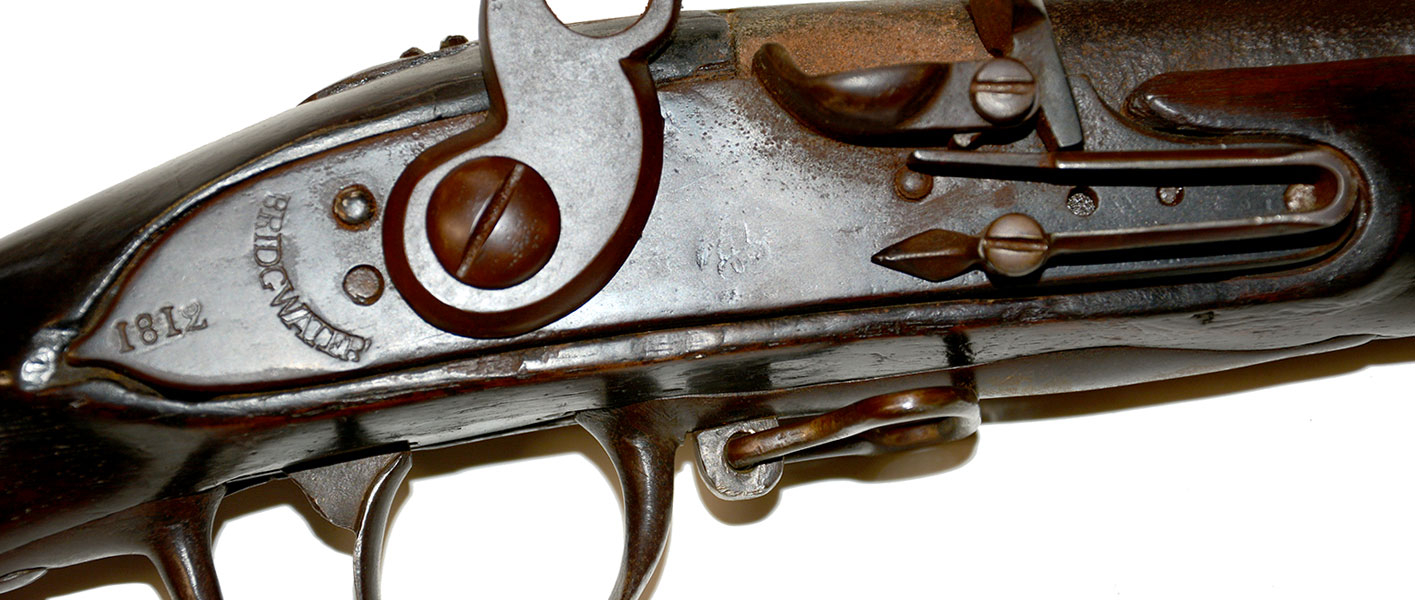
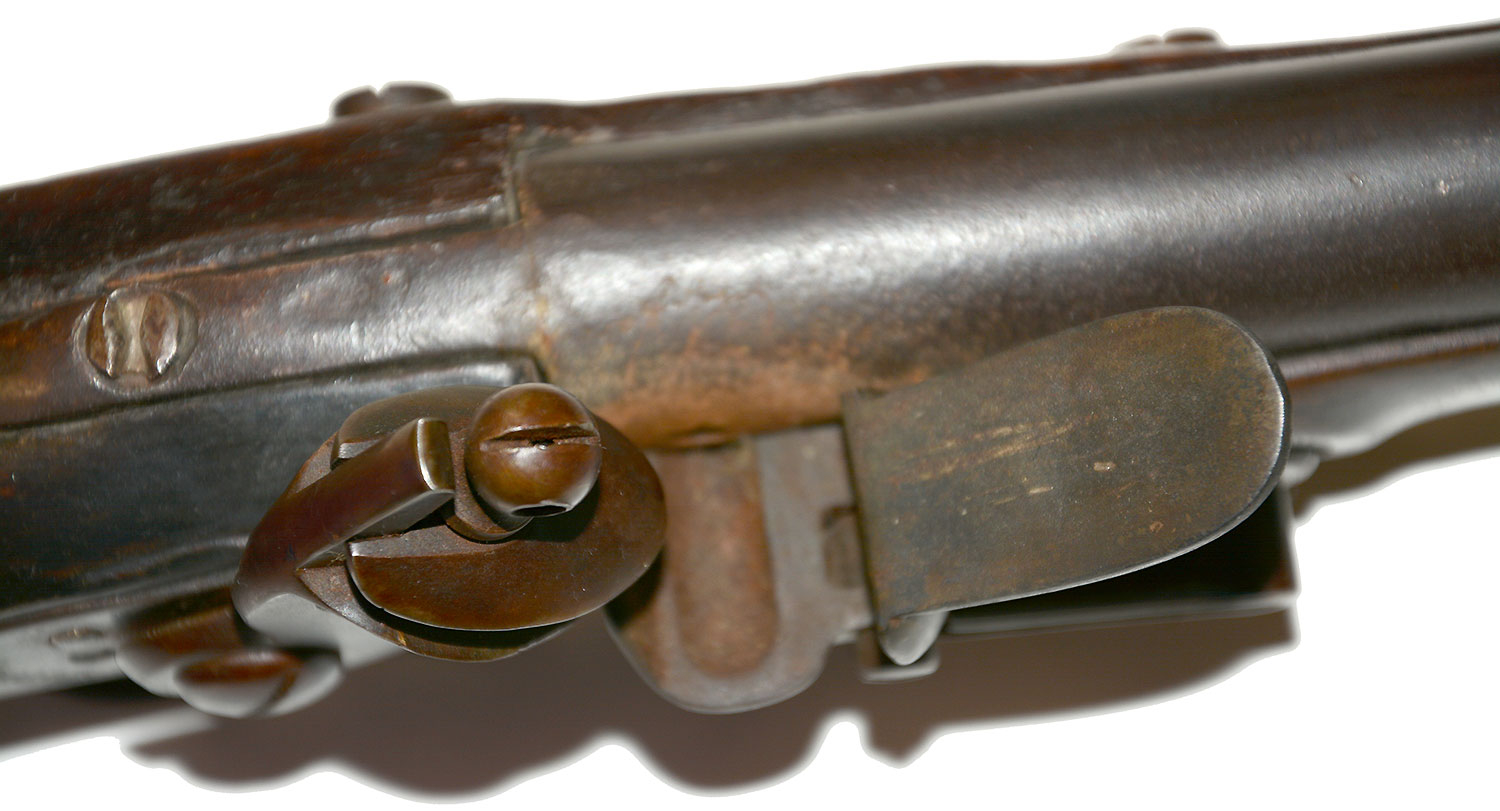
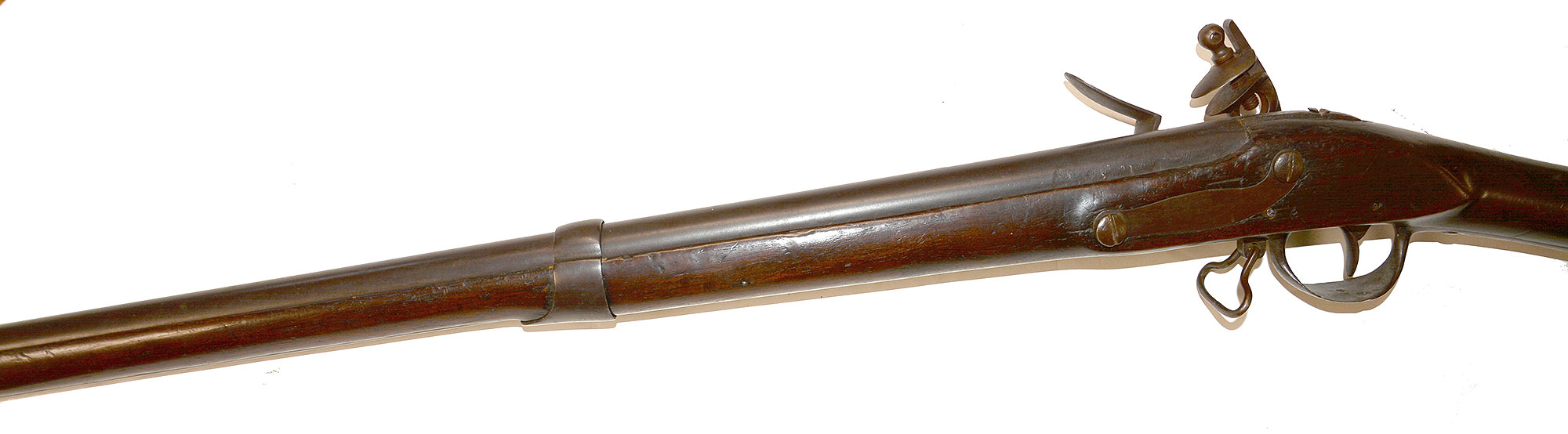
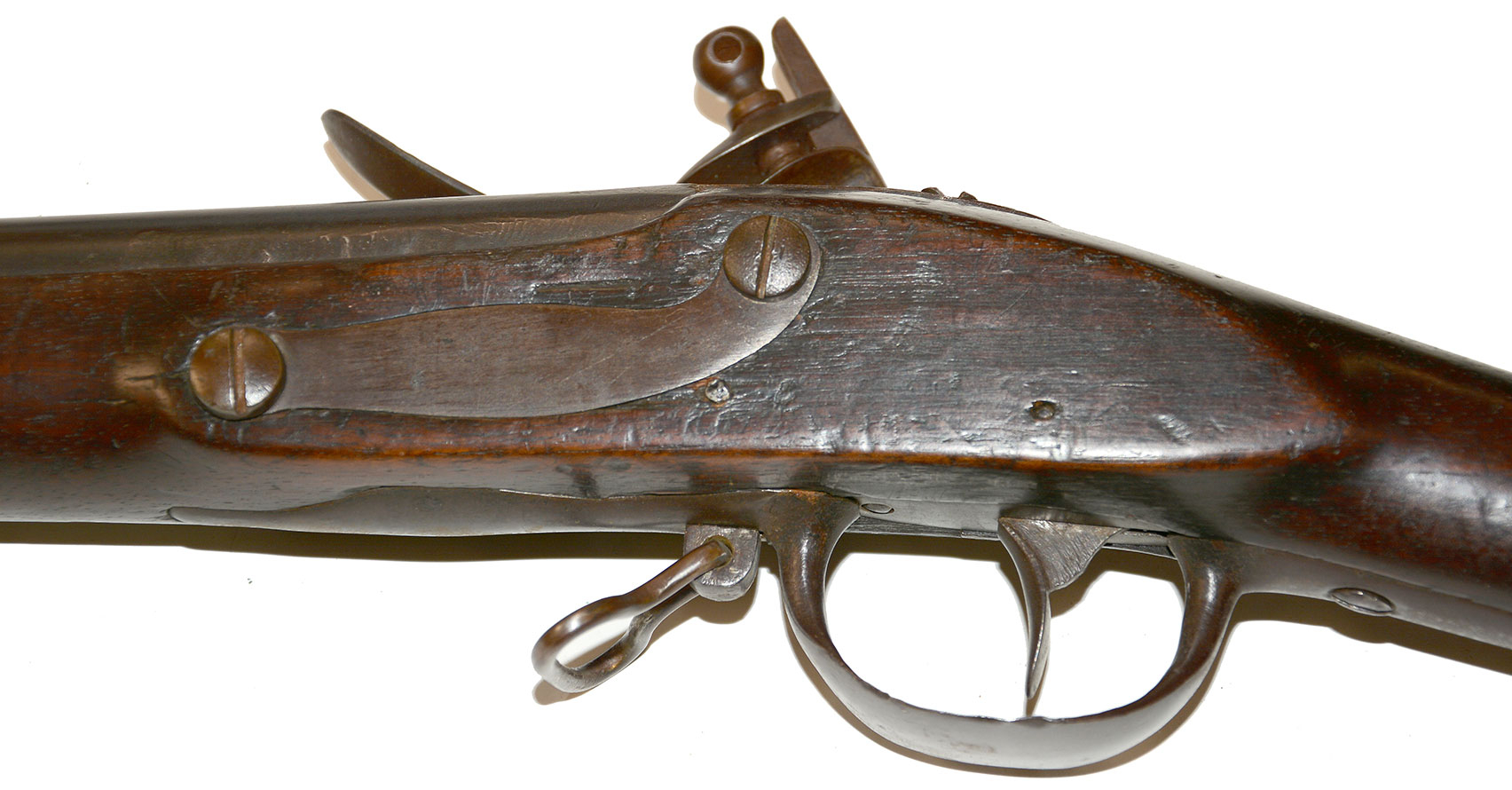
This musket seems to follow fairly closely his US 1808 contract pattern, and has a 44-3/4” barrel, though Moller notes some of his militia muskets feature significantly shorter barrels. The lock plate reads: “BRIDGWATER” [sic- no “E”] in a vertical arc at rear of the cock and “1812” horizontally at the tail, with faint traces of an eagle over a “US” in an oval forward of the cock. We see no other markings than four small dings faint punch dots in a line near the breech of the barrel, which might be component mating marks- Moller so explains some punch marks on the toe of a Perkins frizzen (V.2, p.230.) As is correct for privately purchased musket there are no acceptance/inspection marks on the sideflat. Moller mentions P over V stamps on the barrels of two Perkins militia muskets he examined, but we see no signs of any on this one.
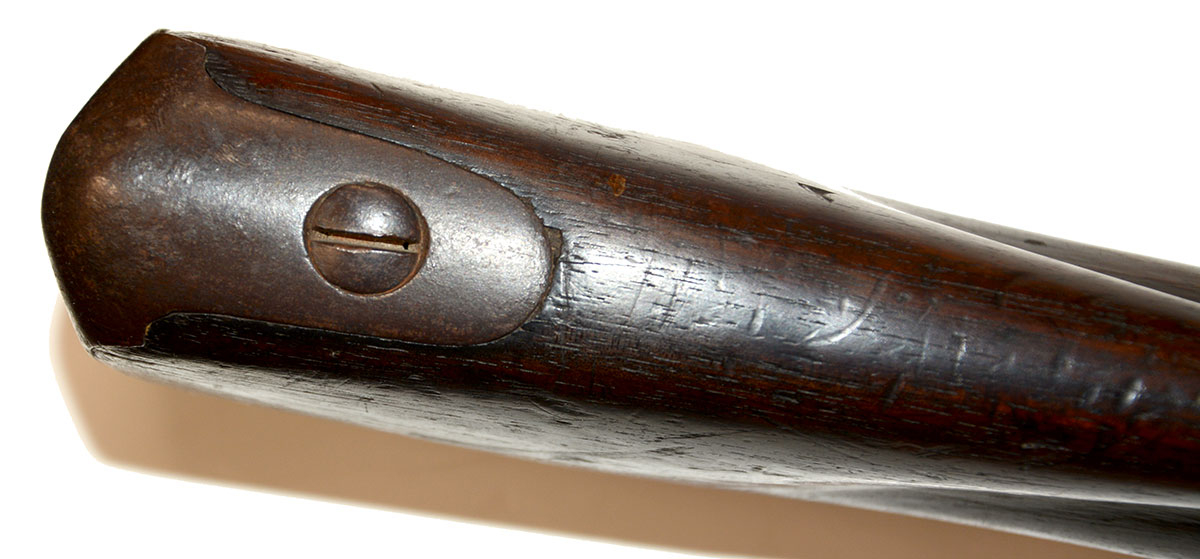
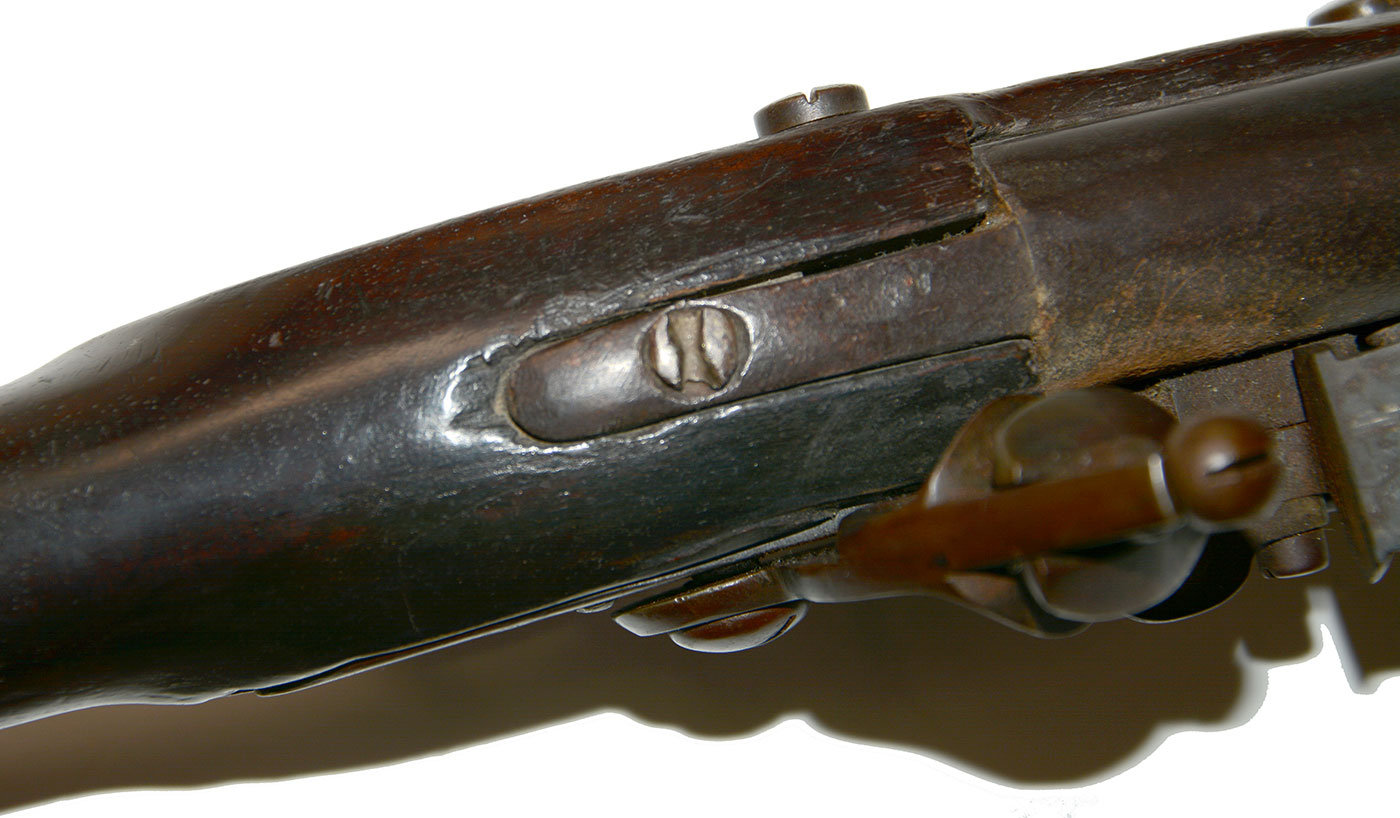
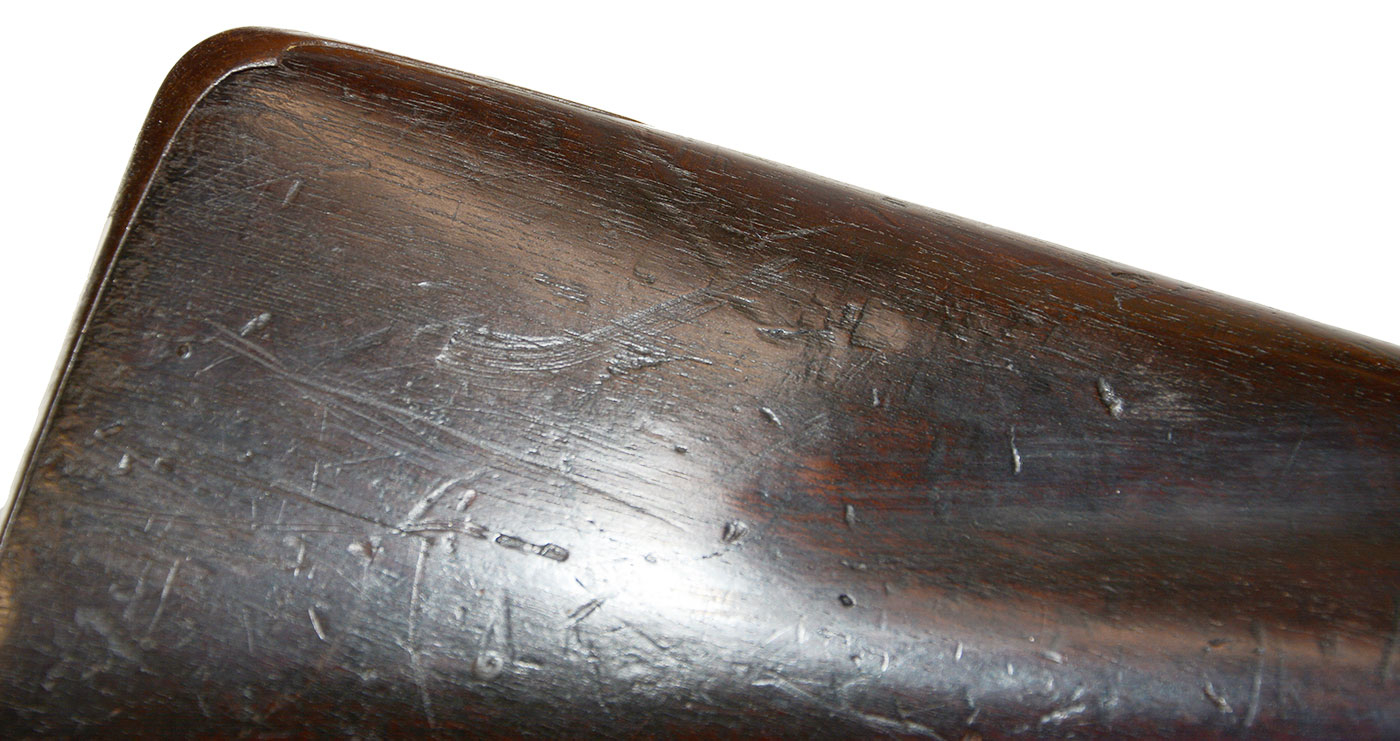
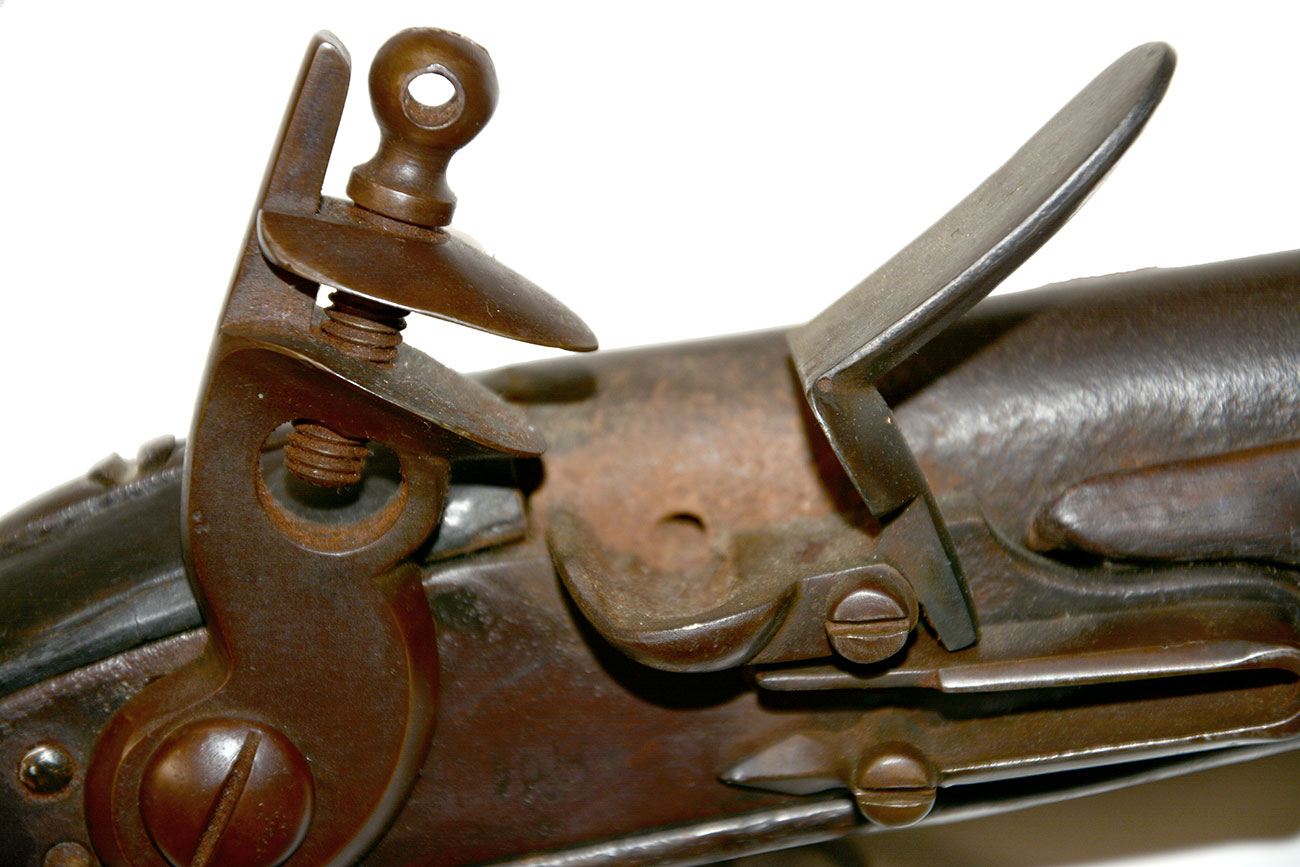
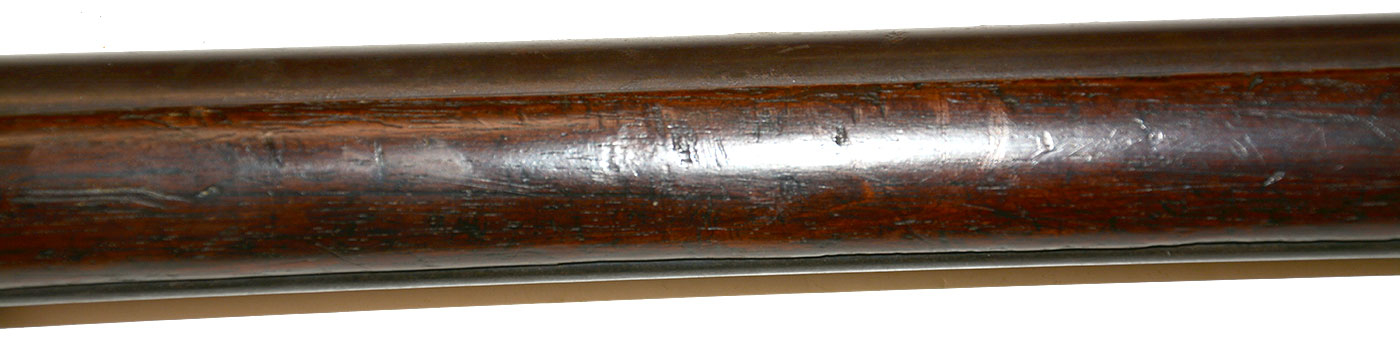
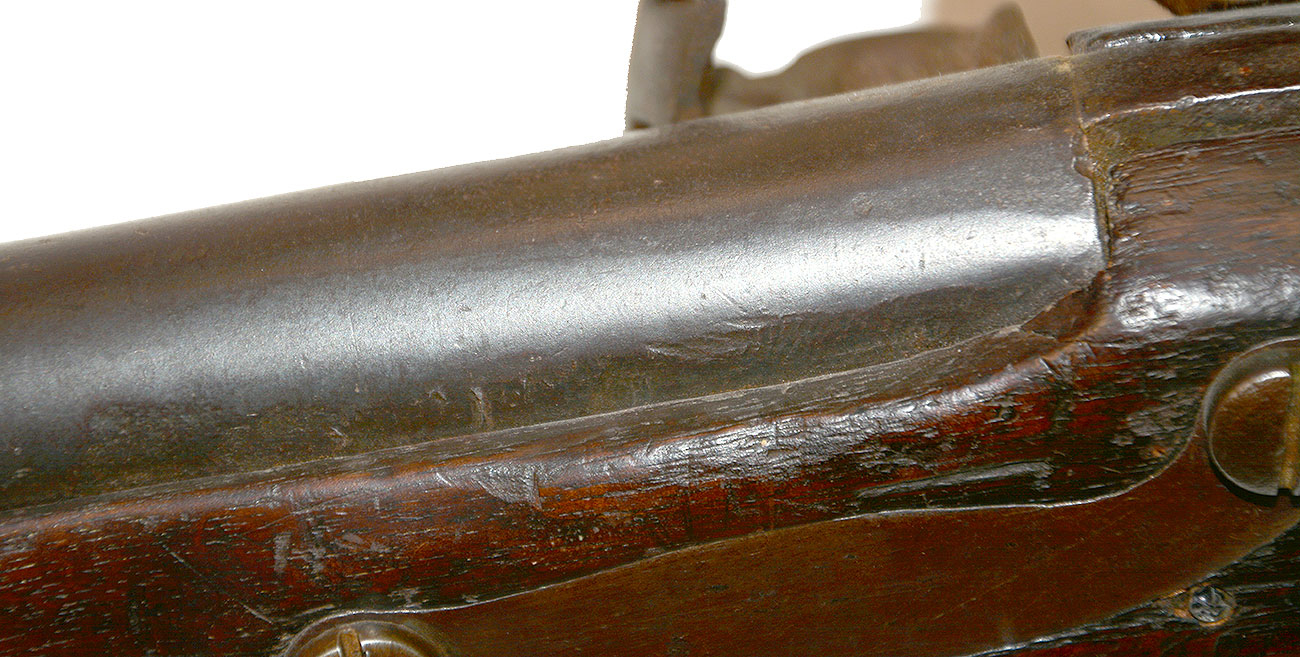
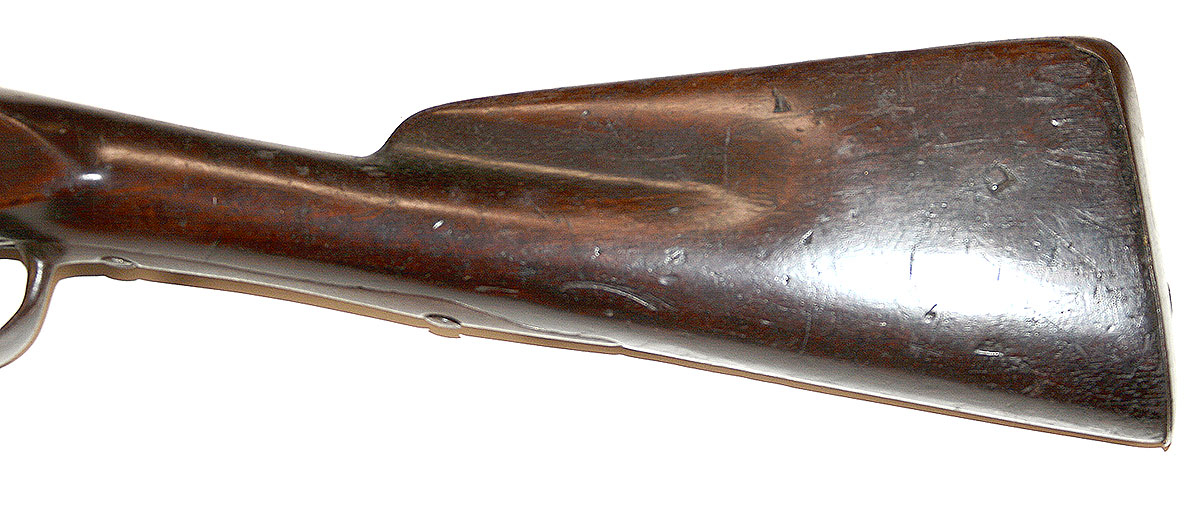
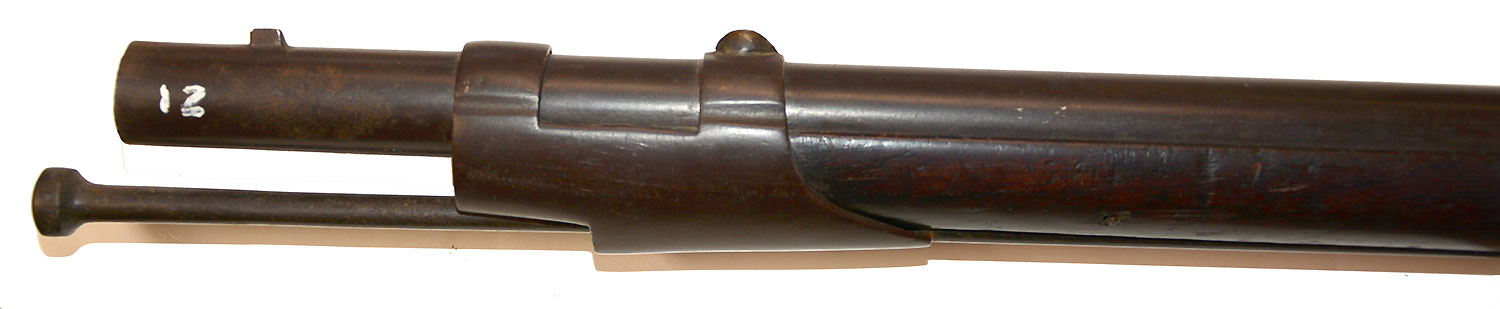
The metal has a smooth surface and deep plum-brown color showing just a dusting of thin red rust around the touchhole. The lockplate markings are very good. The wood has a smooth finish and pleasing deep brown color, with just some handling marks and scratches to the butt flats. The bottom barrel band is slightly loose and the wood shows some gaps along the edges of the lockplate and along the breechplug tang, but not significant losses: some slight chipping at the end of the tang, likely from firing; a short, narrow gouge above the sideplate; and, a short hairline on the edge of the side flat at the forward lock screw. The ramrod channel shows minor wear. The buttplate fits tight. All barrel bands, springs and swivels are in place. The ramrod is likely an old replacement. An old collection number “12” in white paint is on the left of the muzzle. The top-mounted bayonet stud is in place, as is the front sight on the rear strap of the top band.
Perkins is an interesting gunmaker and part of the complicated story of the 1808 contracts in country’s effort to build a domestic military arms industry. We note in passing that according to Moller he made some rifles as well, though an earlier 1808 US contract for Indian arms also went unfulfilled. [sr][ph:L]
DISCLAIMER: All firearms are sold as collector's items only - we do not accept responsibility as to the shooting safety or reliability of any antique firearm. All firearms are described as accurately as possible, given the restraints of a catalog listing length. We want satisfied customers & often "under" describe the weapons. Any city or state regulations regarding owning antique firearms are the responsibility of the purchaser. All firearms are "mechanically perfect" unless noted, but again, are NOT warranted as safe to fire!
~~~~~~~~~~~~~~~~~~~~~~~~~~~~~~~~~~~
THIS ITEM, AS WITH ALL OTHER ITEMS AVAILABLE ON OUR WEB SITE,
MAY BE PURCHASED THROUGH OUR LAYAWAY PROGRAM.
CLICK HERE FOR OUR POLICIES AND TERMS.
THANK YOU!
Inquire About 1812 DATED RUFUS PERKINS 1808 US CONTRACT STYLE MILITIA MUSKET
Most Popular
Historical Firearms Stolen From The National Civil War Museum In Harrisburg, Pa »
Theft From Gravesite Of Gen. John Reynolds »
Selection Of Unframed Prints By Don Troiani »
Fine Condition Brass Infantry Bugle Insignia »
Rare Identified 65Th Ny Sergeant’s Jacket, With Manscript Material: 1St U.s. Chasseurs »
featured item
A CONFEDERATE SURGEON'S GREATCOAT, SASH AND SHIRT
Dr. J. P. Rasser was contracted by the Confederacy and among his duties in Georgia was the examination of Conscripts for the Army. THE OVERCOAT or army great coat is certainly "Homespun" that is a woven woolen fabric originally made from homespun… (1268-706). Learn More »
site search