


site search
online catalog
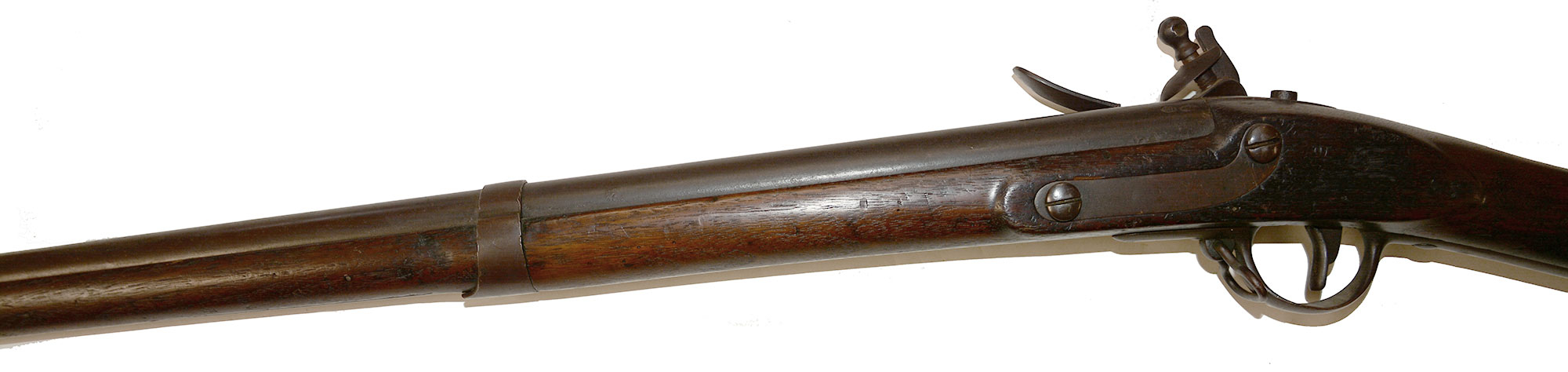
NEAR FINE CONDITION HARPERS FERRY M1795 MUSKET DATED 1814

Hover to zoom


$2,500.00 SOLD
Quantity Available: None
Item Code: 2025-3652
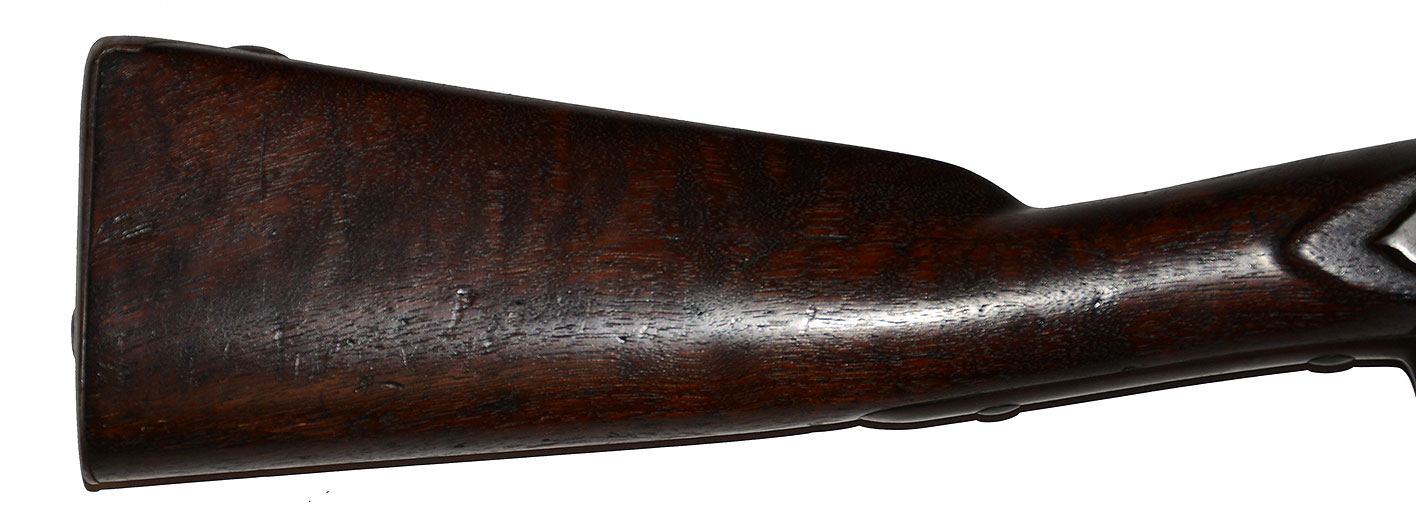
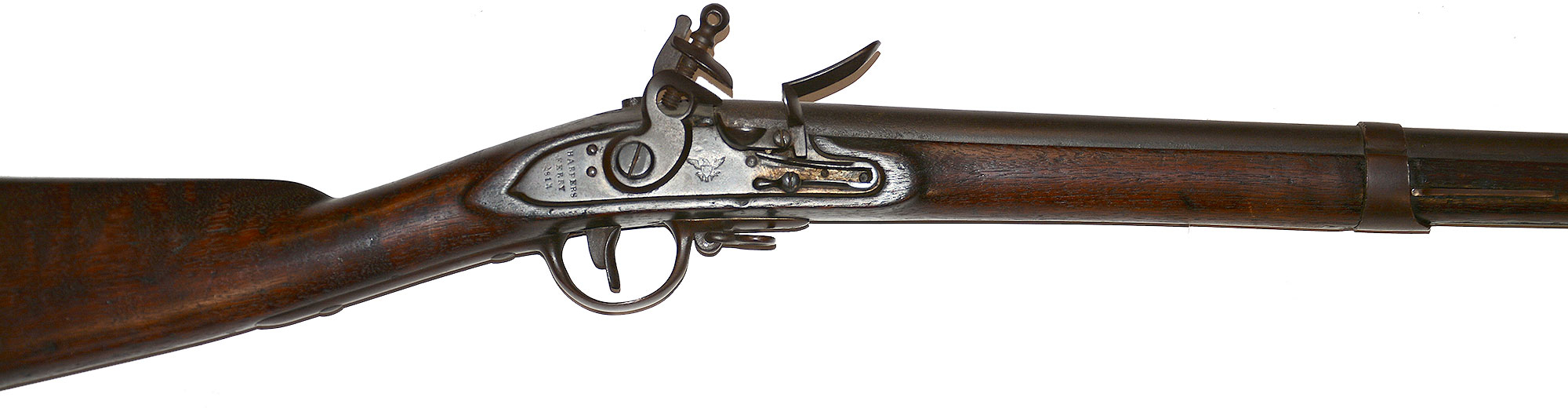
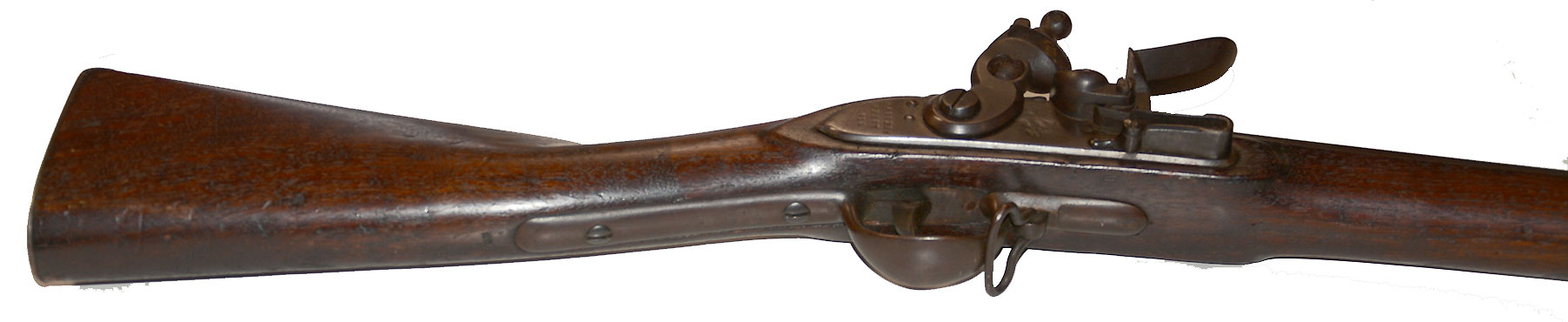
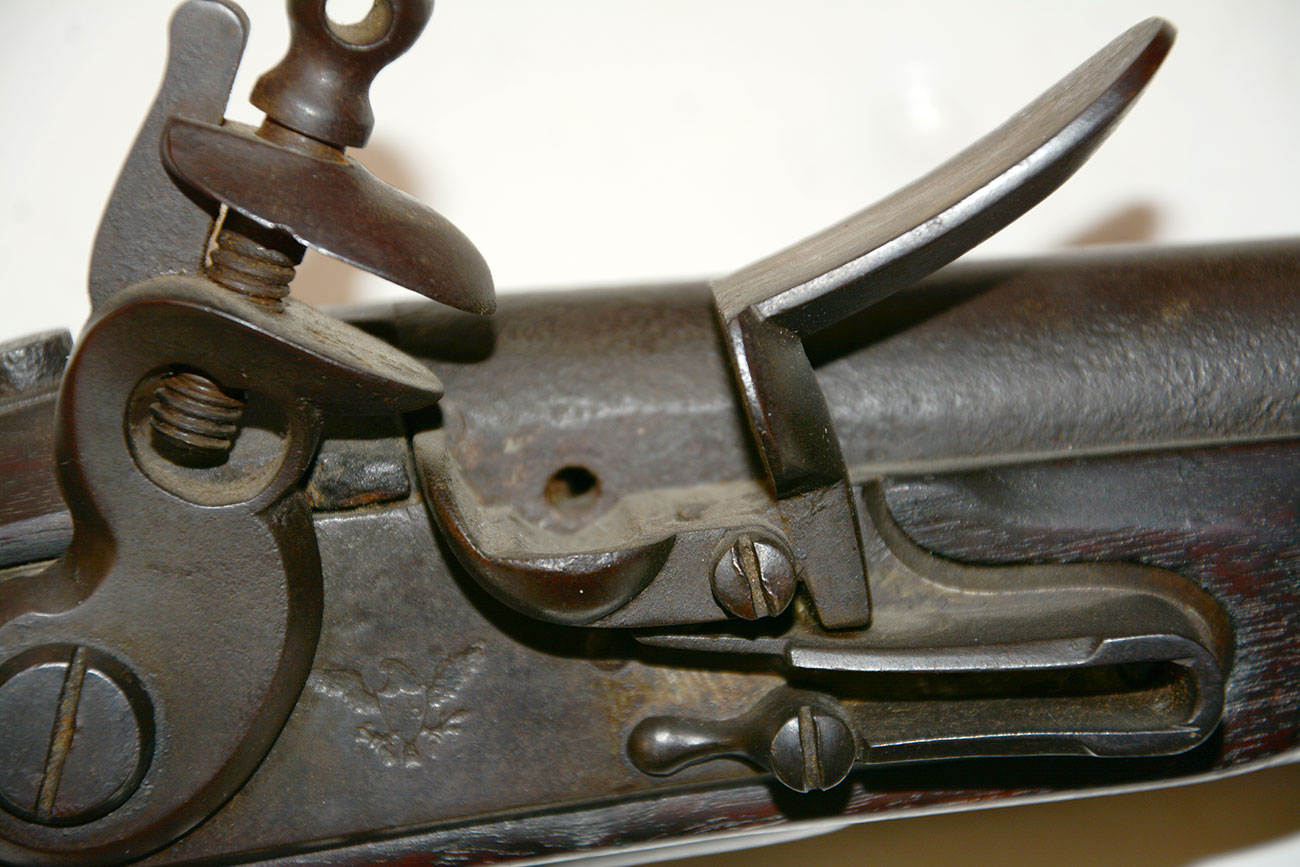
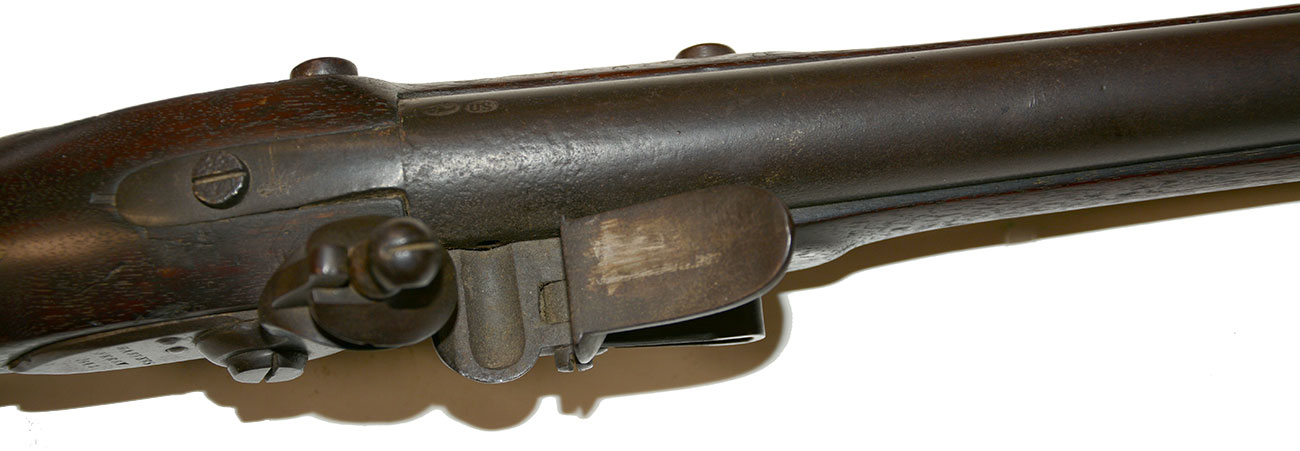
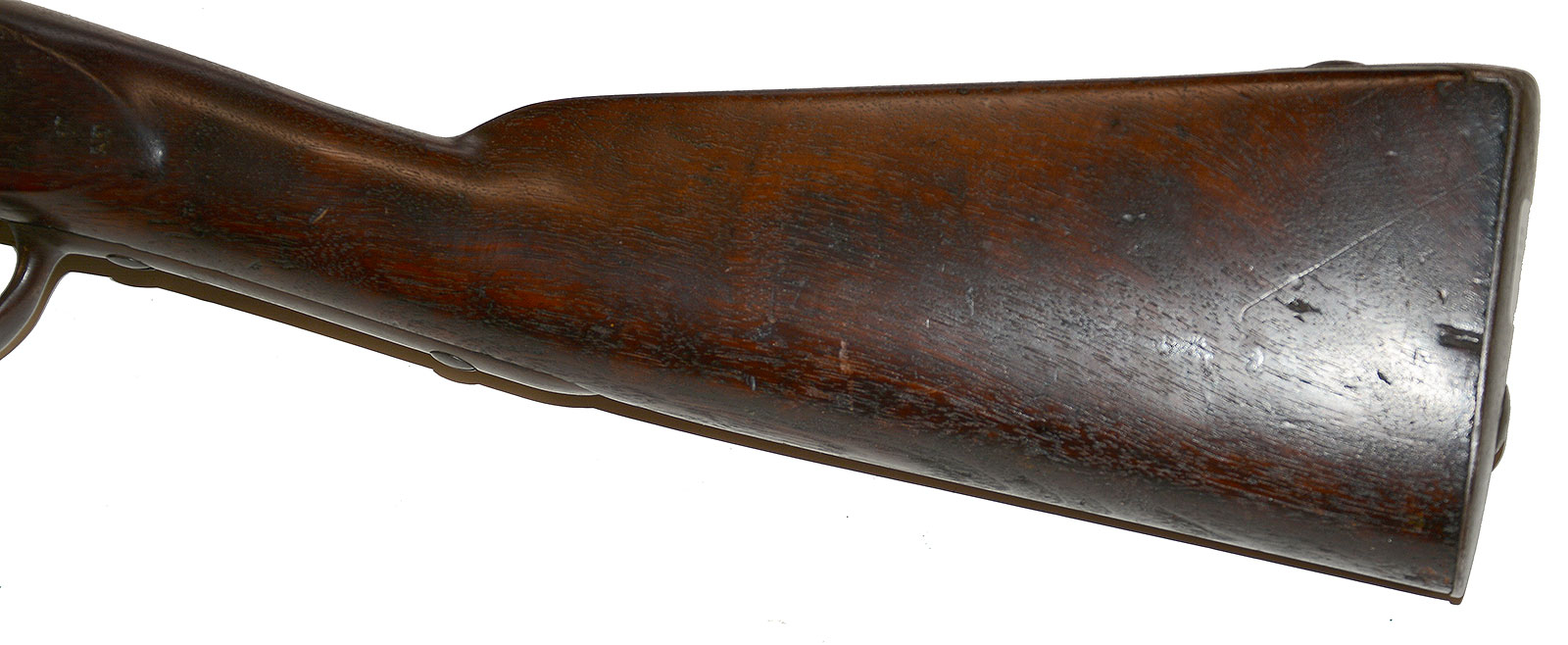
By most accounts Harpers Ferry began manufacturing parts for these muskets in 1800 and started actual assembly in 1801. As with their Springfield-made counterparts the designation Model 1795 is modern, contemporary sources instead referring to US muskets of the “Charleville pattern.” Modern students and collectors have also broken down production at each armory into sub-types, though production was more of a continuum than distinct phases. Moller gives Harpers Ferry’s 1814 production as 10,400 and this one shows a number of characteristics that would make it a Type-IV, most modern sources would push that introduction of that type to 1815. This one also rates at least Very Good for condition and would be far across the line into Fine were it not for some light battering on the side flat that partially obscures the acceptance mark of Armory Superintendent James Stubblefield. Nevertheless, the musket is complete, full length, original flint, with smooth metal showing nice color and sharp markings and tight-fitting wood with good surface, color, edges and otherwise good markings.
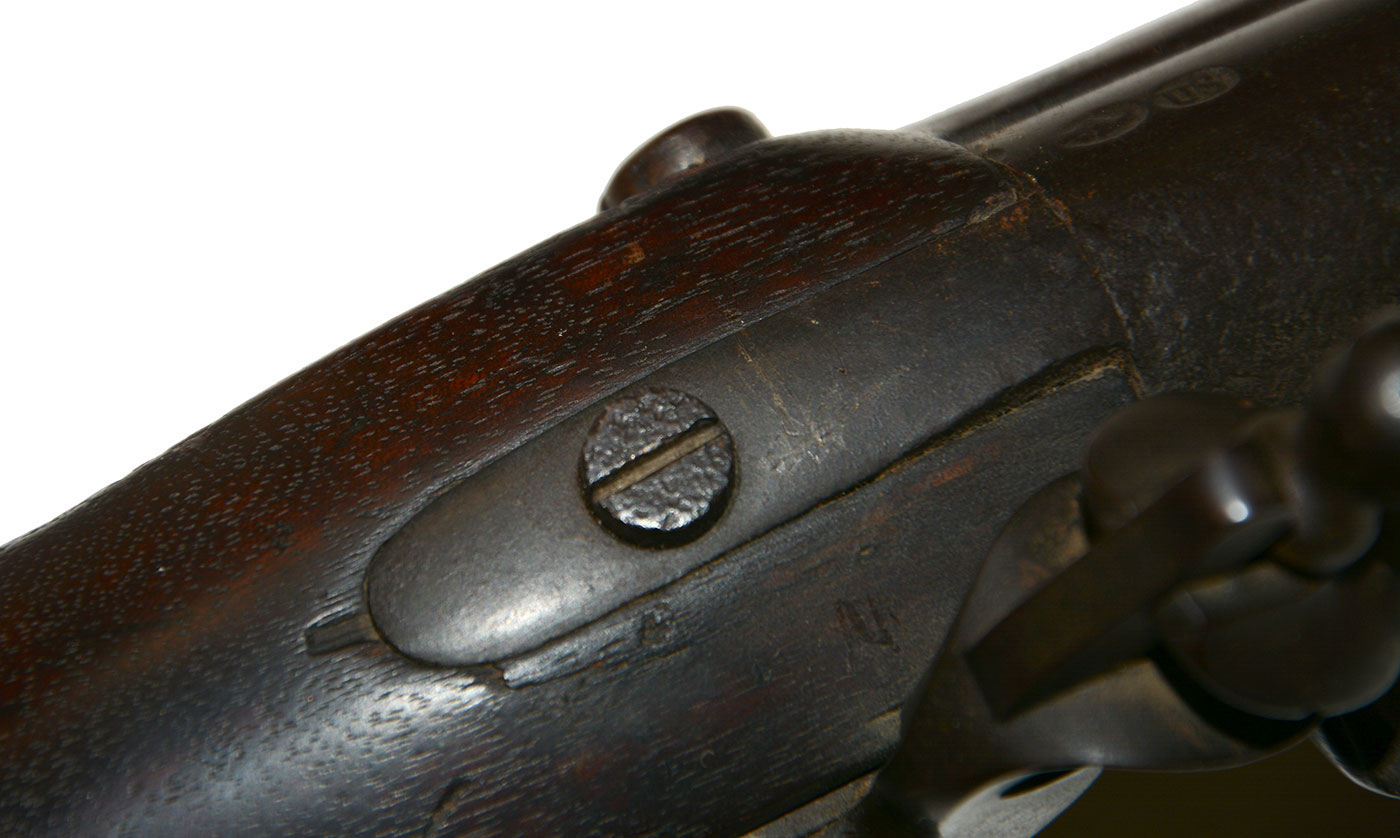
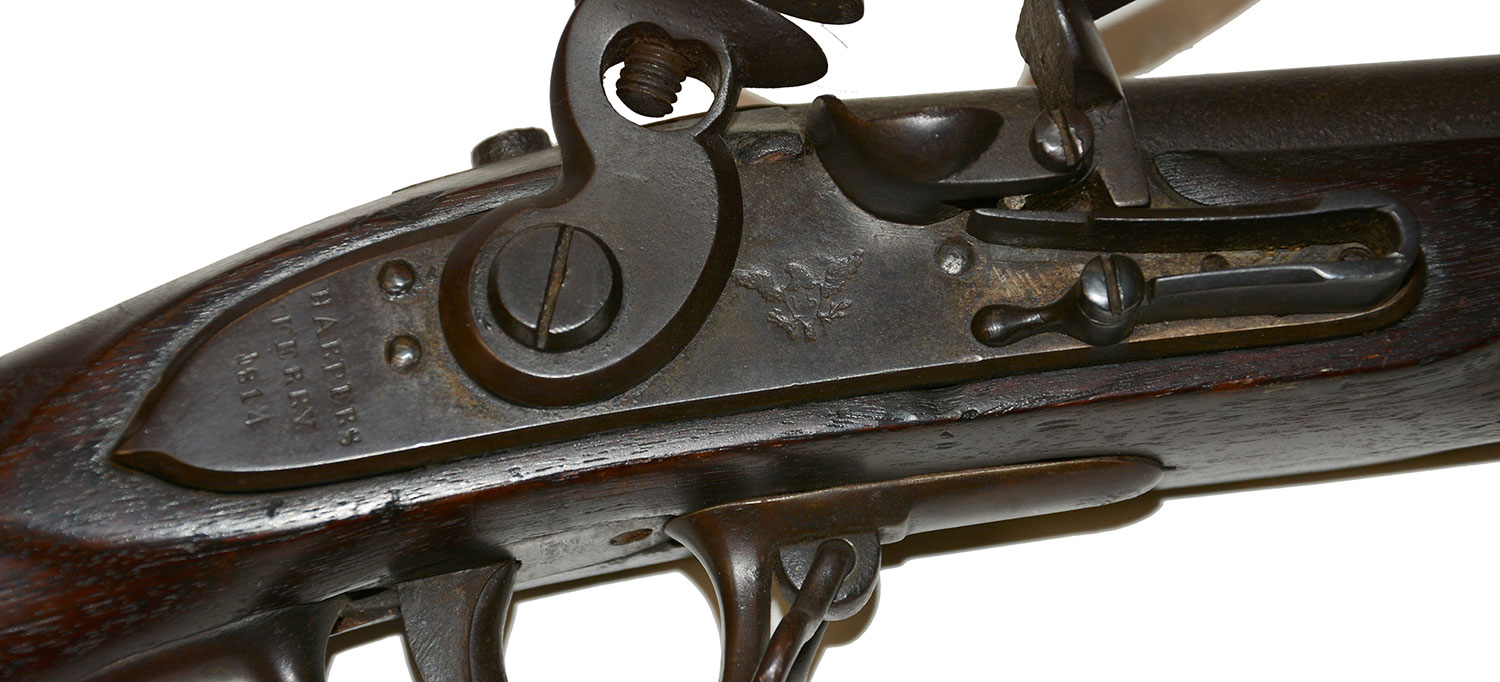
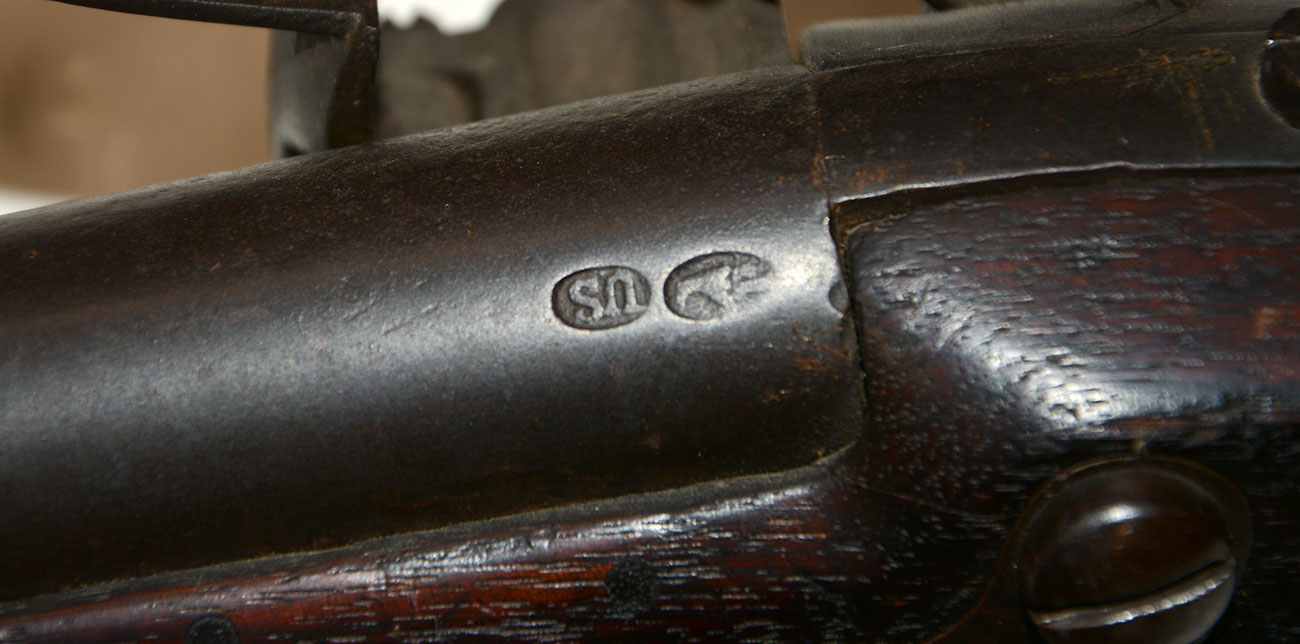
The lock plate is smooth metal, mottled bluish-gray in color, and crisply stamped HARPERS / FERRY / 1814 to the rear of the cock and forward of it with a sharp eagle with spread wings and a shield marked US on its chest that is correct for Harpers Ferry in the period of manufacture. Barrel markings are equally good. The upper left breech bears two sharp sunken oval cartouches: one containing an eagle’s head over a “P” and above that another showing “US” in raised letters, both cartouches in line with the barrel. As is correct, there is no Harpers Ferry serial number, that practice having ended in 1812. The barrel is smooth metal with the exception of some fine, pin-prick pitting near the breech, shows as a deep plum color, and is 41-3/4” long, reflecting a change from the 44-1/4” to 45-1/2” barrels used into 1815 according to Moller. Barrel bands are smooth as well, though showing a tad more brown in color. The ramrod is old, but trumpet-headed and certainly a replacement made at some point. The bell-shaped swivels are correct. Bayonet stud, front sight, band springs, etc., are all in place.
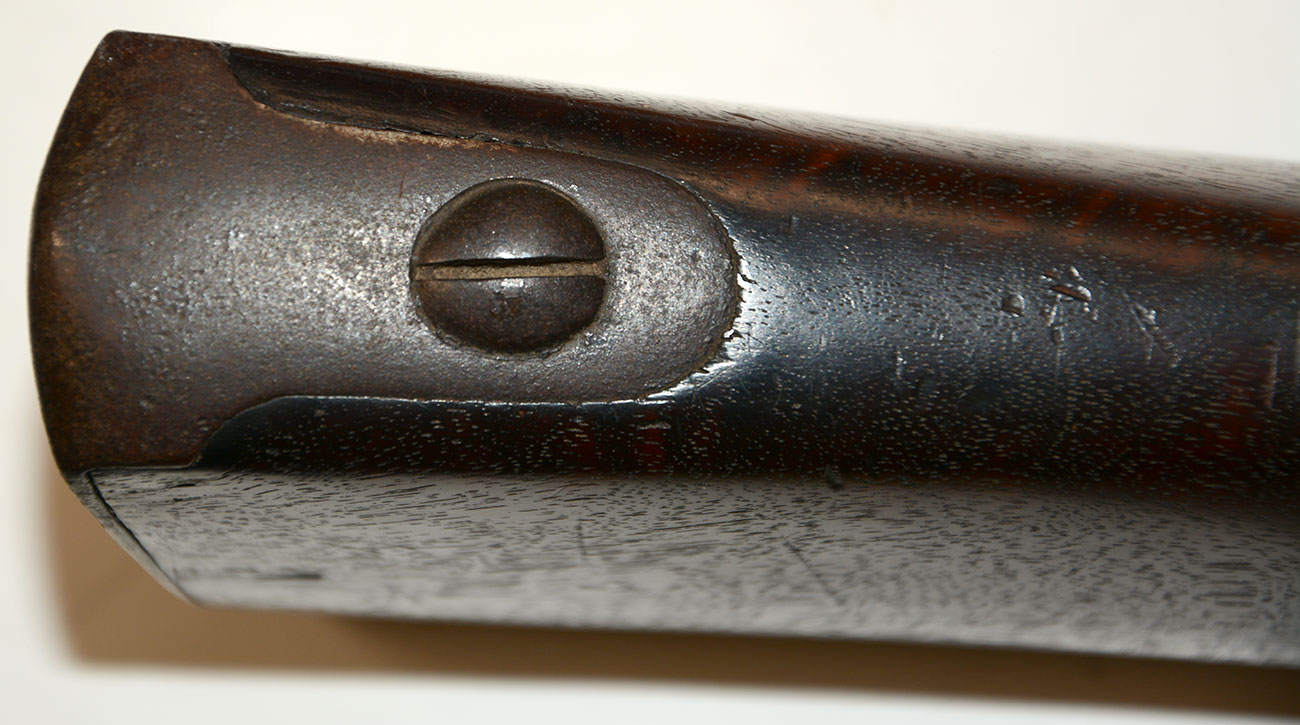
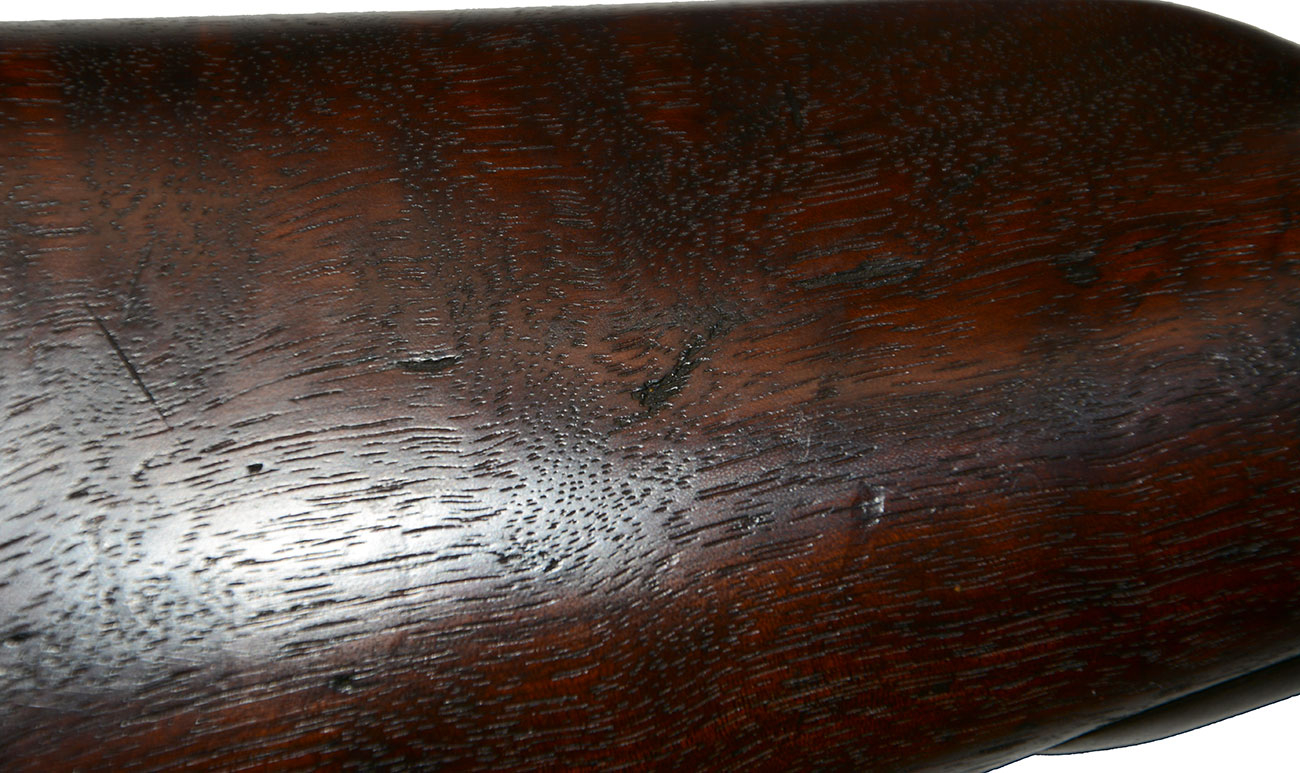
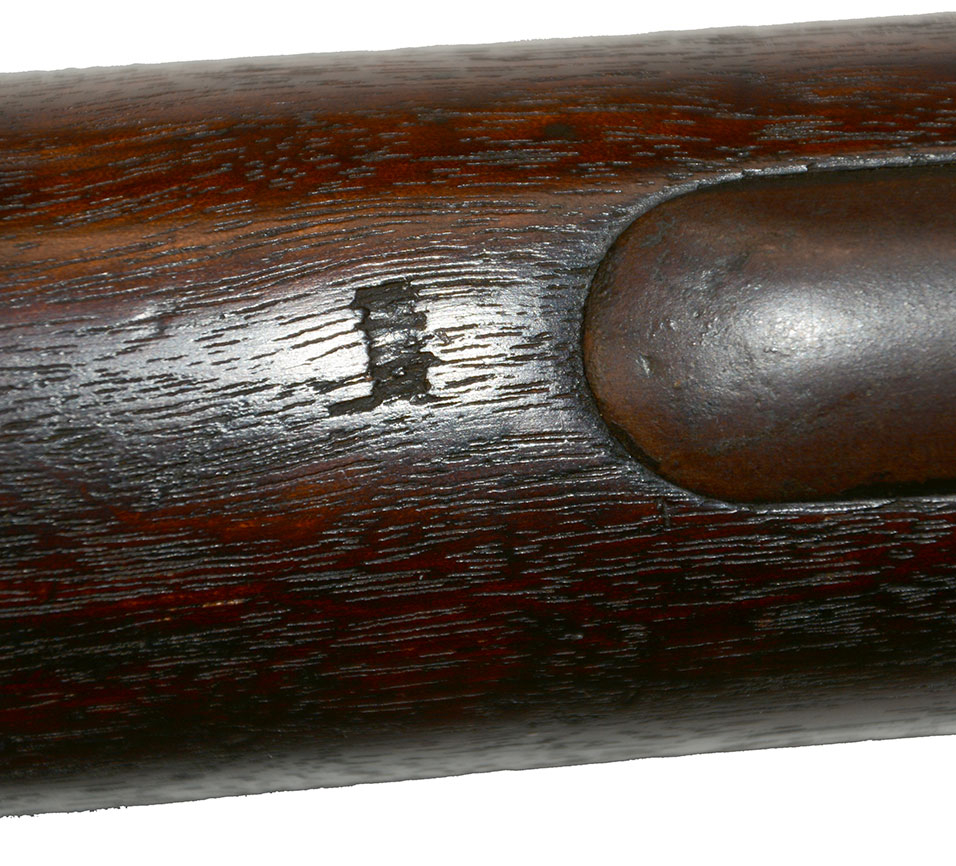
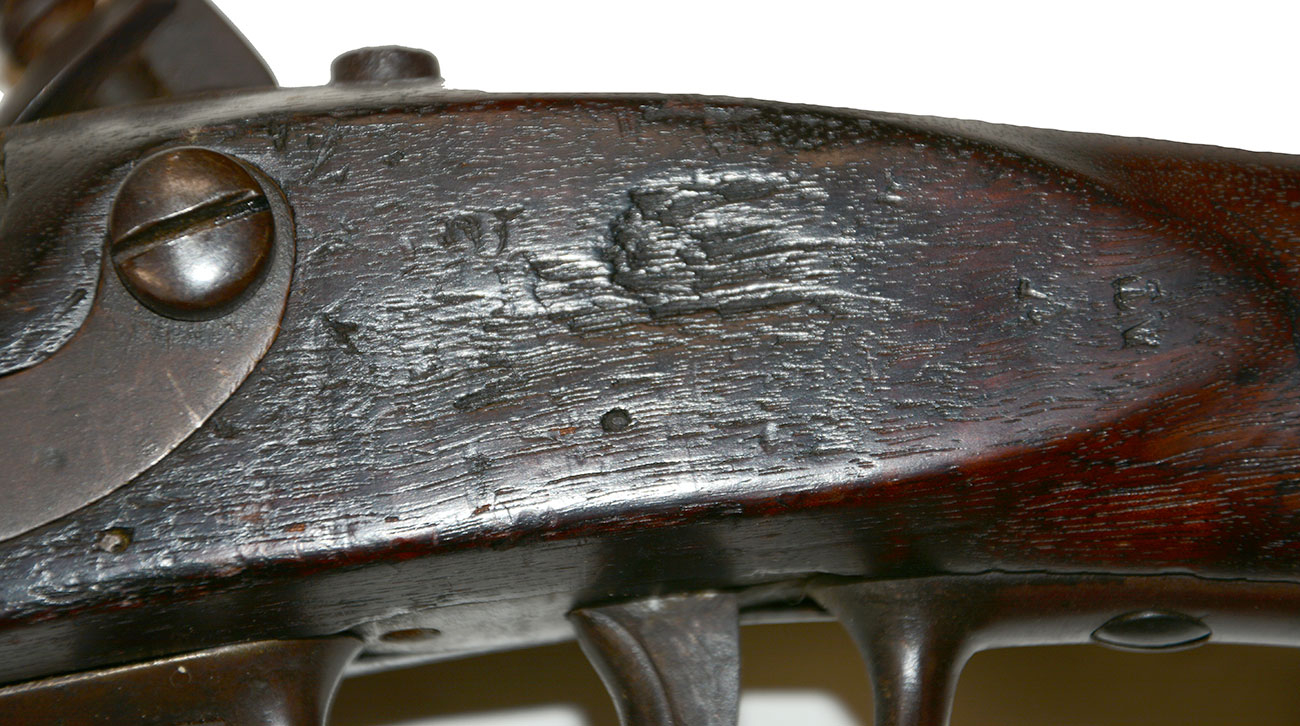
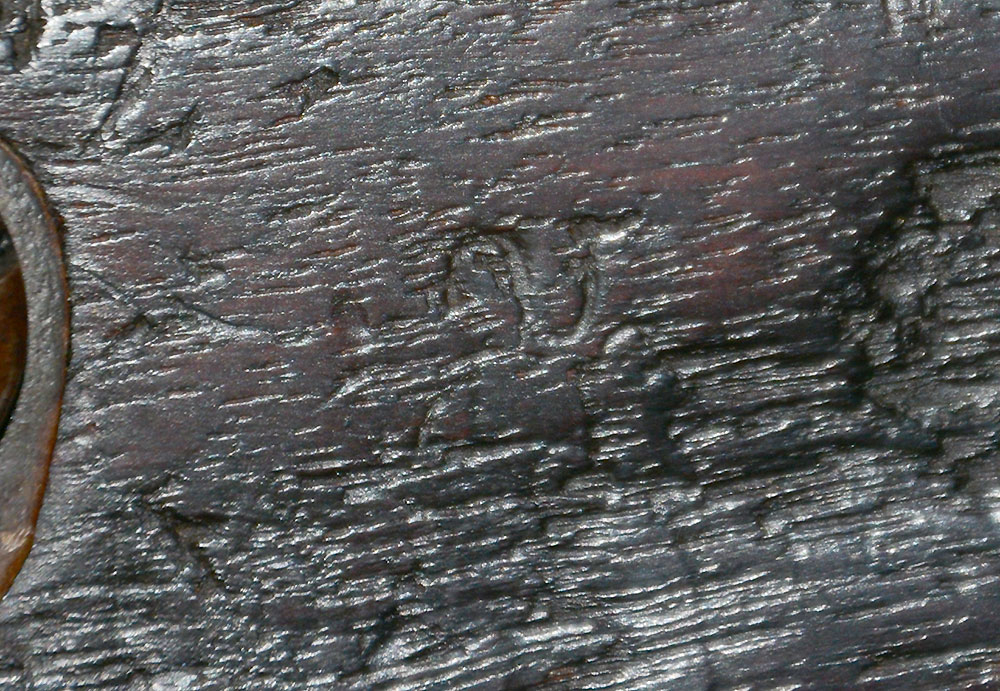
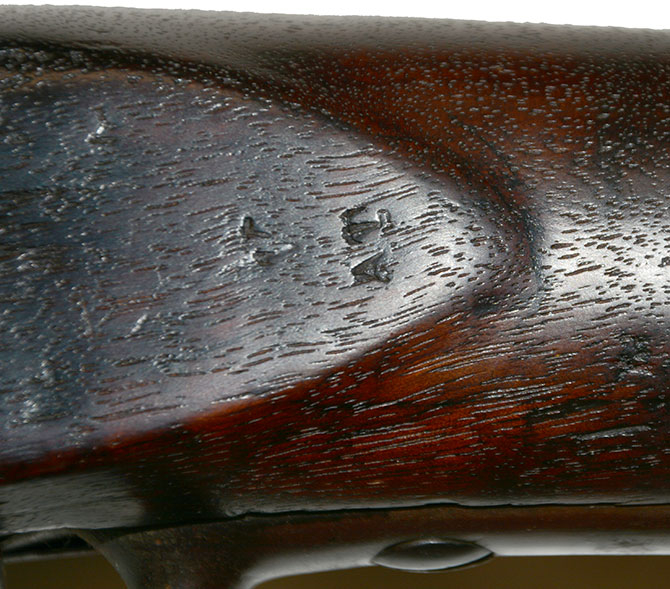
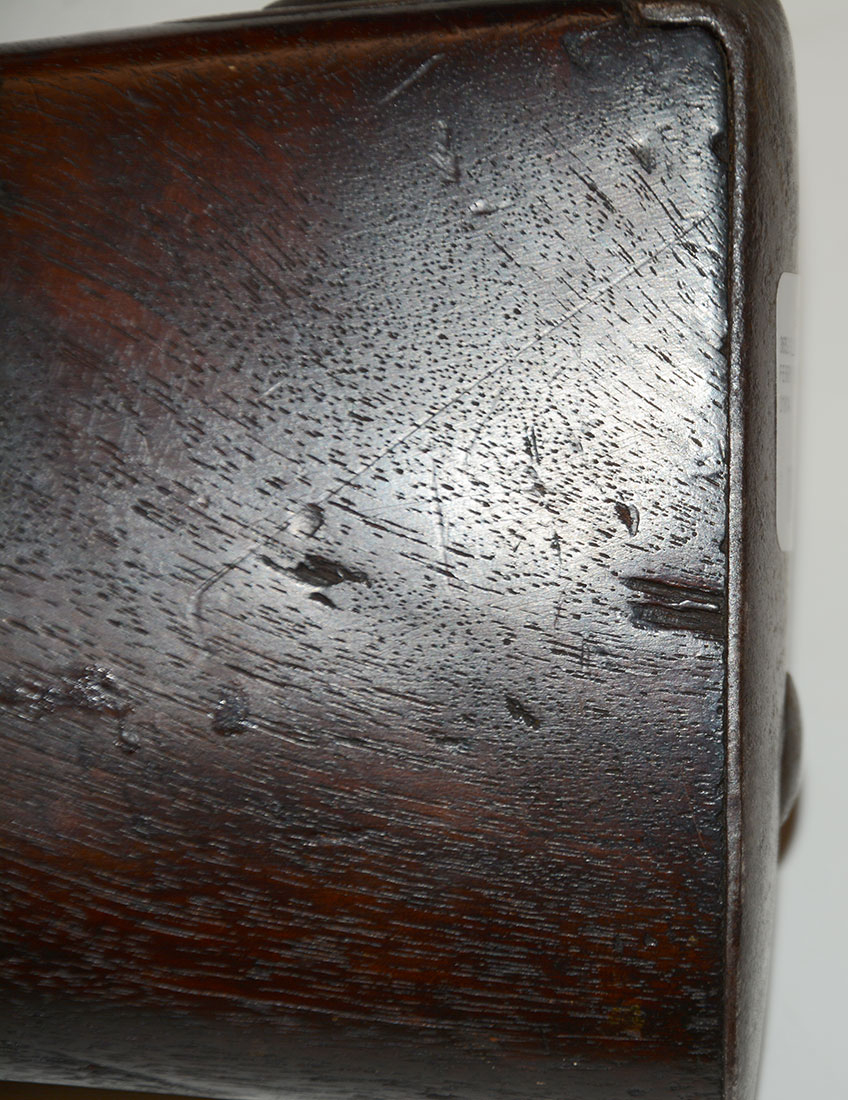
The wood has tight fit to the metal, good edges, good surface, warm brown color showing a tad lighter below the lower band from natural handling, and just minor handling marks and small dings. The wood of the side flat just behind the rear lock screw has some battering from storage, but shows a clear U-shaped script “V,” under which were the entwined script “JS” initials of Armory Superintendent James Stubblefield, now indiscernible. At rear of the side flat, however, is the clear vertical “V” over “AT” stamp of a still unidentified Harpers Ferry Armory sub-inspector, whose initials are noted by Daum and Pate on other Harpers Ferry weapons in the “1815-1830 era,” another date this musket pushes back a year. Interestingly, the previous armory sub-inspector, also unidentified, whose mark appeared in that location had the initials “MH,” and these appear to be the initials, with a couple of scratches, in the underside of the wrist to rear of the triggerguard tang, which would also push a transition into 1814.
Other design elements of the musket fall into the broad “schedule of modifications” laid out by Moller - like the movement of the bayonet lug from the bottom to the top of barrel, use of rounded ends of the triggerguard extensions, etc. – or to his more tightly dated points of change- like the 1814 date for the tear-drop finial on the frizzen spring. The mechanics are good. And, this is a very good looking Harpers Ferry musket overall, with a good wartime date. [sr][ph:L]
DISCLAIMER: All firearms are sold as collector's items only - we do not accept responsibility as to the shooting safety or reliability of any antique firearm. All firearms are described as accurately as possible, given the restraints of a catalog listing length. We want satisfied customers & often "under" describe the weapons. Any city or state regulations regarding owning antique firearms are the responsibility of the purchaser. All firearms are "mechanically perfect" unless noted, but again, are NOT warranted as safe to fire!
~~~~~~~~~~~~~~~~~~~~~~~~~~~~~~~~~~~
THIS ITEM, AS WITH ALL OTHER ITEMS AVAILABLE ON OUR WEB SITE,
MAY BE PURCHASED THROUGH OUR LAYAWAY PROGRAM.
CLICK HERE FOR OUR POLICIES AND TERMS.
THANK YOU!
Inquire About NEAR FINE CONDITION HARPERS FERRY M1795 MUSKET DATED 1814
Most Popular
Historical Firearms Stolen From The National Civil War Museum In Harrisburg, Pa »
Theft From Gravesite Of Gen. John Reynolds »
Selection Of Unframed Prints By Don Troiani »
Fine Condition Brass Infantry Bugle Insignia »
featured item
CONFEDERATE CLIP POINT BOWIE WITH SALVAGED MUSICIAN SWORD BRASS HILT
This clip-point Bowie a great example of southern improvisation- a kind of weapons-making version of folk art – not sophisticated, but with an appeal of it own. Measuring 19.5 inches overall, the knife has a 13.25 inch blade that is 1.5 inches… (490-3265). Learn More »
site search
Upcoming Events
May 13 - 17: N-SSA Spring Nationals, Fort Shenandoah, Winchester, VA Learn More »