


site search
online catalog
ONE OF THE FAMOUS HEXAGONAL BORE WHITWORTH RIFLES

Hover to zoom



$11,500.00
Quantity Available: 1
Item Code: 286-1481
Shipping: Determined by Method & Location of buyer
To Order:
Call 717-334-0347,
Fax 717-334-5016, or E-mail
No muzzle loading rifle of the Civil War era was more renowned for accuracy than the British made Whitworth. Sir Joseph Whitworth was an engineer whose reputation for being able to produce machines with tight tolerances led the Board of Ordnance to approach him in 1854 to help with the design and manufacture of the machinery that would be necessary for the Royal Small Arms Factory at Enfield to produce the new Pattern 1853 Enfield rifle-musket to very tight tolerances. Subsequently, the Board of Ordnance asked Whitworth to provide input to potential improvements that might be obtained in the rifling small arms barrels. While he cannot be directly credited with the invention of the hexagonal (six sided) mechanical rifling system, he can be accurately considered to have substantially improved it. His 530 grain, .451caliber hexagonal alloy bullet did not depend upon the unreliable expansion of a hollow base in order to engage the rifling of the bore but instead relied upon the tight mechanical fit of his bullet. The end results were simply stunning accuracy for a muzzle-loading firearm, with one test resulting in a 12” group at 1,800 yards; a group shot at just over 1 mile with a black powder muzzle-loading rifle!
Whitworth began manufacturing his high-quality rifles in 1857 and in 1860 formed the Whitworth Rifle Company in Manchester, England. He produced the rifles in a variety of styles from cased multi-barrel sets to military style match rifles, and everything in between. He also licensed the use of his barrels (hexagonal bored) to gunsmiths like Wesley Richards. A well-known muzzle-loading Confederate sniper's rifle exists marked Westley Richards on the lock plate and "Whitworth's Patent" on the barrel. In 1862 Whitworth’s company was reorganized as the Manchester Ordnance & Rifle Company.
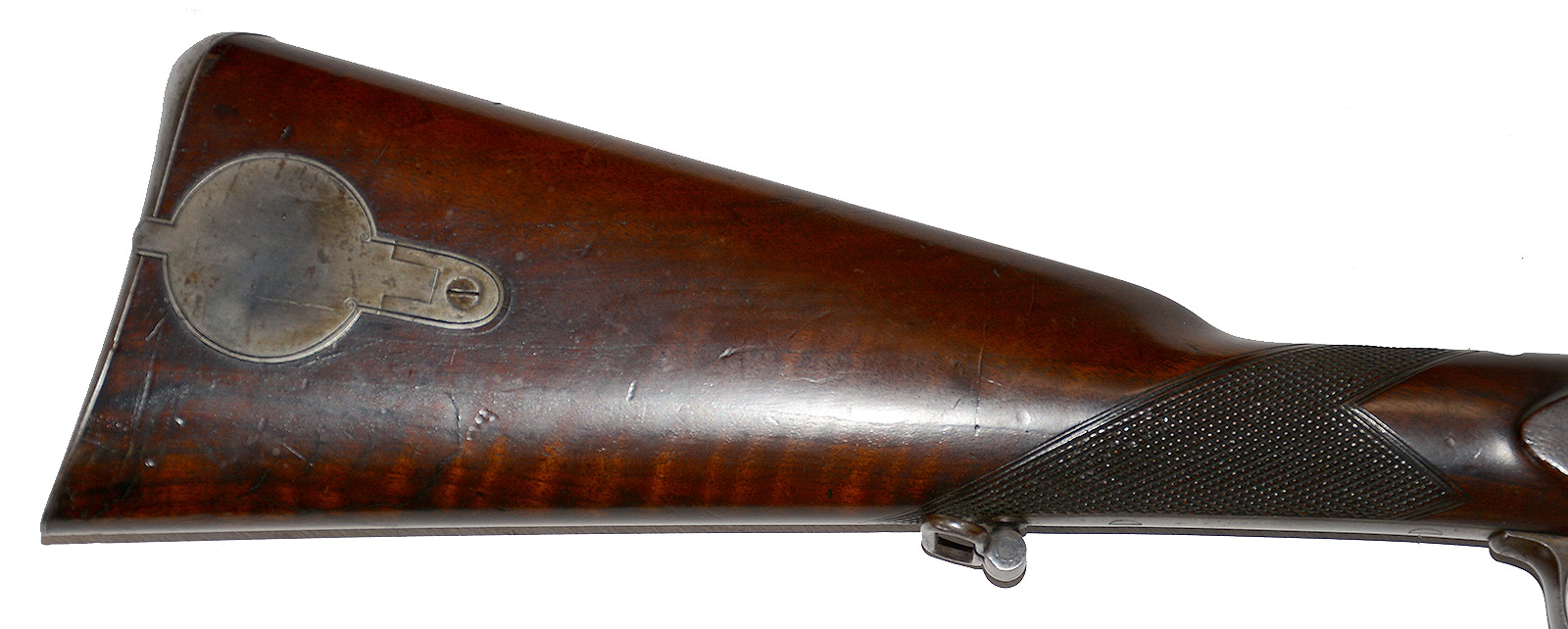
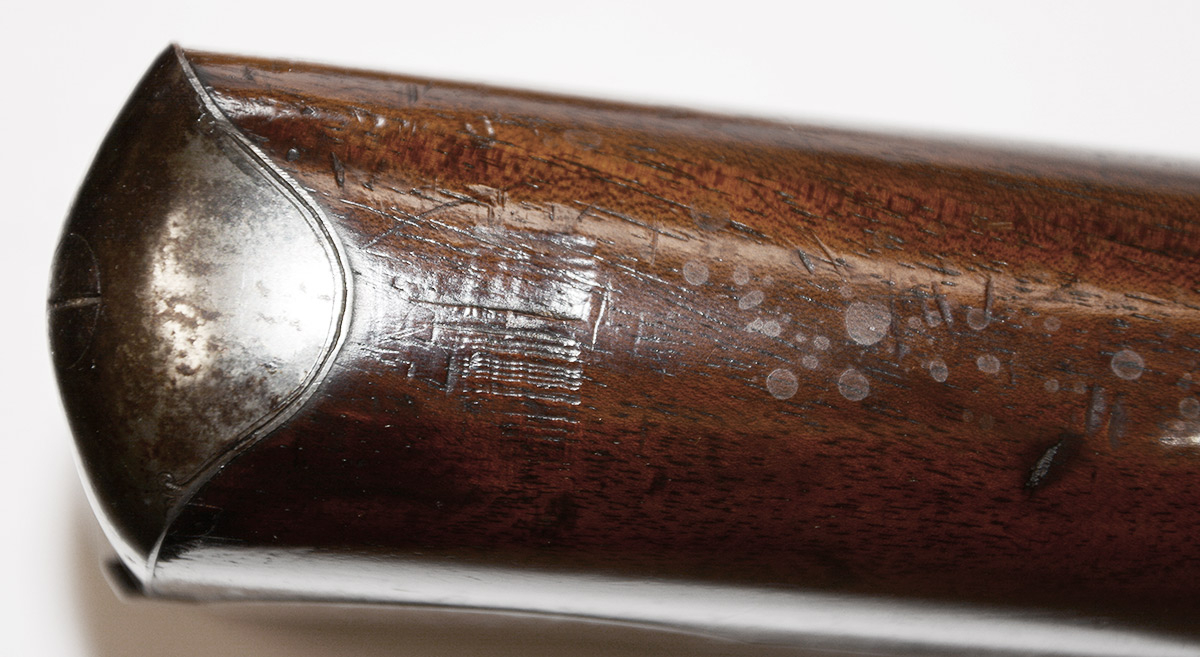
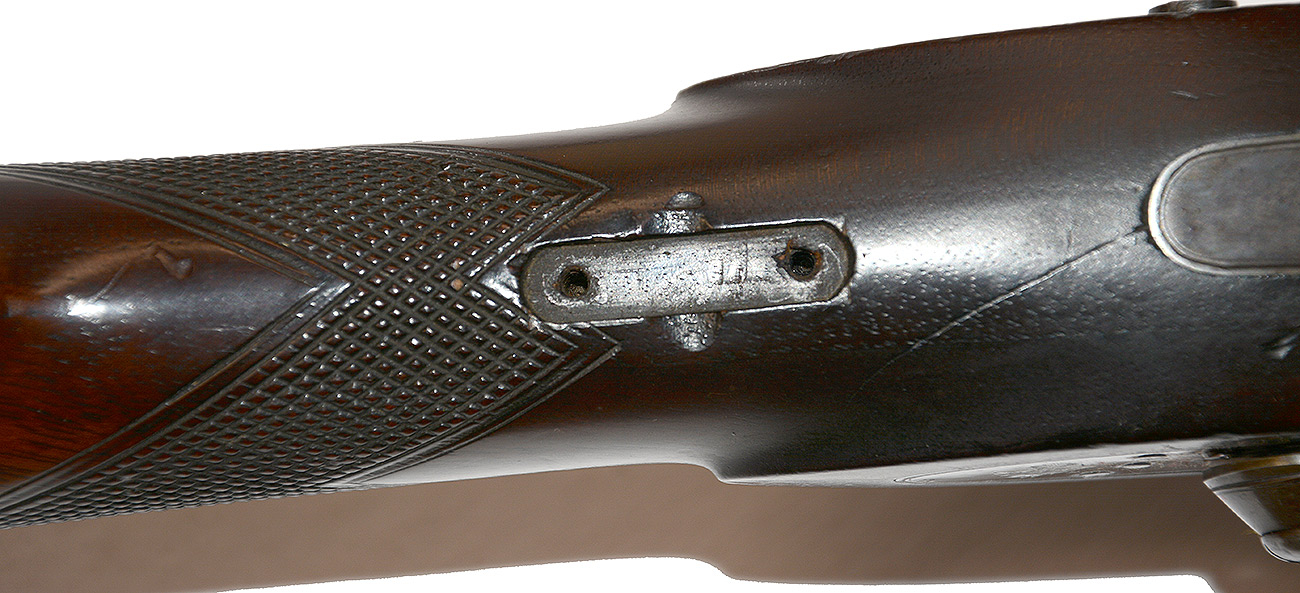
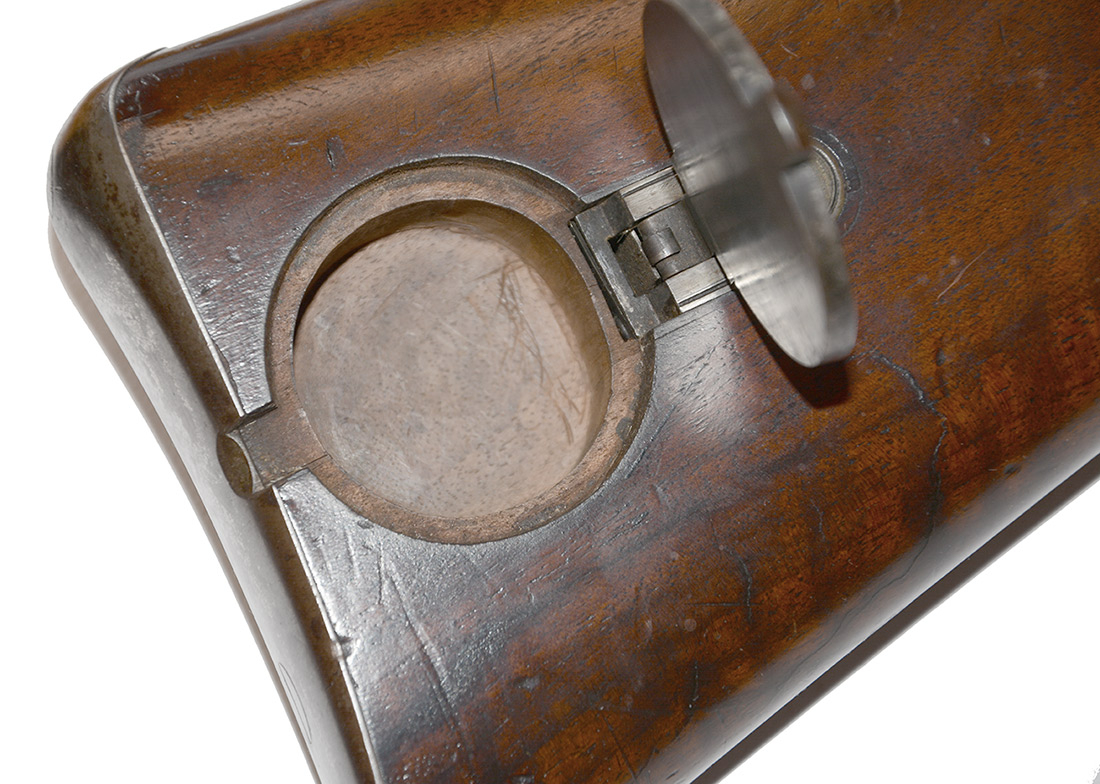
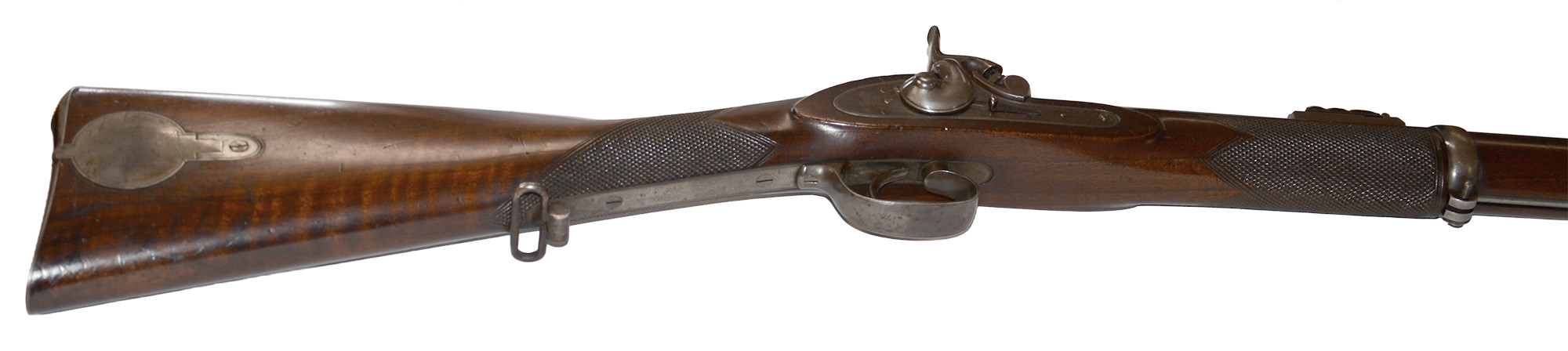
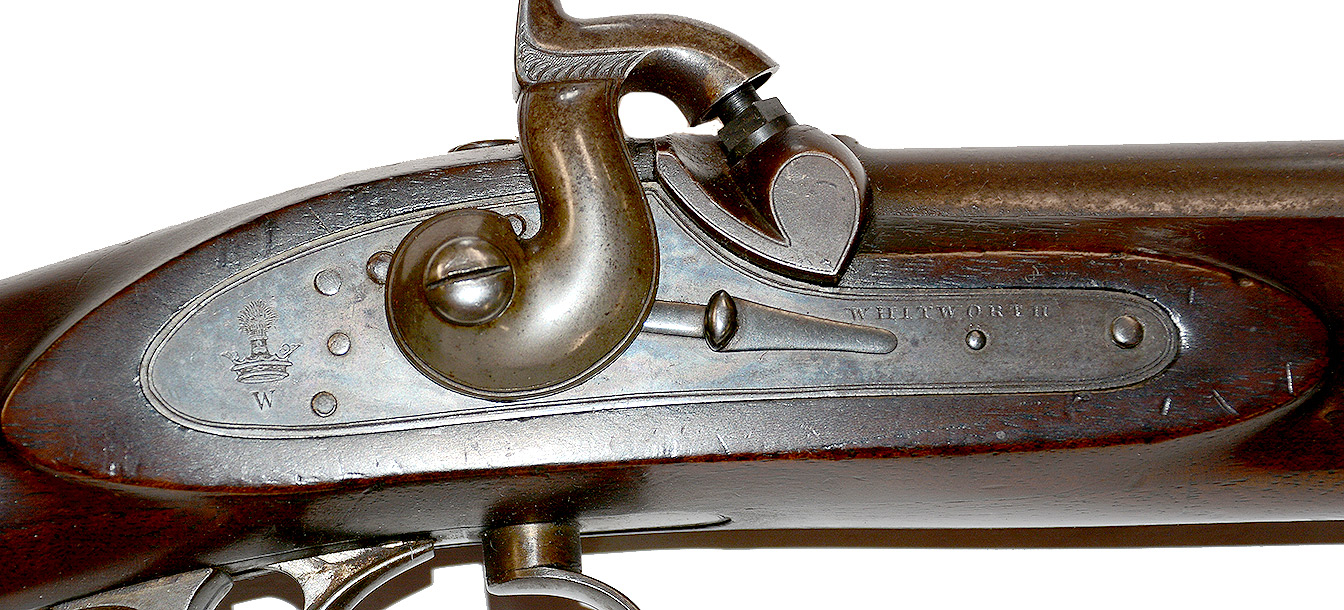
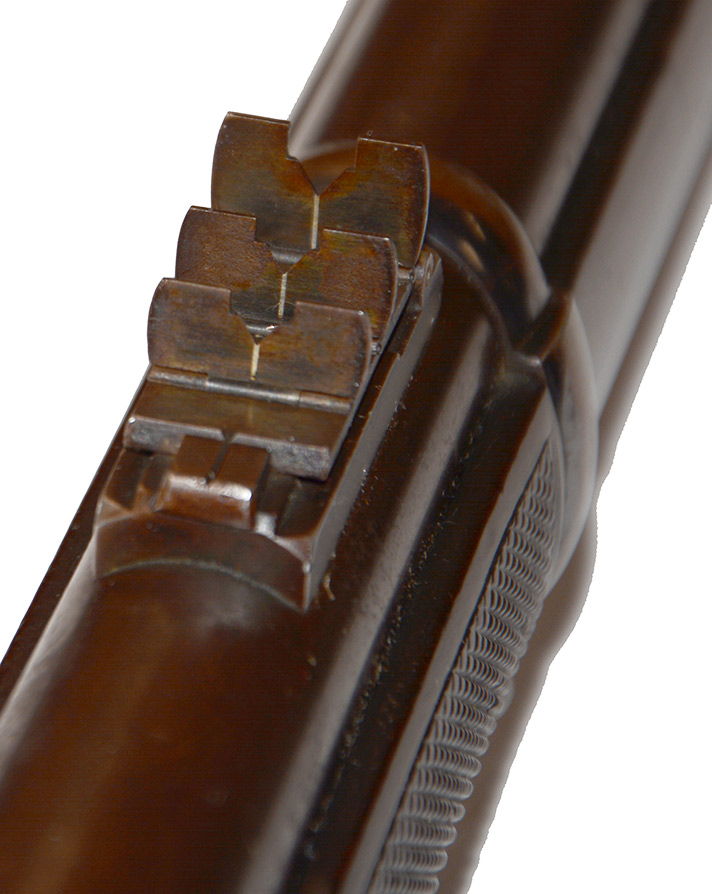
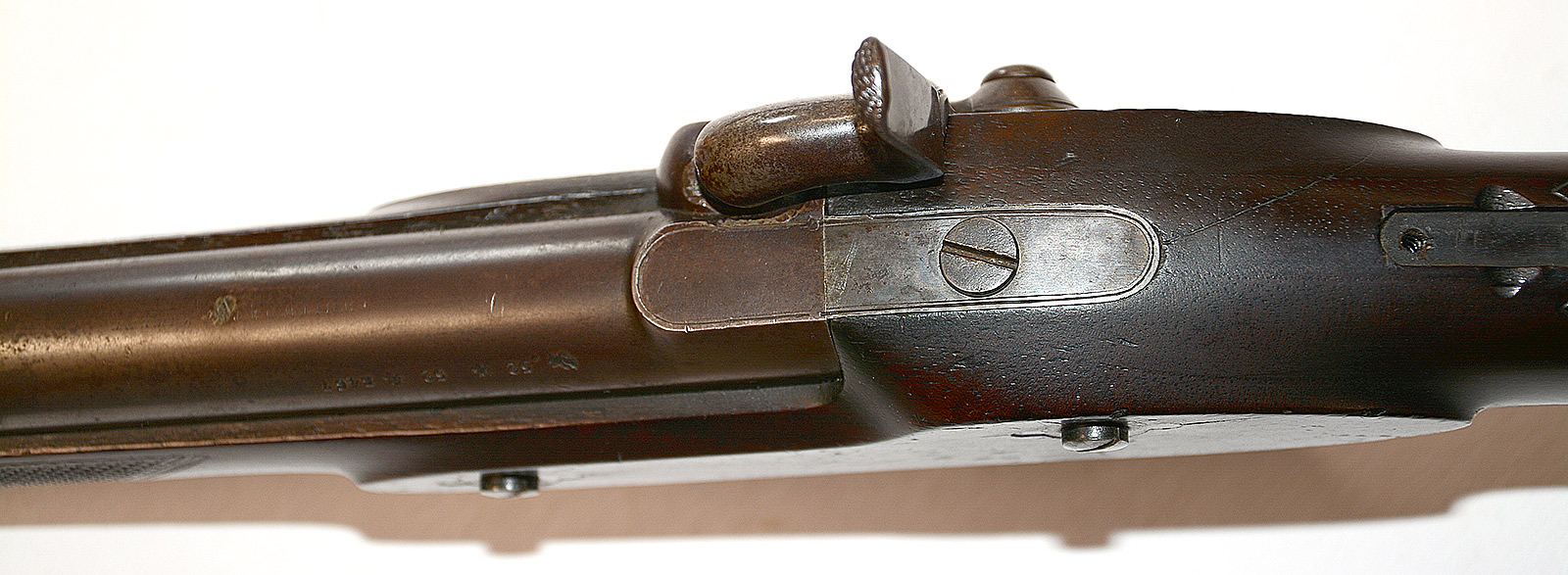
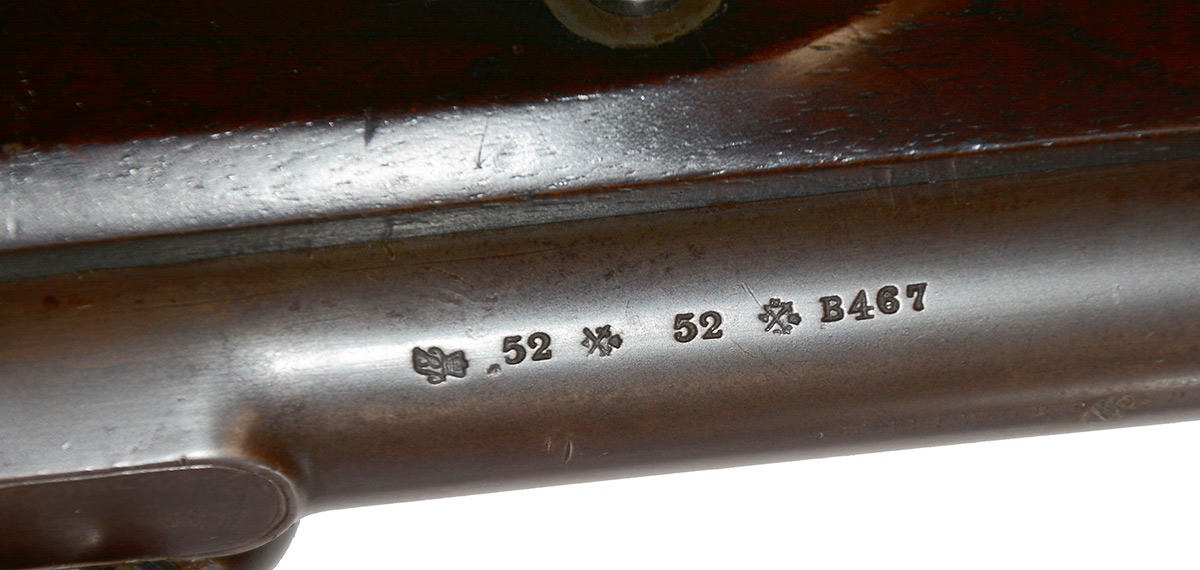
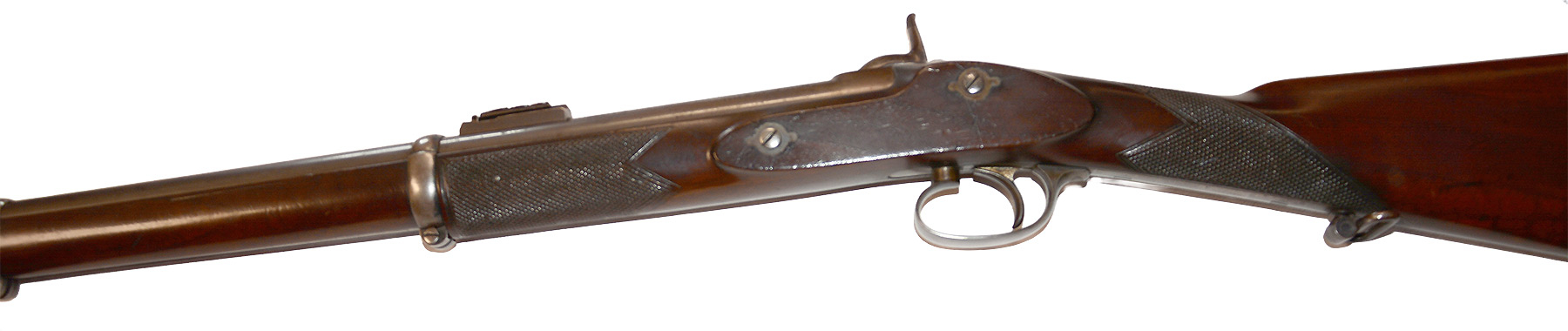
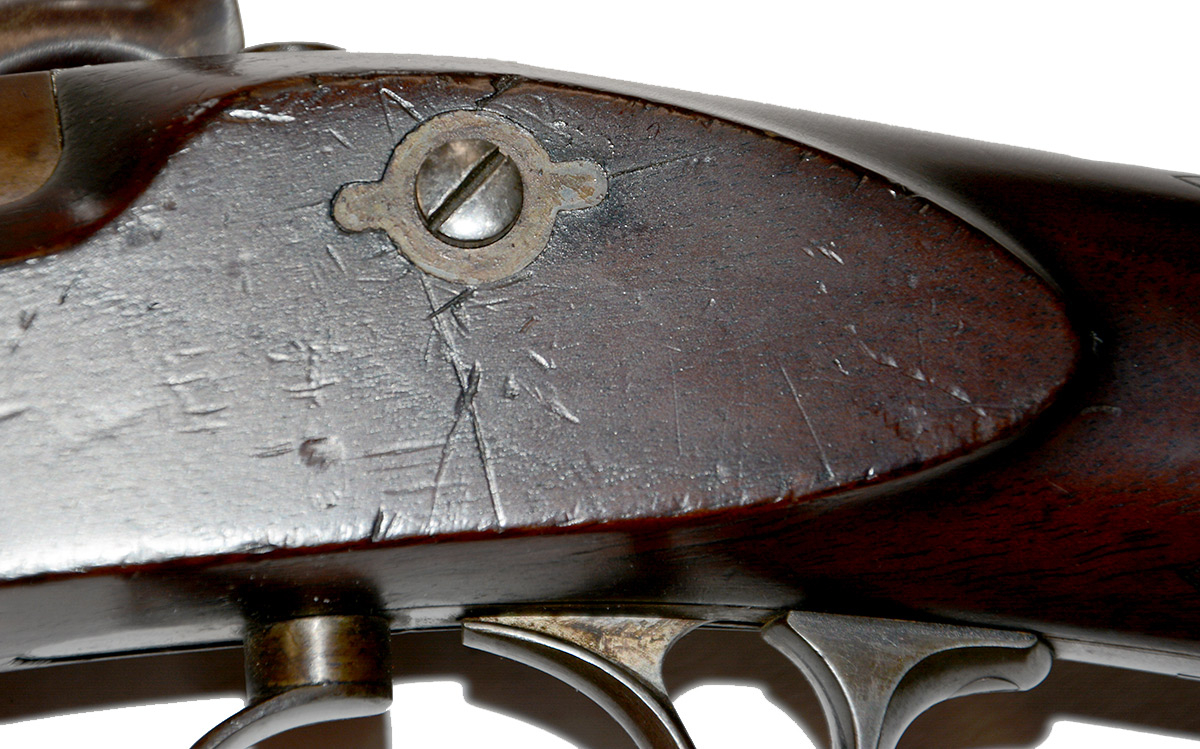
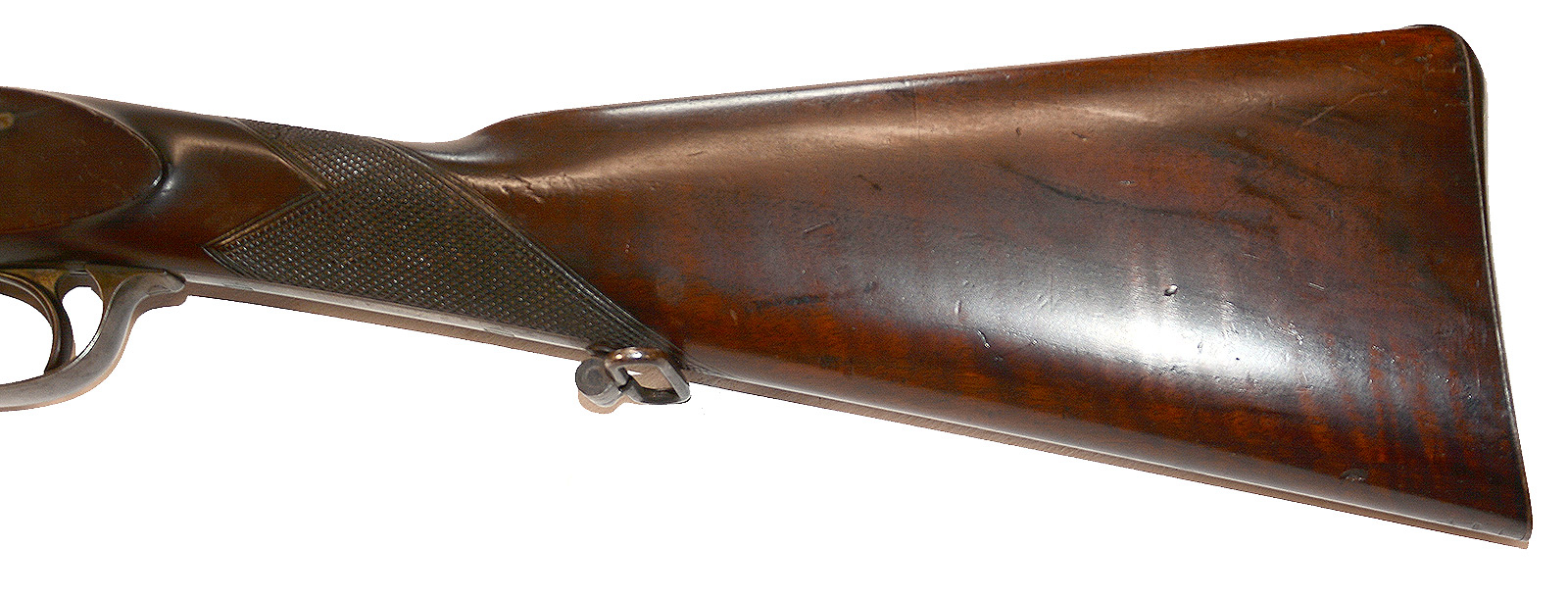
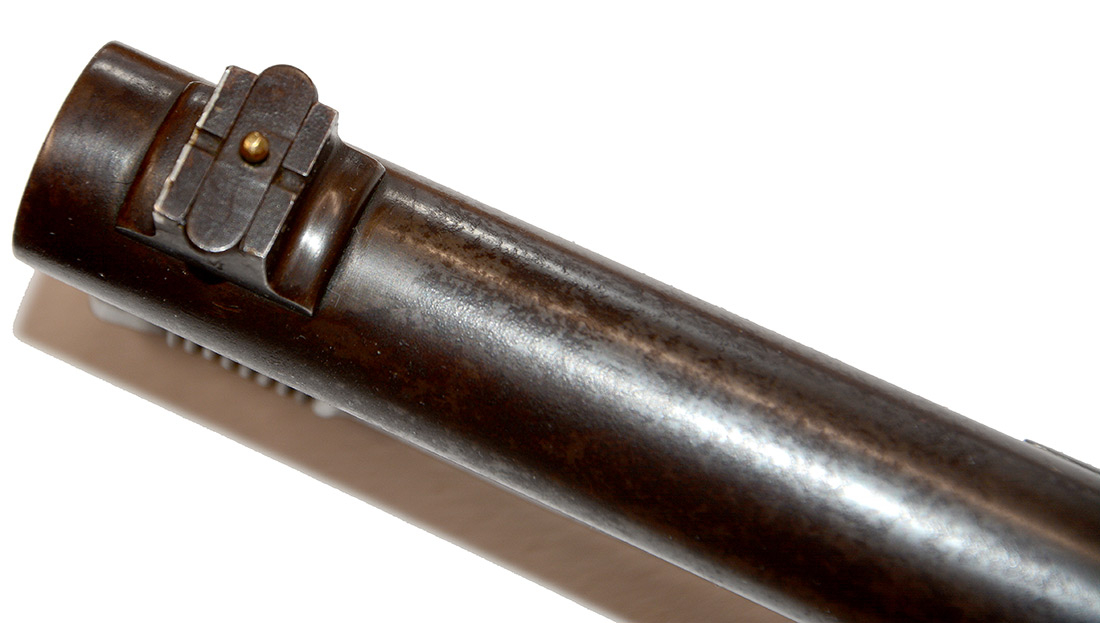
This Whitworth military match type rifle is in excellent overall condition with no signs of abuse or even minor flaws. The color casehardened lock of the rifle is marked with a stylized tufted crown over "W" to the rear of the hammer, and "WHITWORTH" on the lock forward of the hammer. The lock also incorporates a sliding safety forward of the hammer. About 70% case hardened color remains on the lock. The rifle has a 33” blued barrel which has 70% original finish remaining; it is secured to the stock with three Palmer Patent clamping barrel bands, and a screw through the tang of the breech plug. The top of the barrel, behind the rear sight is clearly engraved "WHITWORTH'S PATENT". The left breech bears the usual Birmingham commercial view and proof marks, which are separated by a pair of "52" gauge marks, indicated .451 caliber. The left breech also bears the Whitworth serial number "B476". This serial number and the lock markings are correct for early 1862 production. The rifle is equipped with an un-conventional, but original to this rifle, rear sight that has 3 separated folding leaves with graduations from 100 yards on the rear most to 150 yards on the middle to 200 yards on the forward most. At one time there was a wrist sight that gave the shooter abilities to sight beyond the 200 yards permitted on the barrel folding sight, but this has been removed leaving only the neatly cut impression where it once sat. The rifle is equipped with a front windage adjustable front post sight. The rifle has a 49” overall length, and the checkered, straight-gripped stock. The upper barrel band is equipped with a military style sling swivel, while the other swivel is found at the rear of the trigger guard plate. The stock is made of exceptional quality that has flowing sapwood streaks distributed through the grain. Inset at the right side of the butt is a 2-piece iron oval patchbox. The original, to this rifle, Pattern l853 Enfield style ramrod is maker marked "J. PRESTON" over "MANCHESTER".
There is probably no more famous variant of the Whitworth Rifle than the handful that were purchased by the Confederacy during the American Civil War. These CS government imports, perhaps 50 in total, were all “2nd Quality” military match rifles. Some of the later deliveries were equipped with 4-power Davidson telescopic sights, while earlier deliveries used Whitworth’s conventional rear open sights and “globe” front sights. The big question has always been were Whitworths other than the Confederate central government (CS Ordnance Bureau) 50 imported into the Confederacy and actually drawn by Snipers. The answer is assuredly yes! Speculators, patriotic individual citizens and even supports of the Cause abroad saw to it that these precision arms made it into the hands of the best shots in the Army. At least 2 of these which conform in appearance to the rifle we are selling here are known to this compiler (The compiler as early as 1972 had 2 articles in publication on the Whitworth Rifle). One of these is in the collection of the Atlanta Historical Society. It was formerly in the famous George Wray collection. The rifle's serial number is "B347" it was purchased from the descendants of a soldier in Dole's Georgia Brigade. Another formerly in Ray Ritchie's Texas Civil War Museum bears serial number "B300". It was carried by a Sniper in the 17th North Carolina Infantry. Not only is it well documented from the family but in the soldier's, service records in the National Archives it states that in September of 1864 this man, "Rejoined his company as a Sharpshooter". Both these rifles are not identical to one another, and but for minor differences, look identical to the Whitworth we are offering here. Additionally it should be mentioned that traditionally most "Southern Boys" grew up hunting using open iron sighted rifles; accordingly they would naturally prefer to use the same in combat and although the idea of a scoped rifle is exotic and tales of General Claiborne taking one of his last worldly glimpses through a scope at Franklin make for a great story the fact is the scope probably did not improve the shooting of a "dead eyed" Rebel that much. Remember Tennessee boy Alvin York did all his Medal of Honor winning shooting in 1918 using the open sights of a 1903 Springfield. So, you can wait for one of the 2nd Quality 50 (in the equivalent condition) and pay $100,000+ or you can acquire our offering for $11,500. [pe][ph:L]
~~~~~~~~~~~~~~~~~~~~~~~~~~~~~~~~~~~
THIS ITEM, AS WITH ALL OTHER ITEMS AVAILABLE ON OUR WEB SITE,
MAY BE PURCHASED THROUGH OUR LAYAWAY PROGRAM.
CLICK HERE FOR OUR POLICIES AND TERMS.
THANK YOU!
Inquire About ONE OF THE FAMOUS HEXAGONAL BORE WHITWORTH RIFLES
Most Popular
Historical Firearms Stolen From The National Civil War Museum In Harrisburg, Pa »
Theft From Gravesite Of Gen. John Reynolds »
Selection Of Unframed Prints By Don Troiani »
Fine Condition Brass Infantry Bugle Insignia »
Rare Identified 65Th Ny Sergeant’s Jacket, With Manscript Material: 1St U.s. Chasseurs »
featured item
NON-REGULATION SILVER GRIPPED PRESENTATION SWORD BY SCHUYLER, HARTLEY & GRAHAM - LT. JAMES MOFFAT, 16TH NEW YORK CAVALRY
This presentation sword has very impressive deeply cast and chased mounts and silver gripped hilt. Schuyler, Hartley and Graham assembled and sold a wide variety of swords that were often highly embellished and upgraded from regulation patterns, to… (870-653). Learn More »
site search