


site search
online catalog
FINE ATTIC CONDITION CONFEDERATE "ANCHOR" over "S" TOWER ENFIELD RIFLE-MUSKET

Hover to zoom

$3,895.00
Quantity Available: 1
Item Code: 1284-62
Shipping: Determined by Method & Location of buyer
To Order:
Call 717-334-0347,
Fax 717-334-5016, or E-mail
The British made Pattern 1853 “Enfield” rifle-musket was the second most used infantry long arm of the American Civil War. It was the first “small bore” rifled long arm to see general issue to all British military personnel, effectively making every soldier a “rifleman” and the smoothbore musket obsolete. The .577 caliber rifled bore was a significant ballistic development. The Pattern 1853 would significantly influence the design of the new American Model 1855 Rifle-Musket and all arms production going forward. Approaching a million Enfields including rifles, rifle-muskets, musketoons and carbines saw use in the American Civil War. Today, it is difficult to determine if a specific Enfield was exported from Britain to the North or South but this 1863 dated Enfield is stamped with the successor to the ubiquitous and highly sought "JS Anchor" the "Anchor S" and is therefore only a Confederate import.
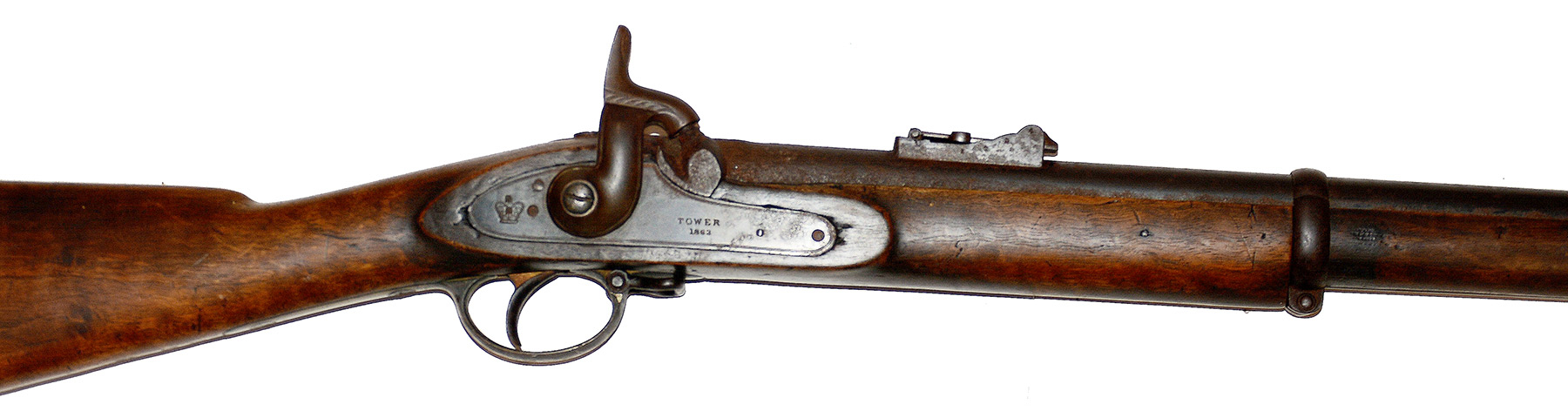
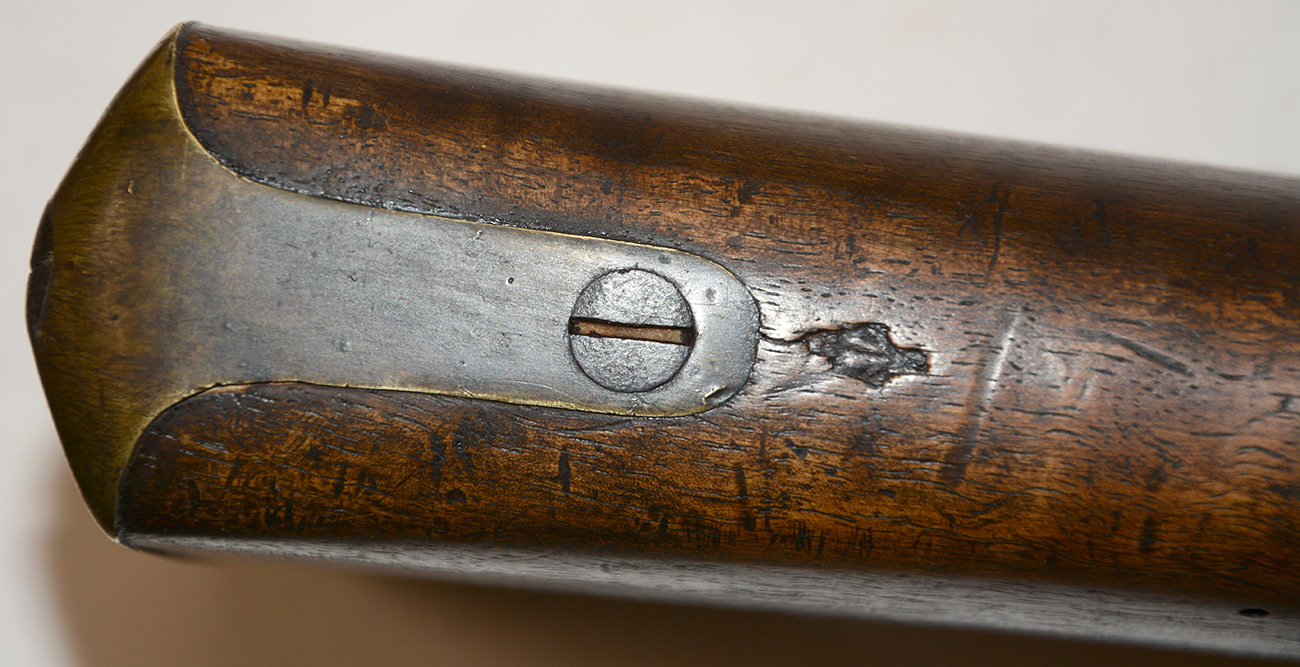
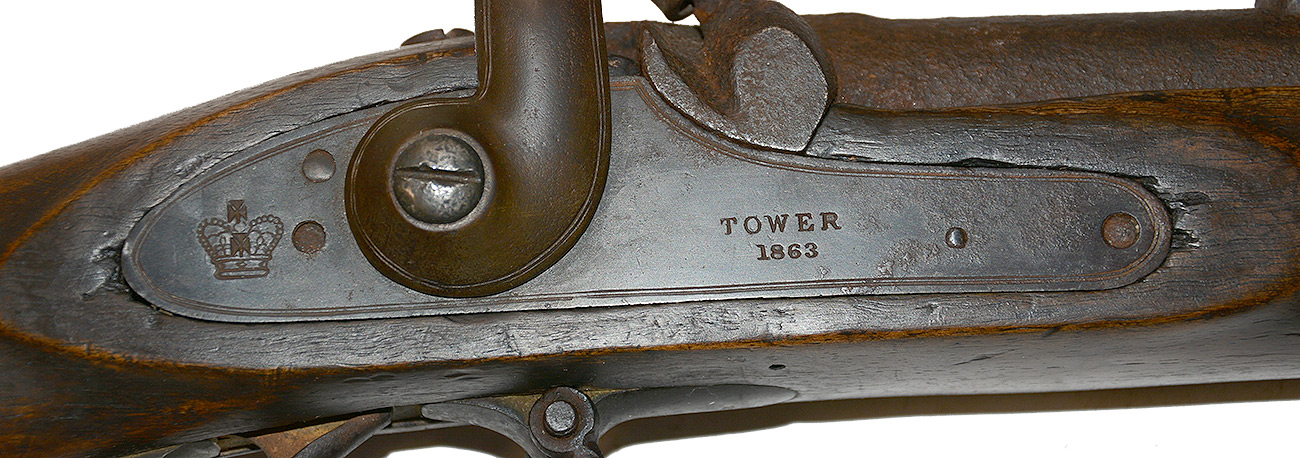
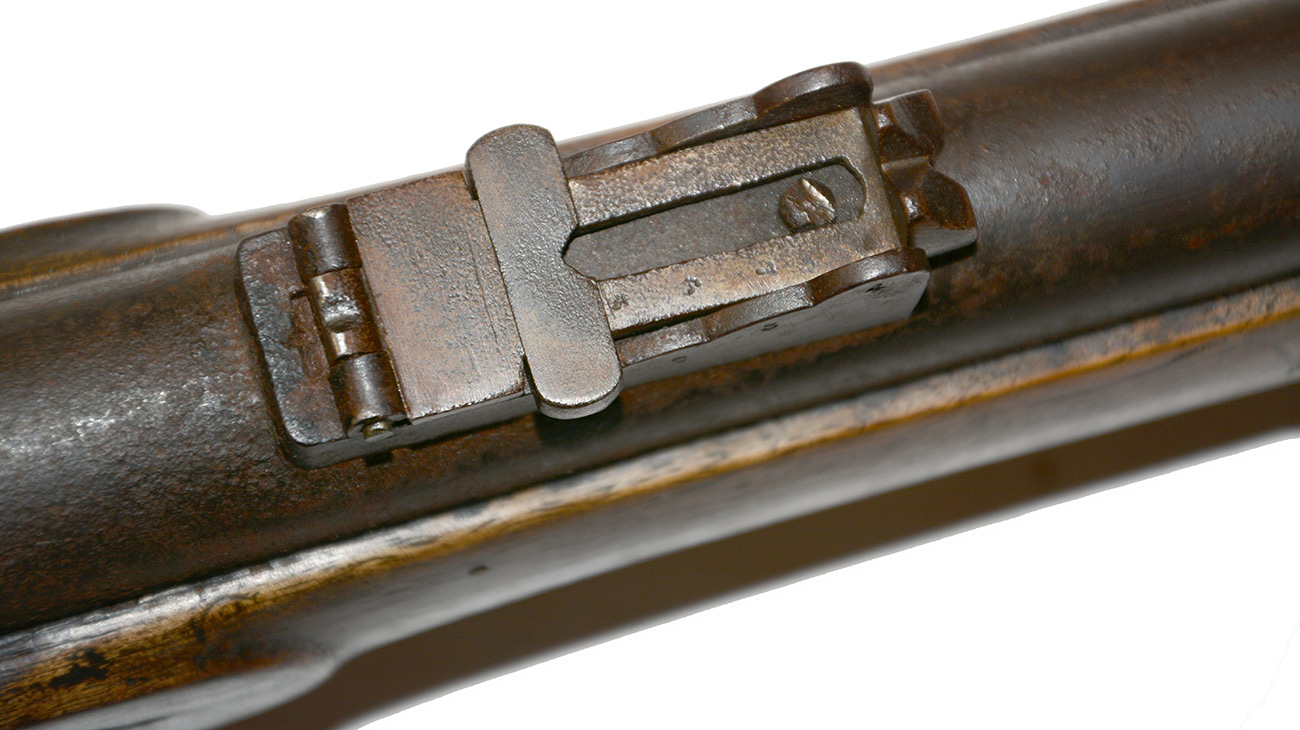
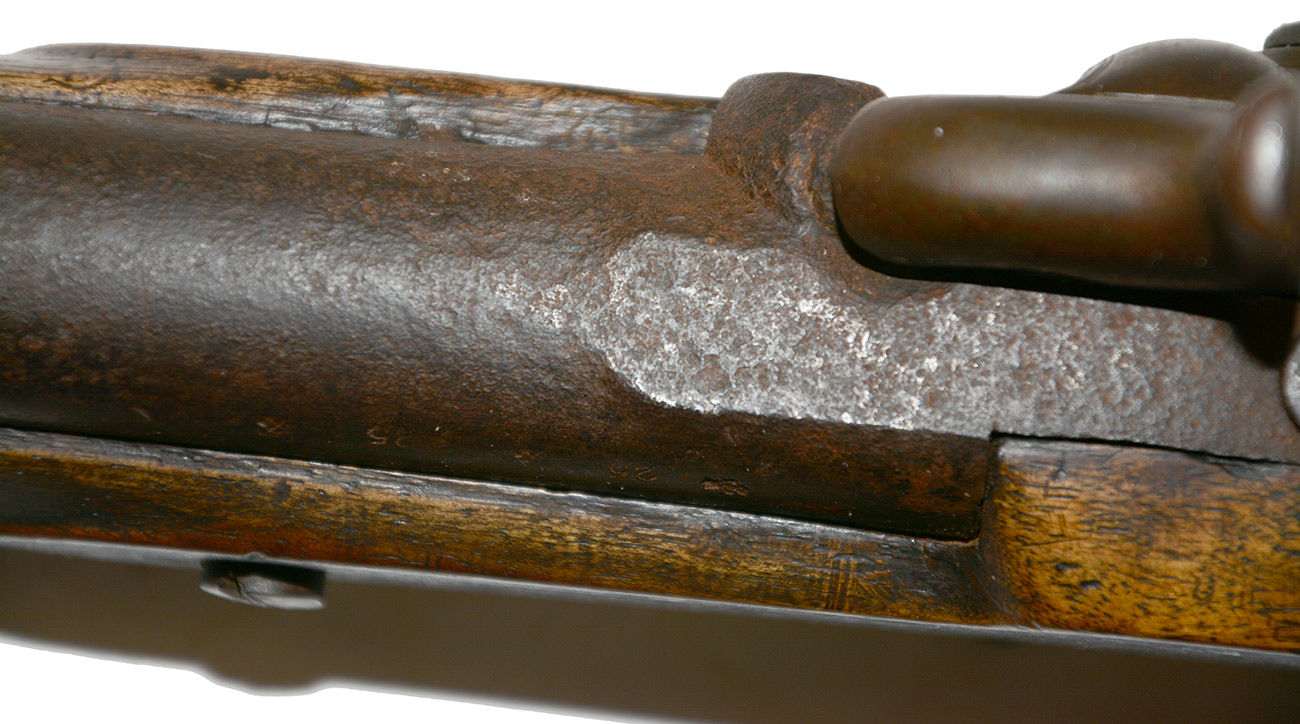
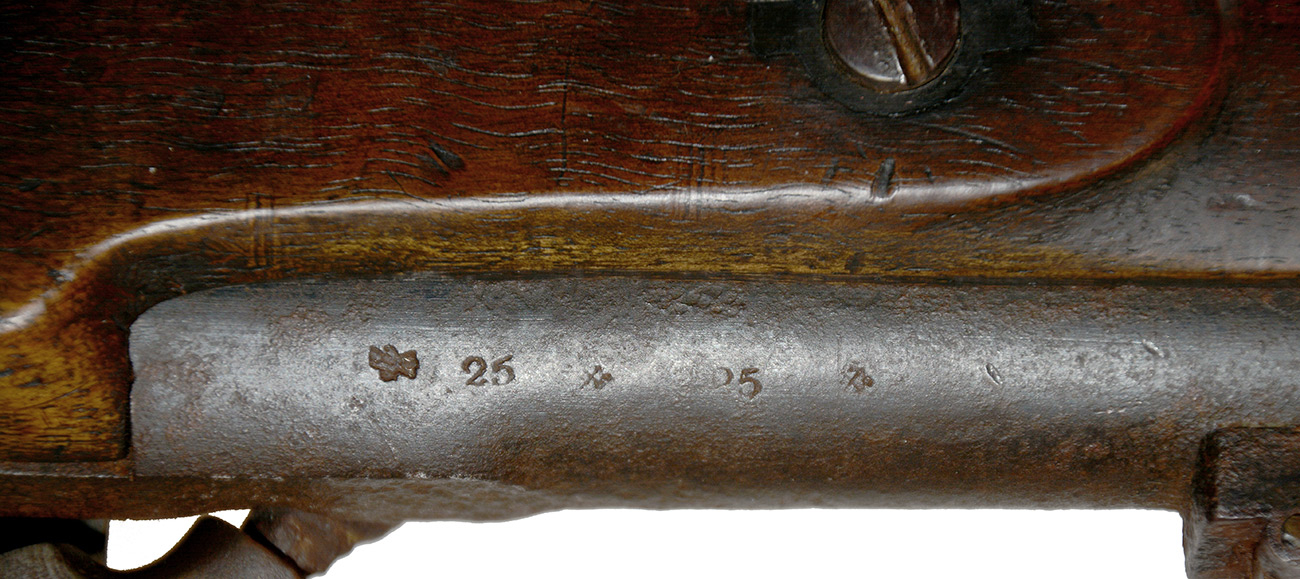
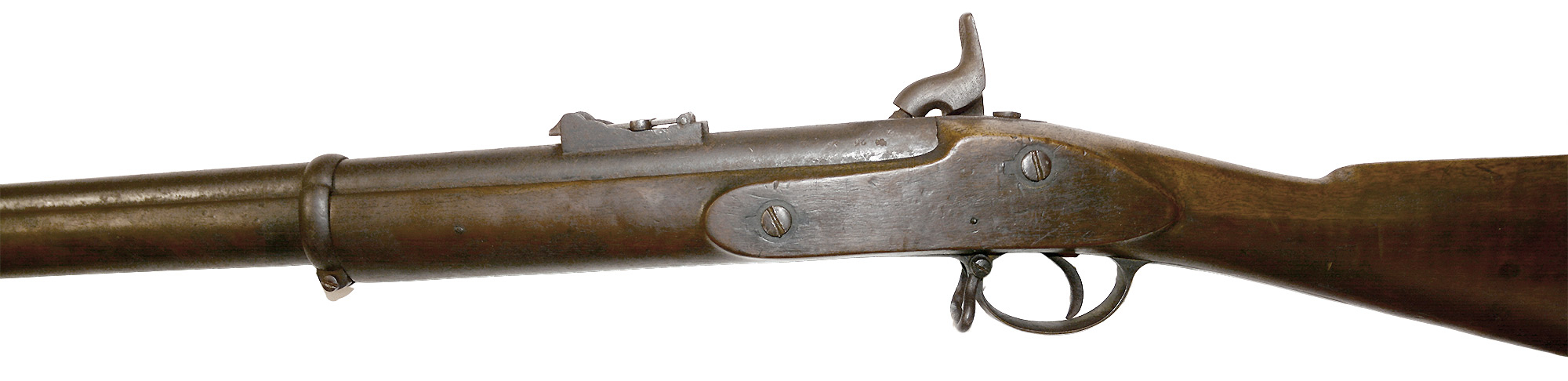
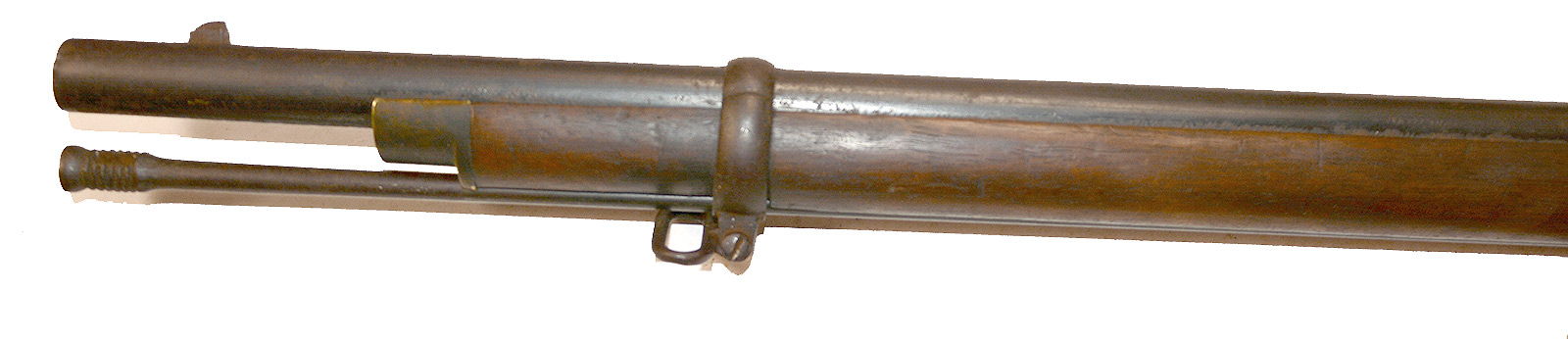
This British Pattern 1853 Enfield rifle-musket is dated "1863" over "TOWER" on the lock plate. At the rear of the lock plate is the Queen's crown. The gun is devoid of any British military inspection markings and is a typical Birmingham-made contract gun for commercial sale that was destined for export from Great Britain and of the type shipped only to America. This weapon was made by T. Turner, and his name appears stamped on "lock (inside), stock (rear underside) and barrel (underneath)". The mechanics are perfect. The 39-inch barrel is Birmingham proofed and marked "25" for bore or .577 caliber and has rich brown patination with pitting at the breech area caused mostly by heavy firing. The 3-barrel bands, have this same patination. The bore of the gun is weak. The brass butt plate and nose cap are in place. The gun has its long-range rear elevating sight. The combination front sight and bayonet lug is present. The gun has both original sling swivels. The original ramrod is in the channel under the barrel.
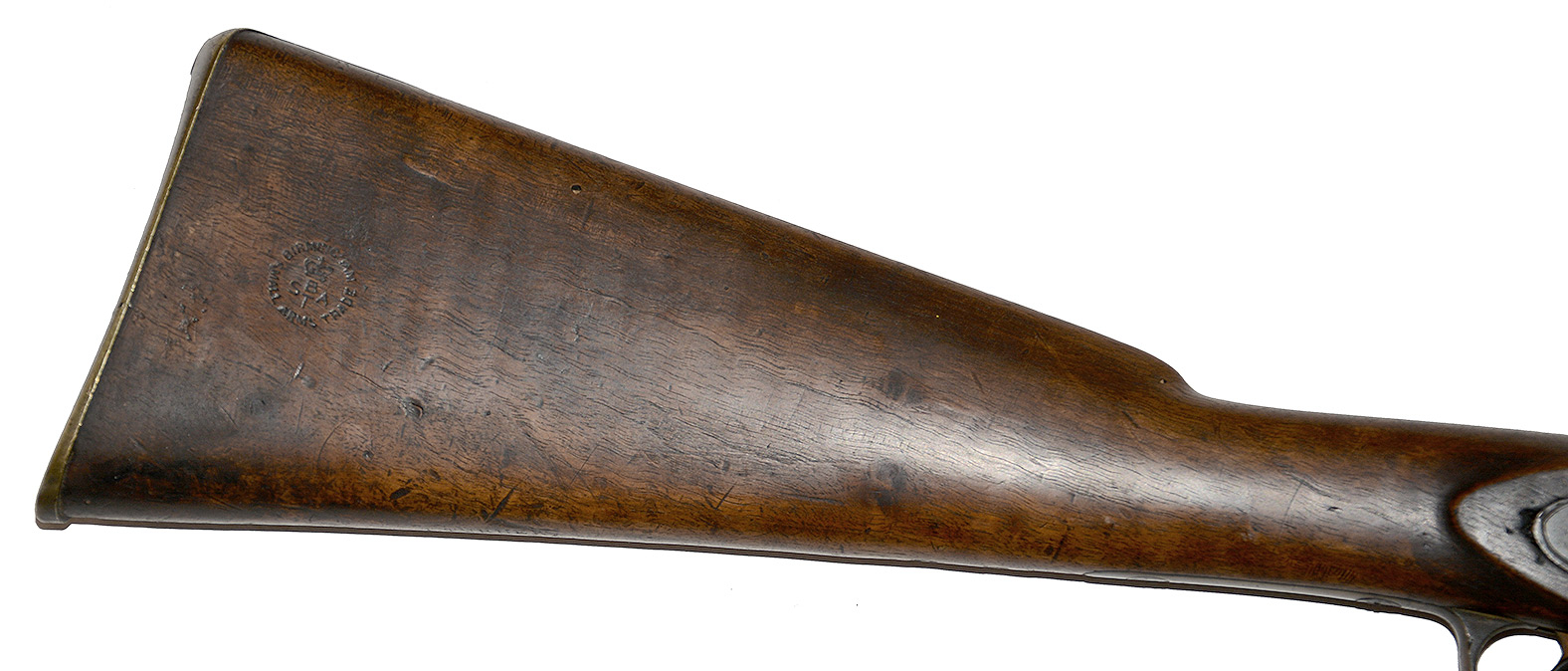
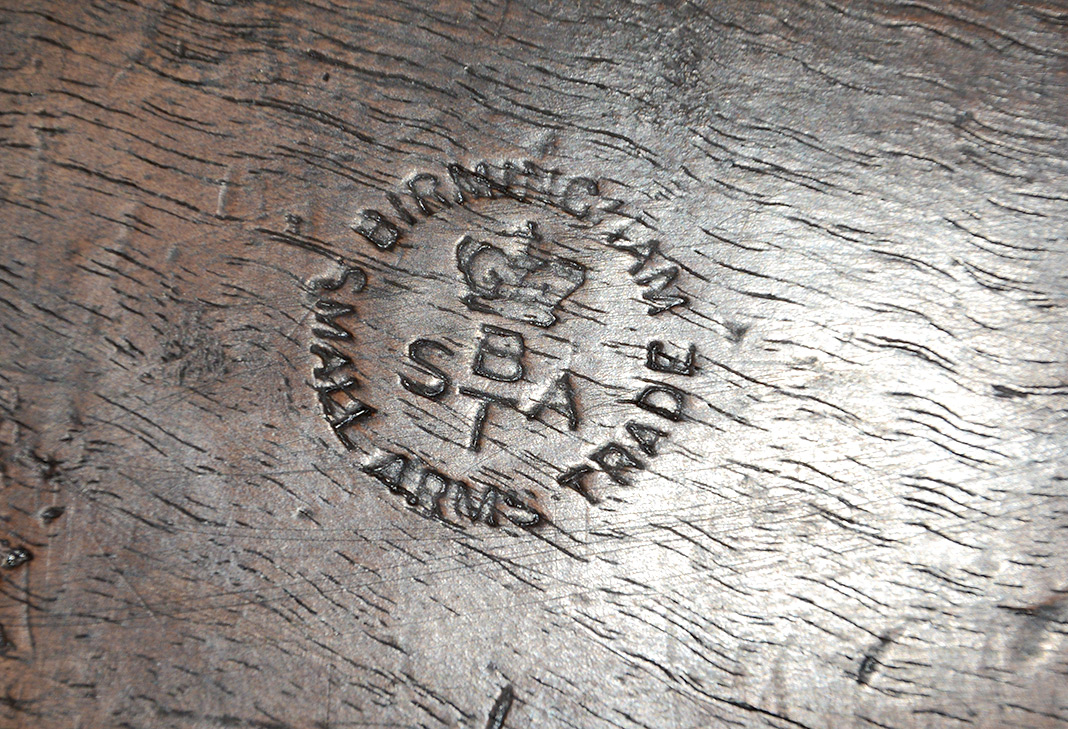
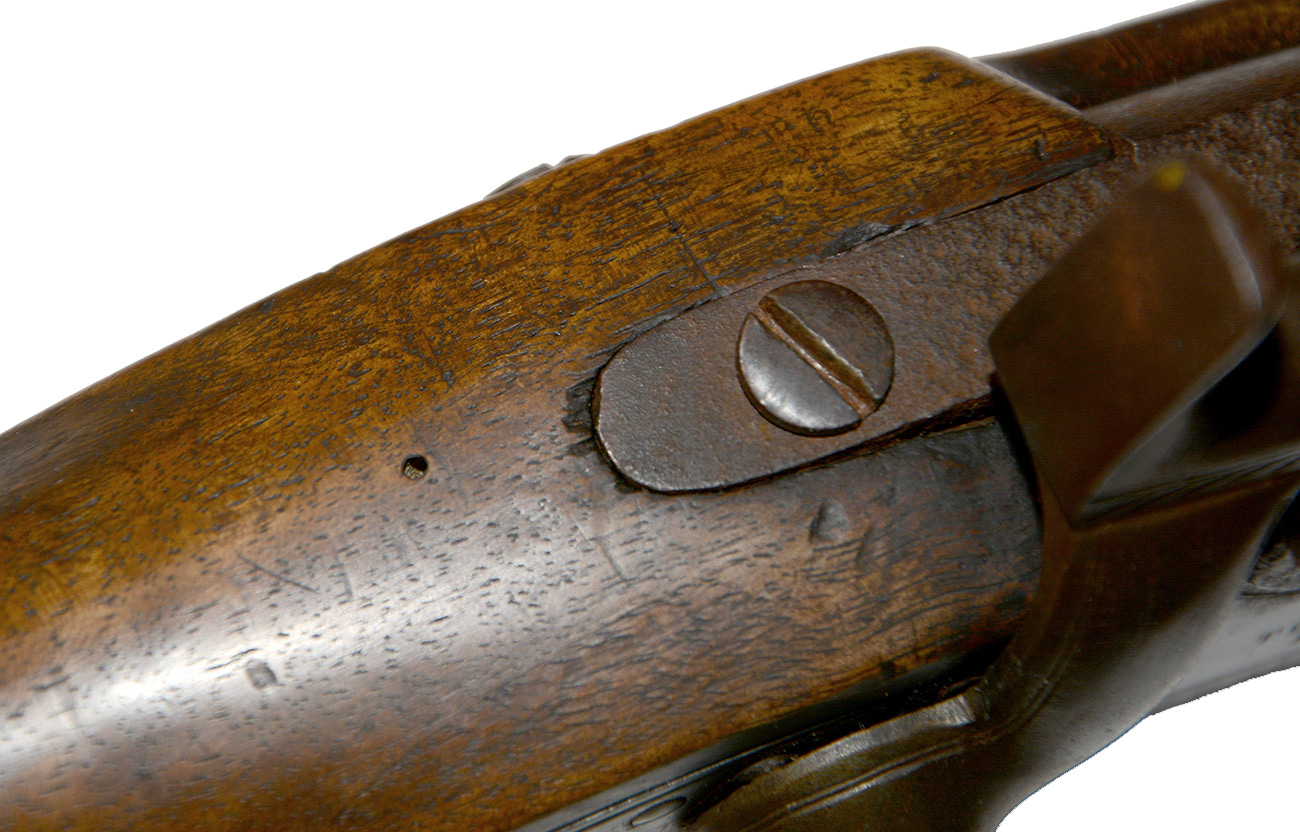
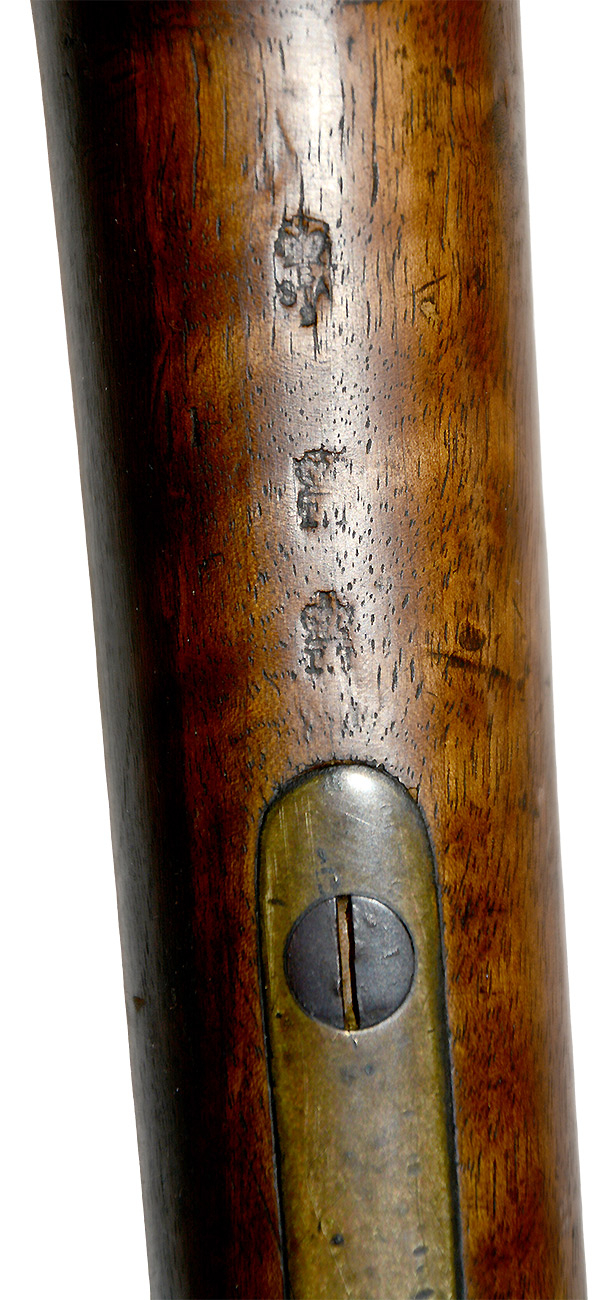
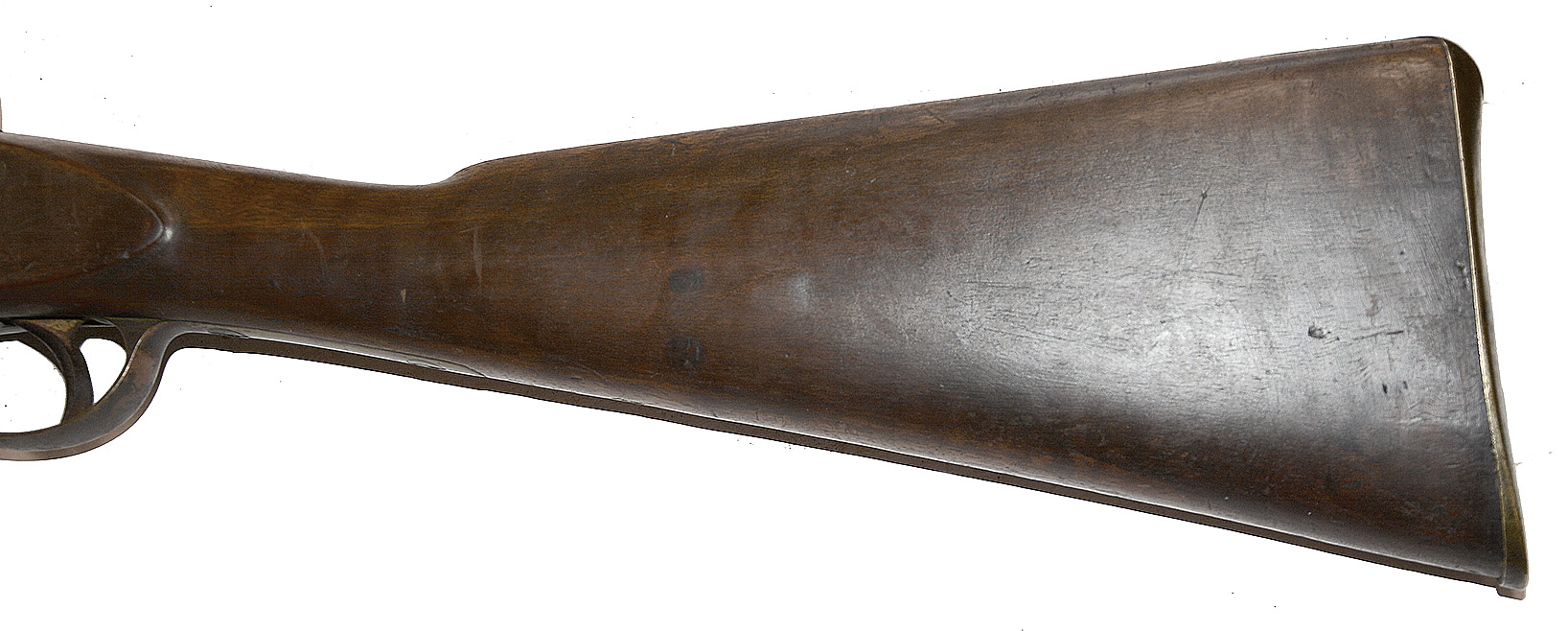
The stock is full-length, solid and free of any breaks or repairs. The stock has a dark brown to tan tone. The wood does show some minor scattered bumps, scratches and minor dents. All stock stampings are deep and readable. The stock has never been sanded. Ahead of the brass butt plate is a deep "Anchor" over "S". This is the Confederate inspector's mark that soon followed the JS Anchor. Mr. Tim Prince of College Hill Arsenal states: " At this time, the inspection mark reverts to master viewer John Southgate’s initial “S” and the Birmingham assay office “anchor” mark. The new mark... appears as a single strike on most P-1853s it is encountered on, on top of the stock comb, in front of the butt plate tang. The guns are inevitably dated 1863 or 1864...".
This is a gun that was used hard by a Confederate and then stored away; the result is a weapon with a wonderful patina that has 100% original components. [pe][ph:L]
DISCLAIMER: All firearms are sold as collector's items only - we do not accept responsibility as to the shooting safety or reliability of any antique firearm. All firearms are described as accurately as possible, given the restraints of a catalog listing length. We want satisfied customers & often "under" describe the weapons. Any city or state regulations regarding owning antique firearms are the responsibility of the purchaser. All firearms are "mechanically perfect" unless noted, but again, are NOT warranted as safe to fire!
~~~~~~~~~~~~~~~~~~~~~~~~~~~~~~~~~~~
THIS ITEM, AS WITH ALL OTHER ITEMS AVAILABLE ON OUR WEB SITE,
MAY BE PURCHASED THROUGH OUR LAYAWAY PROGRAM.
CLICK HERE FOR OUR POLICIES AND TERMS.
THANK YOU!
Inquire About FINE ATTIC CONDITION CONFEDERATE "ANCHOR" over "S" TOWER ENFIELD RIFLE-MUSKET
Most Popular
Historical Firearms Stolen From The National Civil War Museum In Harrisburg, Pa »
Theft From Gravesite Of Gen. John Reynolds »
Selection Of Unframed Prints By Don Troiani »
Fine Condition Brass Infantry Bugle Insignia »
Rare Identified 65Th Ny Sergeant’s Jacket, With Manscript Material: 1St U.s. Chasseurs »
featured item
A RARE US MARINE CORPS SERGEANT'S SABER
This scarce saber was manufactured by F.W. Widmann its designer. Andrew Mowbray, in his book THE AMERICAN EAGLE-POMMEL SWORD shows a specimen as figure 51A page 195. F.W. Widmann's company was acquired by Horstmann in 1848. This particular sword… (1179-250). Learn More »
site search