


site search
online catalog
COLT ALTERED WHITNEY US MODEL 1841 RIFLE

Hover to zoom

$2,295.00
Quantity Available: 1
Item Code: 2026-881
Shipping: Determined by Method & Location of buyer
To Order:
Call 717-334-0347,
Fax 717-334-5016, or E-mail
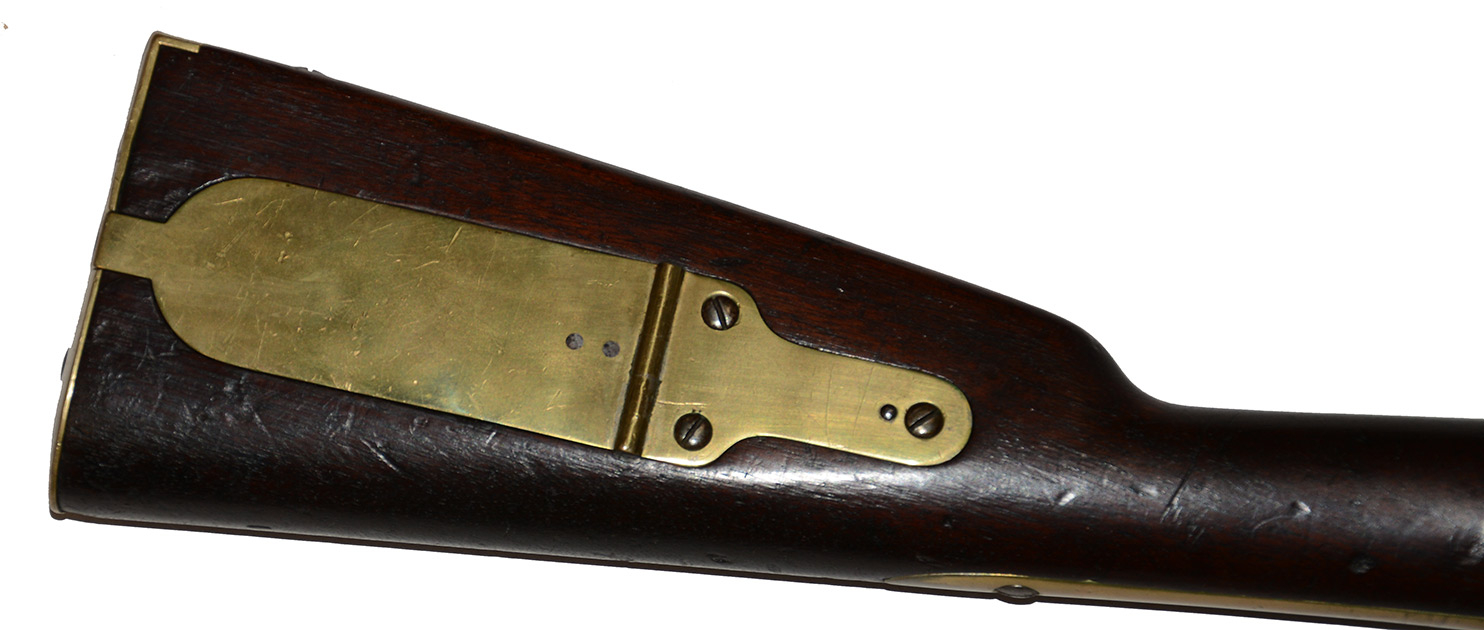
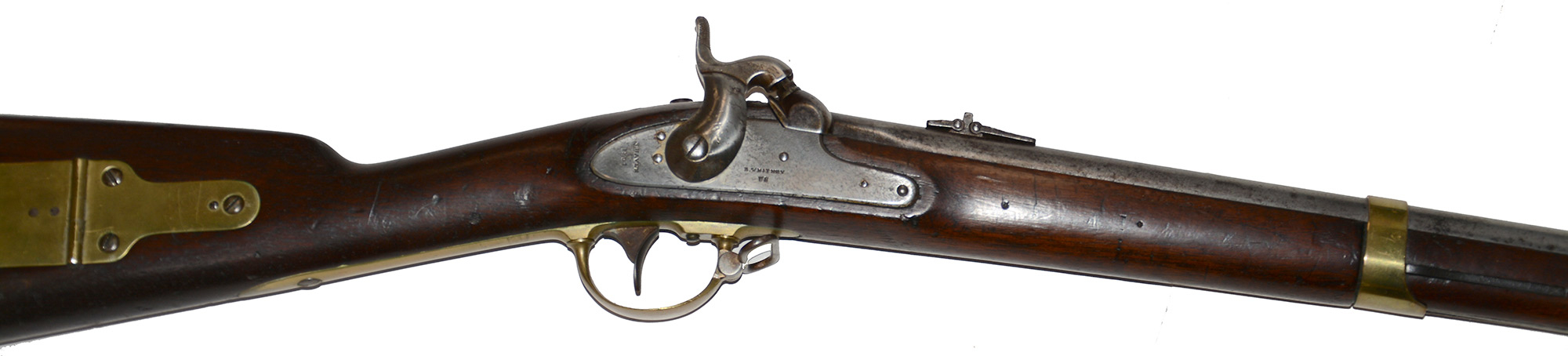
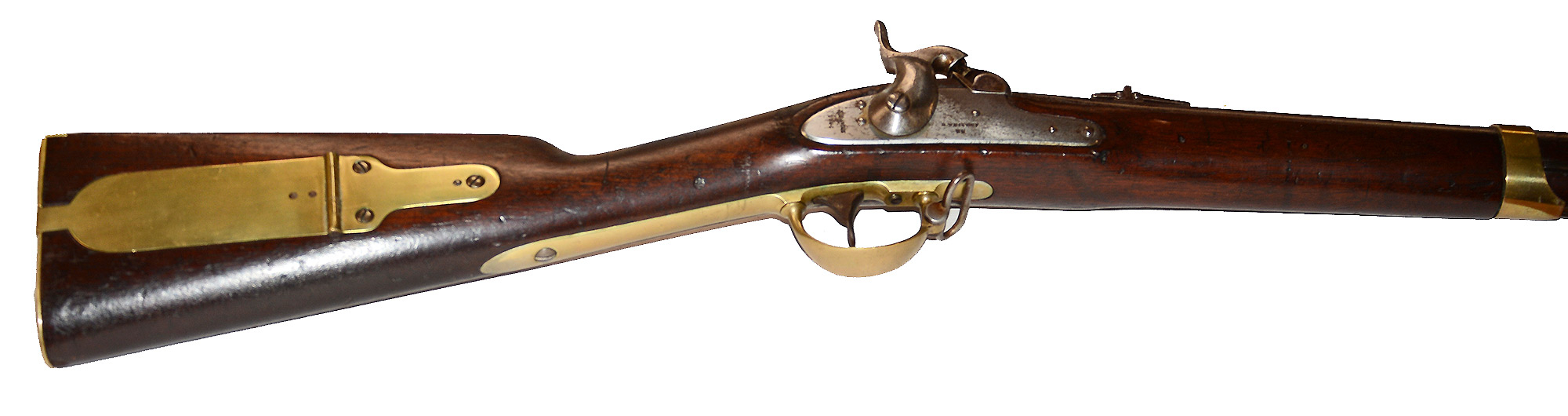
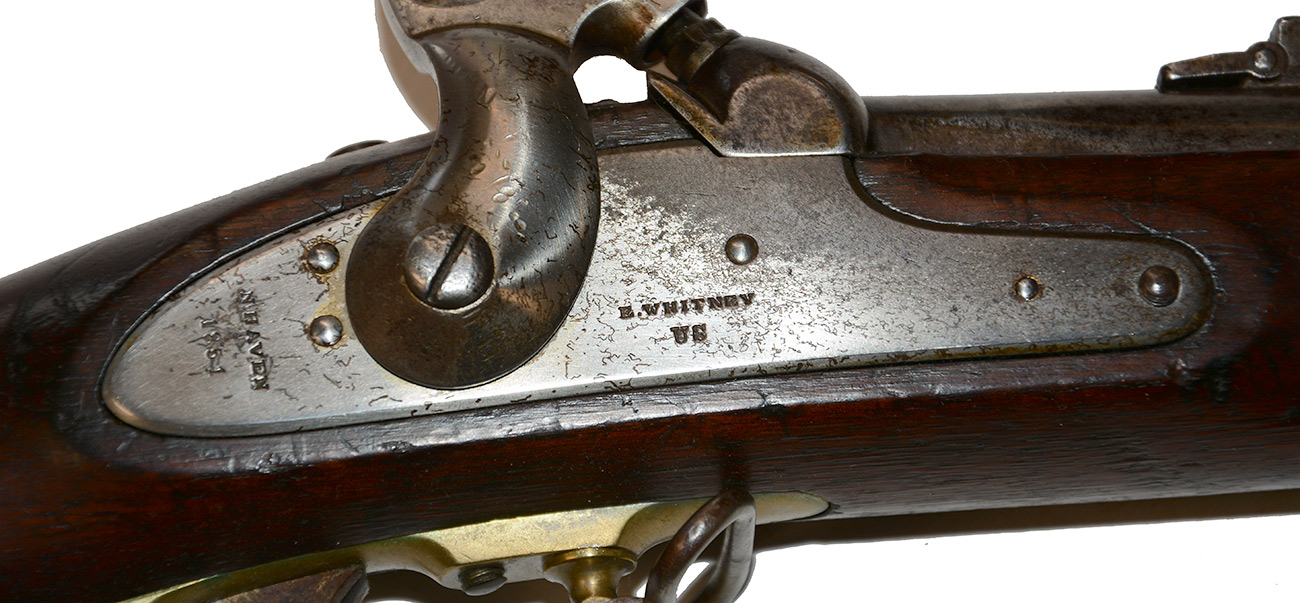
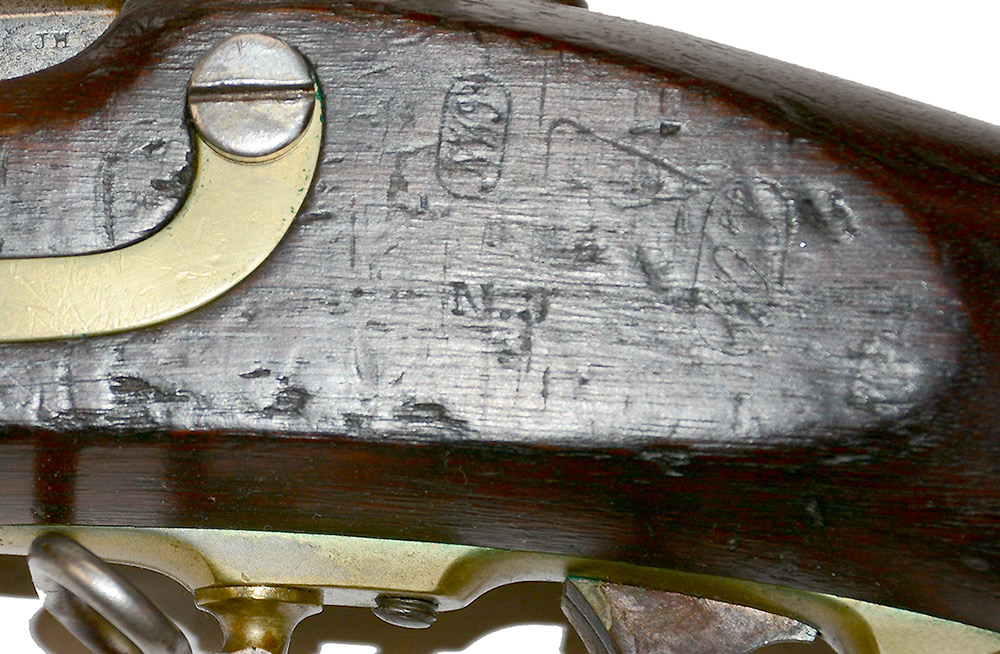
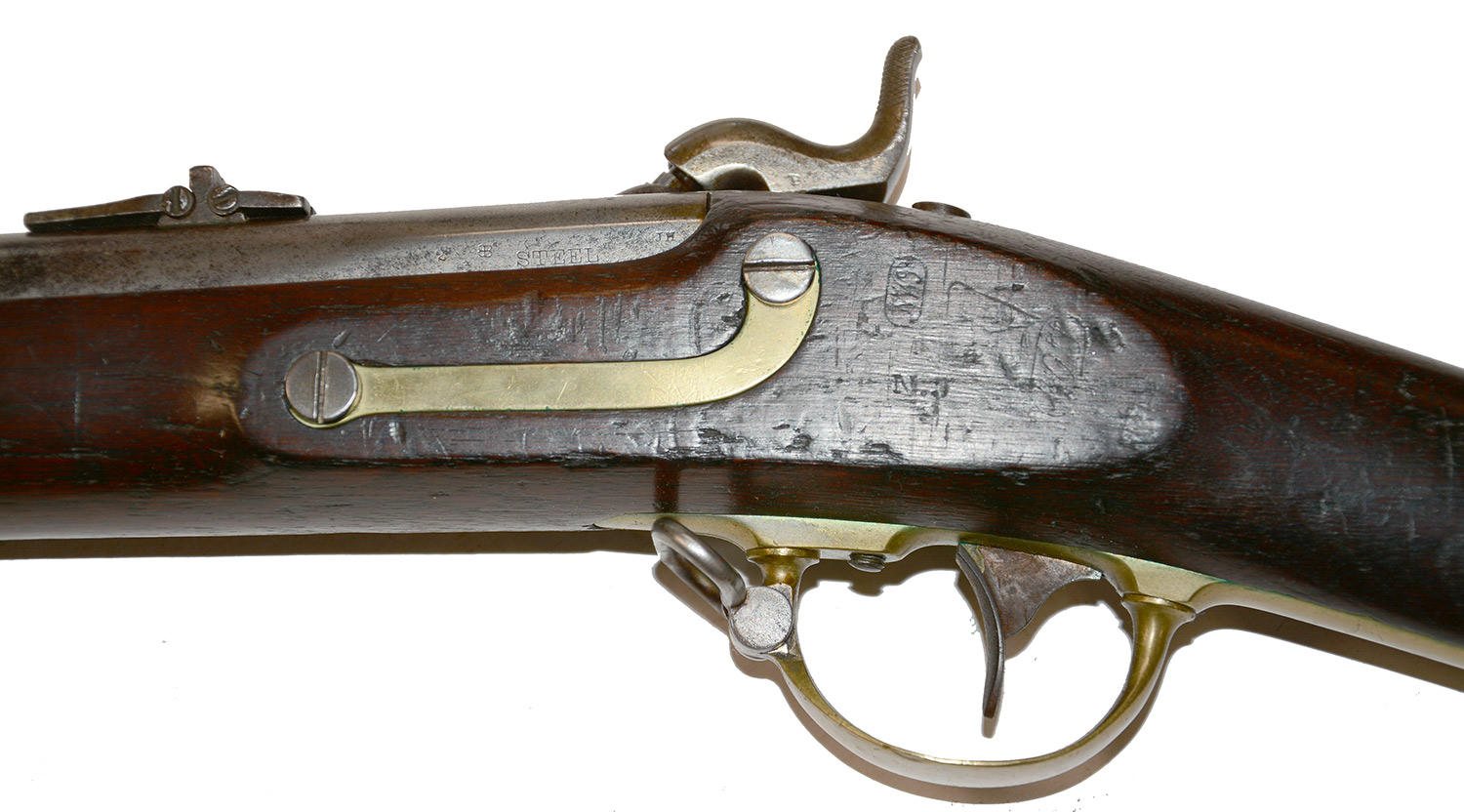
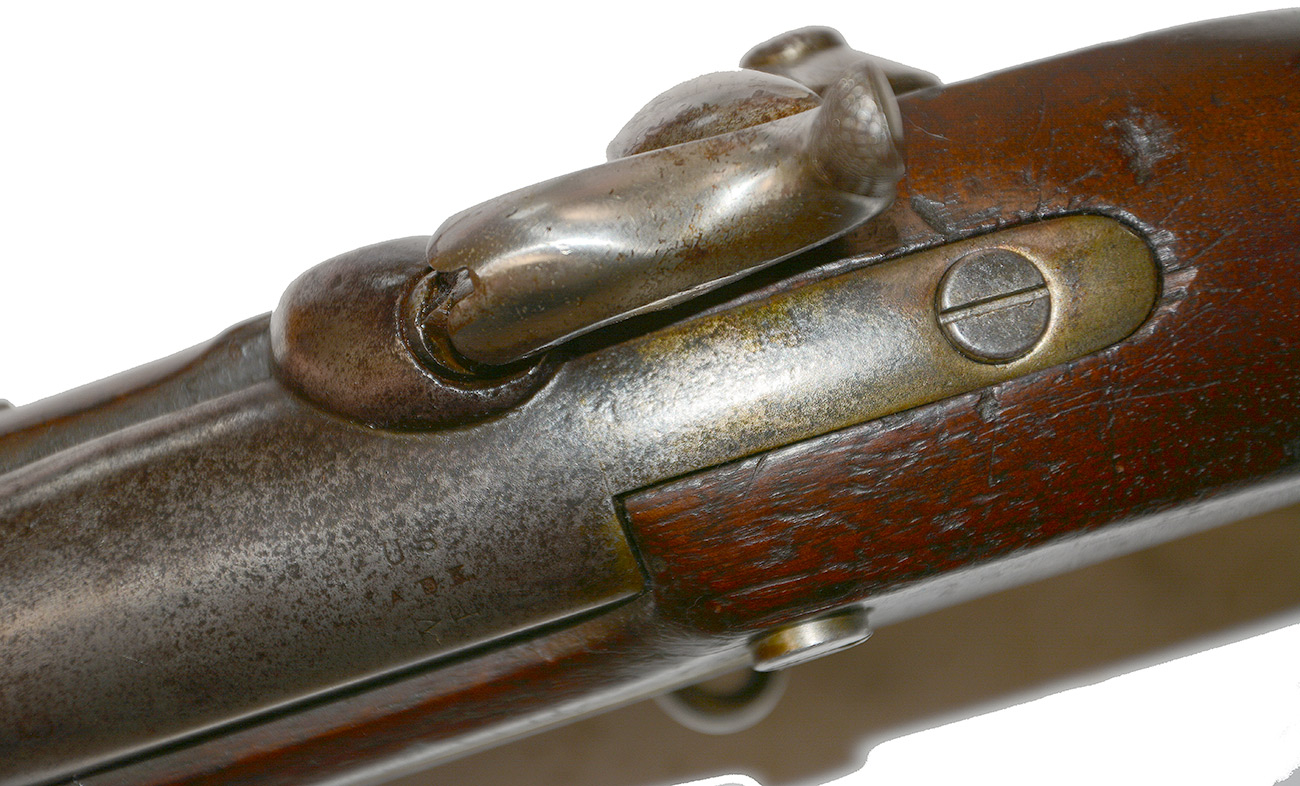
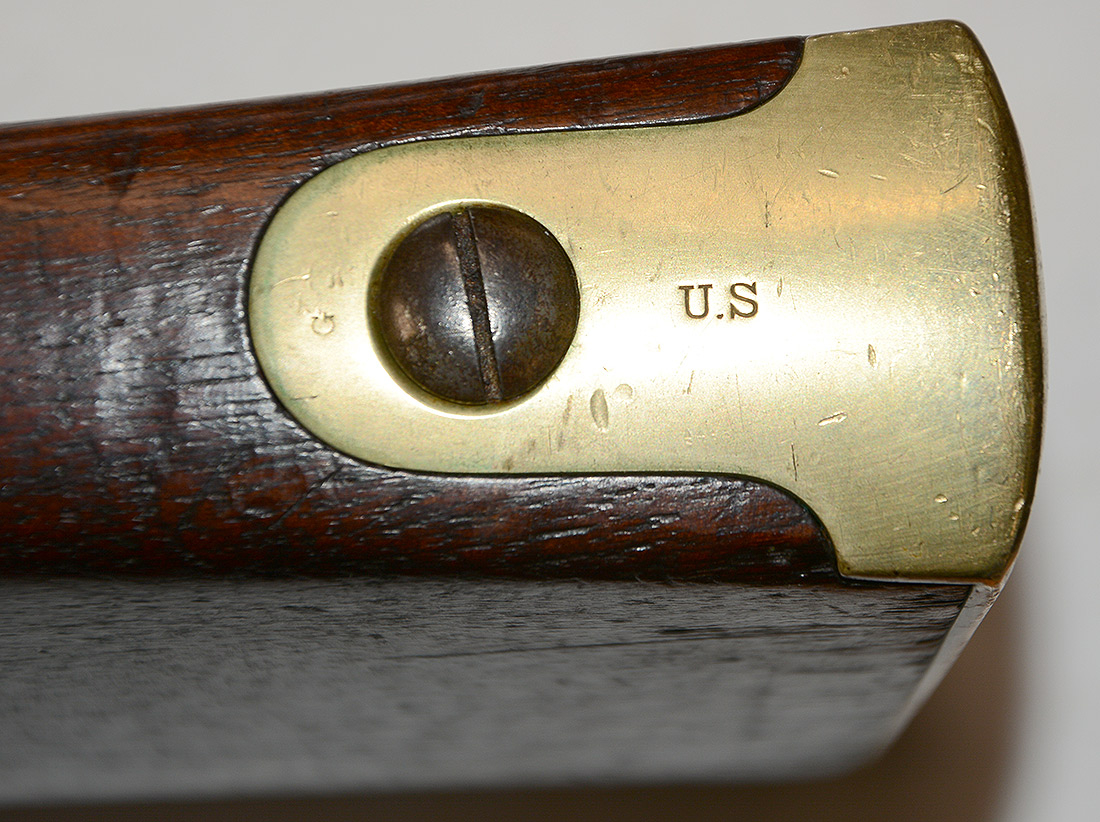
This US Model 1841 Rifle, the iconic “Mississippi Rifle,” shows use, but rates very good for condition, has strong eye-appeal, and is an interesting study piece on a number of counts, particularly as a Civil War alteration by Colt under contract with the US government to bring it up to par with the US 1855 series of arms. The counterpane shows an “NJ” stamp in the wood, indicating it was in New Jersey state hands at some point in its history. The gun has clearly been together forever. The lock is clearly marked by Whitney and dated 1851. The barrel is also clearly by Whitney, but dated 1854, indicating a mismatch while in state hands or, more likely, while undergoing alteration by Colt in 1861-1862.
Only five US arms makers undertook manufacture of Model 1841 rifles by contract to the US government, mainly because of the low, fixed contract price set by the government. Eli Whitney, Jr., was one of the two earliest contractors for it, taking a contract on October 22, 1842, the first of three under which he delivered 27,600 rifles into 1855, more than other contractor and even more than were produced at Harpers Ferry. He later said he spent thirteen years of his life on the rifle and never “really” made a profit. That may have been an exaggeration, but it explains his later concentration on simple, “good and serviceable” arms that avoided stringent inspection subject to “government gauges” and offered clearer profit margins.
The rifle also shows Civil War alterations characteristic of those done by Colt under contract with the US government by which the company altered 10,411 (or another count 10,462) US M1841 rifles from November 1861 through June 1862. These rifles came from various sources and included M1841 rifles made by Harpers Ferry, by contractors Robbins & Lawrence, Remington and, as here, by Whitney. As Moller remarks, the US M1841 was, “the basis of the widest variety of alterations of any arm in the US military service,” which makes it a varied and deep collecting field of its own. Regardless of who did the alterations, all aimed at bringing the M1841 up to par with the 1855 series of arms, often by adapting it to take a bayonet as well as the more important task of upgrading it for longer range use with elongated ball cartridges, i.e. the “Minie Ball,” installing one of several new pattern long-range rear sights in place of the original simple, fixed, V-notch block rear sight, and often increasing its bore from .54 to the new standard .58 caliber.
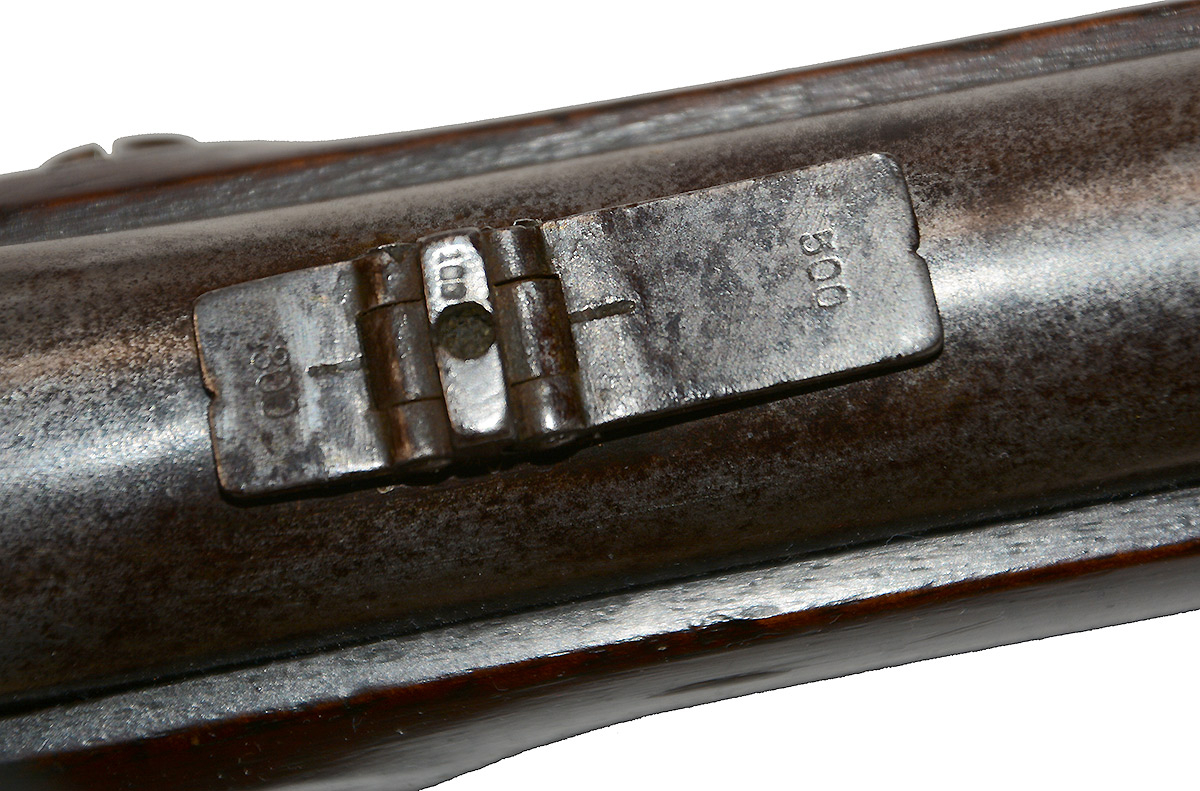
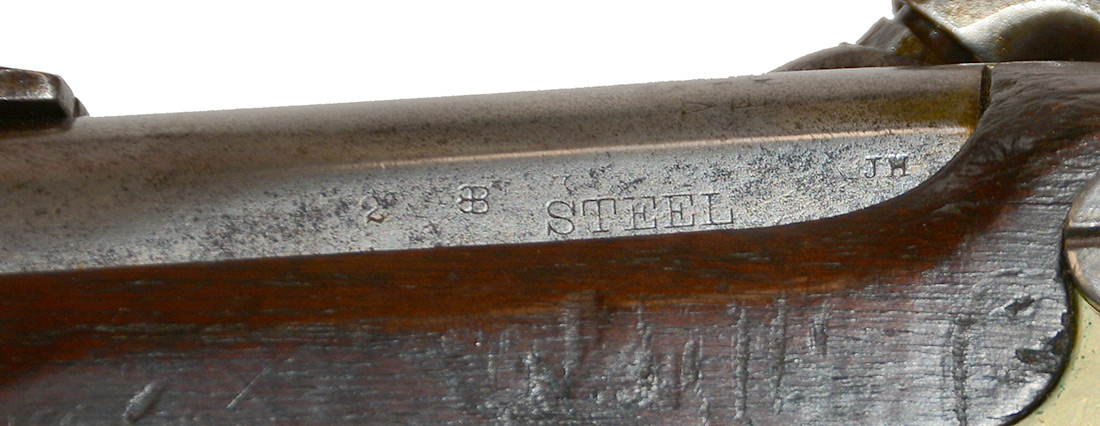
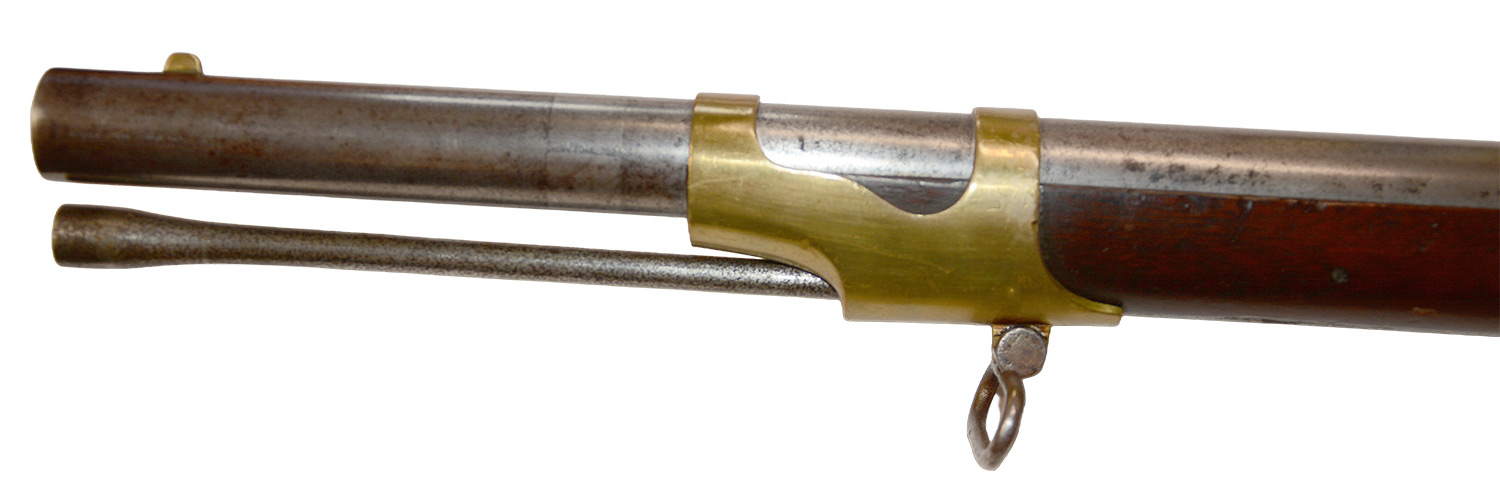
Colt pretty much did it all. He adapted the M1841 Rifles coming into his hands for use with a sword bayonet by simply adding a clamping band with bayonet stud behind the muzzle. That clamping band was removed from this rifle at some point, but has left a slightly lighter colored narrow band in the correct spot around the circumference of the barrel 3 inches to rear of the muzzle. The bore was also bored out to .58 caliber and rifled with 7 grooves, again typical of Colt, and is fitted with an all-iron tulip-head ramrod with concave tip for use with the pointed elongated bullets- Moller notes that 1,000 of these rods were delivered to Colt for use with his alterations. Lastly, Colt installed a new rear sight that was the same as that on the Colt M1855 pistol carbine- a central V-notch fixed 100-yard sight, with a rear-folding 300-yard leaf, and a second, forward-folding 500-yard leaf. We do not see a Colt alteration serial number on the barrel, though we have not removed it, but there is a very clear “2c” or “2o” on left sideflat along with a set of initials that appear to be a conjoined “SB,” that position being noted by Moller as the spot for such Colt altered barrel numbering and re-inspection marks. (See Moller, V.2, 156ff. on these points.)
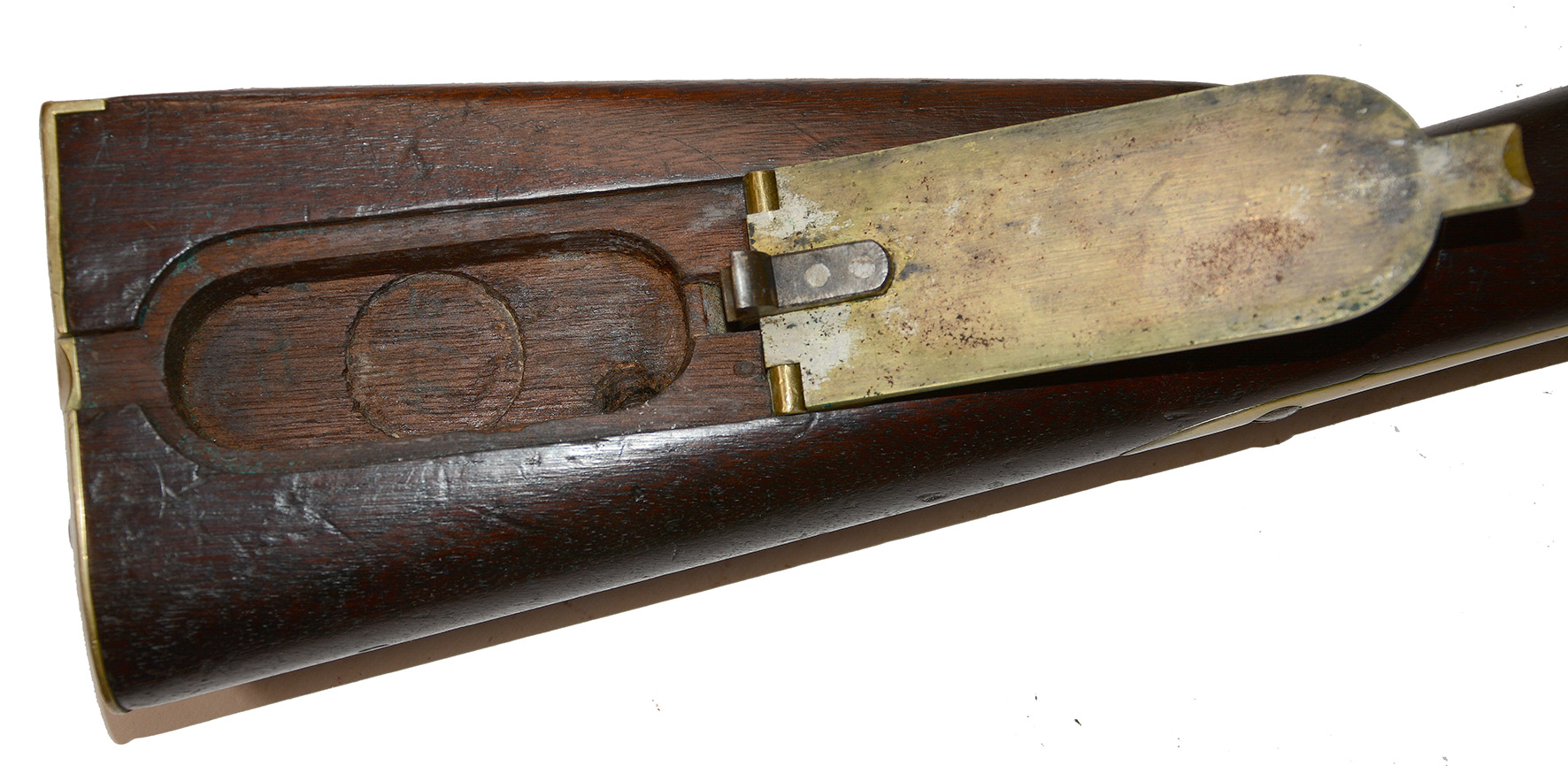
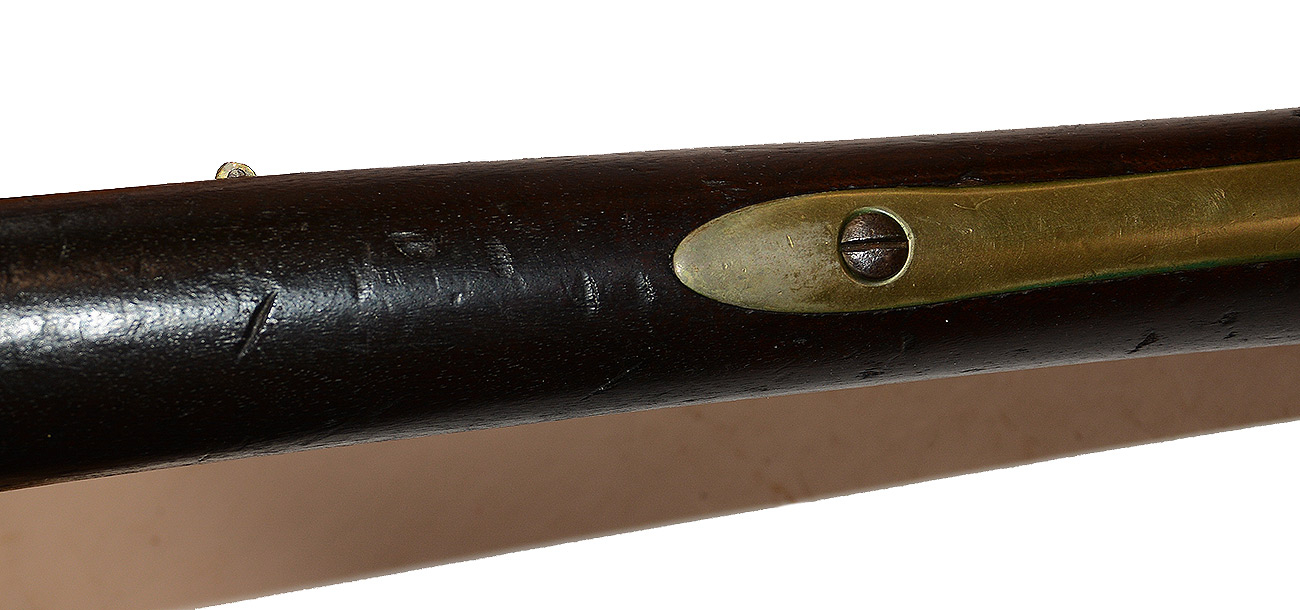
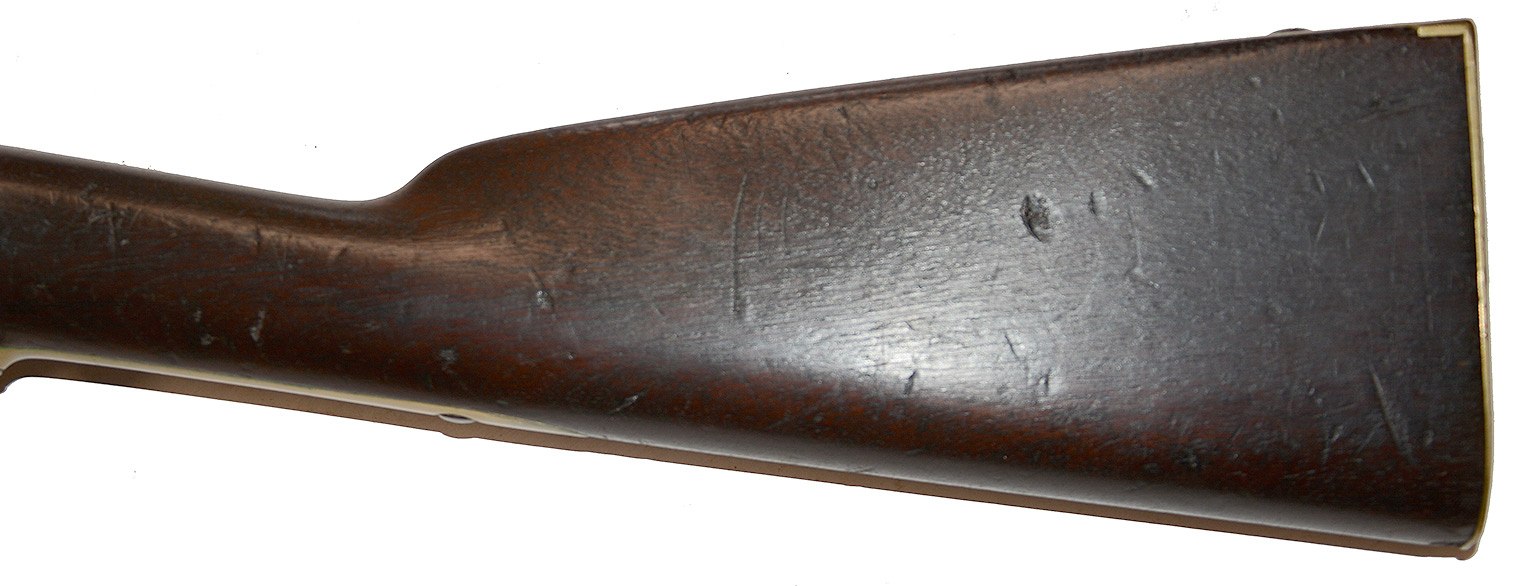
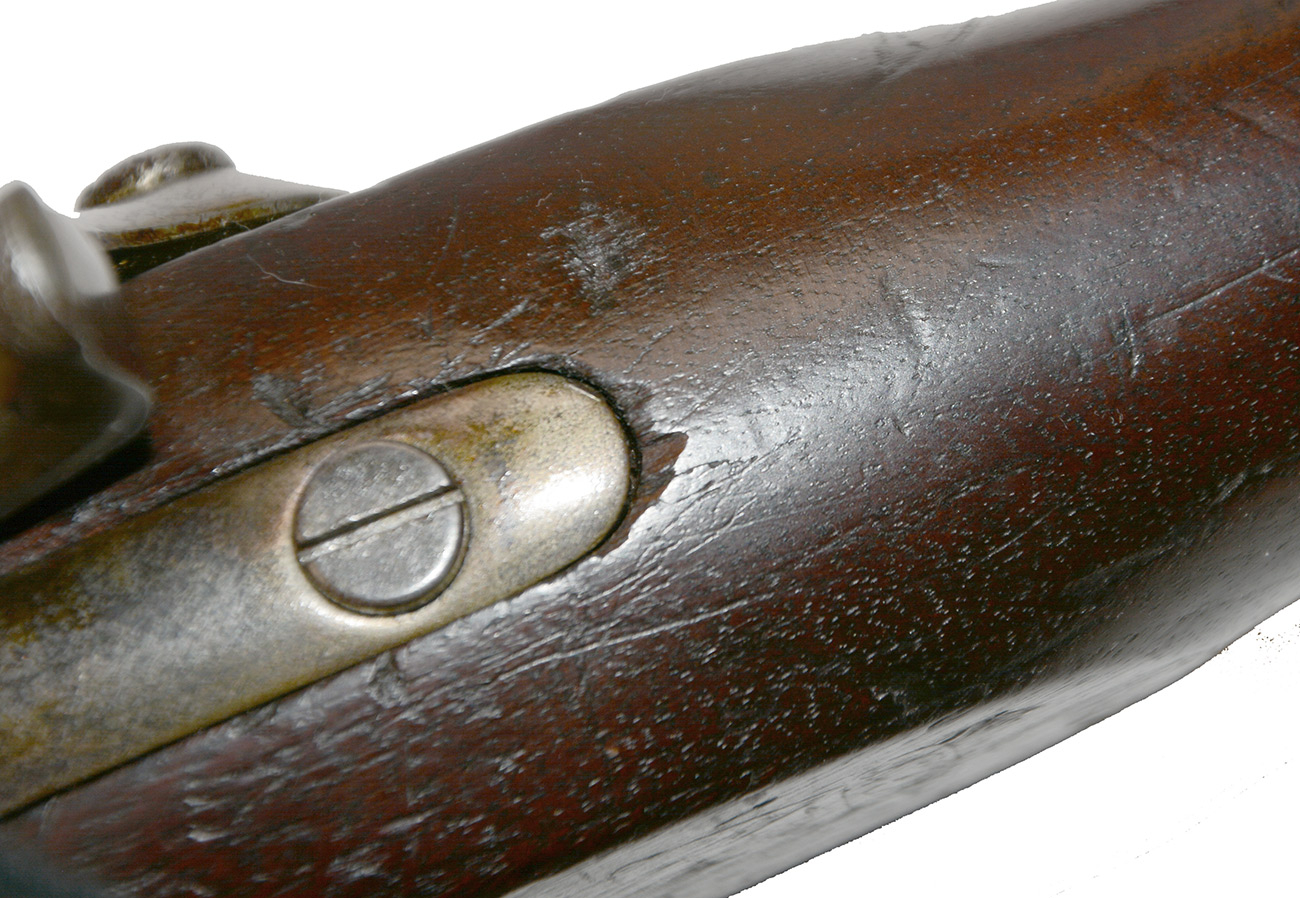
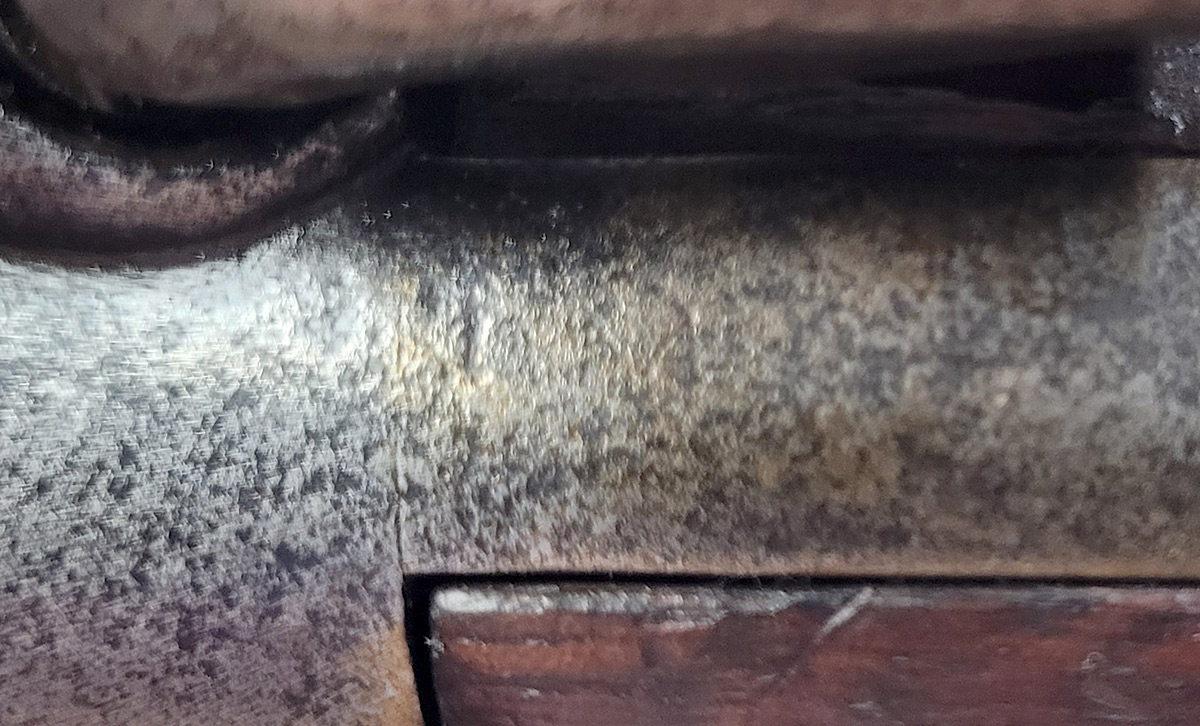
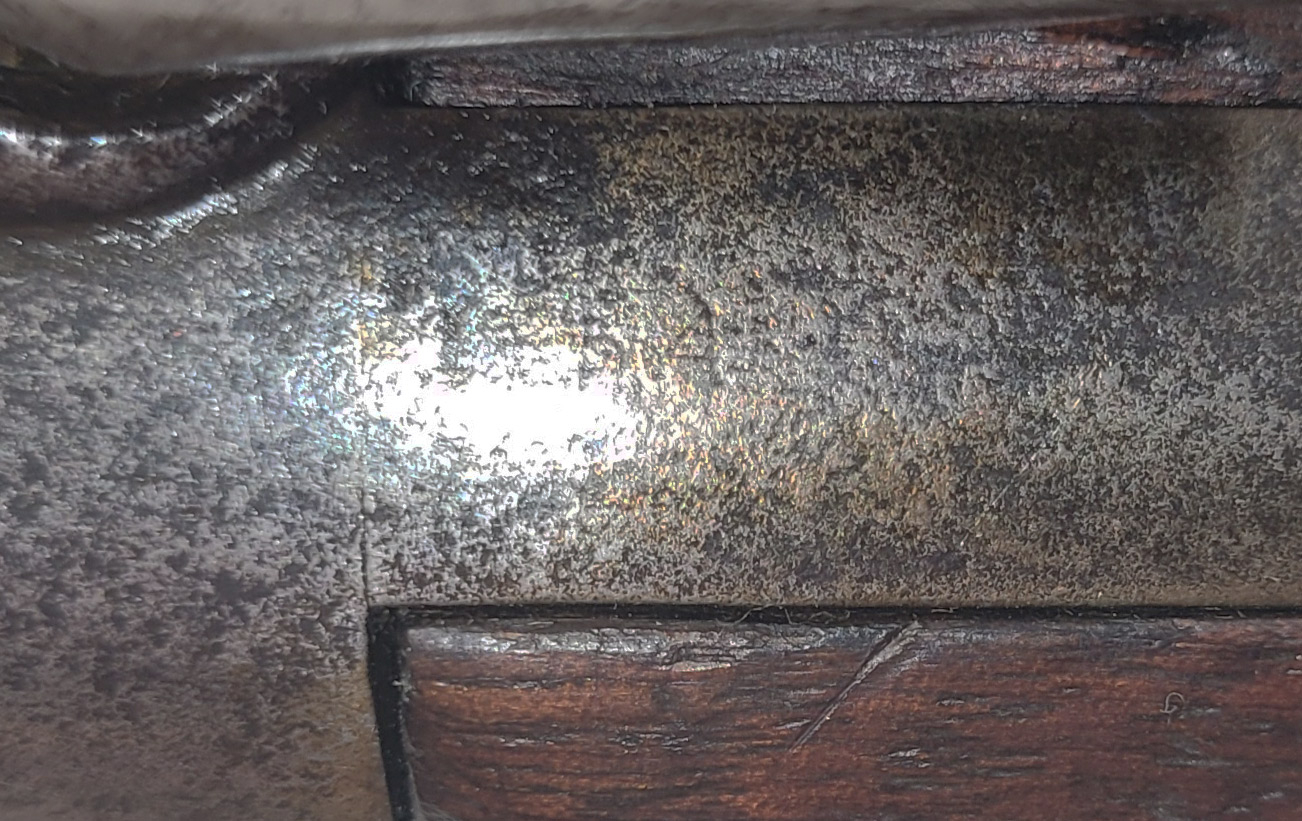
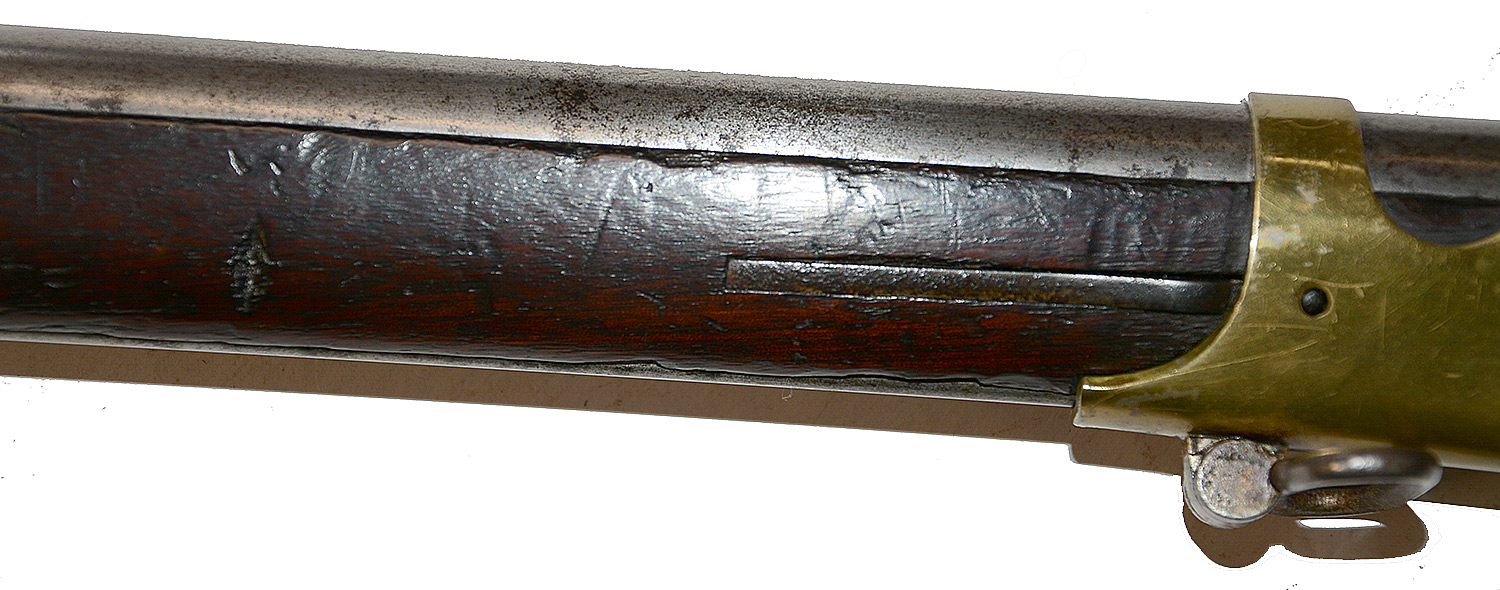
The mechanics are fine. The bore has scattered light pitting throughout, but is clean and has good rifling. The metal is smooth. The iron and steel show silver gray with some thin brown on the barrel. The brass mounts, including patchbox, have a nice, untouched mellow patina. The wood shows small handling dings and scratches, but no cracks and has good edges, sharp cut-out to the patch box, and generally good color and surface. At least four sets of inspection and acceptance stamps are visible, if not fully legible, in the wood of the counterpane. A strong raking light and some patience would likely decipher them. These include the New Jersey “N.J.” marking, though the alteration is certainly by Colt and not one of the New Jersey state alterations described by Moller.
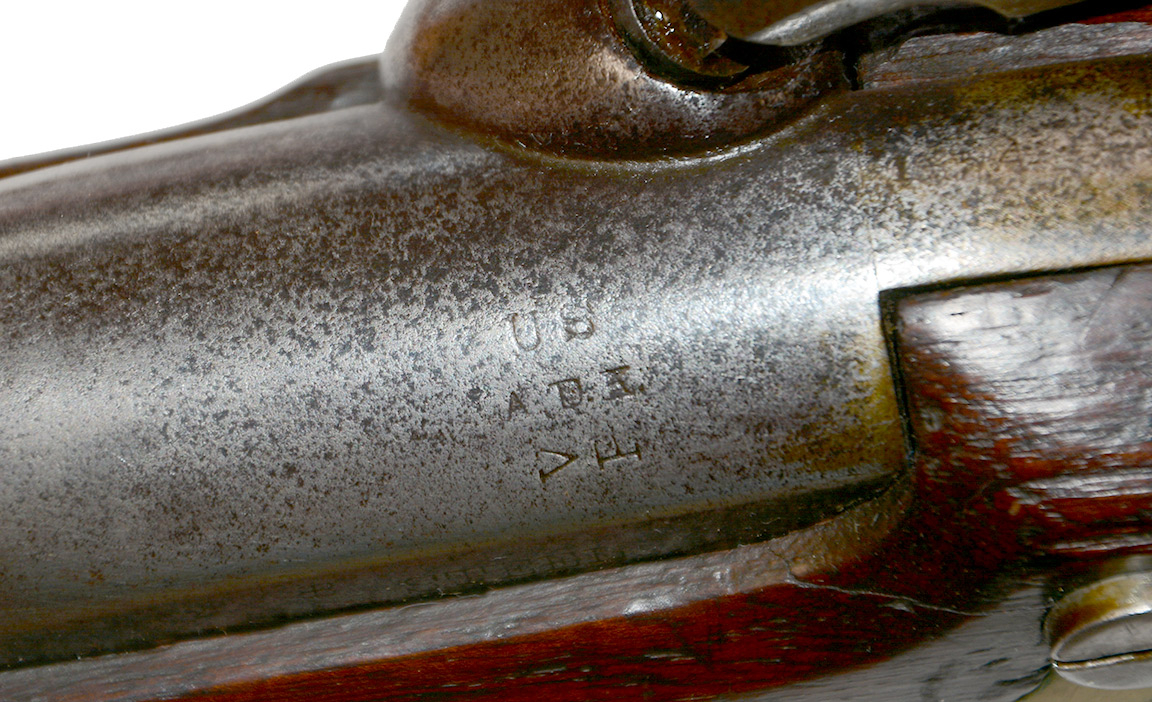
Markings in the metal are good, though the barrel date is light. The lock is crisply marked at rear, “N. HAVEN / 1851” and forward of the hammer, “E. WHITNEY / US.” The left breech of barrel is clearly stamped with US inspection and proofmarks: “US / ADK / VP,” the latter lacking an eaglehead following it, which Moller notes is correct for a Whitney barrel. The barrel date on the breechplug tang is rubbed, but appears to be 1854. This explains the marking “STEEL,” followed by a “JH” US inspector’s stamp just aft of Colt’s alteration and reinspection stamps: Whitney was allowed to use “cast steel” instead of iron on the barrels of his 1848-49 contract deliveries (some 2,000-2,400 rifles) and again for the 5,100 rifles in his late 1853 deliveries to the end of his contract in 1855.
The mismatch could have happened during routine maintenance and cleaning while in New Jersey hands before alteration by Colt. Moller states that under the Militia Act the US issued 1,019 M1841 rifles to New Jersey between 1850 and 1854, but we would then expect to see “NJ” on the barrel as well. The alteration is also not that performed by the state on some of its M1841s- see Moller’s note on those as well. On the whole it seems more likely to have occurred when the rifle was being altered by Colt in 1861-62, with the possibility the NJ stamp merely indicates the rifle went to that state sometime afterward. Moller notes a script NJ in oval stamp in the sideflat of some New Jersey arms that he thinks was applied a short time after the war.
This would make an interesting addition to a collection of M1841 rifles, as well as their wartime alterations. [sr][ph:L]
DISCLAIMER: All firearms are sold as collector's items only - we do not accept responsibility as to the shooting safety or reliability of any antique firearm. All firearms are described as accurately as possible, given the restraints of a catalog listing length. We want satisfied customers & often "under" describe the weapons. Any city or state regulations regarding owning antique firearms are the responsibility of the purchaser. All firearms are "mechanically perfect" unless noted, but again, are NOT warranted as safe to fire!
~~~~~~~~~~~~~~~~~~~~~~~~~~~~~~~~~~~
THIS ITEM, AS WITH ALL OTHER ITEMS AVAILABLE ON OUR WEB SITE,
MAY BE PURCHASED THROUGH OUR LAYAWAY PROGRAM.
CLICK HERE FOR OUR POLICIES AND TERMS.
THANK YOU!
Inquire About COLT ALTERED WHITNEY US MODEL 1841 RIFLE
Most Popular
Historical Firearms Stolen From The National Civil War Museum In Harrisburg, Pa »
Theft From Gravesite Of Gen. John Reynolds »
Selection Of Unframed Prints By Don Troiani »
Fine Condition Brass Infantry Bugle Insignia »
Rare Identified 65Th Ny Sergeant’s Jacket, With Manscript Material: 1St U.s. Chasseurs »
featured item
CIVIL WAR U.S. CAVALRY HARDEE HAT
A very good example of the regulation U.S. Model 1858 Army Hat, known also as the Hardee or Jeff Davis hat, adopted by the new cavalry regiments of 1855 and in 1858 by the entire army. Constructed of stiffened black felt, oxidized very slightly… (1273-139). Learn More »
site search